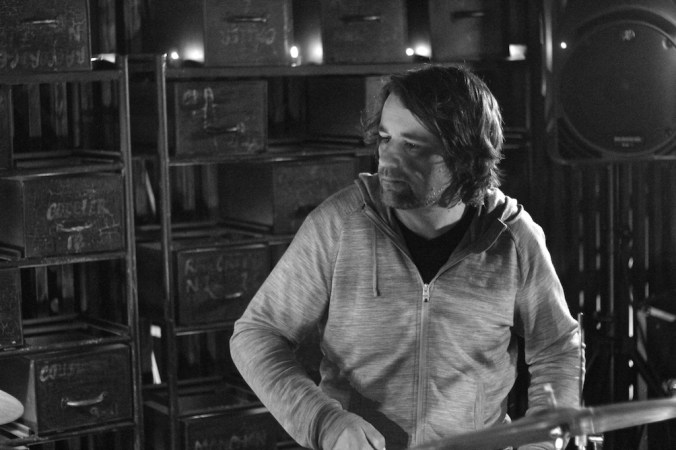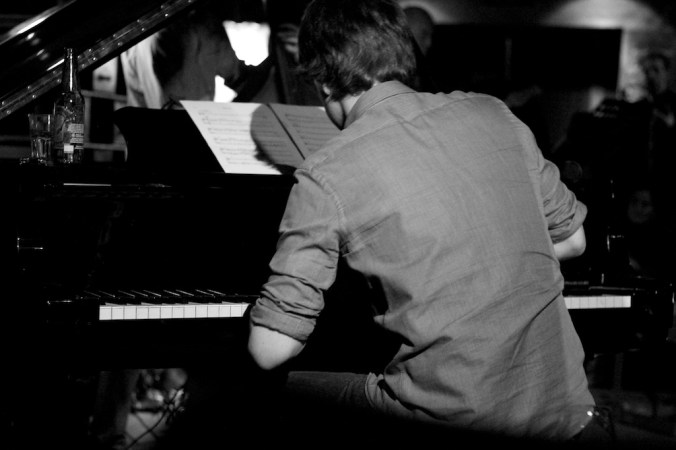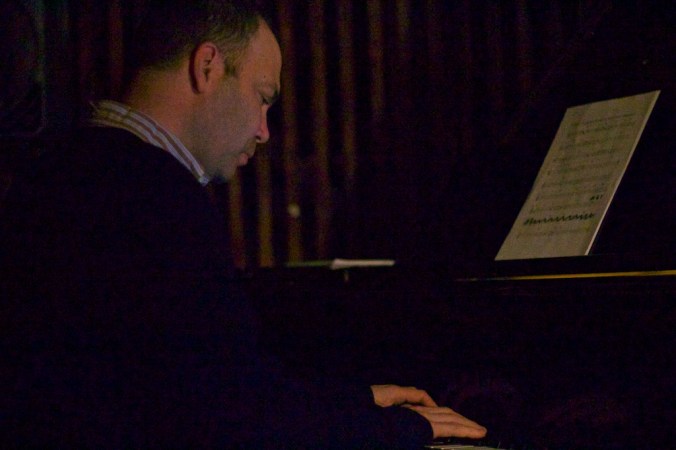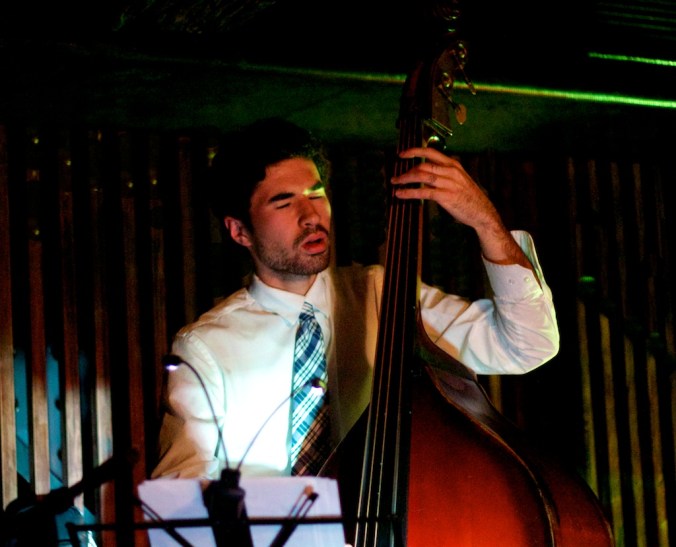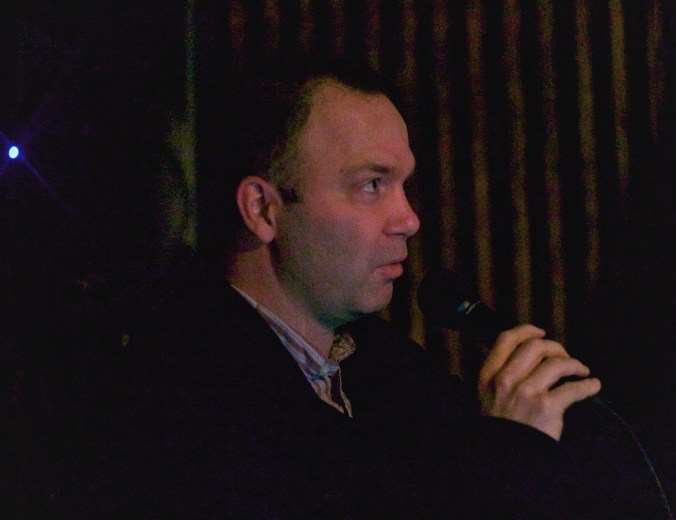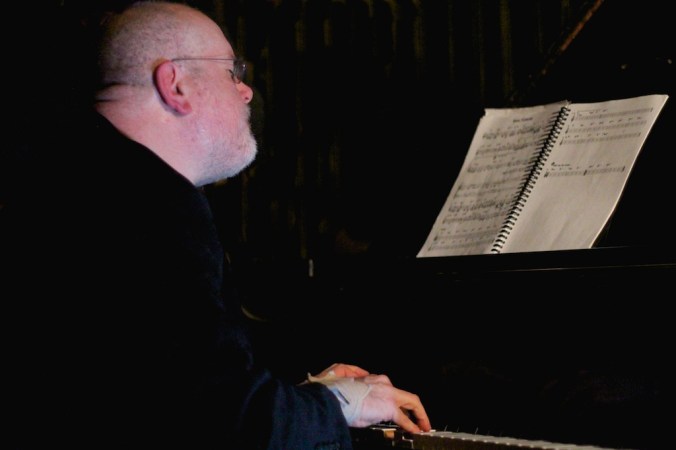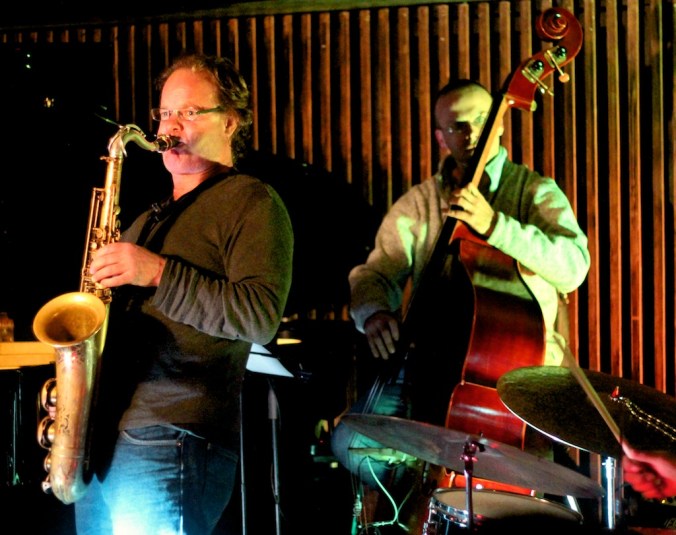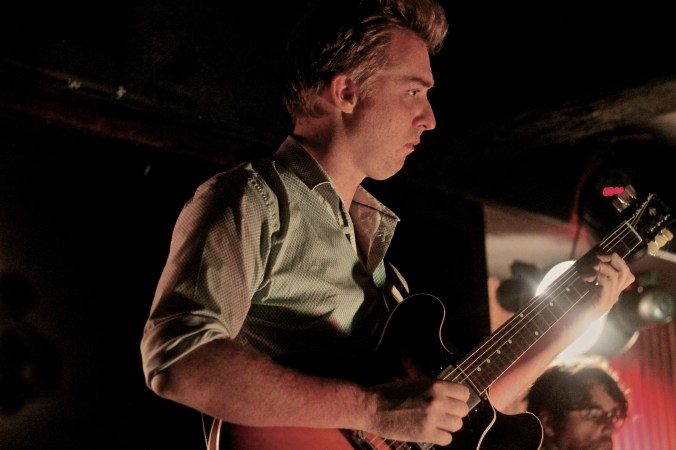
James Muller Quartet @ CJC

IMG_9846 - Version 2 (1)

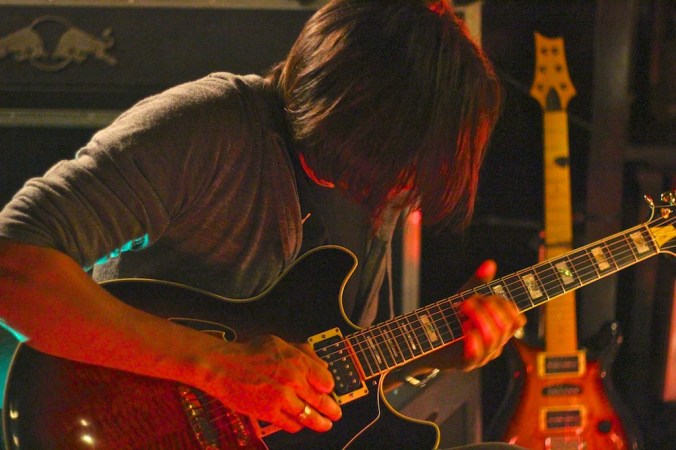
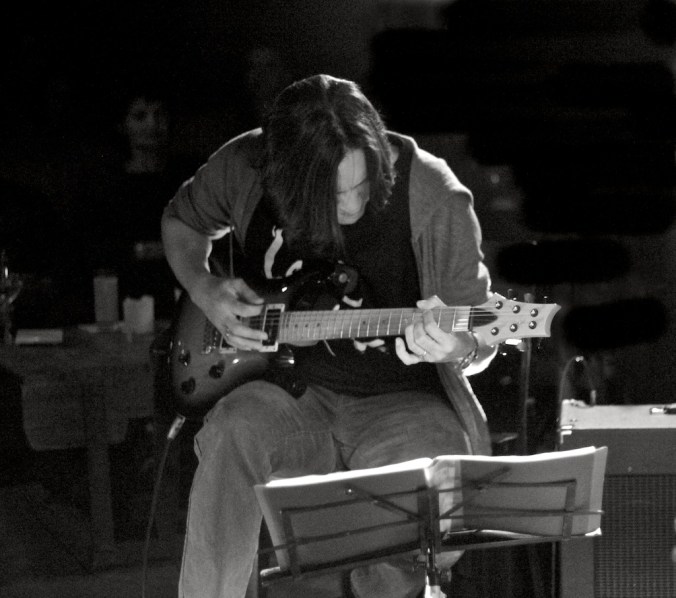
Every Jazz guitarist in Australasia seems to admire James Muller.  Here in New Zealand at the mere mention of him, guitarists shake their heads in disbelief and fall into a contemplative trance.  It is as if you had uttered a secret mantra; one ascribed to an unnamable deity.  I have always been drawn to Jazz guitar and while I need no prompting to follow the genre, pointers like this are irresistible.  When musicians are so highly regarded by other musicians it is generally with good reason.

I first encountered the name James Muller on the 1999 Naxos disc titled ‘Sonic Fiction’.  Even in his twenties there was no mistaking that lovely clean sound, the imaginative improvising and the virtuosity.  Since that time James was awarded a number of prestigious music awards including a recent Australian Arts Council Fellowship grant (two years) and the ARIA award.  These achievements have never gone to his head and he comes across as an artist constantly examining his body of work to see where he could improve.  After half a dozen stints in New York, numerous recordings as sideman and at least four albums as leader he ranks among the premier Australasian Jazz artists.
IMG_9853 - Version 2 (1)

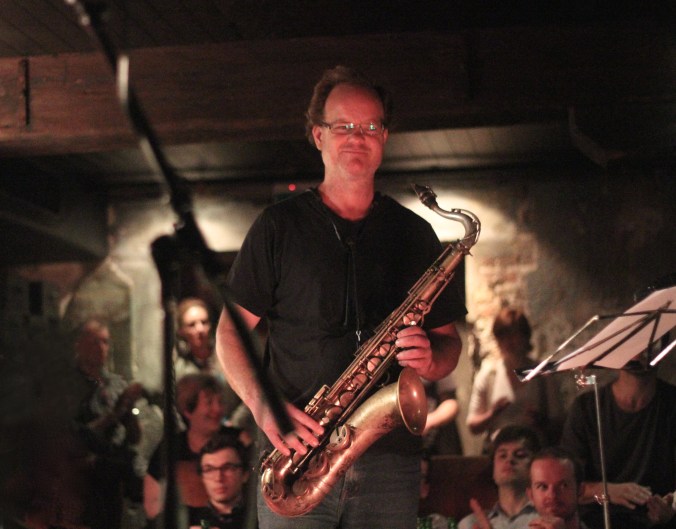
Because we are getting more highly rated international jazz musicians coming to the CJC, I bailed up Roger Manins and asked him about bringing James back (he was here three years ago).  It was already on his radar and towards the end of last year he told a delighted CJC audience that James Muller would be appearing in early 2014.   I had always been of a mind to seek out one of his gigs and then a chance presented itself.  Roger Manins told me of a gig with Mike Nock, James Muller, Dave Goodman and Cameron Undy at the 505 in Sydney.  It was time for a family visit, so I headed to Australia.  Seeing the Manins, Muller, Nock band was a highlight.  Now a few months later I looked forward to the Auckland gig.
IMG_9839 - Version 2

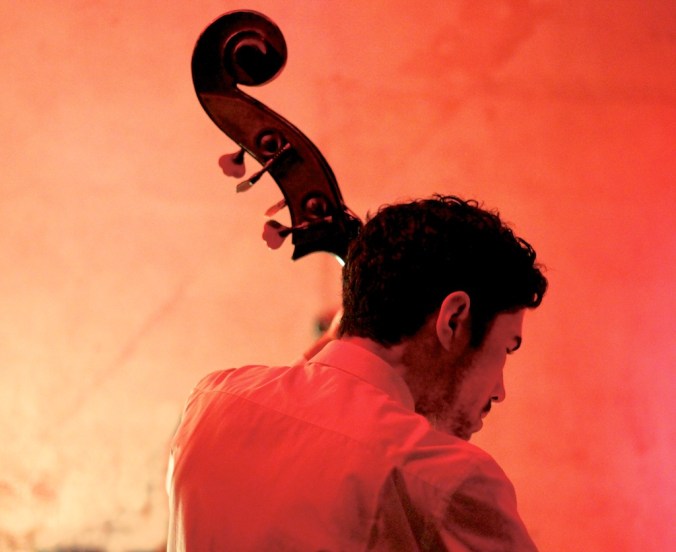
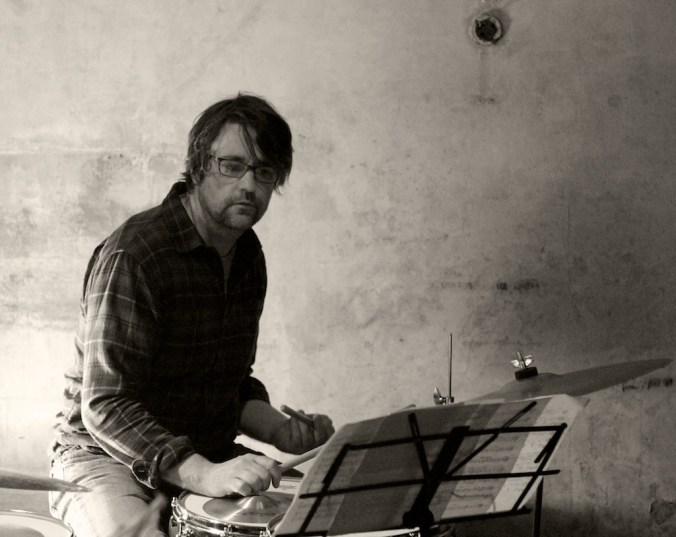
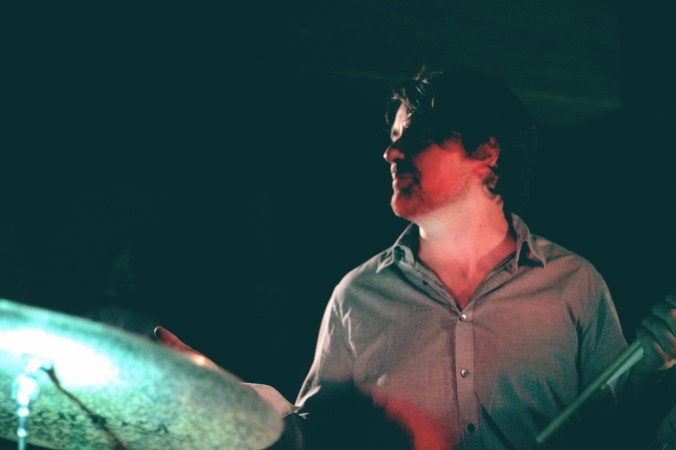
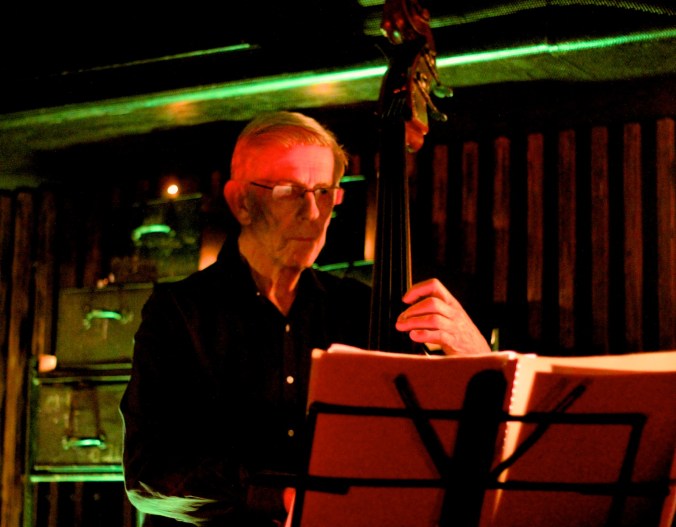
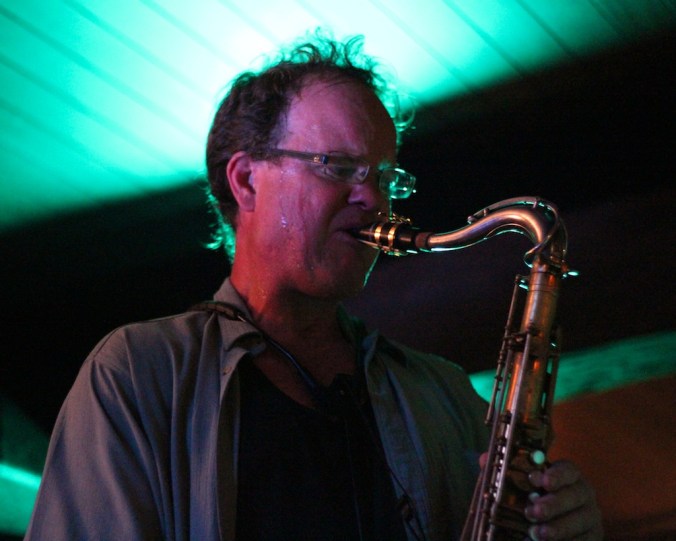
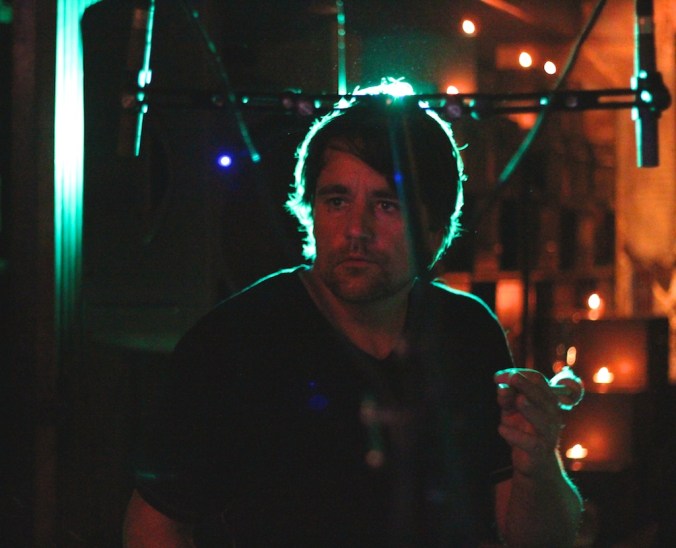
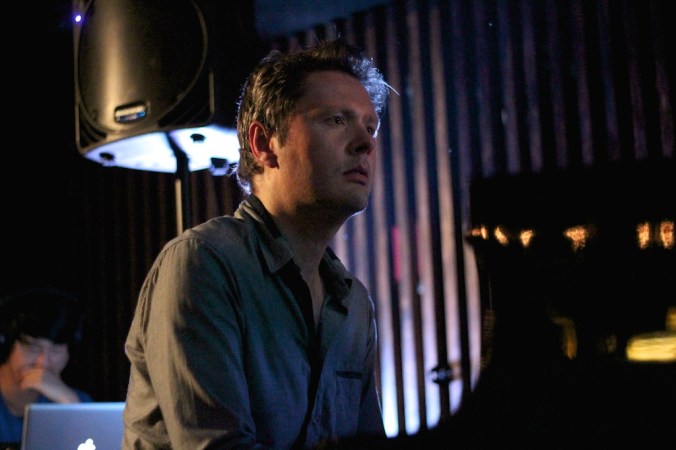
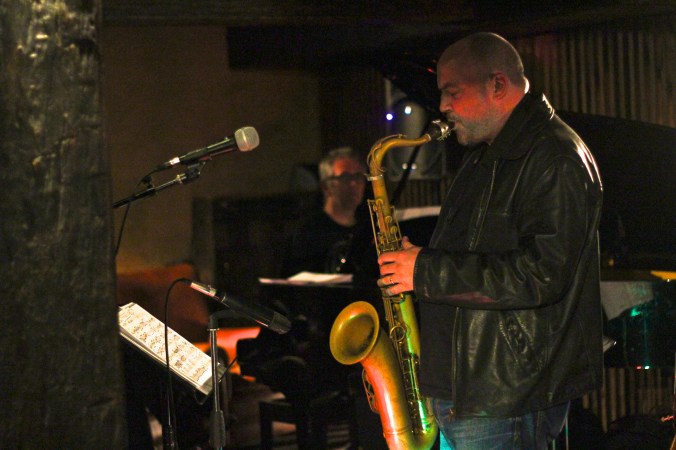
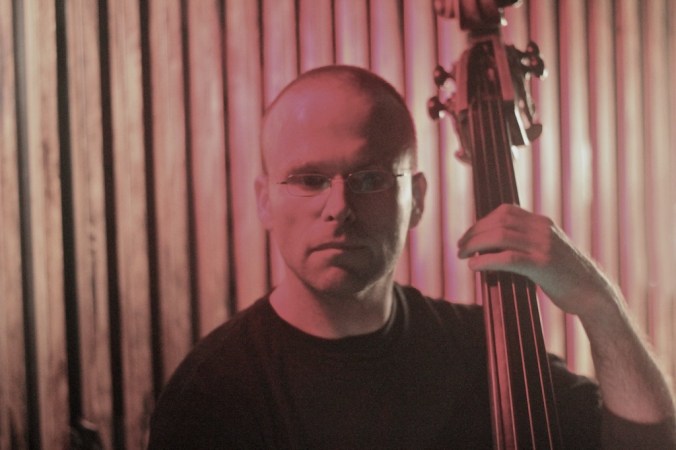
Roger Manins, Oli Holland and Ron Samsom were to accompany James at the CJC.

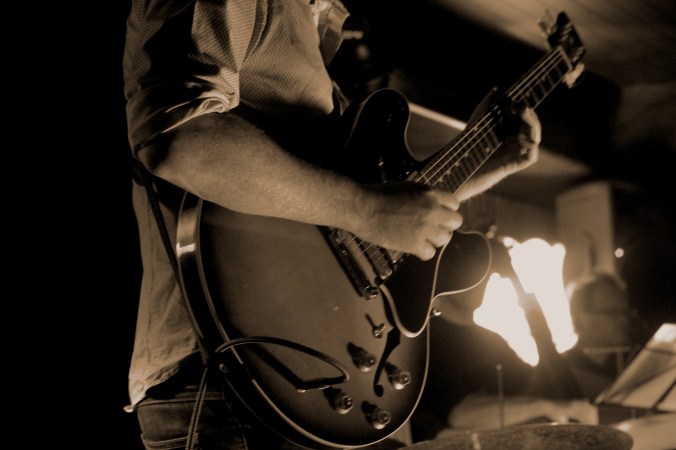
I have learned that James generally avoids playing with pianists, but there are certainly exceptions to this.   His longtime friends Sean Wayland and Mike Nock would top that list of exceptions.  In Auckland he expanded his default guitar trio format to include Roger Manins on Tenor sax.  When James and Roger play together the guitarist generally lays-out during solos.   This allows for the intensive probing improvisation that both are known for. What we saw on the 12th of March was Jazz of exceptional quality and a packed club.   They queued early, mostly younger people and among them numerous guitarists who had just been to the masterclass at Auckland University.
IMG_9838 - Version 2

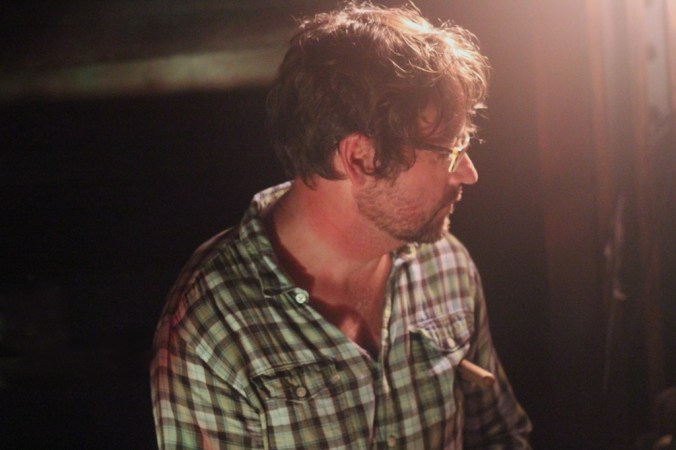
The set list was a mix of James Muller compositions, some standards and a Roger Manins composition.   Most of the heads were often approached obliquely and what followed were long solos and unencumbered explorations.  This was a chance for the musicians to stretch out and they certainly did.  In contrast was the standard ‘Moonlight in Vermont’.  A lovely tune and one played less often these days.  Unlike the other numbers there was no laying out during the saxophone solo.  It felt right to approach this lovely tune with tasteful comping and soloing closer to the melody.  They later played a fast paced version of ‘Rhythm n Ning’ (Monk), a killing ‘More than you Know'(Rose/Eliscu/Youmans) and absolutely best of all a Lennie Tristano number.

I am an acolyte of the Tristano cult and I doubt that anyone could ever deprogram me.  To hear ‘317 East 32nd Street’ performed so well was bliss.  As Roger and James ran those memorable unison lines I felt the joy wash over me.  Here was a tune I truly loved and they had even included the car-horn sounds that had so influenced Tristano when he composed it.  Tristano once told a musician, “this tune was composed in front of an open window, while listening to the New York street sounds outside”.

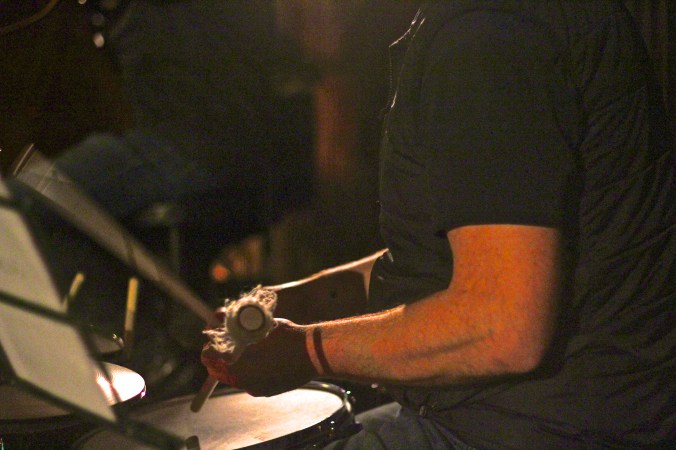
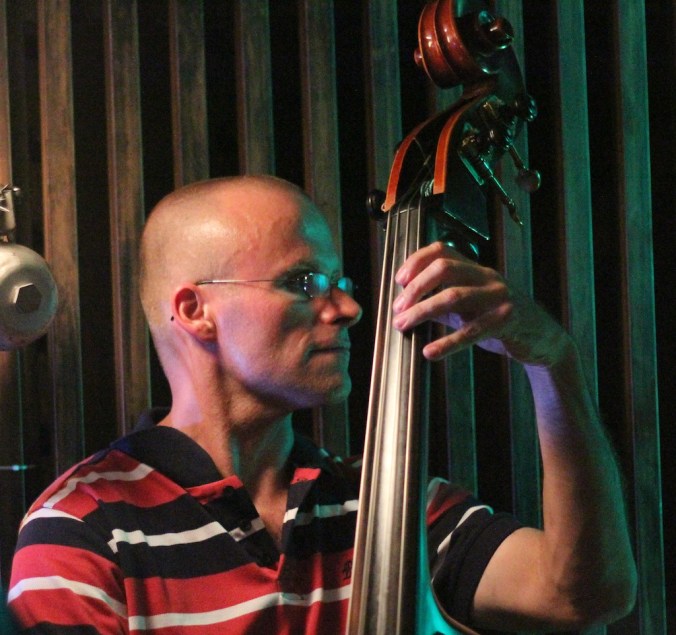
Both Oli Holland and Ron Samsom gave exceptional performances during the evening.   Oli with his Slam Stewart like sung unison lines during his solos.   Ron with his subtle and interactive drumming on the slower paced numbers and his blistering explosions of white heat on the burners.  I have read that James likes the bass as an anchor and the drums to work more outside.   That is what he got.
IMG_9827 - Version 2

I have spoken to James on several occasions now and he seldom discusses his accomplishments.  This is not false modesty or even shyness, but rather a manifestation of that classic antipodean sense of understatement.  It is the hallmark of Australasian musicians that they are often self-effacing, preferring to use throw-away-lines or obscure insider humour in verbal communication.   I have often observed this in local musicians and it fascinates me.  It is particularly evident in their bandstand banter. When I meet American musicians they seldom come across as self-effacing.  There is an ebullience about them that underpins the conversation and selling their accomplishments comes naturally.  It is seldom the same with Australian or New Zealand musicians who rely on their music to speak up for them. 

We hear many fine guitar players at the CJC but this gig would rate among the high points.

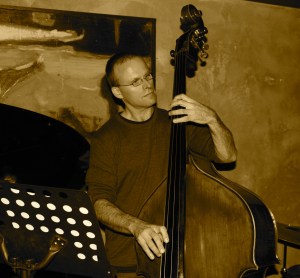
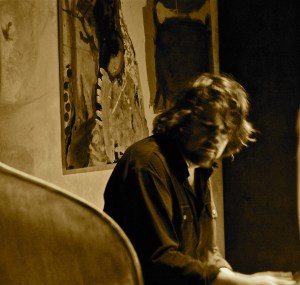
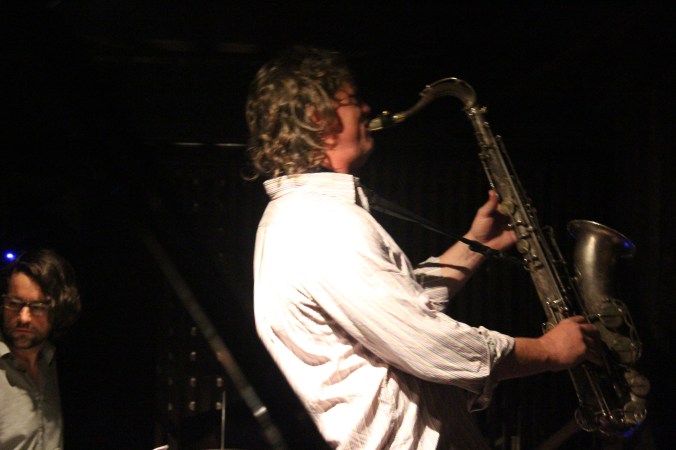
Who : James Muller Quartet – James Muller (guitar), Roger Manins (tenor saxophone), Oli Holland (upright bass), Ron Samsom (drums).

Where: CJC (Creative Jazz Club), 1885 Britomart, Auckland 12th March 2014
Benny Lackner (Germany) @ CJC

IMG_8492 - Version 2

I missed the Benny Lackner trio when they came last year and I had subsequently been besieged with the inevitable, “man you missed a great gig”.   This time I made sure that was able to attend.  Benny Lackner is from Berlin, Germany and his touring schedule has taken him round the world a number of times.  His brand of jazz is forward-looking and has a distinctly modern-European feel about it.   I am a fan of European styled Jazz although surprisingly it is often overlooked by American Jazz fans.  This is ironic because American Jazz musicians have always relied heavily on European tours and are hugely supported there.

This trip Benny came without his trio and teamed up with Cameron McArthur and Ron Samsom for the Auckland gig.   As the gig approached a problem arose, when the building owners required the downstairs room for a function.   The room with the lovely grand piano in it and the better acoustics.  An urgent call went out for a Fender Rhodes and before long Mark Bains had lent one, along with a nice keyboard.   The upstairs venue has a nice feel to it but the acoustics are more difficult to manage.  Such obstacles are quickly dealt with by experienced musicians who are quite used to playing in a wide variety of settings.

IMG_8525 - Version 2

The sets were mainly centred on Benny’s own compositions, but interestingly he had thrown in some modern pop tunes, mined for their improvisational worth.   There was a Bowie number and a Radiohead number, both of which went down extremely well with the audience.  Gone is that awkwardness that the 50’s Jazz musicians often exhibited when they tackled the popular tunes of the day.   From Miles onwards and through to Brad Muhldau ( a mentor of Benny’s) the game has changed.   American musicians like Bob Frisell and others will routinely interpret modern tunes or rock classics.   In many cases the vocabulary of rock is appropriated.  The Europeans however are the masters of this and artists like Mathius Eik, Esbjorn Svensson and Marcin Wasilewski have blazed a clear trail ahead.  He also tackled Monk’s ‘Bemsha Swing’ which I have posted.  EST played this often and this version takes the tune even further out.

IMG_8518 - Version 2

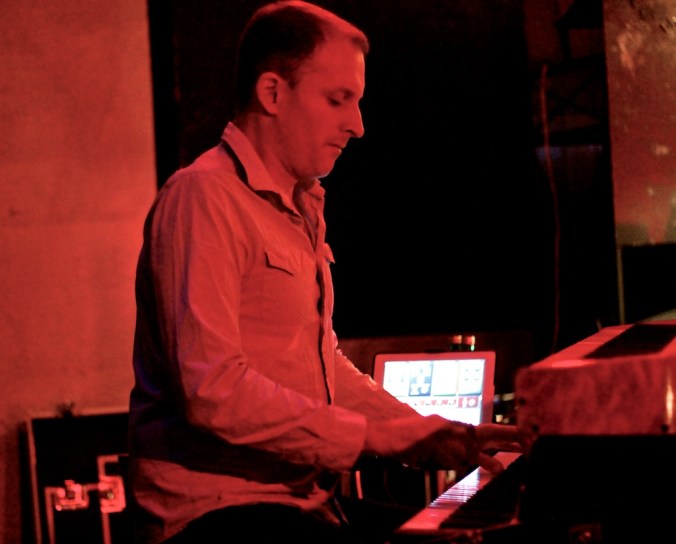
Benny Lackner approaches his material obliquely and to my ear there is no hint of the Evans legacy in his voicings.  He often plays big percussive chords, but he can also show real sensitivity as he negotiates the well constructed tunes.  The Radiohead number worked particularly well on the dominant sounding Rhodes, with the slightly softer voicings emanating from the smaller keyboard.  You get the feeling watching Benny at the keyboard that he views each performance as an open-ended adventure.  I am only sorry that we never got to hear him on the clubs grand piano.

He told us that he was very pleased with his new band mates and why wouldn’t he be.   Ron Samsom is such a fine drummer that you expect a top-level performance from him.   Ron has a world of experience behind him and so many local and visiting overseas acts benefit from his multi faceted traps work.  I have never seen him falter in any setting and the diverse styles required of him only appear to urge him on to greater heights.

As has been the case so often in recent months, Cameron McArthur filled the bass slot and all of the experience he is gaining is now paying dividends.  This guy is a crowd pleaser, with the chops and ears to provide the goods.   We also heard some very nice solos from him.

This has been a big tour for Benny.  From Berlin his hectic schedule took him through South East Asia, Australia and New Zealand.  Although he was born in Berlin he also lived in the USA for many years.  The many influences absorbed along the way have moulded him into an original and interesting pianist.

Who: Benny Lackner (leader, keys, compositions), Cameron McArthur (bass), Ron Samsom (drums)

Where: The CJC (Creative Jazz Club), 1885 building, basement, Britomart, Auckland 9th October 2013

Joel Haines trio @ CJC

IMG_8210 - Version 2

At its best Jazz is a place of unexpected intersections.  Being the music of appropriation there are deliberate collisions with other art forms and out of this comes new ideas and rich pickings.  The Joel Haines gig last week caught us by surprise as Joel seldom gigs these days.   He’s embedded deep within the session, film and TV world and his work will be known to most of us without realising it.   I have seen him perform a number of times over the years, but these outings are often in the role of sideman.  The last time I saw him was when his brother Nathan was in town.

IMG_8211 - Version 2

I really like his playing which infuses Rock and Country voicings into an open-ended Jazz vocabulary.   He musical lineage is impeccable as he comes from one of the most respected Jazz dynasties in New Zealand.  Father Kevin is a highly regarded and well recorded bass player, while brother Nathan is one of New Zealand’s best known and most respected Jazz exports.   This family has all bases covered with talent shared equally.

Joel is certainly not an extrovert and at this gig he sat huddled, as if subsumed by his rich-toned Ibanez.   When he leans forward to play, his long hair falls across his face and the effect is complete.  His sound however tells the opposite story, the shrinking of physical presence enables him to become the notes and the lines he plays.  There was only one announcement and there was only one number identified.

‘No introductions, lets just play”, he said quietly and they did.   On stage Joel is all about the music.

This is Jazz informed by Joel’s years at the ‘Cause Celebre’ and above all by his musical influences.  At times you can hear the echoes of Jimi Hendrix voicings or perhaps Bill Frisell, but the truth is that all of these influences arise from a deep well of ideas.  His material is predominantly lyrical and warm at heart.  You cannot separate this type of music from the film scores that have engaged us over the years.  Jazz and Movie sound tracks have been inextricably linked since Ellington’s ‘Anatomy of Murder’ or Miles ‘Escalator to the Scaffold’.   Joel works successfully in this world and a number of TV shows feature his music.  I am one of those people who remain after a movie is over, waiting for the music credits to scroll.  You would be surprised who you find in those fleeting glimpses.  I recently watched a great Sicilian move where John Surmon wrote and performed the soundtrack.  With the paucity of earning ability in Jazz, going into the studios or becoming a session musician has always been a good option.

IMG_8198 - Version 2

For the last two numbers Roger Manins joined them on tenor.  The tune ‘Lady Lywa’ (by brother Nathan) was wonderfully performed and I am glad it was in the mix (as the only tune composed by someone other than Joel).  This would be a contender for a New Zealand Jazz standard if given a chance.  It was not surprising that Roger blended in seamlessly, as he Ron, and Oli are constantly playing together and the material gave them a solid spring-board for improvising.

I can recall Nathan once putting a cupped hand to his ear during a gig and saying, “Listen to that, the warm hum of valves).   That hum was also evident between numbers at this gig, but for the main part the warmth emanated from the compositions and the ebb and flow of a solid performance.

Where: CJC (Creative Jazz Club) 1885 building, downtown Auckland

Who: Joel Haines (guitars), Oli Holland (bass), Ron Samsom (drums) – with guest Roger Manins (tenor).

Trudy Lile Quartet @ CJC

IMG_7997 - Version 2

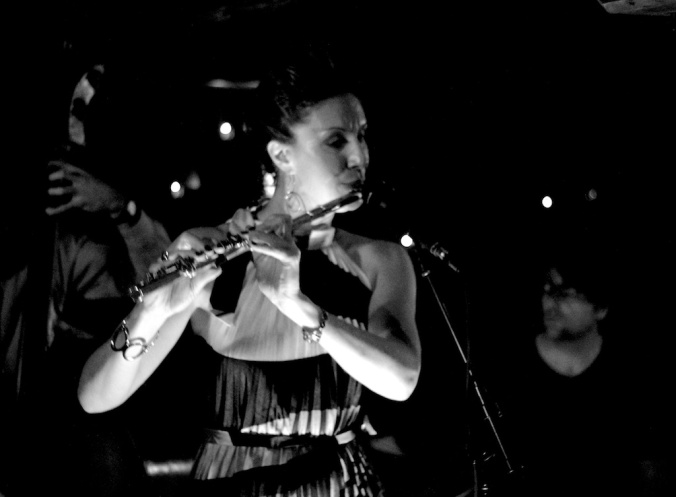
Trudy Lile has unerring radar when it comes to locating tunes from the lessor known jazz lexicon.  Tunes that she skilfully transforms into glowing vibrant flute friendly arrangements. Her choice of ‘Steppin Out’ is a good example.  Kurt Elling recently sung this wonderful (but difficult) Joe Jackson tune on his ‘At The Gate’ album.  Not only was it a great choice and well executed but her new lineup rose to the occasion; giving her all the support she needed and more.

Trudy Lile last performed at the CJC about 8 months ago and she had a different line-up then.  Last Wednesday she had assembled a particularly solid rhythm section in Alan Brown (piano), Cameron McArthur (bass) and Ron Samsom (drums).  Trudy is often adventurous in her choice of material, mixing reworked standards, originals and virtually unknown tunes scavenged from interesting nooks and crannies.  On Wednesday she held to this course and it paid off.  IMG_8013 - Version 2

Among the other numbers performed was a beautiful rendition of ‘Niama’ (Coltrane), ‘Flute Salad’ (Lile) – I love this tune with its swinging happy vibe and another Lile original ‘Domestic Bliss’.   Trudy explained that this number was somewhat tongue in cheek, as her own experiences of domestic bliss at times resembled the TV character Miranda’s.

Trudy Lile is well-known about New Zealand as a gifted flutist.   While the flute is her prime instrument she also demonstrates impressive vocal skills.  We saw both on Wednesday.  I have always sensed a pied-piper quality to her work and as she dances and sways during the flute solos it is impossible not to be captivated.  Dedicated Jazz-flute players have been rare over the years and some critics have been disparaging about the lack of expression in that horn.   If they listened to Trudy they would shut up, sit down and recant.   In her hands the flute has all of the expression you could ever want

.IMG_8017 - Version 2

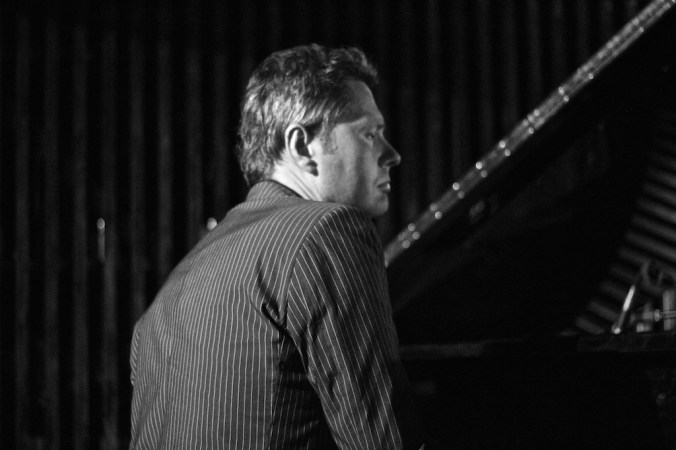
I must zero in on Alan Brown here as he was just superb.  OK, Alan always puts on a great performance but this facet of his playing is not seen as often.  Alan is rightly famous for his soul infused Jazz funk.  He was a power house of inventiveness on Wednesday,but more importantly he established beyond a shred of doubt that he is a stellar straight-ahead Jazz pianist.   His playing is always strongly rhythmic and that is what we expect from Alan, but to see him as an accompanist in this context was revealing.  Anyone hearing a Kurt Elling number such as ‘Steppin out’, notices his arranger and pianist Laurence Hobgood.   Hobgood is a dedicated accompanist of the highest order.   Alan communicated a special quality also.  He supported vocals (and flute) in the way Hobgood does and it was pure gold.  After seeing him in this context I would really like to hear him do a piano trio gig sometime, complete with a few straight-ahead standards.

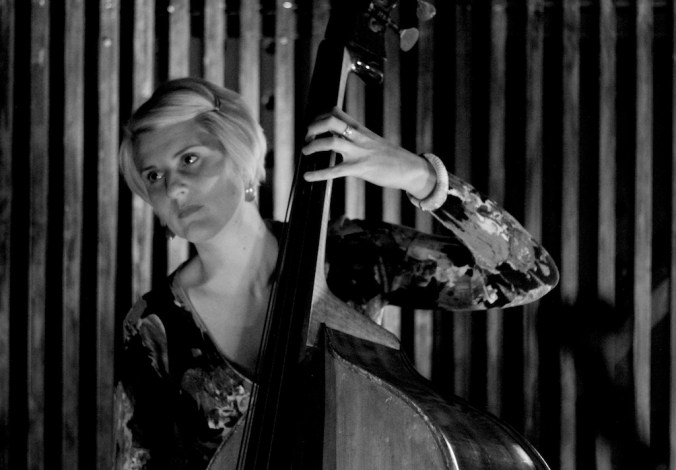
Cameron McArthur has become the first choice bass player for Auckland gigs and every time he appears (which is often) he impresses afresh.   He is gaining a substantial group of supporters about town and his solos always elicit enthusiastic calls and strong applause.

IMG_8012 - Version 2

Ron Samsom is quite simply the best there is on traps and his tasteful underpinning of any band is inspiring.  On this gig he alternated between quieter brush or mallets work and power house grooves which lifted the others to greater heights.   Sometimes when I hear Ron’s drumming I can discern a pulse that goes way beyond the room.  Perhaps it is the pulse of the Jazz tradition itself, the history and the future rolled together in a beat.

This band was the perfect foil for Trudy and she took full advantage of it.

Who: The Trudy Lile Quartet – Trudy Lile (leader, vocals, flute).  Alan Brown (piano), Cameron McArthur (bass), Ron Samsom (drums).

Where: The CJC (Creative Jazz Club) Brittomart 1885, Wednesday 7th August 2013.

Caitlin Smith @ CJC (with Kevin Field trio)

IMG_7827

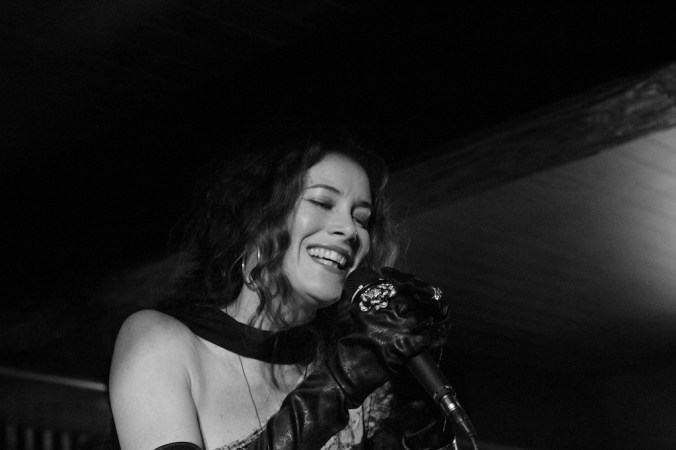
Caitlin Smith is well-known to those who follow the Auckland music scene, where she is highly respected as a vocalist and voice coach.  Scrolling down her resumé reveals just how active she has been over the years and just how far-reaching her influence is.

She sits comfortably on the Soul to Jazz spectrum, often occupying a stylistic space similar to that of Joanie Mitchell or Ricky Lee Jones.  Her material’s drawn from a mix of originals, standards and pop covers but all interpreted in her own unique way.  She has an impressive vocal range and she can captivate an audience with incredible ease.   She is a true performer and her elegance and professionalism are immediately evident.  It takes years for a performer to look this comfortable in front of an audience and many never achieve it.  The fact that she has a severe vision impairment just adds to her allure.

IMG_7826 - Version 2

The set list was mainly from her latest album ‘Stories to tell: The Thorndon Project’.  Sponsored by The Disabilities Commission and PVINZ (Parents of Vision Impaired New Zealand).  Caitlin and the drummer on the album Mark Lockett (also vision impaired) had pulled together an impressive lineup for the session.    Caitlin (vocals), Alan Brown (organ), Paul Van Ross (saxophone, flute), Mark Lockett (drums).   The purpose of the album is to raise awareness around disability issues and to highlight the dedication of the parents caring for those with disabilities.  This hit me right where I live, because my granddaughter has cerebral palsy and I know just how incredibly hard it is for her.  I am also hyper aware of the sacrifices that her mother (my daughter) lovingly makes each day.

The creative arts are often at the forefront of such campaigns and this one is personal and special.  The personnel assembled for the album are all renowned musicians and while three hail from New Zealand, they are a truly international lineup.   Paul Van Ross is from Melbourne, but he is currently in New York.   Mark Lockett is originally from Wellington but he recently moved to New York.  Alan Brown has a legendary status on the New Zealand music scene and works, performs and teaches around Auckland.

IMG_7836 - Version 2

Caitlin had a different band when she appeared at the CJC.  Kevin Field, a regular accompanist for Caitlin had just returned from recording in New York (I am particularly excited about that, as he recorded with Matt Penman and Nir Felder).   Kevin is an extraordinary pianist and leader but he also knows how to accompany a singer.  Anything involving Kevin Field will be worth hearing.  On bass was Vanessa McGowan who bowled me over with her sound and musicality.  I have heard her before but with bigger groups, where she had blended into the mix as a good bass player should in such situations.  In this trio setting she shone.  Her lines were great, but it was the fat warm sound that really captivated me.   She can sing as well.   More of her in trio settings please.  The remaining member was Ron Samsom and he can bring out the best in any band. Whether on mallets, sticks or brushes, Ron is the person you want in your band.   He is simply one of the best traps drummers in New Zealand.  IMG_7830 - Version 2

Caitlin’s own composition ‘In Between’ was impressive and her interpretation of ‘I Don’t Want to Waist my Time on Music you Don’t Really Need’ (Over the Rhine) was edgy and soul infused.    I have chosen a video clip from her CJC band to post; Leonard Cohen’s ‘Hallelujah’.   When I panned to the audience, what the camera failed to pick up out of the darkness was Trudy Lile coming in on the chorus.  Vanessa McGowan also sang beautiful harmony on the chorus.  Jazz singing is evolving and while perhaps this was not Jazz singing in the traditional sense it was a pleasure to hear.   The feel good factor should never be overlooked and Caitlin delivered this.

Dedicated to those with severe disabilities and to their support networks – for Mala and Jennie especially

Who: Caitlin Smith (vocals, leader, composition), Kevin Field (piano), Vanessa McGowan (bass, vocals), Ron Samsom (drums).

Where: The CJC (Creative Jazz Club), 1885 Building, Brittomart, Auckland.

Album: ‘Stories to Tell: The Thorndon Project’  PVINZ imprint – available from www.caitlinsmith.com

Conner McAneny @ CJC (+Nacey/McArthur/Samsom)

IMG_7813 - Version 2

Conner McAneny has played at the CJC on previous occasions, but this is the first time that he has done two sets as leader.  He was ably abetted by the Dixon Nacey trio (with Ron Samsom and Cameron Mc Arthur).   The sets were a mix of standards and originals.   It was particularly nice to hear the fabulous Dixon Nacey composition ‘The Lion’ played again and even better to hear Connor tackle the Lennon/McCartney composition ‘And I love Her’.

For me these two tunes stood out, but for very different reasons.   ‘The Lion’ is from Oxide the second Samsom/Nacey/Haines album and it is a great composition.   The tune moves through several distinct phases, drawing the listener ever deeper as the melody unfolds.  The structure lends itself well to improvisation.  Conner took a different approach to that of Kevin Field (who appeared with Dixon, Ron and Kevin Haines on Oxide) and it worked well.  I like to see local compositions being taken up by other local bands , especially if they are compelling.  We must create our own standards, because we have musicians with good writing skills in our midst.  Having two of the Oxide band in his support group made this an obvious choice.

IMG_7804 - Version 2

The Lennon/McCartney composition ‘And I Love Her’ worked very well as a Jazz ballad and if the arrangement was Connors particularly big ups to him.   I can clearly recall the Diana Krall version (2009), arranged beautifully by John Clayton.  There was also a John Abercrombie version from around that time.  Both were terrific in different ways, but the Sarah Vaughn cover of 1969 sits very awkwardly in her repertoire.  As much as I love Sarah Vaughn, this particular rendering sank like a stone.

I think time is the vital ingredient here.   It was as if there was a musical ‘Wallace Line’ that separated older players from younger in this regard.   For my generation (those alive when the Beatles arrived on the scene) the idea of their material ever becoming jazz standards was strange.  When musicians of the 50’s and 60’s attempted Beatles or Rolling Stones tunes there was an awkwardness and a self-consciousness about what they were attempting.   This is not at all evident in a younger generation of musicians like Uri Caine whose ‘Blackbird’ (McCartney) from the 2001 album ‘Solitaire’, stands up perfectly against any Tin Pan Ally tune.  In my view only a Brad Mehldau could pull off a version of ‘Hey Joe’ so convincingly.  He is young enough to see the tune for what it is and what it could be.  My generation saw such massive hits as the enemy of Jazz; brilliant, compelling but still the enemy.  Perhaps Gil Evans was the exception.  IMG_7799 - Version 2

Connor works hard at his craft and each time he appears we see a more rounded artist.   I have often written about the skills of the other band members and suffice to say, where they go good improvised music follows.

What: Conner McAneny (piano) with Dixon Nacey (guitar), Cameron McArthur (bass), Ron Samsom (drums).

Where: The CJC (Creative Jazz Club), 1885 Basement, Auckland July 10th 2013

Sean Wayland & David Berkman @ CJC Winter International Series

Sean Wayland

Sean Wayland

We don’t get many offshore Jazz pianists visiting New Zealand, but we have seen quite a few over recent weeks. This particular gig comes hot on the heals of hearing Sean Wayland appearing as featured guest artist with the marvellous Jazzgroove Mothership Orchestra. Sean had impressed me at the JMO gig and so I really looked forward to hearing him play at the CJC (Creative Jazz Club).

Before he had played a note Sean Wayland won us over with his easy-going banter. Especially when he thanked us for Mike Nock and mentioned band mate Matt Penman. These are two of Auckland’s best-loved sons and I suspect that Kiwi’s, like Canadians, enjoy our worth acknowledged by the big country next door. This generous acknowledgement by a respected New York based (Aussie born) pianist reveals an interesting truth about Australasian Jazz.

There may be a struggle to meet the financial realities, deal with lack of good pianos and the paucity of gigs, but the two scenes continually produce world-class Jazz musicians. The Scenes are in fact so intermingled that it is often hard to know who is an Aussie and who is a New Zealander. Steve Barry and Mike Nock illustrate this perfectly as they live and work in Australia. Roger Manins lives in New Zealand but gigs across the Tasman every other week.

In spite of the difficulties there is no lack of great music coming out of Australasia and the main problem is that of distribution. An upside of this changing business model is that bands travel more. For the keen Jazz fan live music is once again king. We don’t have to wait for a multi-national recording label to tell us what we should or shouldn’t like, we can explore ‘You Tube’ or ‘Bandcamp’ and hear from the artists directly.

IMG_7530 - Version 2

Sean Wayland is a hugely respected figure on the Australian scene and in New Zealand as well. He is a very modern pianist, as he moves in circles where new approaches are constantly being explored and new sounds developed. After listening to his compositions I was not in the least surprised to find him supported by the likes of Matt Penman, Jochen Rueckert, Will Vinsen, and James Muller. This is essentially the Rosenwinkel generation. While he speaks that language fluently he is unmistakably an individual stylist. No one sounds quite like Sean.

Sean’s tunes are very melodic. Often unfolding over a simple bass line as with ‘eenan’ off his ‘Lurline’ album. What sounds catchy and accessible can actually be quite complex as his approach to rhythm gives the tunes that unique feel. This is tension and release at its sophisticated best. I have put up a version of ‘eenan’ as a ‘You Tube’ clip which unfolds in subtle and beguiling ways. So beguiling in fact that I dreamed the tune two nights in row. Such powerful hooks are not accidental but the result of careful craftsmanship. There is a strong sense of pulse or swing to his tunes, but approached from a different perspective to that of the more traditional pianist.

This intergenerational shift is one that I hear more often as the changing of the guard occurs. Other tunes played to great effect were his, ‘Trane plus Molly equals countdown” and the solo piece ‘Little Bay’. Both of those tunes are found on the ‘Expensive Habit’ album. ‘Trane plus Molly equals countdown’ hints at McCoy Tyner, but you quickly realise that the voicings have very modern in feel. I can however certainly imagine Kurt Rosenwinkel doing the tune. It is an extraordinary composition where the left hand continuously punctuates the flow with oblique accents. I was left wanting more than the single set and I certainly hope that we get to see Sean again on his next trip back to Australia.

IMG_7520 - Version 2 (1)

Accompanying Sean were Cameron MacArthur (bass) and Jason Orme (drums). Both accomplished musicians who quickly slotted into the challenges of supporting a world-class and highly inventive pianist.

The next artist up was David Berkman. He has been to New Zealand before and anyone who saw him last time would have jumped at the opportunity of seeing this top flight New York Pianist in action. There is a fluidity to his playing and above all an impeccable sense of timing. This hard-driving post bop fluidity and the big bluesy chords is what most characterises his work.

The Kiwi members of the quartet were Roger Manins (tenor), Olivier Holland (bass) and Ron Samsom (drums). Together they formed a powerhouse of inventiveness and Roger in particular seemed to benefit from this grouping. His solo’s were so incendiary as to cause gasps of surprise and from an audience who are used to such pyrotechnics. While we expect Rogers high wire acts he is always able to surprise us and this night saw him really on fire. David Berkman certainly knows how to amp up the tension and his ability to extol a horn player to reach deeper and deeper is impressive. He worked the room with as much enthusiasm as he would have done in a prime New York club and everyone there appreciated that commitment. This was the kind of gig where you sat back and let the sound wash over you, tapping your feet uncontrollably and yelling enthusiastically between numbers.

David Berkman

David Berkman

David Berkman’s repertoire was a well-balanced mix of his own compositions and some lessor known standards. During the gig he talked about his mentor, the much respected pianist Mulgrew Miller (who sadly passed away that very evening). He has worked with a wide variety of artists such as trumpeters Tom Harrell and Dave Douglas and his contribution to Jazz education is well-known. Having moved to New York some years ago he quickly settled into the routines of gigging, recording and teaching and since then he has been a fixture on the local scene. He travels extensively and is a Palmetto recording artist.

IMG_7554 - Version 2

The two pianists were very different, but both were amazing in their way. In David Berkman we heard the history of the post bop era and in Sean Wayland we glimpsed the future.

What: Sean Wayland and David Berkman Winter International Series.

Who: Sean Wayland (p) (leader) Cameron McArthur (b) Jason Orme (d). – David Berkman (p) (leader), Roger Manins (s), Oli Holland (b), Ron Samsom (d)

Where: CJC (Creative Jazz Club) 29th May 2013

Samsom/Nacey/Haines – Jazz April

IMG_6509 - Version 3

The first ‘Jazz April gig was at the CJC (Creative Jazz Club) featuring the ‘Samsom/Nacey/Haines’ band. I can’t think of a better way to kick off Jazz April 2013 than by hearing seasoned musicians having fun, while at the same time stretching themselves as players and composers. The group formed in 2008 with the idea of providing a vehicle for new compositions. The outcome of these collaborations was an album named ‘Open to Suggestions‘ and later the 2010 ‘Oxide‘ album was released (with guests Kevin Field, Chris Melville, Neville Grenfell and Roger Manins). The albums have all been extremely well received with ‘Open to Suggestions‘ ending up as a finalist in the Tui Music Awards and ‘Oxide‘ (Rattle Records 2010) receiving critical acclaim from far & wide. The name ‘Oxide‘ arose from John Ruskin’s writings on crystals (artist, author, patron of the Pre Raphaelite Brotherhood and proto-socialist philosopher). This album is still available in record shops or from Rattle Records and I highly recommend it.

IMG_6530 - Version 3

It is hardly surprising that there was an expectation of a third album. The new release titled ‘Cross Now’ has no guest artists appearing. Left to bounce off each others ideas and in an uncluttered musical space, the three musicians made the most of the situation. This spirit of collaboration was particularly evident at the gig as they joked and constantly acknowledged each others skills while downplaying their own input. That is a very Kiwi thing and audiences take it as good form. No one would dare do this if they were uncomfortable with their performance. It is a matter of reading the cultural codes. When they were improvising, the interaction between players was both cerebral and intuitive. There were moments when they appeared as one entity.

As soon as the first set kicked off a sense of joy and playfulness emanated from the bandstand. Some the best music arises from joy and good humour; musicians tapping into an unconscious wellspring of creative goodwill and being at one with the world.

IMG_6510 - Version 2

The material on ‘Cross Now’ is new and like ‘Oxide’ some tunes were only finished days before recording them (or even polished in the studio car park). This is Dixon Nacey’s forte; to write brilliant tunes in the eleventh hour. Someone told me that his ‘The Lion” was written on the way to the ‘Oxide‘ recording sessions. Kevin Haines informed us that Dixon’s moving tribute to the recently diseased and much-loved drummer Tony Hopkins, was likewise written days before the recording. The compositions represent the styles of the originators and even though the compositions are jointly attributed, it is possible to detect just whose hand has had the greatest influence over each number.

So often the back stories behind tunes can enrich a listening experience, but I am not sure how many musicians appreciate this fact. While it is true up to a point that the music should speak for itself, that liner notes or background stories are an added superfluity, that received wisdom obscures a deeper story. To many of us music is an experience extending way beyond the auditory senses. We pick up cues from the musicians movements, we absorb colours from the lights glancing off the instruments and we gain insights from the stories. To me improvised music is like a good film and a well shot film is like improvised music. A place to occupy empathetically for that one hyper-sensitised moment in time. No sensory input should therefore be denied.

Kevin Haines wrote ‘…With Eyes Averted…’ (which began with a poem about relationships) and this added a perspective to the tune that would not otherwise have been evident (I have posted a video of this which features Matt Bray on 2nd guitar) . His tune ‘Cross Now’ was about a particularly irritating crossing signal outside of a Tokyo hotel. In Kevin Haines hands the annoying beeps became a polyrhythmic pulse to build a tune upon. He also contributed ‘Broken Tones’. IMG_6521 - Version 2

Drummer Ron Samsom’s, ‘Happy Dance’ (a fast samba) was fabulous. Written about his dog, we could feel the exuberant bounding energy as the tune progressed. Ron Samsom had begun with the tongue in cheek announcement, “yes drummers write tunes too”. After ‘Happy Dance’ we heard ‘Seiko (in 13/8 time) and a ballad ‘Qua’. I heard someone murmur that drummers needed to write more tunes and in Ron’s case I agree (See You Tube Clip by Jen Sol).

Dixon’s contributions were ‘Song for Xavier’ (written for his son) and ‘Conversations with Mr Small’ which he explained as arising from, ” Well perhaps this won’t be such an interesting reason for title…ah…it is about my musical theory conversations with Dr Stephen Small”. In comedy and music, timing is everything and these guys had it down pat. The tune that we will never forget is Dixon Nacey’s moving tribute to the beloved and much lamented Jazz drummer Tony Hopkins. I found myself glancing at the places where Tony had sat and imagined him at the kit; knitting the band together in that particular way of his. This is the power of Jazz. The musicians interpret while we see, feel and hear a story unfold. The tune was, ‘The Remarkable Mr Hopkins’ and by the end a few of us were tearing up. From the bottom of my heart, thanks Dix.

The new album will be in the record outlets shortly, but your best bet is to contact Rattle online and order a copy.

Who: Samsom/Nacey/Haines (guest Matt Bray)

Where & When: The (CJC Creative Jazz Club) Brittomart 3rd April

This was a Jazz April event – visit the JJA Website by following this link.

John Fenton

Member-button

224006_552282744794057_1209529108_n-1

jazzapril-rectangle

Dr Dog Unleashed @ CJC

IMG_4413 (1)

A few weeks ago someone had whispered, “Dr Dog is back”.  What started as a mere dog whistle soon became an insistent rumour; confirmed beyond doubt when I saw a red van cruising the streets with ‘who let the dogs out’ emblazoned on its side.    I checked the CJC (Creative Jazz Club) website and sure enough there was the gig listing.   Dr Dog are the business or as the vernacular will have it ‘the dogs bollocks’.   We had all been hanging out for this return gig.  This was a risky outing for them as there would almost certainly be an attempt to capture them live during the performance.  The sight of determined looking technicians carrying a tangle of cables and heavy suitcases down the 1885 staircase club confirmed this.  IMG_6222

‘Dr Dog’ are some of the best musicians that the Auckland Jazz Scene has to offer.   Roger Manins – tenor,  Kevin Field – piano, Oli Holland – bass and Ron Samsom – drums.   They all teach at the Auckland University Jazz Studies course where Ron Samsom is program director.    They are teachers, but they also gig regularly.   These guys have honed their skills over many years of playing with the best.  Suffice it to say that expectations are always high when any one of them performs, but when all four appear on the same stage it is a noteworthy event.

Dr Dog is a showcase for the talents of the four band members, all of whom have written original material for the occasion.  I suspect that these compositions are not for the faint hearted and a sneak look at the heavily annotated scores confirmed that.   It was dog eat dog on the bandstand as each musician tried to outdo the other.  Heads would occasionally bend low over the charts in mock dismay and between numbers quick animated conferences were held.  This was not a set list designed to give band members an easy ride.   It was the audience who got the best of these exchanges and while the sweat poured off the band we lapped up the music.  This was a rare treat, just as we knew it would be.

IMG_6219

As you would expect from a dog band there were cool licks a playful approach to the music, a meat raffle and stick chasing.   I filmed most of the sets and I was particularly impressed with the first number up.  It was obvious that these guys had their eye on the ball.  I have put up that clip titled ‘Dideldideldei’.   Being Oli Holland’s composition I knew that it would be well written and have a back story (perhaps involving fishing?).  Oli has a strong sense of irony which is in his titles.   Dideldideldei was evidently a phrase uttered by a Jazz hating apartment dweller in a German comedy, who had the misfortune to live above a Jazz club.  He would shower the band with rotten fruit while yelling, “this is not music it’s just dideldideldei”.    All of the tunes had equally illusive or improbable titles and that only added to the fun.

IMG_6243

Roger contributed ‘Peter the Magnificent’ which he had written in honour of Peter Koopman and tune called ‘Evolution’ (dog evolution).  He gave an explanation of the titles but as I was near the back I couldn’t hear because the people up front were laughing so hard.  Kevin contributed a few tunes and one named ‘Synaesthesia’ referenced the unusual condition which he tells me afflicted one of the great classical composers.  Synaesthesia is a rare condition where colours are heard as sounds or sounds as colours.   Pat Martino Jazz guitar master uses this affliction as a vehicle to assist his improvisation.  In the end I lost track of who had composed what because the dogs only wanted to play.    While this was occurring they were captured by a sound man named John.  An album and a properly attributed track list should result from that.   This band is long overdue in recording and I am hoping that the live take is adequate to purpose.  If the sound is not good enough then they should shake their tails and get to the studio ASAP.   I for one can’t wait.

IMG_6235 - Version 2

Who: Dr Dog – Roger Manins, Kevin Field, Oli Holland, Ron Samson

Where: CJC Creative Jazz Club February 20th 2013

Sean Coffin (AUS)@ CJC

On Wednesday the 24th October we had an overseas visitor playing at the club, tenor saxophonist Sean Coffin.   This has been a great year for the Auckland Jazz scene and especially for the CJC (Creative Jazz Club) as a number of interesting local bands, out-of -towner’s, and overseas acts have appeared.  It’s the clubs imperative to offer genuine diversity, and this has caused the CJC to extend its reach.   Because Roger Manins has such a well established Australasian reputation and because the CJC is increasingly seen as a great club to play in, the net is ever-widening.   We are on the Oceania Jazz circuit fair and square.  

Sean Coffin is known in his native Australia for his stellar educational work, but it is his high level tenor playing that draws people to him.  He is among the best that Australia has to offer.   For many years he has been accompanied by his brother Greg (piano) and the work of this formidable pair is well recorded.   Sean studied at the Berklee School of Music and later as a postgraduate at the Manhattan  School of Music.  Among his many teachers I would single out George Garzone, as this world leading tenor player appears to have created a cadre of exceptional students in Australasia.  

At the CJC Sean showcased his most recent compositions and they were mostly themed around his children.  This proved a good source of inspiration as the numbers ranged from heart-felt ballads to some faster paced offerings (one referenced children at play).   These lovingly drawn compositions were well crafted and executed and no one had difficulty relating to them.   It is arguably risky to focus exclusively on family material, but the gamble paid off because the improvisations were tender without once descending into introspective noodling.   The integrity of the compositions as Jazz vehicles was always evident.  A lovely ballad to ‘Garz’ (dedicated to George Garzone) rounded things off nicely.

A local rhythm section was put together for this gig and in due deference to the visitor he was given the best.  Ron Sampsom (drums) and Oli Holland (upright bass).  With Kevin Field overseas, Dr Stephen Small took the piano chair.  No one needs to puzzle over my views on Ron Sampson and Oli Holland as my support for their work has been constant over time.  These two go way beyond the merely competent; they are solid, reliable musicians and they are also gutsy enough to handle new challenges without flinching.   Listening to them live or in a recorded situation will tell you everything you need to know.

Seeing Stephen Small again was an unexpected pleasure, as the patch he normally patrols is on the periphery of the Jazz world.  Because he teaches classical piano at Auckland University it would be easy to overlook the fact that he has other strings to his bow.   He is a madman on keyboards and I have seen him cut loose on banks of synthesisers during a Jazz fusion gig.   To say that his fusion performance was riveting would be an understatement.  He created textural layers of sound which swirled and soared alternatively.  Put him together with a fusion versed guitarist like Nick Granville or Dixon Nacey and he will take your ears apart in the best possible way.  Stephen is also a highly talented, straight-ahead, post-bop pianist and judging by the whoops of delight as he negotiated his solo’s he needs to get down to the CJC more often.   I am casting my vote for one of his Jazz fusion gigs.

Sean worked hard all evening and at the end he invited Roger Manins to the bandstand.   There was obvious respect between the two men but that didn’t stop them from going hard out.  When the best tenor players occupy the same bandstand, it generally ends up being a joyful celebration rather than a cutting contest.   This was respectful but no quarter was given.

‘Dr Dog’ takes the Jazz Pulse of Auckland

Animal lovers, children and Jazzers alike were delighted to learn that the ‘Dr Dog’ Jazz quartet would be performing in the Creative Jazz Club (CJC). This was somewhat of a dream band as it featured ‘I cani popolari‘ from the halls of academia; Roger Manins (tenor), Kevin Field (piano, Rhodes), Oli Holland (Bass) and Ron Samsom (drums).

The band having no clear leaders could follow their noses, but in spite of that they worked as one throughout the evening. In Jazz-dog years they represented around 317.4 years of experience and so their ability to act in a disciplined manner was hardly surprising. They took their lead from each other.

Roger had managed to sniff out the microphone first and so the job of introducing the band members and the numbers fell to him. An endless stream of puns and dog stories followed and at one point some frank observations on the variability of dog intelligence risked causing serious offense to Afghan owners. As none appeared to be present the crises was averted and the dog related compositions flowed in happy succession.

If anyone thought this to be a frivolous exercise, they should be disabused of that notion. This was a band which had ‘chops’ (OK I had to put that in), the ability to delight a crowd and a string of intelligent compositions to shine over.

It is expected that the canine metaphors and jokes will continue to dog this band for some years; peaking around 2014 before eventually subsiding. As a departure from the normal CD prize there was a meat raffle. A cat named Jason took that prize.
The music that we heard was so good that a few of us are going to lay a trail of sausages; leading from the Auckland University School of Music Jazz Programme to the nearest recording studio (Yorkie Street studios or Ratter Records).

In researching this Canine Jazz phenomena I recalled another dog band which had performed at the CJC . Guitarist Neil Watson’s ‘Zen Dogs’ performed at the club about a year ago. When I ran into Neil months later I asked him if ‘Zen Dogs’ would be performing again soon. He answered in that enigmatic way of all Zen masters. “Oh that was a concept band”. “But will they be performing again”, I asked?. “No the band was literally a concept – not an actual band”. Confused and pondering the meaning of this Koan, I could not help wondering. Had I imagined the entire gig?

‘Dr Dog’ on the other hand is a band grounded in realty. A cartoon dog band entirely relevant to our times.

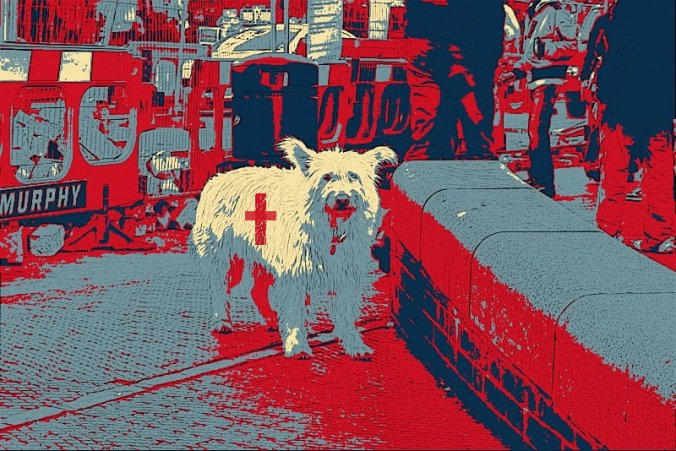
Footnotes: I have used sepia photographs to show respect, as they add a certain gravitas befitting the age and experience of the band. All photos are mine including ‘Dr Dog’ who was caught in Chelsea London and subjected to Photoshop without his permission. You will be pleased to learn that I managed to avoid using the following: barking up the wrong tree, woofers and Roger was a wag.

James Ryan – Jazz without a parachute

James Ryan is a Sydney based tenor player and he has appeared at the CJC before.  On Wednesday nights gig he fronted a trio of saxophone, drums and bass.   In configurations like this where chordal instruments are absent, a band is taking a more adventurous route.   Guitars, pianos, horn-sections and jazz orchestras provide a safety net for horn soloists and in addition they tend to fill in much of the soundscape with colour and a variety of textures.  Without this underpinning, clean open spaces can be revealed and the bones of melodies can be unraveled or looked at afresh in their raw beauty.    This is jazz without a parachute.

The precedent for such trios goes back a long way.   Gerry Mulligan came close with his famous piano-less quartet of the 1950’s, but the addition of another horn (Chet Baker or Bobby Brookmeyer) allowed for chords and complex counterpoint.  The most notable historic piano-less trios were Sonny RollinsWay Out West‘, Lee Konitz, ‘Motion’ and the drummer led Elvin Jones ‘Ultimate’.    There are many others and I should also mention the Max RoachDizzy Gillespie duos with just trumpet and drums.  Our own Roger Manins has also explored saxophone trios and his well received album ‘Hip Flask’ is a notable example.

I did not hear James the last time he appeared, but I was soon to be impressed by what was on offer.  His choice of band-mates proved to be fortuitous as Tom Botting (bass) and Ron Samsom (drums) rose to the challenge with enthusiasm.   In this blue-sky environment each artist knew what needed to be done and more importantly what must be avoided.  The was no overplaying and the flow of musical ideas was engaging.

James introduced the first set by playing solo for a number of bars and we could hear immediately that he was brim full of interesting ideas.  This was a good way to open because when the bass and drums came in, their addition filled the space with possibilities.  The fourth tune of the night ‘Micky B’ (Ryan) was a good example of this interplay.   In this case the tune had been set up by the bass and it soon developed into a hard-driving bluesy exploration of the theme.   James drove deeper and deeper into the changes and freed of the need to avoid piano or guitar, he took the music where he wanted it to go.   While James took care of business Tom Botting found just the right responses and Ron Samsom showed us again why he is a master of the drum kit.

After a number of interesting originals had been performed the band switched seamlessly to the well-known standard ‘You and The Night And The Music”.    James explained afterward that this had not been on the set list, but because Tom had quoted from it during an earlier bass solo he added it on impulse.   It is when we hear a standard that  we can form the strongest views and make comparisons.    The audience will know where the tune has gone before and be interested to see just where this band is taking it.   This particular exploration was inventive without being disrespectful.   It had an element of surprise in the familiar and that is what the best Jazz is about.

As is so often the case when Ron Samsom is on the bandstand, the percussion work was extraordinary.   His use of mallets and his inventiveness riveted the audience again and again.   He can play tightly in the pocket or with an understated but completely engaging looseness.  We saw him as more than a drummer in this set up.  He was an instrumentalist capable of filling any space.

There was one free number during the night and it was a riot.    James announced that he would play a tune of his titled ‘Rocket No 7’.    This was an homage to Sun Ra and his much admired composition ‘Rocket No 9’.   A few bars in James just let rip and the band quickly followed him into what were obviously unchartered waters.  This decoupling from the changes was soon evident and the organic freedom took us on a wild and delightful ride.   While the music was as free as a skylark it was never directionless.    Both band and audience were smiling at the end and everyone in the room knew that they had experienced something special.

After the number James wiped the sweat from his brow and pulled the mike towards him.   “That was nothing like ‘Rocket No 7” he said to our delight.

As with many of the Australian visitors we look forward to his return.