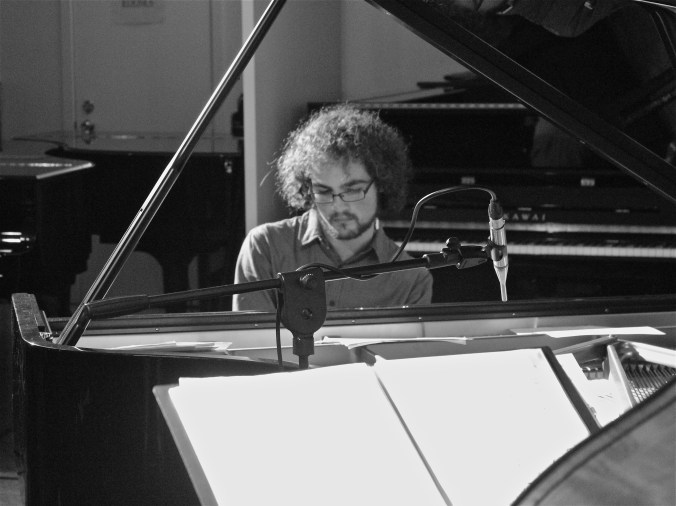
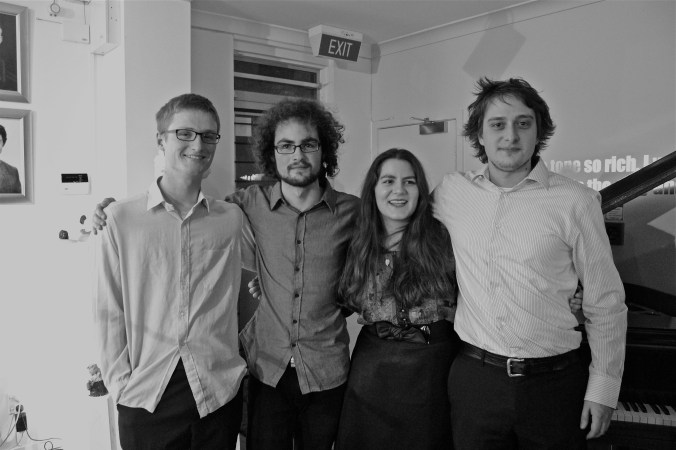
JJA Jazz Awards Satellite Party in Auckland

Press release: Wed 6th June 2012

Creative Jazz Cub & Auckland Jazz Orchestra presents the

JJA Jazz Awards Satellite Party

The 16th Annual Jazz Journalists Association Jazz Awards is an international black tie event held at the Blue Note Jazz Club in New York on Wednesday 20th June and features hundreds of musicians, jazz journalists, educators and industry associates.

Auckland musician/saxophonist Roger Manins has been awarded a Jazz Hero Award by JJA, so to celebrate and honour New Zealand’s jazz heroes, Auckland’s Creative Jazz Club (CJC) will be hosting the world’s first 2012 Awards Satellite Party at the Britomart’s Basement Bar also on Wednesday 20th June. The Awards will feature music by the Auckland Jazz Orchestra (AJO) and as New Zealand will be acknowledged at the New York Awards event, willing musicians and Jazz fans should arrive early for photographs – to be posted on the Jazz Journalists Associations Awards official web sites. Don’t miss one of the biggest events on the Jazz calendar!

Wednesday 20 June – Basement Bar, AUCKLAND

Home of the Creative Jazz Club, 1885, Galway St Central, BRITOMART

8pm, Tickets GA $10, CJC members & students $7, student members $5

http://www.jjajazzawards.org,  www.rogermanins.com,  www.creativejazzclub.co.nz

CJC contacts – caroline@creativejazzclub.co.nz    roger@creativejazzclub.co.nz   John Fenton blogsite – Jazz Local 32   http://www.jon4jaz.wordpress.com

Publicity – Leesa Tilley / publicity-machine@clear.net.nz / phone 09 3766 868
The Jazz Journalists Association (JJA) honours excellence in jazz music, recordings, presentation and journalism. The 2012 Jazz Awards has 39 categories of excellence including Lifetime Achievement and Best of the Year Awards for musicians, presenters, recordings, photos, journalists, publications, blogs and websites. A star-studded coterie of musicians, journalists and music-world movers and shakers will be honoured in jazz’s only independent, international, culture-and-community-wide awards celebration.

Creative Jazz Club (CJC) was set up two years ago by musicians Carolina Moon, Roger Manins and broadcaster Mark Robinson. Webmaster Ben McNichol and journalist John Fenton complete the team. Now a world-class jazz club, CJC fosters and promotes the development of Auckland’s creative jazz scene by providing musicians with a dedicated performance space, nurturing emerging artists, and the programming of innovative local, national and international talent in its weekly Wednesday club night. Vocalist and composer Carolina Moon – who is currently touring her medieval world music fusion Mother Tongue in-between teaching jazz vocals at the University of Auckland – said “I was motivated to start CJC primarily because there was nowhere for us to play our music, and I thought well there must be other people in the same boat too. When we first opened, one of NZ’s landmark jazz musicians said to me – ‘now I have something to practice for’ – and gee I just wanted to cry.  So we started out at Cafe 121, Ponsonby Rd and over that first year we saw the creative scene really start to grow as it provided bands with an outlet for their creative projects – AND an audience which wants to listen and be part of it.”

Roger Manins won the Australian National Jazz Awards for saxophone in 2002 and this month, will receive a JJA Jazz Hero Award as international recognition of his outstanding musicianship and services to the community and education. Roger was born in Waiuku and currently teaches at the University of Auckland between touring nationally and internationally with various groups such as the Roger Manins Trio/Quartet, Hip Flask, Carolina Moon, Resonator, Manins Muller featuring Mike Nock plus a series of Trans-Tasman collaborations. Roger has released 3 CDs – Hip Flask, Trio and Latitude – and is recorded on more than 30 jazz albums with some of Australasia’s leading artists.

an outstandingly gifted musician with a warmly passionate sound, remarkable instrumental ability and total
musical integrity” – Mike Nock

one of the best newly issued hard bop recordings I’ve heard in quite some time. Manins sounds incredible throughout, but is particularly exceptional on Monk’s Well You Needn’t. Manins et al. aren’t merely recreating—they’re creating new music by taking Hard Bop elements to new places” – Slim’s Spins, Cadence Magazine, USA (March 2012)

http://www.jjajazzawards.org http://www.rogermanins.com http://www.creativejazzclub.co.nz CJC contacts – caroline@creativejazzclub.co.nz / roger@creativejazzclub.co.nz

John Fenton blogsite – Jazz Local 32 – http://www.jon4jaz.wordpress.com (Jazz Journalists Association).

Publicity – Leesa Tilley / publicity-machine@clear.net.nz / phone 09 3766 868
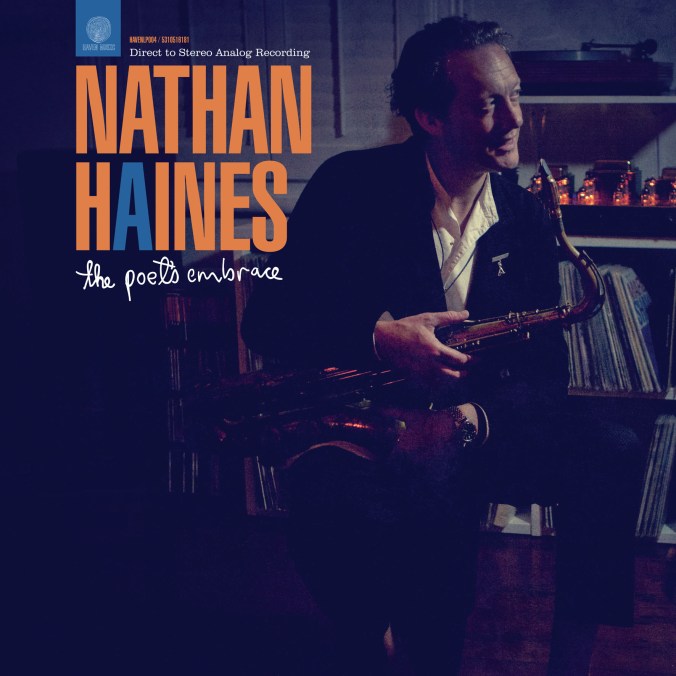
Nathan Haines ‘Poets Embrace’ reprise

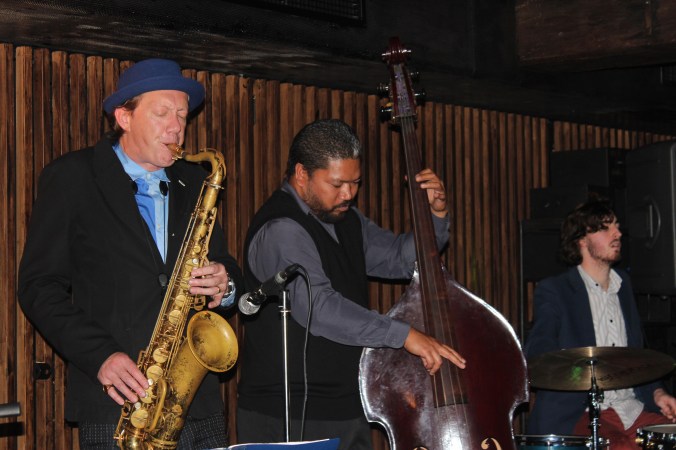
Nathan, Ben, & Steve

Last week saw the Nathan Haines Fourtet return to the CJC with an altered line-up.  Alain Koetsier the former drummer is now running a language school in China and Thomas Botting has packed up his bass and moved to Australia.   Above all we knew that this would also be the last time that we would see Nathan for while as he moves back to the UK in July.

In place of the departed musicians we heard Stephen Thomas on drums and Ben Turua on bass.    There had also been some changes made in the club configuration and it was surprising how the rearrangement of furniture subtly altered the sound.    The sight lines were also greatly improved for those standing along the bar and near to the entrance.     I have heard this material at four different gigs now, but for accessibility and quality of sound this gig worked the best for me.  It was great to be able to watch Kevin Field at work as the piano was no longer obscured by the bar.

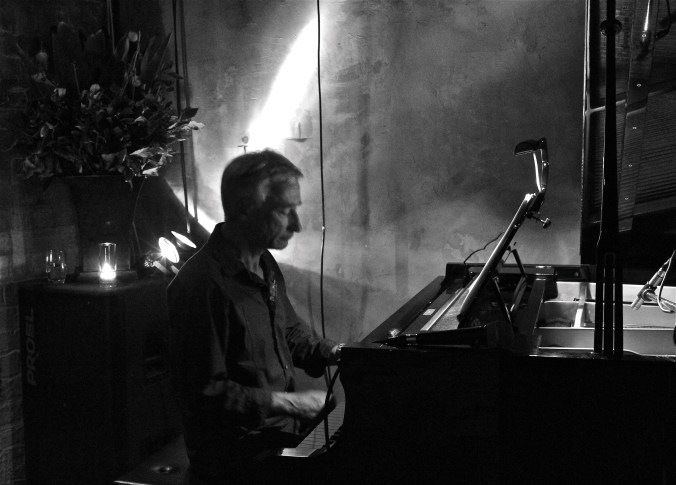
Kevin Field

Those of us who have been listening to the ‘Poets Embrace’ album for months knew the material backwards, but with new personnel, such keen improvisers and an extremely enthusiastic audience we were always going to get something different.  We did.

I like every track on the album but if pushed I would single out ‘Ancestral Dance’ as a favourite.  The version on the night was blistering and it captured the drive and ethos of the band perfectly.   As Nathan mines deeper into this material he constantly finds new ideas and it has been a real privilege to watch this project grow from its inception to this final CJC gig three-quarters of a year later.

This album has achieved a rare feat in New Zealand.   It rose to number three on the best-selling album list and tracks from the album rocketed up the charts to unprecedented heights.  To those of us who have rated the album highly this has not been surprising, but here’s the interesting thing.  This is no-holds-barred model jazz of the sort that came out on the Impulse Label.

Younger listeners found this no barrier and embraced it whole heartedly, which was evidenced by the age of the audience at the gigs.   Nathan has always had a diverse following, but this journey took us to a new place in our Kiwi Jazz journey.  For that he deserves our deepest respect and we wish him the best as he returns to London.   This era that is so faithfully evoked was the high water-mark of analogue sound and the warmth and glow is evident in the recording (see earlier blogs on Jazz Local 32 for the methodology of ‘The Poets Embrace’ recording).

An undoubted highlight of the evening was the tenor battle between Nathan and Roger Manins.   It was our own version of the Sony Stitt and Gene Ammons tenor sessions.   The crowds whooped in delight as this full-throated exchange occurred.   It was a night never to be forgotten.

The clip I have included here was filmed in the weeks before Alain left for China and so Stephen is not yet in the band.  The lineup on the night was Nathan Haines (tenor sax), Kevin Field (piano), Ben Turua (bass), Stephen Thomas (drums) – guest Roger Manins (tenor sax).

Matt Steele Trio

Matt Steele at the Steinway

About a year ago I was at a gig when my attention was drawn to a young pianist.   I soon learned that his name was Matt Steele and I wrote it down in a notebook; knowing that he would be one to watch.  As the months rolled by I would occasionally bump into him in the CJC Jazz Club or see him playing piano at the late night CJC Jam Sessions.

I had a strong feeling even then that he would develop into a really good pianist and my instincts were right.  At that time he was probably a first year Jazz Studies student, but now in the midpoint of his second year, we are seeing a mature and confident performer emerge.  He has the talent, taste and commitment to go where ever he wants.

Jarad Desvaux de Marigny

While having chops is an obvious advantage there are other subtler factors which impress discerning listeners.  Matt can demonstrate a strong two-handed swinging-approach when called for, but it is his lightness of touch and his awareness of space that impresses most.   He has grasped the most important lesson of all and that is what to leave out.

Matt attends the University of Auckland Jazz Studies course and the tuition that he receives from Kevin Field is obviously yielding dividends.

Eamon Edmunson-Wells

On the 23rd of May Matt appeared as part of the Lewis Eady Emerging Talent series, which has a strong classical focus and doesn’t generally include a slot for jazz pianists.  They could not have chosen better than Matt as his playing was superb and the repertoire was perfectly suited to the occasion.

The program featured several works by the Polish Jazz trumpeter Tomasz Stanko and his wonder-kind pianist Marcin Wasilewski.  I was extremely pleased to see these masterpieces of modern Jazz included.  There is a real space for performing this material and there is not nearly enough of it.   Matt played some of his own compositions and they fitted in beside the Stanko, Bjork, Wasilewski, Kuhn and Carmichael perfectly.

It was also an added bonus that a lovely Steinway piano was available for the performance.

The clip below is from the Lewis Eady performance.  The number was composed by Bjork and played by Marcin Wasilewski on his album titled ‘Trio” (ECM).   Matt’s interpretation here is impressive.  I must also praise the sensitive drumming and great bass lines.  we should be under no illusion; pieces like this are difficult to execute.   Unlike a fast burner everything is revealed.   There were brave choices in the program but it worked extremely well.

I had not seen Eamon and Jared before but I will watch for them in future.    This trio belongs together as their awareness of what is required of each other is highly developed.  I urge everyone to check them out.    Chelsea Prastiti joined them for one number and that was also great.

Alain Koetsier a top class drummer saw the clip and emailed me the following: “great stuff all round and very subtle drumming”.

Eamon, Matt, Chelsea & Jared

The Chelsea Prastiti Septet

Chelsea

There are a surprising number of good Jazz musicians living in New Zealand and that is why the CJC is able to provide a varied and interesting programme at the club.  With Roger Manins as programme director the quality of the music is consistently high.  I may have come to expect that, but I can still be pleasantly surprised.

Chelsea Prastiti is studying Jazz at the University of Auckland and I have heard her sing once or twice before.   I knew that she was good but what took me by surprise was just how good.   This was not your routine standards programme but fresh and original Jazz singing at the highest level.   It was the sort of programme that a Sheila Jordan or a Norma Winstone might have embarked upon and in spite of the risks it was perfectly executed.

Matt Steele

Matt Steele is a pianist I enjoy greatly and he certainly justified his place in the band on this night.  Matt is in his third year and each time I see him play he gets better and better. His extended solo on ‘Bells’ was extraordinary and I cursed the gods for allowing my HD video tape to run out just before that.

Callum Passells was also in great form and he showed us again why he is so well-regarded as a musician.  His alto needed little coaxing as he worked the changes and the ideas flowed in happy succession.  Any band with Callum in can count itself lucky.

The band members were; Chelsea Prastiti (leader, vocals, arranger, composer), Callum Passells (alto sax), Matt Steele (piano), Elizabeth Stokes (Trumpet, Flugal), Asher Truppman Lattie (tenor sax), Eamon Edmunson-Wells (bass), Jared Desvaux de Marigny (drums).

Chelsea had arranged the numbers in the set and five of the songs were originals composed by her.  I will mention three numbers in particular as the contrast between these illustrates how well thought-out the programme was.  Second in the set was ‘Bells’ ( C Prastiti) and it was mind-blowing.   The band blew like crazy and each band member seemed to urge the others to greater heights.  Chelsea, Matt and Callum excelled themselves .   This is one of Chelsea’s compositions and it had all of the elements of great Jazz contained within its structure.   A tight arrangement, harmonic inventiveness, room for hard blowing and a structure that lent itself to out-improvisation.  I was standing near to Caroline (who teaches her at the University) and after the number we looked at each other in disbelief.   Even in the subdued lighting I could see tears in her eyes.

Callum Passells

The fourth number was a skillful arrangement of Maurice Ravel‘s.  The airy – ‘La Vallee Des Cloches’.   This was a fully arranged piece and with vocalese in the mix it was the perfect counterweight to what had preceded it.   Drums, bass, piano, voice, alto sax, tenor sax and fugal horn in perfect concert.

It was the last tune that had us all wishing that the music would never stop.  The composition was once again by Chelsea and called ‘Santa Muerte’ (the Mexican ‘Saint Death‘).    It  immediately brought to mind the madness and the wild beauty that is Mexico.    A hint of mariachi and a lot of jazz chops were on display.    I have included that as a You Tube Clip.

That a student so perfectly executed such difficult and exciting material is breathtaking – more please Chelsea and soon.

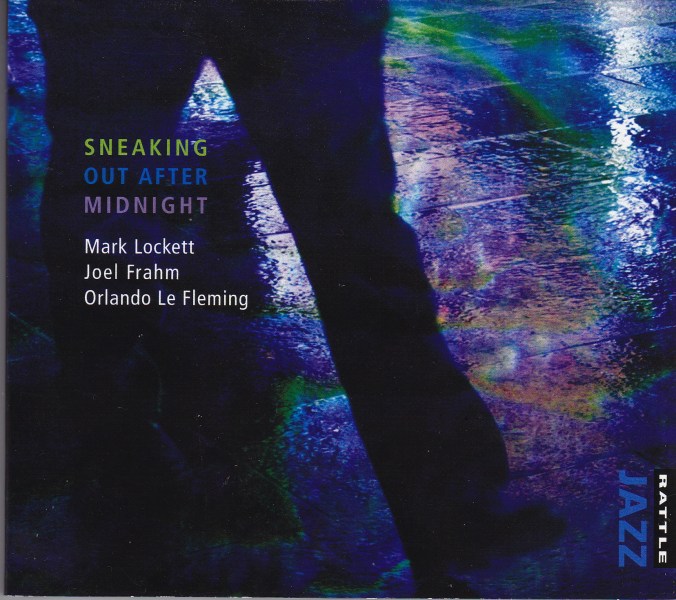
Mark Lockett – ‘Sneaking Out After Midnight’

Some weeks ago I received Rattle Records latest release.  It was Mark Lockett’s ‘Sneaking Out After Midnight’.   

It is a while since Mark left Wellington and he has obviously achieved much since then.   He is an educator, an innovator and a drummer with great chops.   When you look at who he has played with in the last decade and who his own teachers have been, the narrative falls into place.   This is an album that could not have been made by a lessor musician.

Mark is joined by two fine New York musicians; Joel Frahm (sax) and Orlando le Fleming (bass).   Joel Frahm has been around for a while and his album with Bill Charlap is one that immediately comes to mind.   He has been very much in demand around New York.    Orlando le Fleming (who was born in the UK) is equally impressive having also played with Bill Charlap and an impossibly long list of jazz notables.    These three were never going to be anything less than great when they joined forces.

It’s a nicely presented album with great artwork and even though cover art shouldn’t matter – actually it does.  Rattle always tries to present a complete package.

Good albums strive to break free of formulaic constraints and when a musical story is told in a fresh way this is achieved.   This is an album with an open, joyful and honest sound.   It is also Mark’s fourth album, which has allowed him to push harder at the musical boundaries.   His writing skills and his vision have made this a worthwhile journey.  

The Interview:


Q. Apart from the obvious subdivisions of genre do you have a view on what if anything makes NZ drummers so diverse in sound?

A. One of the many great things about being a musician in NZ is that you have to find your own voice and because there’s less competition musicians don’t have to perform to a certain technical level as to the all the other guys working on the same street as a musician in Melbourne or NY for that matter. Musicians in NZ have an opportunity like almost nowhere else in the world to find their own voice without being inhibited and from this a beautiful raw energy often emerges.

Q. Many drummers are writing now and in fact some of the most innovative compositions around are coming from the likes of John Hollenbeck, Matt Wilson, Eric Harland and Marilyn Mazur,who took the baton from Paul Motian and Jack DeJohnette. Why do you think this is as a drummer/composer?

A. I don’t often like compositions written by drummers and I think this is because they lack harmonic direction having said that I believe that more drummers are having lead their own bands these days to remain busy and employed and I don’t think this is a bad thing. Playing standards is great and I love doing it but when you play and tour a lot you can’t help but start looking for other musical vehicles from which to improvise.

Q. I have known about Joel Frahm for some time as he brought out an album with Bill Charlap (they are old friends). Orlando Le Fleming is an exciting bass player who has often worked with the amazing Lage Lund and Will Vincent among others. How did the collaboration come about?

A. A good friend of mine Aaron Choulai (piano player) got a chance to record with Tim Ries (sax player at the time with the rolling stones) in NYC some years back I first met Joel through that connection down at smalls jazz club. We bumped into each other several times over the years and I’ve always dug his playing. Another friend of mine happened to have Joel’s number so I called him up and he was really into it. Orlando was recommended to me by another great friend of mine and my current drum teacher Ari Hoenig.

Q. How was it working with these New Yorker’s.

A. Working with Joel and Orlando was the most amazing experience and one I’ll never forget.  These cats are true professionals in every sense of the word and two of the nicest, normal and most down to earth people one could wish for.

Q. How are things going in Australia for you?

A. I live in Melbourne and things are going great I’m very busy at present playing in several Peoples projects and planning my tour to NZ to promote the new cd dates are 3 July Wgtn Havana, 4th July Auck CJC and 5th July ChCh NMC at the conservatorium.

Q. Working without a chordal instrument brings different challenges and rewards. What are your feelings about working and recording with a sax, drum & bass trio.

A. I love this combination because it allows for a lot of musical freedom. It’s hard to find guitarists and piano players who are really skilled in comping.

Q. Is there anything that you would like to add about the album?

A. This album is my fourth release and I’m so excited about it, I think because it was a lot of fun to make and I grew up listening to these master musicians recorded with my hero’s eg Bill Stewart, Brian Blade etc I mean I use to sit in my flat in Wgtn in the 90’s and dream of playing with these cats and now a dream come true.

Thanks man we look forward to seeing you on your tour of NZ.    

Aucklander’s note; Mark will appear at the CJC 5th July

W: www.marklockett.com.au

E: mark@marklockett.com.au

Spiral @ CJC

Andrew Hall, David Hodkinson, Steve Harvie

Spiral is a band coming from a multi genre perspective with a sound blending funk, soul, samba, jazz and blues (and a hint of reggae).  They have a nice brassy sound and it is their horn dominated front line which pulls them closer to the Jazz end of the spectrum.

Spiral appeared at the CJC on Wednesday 9th April and in deference to a Jazz focussed audience they stretched out on a few numbers.   Their big exuberant sound easily dominated the room, with trumpet/flugal player Finn Scholes capturing a lot of attention with his occasional displays of bravura.   This is a band of many parts but for the CJC club audience it was the tightly executed high-spirited ensemble playing that they most warmed to.  When the band where playing the head arrangements they took the world by the scruff (sorry dog metaphors are hard to shake off this month).   They were so familiar with their material after performing around the country that the charts were only given a cursory glance.  It was that familiarity that brought the sound together and when a solid groove was called for the band delivered instinctively.

The leader of the band saxophonist, composer Andrew Hall was also the vocalist and most numbers began and ended with a few vocal choruses.   He took a number of tenor solos during the night and showed that he was in charge without hogging the limelight.   Andrew plays horns and winds but stuck to tenor on this night which gave more heft to the music.

Anthony Hunt was on keyboards and I liked his Jazz voicings.  He mostly used a Fender Rhodes sound.   He played a very nice Nord Stage and that instrument is capable of delivering anything that a band like this could demand from keys.

Finn Scholes is the player I am most familiar with.  His confidence on stage, his ability to introduce various stylistic concepts and his obvious chops make him the stand out.  We will be hearing and enjoying his playing for a long time to come I suspect.

Joel Vinsen played a nice Ibanez guitar and he utilised the variety of pedal effects at his disposal tastefully.  When the moods of the numbers changed it was his comping or licks that guided the others.  

Steve Harvie is a well-known drummer about town and he has played at the CJC before.  His drumming is tasteful and not over embellished.

Dave Hodkinson was on electric bass and he knew what his role was and performed convincingly.    In a small room an electric bass that is too high in the mix will drown out acoustic instruments.   He did not do this and his timing and lines were good.

Alex Berwick joined the band part way through the evening and his trombone added exactly what was needed to the overall sound.   He soloed nicely and reinforced the view that I had formed that the horn line were the stars.  

‘Dr Dog’ takes the Jazz Pulse of Auckland

Animal lovers, children and Jazzers alike were delighted to learn that the ‘Dr Dog’ Jazz quartet would be performing in the Creative Jazz Club (CJC). This was somewhat of a dream band as it featured ‘I cani popolari‘ from the halls of academia; Roger Manins (tenor), Kevin Field (piano, Rhodes), Oli Holland (Bass) and Ron Samsom (drums).

The band having no clear leaders could follow their noses, but in spite of that they worked as one throughout the evening. In Jazz-dog years they represented around 317.4 years of experience and so their ability to act in a disciplined manner was hardly surprising. They took their lead from each other.

Roger had managed to sniff out the microphone first and so the job of introducing the band members and the numbers fell to him. An endless stream of puns and dog stories followed and at one point some frank observations on the variability of dog intelligence risked causing serious offense to Afghan owners. As none appeared to be present the crises was averted and the dog related compositions flowed in happy succession.

If anyone thought this to be a frivolous exercise, they should be disabused of that notion. This was a band which had ‘chops’ (OK I had to put that in), the ability to delight a crowd and a string of intelligent compositions to shine over.

It is expected that the canine metaphors and jokes will continue to dog this band for some years; peaking around 2014 before eventually subsiding. As a departure from the normal CD prize there was a meat raffle. A cat named Jason took that prize.

The music that we heard was so good that a few of us are going to lay a trail of sausages; leading from the Auckland University School of Music Jazz Programme to the nearest recording studio (Yorkie Street studios or Ratter Records).

In researching this Canine Jazz phenomena I recalled another dog band which had performed at the CJC . Guitarist Neil Watson’s ‘Zen Dogs’ performed at the club about a year ago. When I ran into Neil months later I asked him if ‘Zen Dogs’ would be performing again soon. He answered in that enigmatic way of all Zen masters. “Oh that was a concept band”. “But will they be performing again”, I asked?. “No the band was literally a concept – not an actual band”. Confused and pondering the meaning of this Koan, I could not help wondering. Had I imagined the entire gig?

‘Dr Dog’ on the other hand is a band grounded in realty. A cartoon dog band entirely relevant to our times.

Footnotes: I have used sepia photographs to show respect, as they add a certain gravitas befitting the age and experience of the band. All photos are mine including ‘Dr Dog’ who was caught in Chelsea London and subjected to Photoshop without his permission. You will be pleased to learn that I managed to avoid using the following: barking up the wrong tree, woofers and Roger was a wag.

Kevin Field – ‘Field of Vision’ gig & album

Some die-hard Jazz fans complain that the modern jazz scene doesn’t produce enough music that sounds like that of the ‘classic era’.    This mythical era that they remember so fondly didn’t exist in the way they thought.  They forget that Louis Armstrong accused Dizzy Gillespie of playing ‘Chinese music’ and that Bill Evans was accused of not swinging.

The Jazz in any defined era has always sounded surprisingly different from the music that preceded it.   Jim Hall circa 2012 sounds nothing like the Jim Hall of the early ‘Pacific Jazz’ Era and why should he.   This is not a music to be set in aspic or to be kept in a hermetically sealed container to protect it from impurities.  Jazz is not a fragile dying art form but a vibrant improvised restless music that lives perpetually in the now.  As Whitney Balliett so famously said it is ‘the sound of surprise’.

Kevin Fields new album illustrates this premise perfectly. 

On Wednesday 25th April the CJC (Creative Jazz Club of Aotearoa) featured pianist Kevin Field as he promoted his ‘Field of Vision’ album.   Being a fan of Kevin’s, I had been quick to obtain a copy of the album and I was delighted by what I heard.  This was music with a deep groove and an unmistakable pulse.  The banks of synthesizers, the singers and the electric bass lines had given it a distinct Soul Jazz context.  Out of this came a series of mesmerizing grooves, which engulfed us in a way that made definitions quite meaningless.  As the band played at the CJC we sunk happily into a warm vibe that made the Autumn night seem very far away.  

The club gig kicked off with ‘See Happen’; a number that drew us deeper and deeper into a vamp while figures on the piano created a pleasing filigree by way of contrast.   The next number ‘imaginary friend’, opened the vistas wider.  On the album this was especially noticeable as the Steinway Grand, Fender Rhodes, Prophet T8 and Roland Jupiter 8 worked beautifully over the four piece string section

It had an almost cinematic feel to it and I could not help but be reminded of the work of Creed Taylor’s CTI label.  Instead of CTI’s Don Sebesky this album had utilised the services of Wayne Senior who arranged the string section.   The first airing of this material had been in the Kenneth Myers Centre and it was therefore fitting that Wayne Senior had been involved as his connection with the KMC goes back a long way.

The album was produced by Nathan Haines and his handiwork is evident throughout.  He plays alto flute, an ARP synth and is credited as co-composer on 4 of the 11 numbers.  The rest of the numbers were written by Kevin and they are probably his best work to date.

The band that Kevin brought to the CJC was a smaller unit than on the album and that is just as well because the club was packed.  A small club has a very different sound to a recording studio and the warmth and intimacy is the obvious benefit of being in that space.   When you buy the disk (and you should) you will notice a broader sound palette, a bigger line up and a crisper sound.  Both experiences are complimentary and anyone attending who has also purchased the album will count themselves lucky.  

Stephen Thomas had been brought in as drummer for the CJC gig and he had sweetened the deal by a congratulatory email that he sent to Kevin after the initial release.   “Man those were some sick grooves” he had messaged.  Kevin immediately confirmed him as right drummer for the gig.  Stephen is a terrific drummer and the choice was a good one.

Once again we saw Dixon Nacey perform and as always we watched open-mouthed.   This man is so good that it is frightening.  Completing the lineup were guests; Nathan Haines, Marjan Gorgani and Clo Chaperon (the latter had great soul voices).   All added something essential to the rich mix and in Nathan’s case this is only to be expected.

I would also like to mention Karika Turua.  He played a big Fender bass and his grooves although loud, were as big as his guitar.

There were a few quieter piano passages as well and on these we hear the crisp touch, the harmonic exploration and the crunched chords that have become so familiar to us in Kevin’s playing.  Kevin has many fans in New Zealand and most will have heard his previous piano trio album ‘Irony’ (Rattle Records).  Although different I would regard both as essential purchases as we follow Kevin Fields career.

The CJC band was: Kevin Field (Leader, Yamaha piano, Fender Rhodes, Synth) – Dixon Nacey (guitar) – Stephen Thomas (drums) – Karika Turua (bass) – Marjan Gorgani / Clo Chaperon (vocals) – guest Nathan Haines (alto flute, soprano sax).

On the album were: Kevin Field (Leader, Steinway piano, Fender Rhodes, Roland Jupiter 8, ARP Odyssey,Prophet T8  ) – Nathan Haines (ARP Odyssey, alto flute) – Dixon Nacey (guitar) – Joel Haines (guitar) – Mickey Ututaonga (drums) – Migual Fuentes (percussion) – Karika Turua (bass) – Bex Nabouta/ Marjan Gorgani/Kevin Mark Trail (vocals) – Cherie Matheson (backing vocals) – Miranda Adams/Justine Cormack (violins) – Robert Ashworth Viola) – Ashley Brown (Cello) – Chris Cox – (drum programming).

This album can be purchased in any major record store or for more information contact ‘Haven Music’ a division of ‘Warners Music NZ’.

All photographs by Peter Koopman – Gig venue/CJC Jazz club Auckland

Alan Brown@CJC (KMC Live launch)- C3 organ/guitar/drums

Alan Brown & C3

When ever Alan Brown brings a band to the CJC, the club fills to capacity.  Alan is well-known, deeply respected and he swings like crazy.  The ‘KMC Live’ release was always going to be a significant musical occasion, but on this night the sparks of inspiration flew between the band members and we witnessed something transcendent .  This was an incendiary gig that lifted our spirits; causing us to tap our feet uncontrollably and for some, to dance with abandon in the flickering shadows.   Alan had arrived earlier in the day, because dragging a heavy C3 organ down into a basement presented challenges.   The patience of Job and the strength of Hercules are required.  These wonderful organs with their bass pedals, wood-paneled console and double keyboard have probably caused preachers to swear when moving then.   It would not surprise me if some elected to rebuild the church round the organ rather than drag it up front.  It is our gain entirely that Alan achieved the translocation.   Hearing the wonderful bluesy phrases flow effortlessly from his fingers as they flew over the keyboards and seeing his feet pedaling out compelling bass lines was a rare treat.

Josh Sorenson

Dixon Nacey is without a shadow of doubt one of the best guitarists in New Zealand and it is a joy to watch him solo and interact with the other musicians.  During solos he will often close his eyes while weighing up the next step and his facial expressions reveal his commitment to the process as he dives ever deeper into the tune.  It is also a revelation to watch him in call and response situations.    When he and Alan are batting each other ideas, this often turns into good-natured un-armed combat.    Dixon watches intently while waiting for a challenge.  Occasionally calling to the others as if to say, “do your worst”.  When a musical phrase is tossed into the air he will smile gleefully and pounce on it, turning it about until it is fashioned into a thing of his own.  Josh Sorenson proved to be the perfect groove drummer as he locked down the beat and pulled the unit together.    This type of drumming requires specialist skills and Josh most certainly possesses these.

Tonight was the launch of Alan’s album ‘Live at the KMC’.   This was recorded at the Kenneth Meyers Centre back in September 2010 and choice of venue was fortuitous.    The venue is of historic importance as it has nurtured radio and TV in its infancy.    It is now part of the Auckland University School of Music (Creative Arts Section).  An acoustic gem.  Alan had recorded this gig thinking only that it could prove useful as a private resource.   One listen convinced him that he needed to release the material at some future date.

The set list at the CJC gig (and on the album) was a mix of Alan’s original tunes with three standards thrown in.   The standards  were ‘Maiden Voyage‘(Herbie Hancock) and ‘All Blues‘ (Miles Davis) and ‘Chank’ (John Scofield) – all arranged by Alan.   The rest of Alan’s compositions were; ‘Mr Raven’ (from the Blue Train days), ‘Charlie’s Here’, ‘Shades of Blue’, ‘In Fluence’, ‘Slight Return’, ‘Inciteful’.    ‘Shades of Blue’ was the best known of the originals while Alan’s interpretation of ‘Maiden Voyage’ was delightfully brooding and moody.  It was a nice take on this well-loved tune.  If I had to choose which of the tunes I liked best however I would probably say ‘Inciteful’.   This was played in extended form and it teased every ounce of inventiveness and musicianship out of the band.

On this night the stream of ideas kept coming, as fresh musical vistas were revealed.   Each one holding us in suspense until the next gem appeared.  This was organ/guitar/drum music at its best; intelligent, highly charged and full of joyous abandon.  A groove jazz trio of the sort you might find in East Philly or Montreal had been formed on our own doorstep.  This gig took place at the Creative Jazz Club (CJC) in Auckland New Zealand on the 18th April 2012

Dixon Nacey

Craig Walters/Mike Booth Project @ the CJC in Auckland

Craig Walters

During Jazz Week it was appropriate that the Creative Jazz Club (CJC) featured a band that was in some ways a metaphor for the greater Auckland scene.   Jazz week is about Jazz in our neighborhoods but it also about how we connect to the wider Jazz community.

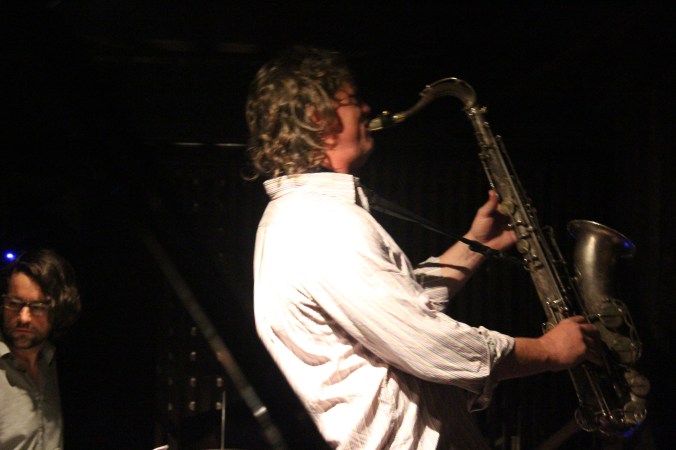
  The co-leader of this nights band, Craig Walters has lived in Australia since 1985.    Craig has an impressive background in Jazz, as he trained at the Berklee School of Music before going on the road as an in demand tenor player.  He has performed world-wide and with top rated acts.  Over the years he has earned a place as one of Australia’s foremost tenor players.   Australia claims him because he has lived and worked there for the last 27 years, but he was actually born in New Zealand.   
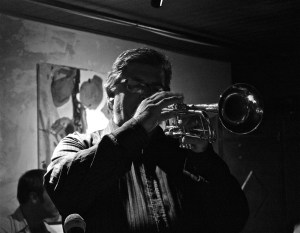
Mike Booth (trumpet player & co-leader) has a story that in some ways parallels Craig’s because he also travelled overseas and ended up working in the European Jazz scene for a decade or more.  Unlike Craig he returned to New Zealand a few years ago and since then he has been busy teaching, gigging and running a big band in Auckland.

The band was completed by a local rhythm section, Phil Broadhurst (piano), Oli Holland (bass) and Alain Koetsier (drums).   With this rhythm section in your corner the sound is going to be great and the band will back you up exactly when you want them to.  They are among our best.  As for Craig Walters and Mike Booth, they have known each other for years and this collaboration is merely an extension of their earlier projects.

Why do I consider this band to be a metaphor for the Auckland Jazz scene?  Craig Walters was born here and started playing tenor here.   I am fairly certain that there were no Jazz Schools in the city then and so he eventually ended up in the USA where he studied at the Berklee School of Music.   This is roughly the route that Mike Nock , Alan Broadbent and Matt Penman took (stellar musicians who left the Auckland scene to conquer the world).  This is what generally happens to our best and brightest but they do return.
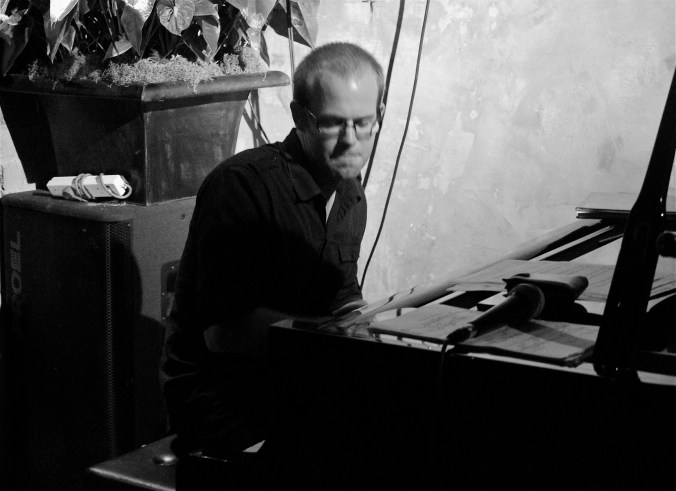
The pianist Phil Broadhurst is a stalwart of the NZ scene but he was born in the UK and so his story is the reverse of the above.  Oli Holland is also overseas born, as he was an established bass player in Germany before migrating to NZ.  Lastly there is Alain Koetsier who is the youngest in the band.  This was his last gig in Auckland as he departs for foreign shores in two weeks.  Such is the ebb and flow of the New Zealand Jazz scene but in many ways this disruption brings benefits.  Almost all of the musicians that we lose to Australia or to the USA eventually return and they enrich us with what they bring back.  Now that we have two Jazz schools and a youthful vibrant Jazz scene in the city (and a great club), the future is promising.  I also have no doubt that the departing musicians take a special something with them which is Auckland.

Craig and Mikes band were great and as long as these ex-pat to local match ups keep occurring we will be just fine.

This gig occurred at the Creative Jazz Club (CJC)  in Auckland, New Zealand on the 11th April 2012.  Remember to keep visiting the Jazz Journalists Association (JJA) pages during the next few months as there are a number of activities that will include us. These are; the Jazz week Blogathon, International Jazz day 30th April – Jazz heroes announcement, JJA Awards in June – Auckland Satellite party.
Dan Kennedy Quintet @ CJC – JJA Jazz Week Blogathon entry

Dan Kennedy

Greetings to the world Jazz community on USA Jazz week from Auckland New Zealand,

This is snapshot of a gig held at the CJC Jazz club in Auckland just over a week ago
I have known Dan Kennedy for some time now and I have always enjoyed his propulsive energetic drumming.    He has played at the CJC on a number of occasions and most often as drummer for the late night jam sessions.  Dan is popular on the New Zealand scene and he has played beside some prestigious visiting artists and top flight locals.   On this night he brought his own quintet to the CJC for a gig, where they entertained the audience with a mix of originals and lessor known but intriguing Jazz tunes by artists like Chris Potter and Dave Douglas.
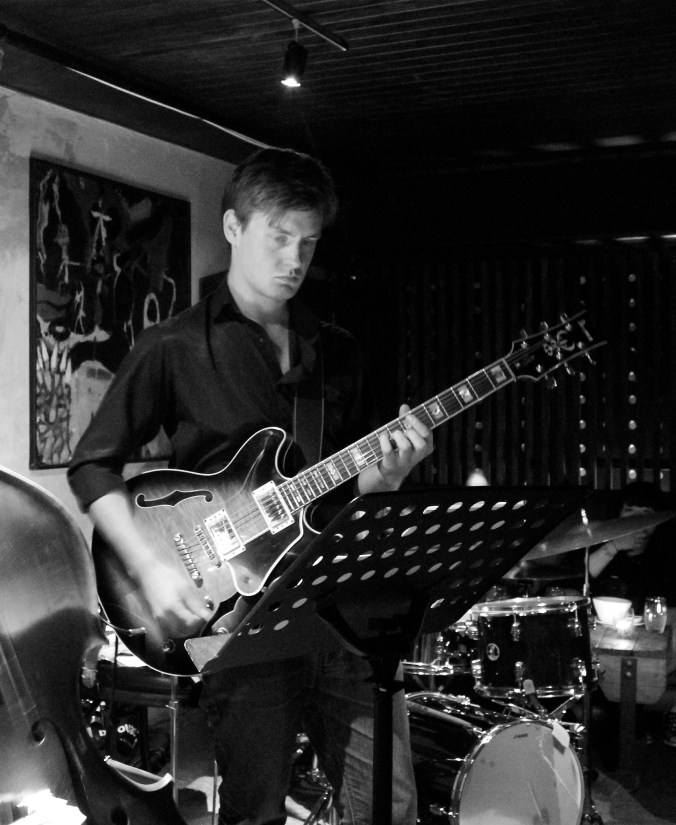
I like to see a quintet playing well-arranged heads and this band had put together a number of well crafted vehicles.   There were two numbers composed by Dan (leader and drummer), but the majority of the originals were composed and arranged by Finn Scholes (trumpet).   This was a varied and original program and it created nice contrasts.    They are a relatively young band with the oldest member being Cam Allen at 32 years.
Cam and Finn

Finn Scholes & Andy Smith

Cam Allen (Tenor) is an interesting musician, having played in New York and at other offshore locations.    His maturity of style was evident from the start and like many of our good tenor men he does not hold back during solos.   He can excoriate the audience or woo them with a set of ballad phrases and he is obviously a good reader as his playing on the head and out-chorus is always tight.
Andy Smith (guitar) has experienced a steady rise in popularity during the last year and it is no wonder.    His sound is pleasing and often rock inflected.    While the lines are pure jazz he uses the vocabulary of his day and this is a common trend with many younger guitarists.    Guitarists like Lage Lund or Mike Moreno are 100% Jazz but they are not afraid of taking a different route to reach their destination.    Andy’s tenure in the Alan Brown band has done him no harm at all and a good way to sample his playing is to locate a copy of Alan’s ‘Between the Spaces Album’ album.  Read my review of this album).  https://jon4jaz.wordpress.com/2011/10/09/alan-brown-between-the-spaces-cjc/

I knew who Finn Scholes (trumpet) was, but I had not previously heard him play.  I am pleased that this omission has been remedied.  He has a commanding presence on the band-stand and he can throw in the odd valve slur and muted growl when required.   I hope that he comes down to club again as I am keen to hear more of him.

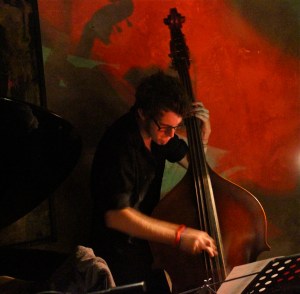
The electric bass was played by Cass Mitchell and she showed her chops and more importantly her good taste as she played through the sets.   While she did not do too many solo’s, she never-the-less delivered the bass lines like a veteran.   Electric bass players are often tempted to use ‘loud’ as their default volume level but Cass stayed exactly where she should be in the mix.   At times it was hard to believe that she was not playing an upright bass so smooth were her lines.

Dan told the obligatory funny stories from the bandstand and his account of how he came to write ‘The Bouncer’ was a classic.    “I often struggle to write tunes quickly” said Dan, “but after being beaten up by a night club bouncer for no good reason I managed to write this peaceful ballad in no time flat, go figure”.

Cass Mitchel

I also liked ‘Awakening’ by Andy, ‘Pleasure Arp’ by Finn (“I made him change the title just before the gig”, explained Dan, “because the original sounded too bloody soppy”).  The one genuine standard was ‘Oliloqui Valley’ by Herbie Hancock.  They certainly did this tune justice and it fitted in mid-set as if it had always belonged there.   Tune placement is important if the flow of a gig is to be maintained.   It was Finn Scholes tune “Fast Swing’ that had me on the edge of my seat.   To say that they stretched out and blew hard would be an understatement.    Dan is soon to head to Australia and we wish him well (a little begrudgingly).    We wish he would stay, but that is how it works between us and Australia.   We loan them some of our best musicians and they do well there; only to return home and dazzle us at regular intervals.    The stolen generation I call them. but they invariably make us proud.

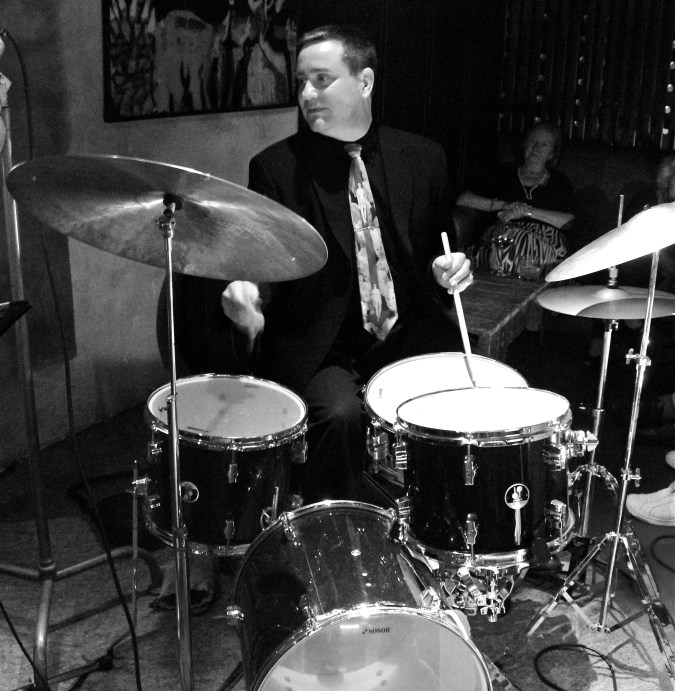
The Dan Kennedy Band are: Dan Kennedy (drums), Finn Scholes (trumpet), Cam Allen (tenor saxophone), Andy Smith (guitar), Cass Mitchell (electric bass).    The gig took place at the CJC Jazz club on Wednesday 4th April 2012.  To connect with the CJC gigs guide  http://www.creativejazzclub.co.nz/

Important Note:  This post is to feed into the Jazz Journalists Association 2012 Awards program.   Auckland is now part of a world-wide ‘blogathon’ occurring this week.   The program kick’s off today because it is the start of USA Mayoral designated Jazz Week.   Please visit the website of the JJA Awards Page and view the ongoing activities.    On the UNESCO designated World Jazz Day (which is the 30th April), we will be announcing the Jazz Heroes candidates from around the world.

NZ will be featured and I can’t praise the JJA highly enough for making a real effort to include Auckland and New Zealand in its scheduled events.    As a professional member I find the organisation to be helpful and incredibly supportive of what we do.    This is just the beginning Jazzers, as the world-wide outreach (connecting us to New York and them-to-us) can only get better as technology assists us in reducing the tyranny of distance.

The judging panel has also been meeting via a closed group FB page and the nominees for best artists are now posted on the Awards Page.    Along with other professional members I will be part of the final judging panel that determines the category winners.   That will be announced at a party which is to be held at a top venue in New York.    The good news for us is that Auckland Jazz fans will be participating through a Satellite Party.

That will be held in June and the details will be circulated through the CJC Jazz Club and the Jazz Journalists Association Awards page.  If you look through the Jazz Photography page you will notice a pic of our own Thomas Botting glancing lovingly at the neck of his bass.  I have also submitted a short You Tube doco about 3 nights at the CJC Jazz club.     I will post it at the end of this blog but do visit the JJA site over the next few months:

.  Jazz Journalists Association Announces Nominees for 16th Annual JJA Jazz Awards (theurbanflux.com)

Phil Broadhurst Quartet updated

Phil Broadhurst

I last saw this band at the launch of Phil’s ‘Delayed Reaction’ album.    That was September 25th 2011 and things have moved on apace since than.   For a start the album has had universally good reviews, reasonable airplay and attracted interest from offshore.  For a number of reasons it was bound to do well.  I suspect that the quality of the interpretations and the musicianship of the band clinched the deal.    While a number of well-chosen Petrucciani tunes are featured in the album, it is Phil’s own material that best focuses us on the diminutive masters work.

Oli, Alain & Roger

It is ironic that it has taken someone from the antipodes to put a fine lens on the inner workings of Petrucciani’s music.  Step by step as the material progresses we are granted the most intimate of glimpses.  Guided into a private world that only Phil Broadhurst has been able to reveal. This is the power of Jazz at its best.  Being able to dive deeper into the meaning of a tune as inner forms and colours unfold.   What is already wonderful is somehow made better or revealed afresh.

Petrucciani may have been small in stature but his percussive playing and unusually bold voicings have marked him out as a heavyweight.  His legacy is in fact so strong as to be virtually unassailable.  A few European tribute bands have recycled his compositions but there are few if any sound-a-likes (as happened with Evans).  Phil and the band made no attempt at slavish imitation; they did better than that.  They captured the essence of the music.

I suspect that Phil Broadhurst is one of the worlds foremost authorities on Michel Petrucciani and this is our good fortune.

We heard many of the tunes from the album, such as Phil Broadhurst’s own composition ‘Orange’ and Petrucciani’s  ‘Brazilian like’.   The material had not only been updated but we also heard some new material which Phil had written.  The band was playing up a storm and it was great to see Roger back after a successful trip gigging in Australia.  His tenor is always on fire and Phil and he sparked off each other as the night progressed.  Roger always watches the others carefully during gigs.  He watches them until he is ready to solo.  Then he leans back and takes off like a Titan rocket, leaving an open-mouthed audience in his slipstream.

Roger laying out before he unleashes hellfire

With Alain on drums delivering a flurry of beats, a fiery solo or whispering poetically on brushes the traps could not have been in better hands (he has become a favourite of mine and he will be missed when he goes overseas).  Oli’s playing is always worth hearing and he delivered strong bass lines and gave the band the support they needed.  He had been a little low in the mix for the first few numbers and that is a pity because what he has to say is worth hearing.   Once the sound had been adjusted it was if the jazz universe had suddenly fallen into place.

This was to be the bands last outing before Tauranga.  The group is finalists in the Jazz Tui awards and a play-off will occur Saturday night between The Phil Broadhurst Quartet (Delayed Reaction), The Tim Hopkins Trio (Seven) and the Roger Fox Big Band (Journey Home).  I have heard and reviewed all three bands and I know most of the musicians. This will be a tough call for the judges.

The Band is: Phil Broadhurst (leader, comp, piano), Roger Manins (tenor), Oli Holland (bass), Alain Koetsier (drums).

Callum Passells, trio, quartet, quintet

Callum, Cameron & Adam

A few days ago the CJC presented the Callum Passells group.   Callum is a third year student at the Auckland University School of Music (Jazz Studies) and so are his band mates.  If anyone harboured the briefest thought that this group should be cut some slack on account of age or experience, forget it.   What we saw was a slick act, a great programme and the sort of discipline that generally comes with seasoned performers.   This band did the business and they held us in the palm of their hand throughout.

I had only seen Callum perform a few times; once at a house party and once during a jam season.  Those brief encounters had not been enough for me to form a clear view of his abilities and so I arrived with an open mind and no fixed expectations.   I now recall Roger Manins saying that Callum was a terrific saxophonist and that he had the hunger to succeed.  That should have clued me up.

Cameron

Callum is a very nice altoist and his tone is as sweet or as hard-edged as the tune calls for.  Once in a while I could hear a hint of Cannonball Adderley.  Not a copied lick, but more of a bluesy swagger and the stuttering way that he would burst into a phrase.  During one such moment I must have uttered the word ‘Cannonball’ to myself.  The person sitting next to me suddenly said, “yeah, I heard that too”.

The band was well rehearsed and they had paid attention to the smallest of details including how they presented themselves on the bandstand.  Their programme was quite varied and each number fitted into its place and told its own story.   There were piano-less trio numbers, quartet numbers and quintet numbers.   The tunes were all originals and they were well written.

I have to comment on the quintet arrangements which were simply sublime.  Some of the better arrangers like Marty Paich or Kenny Wheeler could arrange tunes in such a way that smaller ensembles sounded as if they were much bigger.   The advantage of this is that it leaves the listener with a feeling of airiness.  A sense of the space around each instrument.   

When I first heard the quintet I was surprised at how big the sound was.  There were only two horns, Cullam Passells (as) and Liz Stokes (t, fh).   This is the illusion created by good arranging.  Liz Stokes was especially fluent in the second set and a Wheeler-esk slur added colour to the performance.

I have seen Cameron play before and he really stepped up a notch with this gig.  I think that he enjoyed it and it was a challenging workout for bass.  The drummer Adam Tobeck was comfortable throughout and he pushed himself harder in the second half.   A blistering solo earned him his stripes with the CJC audience.

The band member I am most familiar with is Matt Steele.   I have liked his playing from the first time I heard it and he was even better at this gig.   He has a mature style but it is different to many of the pianists I hear as his touch is often light and crisp.   His comping is breathtaking as he urges the soloists to greater heights.  While you are always aware of his right hand soaring in chromatic invention during his solos, his left hand weaves its own chordal magic.  If I needed a single word to describe his playing it would have to be melodic.  

The set list was a work of art in itself.  On the page it read like an Imagist poem by Langston Hughes or William Carlos Williams.

The set list was as follows:

Race-car Red Red Race-car, Molasses, What the Fuck is a Persimmon, Money Grubber, I’ve, So This is What it’s Like,  Magnetic North, Wrack, Candied Carrots, Elysium, Greens Waltz, Up Up Down Down Left Left Right Right AB

The band was in order of appearance – Trio:  Callum Passells (leader, arranger, composer, alto saxophone), Cameron MacArthur (double bass), Adam Tobeck (drums).  Quartet add; Matt Steele (piano), Quintet add: Liz Stokes (trumpet flugal horn).

Callum presided over the night with that easy confidence of a born leader. He told very funny stories (especially the WTF is a Persimmon story) and he encouraged his band in a way that ensured they gave their best.   If that is the calibre of students emerging from the city’s Jazz schools then we are in for an exciting future.   Big ups to the band and especially to Callum.


Frank Gibson – ‘Hardbopmobile’

Frank Gibson Jnr

Frank Gibson Jnr is New Zealand’s best known drummer as he has been playing and teaching for most of his life. He has accompanied numerous artists such as Milt Jackson, Emily Remler, Sonny Stitt, Joe Henderson, Randy Brecker, Slide Hampton, Mike Nock and the list goes on. He has also occupied the drum chair for many of Alan Broadbent’s recordings. Whether laying down sensitive brush work or powering an orchestra, Frank has long been a presence on the scene. He is a seasoned leader and it was in this role that he returned to the CJC with his ‘Hardbopmobile’ band. As leader he was able guide the proceedings without being overly dominant. He trusted his band to do the business and they responded in kind.

The ‘Hardbopmobile’ lineup is: Frank Gibson Jnr (leader, drums), Neil Watson (guitar), Ben Turua (double bass), Cameron Allen (tenor saxophone).

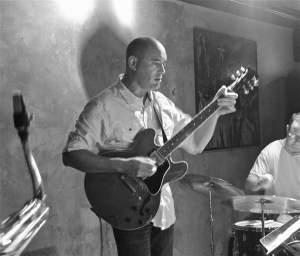
Neil and Frank have been playing together for some time and the ease with which they communicate on the band stand is translated into good musical outcomes. I noticed straight away that Neil was not playing his usual solid-body Fender, but he was stroking chords and runs out of a modern version of the D’Angelo 1947 arch-top. Man it looked beautiful, just lying on the piano during set-up.

The set list was mostly out of the Hardbop songbook but a few earlier placed numbers were tackled as well (‘Boplicity’ – Miles Davis). A spirited Wes Montgomery tune was played early on and Neil negotiated the changes and the octave chords in the best possible way. A straight out imitation would have sounded clichéd, but this was a respectful modern take on a classic sound. Like all gifted guitarists, he is able to negotiate complex tunes with apparent ease; dancing and leaning into the music as he delivers a storm of fresh ideas. This is wonderful to listen to, great to watch and but the very devil to photograph.

Two monk tunes were played: ‘Ask Me Now’ and ‘I Mean You’. This is where the tenor player Cameron Allen took the lead. In the former tune he took an angular approach, unravelling it as improvisers do and then diving deep inside the melody. I should probably have been aware of this tenor player before now, because he is very good. We appear to have a tradition of producing good saxophone players in New Zealand – getting wider recognition for them and finding them enough gigs is the real problem.

A couple of hard bop classics were played; Joe Henderson’s ‘Isotope’ and Horace Silvers ‘Senior Blues’. The band interpreted these tunes in their own way and to hear a ‘Hendrix’ like riff being mixed into ‘Senior Blues’ was as surprising as it was effective. I would also like to mention the bass player Ben Turua here. He took a few solos and above all he swung hard.

D'Angelo Archtop

Alain Koetsier Band @ Finding Kiwi ‘Standards’

I have watched drummer Alain Koetsier perform over the last year and his credentials on the traps are unimpeachable.  Alain is a drummer with a modern feel and it is plain to see why so many of our top Jazz groups utilise him.  This was probably his first outing as leader and he had chosen wisely on two fronts.  His band mates were consummate professionals and their approach to the music was intuitive.  They interacted as if with one mind.  The second thing Alain did well was to select a set list of recent compositions by New Zealand Jazz Musicians.  I liked the concept.

People expect a band to play their own originals but when a set list focuses on a wider spectrum of Kiwi Jazz compositions it feels respectful.  It somehow lifts the tunes to another level of availability; a place of wider appreciation.  Doing this is a good start point in identifying our own ‘standards’ and some of the tunes played could well reach that bench mark.  As the scene continues to mature this will surely happen.

Alain & Dixon

Alain & Dixon

I was pleased to hear two tunes which had impressed me at recent gigs; ‘Dicey Moments’ by Oli Holland and the wonderful ‘Ancestral Dance’ by Nathan Haines.   Both of these new compositions are distinctive, clever and memorable.  Dixon Nacey compositions also catch the attention as he has a knack for locating the right hooks while providing a solid base for improvisation.The first set had contained ‘Bad Lamb’ (Dixon Nacey).    The tune had nice chordal voicings and the way it unfolded led us easily into the heart of the tune.

Another memorable number was ‘Tree Hugger’ by the Auckland-born bass player Matt Penman.   Matt has moved into the upper echelons of Jazz bass, occupying a respected place on the world scene.   Maybe he will return the compliment one day and acquaint North America with a few of the other compositions.

The gig was fun to experience and obviously fun to play as the musicians enjoyment of what they were doing was easy to discern.  Like many Jazz gigs there was a high degree of spontaneity and perhaps this came from being thrown in at the deep end.   Working musicians seldom have a lot of time to rehearse and when confronted by complex charts they appear to relish the prospect.

The musician that I was unfamiliar with was Pete France on tenor.   I know that he has played the CJC before and my friends tell me that they had hoped for his return one day.    His tone is rich and full and his improvised lines meaningful.   He is also relaxed on the bandstand and when you consider the calibre of his band mates this ease of manner speaks volumes.

Oli Holland

The band featured Oli Holland on bass.  His approach and focus drew you in inexorably as he demonstrated chops, impeccable timing and melodic invention.  His skills are considerable, as he can move from contrapuntal walking bass to melodic invention in an eye blink.   Oli gave his best, but then he always dies.

Pete France & Oli's hand

Lastly I come to Dixon Nacey.  His playing is widely appreciated throughout the NZ Jazz scene. As good as he is, he always strives to do better.   His compositions sing to us and his chordal work and rapidly executed lines astound.    It is good to be in a town where this man is playing and long may it continue.

Well done Alain – more please.

Nathan Haines – ‘The Poets Embrace’

On the 29th November 2011, those lucky enough to be at Nathan Haines CJC gig heard him playing ‘The Poets Embrace’ material.  As far as I know, this was the first public outing for the band and everyone who attended quickly grasped the importance of the event.   Hearing Nathan exclusively playing tenor (and not just any tenor) was intriguing because he is noted for being a multi reeds and winds player.   This gig was somehow different and it had a focus that was palpable.  It was about authenticity and it was about a deeper exploration of Nathan’s music.

Nathan’s approach to his music is a comment on his professionalism.  He divides his time between the UK and New Zealand and he recently headlined at Ronny Scotts Jazz Club in London.  Nathan is one our most talented musicians and I have learned that he never does things half heartedly.

Following that gig Nathan and the band cut an album.     The producer was flown in from London, the vinyl was pressed at Abbey Road, the tenor was a Selmer Mk 6 (ex Brian Smith), The piano was a Steinway B, The recording was made at the York Street studios on analog equipment and using classic microphones….I think you get the picture….glowing valves….absolute authenticity.     Above all this is terrific music and it may become the bench mark for future New Zealand Jazz albums.  The album will be released by Haven Records a division of Warners Music and it should be widely available.

The album is to be released on the 19th March (available on CD or limited edition vinyl)  The promo video is also worth watching as it conveys a real sense of the music we are about to experience.   The attention to detail is evident and one senses that the narrative is an important part of this journey.  People should book now for the launch, which is on Friday March 23rd, 8pm at the Monte Christo Room (behind the TVNZ building Nelson Street).    The entry price for the official launch is $25 pre-sales/$30 at door.  For those who are otherwise engaged on Friday why not get down to JB Hi Fi between 12pm – 12:30pm (any day 19th – 23rd).  If you do you will hear the full band.   It is impressive that a mainstream outlet like JB’s has been so supportive.    Please turn up if you can and this will encourage the store to support more Jazz releases in the future.  If it is wet outside so what, there is no cost to attending and what could be better; Jazz on an Autumn Day.

 These are all great musicians as you will soon hear.  They are; Nathan Haines (ts), Kevin Field (p), Thomas Botting (db) Alain Koetsier (d).

For the gig review see my earlier blog post “The Nathan Haines Fourtet”.

‘Seven’ – Tim Hopkins Trio

Interaction - Tim & Dixon

I purchased a copy of ‘Seven’ from Rattle Records not long after it was completed.   The cover art portrayed black sand, which is strange to those unfamiliar with it.   For those who have not encountered it before, black sand can also be surprising.  Subtle light-shifts can throw up a myriad of purple and blue hues, and the textures revealed by the drift patterns are in constant flux.   ‘Seven’ reflects Tim Hopkins’ music in much the same way.

Tim Hopkins is well-known to those us who have followed the New Zealand Jazz diaspora.   He has recorded extensively as a sideman with the likes of Mike Nock (and many others) and he has recorded a significant number of albums as leader.  Tim lived in Sydney for many years but he eventually returned to New Zealand where he is now based.  He teaches and performs in the capital city.  His long experience as a tenor player has taught him to throw caution to the wind.   He is adept at developing free-flowing Post Bop lines, but he is not limited by that.  While quite capable of playing sweet and low he does not invite complacency, as he can just as suddenly deliver a scalding declamation.   His style is to conduct an honest conversation with the audience and few punches are pulled.  This is not to say that he is too serious for he has a highly developed sense of humour which he uses to advantage.

Tim started the gig by explaining some of the concepts behind the ‘Seven’ band.   “Someone is missing from this band” he said gesturing behind him and I initially thought that he was referring to Richard Nunns (who had appeared on a few tracks of the album).  Tim meanwhile continued to explain, “He wasn’t invited, (pausing) it is the bass player”.   A bass player is the compass and when a band plays adventurous and complex music the lack of a bass places a heavier burden on the remaining musicians.  These guys were fully aware of the job in hand.   It is often the case that an experienced leader will develop an uncanny knack for selecting just the right sidemen and this was evident here.

Dixon Nacey is not only a versatile and superb guitarist but he is a musical free spirit.   His eyes light up when he is thrown a challenge and he soon throws a challenge back.    This guy is one of our finest musicians and the younger guitarists watch his every move.    I suspect that a lot of the weight fell to Dixon in this gig, but you wouldn’t have known it to see him smiling as he dared Tim or John to answer his challenges.    This was call and response at its best.

Dixon Nacey

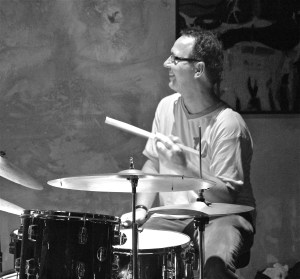
The drummer was also perfect for the role.  It was the first time that I had seen John Rae on traps and I hope that it will not be the last.  He is unlike many of the drummers we see, as his approach is loose and organic.  If he wants to up the ante he will suddenly shout at the others; exhorting them to give even more.  He is also far from a locked-in drummer as he will punctuate and change the groove at will.  I really liked this approach as it was the ideal foil to Tim and Dixon.

I also sensed that the band was unafraid of being overt and about confronting the political realities of our times.  This flowed through the music and I loved that about them.

At the beginning of the second set Tim was about to introduce the number when he looked into the audience and said, “Can someone bring a bouncer and throw out that old man talking in the front row”. The talking continued and Tim said in a slightly menacing northern Irish accent, “old man – go home to your wife – go home to your children”.   A short silence followed and then “Dad shut up”.   The smiling offender was Tony Hopkins his father.   Tony is much-loved on the Auckland scene for his skillful drumming.    I saw him when I was young and I would like to acknowledge his influence on my generation and beyond.

Another good example of Tim not taking himself too seriously was the introduction to ‘23rd century love song‘.   He explained that this was the result of endless navel gazing and that the market he was aiming for was probably chemistry professors.

While aspects of the gig were challenging, the night has left me with a lot to think about.   Music should occasionally challenge us and it should make us think.   I find myself going back to the album to re-examine a track or a phrase and this is a good thing. The communication is still happening.  John Rae

The numbers that have stuck with me are ‘Road From Perdition’, ‘All Blacks & Blues’ and the lovely ‘The Sleeping Giants’.   for a copy of this go directly to Rattle Records at http://www.rattle.co.nz – failing that try ‘Real Groovy’ ‘JB HiFi’ or ‘Marbecks’.

The Jam: After the gig there was a jam session and it quickly morphed into a mammoth affair.    Drummers, saxophonists, guitarists and singers crowded the band stand while fours and honks were traded to the delight of the audience.  I don’t think that I could name everyone who played but I will try: Roger Manins(ts), Tim Hopkins(ts), Noel Clayton(g), Aron Ottignon(p), Matt Steele(p) Tyson Smith(g), Dan Kennedy(d), Tony Hopkins(d), Tim ?(d), a young drummer (?), Dixon Nacey(g), Callum Passells(as), Holly Smith(v).    Roger played a lovely breathy Ben Webster sounding ‘Sunny Side if The Street’, Holly sung a fabulous bluesy ‘Summertime’ while Tony played just like he always does.  Sitting just a fraction behind the beat and in perfect time.

Ottignon Bros Tour – Crazy in the moment

Ottignon band @ CJC

Matt, Eden & Dan

Seeing the Ottignon Brothers perform is to be put in mind of a very clever vaudeville act. There may have been more gags in a vaudeville act (well that is not strictly true) but the interaction between band and audience was honed to perfection.  The jokes were often of a musical nature and none of them missed the mark. This was great fun, highly inventive music and above all top class entertainment.

I first saw the Ottignon brothers when they were living in New Zealand and again some years later after they had moved to Australia. Aron was regarded as a prodigy on piano and I recall seeing Matt performing high wire saxophone acts somewhere. The brothers are now scattered around the globe, with Aron living in Paris and Eden & Matt based in Sydney (but gigging all over). The Australasian tour gave us a chance to connect with their new music and for the brothers it was a chance to play together again after 8 years.   The audiences responded by packing out their gigs.

Watching them communicate on stage was fascinating because they didn’t appear to need the cues that others rely on.   This apparent telepathy was advantageous to them as they responded to each other with lightning speed. The spontaneous twists and turns of the gig required them to be fleet-footed.

Aron

The way they had arrived at their set list was fairly post-modern and to lesser musicians it would have been challenging.  Only days away from the first gig in Australia they had put up a Facebook post; requesting ‘friends’ to nominate the tunes they should play. To be selected, each tune needed to attract at least two votes and predictably the suggestions were quirky. ‘Black and Crazy Blues’ (Roland Kirk), ‘Eden’s ukulele Song’ (Eden singing with ukulele, composed days before the gig), ‘African Mailman’ (Nina Simone), ‘Running Up That Hill’ (Kate Bush), a Medley of Sly & The Family Stone numbers, The poem ‘Trees’ which had been suggested by their Grandmother (Edwardian war poet Joyce Kilmer), ‘God save the Goat’ etc.  You get the idea.

The diversity of the material held the audience’s attention throughout, but it was their good humour and the solid musicianship which clinched the deal.Eden & Dan

Each number was a little crazier than the last but there were a few numbers which will linger in my memory for quite some time.  When Matt played the ‘Sly and the Family Stone’ medley the tone on his tenor morphed into a deep breathy rich sound.   On ‘Its a Family Affair’ he reminded me of Pharaoh Sanders and I asked him about that after the gig.   He told me he had been taking an interest in some Ethiopian tenor players of late and that they cultivated that particular sound.  The other number that I liked was more of a novelty and that was when Matt played his iPhone using the ‘Gyro Synth’ app.   This looked easy but it is not (I know because I have the app).  Matt has played with Lou Reed, Brain Wilson and Mike Nock among others.

Throughout Aron laid down solid percussive grooves on the piano and lived up to his considerable reputation.  In Europe he fronts a group called ‘Aronas’ and is featured in a number of well-known bands.   Eden showed his chops on double bass and electric bass, but also ventured into song and ukulele as the set list demanded.   Eden is the leader of the ‘Sun Searchers Collective’.  Dan Kennedy was on drums for the New Zealand leg of the tour and Kiwi’s are familiar with his tight propulsive, energetic style.    Dan is a favourite at the CJC and they could not have picked better for this gig.

Matt performing on iPhone.

Aron pleasing large crowds in the South of France

Astral Surfers – Murray McNabb Band @ CJC

Murray McNabb

I have seen Murray McNabb perform many times over the years and it has often been said that he plots a course at variance to the mainstream.   If this is true it could also be said of many top Jazz musicians; they understand that Jazz audiences seldom want to hear endless note-perfect repetitions of previously played music.   Improvisation demands musical bravery and the Murray McNabb band has this essential quality.   The sharp-witted Zoot Sims summed up the sentiment when he said, “Jazz is the music where you never play the same way once”.

Auckland has of late been experiencing an explosion of Jazz creativity and the ‘Astral Surfers’ album is a fine example of this.   The album came out over a year ago and for some reason I had never located a copy.   I should have tried harder because the album is marvelous.  It gives a nod to the best Jazz of the 1960’s but the album is also very contempory.   This is a musical narrative (like ‘Zoo’) and the overall vibe is essential to the journey which unfolds. It is exactly as the title and track list suggests; a journey through exotic and often surreal landscapes. I am always up for this if the music is good and it is.

The album was created with a much larger pallete than the live band used at the CJC.   Apart from the core band of Murray McNabb (keyboards), Frank Gibson (drums), Neil Hannan (bass) and Stephen Morton-Jones (saxophones), additional members were present on the album.  Martin Winch (guitar), Basant Madhur (Tabla), William Yu (dulcimer) and Tanya Li (erhu).  All of the compositions are Murray McNabbs.

For me, there is a powerful presiding spirit hovering over this album and that is guitarist Martin Winch.   His passing late last year was felt deeply in the Auckland Jazz community and to have him recorded to such advantage here, makes the album a treasure for that reason alone.

The first two tracks on the album are ‘Marco Polo’s Return’ and Sub Continental’ .    These tracks draw on the shifting sounds and colours of the silk road.    Stephan Morton-Jones weaves engagingly in and out of a solid groove laid down by Murray, Frank and Neil, occasionally extracting microtonal effects from his soprano as he traverses foreign sounding scales.    The richness and diversity of the musical palette does not divert us from the core theme and that is as much down to Murray’s writing as to the musicianship of the band.   Adding tabla, dulcimer and erhu into the mix works, as they fit in well and enrich without overpowering.

The title track ‘Astral Surfers is also brilliant with Frank Gibson putting his experience and chops to the best possible use.   He makes sure that he does not overshadow the tabla while never-the-less blending in a few percussive tricks of his own.

It is the track ‘Snake’ that I like best.  It has a solid bass line and a nice melodic hook while providing a vehicle for improvisation.   Martin Winch can be heard playing against Murray’s engaging vamps while Stephen extracts alto gold from the deep groove.  Martin and Murray also provide convincing solos.

Many of Murray McNabbs compositions are modal or give the impression of being so.   He has developed the art of extracting profound messages from apparently simple progressions and the fact that they are so satisfying is due to his writing skills.

The band that fronted the CJC gig was the basic McNabb, Gibson, Hannan & Morton-Jones unit.   They got down to business and showed us that they did not need the extra instruments to create a big sound.   Murray had thrown a curve ball at Stephen by writing parts for two saxophones (to be played simultaneously) and Stephen in true Roland Kirk fashion had risen to the challenge.  I asked him after the gig if it had been daunting to play two saxophones at the same time and he admitted that he had needed to work hard in order to get there.   The fingering on a soprano and on an alto is the same, but a fourth apart.   This unison playing worked well and at times Stephen also used one of the instruments as a drone.   He joked afterwards that the biggest challenge would be playing counterpoint to himself.   Maybe that wasn’t a joke.

Many of the tunes played were not from the album and the first tune Scarborough Fair (trad) was a knockout.    This had been reworked into a near modal form and the rich voicings and nice ballad groove gave the band a freedom which they used to advantage.  Another tune that appealed was ‘Turkish Like’.    I intend to follow the McNabb band more closely in future but I will not be expecting more of the same as they tend not to do that.

James Ryan – Jazz without a parachute

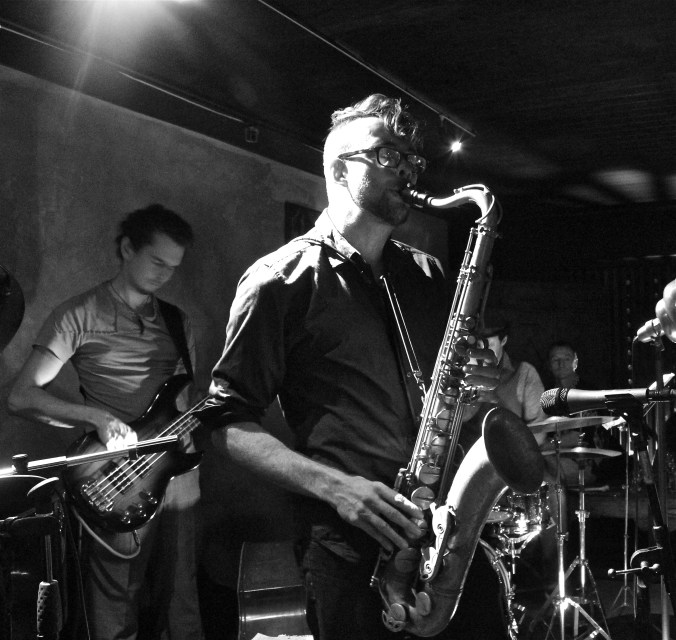
James Ryan is a Sydney based tenor player and he has appeared at the CJC before.  On Wednesday nights gig he fronted a trio of saxophone, drums and bass.   In configurations like this where chordal instruments are absent, a band is taking a more adventurous route.   Guitars, pianos, horn-sections and jazz orchestras provide a safety net for horn soloists and in addition they tend to fill in much of the soundscape with colour and a variety of textures.  Without this underpinning, clean open spaces can be revealed and the bones of melodies can be unraveled or looked at afresh in their raw beauty.    This is jazz without a parachute.

The precedent for such trios goes back a long way.   Gerry Mulligan came close with his famous piano-less quartet of the 1950’s, but the addition of another horn (Chet Baker or Bobby Brookmeyer) allowed for chords and complex counterpoint.  The most notable historic piano-less trios were Sonny RollinsWay Out West‘, Lee Konitz, ‘Motion’ and the drummer led Elvin Jones ‘Ultimate’.    There are many others and I should also mention the Max RoachDizzy Gillespie duos with just trumpet and drums.  Our own Roger Manins has also explored saxophone trios and his well received album ‘Hip Flask’ is a notable example.

I did not hear James the last time he appeared, but I was soon to be impressed by what was on offer.  His choice of band-mates proved to be fortuitous as Tom Botting (bass) and Ron Samsom (drums) rose to the challenge with enthusiasm.   In this blue-sky environment each artist knew what needed to be done and more importantly what must be avoided.  The was no overplaying and the flow of musical ideas was engaging.

James introduced the first set by playing solo for a number of bars and we could hear immediately that he was brim full of interesting ideas.  This was a good way to open because when the bass and drums came in, their addition filled the space with possibilities.  The fourth tune of the night ‘Micky B’ (Ryan) was a good example of this interplay.   In this case the tune had been set up by the bass and it soon developed into a hard-driving bluesy exploration of the theme.   James drove deeper and deeper into the changes and freed of the need to avoid piano or guitar, he took the music where he wanted it to go.   While James took care of business Tom Botting found just the right responses and Ron Samsom showed us again why he is a master of the drum kit.

After a number of interesting originals had been performed the band switched seamlessly to the well-known standard ‘You and The Night And The Music”.    James explained afterward that this had not been on the set list, but because Tom had quoted from it during an earlier bass solo he added it on impulse.   It is when we hear a standard that  we can form the strongest views and make comparisons.    The audience will know where the tune has gone before and be interested to see just where this band is taking it.   This particular exploration was inventive without being disrespectful.   It had an element of surprise in the familiar and that is what the best Jazz is about.

As is so often the case when Ron Samsom is on the bandstand, the percussion work was extraordinary.   His use of mallets and his inventiveness riveted the audience again and again.   He can play tightly in the pocket or with an understated but completely engaging looseness.  We saw him as more than a drummer in this set up.  He was an instrumentalist capable of filling any space.

There was one free number during the night and it was a riot.    James announced that he would play a tune of his titled ‘Rocket No 7’.    This was an homage to Sun Ra and his much admired composition ‘Rocket No 9’.   A few bars in James just let rip and the band quickly followed him into what were obviously unchartered waters.  This decoupling from the changes was soon evident and the organic freedom took us on a wild and delightful ride.   While the music was as free as a skylark it was never directionless.    Both band and audience were smiling at the end and everyone in the room knew that they had experienced something special.

After the number James wiped the sweat from his brow and pulled the mike towards him.   “That was nothing like ‘Rocket No 7” he said to our delight.

As with many of the Australian visitors we look forward to his return.

Steve Barry – PJ Koopman Quartet

We had been expecting the official release of Tom Dennisons ‘Zoo’ album but instead we got two musicians from that group in a new and exciting configuration.   While we were saddened that the ‘Zoo’ date was postponed, we could not complain as we were treated to a slice of Jazz heaven under the skillful co-leadership of Steve Barry and P J Koopman.

I make no bones about my enthusiasm for Steve Barry’s piano as I have heard him and reviewed him twice before.    Steve was back in town for two gigs only and the first of them under the leadership of premier Australian drummer Andrew Dickeson, had been a success by any measure.   This time Steve was appearing as co-leader and so many of his own compositions got an airing.  He and the much respected guitarist P J Koopman were also able to stretch out on some well-chosen and seldom heard compositions gleaned from the Jazz song book.

The other two quartet members were Oli Holland (bass) and Ron Samsom (drums).    This dream lineup gave us our moneys worth and a whole lot more.

The first number was the 1935 Jerome Kern/Oscar Hammerstein classic ‘I’ve Told Every Little Star’.   It started with the bones of the melody and swiftly evolved into a swinging medium tempo number.  The composition should perhaps be credited to a small melodic bird, as it came to Kern when he heard a rare finch with a beautiful name singing on his windowsill (Melospiza Melodia).  It was also the last thing Kern sang from his death-bed.   In the hands of this band both bird and composer could not have failed to appreciate the updating.

The next number was a rendition of the moody atmospheric ‘Mantra’ by Kendrick Scott.   This is the perfect vehicle for guitar and piano and its deep penetrating lines were used to advantage by the band.    It is also a number where the drums (with mallets) and bass can be brought right up in the mix and this was certainly not a band to miss such an opportunity.  As they moved through the set list the audience were transfixed.  The guitarist PJ Koopman was at his best that night and it was a joy to see how well he and Steve Barry interacted.    An imperative for piano/guitar configurations is for each to keep out of the others way and they did that instinctively as they have played together over many years.   With a tasteful drummer like Ron Samsom and a skillful bassist like Oli Holland underpinning the chordal instruments, it was never going to be anything but satisfying.

As the set progressed they played two of Steve’s compositions – ‘Untitled 3’ and ‘Unconscious-Lee’.    The latter composition was dedicated to Lee Konitz and his tune ‘Subconscious-Lee’ which he so famously played with Warne Marsh.   It was here that we saw Steve’s writing skills come to the fore and above all experienced the fluidity of P J’s guitar.   I have often been told by guitarists how difficult this Lenny Tristano stuff is to do.   Long unison lines performed to metronome like timing (Tristano hated flashy drummers and famously said that his preference was for a metronome as time-keeper – he would not have minded Ron I’m sure).  There are real subtleties in this music and in lessor hands the message could have been subsumed in the detail.  P J and Steve ran their lines perfectly and when I closed my eyes I could hear an echo of Billy Beaur (g) and Lenny Tristano (p).

The last set begun with ‘Parks’ (Steve Barry) and I have heard him play this before. The tune had stuck fast in my head from the first time I heard it and so I had always wanted to know more about it. It was composed as a tribute to Aaron Parks during a period in which Steve had been listening to a lot of his music (you can find Aaron on the ‘James Farm’ albums along with top rated ex-pat kiwi bassist Matt Penman – sampled on Sound Cloud). Once again Ron Samsom used his mallets to great advantage with Oli Holland’s bass lines weaving skillfully throughout. I will never tire of hearing this complex but satisfying tune.

It was probably the penultimate number of the night which will linger longest in the minds of the audience. A friend commented on how utterly beautiful it was and cursed the fact that her bus was due to leave before the number was finished. The tune was a medley beginning with ‘Iris’ (Wayne Shorter) and segueing into ‘Clusters’ by Steve Barry. It was a good choice on so many levels as it was a more reflective number; allowing the band to showcase their melodic skills, improvisational skills and mastery of the Jazz vocabulary. This was a tune where the subtlety of the exchanges between guitar, piano, drums and bass was paramount. To maintain subtlety while stretching out is always a hard ask but they managed it perfectly. Of note were PJ with his stunningly beautiful chord work and Ron Samsom with his colourist mallet work. Ron is one of our best Kiwi drummers and certainly my favourite. Like all good drummers he understands that less is sometimes more and he is extremely tuneful. I watch his moves closely on gigs and to see him use all parts of the stick or mallet (and even use a beer bottle rolled across the cymbal) is fascinating.

Steve Barry has just been awarded a scholarship and so he will be extremely busy in Sydney over the next three years. What with that and giging his timetable will be full but we hope that he will remember his home town and visit as often as he is able. P J Koopman next returns to NZ to perform at the Tauranga Jazz festival and we look forward to that.

Other tunes performed were ‘P J B’ by Sean Wayland, ‘Cyclic Episode’ by Sam Rivers and ‘Cheryl’ by Charlie Parker.

As our best and brightest move offshore others step up in their place – Sam, Eli (and friend Rachel) gave us a taste of that in the late night Jam session following the gig.

Oli Holland & Ron Samsom (all photography by John Fenton)

Weaver of Dreams – Andrew Dickeson Quintet

For those Aucklanders addicted to live Jazz, the month over which the CJC Jazz club was closed for Christmas seemed like an eternity.   The first of the New Years bookings made up for it though as premier Australian drummer Andrew Dickeson came to town and he brought with him a solid lineup (including a couple of ex-pat New Zealanders now living in Australia).  It was Andrews first time at the CJC but it will hopefully not be his last.
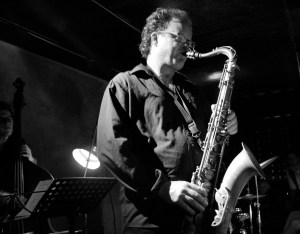
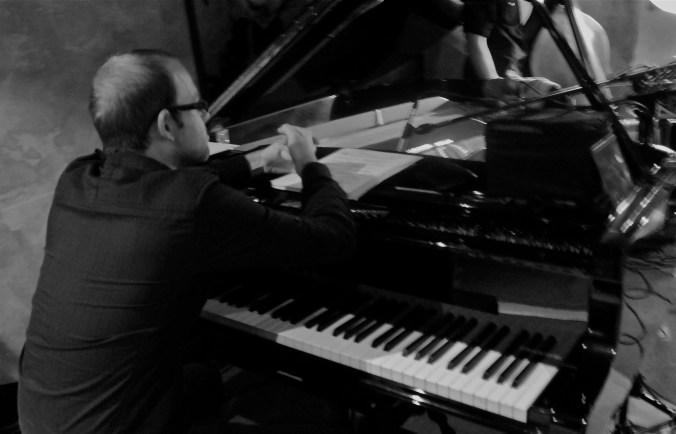
Andrew Dickeson is one of the most respected drummers in Australasia and in stepping out as a leader he has enhanced his already solid credentials.   Andrew has for some time been regarded as the drumming lynch pin of the Australian Jazz scene and when a visiting artist requires a percussionist he would be the first choice.

The band began with the fabulous number ‘Ill Wind‘ (Arlen/Koehler) and it was obvious from the get-go that the tasteful drumming was a cushion of energy powering the group.   As good as the musicians were it was the drummer that caught the attention first; not by showing off his chops but by his sheer musicality.   You were also aware of his powerhouse propulsive swing.   The drums managed to preside without ever overwhelming the rest of the band and to achieve this takes real skill.    This is the sort of maturity that experienced drummers like Jeff Hamilton bring to their gigs and it was nice to witness.

A point which illustrates this perfectly occurred when I spoke to Andrew the next day.    After listening to the CD I had wondered how he had managed to obtain such a crisp but soft sound from his ride cymbal on the ‘Weaver of Dreams’ track (Young/Elliot).    I asked him if he had muffled the cymbal in some way or ‘miked’ it down during mixing.   “No’ he said, “It is all about awareness of the situation.  I just play very gently when that is required”.    I had not known that you could play so gently on a ride cymbal without losing clarity of sound.   At this point Roger Manins leaned over and said, “this is what separates a good drummer from a great drummer.  The ability to fit perfectly into any given situation and to adjust your volume accordingly”.

Those appearing on the album are: Andrew Dickeson (drums, leader, arranger), Roger Manins (tenor sax), Steve Barry (piano), Alex Boneham (bass), Eamon McNelis (trumpet).    For this gig the latter two were replaced by Tom Botting (bass), Pete Barwick (trumpet, flugal horn).  The two acquitted themselves well.

Andrew had used Roger Manins on the album and witnessing his performance at this gig it was easy to see why.    Roger is undoubtably the best tenor man in New Zealand but we sometimes forget how well-regarded he is beyond these shores.    I have written about his playing many times and each time I see him I wonder if he will better his last performance.  He usually does.   As a born story-teller he can captivate from the first few phrases, but the magic he weaves is also due in part to his stage presence.   On ‘Ill Wind’ the pianist had laid-out for a number of bars and in this space Roger mined the bones of the tune to the marrow.  That is his way and as the solo developed there was an increasingly ecstatic quality to his performance.   I have witnessed this before and it draws me to his playing again and again.   In Jazz authenticity is everything.

Pianist Steve Barry grew up in Auckland but he later migrated to Australia in search of greater opportunity.   He is no stranger to the CJC and his occasional gigs at the club are happily anticipated by his ever-increasing fan base.   For some years now he has been working on the Australian scene and he is exceptionally well-regarded there.   Some pianists have an X-factor and Steve is one of those.   The history of Jazz piano is somehow referenced in his playing but he is more than that.  While unafraid of the past he is not owned by it.   This is a journey of stylistic development that we are privileged to witness and it is an ongoing story.    In this setting he was not only a good soloist but the perfect sideman, as his comping and sense of timing were superb.   We get one more chance to hear Steve before he returns to Australia; next week he is co-leader of a quartet performing at the club.

Tom Botting and Pete Barwick had been engaged for this one gig and they fitted in seamlessly.   I had not seen Pete Barwick play before tonight but he handled the charts with ease and performed each solo convincingly.   His strongest performance was on the Strayhorn balad ‘Isfahan.    His burnished ringing tone and clear articulation were just great.   Tom was a fixture at the club before moving to Australia and his bass playing is familiar to CJC attendees.     He is a reliable time-keeper but he can also be adventurous when challenged.  On this night he injected a sense of urgency into the uptempo numbers.  Sitting in for Alex Boneham would be quite intimidating to many bass players but Tom took it in his stride.   He had returned to New Zealand in disguise (no beard and shorter hair) but his signature bandstand persona was fully in tact.   Tom always looks and sounds extremely convincing and it is nice to have him back for a few weeks.

The other stand out number was ‘Soy Califa’ (Dexter Gordon).   To have Roger play a Dexter Gordon number is a no brainer.  He aced it and then some.  This was a great night out and once again it reinforced the strength of the Trans-Tasman Jazz alliance.

This album is well worth buying : ‘Weaver of Dreams’ – The Andrew Dickeson Quintet – Rufus Records (a division of Universal Music group).     rufusrecords.com.au – or  – andrewdickeson.com

Nathan Haines Fourtet – live@CJC

Some weeks ago it was posted on the CJC website that Nathan Haines would be bringing his new band to the club and that this particular band was to be an acoustic Jazz lineup.   The talk among local musicians was that Nathan had been wrestling with some bold musical ideas and that after a trip to France and three months of wood-shedding he was now ready to unleash those ideas on a Jazz audience.

Anyone interested in the Auckland music scene will have followed Nathan Haines career and know that he has wide crossover appeal (here and overseas).   As a multi-reedist and flutist he is proficient on a number of horns and for a while people wondered which instrument he would play for this gig.  That was soon made clear when the details were posted.  He would be playing a classic 1963 Selmer Mk VI – purchased from Brian Smith earlier in the year.   This is an instrument with real provenance and in a way that set the bar even higher.        

The acoustic feel that the band are striving for goes way beyond the choice of instruments, because they intend to record in a few weeks and will wherever possible avoid using modern equipment.    It is Nathan’s view that recording technology has deteriorated over the years and so they are intending to use old style Neuman mics, the fabled EMI Neve desk and to record directly to tape with no mixing or overdubs.  There is also talk of them hiring a Steinway B for the recording.

As the threads of information gradually came together it was clear that this would not be any run of the mill gig and in line with expectations the band attracted the biggest crowd the club has yet seen.

The members of this band are all well-known to club attendees, but Nathan Haines and Kevin Field (piano) are obviously the veterans here.    The name Kevin Field alone is enough to pull a good crowd, but couple his name with Nathan Haines and a capacity standing room only audience is the result.  On bass was Thomas Botting (who has recently taken Movember to its extreme limits).    He may be young but he is a terrific bass player.   I often stay back for the Jam Sessions just to hear Thomas and his friends, (usually playing alongside Peter Koopman and Dan Kennedy).    Thomas can edge up the tension by executing a well placed pedal point or walk his bass lines in a way that is reminiscent of Jimmy Garrison.   This makes him a good choice for this uber-acoustic hard-driving lineup.    The remaining band member is drummer Alain Koetsier.  This is the third time that I have seen Alain play and I have always been impressed.   His ability to lay down complex polyrhythms and push a band hard is well-known.   On this night he was at his fiery best.

The first number ‘Universal Man’ (by Nathan Haines) was intense and up tempo and this signaled the get-down-to business mood of the band.    They were ready for this gig and clearly ready to push at the boundaries.  While they conveyed a strong sense of purpose this did not constrict them in any way as they ate up the changes; hungry for the next layer of the tune to be unraveled.   Nathan soared on this and on other numbers, reaching into the past for reference points but more importantly bringing all of his recent experience and learning to the moment.    This was a 2011 version of a classic jazz lineup.

Next came a ballad ‘Poet’s embrace’ which was both lyrical and deeply probing.   Nathan continuously mined the tune for newer and deeper meanings.   His tone was luminous and his playing (even on the ballads) conveyed the intensity of the moment.

That chiaroscuro effect established the vibe; which became a hallmark of the programme.    These contrasts in tempo and mood were well placed as they kept the audience focused.    Two pieces perfectly illustrate this skillful placement.

While Nathan had written and arranged most of the pieces, the fourth number, Ravel’s Pavan (Pavane pour une infante défunte) deserves comment.     This famous piece was a miniature of perfection.     To have added another bar or even another note would have ruined the mood.     Very few bands can resist the inclination to over-egg-the-pudding in situations like this and I congratulate the band for keeping to the spirit of the piece.    What was added was subtle and it revealed a deep understanding of the music.    Colourist drumming, well placed bass lines and skilful minimalist chord placement; giving Nathan the platform he needed.  This illustrated perfectly the maxim that less is sometimes more.

The last piece ‘Consequence’ was a powerhouse performance.   So intense was the mood and so up-tempo was the pace that the audience seemed to lean back; as if a freight train was passing.   Each instrument soloing often and with each solo the tension increasing.    The drumming was so powerful that one of the audience swore that the kit remained airborne throughout.   This was an in-the-pocket performance and over that crescendo of sound Nathan blew up a storm.

At one point Brian Smith had joined the band and to see him and Nathan performing Wayne Shorter’s  ‘Speak no Evil’ was great (I have always loved Shorter’s material).   Two of our best tenor players belting out the unison lines and constantly challenging each other during solos.    Kevin Field had also contributed one piece ‘Raincheck’.  Kevin’s compositions are well constructed and appealing.

The band finished after two long sets looking exhausted but satisfied. So were we.

I will await the new recording with great interest.  This was a performance that it would be hard to improve on, but with a band this focused that may just occur.

Michel Benebig: soul on Pacific soul

Noumea resident Michel Benebig is a mavin of the B3 and its compact love-child the Nord C2. He is the sort of musician that sets the world to rights and sets your feet tapping.

He is a story-teller on the B3 organ (C2) and through his fingers flows the history of this wonderful instrument. The chords that he uses are rich and warm and capture the instruments journey from the African-American southern church’s to the Jazz heartland. While his voicings contain hints of the greats that he references like Brother Jack McDuff, Jimmy McGriff and Jimmy Smith; Michel is comfortably settled in his own style. He speaks with the unmistakable authority of a South Pacific Soul-Jazz master and it reinforces the view that Pacific Islands like New Caledonia and New Zealand have unique contributions to make to this music.

Michel was accompanied on tour by Shem Benebig (his wife) and the French drummer Johan Cazalas. Shem is a fabulous singer and she knows how to enhance the mood by a lowered tone, a hand gesture and a quick smile. When others were soloing she would stand a little to one side and dance; her movements contained more than a hint of the sensuous Kanak rhythms. Shem guided the proceedings with the consummate skill of a professional; holding the attention or directing it to the other musicians as required. No audience is ever going to be disappointed when this husband and wife team are performing. Johan was an observant and tasteful drummer. He would watch during a solo and lift the performance exactly when it was required. Never over-crowding the others and always supportive.

The band had a Kiwi horn section to assist them and if I heard correctly these guys had not seen the charts until a few hours before the performance. If that is true they did doubly well. The horns provided added heft to an already powerhouse sound and in doing so followed the best traditions of the Soul-Jazz genre. Ben McNicoll (Baritone sax), Chris Neilson (trumpet, flugal horn, alto sax), Jimmy Garden (tenor sax). The tight ensemble playing and a particularly lovely baritone solo by Ben earned them good applause.

The first set had begun with a tune called ‘Mr Jim‘. One full-throated blast from the organ and we were immediately locked into a warm soul-Jazz groove that never abated. As the night progressed we heard slow burners and heart stopping up tempo tunes. My favourite was a tribute to Jack McDuff titled ‘Captain Jack‘. This was not only a fitting tribute to the long departed B3 master, but an up-to-date comment on the Pacifica Jazz renaissance. Another tune Papillon about a tiny butterfly was a perfect vehicle for Shem and it tapped right into the ‘rythmes Kaneka‘. Michel could move from a quiet soulful chord to a stuttering tidal wave of sound in an eye blink and that is partly because of his chops and because of the unique qualities of this instrument.  An organist has to control many things at the same time but he is particularly required to control the following; Swell pedal, bass pedals and the two keyboards. When you consider what improvisers must do mentally and add in the above, this becomes a truly impressive feat.

I spoke to Michel at length during the break, and at the house-party a few days later. He is in the mould of great Jazz Musicians everywhere. Self effacing and engaging as a conversationalist. Full of wonderful stories about Joey DeFrancesco, Jimmy McGriff, Tony Monaco, Lewis Nash and others. As we talked I mentioned my liking for the great French B3 player great Eddy Louiss. “Oh yes Eddy Louiss is a monster” he said dropping his voice to a reverential whisper. “I met him in France a few years ago and it made my knees weak just to be in his presence”. I suspect that many up-and-coming B3 players will find meeting Michel has the same effect on them.

When music like this is playing it is good to be alive.

Resonator; Reuben Bradley

It is well-known on the New Zealand Jazz scene that Resonator won this years ‘Jazz Tui’ award.  As this is drummer Reuben Bradley’s first album that is no mean feat.  The band played at the CJC earlier in the week as part of their Australasian tour and pulled a good audience for the gig.

The band we saw on Wednesday did not have the full complement of band members present on the album, as the pianist Miles Crayford who had played piano, Fender Rhodes & synth had been replaced by guitarist Tyson Smith.   Also absent were guest artists Tom Callwood (arco bass), James Illingworth (synth) and Kirsten Te Rito (vocals).

This was a paired down hard-driving unit and they took the high energy, high volume route.   The band was: Reuben Bradley (drums, percussion), Mostyn Cole (electric bass), Roger Manins (tenor saxophone) Tyson Smith (guitar).   It was also obvious that this was a drummers band because Reuben seemed to direct all aspects of the music; the band taking their cues from the complex rhythms he was laying down.   I had heard much about his ascendancy as a drummer and his chops were certainly evident at this gig.    He was also an engaging presence as he bantered with the audience.  Jazz musicians are capable of delivering knock out one liners, self-deprecating asides and sly insider jokes from the bandstand.   I am happy to see that tradition continue at the CJC.

While most of the pieces swiftly morphed into full-on blowing numbers there was one ballad.    In situations like this a band could not do better than call on Roger Manins to execute the key lines and he delivered in spades.   Reuben introduced the number by saying, ” I had always wanted to write a dark evil sounding ballad because I figured that there was a real market for this”.    This number ‘Search in progress’ gave us an insight into the subtler aspects of the band’s repertoire.

Every Kiwi (and offshore) Jazz fan should contact ‘Rattle Records’ http://www.rattlejaz.com and purchase the ‘Resonator’ album.   It can also be purchased at ‘Marbecks Records’, ‘Slow Boat Records’ and ‘Parsons Records & Books’ and is available as a download on iTunes.   ‘Rattle Records Ltd.’ are to be congratulated for their burgeoning catalogue of top quality NZ Jazz and I urge all Jazz lovers to support this label.    It must be pleasing to the band that Mike Nock has praised the group. He saw this album as being ample evidence that “The new generation of New Zealand Jazz musicians have moved up several notches”.

After the gig I sought out Mostyn Cole the bass player to apologise for wrongly naming him as the bassist at the previous weeks gig.   I could not find him but the guitarist Tyson Smith said, “It doesn’t matter man because I am credited as being in the band but I was not on the album we are touring to promote and so it all equals out”.   That caused me to recall Roger Manins tongue in cheek announcement the previous week. “We believe in truth in advertising tonight and this is one of the rare examples where the people on the album are actually the people performing on the promotional tour,  Get a signed copy of the CD now as this may never happen again”.    Jazz humour is the best.