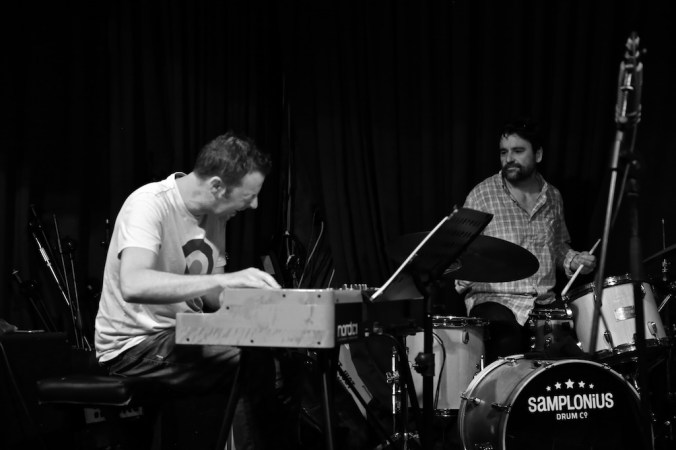
There is no way of calculating the number of subatomic particles routinely passing through a Neutrino Funk Experience, but we can safely quantify the delight on the faces of their audience. There is something about the structure of this unit that inclines them towards extreme risk-taking; the sort of risk-taking that transforms a band into an irregular elemental force. It is rumoured that a ‘play it safe’ memo was issued at their last venue, but the band either mislaid it or opted for willful disobedience. The only reasonable explanation for this hyper-energised, off the grid performance, is to blame it on passing Neutrinos. The band kicks arse with hobnail boots.
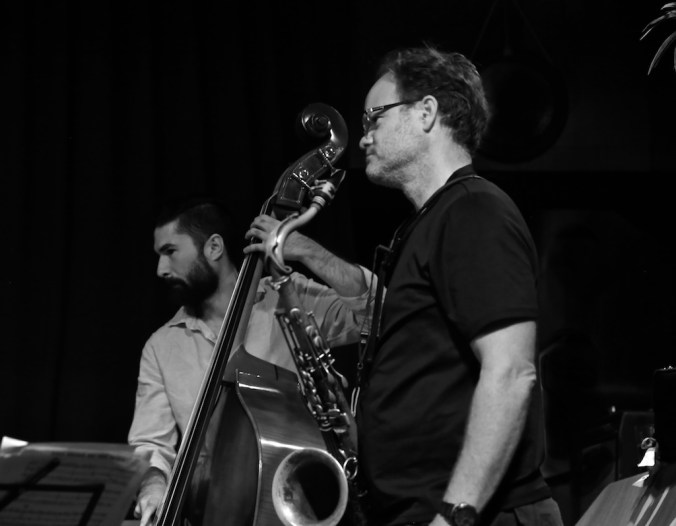
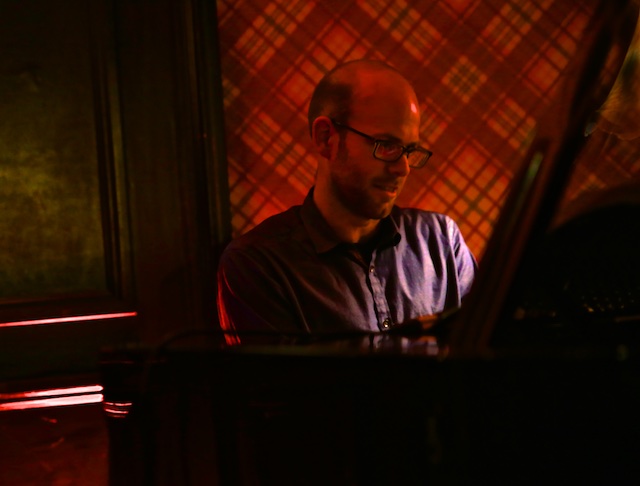
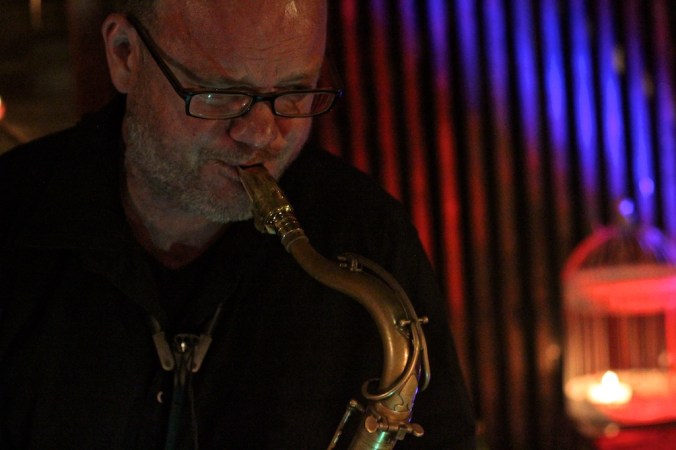
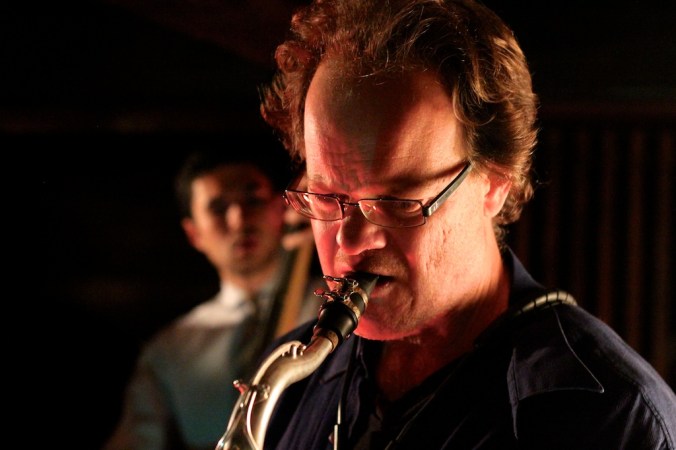
The NFE were once upstairs regulars at the Albion and later they became CJC favourites. This year has been quieter for them gig wise, but the group’s energy levels have continued to rise during their hiatus. From the first note on Wednesday they nailed it to the floor. Swooping on our unprepared sensibilities and taking complete control of the room. It is hard to say who creates the most sparks as they continually feed off each other’s energy. Roger Manins is always a towering presence on the bandstand; his ad-lib asides and gestures acting as prequels to his wild solos. Eyes always follow him as he moves about the stage, but this time he had competition; the über kinetic actions of Grant Winterburn – vying with him gesture by gesture for visual and sonic supremacy.
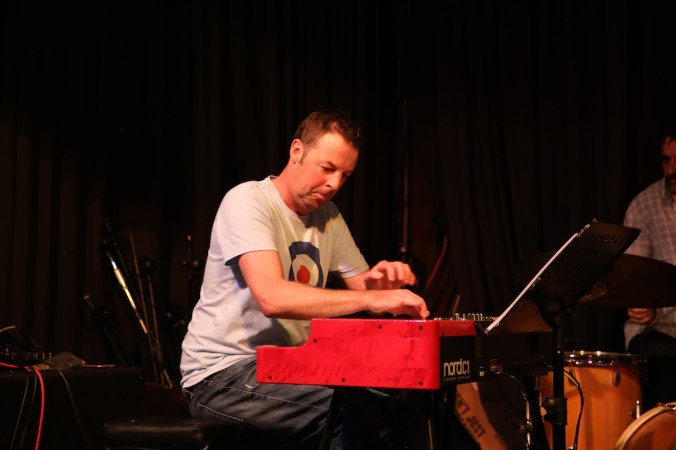
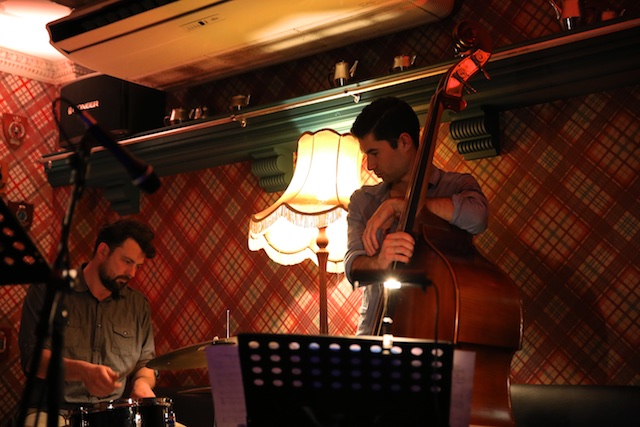
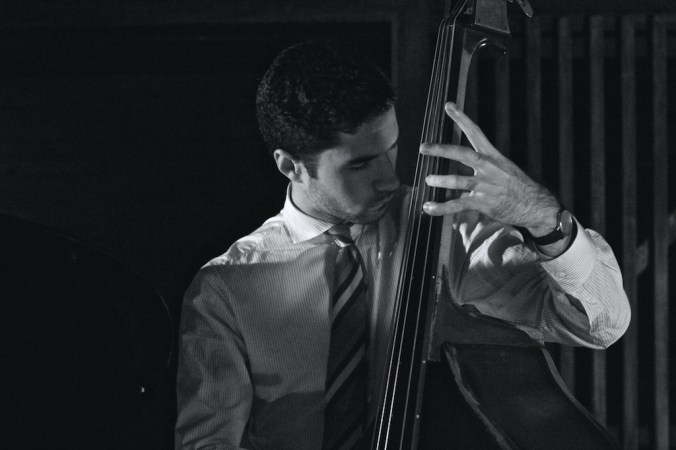
Ron Samsom and Cam McArthur were located behind Manins and Winterburn. In spite of being partially obscured and located in the darker recesses, you’d have thought they were playing in the chair beside you. While the band is loud, it is not unduly so; it is something else that projects them. The sound is in front, behind, inside, outside – neutrino laden energy, everywhere and nowhere – passing through the observers and imperceptibly, transforming them in a quantum fashion.
In the Bimhuis in Amsterdam, I saw Han Bennink put his boots on the kit during a drum solo. Samsom prefers his upper body and especially his elbows. Manins has some leg action. Winterburn, however, took the Bennink route and added a few wrinkles of his own. He sat on the keys, he walked on the keys and he shook his Nord until it cried out for mercy; and all of the while Samsom locked down a groove beat so tight that it became dark matter. This group not only understand group dynamics but they know how far they can go while taking the audience with them.
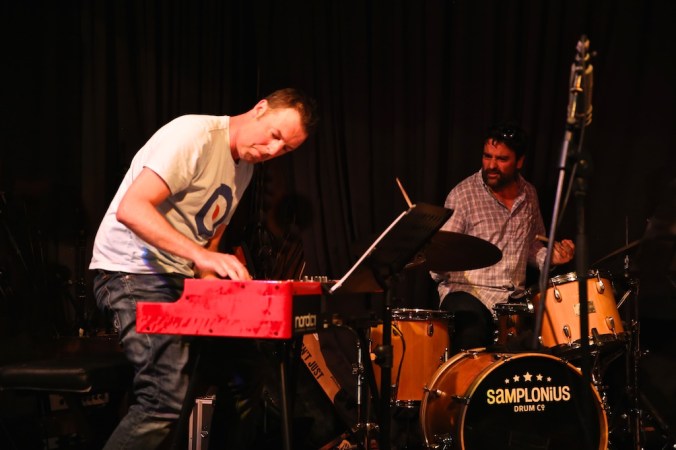
Towards the end of the first set, I was handed the microphone, reading one of my poems while they played softly beneath me, accenting keywords, moving where I did. I was so delighted at performing with this band that I forgot to press the record button – such is life. It takes real skill for a band to take risks while staying within a groove framework. I hope they keep doing what they do and perhaps they will record again soon? Their earlier album ‘Ace Tone’ is still available at Rattle Records so grab a copy for Christmas before the stock disappears. Dancing dementedly around the Christmas tree would not be the same without it.
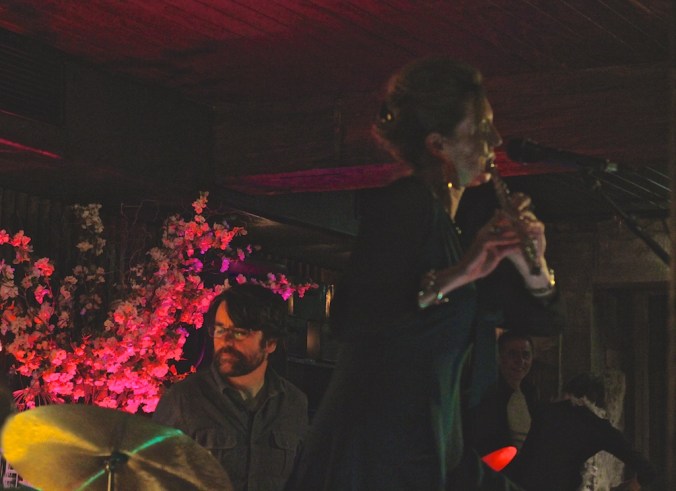
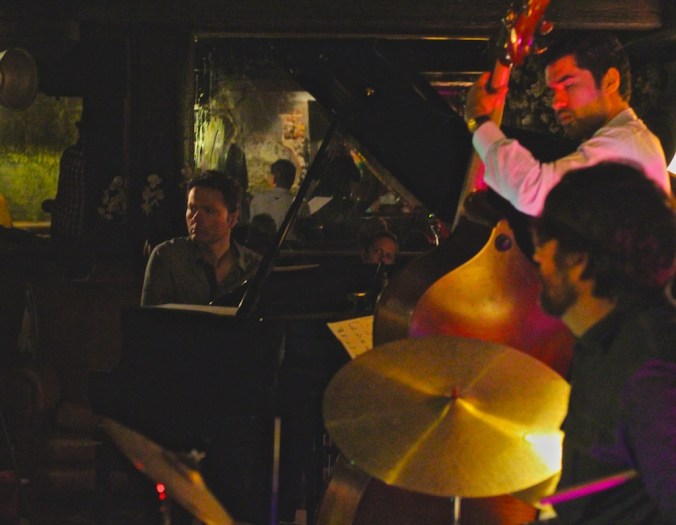
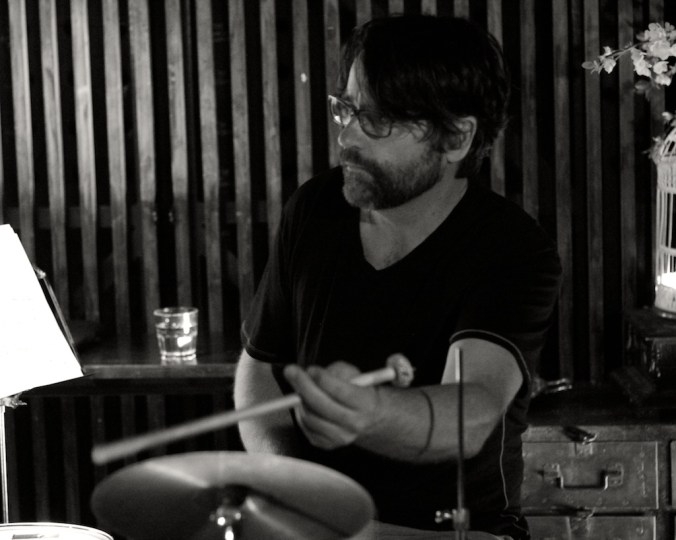
The Neutrina Funk Experience: Ron Samsom (drums), Roger Manins (tenor saxophone), Grant Winterburn (organ), Cameron McArthur (upright bass). CJC (Creative Jazz Club), Thirsty Dog, Wednesday 22nd November 2017.
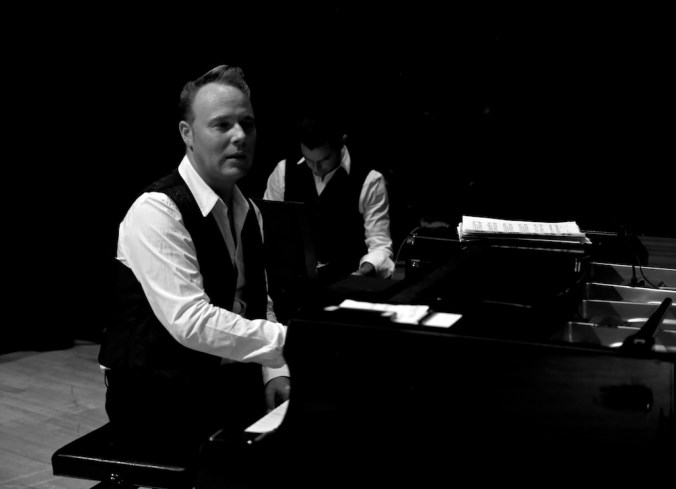 This piece was almost titled ‘my career as Jef Neve’s Driver’, but in the end, I shied away from that. In truth, my tenure as a roadie/driver was brief (although fulfilling). The term roadie was perhaps a bit of a stretch also because I only lifted one suitcase (and that was with help). I decided early in life that my ideal job was working as a roadie for a Jazz pianist. I figured that the obligation to lift heavy things would be minimal and that I could consume endless supplies of live improvised music. With regard to the first point, I was woefully under-researched. In Europe, Neve actually travels accompanied by his piano, but luckily for me, the airlines are reluctant to accept a piano as stow-on luggage. The Auckland airport pick-up went flawlessly (apart from the suitcase to person ratio which was resolved by Neve who is used to fitting notes into improbable spaces). As we drove, I chatted; easing my way into the story in true Gonzo journalist fashion. So there we were jammed into my car like Hanseatic cod; Jef, Pieter, Dieter and me; heading for a piano, a rhythm section and a string quartet. This was going to be fun.
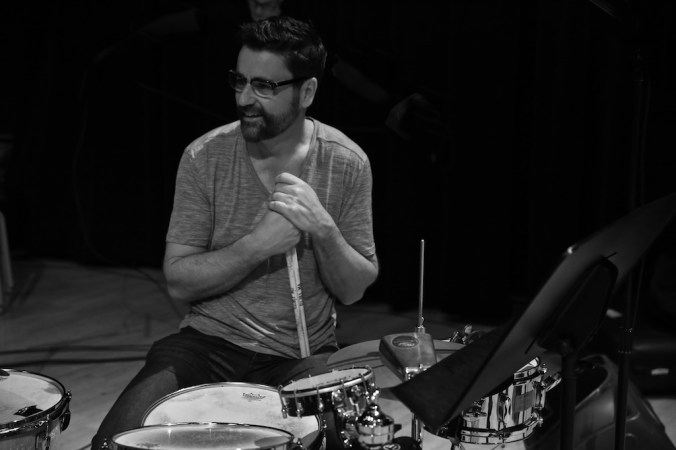 I met Neve once before and I have followed his career over the years. He is a major artist and a household name in Belguim. A year ago I passed through his beautiful city of Ghent, and I vividly recall a young woman behind the hotel counter asking me what I knew about the city. It was actually Robert Browning who introduced me to Ghent, but I replied Jef Neve. Oh yes, he’s famous she said. When I told her that I had once interviewed him, she was obviously impressed. In her eyes, I was no longer some grey haired tourist but a guy who had met Jef Neve.
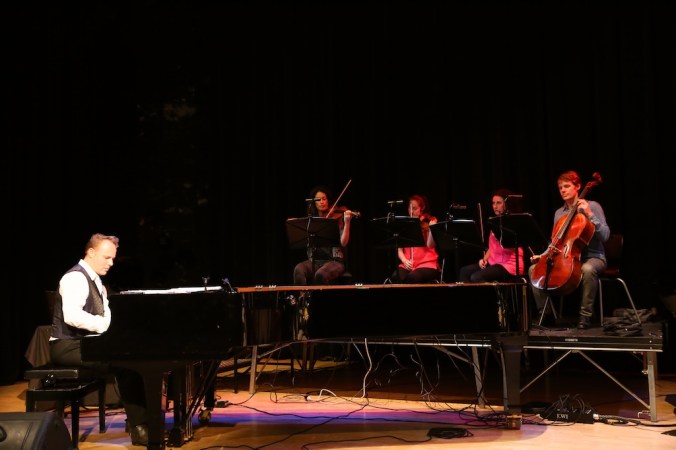
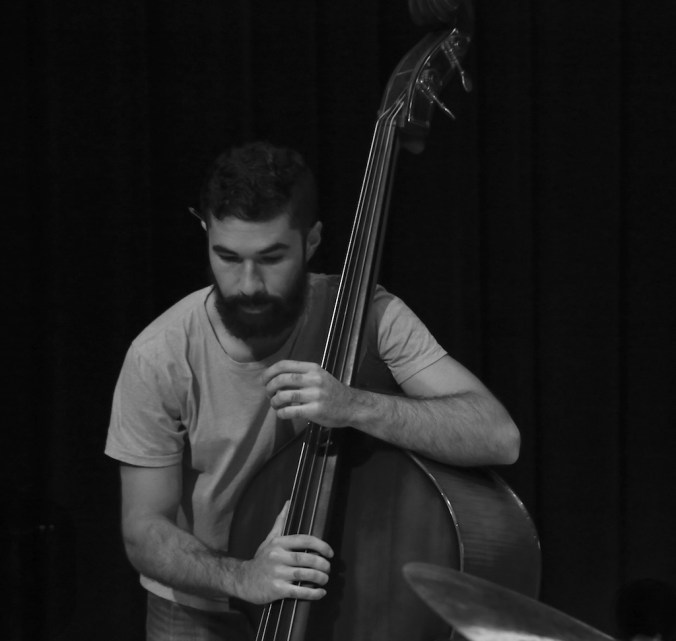 The KMC is a venue with good acoustics; not too dry – not too wet. It was once a television studio and before that the principal home of radio in New Zealand. Now it houses the UoA Jazz School and the School of dance. I found a swivel chair and slid my self across to the listening sweet spot as the trio rehearsed. Then, the string quartet turned up and the work began in earnest. Into that darkened space the music spirits descended; channelling themselves through Neve’s fingers and entering the musicians one by one. I sat there through four and a half hours of rehearsal; soaking up the sound; awestruck and utterly engrossed from start to finish. Cam McArthur was on bass and Ron Samsom on drums. Both are very fine musicians – on this gig they manifested as truly great musicians.
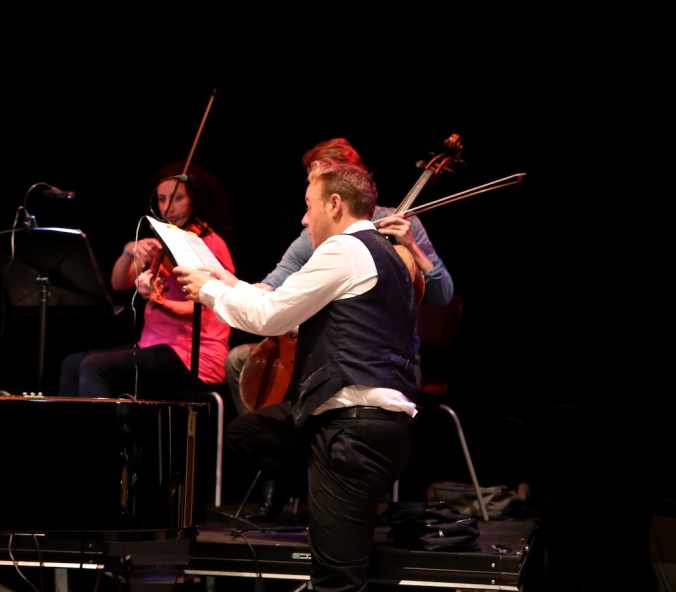 Experienced improvising musicians are quick to read cues; usually conveyed by a brief glance. Things can change in a moment as new ideas develop; it is a core skill – the ability to interpret subliminal signals and react accordingly. For a classical string quartet, it is different. Cues are generally pencilled into their charts or perhaps conveyed by a conductor. The Black Quartet tackled these difficult charts with vigour, questioning Neve throughout and writing in minute changes or subtle expression marks. I heard Neve remark afterwards how enormously impressed he was with their musicianship – “I would be happy to work with these musicians anytime”, he said. Throughout the day the musicians rehearsed the knotty bits and acclimatised themselves to function as an ensemble. Watching music like this take shape is a joy.
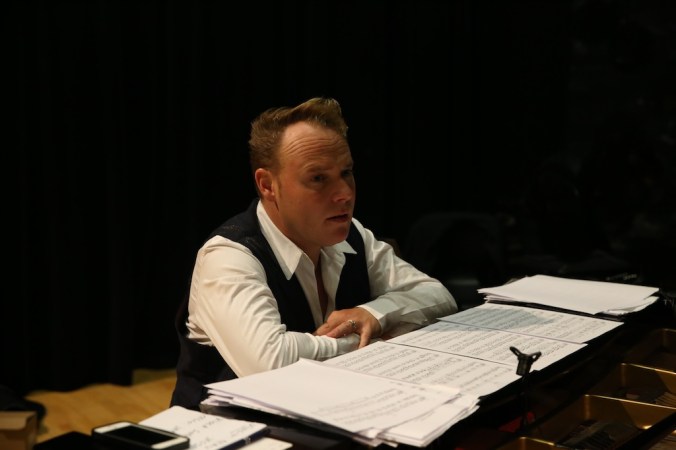 Concerts like this are underpinned by hard work and it usually takes a number of rehearsals to achieve tight ensemble playing. Occasionally I get to observe bands in rehearsal or in a recording studio and as the hours go by you can feel the energy shift. An evolution occurs as the music is properly understood and internalised. So it was with this ensemble and after hours of concentrated work, they breathed in unison. The key to this was Neve who is a gifted communicator and patience personified. When energy is harnessed in this way it becomes spirit. Neve had two assistants with him and as the ensemble poured over the charts these two quietly wove their magic. Both sat at consoles and throughout the day they tweaked, miked-up and fine-tuned the sound. The string section was miked to perfection, giving out a sweet woody sound but subtly amplified to exactly the right place in the mix. An audience is seldom aware of the hours a good sound technician puts in (that is unless they do a poor job). This was sound mixing as an art-form. The results were perfection.
 ‘Spirit Control’ is a lovely album. It is richly satisfying and with a clarity of purpose that cuts through genre and preconception. There is an orchestral quality to Neve’s piano so when the orchestra comes in or fades out the transition feels seamless. There are so many clever references in this music – often shimmering – mirage-like; Tango, folk, modern classical, Nordic improvised Ambient, even pop. This is, however, Jazz of the highest order. Not drawing on the blues but on the many musical forces of Neve’s continent. Jazz has many homes in the modern world. While most of the pieces on the album were played at the Auckland concert there were also new arrangements and pieces from previous albums. There were also hard swinging trio passages. During these, Samsom and McArthur were astounding, moving from arco bass or colourist drumming to a dizzying, exciting, take no prisoners swing. The cross-appeal of this album is evidenced by the fact that it appeared on the Belgium pop charts and stayed there for weeks.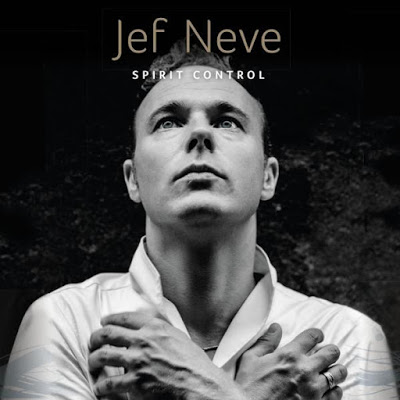
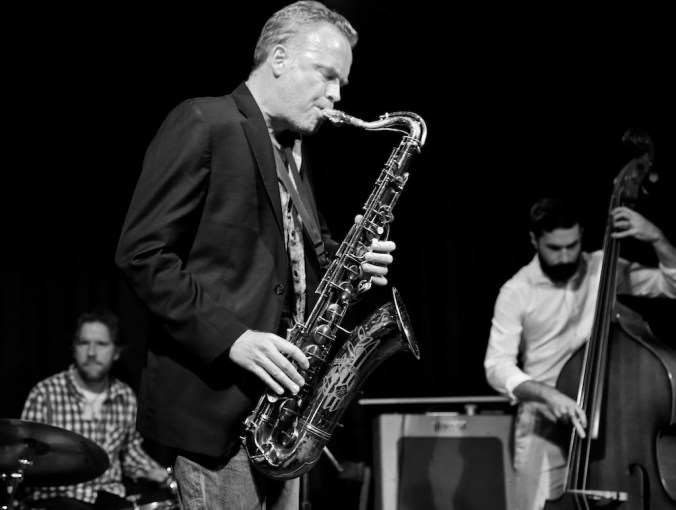 Music listeners split into two main camps; active and passive listeners. Those who listen to improvised music incline towards active, deep-listening. We know that the brains of improvising musicians light up in unusual ways when playing. Much the same applies to listening Jazz audiences. On Wednesday night a saxophone trio played at the Thirsty Dog; no chordal instruments, no lingering over familiar melody lines, a trio which worked within a broader musical architecture, following the changes where ever they led. Nick Hempton is an interesting player and the right person to take us on this journey.
 This sort of gig works well with listening audiences because it invites active participation. On Wednesday, each piece began with a few lines from a familiar standard, often just implied; then, a few bars in, the lines evolved into new melodies based on the changes. As the trio responded the horn led the others to various way-points: places where the music changed course. Fragments of new standards were discovered, unravelled, abandoned. The human brain is hard-wired for pattern recognition, but we love the puzzles that arise from the search. Settling for the familiar is not how we evolved. We evolved by following the risk takers, marvelling at their daring. Following this musical risk-taker, was our delight.
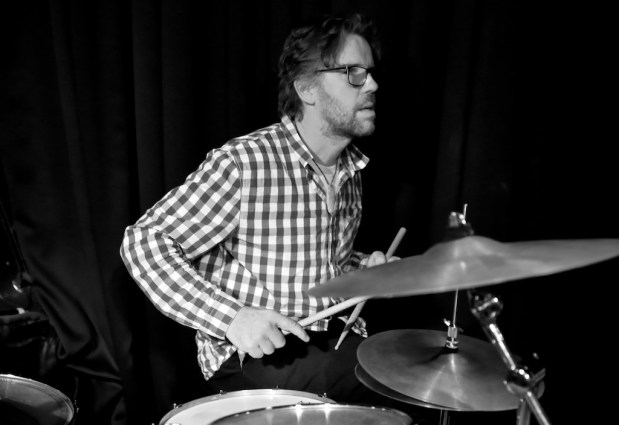 The point was not so much the standards themselves but the opportunities they presented. Appearing and disappearing in medley form was; ‘Night in Tunisia’, ‘Body and Soul’ A Sony Rollins waltz, ‘Exactly Like You’ and ‘Rhythm a Ning’ – these and more were examined. Standing alone was the lovely ballad ‘When I Grow too old to Dream’ (Romberg) and in Hempton’s hands, it was beautifully realised. There was also a great rendition of ‘Just Squeeze Me (don’t tease me)’ (Ellington) – I have posted that. The last trio piece was ‘Poor Butterfly (Hubbell [Puccini])’; followed by Roger Manins joining the trio for two last two numbers. As is often the case when two tenors appear on the same stage, a delightfully upbeat and riotous vibe emerges. Friendly sparring matches like this always go down well.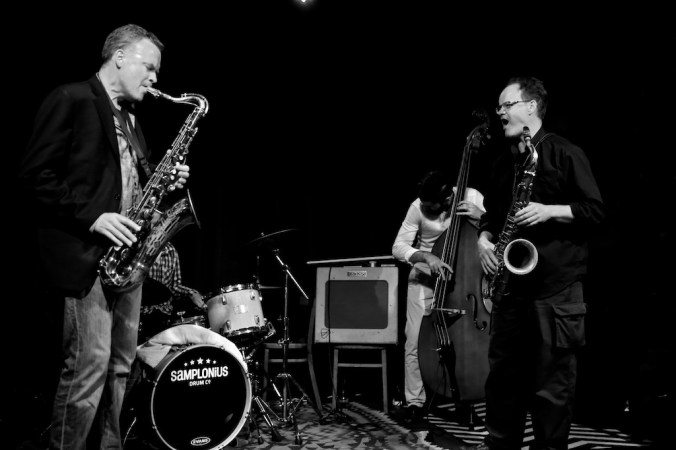
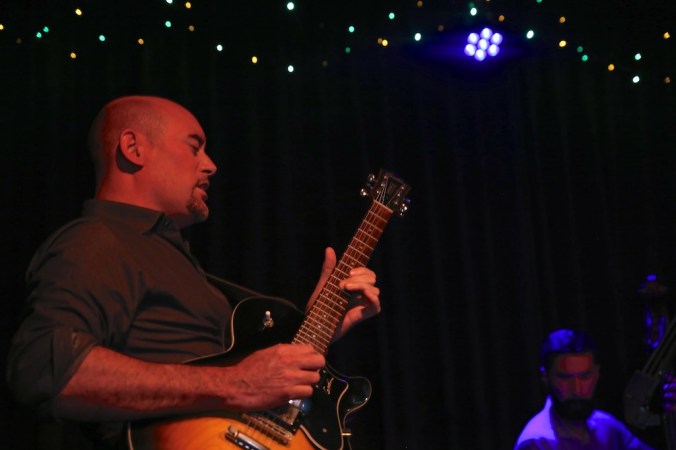
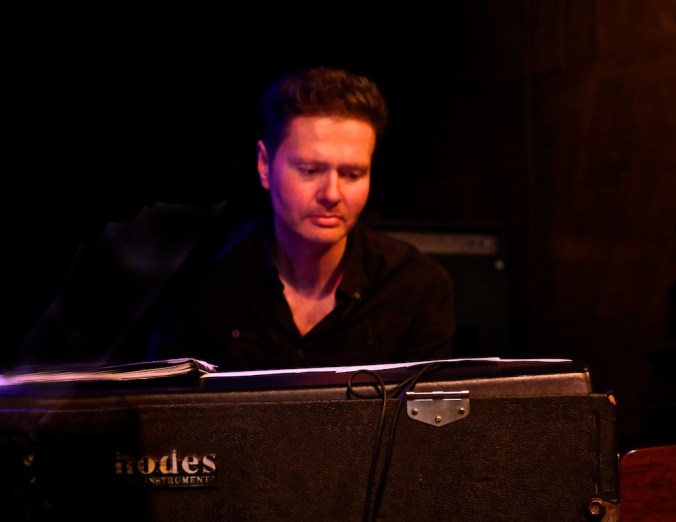 It was appropriate that Warners ‘A List’ recording artist Kevin Field brought with him local A listers Dixon Nacey, Cam McArthur, Roger Manins and Stephen Thomas. Field has a substantial following in New Zealand and his innovative music attracts musicians and fans alike. Since his last ‘A List’ gig he’d clearly been busy – writing new material and rendering the familiar into something altogether different. Zoot Sims once quipped, “Jazz is a music where you never play the same thing once’. Field certainly exemplifies that tongue in cheek descriptor. Commentators and visiting musicians often remark on his innovative approach to harmony and rhythm. It is as if he has invented a new musical language out of the old. In truth, there are strong elements of related genres like R & B, latin and even disco funk there; under his fingers they become unique vehicles for improvisation.
 Unlike Janet Jackson, Field never suffers from wardrobe malfunctions. He does however occasionally suffer from equipment malfunctions. I mention it only because his Rhodes had failed him during a previous weeks CJC gig. No one listening comprehended that he had lost some of the middle-register. No one noticed because he re-voiced mid improvisation to work around the problem. I have heard of old timers doing this but seldom modern pianists. Field can effortlessly jump over obstacles and find a sweet spot.
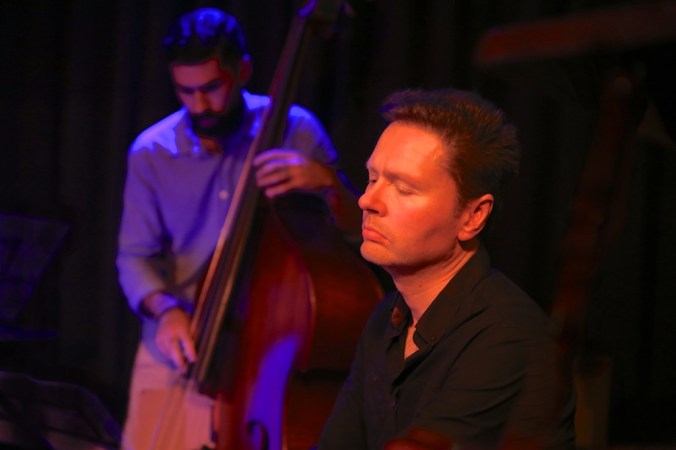 There were old favourites reworked like ‘Game Changer’, ‘Good Friday’ and ‘Left Field’, but the rest were recent compositions. Among the newer numbers were ‘Rain check’ and ‘Acme Music Corporation’ (the latter featuring Manins on soprano – a rare event). Another new number ‘Unconditional love’ was introduced by Field with the following story. ‘There are many types of love in the world and today an unusual example came up in my twitter feed, – ‘Trumps deportation threats make my in-laws fearful. They live at 2b/34 Main St, Phoenix. My Mother in law arrives home from work at 4:30’ “.
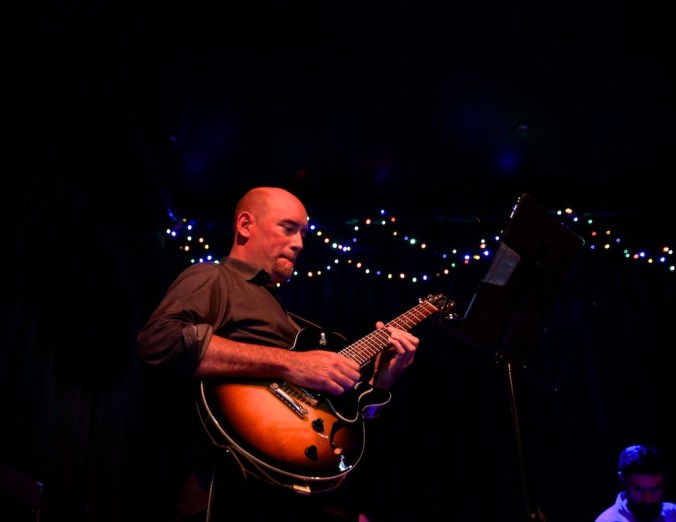 The last tune ‘Home Schooled’ was the best possible number to finish the evening with. Far from being a wind-down number, the musicians reached inside themselves, each giving magnificent performances. Manins back for a second number was on tenor, and he sounded happy to be back on his favourite horn. Nacey was at his best, making his guitar soar, as if he had found an ancient alchemy, a way to condense sunlight into music; the epitome of sonic clarity, invention and virtuosity. McArthur and Thomas each in step and reacting to the challenges. With material like this good musicians can achieve wonders.
 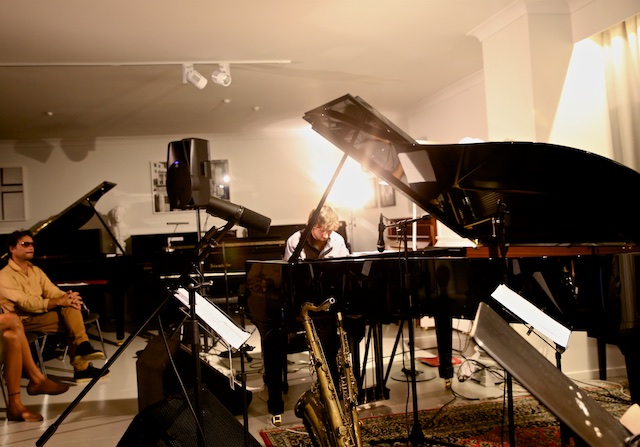 The Lewis Eady special concert featuring the Michal Martyniuk trio lived up to its promise. It’s not often I get to hear Martyniuk and more’s the pity because his playing resonates strongly with me. He attended the Auckland University Jazz School, but he doesn’t sound like his contemporaries as he brings his Polish origins to the keyboard. His is the approach of Wasilewsky and other modern young Polish improvisers. Rhythmically adventurous, melodically rich and with harmonies often referencing the twentieth century European classical composers. Polish Jazz developed in isolation and in secret, the Nazi’s forbad it and the Russians strongly discouraged it. From Krzysztof Komeda onwards the music communicated a unique sense of place, an authenticity, self-contained inventiveness and at times even wistfulness. The initial impetus came from covert listening to Radio America but the rich wellsprings of Chopin, eastern bloc avant-garde and mazurka are there too.
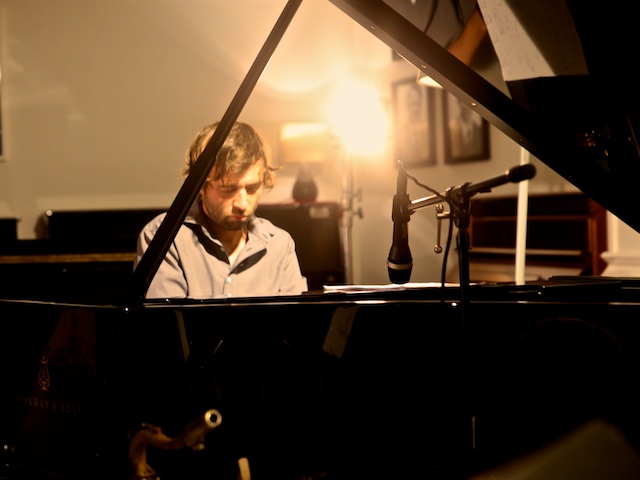 They were joined on three numbers by saxophonist Nathan Haines, a long time mentor of Martyniuk’s. The concert marked a cross-road for Martyniuk as he and the trio departed for the Jakarta based Java Jazz Festival soon afterwards. This prestigious event is the biggest Jazz festival in the world and it bodes well that they were chosen to perform there. The festival is attended by well over 100,000 people and it pulls in the who’s who of the Jazz world. After the concert Martyniuk is travelling on to Europe (and Poland) where he hopes to intensify his studies and absorb more of the Jazz of his youth. He informed me that he would probably return in about a years time. That is something for local Jazz lovers to look forward to. The back room of the Lewis Eady complex is a good space acoustically, the audience embraced by an encompassing circle of grand pianos. There is a sense that these resting machines add sympathetic resonance to the performance, it certainly seemed so last Wednesday.
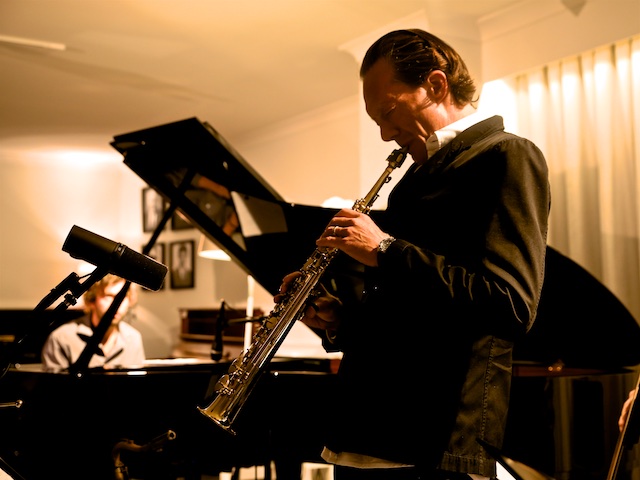 As the programme developed, the trio dived deep into the material. They demonstrated their skill as individual musicians, but also that they could play as a highly interactive unit. There was room for subtlety as well as bravura, together they sang. Having Haines join them rounded off the performance, especially on his trade mark cutting soprano. No one else locally sounds like him on that horn, he is a master of the instrument. As I listened, Haines brought to mind John Surman, an English improvising saxophonist who has a unique clarity of sound on the three horns he plays.
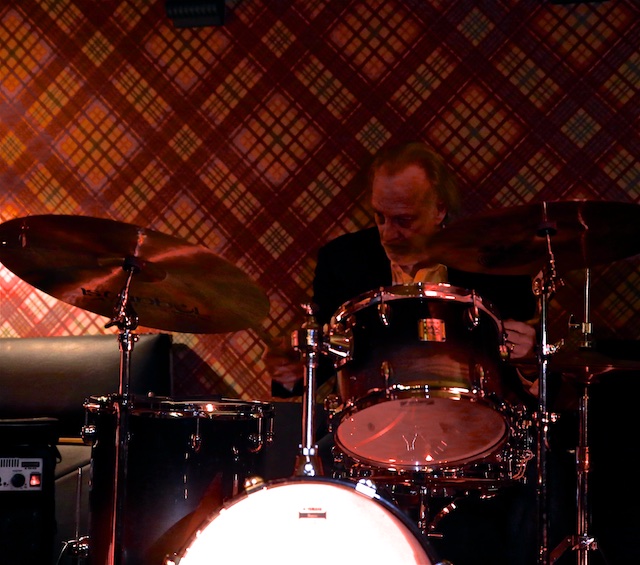 Frank Gibson is a drummer of international repute, a sideman, educator and bandleader. While he is a versatile drummer, his predilection is for bebop and hard-bop (especially Monk). On Wednesday the 16th November, our last night at the Albion for a while, we heard six Monk tunes (plus tunes by Wes Montgomery, Lee Morgan, Joe Henderson and Sam Rivers).
 This is not a clone of the original Monk bands, but a modern quartet connected to the Monk vibe by musical lineage.
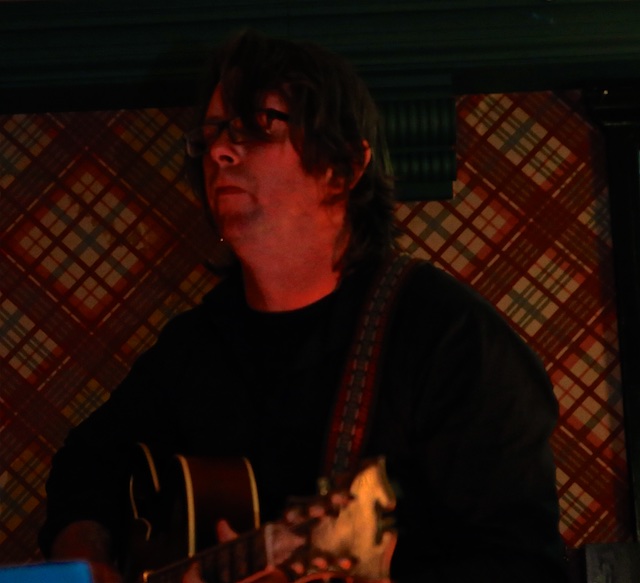 There were familiar, much-loved Monk tunes and a few that are seldom heard such as ‘Light Blue’ and ‘Eronel’. Monk wrote around 70 compositions and they are instantly recognisable as being his. The angularity, quirky twists, the choppy rhythms, the lovely melodies and particular harmonic approach – a heady brew to gladden the heart of a devoted listener. We never tire of him or his interpreters. After Ellington, Monk compositions are the most recorded in Jazz. We remain faithful to his calling whether our tastes run to the avant-garde, swing or are firmly rooted in the mainstream. These tunes are among the essential buttresses holding up modern Jazz. They are open vehicles inviting endless and interesting explorations. They are a soundtrack to the Jazz life.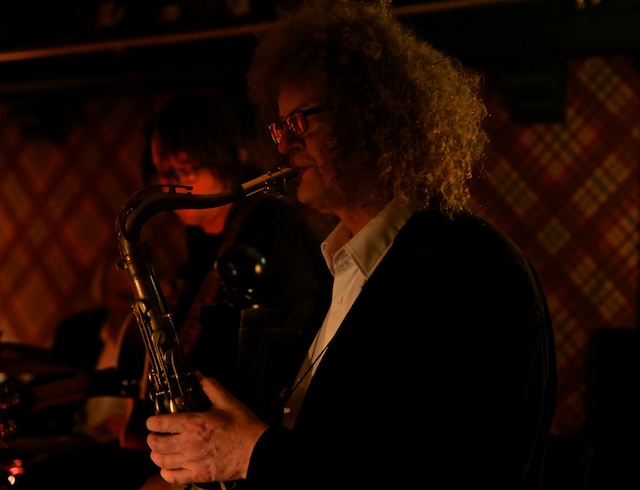
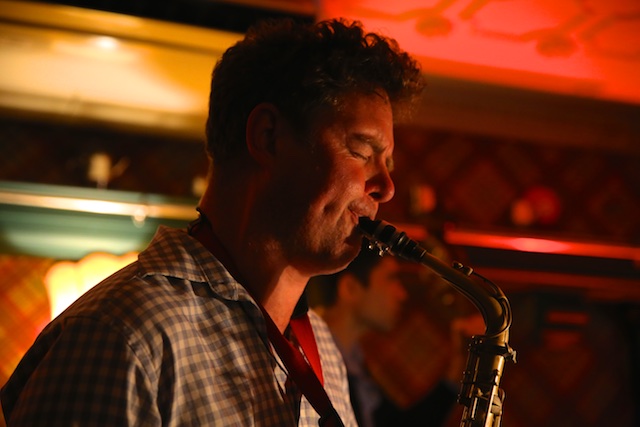
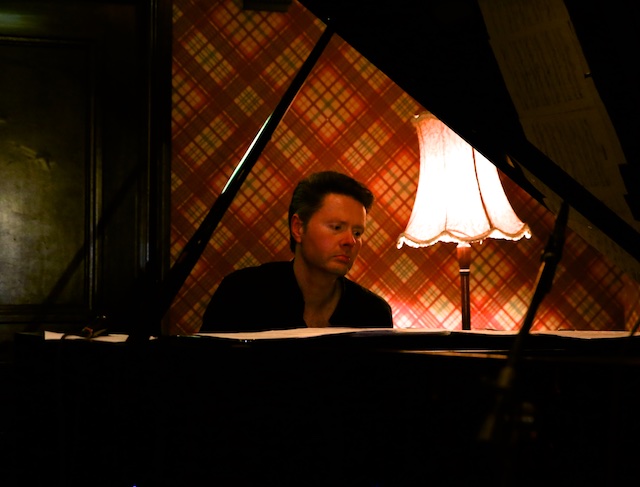 Kevin Field has for many years been regarded as a phenomenon on the New Zealand Jazz scene. A gifted pianist and composer whose approach to composition and harmony is strikingly original. When you listen to many pianists you can hear their influences, discern the pathways that led them to where they are. With Field, those influences are less obvious. I suspect that this independence, originality, makes it easier for him to strike out in any direction of his choosing. On his ‘Field of Vision’ album, he moved into uncrowded space, one occupied by very few Jazz pianists. It was Jazz without compromise but utilising grooves, rhythms, and melodies of other genres. The music contained distinct echoes of the disco/Jazz/funk era, crafting it carefully and forging a new post-millennial sound.
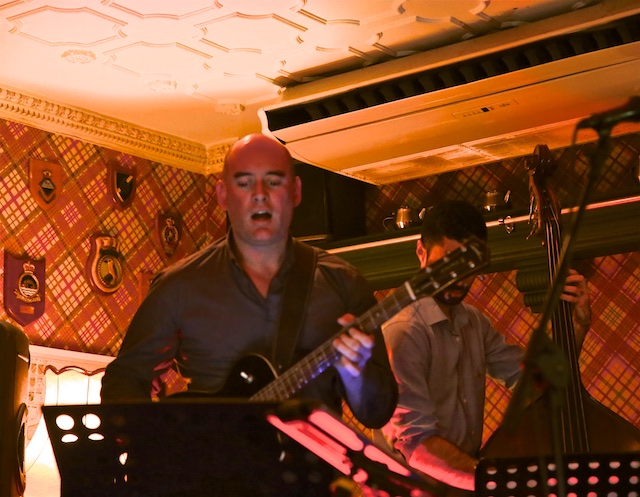 The tunes were all memorable and within a few listenings, you could hum the themes. This is not so common in modern Jazz and less so with music (like Fields) which retains its Jazz complexity. In Fields case, the clean melodic hooks do not come at the expense of harmonic invention. That is a tricky balancing act and one he achieves convincingly. His co-leadership of ‘DOG’ took him in a different direction again, but the same deftly crafted grooves astounded us. His recent album ‘The A-List’, was a further excursion into the disco/Jazz/funk realm. It is slightly tongue in cheek while still challenging the listener to think outside the square. Artists like this take the music forward, it is up to us to catch up.
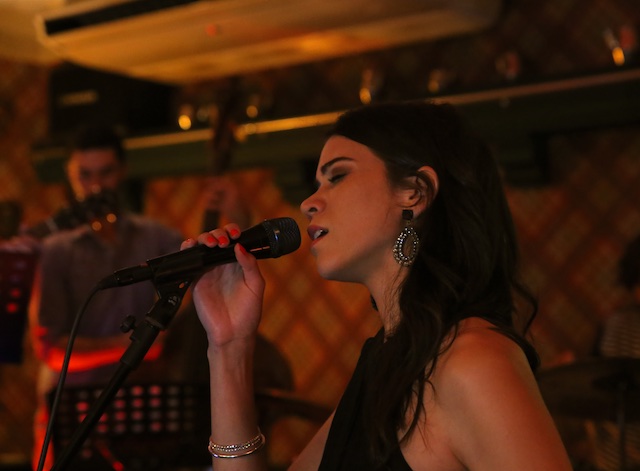 They played at the Wellington Jazz festival recently and for many Wellingtonians, this was their first exposure to the group. I saw that show and I immediately noticed how the familiar tunes had subtly changed. ‘Perfect Disco’ with its energised danceable funk momentum was recast as a duo piece. Field and vocalist Chaperon wowed them with that number. We also heard this duo version last week. Other familiar tunes had developed into profoundly interactive exchanges. The sort that can only occur between highly attuned musicians. This is where the guitar mastery and the deep listening of Nacey came into its own. His Godin guitar soaring with stunning clarity while Field reacted in kind, urging them further out with each challenge.
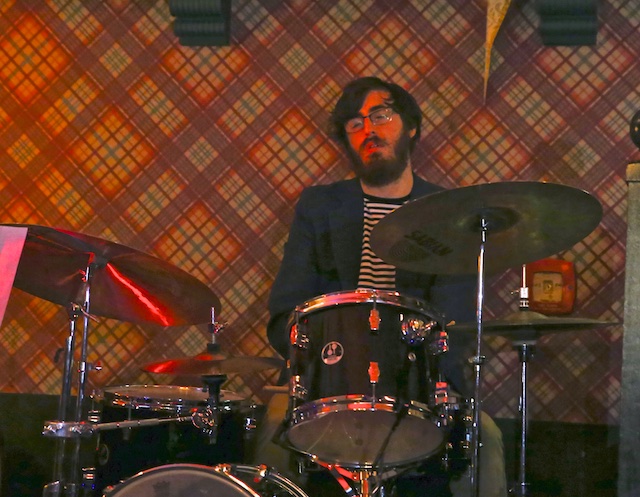 Again we see Thomas and McArthur doing what they do best. Working hard and rising to the challenge. Thomas laying down the tricky rhythms and while McArthur runs his bass lines. While pleasant to the ear, there is not doubt at all that these compositions required skill and concentration. It is on gigs like this that the musicians familiarity with the material and each other pays dividends. It was also nice to hear Chaperon on some new and old material. She is a real crowd pleaser – she looks great on stage and sings up a storm.
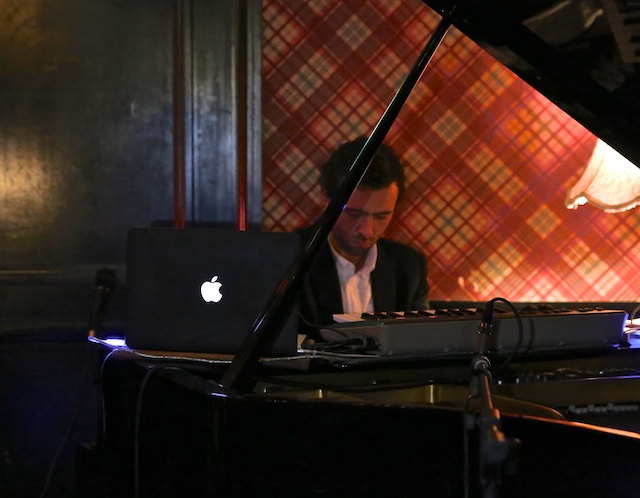 I can’t remember when I first became conscious of Polish Jazz, but after Tomasz Stanko, Poland was forever on my listening radar. After that, I would listen to Polish improvisers whenever I came across them, Wasilewski, Komeda etc, and all the more so when I discovered later in life that I was a quarter Polish. In light of the above, I was naturally interested when I came across an Auckland-based, Polish-born pianist Michal Martyniuk. He was standing in for Kevin Field at a Nathan Haines gig – around the time of “The Poets Embrace’ release. Since then I have seen him with various iterations of Haines’ bands but until last week, never at a gig where he was the leader.
 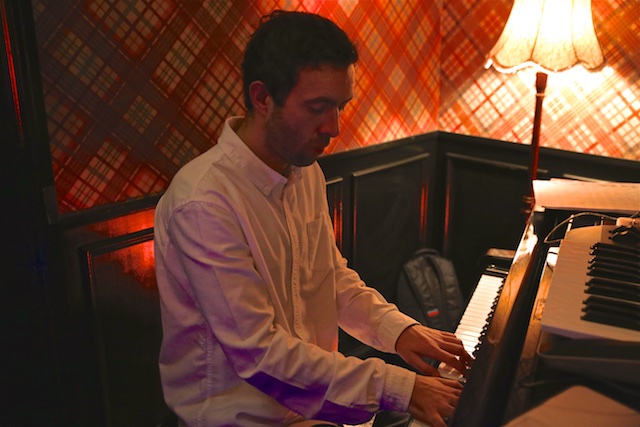 It is an oft-debated topic, but I sometimes hear references to time and place in original music. After hearing Martyniuk I could identify his northern European influences. When I asked the pianist about the artists he most admires, he quickly identified Lyle Mays and Pat Metheny (also Weather Report plus Miles and Herbie). The Metheny/Mays reference is definitely evident but sifted through a Eurocentric filter. Mays, although influenced by Evans never sounded like a typical American pianist. Martyniuk’s compositions and performance contain all of the hallmarks of modern Euro jazz, a sound I hear in the Alboran Trio, Wasilewski and younger pianists like Michal Tokaj. A warmer sound than the Scandinavian pianists but as light filled and airy. There is a beauty to Martyiuk’s playing, a stylistic identity. For such a young pianist to have located this special sound is impressive.
 Something that many post-millennial Jazz musicians avoid, is evoking a sense of beauty. I can understand that because it must be done well or not at all. It is the territory of balladeers like Ben Webster and the territory of artists like Metheny. This was done well. The compositions were cleverly constructed around developing themes and with nothing was rushed, allowing melodic inventions to manifest. The tunes were also cleverly modulated, subtly amping up the tension to good effect at key points. Like Bennie Lackner, he used electronic keyboards to enhance or emphasize a phrase, but very sparingly.
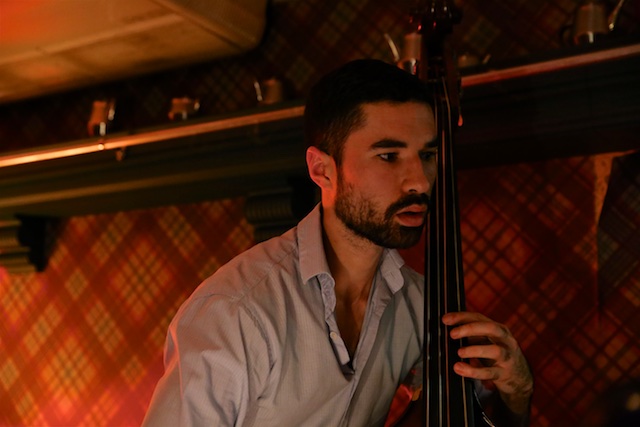
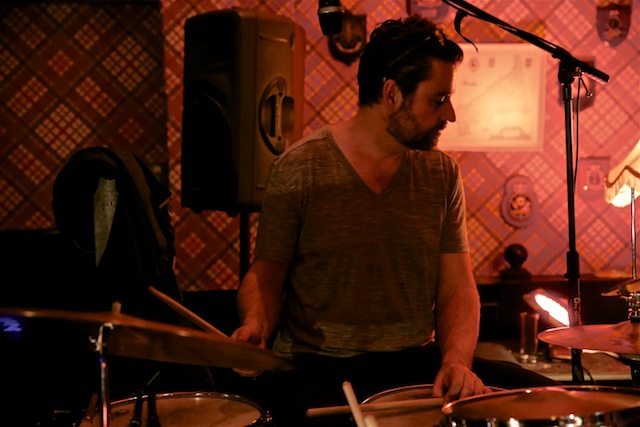 Again we see a musician deploying a top rated rhythm section to good advantage. With McArthur and Samsom behind him, he again showed wisdom. He worked with them and they gave him plenty in return. Although we often see this particular bass player and drummer in diverse situations, they appeared very comfortable here. The overall effect was that of interplay and cohesion.
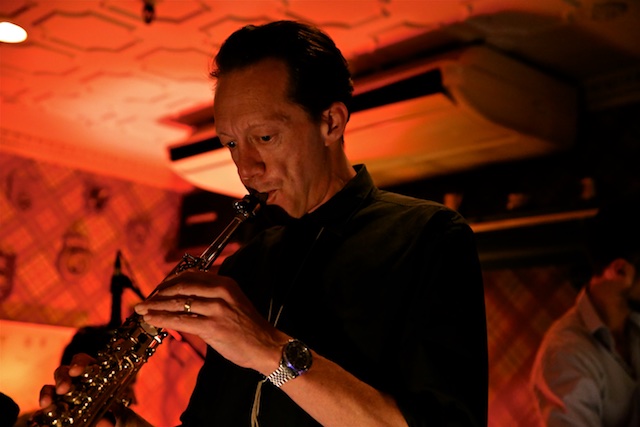 Martyniuk came to New Zealand around ten years ago and he attended the Auckland School of Music. Along with producer Nick Williams, he is soon to release a Jazz infused Soul album which will feature internationally renowned artists like Kevin Mark Trail, Nathan Haines, Miguel Fuentes and others. Judging by the huge audience at this gig his future looks very rosy indeed. The Jazz club turned away dozens of attendees in the end. A good problem to have.
 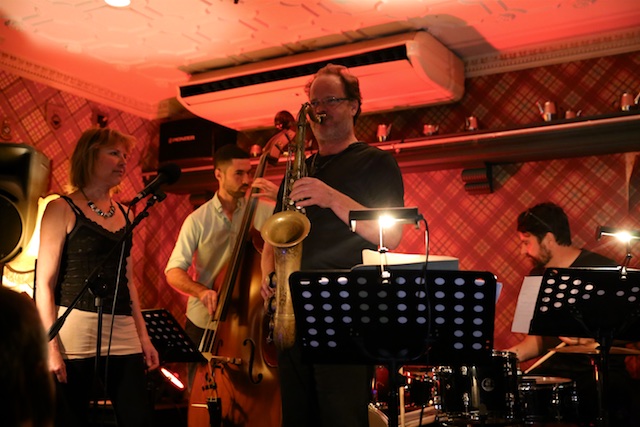 The Joni Mitchell/ Charles Mingus project is always ripe for reevaluation and I’m glad that Caro Manins was the one to explore it again. The connection between Joni and Jazz experimentalism runs deep. Rolling Stone Magazine figured it out early on, describing her as a ‘Jazz savvy experimentalist’. While the connection is obvious in her 1979 ‘Mingus’ album the move toward a freer music and towards harmonic and rhythmic complexity began earlier in the mid 70’s. Initially coming up through the American folk tradition, she gradually embraced a different style. She would later say, “Anyone could have written my earlier music, but Hejira (and later albums) could only have come from me”. From the 70’s on, she utilised her own guitar tunings and often incorporated pedal point, chromaticism, and modality in her compositions. If you look at her later musical collaborations, names like Jaco Pastorius, Herbie Hancock, and Wayne Shorter stand out.
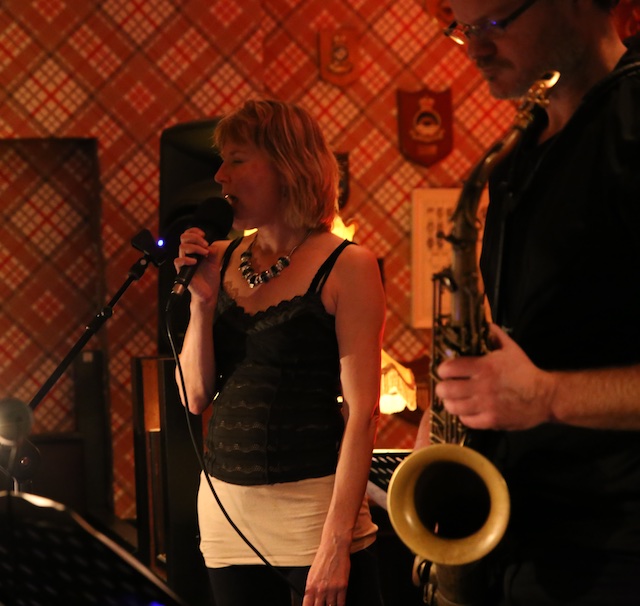 To her amazement at the time, a dying Charles Mingus asked Joni to call by. He told her that he had written a number of songs for her. Mingus passed before the completion of her project, but he heard all of the tunes except ‘God must be a Bogey Man’. Her ‘Mingus’ album followed soon after. “It was as if I had been standing by a river – one toe in the water. Charles came along and pushed me in – sink or swim”.
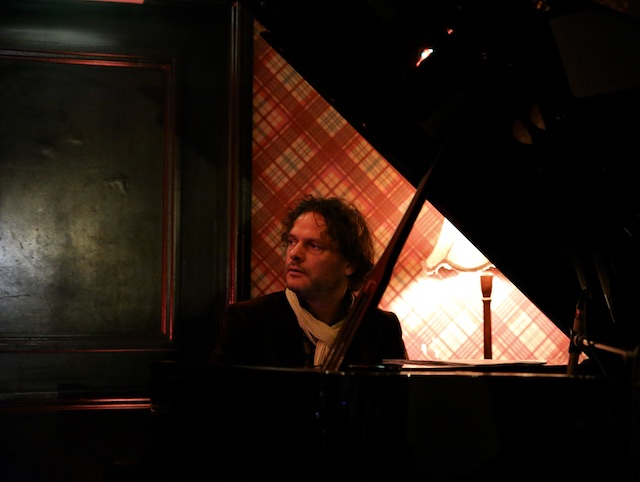 The project deserved a good lineup and it got one. Caro Manins, Roger Manins, Jonathan Crayford, Cameron McArthur and Ron Samsom. Crayford was especially interesting on this gig. His abstract explorative adventuring replaced by rich traditional voicings – his solos a history lesson; from locked hands chord-work to impressionistic delicacy. All of the musicians were respectful of Joni’s body of work and they understood that the best way to honour her legacy was by interpreting her work honestly and imaginatively. Not every tune came from Joni’s ‘Mingus’ album but all followed the Joni/Mingus/Jazz theme.
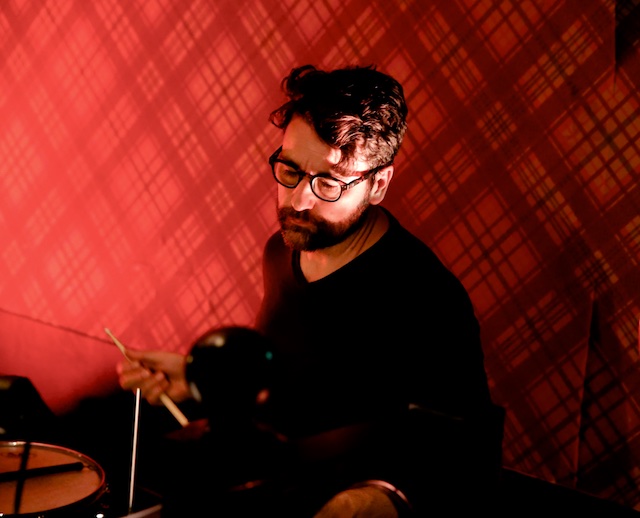 The gig was very well attended (no surprise there) and the audience enthusiastic. This was a CJC (Creative Jazz Club) event and it took place at the Albion Hotel on 29th June 2016. Caro Manins (leader, arranger, vocals), Jonathan Crayford (piano), Roger Manins (tenor saxophone), Cameron McArthur (Bass), Ron Samsom (drums, percussion).
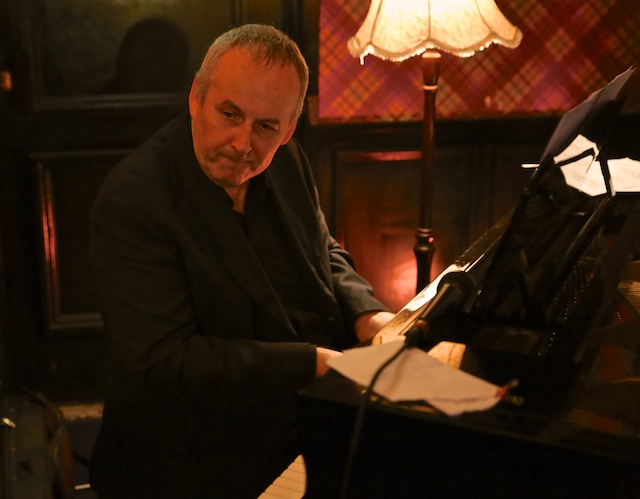 This is pianist Mark Donlon’s second appearance at the CJC (Creative Jazz Club). On this visit, his Shadowbird Quartet featured Aucklanders Roger Manins on Saxophone and Cameron McArthur on bass. The gig also brought Wellington drummer Lance Philip to the CJC for the first time. Both the bass player and the drummer have previously recorded with Donlon. The British-born pianist, educator, conductor is the senior lecturer at the New Zealand School of Music in Wellington
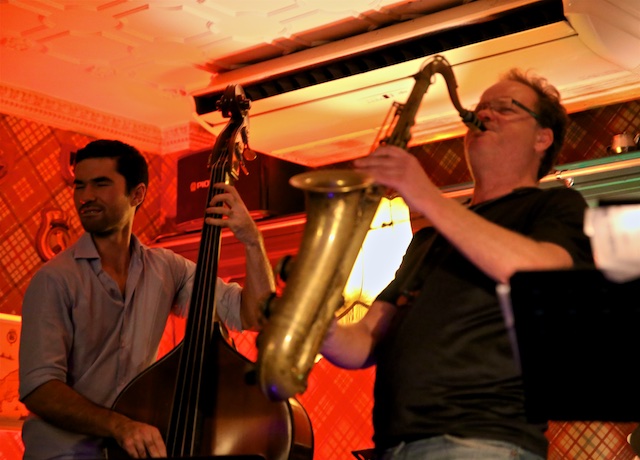 The first tune of the second set was ‘Nibiru’ and it was rich in narrative and melody. A thing of strange and compelling beauty. The piece began with a repeating pattern on piano, a pattern which shifted harmonically as it progressed. Over this Manins began by stating the melody – seldom straying far from the matrix in the opening stages. McArthur on bass intensified the mood by establishing a counter pattern and then repeatedly plucking at a single note, Philip free to add colour and texture – and he did. I liked this piece very much as it sounded both old and new (a nice effect if you can pull that off). The story behind it added another dimension entirely. ‘Nibiru’ is an imaginary planet beloved of conspiracy theorists, the ones who wear tin-foil helmets when venturing outside. The ones who see an absense of smoke as conclusive proof that the fire is well hidden. The planet evidently reveals itself to the chosen few and is the home of lizard people. I’m not so sure that the believers deserve a tune this nice. The tongue in cheek rendering of this odd belief is anything but ‘end of times’.
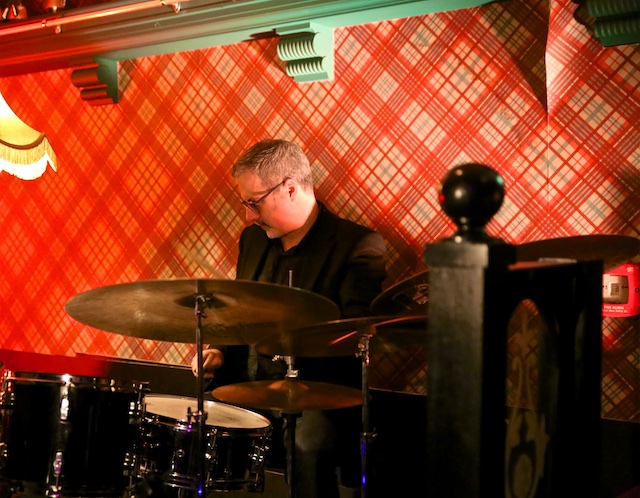 You would expect a group of musicians of this calibre to play well and they did. There are two Donlon albums out shortly and a few earlier ones available. Support local music by experiencing this artist or the bands various iterations. One place to do that will be at the Wellington Jazz Festival in early June.
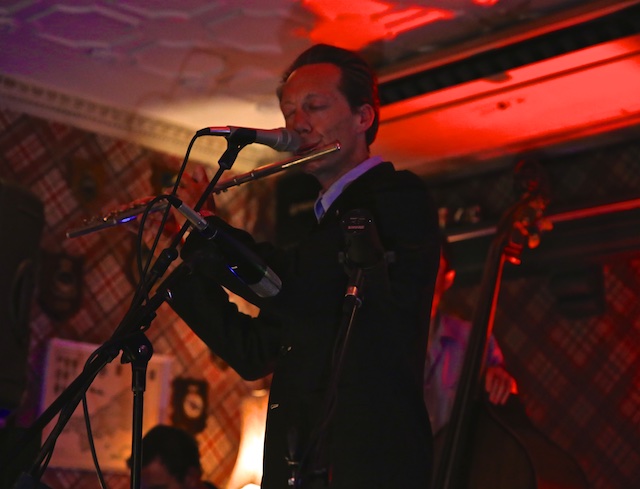 Musicians of a certain calibre are peripatetic, going where the music or the work takes them. This partly arising out of necessity, but also out of an impulse to explore new sonic and cultural environments. When a child or a grandchild arrives the musicians journeys circumscribe smaller arcs and are less frequent; the local scene being the beneficiary. This is the case with Nathan Haines; happily young Zoot tethers him in our midst for the moment. Haines has a solid reputation here and in the UK, with a loyal fan base in both locations. He has never been afraid to push in new directions, but at the heart of whatever explorations he embarks upon, a default soulfulness underpins the enterprise. This leads him to productive collaborations with like-minded artists, and not necessarily all Jazz purists. From the Hardbop-infused to Soul Jazz to DJ funk – it all works for him. While all of these collaborations are pleasing, none is more so than when he plays alongside brother Joel Haines.
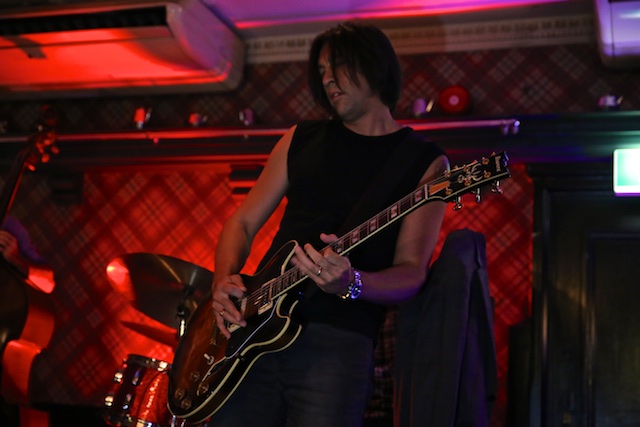 The Haines brothers have different musical careers, Nathan Haines outgoing, a public performer and award-winning recording artist – understanding well, the vexed world of marketing and the presentation of non-mainstream music. He balances these competing forces better than most. Brother Joel is a successful composer and a gifted performer as well, but his career these days centres on TV and film work. An engaging musician and a crowd pleaser; less in the public gaze by choice. Improvised music thrives on contrasts and the rub between different sounds always works well in the right hands. Nathan creating soulful innovative grooves and catchy melodies over traditional Jazz offerings, Joel bringing a warm-as-toast Jazzgroove edge, wrapped in a blues/rock package.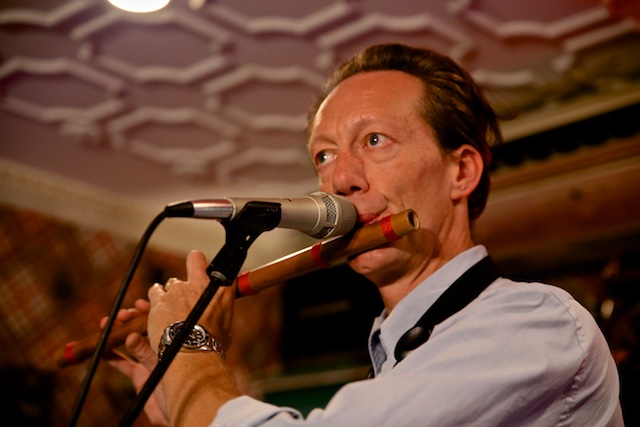
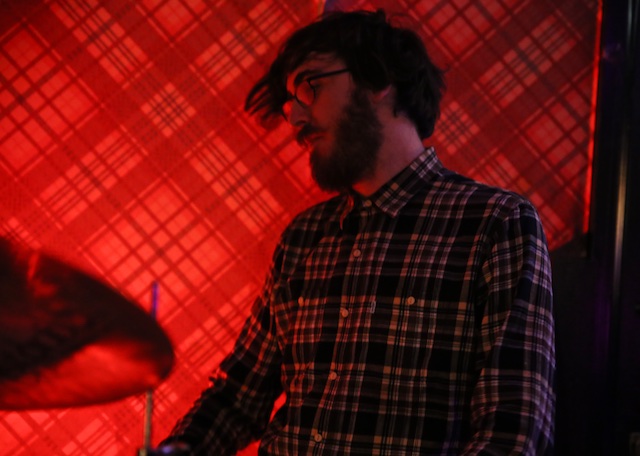 Next up was ‘Desert Town’ a Haines tune from ‘Heaven & Earth’. That was followed by an earthy version of ‘Set us Free’ (Eddie Harris) and then ‘Mastermind’ (Haines) from his recent ‘5 a Day’ album. Last up on the first set was ‘Land Life’ a tune based on a Harold Land composition. It pleased me to get a mention from the bandstand at this point. It is no secret that I’m a real Harold Land enthusiast. The band tore up the propulsive changes and moving free, made the tune their own.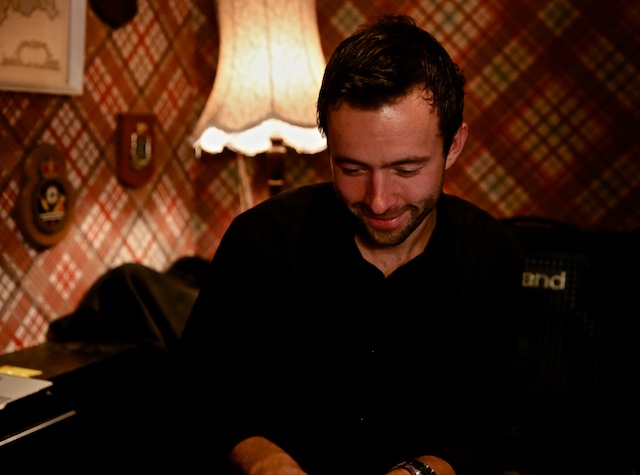
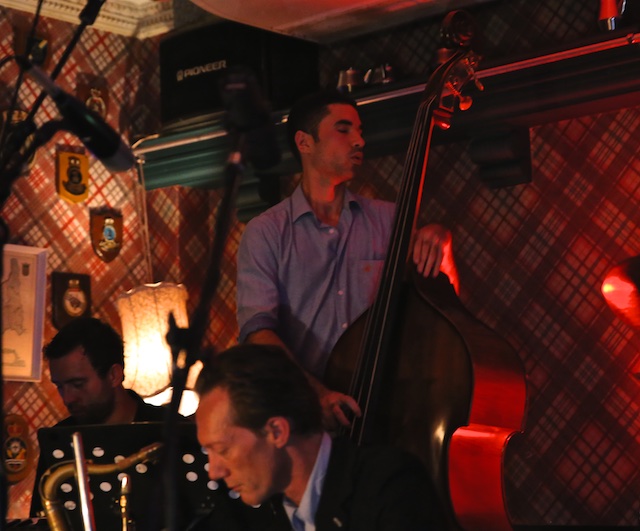
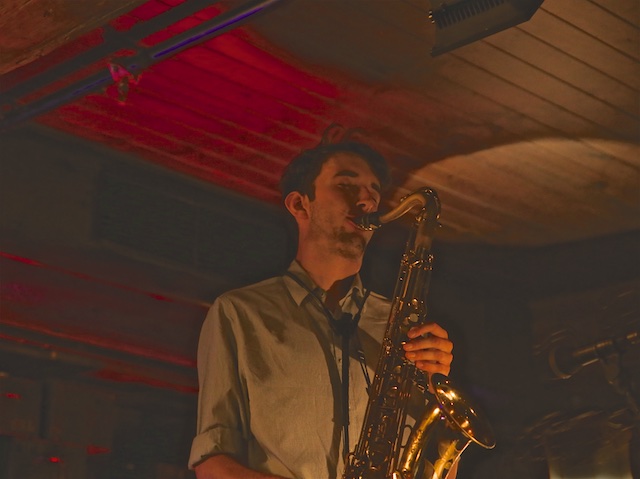 These events focus on emerging Improvising artists and allow them to gain wider exposure in front of a discriminating audience. They generally occur around three or four times a year. Some of those featured in the Emerging Artists Series are recent graduates, others are still pursuing their studies. In this case, we had two horn players from out of town; Christchurch and Wellington respectively. Their horns were different, and their approaches to the sets different, but both approached the gig with the confidence of seasoned performers. Such confidence translates well on the bandstand and it informs an audience that the musician means business. Artists often remark that playing in a small Jazz club like the CJC is a unique experience. It’s not like a noisy bar, where people often ignore you, and it’s more intimate than a concert hall where an audience gives limited feedback. Club audiences listen intensely, they react boisterously at the end of a good solo and they call in encouragement when a phrase resonates. Mostly they listen in silence and but they listen actively.
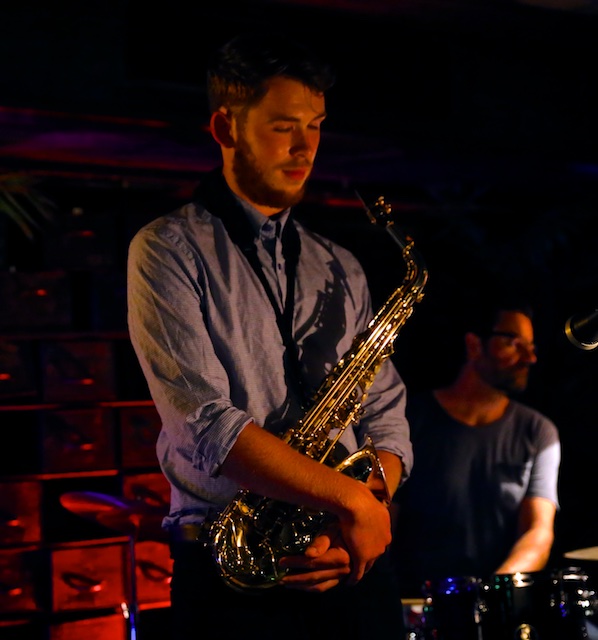 Jimmy Rainey, a tenor player from Christchurch played the first set. He is a graduate of the Jazz School in Christchurch, now furthering his Jazz studies at the Auckland University Jazz School. In Christchurch, he’s involved with a number of groups such as the Symposium Jazz Orchestra (many will recall that orchestra on Glen Wagstaff’s album), and the earthy ‘Treme’ styled Justice Brass Band. On Wednesday, he had a premier Auckland Rhythm Section at his disposal, Kevin Field, Cameron McArthur and Ron Samsom. Most of the compositions were Rainey’s and they showed a developing maturity. His sound was interesting, especially on the down-tempo numbers, having that downtown late-night feel. He is in Auckland for a while and I am certain that we see more of him. His father is well-known on the scene but he is earning his own place in the light. With a Jazz-famous name like Rainey, he has a head start.
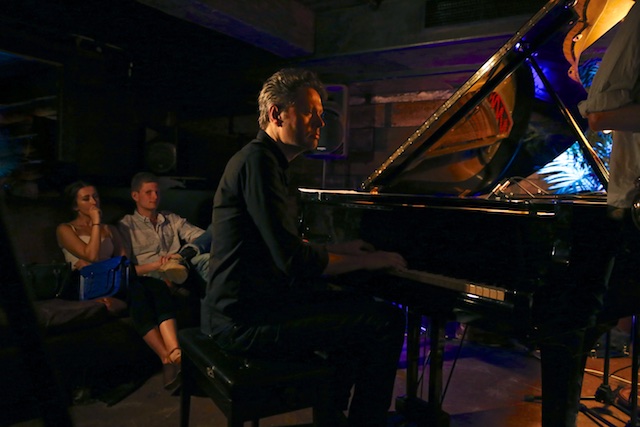 Bryn van Vliet has visited the club before as part of the boisterous Wellington Mingus Ensemble. In that context, I have seen him play in Auckland and Wellington, but never as a leader. He is also a member of the Roger Fox Big Band and a graduate from the Wellington Jazz School. While van Vliet often doubles on tenor, he played alto for this gig. What immediately caught my attention was his clean tone. A compelling tonal quality that quickly drew you in. His playing has cut-through in ways that Paul Desmond’s did, but for all that it was a modern sound. Vliet is originally from the far North but his Wellington credentials will no doubt anchor him there. Like Rainey, he brought many of his own compositions to the bandstand and the same rhythm section backed both players. For the last number, a standard, they were on the bandstand together.
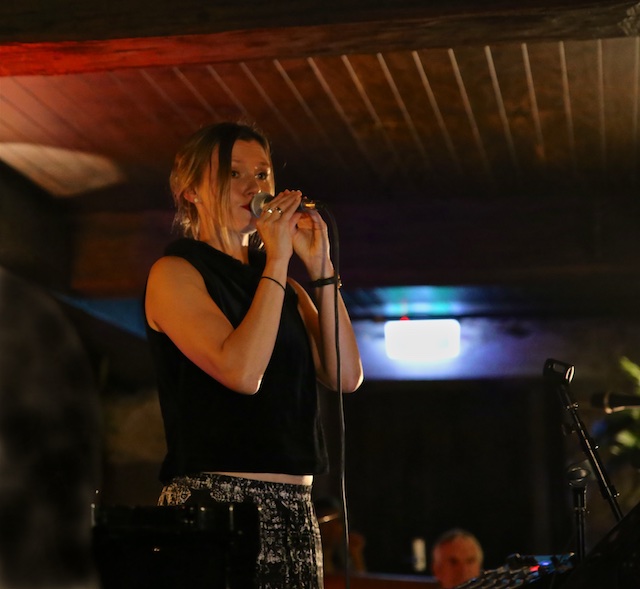 The Briana Cowlishaw/Gavin Ahearn gig is the second CJC gig featuring international artists in a month. For those who follow Australian improvised music, these are familiar names. Both have rock solid credentials as both have traveled extensively with their music and attracted glowing critical reviews. This is a fortuitous musical pairing, and it is particularly obvious during duets. There is a mutual awareness of space and nuance and an understanding of just where interplay works best; neither over-crowding the other. There are a lot of pianists who accompany vocalists convincingly, but the true art of accompaniment is rarely seen. Ahearn is a fine accompanist and soloist. Unusually, you could say the same for Cowlishaw – an aware musician who watches and listens to her collaborators carefully – works with what she hears. Never greedy to hog the limelight and making every line count.
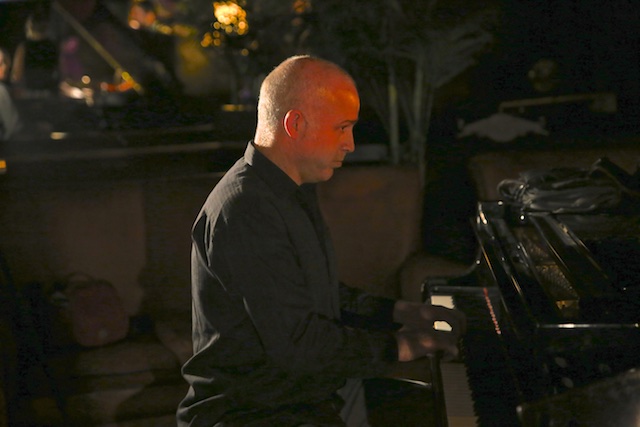 For an artist barely past her mid twenties Cowlishaw has achieved much. Performing at festivals all over the world and being nominated for prestigious awards along the way. She has studied with top rated teachers in three continents and it shows (including Gretchen Parlato, Aaron Goldberg, Kurt Elling). Her confidence, compositional abilities and musicianship shine through on the bandstand. Hers is a modern voice and more importantly a fresh young voice. What worked so well so well for Gretchen Parlato also works for her; a clean delivery, imaginative interpretations and an interesting approach.
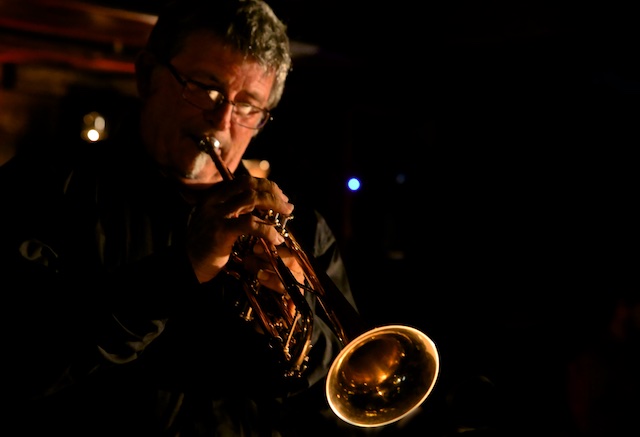 The first set saw Cowlishaw and Ahearn performing as a duo. This format gifts artists with a degree of freedom and it was well utilised. As they took us through a mix of standards and originals, we saw just how attuned they are. The Cowlishaw compositions are particularly interesting, with words, wordless vocalising and interesting harmonic underpinnings from Ahearn – a subtle weave, blending threads to create evocative soundscapes.
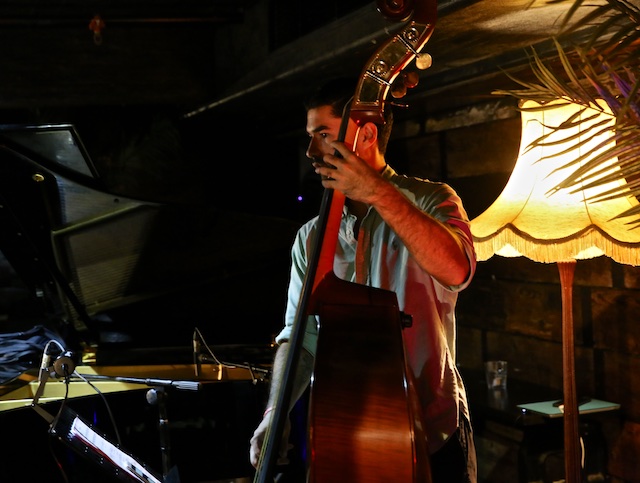 Both have visited Norway and the sparse honest northern sound was particularly evident in their first set. A recent collaborative album recorded in Norway arose out of an earlier trip there. More recently they performed at the Hemnes Jazz Festival in that country. As Cowlishaw said of these compositions, “After spending a lot of time on the road and in big cities, I found myself in the Fjords. The wild lonely freshness was so appealing that the thought arose – was this a place that I would want to live in one day”? Arising from that proposition came the compositions on their ‘Fjord’ album. Cowlishaw is obviously keen on the outdoors. She told an audience member that she intended to explore a few of New Zealand wildness places as the chance presented itself.
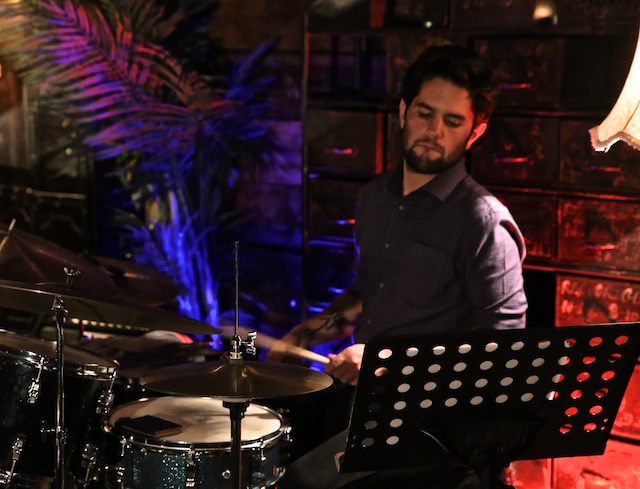 The second set swelled the bands numbers to a quintet – joining the duo were Mike Booth on trumpet, Cameron McArthur on bass and Adam Tobeck on drums. All fine musicians and well able to rise to any challenge. The expanded unit gave her much to work with and Ahearn in particular jumped at the opportunity; utilising a more aggressive hard-swinging style. There were more standards in this second half and Cole Porters wonderful 1943 composition from ‘Something to shout about’ – ‘You’d be so Nice to Come Home to’ stood out as a rollicking swinger. The other memorable standard came from the duo – Michel Legrand’s 1932 composition ‘You must believe in Spring’. To Jazz audiences this means one thing – The achingly beautiful Bill Evans Warners album of that name. The rendition was remarkably beautiful – Cowlishaw tackled the number as Norma Winstone might, while Ahearn stamped his own authority on the ballad while allowing Evans to shine through.
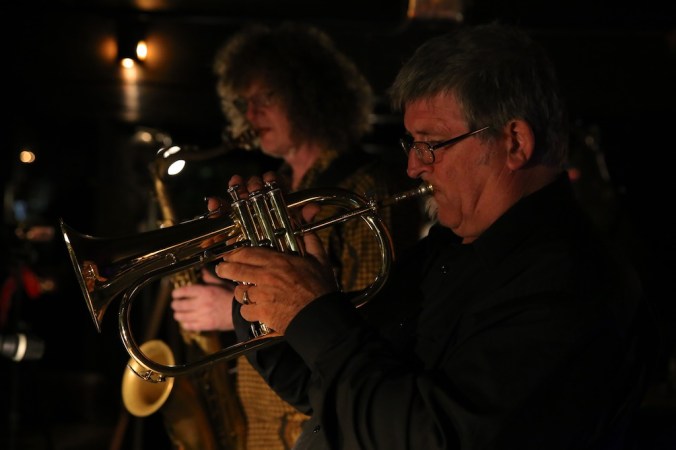 January was hot and wet and the CJC was on holiday. If like me, you are a regular attendee at the CJC (Creative Jazz Club) December to February is a long time between drinks. The El Nino humidity with its sullen skies and petulant storm threats rolled into February and suddenly we were back in business. The first gig of the year featured Craig Walters and Mike Booth. Walters, a well-known Sydney based tenor player, last performed at the club in 2012. Booth is a local and he features often; a gifted composer, arranger and trumpet/flugel player. Booth and Walters have a long history together.
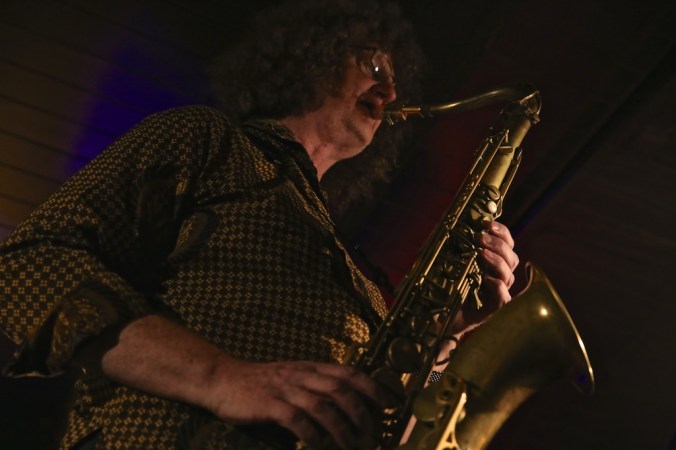 The first number was a Walters tune titled ‘Easy’. Booth played flugel and the relaxed fluid interplay between horns set us up nicely for the evening. Walters plays with real fluidity and his tone has a certain quality – a hint of mid to upper register sweetness not dissimilar to that of Ernie Watts – but with an earthier colour overlay. While the first tune eased us the into the gig the second tune grabbed our attention in a different way. ‘A Kings Ransom’ is a seldom played Booth tune and its complex rhythms gave the band a solid work out. Broadhurst delivered a wonderfully solo on this – Monkishly jagged and totally within the spirit of the composition.
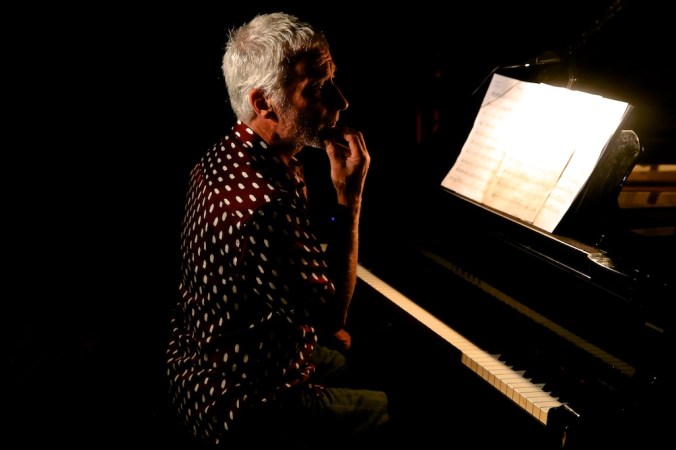 Towards the end of the second set they played Walters ‘As close as you’ll get’. If the title didn’t trigger any memories the first bar surely did. This was a tune that I’d heard way back in April 2012. Its intricate hooks and counterpoint nailed it within seconds. This was not a tune easily forgotten – in fact I happily replayed it in my head for weeks after the 2012 gig. I was not putting up video way back then but have chosen this cut to put up now.
 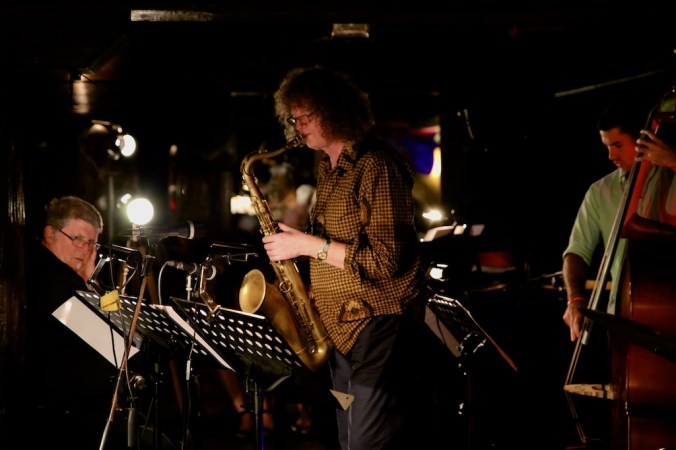 Last years attendance at the club was good and if Wednesday was anything to go by this years will be even better. There were many first time attendees and based upon the applause most will return. The artists create the music but they need engaged audiences to complete the circle. As the famous American bass player David Friesen said to us last year – ‘this is a virtuous circle and the magic only emerges when audience and musicians interlink. The sum of what comes from this interaction is often greater than the sum of its parts. Improvised live music at its best is profound and the thought that we might miss a wonderful and unique moment causes us to return time and again. That is how it works me anyhow.
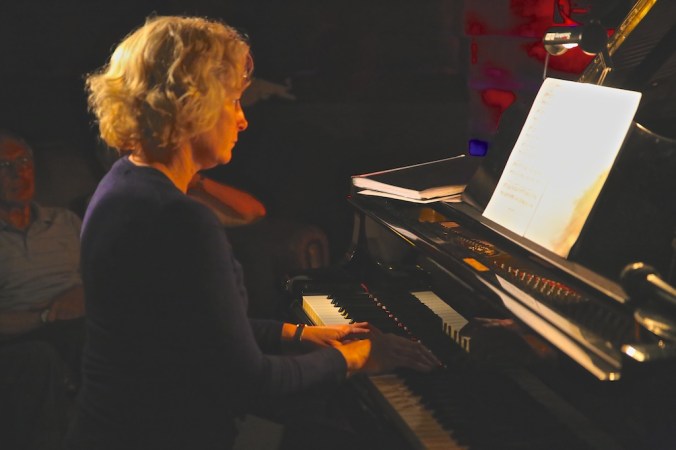 I was out of the country when Anita Schwabe performed at the CJC two years earlier. While I had seen her perform at the Bruce Mason Centre with the Rodger Fox Orchestra, I wanted to hear her in a more intimate setting. Her live (and recorded) performance on ‘Journey Home’ was impressive and as I recall a jet lagged Alan Broadbent watched her segments from the wings during the Auckland concert. As good as that concert and a later concert were, hearing an artist in close proximity is always a different experience. Schwabe didn’t disappoint. The first thing you observe when you meet her is her understated manner. Like many New Zealand improvising musicians she is self-effacing to the point of being dismissive of her own abilities. This contrasts strongly with the engaging confidence of her playing. From the first few bars you become aware that there is something special going on.
 Schwabe’s first number referenced the under-acknowledged and recently departed pianist Clare Fischer. “I like his unusual voicings”, she said before she played through her composition,’Fisching for Compliments’. The tune was intensely melodic, filled with clever references and a fitting tribute. Although a more reflective number (and her first of the night) we saw what she could do. The tune drew us in with a spacious intro and then imperceptibly we felt the swing. Block chords suddenly dissolving, close voicings appearing, disappearing; right hand running off the back of a phrase, subtly playing with time and rubbing against the chords in the left hand. This interaction between right and left hands created subtle and pleasing tension and we were to hear that often throughout the evening. That first number gave us a foretaste of what was consistently enjoyable music throughout the sets.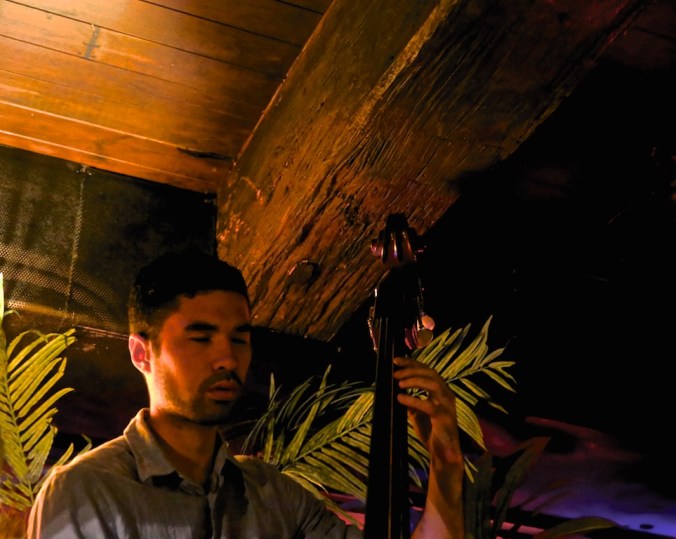
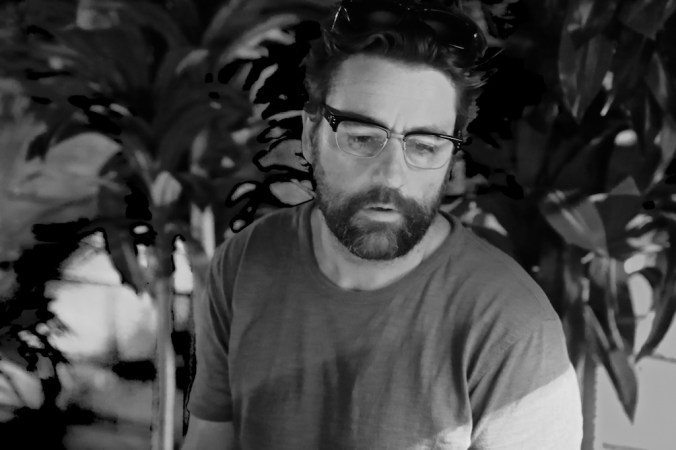
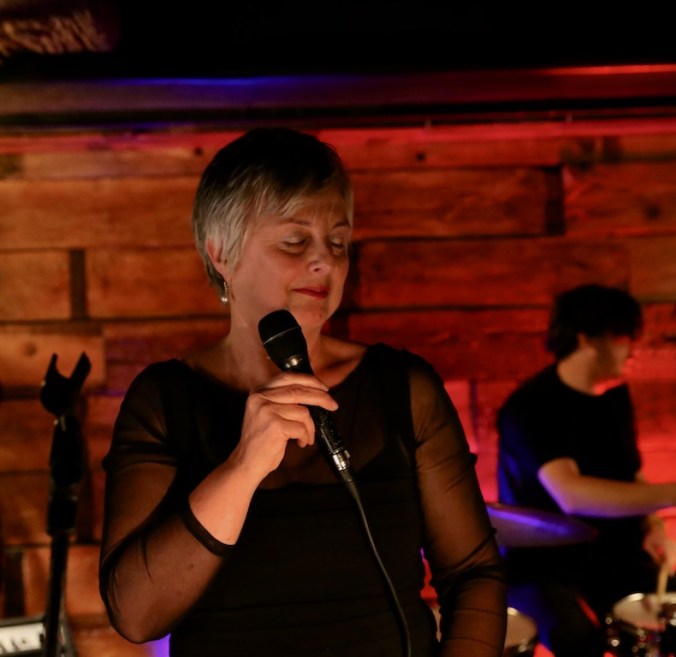 On Wednesday the UK-based vocalist, arranger composer Louise Gibbs brought her Seven Deadly Sins project to Auckland’s CJC (Creative Jazz Club). The audience, unrepentant antipodean sinners that they are, found much to enjoy. When premiered in the UK the project received much acclaim and in 2013 the ‘Seven Deadly Sins’ album’ was released. As I glanced through the liner note credits one name jumped out, Tim Whitehead; an important English saxophonist with equal facility on soprano, alto and tenor. For any number of reasons this is an album worth having.
 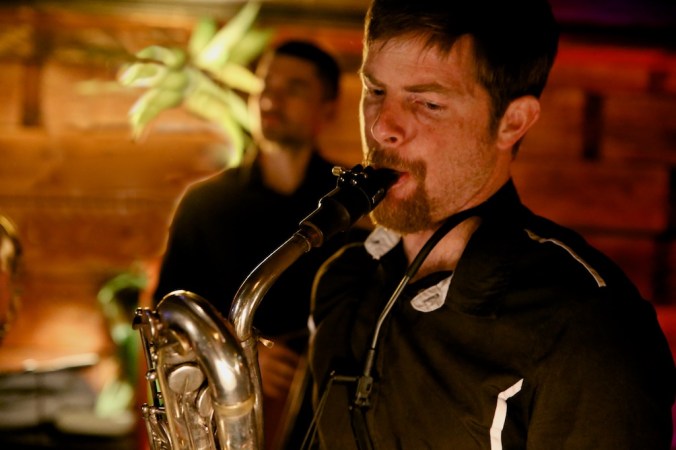 The song suite has seven parts plus prologue & epilogue. This aggregation of cardinal sins does not originate with Peter Cook (as someone hilariously suggested) but comes to us from the fourth century AD. These very human failings were the obsession of the middle ages and Chaucer, Dante and Brueghel utilised the themes to great artistic effect (and often with rye humour). Debates on morality are still very much part of the public discourse as the dreadful events of Paris, the Lebanon and Mali remind us.
 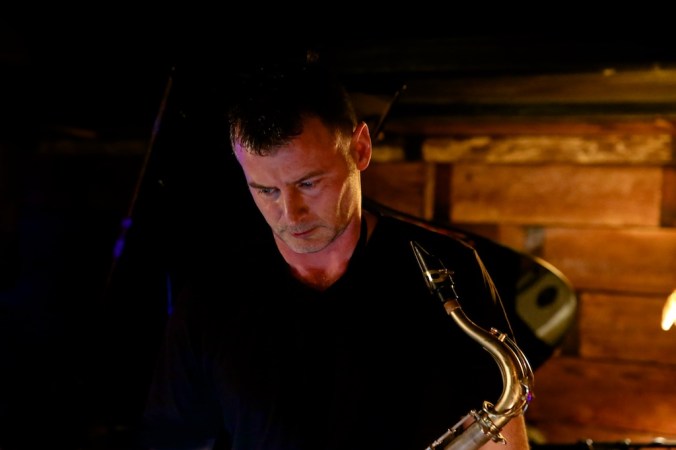 Gibbs invited us to examine the sins afresh; a parade of human failings as seen through a jazz lens. Her evocative contrasting pieces leaving us in little doubt as to which sin they represented; a strident drum solo during anger, the fulsome sound of the trombone for gluttony etc. It is unsurprising that the tenor saxophone portrayed lust; an entirely appropriate pairing given the repeated historic accusations of lasciviousness levelled against that sensual instrument.
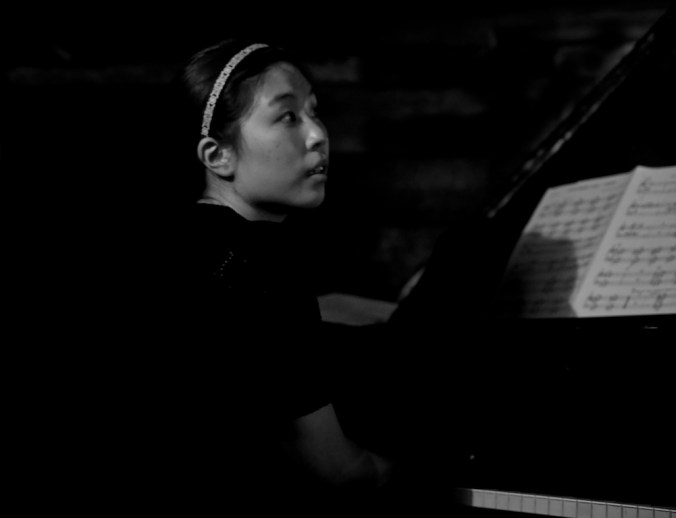
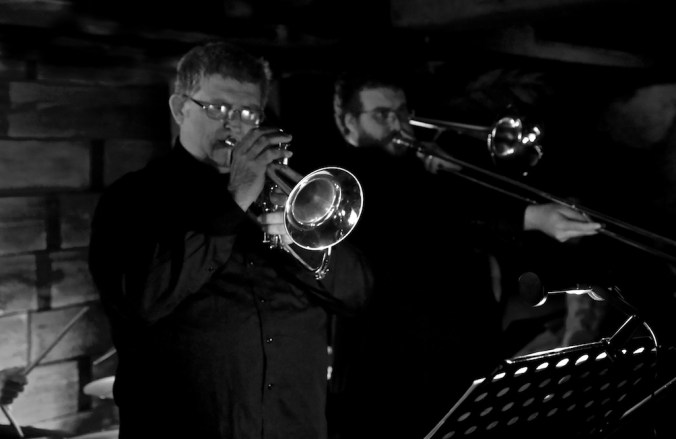
 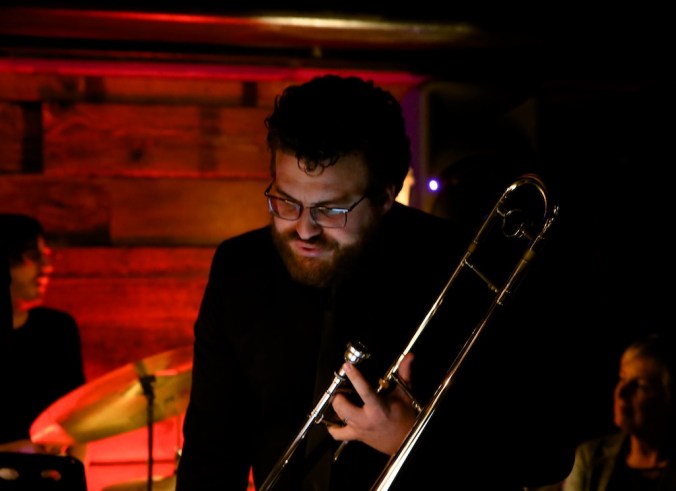 The suite while highly arranged gave ample room for the soloists to demonstrate their particular vice. Crystal Choi was ‘pride’ on piano, Pete France was ‘lust’ on tenor, Haydn Godfrey was gluttony on ‘trombone’, Mike Booth was ‘envy’ on trumpet, Cameron McArthur was ‘sloth’ on bass, Steve Thomas was ‘anger’ on drums, Andrew Hall was ‘greed’ on alto & baritone. Gibbs was vocalist on all numbers including a prologue and epilogue. Many of the band members like Booth, McArthur, Choi and Thomas are regulars but we see Hall, France and Godfrey less often. That is a shame because they were amazing.
  A shorter first set preceded the ‘Seven Deadly Sins’ suite – all Monk compositions. The band used stock arrangements but there was a sense of boisterous freedom in the renditions. This provided an appropriate segue to the second half. While everyone embraces Monk these days, his dissonant choppy lines certainly raised eyebrows back in his heyday. Monk was an iconoclast who channeled the rawness of the human condition through pen and piano. With the Seven Deadly Sins and its often dissonant passages we also experienced that.
  Louise Gibbs has been teaching and performing in the UK for 30 years, but she grew up in Auckland. In recent years she moved away from a distinguished career in academia to concentrate on performance and composition. There is a confidence about her work and she is unafraid as a performer. Her voice can move from silk to raspy as appropriate to the piece. Footnote: Earlier I drew attention to Tim Whitehead (on the Gibbs album). He was once a member of Ian Cars ground breaking and popular group ‘Nucleus’ – the highly respected Kiwi born saxophonist Brian Smith was a founder member of that group.
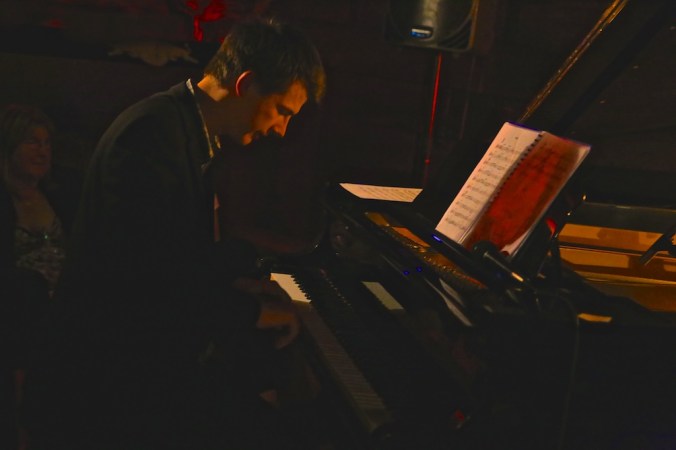 Alex Ward has been on the scene for a few years now and he has appeared at the CJC a number of times. This time he appeared with a group of formidable younger musicians; all respected about town. His programme was pleasantly challenging as it offered contrasting tunes. From the quirky Carla Bley composition ‘King Korn’ to the perennially popular Disney tune ‘Never never land’. Then, for the second time in as many weeks we heard a Cold Play cover – this time ‘Daylight’ (arr. by Taylor Egsti). Rounding off the set list were a number of his own compositions including the appealing ‘Rakino’ which I have heard before. Wards compositions have a definite melodicism about them.
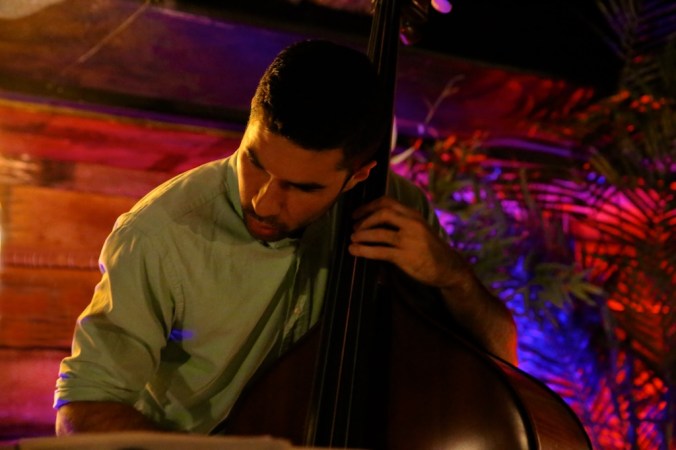 I am a real Carla Bley fan and so it surprised and pleased me to hear ‘King Korn’. I also have a real liking for her ‘Ida Lupino’. Bley’s repertoire is not played anywhere near enough for my liking. Her tunes are often closer to the avant-garde, but still accessible to main stream listeners. Ward showed no fear in tackling the angular jerky rhythms of King Korn and the result was pleasing. He had surrounded himself with exactly the right musicians for the task. On bass was Cameron McArthur, a perennial favourite who must now be considered a heavyweight about town in spite of his youth. The drummer was Cameron Sangster and again a highly experienced and gifted musician. Sangster is a multi faceted drummer who can move between soul, big band and small ensemble work with ease. We recently saw him with the Auckland Jazz Orchestra where he put on a stunning performance.
 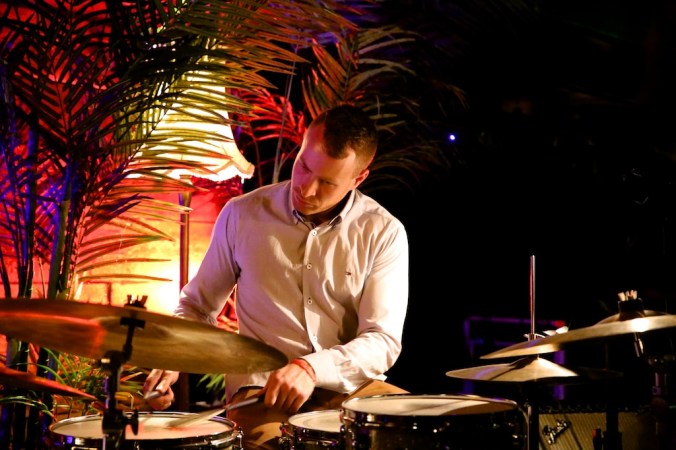 Additional musicians came to the bandstand at various points; Kushal Talele on tenor saxophone and flute and Michael Howell on guitar. I had previously only encountered Ward playing in a trio format and this was a chance for us to see what he would do with an expanded ensemble. The diversity of material worked for them – none of it highly arranged but allowing for free-flowing interaction.
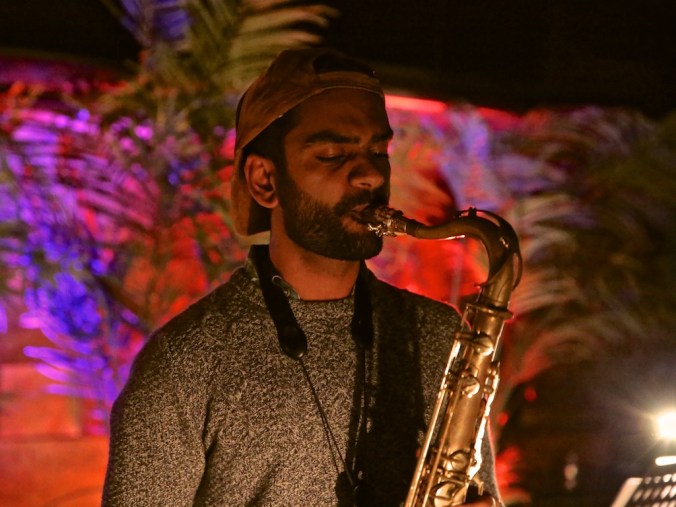 I had only heard Talele once before and he naturally sounded different on this gig. Here he was appropriately the competent sideman, not the hard-driving Coltrane referencing leader. I like both aspects of his playing. He is a musician that I am definitely keen to see more of – especially when he dives deep into that denser material he favours. The ever smiling Howell is well liked and respected as an up and coming young guitarist. He is seen to greatest effect in Roger Manins ‘Grg67’ band.
 Whether by accident or design, Ward celebrates Carla Bley in an important year. 2015 saw Bley receive the highest public honour in Jazz, as she was the recipient of the NEA (National Endowment of the Arts) Jazz Masters Award.
 This is the second Auckland Jazz Festival and what incredibly tasty offerings there are in the programme. The event runs as a fringe festival and this is absolutely the right approach; no corporates making stupid unhelpful suggestions, an intense focus on the best of Kiwi improvised music and international acts with an established connection to New Zealand. The ‘best kept secret’ ethos is a good model for this music and it’s true. In a nutshell the festival tells an all but hidden story; the story of a vibrant diverse Jazz scene, with more than enough talent to wow discriminating audiences. The biggest downside of fringe festivals is that they run on air. Good attendance can mitigate this. With no significant up-front advertising budget, the role of the sponsoring clubs, bars, galleries and local record labels is vital. Those venues and the labels (Rattle in this case) need our support and appreciation. While Auckland has an unfortunate track record of failing to support the arts, the winds of change are in the air. The gigs on offer are diverse and interesting and Auckland will increasingly want a piece of this magic.
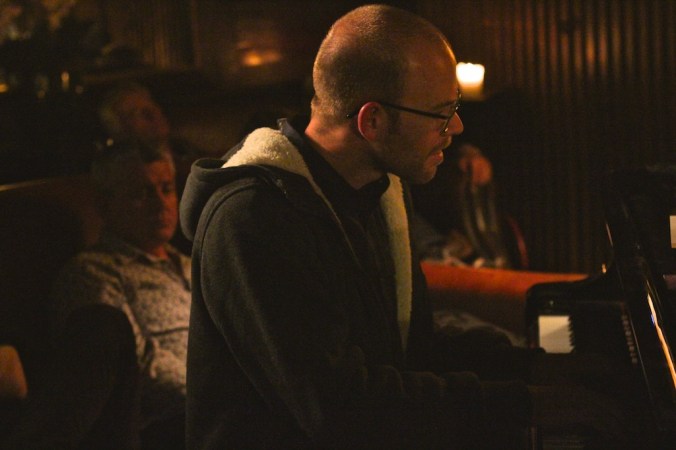
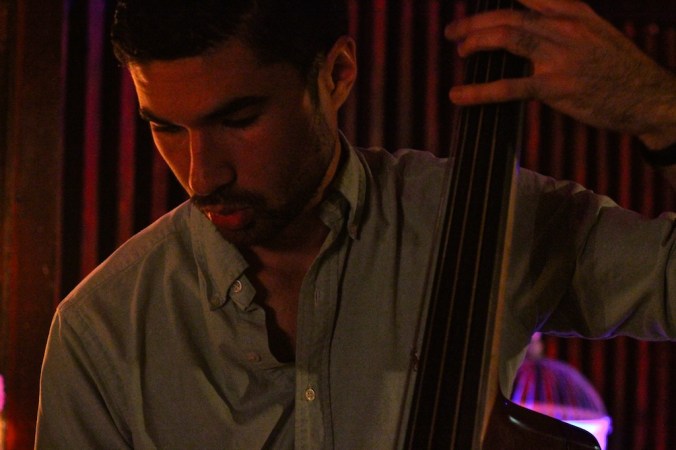
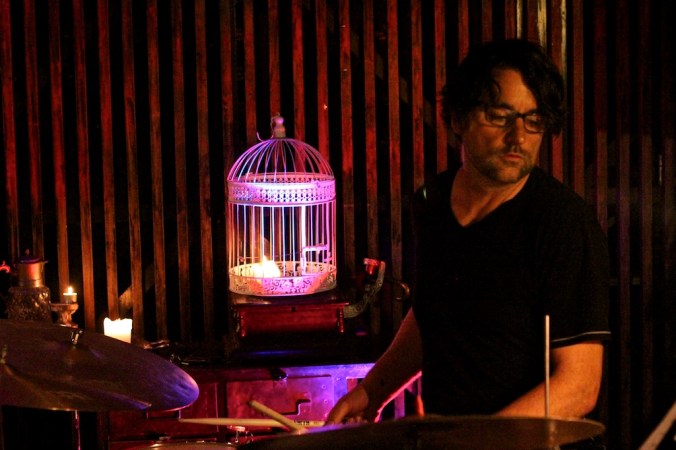
 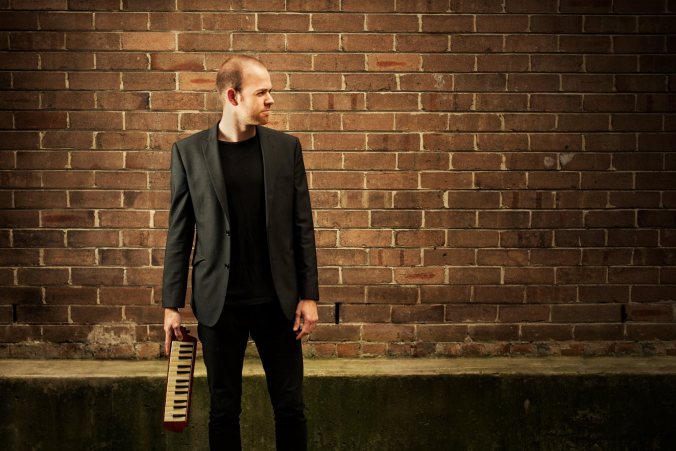 The festival opened on the 14th with a duo of respected Australian musicians, ‘The Prodigal Sons’. P J Koopman (guitar) and Steve Barry (piano) are expats who left New Zealand long ago to work in Australia. Both are fondly remembered by Kiwi audiences and both are now firmly established in Sydney; polished musicians speaking each others language. The years of hard work and performance in diverse situations giving them particular insights. Barry has been widely acknowledged for recent albums and although widely engaged in academic pursuits recently, it is good to see him on the road again. These guys can really swing their lines and do it while spinning out fresh ideas. No tempo deters them, but it was the medium and slow tempos that showed us their best. The two original compositions which particularly impressed me were by Koopman; ‘Working Title’ and ‘Major Minor’. On these tunes the exchanges between the two were breathtaking. They engaged two fine local musicians for the gig and with the talented Cameron McArthur on bass and Andrew Keegan on drums the gig was superb. McArthur and Keegan were there every step of the way and as pleasing as the headliners.
 On Thursday the Jonathan Crayford Electric Trio featured. It is no secret that I rate Crayford highly and I would go to see him perform anywhere. Arguably one of our top Jazz exports to the world and undoubtedly one of the more innovative musicians on the scene today. No Crayford project is a half-hearted affair, as this musician lives music in the fullest sense. His musical outpourings are sublime but it goes deeper than his excellent musicianship. Crayford’s vantage point on the creative life is unusual and deeply focussed: few others share his perception.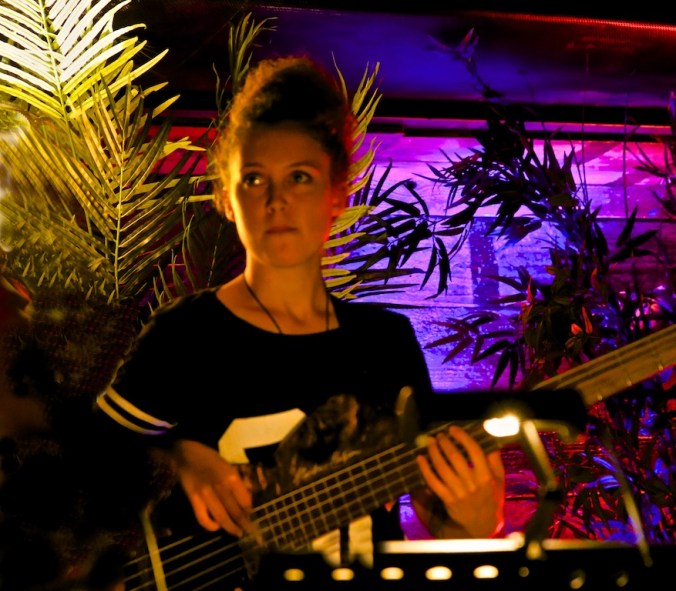
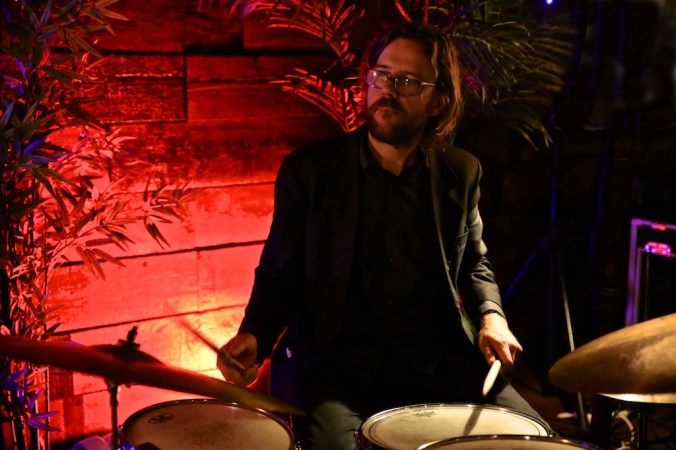
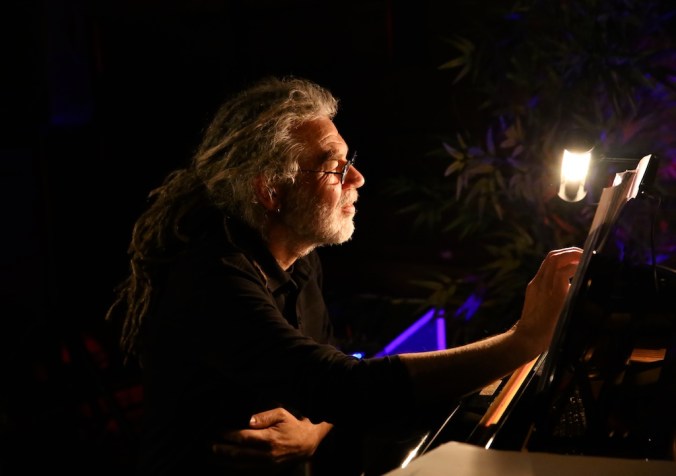
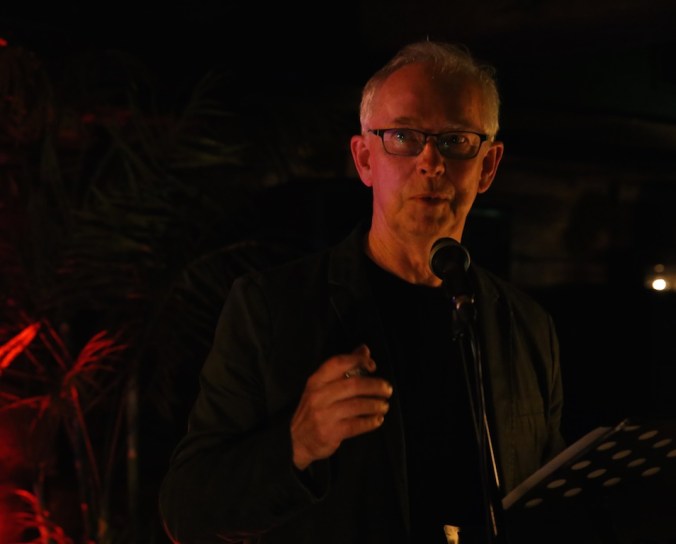
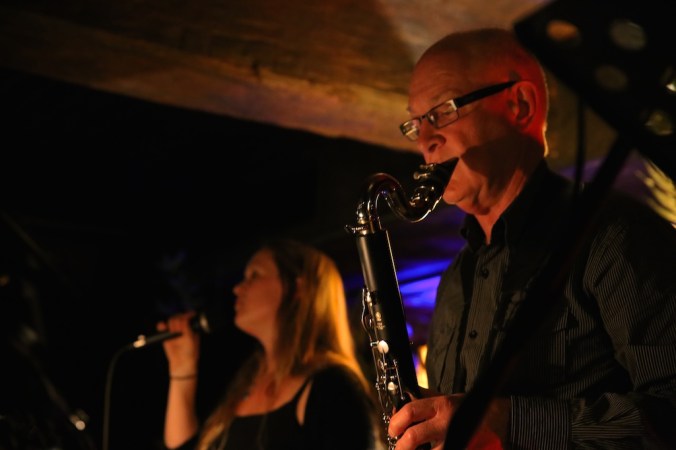

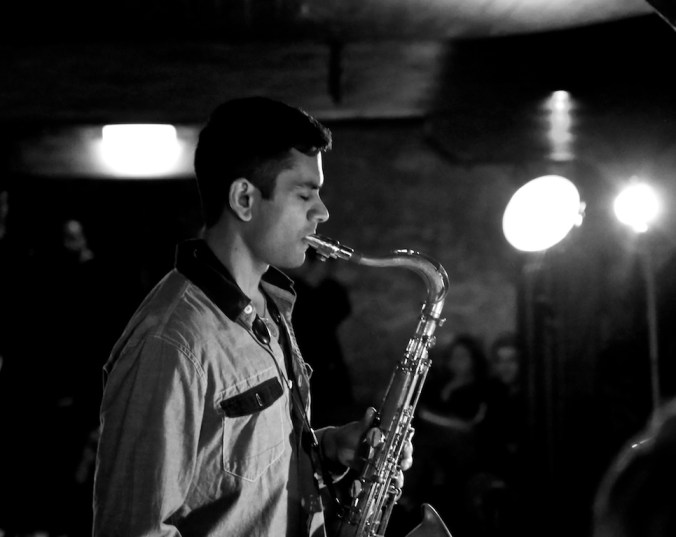 By my best estimation, Murphy’s Law kicks in roughly once every three months. Before the gig I plugged in my HD video recorder to charge, gathered my camera equipment into one place and foolishly congratulated myself on being so well organised. That was the mistake right there. Having tempted the Fates they responded in kind. My video recorder didn’t charge because the gods rewarded my hubris by half unplugging the charger cable. This was a gig I particularly wanted to video but the battery died mockingly within 15 minutes. Immediately the battery gave out the gig got better and better.
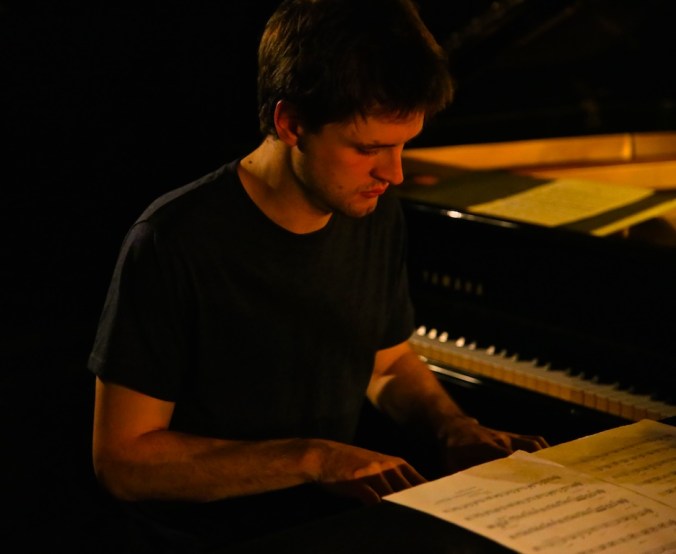 I had not encountered Kushal Talele before. Until recently he has been working overseas and in London in particular. What I do know about him is that Brian Smith and Pete France tutored him at the New Zealand School of Music; both wonderful musicians. He was born on the Deccan Plateau in the city of Pune, the ninth largest city in India and the second largest after Mumbai in the state of Maharashtra. His family moved to New Zealand when he was eight, but he is now clearly a citizen of the world and of music.
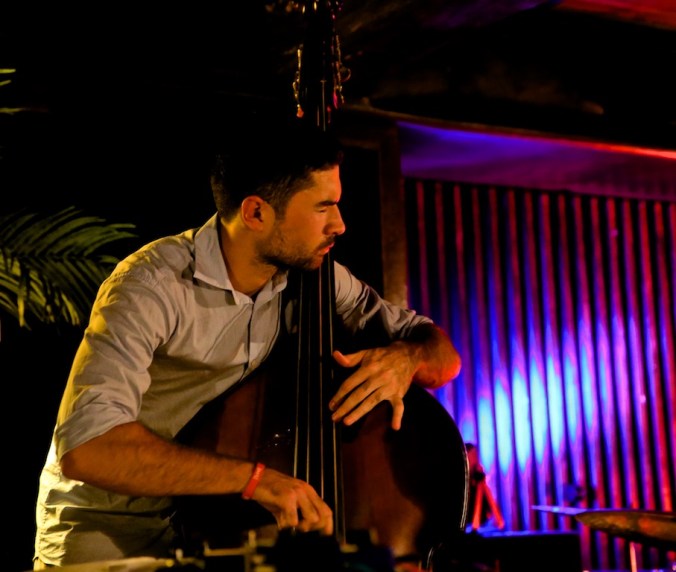 His good looks and relaxed confidence tell a story before he plays a note. Looking the part on the band stand is about posture and being at ease with the task at hand. His tone on the tenor is beautiful. He is very much a modernist but with the elements of Coltrane and the post bop era embedded. I asked him who he particularly listened to and the first name he mentioned was Chris Potter. Serious tenor players all admire Potter and rightly so. I also asked him if Indian Classical Music informed his playing and he was quick to say that it didn’t; adding that it was something he would like to explore one day.
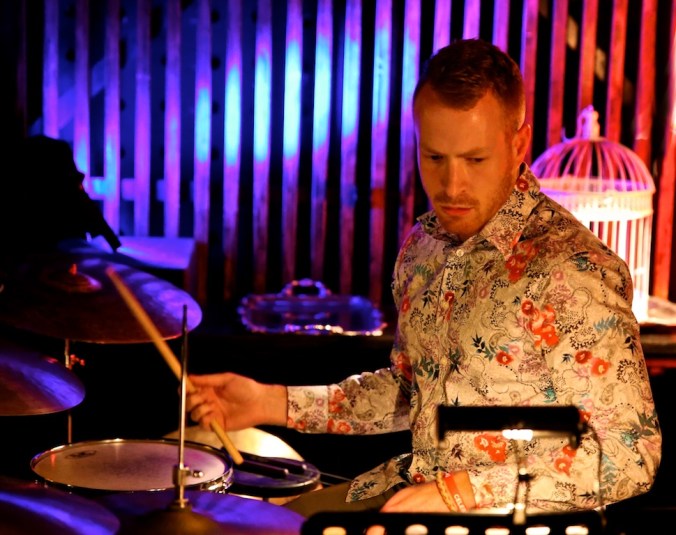 I asked because I have been following altoist Rudresh Mahanthappa who successfully fuses elements of South Indian music with modern Jazz conceptions. In reality most serious post Coltrane saxophonists have these elements in their playing. The way he tirelessly works over figures of melodic and harmonic invention tells me that he has that influence. In approach if not in sound, he takes a similar route to Sonny Rollins. Easing himself into a tune, in no hurry; working over long vamps which stretch into infinity. This turning a piece over and looking at it from different angles; gnawing away until the essence exposed, is a very New York thing.
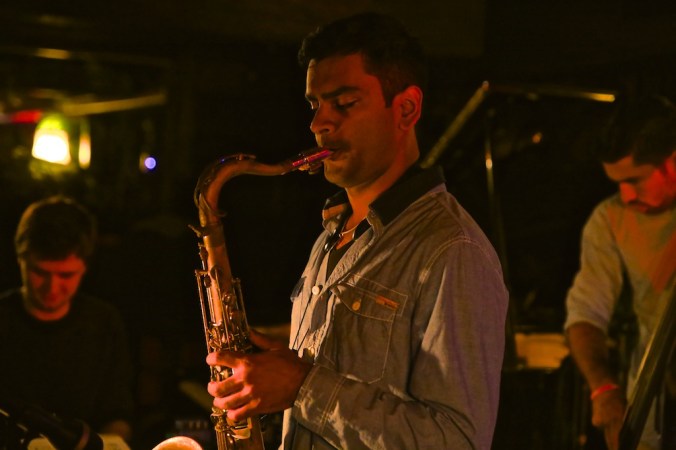 The group came together for this gig. All younger musicians but all experienced. It was great to see Cameron McArthur back on the band stand. One of my favourite bass players and adept at handling any challenge. He and drummer Cameron Sangster have just returned from an extended stint playing the East bound cruise ships. On Keys and piano was Connor McAneny. The band settled in as the gig progressed and during the last set they were playing tight energised grooves. Talele worked these grooves to maximum effect. I could only capture the first number (see below). It is my sense, that to experience Talele in peak form, one should see him with a settled band. The density and complexity of his playing would be enhanced by this. As good as this gig was I would very much like to see him in that context.
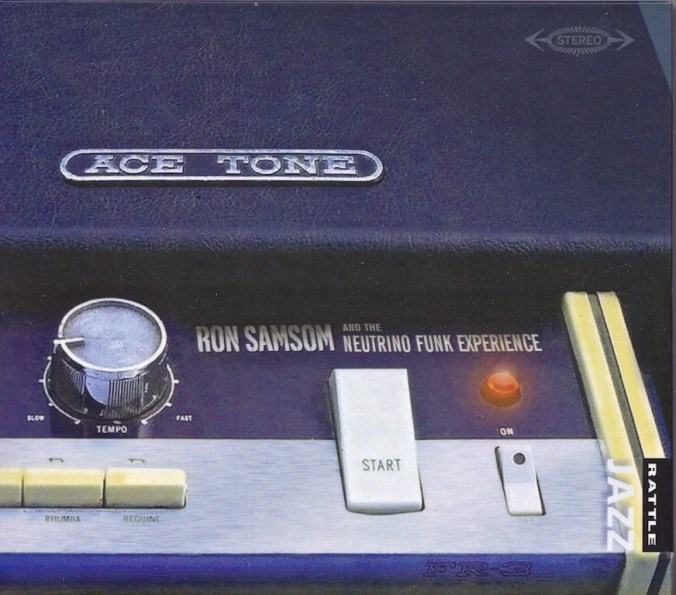 Ron Samsom’s Neutrino Funk Experience ‘Ace Tone’ album has so much up front punch that that a warning is needed on the label. It is an album that grabs you by the lapels and demands your attention. As you listen it transports you to a world of joy. The album and the live band exudes a vitality that enters through your pores, pulsing through your body like the wild blood of extreme youth. Try as you may, it is impossible to keep still as the rhythms consume you limb by limb. While the album brings historic musical references to mind, it is very much of the present. This is Jazz Funk at its very best.
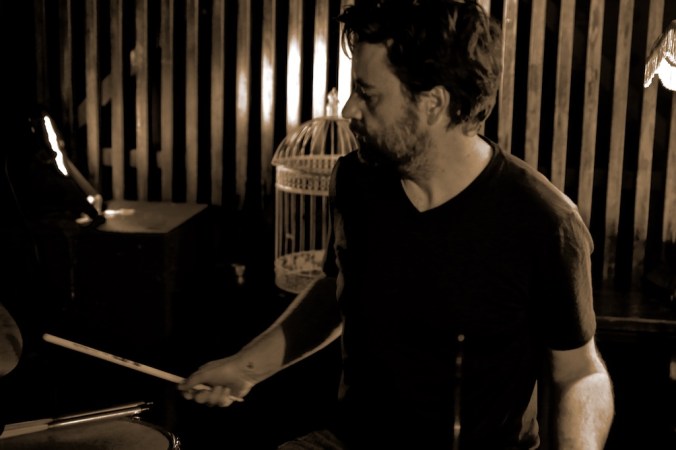 There is cleverness aplenty in the album, but that’s not what it’s about. The pulse, punch and danceability are the draw cards. The tunes let each listener glean their own references. During the album launch someone said, “Oh wow that takes me back to Deep Purple”, while others talked of the Jazz funk gurus like Herbie Hancock, Eddie Henderson and Jimmy McGriff. What ever references people heard, one thing is for certain. This band updates 70’s Jazz Funk as few other albums do. A lifelong fan of the classic genre observed, “few classic 70’s funk albums actually sound as good as this”.
 Material like this needs highly skilled and experienced musicians in order to extract the maximum advantage and that is exactly what Samsom got. This is an alignment of talent that works so well that they must surely build on their success. The Neutrino Funk Experience formed in 2014 and started doing regular gigs at Auckland’s Albion in the central City. The word soon got around and one by one we drifted down to see them. The band stood-out from the first day and the disbelieving expletives from experienced musicians confirmed what our gut told us. These guys were total ‘muthas’.
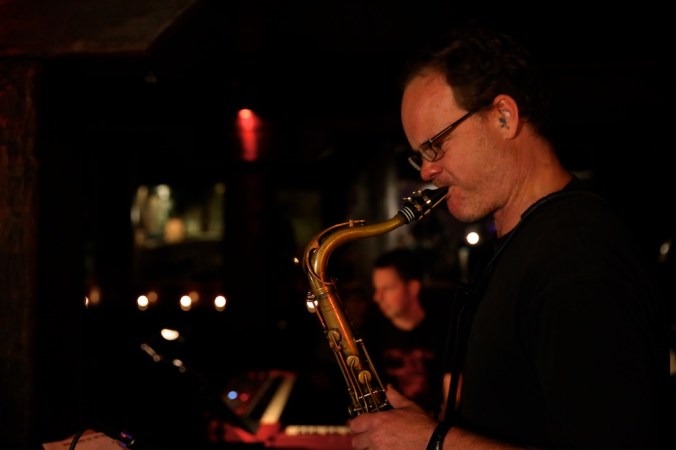 Roger Manins always sounds great but he has excelled himself here. This brand of earthy down-home funk is a natural place for him and his own funk albums reinforce that view. Manins just tears the place up on these sessions and it would be hard to find his equal. There are times when he apparently defies gravity, rising to his toes and abandoning self to move inside the music. These are moments of pure Zen and I watch for them now. Man and instrument becoming one and out of the bell streams a cornucopia of sound, distilled from the human experience. From the otherworldly wails to the gentlest urgings you recognise Manins uniqueness. Organist Winterburn said of him, “Working with Roger is perfect for me. He’s such a rhythmic saxophonist”. Coltrane, old school funk, ballads and modern edge; it’s all there in the sound.
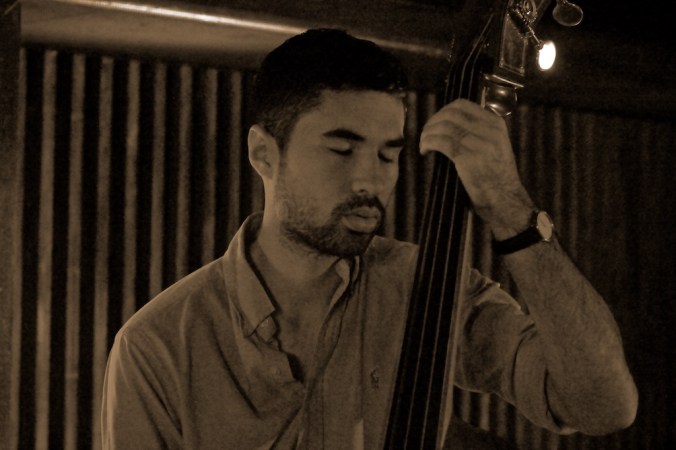 On the album we have Cameron McArthur on upright bass. Even before leaving the UoA Jazz school Cameron was punching well above his weight. I would describe him as an instinctive player. Knowing where to place his lines and always strongly supportive of other band members. He quickly became a fixture in quality rhythm sections and visiting artists praised him. After a trip to New York to check out the scenic he picked up some work in cruise ship bands. By happy coincidence they had cut the album prior to him leaving. So punchy are his bass lines on ‘Ace Tones’, that you think he is playing an electric bass. In his absence Samsom hired Karika Junior Turua for the launch gig. Again this was a good choice. This time we did hear an electric bass and as Turua has experience with Jazz funk, the transition from upright to electric bass was seamless.
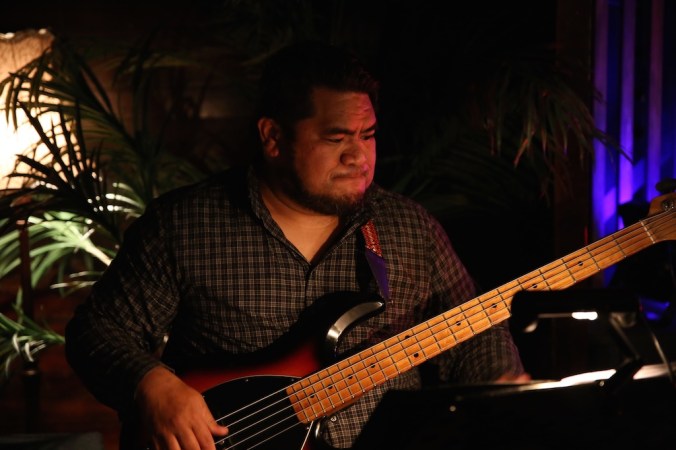 Lastly there’s the album art work and the recording credits. Who ever created the cover design and layout must feel pleased; they did an amazing job. The presentation tells the ‘Ace Tone’ story perfectly. My friend Iain Sharp and I were involved in the project as liner notes providers. As requested we contributed poems. It is rare (but not unheard of) for an album to use poems instead of the standard liner note blurb. I really hope that this trend continues for selfish reasons. Contributing something to an album like this is pure pleasure. The recording and mixing took place at ‘Roundhead Studios’ in Auckland and the mastering at ‘Turtle Tone Studios’ in New York. The album is out on Rattle Jazz where the best of original New Zealand music lives.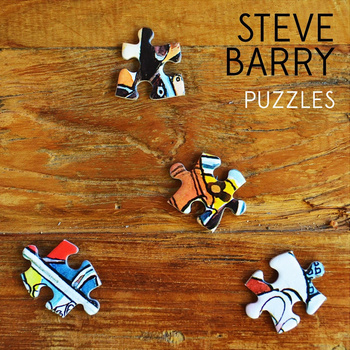
 JazzLocal32.com