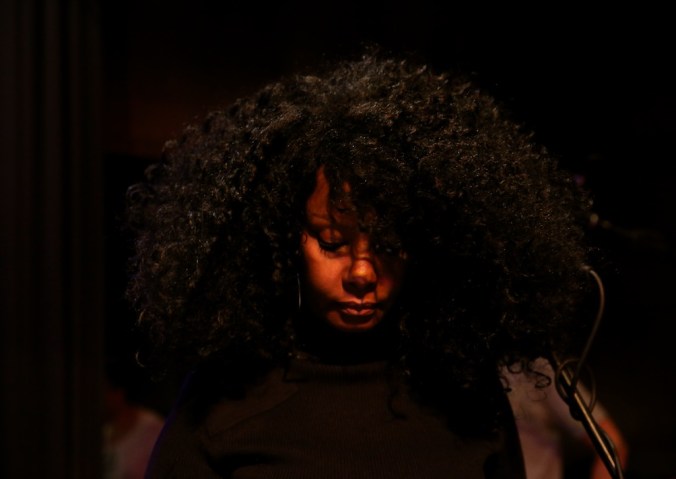
 When Vivian Sessoms sings, she takes you deep inside the music. Whether singing the American Songbook, or her own compositions, her storytelling resonates. She sings of American life with all its contradictions; joy and pain both laid bare. Her rendering of Herbie Hancock’s ‘Butterfly‘ tender: the rendering of her own composition, ‘I Can’t Breathe‘, a song referencing the ‘black lives matter’ struggle – raw. As she sang ‘I Can’t Breathe‘, people brushed tears away; feeling the loss, the injustice; sharing in the incomprehension. She sang it for the families of the young lives so senselessly snuffed out; dying at the hands of those sent to protect them – she sang it for us, a people located an ocean away. We listened and understood the message. Art is at its best when it is fearless and truth-telling – Sessoms gets this.
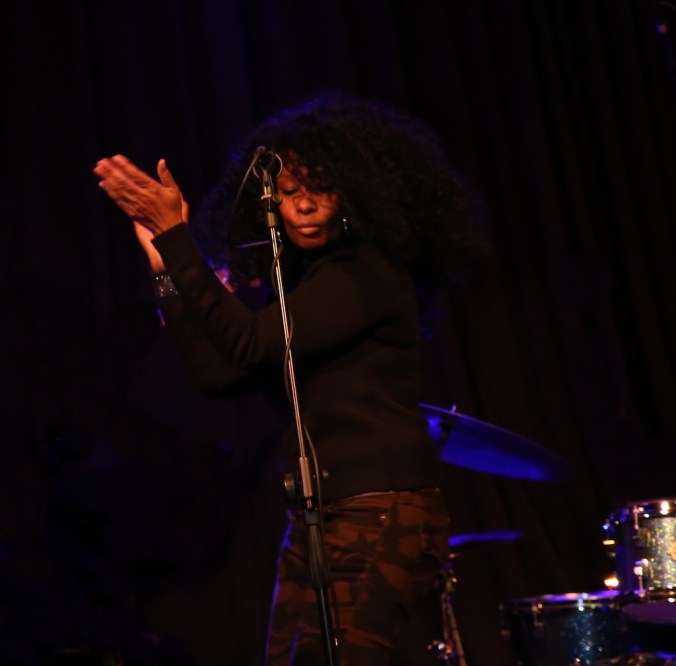 Sessoms is Harlem born and bred; an activist, the niece of Nancy Wilson, the daughter of musicians and a gifted performer with a long string of credits to her name. She was raised in the Jazz world but found early acclaim as a soul singer. Now she is returning to her Jazz roots with her ‘Life‘ album. The tour reviews have been overwhelmingly positive and no wonder; At age 9 she opened for Marvin Gaye, later working with Michael Jackson, Cher and Stevie Wonder. As a performer she is simply riveting; her voice a miracle – to have her here in an intimate Jazz club setting, a rare treat.
 What we were hearing was counter-intuitive. A voice of incredible power, but a voice filled with subtlety: A voice that dominated a room, but never at the expense of nuance. Although powerful, her instrument never strained, a voice which flowed as naturally as breathing. These are rare qualities when considered together in one package. Her material was also well thought out; The standards timeless but each one interestingly reinterpreted: ‘Tenderly’, ‘Love for Sale’, ‘Round Midnight’, ‘Never Let Me Go’, ‘I’ve Got You Under My Skin’ and others.
 Sessoms is a generous entertainer, happy to mingle with the audience, comfortable enough to tease them a little; posing for endless selfies and promising faithfully to return. She even shared the microphone with several first-year students. That is the common touch – a thing Kiwis love; she read our love of informality well. For details about her ‘Life‘ album go to the website link below. If we support the album, it might just hasten her return.
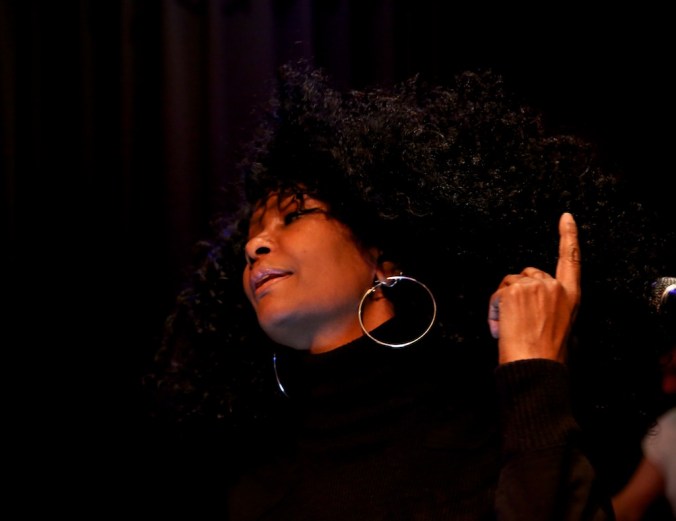 She departed New Zealand the next morning on an early flight; arriving in the USA to be greeted by the news, that yet another jury had acquitted a police officer of killing an unarmed black youth. In these troubled times, more power to her.
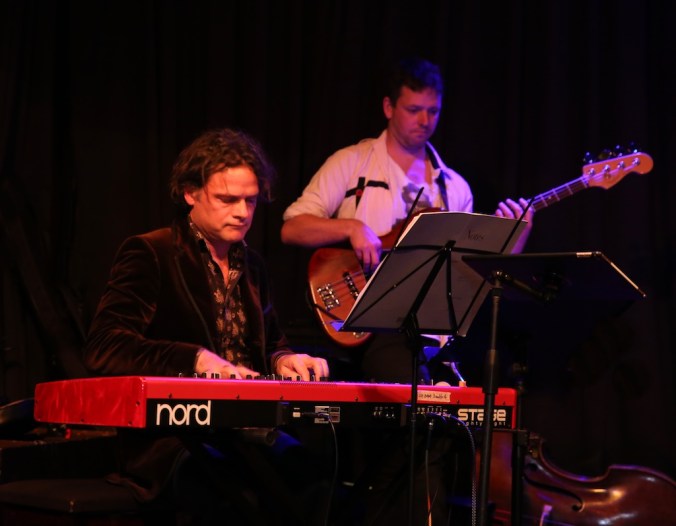
Vivian Sessoms (vocals, composition), Jonathan Crayford (keyboards), Mostyn Cole (electric bass), Adam Tobeck (drums). CJC Creative Jazz Club, Thirsty Dog, Auckland, June 14th, 2017 – viviansessoms.com
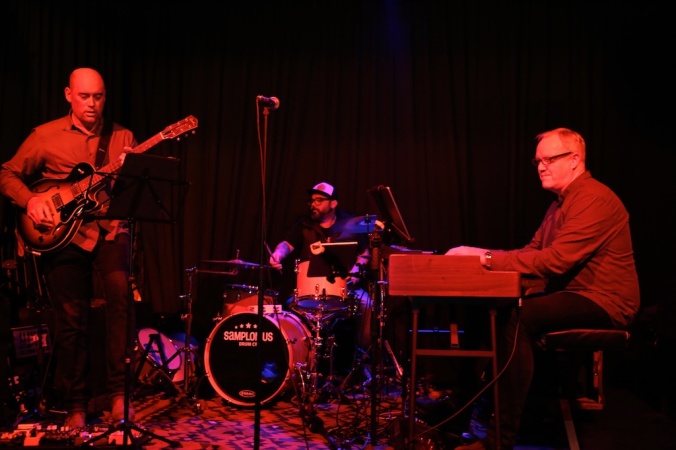 While some of us didn’t make it to the Wellington Jazz Festival, we had no need to cry into our beer. What Auckland had on offer was the Alan Brown Trio, returning to the Creative Jazz Club after a long hiatus, and in very good form. I have long thought that an organ trio is the best dish to serve up on a wet winter’s night. This trio proved the pudding with its down-home goodness, tasty grooves, and with all the trimmings. While Brown is across many genres, this is the one most music lovers associate him with. His deft touch calling down the good times and bathing us in a warm orb of sound.
 We heard mostly new material with a few well-chosen standards thrown in; all of it sounding fresh, the arrangements for the standards updated and interesting. Brown is a prolific composer – he always writes interesting tunes. His Between the Spaces album came out years ago, but I can still remember the tunes note for note. He is never afraid of melody either, balancing it nicely with his rich harmonies and all the while providing a solid improvisational vehicle. His final strength, and perhaps his greatest, is his feel for a groove. Although rooted firmly in the organ groove tradition, much of the new material felt evolutionary – taking us in a similar direction to that of Lonnie Smith. There is a lot to like about this direction.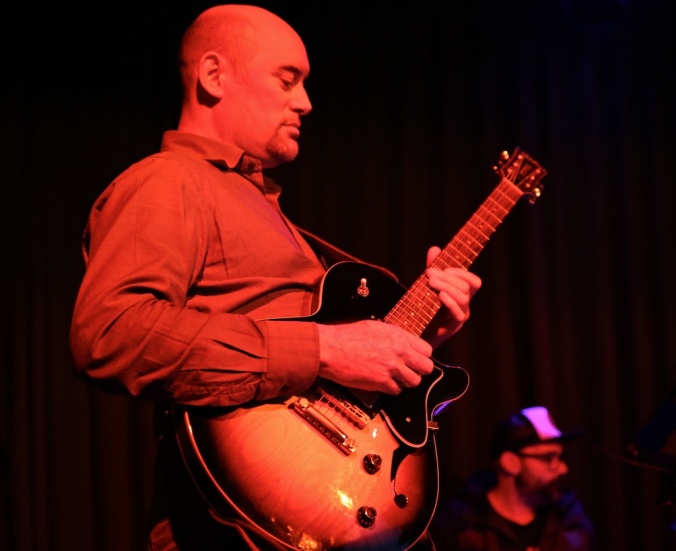
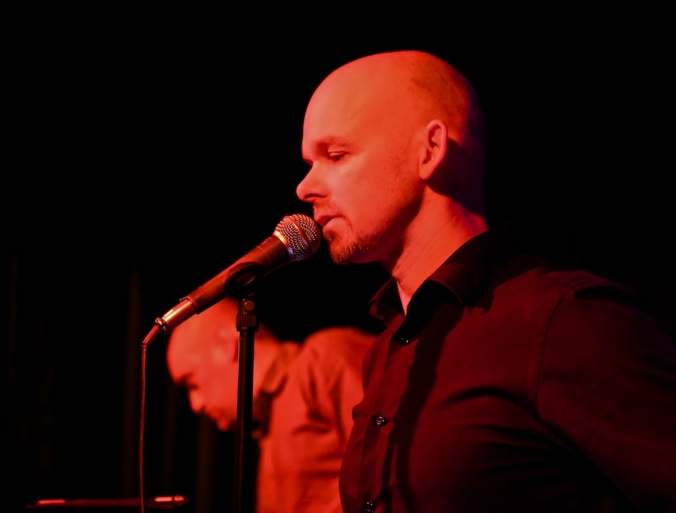
 It was good to see Melville perform again. I had not seen him on the bandstand since the Grand Central days. He’s an in-demand vocalist these days and deservedly so. I think that it was on his insistence that ‘I didn’t know what time it was’ was included (the Cecile McLauren-Salvant treatment). I have always loved his wonderful ”Come what may’ (Melville/Nacey) – surprisingly it is seldom heard.
  Although my battery died half way through, I have uploaded a clip from the gig – one of Alan Brown’s newer compositions. The trio’s incredibly warm vibe is well captured on this clip – a sound enhanced by the use of a Leslie Unit and of course by Nacey’s Godin guitar. This was the place to be; as the woody tones and warmth enveloped us, Winter was dispelled from our lives.

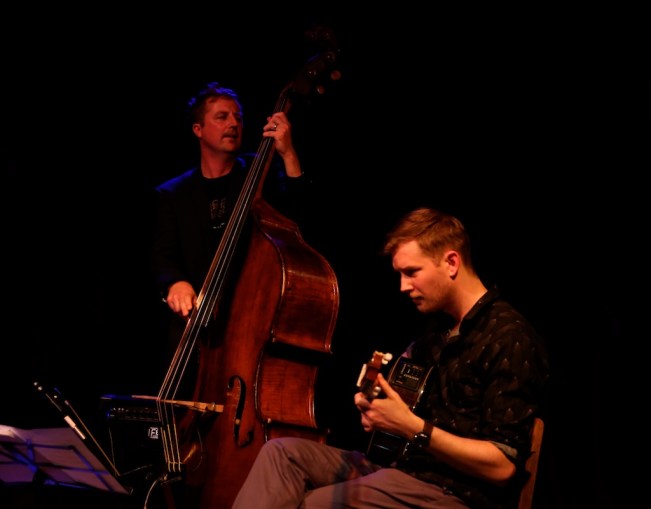
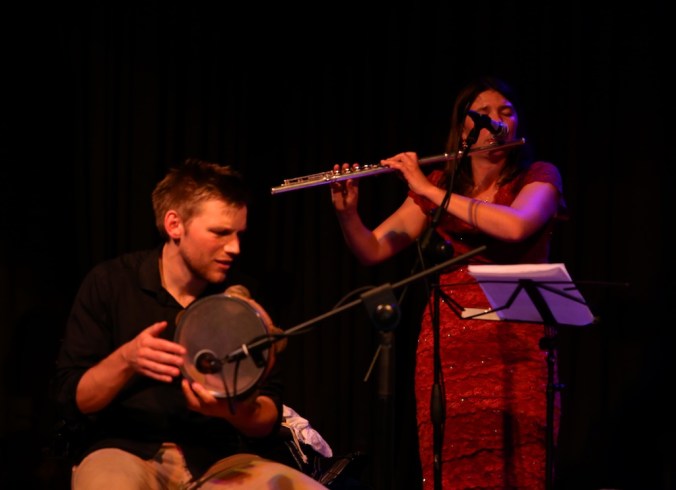
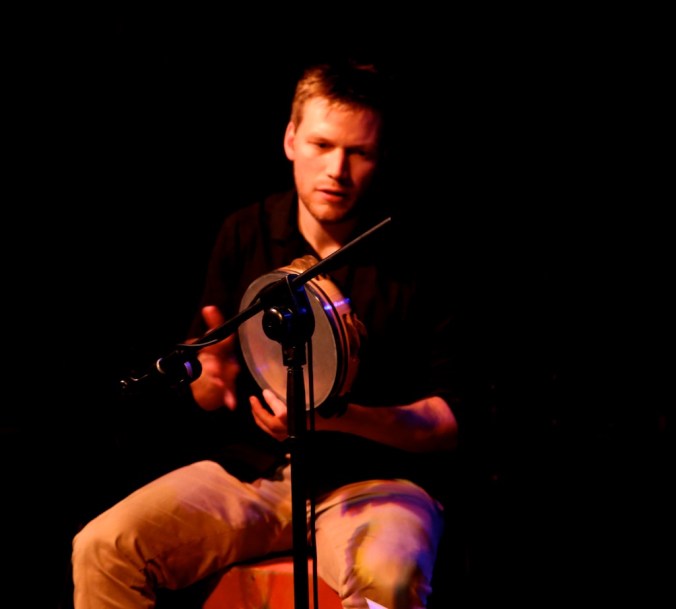
 I always look forward to emerging artists nights at the CJC. They don’t happen often but when they do, they’re fun, full of surprise and most importantly they are hopeful events. It is usual for emerging artists to salt the mine with seasoned players. Both of the bands did well in that regard. The first band up was Misha Kourkov’s ‘Equitable Grooves’, a six-piece unit playing multi-genre Jazz focused music. The material was well written and at times ambitious. Aiming high on the bandstand is good because that is where real learning occurs. If you wish to extend your reach, then having Alan Brown on the piano is exactly what you need. With that sort of experience and groove behind you, you have a fail-safe mechanism. The set opened a little tentatively, but they quickly found their groove; the last two numbers were especially enjoyable.
 The second set featured the ‘Exploding Rainbow Orchestra‘. This was a very different type of ensemble. Freer ranging, a bigger sound palette and an electric bass with the heavyweight punch of Bona. The bass player Joshua Worthington-Church who led the ensemble is accurately described as a maverick. His set list contained genuinely diverse material; gripping vamp-driven originals plus tunes from ‘Radiohead’ and ‘The Mint Chicks’. Under the leader’s guidance, the band took the material to a place close to my heart; a fusion of Jazz and psychedelia. I am happy to see this done, as the genre is all but forgotten. During the mid-seventies, that style of music was sacrificed on the altar of Jazz purism, a pompous battleground that tried to stifle genre exploration.
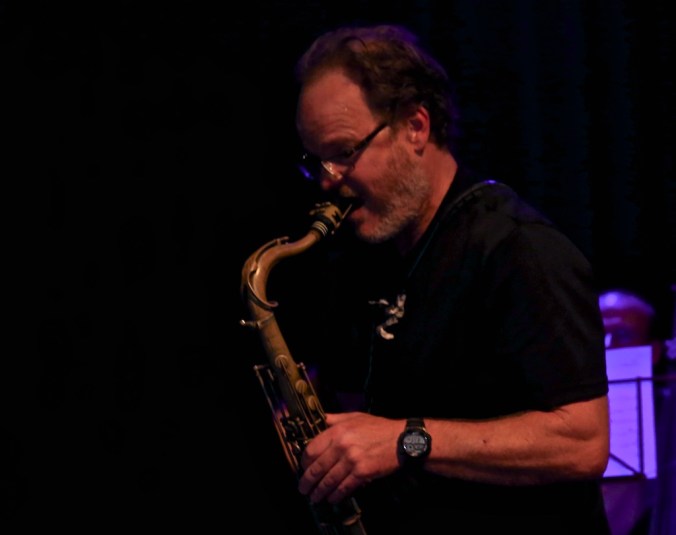 There is never a guarantee that two good acts blended into one will work. This one did. DOG and the various iterations of the Peter Koopman trio are each in their way self-contained; exuding a confidence born out of time spent with familiar musicians. Bands that play together over long periods anticipate and react instinctively. Stepping outside of that circle can be a risk, but that is a large part of what improvised music is about. DOG are a tight unit with quick-fire lines and nimble moves. By adding a guitar, DOG risked crowding their musical space; with Koopman, this did not happen. He is an aware and thoughtful musician. The pairing aided by some well-written charts, a pinch of crazy and good humour. The result was a looser sound, but the joy and respect provided all the glue it needed for the gig to work well.
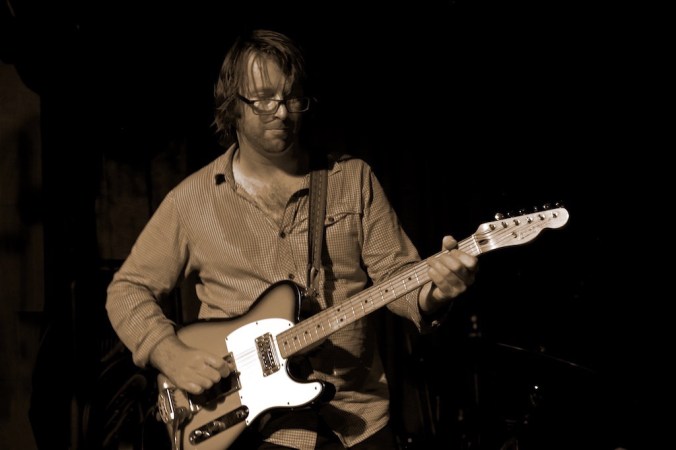
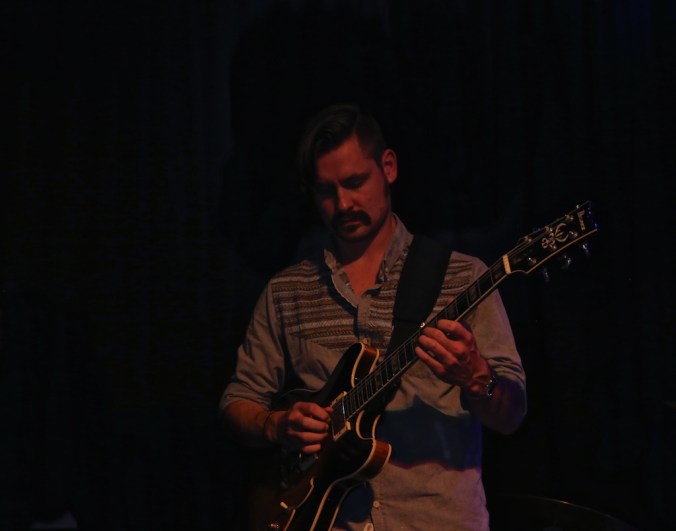 The unison lines and exchanges between guitar, tenor saxophone and Rhodes were just lovely. Kevin Field is always on form and the Rhodes with its chiming clarity was the perfect foil for Koopman and Manins. Field is the complete musician, tasteful, original and with impeccable time feel; Koopman’s guitar benefitting from the well-voiced chords, gently and sparsely comping beneath. Manins also gave a nice solo, and as we have come to expect, he reached for a place beyond the known world. Olivier Holland had a slightly different approach to Koopman’s regular bassist Alduca. Both approaches worked well on Judas Boogie. The interplay between Holland and Samsom was also instructive. As is often the case with good Jazz; the complicated was made to sound easy.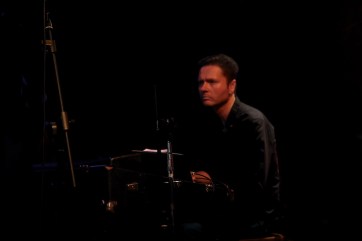
 Around Christmas, I discovered that I could not upload video to ‘YouTube’. I spent a few weeks trying to figure out what was causing the problem and then I made a fatal error – I consulted grown-up experts and that only delayed the problem. I should have asked a 12-year-old because none of the experts had the faintest idea what was occurring. After three months I finally nutted it out for myself, old as I am. FYI – when you upgrade your operating system, the default setting on power-saver puts the machine to sleep half an hour after the last keystroke.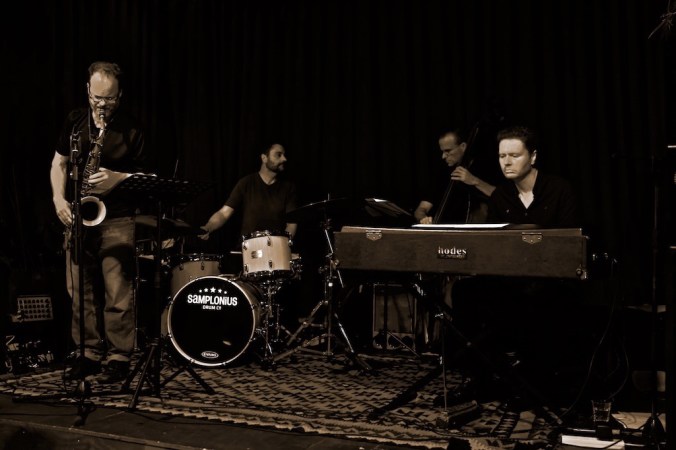
 Guitarist Peter Koopman has long been established on the Australian Jazz scene. He returns once or twice a year and when he does he brings interesting projects with him. This tour was no exception; with new compositions, some refocused standards, and a re-jigged trio lineup he hit the mark. Some musicians reach a permanent plateau, and then make only incremental advances from there on. To date, Koopman has been on a steady upwards trajectory; and with little sign of slowing. It’s noticeable in the detail, but also in the overall impression. He is matter of fact on the bandstand, there’s even a hint of diffidence about him, but this only reinforces the impression that he is all about the music. From the first few notes, band and audience are subsumed in the performance.
 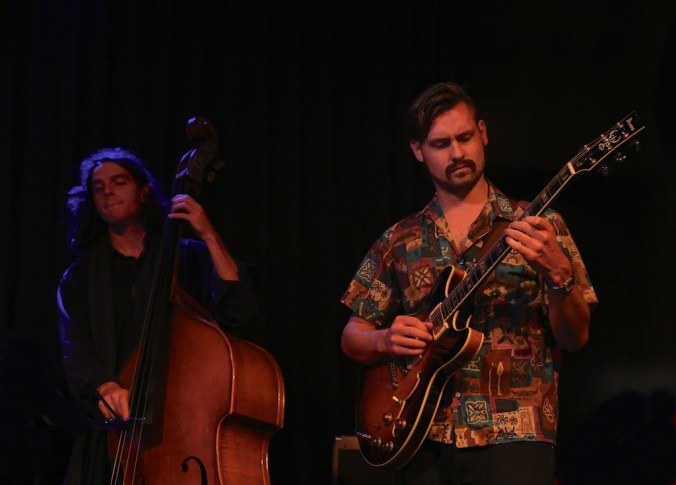 One of the subtleties that I noticed between visits is in his tone. It is cleaner but broader, conveying more information, allowing listeners to hear nuance and micro changes in modulation. And on some numbers gentle harmonics, rising off the upper end of a rapid run. His newer compositions also enhanced the project; nicely paced, making room for the whole trio and very appealing to the ear. I was not alone in observing this trajectory. One of our best New Zealand guitarists was later heard to mutter, only half-jokingly, “Damn, I’m off home to burn my guitar”. Australia has a number of excellent guitarists and some are equal to the best in the world. The challenges and opportunities of working in such an environment, have obviously suited Koopman.
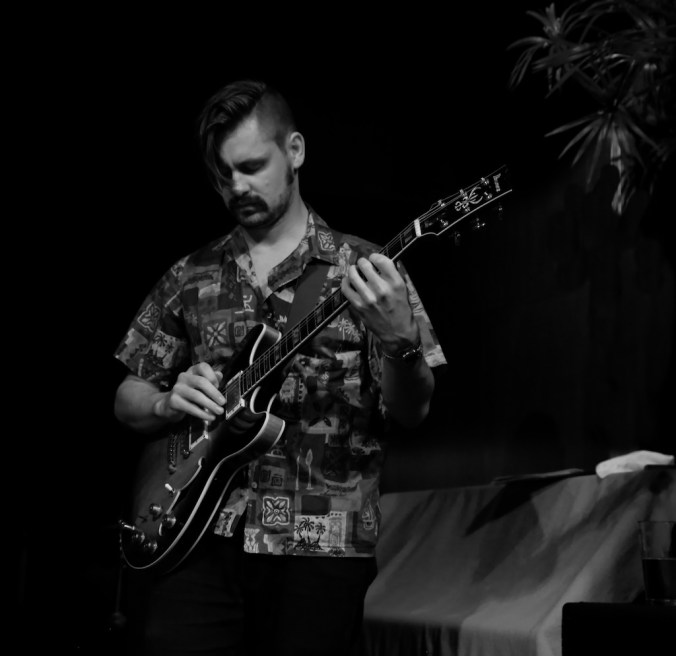 Judas Boogie, Meth Blue, Dog Annoyance, and Hypochondria were Koopman’s tunes. The band also played a sizzling version of ‘Airegin’ (Sonny Rollins). ‘Airegin’ (Nigeria spelled backward) is a relentlessly upbeat tune and often tackled by guitarists – at least those brave enough. Another Rollins tune was ‘Paradox’. The others ranged from the familiar ‘The best things in life are free’ (De Silva), and ‘The things we did last summer’ (Styne/Cahn) – to the less familiar – ‘The big push’ (by Shorter from his little known ‘Soothsayer’ album) and ‘Montara’ by Bobby Hutcherson (from his amazing latin album of the same name). Why we do not hear more Hutcherson is quite beyond me (thanks for this one PJK).
 Australia produces some distinctive, muscular tenor players and Andy Sugg is an example of that phenomena. The first thing that grabs a listener is an awareness of the raw power that fills a room when he blows. I am not just referring to volume or his fat rounded sound, but to the way he communicates an innate sense of musical purpose. This comes across as something beyond mere confidence. Deftly progressing through each tune; no over thinking, just a flow of connected ideas – and all carried on that delicious sound.
 It is always tempting to look for comparisons or patterns, it is what listeners do (and probably what many players wish they didn’t do). It is part of how music works, our subconscious looking for a framework, for some reference point – a launching pad, a place of departure where the known departs for the unknown. In Sugg’s playing you could could hear them all. Name a great tenor player and that player was in there, listen harder and suddenly they were gone. Perhaps this is the hall mark of truly innovative players; they channel the essence of others and then dismiss them just as easily.
 One of the joys of improvised music is the eternal conflict between the tangible and the intangible. You hear a phrase or a voicing that is maddeningly familiar, you feel a tingle of anticipation, you are on the verge of naming it – but before it takes form it is gone; dissolved into the intangible. Listening to Sugg is to catch a piece of Brecker, but listening to Sugg is also to hear an original. Tradition and innovation co-existing but ultimately spoken in his own dialect.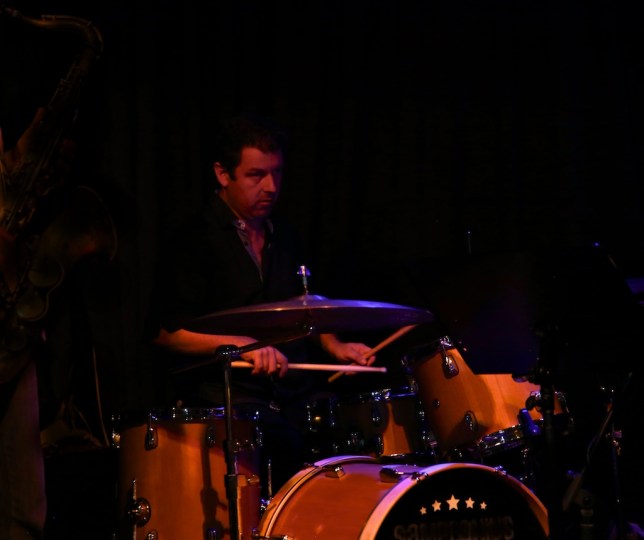
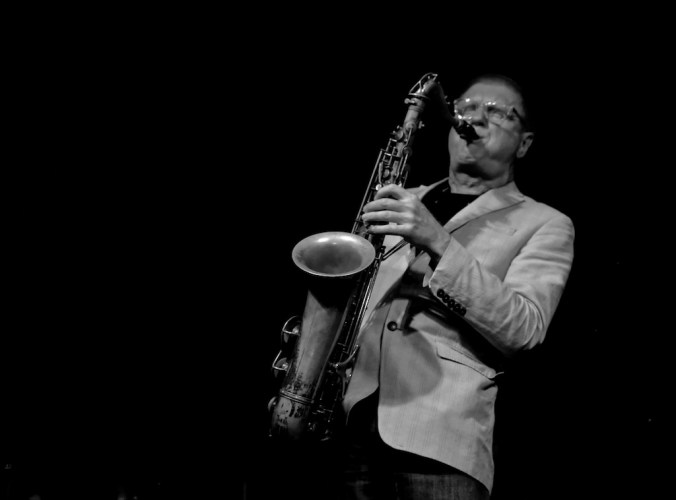
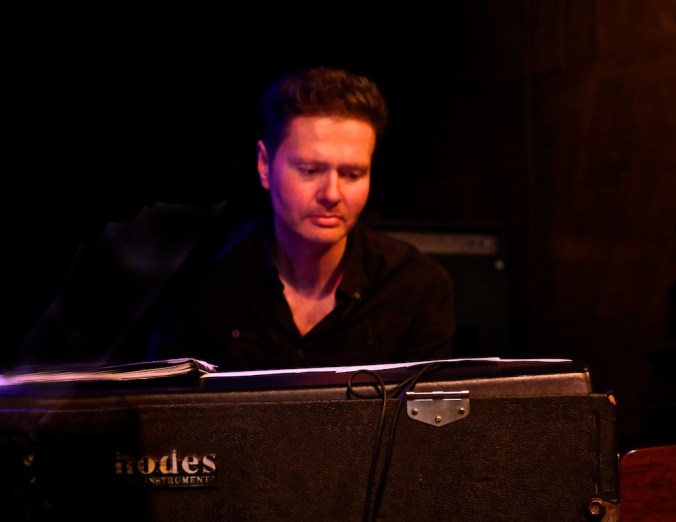 It was appropriate that Warners ‘A List’ recording artist Kevin Field brought with him local A listers Dixon Nacey, Cam McArthur, Roger Manins and Stephen Thomas. Field has a substantial following in New Zealand and his innovative music attracts musicians and fans alike. Since his last ‘A List’ gig he’d clearly been busy – writing new material and rendering the familiar into something altogether different. Zoot Sims once quipped, “Jazz is a music where you never play the same thing once’. Field certainly exemplifies that tongue in cheek descriptor. Commentators and visiting musicians often remark on his innovative approach to harmony and rhythm. It is as if he has invented a new musical language out of the old. In truth, there are strong elements of related genres like R & B, latin and even disco funk there; under his fingers they become unique vehicles for improvisation.
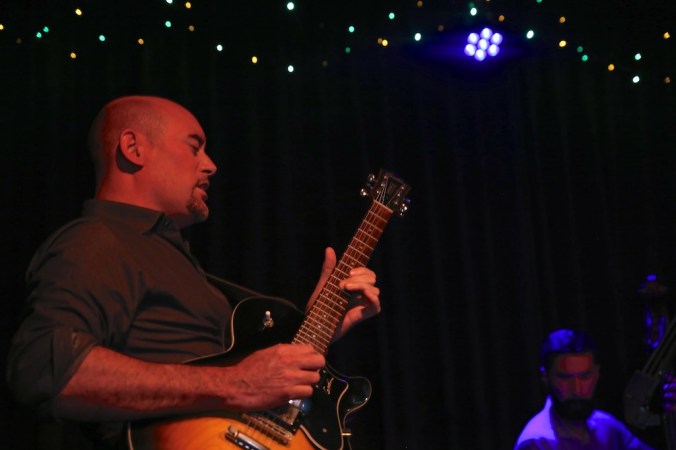 Unlike Janet Jackson, Field never suffers from wardrobe malfunctions. He does however occasionally suffer from equipment malfunctions. I mention it only because his Rhodes had failed him during a previous weeks CJC gig. No one listening comprehended that he had lost some of the middle-register. No one noticed because he re-voiced mid improvisation to work around the problem. I have heard of old timers doing this but seldom modern pianists. Field can effortlessly jump over obstacles and find a sweet spot.
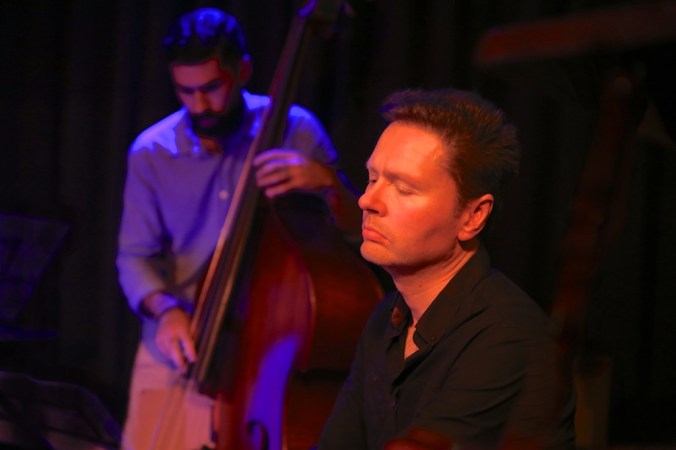 There were old favourites reworked like ‘Game Changer’, ‘Good Friday’ and ‘Left Field’, but the rest were recent compositions. Among the newer numbers were ‘Rain check’ and ‘Acme Music Corporation’ (the latter featuring Manins on soprano – a rare event). Another new number ‘Unconditional love’ was introduced by Field with the following story. ‘There are many types of love in the world and today an unusual example came up in my twitter feed, – ‘Trumps deportation threats make my in-laws fearful. They live at 2b/34 Main St, Phoenix. My Mother in law arrives home from work at 4:30’ “.
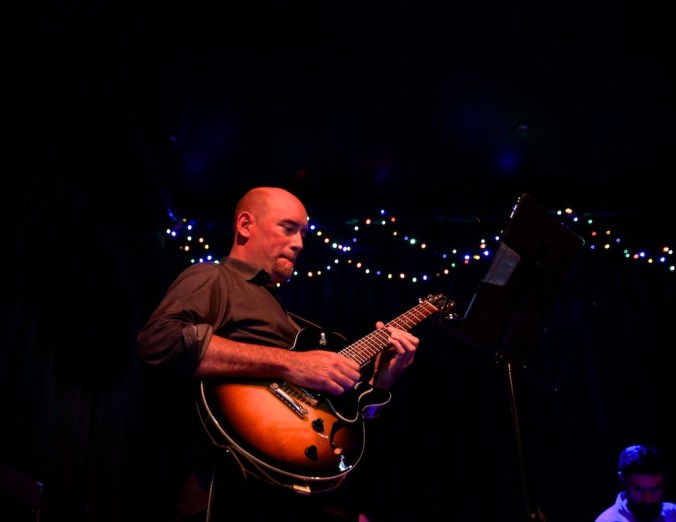 The last tune ‘Home Schooled’ was the best possible number to finish the evening with. Far from being a wind-down number, the musicians reached inside themselves, each giving magnificent performances. Manins back for a second number was on tenor, and he sounded happy to be back on his favourite horn. Nacey was at his best, making his guitar soar, as if he had found an ancient alchemy, a way to condense sunlight into music; the epitome of sonic clarity, invention and virtuosity. McArthur and Thomas each in step and reacting to the challenges. With material like this good musicians can achieve wonders.
 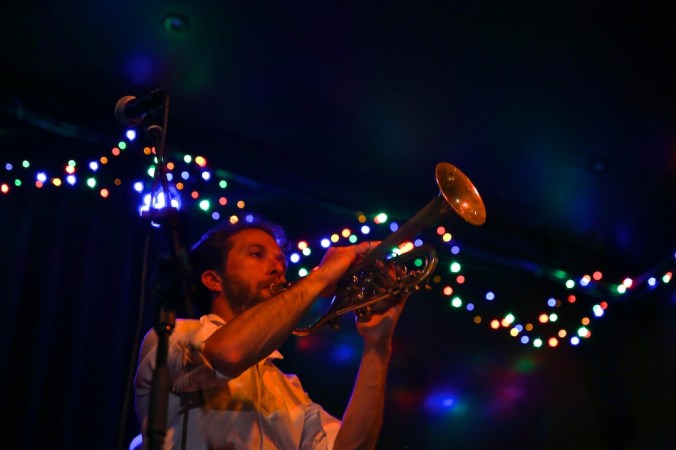 Improvised music is a never-ending contest between the familiar and the unexpected. Everything is valid on the journey, but sometimes we forget that tradition can be a springboard and not a straightjacket. We had a good example of that on Wednesday. Because he lives far from here, few if any locals had previously encountered Marc Osterer, but few who heard him will forget his exuberant CJC gig. Born in New York, Osterer has led an interesting musical life. Broadway Shows, New York clubs, principal trumpet (Mexico City Philharmonic) and the Salzburg Festival Austria. While he attended prestigious musical conservatories in New York, there is something else in his sound – something that can’t be learnt purely from academic institutions. Osterer’s Jazz has a firm foothold in the tradition. Louis Armstrong and the great swing-to-bop trumpeters like Sweets Edison. It made perfect sense therefore that the standards he played were from the Songbook and that his own compositions reached deep inside that era.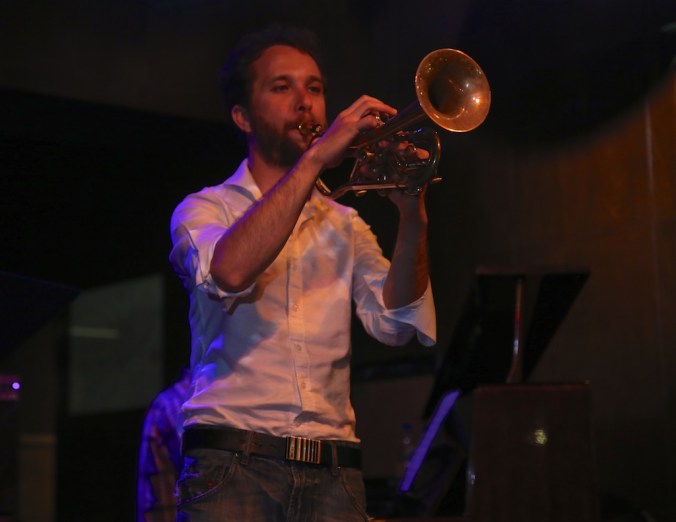
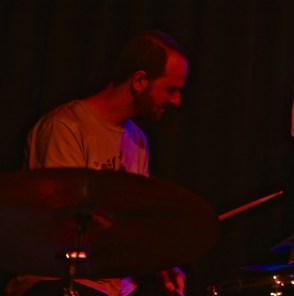
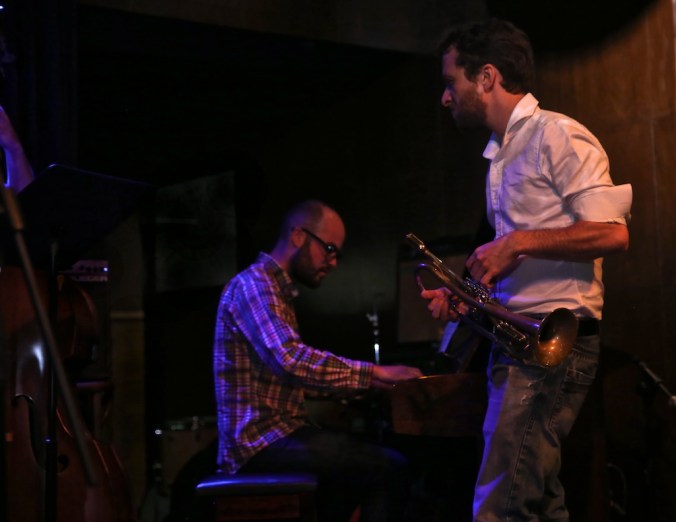 We also witnessed good chemistry between the visiter and his pick up band. It was not the band advertised but what we got was terrific. Matt Steele was flown up from Wellington and locals (fellow UoA Jazz School alumni) Eamon Edmundson-Wells and Tristan Deck completed the rhythm section. Pianist Steele has been gone from Auckland for over a year and is seldom heard here these days. We do hear Edmundson-Wells (bass) and Deck (drums), but to the best of my knowledge, none of them have performed in this context. Absent were the complex time signatures and post bop harmonies. The tunes stayed closer to the melody and the rhythmic requirements were often two-beat or even something closer to second line. As they played through the sets the joy of discovery showed on their faces and we felt it too.
 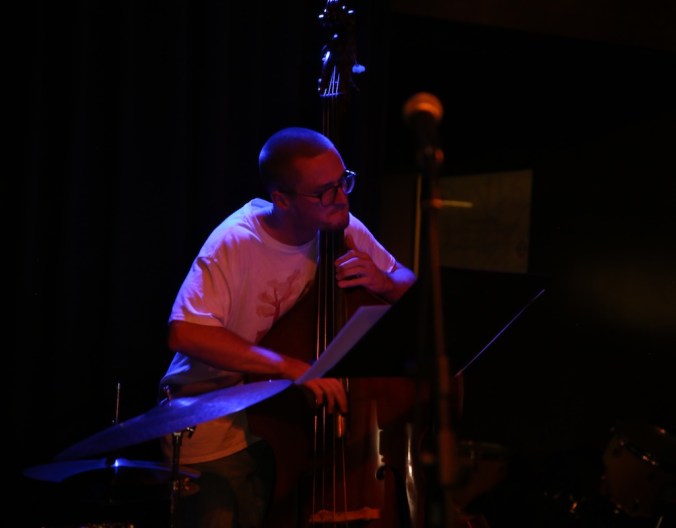 These musicians were still students three years ago but their skills are now well honed. They met the challenge and more. Locals who had not seen Steele play for a while, were buzzing; especially after the blistering Cole Porter standard , ‘It’s alright by me’. Steele’s fleet fingered solo was terrific, and matched by Deck’s bop drumming (complete with appropriately placed bombs and fluid accents). Edmundson-Wells dropped right in behind, pumping out his lines, and it was obvious they were enjoying themselves. Osterer’s compositions tell us how
  comfortable he is with this style of music. His ‘What’s that smell’ (Jazz should be ‘stinky’ he explained) – a New Orleans referencing tune, then ‘Tune for today’ and ‘Bite her back’ based on a Bix Beiderbecke tune. Among the standards was Chet Baker’s version of the little known ‘This is always’, a steamrolling syncopated version of ‘Limehouse Blues’ (Braham) [Note: I have only seen one Kiwi attempt that, Neil Watson on fender] and a version of Hoagy Carmichael’s ‘New Orleans’.
 After years traveling the wider Jazz world, Jasmine Lovell-Smith came home; launching her latest album ‘Yellow Red Blue’ at the CJC last Wednesday. The Album features a quintet ‘Towering Poppies’; a group she formed in New York over five years ago. Her New Zealand gig featured locals Roger Manins, Kevin Field, Eamon Edmundson-Wells and Chris O’Connor. After her New York release she garnered a number of favourable reviews and no wonder. This is a lovely album, her compositions and arrangements outstanding, the recording immaculate.
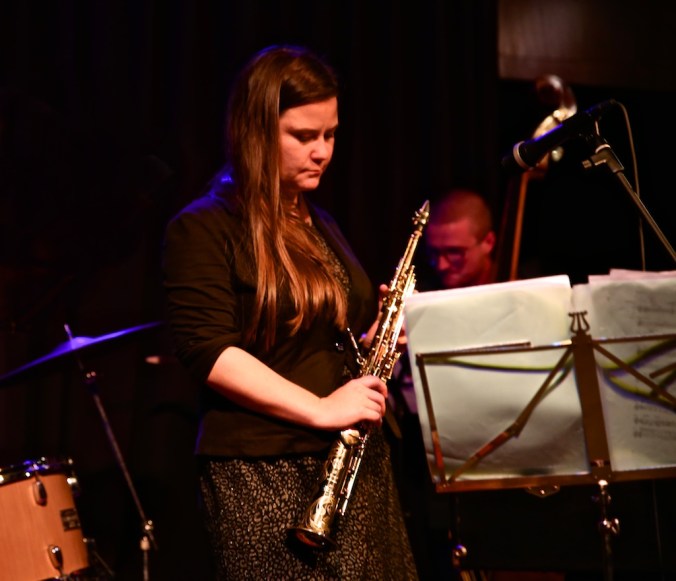 Her soprano sound is warm and enveloping, the cleaner tone of her straight horn nicely counterbalancing with the woody earthiness of the bass clarinet, the well constructed charts coming into their own when these delightful interactions occur. The rich textures are never overwhelming, even when strings enter the mix. This is chamber Jazz at it’s best, engaging the listener without resorting to cliché.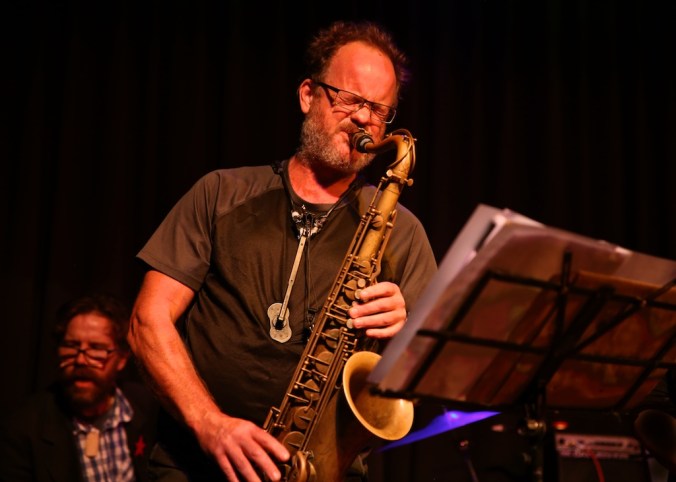

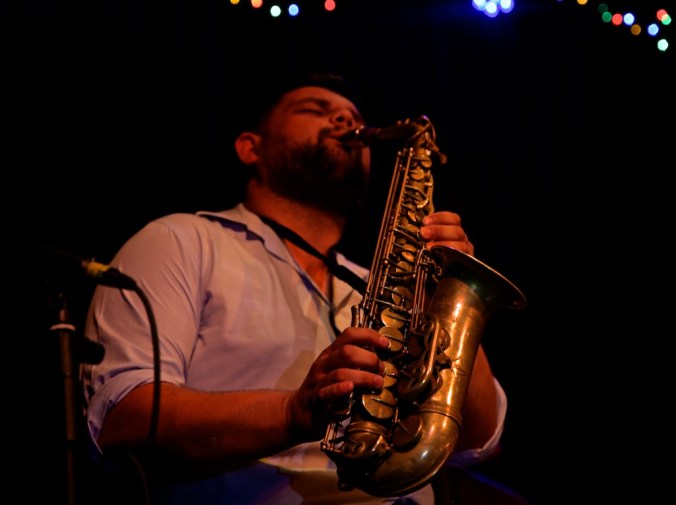 Callum Passells’ newest project was an exploration which took us to the outer edges of Bebop. The title ‘Flightless Birds’ a wordplay; a pebble tossed into the pond, suggesting many possibilities. The obvious Jazz reference is a comparison between flightless New Zealand birds and Charlie ‘Bird’ Parker – his musical descendants especially. A cohort that tried and often failed to catch his musical coattails. For a time after his death, alto saxophones were laid aside in favour of the tenor; only a brave few risked comparison with the troubled prodigy. As his legend grew he seemed unassailable. Attempts to demystify, to separate the legend from his musical legacy came later. In the post millennium era few such sensitivities remain. Parker is deeply admired for his genius, then deconstructed unselfconsciously. The gifted altoist Rudresh Mahanthappa immediately comes to mind.
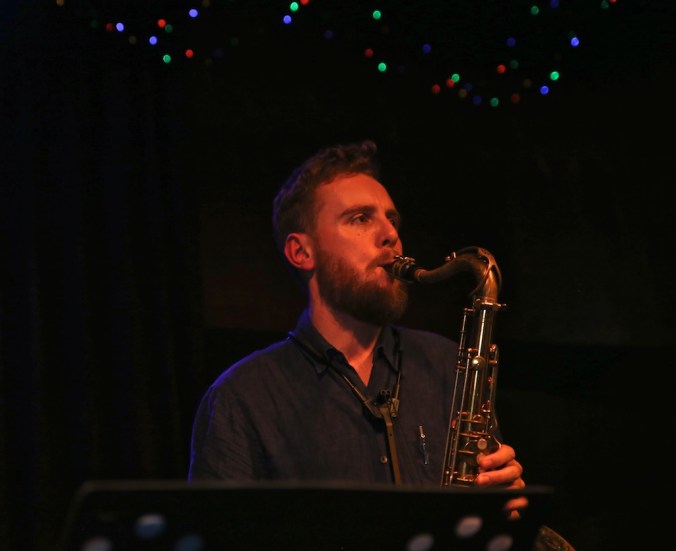 The two things that draw me to Passells are his tone and his communication of ideas. For a musician who leans toward the avant-garde he has a remarkably clean tone. This works well for him when he heads into uncharted choppy waters, cutting though the turbulent air incisively. There is obvious precedent for this in Albert Ayler (who strove to sound like Desmond or Konitz while tearing at the very fabric of harmony and form).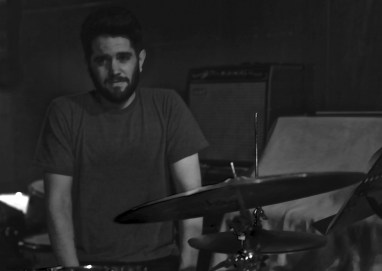
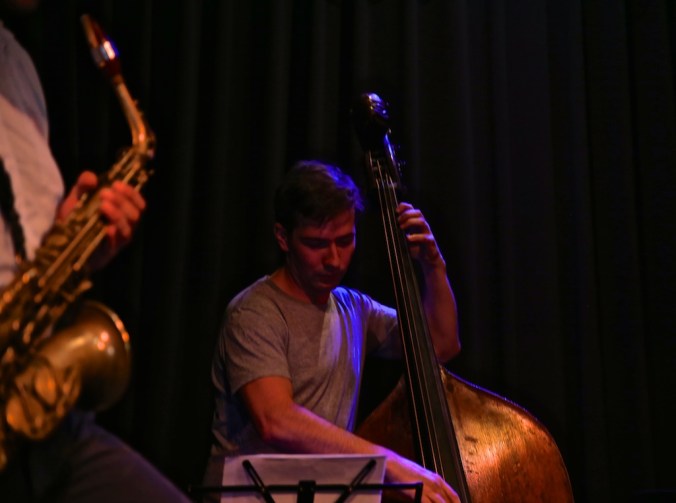 The tunes were all ‘contrafacts’ and cleverly constructed. I am crap at working out the mother tunes – a job best suited to musicians fed a rich diet of standards’ changes. The pieces had titles like “The Punisher” (Sinclair), or ‘Buy a Car’ (Passells). The Punisher was written over the changes of ‘In a Mellow Tone’ (Ellington) and ‘Buy a Car’ over ‘Take the A Train’ (Strayhorn). After each tune the original was announced, then people got it immediately, cursing themselves for not getting the connection quicker. The tunes were close enough to hint at familiarity, but far enough away from the original to cause some head scratching. One tune needed no guesswork. “I’ve got it bad and so I’m obliged to notify all previous sexual partners” (Passells) – no prize for attributing that one.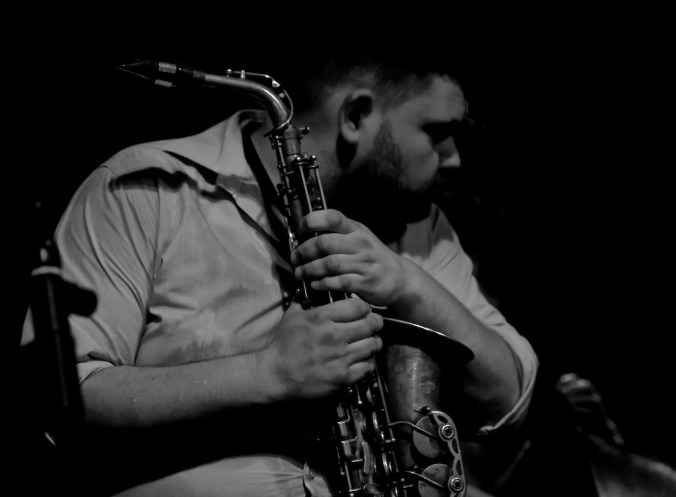


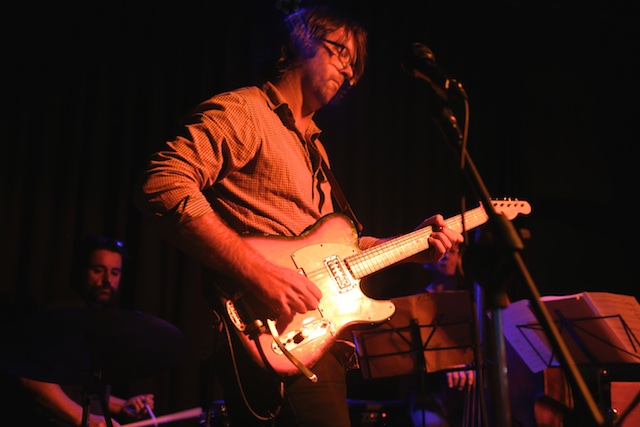 Tubular Live: Having earlier reviewed the long anticipated Neil Watson ‘Tubular’ album I looked forward to the live launch. The Thirsty Dog gig was well attended, the audience extremely enthusiastic and no wonder. Although we saw a slightly different line-up from the album band, they were on fire from the first note. Watson, always a confident performer, was more in command than I have ever seen him and he communicated his musical vision effortlessly. Perhaps this was due to the long gestation of the material, but now he had a platform to extend the concepts further and he grabbed the opportunity. The evening seamlessly covered the breadth of guitar jazz and beyond. While much of the material was influenced by Jazz/Rock or improvisations built on genres like surf guitar, the gentler mainstream Jazz heroes of the past like Johnny Smith and Errol Garner were also honoured.
 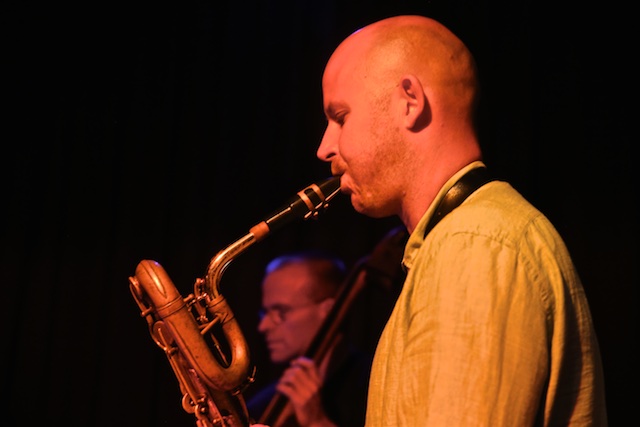 On the ‘Tubular’ album his musical influences are evident. At the live gig, he stared those influences down and carved out his own space. He is one of the few New Zealand musicians who can convincingly occupy Frisell or Ribot territory and he demonstrated that. The perfect example was his rendering of the classic five beat Mambo Picadillo by Tito Puente. He began with a solo intro, dissonant chords offering brief hints as to where he was heading. As he developed his theme the audience gasped in delight as Errol Garners ‘Misty’ emerged, morphing into the gentler Johnny Smith version of ‘Moonlight in Vermont’. That it worked at all is a tribute to his musicianship, that it was done so well all the more so. The Mambo was well-arranged and just superb, not a foot remained still and the bar staff stopped in their tracks, swaying. Another tour de force (not on the album) was his arrangement of ‘Hard rains are going to fall’ (Dylan). This followed his gentle ballad ‘Kerala’.
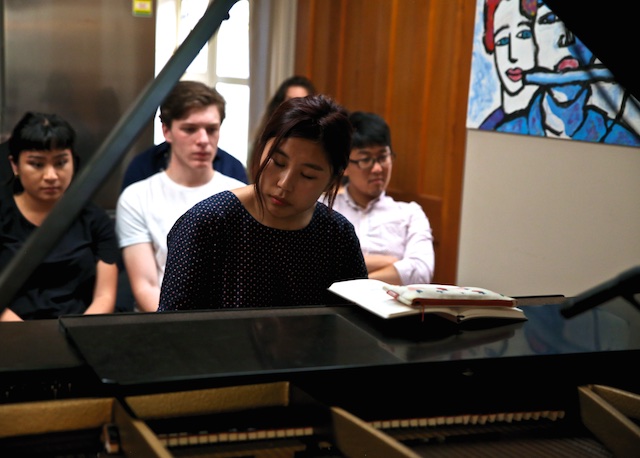 Crystal Choi (private concert): This particular invitation-only concert was organised by Jonathan Crayford and the invitations were swiftly taken up. Crayford is a legendary figure on the New Zealand music scene and when he gets behind a young artist, people pay attention. I have watched Choi develop musically over the years, but I had not seen her perform for some time. In the past she has appeared with students, part of an ensemble, seldom stepping into the limelight for long. This was a departure, a brave step into the challenging world of improvised solo piano. Developing artists (and even experienced performers) struggle with this format, some panic and resort to noodling. When Crayford introduced the concert he stated, “Crystal is amazing, and what you are about to hear will speak for itself”. He was right.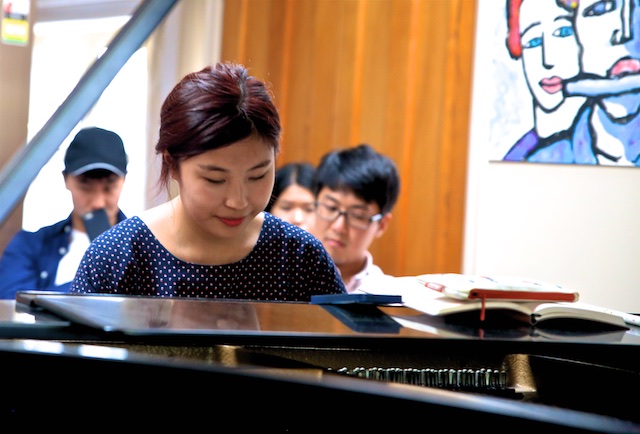
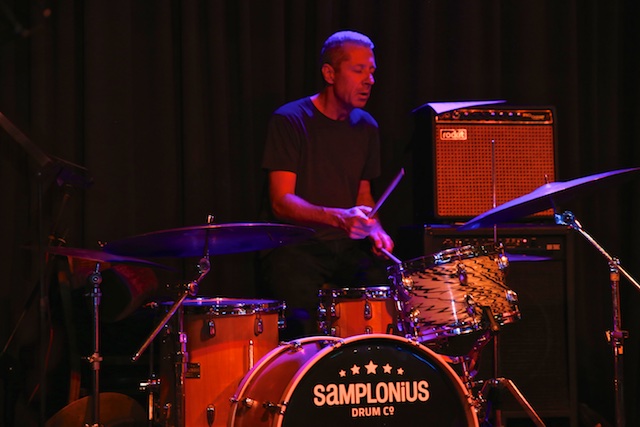 The Australian and New Zealand improvising scenes are a homogenous entity and long may it remain so. If the traffic sometimes appears one-sided, that is a natural consequence of our artists moving to the bigger scene; the exchange benefiting both. Many of those who jump the Tasman do well and they always return for gigs, tours, or sometimes to conduct workshops. Without these exchanges with Australia and beyond, our improvised music scene would be the poorer. This traffic brings us a number of talented Australians, musicians who probably would not have the opportunity to come otherwise; those collegial connections count for something. Drummer Simon Barker is one of those.
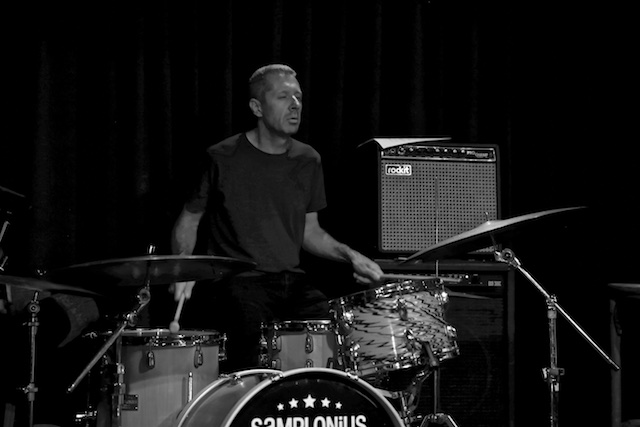 Barker was in Auckland early last year with Carl Dewhurst. Together they are the amazing ‘Showa44’, a duo which I reviewed during their visit. Anyone who follows Barker will know how versatile he is, and above all the musical integrity and originality he brings to whatever situation he is in. Barney McAll’s award-winning ‘Mooroolbark’ and ‘Showa44’ are very different propositions but Barker sits comfortably at the heart of both; of equal importance is his teaching. While in Auckland, he held a workshop at the Auckland University Jazz School and undertook three days of intensive one-on-one teaching with students (and established musicians). Students I spoke to said that they valued the opportunity enormously.
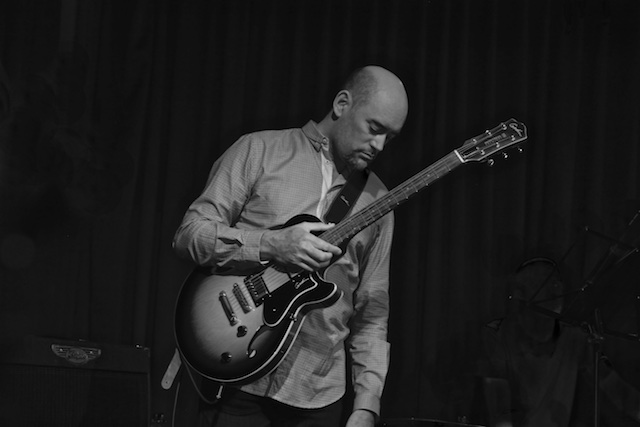 The first set featured Barker solo. It is not often that a drummer performs solo and to pull that off requires something beyond mere drum chops. Barker brings something that is uniquely himself to the kit, and he is able to communicate a story, not just a beat. He began with a tribute to an obscure central North Island Polynesian drummer (sadly the name alludes me). He has never met this person but saw a clip of him performing in the traditional Polynesian, polyrhythmic style. He had a traditional wooden drum mounted beside his big tom and working between this and his kit, he created intricate cross rhythms, worthy of a row of skilled drummers.
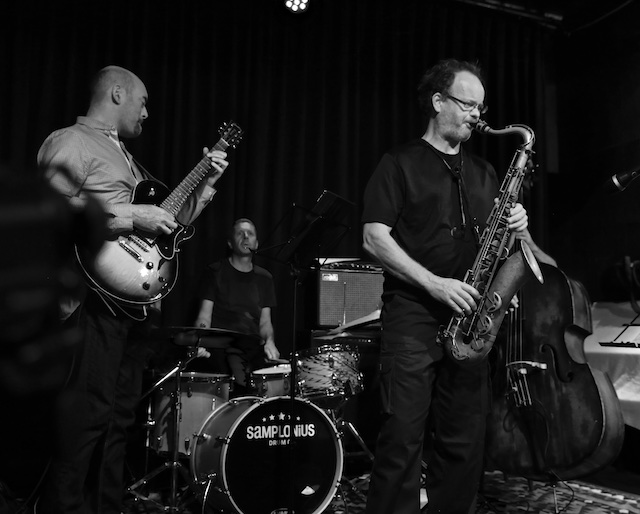 His second and shorter piece he described as a chant and it was. The hypnotic intensity carried the audience to the last beat; just as the first piece had. He is not only a storyteller on his instrument but he is capable of creating an orchestral sound. The audience loved it. The second set was something of an impromptu affair but none the less enjoyable for that. Also on stage for that set was Dixon Nacey, Olivier Holland, and Roger Manins. So busy was Barker’s schedule that the quartet had not found time to rehearse. Even the set list was once settled on the bandstand.
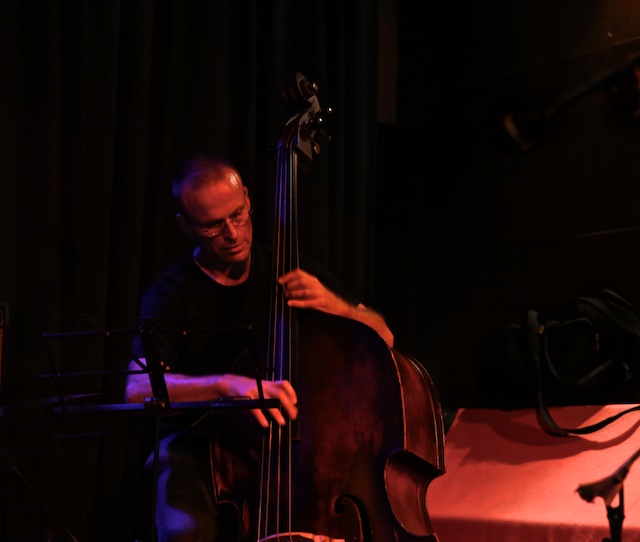 They began with ‘All the things you are’ and turned it on its head. The introduction performed by Holland and Barker alone was a blast. Drummer and bass exchanging phrases, challenging each other, leavening the exchanges with humour. When Nacey and Manins came in they exposed the bones of the tune. It was well done and in spite of its raw originality, the echoes of the melody hung in the air as implied offerings. The remainder of the set were original compositions and a rendition of the complex but ever popular Oleo (Rollins). Keep visiting Australians, we value you.
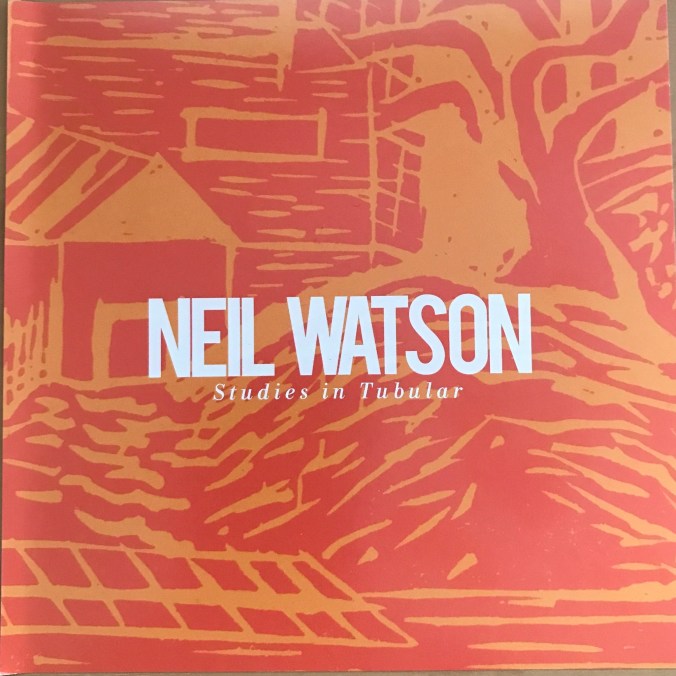 A review copy of the album ‘Studies in Tubular’ arrived in my letterbox a few days ago and it is vintage Neil Watson. It was recorded in 2011 and left to mature like a fine wine; it was worth the wait. I haven’t asked Watson why he titled the album ‘Studies In Tubular’, but the title feels appropriate. My first thought was that it might reference Mike Oldfield’s trippy minimalist classic ‘Tubular Bells’, and then I recalled that the word ‘tubular’ was once surfer slang for ‘exceptionally good’. Whatever the reason, this is exceptionally good music. The surf reference is not such a great stretch either when you listen carefully. This is deliciously eclectic music and although it touches on many sources, it is an original and highly satisfying offering. Referencing many things but never beholden to any of them.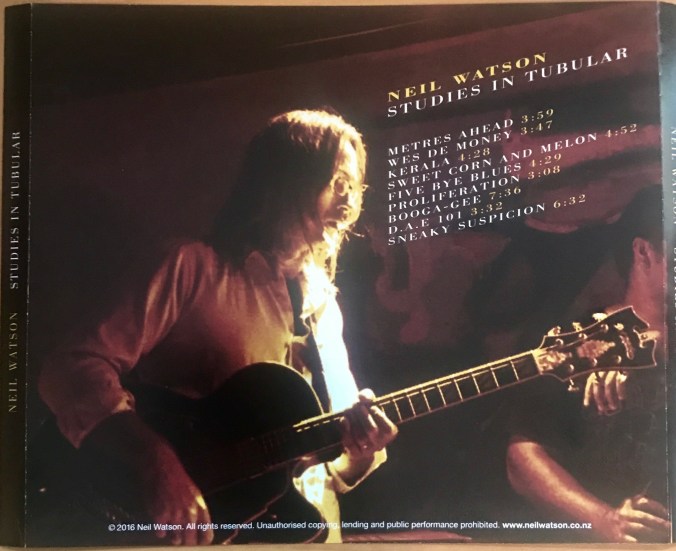
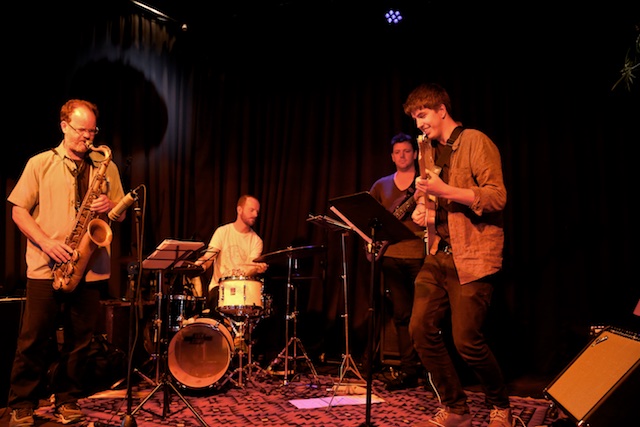 Against a background of complacency in regard to the ever declining biodiversity on the planet, one band is determined to raise our awareness. Those who have encountered the quartet on prior occasions will know the back story, connect the dots. GRG67 arose out of an impulse of crustacean empathy, an emotion usually confined to marine biologists and not Jazz musicians. However, once you grasp the fact that the band’s founder is Roger Manins, the rest falls into place. A sustainable fisher and co-manager of a small menagerie, Manins could best be described as the David Attenborough of the tenor saxophone. His world is strewn with animals and that’s the way he prefers it.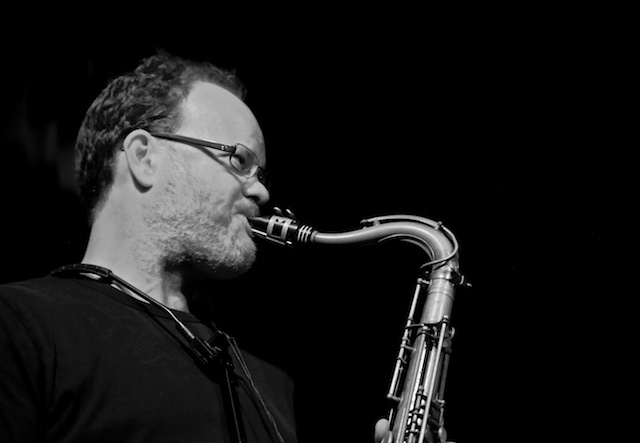
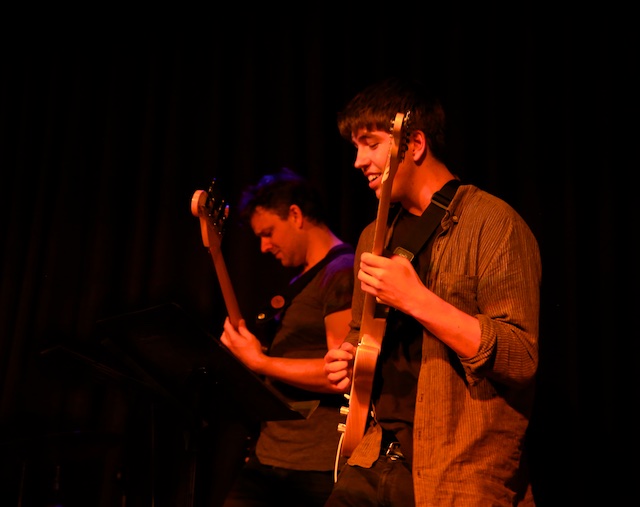 Each tune title was accompanied by a personal story or zoological insight; each bird was treated with deep respect. With titles like ‘chook empathy’, ‘chook 40’, ‘ginger chook’, ‘dark chook sin’ we were afforded some rare insights into the avian world. ‘Chook 40’ was not about the 40th chook as you might suppose. It opened our eyes to the fact that chooks have one more chromosome than humans. During that particular tune you could really sense that extra chromosome. ‘Dark chook sin’ was an invitation to anthropomorphism. What would a chook sin look like? Manins felt that Mallard ducks were more likely to sin than a chook (anyone living near ducks who has a deck will have a view on this).
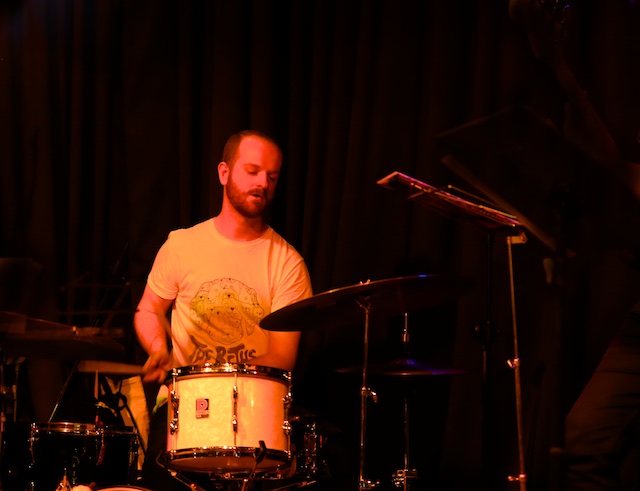 The quartet played with wild enthusiasm in both sets and the good humour of the evening was infectious. Given the subject matter it was only fitting that the gig took place at the Thirsty Dog (dogs are also a recurring theme with Manins). The venue was congenial and the acoustics good. What more could you want on the last night of Spring. This band is a rallying cry, reminding us that in this troubled world we shouldn’t take the good things for granted. At a time when we are buffeted by the ill winds of international politics, the arts matter more than ever. New Zealand Jazz rewards us in so many ways and the diversity of improvised music in our city is a treasure. You get good musicianship and fun combined – and if you’re lucky a musical insight into the natural world around us.
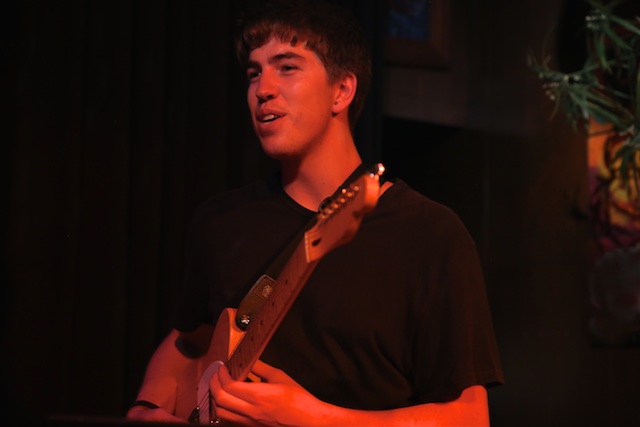 I have posted the bands signature tune GRG67 as it simply crackled (cackled) with life (and it broke a previous speed record). These guys are fine musicians and GRG67 was never better than on this night. These guys sizzle.
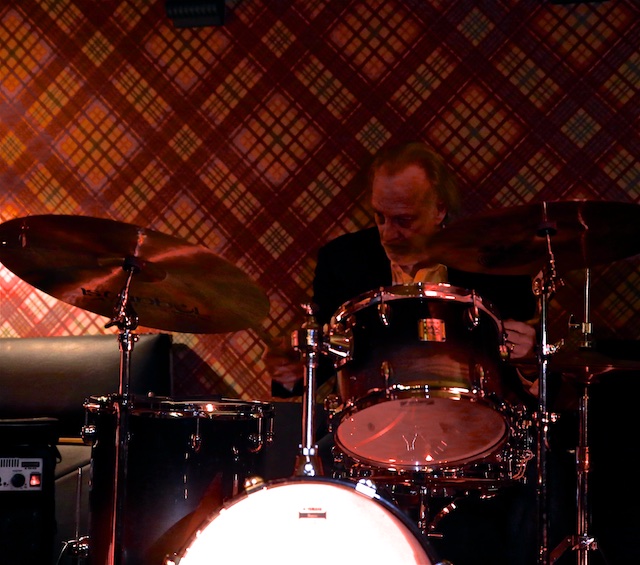 Frank Gibson is a drummer of international repute, a sideman, educator and bandleader. While he is a versatile drummer, his predilection is for bebop and hard-bop (especially Monk). On Wednesday the 16th November, our last night at the Albion for a while, we heard six Monk tunes (plus tunes by Wes Montgomery, Lee Morgan, Joe Henderson and Sam Rivers).
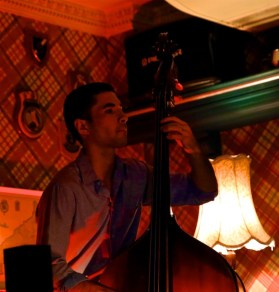 This is not a clone of the original Monk bands, but a modern quartet connected to the Monk vibe by musical lineage.
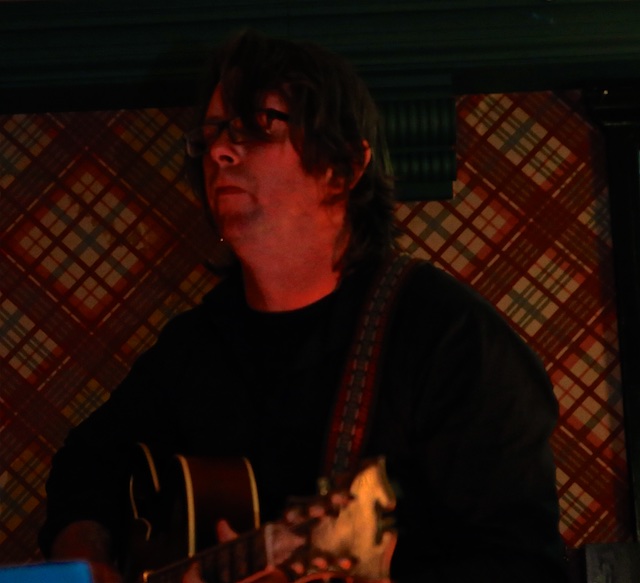 There were familiar, much-loved Monk tunes and a few that are seldom heard such as ‘Light Blue’ and ‘Eronel’. Monk wrote around 70 compositions and they are instantly recognisable as being his. The angularity, quirky twists, the choppy rhythms, the lovely melodies and particular harmonic approach – a heady brew to gladden the heart of a devoted listener. We never tire of him or his interpreters. After Ellington, Monk compositions are the most recorded in Jazz. We remain faithful to his calling whether our tastes run to the avant-garde, swing or are firmly rooted in the mainstream. These tunes are among the essential buttresses holding up modern Jazz. They are open vehicles inviting endless and interesting explorations. They are a soundtrack to the Jazz life.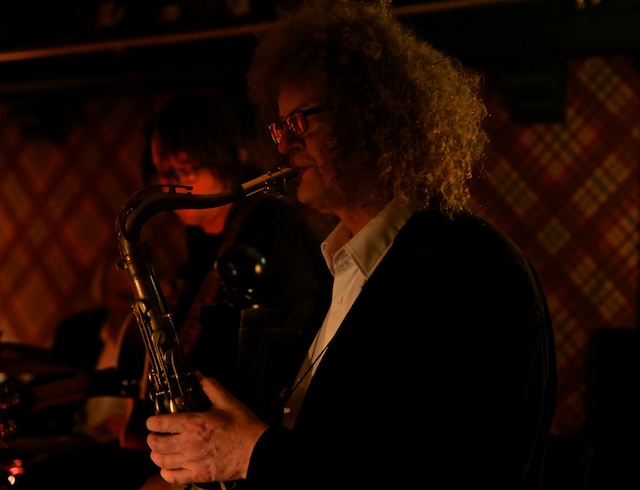
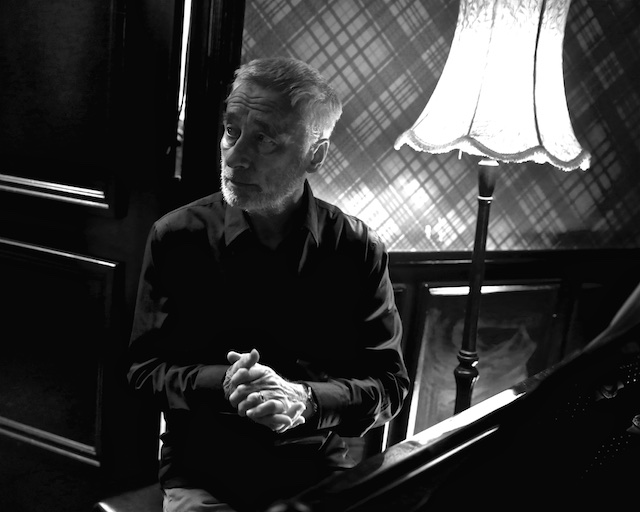 Au revoir is more than a simple good-bye. The fuller meaning is ‘until we meet again’. Jazz pianist, broadcaster and educator Phil Broadhurst is about to move to Paris, where he will reside for a few years (along with his partner vocalist/pianist Julie Mason). He assures us that he will return and it is not unreasonable to expect him to arrive back with new compositions and new projects to showcase. A Francophile (and francophone), Broadhurst has long been influenced by the writers and musicians of France. His last three albums ‘The dedication trilogy’ all contain strong references to that country. Wednesdays gig was centred on his recent output, but with new tunes and a surprise or two thrown in.
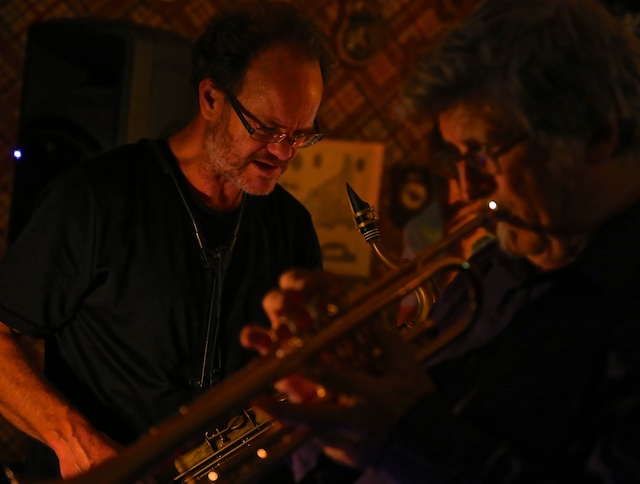 Broadhurst is an institution on the New Zealand Jazz scene and it will feel strange with him absent. The strangeness on this particular Wednesday night was compounded by the impending American election result. An election dominated by bizarre outbursts of racism, belligerence, stupidity and misogyny. As the first number of the evening progressed, everyone relaxed; Broadhurst’s melodicism a balm for what ailed us. The tune was ‘Orange’ (a French commune in the Alps/Cote d’Azur region). Half way through the piece everyone’s mobiles lit up. I tried to ignore mine but the vibrating and flashing increased. I reached to shut it off and spotted the words – Trump wins US election. The ‘four horsemen of the apocalypse’ had just entered the room via electronic media. The tune ‘Orange’ is particularly beautiful (and I hope Broadhurst will forgive me for this association), but on this night, the title was also oddly appropriate. An orange gargoyle was about to release the furies upon a surprised world.
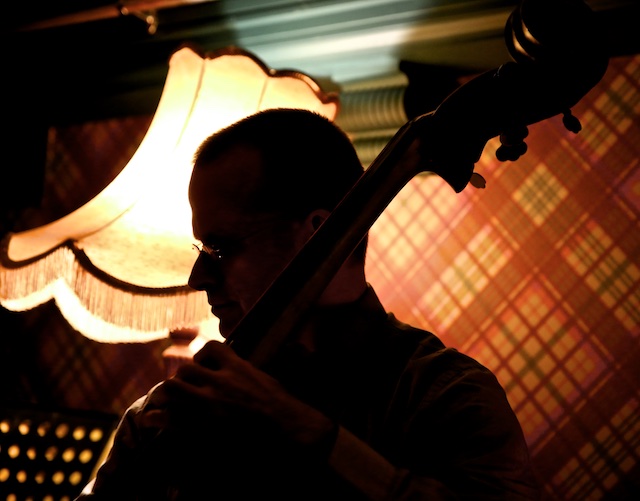 Accompanying Broadhurst were his regular quintet, Roger Manins (tenor), Mike Booth (trumpet), Oli Holland (bass) and Cam Sangster (drums – and with special guest Julie Mason (vocals). Broadhurst, and his various lineups have received numerous accolades. In recent years there have been nominations and awards; most recently the prestigious ‘Tui’ at the 2016 New Zealand Jazz Awards.
  Anyone who follows NZ Jazz will be familiar with many of the tunes played on Wednesday; ‘Orange’, ‘Precious Metal’, ‘Loping’ etc. The nicest surprise of the evening was hearing a Frank Foster tune ‘Simone’ (absolutely nailed by Julie Mason). A fine tribute to Nina Simone, and appropriate to the night, given Simone’s views on the lamentable state of race relations in America. This unit is supremely polished and I highly recommend that you purchase the recent albums if you haven’t already done so. They are all still available from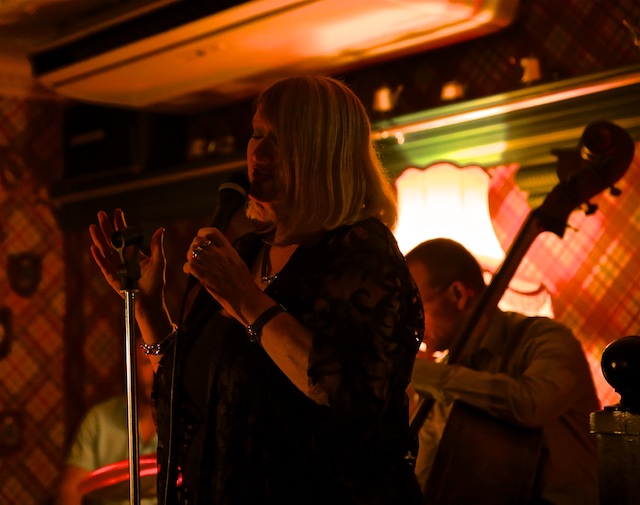
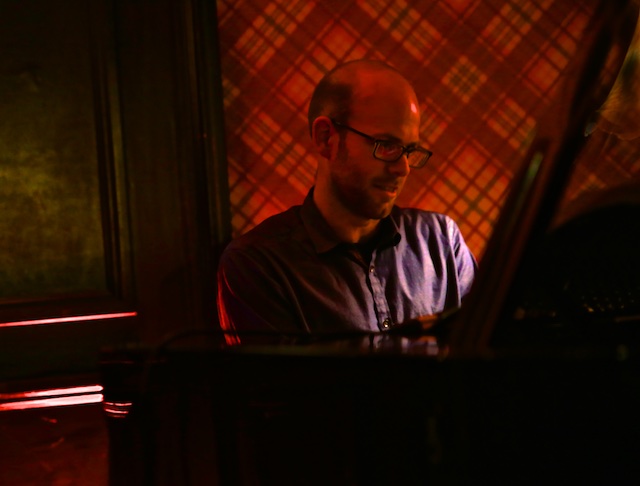
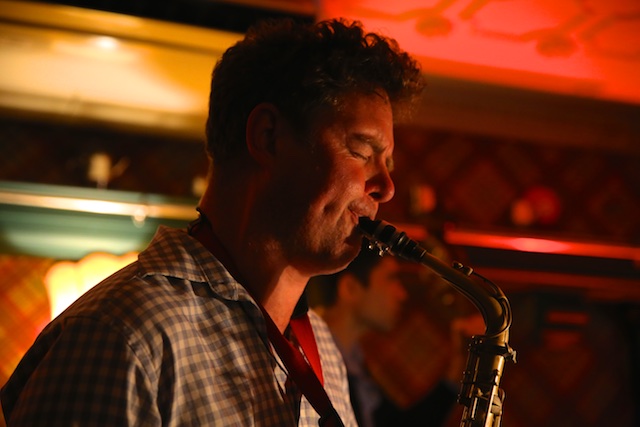
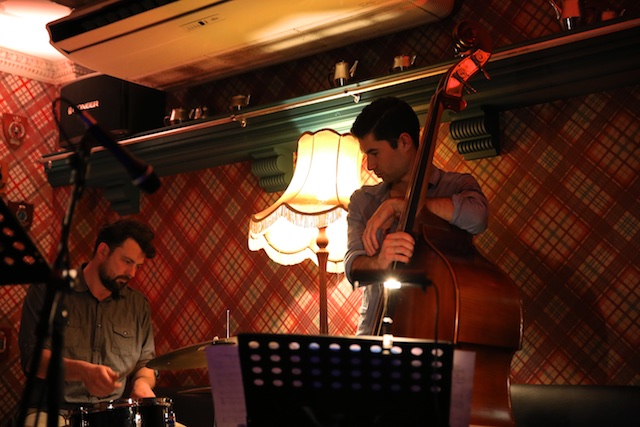
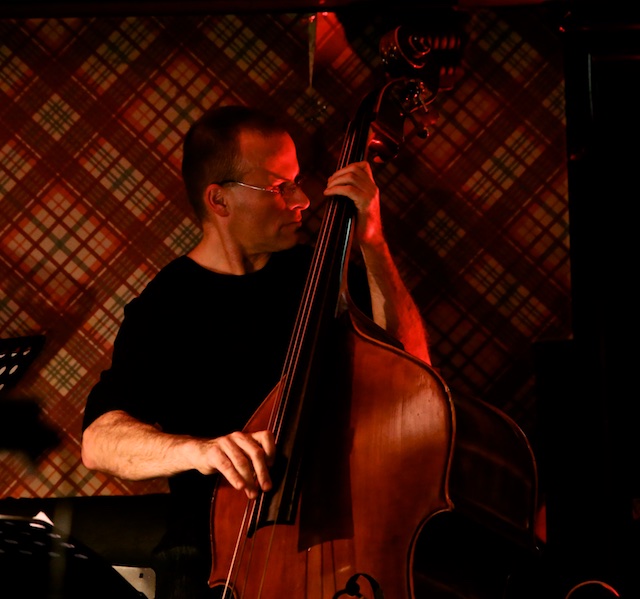
 From early in the first set, I felt the passion behind the performances, the sheer exuberance that is generated when a group know that they are performing effectively. Seasoned touring musicians sometimes sacrifice this – perhaps the effort of being on the road, the effects of jet lag, robbing them of warmth. It reinforces my view as a listener, that an artist needs more than chops to fully engage with an audience. When a band is comfortable on stage, properly rehearsed and above all up for a riotous night, magic can happen.
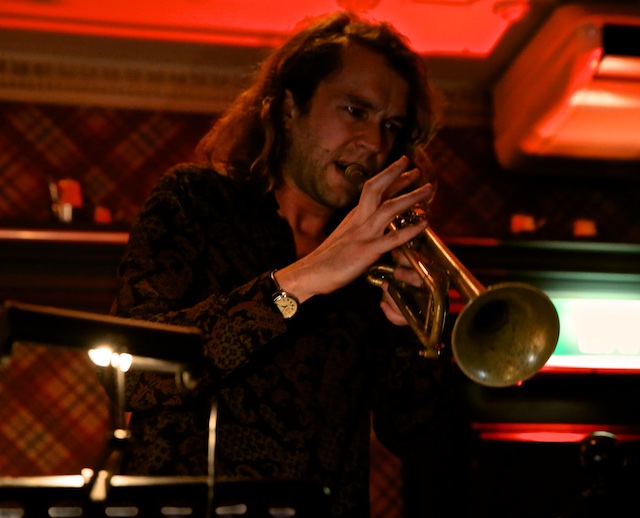 Trumpeter Finn Scholes can always surprise and over recent years he has impressed me increasingly. His vibrantly brassy ‘south of the border’ sound in the Carnivorous Plant Society is well-known, but anyone who thought that was all there was to him, hasn’t been paying due attention. He is raw and raspy on avant-garde gigs, mellow and moody on vibes and in this lineup reminiscent of the young Freddie Hubbard. His solo’s had bite and narrative, his ensemble playing was tight; above all, he generated palpable excitement, the sort that brings people back to live music again and again.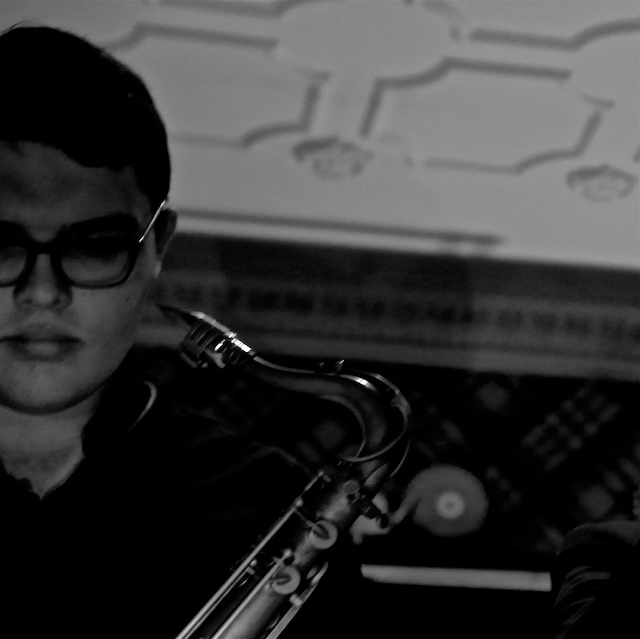
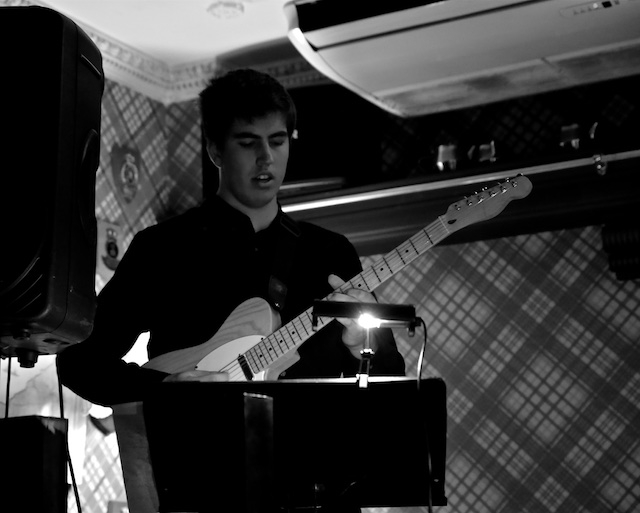
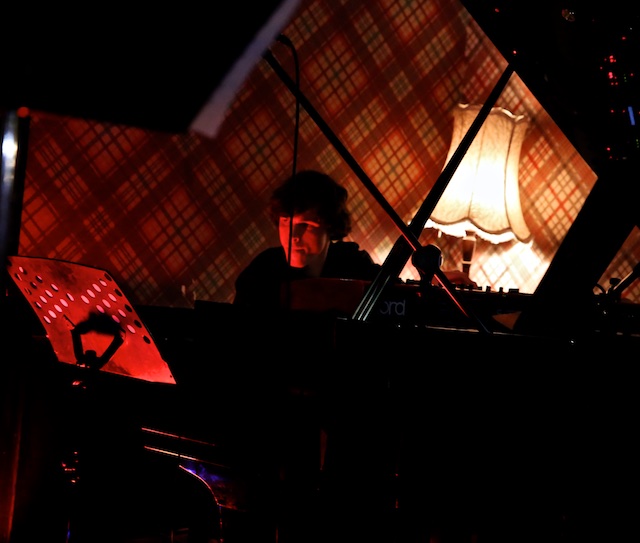
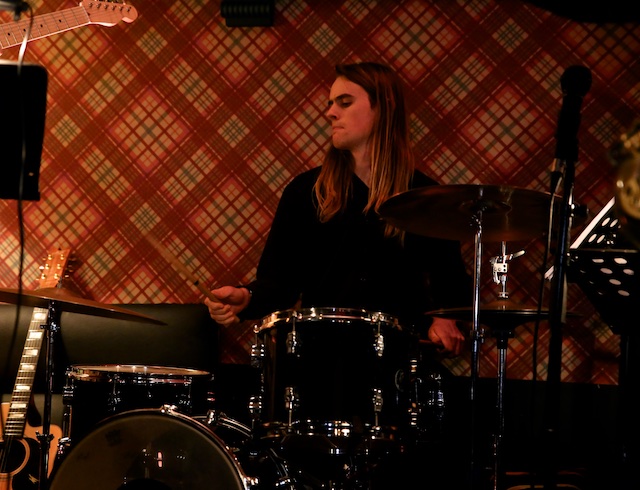
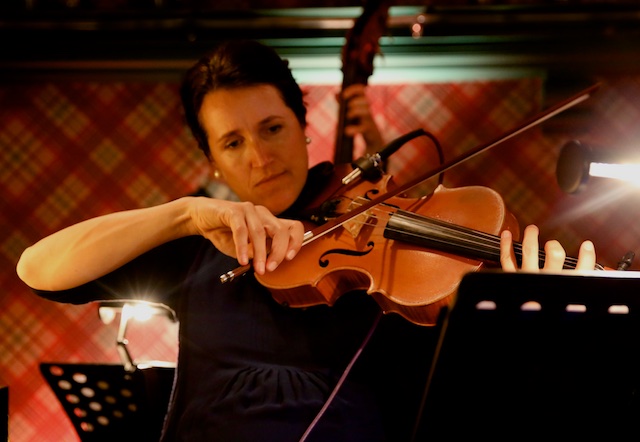
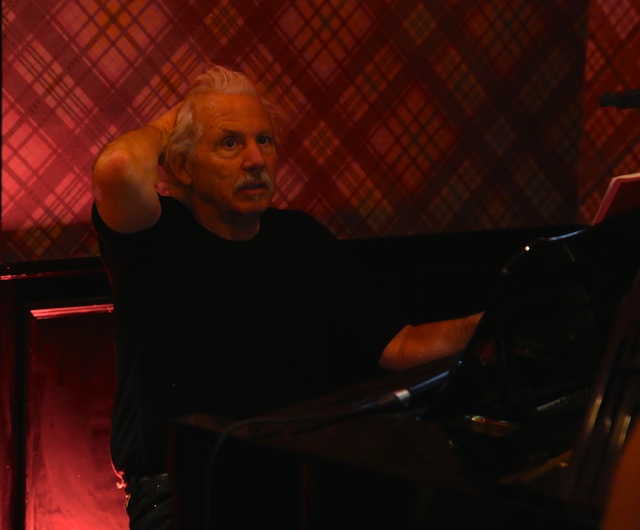 To the best of my knowledge, Jonathan Besser has not played at the CJC (Creative Jazz Club) before. While he is best known as an important composer for The New Zealand Symphony Orchestra, The New Zealand String Quartet and The Royal New Zealand Ballet, he is also a significant leader of small ensembles. Ensembles which venture far into the territory of experimental, electronic and improvised music. It is impossible to separate the man from his music. It is eclectic, original and often plaintive but generally with a sly twist of humour thrown in. In spite of his standing in the music world, Besser is modest. At the CJC he was happy to lead from the piano, which was in partial darkness and at the rear of the ensemble. His instructions were brief and staccato as if part of the unfolding suite. When he did pick up the microphone to speak to the audience he exuded an eccentric charm, bandstand asides peppered with self-effacing humour, garnished with sudden smiles.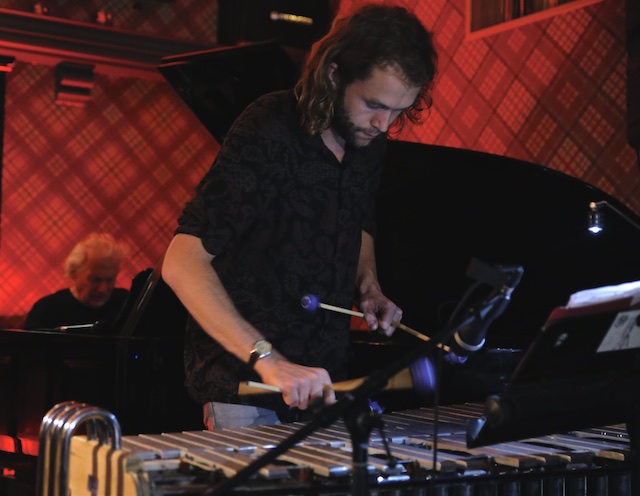
 I met Besser briefly during Natalia Mann’s ‘Pacif.ist’ tour and later at the Auckland Art Gallery during the opening of Billy Apples ‘Sound Works’ exhibition. On that occasion, the Nathan Haines Quartet played Besser’s innovative compositions. I really hope that someone recorded that. It was extraordinary music, based upon prescribed letters of the alphabet. These were then allocated using the 12 tone scale as a formula to locate equivalent notes. The order of Billy Apple’s words dictating the order of notes.
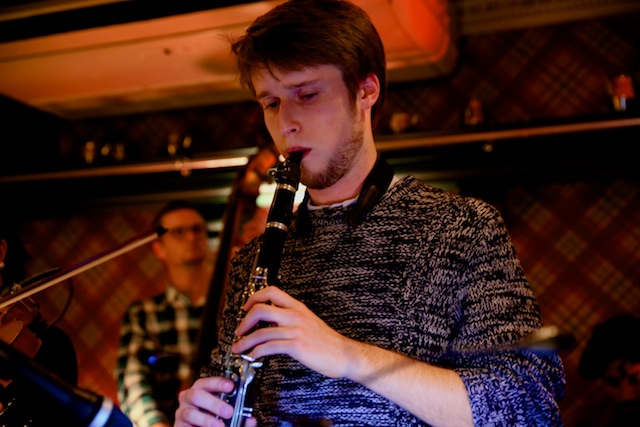 The music was not Klezmer and later I asked Besser about his influences – were there strong Jewish influences? “I am a Jewish man and I used Jewish scales, but apart from that no. I draw upon many, sources”. It interested him that I heard Argentinian references. “I have done Tango projects in the past and that is possible”. It was partly the combination of instruments, the delicious overlay of melancholia and the accents – not so far from the music of master musician Dino Saluzzi.
 The segments of music making up the suite seldom lasted longer than 4 minutes. The spaces between them brief. The mood seldom deviated from the wistful, evoking a sense of intangible longing – for something remembered – but just out of reach, a nostalgia as ancient as time itself. There were a few cheerful pieces as well, but I preferred the former. The Zestniks update themselves regularly, this time adding Caro Manins vocal lines, her wordless vocals followed the viola or clarinet in gentle unison. No one is better suited to this than Manins – she has worked with the likes of Norma Winstone after all.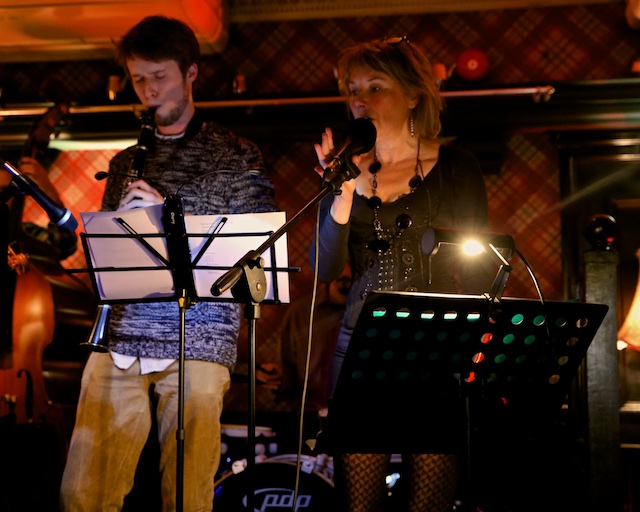
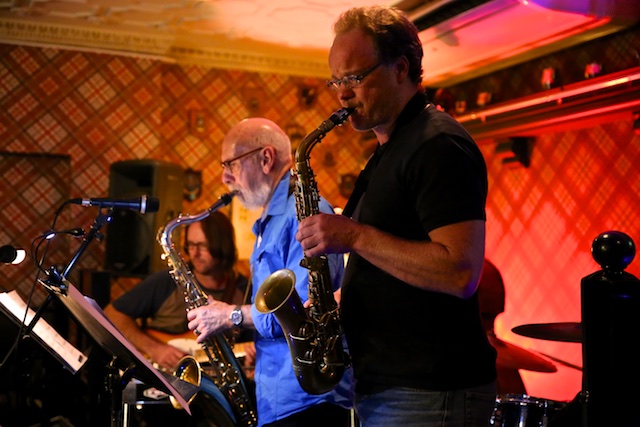 A seasoned New York veteran when asked to comment on the quality of playing by young artists emerging from the Jazz Schools said, “Man they’re such great players. Many of them have chops to burn, but what is lacking is ‘character’. That is not taught in Jazz schools, you gain it inch by inch out of life experience”. To paraphrase Lester Young who put it best, ‘I hear the notes, but what is your story’. The character of a musician (or the lack of it), shows up in the music. Jim Langabeer has ‘character’ to burn. He tells wonderfully human musical stories and they are utterly beguiling.
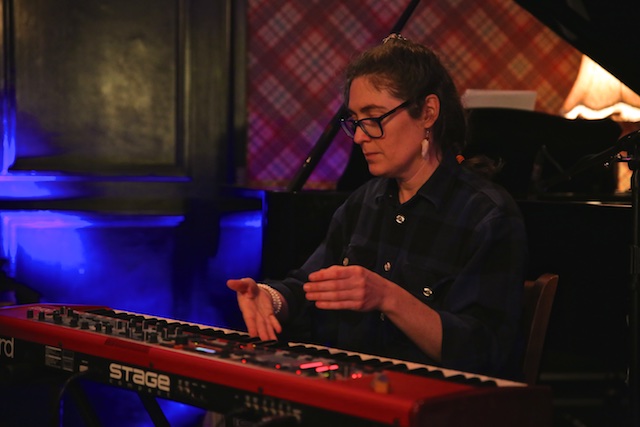 Langabeer is hugely respected on the scene and deservedly so. He has worked with greats like Gary Peacock and Jaco Pastorius and in spite of absorbing the essence of North American Jazz, his ideas and sound possess a Kiwi authenticity. When he plays his tenor there is often a street-raw raspy intonation. The sound is at times reminiscent of Archie Shepp, but the story and flow of ideas are entirely his own. His flute playing is soulful and as soft as silk in the breeze. Because he is so comfortable in his own space he can incorporate everything from the avant-garde to indigenous music without it sounding contrived. These seamless references work beautifully in his hands. We talked of this after the gig and agreed that many of the earliest attempts at blending middle eastern, far eastern or ethnic music were less successful than now.
 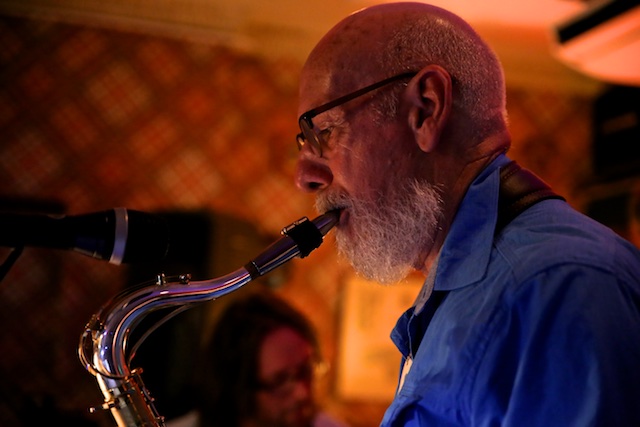 As the boundaries between cultures blur in a globalised world, the mutual respect between improvising traditions grows. I have posted an example of this effortless genre-blending in a clip from the CJC gig titled ‘Ananda’s Midnight Blues’. Those who are familiar with Buddhism will grasp the meaning immediately. Ananda was Gautama Buddha’s childhood friend and later his disciple. Beloved, worldly and yet never afraid to challenge his enlightened teacher. There is a feeling of deep questing spirituality in the piece – reaching beyond mere form.
 Whether Langabeer plays flutes or reeds, everything serves the composition. His spare lines (which are devoid of undue ornamentation) establish a theme and then vanish like a will-o-the-wisp, giving a nudge to the imagination and enriching the piece as a whole. There are no wild flurries of notes on the saxophone or flute because the story resides elsewhere. His writing creates an over-arching logic and the ensemble has the freedom to move in and around tonality. In some pieces ostinato patterns create a drone effect, becoming a single note over which to restate the melody. This freedom allows for an organic interaction, free or inside and with a deep gut-felt pulse.
 When putting a band like this together the choice of musicians is supremely important. Not every musician could handle such freedom. Needless to say, Langabeer chose well. The ensemble was rich in contrasting colour, rich in character. It was our good fortune that Jim Langabeer’s daughter Rosie Langabeer was back in town. I can’t imagine a better-qualified pianist for this role. A leading avant-gardist and experimental musician who crafts compelling filigree and rich beauty into her music. Rosie Langabeer can play outside one minute and the next you hear a deep subtle swing, a rare kind of pulse that you can feel in your bones. A gifted composer and leader in her own right, an extraordinary sides-women when required. Moving from percussive, richly dissonant voicings to heart-stopping arpeggiated runs – somewhat reminiscent of Alice Coltrane’s later piano offerings. Her iconoclastic playing delighted the audience.
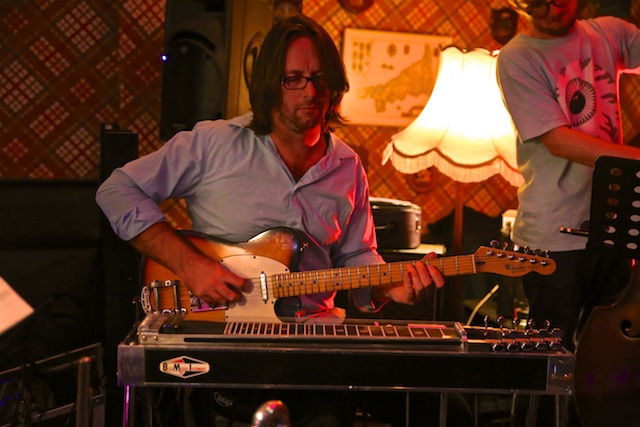
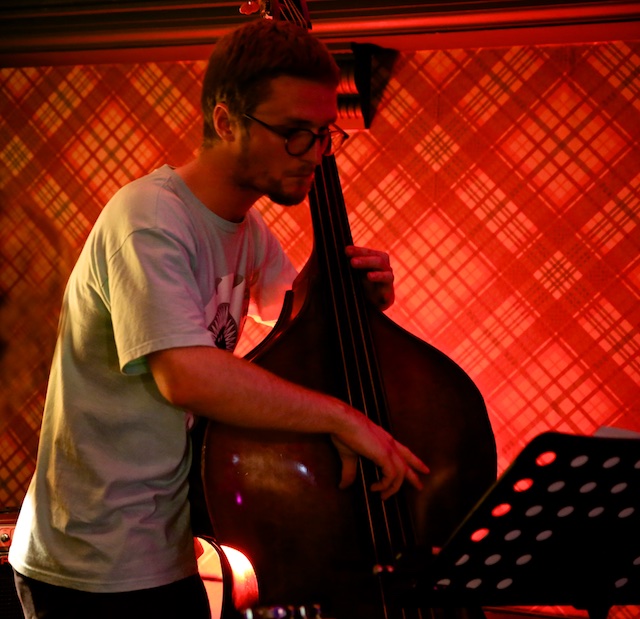 On alto was Roger Manins. Although the alto is not his main horn he is extraordinarily fluent on the instrument. Langabeer has been focussing on multiphonics and microtonality of late and he and Manins showcased some atmospheric numbers utilising various blowing techniques. Manins has long impressed by playing in a variety of styles with equal facility. On guitar and pedal steel guitar was Neil Watson, bringing his mix of blues, Jazz punk, and avant-garde to the fore. Another iconoclast and one we love hearing. The pedal steel guitar has been in his possession for a year now and his rapid mastery of the instrument is impressive. A difficult beast tamed beautifully. On Bass was Eamon Edmundson-Wells. A versatile young bass player most often found in the company of experimental musicians. His performance on this gig was right on the money.
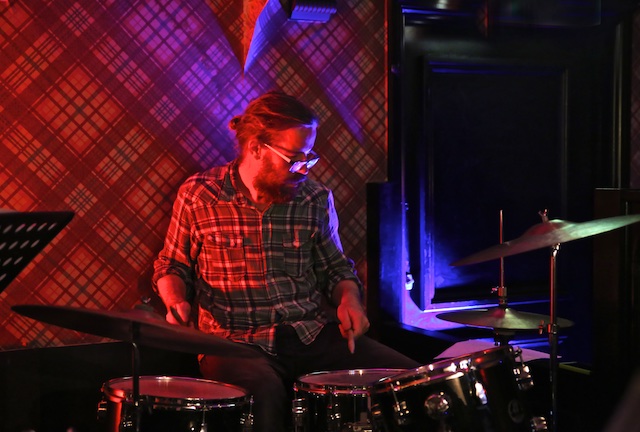
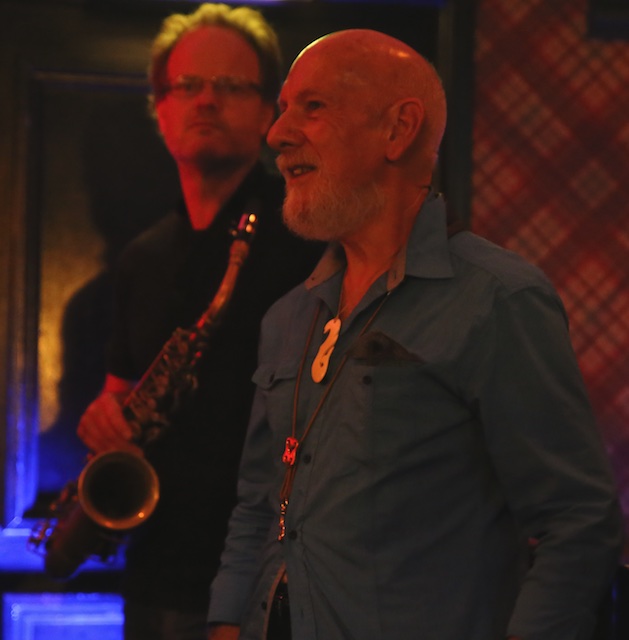 On drums and percussion was Chris O’Connor. Perhaps more than anyone else O’Connor personifies this free-ranging music. Of all the New Zealand drummers, his are the widest-ranging skills. Colourist, minimalist, indie rocker, straight-ahead jazz, avant-garde, experimental percussion and film work. There is nothing he won’t tackle and everything he touches benefits from his musicianship. When a piece titled ‘Tapu’ was played O’Connor stole the show. While Langabeer played the difficult and wonderfully atmospheric Putorino (a traditional Maori flute of the Taonga Puoro family), O’Connor simulated the Tawhirimatea (A traditional whirring instrument dedicated to the god of winds). The effect was eerie and electrical. Later in the piece he blew through the stem of his snare stand – recreating the effects of the Pututara (a conch trumpet). Only O,Conner could have pulled this off so well. Like Langabeer, he has a deep awareness of multicultural issues.
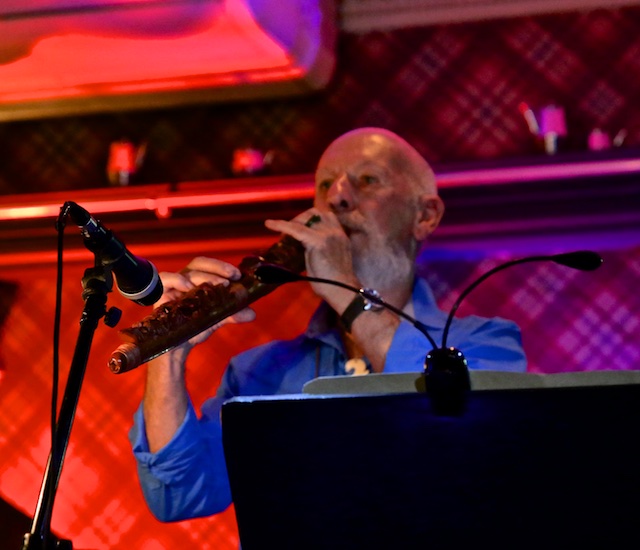 The one standard was Strobe Road (Sonny Rollins). A lesser known standard and played with enthusiasm. The remainder was a selection of Langabeer tunes, many referencing Maori of Kiwi themes. His tune Rata Flower was a stunner – it deserves to become a local standard. He has obtained funding from Creative New Zealand for this project and we might see a ‘Sketches of Aotearoa’ album soon. I truly hope this occurs and I will be the first to purchase one.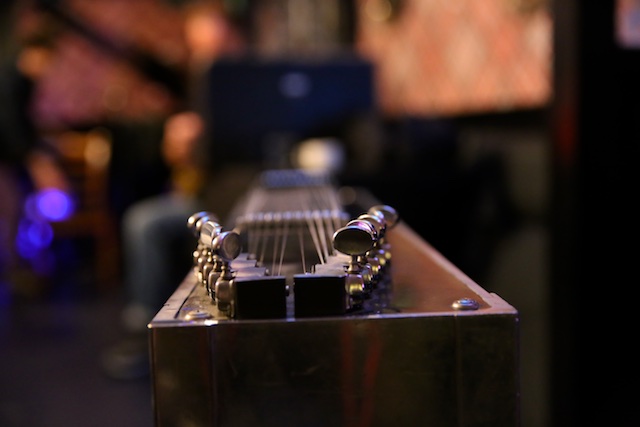
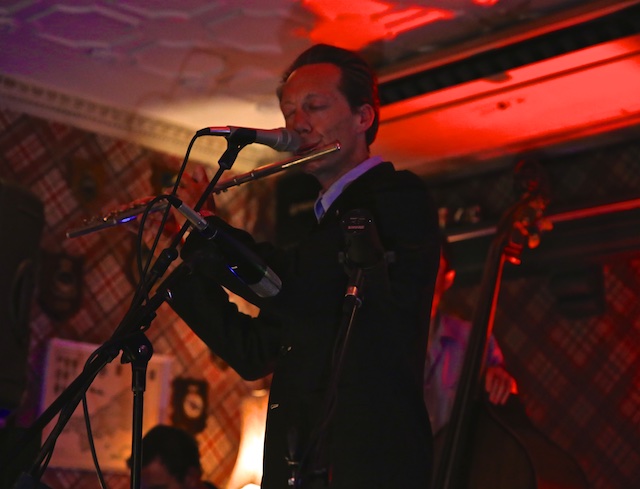 Musicians of a certain calibre are peripatetic, going where the music or the work takes them. This partly arising out of necessity, but also out of an impulse to explore new sonic and cultural environments. When a child or a grandchild arrives the musicians journeys circumscribe smaller arcs and are less frequent; the local scene being the beneficiary. This is the case with Nathan Haines; happily young Zoot tethers him in our midst for the moment. Haines has a solid reputation here and in the UK, with a loyal fan base in both locations. He has never been afraid to push in new directions, but at the heart of whatever explorations he embarks upon, a default soulfulness underpins the enterprise. This leads him to productive collaborations with like-minded artists, and not necessarily all Jazz purists. From the Hardbop-infused to Soul Jazz to DJ funk – it all works for him. While all of these collaborations are pleasing, none is more so than when he plays alongside brother Joel Haines.
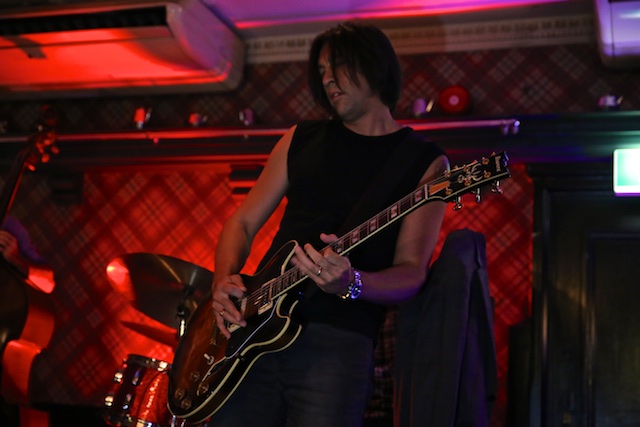 The Haines brothers have different musical careers, Nathan Haines outgoing, a public performer and award-winning recording artist – understanding well, the vexed world of marketing and the presentation of non-mainstream music. He balances these competing forces better than most. Brother Joel is a successful composer and a gifted performer as well, but his career these days centres on TV and film work. An engaging musician and a crowd pleaser; less in the public gaze by choice. Improvised music thrives on contrasts and the rub between different sounds always works well in the right hands. Nathan creating soulful innovative grooves and catchy melodies over traditional Jazz offerings, Joel bringing a warm-as-toast Jazzgroove edge, wrapped in a blues/rock package.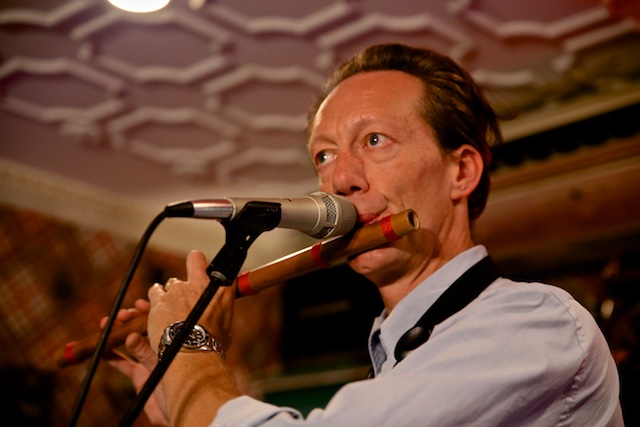
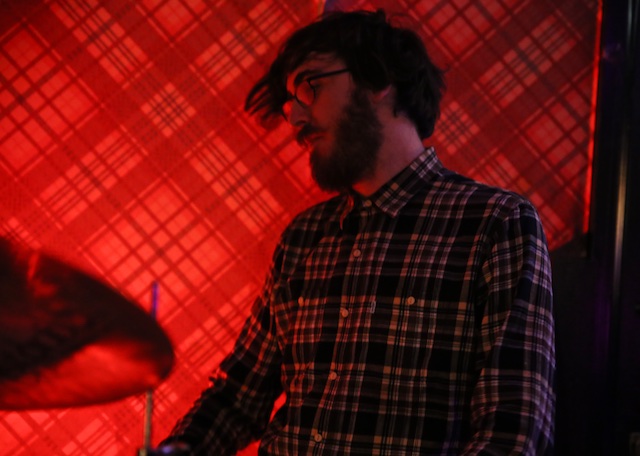 Next up was ‘Desert Town’ a Haines tune from ‘Heaven & Earth’. That was followed by an earthy version of ‘Set us Free’ (Eddie Harris) and then ‘Mastermind’ (Haines) from his recent ‘5 a Day’ album. Last up on the first set was ‘Land Life’ a tune based on a Harold Land composition. It pleased me to get a mention from the bandstand at this point. It is no secret that I’m a real Harold Land enthusiast. The band tore up the propulsive changes and moving free, made the tune their own.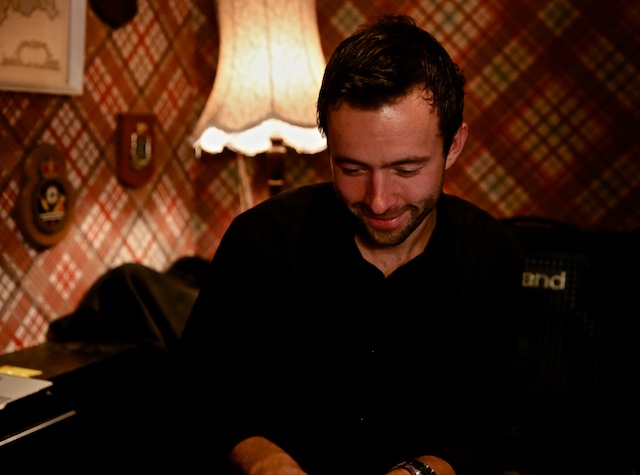
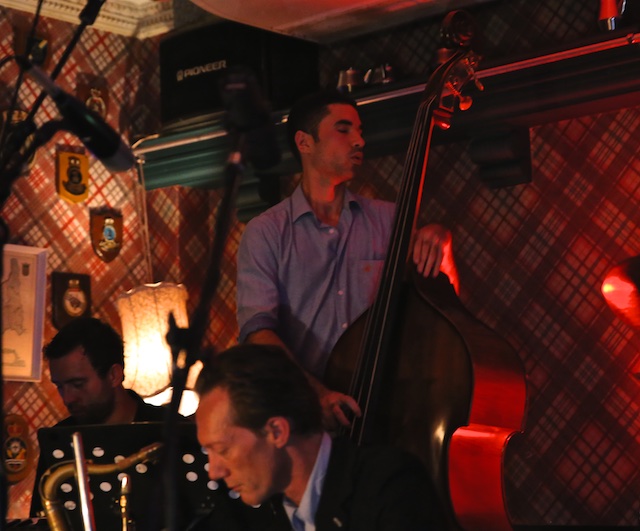
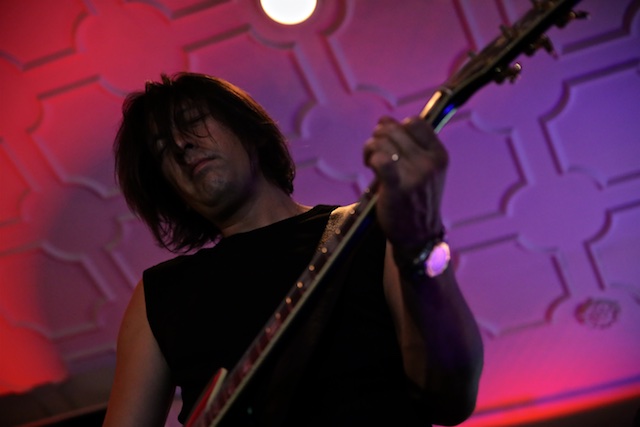
 With the Indian summer lingering, March rolled seamlessly into April, and in Jazz parlance, we got to JAM (Jazz April Month). This is the month when the International Jazz community reaches out and proclaims, listen up ‘world’ we have something to say. The month culminates with UNESCO world Jazz day; last year the main celebration was in Paris, before that Osaka and Istanbul. This year the Thelonius Monk Foundation and UNESCO will hold the WJD main celebration in the White House at the invitation of President Obama.
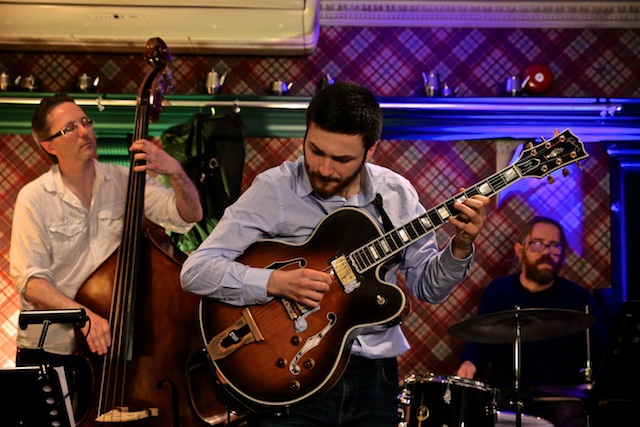
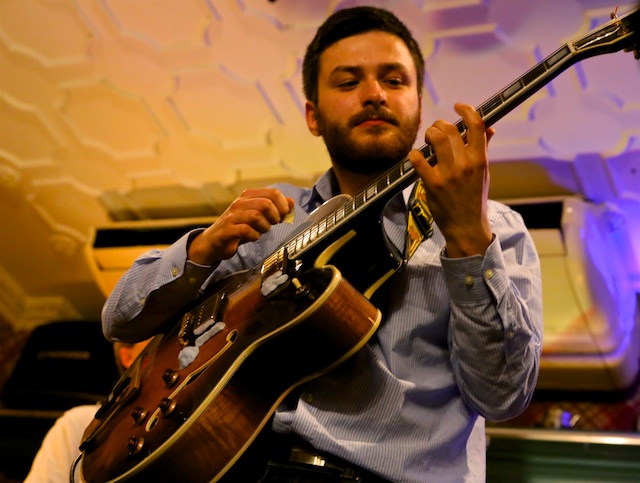 He is a different sort of guitarist and although in his early twenties, he already sounds like a member of that post-millennial cadre of improvising trend setters. As usual, I arrived during the setup and what I heard offered promise. His lines during the warm-up number were fast and furious, but the clarity of tone and of ideas, jaw dropping. As the first set began the band traversed various moods, from the Bop referencing to the reflective. Luft is a formidable technician, his fluency beyond the reach of many practitioners I suspect, but during the slower reflective numbers, we glimpsed subtly and depth.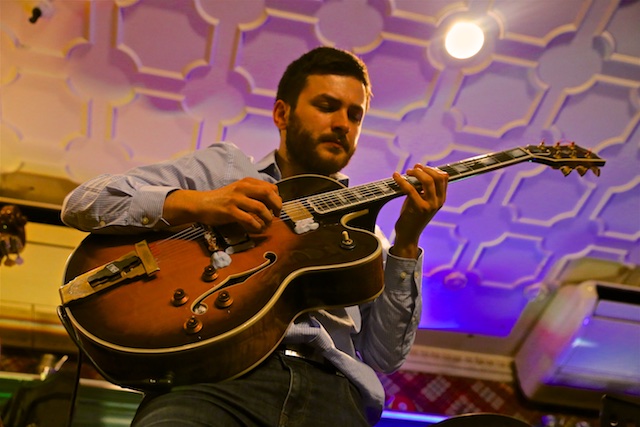
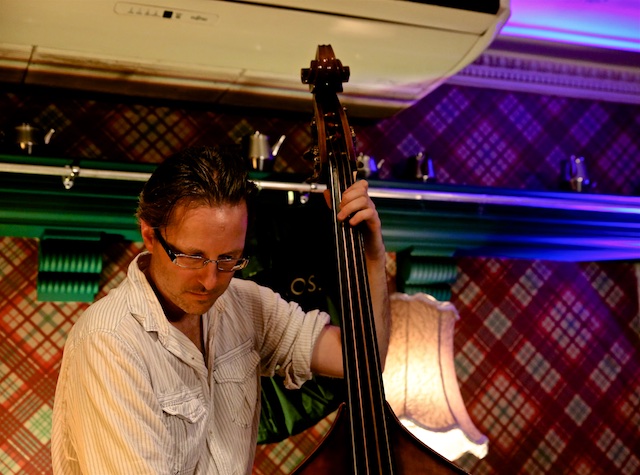 The first set brought us the trio formation, and the set list ranged from the near avant-garde to ‘world Jazz’. I really enjoyed the material chosen as there were quirky originals, and material ranging from the familiar (Gismonti) to the unfamiliar – tunes by Portuguese or Brazilian composers including a delightfully outrageous rendering of a tune called ‘The bickering of the crazy musicians’. That one brought the house down. I was also delighted with his tribute to the adventurous guitarist Derick Bayley; a tune titles ‘Derick’. Again this showcased the breadth of his influences. Whether the reflective or quirky, handled with the supreme confidence that only a musician at one with his instrument can attain. Accompanying him was Tim Robertson, an expat with a long string of impressive credits to his name in the UK. Robertson and Luft were a tightly focussed team, enhanced by the addition of Chris O’Connor for the Auckland gig. O’Connor is endlessly versatile and ever popular about the country – from Indie Rock or straight ahead Jazz through to experimental music. He adds enormous value to any bandstand, any genre, and the choice could not have been better.
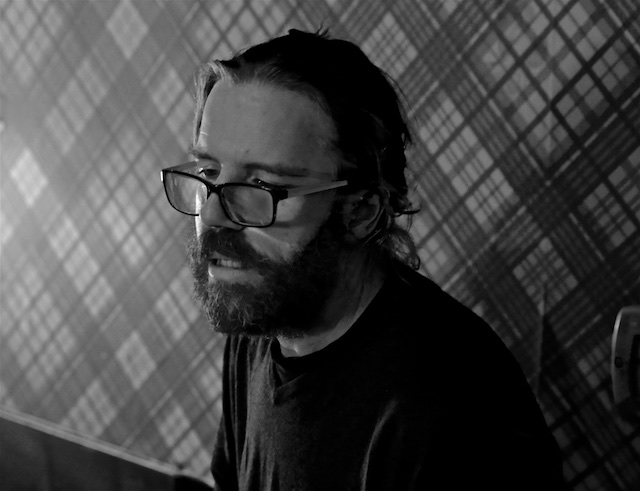 On the second set, the trio added local saxophonist Roger Manins and the tunes although standards took in a wide spectrum. Opening with a ‘groove take’ on Victor Young’s ‘Delilah’ and then in contrast diving headlong into a marvelous Ornette Colman piece. ‘Humpty Dumpty’ from Ornette’s ‘This is our Music’ was undoubtedly my favourite of the night. Everything these musicians played worked well, but this tune just bounced off the walls and had everyone whooping in delight. Next was a crazy little known Monk tune titled ‘Unidentified Monk Solo’ and lastly ‘Ray’s Idea’ by Ray Brown. From deep listening enjoyment to wild and free in one gig.
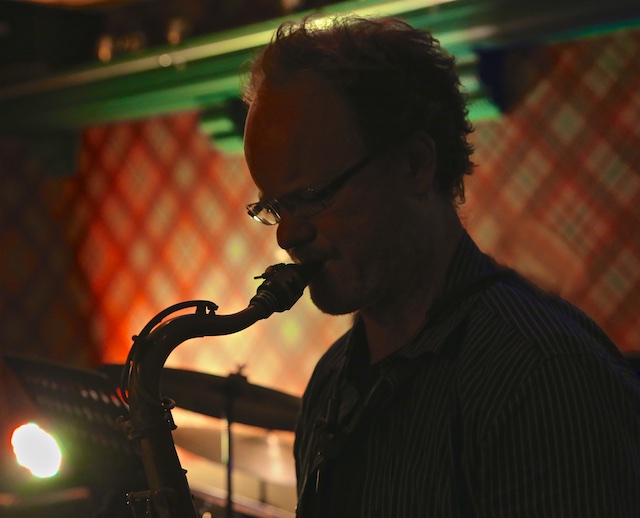 Two nights later I was watching the Sky Arts channel when a programme on guitarists came up. Then I saw him, a younger Rob Luft performing at Ronny Scotts, solo guitar, receiving praise from George Benson, recording at Abbey Road studios and winning the Jazz section of a prestigious UK guitar competition. We sure lucked out getting this band for a Jazz April opener. The clip below is from a Ronnie Scotts gig – Rob Luft with ZiroBop – The clip tells you everything you need to know about him as a guitarist.
 JazzLocal32.com