“What often distinguishes a poetic list from a practical one is only the intention with which we contemplate it’ – Umberto Ecco (The Infinity of Lists).
At this time of year Jazz Journalists post their ‘best of’ lists. By tradition, this provides a platform for the writers to focus on something that took their fancy (or not). It is seldom an exhaustive analyses of the years musical offerings, but a time to indulge in a few well-honed prejudices with impunity. I make no apology for the antipodean bias.
A look back at some pianists who impressed in 2014:
There has been a lot of ink spilt in analysing Jazz piano over the years and the task is always daunting. In recent years all too many masters of the keyboard have passed on such as the inimitable Hank Jones. He encompassed a vast era of jazz, ever fresh and endlessly tasteful; bringing with him something of stride, bebop and hardbop and above all the blues. At the passing of Jones and other acknowledged masters, there is an increased awareness of other great pianists still with us (a good example is the belated and welcome attention being given to George Cables). Many of these artists have been hiding in plain view and paying them due attention is increasingly important. As musical tastes mature, and new directions emerge, the field ever broadens.
Jazz fans who live outside of the USA generally have a reasonable awareness of pan-American, European, Scandinavian and (perhaps) Antipodean Jazz musicians. If you live at the hub of the wheel, the USA, it will probably be less likely. Pianism is not about how many notes you play, where you come from or the  cleverness your ideas. It is about integrity. Musical integrity is rare but universally available.
There is a ‘sound’ that belongs to certain locations, perhaps to great cities; where an assimilation of environment occurs unwittingly, coalescing within an artist. This is not planned, as self-conscious cleverness is the road to perdition. The mindless recycling of others cleverness a greater anathema. Mary Lou Williams once said (to slightly paraphrase): “Once a pianist comes to grips with the instrument and can master its capabilities, stop taking formal lessons. Risk taking explorations should occur next”.
Pianists like Mike Nock, Barney McAll and Jonathan Crayford all have a unique quality, one that reflects where they come from. They are musicians of the world having honed their craft on the road, but distinctly Australasian for all that. No English, Italian, Scandinavian or Australian pianist is going to sound like Randy Weston and nor should they. Musicians of integrity will bring something of themselves to the mix and a select few will bring a sense of place. The three pianists I have mentioned have lived and worked in the USA (often extensively) but not at the expense of their roots voice. Each found a groove that only they could unlock. There are 88 notes on the standard piano keyboard, but in the spaces between the notes and in the choices made, there are subliminal messages. That is where the real magic lies.
The Mike Nock Trio. (Aust) Gig at the ‘2014 Auckland Jazz Festival’, CJC (Creative Jazz Club). Mike Nock is one of New Zealand’s favourite musical sons and perhaps the improvising musician we most admire. Although he has not lived here for many years, he often visits from Australia. Many will know him from his ‘Fourth Way’ band, his recordings as sideman with people like Yusef Lateef or his long years as a celebrated member of the New York scene. That said, his post USA work needs better examination and it is in Australia that people can gain a fuller sense of his body of work. Nock is a truly gifted artist and he goes from strength to strength. “Nock’s ringing iconoclasm pervades all his music, taps a deep well of melody that transcends jazz and informs and ignites his every encounter.” – Fred Bouchard, Downbeat (USA). His live trio gigs are humour-filled and quirky, focussing on an eclectic mix of originals, standards turned upside down and almost forgotten tunes (i.e. Sweet Pumpkin). The joy that Nock breathes into his gigs is infectious and it 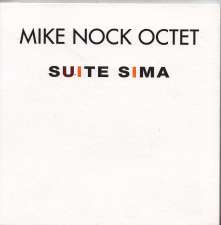 makes you glad that you’re alive. Touring New Zealand with Nock were James ‘Pug’ Waples (drums) and Brett Hirst (bass)’. These musicians while deeply attuned to each other were always full of surprises. 5 stars. *****
Barney McAll (USA) gigs in Auckland & Wellington NZ – Trio and Solo piano at the CJC (Creative Jazz Club) and ‘The Wellington Jazz Festival 2014’. McAll (an Australian) has lived in Brooklyn New York for many years, but he has never been forgotten in his home country Australia. His visit to New Zealand won him many new fans. There is an expansiveness and yet a completeness about McAll compositions. He sounds like no one else and as he digs into those earthy blues filled tunes, you hear the unmistakable echoes of real antipodean soul. 5 stars. *****
Jonathan Crayford, ‘Dark Light’ Trio (USA). It was Auckland’s good luck that the album release gig for Crayford’s ‘Dark Light’ Trio took place at the CJC (Creative Jazz Club). A few weeks prior to that a local version of his ‘Biggish Band’ featured at the same venue (and at the Golden Dawn). I attended all three gigs. Jonathan Crayford is a peripatetic wonderer and a troubadour of immense talent. His endless travels in music often bring him home to New Zealand and the lucky get to hear his imaginative projects. 4 stars ****
Other pianists of note: Kevin Field (NZ). Field on piano or keys is a musical force to reckoned with. His taste is impeccable. This year saw him record an album in New York with expat New Zealand bassist Matt Penman, drummer Obed Calvaire and guitarist Nir Felder. The album will probably be released sometime during 2015 and is eagerly anticipated. 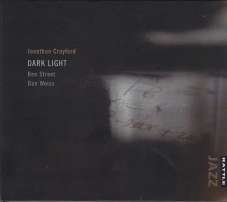 Whether as accompanist or soloist, Field shines. His work in 2014 on ‘Dog’, with Caitlin Smith and with the Australian saxophonist Jamie Oehlers stand out as high points. Adam Ponting (Aust) (Hip Flask ‘1’ & ’11’). Ponting is an unusual but compelling pianist. An original stylist who appears to approach tunes from an oblique angle, at first impressionistic, but leading you into a world of funky satisfying grooves. This guy is definitely someone I would like to hear again. It was also great to hear more of Alan Brown (NZ) on piano during 2014. He has some interesting piano and keys projects underway and we will hear more of those soon. Steve Barry (Aust). Barry is an ex pat Auckland pianist now based in Australia. He visited New Zealand twice during 2014. His visits and albums are always received enthusiastically. Barry is a musician who works hard and produces the goods. His new album ‘Puzzles’ with Dave Jackson (alto), Alex Boneham (bass) and Tim Firth, lifts the bar for up and coming local musicians. We had a number of visitors in 2014 and to bring us a European perspective was the Benny Lackner Trio (Germany/USA). The pianist Benny Lackner has visited New Zealand on several previous occasions and the aesthetic he brings is finely honed. The band has a similar feel to EST. There is the occasional use of electronics and they quickly find tasty grooves that could only emanate from a European Band.
Alan Broadbent (USA) has had a truly amazing year with the release of a solo album ‘Heart to Heart’ and his NDR Big band album ‘America The Beautiful’. Multiple Grammy  winner Broadbent is our best known improvising export and he has spent the last year touring Europe and America to great acclaim. The solo album was given a rare 5 star rating by downbeat and ‘America The Beautiful’ was recently voted one of the 10th best albums of 2014.
Miscellaneous Gigs and projects:
Mike Moreno trio (USA) – for sheer guitar artistry and taste, Moreno is hard to beat. His beautiful (often mournful) sound, compelling lines and clarity of vision left the Sydney audience in awe. His Australian trio were Alex Boneham (bass) and Ben Vanderwal (drums). the choice of sidemen was solid, as they complimented and responded to every nuance of Moreno’s playing. This was a class act all round. The Troubles (Wellington, NZ), Portland Public House, ‘Auckland Jazz Festival’. This Wellington ensemble is a machine of wondrous invention. Its anarchic dissing of powerful institutions, cheerful irreverence and inappropriate humour, carves it out a special place in the hearts of rebellious souls. Iconoclast drummer and composer John Rae (ex-Edinburgh) had added the heavy weight presence of saxophonist Roger Manins (Auckland) to the mix for recent gigs. That was an inspired choice. Jeff Henderson’s ‘Dreamville’ project (Auckland, NZ) CJC (Creative Jazz Cub). This avant-garde gig, billed as superconscious Jazzmares, was a triumph by any measure. Like a dream, the gig moved forward under its own internal momentum. Surreal themes constantly dissolving until exhausted, forms shifting without seeming to. What made this journey so evanescent, but so compelling, was that certain motifs remained deep in our consciousness throughout; totems of sound embedding themselves. This gig won many to Henderson’s cause.
Notable local Albums of 2014: (in no particular order)
‘Dog’ (Rattle Jazz) Recorded in the now defunct and much-loved York Street studios Auckland. This album is the realisation of a project by Manins, Field, Holland & 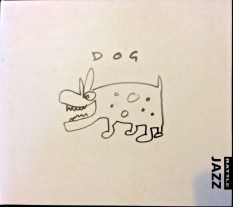 Samsom. It sizzles, swings and while hinting at the vibe of a bygone era, it still sounds fresh & modern (and very Kiwi). ‘Dark Light’ (Rattle Jazz) This excellent album is one of two that Jonathan Crayford released in 2014 – Recorded at ‘Systems Two Studio’ NY with Crayford (piano), Ben Street (bass), Dan Weiss (drums). Don’t expect repetition from Crayford. This master musician takes us on many journey’s, each unlike the last and all brilliant. Hip Flask 2 (Rattle Jazz) A funk unit led by Australasian saxophone giant Roger Manins. Accompanied by Adam Ponting (piano), Stu Hunter (organ), Brendan Clarke (bass) and Toby Hall (drums). A thoroughly appealing album and a welcome follow-up to Hip Flask 1 (Hip Flask 1 included with the album).
Best Jazz Writing
The Parker Biography (part one): Stanley Crouch’s ‘Kansas City Lightning’ is a great read and a possible game changer. It has sometimes been observed that Jazz  biography is the weakest link in Jazz Writing. If that is true then the mould has truly been broken with this work. Crouch has placed the story of Parker’s early life into a fuller historical context. In learning things about the times, we learn a lot about the man. This is a book that could be appreciated by anyone interested in the history of African-American life in the Mid-West. I suspect that its significance will grow as time passes. Above all the book is beautifully written and for me that counts.
Best Jazz DVD
Charles Lloyd’s ‘Arrows to Infinity’ is a beautiful and informative document. It is packed with important music and astute observations. The filming is tasteful and painterly and Dorothy Darr (artist and long time partner of Lloyd) has been the obvious guiding force (assisted Jeffery Morse). Lloyd the musician is beyond caveat, but Lloyd the narrator also holds us in rapt attention. The reborn, Big Sur Lloyd, communicates his deep calm with ease and his spiritual approach to music and life is compelling. As he reflects honestly on the momentous times he lived through, we feel enriched by sharing the experience. He sums up his approach to improvising and the duty of sharing his music as follows; “The winds of grace are always blowing, so set the sails high”.
Most anticipated events for the coming months.
Glen Wagstaff & the Symposium Orchestra Project. (NZ) 2015 album release (subject to sufficient funding levels being reached on kick starter). This young guitarist references the writing of Kenny Wheeler and Brian Blade. There is a deep melancholic beauty in his charts and the material soars. The album features many gifted New Zealand musicians. Christchurch, like Auckland & Wellington, has a deep reservoir of Jazz talent.
The Auckland Jazz Orchestra (NZ) – ‘Darkly Dreaming Suite’ by AJO conductor Tim Atkinson. I witnessed the recording of this suite and what I heard sounds amazing. While there is a dark brooding quality of the music it is also strangely warm; like a glass of claret held up to stained glass window at dusk. The album is due out in 2015 and the work marks step-up for the orchestra.
Maria Schneider conducts the Jazz Mothership Orchestra (USA/Aust) Our highly respected saxophonist Roger Manins is to feature with the JMO under Schneider’s batten. I don’t have all of the information yet, but the JMO will certainly be touring Australia.
CJC (Creative Jazz Club) 2015 events. The club had a great 2014 year in spite of the odds and difficulties. This is in large part due to JJA Jazz-Hero Roger Manins role as musical director (aided and abetted by Caro Manins and Ben McNicoll). The task of keeping a not-for-profit Jazz Club float in a relatively small city is challenging, but Manins has managed to secure a solid programme and he did so while juggling his demanding teaching gig at the Auckland University Jazz School and his numerous live gigs and recording gigs around the pacific rim. Having a brand new Auckland Jazz Festival (organised by Ben McNicoll) rounded the years events out perfectly.
Biggest Regrets of 2014 – missing the John Zorn gig in Adelaide – The passing of Kenny Wheeler whose music has given me so much pleasure over the years.
Video clips of Mike Nock & Barney McAll – filmed for this blog at the CJC (Creative Jazz Club) 2014.
http://youtu.be/zBd2yZZdvL4?list=UUvm6sdXjGJULG9k2nYZ9udA
http://youtu.be/m_oA8iLshNg?list=UUvm6sdXjGJULG9k2nYZ9udA
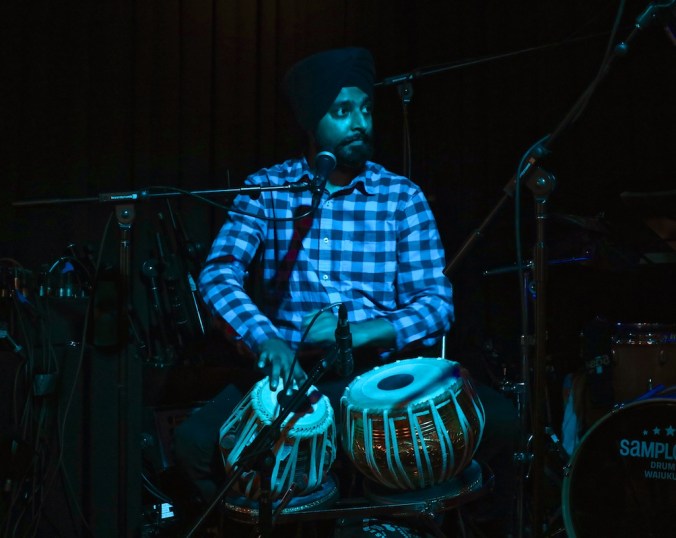 With emerging artists gigs you modify your expectations, but in this case, it was completely unnecessary. Both sets showcased great musicianship and originality. The first set was Manjit Singh and Takadimi; an Indian music/Jazz fusion project. Manjit Singh is not an emerging artist in the strictest sense, he is a highly experienced tabla player, composer and teacher in the two main traditional schools of Indian music (Northern and Carnatic). He has recently been doing a Jazz studies course at the UoA and this project arises from that. The traditional music he teaches is not that dissimilar to Jazz, as it has improvisation aspects and complex interwoven rhythms at its core. Singh also gave us an insight into another tradition, the ecstatic Sufi-influenced music of northwest India, Pakistan and central Asia – Again, a tradition that has fed the rich streams of Indian music and more recently, Jazz.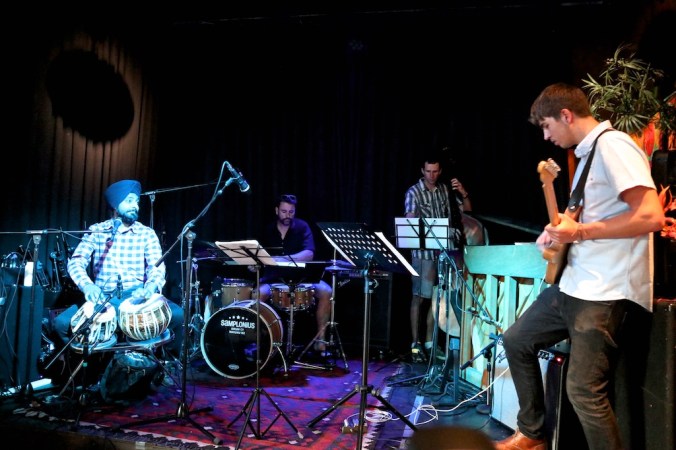
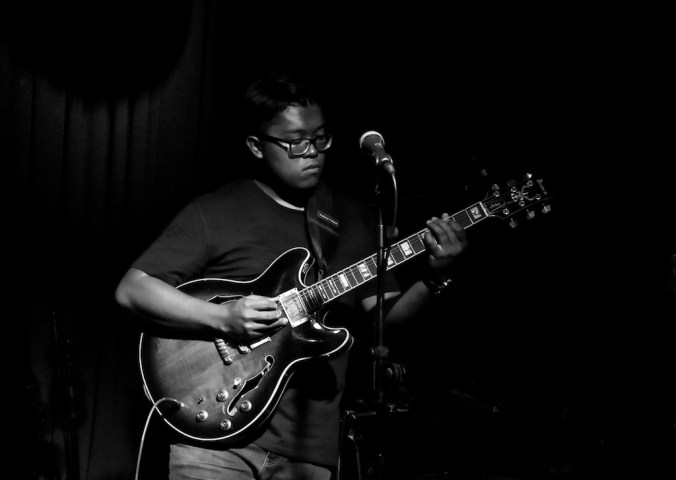
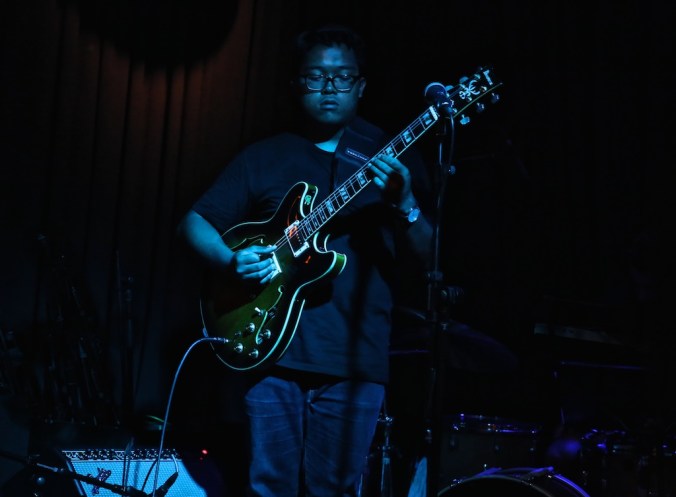
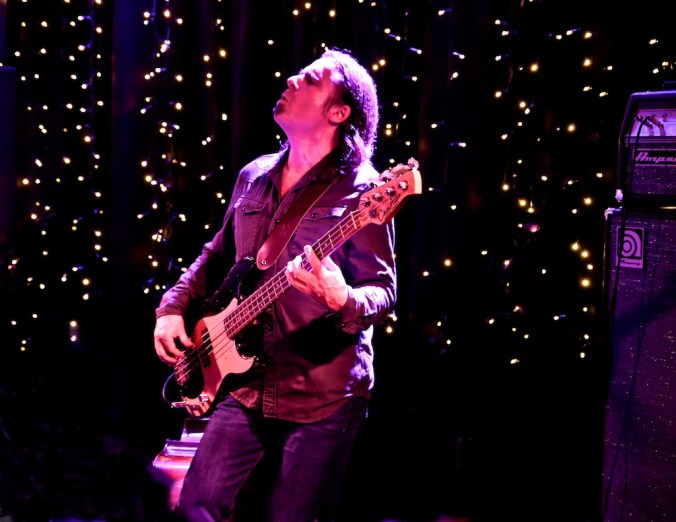
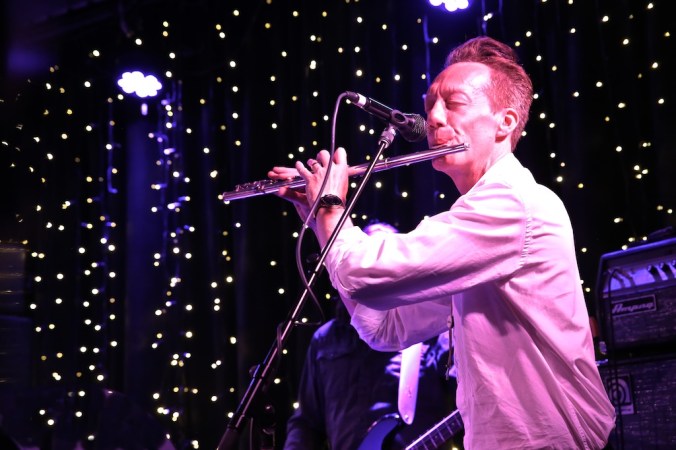

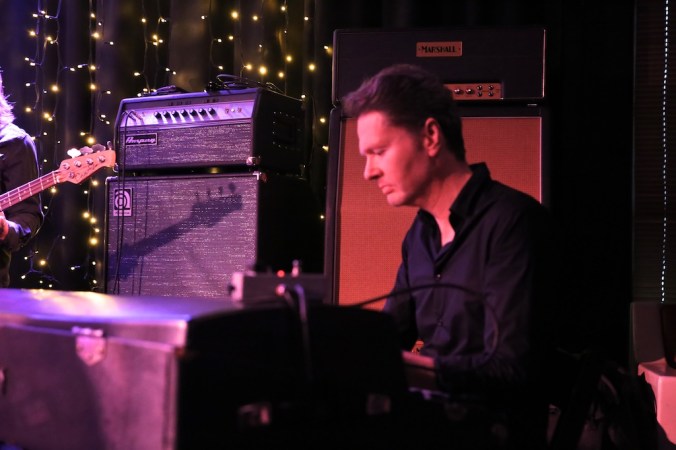 The CJC, sensing an opportunity and knowing that they had only a few days, organised a special one-off Richard Hammond gig and billed it as an all-star event. The programming fell to keys player Kevin Field. Field playing Rhodes, Ron Samsom on drums, Nathan Haines and Roger Manins on saxophones and Marjan on vocals. Hammond alternated between upright bass and electric bass and he wowed us on both instruments. On upright bass, he has a tone to die for; one that only the best bass players locate; on electric bass his lines bite, speaking the language of Jaco or Richard Bona.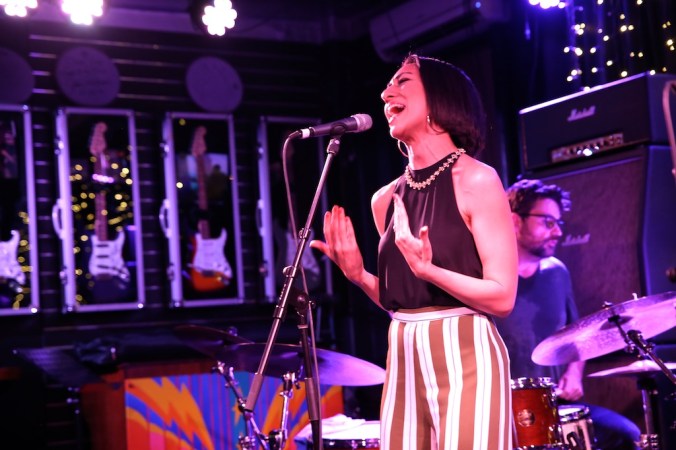
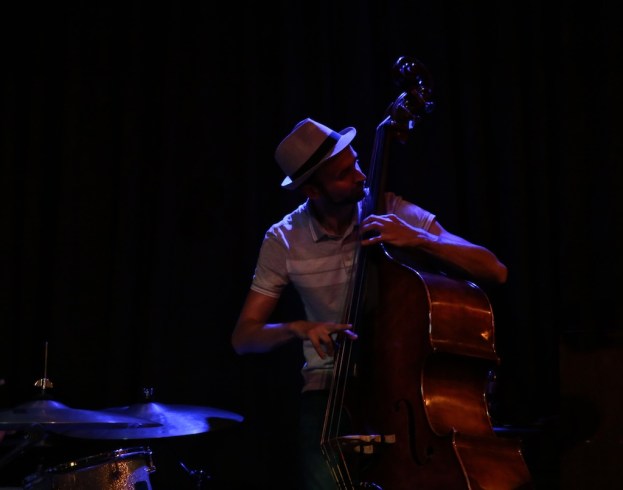
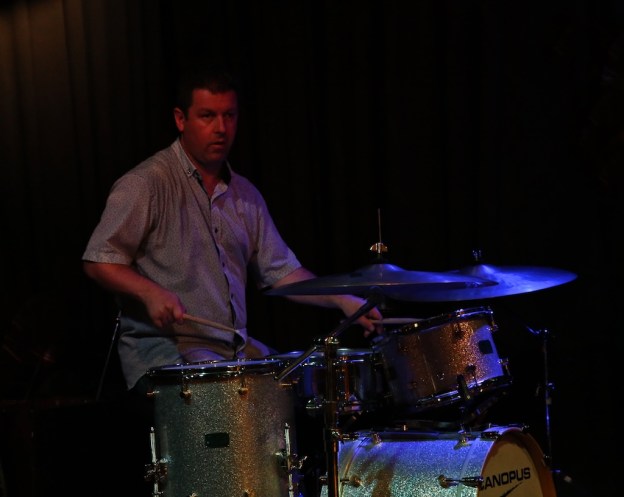
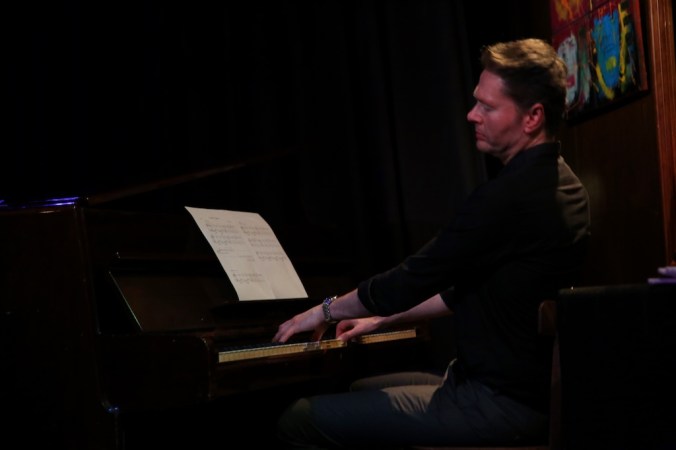
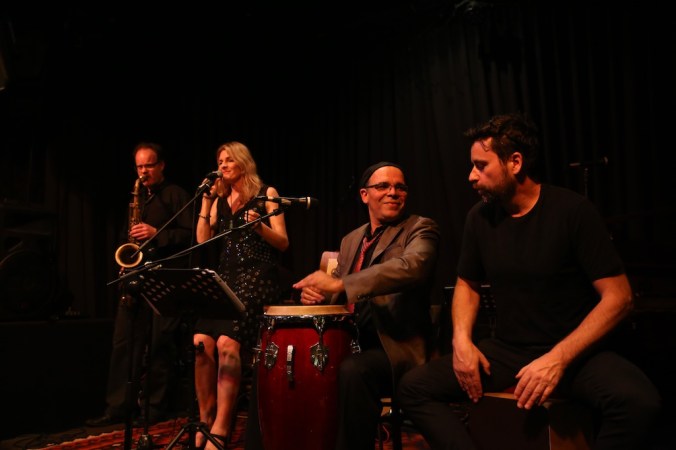 I like South American music and the more I hear, the deeper I am drawn in. A rich and ancient fusion of African, European and Amerindian music, each coast and region nurturing distinct flavours. There are also highly localised variations; all rhythmically complex and all deeply infectious. This week the CJC featured the highly respected Brazilian musician Nanny Assis and New Zealand born vocalist Maggie Gould. Assis was born in Salvador, North Eastern Brazil; a region especially rich in musical traditions and heavily influenced by African rhythms. The coast below Bahia nurtured Tom Jobim, Roberto Menescal and a cohort of like-minded innovators; the creators of the Bossanova (new music) form. In a world where saccharine versions of great music often assail us, it is necessary to return to the source from time to time in order to refresh our ears. Listening to Tom Jobim and Elis Regina on the album ‘Elis & Tom’ – ‘Chovendo Na Roseira’ especially, is a good place to start. The time feel is subtly different from North American versions and the unique rhythmic tensions dance with life. Jobim is long gone but authentic practitioners of the various traditions are still there if we look. Assis is just one of these; a master of rhythm and of the many distinct Bahia styles.
 Gould was a successful photojournalist in an earlier life. When the pressures of that lifestyle became too much, she decided to abandon the frenetic media world and follow her passion instead. Rekindling a youthful dream she became a Jazz vocalist and has followed that path ever since. Eventually, her journey took her to New York where she met Assis and a musical collaboration began. While living in New York Gould has performed with a number of luminaries, notably the pianist John de Martino (who has also recorded with Assis). Gould and Assis have just toured New Zealand, appearing in festivals and clubs throughout the two Islands. They have toured with great musicians and they intend to record soon in Auckland. When they do, the well-known New York-based ex-pat Kiwi bass player Richard Hammond will join them.
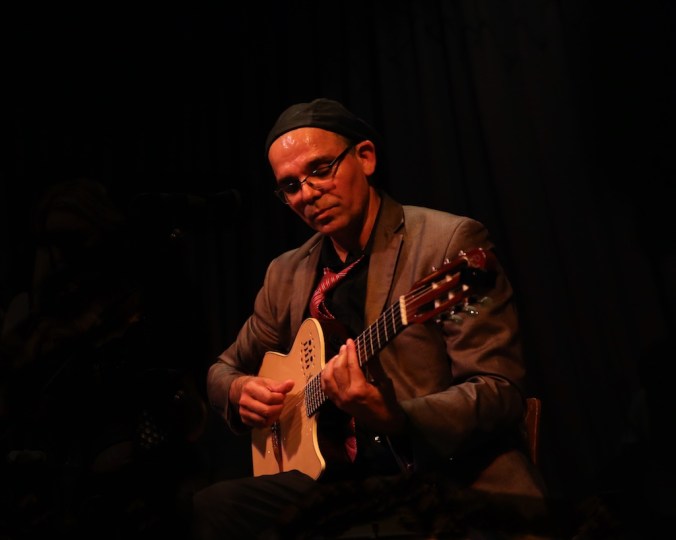 It is said that Latin American music is ‘the other swing music’. That makes for great synergies between Jazz and Latin musicians. It can work well, but only if the musicians have the ears and the courage to submit to the weave. Utilising the considerable skills of pianist Kevin Field, Alex Griffiths on 5 string bass and drummer Ron Samsom (plus for the CJC gig, saxophonist Roger Manins). The mix of Jazz musicians and Brazilian created a spark. Alex Griffiths is obviously well versed in Brazilian rhythms as his lines could not have been better placed. Field has for some time been immersed in this music and he is no stranger to the various clave rhythms either. His understated delicate lines in place of comping held the echoes of Jobim’s own tasteful piano accompaniment. During solo’s he gave both hands full reign in clave rich explorations. Samsom is a talented drummer and throughout the night, he and Assis worked in concert. With Assis on percussion and Samsom on the kit, a wonderfully rich sound scape emerged. At one point Assis beat a cowbell to hold the centre – allowing Samsom additional freedom to move. This was a moment of pure magic.
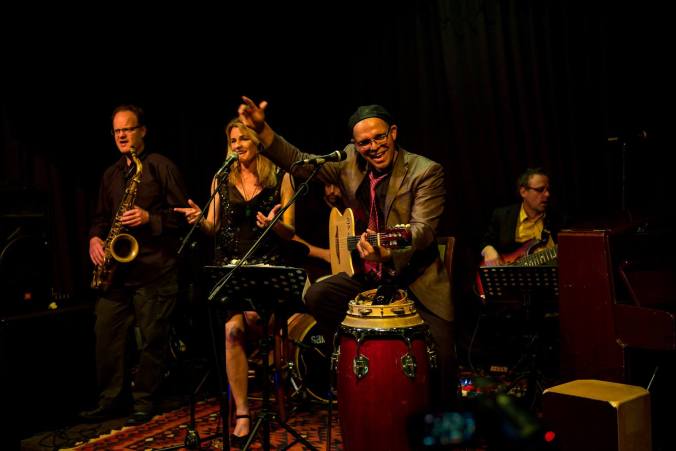 I read once, that a Jazz drummer playing Bossa or Samba is doing three basic things; the right hand replaces the shaker or cowbell, the left hand has the clave pattern and the kick drum follows the bass line. Add in actual congas shakers or cowbell and the interplay has the magnitude of a sonic earthquake.The number that I have posted is ‘O Barquinho’ or ‘My Little Boat(of Love)’ – a tune by Roberto Menescal and sometimes wrongly attributed to Jobim. It is a nice example of the Brazilian Bossa rhythms; rich in subtlety and contrast. It is a long-held tradition in this music to have a female and a male voice – call and response. Gould in English, imparting the wistfulness of the lyrics – Assis in Portuguese – taking me back to the master Joao Gilberto. The Portuguese language is extremely pleasant to the ear, while often masking incredibly sad songs. We didn’t need a dictionary or interpreter on Wednesday as we were transported without them. Nanny Assis’s voice, like his percussion and guitar playing, is pure magic – together the musicians gave us a great night.
 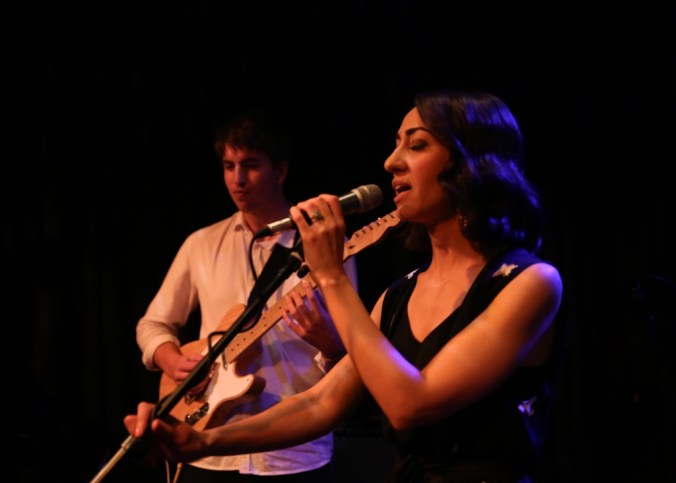 When Marjan stepped up to the microphone, she owned the room from that moment on. Her previous association with the Jazz club had been peripheral, but this gig changed everything. I have sometimes engaged with her about Persian music or Sufi poetry and I have heard her performing in the Kevin Field ‘A List’ band. She is always impressive when she sings, but this was impressive in a different way. It was her first Jazz club gig as a leader and suddenly, here she was delighting a capacity audience, every bit the seasoned professional; exuding an easy-going confidence. It was tempting to think that she had magically transformed herself into this fully formed artist, but her back story offers deeper insights. Marjan is of Persian descent and while this breathes exoticism into her music, it is only a fragment of her story. In truth, she has been a performer for much of her life; an established presence in the world of film, an in-demand voiceover artist, a teacher of music, dance, and drama. She draws on many strengths but on Wednesday they coalesced; a marvellous voice and a formidable stage presence the outcome.
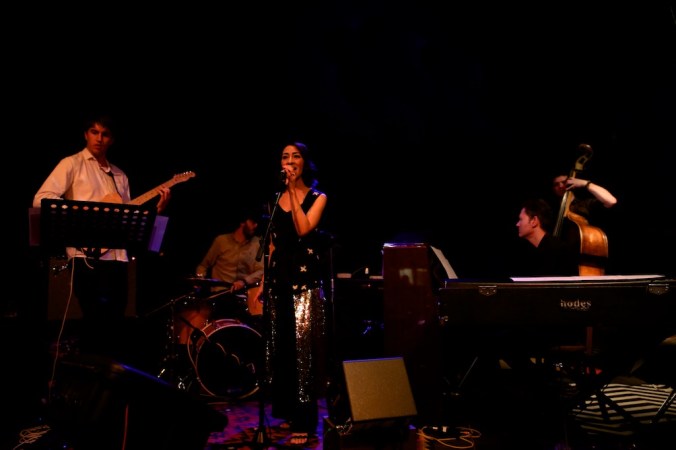 If her choice of a first number was to make a bold statement, then she succeeded admirably. Stepping out from behind the black curtains, accompanied by a shimmering Rhodes, she embarked on her engrossing journey. The first few bars of her ‘Desert Remains’ were straight out of the Sufi Jazz tradition; it was a call for universal tolerance: arising from her belief that music provides a pathway to transcend the banal. Almost imperceptibly, the tune became a love song, settling into new and funky rhythms. This was a nice piece of writing and the rhythmic interplay gave her much to work with. The influences in many of her compositions are generational; Stevie Wonder, Michael Jackson, Brian Wilson and of course her indigenous roots. All of this is filtered through a Jazz lens. Although her approach is modern, she doesn’t shy away from the traditional fare of Jazz singers.
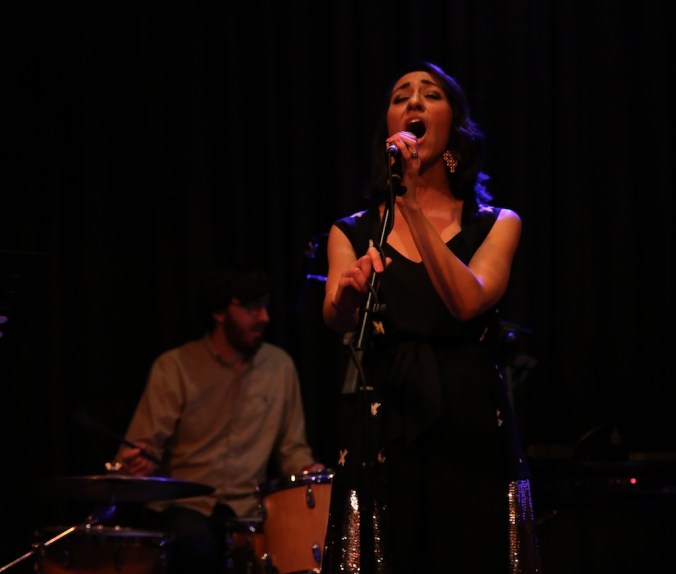 Looking to popular music for new material is not a recent phenomenon for Jazz vocalists. Ella tackled ‘A Tisket a Tasket’, Louis appropriated a multitude of pop songs. The great American songbook is a selection of one-time popular songs. It is what Jazz musicians do; explore, steal and transform. The more diverse the influences the richer the music. When she tackled the lovely Jazz standard ‘Detour Ahead’ (Ellis/Frigo) she owned it completely. That hint of smokey voice, that delicate phrasing; being adventurous while showing deep respect to the composition. It was hard not to think of Norah Jones; an artist who is traditional and modern in equal parts. I would also give her top marks for her set list; the numbers included ‘The look of love’ (Burt Bacharach), ‘God only knows’ (Brian Wilson), ‘I’ll be free’ (Donny Hathaway) and of course her own compositions and one of Kevin Field’s.
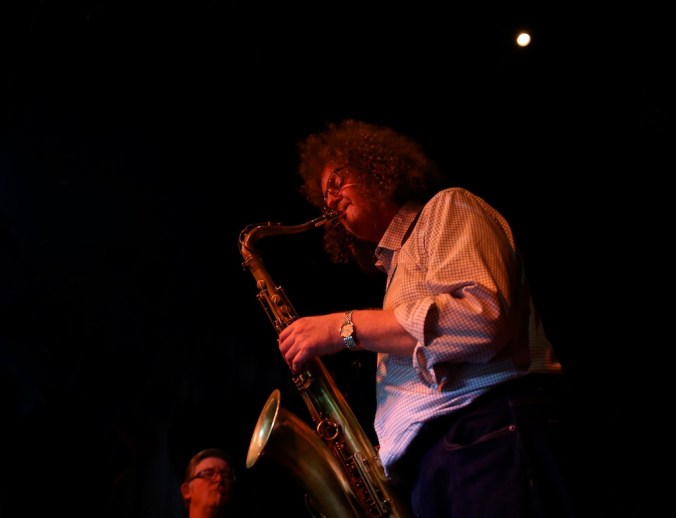 The popularity of ‘hardbop’ is enduring but we seldom hear it on the band stand. The probable reason is its very familiarity; if you play this music you will be judged against the source. There is also the evolutionary factor: improvised music strives to outlive its yesterdays. It is even less common for musicians to write new music in that idiom or to create a vibe that calls back the era. Such an enterprise invariably falls to experienced musicians; those with the wisdom to reverence the glories without it being merely slavish. Booth and Walters are especially well suited to that task. They have the chops, charts and the imagination and above all, they make things interesting. If you closed your eyes during this gig, you could easily imagine that you were listening to an undiscovered Blue Note album. It was warm, swinging and accessible.
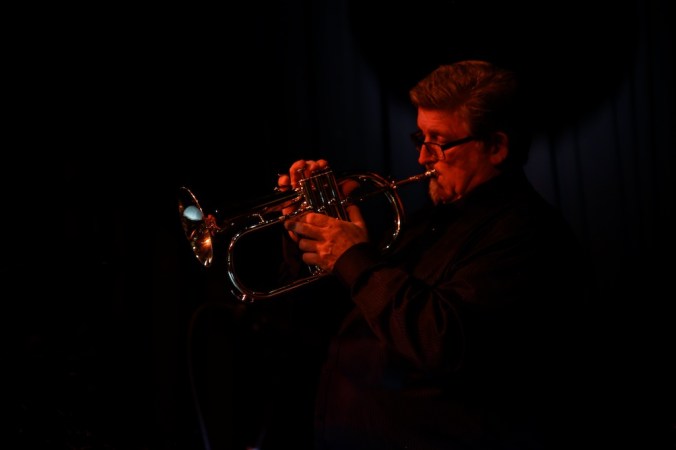 Booth and Walters are gifted composers and on Wednesday the pair reinforced their compositional reputations. Some of Booth’s tunes have appeared recently in orchestral charts. Walters’ tunes while heard less often are really memorable (‘as good as it gets’ stuck in my head a long time ago). These guys write and arrange well. Notable among Booth’s compositions were ‘Deblaak’, “A Kings Ransome’ and ‘On track’. From Walters; ‘Begin Again’, ‘Queenstown’ and ‘Wellesley Street Mission’. There was also a lovely version of the Metheney/Scofield ‘No Matter What’ from the ‘I Can See Your House From Here’ album. I have posted Booth’s ‘A Kings Ransom’ as a video clip, as it captures their vibe perfectly. Booth has such a lovely burnished tone – a sound production that no doubt comes with maturity and a lot of hard work.
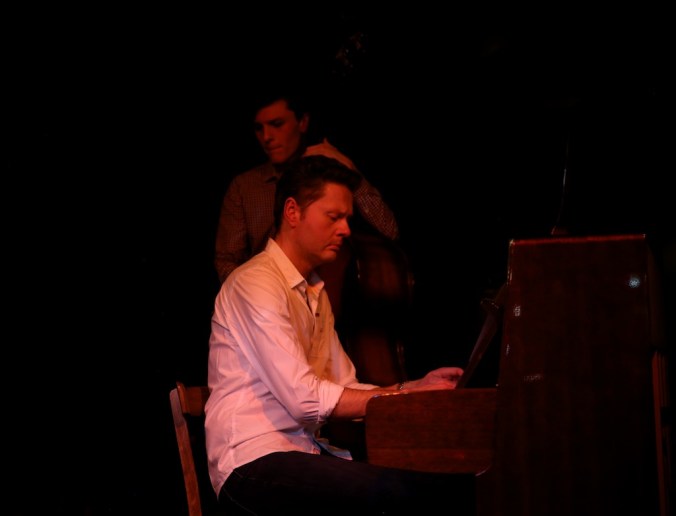 The last number was Walters ‘Wellesley Street Mission’ and I would have posted that, but my video battery ran out. This is a clear reference to the appalling homeless problem which blights our towns and cities. The bluesy sadness and the deep compassion just flowed out of Walters’ horn – capturing the issue and touching our innermost beings, challenging our better selves. I may be able to extract a cut of this and post it later – we’ll see!
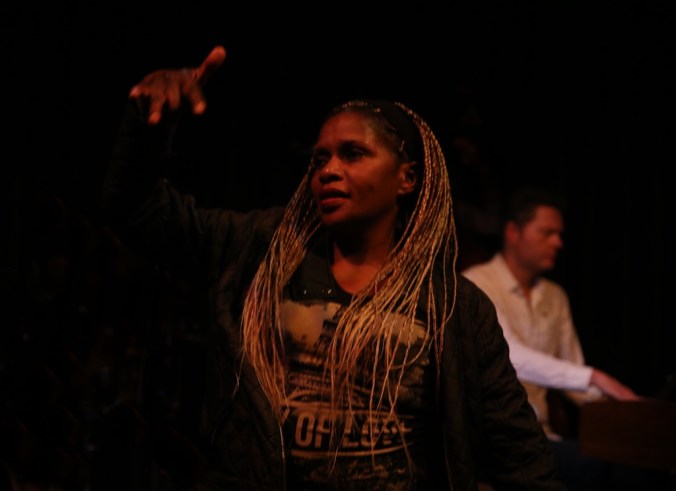 Lastly, there was that mysterious dancer, appearing from nowhere, drawing sustenance from the music until the street swallowed her again.
 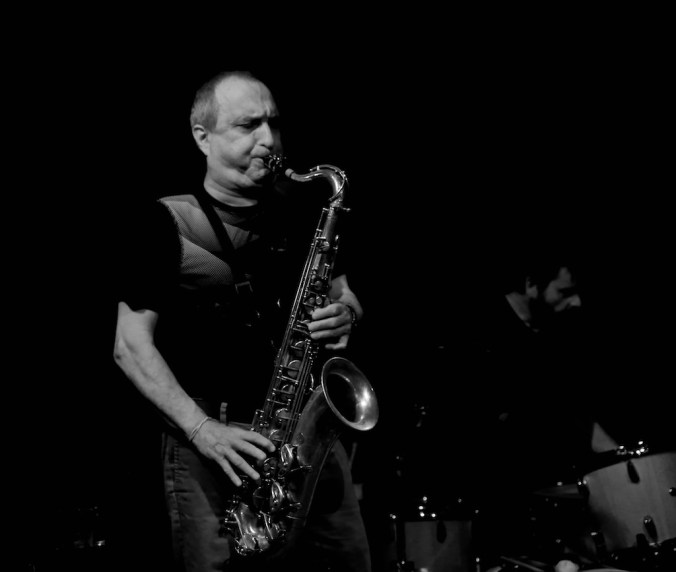 Roger Manins uncoupled the microphone and looked around the club. It was winter outside but you wouldn’t have known it. The windows were steamed up from the heat of a capacity crowd; all eyes were fixed on the stage and the stocky man holding the tenor saxophone. “You know how lucky you are …. right,” Manins asked the audience? A loud cheer went up accompanied by whistles and foot stomping. George Garzone was in town and no one was in any doubt.
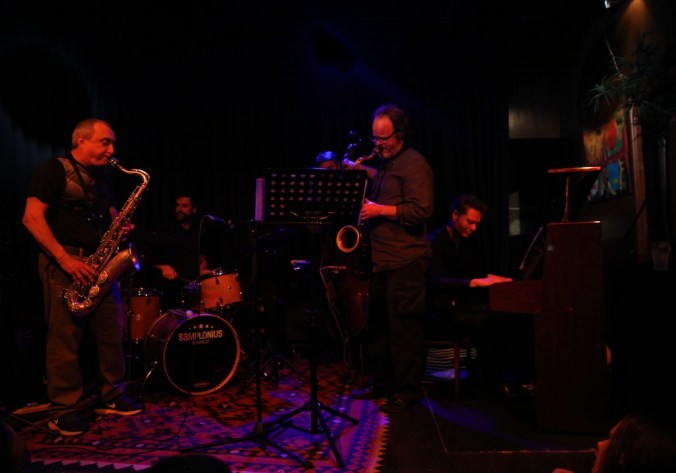 Most of the tunes were in long form and most were Garzone originals. All were perfect for the occasion. As you might expect, the Garzone tunes were springboards for deep improvisation; the heads, however, were memorable and so well-arranged that they stood out. I failed to catch all of the titles because the applause often drowned out the announcements. There was a catchy tune referencing Bourbon Street, A moving tribute to his friend Michael Brecker and a tune titled ‘The Mingus that I know’. They all had pithy stories attached. The two standards were Billy Eckstine’s ‘I want to talk about you’ and a wonderful earthy take on John Coltrane’s ‘Impressions’. I read somewhere that Garzone plays like he talks, in a Bostonian/Calabrian dialect. The cadences and rhythms of speech are part of who we are, it is, therefore, logical that they encompass how musicians express themselves and especially on a vocal instrument like the saxophone.
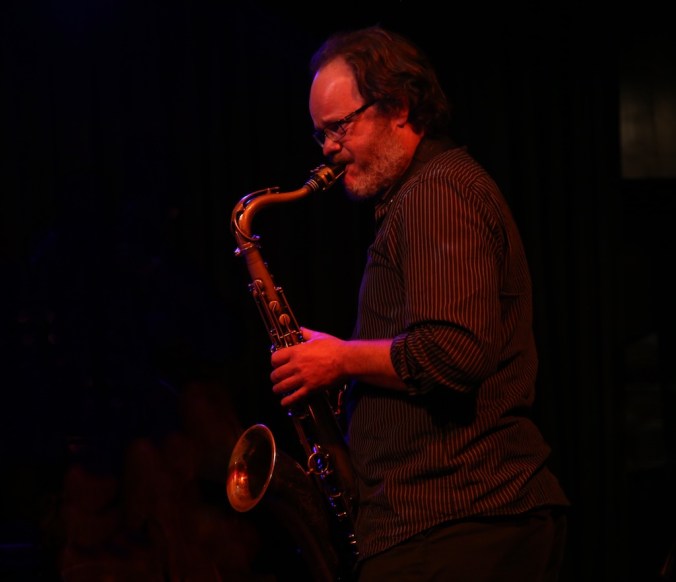 His pick up band were Kevin Field, Ron Samsom, Mostyn Cole and Roger Manins. Like every international who passes through, he heaped praise on the local musicians. Coming from Garzone this really counts. He and Manins go back a way and the synergies between them are evident (the Garzone influence is worldwide and Manins is no exception). Whether playing in unison or in counterpoint, they sounded right together – tenors who knew just how to compliment or when to keep clear. This was a very big sound and when trading fours they cajoled each other as friends might. The rhythm section was energised as well; Cole, Samsom and Field providing rhythmic and harmonic trickery. And at one point, ‘Hey great, I heard some Salsa in that solo’, said Garzone looking in Fields direction.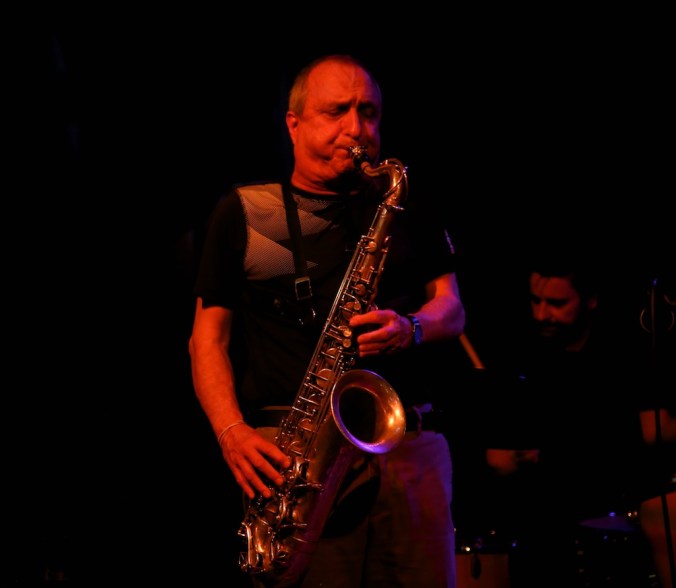
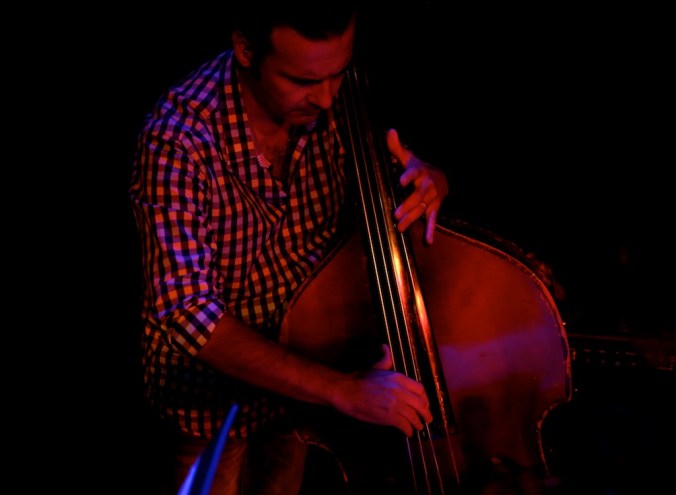 There have been two bass-player led groups at the CJC in as many months and both have been excellent. Last weeks featured group was a trio led by Rubim de Toledo: a Canadian from Alberta, of Brazilian origin and a well-established musician. Like many modern improvisers, his influences are diverse; that said his music fits squarely into the Jazz mainstream. The first thing to grab me was his big rounded tone, gifting the tunes with a richness and beauty that captivated from start to finish. While most bass sits deep within the mix, de Toledo’s voice spoke clearly; not by overcrowding his band-mates nor by punching through the others as an electric bassist might, but because every musical utterance sounded right. His melodicism and clarity of ideas were enhanced by devices which I found appealing; his occasional and appropriate use of vibrato at the end of a line, sometimes, rarely, he combined this with a slight bending of the note. He is definitely a successor to the Evans trio model; a bassist who communicates as an equal.
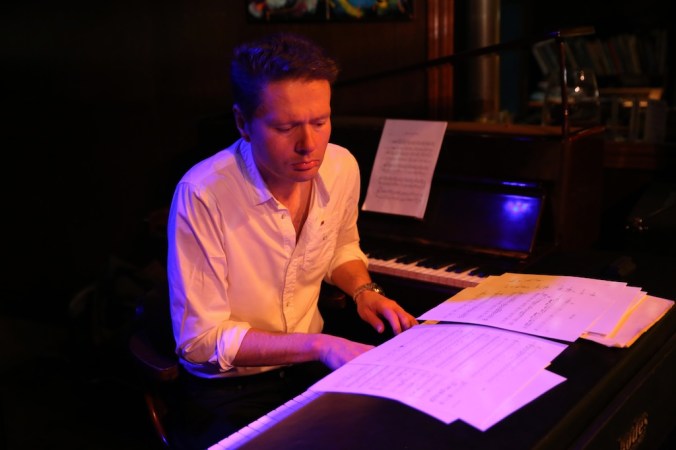 In a live setting and with unfamiliar sidemen, the best plan is to loosen the reigns. This he did and with Kevin Field on Rhodes and fellow Canadian and long time friend Ron Samsom on drums the gig gelled. Much of the gig showcased his compositions, some from his 2014 album ‘The Bridge”. The three standards he played were a killing version of Maiden Voyage (Herbie Hancock), Work Song (Nat Adderly) and a rendering of ‘Recordeme’ (Joe Henderson). His own compositions ranged from the thoughtful ‘Autumn Celeste’ to evocative panoramic tunes like ‘The Gap’ (about the Rockies) and ‘Red Eye’ (about a Brazilian train known locally as the train of death). The gig was a pleasure from start to finish and the enthusiastic audience response said it all.
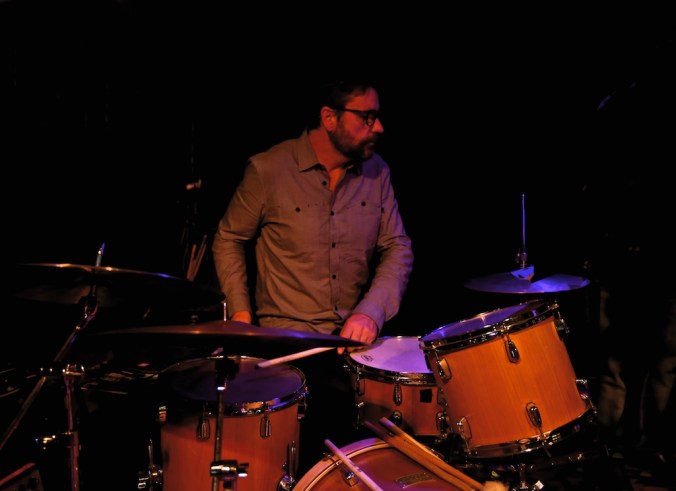 As I was leaving de Toledo handed me a copy of his recent album ‘The Bridge’ and it wasn’t until yesterday that I found time to play it. What a truly beautiful album this is; beautifully crafted arrangements and tunes which burn with a quiet intensity at any tempo. On ‘The Bridge’, he is surrounded by an ensemble of talented Albertans and a guest artist from the USA. The lineup of bass, trumpet, saxophone, trombone, keyboards, drums (and on track 8 a vocal) is well conceived – balancing airiness with textural richness. The musicianship throughout is noteworthy; particularly Sean Jones on trumpet, a well respected musician from the USA: the keyboardist and everyone making this album memorable. As you would expect with an ensemble and with an album as skillfully recorded as this, de Toledo is less dominant. Here he lets his charts tell the story and they certainly do.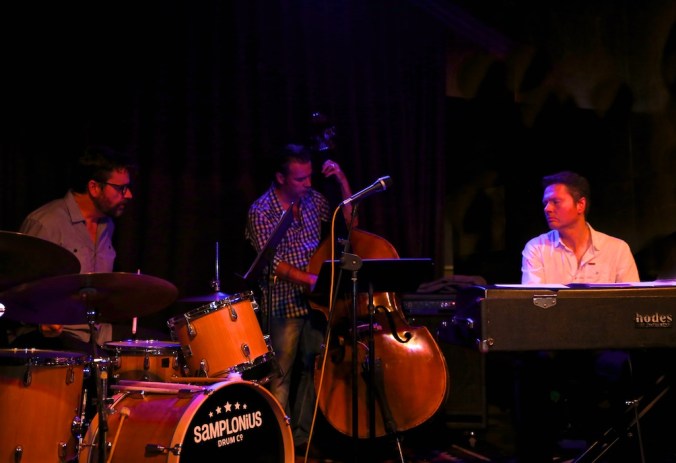
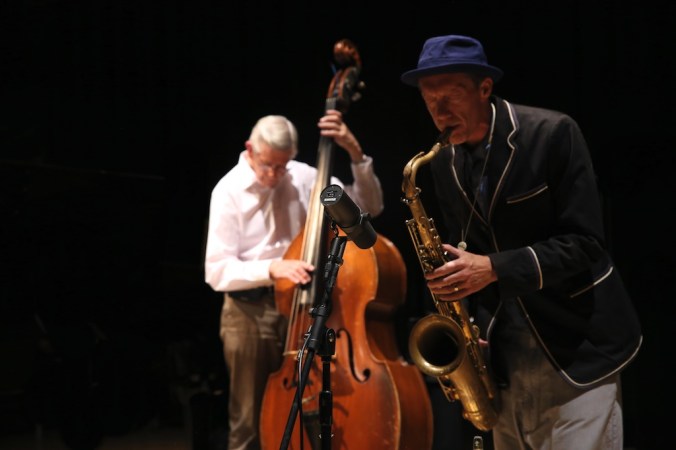 Long after the ANZAC commemorations had finished, when The World Masters Games contestants were either celebrating their success or limping toward the nearest A&E, a largely unheralded gig took place at the KMC in Shortland Street. It was fitting, that on a day of remembrance, the faithful old war horses, the standards, were honoured. It is surprisingly rare to see a standards only instrumental gig these days. The event was curated by Kevin Haines and what a treat it was. The definition of what makes a Jazz standard is a moveable feast, but the safest definition is that the tunes are, or were, from the standard repertoire. Most, but not all standards come from the Great American Songbook, e.g. Irving Berlin, Cole Porter, Victor Young, Duke Ellington Ira & George Gershwin etc. Many of them, and often the best, from failed musicals. Other Jazz standards come from the pen of gifted composers like Sonny Rollins.
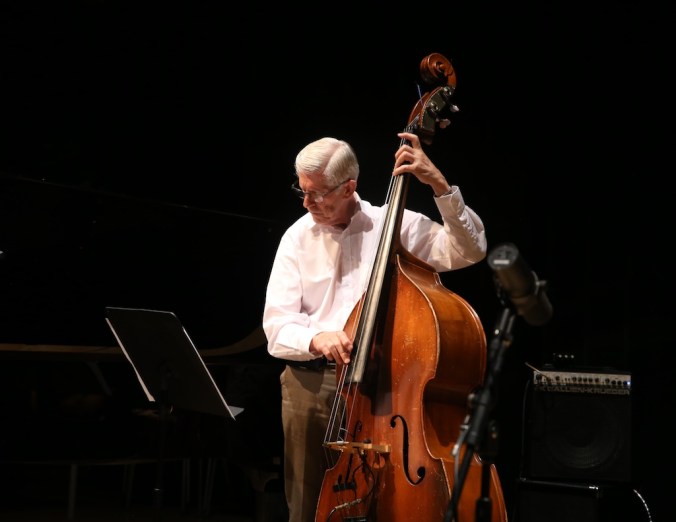 When introducing the band, Haines stated,” The ability to play the standards well, is the benchmark against which Jazz musicians are ultimately judged”. Assembled on the bandstand were some of New Zealand’s finest musicians. Kevin Haines (bass), Nathan Haines (tenor & soprano saxophones, vocal), Kevin Field (piano), Dixon Nacey (guitar), Ron Samsom (drums). The band gave it everything and the exchanges were beautiful – Nacey and Field conjuring up the Evans/Hall duos, Nathan Haines making his tenor sound like the Desmond Alto. The night was well attended and it will certainly be remembered.


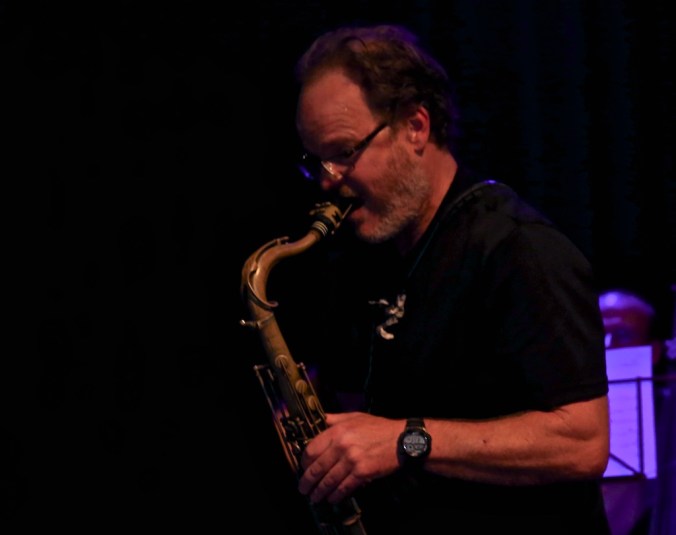 There is never a guarantee that two good acts blended into one will work. This one did. DOG and the various iterations of the Peter Koopman trio are each in their way self-contained; exuding a confidence born out of time spent with familiar musicians. Bands that play together over long periods anticipate and react instinctively. Stepping outside of that circle can be a risk, but that is a large part of what improvised music is about. DOG are a tight unit with quick-fire lines and nimble moves. By adding a guitar, DOG risked crowding their musical space; with Koopman, this did not happen. He is an aware and thoughtful musician. The pairing aided by some well-written charts, a pinch of crazy and good humour. The result was a looser sound, but the joy and respect provided all the glue it needed for the gig to work well.
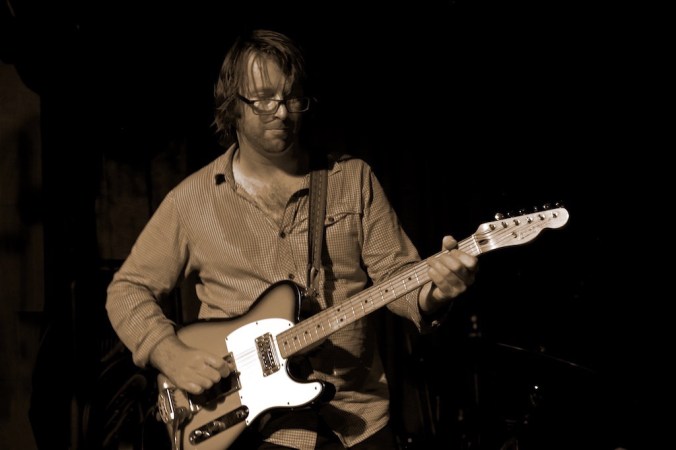
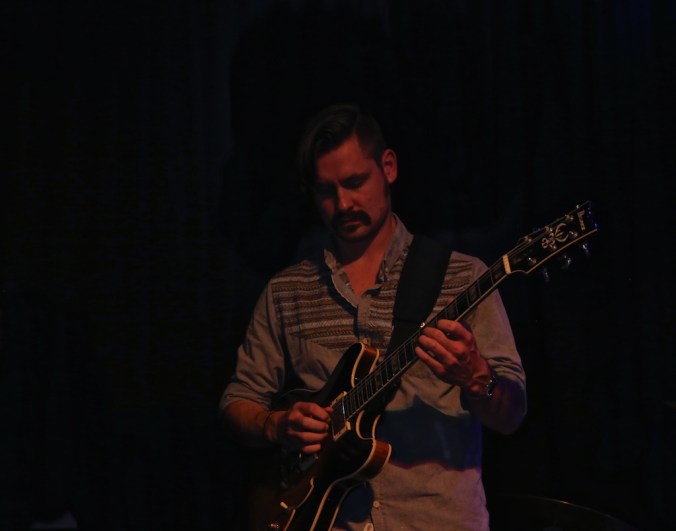 The unison lines and exchanges between guitar, tenor saxophone and Rhodes were just lovely. Kevin Field is always on form and the Rhodes with its chiming clarity was the perfect foil for Koopman and Manins. Field is the complete musician, tasteful, original and with impeccable time feel; Koopman’s guitar benefitting from the well-voiced chords, gently and sparsely comping beneath. Manins also gave a nice solo, and as we have come to expect, he reached for a place beyond the known world. Olivier Holland had a slightly different approach to Koopman’s regular bassist Alduca. Both approaches worked well on Judas Boogie. The interplay between Holland and Samsom was also instructive. As is often the case with good Jazz; the complicated was made to sound easy.
 Around Christmas, I discovered that I could not upload video to ‘YouTube’. I spent a few weeks trying to figure out what was causing the problem and then I made a fatal error – I consulted grown-up experts and that only delayed the problem. I should have asked a 12-year-old because none of the experts had the faintest idea what was occurring. After three months I finally nutted it out for myself, old as I am. FYI – when you upgrade your operating system, the default setting on power-saver puts the machine to sleep half an hour after the last keystroke.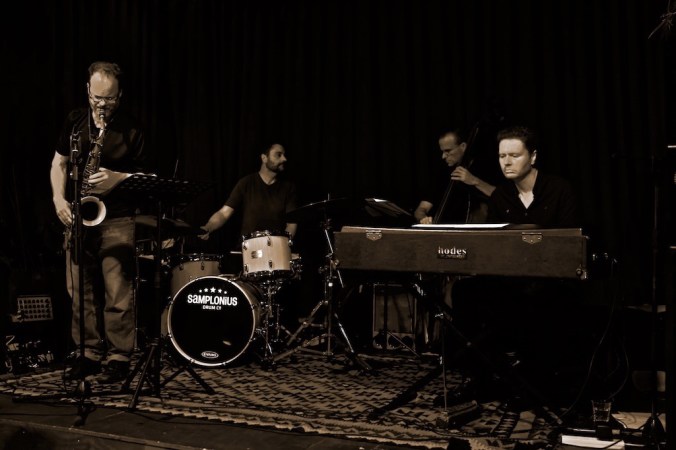
 Australia produces some distinctive, muscular tenor players and Andy Sugg is an example of that phenomena. The first thing that grabs a listener is an awareness of the raw power that fills a room when he blows. I am not just referring to volume or his fat rounded sound, but to the way he communicates an innate sense of musical purpose. This comes across as something beyond mere confidence. Deftly progressing through each tune; no over thinking, just a flow of connected ideas – and all carried on that delicious sound.
 It is always tempting to look for comparisons or patterns, it is what listeners do (and probably what many players wish they didn’t do). It is part of how music works, our subconscious looking for a framework, for some reference point – a launching pad, a place of departure where the known departs for the unknown. In Sugg’s playing you could could hear them all. Name a great tenor player and that player was in there, listen harder and suddenly they were gone. Perhaps this is the hall mark of truly innovative players; they channel the essence of others and then dismiss them just as easily.
 One of the joys of improvised music is the eternal conflict between the tangible and the intangible. You hear a phrase or a voicing that is maddeningly familiar, you feel a tingle of anticipation, you are on the verge of naming it – but before it takes form it is gone; dissolved into the intangible. Listening to Sugg is to catch a piece of Brecker, but listening to Sugg is also to hear an original. Tradition and innovation co-existing but ultimately spoken in his own dialect.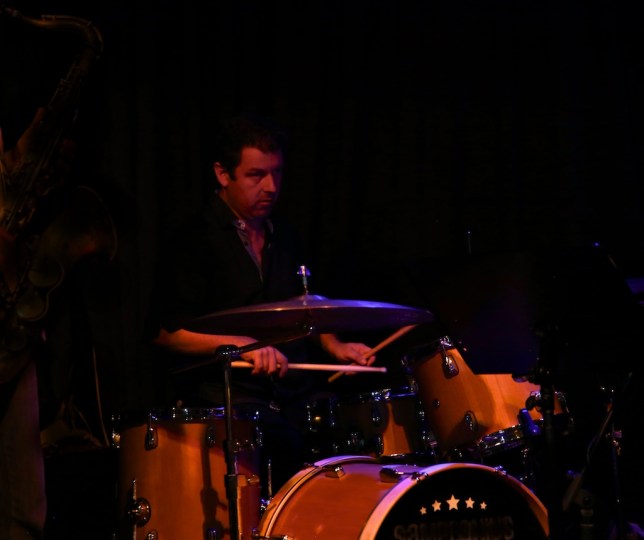
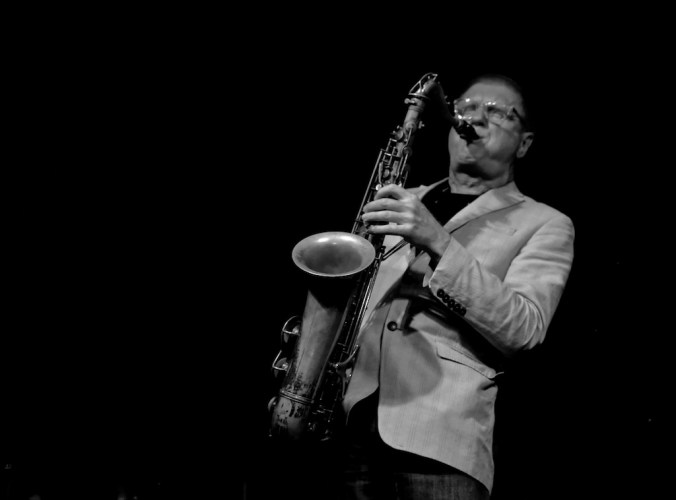
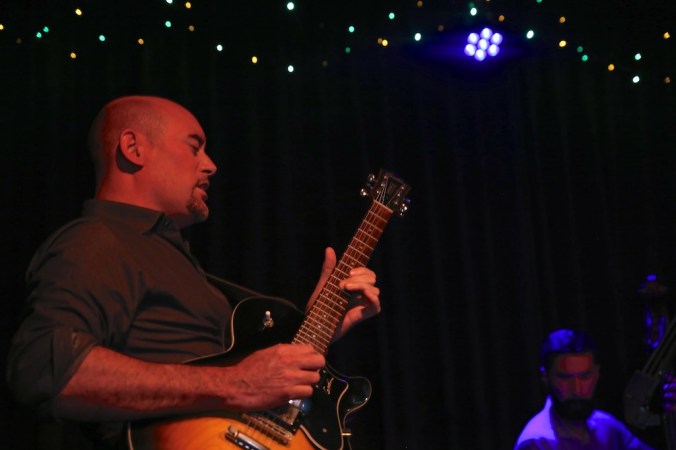
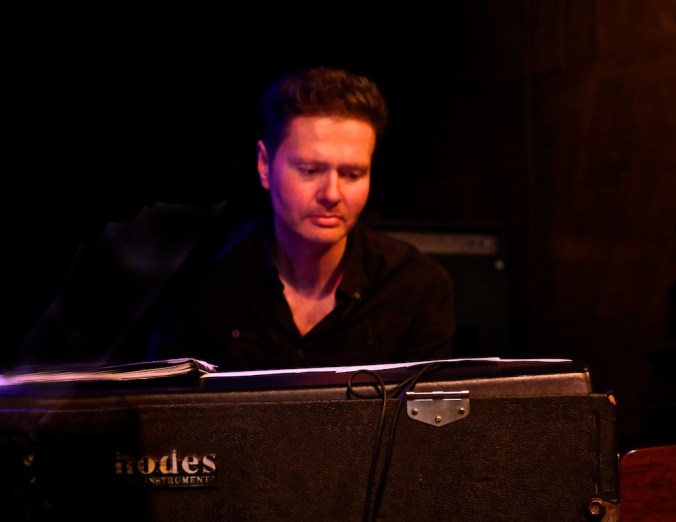 It was appropriate that Warners ‘A List’ recording artist Kevin Field brought with him local A listers Dixon Nacey, Cam McArthur, Roger Manins and Stephen Thomas. Field has a substantial following in New Zealand and his innovative music attracts musicians and fans alike. Since his last ‘A List’ gig he’d clearly been busy – writing new material and rendering the familiar into something altogether different. Zoot Sims once quipped, “Jazz is a music where you never play the same thing once’. Field certainly exemplifies that tongue in cheek descriptor. Commentators and visiting musicians often remark on his innovative approach to harmony and rhythm. It is as if he has invented a new musical language out of the old. In truth, there are strong elements of related genres like R & B, latin and even disco funk there; under his fingers they become unique vehicles for improvisation.
 Unlike Janet Jackson, Field never suffers from wardrobe malfunctions. He does however occasionally suffer from equipment malfunctions. I mention it only because his Rhodes had failed him during a previous weeks CJC gig. No one listening comprehended that he had lost some of the middle-register. No one noticed because he re-voiced mid improvisation to work around the problem. I have heard of old timers doing this but seldom modern pianists. Field can effortlessly jump over obstacles and find a sweet spot.
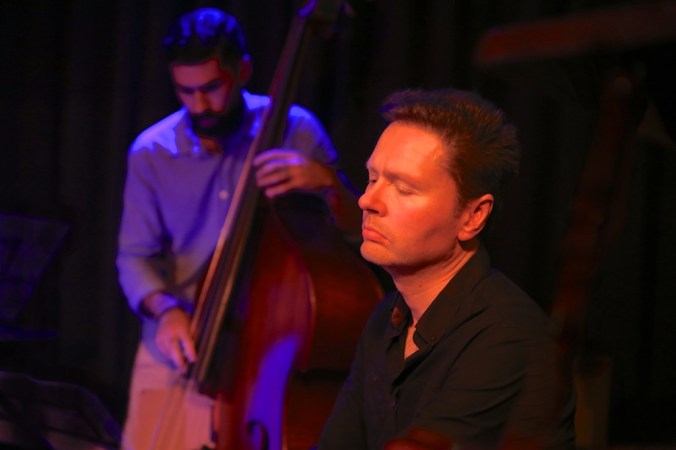 There were old favourites reworked like ‘Game Changer’, ‘Good Friday’ and ‘Left Field’, but the rest were recent compositions. Among the newer numbers were ‘Rain check’ and ‘Acme Music Corporation’ (the latter featuring Manins on soprano – a rare event). Another new number ‘Unconditional love’ was introduced by Field with the following story. ‘There are many types of love in the world and today an unusual example came up in my twitter feed, – ‘Trumps deportation threats make my in-laws fearful. They live at 2b/34 Main St, Phoenix. My Mother in law arrives home from work at 4:30’ “.
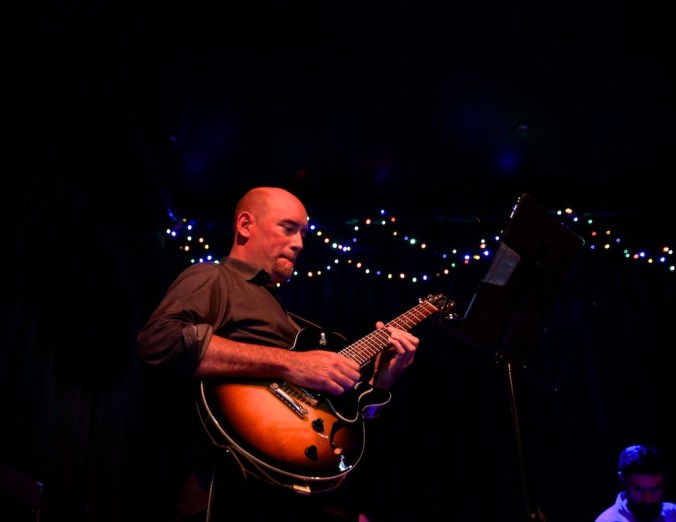 The last tune ‘Home Schooled’ was the best possible number to finish the evening with. Far from being a wind-down number, the musicians reached inside themselves, each giving magnificent performances. Manins back for a second number was on tenor, and he sounded happy to be back on his favourite horn. Nacey was at his best, making his guitar soar, as if he had found an ancient alchemy, a way to condense sunlight into music; the epitome of sonic clarity, invention and virtuosity. McArthur and Thomas each in step and reacting to the challenges. With material like this good musicians can achieve wonders.
  After years traveling the wider Jazz world, Jasmine Lovell-Smith came home; launching her latest album ‘Yellow Red Blue’ at the CJC last Wednesday. The Album features a quintet ‘Towering Poppies’; a group she formed in New York over five years ago. Her New Zealand gig featured locals Roger Manins, Kevin Field, Eamon Edmundson-Wells and Chris O’Connor. After her New York release she garnered a number of favourable reviews and no wonder. This is a lovely album, her compositions and arrangements outstanding, the recording immaculate.
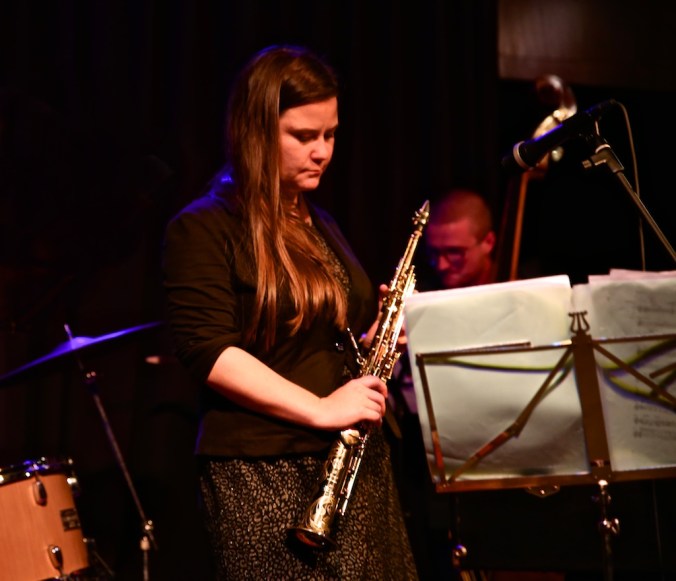 Her soprano sound is warm and enveloping, the cleaner tone of her straight horn nicely counterbalancing with the woody earthiness of the bass clarinet, the well constructed charts coming into their own when these delightful interactions occur. The rich textures are never overwhelming, even when strings enter the mix. This is chamber Jazz at it’s best, engaging the listener without resorting to cliché.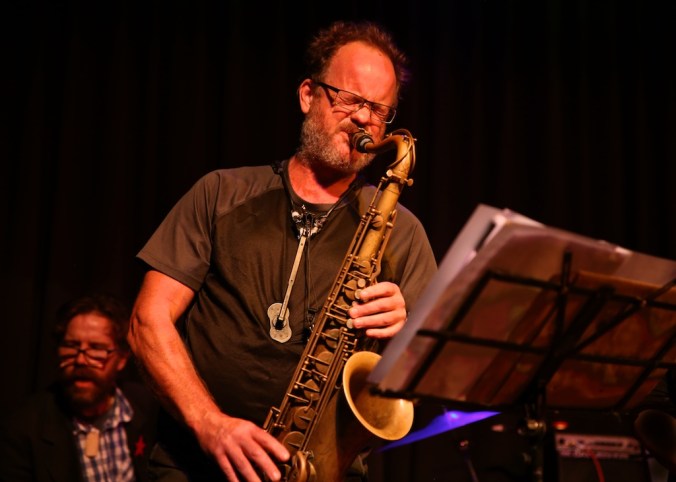

 As another DOG night approached I could feel the excitement in my bones. I had followed their tracks from the groups inception, enjoying every moment along the trail. I was at their first gig in February 2013 and it amazed me then just how rounded and complete they were. If you search for the ‘(Dr) Dog’ post in this blog site you will find a video from that gig. Man that blew me away. I just couldn’t get the tunes and the excitement of that night out of my head. Later I used a cut ‘Dideldideldei’ (Holland) as the signature for my YouTube site. I also sent the cut to a Jazz DJ friend Eddie B in LA and he played it on his show. Unsurprisingly people phoned in immediately wanting to know, “who were those amazing cats”? Before long the group decided to record – everyone who heard them wanted more. DOG seemed to encapsulate everything that was good and exciting about the local scene – DOG was, and still is, something special.
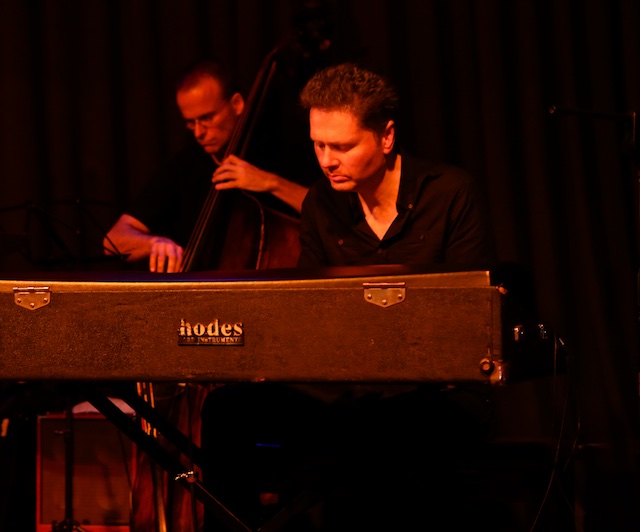 There are so many aspects to this group that it is hard enumerate them all; of course there are the outrageous dog jokes, the brilliant compositions from each band member, the powerful stage presence, but it is something else that excites me the most. This is a band that could gig anywhere in the world and we could hold our heads up, knowing that they would do us proud, tell our story. I felt excited when they were nominated for ‘album of the year’ and as pleased as a dog with two tails when they won the ‘Jazz Tui’. Now it is rumoured that a new DOG album is on the way. I can’t wait.
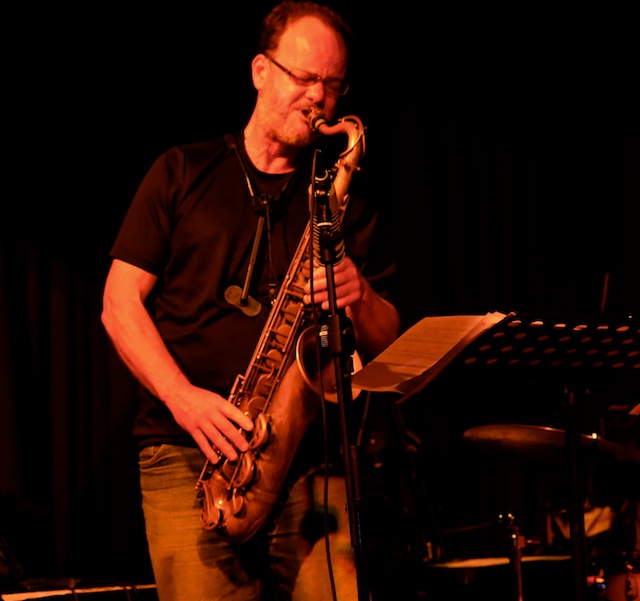 Throughout the sets were a scattering of familiar DOG compositions – plus a few new ones (like ‘Merde’ by Samsom and Hollands ‘Shceibenwischer’). All of the tunes sounded fresh and somehow different, perhaps because Kevin Field was playing a Rhodes and not a piano. I love the Rhodes in all its antique glory and in Field’s hands it is especially wonderful. It cut through the room like crystal. Hearing the familiar tunes like ‘Peter the Magnificent’ (Manins), ‘Icebreaker’ (Field) and ‘Sounds like Orange’ was like meeting old friends. The last track of the evening was the familiar ‘Dideldideldei'(Holland). DOG ripped into it with the usual abandon, leaving us shaking our heads in disbelief and grinning like Cheshire cats.
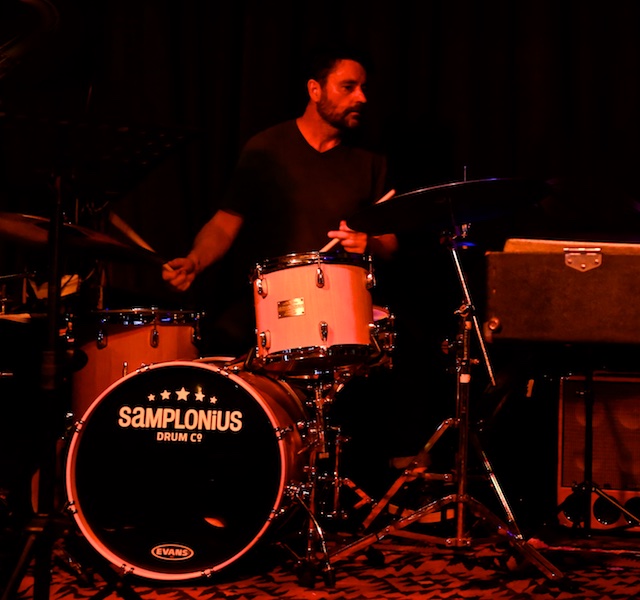 The Thirsty Dog works well as a venue, having good acoustics, good sight-lines and a sizeable bandstand. They also serve snack food and they are most welcoming. The first DOG album is available at
 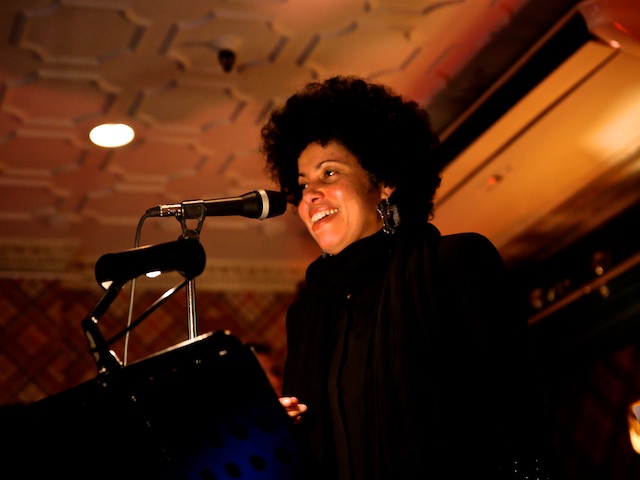 Last Wednesday saw the Venezuelan-born vocalist Jennifer Zea performing at the CJC. Her appearance was long overdue, the audience enthusiastic in anticipation of spicy South American Rhythms and the warm tones of the Spanish language in song form. When you look at where Venezuela sits on the map, you learn a lot about its music. Located in the northeast of South America, bordered by the Caribbean and by Brazil, positioned on a unique musical axis. Music blithely ignores the artificial barriers imposed by cartographers and politicians. Even Trump’s insulting wall could never be built high enough to stem musical cross-pollination. Music goes where people go, and remains as an echo long after they have moved on. Jennifer Zea is an embodiment of her country’s music; folk traditions, newer forms (Jaropo), Jazz, Soul, Bossa influences from Brazil and a pinch of Mambo, Salsa or Merengue.
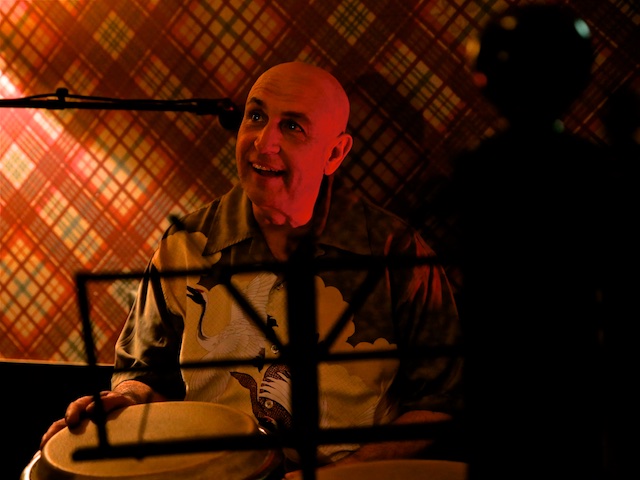 The Caribbean region is the prime example of musical cross-pollination; rhythms and melodies, vocal forms and hybrid harmonization, a constant evolution into new and vibrant forms while updating and preserving the discrete pockets of older folk music styles. A weighty tome titled ‘Music and the Latin American Culture – Regional Traditions’ makes two observations; the music of the Venezuelan region is mostly hot or vibrant (see the definition of Salsa) and there is a strong underlying tradition of shamanism (manifest in musical form). The hypnotic rhythms and chants remain largely intact according to Schecter. With percussionist, Miguel Fuentes backing her, Zea conveyed the compellingly hypnotic soulful quality of her traditional music to good effect.
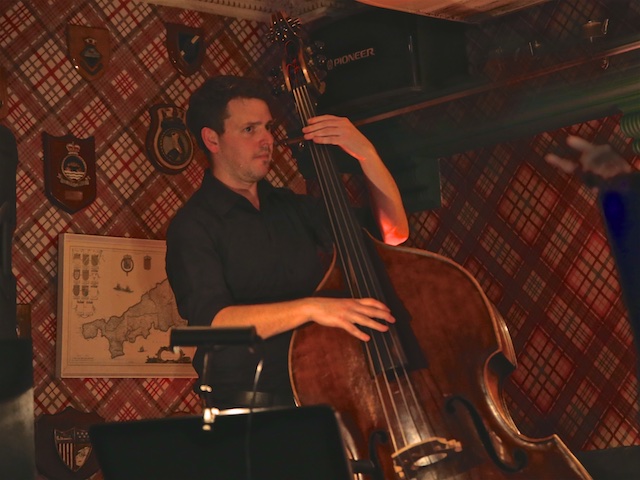
  Fuentes was born in the USA but grew up in Puerto Rico. These days like Zea, he lives in Auckland. Music like this demands high-quality authentic latin percussion and that’s exactly what happened. Traps drums were not needed here. Regular Zea accompanist, Jazz Pianist Kevin Field was also in the lineup. Field plays in many contexts and his accompanist credentials are second to none. He has regularly worked with Zea and (like Fuentes) most notably on her lovely 2012 release ‘The Latin Soul’. If you have a love of Cubano or Caribean style music, grab a copy of this album. Even on straight-ahead gigs, I have heard Field sneak in tasty clave rhythms. If you want to hear cross-rhythms at their best – skillfully woven by Field and Fuentes, it is on this album. An added incentive are the compositions, mostly by Field and Zea (and Jonathan Crayford). On upright bass for this gig was Mostyn Cole, an experienced bassist now residing in the Auckland region.
 The gig featured some Zea compositions, three standards and to my delight some authentic Bossa. The Bossa tunes were mostly by the Brazilian genius Tom Jobim and sung in Portuguese (which is not her native language). Although Portuguese is the most commonly spoken language in Latin America, it is only the main spoken language of one country, Brazil. To learn Bossa she spent time with a teacher in order to understand the nuances and deep meanings. While respecting the Bossa song form she had the confidence to bring the music closer to her own Venezuelan musical traditions. Even her intonation was redolent of her region, unmistakably Hispanic South American.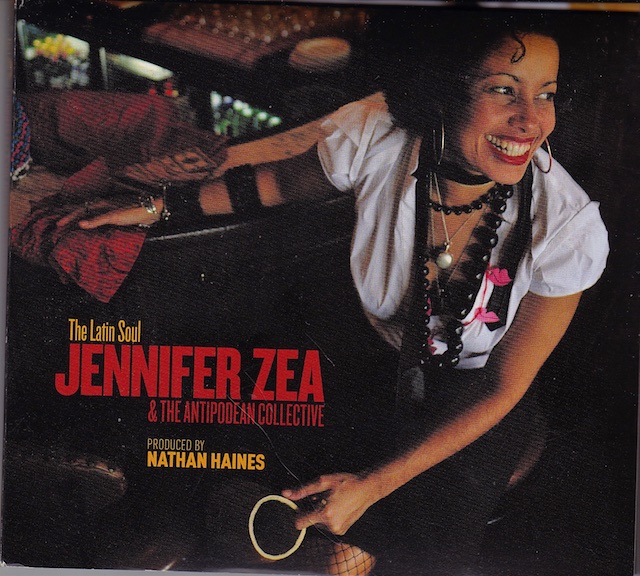
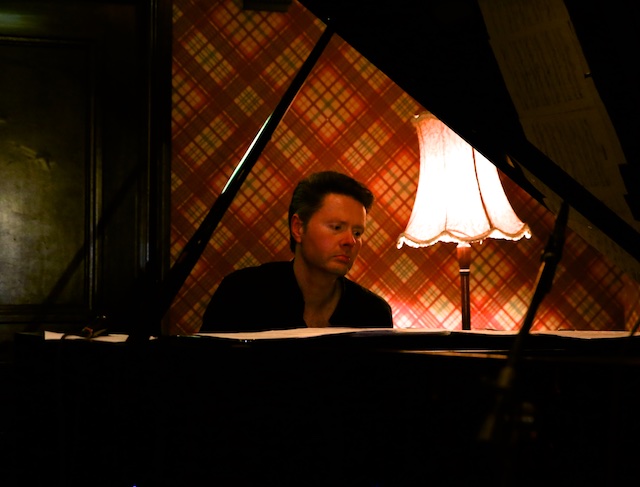 Kevin Field has for many years been regarded as a phenomenon on the New Zealand Jazz scene. A gifted pianist and composer whose approach to composition and harmony is strikingly original. When you listen to many pianists you can hear their influences, discern the pathways that led them to where they are. With Field, those influences are less obvious. I suspect that this independence, originality, makes it easier for him to strike out in any direction of his choosing. On his ‘Field of Vision’ album, he moved into uncrowded space, one occupied by very few Jazz pianists. It was Jazz without compromise but utilising grooves, rhythms, and melodies of other genres. The music contained distinct echoes of the disco/Jazz/funk era, crafting it carefully and forging a new post-millennial sound.
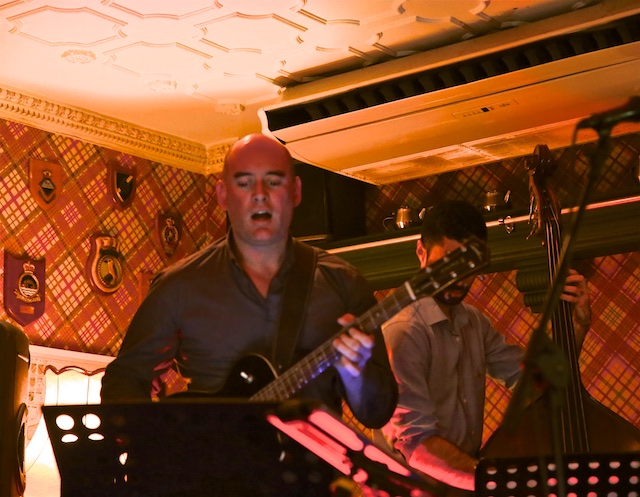 The tunes were all memorable and within a few listenings, you could hum the themes. This is not so common in modern Jazz and less so with music (like Fields) which retains its Jazz complexity. In Fields case, the clean melodic hooks do not come at the expense of harmonic invention. That is a tricky balancing act and one he achieves convincingly. His co-leadership of ‘DOG’ took him in a different direction again, but the same deftly crafted grooves astounded us. His recent album ‘The A-List’, was a further excursion into the disco/Jazz/funk realm. It is slightly tongue in cheek while still challenging the listener to think outside the square. Artists like this take the music forward, it is up to us to catch up.
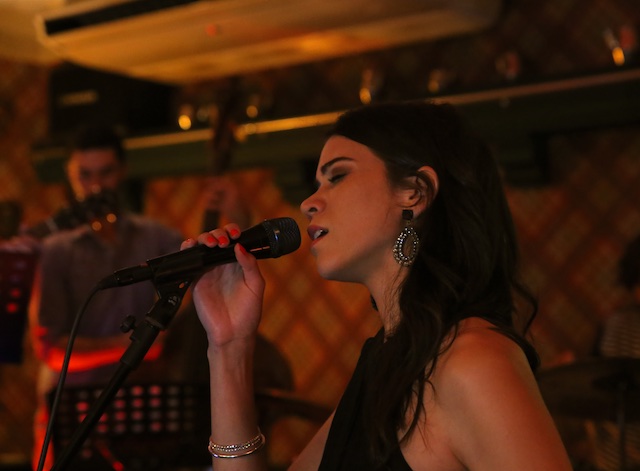 They played at the Wellington Jazz festival recently and for many Wellingtonians, this was their first exposure to the group. I saw that show and I immediately noticed how the familiar tunes had subtly changed. ‘Perfect Disco’ with its energised danceable funk momentum was recast as a duo piece. Field and vocalist Chaperon wowed them with that number. We also heard this duo version last week. Other familiar tunes had developed into profoundly interactive exchanges. The sort that can only occur between highly attuned musicians. This is where the guitar mastery and the deep listening of Nacey came into its own. His Godin guitar soaring with stunning clarity while Field reacted in kind, urging them further out with each challenge.
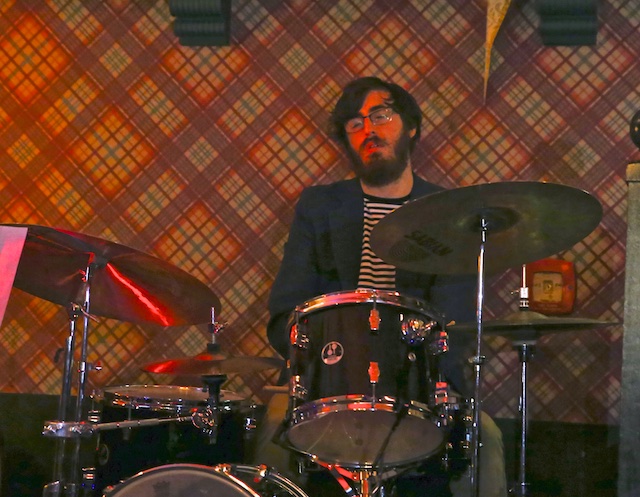 Again we see Thomas and McArthur doing what they do best. Working hard and rising to the challenge. Thomas laying down the tricky rhythms and while McArthur runs his bass lines. While pleasant to the ear, there is not doubt at all that these compositions required skill and concentration. It is on gigs like this that the musicians familiarity with the material and each other pays dividends. It was also nice to hear Chaperon on some new and old material. She is a real crowd pleaser – she looks great on stage and sings up a storm.
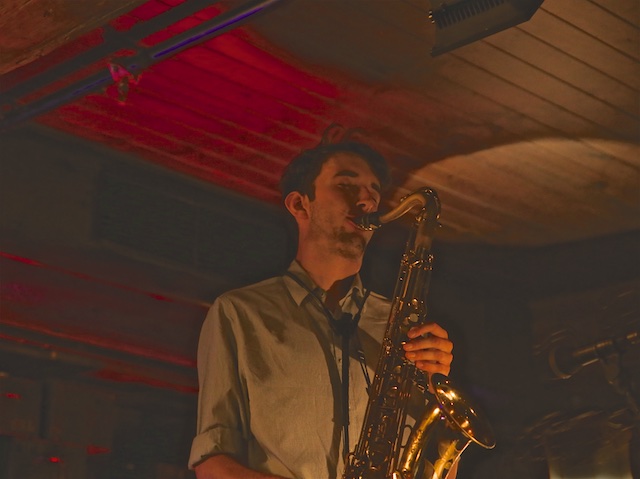 These events focus on emerging Improvising artists and allow them to gain wider exposure in front of a discriminating audience. They generally occur around three or four times a year. Some of those featured in the Emerging Artists Series are recent graduates, others are still pursuing their studies. In this case, we had two horn players from out of town; Christchurch and Wellington respectively. Their horns were different, and their approaches to the sets different, but both approached the gig with the confidence of seasoned performers. Such confidence translates well on the bandstand and it informs an audience that the musician means business. Artists often remark that playing in a small Jazz club like the CJC is a unique experience. It’s not like a noisy bar, where people often ignore you, and it’s more intimate than a concert hall where an audience gives limited feedback. Club audiences listen intensely, they react boisterously at the end of a good solo and they call in encouragement when a phrase resonates. Mostly they listen in silence and but they listen actively.
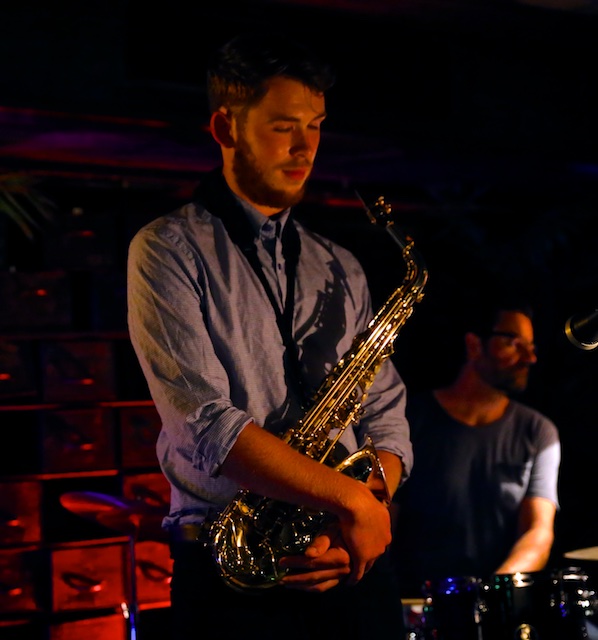 Jimmy Rainey, a tenor player from Christchurch played the first set. He is a graduate of the Jazz School in Christchurch, now furthering his Jazz studies at the Auckland University Jazz School. In Christchurch, he’s involved with a number of groups such as the Symposium Jazz Orchestra (many will recall that orchestra on Glen Wagstaff’s album), and the earthy ‘Treme’ styled Justice Brass Band. On Wednesday, he had a premier Auckland Rhythm Section at his disposal, Kevin Field, Cameron McArthur and Ron Samsom. Most of the compositions were Rainey’s and they showed a developing maturity. His sound was interesting, especially on the down-tempo numbers, having that downtown late-night feel. He is in Auckland for a while and I am certain that we see more of him. His father is well-known on the scene but he is earning his own place in the light. With a Jazz-famous name like Rainey, he has a head start.
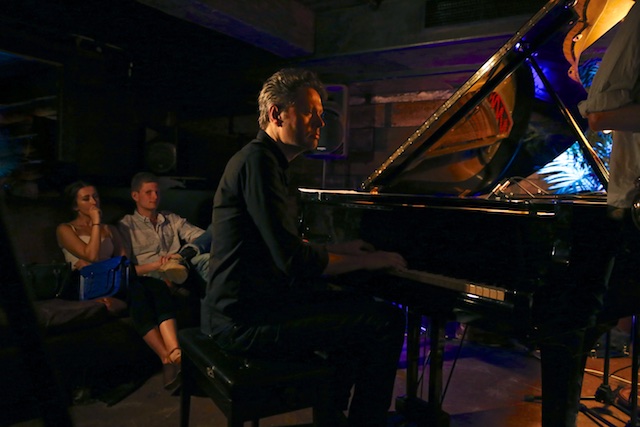 Bryn van Vliet has visited the club before as part of the boisterous Wellington Mingus Ensemble. In that context, I have seen him play in Auckland and Wellington, but never as a leader. He is also a member of the Roger Fox Big Band and a graduate from the Wellington Jazz School. While van Vliet often doubles on tenor, he played alto for this gig. What immediately caught my attention was his clean tone. A compelling tonal quality that quickly drew you in. His playing has cut-through in ways that Paul Desmond’s did, but for all that it was a modern sound. Vliet is originally from the far North but his Wellington credentials will no doubt anchor him there. Like Rainey, he brought many of his own compositions to the bandstand and the same rhythm section backed both players. For the last number, a standard, they were on the bandstand together.
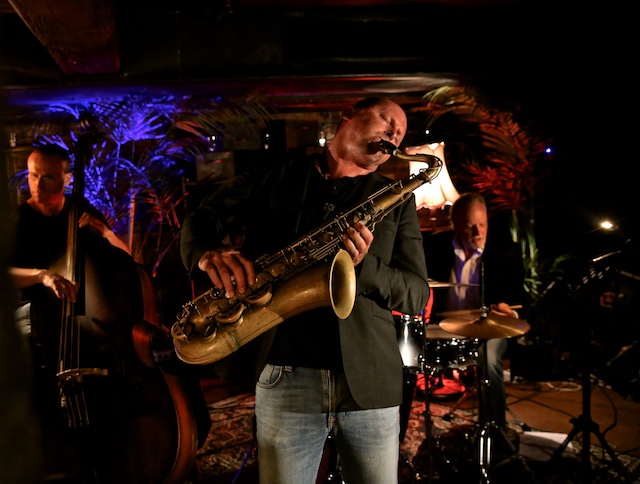 When the word gets about that a Jamie Oehlers gig is imminent, excitement mounts. Having turned people away last year, due to a capacity audience, the CJC offered two sessions this time. As expected, both were well attended. Oehlers is highly regarded in the Jazz world and it is not surprising. His astonishing mastery of the tenor saxophone is central to his appeal, but it is more than that. Every note he plays sounds authentic as if no other note could ever replace it, and all conveying a sense of musical humanism.
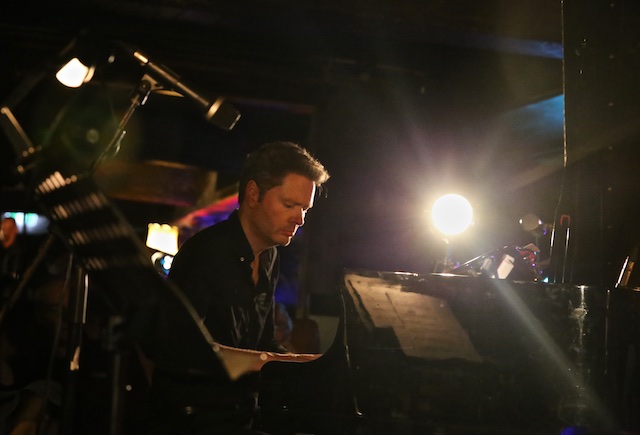 Oehlers has a new album out titled ‘The burden of memory‘ and we heard many of the pieces as the sets unfolded. Accompanying him on the album is a dream rhythm section: Paul Grabowsky on piano, Reuben Rogers on bass and Eric Harland on drums. Each a heavyweight and living up to their formidable reputations. For the Auckland gig, there was Kevin Field on piano, Olivier Holland on bass and Frank Gibson Jr on drums. Jumping in where Grabowsky, Rogers, and Harland had gone was no doubt daunting but they pulled it off in style. All played exceptionally well, but Gibson was a standout. The exchanges between him and Oehlers memorable. These men have history and the old conversations were clearly rekindled on the bandstand. Roger Manins joined Oehlers for the last number of each set and the two dueled as only they can. Weaving skillfully around each other and sounding like two halves of a whole; grinning like Cheshire cats.
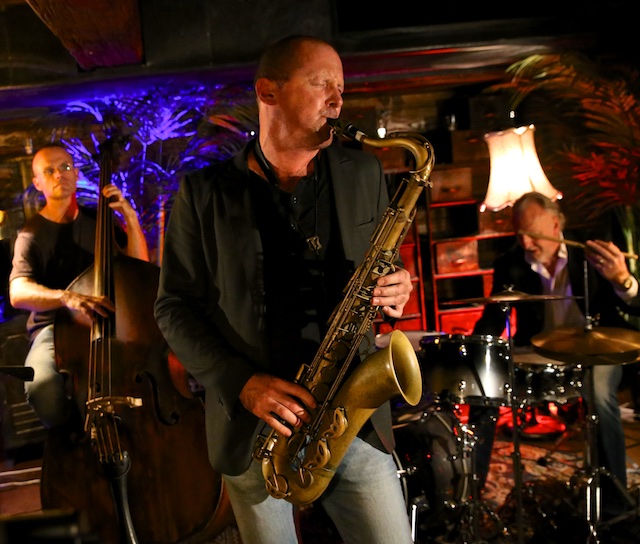 The album title and the song titles speak clearly of the musicians thought processes. He talks of his motivations and his horn takes us there. The burden of memory is a phrase he heard while listening to talkback radio and it resonated with him. He thinks deeply, examines the world about him and this communicates throughout the album. The second track ‘Armistice’ is a good example, possessing a melancholic beauty, and while it throws up the obvious images of a war ending, it also speaks of families and the tentative steps towards new possibilities.
 2015 was an amazing year for the CJC (Creative Jazz Club) and just when we thought the gigs couldn’t get any better this gig happened. It was an unexpected bonus, appearing out of nowhere. During the break of the CJC’s penultimate gig, Roger informed us that an extra gig would occur just two days before Christmas. Matt Penman was in town and he would appear with Kevin Field, Dixon Nacey and Steve Thomas. A buzz of excitement ran through the room and within a few days the gig was booked out. A second gig was quickly announced and that sold out as well.
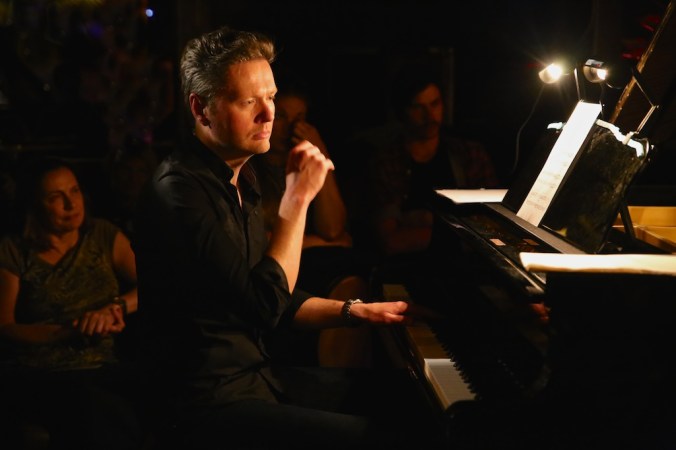 Fittingly the gig opened with ‘Two Steps’ (Penman) which is from the second James Farm album. Everything about the number is compelling and it oozes a post millennial Americana vibe – close to that espoused by artists like Brad Mehldau. James Farm are an extraordinary group co-led by Joshua Redman, Aaron Parks, Matt Penman & Eric Harland. A super-group where everyone is a gifted writer and virtuosic player. This is the pinnacle of modern American Jazz and we were lucky enough to get an up close taste of it. A warm glow swiftly enveloped us and from the first pull on the bass strings and we sensed on mass that this a different type of bass playing; supremely authoritative, melodic and with more momentum than a downhill freight train. We were especially fascinated to hear that Split Enz inspired him to write this tune. We heard other James Farm compositions – the moody ‘Juries Out’ (Penman) and Otherwise (Aaron Parks). Delightful Penman originals dominated the rest of the set (with the exception of a haunting Jewish folk song).
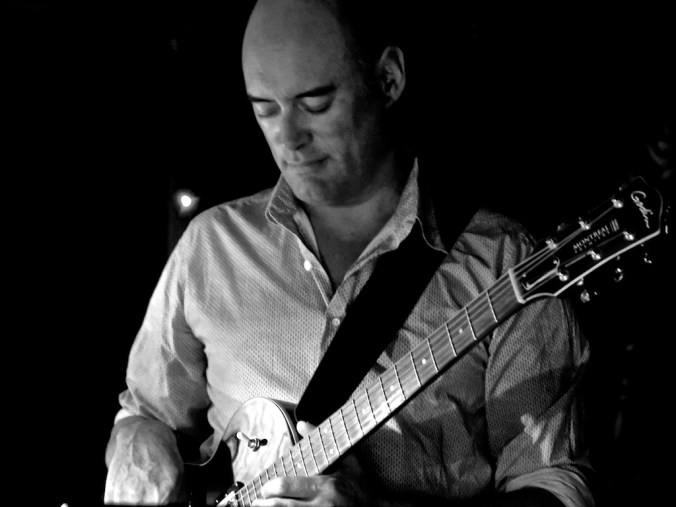 As approachable as this music is, there are many rhythmic and textural complexities. Putting such a set list together with a band not used to playing the material, perilous. Two factors undoubtedly assisted here. Penman, Field and Nacey are old friends. Nacey attended Avondale college with Penman and Field has known him since his time at Auckland University. Field also recorded with Penman in New York on his recent Warners album ‘The A List’. The remaining band member was Stephen Thomas, the youngest of the quartet. He only met Penman the day of gig. When you examine Penman’s contributions to James Farm, the SF Jazz Collective and other albums, you realise that he writes with unusually gifted improvising musicians in mind. For a young drummer to step into the space occupied by Eric Harland and Obed Calviare and not only pull it off but to do it well is a credit to him. Penman singled him out for praise and told us we were lucky to have a young drummer of his ability on the scene.
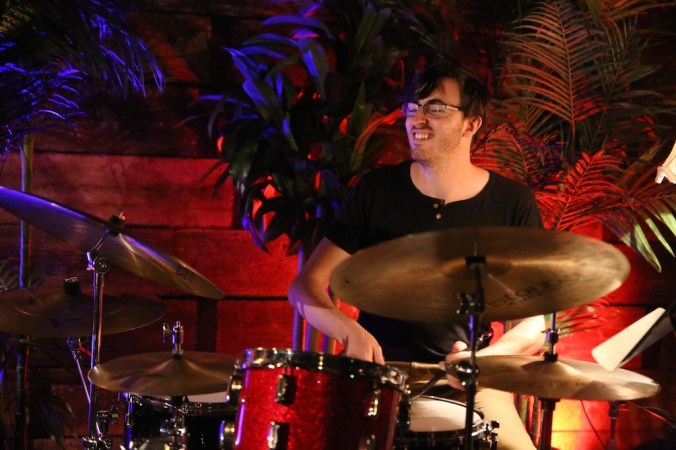 Of Field and Nacey we expect only the best and we got it. Replacing Redman, Moreno or Rosenwinkel with Nacey’s singing Godin Guitar felt a natural choice. I have heard Mike Moreno perform and Nacey is heading for that level of virtuosity. He is a good reader and a master musician and he always delivers. Field was also at his best that night and his best is something to behold. Losing himself in a music quite different from his own and doing it with utter conviction. Collectively they brought Christmas joy to everyone present. The best of Christmas presents from the best of Jazz clubs. I hope the CJC features Penman again soon – we love him down under.
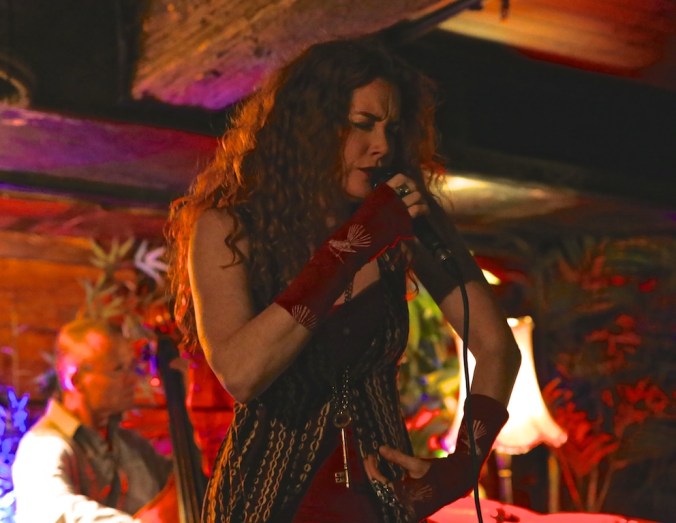 Because the human voice is the most primal of instruments it has the capacity to engage in unexpected ways. When a skilled vocalist performs we watch as carefully as we listen. The merest inflection, micro pause or slurred note can captivate, but it is also the non verbal cues; the ones we assimilate subconsciously that draw us ever deeper inside the song. When Caitlin Smith sings you are hyper aware of the entire performance. Hers are not gigs where listeners drift away or endlessly fiddle with phones. The audience are as engaged as she is. That is her gift as a musician.
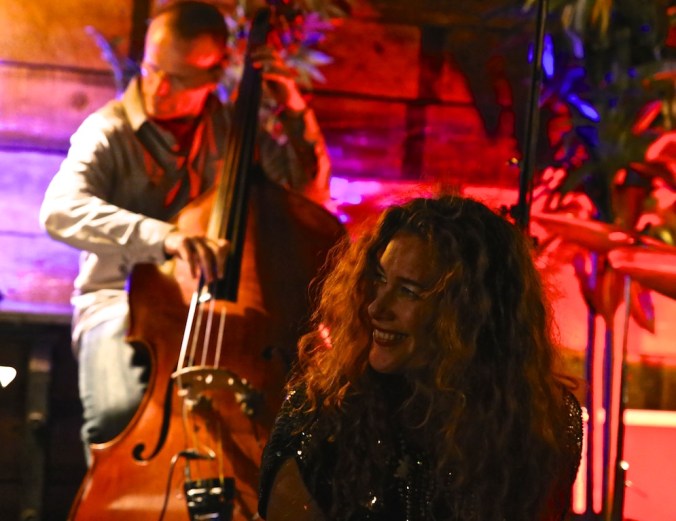 When Smith moves your attention moves with her. She will prance, dance, drop her head, pause for effect or sweep her hair back unexpectedly and all in service of the song. When you watch and listen to skilled performers like her (and they are few and far between) you discern a deeper truth. What appears extrovert can be something else. The actions and gestures are an act of losing oneself. This is the performers mask and behind it lies a certain vulnerability. When enough of this vulnerability informs the music we feel with them.
 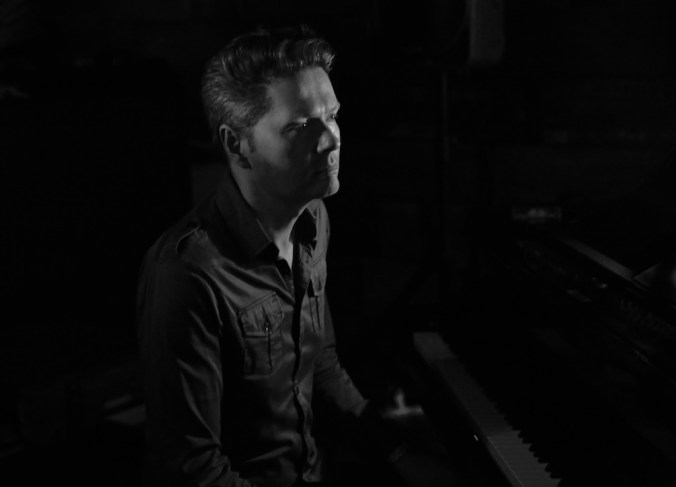 During Smith’s performances there is a lot of interplay between band members. She is generous in her acknowledgements and genuinely appreciative of the musicians behind her – unlike some vocalists who make it very plain that this is all about them. She had two of her regular cohort with her, Kevin Field on piano and Oli Holland on bass. On drums was the talented Stephen Thomas and I had not seen him with Smith before. During the break I asked Thomas how he was enjoying the gig. His answer is worth repeating, as it illustrates the above points. Vocal artists who think disengaged equals cool might pick up a pointer here. “Working with Smith is perfect as you have so much to react to. Every gesture and look gives you new material to work with”.
 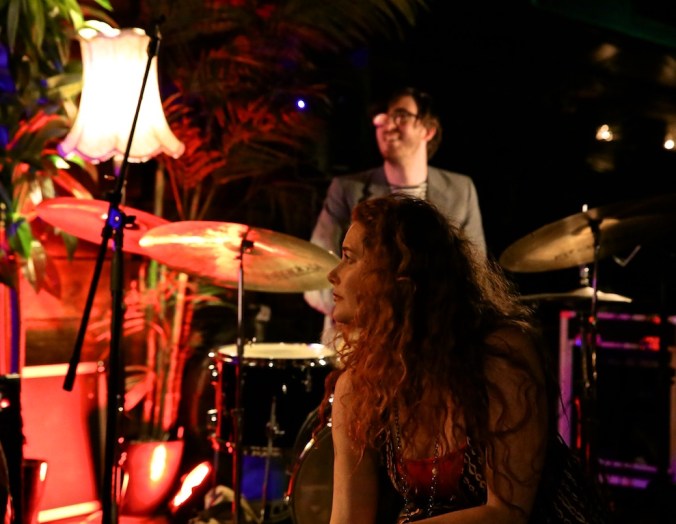 Smith followed her usual pattern of alternating originals with standards. The set list moved between Jazz and singer song-writer soul. She only repeated one tune from last Decembers CJC gig and that was the lesser known Ellington Number “I like the Sunrise”. This is from Ellington’s ‘Liberian Suite’ performed and recorded first in 1947. The original featured Al Hibbler on vocals, soon followed by a Frank Sinatra version (also with the Ellington orchestra). More recently Kurt Elling recorded a version but all of the aforementioned are at a slower tempo. At the risk of committing heresy, I like the upbeat punch and swing of Smith’s version best.
  The night was thoroughly enjoyable as I knew it would be, and with this rhythm section of Field, Holland and Thomas behind Smith that was guaranteed.
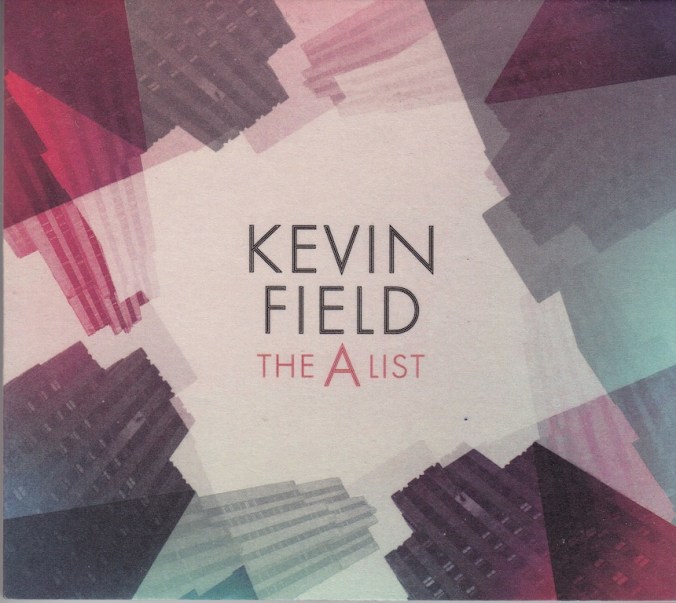 ‘The A List’ release has been a long time coming, or so it seems. Every recording of Kevin Field’s is noteworthy and when rumours of a New York album circulated I attempted to pin him down. Whenever I saw him playing as sideman about town or met him in the street I would pull him aside and say, “Kev, how is the album progressing, when will you release it?”. I invariably received iterations of the same cryptic answer; a knowing smile and a brief “it’s getting there, not too far away now”. the lack of specifics only fed my appetite. I have learned to read the signs and I can sense when an album pleases an artist. It is all in the body language, readable over the self-effacing vagaries of banter. Field had a look about him; a look that told me that he was nurturing a project that pleased him.
 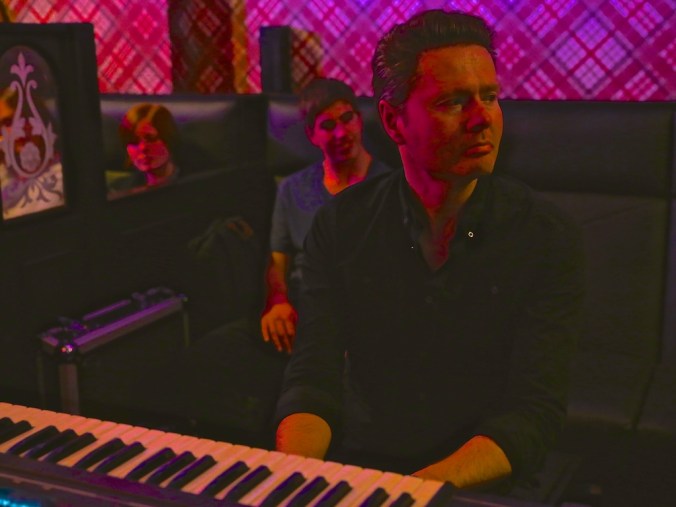 As the months progressed I gleaned additional fragments of information in bite sized chunks. Firstly that Matt Penman was on the recording, and incrementally that Nir Felder, Obed Calvaire, Miguel Fuentes, Clo Chaperon and Marjan Gorgani also. The substantive recording took place at Brooklyn Recording in New York with additional recording in Roundhead Studios Auckland. That was pretty much the extent of my knowledge. I have encountered this phenomena before. Treating an album as a child, holding it close before sending it out into the world. It generally presages good things to come. In this case it certainly did.
 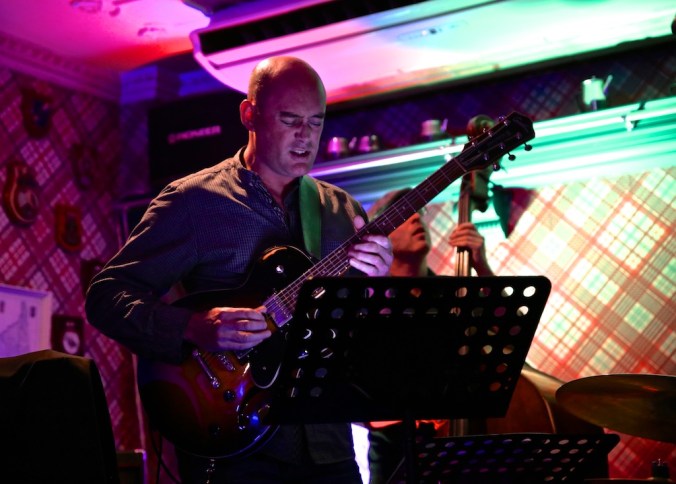 The title is probably tongue in check, but it speaks truth. There are a number of A List personnel on the album. Field is arguably Auckland’s first call pianist. No one harmonises quite like him and his consistency as pianist and composer is solid. New Zealand Jazz lovers also regard Matt Penman highly. His appearances with leading lineups and his cutting edge projects as leader always impress. In the same vein is Nir Felder; frequently mentioned in the same breath as the elite New York guitarists. Obed Calvaire the same in drum circles. This was an obvious next step for Field; having risen to the top of the local scene, it was time to record with New Yorker’s.
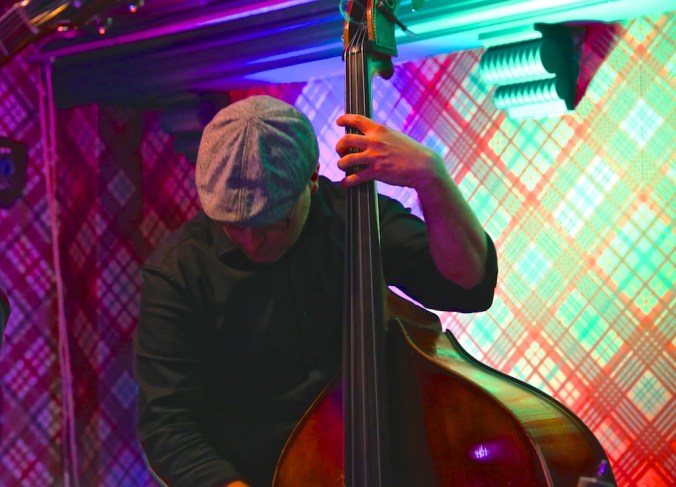 The CJC (Creative Jazz Club) Auckland launch substituted ‘A’ List locals for the famous New Yorker’s. On guitar was Dixon Nacey, on bass Richie Pickard and on drums Stephen Thomas. The vocal section was; Clo Chaperon & Marjan Gorgani (as on the album). These musicians are superb and so the comparison with the album was favourable (Field is a little higher in the mix on the album and guitarist Felder is a little lower).
 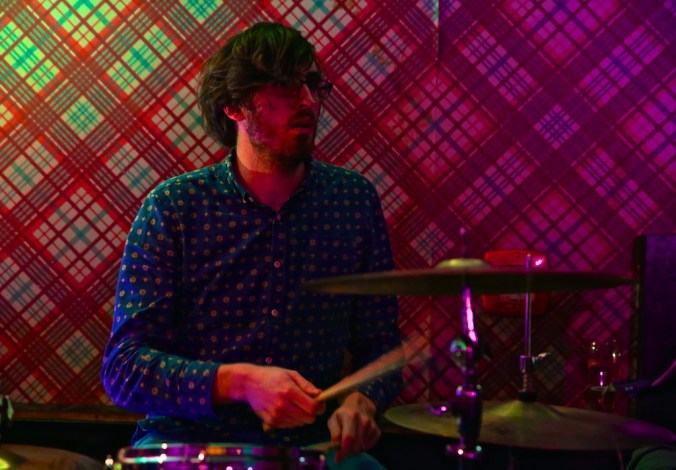 The CJC was in different venue this time, owing to the refurbishment of the 1885. The Albion is no stranger to Jazz and in spite of the ‘livelier’ acoustics, it was a good space in which to enjoy the music. Dixon Nacey always sounds like a guitarist at the peak of his powers, but somehow he manages to sound better every time I hear him. This time he used less peddling and spun out wonderfully clean and virtuosic lines. Apart from a tiny amount of subdued wah-wah peddle on the disco number his beautiful Godin rang out with bell-like clarity (the clipped wah-wah comping was totally appropriate in recreating the tight disco funk vibe). The other standout performance was from Stephen Thomas, who is able to find a groove and yet mess with it at the same time. His complex beats added colour and he mesmerised us all. At the heart of the sound was Richie Pickard. Some of the material was definitely challenging for a bass player as timing was everything. Pickard navigated the complexities with ease. There are were three vocal numbers at the gig (two on the album). Chaperon and Gorgani are impressive together and well matched vocally. Hearing them on the album showcases them to best advantage, as sound mixing is harder in a club. Their presence certainly added excitement to the gig.
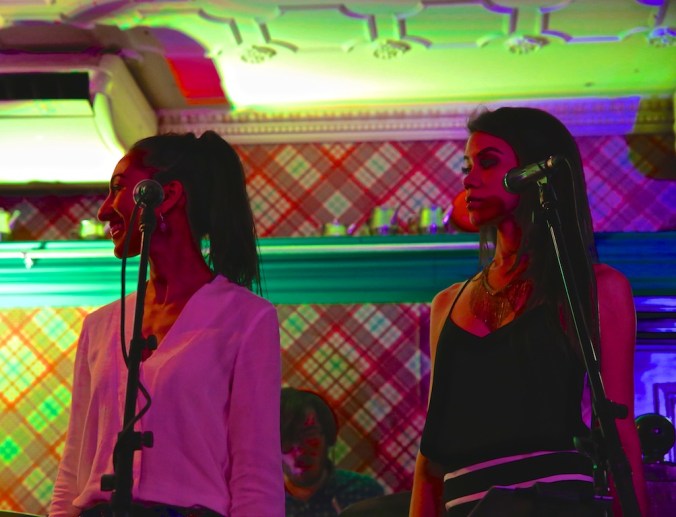 Buy the album and if possible see Field perform this material live. This music is exciting and innovative; past and present rolled into a forward looking Jazz form.
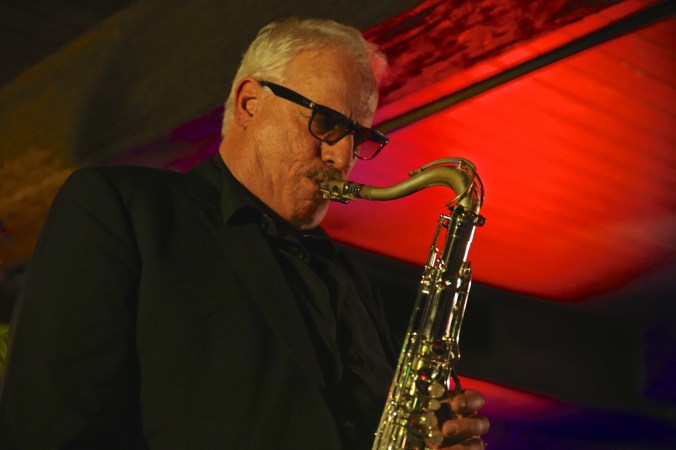 Doug Lawrence is every bit the archetypal southern tenor man, from the top of his tall frame to the bell of his brightly shining tenor. His sound is fat and down-home-cooking rich, whether playing softly or at volume. He has more cut through than a diamond headed drill-bit. Lawrence has such considerable credentials that it is beyond my reach to enumerate them all here (google him).
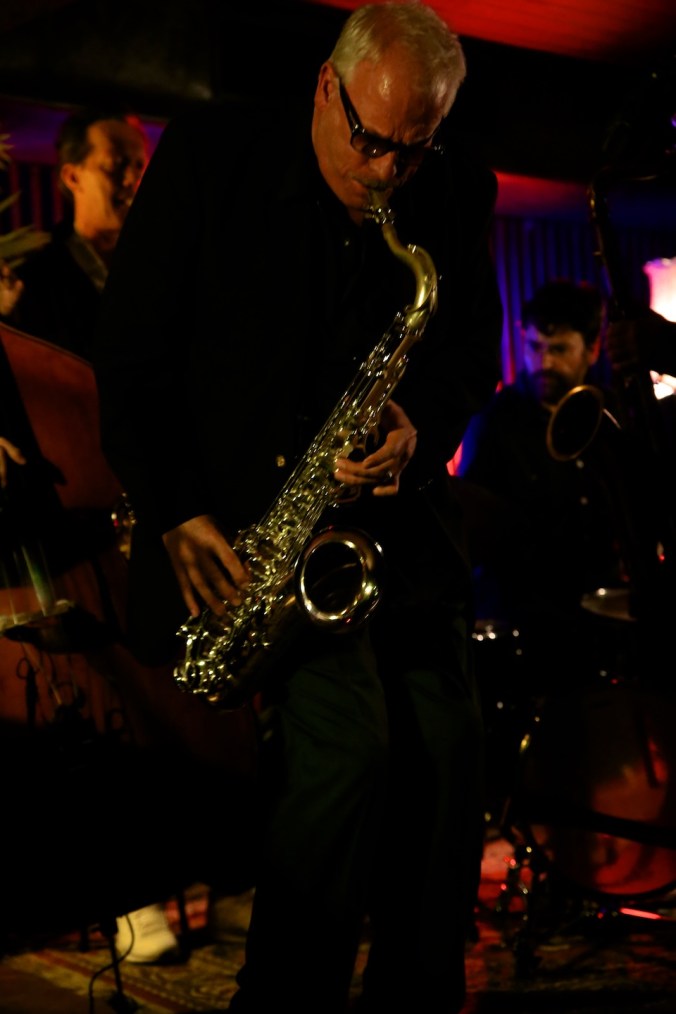 Lawrence is tall and as he performs he stoops slightly, forming a classic old school playing pose. Slowing bending his knees inwards before stretching and lifting his horn to the ceiling. His speaking voice is rich like his playing, a southern Louisiana drawl adding to his considerable charm. The first number was ‘End of a love Affair (Redding) and the audience whooped in delight as the band took the changes at a good pace. The rhythm section propelled by the tidal waves of sound emanating from the tenor. It was that sound and the power of delivery that grabbed you from the get go. The intonation and phrasing revealing influences which although readily identifiable, transformed them into a new sound. This was pure alchemy. It was like having Gene Ammons and Dexter Gordon on the same band stand.
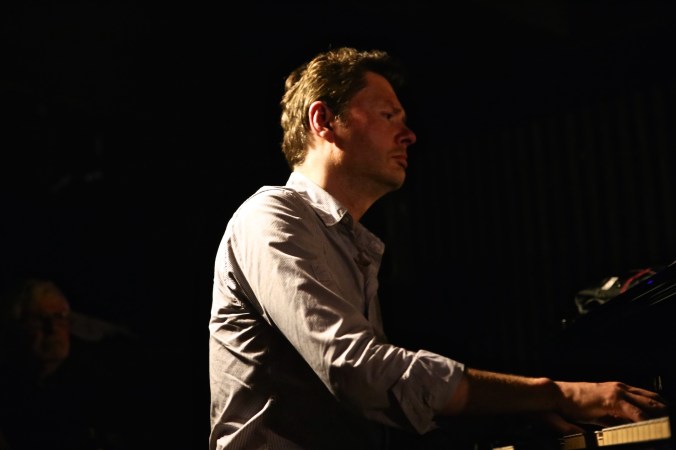 It is during ballads that the skill of a musician is often tested. In this case we saw something close to perfection. It wasn’t just Lawrence, but his Kiwi pickup band as well. Spurred on by each other, they dug deeper and deeper. A night and a vibe that we will remember for years to come. There was an obvious rapport between pianist Kevin Field and Lawrence. I gather that he found Field’s harmonic approach interesting and perhaps this is an indication of our own development as we grow our standing. Lawrence’s intonation was the thing that grabbed you most and this made his solos particularly enjoyable. Long held notes ending in breathy flurries or else bending the note ever so slightly before delivering a short heart stopping burst of controlled vibrato. With Holland and Samsom also finding their sweet spot this was a dream band.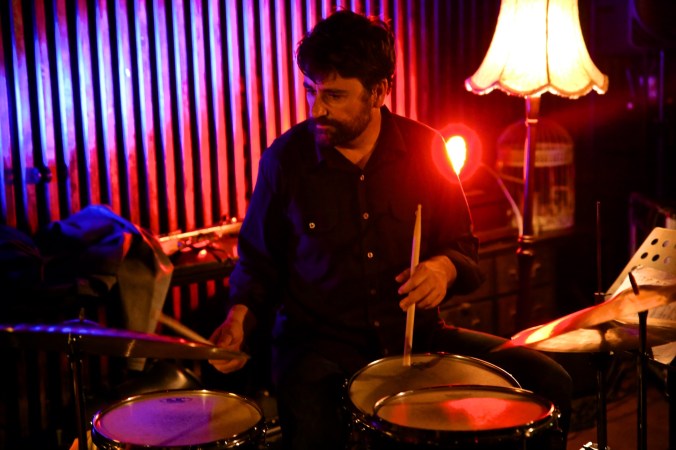
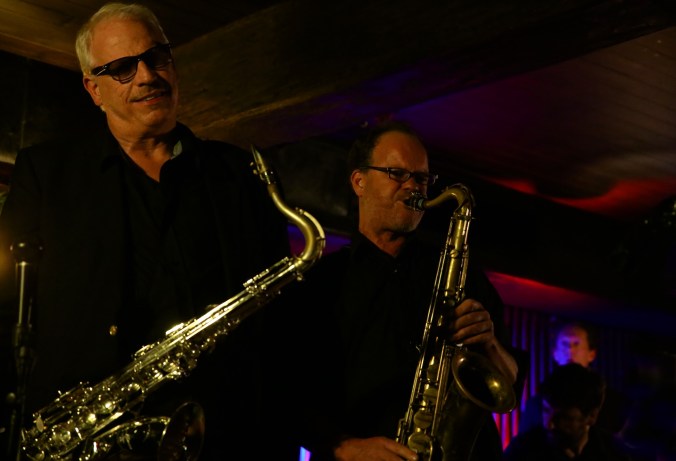 Here is the back story: 17 years ago a younger Roger Manins hit the New York streets, where he learned to scuffle in the time-honoured way of Jazz musicians. Because he possessed the hunger to learn he approached many established horn players. One of these was Doug Lawrence and traces of that time are still evident in Manins sound. All of those years ago Manins subbed for him and here is a Face Book extract that Lawrence posted once he returned to the USA.
  “Roger has matured into a GREAT player and MAGNIFICENT teacher! All of his students have a SOUND and they are all inspired to play, because of Roger. The curriculum at the University of Auckland Jazz Department is second to none, and I am going to use it as my model when conducting masterclasses at other universities around the world. Roger and Ron Samsom and the rest of the faculty have got it right at the U of A and I’m going to suggest that each and every University I teach at check it out. Cheers ROG! You are doing it ALL right brother! I hope to see and play with you soon mate!” That says it all really.
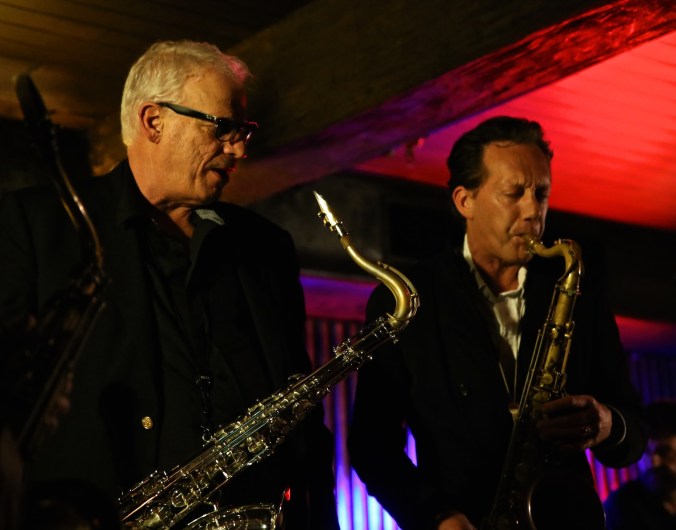
 On Wednesday five well turned out ‘men in black’ suspended time at Auckland University. This was a rare event, pairing two of New Zealand’s best known and best-loved contemporary tenor players. The invitation only concert billed as ‘Nathan Haines meets DOG’ kicked off of the Universities 2015 Summer Concert Series. New intake students attending (or viewing the video clip) discovered just how high the standard is; they also realised how lucky they are to have these teachers and these role models.
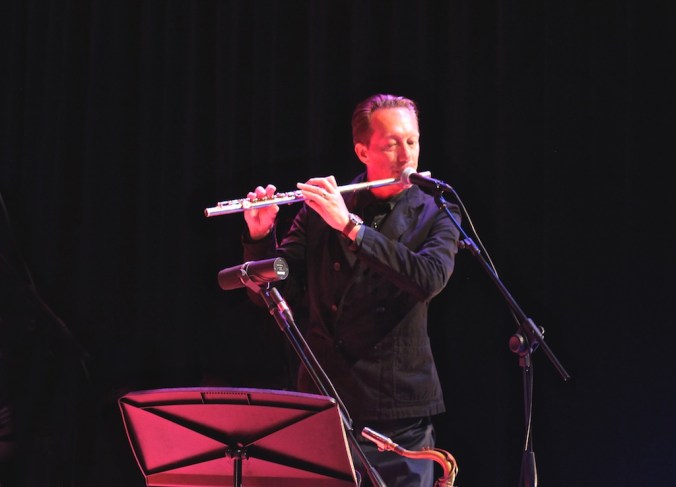
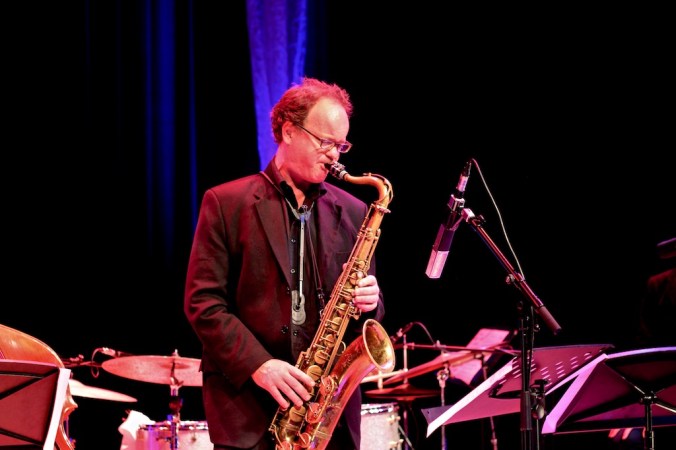 The Nathan Haines/DOG line up can rightly be described as a super-group; the cream of New Zealand’s improvising artists. We saw Haines at his best here as he showcased his formidable talents on tenor saxophone, soprano saxophone, flute & vocals. He is a multiple New Zealand Music Awards winner and perennially popular in New Zealand and London where he is now based. The DOG band members are all senior teaching staff at the Auckland University Jazz School (Faculty of the Arts). Collectively Ron Samsom (drums), Roger Manins (tenor saxophone), Oli Holland (bass) and Kevin Field (piano) form a dangerous new breed. The agility and intelligence of the animal has led many
  to speculate on its lineage; some suggesting Greyhound crossed with Border Collie? We will never know unless the parents own up, but it is beyond dispute that each band member has multiple acclaimed recordings to his credit. DOG is one of three groups short-listed for the 2015 Vodafone New Zealand Music Awards.
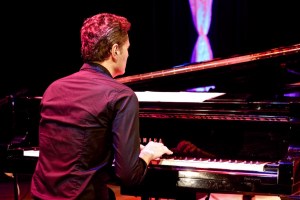 reportage and most musicians view the exchanges as a chance to collaborate; not cut someone down to size. It is an opportunity to challenge and be challenged; a high level musical interaction between equals. At its best it can bring out something special in both artists and Wednesdays gig achieved just that.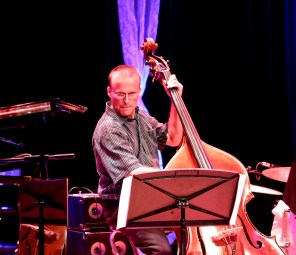
 JazzLocal32.com