 With the Indian summer lingering, March rolled seamlessly into April, and in Jazz parlance, we got to JAM (Jazz April Month). This is the month when the International Jazz community reaches out and proclaims, listen up ‘world’ we have something to say. The month culminates with UNESCO world Jazz day; last year the main celebration was in Paris, before that Osaka and Istanbul. This year the Thelonius Monk Foundation and UNESCO will hold the WJD main celebration in the White House at the invitation of President Obama.
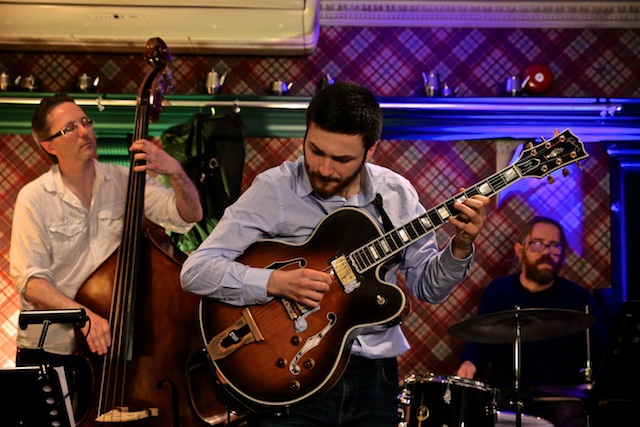
In the first week of Jazz April, Auckland’s premier Jazz Club the CJC moved to a new temporary location. There are always anxieties when changes occur, but we needn’t have worried. The CJC (Creative Jazz Club) is a powerful brand and the audience moved with them, their enthusiasm unabated. The last Britomart gig ended on a high note, the first Albion gig began likewise. This year has seen a steady stream of important internationals on the bandstand and last week it was Rob Luft. Luft is a rapidly rising figure on the UK Jazz scene and getting him at the club was another coup. Luft is something of a phenomenon and his rise is nothing short of meteoric. As his reach increasingly extends beyond his own shores, international audiences take note: his future is rosy from here out.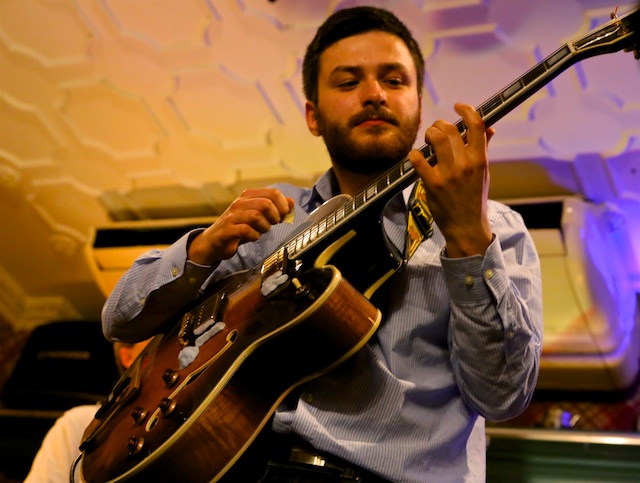 He is a different sort of guitarist and although in his early twenties, he already sounds like a member of that post-millennial cadre of improvising trend setters. As usual, I arrived during the setup and what I heard offered promise. His lines during the warm-up number were fast and furious, but the clarity of tone and of ideas, jaw dropping. As the first set began the band traversed various moods, from the Bop referencing to the reflective. Luft is a formidable technician, his fluency beyond the reach of many practitioners I suspect, but during the slower reflective numbers, we glimpsed subtly and depth.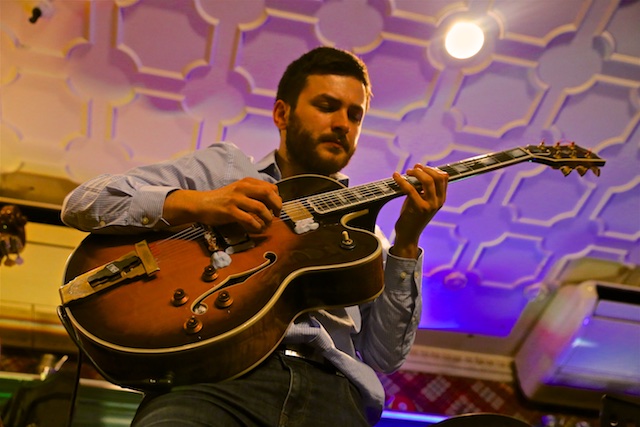
During extended periods of improvisation, he would intensify his focus; you could see it on his face as he hunched into the guitar as if merging with the instrument, mining themes until they were reborn. Occasionally I would hear the hint of a phrase or an arpeggiated effect in the upper register that made me smile. I had only heard that sort clarity and cleverly modulated sound from one other guitarist, Mike Moreno. Later when we spoke I told him that. Luft said that he was glad I picked up on that and in fact he once stayed with Moreno, undertaking a week of intense lessons. Luft’s full, clean, and cleverly modulated tone lends itself to such high-end comparisons.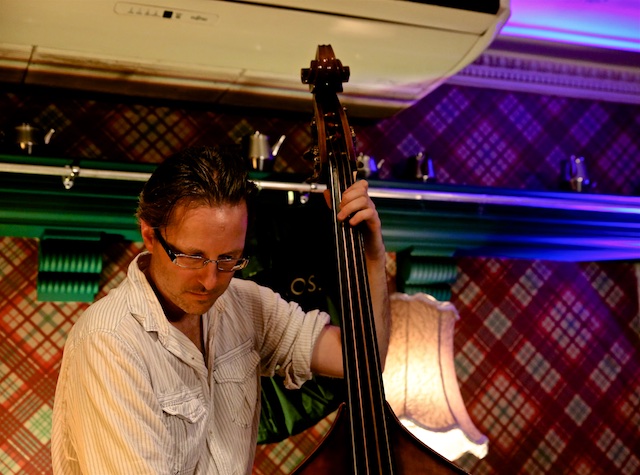 The first set brought us the trio formation, and the set list ranged from the near avant-garde to ‘world Jazz’. I really enjoyed the material chosen as there were quirky originals, and material ranging from the familiar (Gismonti) to the unfamiliar – tunes by Portuguese or Brazilian composers including a delightfully outrageous rendering of a tune called ‘The bickering of the crazy musicians’. That one brought the house down. I was also delighted with his tribute to the adventurous guitarist Derick Bayley; a tune titles ‘Derick’. Again this showcased the breadth of his influences. Whether the reflective or quirky, handled with the supreme confidence that only a musician at one with his instrument can attain. Accompanying him was Tim Robertson, an expat with a long string of impressive credits to his name in the UK. Robertson and Luft were a tightly focussed team, enhanced by the addition of Chris O’Connor for the Auckland gig. O’Connor is endlessly versatile and ever popular about the country – from Indie Rock or straight ahead Jazz through to experimental music. He adds enormous value to any bandstand, any genre, and the choice could not have been better.
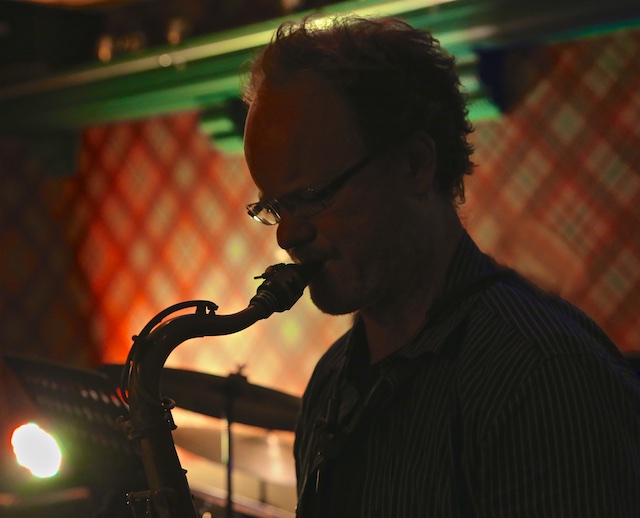
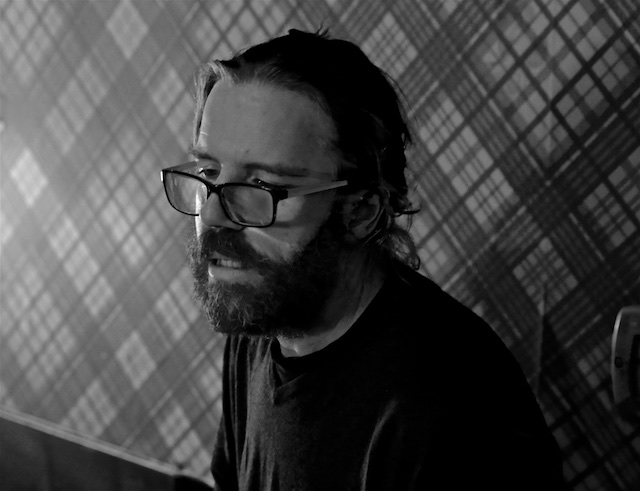 On the second set, the trio added local saxophonist Roger Manins and the tunes although standards took in a wide spectrum. Opening with a ‘groove take’ on Victor Young’s ‘Delilah’ and then in contrast diving headlong into a marvelous Ornette Colman piece. ‘Humpty Dumpty’ from Ornette’s ‘This is our Music’ was undoubtedly my favourite of the night. Everything these musicians played worked well, but this tune just bounced off the walls and had everyone whooping in delight. Next was a crazy little known Monk tune titled ‘Unidentified Monk Solo’ and lastly ‘Ray’s Idea’ by Ray Brown. From deep listening enjoyment to wild and free in one gig.
 Two nights later I was watching the Sky Arts channel when a programme on guitarists came up. Then I saw him, a younger Rob Luft performing at Ronny Scotts, solo guitar, receiving praise from George Benson, recording at Abbey Road studios and winning the Jazz section of a prestigious UK guitar competition. We sure lucked out getting this band for a Jazz April opener. The clip below is from a Ronnie Scotts gig – Rob Luft with ZiroBop – The clip tells you everything you need to know about him as a guitarist.
Rob Luft (guitar), Tim Robertson (upright bass), Chris O’Connor (drums) and guest Roger Manins (tenor saxophone), Performing at the Albion Hotel, April 6th, 2016
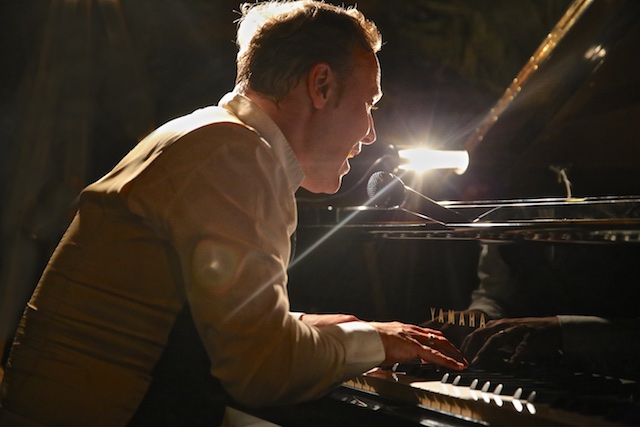 Every few weeks, I casually glance at the CJC web page to see what lies ahead. When I spotted the name Jef Neve, I immediately cleaned my glasses and refocussed, just to make sure that I hadn’t imagined what lay on the screen. No, there it was, Jef Neve, Belgium. Neve is a significant figure on the European Jazz scene and described as Belgium’s best contemporary Jazz pianist. He has three significant careers, one in the Jazz world, one composing film scores and yet another in the contemporary classical music world. Wow! I thought – how did we score him for a club gig? The answer, of course, is the Roger Manins factor. Jef had worked with Roger during Maria Schneider’s tour of Australia and Roger has a lot of pull with musicians.
 Although The Creative Jazz Club was the beneficiary, it was Neve’s formidable classical credentials which brought about his New Zealand trip. As we remember the ghastly carnage of the great WW1 battles a hundred years ago in Belgium, there are various commemorative events. In 2013, Neve composed ‘In Vlaamse Velden’ (In Flanders Fields), a significant work which tells the war tales of his native Ghent. For the New Zealand concert, the historic Flemish diary readings were interspersed with diary readings from New Zealand families who suffered loss. My family lost a great uncle at Passendale and my grandparents never shook off the sadness. The readings spoke of loss, but also of hope. Everything Neve does is informed by his peace-loving humanism. The audience was reminded of young soldiers dying, and young civilians as well. The Belgium government, The Auckland War Memorial Museum, and various other partners made this happen. Inadvertently, they brought us a significant Jazz event.
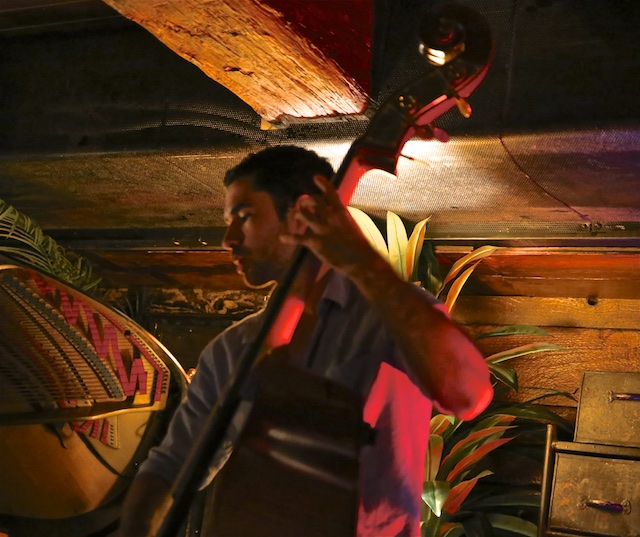 The first CJC set was Neve playing solo. Much of the material drawn from his recent ‘One’ album. Second up was a thoughtful and moving rendition of ‘Lush Life’, the long intro giving little away. After the intro, a reflective minimalist version unfolded, with Strayhorn honoured affectionally. Most of the other tunes were Neve originals and appropriately they included a recently composed piece referencing the Belgium bombings. Typically the piece went beyond mere requiem, challenging the world to get along and to accept diversity. This hopeful humanism informs all of Neves work. At that point he looked up, smiled, and said to us, “I believe that we only have one life and so we should make a real effort to get along, no matter where we come from. After we are born we should party together until we die”. On that night, ‘party’ we did. The last number in that set was Joni Mitchell’s ‘A Case of You’ – first he read the lyrics and then he played – just lovely.
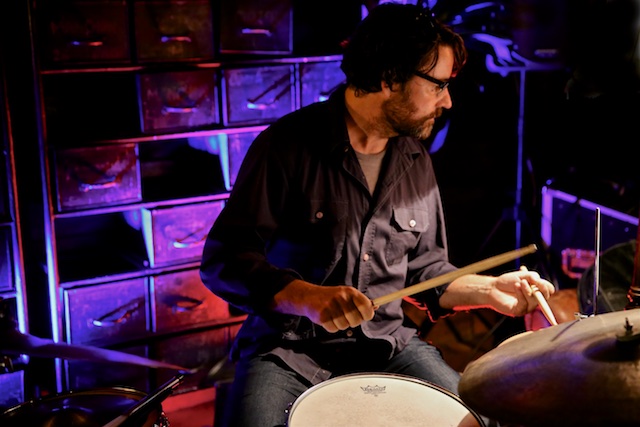 The second half was a trio set and Neve was warmed up and ready to stretch out. With him, he had Ron Samsom (drums) and Cameron McArthur (bass). There had been one short rehearsal a few hours earlier but you wouldn’t have thought so. The first number, ‘The space we need’, was from his critically acclaimed ‘Imaginary Road’ album. They quickly dropped into what can only be described as an elevated state of being. Every move mutually understood, reacted to in kind, rendered into gold with a sonic alchemy. These guys worked extremely well together and the looks on their faces told you that they knew it. ‘The space you need’ was a hard swinging burner, filled with exhortations and joyous exchanges. During a later number, Neve hummed a melody and had the audience repeat it during the chorus. Later I heard him whistling a melody softly (whistling in unison with his right-hand phrases). The last person I heard do this so effectively was fellow Belgian Toots Thielmans. This was Jazz at its best. Throughout the second set, I was so absorbed that I forgot to take notes. Perhaps magic like this can not be captured anyhow.
 At this point, the conversation got really interesting. He clearly didn’t regard musical structures, be it blues, classical or otherwise as the dominant force guiding his improvising; These outside influences were his vocabulary. In the same way, a writer doesn’t regard the alphabet or grammar as directing the flow of ideas. In Neve’s case, it was not about form but about sound. “I see the universe as sound and I explore that, work with that”. ‘Sound’ is what drives him as an improviser. When I asked how he got those otherworldly acoustic harmonics from the piano. He said, “As I play, I look for unique sounds, probing until I locate them”. This was an iteration of something I had heard before, something uttered by pianist Jonathan Crayford, “I try to make piano’s sing, seek a oneness with their sound”. Later I spoke to Ron Samsom about this and he said, “There is a theme with the great musicians and it always comes down to sound and interaction. With Jef, we didn’t so much rehearse, as dive into the energy. We just jumped onto the wave and began. It was playing music from first to last note and exploring ideas”.
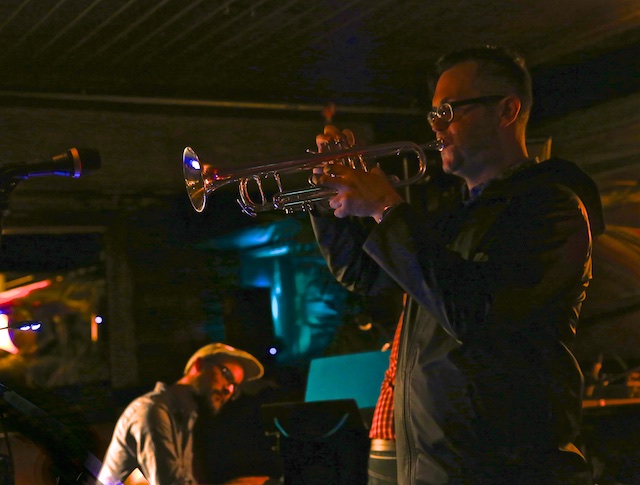 In spite of living at the other end of the Island, Lex French is a regular fixture at the CJC. It is hardly surprising since his popularity with Jazz audiences is ever-growing. There are not many trumpeters of French’s stature in New Zealand and it is our good fortune that he remains. He obtained his Masters from McGill University in Montreal, a university with a strong focus on brass. A university which had an ongoing association with the UK-based Canadian trumpeter Kenny Wheeler while he was among us. I mention Wheeler, because as I walked down the stairs to the club to set up my gear, I heard the unmistakable opening phrase from ‘Smatter’ coming out of the darkness. Just the opening phrase and then silence.
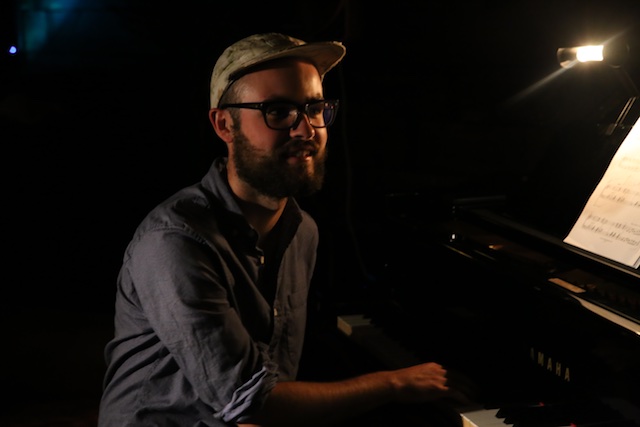 It was so Wheeler-like, that I assumed someone was setting up a Wheeler album on the club sound system. As my eyes accustomed to the low light I saw French standing alone – repeating the phrase. French is not a one-trick pony; he is as modern as tomorrow, but at other times, old school respectful. He can punch out high notes or swing hard bop like a Blue Note artist back in the day. This is not a musician to pass up on.
 I particularly liked French’s compositions ‘Kasid’ from the first set. There were many reasons to like this; the musicians innovative explorations of the theme, the evocative middle-eastern mode underpinning it, and the fact that it referenced the wonderful Iraqi poet Abdulkareen Kasid. An achingly beautiful melody tinged through with bittersweet sadness, establishing itself delicately over a quietly incessant bass motif. When Steele came in, his opening chords were Oud like – giving the impression of soft strings jangling sweetly in the night air. I listen to a lot of middle-eastern improvised music and this performance stands beside the best of those. In the background, the drums tap tapped (like stones tumbling in a stream, and every so often swooshes).
 The poet Abdulkareem Kasid is new to me (and I have a huge collection of poetry). To discover a poet like this is exciting and I thank Lex French for this. What could be better than to experience a night of interesting music, and at the end, find a poet? I finish this with some words from that poet – listen to the piece as you read the lines – I did.
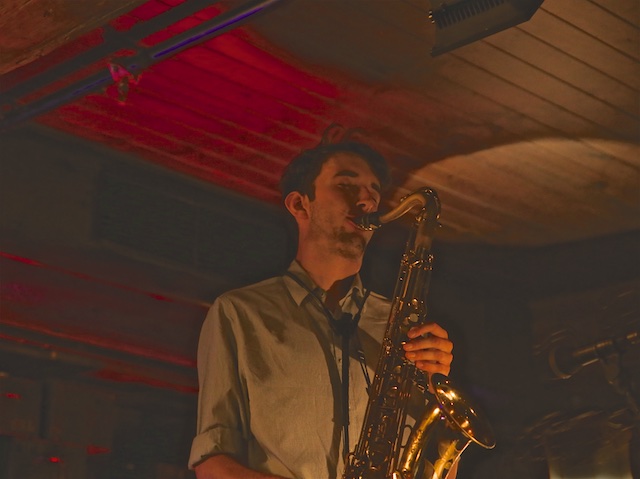 These events focus on emerging Improvising artists and allow them to gain wider exposure in front of a discriminating audience. They generally occur around three or four times a year. Some of those featured in the Emerging Artists Series are recent graduates, others are still pursuing their studies. In this case, we had two horn players from out of town; Christchurch and Wellington respectively. Their horns were different, and their approaches to the sets different, but both approached the gig with the confidence of seasoned performers. Such confidence translates well on the bandstand and it informs an audience that the musician means business. Artists often remark that playing in a small Jazz club like the CJC is a unique experience. It’s not like a noisy bar, where people often ignore you, and it’s more intimate than a concert hall where an audience gives limited feedback. Club audiences listen intensely, they react boisterously at the end of a good solo and they call in encouragement when a phrase resonates. Mostly they listen in silence and but they listen actively.
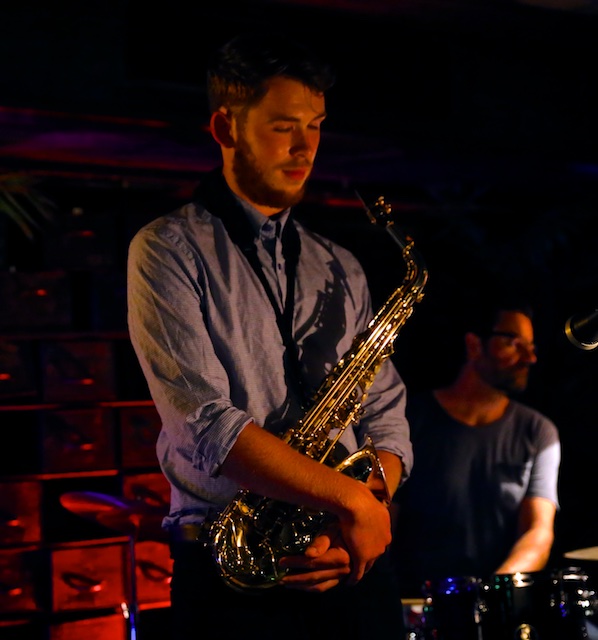 Jimmy Rainey, a tenor player from Christchurch played the first set. He is a graduate of the Jazz School in Christchurch, now furthering his Jazz studies at the Auckland University Jazz School. In Christchurch, he’s involved with a number of groups such as the Symposium Jazz Orchestra (many will recall that orchestra on Glen Wagstaff’s album), and the earthy ‘Treme’ styled Justice Brass Band. On Wednesday, he had a premier Auckland Rhythm Section at his disposal, Kevin Field, Cameron McArthur and Ron Samsom. Most of the compositions were Rainey’s and they showed a developing maturity. His sound was interesting, especially on the down-tempo numbers, having that downtown late-night feel. He is in Auckland for a while and I am certain that we see more of him. His father is well-known on the scene but he is earning his own place in the light. With a Jazz-famous name like Rainey, he has a head start.
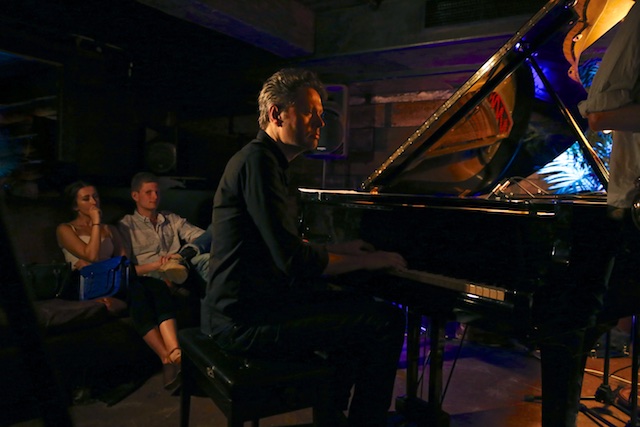 Bryn van Vliet has visited the club before as part of the boisterous Wellington Mingus Ensemble. In that context, I have seen him play in Auckland and Wellington, but never as a leader. He is also a member of the Roger Fox Big Band and a graduate from the Wellington Jazz School. While van Vliet often doubles on tenor, he played alto for this gig. What immediately caught my attention was his clean tone. A compelling tonal quality that quickly drew you in. His playing has cut-through in ways that Paul Desmond’s did, but for all that it was a modern sound. Vliet is originally from the far North but his Wellington credentials will no doubt anchor him there. Like Rainey, he brought many of his own compositions to the bandstand and the same rhythm section backed both players. For the last number, a standard, they were on the bandstand together.
 When I recently interviewed visiting Flamenco dancer Isabel Rivera Cuenca she told me that she had met some wonderful New Zealand improvising musicians and, in particular, she mentioned Jonathan Crayford. They met at a party and briefly discussed doing a project together. As they had not been able to make contact since I supplied email addresses and the project quickly took shape. A talented sensuous Flamenco dancer from Barcelona and a gifted Kiwi improviser; irresistible.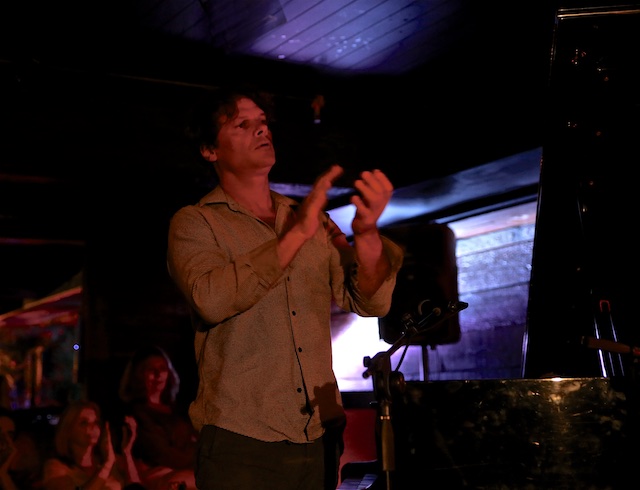
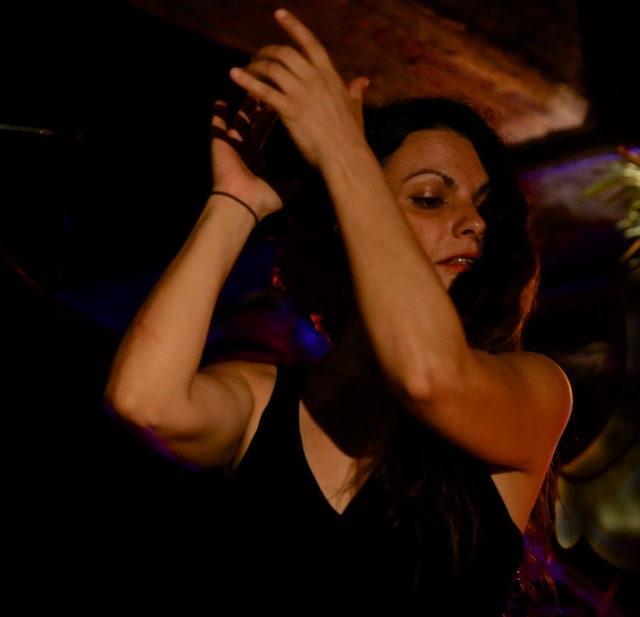 There is a real synergy between Jazz and Flamenco; they are musical cousins. Both musical forms fuse North African Rhythms with unique harmonic approaches, both created out of harsh repression. Underlining the driving rhythms of Flamenco is pure passion, contrasting a sad but beautiful dissonance. The musicians and dancers frequently call to each other in encouragement and this is not so different from the call and response in jazz. That they are similar in essence is hardly surprising – when the chants, dance and polyrhythms of Congo Square met with Creole melody, fed by a multitude of European influences (including Spanish music), Jazz was born.
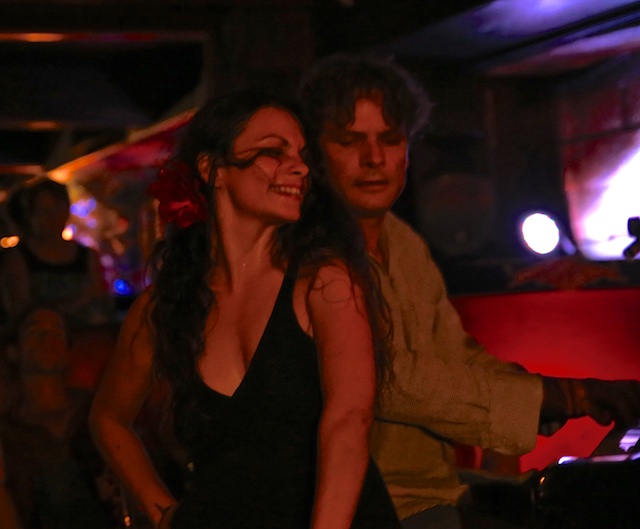 During the second set we heard tunes which moved closer to the Flamenco idiom. In these free-ranging highly improvised tunes Crayford has few peers. Towards the end of the evening, the two were in absolute lock-step; Cuenca reacting to every nuance of the music and bringing her fluid kinetic brilliance to bear, dancing her way into the hearts of everyone there. The communication was simply electric.
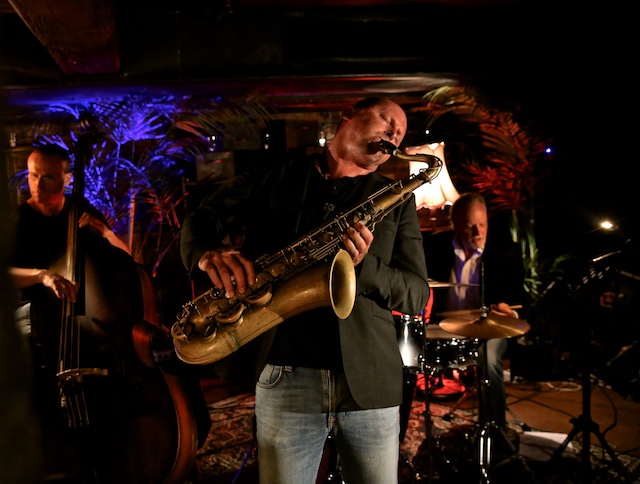 When the word gets about that a Jamie Oehlers gig is imminent, excitement mounts. Having turned people away last year, due to a capacity audience, the CJC offered two sessions this time. As expected, both were well attended. Oehlers is highly regarded in the Jazz world and it is not surprising. His astonishing mastery of the tenor saxophone is central to his appeal, but it is more than that. Every note he plays sounds authentic as if no other note could ever replace it, and all conveying a sense of musical humanism.
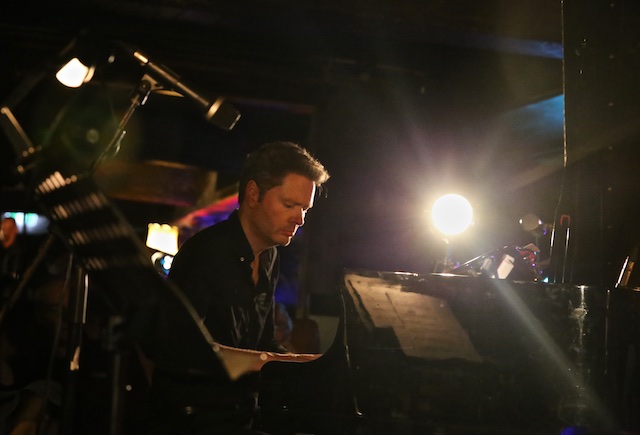 Oehlers has a new album out titled ‘The burden of memory‘ and we heard many of the pieces as the sets unfolded. Accompanying him on the album is a dream rhythm section: Paul Grabowsky on piano, Reuben Rogers on bass and Eric Harland on drums. Each a heavyweight and living up to their formidable reputations. For the Auckland gig, there was Kevin Field on piano, Olivier Holland on bass and Frank Gibson Jr on drums. Jumping in where Grabowsky, Rogers, and Harland had gone was no doubt daunting but they pulled it off in style. All played exceptionally well, but Gibson was a standout. The exchanges between him and Oehlers memorable. These men have history and the old conversations were clearly rekindled on the bandstand. Roger Manins joined Oehlers for the last number of each set and the two dueled as only they can. Weaving skillfully around each other and sounding like two halves of a whole; grinning like Cheshire cats.
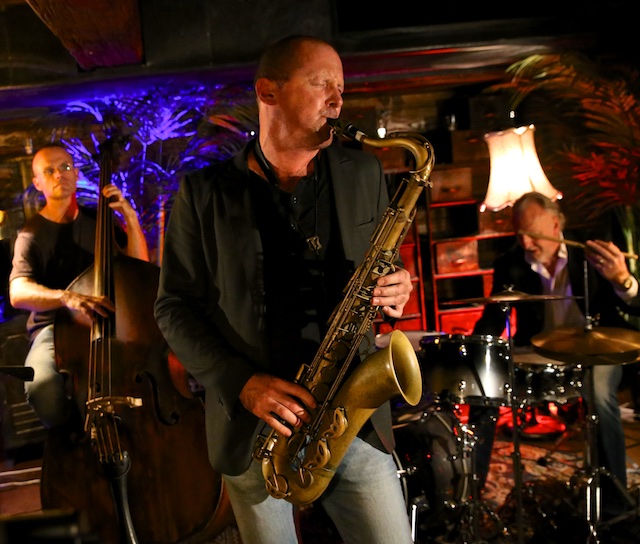 The album title and the song titles speak clearly of the musicians thought processes. He talks of his motivations and his horn takes us there. The burden of memory is a phrase he heard while listening to talkback radio and it resonated with him. He thinks deeply, examines the world about him and this communicates throughout the album. The second track ‘Armistice’ is a good example, possessing a melancholic beauty, and while it throws up the obvious images of a war ending, it also speaks of families and the tentative steps towards new possibilities.
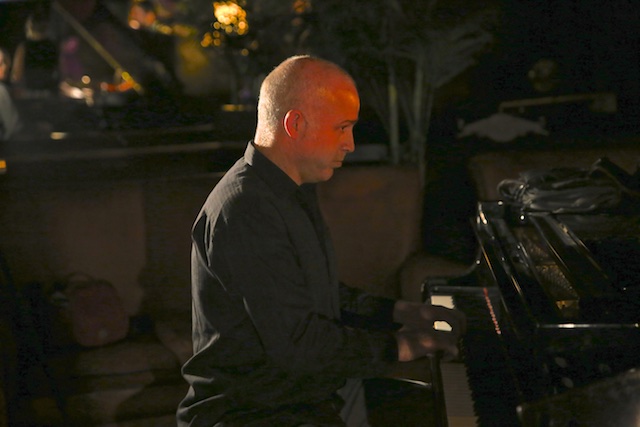
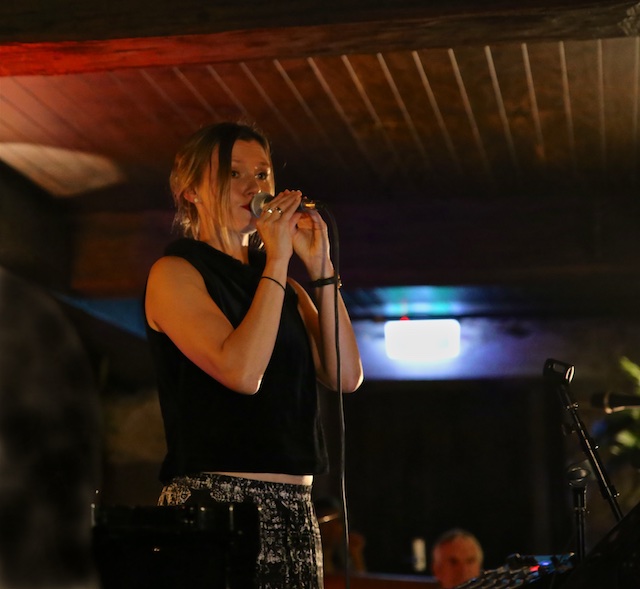 The Briana Cowlishaw/Gavin Ahearn gig is the second CJC gig featuring international artists in a month. For those who follow Australian improvised music, these are familiar names. Both have rock solid credentials as both have traveled extensively with their music and attracted glowing critical reviews. This is a fortuitous musical pairing, and it is particularly obvious during duets. There is a mutual awareness of space and nuance and an understanding of just where interplay works best; neither over-crowding the other. There are a lot of pianists who accompany vocalists convincingly, but the true art of accompaniment is rarely seen. Ahearn is a fine accompanist and soloist. Unusually, you could say the same for Cowlishaw – an aware musician who watches and listens to her collaborators carefully – works with what she hears. Never greedy to hog the limelight and making every line count.
 For an artist barely past her mid twenties Cowlishaw has achieved much. Performing at festivals all over the world and being nominated for prestigious awards along the way. She has studied with top rated teachers in three continents and it shows (including Gretchen Parlato, Aaron Goldberg, Kurt Elling). Her confidence, compositional abilities and musicianship shine through on the bandstand. Hers is a modern voice and more importantly a fresh young voice. What worked so well so well for Gretchen Parlato also works for her; a clean delivery, imaginative interpretations and an interesting approach.
 The first set saw Cowlishaw and Ahearn performing as a duo. This format gifts artists with a degree of freedom and it was well utilised. As they took us through a mix of standards and originals, we saw just how attuned they are. The Cowlishaw compositions are particularly interesting, with words, wordless vocalising and interesting harmonic underpinnings from Ahearn – a subtle weave, blending threads to create evocative soundscapes.
 Both have visited Norway and the sparse honest northern sound was particularly evident in their first set. A recent collaborative album recorded in Norway arose out of an earlier trip there. More recently they performed at the Hemnes Jazz Festival in that country. As Cowlishaw said of these compositions, “After spending a lot of time on the road and in big cities, I found myself in the Fjords. The wild lonely freshness was so appealing that the thought arose – was this a place that I would want to live in one day”? Arising from that proposition came the compositions on their ‘Fjord’ album. Cowlishaw is obviously keen on the outdoors. She told an audience member that she intended to explore a few of New Zealand wildness places as the chance presented itself.
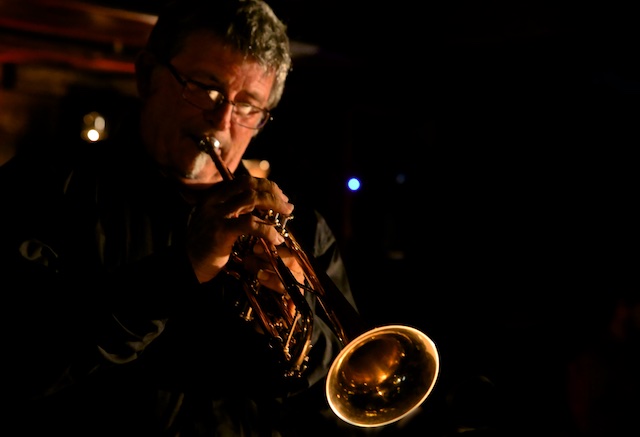
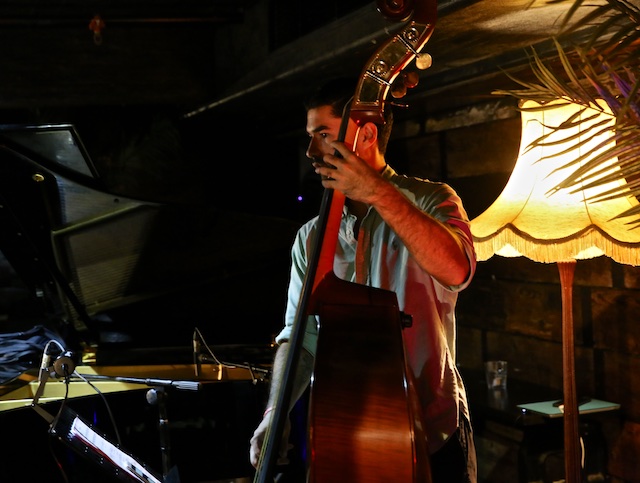
 The second set swelled the bands numbers to a quintet – joining the duo were Mike Booth on trumpet, Cameron McArthur on bass and Adam Tobeck on drums. All fine musicians and well able to rise to any challenge. The expanded unit gave her much to work with and Ahearn in particular jumped at the opportunity; utilising a more aggressive hard-swinging style. There were more standards in this second half and Cole Porters wonderful 1943 composition from ‘Something to shout about’ – ‘You’d be so Nice to Come Home to’ stood out as a rollicking swinger. The other memorable standard came from the duo – Michel Legrand’s 1932 composition ‘You must believe in Spring’. To Jazz audiences this means one thing – The achingly beautiful Bill Evans Warners album of that name. The rendition was remarkably beautiful – Cowlishaw tackled the number as Norma Winstone might, while Ahearn stamped his own authority on the ballad while allowing Evans to shine through.
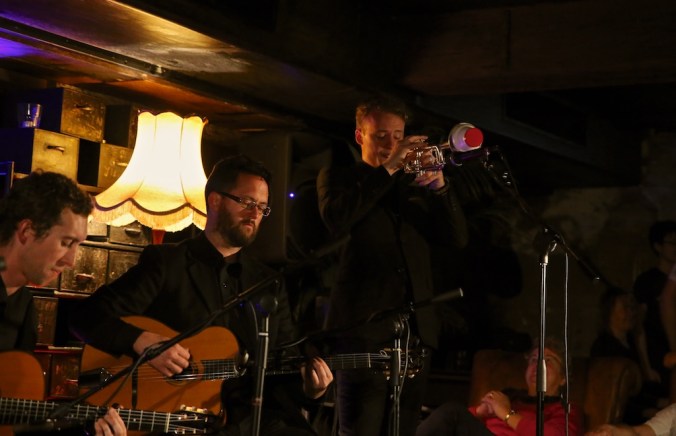 Wellington has long possessed a gypsy soul and Jazz Manouche thrives there. In Auckland there are fewer such groups and the common form here is hybridised Gypsy. I am more familiar with these hybrid forms, but as a devotee of improvised music I possess many Django Reinhardt and Bireli Legrene recordings. The Black Spider Stomp are a traditional Gypsy Jazz group and everything about them shouts ‘du Quintet de Hot Club of France’. For a start they look the part in their slick black outfits and they mirror the traditional ensembles – three Manouche guitars, upright bass and clarinet (the clarinet player doubling on soprano and trumpet).
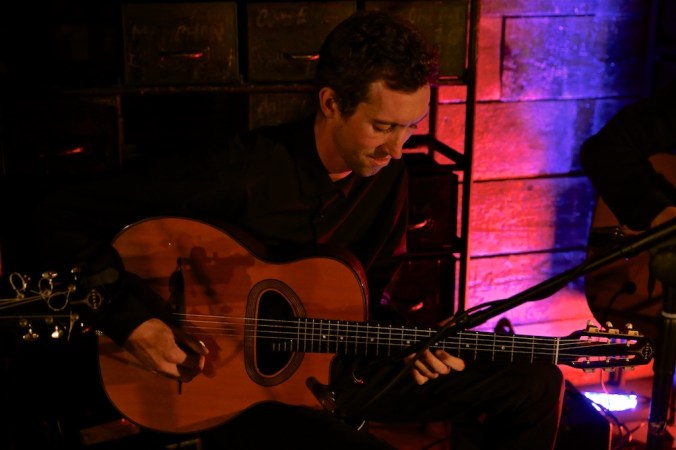 The hallmark of gypsy authenticity is the ability to swing in a particular way, and Black Spider Stomp achieves this. In western European gypsy the absence of a percussion instrument places heavier emphasis on guitar led rhythm. The rhythm guitars are essential to the momentum with their striking ‘la pompe’ strum. This hard swinging pumping style is very distinctive, with its dark chromaticism, bent notes, adherence to certain voicings, rapid arpeggios, powerful rhythms and regular use of vibrato. The tunes are mostly in 4/4 with a heavy accent on two and four (although waltzes are also in the repertoire).
 The style is so distinctive that it owns the tunes whatever their origin. Once while traveling in the Carmargue I stopped at a typical Provencal village. As dusk fell a group of Gitano guitarists started playing in the square. The tune was maddeningly familiar and I wrongly thought – this is a Reinhardt composition. It stuck in my head for days and then the penny dropped. It was ‘My Way’ – the tune popularised by Paul Anka and Frank Sinatra. Recently I learned that it is actually a French pop tune. Talk about music travelling where it will. Another perennial favourite in Jazz Manouche is Stevie Wonder’s ‘Isn’t she lovely’. Manouche Jazz itself is a hybrid of American Jazz and Gypsy – and each of those musical influences are sources as vast as an ocean.
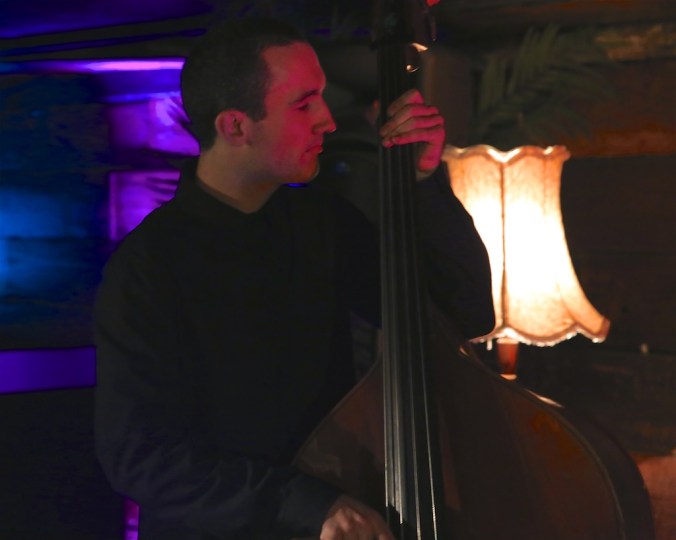 The groups use of soprano saxophone (but in this case the straight-horn variant) is also authentic. While violinists like Stephane Grapelli regularly led Manouche ensembles (pre war), the arrival in Paris of horn playing musicians like Sydney Bechet influenced the post war style. Jazz Manouche reached maturity in Paris around the time of WW2 and it was so loved there, that a handful of Jazz loving occupying Nazi’s covertly protected it. The use of a trumpet intrigued me for two reasons. For a reeds musician to double on trumpet is rare – the embouchure is so different. Post millennium we seldom hear such a distinct nod to Louis Armstrong – or to the early swing trumpeters. Perhaps with Armstrong or Bubber Miley in mind, reeds and brass man Baron Oscar Laven treated us to the occasional muted growl and smear. His cheerful enthusiasm for all of his horns was obvious.
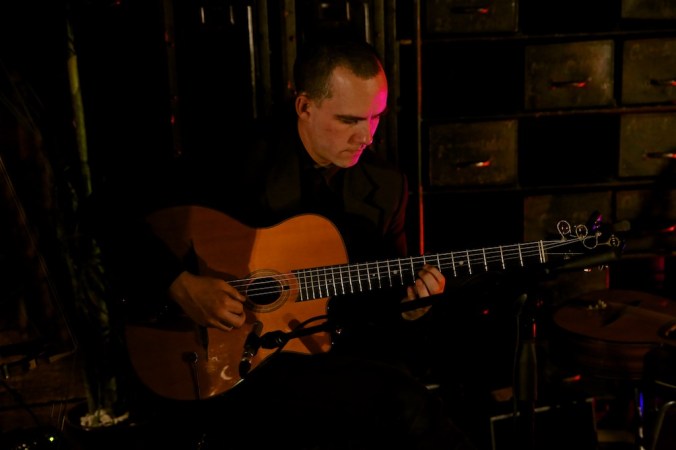
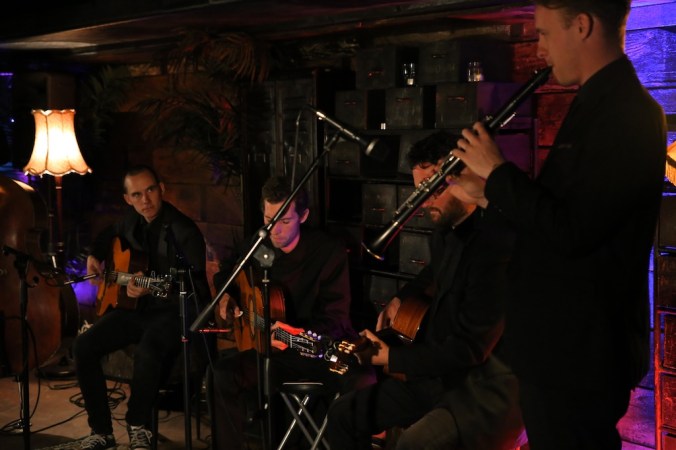 Guitars always fascinate me. These were obviously based on the famous Selmer ‘Maccaferri’ guitars favoured by Django. There are two main styles of Jazz Manouche guitar – the ‘D’ hole ‘large mouth’ with its broader rich tone and woody resonance (most often the lead guitar) and the ‘O’ hole ‘small mouth’, which is brighter in sound and has serious cut through. Solos from both were heard. These guitars are things of real beauty, earthy multi-hued wood-grained and framed in a blur of hands appearing from the darkness.
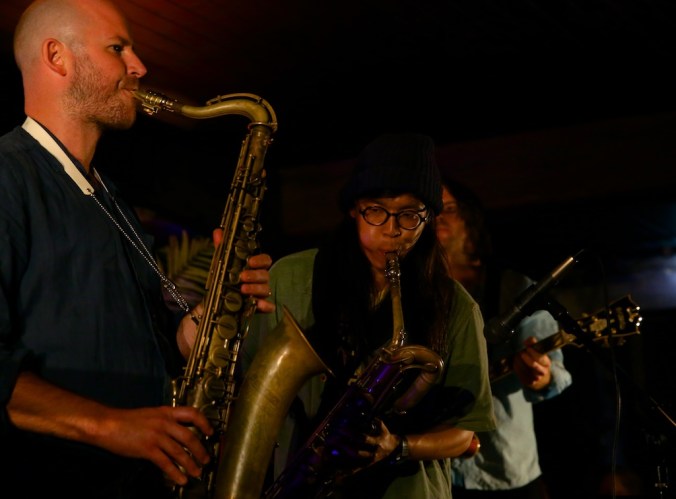 As a group of the worlds leading astrophysicists excitedly ran one last check. At the precise moment that the astonishing mathematical proofs confirmed Einstein’s theory of ‘gravitational waves’, the Circling Sun hit the CJC. This rare cosmic event released fresh gravitational waves which pulsed throughout central Auckland; altering the molecular structure of any ear within radius. It was an appropriate evening for the Sun to manifest this ‘climatic singularity’, preceded as it was by a dog-day as hot as any on record.
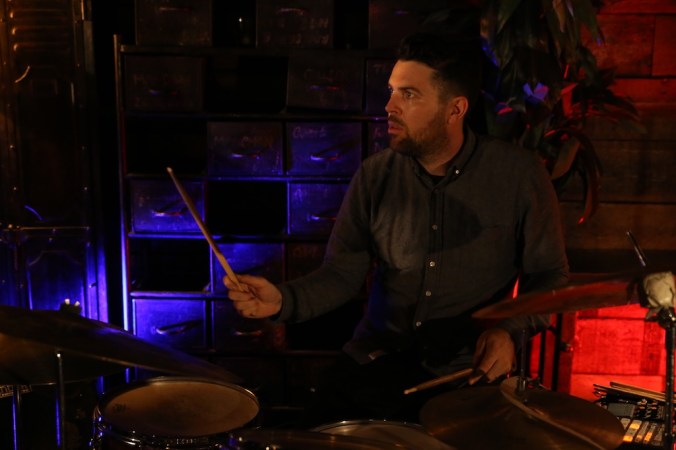 The Circling Sun is more a phenomena than a group. They defy musical form and yet exist convincingly in their own orbit; circling an altered reality. As with all wonders there is much to appreciate. The intricacy of their many machines, the indelible sonic footprint and the sheer joy they bring. I took some guests down to the club that night. Flamenco artists Isabel Cuenca and Ian Sinclair (and Ian’s wife Zarina). I wondered how they would react to this wild unconstrained mix of free improvisation and world beat psychedelic Jazz. Isabel the Flamenco dancer was quick to respond. ‘This is amazing, it has deep passion’. Passion is the heart of many musics and like authenticity it is a vital component. Long live the avant-garde – long live passionate music – whatever the genre.
 In his seminal work “This is Your Brain on Music’ neuroscientist Daniel Levitin reveals the following. ‘A liking for dissonance is a development arising from deeper listening and on attaining musical maturity. A very young child prefers consonance over dissonance, the mature listener increasingly values contrast and enjoys having expectations confounded. After spending time listening to deeper or more complex music, lightweight consonant passionless music becomes boring. There is a neural basis for this’.
 The Montreal born Dyne was just the drummer for a band like this. His musical credentials are impeccable. His expertise extends well beyond the kit to that of producer and forward-looking experimentalist; electronic future beats, hip hop, house, afro beats, boogie funk and instrumental jazz. His work with Ladi6 has brought him to wider attention, but his own Lord Julien recordings and his deeply funky ‘Down in the Basement’ (Vol 2) cuts are well worth checking out. This band has few constraints and it gives him ample room to stretch.
 I have long been a Watson fan. The man is fearless and his musical ideas cross territory few others dare to traverse. His increasing mastery of the pedal steel already sets him apart, but his ventures into the experimental avant-garde with the instrument are unique in the New Zealand context. While an accomplished studio musician his preferred gigs are those without boundaries. With Watson you get Americana, blues, Jazz psychedelia or wild forays referencing Marc Ribot & Sonny Sharrock. The Sun suits his wild eclecticism.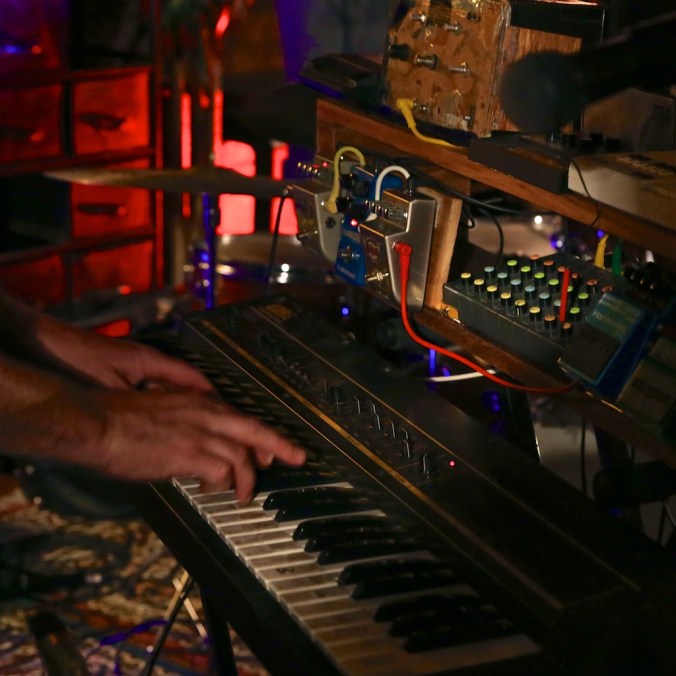
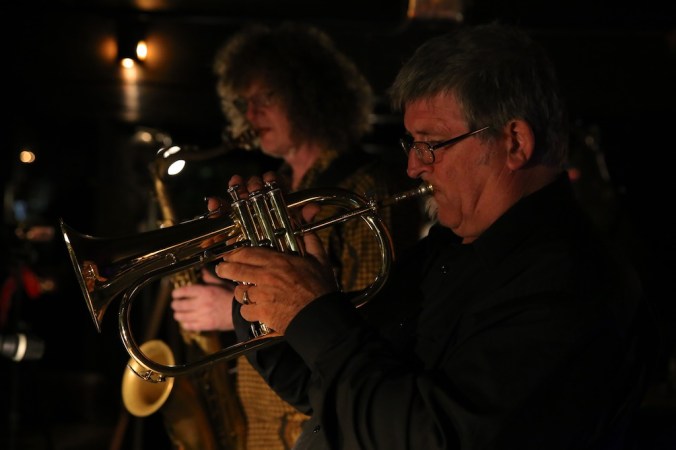 January was hot and wet and the CJC was on holiday. If like me, you are a regular attendee at the CJC (Creative Jazz Club) December to February is a long time between drinks. The El Nino humidity with its sullen skies and petulant storm threats rolled into February and suddenly we were back in business. The first gig of the year featured Craig Walters and Mike Booth. Walters, a well-known Sydney based tenor player, last performed at the club in 2012. Booth is a local and he features often; a gifted composer, arranger and trumpet/flugel player. Booth and Walters have a long history together.
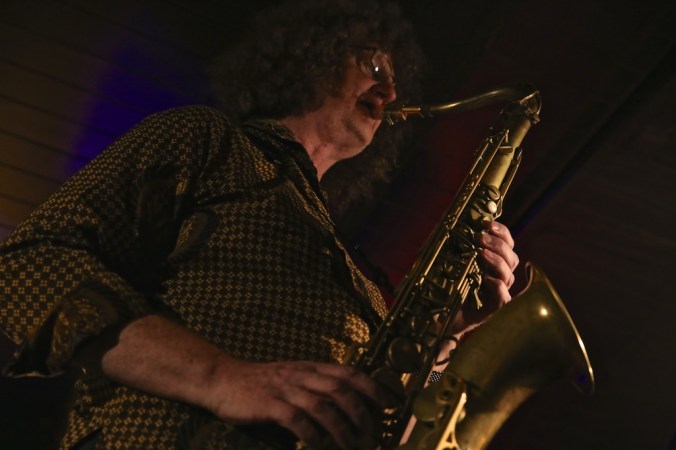 The first number was a Walters tune titled ‘Easy’. Booth played flugel and the relaxed fluid interplay between horns set us up nicely for the evening. Walters plays with real fluidity and his tone has a certain quality – a hint of mid to upper register sweetness not dissimilar to that of Ernie Watts – but with an earthier colour overlay. While the first tune eased us the into the gig the second tune grabbed our attention in a different way. ‘A Kings Ransom’ is a seldom played Booth tune and its complex rhythms gave the band a solid work out. Broadhurst delivered a wonderfully solo on this – Monkishly jagged and totally within the spirit of the composition.
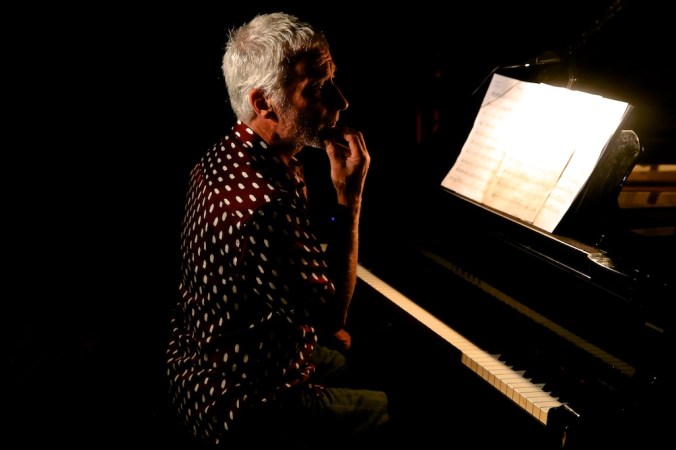 Towards the end of the second set they played Walters ‘As close as you’ll get’. If the title didn’t trigger any memories the first bar surely did. This was a tune that I’d heard way back in April 2012. Its intricate hooks and counterpoint nailed it within seconds. This was not a tune easily forgotten – in fact I happily replayed it in my head for weeks after the 2012 gig. I was not putting up video way back then but have chosen this cut to put up now.
 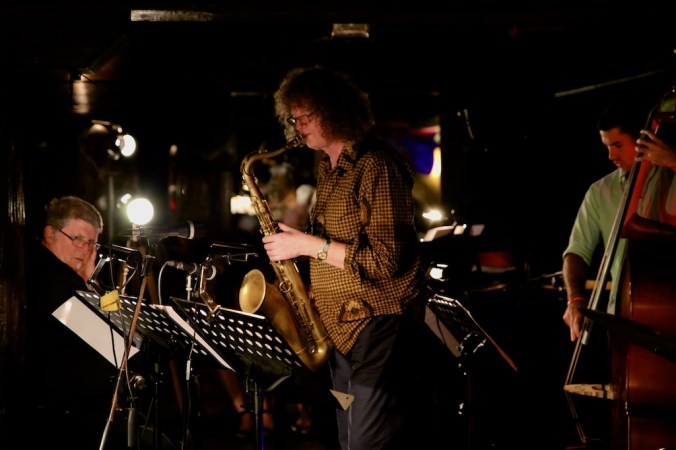 Last years attendance at the club was good and if Wednesday was anything to go by this years will be even better. There were many first time attendees and based upon the applause most will return. The artists create the music but they need engaged audiences to complete the circle. As the famous American bass player David Friesen said to us last year – ‘this is a virtuous circle and the magic only emerges when audience and musicians interlink. The sum of what comes from this interaction is often greater than the sum of its parts. Improvised live music at its best is profound and the thought that we might miss a wonderful and unique moment causes us to return time and again. That is how it works me anyhow.
 2015 was an amazing year for the CJC (Creative Jazz Club) and just when we thought the gigs couldn’t get any better this gig happened. It was an unexpected bonus, appearing out of nowhere. During the break of the CJC’s penultimate gig, Roger informed us that an extra gig would occur just two days before Christmas. Matt Penman was in town and he would appear with Kevin Field, Dixon Nacey and Steve Thomas. A buzz of excitement ran through the room and within a few days the gig was booked out. A second gig was quickly announced and that sold out as well.
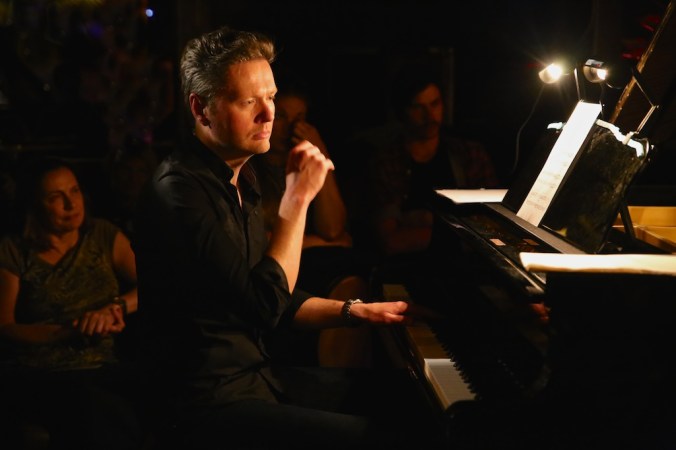 Fittingly the gig opened with ‘Two Steps’ (Penman) which is from the second James Farm album. Everything about the number is compelling and it oozes a post millennial Americana vibe – close to that espoused by artists like Brad Mehldau. James Farm are an extraordinary group co-led by Joshua Redman, Aaron Parks, Matt Penman & Eric Harland. A super-group where everyone is a gifted writer and virtuosic player. This is the pinnacle of modern American Jazz and we were lucky enough to get an up close taste of it. A warm glow swiftly enveloped us and from the first pull on the bass strings and we sensed on mass that this a different type of bass playing; supremely authoritative, melodic and with more momentum than a downhill freight train. We were especially fascinated to hear that Split Enz inspired him to write this tune. We heard other James Farm compositions – the moody ‘Juries Out’ (Penman) and Otherwise (Aaron Parks). Delightful Penman originals dominated the rest of the set (with the exception of a haunting Jewish folk song).
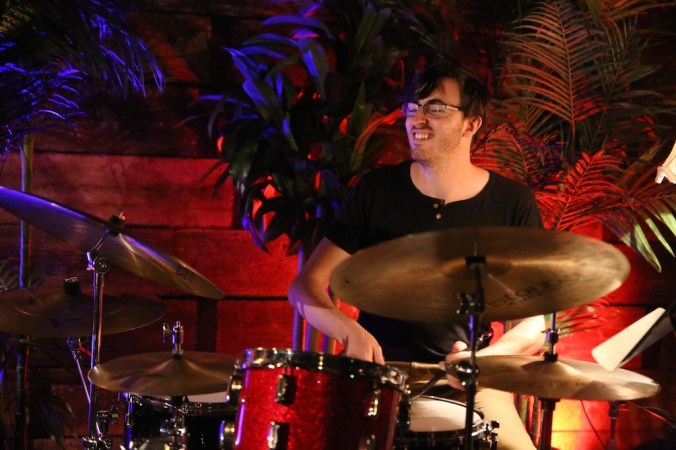
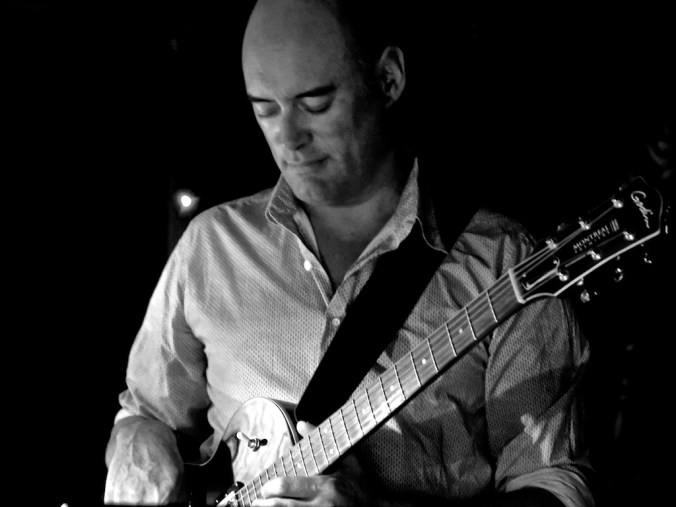 As approachable as this music is, there are many rhythmic and textural complexities. Putting such a set list together with a band not used to playing the material, perilous. Two factors undoubtedly assisted here. Penman, Field and Nacey are old friends. Nacey attended Avondale college with Penman and Field has known him since his time at Auckland University. Field also recorded with Penman in New York on his recent Warners album ‘The A List’. The remaining band member was Stephen Thomas, the youngest of the quartet. He only met Penman the day of gig. When you examine Penman’s contributions to James Farm, the SF Jazz Collective and other albums, you realise that he writes with unusually gifted improvising musicians in mind. For a young drummer to step into the space occupied by Eric Harland and Obed Calviare and not only pull it off but to do it well is a credit to him. Penman singled him out for praise and told us we were lucky to have a young drummer of his ability on the scene.
 Of Field and Nacey we expect only the best and we got it. Replacing Redman, Moreno or Rosenwinkel with Nacey’s singing Godin Guitar felt a natural choice. I have heard Mike Moreno perform and Nacey is heading for that level of virtuosity. He is a good reader and a master musician and he always delivers. Field was also at his best that night and his best is something to behold. Losing himself in a music quite different from his own and doing it with utter conviction. Collectively they brought Christmas joy to everyone present. The best of Christmas presents from the best of Jazz clubs. I hope the CJC features Penman again soon – we love him down under.
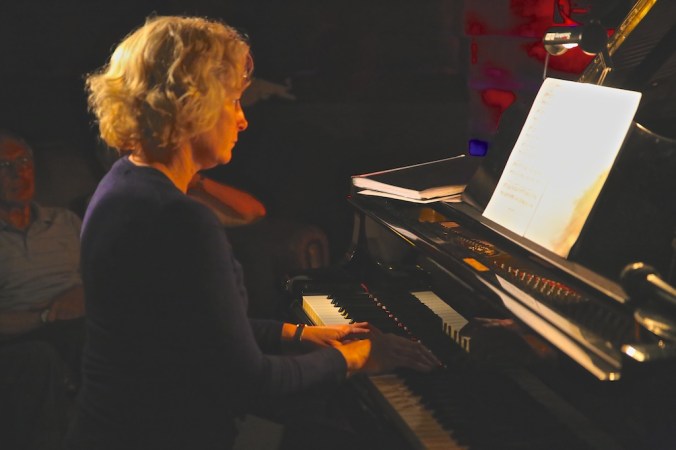 I was out of the country when Anita Schwabe performed at the CJC two years earlier. While I had seen her perform at the Bruce Mason Centre with the Rodger Fox Orchestra, I wanted to hear her in a more intimate setting. Her live (and recorded) performance on ‘Journey Home’ was impressive and as I recall a jet lagged Alan Broadbent watched her segments from the wings during the Auckland concert. As good as that concert and a later concert were, hearing an artist in close proximity is always a different experience. Schwabe didn’t disappoint. The first thing you observe when you meet her is her understated manner. Like many New Zealand improvising musicians she is self-effacing to the point of being dismissive of her own abilities. This contrasts strongly with the engaging confidence of her playing. From the first few bars you become aware that there is something special going on.
 Schwabe’s first number referenced the under-acknowledged and recently departed pianist Clare Fischer. “I like his unusual voicings”, she said before she played through her composition,’Fisching for Compliments’. The tune was intensely melodic, filled with clever references and a fitting tribute. Although a more reflective number (and her first of the night) we saw what she could do. The tune drew us in with a spacious intro and then imperceptibly we felt the swing. Block chords suddenly dissolving, close voicings appearing, disappearing; right hand running off the back of a phrase, subtly playing with time and rubbing against the chords in the left hand. This interaction between right and left hands created subtle and pleasing tension and we were to hear that often throughout the evening. That first number gave us a foretaste of what was consistently enjoyable music throughout the sets.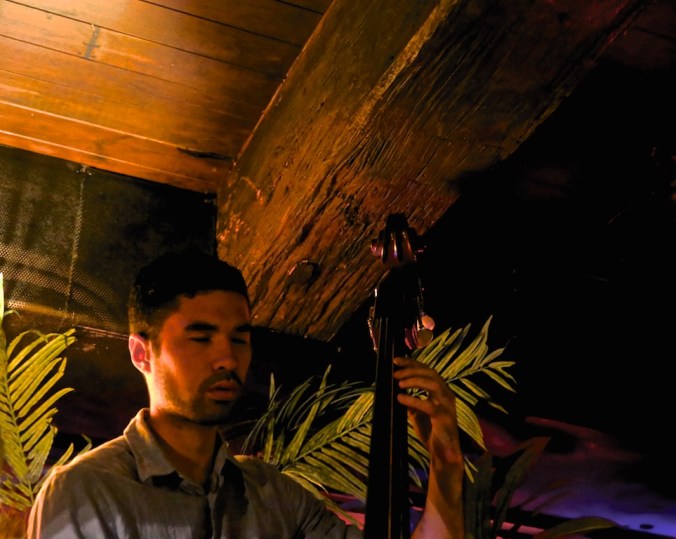
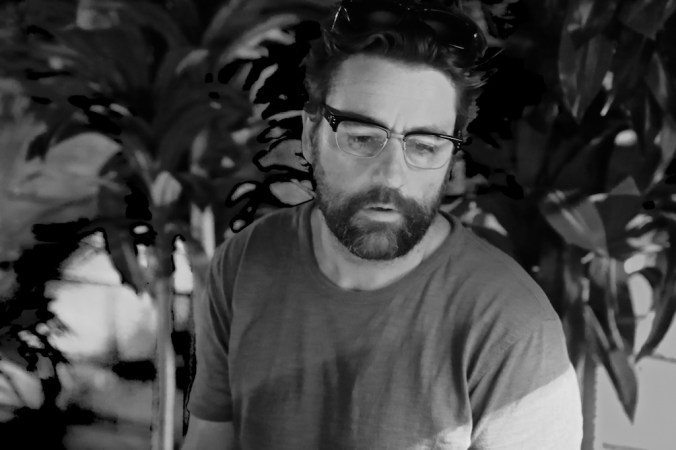
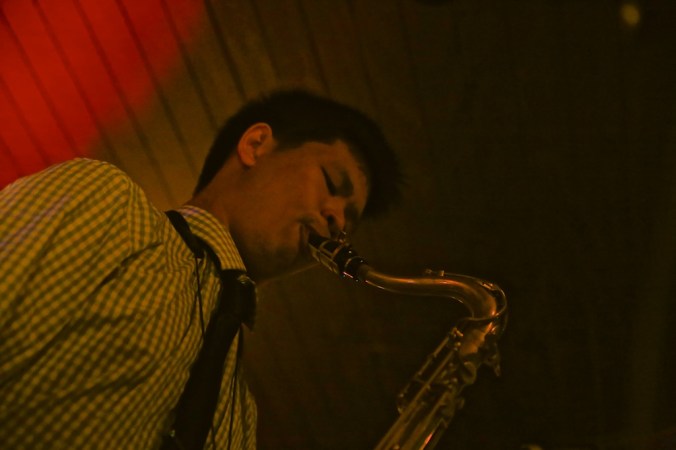 Richard Thai was on the first JAC album but by the time I saw the ensemble live he had left New Zealand for America to complete his postgraduate studies. Recently he returned to his hometown of Wellington where he now teaches and leads the Richard Thai 5. While the ensemble is a basic line up of saxophone, piano, guitar, bass and drums it is never the less forward-looking. This is post millennial music.
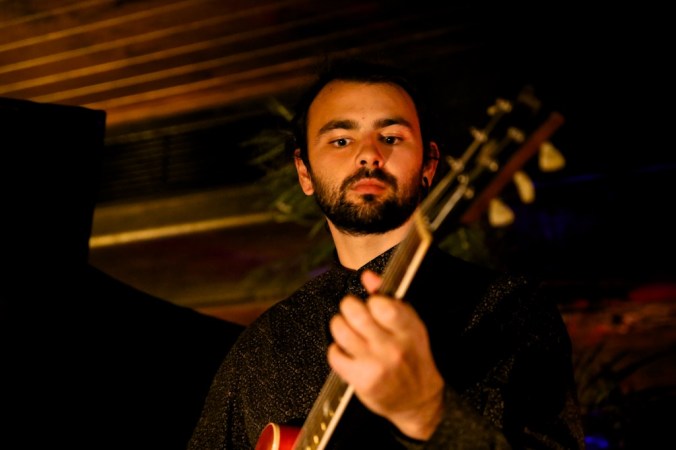 The best illustration of this was heard in his second tune, ‘Capricorn’. A marvellous composition. Like much of Thai’s material it has powerful hooks to draw you in. What sounds simple is in truth anything but, as it shifts between major and minor keys with disarming ease. Many tunes do this, but with Capricorn the device is extraordinarily well conceived. The shifts in focus are pleasing, but what sets the tune apart is a sweet over-arching dissonance; diminished chords acting as a bridge to carry you across the major-minor divide. The arranged head is especially tantalising; setting the listener up expectantly for the explorations that promise to follow.
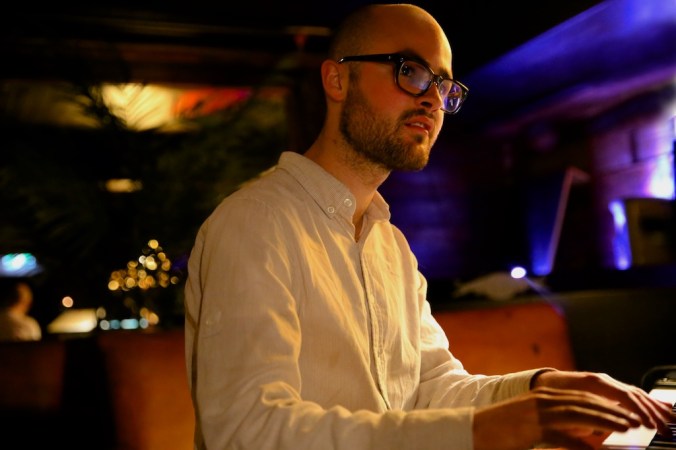 Capricorn’s momentum is that of a multi-hued butterfly in a tropical storm; pushing against the cross winds, never losing its way, pulse, or sense of purpose. Thai’s tenor picks at the tune, peeling the layers back, exposing the heart. This contrasts with pianist Matt Steele’s oblique approach. Steele clearly took the difficult route and along the way it yielded gold. You were with him note by note as he undid the knots of the puzzle confronting him. Steele is always an interesting pianist and always one to watch. It is his determination, his preparedness to take risks and his ability to learn on the bandstand that marks him out from many of his peers. He grows as an artist each time I see him.
  The last to solo on Capricorn was guitarist Callum Allardice. After the long complex solos preceding his, he wisely chose to linger nearer to the melody. His tight elliptical figures rounding out the earlier solos and bringing us gradually back to the outro. His time to shine as soloist came on the last number where his guitar soared as if free of gravity (much to the delight of the audience). Allardice has many fans in Auckland.
 The remaining two band members Shuan Anderson and Scott Maynard are also established musicians from the Wellington area. Anderson (like Allardice) was also a member of the Tui nominated JAC and he has played at the CJC before. A responsive drummer who interacted well and picked up on the subtle nuances of the material. The bass player Scott Maynard has been a member of various leading Wellington units (e.g. Myele Manzanza, Lex French). He has played at the CJC before and he never disappoints. His role in giving a heart beat to this often complex material was vital. I look forward to hearing more of this ensemble and above all I would like to some hear more Thai compositions. With a few more years of performance under their belt the unit could achieve even more.
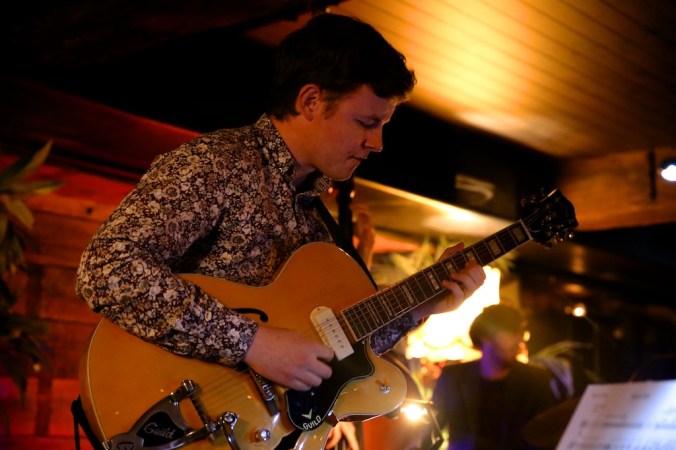 The guiding principle behind the programming of gigs at the CJC (Creative Jazz Club) is a large part of what makes the club work. Not only are there different bands on every week but each artist or group is strongly encouraged to bring a project to the bandstand. This approach brings us variety and often innovation; improvised music from across the spectrum. Everything from tightly arranged ensembles to free Jazz occurs and with a solid offering of post bop, hard bop and Jazz funk in-between. The musicianship is routinely solid and this along with the emphasis on variety brings audiences back week after week. There is another aspect to the programming ethos that is important. Providing an aspirational venue for emerging artists. Without this sort of space emerging musicians miss out on something of inestimable value. Being tested in front of a musically informed listening audience. Performing in a space where well-known artists have preceded them.
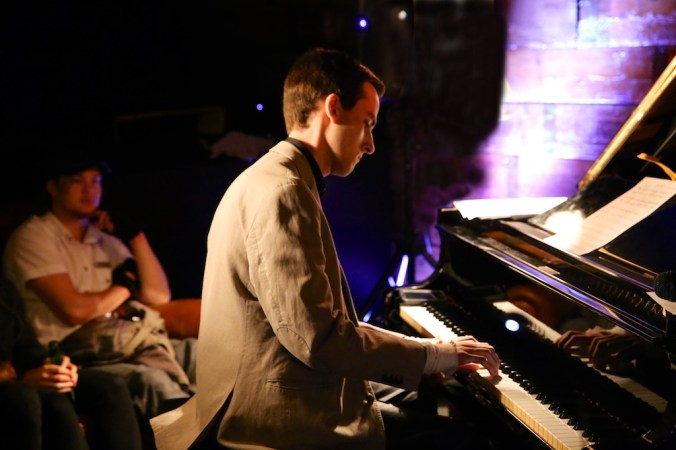 Last week it was Sam Swindells and Loris Zigon’s turn to occupy the emerging artist series slot. Although it was a first CJC gig for the pair, they are regularly seen in the audience. Both have performed gigs about town and I recall hearing Zigon a few years ago at the Auckland Jazz & Blues club. Their set list gave us a little of everything, tradition, originals, duo spots and a variety of larger ensembles. Above all the gig was fun. They were also astute in their choice of band mates. With the rhythm section of Cameron McArthur and Stephen Thomas they could hardly go wrong. In addition they invited a number of guests to join them such as the gifted saxophonist Chris Mason-Batley, Saxophonist Thabani Gapara, vocalist Lou’ana Whitney and keyboard player Eli Moore. All added to the feel good vibe of the gig.
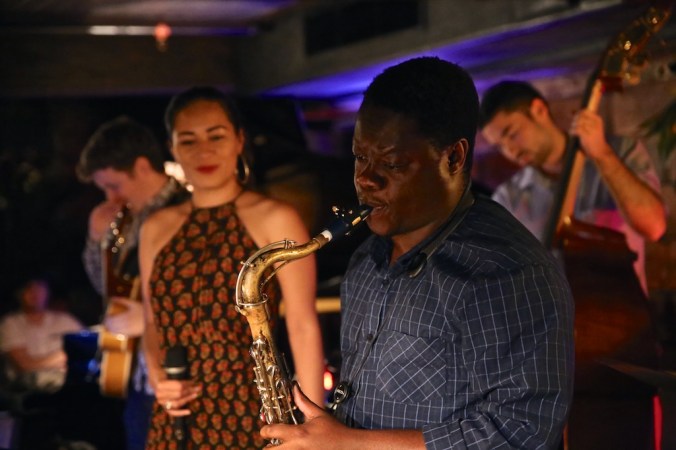 Swindells and Zigon are graduates from the New Zealand School of Music (Albany Campus) and both are well-regarded as musicians. The original tunes were well constructed and engaging, especially ‘Mr Field’. This was a clever tribute to pianist Kevin Field and throughout you could hear references to Field’s unique style. The ensemble playing was boisterous but always enjoyable. Later an arranged pop tune brought Lou’ana Whitney to the microphone along with saxophonist Thabani Gapara (Whitney has a pleasant soul infused voice). It was particularly good to hear Chris Mason-Battley after his impressive offering at the Auckland Jazz Festival (I hope we see him more often doing projects like that). I had not heard Gapara before: a tenor and alto player with an earthy bluesy sound – contrasting nicely with the cleaner etherial tone of Mason-Battley. Eli Moore rounded out a larger ensemble number on keyboards.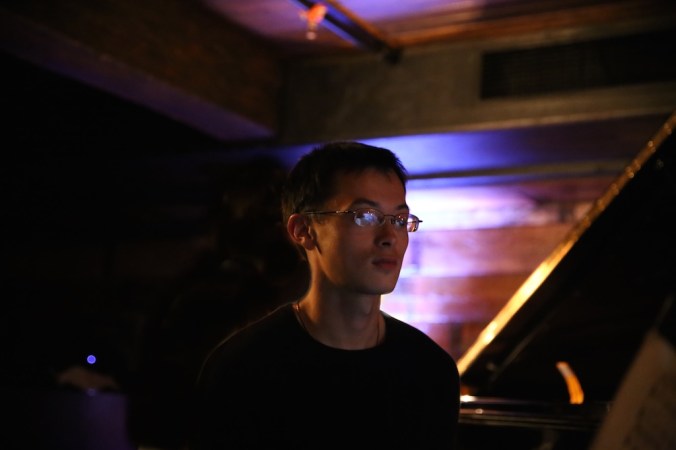
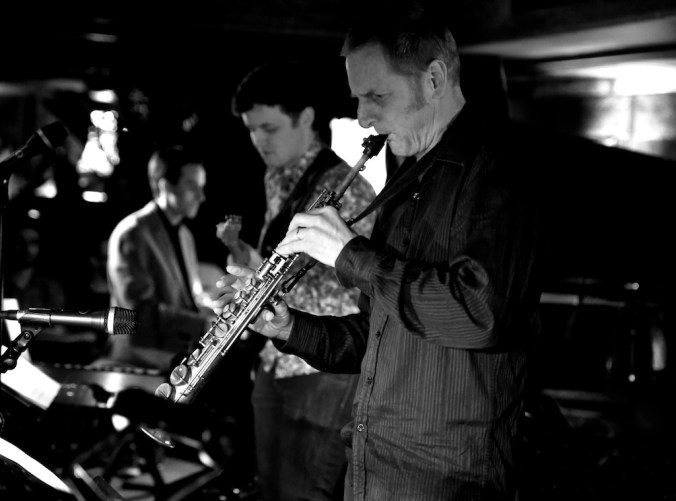 The best place to evaluate an artist is during a ballad or small group piece. The audience had a number of opportunities last week and particularly during the duo or quartet performances. On these tunes Swindells and Zigon resisted the temptation to become needlessly showy. Instead we heard subtly and at times a more minimalist approach. The video I chose from the gig is the lovely ballad ‘Exactly Like You’ (McHugh/Fields). While not a usual standard in modern Jazz gig repertoire it has never-the-less retained its popularity over the years. Recently the highly acclaimed Cecile McLorin-Salvant performed it at the Lincoln centre and I heard the Australian Jazz vocalist Vince Jones perform it wonderfully in Sydney a few months ago. This version was closer to the vibe of the Basie/Peterson duo (but pared back). I could certainly hear Peterson in the piano phrasing, but Zigon and Swindells made it their own. The swing guitar and the jump to double-time rounded it out perfectly. I enjoyed it.
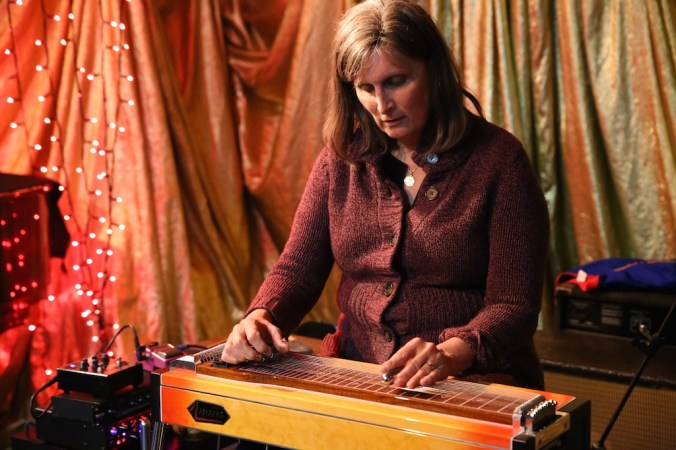 Lately I have attended a number of music workshops. Although not a musician I gain a lot. They offer fascinating insights into the artists creative process and if your lucky, insights into a particular instrument. With music, the more you listen, learn, observe and delve, the more you gain. My reason for attending Susan Alcorn’s workshop was probably different from most attendees. The majority were guitarists anxious to glean practical information or wanting to be convinced that this complex instrument was for them. A handful of others sought knowledge for knowledges sake – dipping another toe in the water of sonic learning.
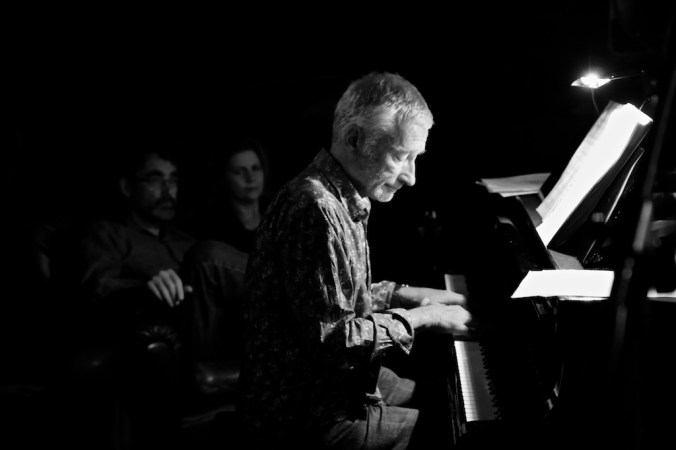 ‘Panacea’ is the third of Phil Broadhurst’s ‘dedication trilogy’ series and as fine as the earlier two albums were, this one stands out. Everything about it is superb, the individual performances, the ensemble playing, the recording quality, the cover art by Cameron Broadhurst and above all the compositions. Broadhurst, always a prolific composer has excelled himself here. Instead of theming the album around a particular influence or musician he has tapped into the subliminal forces guiding his creativity.
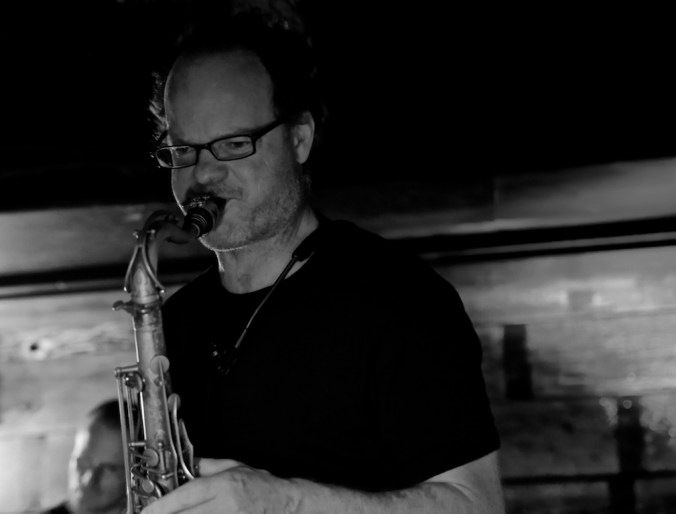 When he composed ‘Precious Metal’ he was at first unaware of the influence until a student pointed it out. It certainly speaks of Horace Silver but more importantly it conjures the essence of the man behind the music. The ensemble playing on this is simply sublime. An arranged head yields to Mike Booth on trumpet. He swiftly encapsulates the ethos of Silver in his delightfully moody solo. Broadhurst follows – expanding on the theme and signalling the direction, effectively setting the tune up for Roger Manins and Oli Holland who follow. There is a logical flow throughout and the piece works all the better because of it. I have heard it several times, but even on first hearing it sounded warmly familiar. That is the skill of good writing; evocation not imitation.
 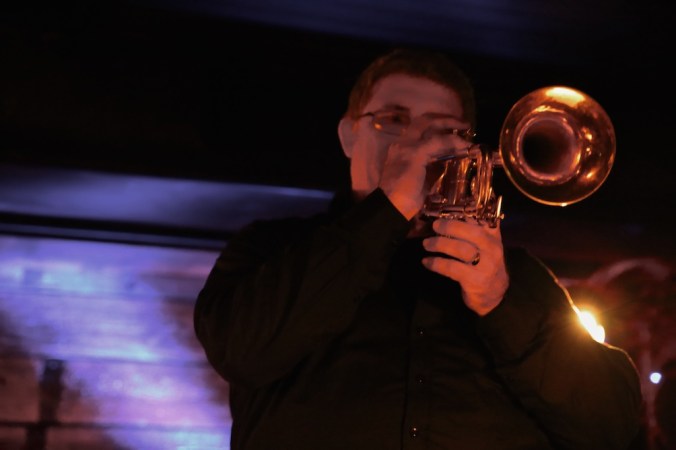 For me the greatest joy was ‘Wheeler of Fortune’ his Kenny Wheeler tribute. So well realised was the mood that it might have been John Taylor playing a Wheeler composition. Again this is an extraordinary piece of writing and articulation, lovely because while capturing the style of these lost lamented greats it reminds us just what made them so dear to our hearts. In spite of being a piece for piano trio you can sense Wheeler reaching for those impossible high notes or mournfully smearing his over-running melancholic lines. It must have been tempting to use Booth’s flugel on this, but the implied sound is all the more powerful.
 I look in the liner notes, no human voice shown – then it struck me. This is Watson, again understated but adding something to the piece which lifts it into the realm of musical magic – an exceptional and original musician. The album would be the poorer without his contributions. Subconscious influences shape every musicians work and it is right to celebrate those. Purging these influences is often a mistake. All creative people whether writers, poets, musicians or painters have these voices at their core. Improvising musicians stand on the shoulders of giants and it is fitting to celebrate that. Broadhurst has done so with due reverence, due acknowledgement but never sycophancy. This was his time to say thank you and his own original voice shone through the multitude of influences.
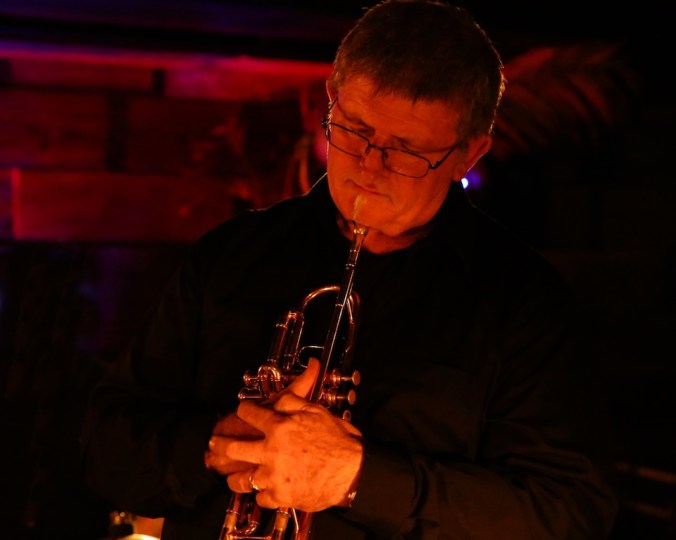 Booth sounds better each time I hear him. His undoubted strength lying in the way he reminds us of the great traditional trumpet players – especially those from the Hardbop era (like Blue Mitchell). A wonderful musician, a fine arranger and one who nicely compliments a saxophone modernist like Manins. Playing off the latter gives the edge. Manins is such an original that you hear something new and exciting each time he plays. I have observed before how well he plays off Broadhurst compositions. This says something about the skill of both men.
 The word panacea is from the ancient Greek meaning ‘all healing’. The modern definition extends the concept beyond cure-all potion – applying it more to the realm of ideas. The album is truly a balm in our troubled times. I highly recommend it as a Christmas present to yourself or a loved one. It must surely be contender for next years Tui’s.
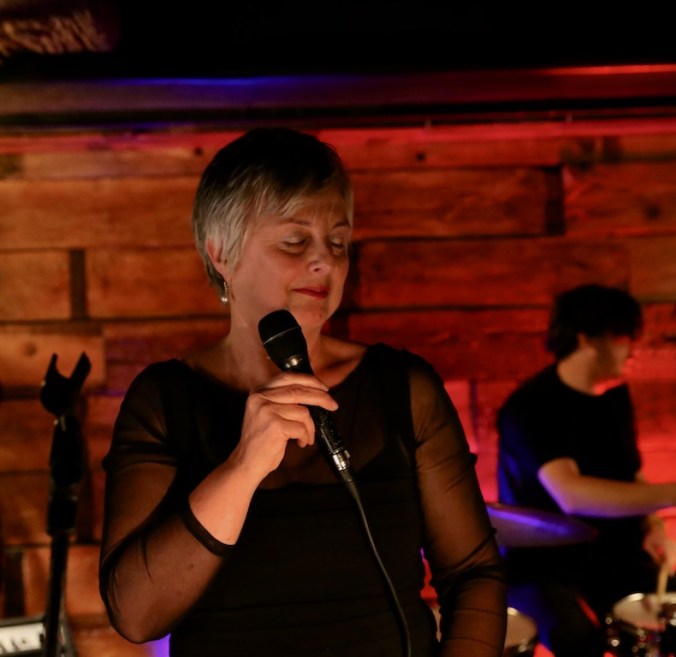 On Wednesday the UK-based vocalist, arranger composer Louise Gibbs brought her Seven Deadly Sins project to Auckland’s CJC (Creative Jazz Club). The audience, unrepentant antipodean sinners that they are, found much to enjoy. When premiered in the UK the project received much acclaim and in 2013 the ‘Seven Deadly Sins’ album’ was released. As I glanced through the liner note credits one name jumped out, Tim Whitehead; an important English saxophonist with equal facility on soprano, alto and tenor. For any number of reasons this is an album worth having.
  The song suite has seven parts plus prologue & epilogue. This aggregation of cardinal sins does not originate with Peter Cook (as someone hilariously suggested) but comes to us from the fourth century AD. These very human failings were the obsession of the middle ages and Chaucer, Dante and Brueghel utilised the themes to great artistic effect (and often with rye humour). Debates on morality are still very much part of the public discourse as the dreadful events of Paris, the Lebanon and Mali remind us.
 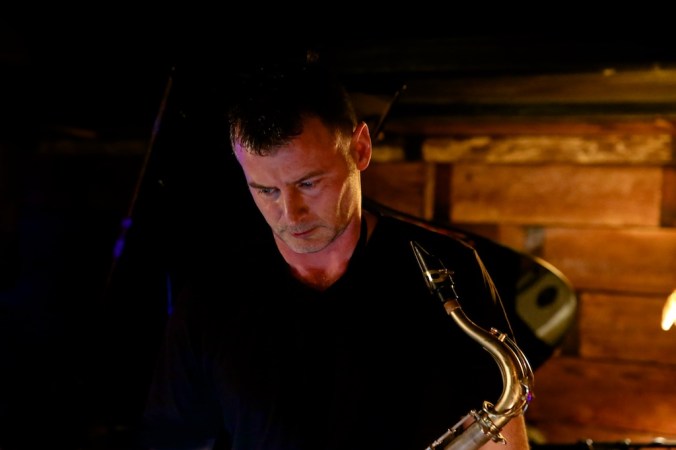 Gibbs invited us to examine the sins afresh; a parade of human failings as seen through a jazz lens. Her evocative contrasting pieces leaving us in little doubt as to which sin they represented; a strident drum solo during anger, the fulsome sound of the trombone for gluttony etc. It is unsurprising that the tenor saxophone portrayed lust; an entirely appropriate pairing given the repeated historic accusations of lasciviousness levelled against that sensual instrument.
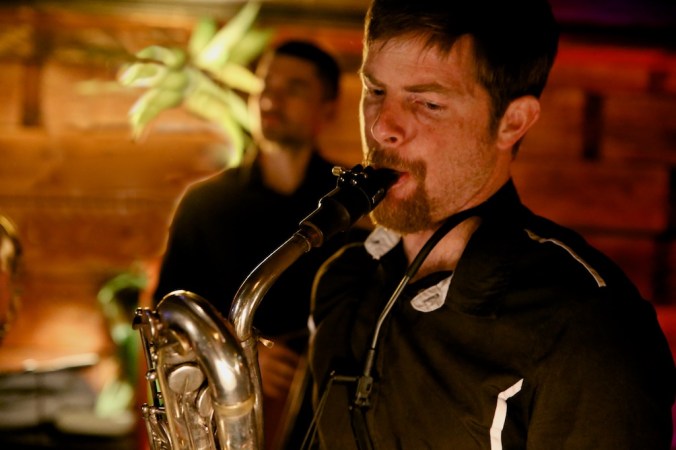
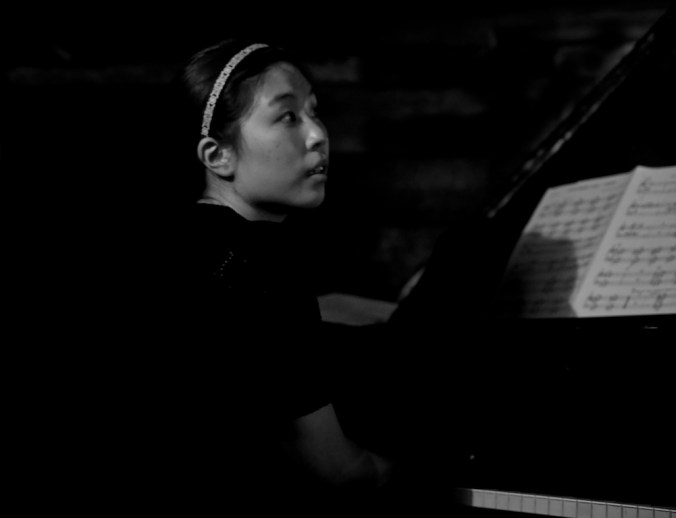
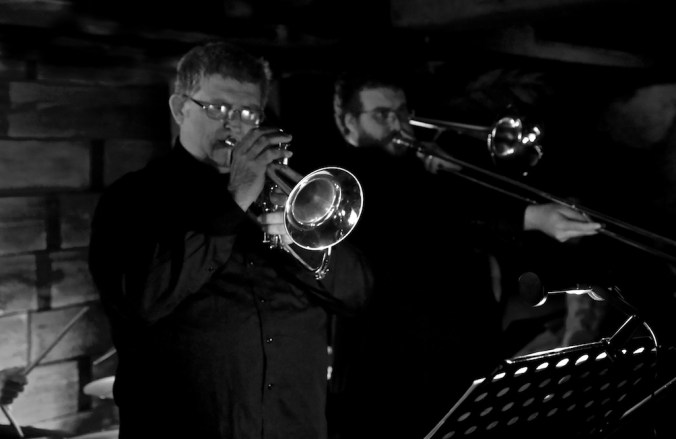
 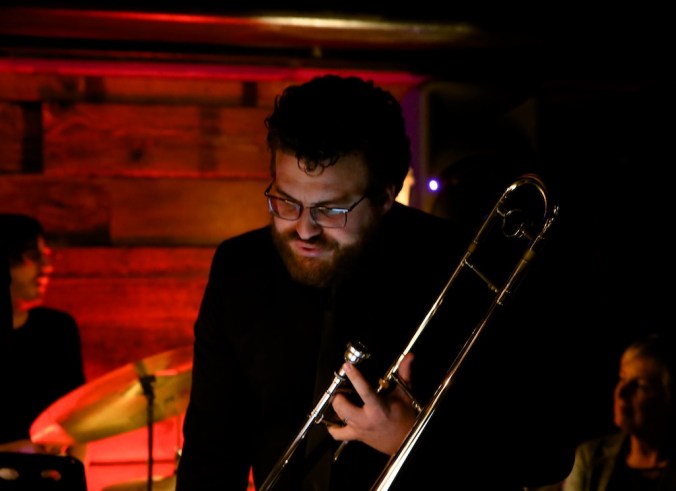 The suite while highly arranged gave ample room for the soloists to demonstrate their particular vice. Crystal Choi was ‘pride’ on piano, Pete France was ‘lust’ on tenor, Haydn Godfrey was gluttony on ‘trombone’, Mike Booth was ‘envy’ on trumpet, Cameron McArthur was ‘sloth’ on bass, Steve Thomas was ‘anger’ on drums, Andrew Hall was ‘greed’ on alto & baritone. Gibbs was vocalist on all numbers including a prologue and epilogue. Many of the band members like Booth, McArthur, Choi and Thomas are regulars but we see Hall, France and Godfrey less often. That is a shame because they were amazing.
  A shorter first set preceded the ‘Seven Deadly Sins’ suite – all Monk compositions. The band used stock arrangements but there was a sense of boisterous freedom in the renditions. This provided an appropriate segue to the second half. While everyone embraces Monk these days, his dissonant choppy lines certainly raised eyebrows back in his heyday. Monk was an iconoclast who channeled the rawness of the human condition through pen and piano. With the Seven Deadly Sins and its often dissonant passages we also experienced that.
  Louise Gibbs has been teaching and performing in the UK for 30 years, but she grew up in Auckland. In recent years she moved away from a distinguished career in academia to concentrate on performance and composition. There is a confidence about her work and she is unafraid as a performer. Her voice can move from silk to raspy as appropriate to the piece. Footnote: Earlier I drew attention to Tim Whitehead (on the Gibbs album). He was once a member of Ian Cars ground breaking and popular group ‘Nucleus’ – the highly respected Kiwi born saxophonist Brian Smith was a founder member of that group.
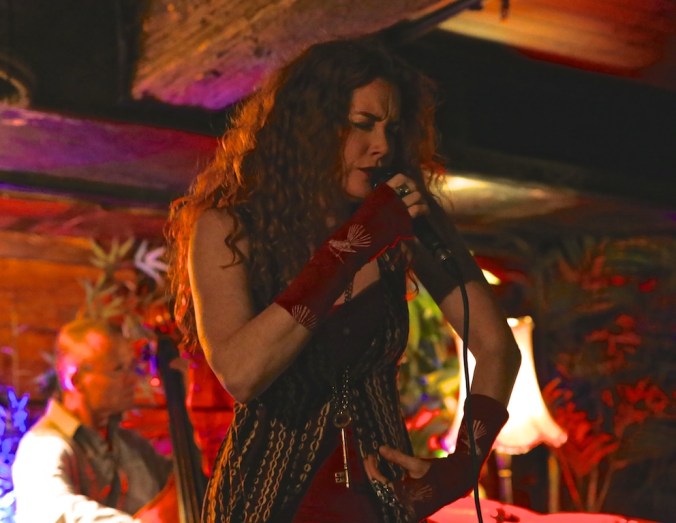 Because the human voice is the most primal of instruments it has the capacity to engage in unexpected ways. When a skilled vocalist performs we watch as carefully as we listen. The merest inflection, micro pause or slurred note can captivate, but it is also the non verbal cues; the ones we assimilate subconsciously that draw us ever deeper inside the song. When Caitlin Smith sings you are hyper aware of the entire performance. Hers are not gigs where listeners drift away or endlessly fiddle with phones. The audience are as engaged as she is. That is her gift as a musician.
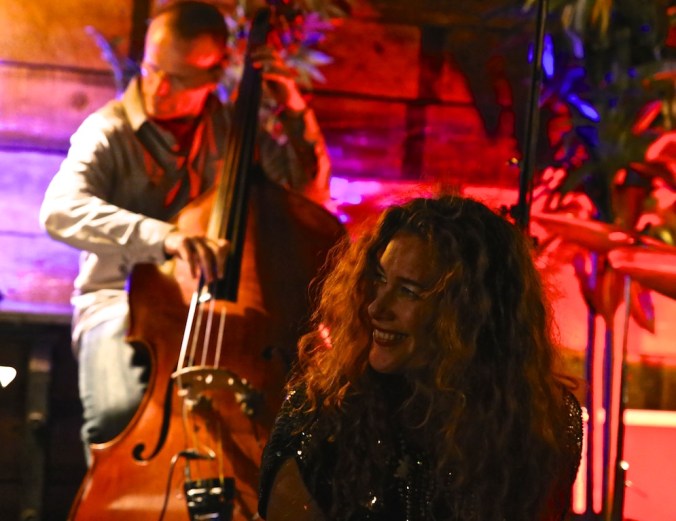 When Smith moves your attention moves with her. She will prance, dance, drop her head, pause for effect or sweep her hair back unexpectedly and all in service of the song. When you watch and listen to skilled performers like her (and they are few and far between) you discern a deeper truth. What appears extrovert can be something else. The actions and gestures are an act of losing oneself. This is the performers mask and behind it lies a certain vulnerability. When enough of this vulnerability informs the music we feel with them.
 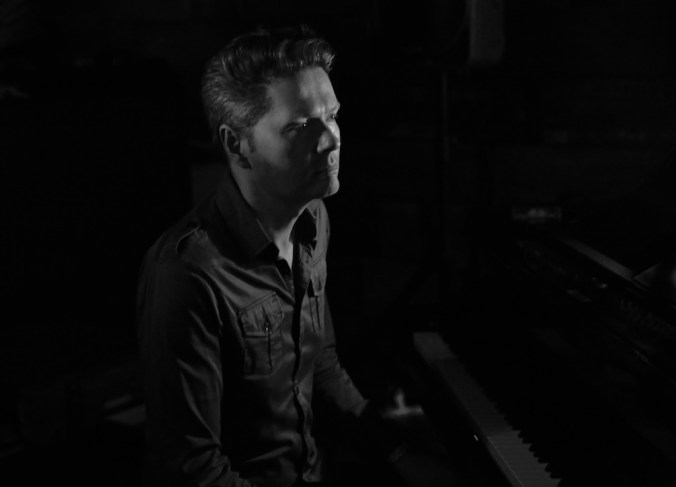 During Smith’s performances there is a lot of interplay between band members. She is generous in her acknowledgements and genuinely appreciative of the musicians behind her – unlike some vocalists who make it very plain that this is all about them. She had two of her regular cohort with her, Kevin Field on piano and Oli Holland on bass. On drums was the talented Stephen Thomas and I had not seen him with Smith before. During the break I asked Thomas how he was enjoying the gig. His answer is worth repeating, as it illustrates the above points. Vocal artists who think disengaged equals cool might pick up a pointer here. “Working with Smith is perfect as you have so much to react to. Every gesture and look gives you new material to work with”.
 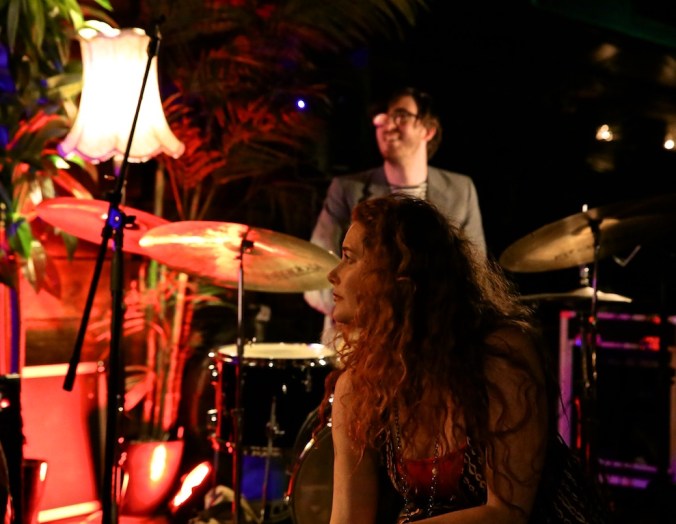 Smith followed her usual pattern of alternating originals with standards. The set list moved between Jazz and singer song-writer soul. She only repeated one tune from last Decembers CJC gig and that was the lesser known Ellington Number “I like the Sunrise”. This is from Ellington’s ‘Liberian Suite’ performed and recorded first in 1947. The original featured Al Hibbler on vocals, soon followed by a Frank Sinatra version (also with the Ellington orchestra). More recently Kurt Elling recorded a version but all of the aforementioned are at a slower tempo. At the risk of committing heresy, I like the upbeat punch and swing of Smith’s version best.
  The night was thoroughly enjoyable as I knew it would be, and with this rhythm section of Field, Holland and Thomas behind Smith that was guaranteed.
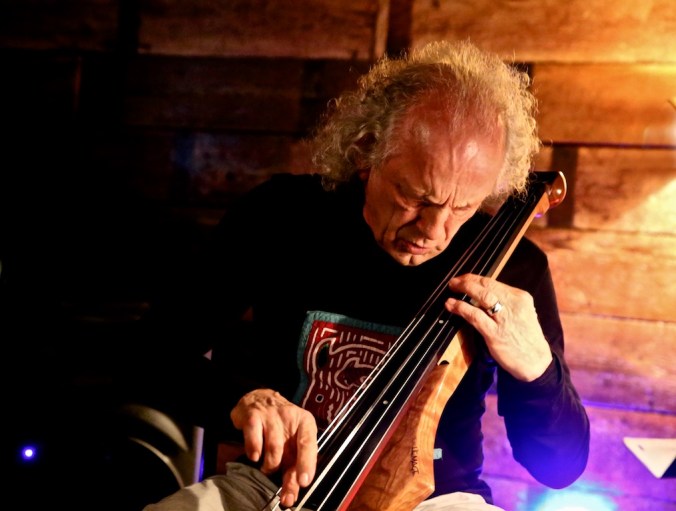 Good improvising bass players get a lot of work, but they seldom get the acknowledgement they deserve. This is one of life’s inequities and it’s partly because a bass player by custom is hidden behind the other band members. When a pianist or guitarist plays solo they will often mimic or imply bass lines. A good bass line is both an anchor and an invitation – invoking deeper exploration; the consequent rub between notes and time is where most of the tension and release is hidden. Every so often a bass player claims wide-spread attention. Blanton, Mingus, Haden, McBride, Le Faro, Pastorius etc. David Friesen while not garnering the attention of the aforementioned bassists in the popular press, is without doubt a giant of the instrument. His is a name that frequently comes up when aficionados and musicians talk. He is the bass players bass player, an acknowledged innovator.
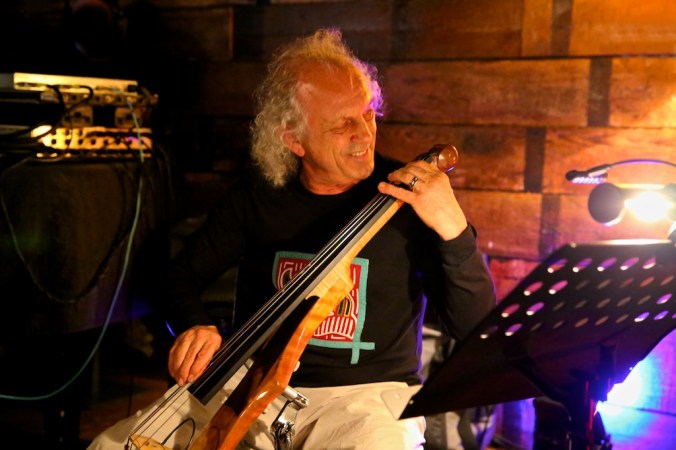
 As is often the case with great musicians, he was a compelling talker; spinning out yarns of people and places visited. Often with subtle humour woven into the narrative. Above all he imparted his views on the place of music in these complex and troubled times. To paraphrase slightly, “Music is a way of healing a broken world, it is not just about the people making the music or about the audience receiving it, but something far deeper. The interaction creates a virtuous circle, each continuously enriching the other. Out of this comes the magic”. This reference to the primal healing power of music resonated and he received loud applause. Improvisers seldom earn what they should and yet they persevere. Understanding their mission of deepening human awareness. It was good that he reminded us of how vital a deep listening audience is. Sharing the joy brings its own responsibilities. That’s why I do what I do in print.
  Friesen travels with a special bass; made for him by a famous Austrian instrument maker. Sick of having instruments damaged or interfered with by airline baggage handlers, he ordered an instrument small enough to go in the overhead locker. This custom bass is mainly crafted out of American Cherry wood and Canadian Maple. It also has a very sophisticated pick up. Because of the foreshortened neck I suspect that it would take some mastering by most upright bass players. In Friesen’s hands it sung.
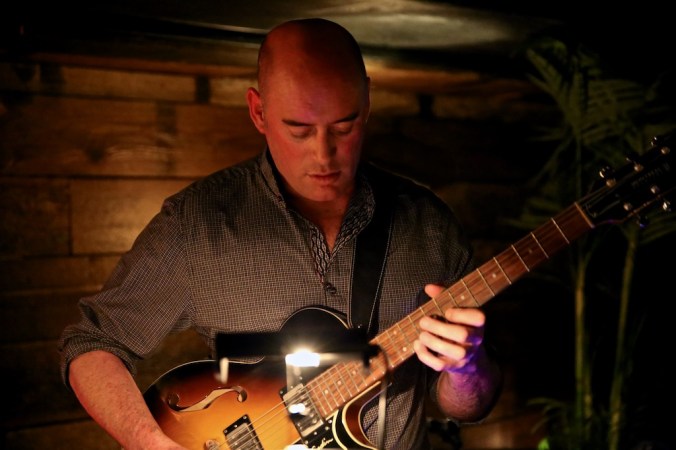
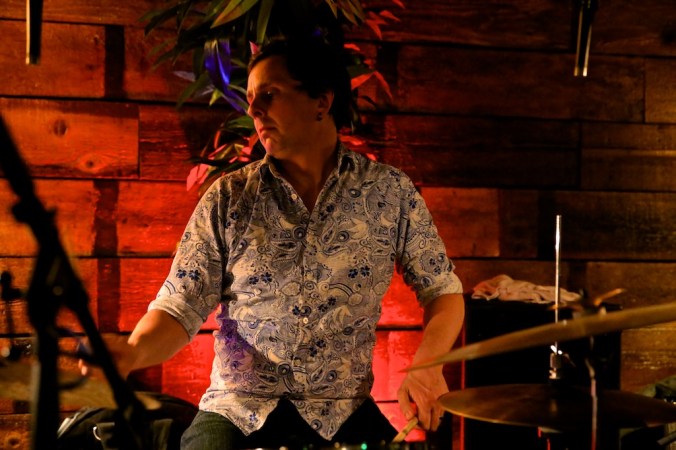
  Nacey did what we expected of him; delivered stinging imaginative lines and soared on that lovely Godin semi hollow-body. As success spreads him thinner, we tend to see less of him in the Jazz club. When we do hear him we get the very best. He is a guitarist who can hold his own anywhere on the scene. The other Kiwi on the gig was Wellington drummer Reuben Bradley and what a performance he put on. Again it was hardly surprising, as Bradley is among our very best drummers. Like Nacey he is often the drummer of choice for visiting artists.
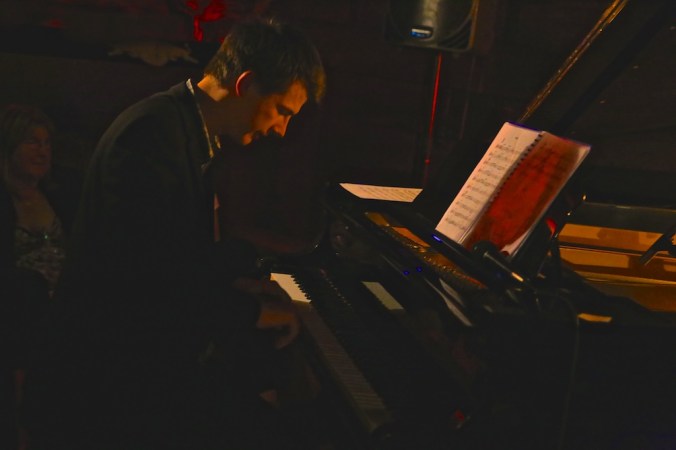 Alex Ward has been on the scene for a few years now and he has appeared at the CJC a number of times. This time he appeared with a group of formidable younger musicians; all respected about town. His programme was pleasantly challenging as it offered contrasting tunes. From the quirky Carla Bley composition ‘King Korn’ to the perennially popular Disney tune ‘Never never land’. Then, for the second time in as many weeks we heard a Cold Play cover – this time ‘Daylight’ (arr. by Taylor Egsti). Rounding off the set list were a number of his own compositions including the appealing ‘Rakino’ which I have heard before. Wards compositions have a definite melodicism about them.
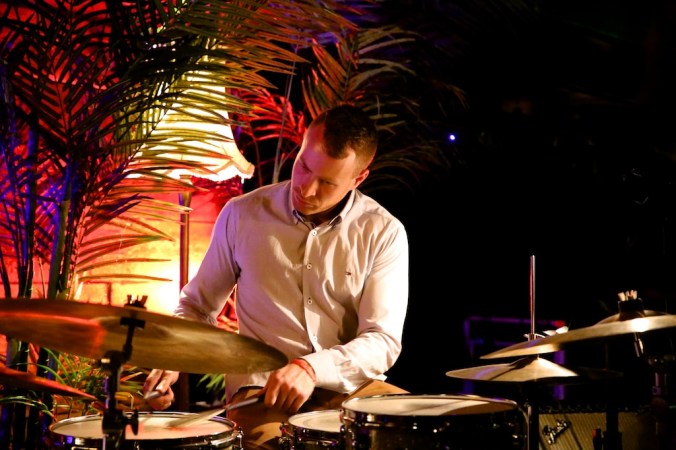
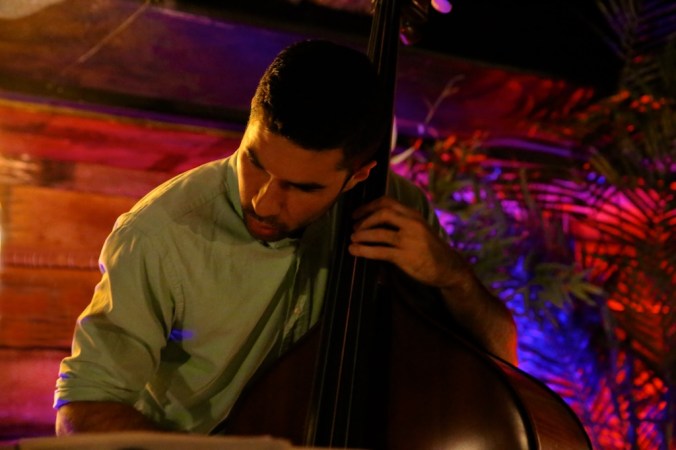 I am a real Carla Bley fan and so it surprised and pleased me to hear ‘King Korn’. I also have a real liking for her ‘Ida Lupino’. Bley’s repertoire is not played anywhere near enough for my liking. Her tunes are often closer to the avant-garde, but still accessible to main stream listeners. Ward showed no fear in tackling the angular jerky rhythms of King Korn and the result was pleasing. He had surrounded himself with exactly the right musicians for the task. On bass was Cameron McArthur, a perennial favourite who must now be considered a heavyweight about town in spite of his youth. The drummer was Cameron Sangster and again a highly experienced and gifted musician. Sangster is a multi faceted drummer who can move between soul, big band and small ensemble work with ease. We recently saw him with the Auckland Jazz Orchestra where he put on a stunning performance.
  Additional musicians came to the bandstand at various points; Kushal Talele on tenor saxophone and flute and Michael Howell on guitar. I had previously only encountered Ward playing in a trio format and this was a chance for us to see what he would do with an expanded ensemble. The diversity of material worked for them – none of it highly arranged but allowing for free-flowing interaction.
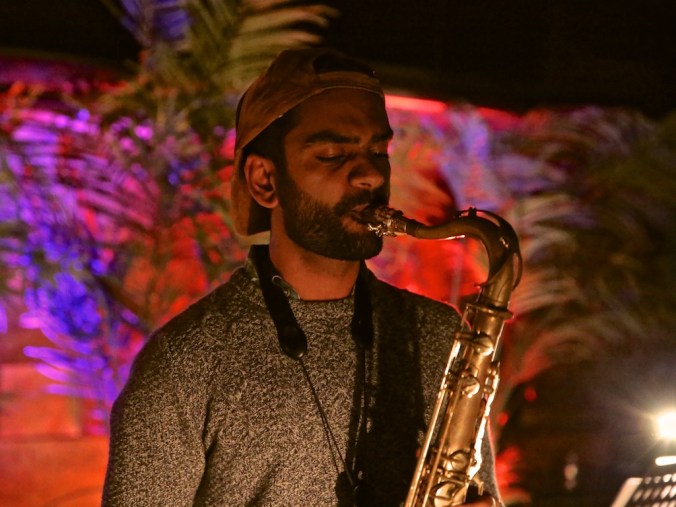 I had only heard Talele once before and he naturally sounded different on this gig. Here he was appropriately the competent sideman, not the hard-driving Coltrane referencing leader. I like both aspects of his playing. He is a musician that I am definitely keen to see more of – especially when he dives deep into that denser material he favours. The ever smiling Howell is well liked and respected as an up and coming young guitarist. He is seen to greatest effect in Roger Manins ‘Grg67’ band.
 Whether by accident or design, Ward celebrates Carla Bley in an important year. 2015 saw Bley receive the highest public honour in Jazz, as she was the recipient of the NEA (National Endowment of the Arts) Jazz Masters Award.
 By the time the second week of the Auckland Jazz Festival arrived, I began to feel my age. I had already experienced a number of late night gigs and a further week of music stretched ahead of me. This was no time to flag, as some interesting and innovative music lay ahead. The festival programme structure provided audiences with variety. The depth and breadth of the improvising scene was on show and I wanted to see everything possible. The week started well with the Meehan/Griffin/Manhire poetry project (see earlier review for this). That gig brought a new audience and I was still
  buzzing come Tuesday.
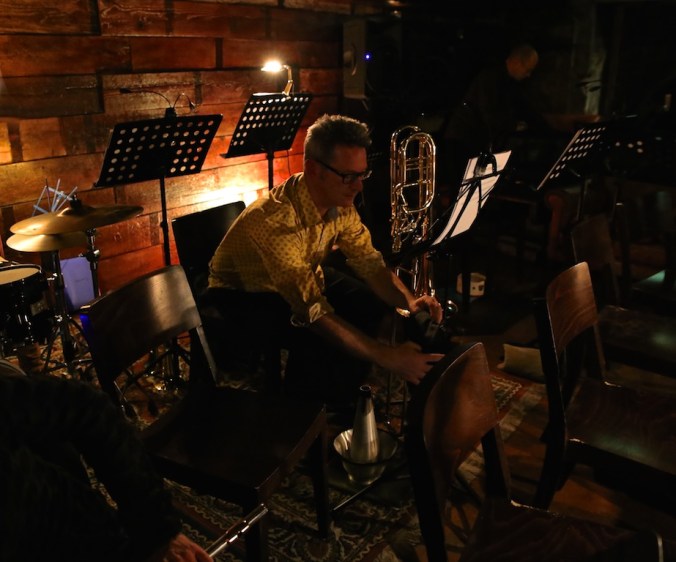
 I had volunteered for door duty that night, turning up early to help. I enjoy the Jazz orchestra set-up process – in this case nineteen musicians and a conductor configuring a behemoth in an impossibly small space. It was like witnessing Nasa scientists beginning the launch sequence. Instruments and gauges checked, tapped and rechecked, cabling run out; each adding a layer to the criss-cross tangle of shoes, stands and chairs. Soon there were rows of brassy instruments standing in an (almost) orderly line, with the odd human interloper spoiling their symmetry. Random buzzing sounds came from warming up lips; and all punctuated with honks and plucked notes from far-flung corners of the room. this is the counterfactual of the sounds that follow.
 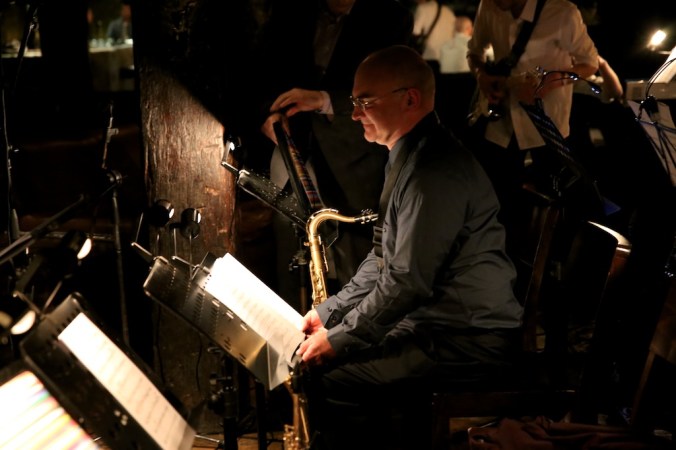 Band leader Tim Atkinson composed and arranged the suite. He has carefully shaped this ground breaking project as befitting a work of this importance. This is a modern piece of music in the mould of Darcy James Argue. Richly textured, evocative of the title and especially in the warm multi layered dissonance that swells out of the quieter passages. The work has captured a mood and an orchestra going places. This is a moment which benchmarks the growing maturity of the Auckland Jazz scene and I am truly glad to have witnessed it. The overall performance on the night was flawless, but if anyone stood out it was altoist Callum Passels. His solo on ‘The Dark Passenger’ was wonderful. it was a feat of story telling, of mood and it oozed freedom – as if he had somehow escaped the confines of room and orchestra. Importantly, he managed this without once deviating from the logic of the composition. I urge people to purchase this album and I guarantee that you will play it over and again.
  On Wednesday I spent time with the
 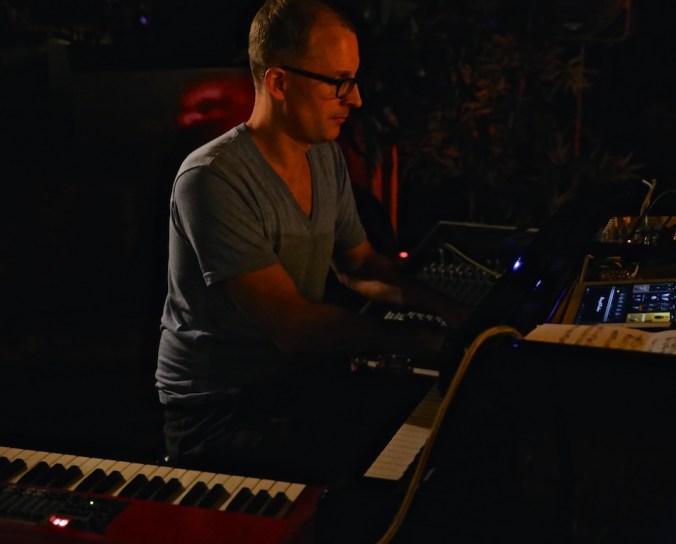 The trio’s set list was a mix or originals and some very interesting covers. What was not composed by Lackner or by the drummer Chazarenc, were often unexpected tunes; Brahms, Cold Play, David Bowie, Rodriguez and Jimmy Hendrix. ‘If Six were Nine’ was simply stunning. Warmly familiar to those of us who remembered the rock original. Taking the bones of a 1960’s tune and infusing it with edgy lines and modern harmonic conceptions. I have long-held the view that the new standards will come from material exactly like this. None of the band were alive when this acid blues classic was cut in 1969, but their joy at performing it was evident. Jimi would have loved it.
 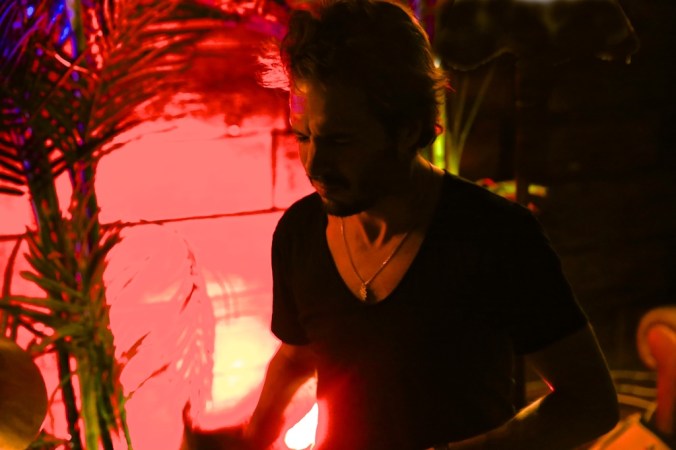 The bass player on this trip was Bruno Schorpe. When offered an upright bass he declined – choosing to remain on electric bass throughout. I’m glad that he did because the instrument had the bite to act as counterweight. Balancing out well the electronics and various effects of Lackner’s keyboards. Then there was drummer Matthieu Chazarenc. He has accompanied Lackner on previous trips and to my ears he is directly out of a great tradition. French Jazz drummers have a sound that is distinct. Like many of his compatriots Chazarenc’s sound is crisp, even dry; utilising dynamics in ways that younger drummers are often incapable of. A label like ACT must surely pick the trio up sometime soon. They would be a perfect fit – much as they would for ECM.
 ‘The Green Room
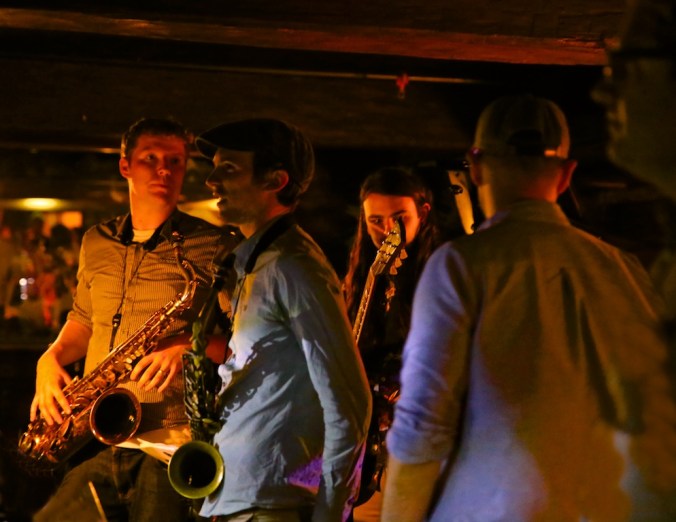 It is almost overkill to single out soloists with a cohesive group like this as every one is notable in some way or another. Altoist Jake Baxendale is their nominal leader and three of the compositions on the album are attributed to him (including the title track). If any number captures the essence of the group it is this. The solo on his tune Andalucia also captures a strong sense of place. I know Andalucia well and this is a convincing testimony.
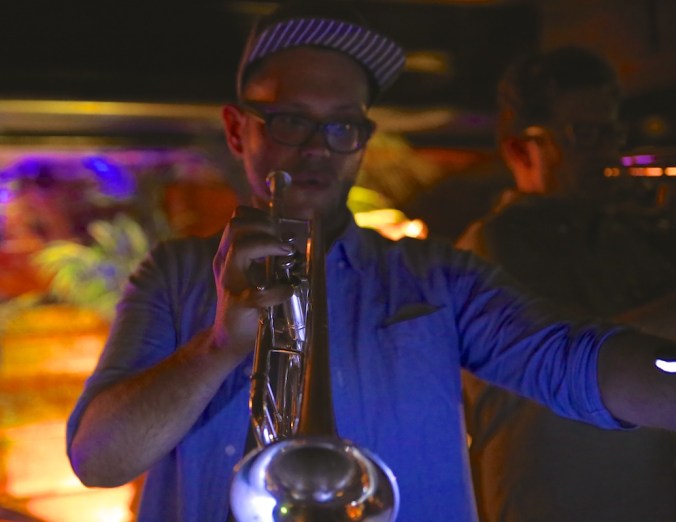 It is hard to know where to start with Callum Allardice; he grows as a musician every time I hear him. His compositions are stunning and his guitar work so fluid and exciting that it defies belief. These are performances that stop you in your tracks and few New Zealand guitarists capture that particular sound. Lex French is another spectacular performer and we would hardly expect otherwise. He is now the leading local voice on that horn. Perhaps the most experienced player is Nick tipping who never puts a foot wrong. On the new album we hear him at his best.
 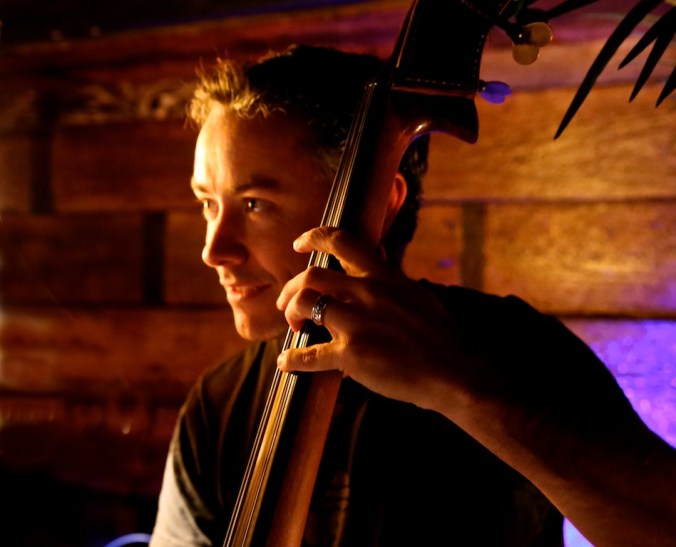 Convincing contributions by the likes of Chris Buckland, Matthew Alison and Shaun Anderson reinforce the view that this is an all-star band. Lastly there is pianist Daniel Milward. He has recently moved to Melbourne and his voice is particularly strong on the recording; more so than on the first album. Not a showy pianist but an extremely tasteful one who gets it just right. I have put up a sound clip of the Allardice Composition ‘The Heist’, as I have loved it since first hearing it (probably at the Tauranga Jazz Festival).
 In Psathas words, “it is not arranging or adapting…(rather) a continuing of the composing process”. There are works or arrangements which re-imagine and examine a work from an outside perspective. That is not the case here. This is part of a developing story and the Psathas vision remains at its heart. I recently read a trilogy by a famous and highly respected author. He had intended to write a fourth volume but died before he could proceed. A year later another author picked up where the original author left off and achieved something extremely rare. He added to the body of work seamlessly; continuing the narrative in ways that were his own and entirely consistent with the original. Although a more serious work, DIAGOLOS was an unmitigated triumph.
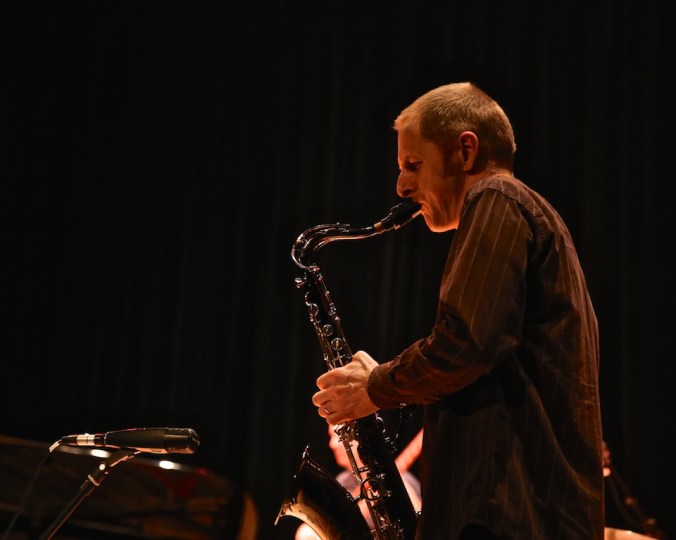
  Mason-Battley is a thoughtful gifted musician, but we don’t see him perform about town very often. Any new project gets his undivided attention and that was the case here. Counter intuitively, it is his careful preparation which affords him the extraordinary freedom he demonstrates on the bandstand. During this performance he took us right to the edge; you gained the sense listening that he was pushing himself a little further with each phrase. It is at times like this that great music emerges. While adventurous with electronics, he evokes a classic Coltrane sound on his Soprano. There are a number of local musicians who double on soprano but few (if any) sound like Battley.
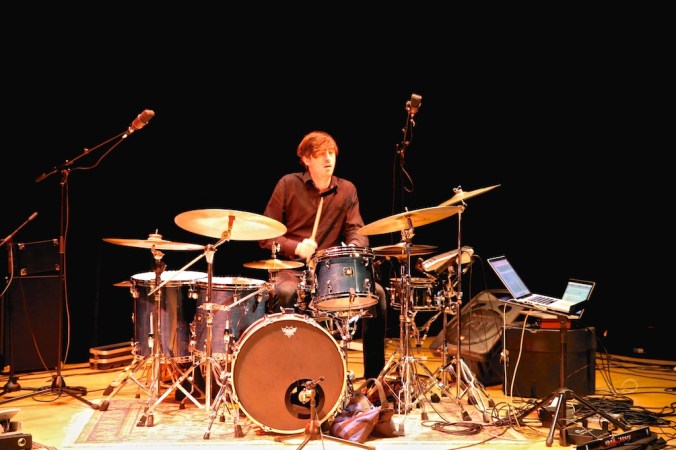
 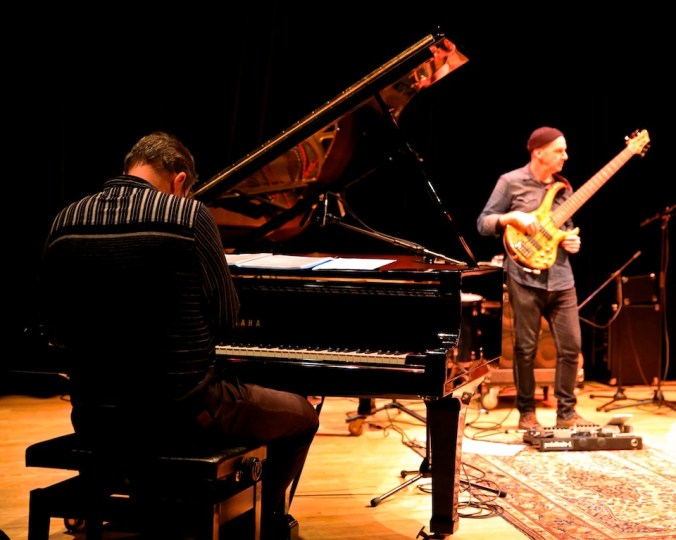 The Chris Mason-Battley Group has been around for some time and the original group set New Zealand records for the number of downloads and albums purchased. For this project core members David Lines, Sam Giles and Mason-Battley remain with the addition of drummer Stephen Thomas. Unlike earlier configurations, there is no guitar. Bringing Thomas into the mix has worked extremely well. The drummer of choice for many gigs and a gifted percussionist in the fullest sense. Psathas music calls for sensitive drum work and Thomas has exactly the right approach. His understanding of subtle dynamics, time awareness and overall sensitivity to the project were very much on display. I also appreciated David Lines piano. Lines early classical training was evident in places and again this made him a very good choice for the project. The work required a pianist with a particular chordal approach. At times he was minimalist and with a particular approach to voice leading. Lines like the other four were indispensable to the project. Lastly there was Sam Giles – an electric bass player I wish I heard more often. Giles often leans towards the avant-garde and innovative projects. That is where he shines.
 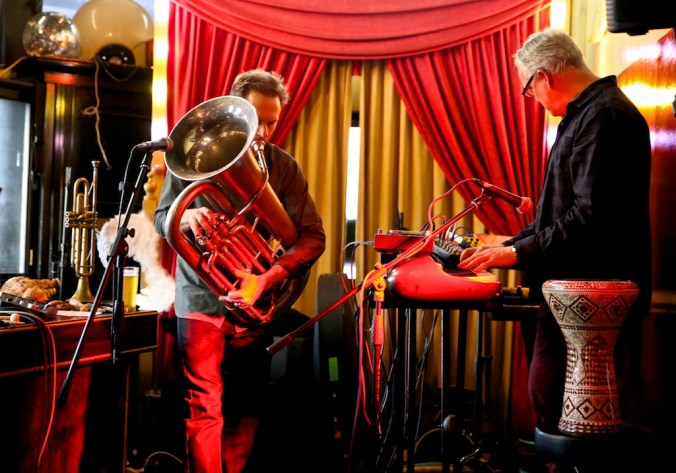 The Last Auckland Jazz Festival gig I attended was the Alan Brown/Kingsley Melhuish
  This has been an interesting Jazz Festival and although it is cliched, there was something for everyone. From manouche through to the avant-garde. I loved that it retained the feeling of local and of intimacy – even when showcasing offshore bands. The CJC (Creative Jazz Club), Rattle Records, 1885 Britomart, Auckland University, Golden Dawn, Portland Public House, Hallertau, Ostro, Lot 23, One2One, Hotel DeBrett, Lewis Eady, The Refreshment Room, the Vic, The Wine Cellar and other venues deserve our heartfelt thanks. Above all its
  This is the second Auckland Jazz Festival and what incredibly tasty offerings there are in the programme. The event runs as a fringe festival and this is absolutely the right approach; no corporates making stupid unhelpful suggestions, an intense focus on the best of Kiwi improvised music and international acts with an established connection to New Zealand. The ‘best kept secret’ ethos is a good model for this music and it’s true. In a nutshell the festival tells an all but hidden story; the story of a vibrant diverse Jazz scene, with more than enough talent to wow discriminating audiences. The biggest downside of fringe festivals is that they run on air. Good attendance can mitigate this. With no significant up-front advertising budget, the role of the sponsoring clubs, bars, galleries and local record labels is vital. Those venues and the labels (Rattle in this case) need our support and appreciation. While Auckland has an unfortunate track record of failing to support the arts, the winds of change are in the air. The gigs on offer are diverse and interesting and Auckland will increasingly want a piece of this magic.
 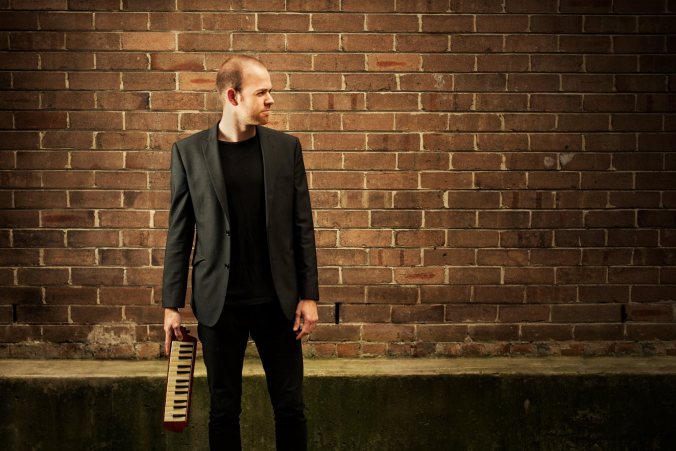 The festival opened on the 14th with a duo of respected Australian musicians, ‘The Prodigal Sons’. P J Koopman (guitar) and Steve Barry (piano) are expats who left New Zealand long ago to work in Australia. Both are fondly remembered by Kiwi audiences and both are now firmly established in Sydney; polished musicians speaking each others language. The years of hard work and performance in diverse situations giving them particular insights. Barry has been widely acknowledged for recent albums and although widely engaged in academic pursuits recently, it is good to see him on the road again. These guys can really swing their lines and do it while spinning out fresh ideas. No tempo deters them, but it was the medium and slow tempos that showed us their best. The two original compositions which particularly impressed me were by Koopman; ‘Working Title’ and ‘Major Minor’. On these tunes the exchanges between the two were breathtaking. They engaged two fine local musicians for the gig and with the talented Cameron McArthur on bass and Andrew Keegan on drums the gig was superb. McArthur and Keegan were there every step of the way and as pleasing as the headliners.
 On Thursday the Jonathan Crayford Electric Trio featured. It is no secret that I rate Crayford highly and I would go to see him perform anywhere. Arguably one of our top Jazz exports to the world and undoubtedly one of the more innovative musicians on the scene today. No Crayford project is a half-hearted affair, as this musician lives music in the fullest sense. His musical outpourings are sublime but it goes deeper than his excellent musicianship. Crayford’s vantage point on the creative life is unusual and deeply focussed: few others share his perception.
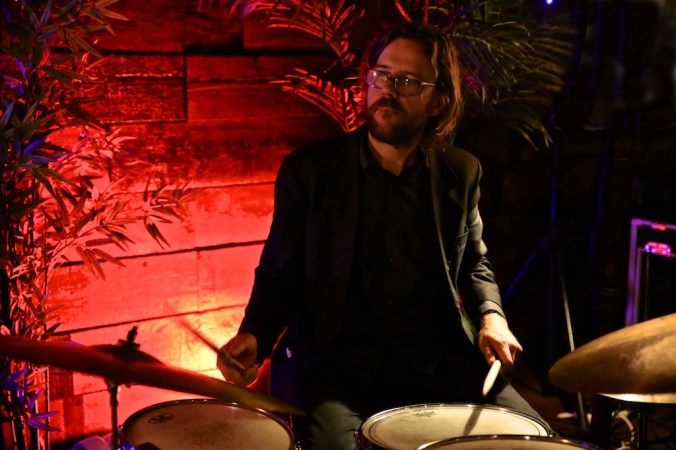
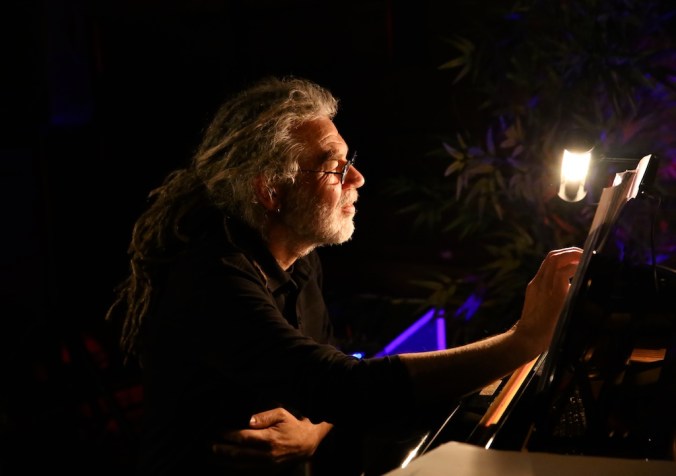
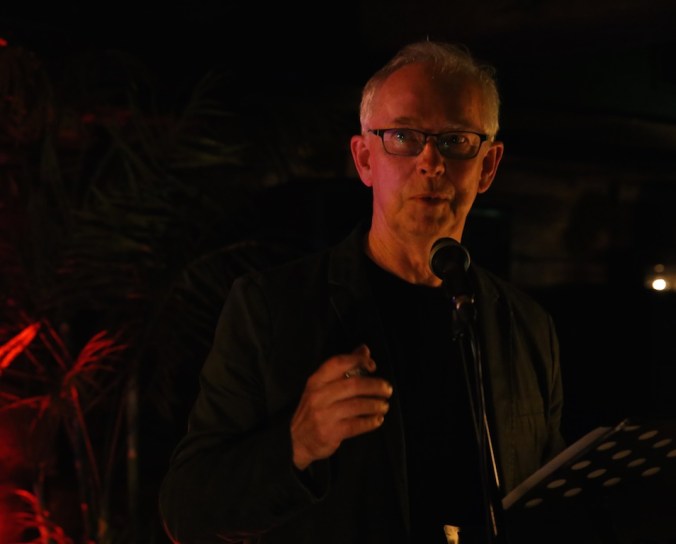

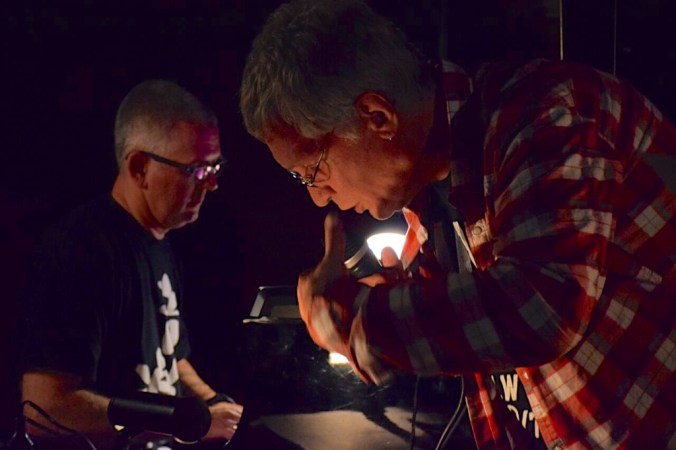 I made up my mind days before the Mexico City Blues gig that I would not, could not review it. It is some kind of crazy to review a gig where you’re in the band. Logic and custom sensibly warns you to walk swiftly in the opposite direction. The gig passed and I asked others if they would do the review; “You’re wrong man” they said, “You absolutely have to do it, but do it differently – tell a story about what it felt like performing for the first time, and what it felt like as a non musician being part of a high quality improvising band”. I thought about it for a while and gave in. In truth I had a world of stuff churning about in my brain and the subconscious urge to outline the experience was gnawing at me; my thoughts and impressions always seem to spill onto the page somehow (or into a poem) – so hell why not. It’s Gonzo journalism in its purest form; outlining crazy, using ones-self as the hapless protagonist.
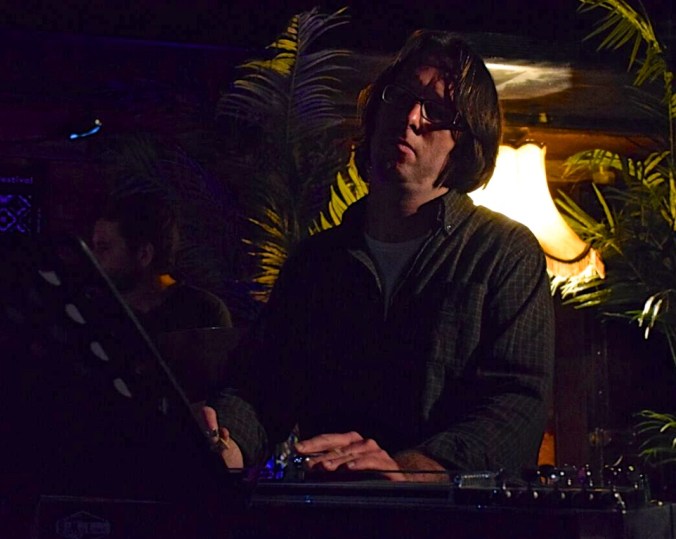 I confided my fears to a few knowledgeable friends, Chris Melville and poet Iain Sharp. Both were very sensible and reassuring in their advice; “Just own who you are man, own your voice. You know this stuff backwards and you know the music”, they said. When I explained the hazards of fitting existing verse to music, drummer Ron Samson told me, “Don’t worry man, we will follow you – your safe with us”. I discussed it further with Stephen and he gave me a set list. From that list I chose three poems that roughly matched the rhythms of tunes. For ‘Goodbye Pork Pie Hat’ (Mingus) I chose Kerouac’s chorus 66 from ‘Orizaba 210 Blues’, for ‘Blue in Green’ (Evans/Davis) I selected the beautiful mystical 1st chorus of ‘Desolation Blues’. I was sure that two poems would be more than enough, but as a precaution I prepared a third as back up – verse 116 of ‘Mexico City Blues’ to Horace Silvers ‘Peace’.
 Jazz gig rehearsals tend to follow a formula, but viewing this process from the outside and being part of it are two very different things. From the inside your inbuilt detached observer gets fired from the cannon of weirdness. You realise just how random Jazz rehearsals are. They begin what becomes a slow descent into the controlled accident. The first hour of any rehearsal is a ‘hang’, insider jokes, war stories and talk of gear and gizmos. Then a sudden flurry of activity follows; disembodied items of musical machinery miraculously forming into new shapes. If the rehearsals are in a Jazz club the activity takes place in semi darkness. Instruments, microphones and amplifiers joined by a spaghetti of wires as the musicians stumble over precarious piles of instrument cases and zip bags. “Oh shit this channel is dead – (from out of the darkness) – don’t worry its the cable – have another in my car – its parked a few streets away. Can we route the cable through the Hadron-Collider? – clip click – sorry false alarm”.
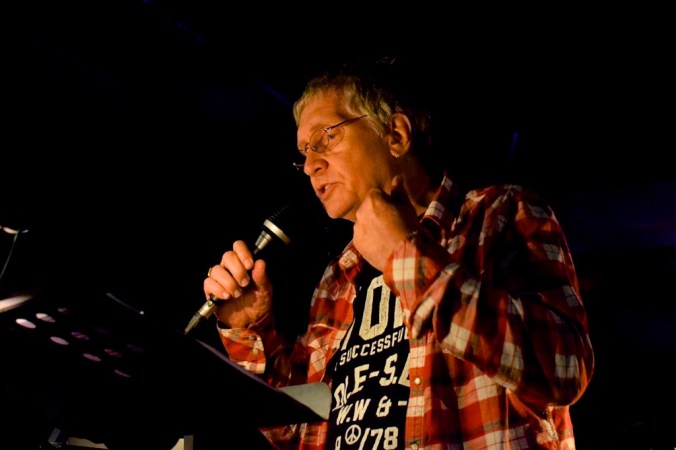 Then came the truly random bit. “We can cue you in on each piece, or just dive in where ever you think best – we can follow”. The words ‘each piece’ threw me a curve ball. “I have only three poems printed off” I added lamely (or four if you counted a crumpled excerpt from ‘Desolation Angels’ tucked into the back of the folder). “No matter – just say anything – you’re a poet – it will be fine” said Stephen. Then I remembered the paperback of Kerouac’s ‘Book of Blues’ in my bag. “Great” said Stephen, “just pick the poems randomly – do it at the last-minute while we run through the head of each tune – perfect”. This was a band leader channeling the Zen Master – a role quite appropriate to a 1959 referencing gig – throwing me a Koan, an improbable musical puzzle, no escape route possible. When we got to the tune ‘Peace’ I gained confidence, “Ah I have something for this – yeah – Horace Silver”. At this point Stephen casually informed me that they were actually doing Ornette Coleman’s ‘Peace”, another tune entirely. Ornette, ORNETTE – holy crap – panic. Next the gig
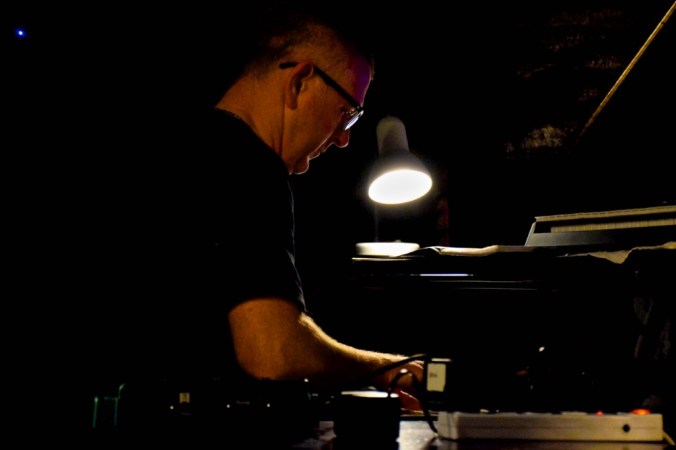
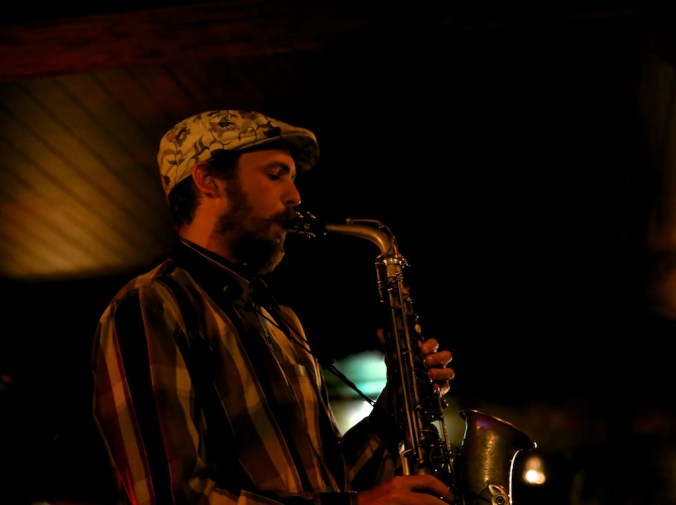 The Antipodes project is an innovative one; well conceived and excellent in its realisation. It is a young group but you wouldn’t think so to listen to them. Musical maturity is generally equated with time served on the bandstand, but if the right musicians come together, surprising synergies can occur; artists collectively punching above their weight. Antipodes hits the mark on a number of levels. Firstly the writing is superb. The musicianship is also great but for me it is the communication of a shared vision that lifts them above the ordinary. Given that three members of the band are new to project, that is surprising.
  At the epicentre of this group are the core members: Jake Baxendale, Luke Sweeting and Callum Allardice. The original lineup featured respected Australian trumpeter Ken Allars. Allars is at present on tour somewhere in a distant corner of the globe – replacing him is Simon Ferenci. It might be supposed that the absence of Allars changed the dynamic, but Ferenci fitted in as if he’d always been there – a trumpet player I had not heard before, but one I will be happy to hear anytime in future. Also new are the bass player Max Alduca and drummer Harry Day. Like Fereci both terrific players and in synch with the over-arching vibe. Without the cushioning bass work and often edgy drum fills the band would be less interesting. Their contributions were on the mark.
 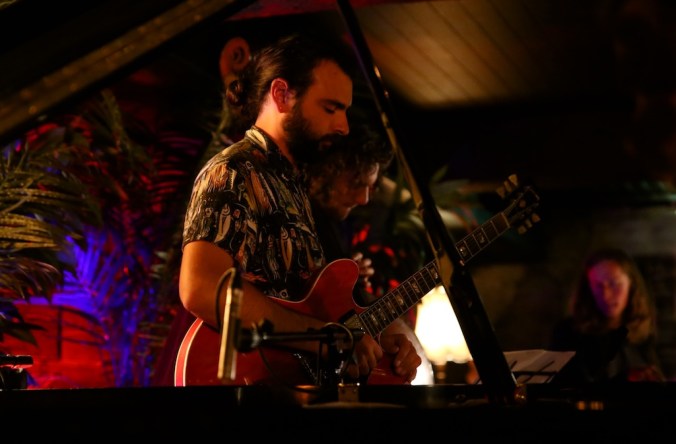 I have long admired Baxendale’s alto playing, featuring as altoist in some of the best New Zealand line-ups (The Jac, Richter City Rebels, Wellington Mingus Ensemble, JB3 etc). Baxendale pulled off some blinding solos in this gig and I have posted a clip which demonstrates his mastery and inherent lyricism. He is a player with depth. I am also glad that Luke Sweeting was touring with the Antipodes again. Sweeting is the sort of pianist who captivates in numerous ways and his solo bravura on a good number can leave audiences open-mouthed. Perhaps more than anyone else in the ensemble he brings out that trademark Aussie-European aesthetic. The first time I heard Antipodes I identified Ken Allars as being the link to a particular Scandinavian sound; his command of extended technique, but moreover his low volume ambient groove-tone. Now I am revising that view as Sweeting has exactly encapsulated that sound, while doing it in a uniquely Australian way.
 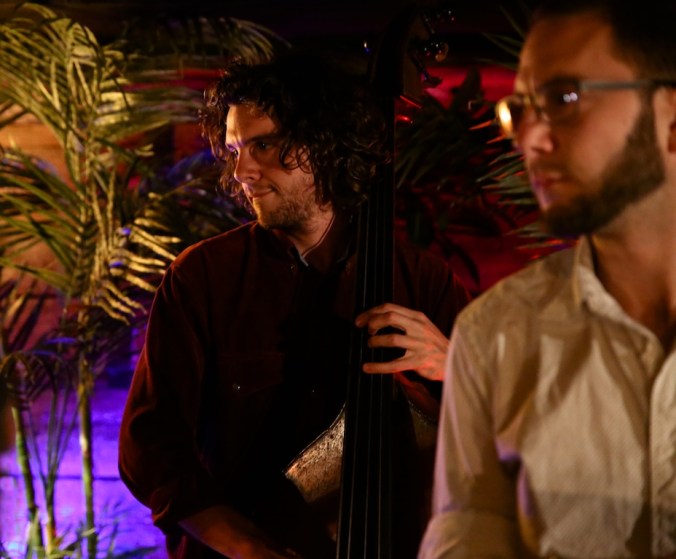 The other central figure is guitarist Allardice. Often sitting quietly in the mix as his warm comping lifts the others without ever crowding them out. Then out of nowhere, unexpectedly, those heart stopping solos, souring and as fluid as silk in the breeze. Allardice is a fine composer, as are Sweeting and Baxendale.
 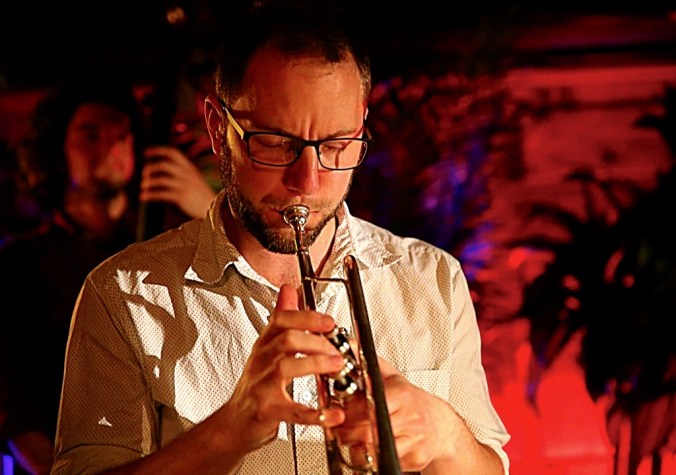 There are shades of meaning to the word ‘Antipodes’. It comes from the Greek ‘to set ones foot upon an opposite place’. If you live in London then the Antipodes Islands of New Zealand are the opposite land mass. For Southern Europe and North Africa it is in Australia. The reverse also applies. Given the musical linkages and especially given the geographical linkages the band is perfectly named (conceived by Australasians living in Germany). This project revives on a regular basis and on current form it stands every chance of becoming an institution. I certainly hope so.
  Antipodes:
 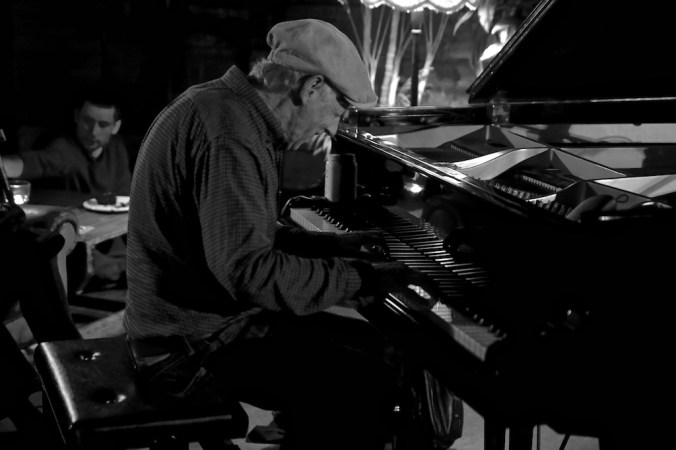 Having reviewed the ‘Two Out’ album a few weeks ago and thoroughly enjoyed it – it was a certainty that I would enjoy the ‘Two Out’ live gig. Mike Nock and Roger Manins are rightly celebrated as being at the top of their game, but neither trades on reputation. Both approached this gig with humility. As they settled into the music you could feel the absorption; punctuated by occasional smiles when a particular phrase surprised them, often delighting at what fell under their fingers. At times they seemed to defeat the physical limitations of performance; simultaneously observing and creating. This is a Zen thing and it cuts to the heart of improvised music. Others noticed it as well; one musician said to me afterwards, “Man there was no ego on that bandstand and it was a beautiful thing to witness’. He was absolutely right.
 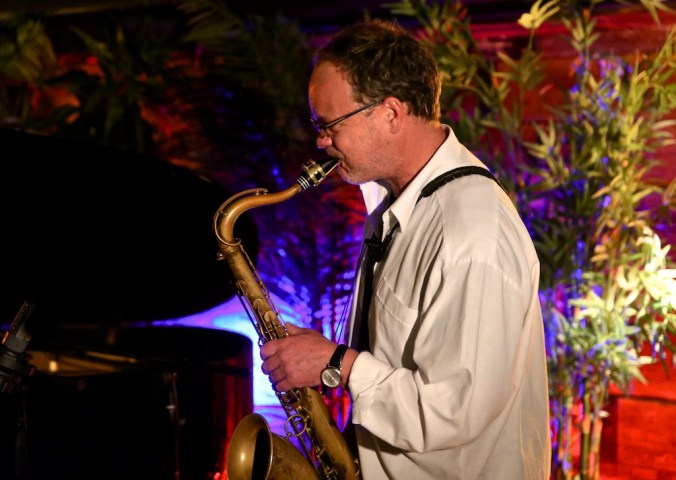 Most albums require careful planning, the ideas gestating over time, rehearsal upon rehearsal shaping the direction. Then there is the other type arising from happenstance. ‘Two Out’ arose out of a relaxed jam between friends. Manins was relaxing with Nock one January morning in Sydney when they decided to play a few tunes (as musicians often do when relaxing). What took their fancy were the often forgotten tunes, ‘the ones that our mothers used to sing’. As they worked their way through the tunes Nock suggested that they record; just for fun. Shortly after they ended up recording in the Sydney Conservatorium’s Verbruggen Hall. The hall contained a wonderful Fazioli grand piano much to Nock’s delight.
 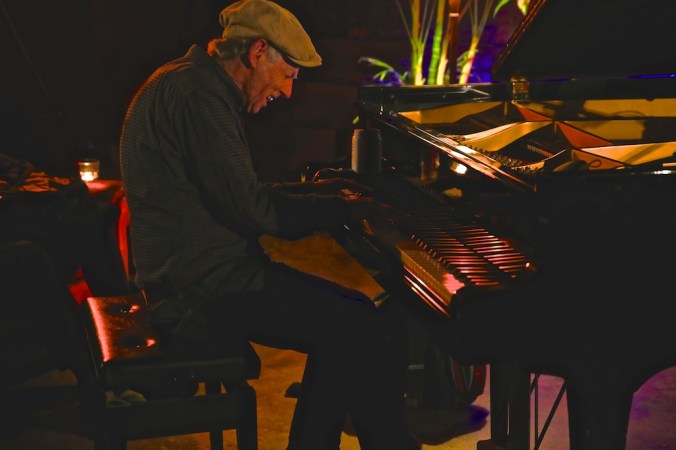 It is our good fortune that ‘Two Out’ was performed last week for New Zealand audiences. Nock explained that they had actually recorded 16 songs, but the limitations of CD space required these being reduced to eleven. On Wednesday we heard a significant number of the tunes from the album plus a few that didn’t make the final cut. In particular there was a version of ‘Softly as a Morning Sunrise’ (Romberg/Hammerstein). A wild joyous free-flowing version which brought out the best in both musicians. At times gentle but at other times carrying the echoes of a boisterous 1930’s radio performance. At that moment, listening, I visualised my mother, leaning over an old upright Victrola and humming along happily. The other addition was ‘But Beautiful’ (Jimmy Van Heusen). An overwhelming sense of respect and intimacy was evident in their interpretation of that tune. It brought a smile to everyone’s lips. When friends like this collaborate it is profound …… but beautiful.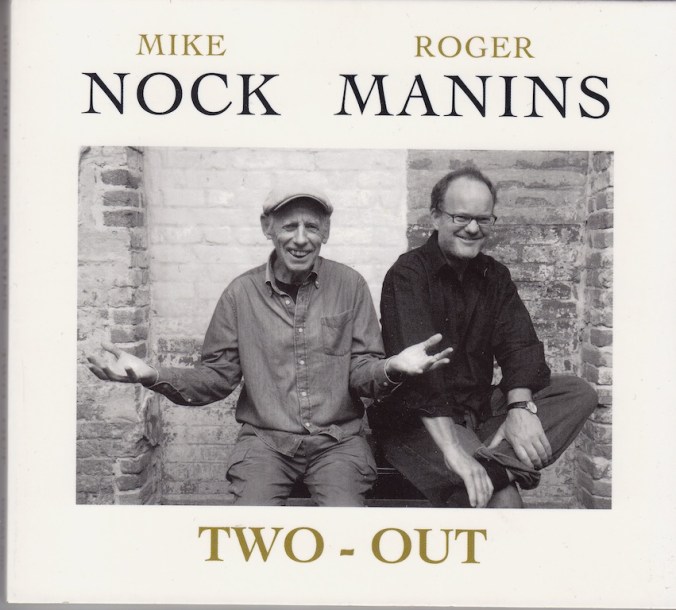
 JazzLocal32.com