These events focus on emerging Improvising artists and allow them to gain wider exposure in front of a discriminating audience. They generally occur around three or four times a year. Some of those featured in the Emerging Artists Series are recent graduates, others are still pursuing their studies. In this case, we had two horn players from out of town; Christchurch and Wellington respectively. Their horns were different, and their approaches to the sets different, but both approached the gig with the confidence of seasoned performers. Such confidence translates well on the bandstand and it informs an audience that the musician means business. Artists often remark that playing in a small Jazz club like the CJC is a unique experience. It’s not like a noisy bar, where people often ignore you, and it’s more intimate than a concert hall where an audience gives limited feedback. Club audiences listen intensely, they react boisterously at the end of a good solo and they call in encouragement when a phrase resonates. Mostly they listen in silence and but they listen actively.Jimmy Rainey, a tenor player from Christchurch played the first set. He is a graduate of the Jazz School in Christchurch, now furthering his Jazz studies at the Auckland University Jazz School. In Christchurch, he’s involved with a number of groups such as the Symposium Jazz Orchestra (many will recall that orchestra on Glen Wagstaff’s album), and the earthy ‘Treme’ styled Justice Brass Band. On Wednesday, he had a premier Auckland Rhythm Section at his disposal, Kevin Field, Cameron McArthur and Ron Samsom. Most of the compositions were Rainey’s and they showed a developing maturity. His sound was interesting, especially on the down-tempo numbers, having that downtown late-night feel. He is in Auckland for a while and I am certain that we see more of him. His father is well-known on the scene but he is earning his own place in the light. With a Jazz-famous name like Rainey, he has a head start.Bryn van Vliet has visited the club before as part of the boisterous Wellington Mingus Ensemble. In that context, I have seen him play in Auckland and Wellington, but never as a leader. He is also a member of the Roger Fox Big Band and a graduate from the Wellington Jazz School. While van Vliet often doubles on tenor, he played alto for this gig. What immediately caught my attention was his clean tone. A compelling tonal quality that quickly drew you in. His playing has cut-through in ways that Paul Desmond’s did, but for all that it was a modern sound. Vliet is originally from the far North but his Wellington credentials will no doubt anchor him there. Like Rainey, he brought many of his own compositions to the bandstand and the same rhythm section backed both players. For the last number, a standard, they were on the bandstand together.
Emerging Artists Series: Jimmy Rainey (tenor) and Bryn van Vliet (alto). Rhythm section: Kevin Field (piano), Cameron McArthur (bass), Ron Samson (drums) @ CJC Creative Jazz Club 16th March 2016
When I recently interviewed visiting Flamenco dancer Isabel Rivera Cuenca she told me that she had met some wonderful New Zealand improvising musicians and, in particular, she mentioned Jonathan Crayford. They met at a party and briefly discussed doing a project together. As they had not been able to make contact since I supplied email addresses and the project quickly took shape. A talented sensuous Flamenco dancer from Barcelona and a gifted Kiwi improviser; irresistible.Jonathan Crayford has long been one of my favourite musicians and any project of his I will follow with enthusiasm. The thought of him doing a Jazz/Flamenco project filled me with joy. It takes a particular type of musician to reach across genres, and to do so with authenticity is a challenge. If anyone could pull this together at short notice it was Crayford; with his open ears and extraordinary musicality, he ticked all of the boxes. In recent years, he has performed in Spain, but only on Jazz projects. When I spoke to him two weeks before the gig he told me how pleased he was to work on this project, but that he knew little of Spanish music; I had no doubts that he would locate a pure essence and work with it and Isabel Cuenca was the perfect foil. As soon as they appeared on the bandstand the chemistry was obvious. There is a real synergy between Jazz and Flamenco; they are musical cousins. Both musical forms fuse North African Rhythms with unique harmonic approaches, both created out of harsh repression. Underlining the driving rhythms of Flamenco is pure passion, contrasting a sad but beautiful dissonance. The musicians and dancers frequently call to each other in encouragement and this is not so different from the call and response in jazz. That they are similar in essence is hardly surprising – when the chants, dance and polyrhythms of Congo Square met with Creole melody, fed by a multitude of European influences (including Spanish music), Jazz was born.
Early in the first set, Crayford played a variant of his composition ‘Galois Candle’. This appears on his ‘Dark Light’ album nominated for a Jazz Tui award last year. This memorable tune although rhythmic is not the first thing that comes to mind when you think of danceability. The synergy between dancer and pianist soon located a sweet-spot in the heart of the tune. I recall Cuenca telling me that everything else in Flamenco was subordinate to honest deeply felt emotion. That is where the Duende resides. A little later we heard an innovative and compelling version of ‘Will o’ the Wisp’ (from El Amor Brujo) by Manuel De Falla. Not the brooding version that Gil Evans used on Sketches in Spain but a paired down version. Stripped to the barest essentials of melody and rhythm. Crayford dampened the strings with one hand and created a simple clipped strumming effect, while Cuenca sang gently over this, softly clapping all the while. It could not have been more effective. After that came a tune by Fredrica Garcia Lorca, the poet who died at the hands of Franco’s Nationalists. This tune ‘Los Cuatro Muleres’ sounds pretty, even jaunty, but it hides a deep sadness as with all Lorca poems and tunes. Again done movingly, and both Crayford and Cuenca sang verses.During the second set we heard tunes which moved closer to the Flamenco idiom. In these free-ranging highly improvised tunes Crayford has few peers. Towards the end of the evening, the two were in absolute lock-step; Cuenca reacting to every nuance of the music and bringing her fluid kinetic brilliance to bear, dancing her way into the hearts of everyone there. The communication was simply electric.
I have posted a video clip from the first set (Galois Candle [Crayford]) and an audio clip from near the end of the second set. I hope that Crayford records some of these tunes as they were magical. Cuenca has many fans in new Zealand and she says that she will return here soon. I hope so because more of this project would please us.
When the word gets about that a Jamie Oehlers gig is imminent, excitement mounts. Having turned people away last year, due to a capacity audience, the CJC offered two sessions this time. As expected, both were well attended. Oehlers is highly regarded in the Jazz world and it is not surprising. His astonishing mastery of the tenor saxophone is central to his appeal, but it is more than that. Every note he plays sounds authentic as if no other note could ever replace it, and all conveying a sense of musical humanism.
He introduced the numbers by painting word pictures; creating an expectation that the best is soon to come. The audience anticipating an interesting journey happily followed. He always gives us something of himself and it serves him well. Audiences like to glimpse the human being behind the music and not all musicians are capable of that. If done well (not forced), it must convey warmth. Oehlers is a natural in this regard. This affability applies to the man and to the musician. His egalitarian world-view inevitably seeping into his playing. This is how it is with all the greats. Their sound and their life eventually merge. The horn becoming breath.Oehlers has a new album out titled ‘The burden of memory‘ and we heard many of the pieces as the sets unfolded. Accompanying him on the album is a dream rhythm section: Paul Grabowsky on piano, Reuben Rogers on bass and Eric Harland on drums. Each a heavyweight and living up to their formidable reputations. For the Auckland gig, there was Kevin Field on piano, Olivier Holland on bass and Frank Gibson Jr on drums. Jumping in where Grabowsky, Rogers, and Harland had gone was no doubt daunting but they pulled it off in style. All played exceptionally well, but Gibson was a standout. The exchanges between him and Oehlers memorable. These men have history and the old conversations were clearly rekindled on the bandstand. Roger Manins joined Oehlers for the last number of each set and the two dueled as only they can. Weaving skillfully around each other and sounding like two halves of a whole; grinning like Cheshire cats.The album title and the song titles speak clearly of the musicians thought processes. He talks of his motivations and his horn takes us there. The burden of memory is a phrase he heard while listening to talkback radio and it resonated with him. He thinks deeply, examines the world about him and this communicates throughout the album. The second track ‘Armistice’ is a good example, possessing a melancholic beauty, and while it throws up the obvious images of a war ending, it also speaks of families and the tentative steps towards new possibilities.
‘The dreaming‘ references the indigenous peoples of Australia. An ancient meditative practice, the dreaming is an altered state of consciousness, where the past and future appear to those open enough to receive that gift. Of the two standards, the reharmonized version of ‘Polka Dots and Moonbeams‘ particularly appealed. The gig featured several tunes, not on the album; we were especially delighted by the ‘fast burner’ take on ‘After You’ve gone’. That particular standard by Turner Layton harks back to 1918. it was soon picked up by Bessie Smith, Louis Armstrong, and Fats Waller. This bebop referencing version breathed fire into the room. Those who attended the gigs were abuzz afterward and rushed to purchase the album. If you missed the tour and wanted a copy of the album I have included a link below. Recorded in Brooklyn New York at the System 2 studios, the album had the support of the WA Department of Culture and the Arts. Oehlers wrote six of the tunes and co-wrote a further three with Rogers, Harland, and Grabowsky. The remaining three tunes were by Grabowsky, Jobim and Van Heusen.
The Briana Cowlishaw/Gavin Ahearn gig is the second CJC gig featuring international artists in a month. For those who follow Australian improvised music, these are familiar names. Both have rock solid credentials as both have traveled extensively with their music and attracted glowing critical reviews. This is a fortuitous musical pairing, and it is particularly obvious during duets. There is a mutual awareness of space and nuance and an understanding of just where interplay works best; neither over-crowding the other. There are a lot of pianists who accompany vocalists convincingly, but the true art of accompaniment is rarely seen. Ahearn is a fine accompanist and soloist. Unusually, you could say the same for Cowlishaw – an aware musician who watches and listens to her collaborators carefully – works with what she hears. Never greedy to hog the limelight and making every line count.For an artist barely past her mid twenties Cowlishaw has achieved much. Performing at festivals all over the world and being nominated for prestigious awards along the way. She has studied with top rated teachers in three continents and it shows (including Gretchen Parlato, Aaron Goldberg, Kurt Elling). Her confidence, compositional abilities and musicianship shine through on the bandstand. Hers is a modern voice and more importantly a fresh young voice. What worked so well so well for Gretchen Parlato also works for her; a clean delivery, imaginative interpretations and an interesting approach.The first set saw Cowlishaw and Ahearn performing as a duo. This format gifts artists with a degree of freedom and it was well utilised. As they took us through a mix of standards and originals, we saw just how attuned they are. The Cowlishaw compositions are particularly interesting, with words, wordless vocalising and interesting harmonic underpinnings from Ahearn – a subtle weave, blending threads to create evocative soundscapes.Both have visited Norway and the sparse honest northern sound was particularly evident in their first set. A recent collaborative album recorded in Norway arose out of an earlier trip there. More recently they performed at the Hemnes Jazz Festival in that country. As Cowlishaw said of these compositions, “After spending a lot of time on the road and in big cities, I found myself in the Fjords. The wild lonely freshness was so appealing that the thought arose – was this a place that I would want to live in one day”? Arising from that proposition came the compositions on their ‘Fjord’ album. Cowlishaw is obviously keen on the outdoors. She told an audience member that she intended to explore a few of New Zealand wildness places as the chance presented itself.The second set swelled the bands numbers to a quintet – joining the duo were Mike Booth on trumpet, Cameron McArthur on bass and Adam Tobeck on drums. All fine musicians and well able to rise to any challenge. The expanded unit gave her much to work with and Ahearn in particular jumped at the opportunity; utilising a more aggressive hard-swinging style. There were more standards in this second half and Cole Porters wonderful 1943 composition from ‘Something to shout about’ – ‘You’d be so Nice to Come Home to’ stood out as a rollicking swinger. The other memorable standard came from the duo – Michel Legrand’s 1932 composition ‘You must believe in Spring’. To Jazz audiences this means one thing – The achingly beautiful Bill Evans Warners album of that name. The rendition was remarkably beautiful – Cowlishaw tackled the number as Norma Winstone might, while Ahearn stamped his own authority on the ballad while allowing Evans to shine through.
I strongly recommend ‘Fjord’ – it is simply exquisite and the delicate renditions of the originals and standards will stay in your head long after the last note is played – as well as the rarely heard ‘Estate’ (Bruno Martino) there is a version of Herb Ellis’s ‘Detour Ahead’ which won me over completely. For the ‘Fjord’ and ‘Detour Ahead’ tracks alone, the album is worth double the asking price.
Briana Cowlishaw & Gavin Ahearn – Cowlishaw (vocals, compositions), Ahearn (piano), Mike Booth (trumpet & flugel), Cameron McArthur (bass), Adam Tobeck (drums). performing at the CJC (Creative Jazz Club) Britomart 1886, Downtown Auckland 24th February 2016.
Wellington has long possessed a gypsy soul and Jazz Manouche thrives there. In Auckland there are fewer such groups and the common form here is hybridised Gypsy. I am more familiar with these hybrid forms, but as a devotee of improvised music I possess many Django Reinhardt and Bireli Legrene recordings. The Black Spider Stomp are a traditional Gypsy Jazz group and everything about them shouts ‘du Quintet de Hot Club of France’. For a start they look the part in their slick black outfits and they mirror the traditional ensembles – three Manouche guitars, upright bass and clarinet (the clarinet player doubling on soprano and trumpet).The hallmark of gypsy authenticity is the ability to swing in a particular way, and Black Spider Stomp achieves this. In western European gypsy the absence of a percussion instrument places heavier emphasis on guitar led rhythm. The rhythm guitars are essential to the momentum with their striking ‘la pompe’ strum. This hard swinging pumping style is very distinctive, with its dark chromaticism, bent notes, adherence to certain voicings, rapid arpeggios, powerful rhythms and regular use of vibrato. The tunes are mostly in 4/4 with a heavy accent on two and four (although waltzes are also in the repertoire).The style is so distinctive that it owns the tunes whatever their origin. Once while traveling in the Carmargue I stopped at a typical Provencal village. As dusk fell a group of Gitano guitarists started playing in the square. The tune was maddeningly familiar and I wrongly thought – this is a Reinhardt composition. It stuck in my head for days and then the penny dropped. It was ‘My Way’ – the tune popularised by Paul Anka and Frank Sinatra. Recently I learned that it is actually a French pop tune. Talk about music travelling where it will. Another perennial favourite in Jazz Manouche is Stevie Wonder’s ‘Isn’t she lovely’. Manouche Jazz itself is a hybrid of American Jazz and Gypsy – and each of those musical influences are sources as vast as an ocean.
Music has origins …. but no fixed abode.
The groups use of soprano saxophone (but in this case the straight-horn variant) is also authentic. While violinists like Stephane Grapelli regularly led Manouche ensembles (pre war), the arrival in Paris of horn playing musicians like Sydney Bechet influenced the post war style. Jazz Manouche reached maturity in Paris around the time of WW2 and it was so loved there, that a handful of Jazz loving occupying Nazi’s covertly protected it. The use of a trumpet intrigued me for two reasons. For a reeds musician to double on trumpet is rare – the embouchure is so different. Post millennium we seldom hear such a distinct nod to Louis Armstrong – or to the early swing trumpeters. Perhaps with Armstrong or Bubber Miley in mind, reeds and brass man Baron Oscar Laven treated us to the occasional muted growl and smear. His cheerful enthusiasm for all of his horns was obvious.Guitars always fascinate me. These were obviously based on the famous Selmer ‘Maccaferri’ guitars favoured by Django. There are two main styles of Jazz Manouche guitar – the ‘D’ hole ‘large mouth’ with its broader rich tone and woody resonance (most often the lead guitar) and the ‘O’ hole ‘small mouth’, which is brighter in sound and has serious cut through. Solos from both were heard. These guitars are things of real beauty, earthy multi-hued wood-grained and framed in a blur of hands appearing from the darkness.
Nothing says acoustic quite like an array of wooden instruments carrying a gypsy tune.
Black Spider Stomp: Sam Thurston (guitar), James Quick (guitar), Adrian Jenson (guitar), Scott Maynard (upright bass), Baron Oscar Laven (woodwinds and brass) – find their work on Bandcamp – The gig took place at the CJC (Creative Jazz Club) 17th Feb 2016.
As a group of the worlds leading astrophysicists excitedly ran one last check. At the precise moment that the astonishing mathematical proofs confirmed Einstein’s theory of ‘gravitational waves’, the Circling Sun hit the CJC. This rare cosmic event released fresh gravitational waves which pulsed throughout central Auckland; altering the molecular structure of any ear within radius. It was an appropriate evening for the Sun to manifest this ‘climatic singularity’, preceded as it was by a dog-day as hot as any on record.
There are five musicians in the Sun – four human and one android. On tenor saxophone, doogan & keyboards was Cameron Allen, on drums & electronics was Julien Dyne, on pedal steel guitar & electric guitar was Neil Watson and on electric & acoustic bass was Rui Inaba. When fine musicians like this play out-crazy music, influenced by sources as diverse as Yusef Lateef, Alice Coltrane, Mulato Astatke and Tom Waits, you know you are in for a wild and danceable ride. The doogan is a cunningly contrived android, assembled from antique parts and loosely controlled by Allen. It is an independent minded machine often exceeding the prime directive; a mechanical and musical ‘singularity’.The Circling Sun is more a phenomena than a group. They defy musical form and yet exist convincingly in their own orbit; circling an altered reality. As with all wonders there is much to appreciate. The intricacy of their many machines, the indelible sonic footprint and the sheer joy they bring. I took some guests down to the club that night. Flamenco artists Isabel Cuenca and Ian Sinclair (and Ian’s wife Zarina). I wondered how they would react to this wild unconstrained mix of free improvisation and world beat psychedelic Jazz. Isabel the Flamenco dancer was quick to respond. ‘This is amazing, it has deep passion’. Passion is the heart of many musics and like authenticity it is a vital component. Long live the avant-garde – long live passionate music – whatever the genre.In his seminal work “This is Your Brain on Music’ neuroscientist Daniel Levitin reveals the following. ‘A liking for dissonance is a development arising from deeper listening and on attaining musical maturity. A very young child prefers consonance over dissonance, the mature listener increasingly values contrast and enjoys having expectations confounded. After spending time listening to deeper or more complex music, lightweight consonant passionless music becomes boring. There is a neural basis for this’.
Instinctively, the Circling Sun understands this and they feed audiences a healthy diet of dissonance. At one point Watson called down thundering chordal dissonance (as the drum beats rained like Thor’s hammer and the keyboards created strangely intricate figures while the bass overlaid danceable grooves) . As Watson repeated the two chords over and over he varied them ever so slightly. It was recidivist mayhem, but there was a logic, a cosmic logic and a deep raw beauty in the onslaught. I loved every moment of it as I reeled from the sonic blows. Adding to the excitement was a strong kinetic effect, Watson dropping lower each time he struck the strings. Dyne dancing all over the kit. This was Ceramic Dog territory and done to great effect. Levitin talks of this also. ‘Experienced listeners often get more out of live music than recorded, because they read the musicians body language in micro detail. The body language of the musicians sharpens the listeners expectations’.The Montreal born Dyne was just the drummer for a band like this. His musical credentials are impeccable. His expertise extends well beyond the kit to that of producer and forward-looking experimentalist; electronic future beats, hip hop, house, afro beats, boogie funk and instrumental jazz. His work with Ladi6 has brought him to wider attention, but his own Lord Julien recordings and his deeply funky ‘Down in the Basement’ (Vol 2) cuts are well worth checking out. This band has few constraints and it gives him ample room to stretch.
Allen plays saxophone and a variety of other instruments. He has long been known for his hybrid mechanical/electronic creations. His tenor is a Buescher (a brassy beast of ancient lineage) and its earthy tone is always pleasing in Allen’s hands. In recent years he has given equal time to his android doogan and an assortment of strange keyboards. He flies in the face of the prevailing fad for tracking down quality analogue instruments. Instead he plunders the throw away machines from the early digital age. This is an interesting development, as the reason these instruments were often abandoned, was because they didn’t sound like the acoustic instruments they sought to emulate. They sounded like new instruments and fed through a variety of pedals they are reborn. This is a recurring theme of the new millennium, reoccupying old spaces in new ways. Recycling, conservation and ultra modernism in one package.I have long been a Watson fan. The man is fearless and his musical ideas cross territory few others dare to traverse. His increasing mastery of the pedal steel already sets him apart, but his ventures into the experimental avant-garde with the instrument are unique in the New Zealand context. While an accomplished studio musician his preferred gigs are those without boundaries. With Watson you get Americana, blues, Jazz psychedelia or wild forays referencing Marc Ribot & Sonny Sharrock. The Sun suits his wild eclecticism.
The remaining band member is Rui Inaba on bass. I have seen him play a number of times and most often with Watson. This is the first time I have seen him on electric bass and the instrument counterbalanced the free ranging explorations of the other three nicely. There was also a guest artist performing on Wednesday – the ever popular J Y Lee on Baritone saxophone. During one number Lee, Watson, Inaba, Dyne and Allen took the tune ‘outside’. It was mayhem and madness of the best kind. This is a very loud band and the enjoyment rang in my ears like summer locusts for days after the event.
Footnote: The doogan improves with age, but its strangest feature is an ability to time travel. As each improvement appears a proportionate regression in time occurs. When it first appeared it had wheels, an alarm clock and many more modern parts. The recent assemblage is altogether older – a regression to the beginning of the digital era. A small yellowed-plastic Cassio keyboard routed through various pedals and midi boxes, sitting opposite a mysterious plywood box. The box bristling with nobs, toggles and sporting an impressive amount of gaffer tape. Beside the pedals a Moog like instrument with an early AM transistor radio plugged into it. Below that an ancient weather-beaten Korg. The small wooden box is most intriguing and although it resembles the two-valve home made radios of my youth, I suspect that it is something like Orac (Google ‘Blake’s Seven’ for more information on Orac).
The Cycling Sun played at the CJC (Creative Jazz Club), 10th February 2016, They are Julien Dyne (drums, electronics), Cameron Allen (saxophone, doogan), Neil Watson (pedal and electric guitar), Rui Inaba (electric and acoustic bass)
January was hot and wet and the CJC was on holiday. If like me, you are a regular attendee at the CJC (Creative Jazz Club) December to February is a long time between drinks. The El Nino humidity with its sullen skies and petulant storm threats rolled into February and suddenly we were back in business. The first gig of the year featured Craig Walters and Mike Booth. Walters, a well-known Sydney based tenor player, last performed at the club in 2012. Booth is a local and he features often; a gifted composer, arranger and trumpet/flugel player. Booth and Walters have a long history together.
The gig featured original material by Walters and Booth and as you would expect, nicely arranged heads augmented attractive melodies. There was also material by pianist Phil Broadhurst whose tunes are familiar, memorable and compelling. With Broadhurst on piano, Cameron McArthur on bass and Stephen Thomas on drums the evening was complete. The club was icy cool and as they started playing the sticky tropical night air faded to a distant memory. Improvised music is a medicine like no other; headaches and discomfort vanish in a trice as endorphins flood the consciousness.The first number was a Walters tune titled ‘Easy’. Booth played flugel and the relaxed fluid interplay between horns set us up nicely for the evening. Walters plays with real fluidity and his tone has a certain quality – a hint of mid to upper register sweetness not dissimilar to that of Ernie Watts – but with an earthier colour overlay. While the first tune eased us the into the gig the second tune grabbed our attention in a different way. ‘A Kings Ransom’ is a seldom played Booth tune and its complex rhythms gave the band a solid work out. Broadhurst delivered a wonderfully solo on this – Monkishly jagged and totally within the spirit of the composition.
As we progressed through the first set we heard the first Broadhurst composition ‘Stretched’. It is impossible not to like Broadhurst compositions. It is a hallmark of his writing skill that his tunes are always warmly familiar. We treat them as fond friends when we hear them again. Two more Walters tunes rounded off the set (his ballad ‘Where have you gone to?’ was quite lovely). The second set saw the band stretching out and never more so than on Broadhurst’s fabulous Horace Silver tribute ‘Precious Metal’. The tune following was written for (and not by) Mike Booth. Written by a Dutch musician during Booths long years of working in the Netherlands. The tune has the eponymous title, ‘Mikes Theme’ and for me it conjured the vibe of the Clifford Brown ballads. As usual McArthur and Thomas never put a foot wrong. Towards the end of the second set they played Walters ‘As close as you’ll get’. If the title didn’t trigger any memories the first bar surely did. This was a tune that I’d heard way back in April 2012. Its intricate hooks and counterpoint nailed it within seconds. This was not a tune easily forgotten – in fact I happily replayed it in my head for weeks after the 2012 gig. I was not putting up video way back then but have chosen this cut to put up now. Last years attendance at the club was good and if Wednesday was anything to go by this years will be even better. There were many first time attendees and based upon the applause most will return. The artists create the music but they need engaged audiences to complete the circle. As the famous American bass player David Friesen said to us last year – ‘this is a virtuous circle and the magic only emerges when audience and musicians interlink. The sum of what comes from this interaction is often greater than the sum of its parts. Improvised live music at its best is profound and the thought that we might miss a wonderful and unique moment causes us to return time and again. That is how it works me anyhow.
Craig Walters/Mike Booth band – Craig Walters (tenor saxophone), Mike Booth (trumpet, flugel), Phil Broadhurst (piano), Cameron McArthur (bass), Stephen Thomas (drums). The gig was at the CJC (Creative Jazz Club), Britomart 1885, downtown Auckland 3rd February 2016.
This week my copy of John McLoughlin’s ‘Black Light’ arrived (ARI X 050). A vibrant stream of groove fused with ancient oriental sources. All transformed utterly. Talas sounding like rap, deep groove and the reflective fusing with virtuosic Jazz bravura. In McLoughlin’s hands stylistic purity is a will of the wisp. Every note is fresh; past, present and future rolled into one. I feel the same way about ‘Dream Logic’ by Eivind Aaset and ‘Cartography’ by Arve Henriksen (both on ECM). Superficially the Mcloughlin album is a lot busier than the Aaset or the Henriksen but there are strong threads of commonality. Both draw on deep wells of music, shaping sounds derived from primal and untapped sources in equal parts.
All musical styles originate from another place. If music stands still it risks becoming a museum piece and whether it’s Mozart, Lennon, Bartok, Ayler or Miles Davis the influences are there. Forward looking musicians comprehend this instinctively and explore the vastness of sonic possibilities; knowing that musical innovation comes from open-minded exploration. Innovation never emerges from stasis. When people confine an improvised music like Jazz to a particular style or era they miss the point. Jazz like Latin music or Flamenco is a spicy fusion of rich influences. As older familiar tributaries recede to a trickle, new ones flow; filling the space. It is an immutable law of nature and of improvised music.
In the improvisers hands, nothing should survive unscathed because improvisers are shape shifters. They pirate, parody, transmute, transcend and remake. From older forms come newer forms; sometimes as illusive as silence. This artistic alchemy does not imply a lack of reverence for the past, it is the reverse. Finding new ways of interpreting the world is the highest calling of any artist and no matter what the change the DNA is never lost.
Four years ago happenstance led me to the Nordic improvising minimalists and the fascinating influences that inspired them. There are threads connecting these artists and these run in interesting and often unexpected ways. The ‘Eastern influence’ is an obvious source but there are so many more. Following the 1950’s recordings of Miles and Coltrane either playing over a drone or utilising other scales (like the Phrygian mode), new grooves entered the mainstream Jazz lexicon.
The musicians influenced by Kind of Blue are legion, but the connections are not always obvious. The Byrds, Beatles, Animals, Stones and the Who all made use of modal scales post Kind of Blue. I was surprised to read that U2 claimed that album as a prime influence. Terry Riley is an important figure in the minimalist school and he makes no bones about the effect of Coltrane and Kind of Blue on his thinking. Riley’s ‘In C’ was composed before the term minimalism and his stunning ‘A Rainbow in Curved Air’ took improvised minimalism to a new place. In the late 60’s the serialist trumpeter Jon Hassell met Riley and soon after they studied under the Indian master singer Pundit Pran Nath. Their increased awareness of what is now referred to as World Music became an added factor in their musical development. Along with Riley, Hassell experimented with electronics.
Later both Riley and Hassell worked with Brian Eno and David Sylvian (ECM’s Manfred Eicher was paying attention). Eno credits Hassell with shifting his perspective considerably. Both coming out of experimental traditions and both unafraid of fusing lesser known ‘world’ musics with electronic music. Out of these discussions arose the concept of ‘Fourth World Music’ and ‘Coffee Coloured Music’ (World Music was not a common term at that time). Eno is a major figure in experimental Rock and World Music having collaborated extensively with David Bowie, Roxy Music and others.
The Nordic Improvisers are the most interesting development for Jazz audiences. Perhaps due to the influence of Jon Hassell, an incredibly strong Ambient trumpet tradition has developed in countries like Norway. Arve Henriksen, Nils Petter Molvaer and Matthias Eik. Eik is less associated with the Ambient improvisers, but his soft rich and at times flute-like sound places him in their ambit. The leading Experimental/Jazz/Electronica ambient improvisers are Eivind Aaset (guitars, programming), Jan Bang (live sampling, Beats, programming, bass), Erik Honore (synthesiser, Live field recording, samples), Arve Henriksen (Trumpets, field recording, voice) Lars Danielson (bass), Sidsel Endresen, (voice), Nils Petter Molvaer (trumpet) and Bugge Wesseltoft (piano, keyboards, electronics). Into this mix add a number of leading European, American and especially British Jazz and avant-garde experimenters like David Sylvian (voice, Programming,samples).
New Zealand Jazz has a foot in this camp with the fine work by Alan Brown on ‘Silent Observer’. Also Browns work with Kingsley Melhuish (‘Alargo’). To that I would add the experimental work of the Korean based kiwi improvising musician John Bell. The local offerings are as good as anything on offer elsewhere. We should trust ourselves to listen rather than struggle with genres. Too much time is spent worrying about definitions. This is ambient but it is not elevator music. It is a music of profound subtlety and if you relax into it, the grooves and pulses will take you deep inside. This is profound music that understands space and utilises silence. In Eno’s words, “an emphasis on atmosphere and tone replaces that of rhythm and melody”. This is a music that rewards careful listening and it goes where it wants without being time bound. Above all it engages the senses in new ways – it is utterly filmic in quality. I highly recommend Eivind Aaset’s Dream Logic on ECM as a starting point. I will keep you posted on New Zealand developments.
The Clips: Terry Riley, ‘A Rainbow in Curved Air 1969’ – Arve Henriksen, ‘Recording Angel’ from ‘Dream Logic’ (ECM) – Jan Bang, ‘Passport Control’ from ‘And Poppies from Kandahar’ (Samadhi Music) – ‘Alargo’ live are Alan Brown/Kingsley Melhuish – Gaya Day is by John Bell.
Sources: (Eno interview) The debt I owe to Jon Hassell – The Guardian. The Blue Moment – Richard Williams (Faber & Faber).
2015 was an amazing year for the CJC (Creative Jazz Club) and just when we thought the gigs couldn’t get any better this gig happened. It was an unexpected bonus, appearing out of nowhere. During the break of the CJC’s penultimate gig, Roger informed us that an extra gig would occur just two days before Christmas. Matt Penman was in town and he would appear with Kevin Field, Dixon Nacey and Steve Thomas. A buzz of excitement ran through the room and within a few days the gig was booked out. A second gig was quickly announced and that sold out as well.
Having Penman perform in the club was a coup. I had not seen him since the Scofield/Lovano gig in the Sky City theatre. Like most Jazz enthusiasts I had numerous recordings of him, including those he released as leader. It was his work with The San Francisco Jazz Collective, Aaron Parks and James Farm that took him to a wider audience and since those albums Penman’s acknowledged as one of the great bass players. Even though he has been in America for a long time, we love that he is an Auckland born musician. Because of his origins (like Alan Broadbent and Mike Nock) we happily claim him as ours.Fittingly the gig opened with ‘Two Steps’ (Penman) which is from the second James Farm album. Everything about the number is compelling and it oozes a post millennial Americana vibe – close to that espoused by artists like Brad Mehldau. James Farm are an extraordinary group co-led by Joshua Redman, Aaron Parks, Matt Penman & Eric Harland. A super-group where everyone is a gifted writer and virtuosic player. This is the pinnacle of modern American Jazz and we were lucky enough to get an up close taste of it. A warm glow swiftly enveloped us and from the first pull on the bass strings and we sensed on mass that this a different type of bass playing; supremely authoritative, melodic and with more momentum than a downhill freight train. We were especially fascinated to hear that Split Enz inspired him to write this tune. We heard other James Farm compositions – the moody ‘Juries Out’ (Penman) and Otherwise (Aaron Parks). Delightful Penman originals dominated the rest of the set (with the exception of a haunting Jewish folk song).As approachable as this music is, there are many rhythmic and textural complexities. Putting such a set list together with a band not used to playing the material, perilous. Two factors undoubtedly assisted here. Penman, Field and Nacey are old friends. Nacey attended Avondale college with Penman and Field has known him since his time at Auckland University. Field also recorded with Penman in New York on his recent Warners album ‘The A List’. The remaining band member was Stephen Thomas, the youngest of the quartet. He only met Penman the day of gig. When you examine Penman’s contributions to James Farm, the SF Jazz Collective and other albums, you realise that he writes with unusually gifted improvising musicians in mind. For a young drummer to step into the space occupied by Eric Harland and Obed Calviare and not only pull it off but to do it well is a credit to him. Penman singled him out for praise and told us we were lucky to have a young drummer of his ability on the scene.Of Field and Nacey we expect only the best and we got it. Replacing Redman, Moreno or Rosenwinkel with Nacey’s singing Godin Guitar felt a natural choice. I have heard Mike Moreno perform and Nacey is heading for that level of virtuosity. He is a good reader and a master musician and he always delivers. Field was also at his best that night and his best is something to behold. Losing himself in a music quite different from his own and doing it with utter conviction. Collectively they brought Christmas joy to everyone present. The best of Christmas presents from the best of Jazz clubs. I hope the CJC features Penman again soon – we love him down under.
Buy the James Farm album and support these artists – it is readily available from leading stores, Amazon or iTunes
Matt Penman (bass, Leader, compositions), Kevin Field (piano), Dixon Nacey (guitar), Stephen Thomas (drums) – CJC (Creative Jazz Club) – 30th December 2015
I was out of the country when Anita Schwabe performed at the CJC two years earlier. While I had seen her perform at the Bruce Mason Centre with the Rodger Fox Orchestra, I wanted to hear her in a more intimate setting. Her live (and recorded) performance on ‘Journey Home’ was impressive and as I recall a jet lagged Alan Broadbent watched her segments from the wings during the Auckland concert. As good as that concert and a later concert were, hearing an artist in close proximity is always a different experience. Schwabe didn’t disappoint. The first thing you observe when you meet her is her understated manner. Like many New Zealand improvising musicians she is self-effacing to the point of being dismissive of her own abilities. This contrasts strongly with the engaging confidence of her playing. From the first few bars you become aware that there is something special going on.
There is something of Broadbent in her ballad playing, perhaps even a hint of Evans, but she has a sound of her own. She initially evokes a sense of the familiar, but then you hear something deeper; a subtle richness underpinning her voicings. A lushness implied but not overtly stated and this quality lingers in memory long after the notes are played – above all she swings like crazy. Perhaps it was having Roger Manins, Ben McNicoll, Ron Samsom and Cameron McArthur in her band that created this particular rub. What ever it was they quickly gelled and played off each other like a band that had been together for years.Schwabe’s first number referenced the under-acknowledged and recently departed pianist Clare Fischer. “I like his unusual voicings”, she said before she played through her composition,’Fisching for Compliments’. The tune was intensely melodic, filled with clever references and a fitting tribute. Although a more reflective number (and her first of the night) we saw what she could do. The tune drew us in with a spacious intro and then imperceptibly we felt the swing. Block chords suddenly dissolving, close voicings appearing, disappearing; right hand running off the back of a phrase, subtly playing with time and rubbing against the chords in the left hand. This interaction between right and left hands created subtle and pleasing tension and we were to hear that often throughout the evening. That first number gave us a foretaste of what was consistently enjoyable music throughout the sets.
There were various ensemble configurations; trio, quartet and quintet. The bigger lineups with Manins and McNicoll were absolute cookers and the pair excelled themselves. An end of year holiday spirit had obviously descended upon them; the musicians interacting in a summery sweet spot. ‘The You Tube clip is ‘Fisching For Compliments’ (trio).The second number was a bossa, ‘No Winter Lasts Forever‘ and for that number she induced Manins (who is famously averse to putting aside his tenor), to play alto. There were whoops of delight and a lot of teasing, but Manins is killing on any of his horns. This was Manins at his formidable best. The saxophone deities of Conn and Selmer sensing the importance of the moment reacted and as he raised his alto, a halo of light formed directly above his head. This was clearly a sign of the gods pleasure. I have put the ‘alto’ bossa number up as the second sound clip. The last number of the evening titled ‘Anger Management’ burned with intensity (the first sound clip). This hard swinging Tyner-esk cooker had everyone on their feet. For Jazz lovers, burners like this are Christmas and New Year rolled into one and they fill us with endless joy.It was great to hear McNicoll and Manins together – both playing their asses off and McNicoll sounding great on soprano. They obviously enjoyed playing together and we were the beneficiaries. Their different horns and their different approaches to soloing entirely complimentary. With McArthur, Samsom and Schwabe you had a formidable rhythm section. McArthur kept a wonderful pulse and Samsom was right in the zone, ever urging them to go one step further. This band floods the body with endorphins – they are a trip. A musician in the audience behind me said – “man that’s some rhythm section – some horn section – yeah thats how its done alright”.
Anita Schwabe: (leader, piano, compositions), Roger Manins (tenor, alto), Ben McNicoll (soprano, tenor), Cameron McArthur (bass), Ron Samsom (drums). performing at the CJC (Creative Jazz Club), Britomart, Auckland 16th December 2015
Richard Thai was on the first JAC album but by the time I saw the ensemble live he had left New Zealand for America to complete his postgraduate studies. Recently he returned to his hometown of Wellington where he now teaches and leads the Richard Thai 5. While the ensemble is a basic line up of saxophone, piano, guitar, bass and drums it is never the less forward-looking. This is post millennial music.
The set list on Wednesday featured Thai’s compositions. The well constructed tunes had an attractive ebb and flow, but behind the arranged heads and often lingering melody, lay obscured complexity. This is the type of material that can sorely test a band but under his quiet guidance they delivered. There are few hard edges to Thais sound, but he is unafraid to reach deep inside a solo; probing until it yields more. He is above all a confident player and in spite of his very even delivery, he conveys a lot of information. The best illustration of this was heard in his second tune, ‘Capricorn’. A marvellous composition. Like much of Thai’s material it has powerful hooks to draw you in. What sounds simple is in truth anything but, as it shifts between major and minor keys with disarming ease. Many tunes do this, but with Capricorn the device is extraordinarily well conceived. The shifts in focus are pleasing, but what sets the tune apart is a sweet over-arching dissonance; diminished chords acting as a bridge to carry you across the major-minor divide. The arranged head is especially tantalising; setting the listener up expectantly for the explorations that promise to follow.Capricorn’s momentum is that of a multi-hued butterfly in a tropical storm; pushing against the cross winds, never losing its way, pulse, or sense of purpose. Thai’s tenor picks at the tune, peeling the layers back, exposing the heart. This contrasts with pianist Matt Steele’s oblique approach. Steele clearly took the difficult route and along the way it yielded gold. You were with him note by note as he undid the knots of the puzzle confronting him. Steele is always an interesting pianist and always one to watch. It is his determination, his preparedness to take risks and his ability to learn on the bandstand that marks him out from many of his peers. He grows as an artist each time I see him. The last to solo on Capricorn was guitarist Callum Allardice. After the long complex solos preceding his, he wisely chose to linger nearer to the melody. His tight elliptical figures rounding out the earlier solos and bringing us gradually back to the outro. His time to shine as soloist came on the last number where his guitar soared as if free of gravity (much to the delight of the audience). Allardice has many fans in Auckland.The remaining two band members Shuan Anderson and Scott Maynard are also established musicians from the Wellington area. Anderson (like Allardice) was also a member of the Tui nominated JAC and he has played at the CJC before. A responsive drummer who interacted well and picked up on the subtle nuances of the material. The bass player Scott Maynard has been a member of various leading Wellington units (e.g. Myele Manzanza, Lex French). He has played at the CJC before and he never disappoints. His role in giving a heart beat to this often complex material was vital. I look forward to hearing more of this ensemble and above all I would like to some hear more Thai compositions. With a few more years of performance under their belt the unit could achieve even more.
Richard Thai 5 – Richard Thai (tenor saxophone), Callum Allardice (guitar), Matt Steele (piano), Scott Maynard (bass), Shaun Anderson (drums).
Lately I have attended a number of music workshops. Although not a musician I gain a lot. They offer fascinating insights into the artists creative process and if your lucky, insights into a particular instrument. With music, the more you listen, learn, observe and delve, the more you gain. My reason for attending Susan Alcorn’s workshop was probably different from most attendees. The majority were guitarists anxious to glean practical information or wanting to be convinced that this complex instrument was for them. A handful of others sought knowledge for knowledges sake – dipping another toe in the water of sonic learning.
I like the warmth of the Pedal Steel guitar and I appreciate its hard won place in the landscape of modern improvised music. Learning something of its history and its quirks from an acknowledged master took me a step closer to the mystique of that quivering sound. Alcorn is very much at home in the world of experimental improvised music, but that was not always the case. After 30 years of playing country in places like Nashville and performing in the more orthodox styles she jumped ship.
She mentioned the influence of later Coltrane as one of the forces pulling her towards unfettered experimentation. She also spoke of a desire to explore composers like Messiaen and this required specialist tunings. She played us some Monk (as well as original compositions). Her take on Monk compositions was that they were architectural. “He starts with a well constructed base and as he builds up from the ground he plays with the form. He moves sideways creating an overhanging room but it is always balanced elsewhere”.
When younger she committed her self to a related instrument, (the Dobro) and eventually to the Pedal Steel – mastering the Pedal Steel did not come easily. There are many pedals and four knee levels to control. then there are the multiple tunings, a variable number of strings and a plethora of picking styles (also complex slide techniques to master). Few beginners get an easy ride and many don’t stay the course. Some tunings (e.g.Hawaiian) do not work for the blues and so double necked instruments are common – thus allowing for style changes from alternate tunings. Adding extra strings (or pedals) while increasing the options, also increases the complexities. It can take two to four years of practice before new tunings become ‘muscle memory’. Once down you have a world of sounds and possibilities at your fingertips.
In the 30’s and 40’s the instrument was universally popular and pedal steel orchestras proliferated across America. At that time Hawaiian music was particularly popular. Soon after the instrument found its was into Western Swing bands and Rockabilly bands (this is when pedals and stands were added – ‘console steels’). It found its way to mainstream Country music a little later, but it is less popular in that genre these days.
She gave us some insights into the origins of the instrument but pointed out that many of the popular theories are verging on the fanciful.
In the 1950’s you could buy the instruments in most US cities. Now only specialists carry them. Many like Alcorn go directly to a luthier for customised versions. Her 12 string tuning is unusual being C D F A C D E G A C E D. Having 7 pedals and knee levers give you more combinations. Unusually her instrument comes from an Australian luthier and is made of indigenous wood. She said that she wanted that deeply resonant bottom string so that she could play Messiaen (improvising musicians often customise their instruments). Here is a cut of her composition ‘Three Rivers’
The Nordic experimental Jazz trumpeter Nils Petter Molvaer uses Pedal Steel as a dominant part of his soundscape in’Switch’.
Fact file: In the 50’s a Pedal Steel guitar track hit number one in the Billboard pop charts with ‘Sleep Walk’.
A big thank you to Jeff Henderson and cohorts for their tireless efforts to bring us wonderful experimental music. Sounds we would not otherwise hear. If you want to hear superb and often experimental Pedal Steel guitar you should seek out cuts involving Auckland guitarist Neil Watson. There are some located on this blog
‘Panacea’ is the third of Phil Broadhurst’s ‘dedication trilogy’ series and as fine as the earlier two albums were, this one stands out. Everything about it is superb, the individual performances, the ensemble playing, the recording quality, the cover art by Cameron Broadhurst and above all the compositions. Broadhurst, always a prolific composer has excelled himself here. Instead of theming the album around a particular influence or musician he has tapped into the subliminal forces guiding his creativity.
This is the more difficult pathway and I suspect one that is fraught with risk. Delving into the subconscious mind can produce perverse results, as anyone who has suffered long-winded descriptions of someone elses dreams will know. Working in this way requires a ‘quantum’ approach; be aware but don’t look too closely or what you examine will disappear like Schrödinger’s cat. Poets (and cats) understand this. When he composed ‘Precious Metal’ he was at first unaware of the influence until a student pointed it out. It certainly speaks of Horace Silver but more importantly it conjures the essence of the man behind the music. The ensemble playing on this is simply sublime. An arranged head yields to Mike Booth on trumpet. He swiftly encapsulates the ethos of Silver in his delightfully moody solo. Broadhurst follows – expanding on the theme and signalling the direction, effectively setting the tune up for Roger Manins and Oli Holland who follow. There is a logical flow throughout and the piece works all the better because of it. I have heard it several times, but even on first hearing it sounded warmly familiar. That is the skill of good writing; evocation not imitation. For me the greatest joy was ‘Wheeler of Fortune’ his Kenny Wheeler tribute. So well realised was the mood that it might have been John Taylor playing a Wheeler composition. Again this is an extraordinary piece of writing and articulation, lovely because while capturing the style of these lost lamented greats it reminds us just what made them so dear to our hearts. In spite of being a piece for piano trio you can sense Wheeler reaching for those impossible high notes or mournfully smearing his over-running melancholic lines. It must have been tempting to use Booth’s flugel on this, but the implied sound is all the more powerful.
Like ‘Panacea’, the heart-felt ballad ‘Absent Friends’ is a lament for band mates passed from us; the delicately woven lines conveying a sense of reverence and affection. This is Broadhurst the romantic and Manins demonstrating the best of his formidable ballad playing skills. Another piece ‘knee lever’ begins with Neil Watson’s Pedal Steel guitar sounding quietly above the melody; understated like a soft sunrise casting a glow on the sea. As the piece progresses there are several surprises, first from Broadhurst who imbues it with a distinct rhythmic treatment (like that of Eliane Elias) – then Watson solos – his soaring guitar reaching for the sky. As the horns come in I am aware of a subtle Wheeler influence again. I played it over several times and yes, above the arranged horn phrases I hear a Norma Winstone like wordless voice. I look in the liner notes, no human voice shown – then it struck me. This is Watson, again understated but adding something to the piece which lifts it into the realm of musical magic – an exceptional and original musician. The album would be the poorer without his contributions. Subconscious influences shape every musicians work and it is right to celebrate those. Purging these influences is often a mistake. All creative people whether writers, poets, musicians or painters have these voices at their core. Improvising musicians stand on the shoulders of giants and it is fitting to celebrate that. Broadhurst has done so with due reverence, due acknowledgement but never sycophancy. This was his time to say thank you and his own original voice shone through the multitude of influences.Booth sounds better each time I hear him. His undoubted strength lying in the way he reminds us of the great traditional trumpet players – especially those from the Hardbop era (like Blue Mitchell). A wonderful musician, a fine arranger and one who nicely compliments a saxophone modernist like Manins. Playing off the latter gives the edge. Manins is such an original that you hear something new and exciting each time he plays. I have observed before how well he plays off Broadhurst compositions. This says something about the skill of both men.
Bass player Oli Holland and drummer Cameron Sangster are the remaining components of the rhythm section. Their performances are hard swinging; understanding the right moment to amp things up or to dial back. Everyone is playing at a high level on this album, everyone is indispensable. The word panacea is from the ancient Greek meaning ‘all healing’. The modern definition extends the concept beyond cure-all potion – applying it more to the realm of ideas. The album is truly a balm in our troubled times. I highly recommend it as a Christmas present to yourself or a loved one. It must surely be contender for next years Tui’s.
Panacea: Phil Broadhurst Quintet – Phil Broadhurst (piano, compositions), Roger Manins (tenor saxophone), Mike Booth (trumpet, flugel), Olivier Holland (bass), Cameron Sangster (drums) – guest Neil Watson (Pedal Steel and Fender guitars).
CJC (Creative Jazz Club) Album Release 25th November 2015 – Britomart 1885, Auckland – Album available from ‘Rattle Records‘ and all leading record stores.
On Wednesday the UK-based vocalist, arranger composer Louise Gibbs brought her Seven Deadly Sins project to Auckland’s CJC (Creative Jazz Club). The audience, unrepentant antipodean sinners that they are, found much to enjoy. When premiered in the UK the project received much acclaim and in 2013 the ‘Seven Deadly Sins’ album’ was released. As I glanced through the liner note credits one name jumped out, Tim Whitehead; an important English saxophonist with equal facility on soprano, alto and tenor. For any number of reasons this is an album worth having. The song suite has seven parts plus prologue & epilogue. This aggregation of cardinal sins does not originate with Peter Cook (as someone hilariously suggested) but comes to us from the fourth century AD. These very human failings were the obsession of the middle ages and Chaucer, Dante and Brueghel utilised the themes to great artistic effect (and often with rye humour). Debates on morality are still very much part of the public discourse as the dreadful events of Paris, the Lebanon and Mali remind us. Gibbs invited us to examine the sins afresh; a parade of human failings as seen through a jazz lens. Her evocative contrasting pieces leaving us in little doubt as to which sin they represented; a strident drum solo during anger, the fulsome sound of the trombone for gluttony etc. It is unsurprising that the tenor saxophone portrayed lust; an entirely appropriate pairing given the repeated historic accusations of lasciviousness levelled against that sensual instrument. The suite while highly arranged gave ample room for the soloists to demonstrate their particular vice. Crystal Choi was ‘pride’ on piano, Pete France was ‘lust’ on tenor, Haydn Godfrey was gluttony on ‘trombone’, Mike Booth was ‘envy’ on trumpet, Cameron McArthur was ‘sloth’ on bass, Steve Thomas was ‘anger’ on drums, Andrew Hall was ‘greed’ on alto & baritone. Gibbs was vocalist on all numbers including a prologue and epilogue. Many of the band members like Booth, McArthur, Choi and Thomas are regulars but we see Hall, France and Godfrey less often. That is a shame because they were amazing. A shorter first set preceded the ‘Seven Deadly Sins’ suite – all Monk compositions. The band used stock arrangements but there was a sense of boisterous freedom in the renditions. This provided an appropriate segue to the second half. While everyone embraces Monk these days, his dissonant choppy lines certainly raised eyebrows back in his heyday. Monk was an iconoclast who channeled the rawness of the human condition through pen and piano. With the Seven Deadly Sins and its often dissonant passages we also experienced that. Louise Gibbs has been teaching and performing in the UK for 30 years, but she grew up in Auckland. In recent years she moved away from a distinguished career in academia to concentrate on performance and composition. There is a confidence about her work and she is unafraid as a performer. Her voice can move from silk to raspy as appropriate to the piece. Footnote: Earlier I drew attention to Tim Whitehead (on the Gibbs album). He was once a member of Ian Cars ground breaking and popular group ‘Nucleus’ – the highly respected Kiwi born saxophonist Brian Smith was a founder member of that group.
‘The Seven Deadly Sins’ (New Zealand Septet) – Louise Gibbs (vocals, composition), Andrew Hall (alto & baritone saxophones), Pete France (tenor saxophone), Mike Booth (trumpet, Flugel), Haydn Godfrey (trombone), Chrystal Choi (piano), Cameron McArthur (upright bass), Stephen Thomas (drums).
The gig took place at the CJC (Creative Jazz Club), Britomart 1885, Auckland 18th November 2015.
Because the human voice is the most primal of instruments it has the capacity to engage in unexpected ways. When a skilled vocalist performs we watch as carefully as we listen. The merest inflection, micro pause or slurred note can captivate, but it is also the non verbal cues; the ones we assimilate subconsciously that draw us ever deeper inside the song. When Caitlin Smith sings you are hyper aware of the entire performance. Hers are not gigs where listeners drift away or endlessly fiddle with phones. The audience are as engaged as she is. That is her gift as a musician.When Smith moves your attention moves with her. She will prance, dance, drop her head, pause for effect or sweep her hair back unexpectedly and all in service of the song. When you watch and listen to skilled performers like her (and they are few and far between) you discern a deeper truth. What appears extrovert can be something else. The actions and gestures are an act of losing oneself. This is the performers mask and behind it lies a certain vulnerability. When enough of this vulnerability informs the music we feel with them. During Smith’s performances there is a lot of interplay between band members. She is generous in her acknowledgements and genuinely appreciative of the musicians behind her – unlike some vocalists who make it very plain that this is all about them. She had two of her regular cohort with her, Kevin Field on piano and Oli Holland on bass. On drums was the talented Stephen Thomas and I had not seen him with Smith before. During the break I asked Thomas how he was enjoying the gig. His answer is worth repeating, as it illustrates the above points. Vocal artists who think disengaged equals cool might pick up a pointer here. “Working with Smith is perfect as you have so much to react to. Every gesture and look gives you new material to work with”. Smith followed her usual pattern of alternating originals with standards. The set list moved between Jazz and singer song-writer soul. She only repeated one tune from last Decembers CJC gig and that was the lesser known Ellington Number “I like the Sunrise”. This is from Ellington’s ‘Liberian Suite’ performed and recorded first in 1947. The original featured Al Hibbler on vocals, soon followed by a Frank Sinatra version (also with the Ellington orchestra). More recently Kurt Elling recorded a version but all of the aforementioned are at a slower tempo. At the risk of committing heresy, I like the upbeat punch and swing of Smith’s version best. The night was thoroughly enjoyable as I knew it would be, and with this rhythm section of Field, Holland and Thomas behind Smith that was guaranteed.
Caitlin Smith Quartet: Caitlin Smith (vocals, compositions, arrangements, percussion), Kevin Field (piano), Oli Holland (bass), Stephen Thomas (drums). The video is courtesy of Denis Thorpe
Good improvising bass players get a lot of work, but they seldom get the acknowledgement they deserve. This is one of life’s inequities and it’s partly because a bass player by custom is hidden behind the other band members. When a pianist or guitarist plays solo they will often mimic or imply bass lines. A good bass line is both an anchor and an invitation – invoking deeper exploration; the consequent rub between notes and time is where most of the tension and release is hidden. Every so often a bass player claims wide-spread attention. Blanton, Mingus, Haden, McBride, Le Faro, Pastorius etc. David Friesen while not garnering the attention of the aforementioned bassists in the popular press, is without doubt a giant of the instrument. His is a name that frequently comes up when aficionados and musicians talk. He is the bass players bass player, an acknowledged innovator.
The point is best made when looking over his discography – seventy-six albums as leader or co-leader and in excess of a hundred as sideman. The list of luminaries he has recorded with defies belief; everyone from Dexter Gorden to Dizzy Gillespie. For the New Zealand leg of his tour, two of New Zealand’s finest musicians accompanied him. Dixon Nacey on guitar and Reuben Bradley on drums. That particular combination was bound to work well and the proof positive was in the outstanding performances. When artists pay each other respect on the bandstand it is a recipe for excellence. There were no Jazz standards performed and I suspect that many of the compositions were challenging for those new to them. If they were it did not show. Friesen explained that while he loved interpreting standards, he had come to the point where exploring his own compositions was his preference. A musician as gifted as this has plenty to say musically and Friesen found endless ways of expressing his unique world view. As is often the case with great musicians, he was a compelling talker; spinning out yarns of people and places visited. Often with subtle humour woven into the narrative. Above all he imparted his views on the place of music in these complex and troubled times. To paraphrase slightly, “Music is a way of healing a broken world, it is not just about the people making the music or about the audience receiving it, but something far deeper. The interaction creates a virtuous circle, each continuously enriching the other. Out of this comes the magic”. This reference to the primal healing power of music resonated and he received loud applause. Improvisers seldom earn what they should and yet they persevere. Understanding their mission of deepening human awareness. It was good that he reminded us of how vital a deep listening audience is. Sharing the joy brings its own responsibilities. That’s why I do what I do in print. Friesen travels with a special bass; made for him by a famous Austrian instrument maker. Sick of having instruments damaged or interfered with by airline baggage handlers, he ordered an instrument small enough to go in the overhead locker. This custom bass is mainly crafted out of American Cherry wood and Canadian Maple. It also has a very sophisticated pick up. Because of the foreshortened neck I suspect that it would take some mastering by most upright bass players. In Friesen’s hands it sung. Nacey did what we expected of him; delivered stinging imaginative lines and soared on that lovely Godin semi hollow-body. As success spreads him thinner, we tend to see less of him in the Jazz club. When we do hear him we get the very best. He is a guitarist who can hold his own anywhere on the scene. The other Kiwi on the gig was Wellington drummer Reuben Bradley and what a performance he put on. Again it was hardly surprising, as Bradley is among our very best drummers. Like Nacey he is often the drummer of choice for visiting artists.
Alex Ward has been on the scene for a few years now and he has appeared at the CJC a number of times. This time he appeared with a group of formidable younger musicians; all respected about town. His programme was pleasantly challenging as it offered contrasting tunes. From the quirky Carla Bley composition ‘King Korn’ to the perennially popular Disney tune ‘Never never land’. Then, for the second time in as many weeks we heard a Cold Play cover – this time ‘Daylight’ (arr. by Taylor Egsti). Rounding off the set list were a number of his own compositions including the appealing ‘Rakino’ which I have heard before. Wards compositions have a definite melodicism about them.I am a real Carla Bley fan and so it surprised and pleased me to hear ‘King Korn’. I also have a real liking for her ‘Ida Lupino’. Bley’s repertoire is not played anywhere near enough for my liking. Her tunes are often closer to the avant-garde, but still accessible to main stream listeners. Ward showed no fear in tackling the angular jerky rhythms of King Korn and the result was pleasing. He had surrounded himself with exactly the right musicians for the task. On bass was Cameron McArthur, a perennial favourite who must now be considered a heavyweight about town in spite of his youth. The drummer was Cameron Sangster and again a highly experienced and gifted musician. Sangster is a multi faceted drummer who can move between soul, big band and small ensemble work with ease. We recently saw him with the Auckland Jazz Orchestra where he put on a stunning performance. Additional musicians came to the bandstand at various points; Kushal Talele on tenor saxophone and flute and Michael Howell on guitar. I had previously only encountered Ward playing in a trio format and this was a chance for us to see what he would do with an expanded ensemble. The diversity of material worked for them – none of it highly arranged but allowing for free-flowing interaction.I had only heard Talele once before and he naturally sounded different on this gig. Here he was appropriately the competent sideman, not the hard-driving Coltrane referencing leader. I like both aspects of his playing. He is a musician that I am definitely keen to see more of – especially when he dives deep into that denser material he favours. The ever smiling Howell is well liked and respected as an up and coming young guitarist. He is seen to greatest effect in Roger Manins ‘Grg67’ band.Whether by accident or design, Ward celebrates Carla Bley in an important year. 2015 saw Bley receive the highest public honour in Jazz, as she was the recipient of the NEA (National Endowment of the Arts) Jazz Masters Award.
The Alex Ward Quintet: Alex Ward (piano), Cameron McArthur (bass), Cameron Sangster (drums), Kushal Talele (tenor saxophone, flute), Michael Howell (guitar).
I made up my mind days before the Mexico City Blues gig that I would not, could not review it. It is some kind of crazy to review a gig where you’re in the band. Logic and custom sensibly warns you to walk swiftly in the opposite direction. The gig passed and I asked others if they would do the review; “You’re wrong man” they said, “You absolutely have to do it, but do it differently – tell a story about what it felt like performing for the first time, and what it felt like as a non musician being part of a high quality improvising band”. I thought about it for a while and gave in. In truth I had a world of stuff churning about in my brain and the subconscious urge to outline the experience was gnawing at me; my thoughts and impressions always seem to spill onto the page somehow (or into a poem) – so hell why not. It’s Gonzo journalism in its purest form; outlining crazy, using ones-self as the hapless protagonist.
Just over a week ago I got an email from Stephen Small. His email cut right to the chase; Would I consider performing Jack Kerouac’s poetry as part of his next gig. The invitation delighted me although I have a writers/photographers reticence about crawling out from behind the pen or the lens. Having read Kerouac from age fourteen I couldn’t resist. Those poems and that crazy-wonderful Beat vibe shaped my life and I needed to acknowledge that. I was certain that he wanted no more than one, or possibly two short verses; still daunting. I emailed Stephen asking how long we had to get this together. We’re up next Wednesday he replied, we will rehearse a few hours before the gig. Moments after agreeing a sense of terror overcame me; troublesome questions and self-doubt tumbled out the ether. Shit how do we do this, what will my voice sound like? Having never performed poems in front of an audience AND to music, I experienced brief bouts of wide-eyed terror over the next day. I confided my fears to a few knowledgeable friends, Chris Melville and poet Iain Sharp. Both were very sensible and reassuring in their advice; “Just own who you are man, own your voice. You know this stuff backwards and you know the music”, they said. When I explained the hazards of fitting existing verse to music, drummer Ron Samson told me, “Don’t worry man, we will follow you – your safe with us”. I discussed it further with Stephen and he gave me a set list. From that list I chose three poems that roughly matched the rhythms of tunes. For ‘Goodbye Pork Pie Hat’ (Mingus) I chose Kerouac’s chorus 66 from ‘Orizaba 210 Blues’, for ‘Blue in Green’ (Evans/Davis) I selected the beautiful mystical 1st chorus of ‘Desolation Blues’. I was sure that two poems would be more than enough, but as a precaution I prepared a third as back up – verse 116 of ‘Mexico City Blues’ to Horace Silvers ‘Peace’.
On the day of the gig crazy set in. It started with a series of small mishaps like an email and printer crash. I immediately recognised the portents. The Sirens of the unknown were calling me into uncharted waters. Luckily I had my three poems ready – printed off in large type (as befitting a person of my age). At the last-minute, as if by divine providence, I threw a paperback of Kerouac’s ‘Book of Blues’ poems into my bag and headed for rehearsal. What happened next was pure Zen. Jazz gig rehearsals tend to follow a formula, but viewing this process from the outside and being part of it are two very different things. From the inside your inbuilt detached observer gets fired from the cannon of weirdness. You realise just how random Jazz rehearsals are. They begin what becomes a slow descent into the controlled accident. The first hour of any rehearsal is a ‘hang’, insider jokes, war stories and talk of gear and gizmos. Then a sudden flurry of activity follows; disembodied items of musical machinery miraculously forming into new shapes. If the rehearsals are in a Jazz club the activity takes place in semi darkness. Instruments, microphones and amplifiers joined by a spaghetti of wires as the musicians stumble over precarious piles of instrument cases and zip bags. “Oh shit this channel is dead – (from out of the darkness) – don’t worry its the cable – have another in my car – its parked a few streets away. Can we route the cable through the Hadron-Collider? – clip click – sorry false alarm”.
Then the actual rehearsal begins; The rehearsal proper being tiny fragments of music accompanied by impossibly cryptic instructions in a language that sounds like computer machine code. “Twice through the head – I’ll lay out – transition to this key at 32 – we’ll play Kathy’s Waltz in 4/4 as 3/4 is way to corny”. None of this is reassuring to a first timer, but the band leader (Stephen) managed to communicate profound information subliminally. Above all and surprisingly, I learned that he had absolute confidence in me. This gifted me a deeper understanding of the leaders role. Zen Master. The communications were less about detail than vision, their main purpose to bind the collective and set them on a path to the promised land; a guiding hand in a deeply mystical process. On the band stand the subtlest of gestures hold the collective together. A glance is a cue or a change of plan – a call to ‘Jump now’ – everyone trusted to do the business – me included. I know poetry and especially Kerouac’s poetry – it was my job in the collective to sell that. Then came the truly random bit. “We can cue you in on each piece, or just dive in where ever you think best – we can follow”. The words ‘each piece’ threw me a curve ball. “I have only three poems printed off” I added lamely (or four if you counted a crumpled excerpt from ‘Desolation Angels’ tucked into the back of the folder). “No matter – just say anything – you’re a poet – it will be fine” said Stephen. Then I remembered the paperback of Kerouac’s ‘Book of Blues’ in my bag. “Great” said Stephen, “just pick the poems randomly – do it at the last-minute while we run through the head of each tune – perfect”. This was a band leader channeling the Zen Master – a role quite appropriate to a 1959 referencing gig – throwing me a Koan, an improbable musical puzzle, no escape route possible. When we got to the tune ‘Peace’ I gained confidence, “Ah I have something for this – yeah – Horace Silver”. At this point Stephen casually informed me that they were actually doing Ornette Coleman’s ‘Peace”, another tune entirely. Ornette, ORNETTE – holy crap – panic. Next the gig
I was tentative during my first seconds of delivery and that was entirely due to where my awareness was. I mistakenly looked out to see how it was coming across; people were giving me the thumbs up and the band sounded perfect. After that I just relaxed. Stephen’s final instructions were as brief as they were powerful. He leaned across and said to me; “There is only one thing to remember tonight and that’s to have fun”. Minutes into the gig the advice sank in and I did. As I relaxed the strangest thing happened. It was a quasi-mystical sort of thing and I can only explain it in those terms. All sense of self and separation vanished as I felt a golden thread of sound and colour run through me. I recall glancing about me and feeling totally at one with the band. These are exceptional musicians and I suspect that they were doing all the heavy lifting. They treated the poetry with respect and they treated me as an equal. As a non-musician I will never forget that. I was suddenly experiencing the music as an insider, a privileged viewpoint that few non musicians ever get to experience. I leaned across to Hadyn Godfrey (on trombone) and said, “Holy crap is it always this much fun, I’m totally tripping on this?”. As I read I started playing with the phrasing and found that as I moved, the band moved with me. Even more amazingly we managed to converse musically. Me clumsy and them eloquent, but it felt so fine, so damn fine. I have never previously experienced such power – the engine of a musical collective. I am a careful listener and I know this music backwards, but from the inside everything looks different. There is nowhere to hide but everything to gain; that’s what makes it so exciting.
The gig was about placing the famous Jazz standards of 1959 into a wider context. We all love these tunes, but few grasp the wider sociopolitical forces at work behind the times. These musicians were part of a vital modernist movement; A reaction against the suburban atrophy of racially segregated urban America. Miles, Colman, Coltrane, Brubeck, Mingus, Kerouac and the Beats were counter-culture warriors, bent on ushering in a better world. A place were fresh ideas, the arts and people mattered. I will not critique my performance, that is for others. What I will do however is comment on the extraordinary Stephen Small Group – the ‘Mexico City Blues’ musicians. Stephen Small is a man of broad musical tastes, real vision and very open ears. He empowered a wonderful band and under his skilful and subtle coaxing they gave it their best. His piano never gets in the way of others, but it adds amazing texture and substance to the performances. It is deeply in the blues tradition and lovely. Instinctively he knew who to hire and what to expect of them.
Olivier Holland brought his electric bass as well as his upright bass. I hadn’t previously heard Oli on electric bass, but he is simply killing. Ron is always marvellous and as a musician said to me, “With those beats pushing at your back and pulsating through your body anything seems possible”. Neil Watson on guitar and pedal steel is another talented musician; his feel for the blues is exceptional. He also has a happy grasp of the absurd and this is an essential prerequisite for any good improvising musician. Lastly there is Hadyn Godfrey, an experienced talented trombonist who effectively added electronics to his horn for this gig. The use of pedals, a small Moog and various forms of extended technique gave the gig an other-worldly dimension. 1959 never sounded so good.
I may never get to do this again but I will not forget this night. Stephen Small did what good leaders do. He made us all believe that the improbable could become magic. He took an idea from the margins and helped us realise it in a fresh way. Jazz at its best is a controlled accident, a high wire act, an intrepid exploration. For one truly wonderful night I was a small part of that.
Stephen Small Group: Mexico City Blues – Stephen Small (leader, piano, keys), Neil Watson (fender guitar, pedal steel guitar, electronics), Hadyn Godfrey (trombone, electronics), Olivier Holland (electric bass, upright bass), Ron Samsom (drums), John Fenton (Kerouac poems)
Special acknowledgement to Chris Melville for the photographs
Having reviewed the ‘Two Out’ album a few weeks ago and thoroughly enjoyed it – it was a certainty that I would enjoy the ‘Two Out’ live gig. Mike Nock and Roger Manins are rightly celebrated as being at the top of their game, but neither trades on reputation. Both approached this gig with humility. As they settled into the music you could feel the absorption; punctuated by occasional smiles when a particular phrase surprised them, often delighting at what fell under their fingers. At times they seemed to defeat the physical limitations of performance; simultaneously observing and creating. This is a Zen thing and it cuts to the heart of improvised music. Others noticed it as well; one musician said to me afterwards, “Man there was no ego on that bandstand and it was a beautiful thing to witness’. He was absolutely right. Most albums require careful planning, the ideas gestating over time, rehearsal upon rehearsal shaping the direction. Then there is the other type arising from happenstance. ‘Two Out’ arose out of a relaxed jam between friends. Manins was relaxing with Nock one January morning in Sydney when they decided to play a few tunes (as musicians often do when relaxing). What took their fancy were the often forgotten tunes, ‘the ones that our mothers used to sing’. As they worked their way through the tunes Nock suggested that they record; just for fun. Shortly after they ended up recording in the Sydney Conservatorium’s Verbruggen Hall. The hall contained a wonderful Fazioli grand piano much to Nock’s delight. It is our good fortune that ‘Two Out’ was performed last week for New Zealand audiences. Nock explained that they had actually recorded 16 songs, but the limitations of CD space required these being reduced to eleven. On Wednesday we heard a significant number of the tunes from the album plus a few that didn’t make the final cut. In particular there was a version of ‘Softly as a Morning Sunrise’ (Romberg/Hammerstein). A wild joyous free-flowing version which brought out the best in both musicians. At times gentle but at other times carrying the echoes of a boisterous 1930’s radio performance. At that moment, listening, I visualised my mother, leaning over an old upright Victrola and humming along happily. The other addition was ‘But Beautiful’ (Jimmy Van Heusen). An overwhelming sense of respect and intimacy was evident in their interpretation of that tune. It brought a smile to everyone’s lips. When friends like this collaborate it is profound …… but beautiful.
Two Out: Mike Nock (piano), Roger Manins (tenor saxophone), The album is available from FWM Records. The Venue CJC (Creative Jazz Club), Britomart 1885, Auckland 23rd September 2015
The Mark Donlon trio gig gave us two leaders for the price of one. Accompanying Donlon was the highly rated LA bass player Tom Warrington. Jazz audiences in New Zealand are very familiar with Warrington as he toured here on many occasions. Donlon, originally from the UK is now living in Wellington and working as the Jazz Studies program leader at the New Zealand School of Music.
Donlon is a Post-bop pianist with a grab-bag of familiar standards and a number of original compositions at his fingertips. He is also adept at writing ‘contrafacts’; new tunes written over the changes of existing standards. While such practices are strongly associated with Parker or with innovative Post-bop improvisers, the practice actually dates from to 16th century. Some of the standards were reharmonised while he played others in familiar ways. It was a nice selection; including the song book standards ‘If I were a bell’ (Frank Loesser), ‘Darn that dream’ (Jimmy Van Heusen), ‘How deep is the ocean’ (Irving Berlin), ‘Quiet nights & quiet stars’ ( Tom Jobim) and Jazz standards like ‘Stolen Moments’ (Oliver Nelson) and ‘Nutty’ (Thelonious Monk). When I hear songbook standards by Berlin like’ How deep is the ocean’ or the equally engaging ‘Lets face the music and dance’ I am awe-struck. They are perennial in the fullest sense of the word and I hope that their star never wanes.I have been a Tom Warrington fan for many years and I have most of the Jazz Compass albums where he features to such great effect. He is a bass player who speaks with incredible forthrightness, but never undermining the others on the date. On ‘Corduroy Road’, a fabulous album that I play often, the ‘others’ I refer to are Larry Koonse and Joe Labarbera. These guys can do no wrong; their version of ‘You Must believe in Spring’ (Bergman/Bergman/Legrand) is a small masterpiece. We are lucky to have such a strong association with Warrington and Rodger Fox is the one to thank for that. I last saw him during the ‘Cow Bop’ tour, where his band shared the stage with guitarist Bruce Forman (and the Cow boppers). A friendly modest man of enormous talents and good company. When I spoke to him last Wednesday I learned that Larry Koonse (and perhaps Joe Lababera) will be touring New Zealand soon. Koonse has suffered health problems of late but he is evidently recovering well. Warrington’s recording credits are too numerous to mention. Tom is now domiciled in this country which is very good news.Cory Champion although Wellington based is no stranger to the CJC. He was there earlier in the year with Matt Steele’s ‘Master Brewers’. He writes and plays well and it is likely that we will see him in the drum chair often.
Michel Benebig visits New Zealand once a year and we anticipate his visits with Joy. His authentic B3 groove journey didn’t start in East Philly, but in tropical Noumea; a South Pacific Island north of here. After honing his craft he travelled widely and in consequence his star steadily rises. The more North American audiences hear him, the more they embrace him. He is now regarded as a B3 master. The B3 greats who inspired him are all but departed and he deservedly steps into their shoes. His travels in the USA have brought him into frequent contact with a number of well-known musicians. As good musicianship and a pleasant disposition are the highest recommendations possible, the musicians he worked with recommended him to others. That is how he teamed up with Carl Lockett.
I was in San Francisco in 2012 and as I had been tracking Benebig’s latest tour, I saw that he was gigging in the Bay Area. I said to my son, “Kid you need of piece of this, it will gladden your heart”. It did and I will always remember the smile on his face as the sound of the B3 floated up the stairs from the Academy Francaise auditorium. That was the first time I saw Benebig and Lockett together. I was over-whelmed by the warmth and groove they created. Around that time Michele recorded ‘Yellow Purple’ in California with Carl Lockett on guitar, James Levi on drums and his partner Fabienne Shem Benebig on vocals. Released in 2013 and the album brought him many new fans. The new album ‘Noumea to New York’ is his finest to date (and true to label, recorded in New York). Again Lockett features on guitar, Lewis Nash lays down the drum grooves and special guest Houston Person appears on tenor saxophone. What a marvellous line up this is and what an album they turned out. This album alone will secure Benebig a place in the pantheon. It has modern B3 classic written all over it. All compositions are by Benebig, with one tune co-credited with his partner Shem. There are so many treasures on this album that it is hard to single out one particular tune, but if pressed I would say ‘Noumea To New York’. A medium paced groove track with enough warmth to melt the ice in your drink. The flawless interplay between Benebig, Nash and Lockett is in strong evidence here. With Nash creating a solid cushion of groove, it is no wonder that Benebig and Locket sound so marvellous. The tour down under was minus Nash and Person; Locals filled those gaps. In Auckland we had Roger Manins on tenor and Ron Samsom on drums. This was also a perfect fit, as both had accompanied Benebig previously. The set list in Auckland was partly material from the album and partly marvellously quirky tunes from classic TV shows. How often do you hear the theme from ‘The Pink Panther’ or the theme from ‘The Naked City’ played by a groove unit? More common in Jazz circles is the Johnny Mandel standard ‘Suicide is Painless’ from Mash. When people think of that last number they think Evans and seldom the B3. To show what skilled groove merchants can do with such material I have uploaded a clip. While Benebig is very much in command here his groove collaborators preached just as hard from their respective pulpits. Lockett in particular was astonishing. Gasps of delight erupted as he utilised his finger picking blues-guitar credentials. Moving seamlessly from lightning quick double-time to a steamy groove; often leaning slightly back on the beat. His comping was equally delightful as he does what Pat Martino does. There is either a slight vibrato or he pulls gently down on the strings with each comping-chord; creating simultaneously a warm but slightly mournful effect. Whether on fast single-note runs or octave chords, its hard not to think of Wes Montgomery. His extensive use of thumb and fingers and his fluidity evokes that comparison. Manins was clearly in his element here. Happy among friends and happy to find himself back in the groove space. The same went for Samsom. Both are highly regarded straight ahead Jazz musicians but both have released great groove albums in the previous year. Their joyous abandon added to the quantum of happiness; every note making us smile.
In the end it was the leader Michel Benebig who stole the show. He set the tone with his groove-worthy compositions and his utterly authoritative old-school B3 style. He is a monster of the organ and a real showman. What also impressed was his ability to manage the Hammond SK2; reputedly a little tricky if you play the real beast. If the lack of pedals and the different touch troubled him, it certainly didn’t show. A B3 master can tame any beast and do it convincingly. It sounded perfect from where we sat.
Michel Benebig Quartet Album: Michel Benebig (B3), Carl Lockett (guitar), Lewis Nash (drums), guest – Houston Person (tenor saxophone). (New Zealand tour – Roger Manins replaces Houston Person – Ron Samsom replaces Lewis Nash)
The postie brings more music to our house than he does bills and so I always welcome the sound of the small motorbike pausing outside. This time she delivered a wafer thin parcel with the sender identified as Glen Wagstaff; Firefly had arrived. Looking back over my blog posts revealed that I first encountered the Glen Wagstaff Project in October 2013. At that time we heard several compositions now on the album and in particular to the title track ‘Firefly’. The first Auckland lineup was an eight piece ensemble, all Christchurch musicians. I was only familiar with two of them, Tamara Smith and Andy Keegan. The ensemble impressed and especially notable were the compositions; well constructed charts which magically exceeded the limits of eight piece instrumentation.
The other memory of that visit was the evocation of Kenny Wheeler. Few other New Zealand ensembles worked in that space. A year later in November 2014 Wagstaff appeared again. This time engaging the seventeen piece Auckland Jazz Orchestra. Bigger charts, more complexity and additional compositions, this was a precursor to the album. ‘Firefly’ was a Kickstarter project and many of us around the country were keen to pitch in. When a project has strong enough bones Kickstarter is a reasonable way to proceed. Wagstaff had sewn the seeds well The ease in which he reached his target was ample proof that he had found a solid support base. As we reach for new workable distribution models, this tool is worth considering; if like Wagstaff you can deliver the goods. Road testing and winning over a solid core of contributors is essential.
Sound Clip: Escape Artist (featuring guest saxophonist Manins)
The tracks have a number of moods but the album flows beautifully. The cohesion comes from the writing and the sense of vision imparted. As good as the various artists are, it is the writing that grabs you. The rich orchestral voicings in ‘Maylie’ reach deep and send shivers down the spine. There is a sense of nostalgia evoked, a longing for what is just of out of reach; even of pleasurable melancholia (The melancholic voice is often invoked by poets and it is nice to see it explored in this context. In earlier centuries this mood included pleasurable feelings ‘Pleasing myself with phantasms sweet, methinks that time runs very fleet, all my joys to this are folly, naught so sweet as melancholy’). In the title track ‘Firefly’ the mood is light and airy. Once again Wagstaff has found the right voice; a dusky sense of joy prevails. The tune Sakura based on a traditional Japanese melody follows a well trodden path among improvising musicians; again well done and showcasing Wagstaff on guitar. He is soft toned and his sound lovely. In this piece subdued orchestration allows the melodic aspects of the piece to unfold without clutter.
The Symposium Orchestra is a nineteen piece Jazz orchestra and with guest artists and doubling it swells to twenty-three instruments. Wagstaff utilises this rich palette well; avoiding the pitfall of over-orchestration. No mean feat with that firepower behind you. Roger Manins guested on tenor saxophone and Elen Barry added wordless vocal lines.
Writing orchestral charts is a monumental task and when you consider that this is a young musician’s first album, the respect for what he achieved deepens. In the USA there is much angst over the dearth of support for Jazz. In New Zealand we have never had that support and so artists create for the joy of it. When albums like this emerge, the New Zealand Jazz scene grows in stature. Wagstaff has put an important marker in the ground, his future now assured.
‘The A List’ release has been a long time coming, or so it seems. Every recording of Kevin Field’s is noteworthy and when rumours of a New York album circulated I attempted to pin him down. Whenever I saw him playing as sideman about town or met him in the street I would pull him aside and say, “Kev, how is the album progressing, when will you release it?”. I invariably received iterations of the same cryptic answer; a knowing smile and a brief “it’s getting there, not too far away now”. the lack of specifics only fed my appetite. I have learned to read the signs and I can sense when an album pleases an artist. It is all in the body language, readable over the self-effacing vagaries of banter. Field had a look about him; a look that told me that he was nurturing a project that pleased him. As the months progressed I gleaned additional fragments of information in bite sized chunks. Firstly that Matt Penman was on the recording, and incrementally that Nir Felder, Obed Calvaire, Miguel Fuentes, Clo Chaperon and Marjan Gorgani also. The substantive recording took place at Brooklyn Recording in New York with additional recording in Roundhead Studios Auckland. That was pretty much the extent of my knowledge. I have encountered this phenomena before. Treating an album as a child, holding it close before sending it out into the world. It generally presages good things to come. In this case it certainly did. The title is probably tongue in check, but it speaks truth. There are a number of A List personnel on the album. Field is arguably Auckland’s first call pianist. No one harmonises quite like him and his consistency as pianist and composer is solid. New Zealand Jazz lovers also regard Matt Penman highly. His appearances with leading lineups and his cutting edge projects as leader always impress. In the same vein is Nir Felder; frequently mentioned in the same breath as the elite New York guitarists. Obed Calvaire the same in drum circles. This was an obvious next step for Field; having risen to the top of the local scene, it was time to record with New Yorker’s.
The album is a thing of beauty and satisfying on many levels. Under Field’s watchful eye a flawless production has emerged. Having an album released by Warners is a coup. The big labels rarely release New Zealand Jazz (Nathan Haines being an exception). All compositions are by Field (on the vocal numbers he is co-credited with Clo Chaperon & Marjan Gorgani). From the title track onwards the album engages. We generally hear Field in a straight ahead context but he wisely followed his instincts here. This album extends the explorations of his well received ‘Field of Vision’ release; turning his conceptual spotlight on genres like disco funk and the brightly hued guitar fuelled explorations of the New York improvising modernists. The album also features Miguel Fuentes tasteful percussion which is subtle but effective. Field has done what brave and innovative artists should do. Take risks in the search for new territory. The CJC (Creative Jazz Club) Auckland launch substituted ‘A’ List locals for the famous New Yorker’s. On guitar was Dixon Nacey, on bass Richie Pickard and on drums Stephen Thomas. The vocal section was; Clo Chaperon & Marjan Gorgani (as on the album). These musicians are superb and so the comparison with the album was favourable (Field is a little higher in the mix on the album and guitarist Felder is a little lower). The CJC was in different venue this time, owing to the refurbishment of the 1885. The Albion is no stranger to Jazz and in spite of the ‘livelier’ acoustics, it was a good space in which to enjoy the music. Dixon Nacey always sounds like a guitarist at the peak of his powers, but somehow he manages to sound better every time I hear him. This time he used less peddling and spun out wonderfully clean and virtuosic lines. Apart from a tiny amount of subdued wah-wah peddle on the disco number his beautiful Godin rang out with bell-like clarity (the clipped wah-wah comping was totally appropriate in recreating the tight disco funk vibe). The other standout performance was from Stephen Thomas, who is able to find a groove and yet mess with it at the same time. His complex beats added colour and he mesmerised us all. At the heart of the sound was Richie Pickard. Some of the material was definitely challenging for a bass player as timing was everything. Pickard navigated the complexities with ease. There are were three vocal numbers at the gig (two on the album). Chaperon and Gorgani are impressive together and well matched vocally. Hearing them on the album showcases them to best advantage, as sound mixing is harder in a club. Their presence certainly added excitement to the gig.Buy the album and if possible see Field perform this material live. This music is exciting and innovative; past and present rolled into a forward looking Jazz form.
Kevin Field: The A List – Keven Field (Piano, Keys), Nir Felder (guitar), Matt Penman (bass), Obed Calvaire (drums), Miguel Fuentes (percussion), Clo Chaperon & Marjan Gorgani (vocals). – Live performance: Kevin Field (piano, keys), Dixon Nacey (guitar), Richie Pickard (bass), Stephen Thomas (drums), Clo Chaperon & Marjan Gorgani (vocals). Performed at the CJC (Creative Jazz Club), Albion Hotel, Auckland, 19th August 2015. Available from all leading retailers.
By my best estimation, Murphy’s Law kicks in roughly once every three months. Before the gig I plugged in my HD video recorder to charge, gathered my camera equipment into one place and foolishly congratulated myself on being so well organised. That was the mistake right there. Having tempted the Fates they responded in kind. My video recorder didn’t charge because the gods rewarded my hubris by half unplugging the charger cable. This was a gig I particularly wanted to video but the battery died mockingly within 15 minutes. Immediately the battery gave out the gig got better and better.I had not encountered Kushal Talele before. Until recently he has been working overseas and in London in particular. What I do know about him is that Brian Smith and Pete France tutored him at the New Zealand School of Music; both wonderful musicians. He was born on the Deccan Plateau in the city of Pune, the ninth largest city in India and the second largest after Mumbai in the state of Maharashtra. His family moved to New Zealand when he was eight, but he is now clearly a citizen of the world and of music.His good looks and relaxed confidence tell a story before he plays a note. Looking the part on the band stand is about posture and being at ease with the task at hand. His tone on the tenor is beautiful. He is very much a modernist but with the elements of Coltrane and the post bop era embedded. I asked him who he particularly listened to and the first name he mentioned was Chris Potter. Serious tenor players all admire Potter and rightly so. I also asked him if Indian Classical Music informed his playing and he was quick to say that it didn’t; adding that it was something he would like to explore one day.I asked because I have been following altoist Rudresh Mahanthappa who successfully fuses elements of South Indian music with modern Jazz conceptions. In reality most serious post Coltrane saxophonists have these elements in their playing. The way he tirelessly works over figures of melodic and harmonic invention tells me that he has that influence. In approach if not in sound, he takes a similar route to Sonny Rollins. Easing himself into a tune, in no hurry; working over long vamps which stretch into infinity. This turning a piece over and looking at it from different angles; gnawing away until the essence exposed, is a very New York thing.The group came together for this gig. All younger musicians but all experienced. It was great to see Cameron McArthur back on the band stand. One of my favourite bass players and adept at handling any challenge. He and drummer Cameron Sangster have just returned from an extended stint playing the East bound cruise ships. On Keys and piano was Connor McAneny. The band settled in as the gig progressed and during the last set they were playing tight energised grooves. Talele worked these grooves to maximum effect. I could only capture the first number (see below). It is my sense, that to experience Talele in peak form, one should see him with a settled band. The density and complexity of his playing would be enhanced by this. As good as this gig was I would very much like to see him in that context.
Kushal Kalele Quartet: Kushal Kalele (tenor saxophone), Conner McAneny (Keys), Cameron McArthur (bass), Cameron Sangster (drums). At the CJC (Creative Jazz Club), Britomart 1885, Auckland 12th August 2015
Paul Nairn is a man who avoids limelight and although he is extremely popular as a saxophone repairer he gigs all too infrequently. Those who have seen him before always turn up at his gigs, having fond memories of his standards interpretations and of his rich tone. For all of his reticence he is good company, knowledgable and a guy you enjoy being with. The last time I saw him was at the Doug Lawrence gig, shaking his head in disbelief and saying, “This is the southern styled tenor at its best. some of the greats are in that sound”. It is no secret that the classic era of 50’s Jazz is what he loves best. Larger than life standards played by some of the greatest musicians that walked the earth. The Phantom quartet was back to tell that story.The band set up early in case there was time for a quick run through but Nairn was nowhere in sight. He is notoriously hard to reach by email, phone or messaging so nobody tried. He is not enamoured of digital technology which is part of his charm. He is old school in good way. “He does know it’s tonight”, joked one band member? Twenty minutes before start time he arrived breathless. The vagaries of Auckland’s wet weather, downtown traffic and parking had tested but not defeated him.Nairn’s sound is distinctive; clean but with the pleasant hint of a throaty rasp when he bites into a note. It is certainly a sound that you identify with an era. His repertoire on this night included tunes by Cedar Walton, Chick Corea, Gershwin, Jerome Kern, Joe Henderson and Coltrane. Henderson’s Inner Urge occurred during the first set. It is a complex tune harmonically, but a tune I could never tire of. It was great hearing it again. The clip I have put up is Coltrane’s famous ballad ‘Naima’. Everyone played beautifully on that and especially pianist Broadhurst. His approach was fresh and utterly engaging. Nairn and Santorelli played beautiful solos as well while Gibson kept his impeccable trademark pulse.Nairn has been on the scene for a long time and when he calls upon veteran players to make up his band he gets them. On piano was Phil Broadhurst. In spite of the rain and coldness of the night he turned up in shirt sleeves, smiling and relaxed. His approach to the keyboard that night was anything but casual; stunning us with some of the best solos I have yet heard him play. For the second time in two months Alberto Santarelli was on bass and Frank Gibson was on drums. With these guys behind you good things can happen and Paul Nairn used them to good advantage.
Paul Nairn’s Phantom Quartet: Paul Nairn (tenor), Phil Broadhurst (piano), Alberto Santorelli (bass), Frank Gibson Jr (drums). CJC (Creative Jazz Club), Britomart 1885, Auckland 5th August 2015.
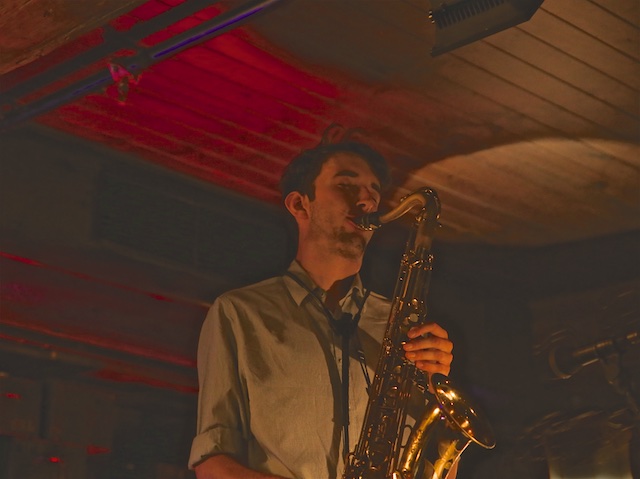 These events focus on emerging Improvising artists and allow them to gain wider exposure in front of a discriminating audience. They generally occur around three or four times a year. Some of those featured in the Emerging Artists Series are recent graduates, others are still pursuing their studies. In this case, we had two horn players from out of town; Christchurch and Wellington respectively. Their horns were different, and their approaches to the sets different, but both approached the gig with the confidence of seasoned performers. Such confidence translates well on the bandstand and it informs an audience that the musician means business. Artists often remark that playing in a small Jazz club like the CJC is a unique experience. It’s not like a noisy bar, where people often ignore you, and it’s more intimate than a concert hall where an audience gives limited feedback. Club audiences listen intensely, they react boisterously at the end of a good solo and they call in encouragement when a phrase resonates. Mostly they listen in silence and but they listen actively.
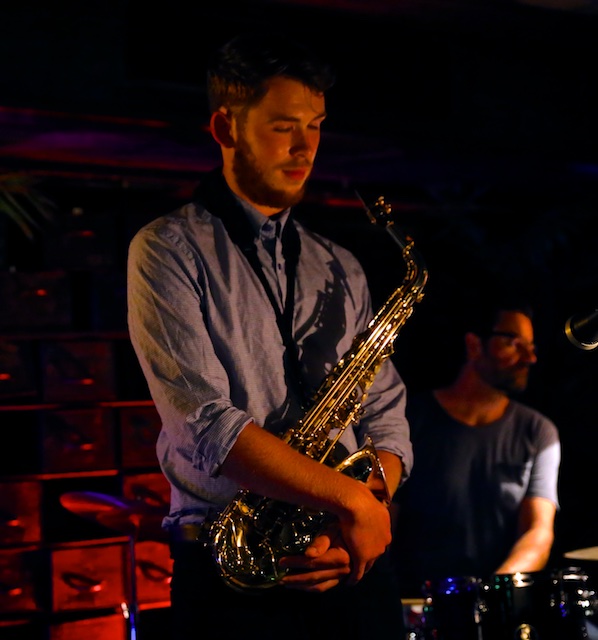 Jimmy Rainey, a tenor player from Christchurch played the first set. He is a graduate of the Jazz School in Christchurch, now furthering his Jazz studies at the Auckland University Jazz School. In Christchurch, he’s involved with a number of groups such as the Symposium Jazz Orchestra (many will recall that orchestra on Glen Wagstaff’s album), and the earthy ‘Treme’ styled Justice Brass Band. On Wednesday, he had a premier Auckland Rhythm Section at his disposal, Kevin Field, Cameron McArthur and Ron Samsom. Most of the compositions were Rainey’s and they showed a developing maturity. His sound was interesting, especially on the down-tempo numbers, having that downtown late-night feel. He is in Auckland for a while and I am certain that we see more of him. His father is well-known on the scene but he is earning his own place in the light. With a Jazz-famous name like Rainey, he has a head start.
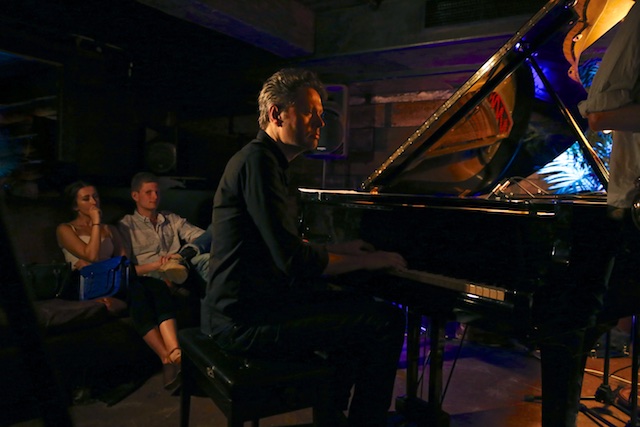 Bryn van Vliet has visited the club before as part of the boisterous Wellington Mingus Ensemble. In that context, I have seen him play in Auckland and Wellington, but never as a leader. He is also a member of the Roger Fox Big Band and a graduate from the Wellington Jazz School. While van Vliet often doubles on tenor, he played alto for this gig. What immediately caught my attention was his clean tone. A compelling tonal quality that quickly drew you in. His playing has cut-through in ways that Paul Desmond’s did, but for all that it was a modern sound. Vliet is originally from the far North but his Wellington credentials will no doubt anchor him there. Like Rainey, he brought many of his own compositions to the bandstand and the same rhythm section backed both players. For the last number, a standard, they were on the bandstand together.
 When I recently interviewed visiting Flamenco dancer Isabel Rivera Cuenca she told me that she had met some wonderful New Zealand improvising musicians and, in particular, she mentioned Jonathan Crayford. They met at a party and briefly discussed doing a project together. As they had not been able to make contact since I supplied email addresses and the project quickly took shape. A talented sensuous Flamenco dancer from Barcelona and a gifted Kiwi improviser; irresistible.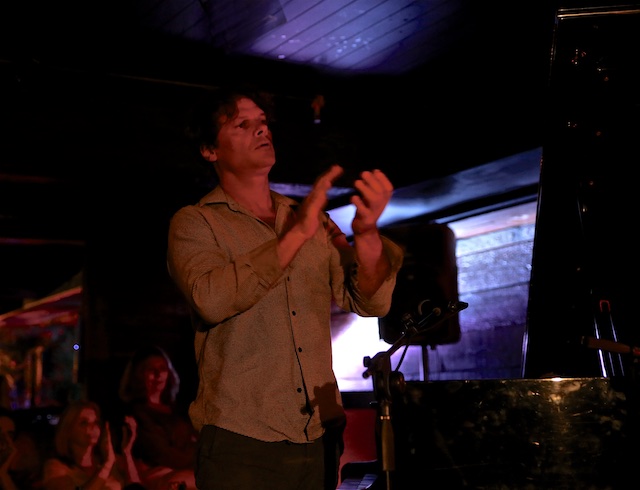
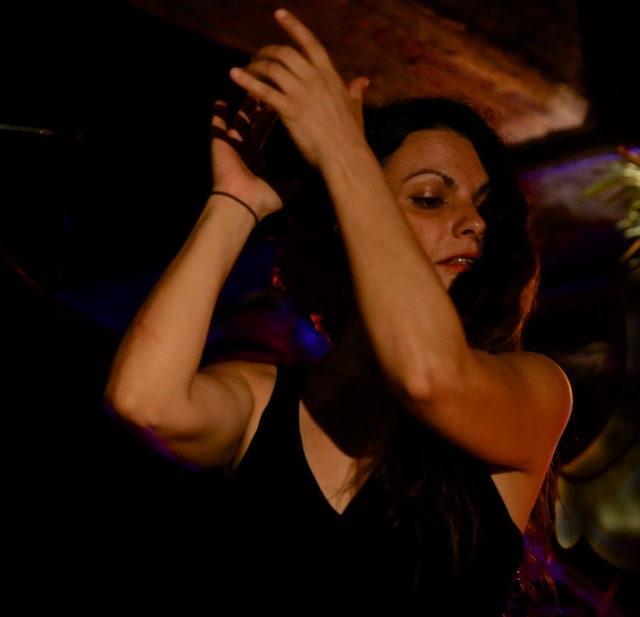 There is a real synergy between Jazz and Flamenco; they are musical cousins. Both musical forms fuse North African Rhythms with unique harmonic approaches, both created out of harsh repression. Underlining the driving rhythms of Flamenco is pure passion, contrasting a sad but beautiful dissonance. The musicians and dancers frequently call to each other in encouragement and this is not so different from the call and response in jazz. That they are similar in essence is hardly surprising – when the chants, dance and polyrhythms of Congo Square met with Creole melody, fed by a multitude of European influences (including Spanish music), Jazz was born.
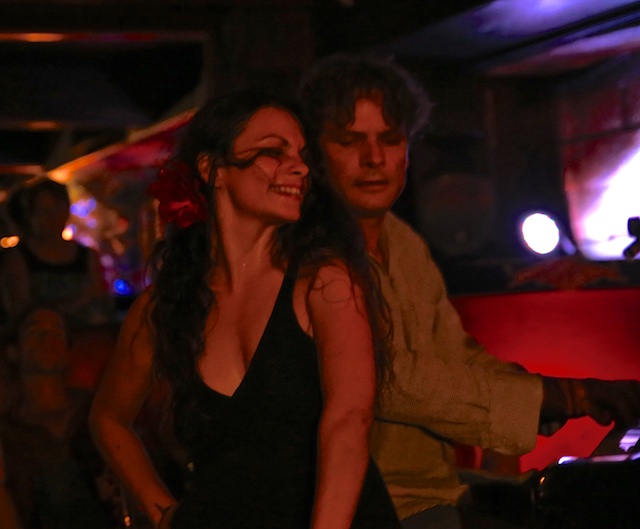 During the second set we heard tunes which moved closer to the Flamenco idiom. In these free-ranging highly improvised tunes Crayford has few peers. Towards the end of the evening, the two were in absolute lock-step; Cuenca reacting to every nuance of the music and bringing her fluid kinetic brilliance to bear, dancing her way into the hearts of everyone there. The communication was simply electric.
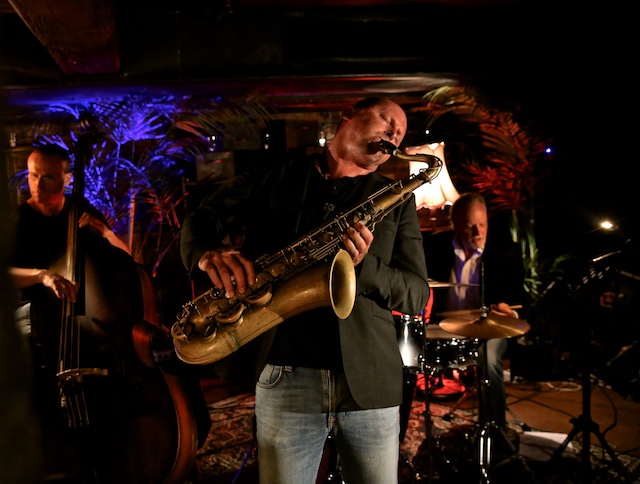 When the word gets about that a Jamie Oehlers gig is imminent, excitement mounts. Having turned people away last year, due to a capacity audience, the CJC offered two sessions this time. As expected, both were well attended. Oehlers is highly regarded in the Jazz world and it is not surprising. His astonishing mastery of the tenor saxophone is central to his appeal, but it is more than that. Every note he plays sounds authentic as if no other note could ever replace it, and all conveying a sense of musical humanism.
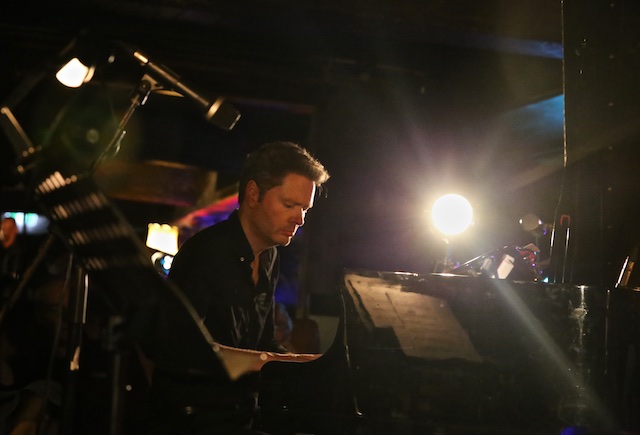 Oehlers has a new album out titled ‘The burden of memory‘ and we heard many of the pieces as the sets unfolded. Accompanying him on the album is a dream rhythm section: Paul Grabowsky on piano, Reuben Rogers on bass and Eric Harland on drums. Each a heavyweight and living up to their formidable reputations. For the Auckland gig, there was Kevin Field on piano, Olivier Holland on bass and Frank Gibson Jr on drums. Jumping in where Grabowsky, Rogers, and Harland had gone was no doubt daunting but they pulled it off in style. All played exceptionally well, but Gibson was a standout. The exchanges between him and Oehlers memorable. These men have history and the old conversations were clearly rekindled on the bandstand. Roger Manins joined Oehlers for the last number of each set and the two dueled as only they can. Weaving skillfully around each other and sounding like two halves of a whole; grinning like Cheshire cats.
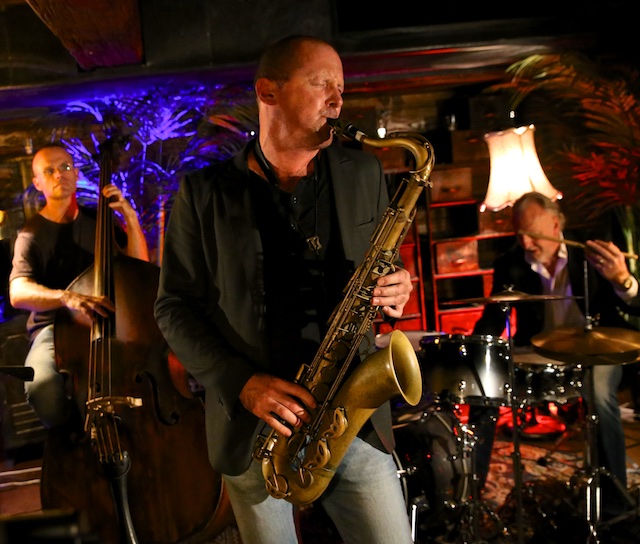 The album title and the song titles speak clearly of the musicians thought processes. He talks of his motivations and his horn takes us there. The burden of memory is a phrase he heard while listening to talkback radio and it resonated with him. He thinks deeply, examines the world about him and this communicates throughout the album. The second track ‘Armistice’ is a good example, possessing a melancholic beauty, and while it throws up the obvious images of a war ending, it also speaks of families and the tentative steps towards new possibilities.
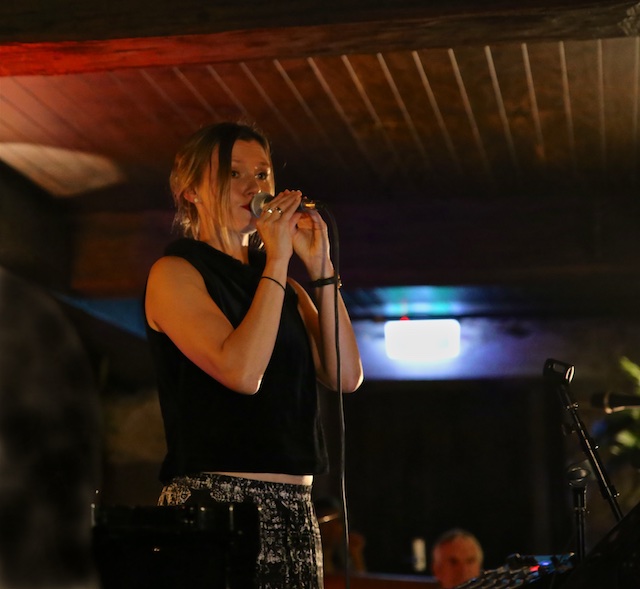 The Briana Cowlishaw/Gavin Ahearn gig is the second CJC gig featuring international artists in a month. For those who follow Australian improvised music, these are familiar names. Both have rock solid credentials as both have traveled extensively with their music and attracted glowing critical reviews. This is a fortuitous musical pairing, and it is particularly obvious during duets. There is a mutual awareness of space and nuance and an understanding of just where interplay works best; neither over-crowding the other. There are a lot of pianists who accompany vocalists convincingly, but the true art of accompaniment is rarely seen. Ahearn is a fine accompanist and soloist. Unusually, you could say the same for Cowlishaw – an aware musician who watches and listens to her collaborators carefully – works with what she hears. Never greedy to hog the limelight and making every line count.
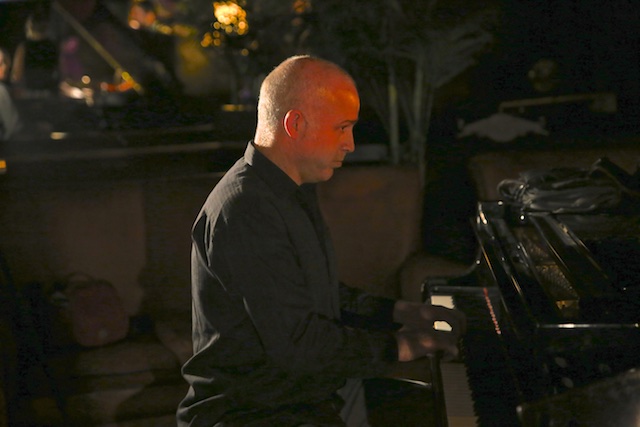 For an artist barely past her mid twenties Cowlishaw has achieved much. Performing at festivals all over the world and being nominated for prestigious awards along the way. She has studied with top rated teachers in three continents and it shows (including Gretchen Parlato, Aaron Goldberg, Kurt Elling). Her confidence, compositional abilities and musicianship shine through on the bandstand. Hers is a modern voice and more importantly a fresh young voice. What worked so well so well for Gretchen Parlato also works for her; a clean delivery, imaginative interpretations and an interesting approach.
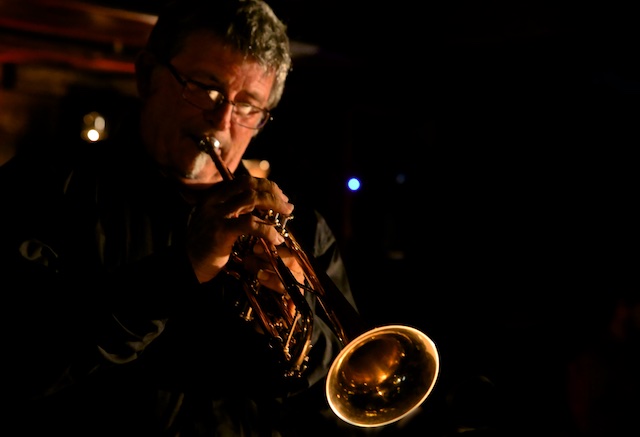 The first set saw Cowlishaw and Ahearn performing as a duo. This format gifts artists with a degree of freedom and it was well utilised. As they took us through a mix of standards and originals, we saw just how attuned they are. The Cowlishaw compositions are particularly interesting, with words, wordless vocalising and interesting harmonic underpinnings from Ahearn – a subtle weave, blending threads to create evocative soundscapes.
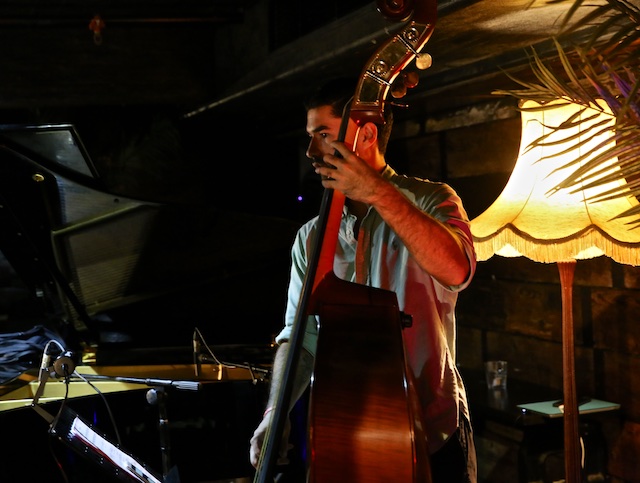 Both have visited Norway and the sparse honest northern sound was particularly evident in their first set. A recent collaborative album recorded in Norway arose out of an earlier trip there. More recently they performed at the Hemnes Jazz Festival in that country. As Cowlishaw said of these compositions, “After spending a lot of time on the road and in big cities, I found myself in the Fjords. The wild lonely freshness was so appealing that the thought arose – was this a place that I would want to live in one day”? Arising from that proposition came the compositions on their ‘Fjord’ album. Cowlishaw is obviously keen on the outdoors. She told an audience member that she intended to explore a few of New Zealand wildness places as the chance presented itself.
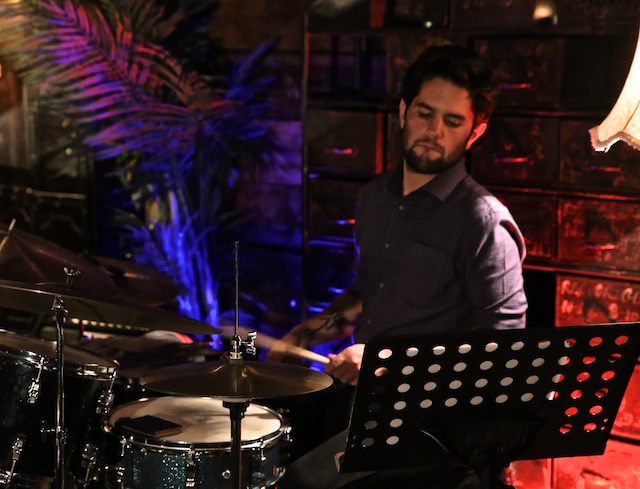 The second set swelled the bands numbers to a quintet – joining the duo were Mike Booth on trumpet, Cameron McArthur on bass and Adam Tobeck on drums. All fine musicians and well able to rise to any challenge. The expanded unit gave her much to work with and Ahearn in particular jumped at the opportunity; utilising a more aggressive hard-swinging style. There were more standards in this second half and Cole Porters wonderful 1943 composition from ‘Something to shout about’ – ‘You’d be so Nice to Come Home to’ stood out as a rollicking swinger. The other memorable standard came from the duo – Michel Legrand’s 1932 composition ‘You must believe in Spring’. To Jazz audiences this means one thing – The achingly beautiful Bill Evans Warners album of that name. The rendition was remarkably beautiful – Cowlishaw tackled the number as Norma Winstone might, while Ahearn stamped his own authority on the ballad while allowing Evans to shine through.
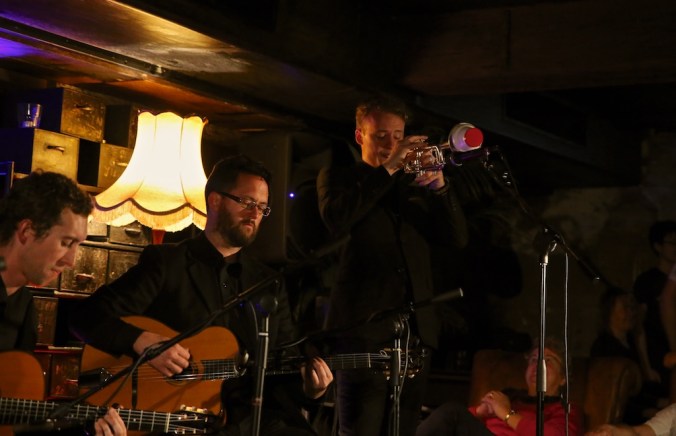 Wellington has long possessed a gypsy soul and Jazz Manouche thrives there. In Auckland there are fewer such groups and the common form here is hybridised Gypsy. I am more familiar with these hybrid forms, but as a devotee of improvised music I possess many Django Reinhardt and Bireli Legrene recordings. The Black Spider Stomp are a traditional Gypsy Jazz group and everything about them shouts ‘du Quintet de Hot Club of France’. For a start they look the part in their slick black outfits and they mirror the traditional ensembles – three Manouche guitars, upright bass and clarinet (the clarinet player doubling on soprano and trumpet).
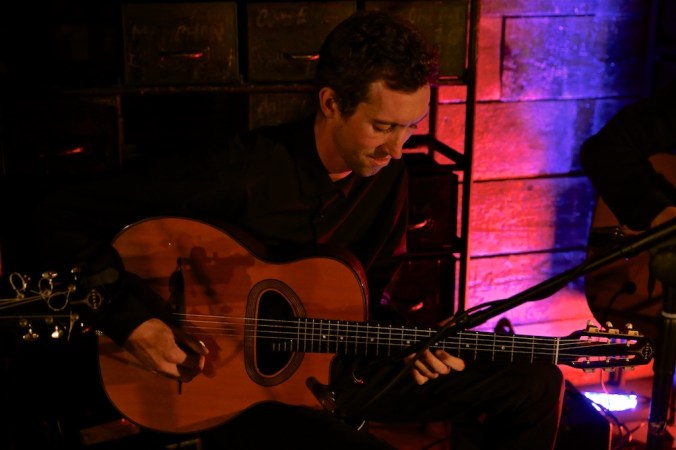 The hallmark of gypsy authenticity is the ability to swing in a particular way, and Black Spider Stomp achieves this. In western European gypsy the absence of a percussion instrument places heavier emphasis on guitar led rhythm. The rhythm guitars are essential to the momentum with their striking ‘la pompe’ strum. This hard swinging pumping style is very distinctive, with its dark chromaticism, bent notes, adherence to certain voicings, rapid arpeggios, powerful rhythms and regular use of vibrato. The tunes are mostly in 4/4 with a heavy accent on two and four (although waltzes are also in the repertoire).
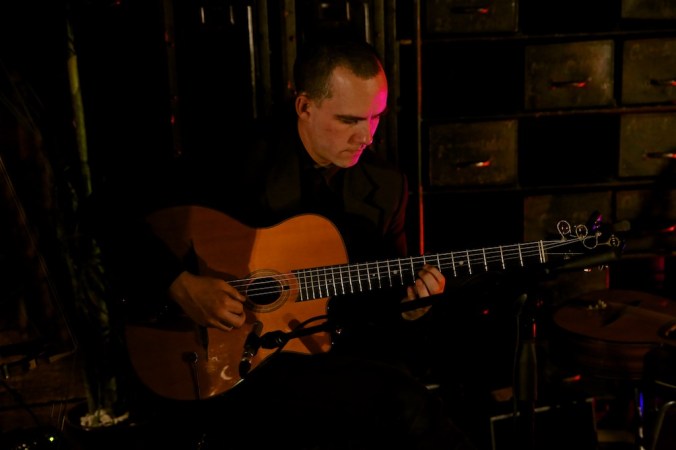 The style is so distinctive that it owns the tunes whatever their origin. Once while traveling in the Carmargue I stopped at a typical Provencal village. As dusk fell a group of Gitano guitarists started playing in the square. The tune was maddeningly familiar and I wrongly thought – this is a Reinhardt composition. It stuck in my head for days and then the penny dropped. It was ‘My Way’ – the tune popularised by Paul Anka and Frank Sinatra. Recently I learned that it is actually a French pop tune. Talk about music travelling where it will. Another perennial favourite in Jazz Manouche is Stevie Wonder’s ‘Isn’t she lovely’. Manouche Jazz itself is a hybrid of American Jazz and Gypsy – and each of those musical influences are sources as vast as an ocean.
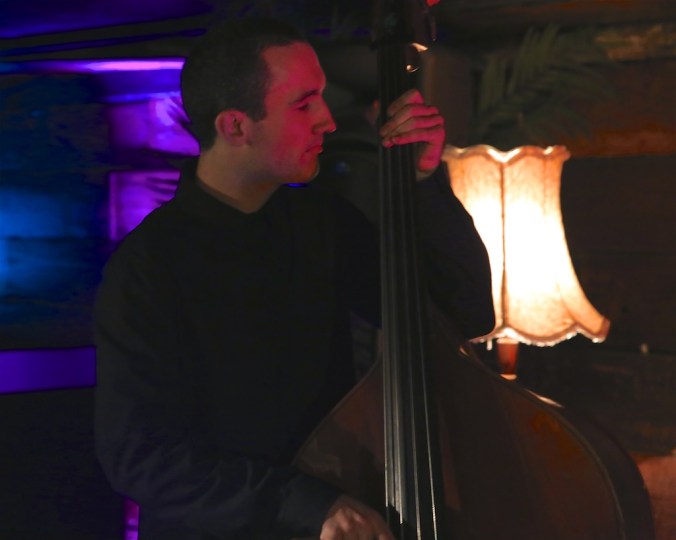 The groups use of soprano saxophone (but in this case the straight-horn variant) is also authentic. While violinists like Stephane Grapelli regularly led Manouche ensembles (pre war), the arrival in Paris of horn playing musicians like Sydney Bechet influenced the post war style. Jazz Manouche reached maturity in Paris around the time of WW2 and it was so loved there, that a handful of Jazz loving occupying Nazi’s covertly protected it. The use of a trumpet intrigued me for two reasons. For a reeds musician to double on trumpet is rare – the embouchure is so different. Post millennium we seldom hear such a distinct nod to Louis Armstrong – or to the early swing trumpeters. Perhaps with Armstrong or Bubber Miley in mind, reeds and brass man Baron Oscar Laven treated us to the occasional muted growl and smear. His cheerful enthusiasm for all of his horns was obvious.
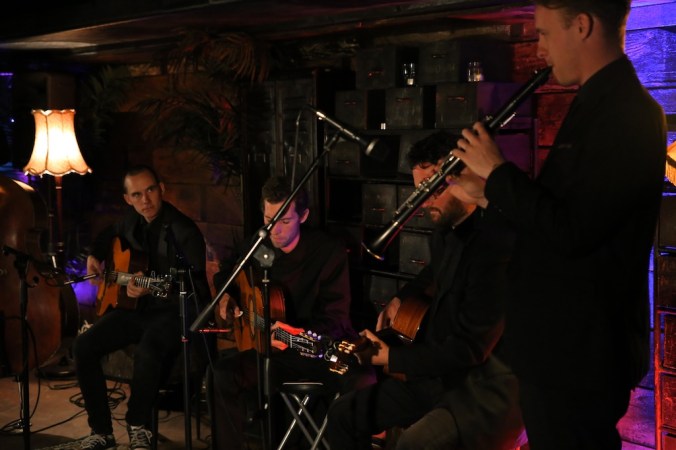 Guitars always fascinate me. These were obviously based on the famous Selmer ‘Maccaferri’ guitars favoured by Django. There are two main styles of Jazz Manouche guitar – the ‘D’ hole ‘large mouth’ with its broader rich tone and woody resonance (most often the lead guitar) and the ‘O’ hole ‘small mouth’, which is brighter in sound and has serious cut through. Solos from both were heard. These guitars are things of real beauty, earthy multi-hued wood-grained and framed in a blur of hands appearing from the darkness.
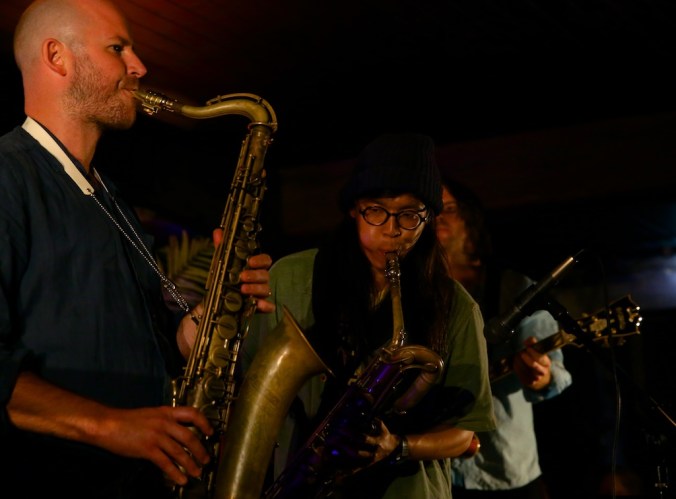 As a group of the worlds leading astrophysicists excitedly ran one last check. At the precise moment that the astonishing mathematical proofs confirmed Einstein’s theory of ‘gravitational waves’, the Circling Sun hit the CJC. This rare cosmic event released fresh gravitational waves which pulsed throughout central Auckland; altering the molecular structure of any ear within radius. It was an appropriate evening for the Sun to manifest this ‘climatic singularity’, preceded as it was by a dog-day as hot as any on record.
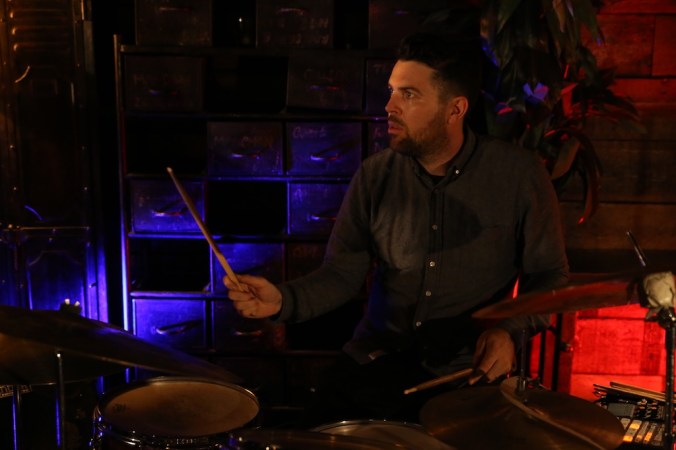 The Circling Sun is more a phenomena than a group. They defy musical form and yet exist convincingly in their own orbit; circling an altered reality. As with all wonders there is much to appreciate. The intricacy of their many machines, the indelible sonic footprint and the sheer joy they bring. I took some guests down to the club that night. Flamenco artists Isabel Cuenca and Ian Sinclair (and Ian’s wife Zarina). I wondered how they would react to this wild unconstrained mix of free improvisation and world beat psychedelic Jazz. Isabel the Flamenco dancer was quick to respond. ‘This is amazing, it has deep passion’. Passion is the heart of many musics and like authenticity it is a vital component. Long live the avant-garde – long live passionate music – whatever the genre.
 In his seminal work “This is Your Brain on Music’ neuroscientist Daniel Levitin reveals the following. ‘A liking for dissonance is a development arising from deeper listening and on attaining musical maturity. A very young child prefers consonance over dissonance, the mature listener increasingly values contrast and enjoys having expectations confounded. After spending time listening to deeper or more complex music, lightweight consonant passionless music becomes boring. There is a neural basis for this’.
 The Montreal born Dyne was just the drummer for a band like this. His musical credentials are impeccable. His expertise extends well beyond the kit to that of producer and forward-looking experimentalist; electronic future beats, hip hop, house, afro beats, boogie funk and instrumental jazz. His work with Ladi6 has brought him to wider attention, but his own Lord Julien recordings and his deeply funky ‘Down in the Basement’ (Vol 2) cuts are well worth checking out. This band has few constraints and it gives him ample room to stretch.
 I have long been a Watson fan. The man is fearless and his musical ideas cross territory few others dare to traverse. His increasing mastery of the pedal steel already sets him apart, but his ventures into the experimental avant-garde with the instrument are unique in the New Zealand context. While an accomplished studio musician his preferred gigs are those without boundaries. With Watson you get Americana, blues, Jazz psychedelia or wild forays referencing Marc Ribot & Sonny Sharrock. The Sun suits his wild eclecticism.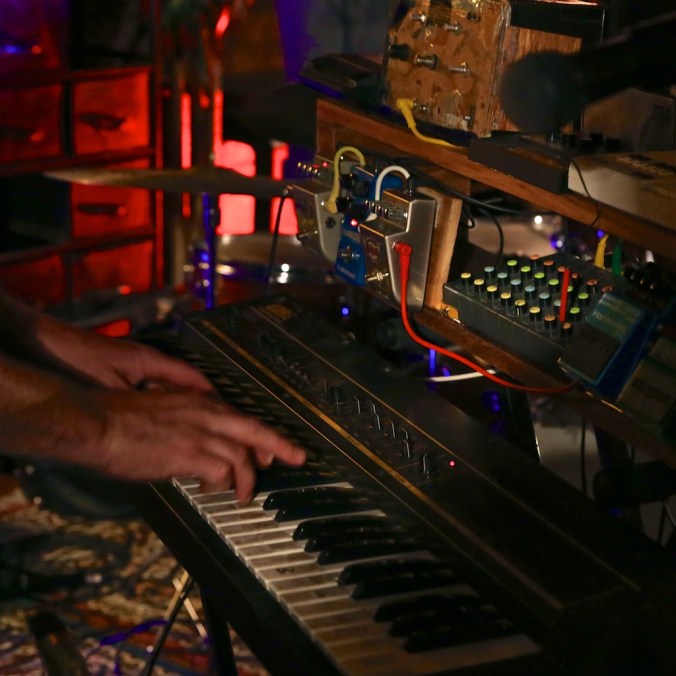
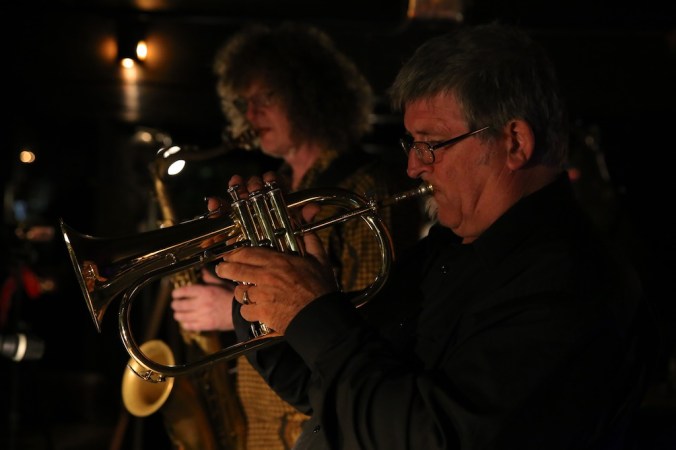 January was hot and wet and the CJC was on holiday. If like me, you are a regular attendee at the CJC (Creative Jazz Club) December to February is a long time between drinks. The El Nino humidity with its sullen skies and petulant storm threats rolled into February and suddenly we were back in business. The first gig of the year featured Craig Walters and Mike Booth. Walters, a well-known Sydney based tenor player, last performed at the club in 2012. Booth is a local and he features often; a gifted composer, arranger and trumpet/flugel player. Booth and Walters have a long history together.
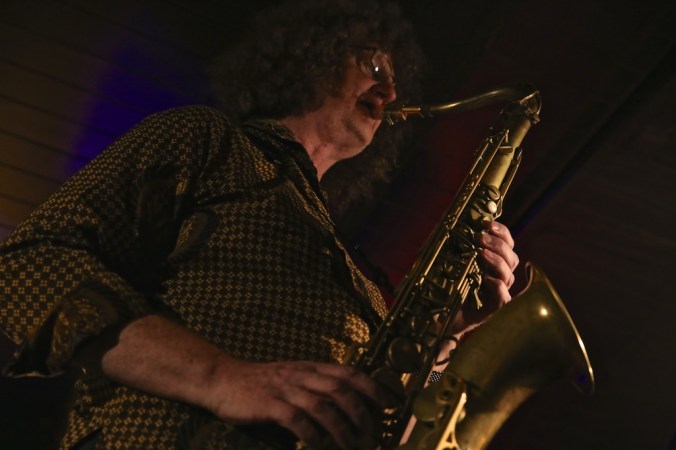 The first number was a Walters tune titled ‘Easy’. Booth played flugel and the relaxed fluid interplay between horns set us up nicely for the evening. Walters plays with real fluidity and his tone has a certain quality – a hint of mid to upper register sweetness not dissimilar to that of Ernie Watts – but with an earthier colour overlay. While the first tune eased us the into the gig the second tune grabbed our attention in a different way. ‘A Kings Ransom’ is a seldom played Booth tune and its complex rhythms gave the band a solid work out. Broadhurst delivered a wonderfully solo on this – Monkishly jagged and totally within the spirit of the composition.
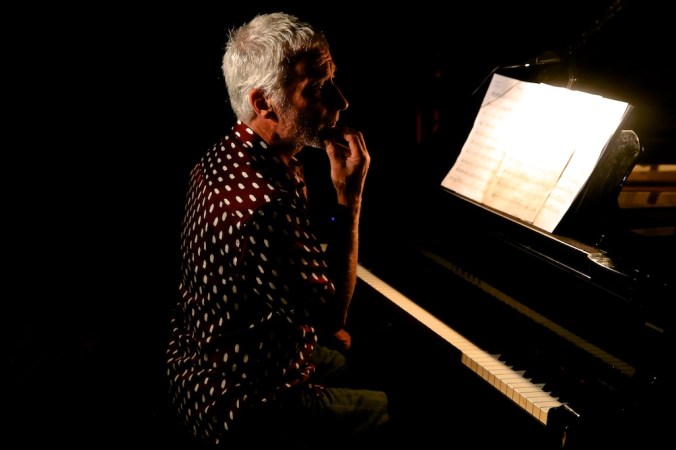 Towards the end of the second set they played Walters ‘As close as you’ll get’. If the title didn’t trigger any memories the first bar surely did. This was a tune that I’d heard way back in April 2012. Its intricate hooks and counterpoint nailed it within seconds. This was not a tune easily forgotten – in fact I happily replayed it in my head for weeks after the 2012 gig. I was not putting up video way back then but have chosen this cut to put up now.
 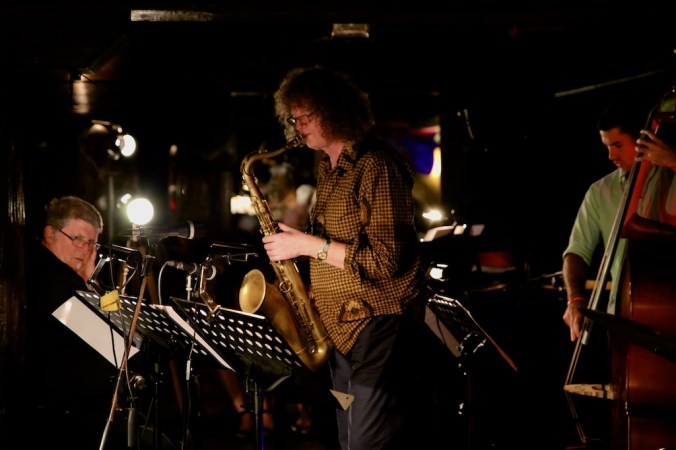 Last years attendance at the club was good and if Wednesday was anything to go by this years will be even better. There were many first time attendees and based upon the applause most will return. The artists create the music but they need engaged audiences to complete the circle. As the famous American bass player David Friesen said to us last year – ‘this is a virtuous circle and the magic only emerges when audience and musicians interlink. The sum of what comes from this interaction is often greater than the sum of its parts. Improvised live music at its best is profound and the thought that we might miss a wonderful and unique moment causes us to return time and again. That is how it works me anyhow.
 2015 was an amazing year for the CJC (Creative Jazz Club) and just when we thought the gigs couldn’t get any better this gig happened. It was an unexpected bonus, appearing out of nowhere. During the break of the CJC’s penultimate gig, Roger informed us that an extra gig would occur just two days before Christmas. Matt Penman was in town and he would appear with Kevin Field, Dixon Nacey and Steve Thomas. A buzz of excitement ran through the room and within a few days the gig was booked out. A second gig was quickly announced and that sold out as well.
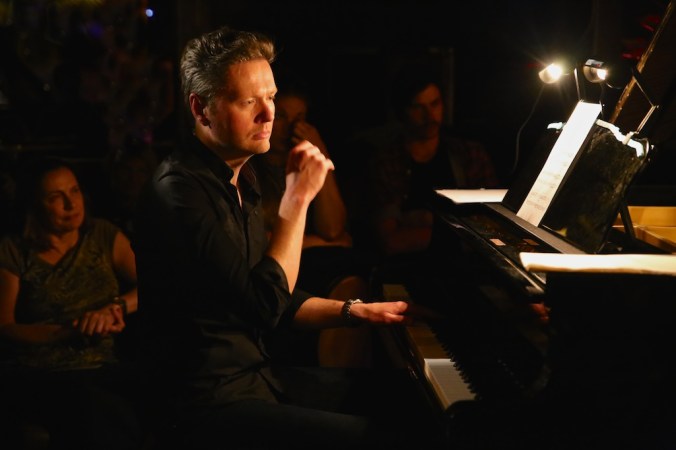 Fittingly the gig opened with ‘Two Steps’ (Penman) which is from the second James Farm album. Everything about the number is compelling and it oozes a post millennial Americana vibe – close to that espoused by artists like Brad Mehldau. James Farm are an extraordinary group co-led by Joshua Redman, Aaron Parks, Matt Penman & Eric Harland. A super-group where everyone is a gifted writer and virtuosic player. This is the pinnacle of modern American Jazz and we were lucky enough to get an up close taste of it. A warm glow swiftly enveloped us and from the first pull on the bass strings and we sensed on mass that this a different type of bass playing; supremely authoritative, melodic and with more momentum than a downhill freight train. We were especially fascinated to hear that Split Enz inspired him to write this tune. We heard other James Farm compositions – the moody ‘Juries Out’ (Penman) and Otherwise (Aaron Parks). Delightful Penman originals dominated the rest of the set (with the exception of a haunting Jewish folk song).
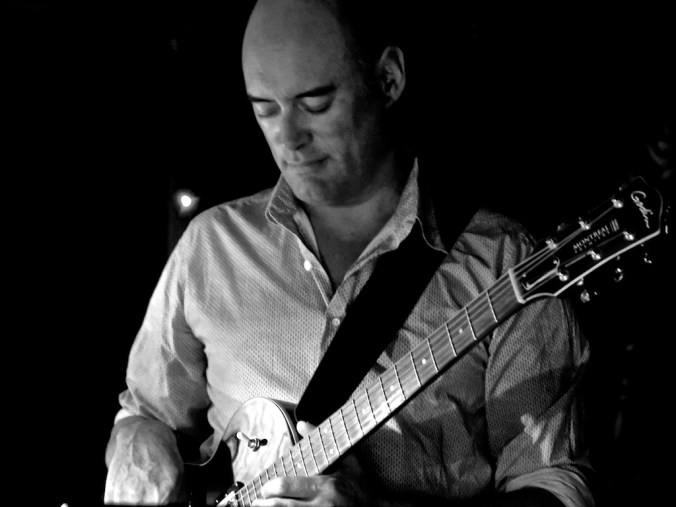 As approachable as this music is, there are many rhythmic and textural complexities. Putting such a set list together with a band not used to playing the material, perilous. Two factors undoubtedly assisted here. Penman, Field and Nacey are old friends. Nacey attended Avondale college with Penman and Field has known him since his time at Auckland University. Field also recorded with Penman in New York on his recent Warners album ‘The A List’. The remaining band member was Stephen Thomas, the youngest of the quartet. He only met Penman the day of gig. When you examine Penman’s contributions to James Farm, the SF Jazz Collective and other albums, you realise that he writes with unusually gifted improvising musicians in mind. For a young drummer to step into the space occupied by Eric Harland and Obed Calviare and not only pull it off but to do it well is a credit to him. Penman singled him out for praise and told us we were lucky to have a young drummer of his ability on the scene.
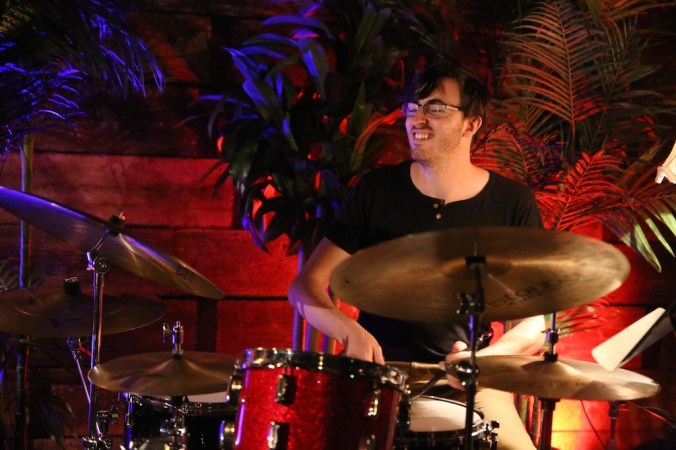 Of Field and Nacey we expect only the best and we got it. Replacing Redman, Moreno or Rosenwinkel with Nacey’s singing Godin Guitar felt a natural choice. I have heard Mike Moreno perform and Nacey is heading for that level of virtuosity. He is a good reader and a master musician and he always delivers. Field was also at his best that night and his best is something to behold. Losing himself in a music quite different from his own and doing it with utter conviction. Collectively they brought Christmas joy to everyone present. The best of Christmas presents from the best of Jazz clubs. I hope the CJC features Penman again soon – we love him down under.
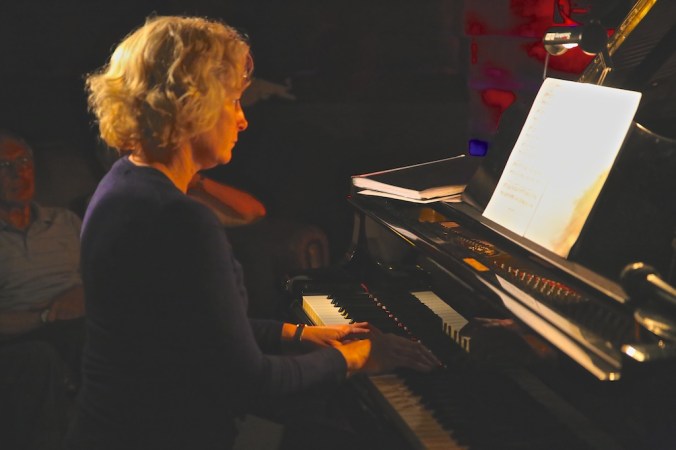 I was out of the country when Anita Schwabe performed at the CJC two years earlier. While I had seen her perform at the Bruce Mason Centre with the Rodger Fox Orchestra, I wanted to hear her in a more intimate setting. Her live (and recorded) performance on ‘Journey Home’ was impressive and as I recall a jet lagged Alan Broadbent watched her segments from the wings during the Auckland concert. As good as that concert and a later concert were, hearing an artist in close proximity is always a different experience. Schwabe didn’t disappoint. The first thing you observe when you meet her is her understated manner. Like many New Zealand improvising musicians she is self-effacing to the point of being dismissive of her own abilities. This contrasts strongly with the engaging confidence of her playing. From the first few bars you become aware that there is something special going on.
 Schwabe’s first number referenced the under-acknowledged and recently departed pianist Clare Fischer. “I like his unusual voicings”, she said before she played through her composition,’Fisching for Compliments’. The tune was intensely melodic, filled with clever references and a fitting tribute. Although a more reflective number (and her first of the night) we saw what she could do. The tune drew us in with a spacious intro and then imperceptibly we felt the swing. Block chords suddenly dissolving, close voicings appearing, disappearing; right hand running off the back of a phrase, subtly playing with time and rubbing against the chords in the left hand. This interaction between right and left hands created subtle and pleasing tension and we were to hear that often throughout the evening. That first number gave us a foretaste of what was consistently enjoyable music throughout the sets.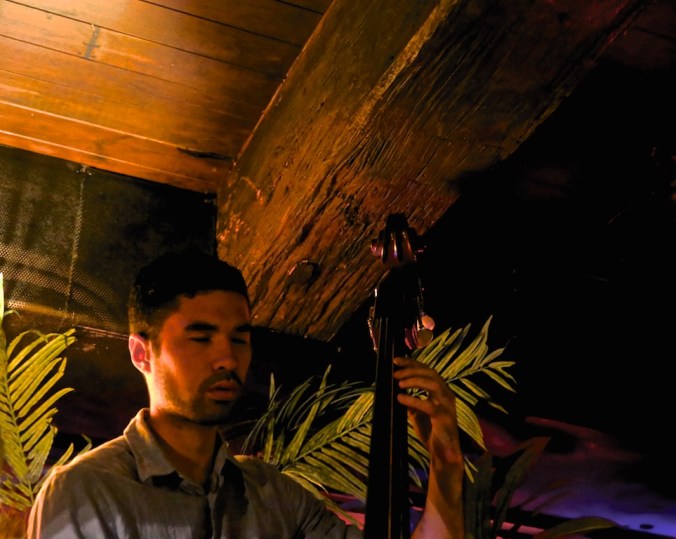
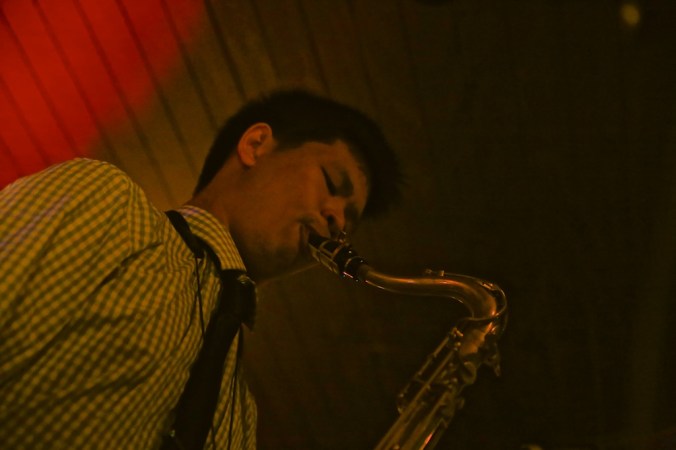 Richard Thai was on the first JAC album but by the time I saw the ensemble live he had left New Zealand for America to complete his postgraduate studies. Recently he returned to his hometown of Wellington where he now teaches and leads the Richard Thai 5. While the ensemble is a basic line up of saxophone, piano, guitar, bass and drums it is never the less forward-looking. This is post millennial music.
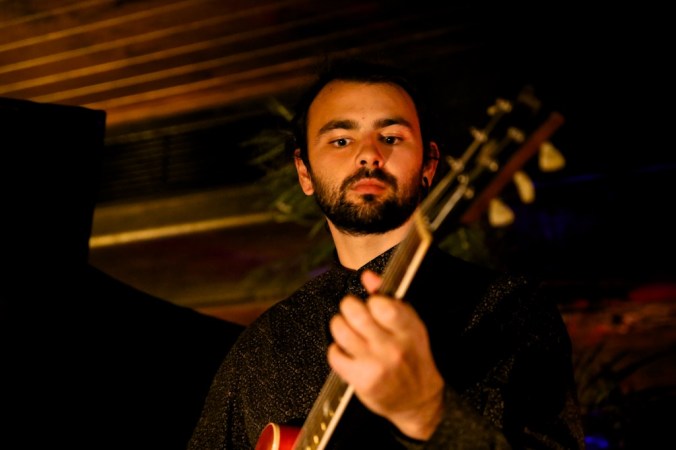 The best illustration of this was heard in his second tune, ‘Capricorn’. A marvellous composition. Like much of Thai’s material it has powerful hooks to draw you in. What sounds simple is in truth anything but, as it shifts between major and minor keys with disarming ease. Many tunes do this, but with Capricorn the device is extraordinarily well conceived. The shifts in focus are pleasing, but what sets the tune apart is a sweet over-arching dissonance; diminished chords acting as a bridge to carry you across the major-minor divide. The arranged head is especially tantalising; setting the listener up expectantly for the explorations that promise to follow.
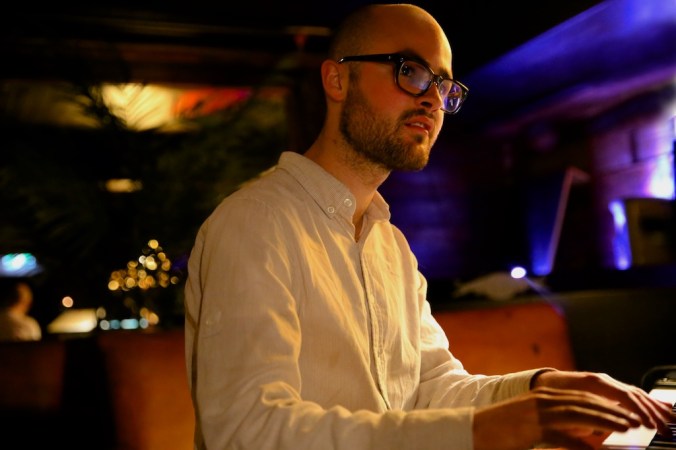 Capricorn’s momentum is that of a multi-hued butterfly in a tropical storm; pushing against the cross winds, never losing its way, pulse, or sense of purpose. Thai’s tenor picks at the tune, peeling the layers back, exposing the heart. This contrasts with pianist Matt Steele’s oblique approach. Steele clearly took the difficult route and along the way it yielded gold. You were with him note by note as he undid the knots of the puzzle confronting him. Steele is always an interesting pianist and always one to watch. It is his determination, his preparedness to take risks and his ability to learn on the bandstand that marks him out from many of his peers. He grows as an artist each time I see him.
  The last to solo on Capricorn was guitarist Callum Allardice. After the long complex solos preceding his, he wisely chose to linger nearer to the melody. His tight elliptical figures rounding out the earlier solos and bringing us gradually back to the outro. His time to shine as soloist came on the last number where his guitar soared as if free of gravity (much to the delight of the audience). Allardice has many fans in Auckland.
 The remaining two band members Shuan Anderson and Scott Maynard are also established musicians from the Wellington area. Anderson (like Allardice) was also a member of the Tui nominated JAC and he has played at the CJC before. A responsive drummer who interacted well and picked up on the subtle nuances of the material. The bass player Scott Maynard has been a member of various leading Wellington units (e.g. Myele Manzanza, Lex French). He has played at the CJC before and he never disappoints. His role in giving a heart beat to this often complex material was vital. I look forward to hearing more of this ensemble and above all I would like to some hear more Thai compositions. With a few more years of performance under their belt the unit could achieve even more.
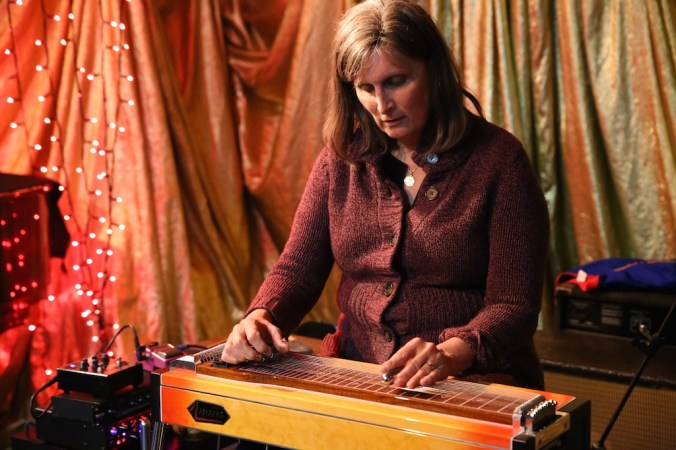 Lately I have attended a number of music workshops. Although not a musician I gain a lot. They offer fascinating insights into the artists creative process and if your lucky, insights into a particular instrument. With music, the more you listen, learn, observe and delve, the more you gain. My reason for attending Susan Alcorn’s workshop was probably different from most attendees. The majority were guitarists anxious to glean practical information or wanting to be convinced that this complex instrument was for them. A handful of others sought knowledge for knowledges sake – dipping another toe in the water of sonic learning.
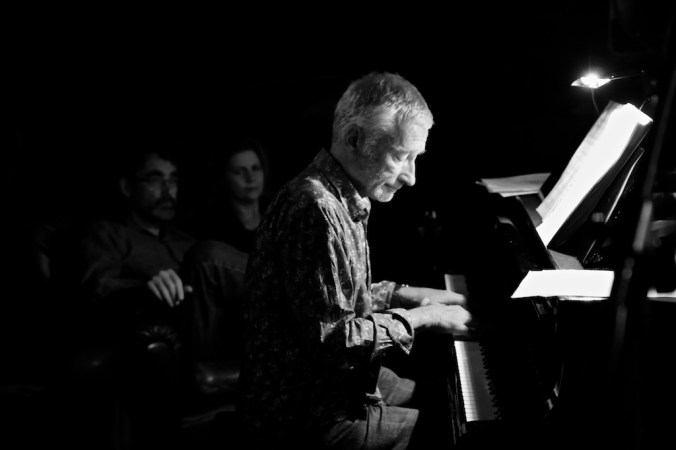 ‘Panacea’ is the third of Phil Broadhurst’s ‘dedication trilogy’ series and as fine as the earlier two albums were, this one stands out. Everything about it is superb, the individual performances, the ensemble playing, the recording quality, the cover art by Cameron Broadhurst and above all the compositions. Broadhurst, always a prolific composer has excelled himself here. Instead of theming the album around a particular influence or musician he has tapped into the subliminal forces guiding his creativity.
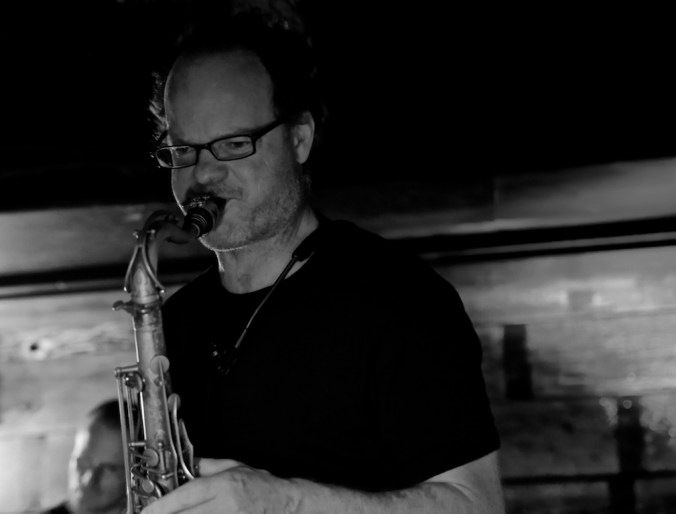 When he composed ‘Precious Metal’ he was at first unaware of the influence until a student pointed it out. It certainly speaks of Horace Silver but more importantly it conjures the essence of the man behind the music. The ensemble playing on this is simply sublime. An arranged head yields to Mike Booth on trumpet. He swiftly encapsulates the ethos of Silver in his delightfully moody solo. Broadhurst follows – expanding on the theme and signalling the direction, effectively setting the tune up for Roger Manins and Oli Holland who follow. There is a logical flow throughout and the piece works all the better because of it. I have heard it several times, but even on first hearing it sounded warmly familiar. That is the skill of good writing; evocation not imitation.
 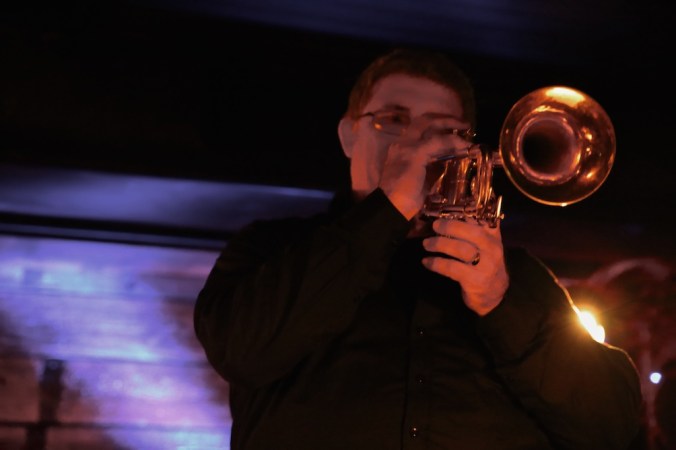 For me the greatest joy was ‘Wheeler of Fortune’ his Kenny Wheeler tribute. So well realised was the mood that it might have been John Taylor playing a Wheeler composition. Again this is an extraordinary piece of writing and articulation, lovely because while capturing the style of these lost lamented greats it reminds us just what made them so dear to our hearts. In spite of being a piece for piano trio you can sense Wheeler reaching for those impossible high notes or mournfully smearing his over-running melancholic lines. It must have been tempting to use Booth’s flugel on this, but the implied sound is all the more powerful.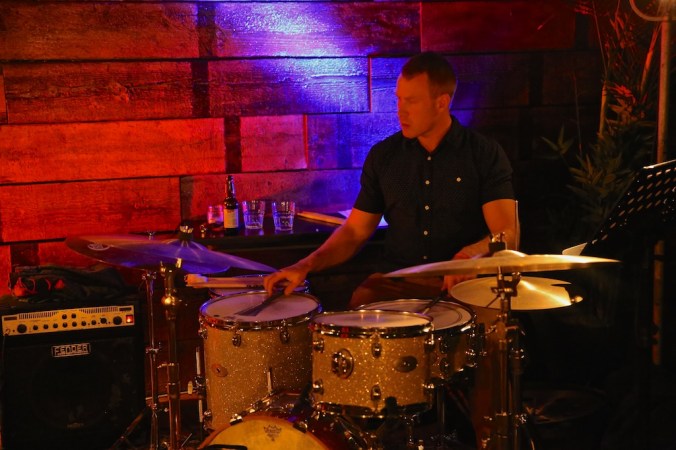
 I look in the liner notes, no human voice shown – then it struck me. This is Watson, again understated but adding something to the piece which lifts it into the realm of musical magic – an exceptional and original musician. The album would be the poorer without his contributions. Subconscious influences shape every musicians work and it is right to celebrate those. Purging these influences is often a mistake. All creative people whether writers, poets, musicians or painters have these voices at their core. Improvising musicians stand on the shoulders of giants and it is fitting to celebrate that. Broadhurst has done so with due reverence, due acknowledgement but never sycophancy. This was his time to say thank you and his own original voice shone through the multitude of influences.
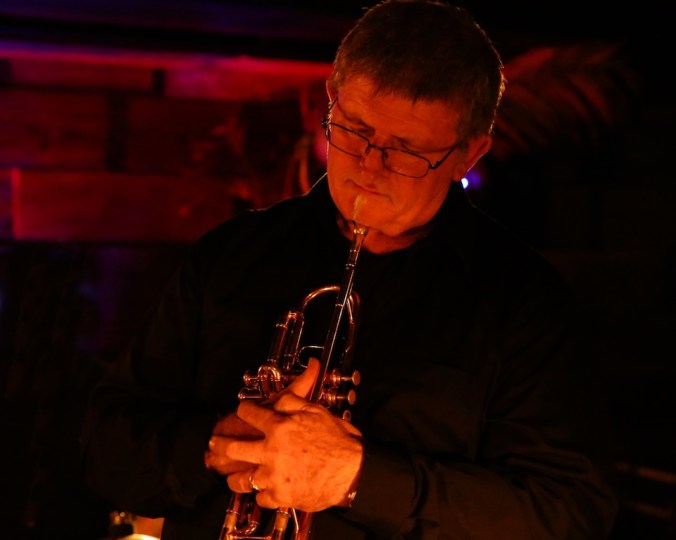 Booth sounds better each time I hear him. His undoubted strength lying in the way he reminds us of the great traditional trumpet players – especially those from the Hardbop era (like Blue Mitchell). A wonderful musician, a fine arranger and one who nicely compliments a saxophone modernist like Manins. Playing off the latter gives the edge. Manins is such an original that you hear something new and exciting each time he plays. I have observed before how well he plays off Broadhurst compositions. This says something about the skill of both men.
 The word panacea is from the ancient Greek meaning ‘all healing’. The modern definition extends the concept beyond cure-all potion – applying it more to the realm of ideas. The album is truly a balm in our troubled times. I highly recommend it as a Christmas present to yourself or a loved one. It must surely be contender for next years Tui’s.
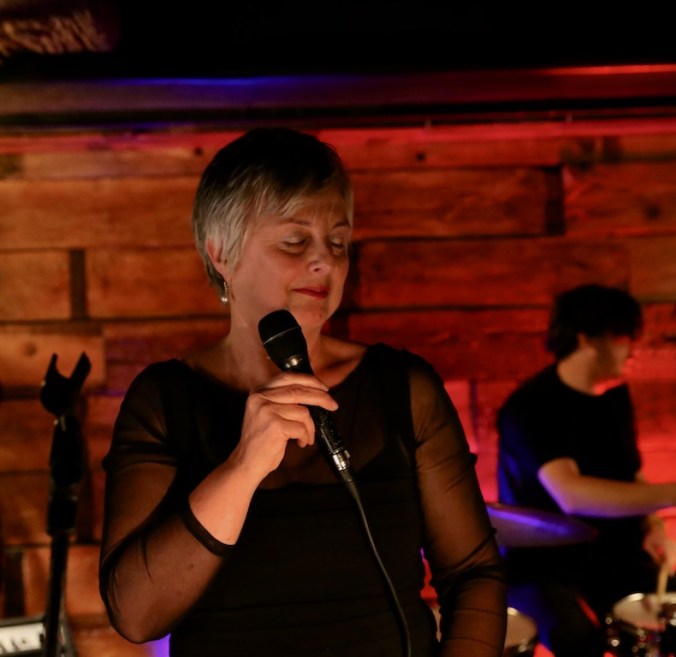 On Wednesday the UK-based vocalist, arranger composer Louise Gibbs brought her Seven Deadly Sins project to Auckland’s CJC (Creative Jazz Club). The audience, unrepentant antipodean sinners that they are, found much to enjoy. When premiered in the UK the project received much acclaim and in 2013 the ‘Seven Deadly Sins’ album’ was released. As I glanced through the liner note credits one name jumped out, Tim Whitehead; an important English saxophonist with equal facility on soprano, alto and tenor. For any number of reasons this is an album worth having.
 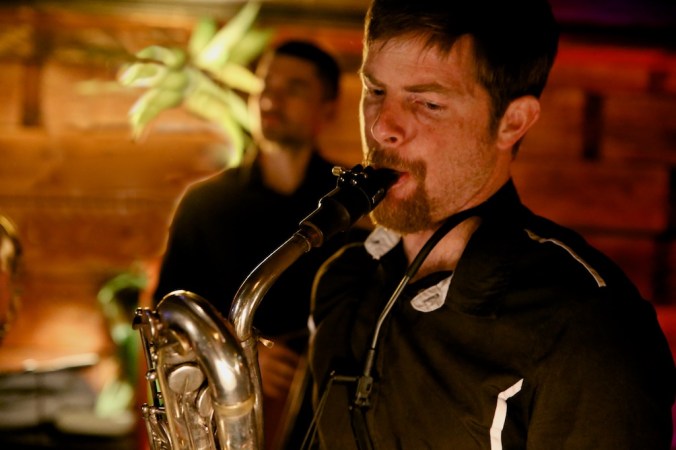 The song suite has seven parts plus prologue & epilogue. This aggregation of cardinal sins does not originate with Peter Cook (as someone hilariously suggested) but comes to us from the fourth century AD. These very human failings were the obsession of the middle ages and Chaucer, Dante and Brueghel utilised the themes to great artistic effect (and often with rye humour). Debates on morality are still very much part of the public discourse as the dreadful events of Paris, the Lebanon and Mali remind us.
 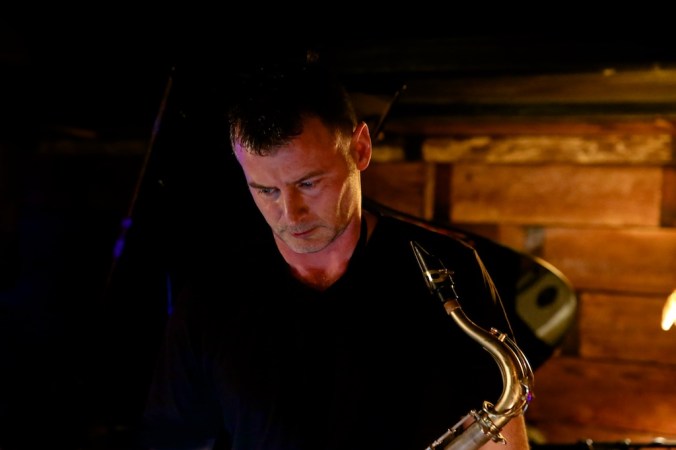 Gibbs invited us to examine the sins afresh; a parade of human failings as seen through a jazz lens. Her evocative contrasting pieces leaving us in little doubt as to which sin they represented; a strident drum solo during anger, the fulsome sound of the trombone for gluttony etc. It is unsurprising that the tenor saxophone portrayed lust; an entirely appropriate pairing given the repeated historic accusations of lasciviousness levelled against that sensual instrument.
 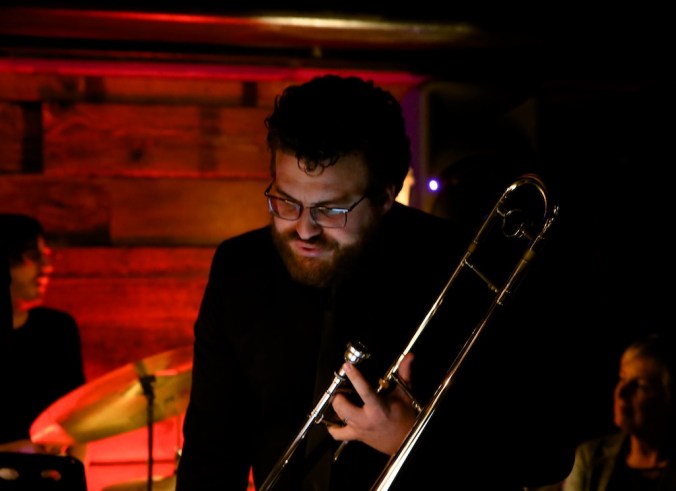 The suite while highly arranged gave ample room for the soloists to demonstrate their particular vice. Crystal Choi was ‘pride’ on piano, Pete France was ‘lust’ on tenor, Haydn Godfrey was gluttony on ‘trombone’, Mike Booth was ‘envy’ on trumpet, Cameron McArthur was ‘sloth’ on bass, Steve Thomas was ‘anger’ on drums, Andrew Hall was ‘greed’ on alto & baritone. Gibbs was vocalist on all numbers including a prologue and epilogue. Many of the band members like Booth, McArthur, Choi and Thomas are regulars but we see Hall, France and Godfrey less often. That is a shame because they were amazing.
 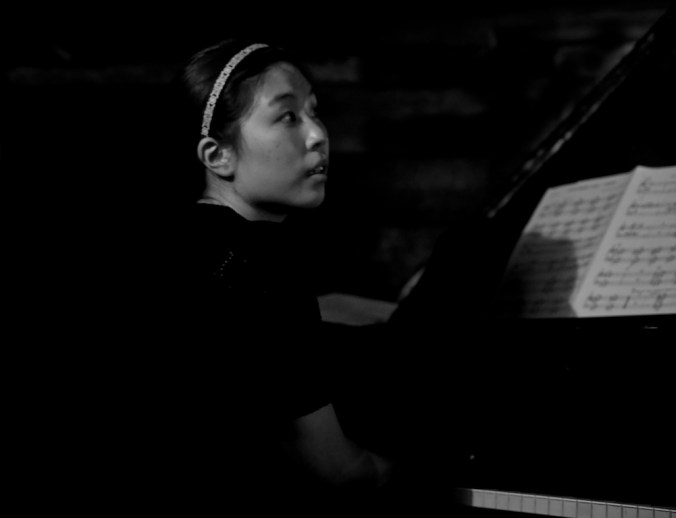 A shorter first set preceded the ‘Seven Deadly Sins’ suite – all Monk compositions. The band used stock arrangements but there was a sense of boisterous freedom in the renditions. This provided an appropriate segue to the second half. While everyone embraces Monk these days, his dissonant choppy lines certainly raised eyebrows back in his heyday. Monk was an iconoclast who channeled the rawness of the human condition through pen and piano. With the Seven Deadly Sins and its often dissonant passages we also experienced that.
 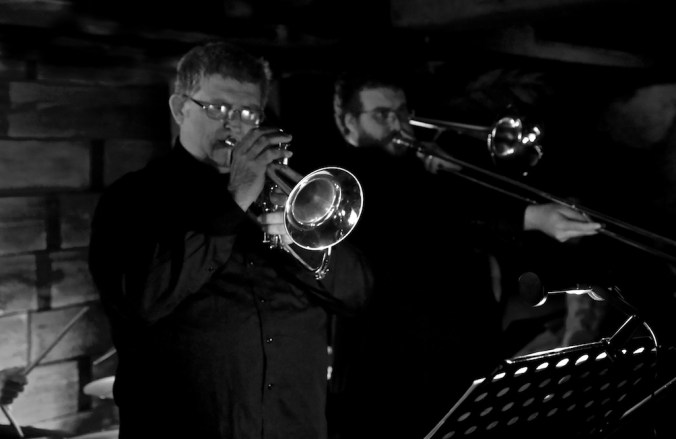 Louise Gibbs has been teaching and performing in the UK for 30 years, but she grew up in Auckland. In recent years she moved away from a distinguished career in academia to concentrate on performance and composition. There is a confidence about her work and she is unafraid as a performer. Her voice can move from silk to raspy as appropriate to the piece. Footnote: Earlier I drew attention to Tim Whitehead (on the Gibbs album). He was once a member of Ian Cars ground breaking and popular group ‘Nucleus’ – the highly respected Kiwi born saxophonist Brian Smith was a founder member of that group.
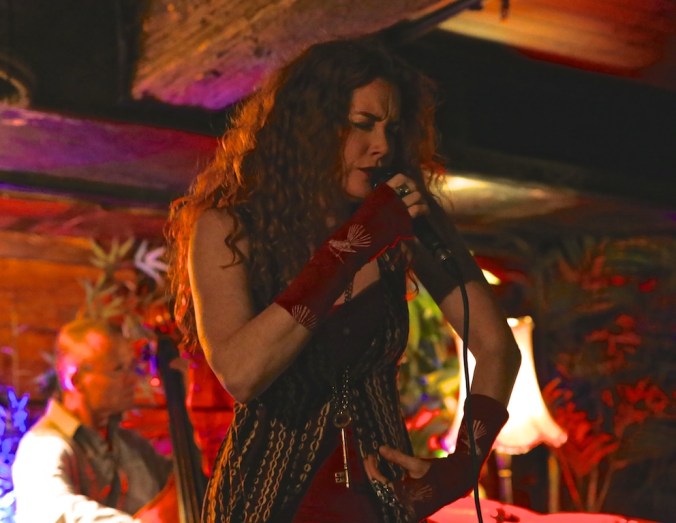 Because the human voice is the most primal of instruments it has the capacity to engage in unexpected ways. When a skilled vocalist performs we watch as carefully as we listen. The merest inflection, micro pause or slurred note can captivate, but it is also the non verbal cues; the ones we assimilate subconsciously that draw us ever deeper inside the song. When Caitlin Smith sings you are hyper aware of the entire performance. Hers are not gigs where listeners drift away or endlessly fiddle with phones. The audience are as engaged as she is. That is her gift as a musician.
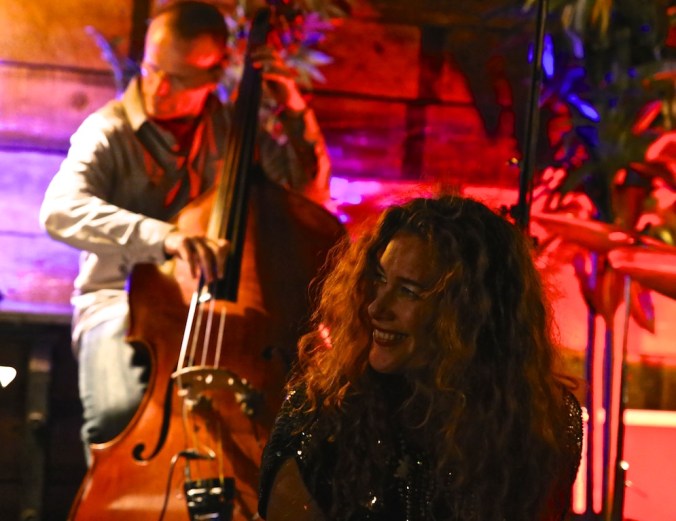 When Smith moves your attention moves with her. She will prance, dance, drop her head, pause for effect or sweep her hair back unexpectedly and all in service of the song. When you watch and listen to skilled performers like her (and they are few and far between) you discern a deeper truth. What appears extrovert can be something else. The actions and gestures are an act of losing oneself. This is the performers mask and behind it lies a certain vulnerability. When enough of this vulnerability informs the music we feel with them.
 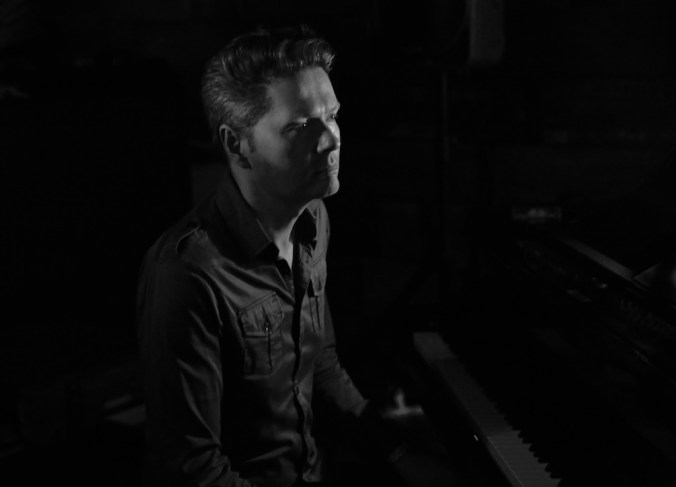 During Smith’s performances there is a lot of interplay between band members. She is generous in her acknowledgements and genuinely appreciative of the musicians behind her – unlike some vocalists who make it very plain that this is all about them. She had two of her regular cohort with her, Kevin Field on piano and Oli Holland on bass. On drums was the talented Stephen Thomas and I had not seen him with Smith before. During the break I asked Thomas how he was enjoying the gig. His answer is worth repeating, as it illustrates the above points. Vocal artists who think disengaged equals cool might pick up a pointer here. “Working with Smith is perfect as you have so much to react to. Every gesture and look gives you new material to work with”.
 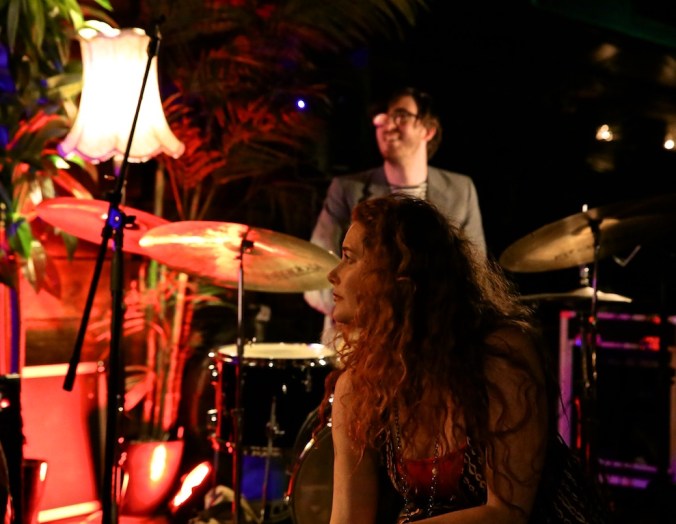 Smith followed her usual pattern of alternating originals with standards. The set list moved between Jazz and singer song-writer soul. She only repeated one tune from last Decembers CJC gig and that was the lesser known Ellington Number “I like the Sunrise”. This is from Ellington’s ‘Liberian Suite’ performed and recorded first in 1947. The original featured Al Hibbler on vocals, soon followed by a Frank Sinatra version (also with the Ellington orchestra). More recently Kurt Elling recorded a version but all of the aforementioned are at a slower tempo. At the risk of committing heresy, I like the upbeat punch and swing of Smith’s version best.
  The night was thoroughly enjoyable as I knew it would be, and with this rhythm section of Field, Holland and Thomas behind Smith that was guaranteed.
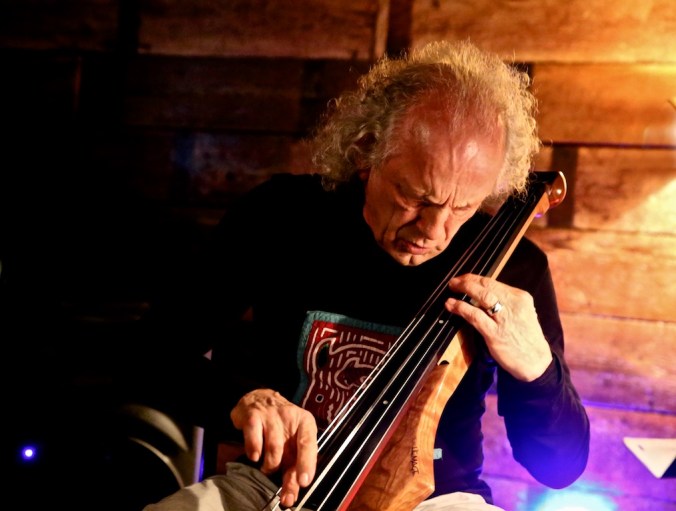 Good improvising bass players get a lot of work, but they seldom get the acknowledgement they deserve. This is one of life’s inequities and it’s partly because a bass player by custom is hidden behind the other band members. When a pianist or guitarist plays solo they will often mimic or imply bass lines. A good bass line is both an anchor and an invitation – invoking deeper exploration; the consequent rub between notes and time is where most of the tension and release is hidden. Every so often a bass player claims wide-spread attention. Blanton, Mingus, Haden, McBride, Le Faro, Pastorius etc. David Friesen while not garnering the attention of the aforementioned bassists in the popular press, is without doubt a giant of the instrument. His is a name that frequently comes up when aficionados and musicians talk. He is the bass players bass player, an acknowledged innovator.
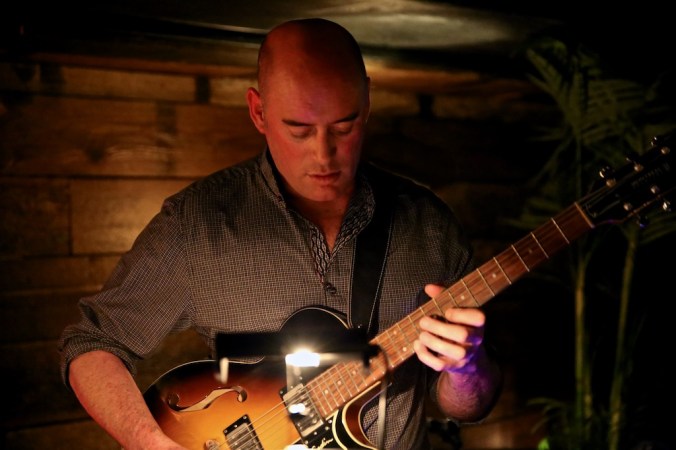 As is often the case with great musicians, he was a compelling talker; spinning out yarns of people and places visited. Often with subtle humour woven into the narrative. Above all he imparted his views on the place of music in these complex and troubled times. To paraphrase slightly, “Music is a way of healing a broken world, it is not just about the people making the music or about the audience receiving it, but something far deeper. The interaction creates a virtuous circle, each continuously enriching the other. Out of this comes the magic”. This reference to the primal healing power of music resonated and he received loud applause. Improvisers seldom earn what they should and yet they persevere. Understanding their mission of deepening human awareness. It was good that he reminded us of how vital a deep listening audience is. Sharing the joy brings its own responsibilities. That’s why I do what I do in print.
 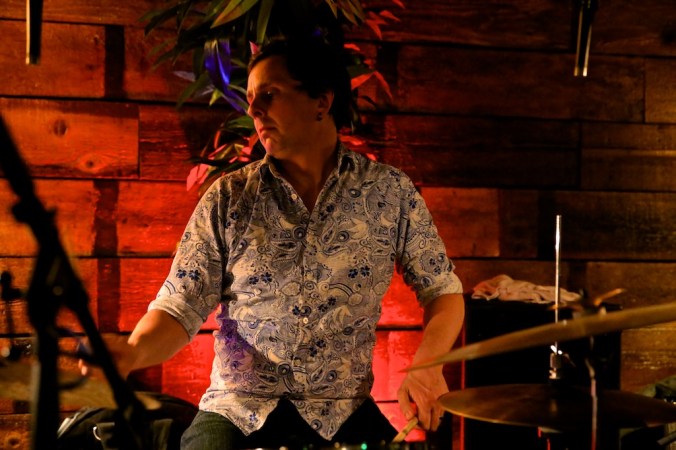 Friesen travels with a special bass; made for him by a famous Austrian instrument maker. Sick of having instruments damaged or interfered with by airline baggage handlers, he ordered an instrument small enough to go in the overhead locker. This custom bass is mainly crafted out of American Cherry wood and Canadian Maple. It also has a very sophisticated pick up. Because of the foreshortened neck I suspect that it would take some mastering by most upright bass players. In Friesen’s hands it sung.
 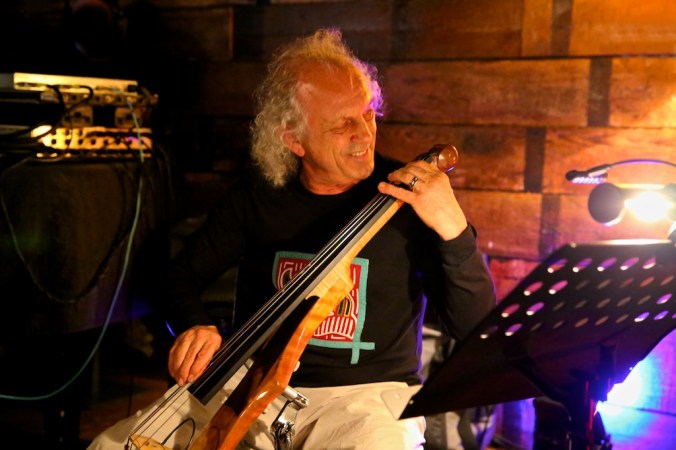 Nacey did what we expected of him; delivered stinging imaginative lines and soared on that lovely Godin semi hollow-body. As success spreads him thinner, we tend to see less of him in the Jazz club. When we do hear him we get the very best. He is a guitarist who can hold his own anywhere on the scene. The other Kiwi on the gig was Wellington drummer Reuben Bradley and what a performance he put on. Again it was hardly surprising, as Bradley is among our very best drummers. Like Nacey he is often the drummer of choice for visiting artists.
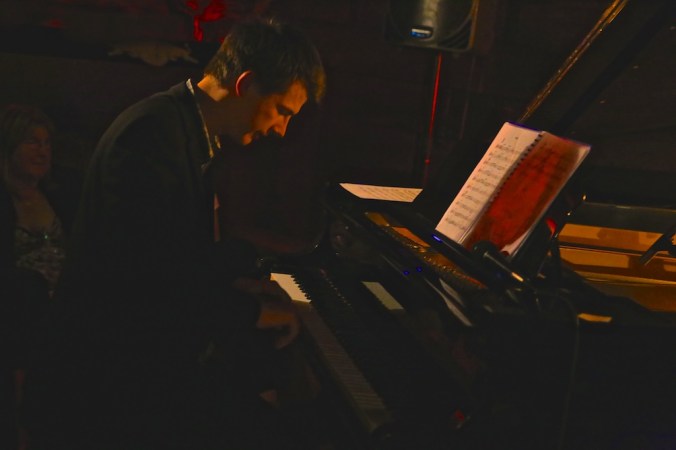 Alex Ward has been on the scene for a few years now and he has appeared at the CJC a number of times. This time he appeared with a group of formidable younger musicians; all respected about town. His programme was pleasantly challenging as it offered contrasting tunes. From the quirky Carla Bley composition ‘King Korn’ to the perennially popular Disney tune ‘Never never land’. Then, for the second time in as many weeks we heard a Cold Play cover – this time ‘Daylight’ (arr. by Taylor Egsti). Rounding off the set list were a number of his own compositions including the appealing ‘Rakino’ which I have heard before. Wards compositions have a definite melodicism about them.
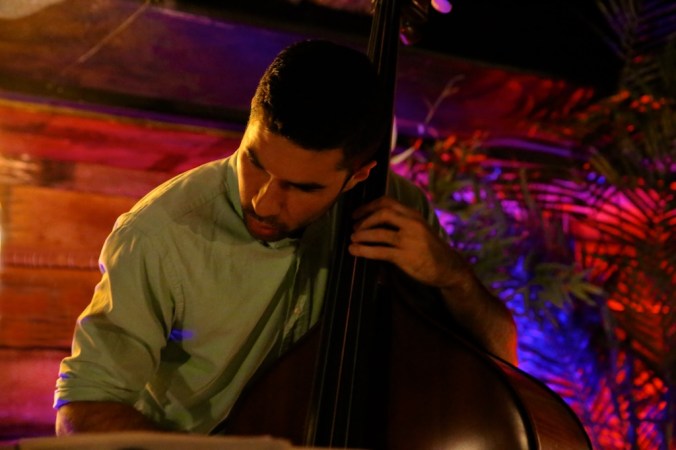 I am a real Carla Bley fan and so it surprised and pleased me to hear ‘King Korn’. I also have a real liking for her ‘Ida Lupino’. Bley’s repertoire is not played anywhere near enough for my liking. Her tunes are often closer to the avant-garde, but still accessible to main stream listeners. Ward showed no fear in tackling the angular jerky rhythms of King Korn and the result was pleasing. He had surrounded himself with exactly the right musicians for the task. On bass was Cameron McArthur, a perennial favourite who must now be considered a heavyweight about town in spite of his youth. The drummer was Cameron Sangster and again a highly experienced and gifted musician. Sangster is a multi faceted drummer who can move between soul, big band and small ensemble work with ease. We recently saw him with the Auckland Jazz Orchestra where he put on a stunning performance.
 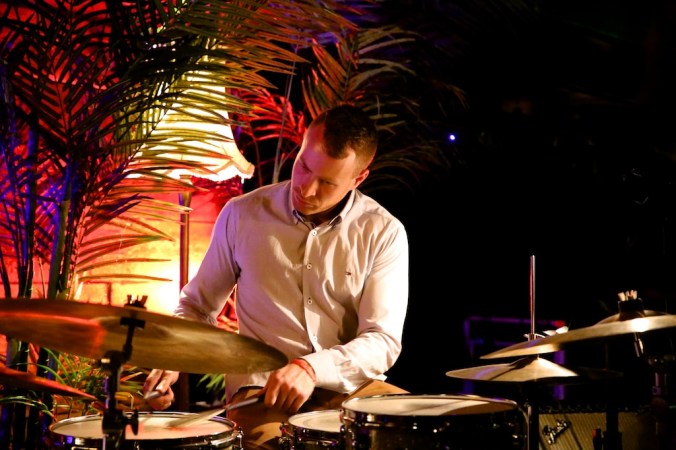 Additional musicians came to the bandstand at various points; Kushal Talele on tenor saxophone and flute and Michael Howell on guitar. I had previously only encountered Ward playing in a trio format and this was a chance for us to see what he would do with an expanded ensemble. The diversity of material worked for them – none of it highly arranged but allowing for free-flowing interaction.
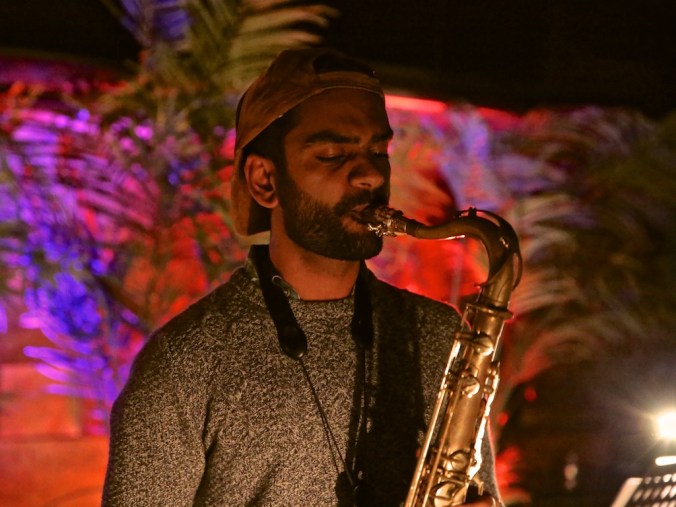 I had only heard Talele once before and he naturally sounded different on this gig. Here he was appropriately the competent sideman, not the hard-driving Coltrane referencing leader. I like both aspects of his playing. He is a musician that I am definitely keen to see more of – especially when he dives deep into that denser material he favours. The ever smiling Howell is well liked and respected as an up and coming young guitarist. He is seen to greatest effect in Roger Manins ‘Grg67’ band.
 Whether by accident or design, Ward celebrates Carla Bley in an important year. 2015 saw Bley receive the highest public honour in Jazz, as she was the recipient of the NEA (National Endowment of the Arts) Jazz Masters Award.
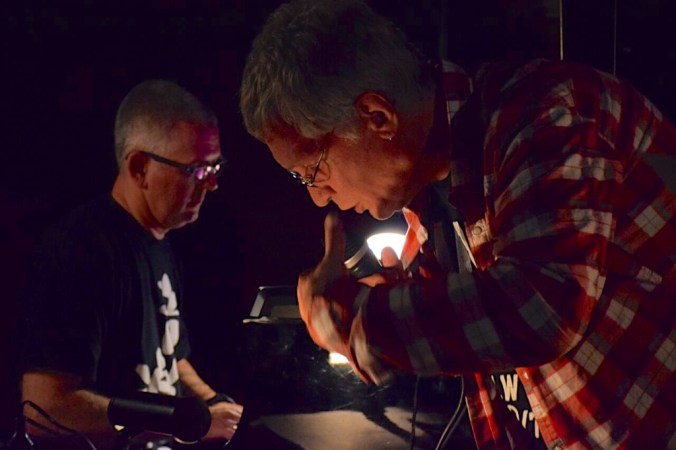 I made up my mind days before the Mexico City Blues gig that I would not, could not review it. It is some kind of crazy to review a gig where you’re in the band. Logic and custom sensibly warns you to walk swiftly in the opposite direction. The gig passed and I asked others if they would do the review; “You’re wrong man” they said, “You absolutely have to do it, but do it differently – tell a story about what it felt like performing for the first time, and what it felt like as a non musician being part of a high quality improvising band”. I thought about it for a while and gave in. In truth I had a world of stuff churning about in my brain and the subconscious urge to outline the experience was gnawing at me; my thoughts and impressions always seem to spill onto the page somehow (or into a poem) – so hell why not. It’s Gonzo journalism in its purest form; outlining crazy, using ones-self as the hapless protagonist.
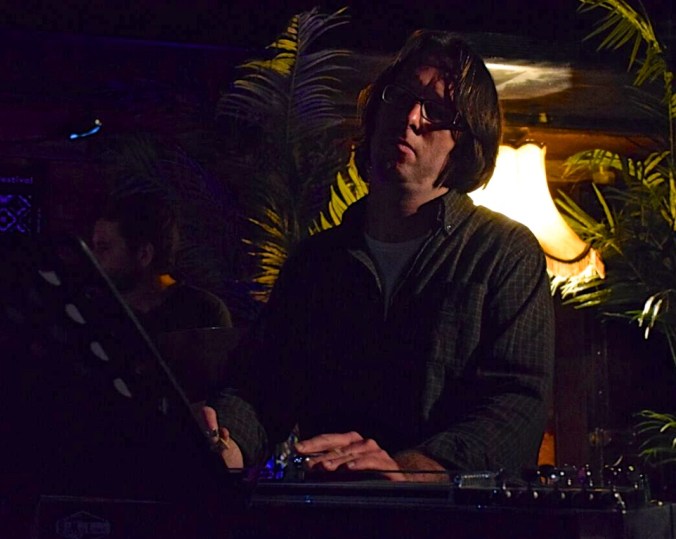 I confided my fears to a few knowledgeable friends, Chris Melville and poet Iain Sharp. Both were very sensible and reassuring in their advice; “Just own who you are man, own your voice. You know this stuff backwards and you know the music”, they said. When I explained the hazards of fitting existing verse to music, drummer Ron Samson told me, “Don’t worry man, we will follow you – your safe with us”. I discussed it further with Stephen and he gave me a set list. From that list I chose three poems that roughly matched the rhythms of tunes. For ‘Goodbye Pork Pie Hat’ (Mingus) I chose Kerouac’s chorus 66 from ‘Orizaba 210 Blues’, for ‘Blue in Green’ (Evans/Davis) I selected the beautiful mystical 1st chorus of ‘Desolation Blues’. I was sure that two poems would be more than enough, but as a precaution I prepared a third as back up – verse 116 of ‘Mexico City Blues’ to Horace Silvers ‘Peace’.
 Jazz gig rehearsals tend to follow a formula, but viewing this process from the outside and being part of it are two very different things. From the inside your inbuilt detached observer gets fired from the cannon of weirdness. You realise just how random Jazz rehearsals are. They begin what becomes a slow descent into the controlled accident. The first hour of any rehearsal is a ‘hang’, insider jokes, war stories and talk of gear and gizmos. Then a sudden flurry of activity follows; disembodied items of musical machinery miraculously forming into new shapes. If the rehearsals are in a Jazz club the activity takes place in semi darkness. Instruments, microphones and amplifiers joined by a spaghetti of wires as the musicians stumble over precarious piles of instrument cases and zip bags. “Oh shit this channel is dead – (from out of the darkness) – don’t worry its the cable – have another in my car – its parked a few streets away. Can we route the cable through the Hadron-Collider? – clip click – sorry false alarm”.
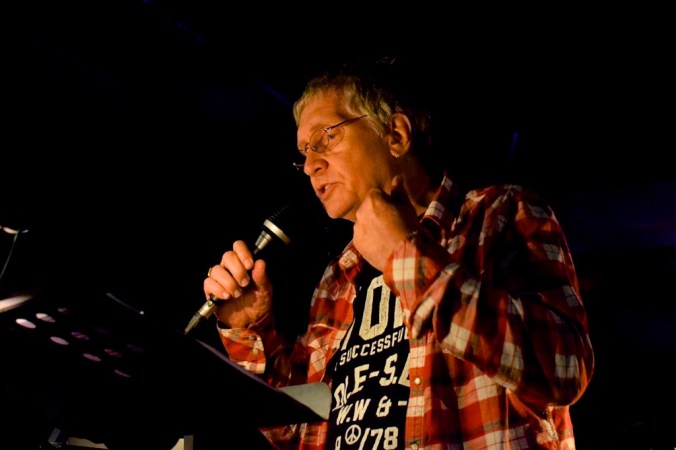 Then came the truly random bit. “We can cue you in on each piece, or just dive in where ever you think best – we can follow”. The words ‘each piece’ threw me a curve ball. “I have only three poems printed off” I added lamely (or four if you counted a crumpled excerpt from ‘Desolation Angels’ tucked into the back of the folder). “No matter – just say anything – you’re a poet – it will be fine” said Stephen. Then I remembered the paperback of Kerouac’s ‘Book of Blues’ in my bag. “Great” said Stephen, “just pick the poems randomly – do it at the last-minute while we run through the head of each tune – perfect”. This was a band leader channeling the Zen Master – a role quite appropriate to a 1959 referencing gig – throwing me a Koan, an improbable musical puzzle, no escape route possible. When we got to the tune ‘Peace’ I gained confidence, “Ah I have something for this – yeah – Horace Silver”. At this point Stephen casually informed me that they were actually doing Ornette Coleman’s ‘Peace”, another tune entirely. Ornette, ORNETTE – holy crap – panic. Next the gig
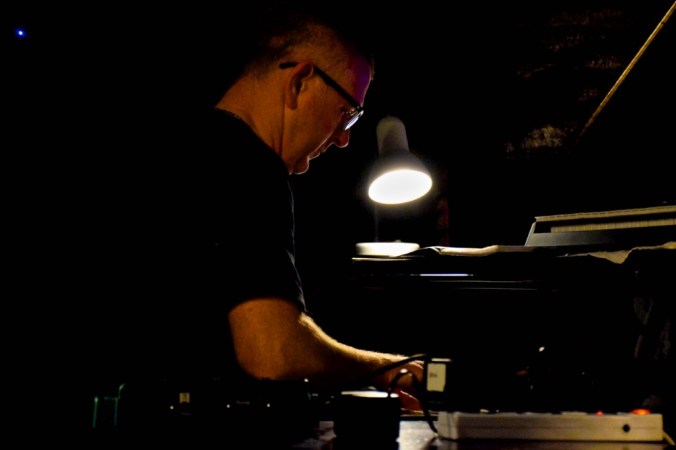
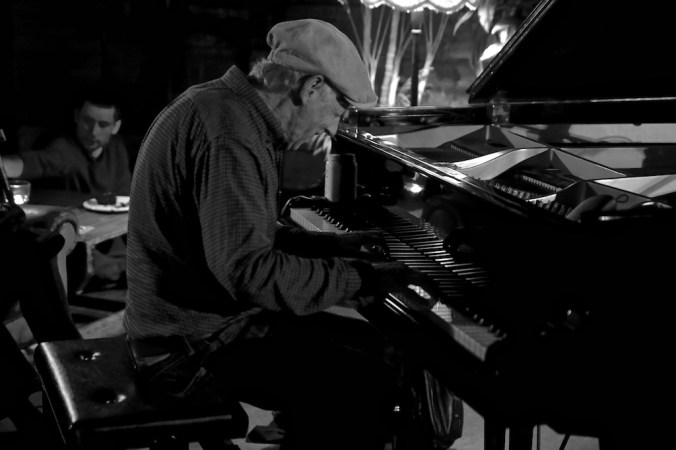 Having reviewed the ‘Two Out’ album a few weeks ago and thoroughly enjoyed it – it was a certainty that I would enjoy the ‘Two Out’ live gig. Mike Nock and Roger Manins are rightly celebrated as being at the top of their game, but neither trades on reputation. Both approached this gig with humility. As they settled into the music you could feel the absorption; punctuated by occasional smiles when a particular phrase surprised them, often delighting at what fell under their fingers. At times they seemed to defeat the physical limitations of performance; simultaneously observing and creating. This is a Zen thing and it cuts to the heart of improvised music. Others noticed it as well; one musician said to me afterwards, “Man there was no ego on that bandstand and it was a beautiful thing to witness’. He was absolutely right.
 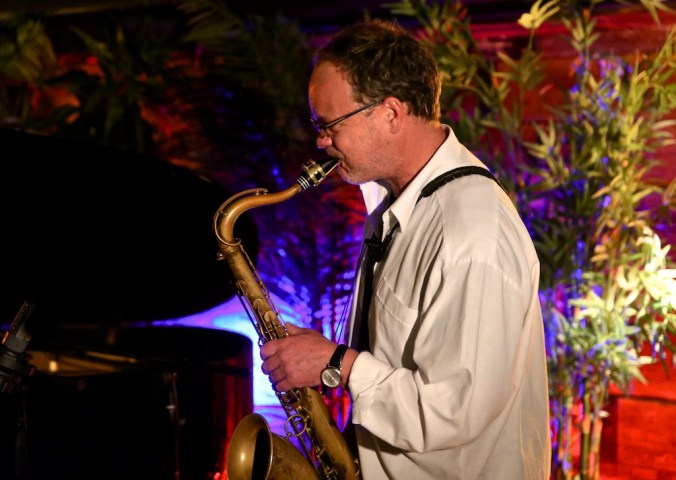 Most albums require careful planning, the ideas gestating over time, rehearsal upon rehearsal shaping the direction. Then there is the other type arising from happenstance. ‘Two Out’ arose out of a relaxed jam between friends. Manins was relaxing with Nock one January morning in Sydney when they decided to play a few tunes (as musicians often do when relaxing). What took their fancy were the often forgotten tunes, ‘the ones that our mothers used to sing’. As they worked their way through the tunes Nock suggested that they record; just for fun. Shortly after they ended up recording in the Sydney Conservatorium’s Verbruggen Hall. The hall contained a wonderful Fazioli grand piano much to Nock’s delight.
 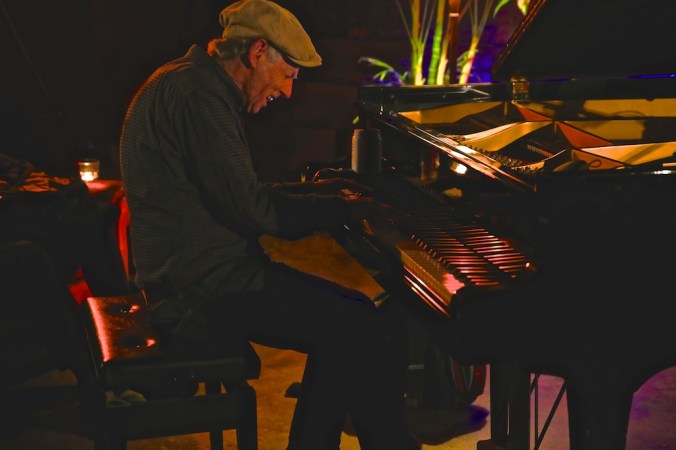 It is our good fortune that ‘Two Out’ was performed last week for New Zealand audiences. Nock explained that they had actually recorded 16 songs, but the limitations of CD space required these being reduced to eleven. On Wednesday we heard a significant number of the tunes from the album plus a few that didn’t make the final cut. In particular there was a version of ‘Softly as a Morning Sunrise’ (Romberg/Hammerstein). A wild joyous free-flowing version which brought out the best in both musicians. At times gentle but at other times carrying the echoes of a boisterous 1930’s radio performance. At that moment, listening, I visualised my mother, leaning over an old upright Victrola and humming along happily. The other addition was ‘But Beautiful’ (Jimmy Van Heusen). An overwhelming sense of respect and intimacy was evident in their interpretation of that tune. It brought a smile to everyone’s lips. When friends like this collaborate it is profound …… but beautiful.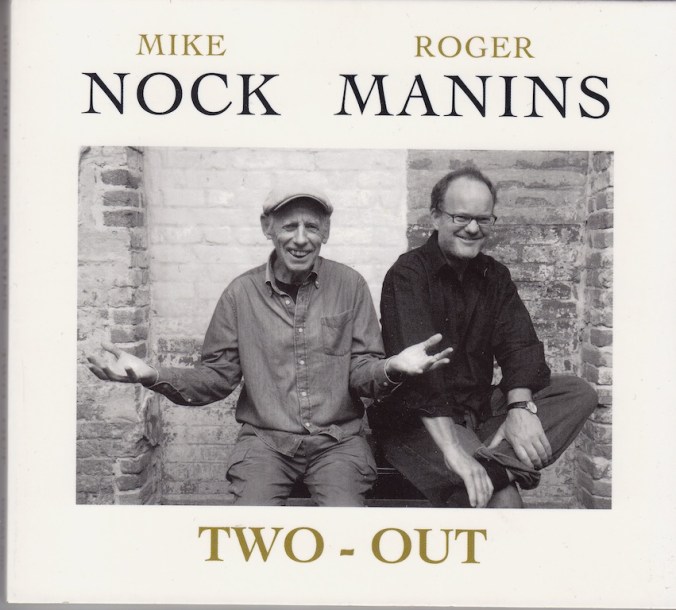
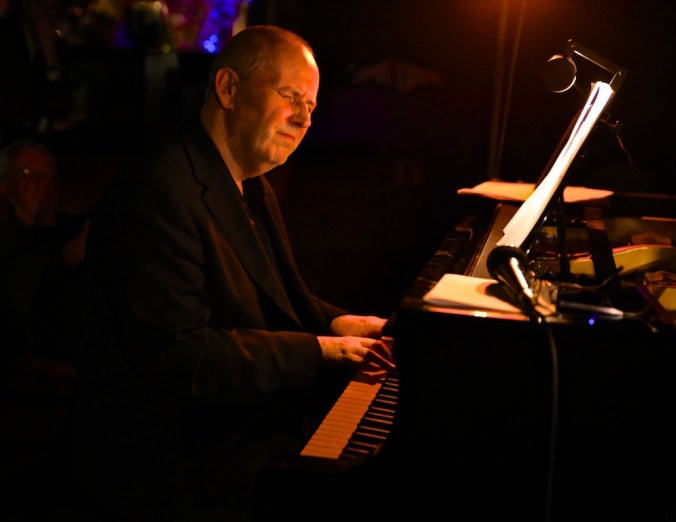 The Mark Donlon trio gig gave us two leaders for the price of one. Accompanying Donlon was the highly rated LA bass player Tom Warrington. Jazz audiences in New Zealand are very familiar with Warrington as he toured here on many occasions. Donlon, originally from the UK is now living in Wellington and working as the Jazz Studies program leader at the New Zealand School of Music.
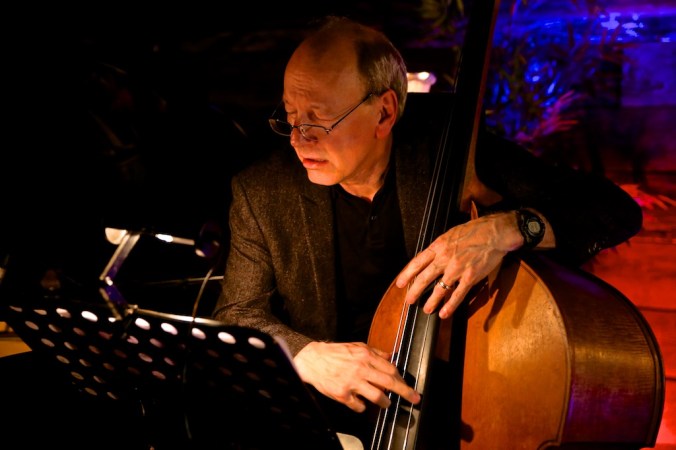 I have been a Tom Warrington fan for many years and I have most of the Jazz Compass albums where he features to such great effect. He is a bass player who speaks with incredible forthrightness, but never undermining the others on the date. On ‘Corduroy Road’, a fabulous album that I play often, the ‘others’ I refer to are Larry Koonse and Joe Labarbera. These guys can do no wrong; their version of ‘You Must believe in Spring’ (Bergman/Bergman/Legrand) is a small masterpiece. We are lucky to have such a strong association with Warrington and Rodger Fox is the one to thank for that. I last saw him during the ‘Cow Bop’ tour, where his band shared the stage with guitarist Bruce Forman (and the Cow boppers). A friendly modest man of enormous talents and good company. When I spoke to him last Wednesday I learned that Larry Koonse (and perhaps Joe Lababera) will be touring New Zealand soon. Koonse has suffered health problems of late but he is evidently recovering well. Warrington’s recording credits are too numerous to mention. Tom is now domiciled in this country which is very good news.
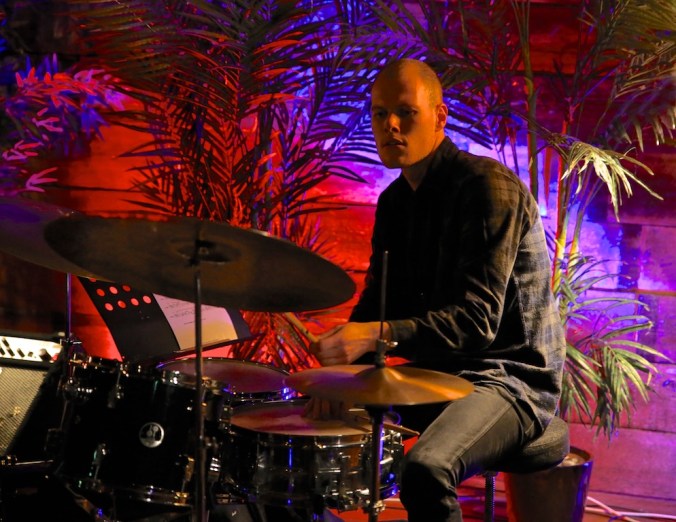 Cory Champion although Wellington based is no stranger to the CJC. He was there earlier in the year with Matt Steele’s ‘Master Brewers’. He writes and plays well and it is likely that we will see him in the drum chair often.
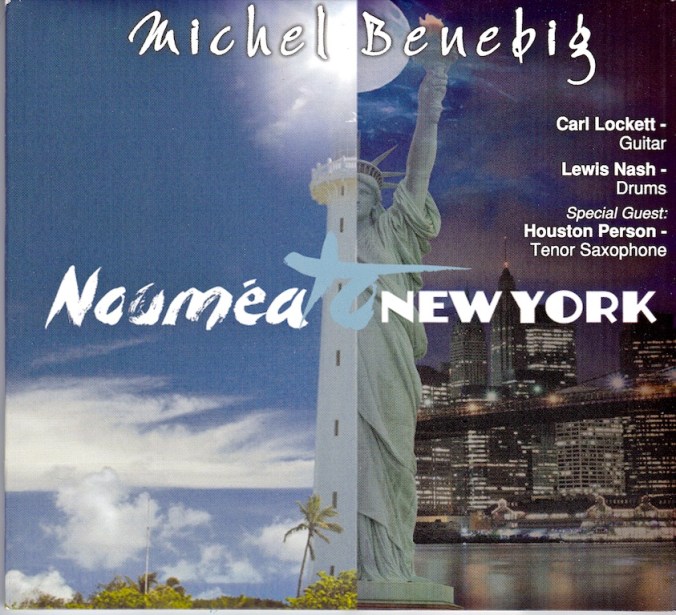 Michel Benebig visits New Zealand once a year and we anticipate his visits with Joy. His authentic B3 groove journey didn’t start in East Philly, but in tropical Noumea; a South Pacific Island north of here. After honing his craft he travelled widely and in consequence his star steadily rises. The more North American audiences hear him, the more they embrace him. He is now regarded as a B3 master. The B3 greats who inspired him are all but departed and he deservedly steps into their shoes. His travels in the USA have brought him into frequent contact with a number of well-known musicians. As good musicianship and a pleasant disposition are the highest recommendations possible, the musicians he worked with recommended him to others. That is how he teamed up with Carl Lockett.
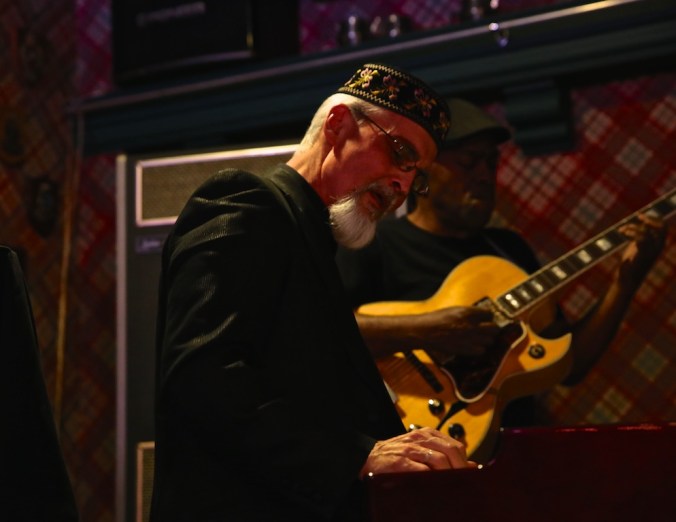 The new album ‘Noumea to New York’ is his finest to date (and true to label, recorded in New York). Again Lockett features on guitar, Lewis Nash lays down the drum grooves and special guest Houston Person appears on tenor saxophone. What a marvellous line up this is and what an album they turned out. This album alone will secure Benebig a place in the pantheon. It has modern B3 classic written all over it. All compositions are by Benebig, with one tune co-credited with his partner Shem. There are so many treasures on this album that it is hard to single out one particular tune, but if pressed I would say ‘Noumea To New York’. A medium paced groove track with enough warmth to melt the ice in your drink. The flawless interplay between Benebig, Nash and Lockett is in strong evidence here. With Nash creating a solid cushion of groove, it is no wonder that Benebig and Locket sound so marvellous.
 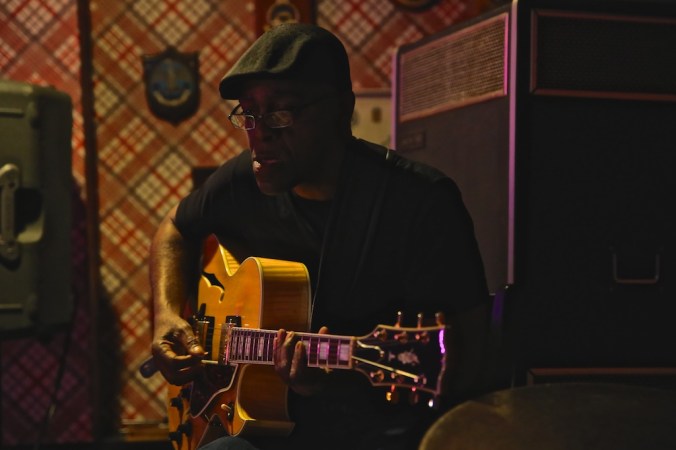 The tour down under was minus Nash and Person; Locals filled those gaps. In Auckland we had Roger Manins on tenor and Ron Samsom on drums. This was also a perfect fit, as both had accompanied Benebig previously. The set list in Auckland was partly material from the album and partly marvellously quirky tunes from classic TV shows. How often do you hear the theme from ‘The Pink Panther’ or the theme from ‘The Naked City’ played by a groove unit? More common in Jazz circles is the Johnny Mandel standard ‘Suicide is Painless’ from Mash. When people think of that last number they think Evans and seldom the B3. To show what skilled groove merchants can do with such material I have uploaded a clip.
 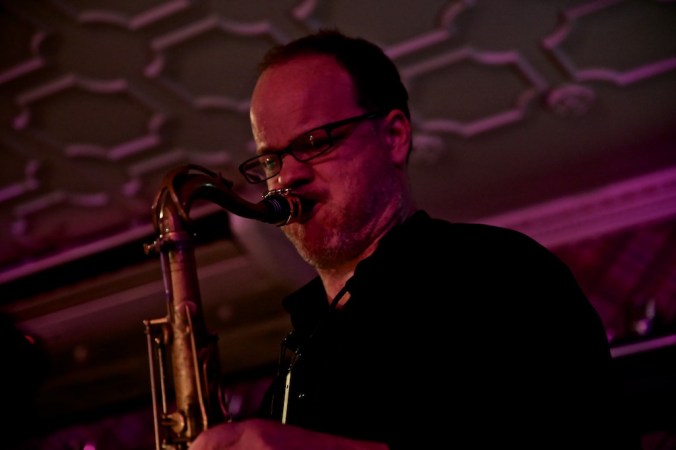 While Benebig is very much in command here his groove collaborators preached just as hard from their respective pulpits. Lockett in particular was astonishing. Gasps of delight erupted as he utilised his finger picking blues-guitar credentials. Moving seamlessly from lightning quick double-time to a steamy groove; often leaning slightly back on the beat. His comping was equally delightful as he does what Pat Martino does. There is either a slight vibrato or he pulls gently down on the strings with each comping-chord; creating simultaneously a warm but slightly mournful effect. Whether on fast single-note runs or octave chords, its hard not to think of Wes Montgomery. His extensive use of thumb and fingers and his fluidity evokes that comparison.
 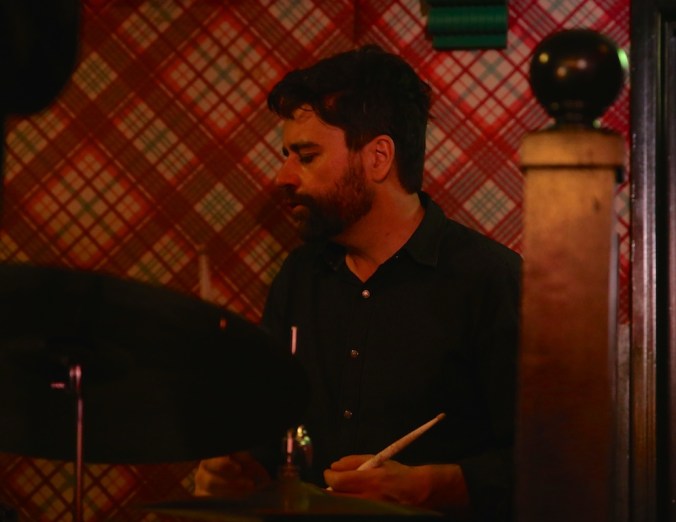 Manins was clearly in his element here. Happy among friends and happy to find himself back in the groove space. The same went for Samsom. Both are highly regarded straight ahead Jazz musicians but both have released great groove albums in the previous year. Their joyous abandon added to the quantum of happiness; every note making us smile.
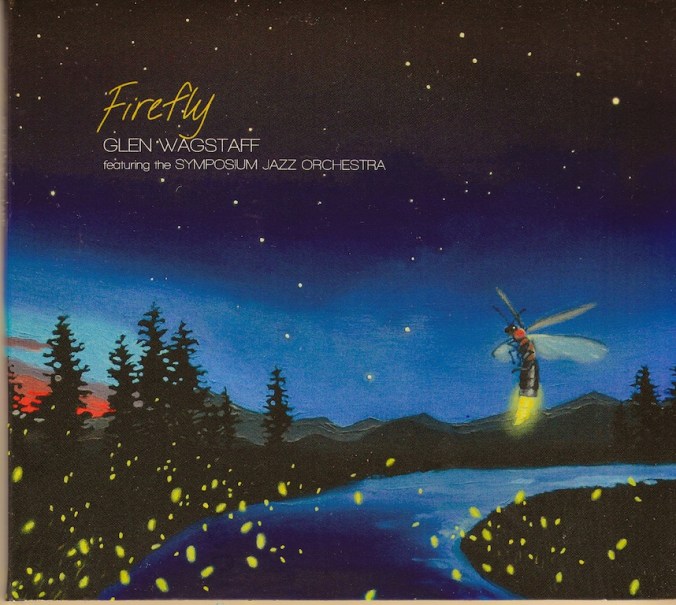 The postie brings more music to our house than he does bills and so I always welcome the sound of the small motorbike pausing outside. This time she delivered a wafer thin parcel with the sender identified as Glen Wagstaff; Firefly had arrived. Looking back over my blog posts revealed that I first encountered the Glen Wagstaff Project in October 2013. At that time we heard several compositions now on the album and in particular to the title track ‘Firefly’. The first Auckland lineup was an eight piece ensemble, all Christchurch musicians. I was only familiar with two of them, Tamara Smith and Andy Keegan. The ensemble impressed and especially notable were the compositions; well constructed charts which magically exceeded the limits of eight piece instrumentation.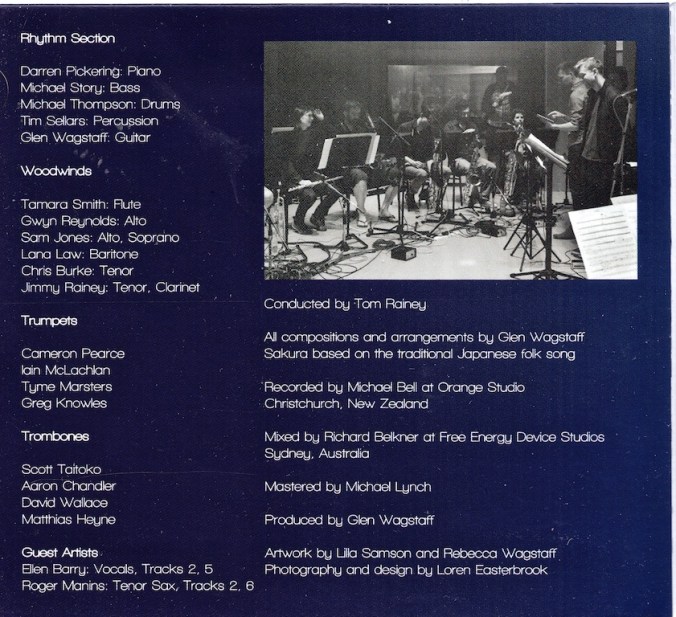
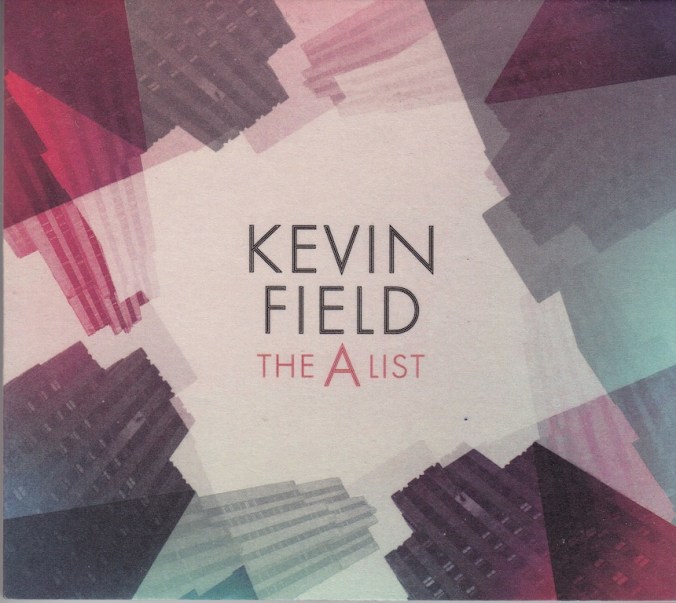 ‘The A List’ release has been a long time coming, or so it seems. Every recording of Kevin Field’s is noteworthy and when rumours of a New York album circulated I attempted to pin him down. Whenever I saw him playing as sideman about town or met him in the street I would pull him aside and say, “Kev, how is the album progressing, when will you release it?”. I invariably received iterations of the same cryptic answer; a knowing smile and a brief “it’s getting there, not too far away now”. the lack of specifics only fed my appetite. I have learned to read the signs and I can sense when an album pleases an artist. It is all in the body language, readable over the self-effacing vagaries of banter. Field had a look about him; a look that told me that he was nurturing a project that pleased him.
 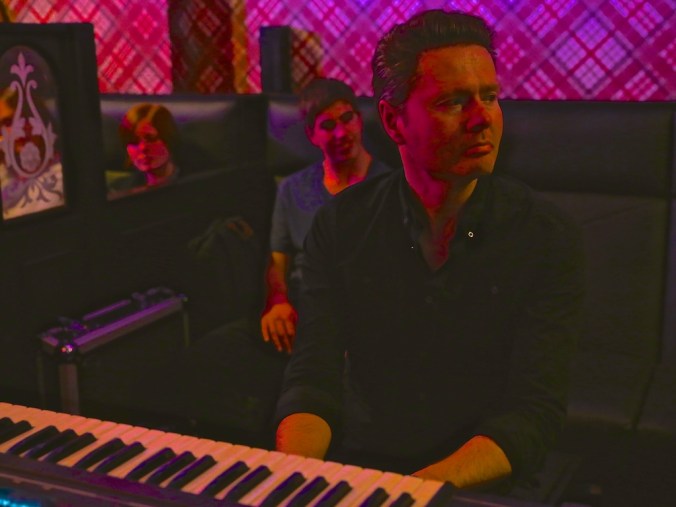 As the months progressed I gleaned additional fragments of information in bite sized chunks. Firstly that Matt Penman was on the recording, and incrementally that Nir Felder, Obed Calvaire, Miguel Fuentes, Clo Chaperon and Marjan Gorgani also. The substantive recording took place at Brooklyn Recording in New York with additional recording in Roundhead Studios Auckland. That was pretty much the extent of my knowledge. I have encountered this phenomena before. Treating an album as a child, holding it close before sending it out into the world. It generally presages good things to come. In this case it certainly did.
 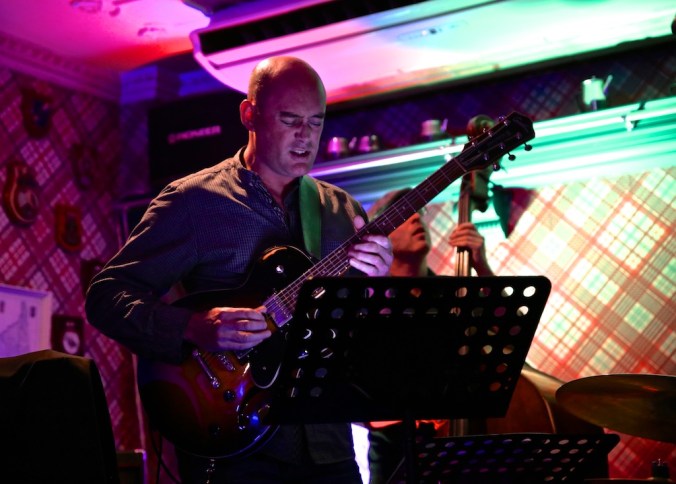 The title is probably tongue in check, but it speaks truth. There are a number of A List personnel on the album. Field is arguably Auckland’s first call pianist. No one harmonises quite like him and his consistency as pianist and composer is solid. New Zealand Jazz lovers also regard Matt Penman highly. His appearances with leading lineups and his cutting edge projects as leader always impress. In the same vein is Nir Felder; frequently mentioned in the same breath as the elite New York guitarists. Obed Calvaire the same in drum circles. This was an obvious next step for Field; having risen to the top of the local scene, it was time to record with New Yorker’s.
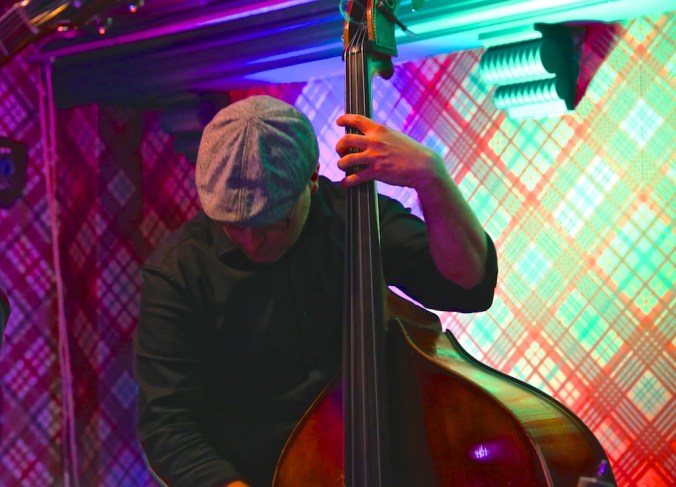 The CJC (Creative Jazz Club) Auckland launch substituted ‘A’ List locals for the famous New Yorker’s. On guitar was Dixon Nacey, on bass Richie Pickard and on drums Stephen Thomas. The vocal section was; Clo Chaperon & Marjan Gorgani (as on the album). These musicians are superb and so the comparison with the album was favourable (Field is a little higher in the mix on the album and guitarist Felder is a little lower).
 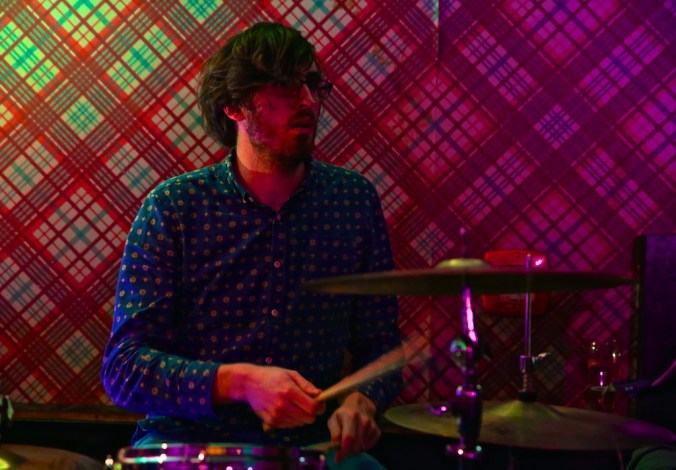 The CJC was in different venue this time, owing to the refurbishment of the 1885. The Albion is no stranger to Jazz and in spite of the ‘livelier’ acoustics, it was a good space in which to enjoy the music. Dixon Nacey always sounds like a guitarist at the peak of his powers, but somehow he manages to sound better every time I hear him. This time he used less peddling and spun out wonderfully clean and virtuosic lines. Apart from a tiny amount of subdued wah-wah peddle on the disco number his beautiful Godin rang out with bell-like clarity (the clipped wah-wah comping was totally appropriate in recreating the tight disco funk vibe). The other standout performance was from Stephen Thomas, who is able to find a groove and yet mess with it at the same time. His complex beats added colour and he mesmerised us all. At the heart of the sound was Richie Pickard. Some of the material was definitely challenging for a bass player as timing was everything. Pickard navigated the complexities with ease. There are were three vocal numbers at the gig (two on the album). Chaperon and Gorgani are impressive together and well matched vocally. Hearing them on the album showcases them to best advantage, as sound mixing is harder in a club. Their presence certainly added excitement to the gig.
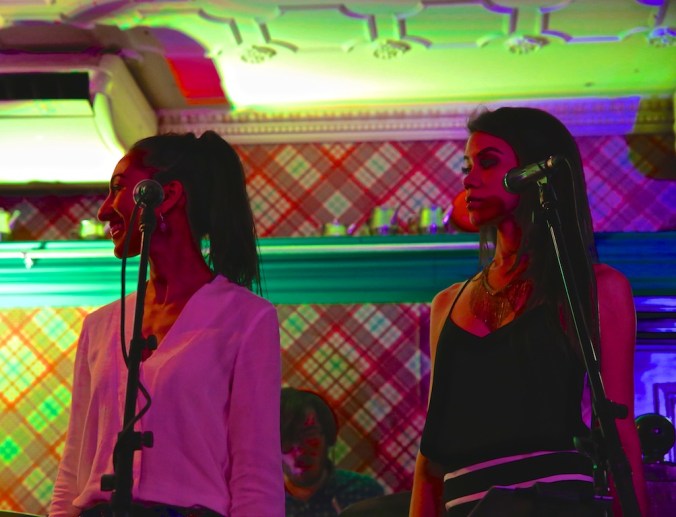 Buy the album and if possible see Field perform this material live. This music is exciting and innovative; past and present rolled into a forward looking Jazz form.
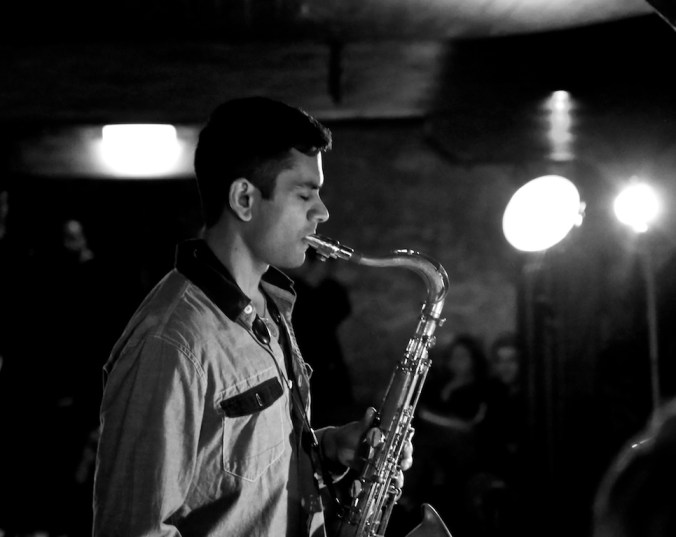 By my best estimation, Murphy’s Law kicks in roughly once every three months. Before the gig I plugged in my HD video recorder to charge, gathered my camera equipment into one place and foolishly congratulated myself on being so well organised. That was the mistake right there. Having tempted the Fates they responded in kind. My video recorder didn’t charge because the gods rewarded my hubris by half unplugging the charger cable. This was a gig I particularly wanted to video but the battery died mockingly within 15 minutes. Immediately the battery gave out the gig got better and better.
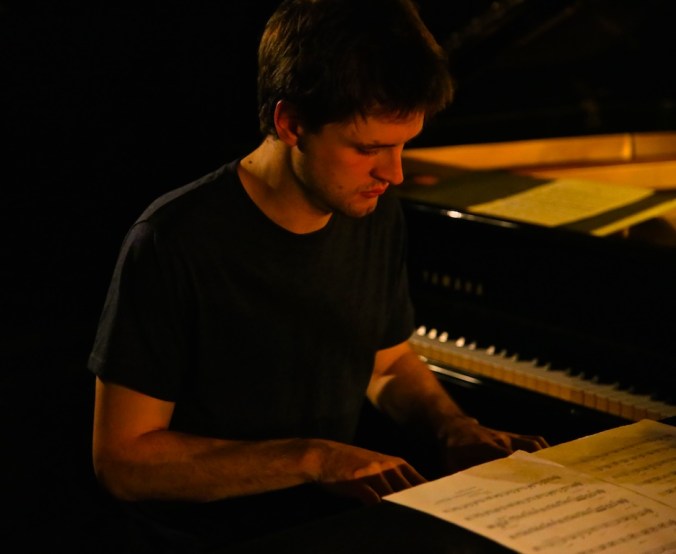 I had not encountered Kushal Talele before. Until recently he has been working overseas and in London in particular. What I do know about him is that Brian Smith and Pete France tutored him at the New Zealand School of Music; both wonderful musicians. He was born on the Deccan Plateau in the city of Pune, the ninth largest city in India and the second largest after Mumbai in the state of Maharashtra. His family moved to New Zealand when he was eight, but he is now clearly a citizen of the world and of music.
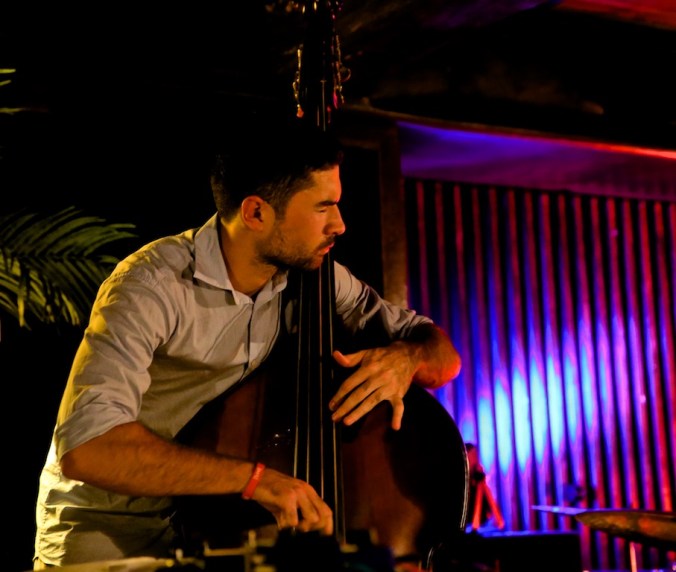 His good looks and relaxed confidence tell a story before he plays a note. Looking the part on the band stand is about posture and being at ease with the task at hand. His tone on the tenor is beautiful. He is very much a modernist but with the elements of Coltrane and the post bop era embedded. I asked him who he particularly listened to and the first name he mentioned was Chris Potter. Serious tenor players all admire Potter and rightly so. I also asked him if Indian Classical Music informed his playing and he was quick to say that it didn’t; adding that it was something he would like to explore one day.
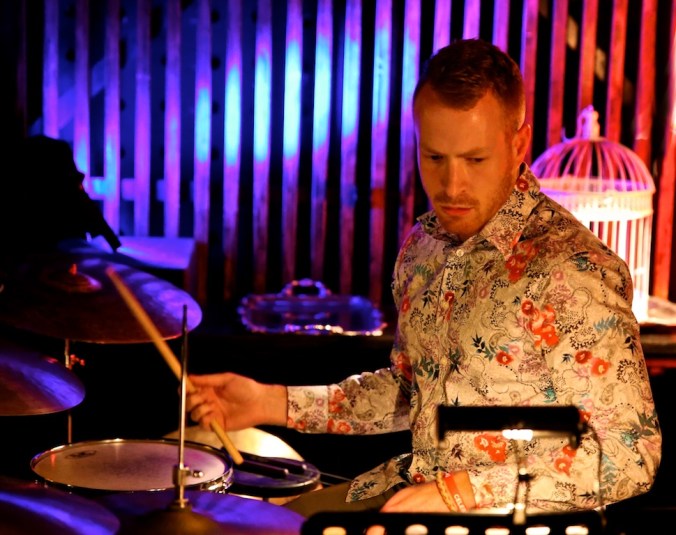 I asked because I have been following altoist Rudresh Mahanthappa who successfully fuses elements of South Indian music with modern Jazz conceptions. In reality most serious post Coltrane saxophonists have these elements in their playing. The way he tirelessly works over figures of melodic and harmonic invention tells me that he has that influence. In approach if not in sound, he takes a similar route to Sonny Rollins. Easing himself into a tune, in no hurry; working over long vamps which stretch into infinity. This turning a piece over and looking at it from different angles; gnawing away until the essence exposed, is a very New York thing.
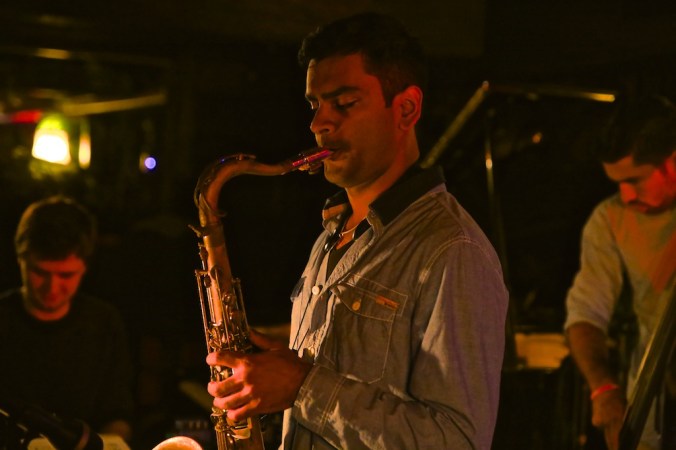 The group came together for this gig. All younger musicians but all experienced. It was great to see Cameron McArthur back on the band stand. One of my favourite bass players and adept at handling any challenge. He and drummer Cameron Sangster have just returned from an extended stint playing the East bound cruise ships. On Keys and piano was Connor McAneny. The band settled in as the gig progressed and during the last set they were playing tight energised grooves. Talele worked these grooves to maximum effect. I could only capture the first number (see below). It is my sense, that to experience Talele in peak form, one should see him with a settled band. The density and complexity of his playing would be enhanced by this. As good as this gig was I would very much like to see him in that context.
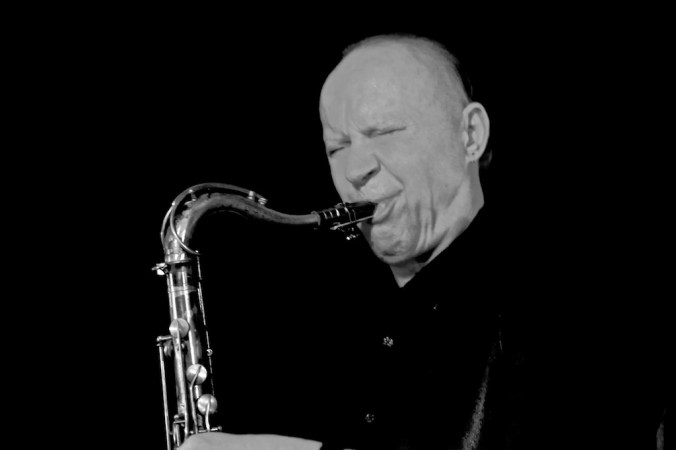 Paul Nairn is a man who avoids limelight and although he is extremely popular as a saxophone repairer he gigs all too infrequently. Those who have seen him before always turn up at his gigs, having fond memories of his standards interpretations and of his rich tone. For all of his reticence he is good company, knowledgable and a guy you enjoy being with. The last time I saw him was at the Doug Lawrence gig, shaking his head in disbelief and saying, “This is the southern styled tenor at its best. some of the greats are in that sound”. It is no secret that the classic era of 50’s Jazz is what he loves best. Larger than life standards played by some of the greatest musicians that walked the earth. The Phantom quartet was back to tell that story.
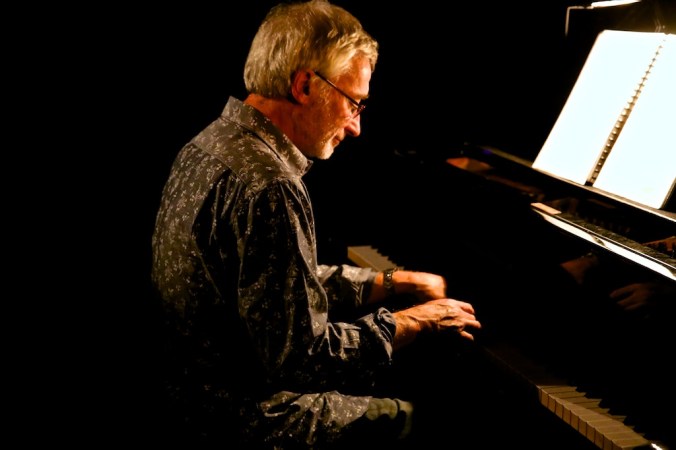 The band set up early in case there was time for a quick run through but Nairn was nowhere in sight. He is notoriously hard to reach by email, phone or messaging so nobody tried. He is not enamoured of digital technology which is part of his charm. He is old school in good way. “He does know it’s tonight”, joked one band member? Twenty minutes before start time he arrived breathless. The vagaries of Auckland’s wet weather, downtown traffic and parking had tested but not defeated him.
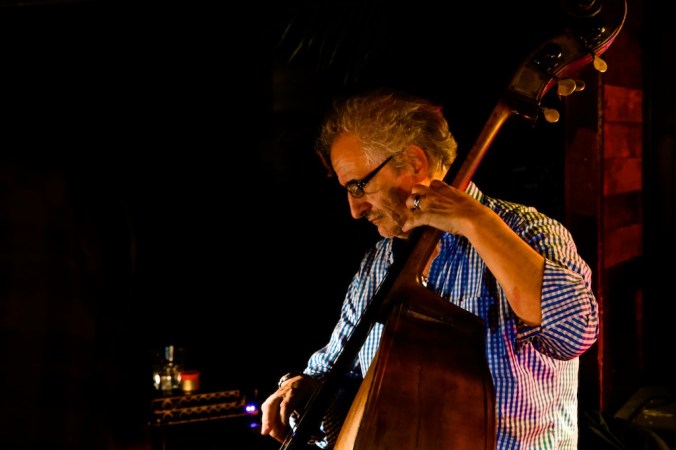 Nairn’s sound is distinctive; clean but with the pleasant hint of a throaty rasp when he bites into a note. It is certainly a sound that you identify with an era. His repertoire on this night included tunes by Cedar Walton, Chick Corea, Gershwin, Jerome Kern, Joe Henderson and Coltrane. Henderson’s Inner Urge occurred during the first set. It is a complex tune harmonically, but a tune I could never tire of. It was great hearing it again. The clip I have put up is Coltrane’s famous ballad ‘Naima’. Everyone played beautifully on that and especially pianist Broadhurst. His approach was fresh and utterly engaging. Nairn and Santorelli played beautiful solos as well while Gibson kept his impeccable trademark pulse.
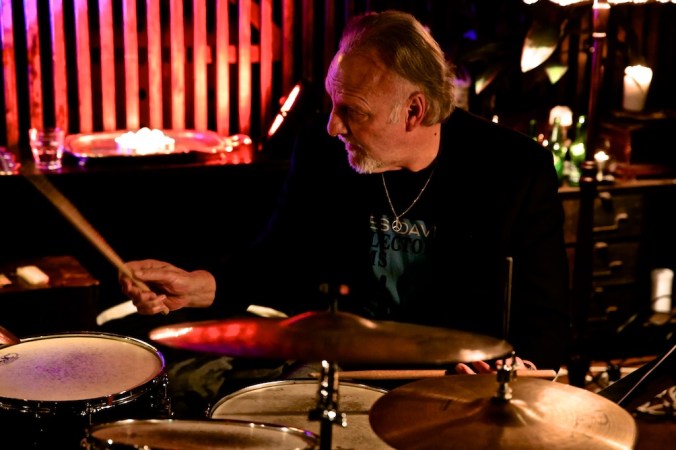 Nairn has been on the scene for a long time and when he calls upon veteran players to make up his band he gets them. On piano was Phil Broadhurst. In spite of the rain and coldness of the night he turned up in shirt sleeves, smiling and relaxed. His approach to the keyboard that night was anything but casual; stunning us with some of the best solos I have yet heard him play. For the second time in two months Alberto Santarelli was on bass and Frank Gibson was on drums. With these guys behind you good things can happen and Paul Nairn used them to good advantage.
 JazzLocal32.com