 By the time the second week of the Auckland Jazz Festival arrived, I began to feel my age. I had already experienced a number of late night gigs and a further week of music stretched ahead of me. This was no time to flag, as some interesting and innovative music lay ahead. The festival programme structure provided audiences with variety. The depth and breadth of the improvising scene was on show and I wanted to see everything possible. The week started well with the Meehan/Griffin/Manhire poetry project (see earlier review for this). That gig brought a new audience and I was still
  buzzing come Tuesday.
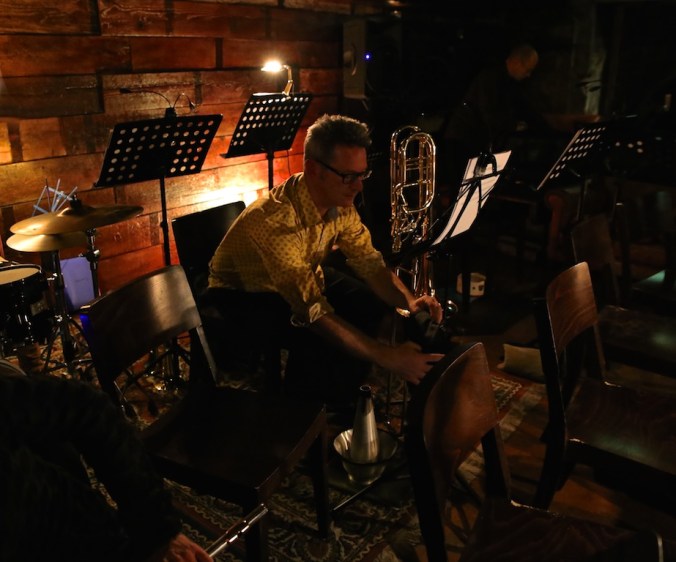
On Tuesday night the AJO (Auckland Jazz Orchestra) shoehorned into the CJC for the release of their ‘Darkly Dreaming‘ album. The AJO have a growing fan base and this was an eagerly anticipated event. Having earlier witnessed the actual recording session and a pre-taste performance of the suite, I was happily expectant. With charts as demanding as this, a thoroughly rehearsed band is essential and I knew that they would be. It was clear that this would be the definitive live performance so I couldn’t wait to hear that first swell of sound and to get my hands on the album. 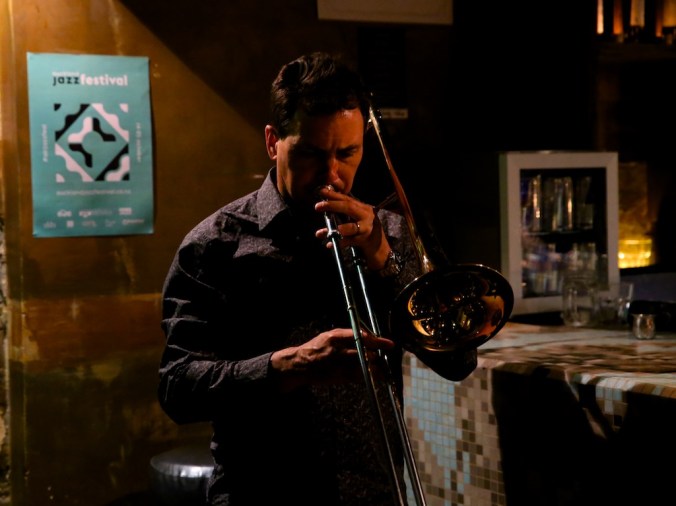 I had volunteered for door duty that night, turning up early to help. I enjoy the Jazz orchestra set-up process – in this case nineteen musicians and a conductor configuring a behemoth in an impossibly small space. It was like witnessing Nasa scientists beginning the launch sequence. Instruments and gauges checked, tapped and rechecked, cabling run out; each adding a layer to the criss-cross tangle of shoes, stands and chairs. Soon there were rows of brassy instruments standing in an (almost) orderly line, with the odd human interloper spoiling their symmetry. Random buzzing sounds came from warming up lips; and all punctuated with honks and plucked notes from far-flung corners of the room. this is the counterfactual of the sounds that follow.
 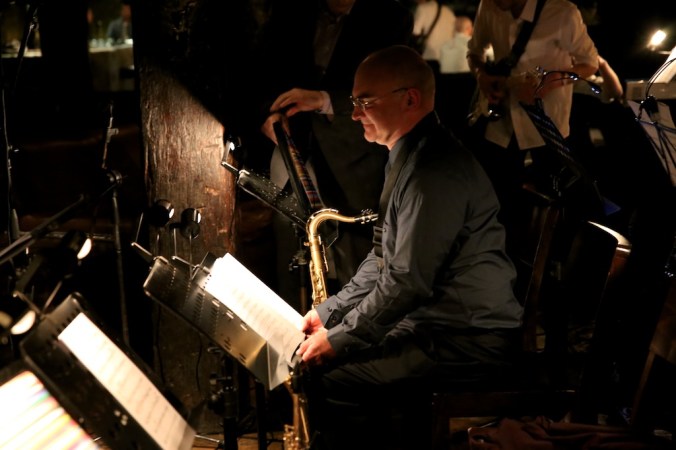 Band leader Tim Atkinson composed and arranged the suite. He has carefully shaped this ground breaking project as befitting a work of this importance. This is a modern piece of music in the mould of Darcy James Argue. Richly textured, evocative of the title and especially in the warm multi layered dissonance that swells out of the quieter passages. The work has captured a mood and an orchestra going places. This is a moment which benchmarks the growing maturity of the Auckland Jazz scene and I am truly glad to have witnessed it. The overall performance on the night was flawless, but if anyone stood out it was altoist Callum Passels. His solo on ‘The Dark Passenger’ was wonderful. it was a feat of story telling, of mood and it oozed freedom – as if he had somehow escaped the confines of room and orchestra. Importantly, he managed this without once deviating from the logic of the composition. I urge people to purchase this album and I guarantee that you will play it over and again.
  On Wednesday I spent time with the Benny Lackner Trio. A popular USA/German (French) trio who seldom passed up an opportunity to playfully ambush each other and often along the lines of nationality. Their mock combative banter acting as a counterweight to the cohesion they showed on the bandstand. I have seen this trio three times as they have a long association with New Zealand. In my view they are the true successor to Sweden’s lost lamented EST, but there is more to them besides. Their approach is similar but additional elements inform their music. The influence of Lacker’s former teacher Brad Mehldau is discernible but the band is forging a new sound. This is the confident face of post millennium European Jazz. Never compromising, unafraid to appropriate elements from their native culture, and done without a hint of self-consciousness. These guys are heavyweights and we are bound to hear a lot more of them in years to come.
 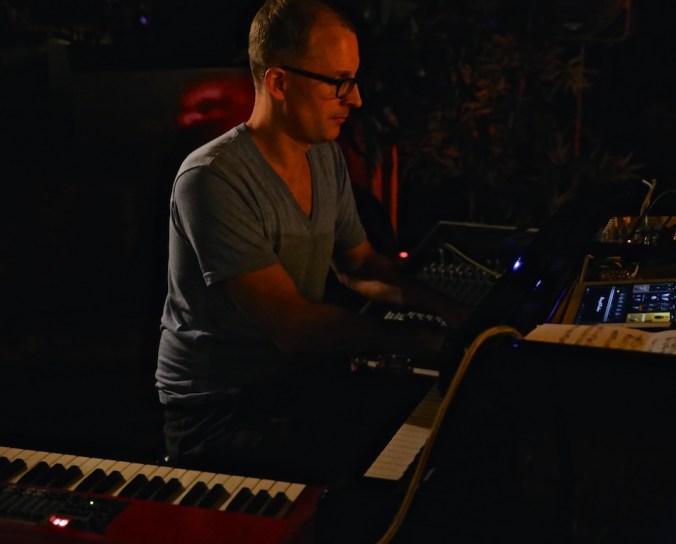 The trio’s set list was a mix or originals and some very interesting covers. What was not composed by Lackner or by the drummer Chazarenc, were often unexpected tunes; Brahms, Cold Play, David Bowie, Rodriguez and Jimmy Hendrix. ‘If Six were Nine’ was simply stunning. Warmly familiar to those of us who remembered the rock original. Taking the bones of a 1960’s tune and infusing it with edgy lines and modern harmonic conceptions. I have long-held the view that the new standards will come from material exactly like this. None of the band were alive when this acid blues classic was cut in 1969, but their joy at performing it was evident. Jimi would have loved it.
 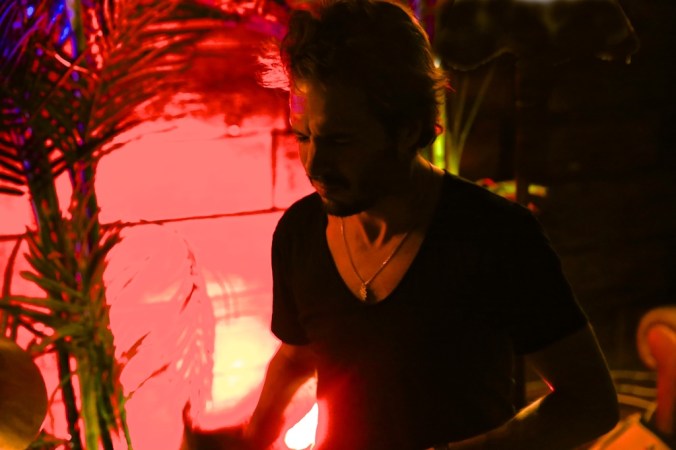 The bass player on this trip was Bruno Schorpe. When offered an upright bass he declined – choosing to remain on electric bass throughout. I’m glad that he did because the instrument had the bite to act as counterweight. Balancing out well the electronics and various effects of Lackner’s keyboards. Then there was drummer Matthieu Chazarenc. He has accompanied Lackner on previous trips and to my ears he is directly out of a great tradition. French Jazz drummers have a sound that is distinct. Like many of his compatriots Chazarenc’s sound is crisp, even dry; utilising dynamics in ways that younger drummers are often incapable of. A label like ACT must surely pick the trio up sometime soon. They would be a perfect fit – much as they would for ECM.
Thursday brought us ‘The JAC‘ from Wellington. A delightful octet shortlisted in the 2015 New Zealand Jazz awards for their ‘Nerve’ album. This project is clearly one that will remain with us for some time and if any band deserves to become an institution it is this one. A brassy octet with an orchestral yet airy sound and one which I am particularly enthusiastic about. This was the release gig for their newest album.
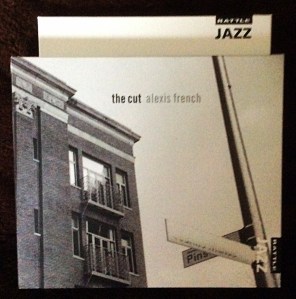
 ‘The Green Room‘ (out on Rattle.) Rattle has an uncanny Knack of locating the best of new Zealand music and presenting it in ways that even the big labels seldom manage. The album is beautifully recorded and live the JAC simply sparkle as they weave texture and into their shape shifting grooves. In many ways it is a band of equals as almost everyone stands out at some point. While there is an incredible tightness to their performance, they manage to loosen up enough to create rub and textural complexity.
 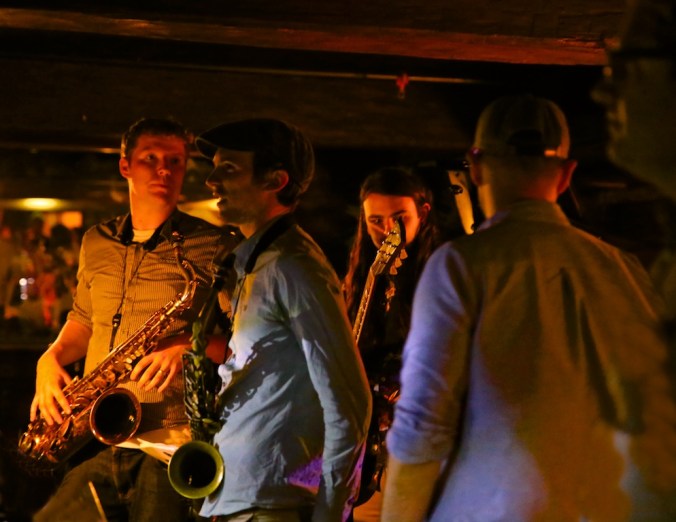 It is almost overkill to single out soloists with a cohesive group like this as every one is notable in some way or another. Altoist Jake Baxendale is their nominal leader and three of the compositions on the album are attributed to him (including the title track). If any number captures the essence of the group it is this. The solo on his tune Andalucia also captures a strong sense of place. I know Andalucia well and this is a convincing testimony.
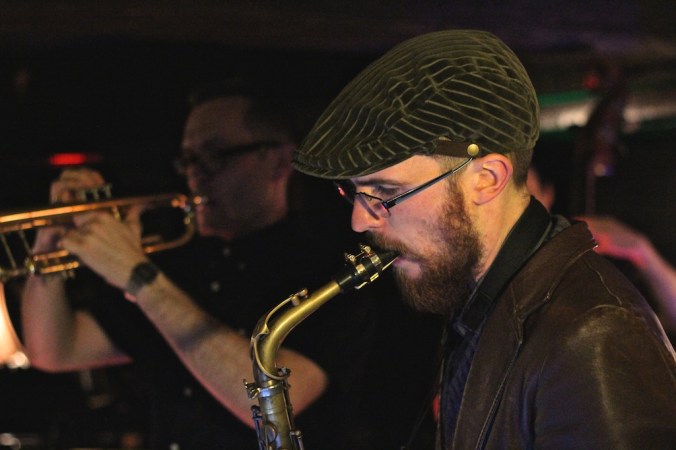
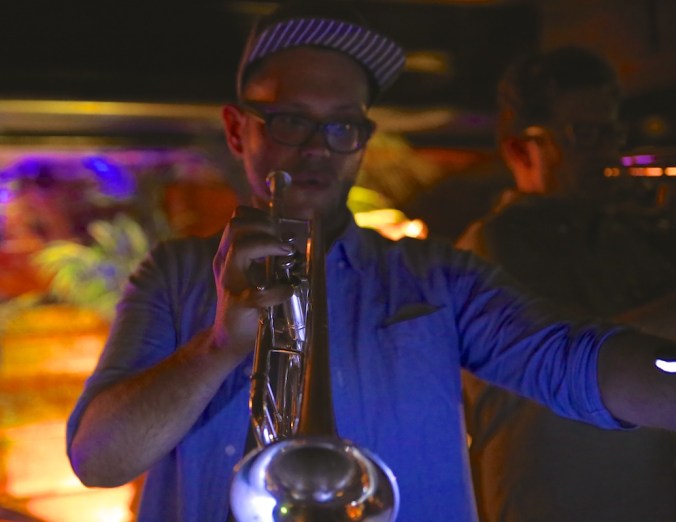 It is hard to know where to start with Callum Allardice; he grows as a musician every time I hear him. His compositions are stunning and his guitar work so fluid and exciting that it defies belief. These are performances that stop you in your tracks and few New Zealand guitarists capture that particular sound. Lex French is another spectacular performer and we would hardly expect otherwise. He is now the leading local voice on that horn. Perhaps the most experienced player is Nick tipping who never puts a foot wrong. On the new album we hear him at his best.
  Convincing contributions by the likes of Chris Buckland, Matthew Alison and Shaun Anderson reinforce the view that this is an all-star band. Lastly there is pianist Daniel Milward. He has recently moved to Melbourne and his voice is particularly strong on the recording; more so than on the first album. Not a showy pianist but an extremely tasteful one who gets it just right. I have put up a sound clip of the Allardice Composition ‘The Heist’, as I have loved it since first hearing it (probably at the Tauranga Jazz Festival).
On the 24th I attended another Rattle Jazz album release. This time at the Auckland University Jazz School in the Kenneth Meyers Centre. The Chris Mason Battley Group were performing the album DIALOGOS; this arising from the music of celebrated New Zealand composer John Psathas. The project is exciting and while very much in the moment, a careful crafting is evident. If that sounds like a contradiction it is not. Improvised music is forever reaching beyond imposed structural limitations; the boundaries of convention. Without that restless outreach the music would wither on the vine. This is an example of the new music that you might find on ECM (or Rattle), it is minimalist and references the ethos of John Cage or perhaps even Zorn; it reaches the outer limits of the known. 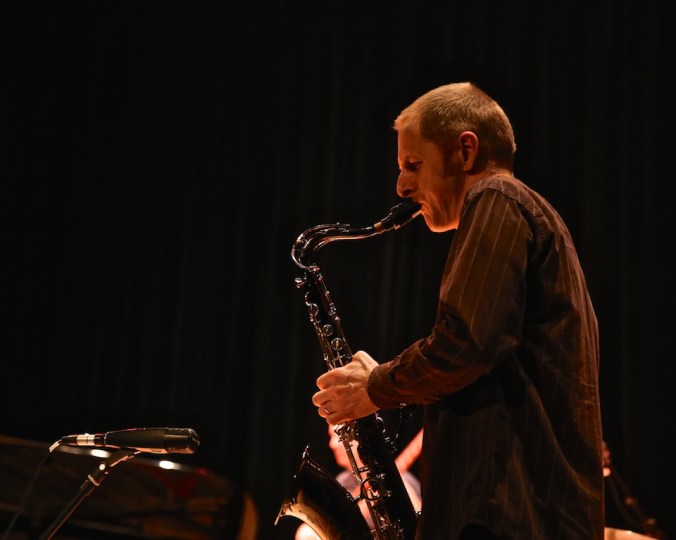 In Psathas words, “it is not arranging or adapting…(rather) a continuing of the composing process”. There are works or arrangements which re-imagine and examine a work from an outside perspective. That is not the case here. This is part of a developing story and the Psathas vision remains at its heart. I recently read a trilogy by a famous and highly respected author. He had intended to write a fourth volume but died before he could proceed. A year later another author picked up where the original author left off and achieved something extremely rare. He added to the body of work seamlessly; continuing the narrative in ways that were his own and entirely consistent with the original. Although a more serious work, DIAGOLOS was an unmitigated triumph.
  Mason-Battley is a thoughtful gifted musician, but we don’t see him perform about town very often. Any new project gets his undivided attention and that was the case here. Counter intuitively, it is his careful preparation which affords him the extraordinary freedom he demonstrates on the bandstand. During this performance he took us right to the edge; you gained the sense listening that he was pushing himself a little further with each phrase. It is at times like this that great music emerges. While adventurous with electronics, he evokes a classic Coltrane sound on his Soprano. There are a number of local musicians who double on soprano but few (if any) sound like Battley.
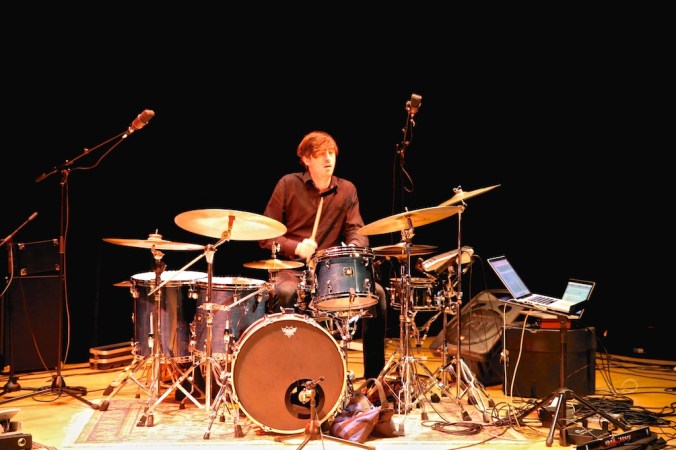
 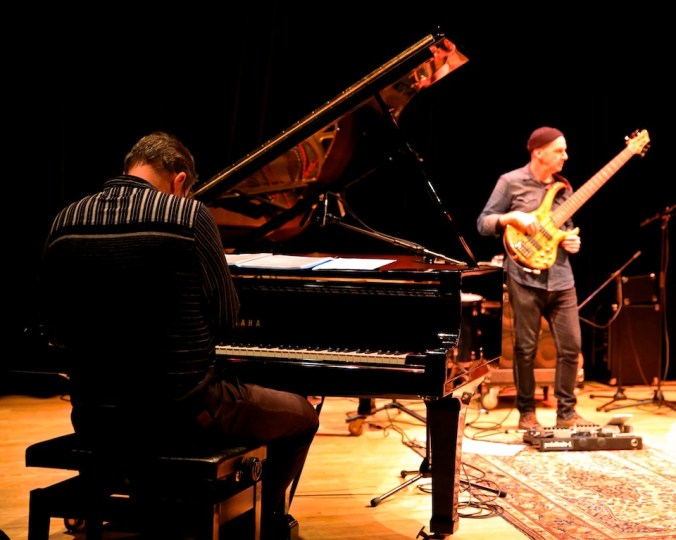 The Chris Mason-Battley Group has been around for some time and the original group set New Zealand records for the number of downloads and albums purchased. For this project core members David Lines, Sam Giles and Mason-Battley remain with the addition of drummer Stephen Thomas. Unlike earlier configurations, there is no guitar. Bringing Thomas into the mix has worked extremely well. The drummer of choice for many gigs and a gifted percussionist in the fullest sense. Psathas music calls for sensitive drum work and Thomas has exactly the right approach. His understanding of subtle dynamics, time awareness and overall sensitivity to the project were very much on display. I also appreciated David Lines piano. Lines early classical training was evident in places and again this made him a very good choice for the project. The work required a pianist with a particular chordal approach. At times he was minimalist and with a particular approach to voice leading. Lines like the other four were indispensable to the project. Lastly there was Sam Giles – an electric bass player I wish I heard more often. Giles often leans towards the avant-garde and innovative projects. That is where he shines.
 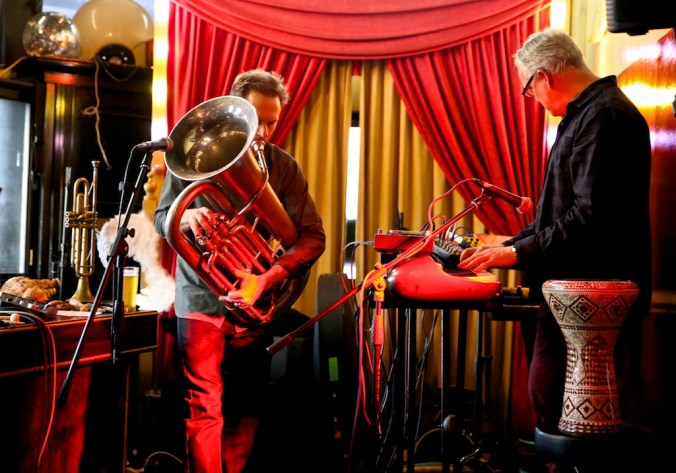 The Last Auckland Jazz Festival gig I attended was the Alan Brown/Kingsley Melhuish Alargo project at the Golden Dawn. The Golden Dawn is the perfect place to wind down and a very good place to hear laid back grooves and experience deliciously exotic ambient adventures. This music creates a world we wished we lived in. A world of exotic grooves and shifting realities. Seeing and hearing is believing with Alargo, their sound as wide as the ocean and as deep (a little songbook reference there). What Brown and Melhuish are crafting is terrific. Sound shaped, altered, looped and all guiding you inexorably toward that fantasy world of improvised/groove Jazz/electronica. As wonderful as it is to watch, it is essentially a place in which to abandon yourself. As you dive in you feel the buffeting of warm grooves all about you, as the tiredness of a busy fortnight evaporates. I thought that I was an early discoverer of improvised ambient music but Brown was way ahead of me. We have often discussed this genre and we see it as a local space worth claiming. Melhuish was always going to end up beside Brown on this project; trumpet, pedals, programming, percussion and shells swimming around the keyboards. An otherworldly magic evoked by Browns deft fingers. I like to think that I gave this music a slight nudge along the way.
  This has been an interesting Jazz Festival and although it is cliched, there was something for everyone. From manouche through to the avant-garde. I loved that it retained the feeling of local and of intimacy – even when showcasing offshore bands. The CJC (Creative Jazz Club), Rattle Records, 1885 Britomart, Auckland University, Golden Dawn, Portland Public House, Hallertau, Ostro, Lot 23, One2One, Hotel DeBrett, Lewis Eady, The Refreshment Room, the Vic, The Wine Cellar and other venues deserve our heartfelt thanks. Above all its Ben McNicoll who we must acknowledge as he lost sleep and carried the heaviest load. We are also in the debt of Caro and Roger Manins for the part they played. The vision belongs to these innovators and what ever happens along the way, I hope that the Auckland Jazz Festival continues as the fine fringe festival they envisioned.
Auckland Jazz Festival – CJC (Auckland Jazz Club) – Rattle Records (go to Rattle to purchase the albums listed – the exception is Darkly Dreaming at the AJO website)
 Sydney means two things to me; family and music. I get there as often as I can. One sultry night about two years ago I was listening to Mike Nock playing the blues (as only Mike can). It was a catchy new tune titled ‘Start up Blues’. I collared him during the break and asked him about it. “I composed it for the Foundry opening” he said. “Do you know about the Foundry 616”? I didn’t and so he filled in the details. He spoke warmly of it so I determined to visit the next time I was in Sydney.
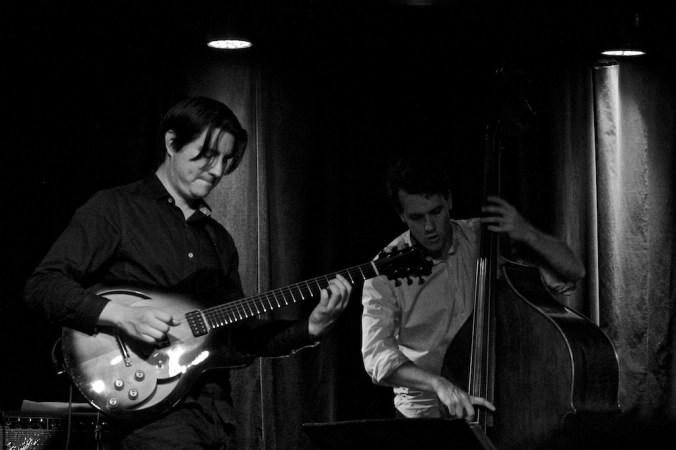 During my first visit I caught the amazing New York based guitarist Mike Moreno. Attending a gig featuring Moreno had long been on my bucket list and I was not disappointed. He was happy to allow non-flash photography and I had a seat at the front table; perfect. For his Australian tour he employed two gifted local musicians: Ben Vanderwal drums and Alex Boneham bass (both familiar to New Zealand audiences). I have many recordings featuring Moreno, but what really struck me was that his best on recordings, is exactly how he sounds in person. Given the sound control in modern recording studios and given the expanse and quirky shape of the room, this is surprising.
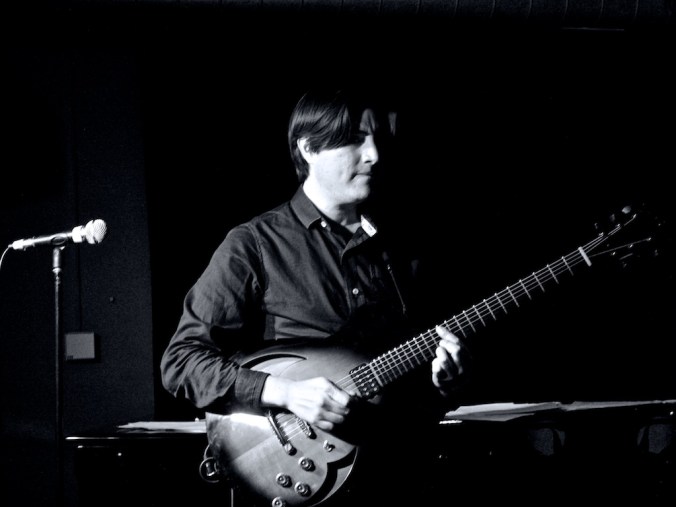 I was later to experience the same clarity at other Foundry 616 gigs. The venue sound technician and the sound system get a big tick. Sound quality matters and especially with artists of this quality. To my thinking Moreno is the most lyrical of modern guitarists. Clean flowing lines, fresh ideas and an astonishing clarity of tone. As moves through the pieces, often at breakneck speed, and even when glissing, his fluidity is unbroken. There is a hint of mournfulness to his tone which is most attractive. I hear many gifted Jazz guitarists, but to date this gig remains the highlight. His set list traversed recent albums as he played a mix of lesser known standards and originals; ‘I have a dream’ (Hancock) being the standout. While his demeanour is quiet, perhaps even a little serious, his playing denotes unalloyed joy and exuberance.
 My second visit was to see premier Australian Jazz vocalist Vince Jones. I have a deep liking for male Jazz singers but sadly there are not that many to choose from these days. Our younger selves do not sound like our older selves and in Vince Jones this sits extremely well. His is a lived in voice, full of rich life experience. An honest voice and above all a true Jazz voice. He can make you smile and cry in turns and his lyrics are like no one else’s. If you listen carefully the realisation comes; Jones is jazz protest singer. He is closer in sentiment to Gil Scott Heron or perhaps Billy Bragg and Bob Dylan than to any torch-song crooner. His recordings while marvellous don’t prepare you for the experience of hearing him in person. He has a compelling stage presence, exuding the vulnerability that Chet radiated. Unlike Chet he also exudes real human warmth and empathy.
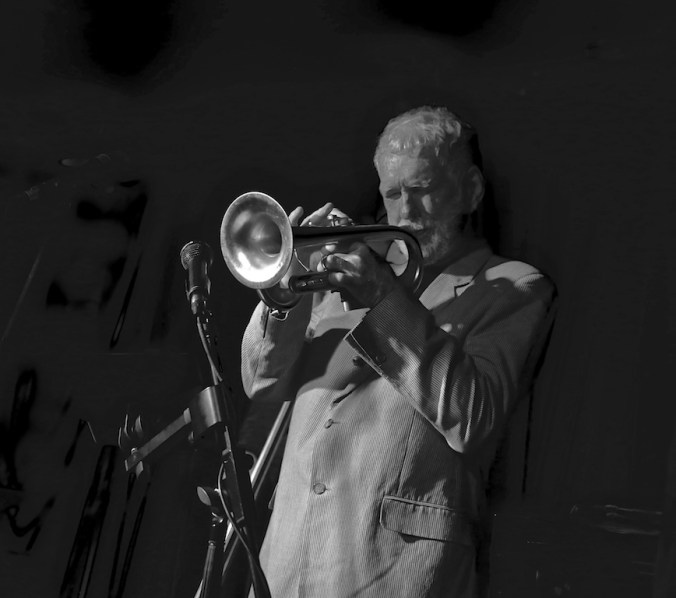 As he tells personal stories about his grandparents, his budgerigars, women deserving of respect, his environmental concerns, you feel deeply connected. When he shakes his fist at the ‘big end of town’, calls for kindness towards refugees and gives voice to your innermost feelings, you shake your fist along with him. Since that visit I have transcribed some of his lyrics. I would now add gifted poet to the list of his accomplishments. Jones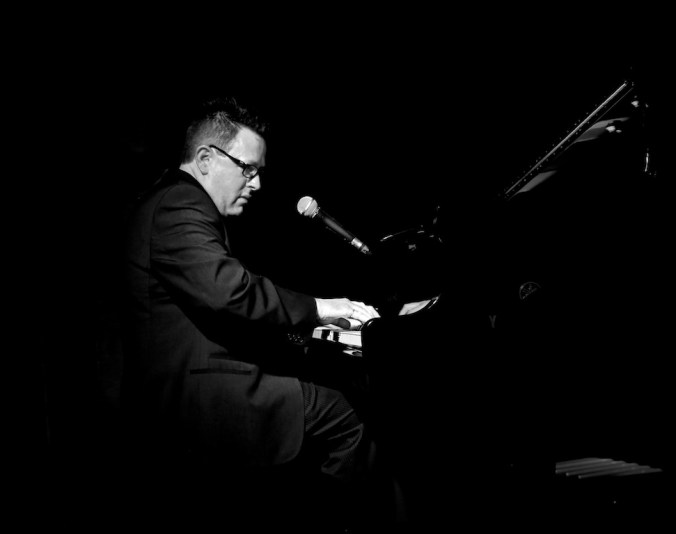
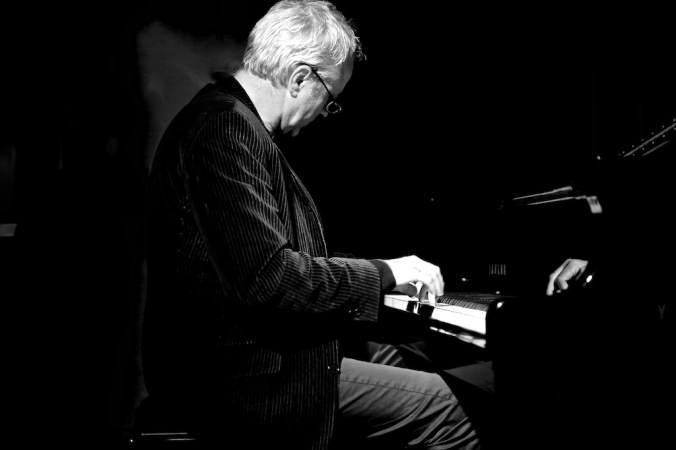 I first met Cody in New Zealand and we are now friends. I have a deep respect for him as an artist and as a human being. This rounded out the evening nicely. Cody an internationally recognised artist, is back in Sydney for a while. There is something about his approach and his innate sense of pulse that sets him apart. He understands the importance of leaving space between notes; easily moving inside and out during a solo. He oozes Paris cool. With Cody on piano and White on keys the enjoyment was complete.
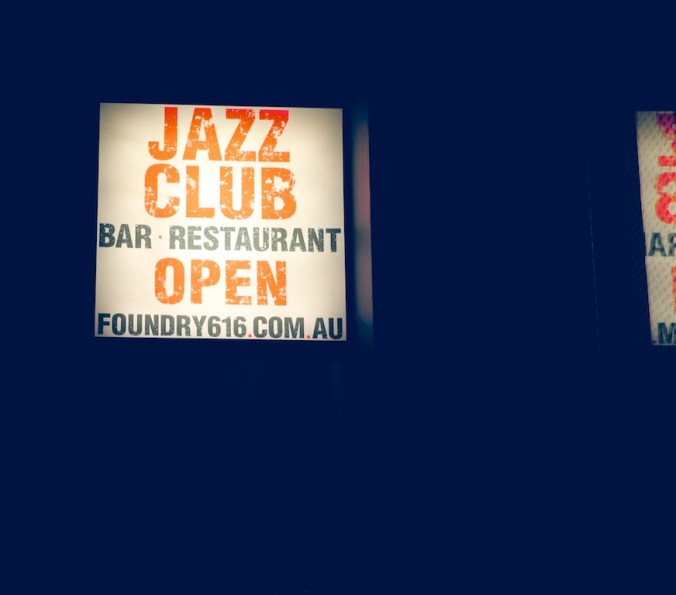 There are any number of excellent improvising musicians in Australia and New Zealand and we are lucky that they are so accessible. There are also thousands of people who love improvised music, but here’s the rub. The enthusiasts don’t always make the effort to attend gigs. The consequences of taking the local Jazz scene for granted are too dreadful to contemplate. If we support local Jazz we need to commit. In spite of the many world-class musicians in Australasia the music is more precarious than we think. Running clubs like the ‘Foundry 616’, the ‘505’ or the ‘CJC (Creative Jazz Club)’ is high risk and if the clubs struggle, so does the music. It is quite possible that I’m a fanatic, but I’ve attended more than 250 Jazz gigs in the last four years. If you read this, it’s because you love this music with all its variability. Value what you have people and make a point of supporting your local Jazz clubs and gigs. Some amazing musicians depend on you.
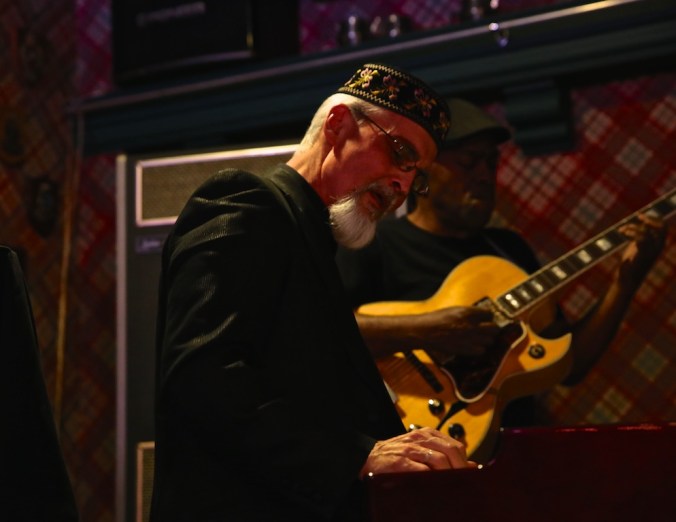
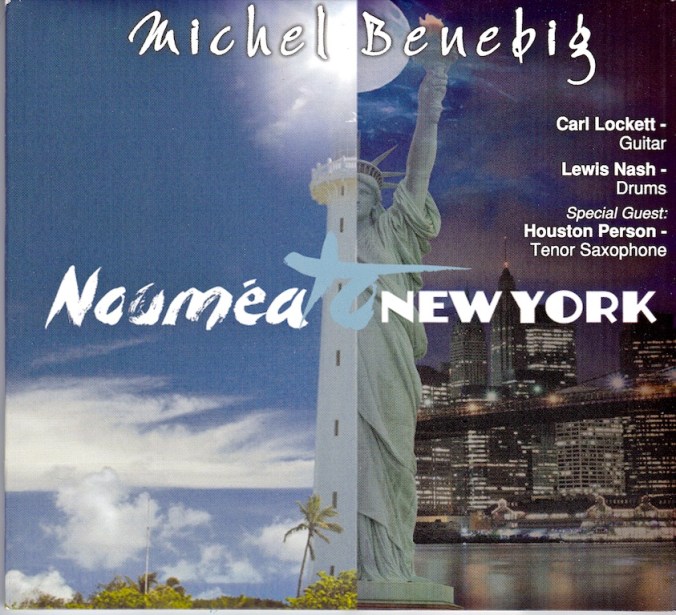 Michel Benebig visits New Zealand once a year and we anticipate his visits with Joy. His authentic B3 groove journey didn’t start in East Philly, but in tropical Noumea; a South Pacific Island north of here. After honing his craft he travelled widely and in consequence his star steadily rises. The more North American audiences hear him, the more they embrace him. He is now regarded as a B3 master. The B3 greats who inspired him are all but departed and he deservedly steps into their shoes. His travels in the USA have brought him into frequent contact with a number of well-known musicians. As good musicianship and a pleasant disposition are the highest recommendations possible, the musicians he worked with recommended him to others. That is how he teamed up with Carl Lockett.
 The new album ‘Noumea to New York’ is his finest to date (and true to label, recorded in New York). Again Lockett features on guitar, Lewis Nash lays down the drum grooves and special guest Houston Person appears on tenor saxophone. What a marvellous line up this is and what an album they turned out. This album alone will secure Benebig a place in the pantheon. It has modern B3 classic written all over it. All compositions are by Benebig, with one tune co-credited with his partner Shem. There are so many treasures on this album that it is hard to single out one particular tune, but if pressed I would say ‘Noumea To New York’. A medium paced groove track with enough warmth to melt the ice in your drink. The flawless interplay between Benebig, Nash and Lockett is in strong evidence here. With Nash creating a solid cushion of groove, it is no wonder that Benebig and Locket sound so marvellous.
 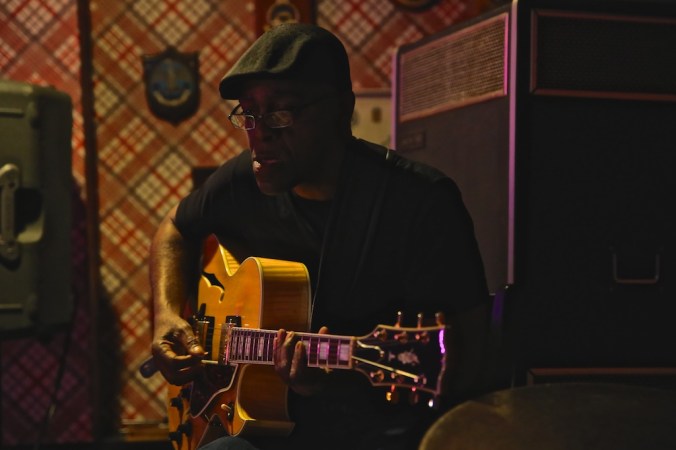 The tour down under was minus Nash and Person; Locals filled those gaps. In Auckland we had Roger Manins on tenor and Ron Samsom on drums. This was also a perfect fit, as both had accompanied Benebig previously. The set list in Auckland was partly material from the album and partly marvellously quirky tunes from classic TV shows. How often do you hear the theme from ‘The Pink Panther’ or the theme from ‘The Naked City’ played by a groove unit? More common in Jazz circles is the Johnny Mandel standard ‘Suicide is Painless’ from Mash. When people think of that last number they think Evans and seldom the B3. To show what skilled groove merchants can do with such material I have uploaded a clip.
  While Benebig is very much in command here his groove collaborators preached just as hard from their respective pulpits. Lockett in particular was astonishing. Gasps of delight erupted as he utilised his finger picking blues-guitar credentials. Moving seamlessly from lightning quick double-time to a steamy groove; often leaning slightly back on the beat. His comping was equally delightful as he does what Pat Martino does. There is either a slight vibrato or he pulls gently down on the strings with each comping-chord; creating simultaneously a warm but slightly mournful effect. Whether on fast single-note runs or octave chords, its hard not to think of Wes Montgomery. His extensive use of thumb and fingers and his fluidity evokes that comparison.
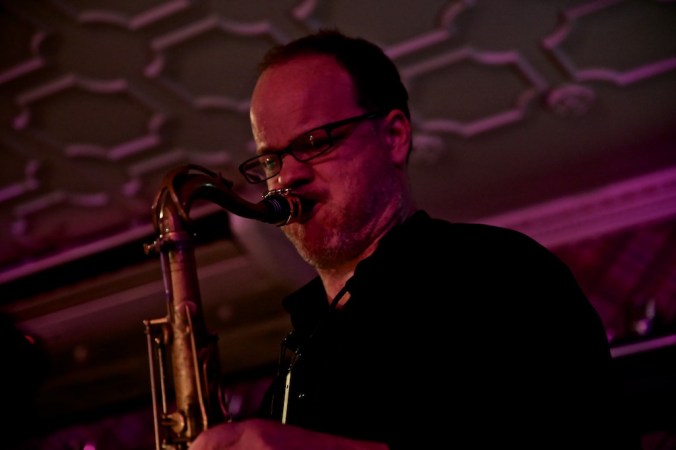
 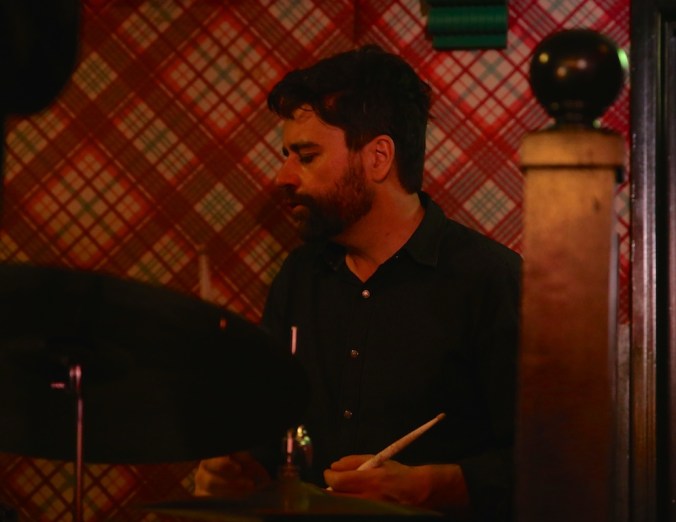 Manins was clearly in his element here. Happy among friends and happy to find himself back in the groove space. The same went for Samsom. Both are highly regarded straight ahead Jazz musicians but both have released great groove albums in the previous year. Their joyous abandon added to the quantum of happiness; every note making us smile.
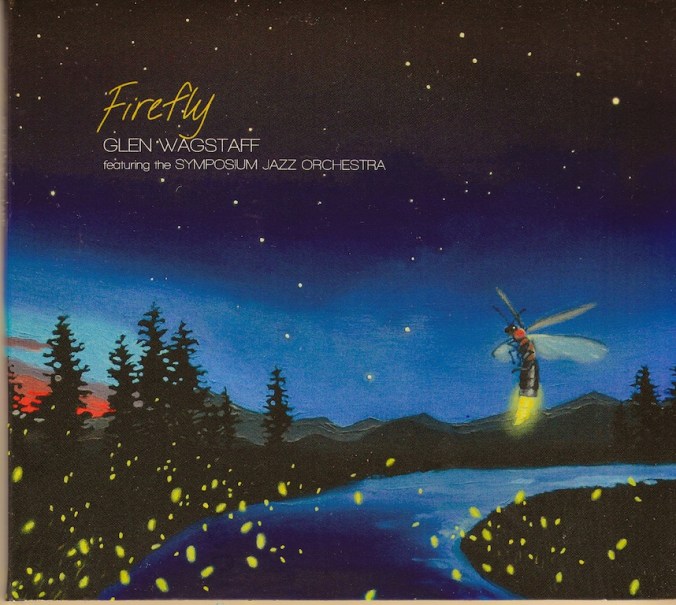 The postie brings more music to our house than he does bills and so I always welcome the sound of the small motorbike pausing outside. This time she delivered a wafer thin parcel with the sender identified as Glen Wagstaff; Firefly had arrived. Looking back over my blog posts revealed that I first encountered the Glen Wagstaff Project in October 2013. At that time we heard several compositions now on the album and in particular to the title track ‘Firefly’. The first Auckland lineup was an eight piece ensemble, all Christchurch musicians. I was only familiar with two of them, Tamara Smith and Andy Keegan. The ensemble impressed and especially notable were the compositions; well constructed charts which magically exceeded the limits of eight piece instrumentation.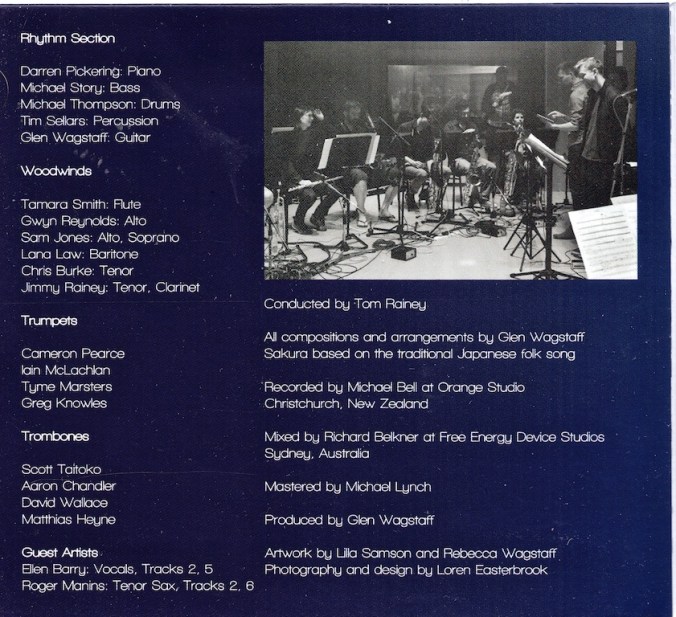
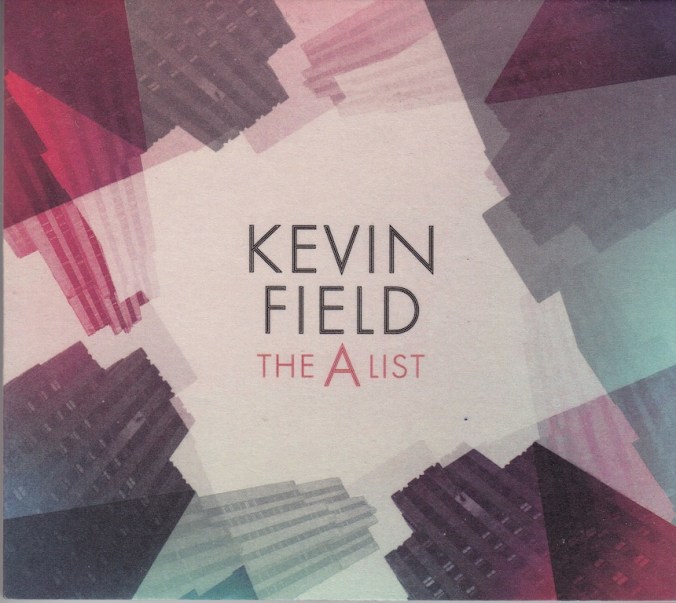 ‘The A List’ release has been a long time coming, or so it seems. Every recording of Kevin Field’s is noteworthy and when rumours of a New York album circulated I attempted to pin him down. Whenever I saw him playing as sideman about town or met him in the street I would pull him aside and say, “Kev, how is the album progressing, when will you release it?”. I invariably received iterations of the same cryptic answer; a knowing smile and a brief “it’s getting there, not too far away now”. the lack of specifics only fed my appetite. I have learned to read the signs and I can sense when an album pleases an artist. It is all in the body language, readable over the self-effacing vagaries of banter. Field had a look about him; a look that told me that he was nurturing a project that pleased him.
 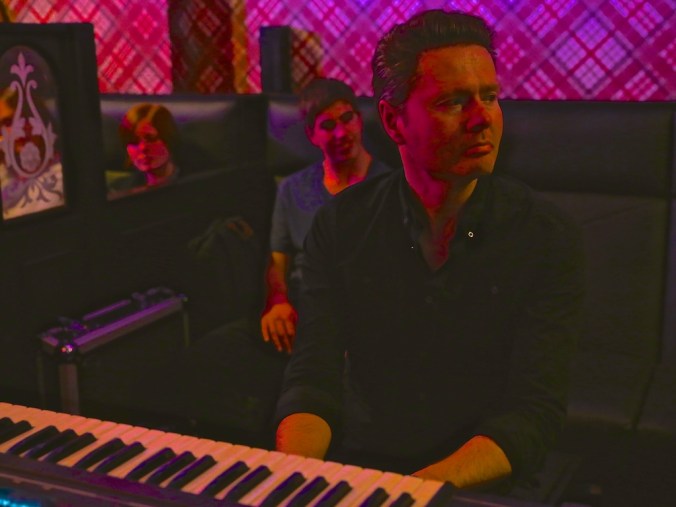 As the months progressed I gleaned additional fragments of information in bite sized chunks. Firstly that Matt Penman was on the recording, and incrementally that Nir Felder, Obed Calvaire, Miguel Fuentes, Clo Chaperon and Marjan Gorgani also. The substantive recording took place at Brooklyn Recording in New York with additional recording in Roundhead Studios Auckland. That was pretty much the extent of my knowledge. I have encountered this phenomena before. Treating an album as a child, holding it close before sending it out into the world. It generally presages good things to come. In this case it certainly did.
  The title is probably tongue in check, but it speaks truth. There are a number of A List personnel on the album. Field is arguably Auckland’s first call pianist. No one harmonises quite like him and his consistency as pianist and composer is solid. New Zealand Jazz lovers also regard Matt Penman highly. His appearances with leading lineups and his cutting edge projects as leader always impress. In the same vein is Nir Felder; frequently mentioned in the same breath as the elite New York guitarists. Obed Calvaire the same in drum circles. This was an obvious next step for Field; having risen to the top of the local scene, it was time to record with New Yorker’s.
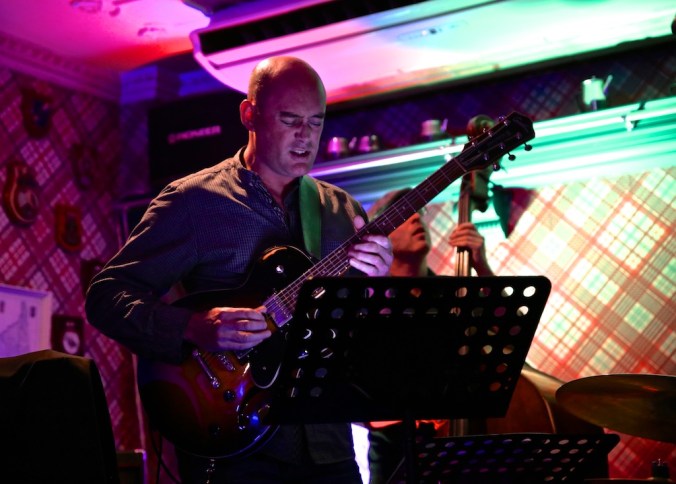
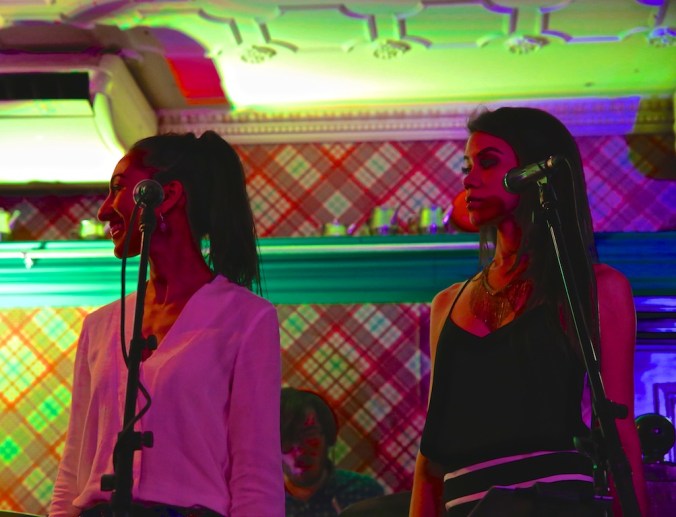
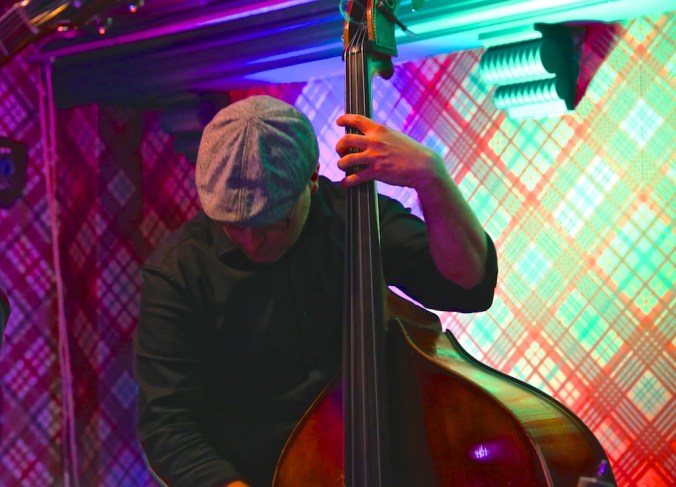 The CJC (Creative Jazz Club) Auckland launch substituted ‘A’ List locals for the famous New Yorker’s. On guitar was Dixon Nacey, on bass Richie Pickard and on drums Stephen Thomas. The vocal section was; Clo Chaperon & Marjan Gorgani (as on the album). These musicians are superb and so the comparison with the album was favourable (Field is a little higher in the mix on the album and guitarist Felder is a little lower).
 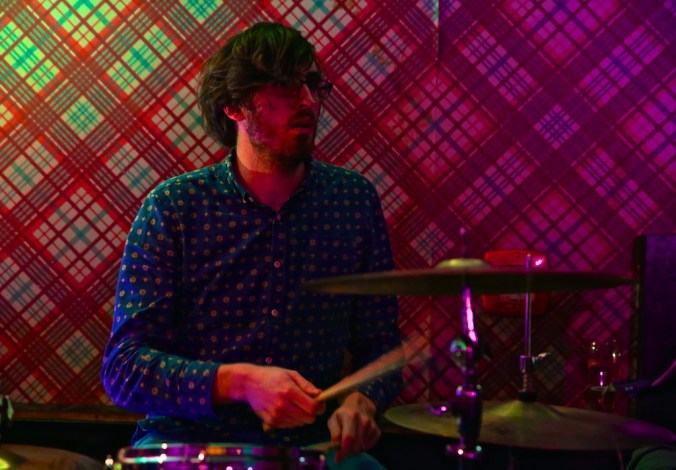 The CJC was in different venue this time, owing to the refurbishment of the 1885. The Albion is no stranger to Jazz and in spite of the ‘livelier’ acoustics, it was a good space in which to enjoy the music. Dixon Nacey always sounds like a guitarist at the peak of his powers, but somehow he manages to sound better every time I hear him. This time he used less peddling and spun out wonderfully clean and virtuosic lines. Apart from a tiny amount of subdued wah-wah peddle on the disco number his beautiful Godin rang out with bell-like clarity (the clipped wah-wah comping was totally appropriate in recreating the tight disco funk vibe). The other standout performance was from Stephen Thomas, who is able to find a groove and yet mess with it at the same time. His complex beats added colour and he mesmerised us all. At the heart of the sound was Richie Pickard. Some of the material was definitely challenging for a bass player as timing was everything. Pickard navigated the complexities with ease. There are were three vocal numbers at the gig (two on the album). Chaperon and Gorgani are impressive together and well matched vocally. Hearing them on the album showcases them to best advantage, as sound mixing is harder in a club. Their presence certainly added excitement to the gig.
 Buy the album and if possible see Field perform this material live. This music is exciting and innovative; past and present rolled into a forward looking Jazz form.
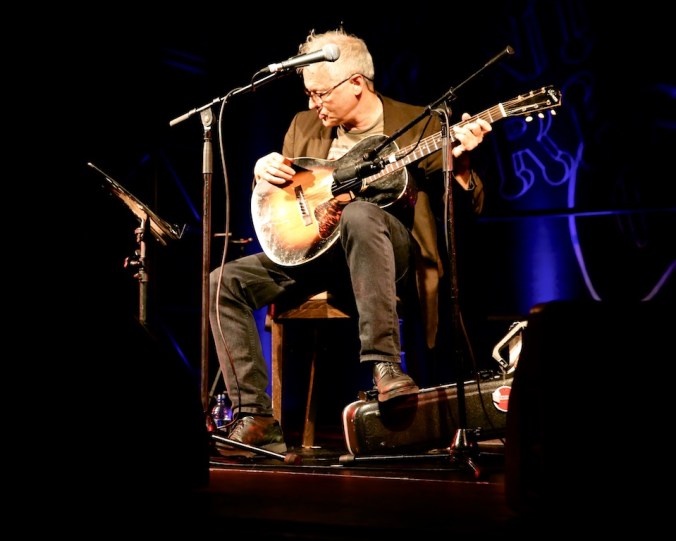 I am a Marc Ribot enthusiast so when local musician Neil Watson sent me a message to say that Ribot was coming to New Zealand I whooped for joy. My first thought was, wow, this will be the good shit. My next thought was, oh yeah I want to interview that cat about his musical and social activism. Watson was to open for him which pleased me. Watson was a good fit for this gig. An iconoclast multi genre improviser himself.
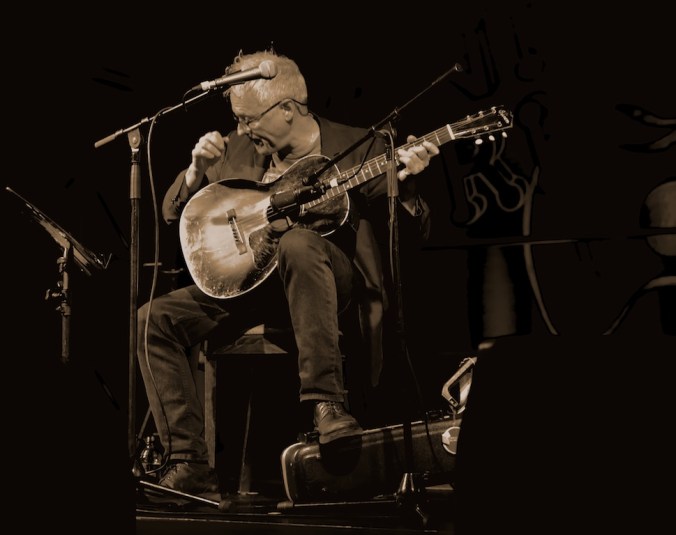 My first act on arriving at the venue was to approach the Tuning Fork floor manager and ask about photographs. He told me of a request from Ribot for absolute quiet. It was solo acoustic guitar, not Ceramic Dog and at Ribot’s request the venue turned off the air-conditioning and fridges. Camera clicks were obviously out of the question unless between numbers. I respected that and took photographs unobtrusively during moments of applause. This was a special gig that required a womb of engaged silence. Audience and musician locked into an embrace of sound.
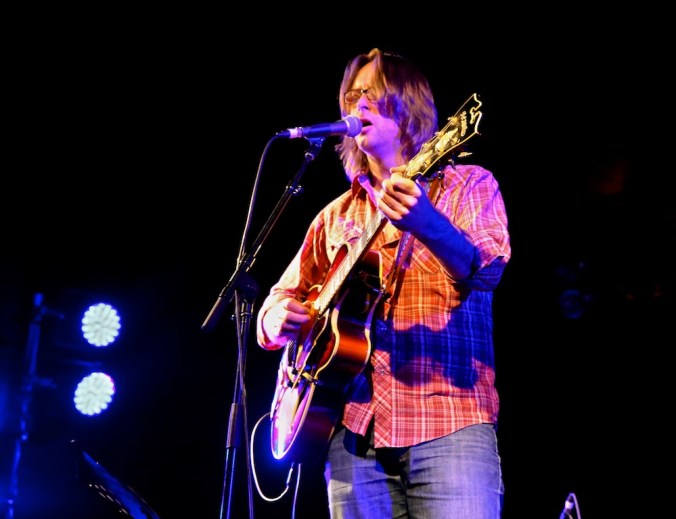 Footnote: Neil Watson acquitted himself well and added to the enjoyment of the evening. He played three types of electric guitar plus his pedal steel guitar; his set list ranging freely across genres. A Nirvana tune, a Hendrix referencing ‘Hear my train a comin’, a nice tune composed by his partner and the Kiwiana classic Blue Smoke as high points from his set.
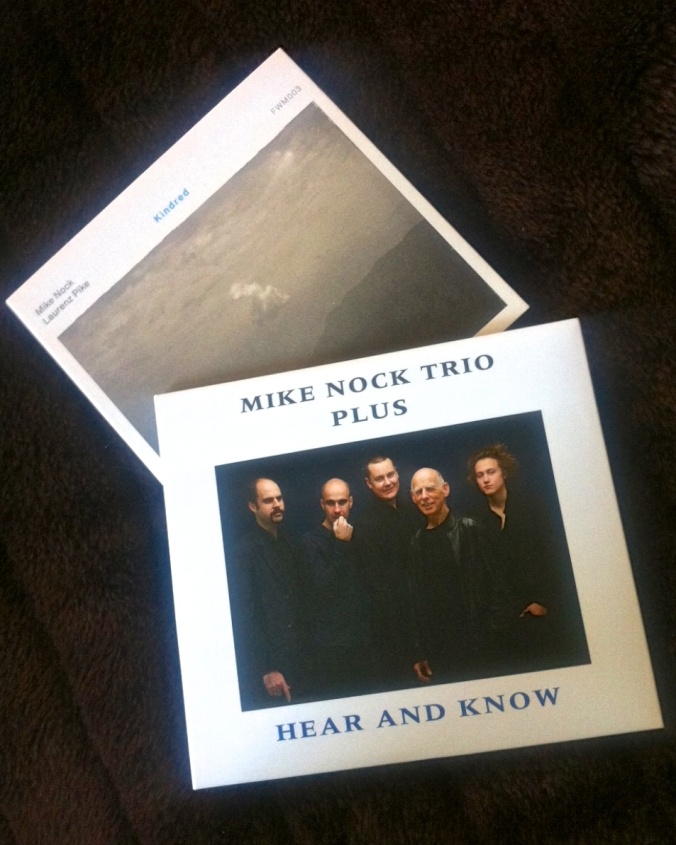
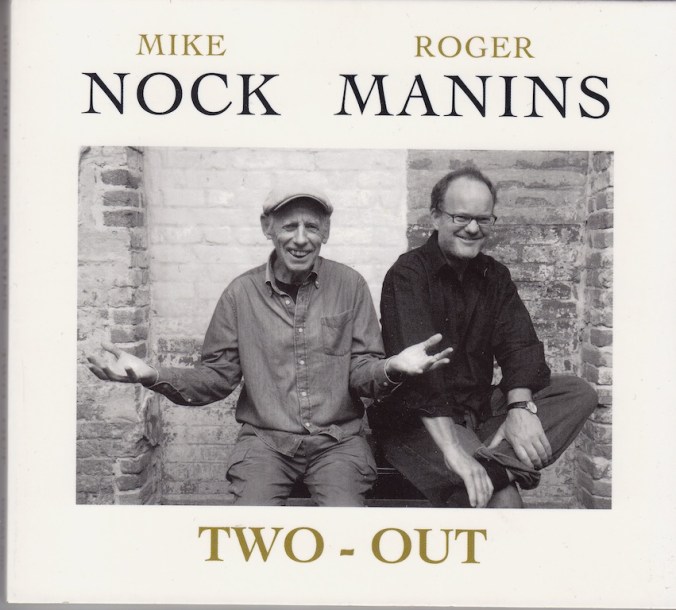 A few weeks ago I received a review copy of the Nock/Manins ‘Two-Out’ duo album. As it was late I put it straight into my work bag ready to play in the car. When the morning came, the distractions of the work day overtook me and I forgot it was there. It was not until a week later that I found it and listened.
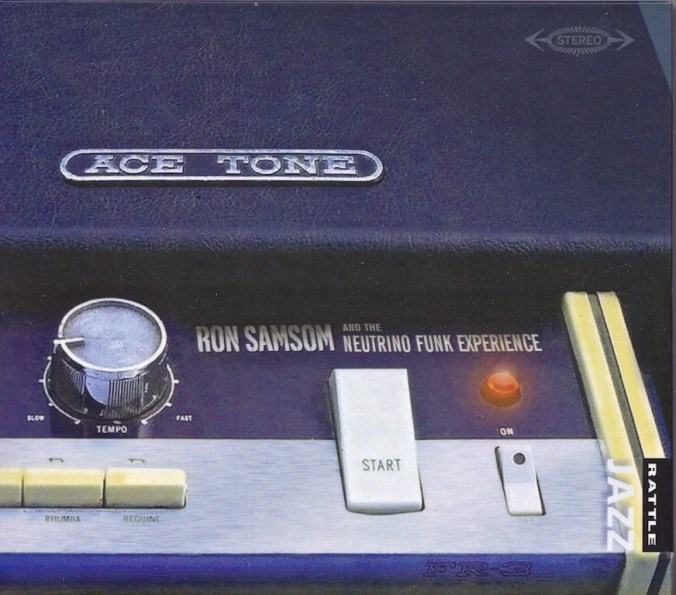 Ron Samsom’s Neutrino Funk Experience ‘Ace Tone’ album has so much up front punch that that a warning is needed on the label. It is an album that grabs you by the lapels and demands your attention. As you listen it transports you to a world of joy. The album and the live band exudes a vitality that enters through your pores, pulsing through your body like the wild blood of extreme youth. Try as you may, it is impossible to keep still as the rhythms consume you limb by limb. While the album brings historic musical references to mind, it is very much of the present. This is Jazz Funk at its very best.
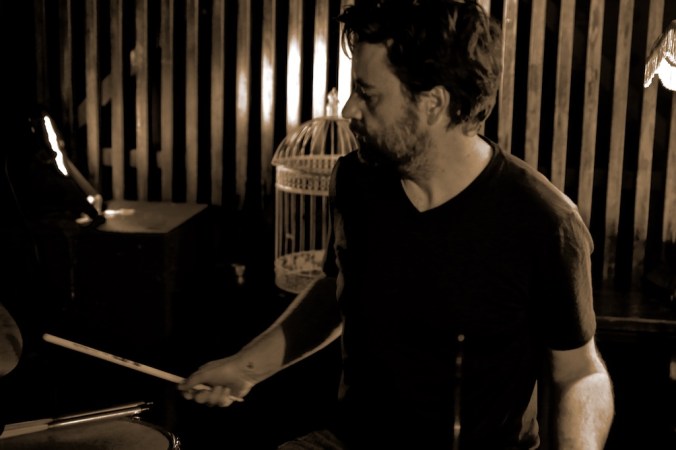 There is cleverness aplenty in the album, but that’s not what it’s about. The pulse, punch and danceability are the draw cards. The tunes let each listener glean their own references. During the album launch someone said, “Oh wow that takes me back to Deep Purple”, while others talked of the Jazz funk gurus like Herbie Hancock, Eddie Henderson and Jimmy McGriff. What ever references people heard, one thing is for certain. This band updates 70’s Jazz Funk as few other albums do. A lifelong fan of the classic genre observed, “few classic 70’s funk albums actually sound as good as this”.
 Material like this needs highly skilled and experienced musicians in order to extract the maximum advantage and that is exactly what Samsom got. This is an alignment of talent that works so well that they must surely build on their success. The Neutrino Funk Experience formed in 2014 and started doing regular gigs at Auckland’s Albion in the central City. The word soon got around and one by one we drifted down to see them. The band stood-out from the first day and the disbelieving expletives from experienced musicians confirmed what our gut told us. These guys were total ‘muthas’.
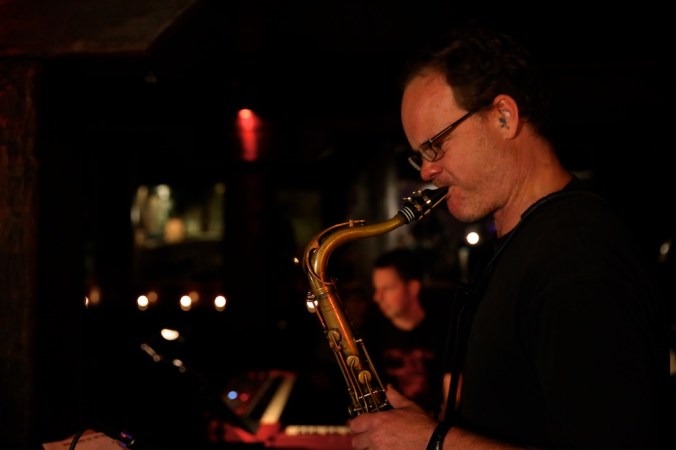 Roger Manins always sounds great but he has excelled himself here. This brand of earthy down-home funk is a natural place for him and his own funk albums reinforce that view. Manins just tears the place up on these sessions and it would be hard to find his equal. There are times when he apparently defies gravity, rising to his toes and abandoning self to move inside the music. These are moments of pure Zen and I watch for them now. Man and instrument becoming one and out of the bell streams a cornucopia of sound, distilled from the human experience. From the otherworldly wails to the gentlest urgings you recognise Manins uniqueness. Organist Winterburn said of him, “Working with Roger is perfect for me. He’s such a rhythmic saxophonist”. Coltrane, old school funk, ballads and modern edge; it’s all there in the sound.
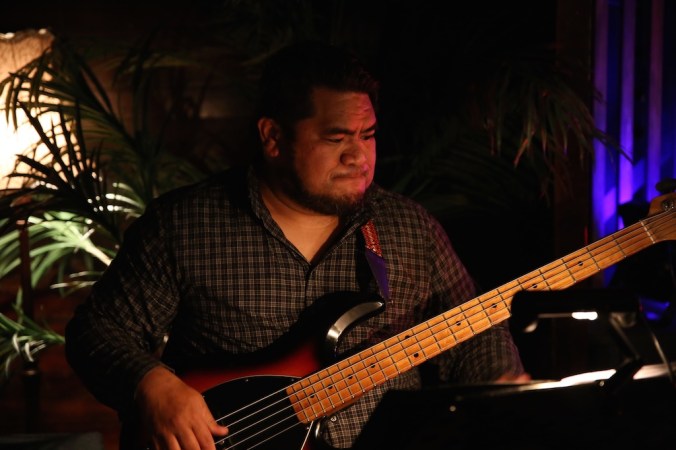
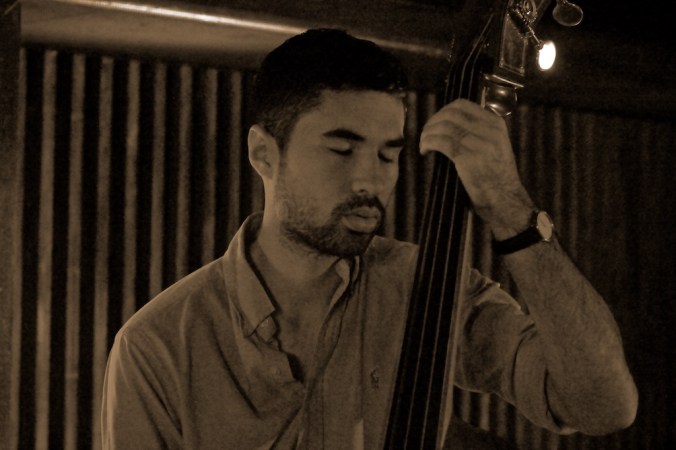 On the album we have Cameron McArthur on upright bass. Even before leaving the UoA Jazz school Cameron was punching well above his weight. I would describe him as an instinctive player. Knowing where to place his lines and always strongly supportive of other band members. He quickly became a fixture in quality rhythm sections and visiting artists praised him. After a trip to New York to check out the scenic he picked up some work in cruise ship bands. By happy coincidence they had cut the album prior to him leaving. So punchy are his bass lines on ‘Ace Tones’, that you think he is playing an electric bass. In his absence Samsom hired Karika Junior Turua for the launch gig. Again this was a good choice. This time we did hear an electric bass and as Turua has experience with Jazz funk, the transition from upright to electric bass was seamless.
 Lastly there’s the album art work and the recording credits. Who ever created the cover design and layout must feel pleased; they did an amazing job. The presentation tells the ‘Ace Tone’ story perfectly. My friend Iain Sharp and I were involved in the project as liner notes providers. As requested we contributed poems. It is rare (but not unheard of) for an album to use poems instead of the standard liner note blurb. I really hope that this trend continues for selfish reasons. Contributing something to an album like this is pure pleasure. The recording and mixing took place at ‘Roundhead Studios’ in Auckland and the mastering at ‘Turtle Tone Studios’ in New York. The album is out on Rattle Jazz where the best of original New Zealand music lives.
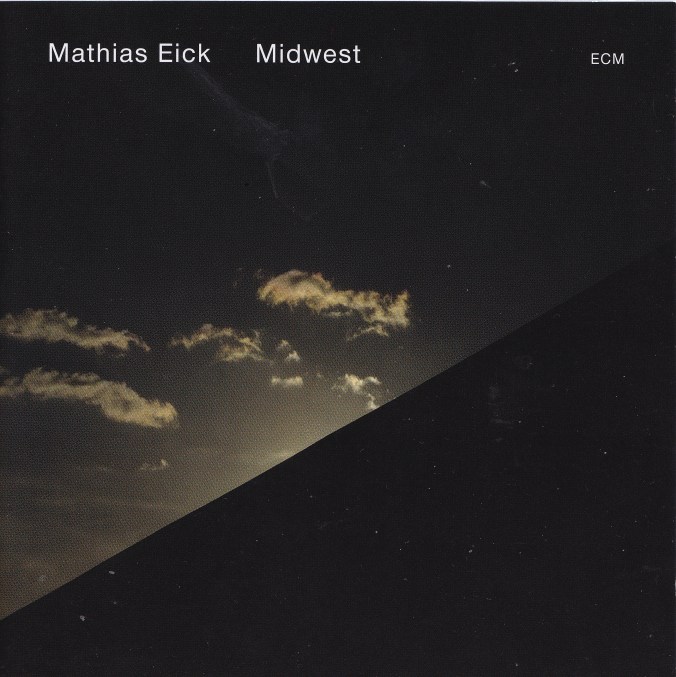 Before hearing the first note, I knew that I would like ‘Midwest’. Mathias Eick is a unique communicator and his compositions gift us with particular ways of experiencing places we have not yet visited. Sound is transmuted and we see what he is seeing. As I listened to the album I was drawn deep into a world of vast open spaces, history and complex human emotion. The connection was visceral as the music brought the plains of the Midwest into the range of intimacy. I sensed the wild grass running between my fingers as I listened. The last album to evoke such a strong sense of place for me was Tomasz Stanko’s ‘The Soul of Things’. ECM is the home of such evocative albums.
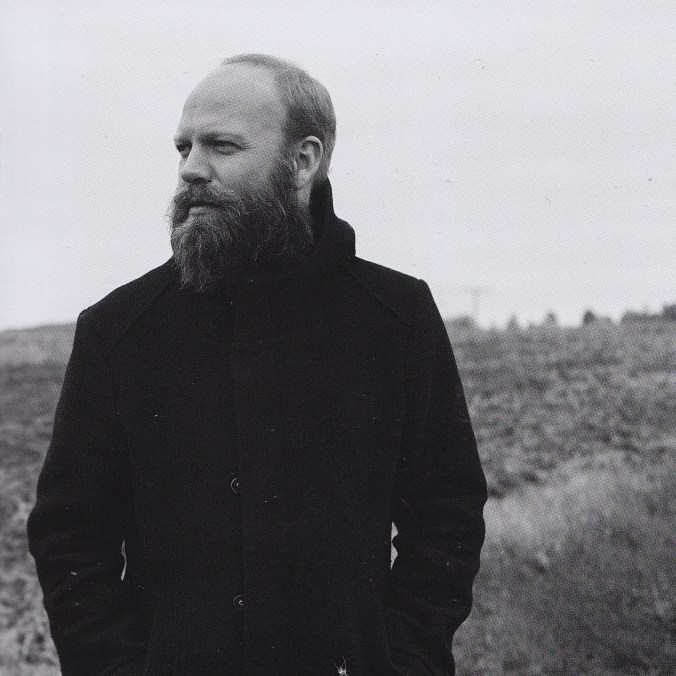 Where I live in the South Pacific, Jazz musicians sometimes pose the question; Do we have our own sound, a unique quality that we tap into? As our scene grows the answer is increasingly yes. This uniqueness of ‘sound’ is evident among Scandinavian improvising musicians and especially so among Norwegian trumpeters. In this case the identity is multi faceted. It is Norwegian and Americana.
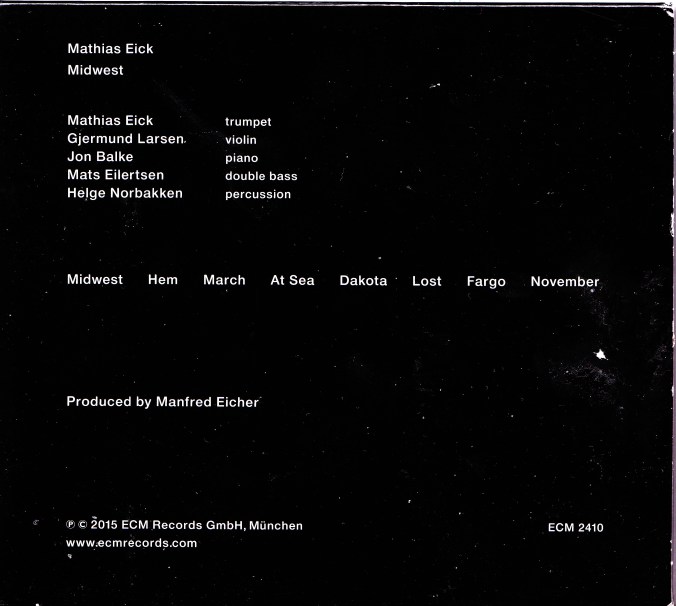 The Midwest is both mythical and real, we feel that we know it intimately. Endless tales arise from the indigenous peoples (who respected it best) and the hopeful European settlers who spread across it looking for a new home. It struck a particular chord with Eick as the peoples of Norway were prominent among those settlers. The writer Lawrence Durrell explains this best when he says that certain places transcend reality and become ‘less a geographical entity than an idea’. ‘Midwest’ is an embodiment of this principle. Midwest by Mathias Eick is out on the ECM label.
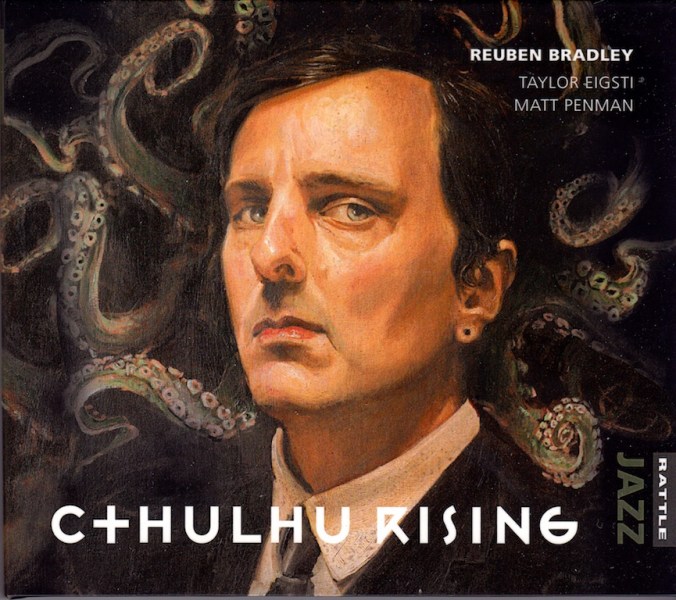 H P Lovecraft died under appreciated, but it didn’t curb his output. His imaginings took him to darkly strange and exciting places. Places that few of us dared contemplate. While he reached deeper than writers like Edger Alan Poe and further into the human psyche, his wildest dreams could not have prepared him for Wednesday night. Reuben Bradley, time traveller and keeper of lost grooves has wrestled with the spirits and brought Lovecraft to life again.
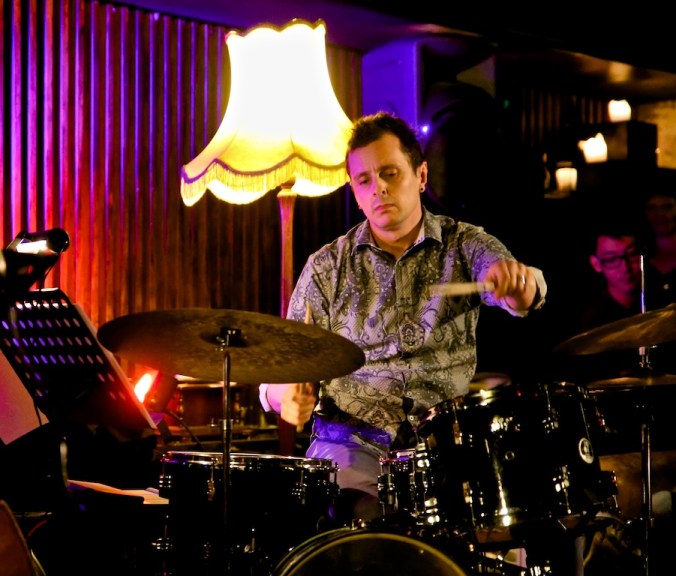 This is a truly exceptional album and it is no wonder when you consider the source material and the musicians associated with it. Bradley, Penman and Eigsti are a deadly combination and their interplay is crisply on the mark. Matt Penman is dear to our hearts in New Zealand. One of our finest Jazz exports. An expat from Auckland who conquered the American improvised bass scene in ways that few others manage. His work with James Farm, the San Francisco Jazz Collective, Aaron Parks, Kurt Rosenwinkel and a long list of luminaries is instructive. That he still appears with the best of our local artists and on local recordings is our immense good luck. An imaginative and wonderfully musical bass player who holds the groove and manages to tell interesting stories without distracting us from the overall focus of the piece. Few bass players could do this better than Penman.
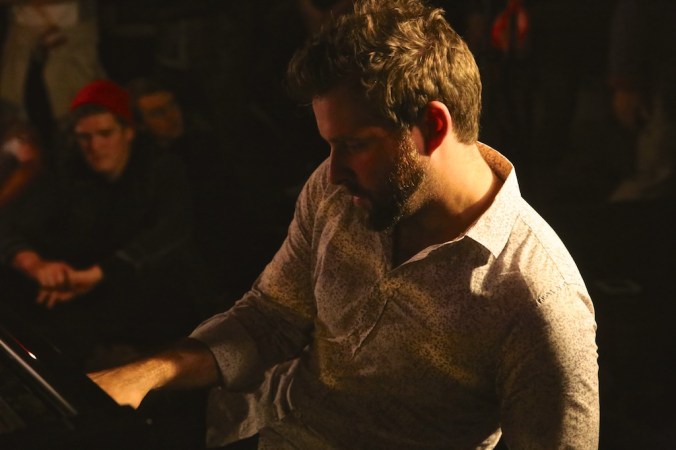 The judicious use of sampled ‘Lovecraft’ readings in several places adds to the atmospheric feel and doesn’t detract from the overall musical experience. Every note played and every voice-over is well placed. Yet again Rattle Records have excelled themselves here. The secret of ‘Rattle Records’ tasteful Jazz catalogue must surely be seeping into the wider world by now. ‘Rattle’ is the ‘ECM’ of the South Pacific. This album was recorded at the ‘Bunker Studios’ in New York, Engineered by Aaron Nevezie and mixed and mastered by Steve Garden at ‘The Garden Shed’ Auckland.
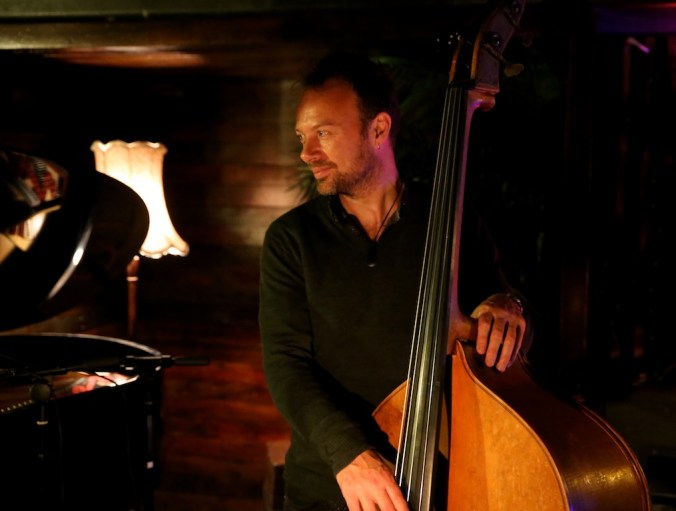 There was a change of personnel for the CJC ‘Cthulhu Rising’ release gig and for the Australasian tour to follow. Respected bass player Brett Hirst took Penman’s place and this was a sound choice. Hirst, another expat Kiwi, is well established on the Australian scene and frequently employed by visiting artists. He is a gifted musician and perfect for high end gigs like this.
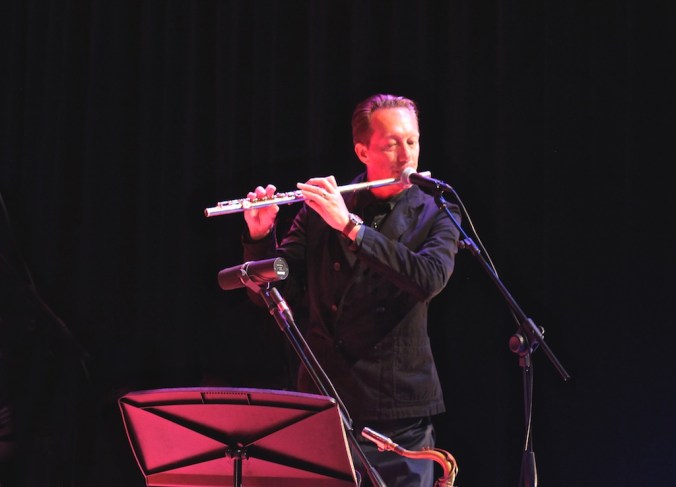 On Wednesday five well turned out ‘men in black’ suspended time at Auckland University. This was a rare event, pairing two of New Zealand’s best known and best-loved contemporary tenor players. The invitation only concert billed as ‘Nathan Haines meets DOG’ kicked off of the Universities 2015 Summer Concert Series. New intake students attending (or viewing the video clip) discovered just how high the standard is; they also realised how lucky they are to have these teachers and these role models.
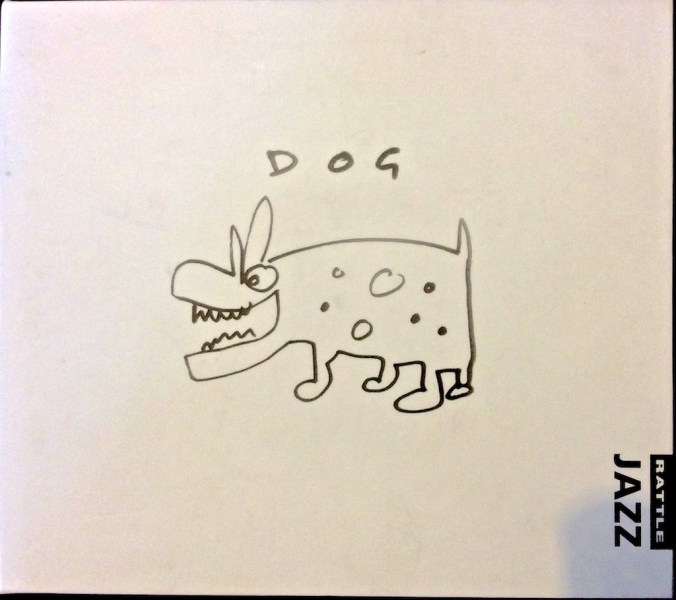
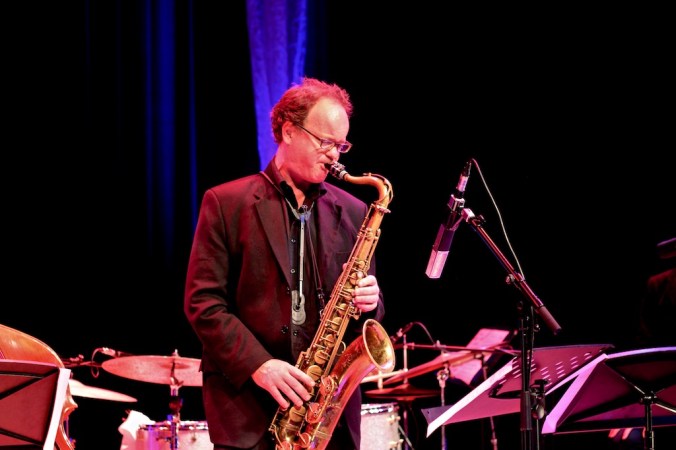 The Nathan Haines/DOG line up can rightly be described as a super-group; the cream of New Zealand’s improvising artists. We saw Haines at his best here as he showcased his formidable talents on tenor saxophone, soprano saxophone, flute & vocals. He is a multiple New Zealand Music Awards winner and perennially popular in New Zealand and London where he is now based. The DOG band members are all senior teaching staff at the Auckland University Jazz School (Faculty of the Arts). Collectively Ron Samsom (drums), Roger Manins (tenor saxophone), Oli Holland (bass) and Kevin Field (piano) form a dangerous new breed. The agility and intelligence of the animal has led many
 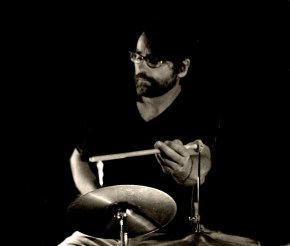 to speculate on its lineage; some suggesting Greyhound crossed with Border Collie? We will never know unless the parents own up, but it is beyond dispute that each band member has multiple acclaimed recordings to his credit. DOG is one of three groups short-listed for the 2015 Vodafone New Zealand Music Awards.
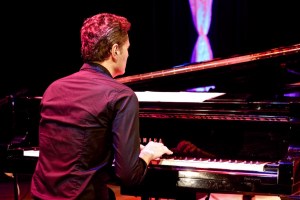 reportage and most musicians view the exchanges as a chance to collaborate; not cut someone down to size. It is an opportunity to challenge and be challenged; a high level musical interaction between equals. At its best it can bring out something special in both artists and Wednesdays gig achieved just that.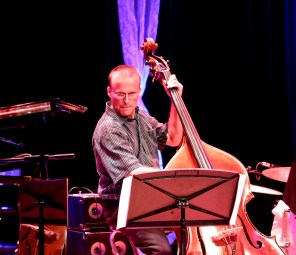
 cleverness your ideas. It is about integrity. Musical integrity is rare but universally available.
 makes you glad that you’re alive. Touring New Zealand with Nock were James ‘Pug’ Waples (drums) and Brett Hirst (bass)’. These musicians while deeply attuned to each other were always full of surprises. 5 stars. *****
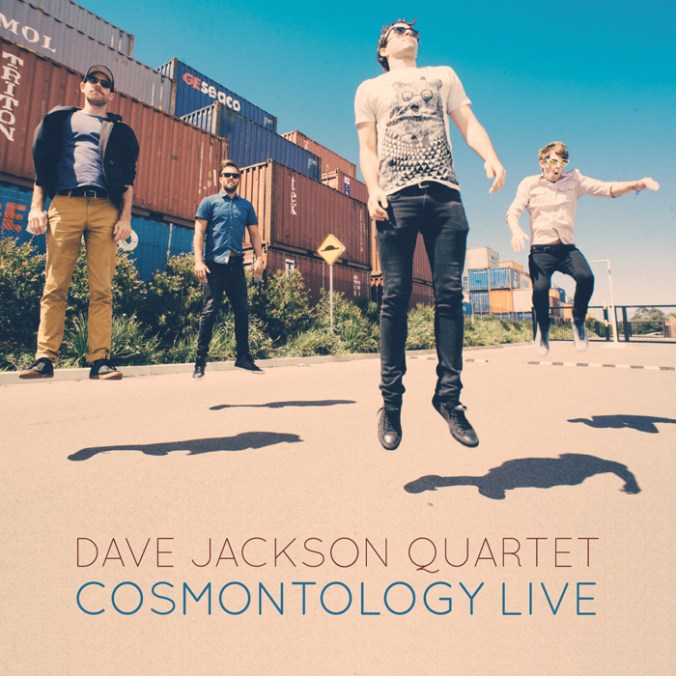
 Whether as accompanist or soloist, Field shines. His work in 2014 on ‘Dog’, with Caitlin Smith and with the Australian saxophonist Jamie Oehlers stand out as high points. Adam Ponting (Aust) (Hip Flask ‘1’ & ’11’). Ponting is an unusual but compelling pianist. An original stylist who appears to approach tunes from an oblique angle, at first impressionistic, but leading you into a world of funky satisfying grooves. This guy is definitely someone I would like to hear again. It was also great to hear more of Alan Brown (NZ) on piano during 2014. He has some interesting piano and keys projects underway and we will hear more of those soon. Steve Barry (Aust). Barry is an ex pat Auckland pianist now based in Australia. He visited New Zealand twice during 2014. His visits and albums are always received enthusiastically. Barry is a musician who works hard and produces the goods. His new album ‘Puzzles’ with Dave Jackson (alto), Alex Boneham (bass) and Tim Firth, lifts the bar for up and coming local musicians. We had a number of visitors in 2014 and to bring us a European perspective was the Benny Lackner Trio (Germany/USA). The pianist Benny Lackner has visited New Zealand on several previous occasions and the aesthetic he brings is finely honed. The band has a similar feel to EST. There is the occasional use of electronics and they quickly find tasty grooves that could only emanate from a European Band.
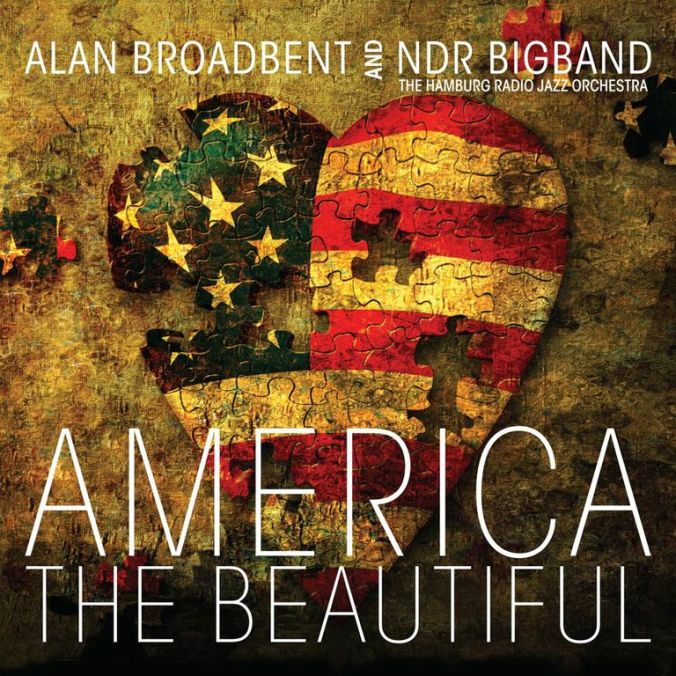
 winner Broadbent is our best known improvising export and he has spent the last year touring Europe and America to great acclaim. The solo album was given a rare 5 star rating by downbeat and ‘America The Beautiful’ was recently voted one of the 10th best albums of 2014.
 Samsom. It sizzles, swings and while hinting at the vibe of a bygone era, it still sounds fresh & modern (and very Kiwi). ‘Dark Light’ (Rattle Jazz) This excellent album is one of two that Jonathan Crayford released in 2014 – Recorded at ‘Systems Two Studio’ NY with Crayford (piano), Ben Street (bass), Dan Weiss (drums). Don’t expect repetition from Crayford. This master musician takes us on many journey’s, each unlike the last and all brilliant. Hip Flask 2 (Rattle Jazz) A funk unit led by Australasian saxophone giant Roger Manins. Accompanied by Adam Ponting (piano), Stu Hunter (organ), Brendan Clarke (bass) and Toby Hall (drums). A thoroughly appealing album and a welcome follow-up to Hip Flask 1 (Hip Flask 1 included with the album).
 biography is the weakest link in Jazz Writing. If that is true then the mould has truly been broken with this work. Crouch has placed the story of Parker’s early life into a fuller historical context. In learning things about the times, we learn a lot about the man. This is a book that could be appreciated by anyone interested in the history of African-American life in the Mid-West. I suspect that its significance will grow as time passes. Above all the book is beautifully written and for me that counts.









 JazzLocal32.com