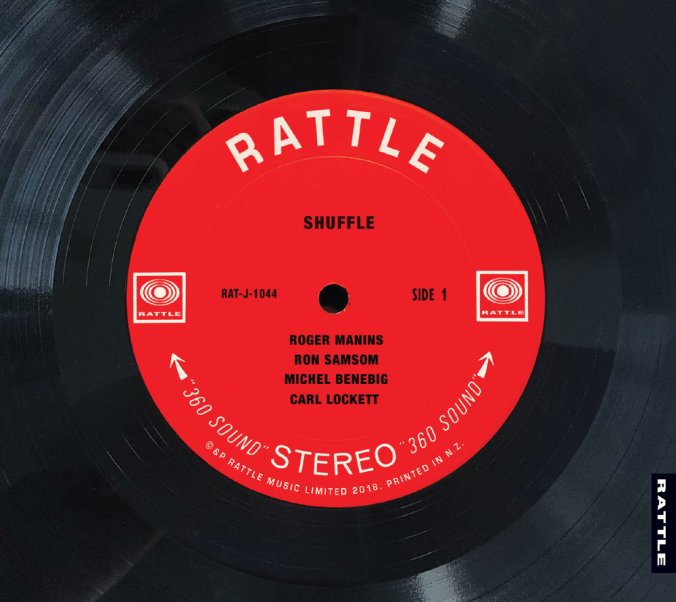
 Sometimes an album blows straight into your heart like a warm breeze off the summer ocean. ‘Shuffle’ is exactly that album. There is an easy-going familiarity to it and you instantly feel good as your body connects with the rhythms. Shuffle achieves that rare feat of sounding both new and familiar. This is the sound that I grew to love many years ago, as practitioners like Jimmy Smith, Big John Patton, Gene Ammons, and Brother Jack McDuff fused Soul and Jazz into a rare amalgam. To appreciate this music you need no acclimatisation; no understanding of Jazz. To appreciate this music you only need one prerequisite, a human heart. It’s ‘groove’, it is sensual and it’s my guilty pleasure.
While the album has immediacy, a long story underpins that. Roger Manins, Ron Samsom, and Michel Benebig have played together for many years, and whenever they get together they thrill audiences. At some point, Benebig, the New Caledonian B3 organ master, decided that he wanted to play with the American guitarist Carl Lockett. In B3 circles, Lockett is a legendary figure having played with Jimmy Smith and Jimmy McGriff. The problem was that Lockett had no Facebook presence, no current management, and no listed phone number. Eventually, he was located and agreed to a tour (he has since played with Benebig on a regular basis). During a trip to New Zealand in 2016, the album was cut.
With the exception of two tunes, ‘Blackwell’ (named after drummer Ed Blackwell) and ‘Patton 8’ (named after groove icon Big John Patton), all of the tunes are Shuffles. If you look up Shuffle in a musical dictionary you will see that it has a deceptively complex structure and that it is hard to describe in rhythmic terms (it has an 8 note feel, essentially playing 3/4 over a 4/4 beat to make the music swing). It is sometimes called the ‘flat tire’. My dictionary gives up trying to explain it and simply states, ‘when you hear it you will understand it perfectly’. It has a loping swing and it’s infectious – or as Samsom writes so beautifully in the liner notes, “The Shuffle is the shit for me. It isn’t just flat, it’s broken, and that’s where the music lies. It’s so beautifully wrong’.
The songwriting duties on the album are shared. One tune by Benebig, two by Samsom and five by Manins. The album begins with a slow, smouldering burner by Samsom titled ‘BB gun’ – what a great way to begin an album – this has that Gene Ammons ‘take me home baby’ feel and it sets up the faster-paced numbers to follow. By the time you get to the solos, you are there, in the zone and understanding why Lockett was so essential to the project. What a great composition and how in the pocket every one plays, and then as you progress through the album you realise that every track is a gem. Manins ‘Shuffle ONE’ (big leg Shuffle), or his ‘Blackwell’ which takes a faster route and gives the soloists a chance to shine while moving at pace. Man, these guys sure can write. Benebig’s tune is a 12 bar blues ‘Dog Funk Walking’. It made me think of John Mayall at his peak (once upon a time I listened to a lot of John Mayall). On this track, in particular, you hear the powerful blues credentials of Lockett laid bare. It is impossible to sound more soulful than he and Benebig do on this. The compositions are all great, but so is the playing.
Samsom and Manins have realised something special here and in the process, they’ve showcased real artistry. I have posted two tracks as sound clips – ‘Gout Foot Shuffle’ (Manins) & ‘Dog Funk Walking’ (Benebig). So it’s Christmas and you know what you have to do now. Rush out and buy at least one copy of this stellar album and experience the joy of North & South Pacific musicians playing up a groove storm. Support local music and tell your friends to do the same. You will never have a moments regret owning an album like this. 
The album is a thing of beauty thanks to Rattle and the amazing cover designer UnkleFranc. As always I acknowledge the hard work and the deft touch of Rattle’s Steve Garden and ‘Roundhead Studios’ in Auckland. The ‘Shuffle’ Lineup: Roger Manins (tenor saxophone), Ron Samsom (drums), Michel Benebig (Hammond A100), Carl Lockett (guitar). You can buy a copy from your local store, Amazon or better yet from rattle.co.nz or online from rattle-records.bandcamp.com
 I was out of the country when Umar Zakaria came to the Backbeat Bar in September. I was particularly sorry to have missed Zakaria’s Fearless Music Tour as they had just won the 2018 Jazz Album Of The Year. Because I was away it took me a while to get my hands on the album and when I did I was deeply impressed. While the name Zakaria may be unfamiliar to many outside of Wellington, he is hardly a newcomer to the scene. He is a graduate from the New Zealand School of Music and the Boston Conservatory and he has performed and studied with significant improvisers from around the globe. Already, accolades are coming his way and when you consider the fact that he is at the beginning of his career, you comprehend just how significant that is.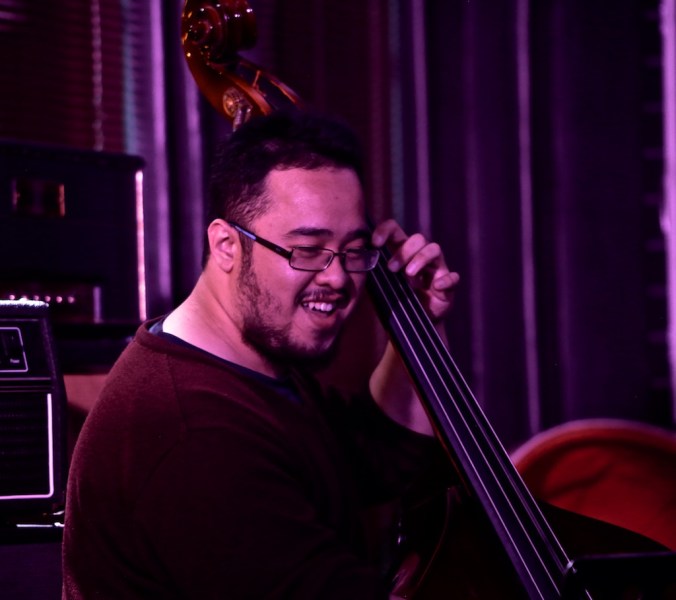
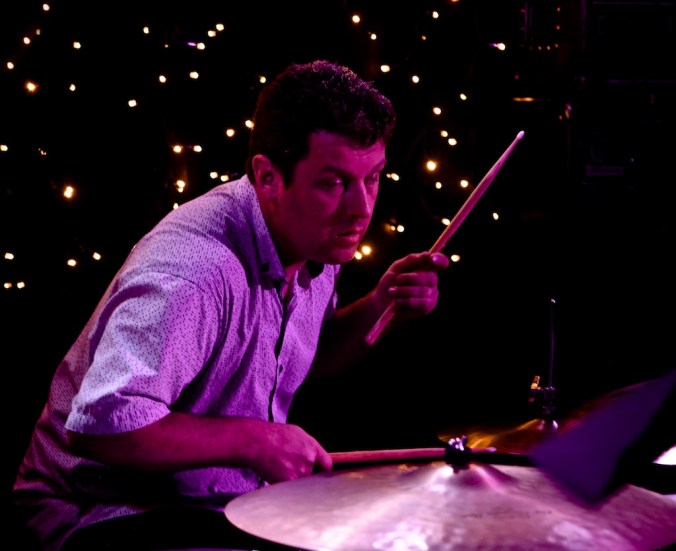
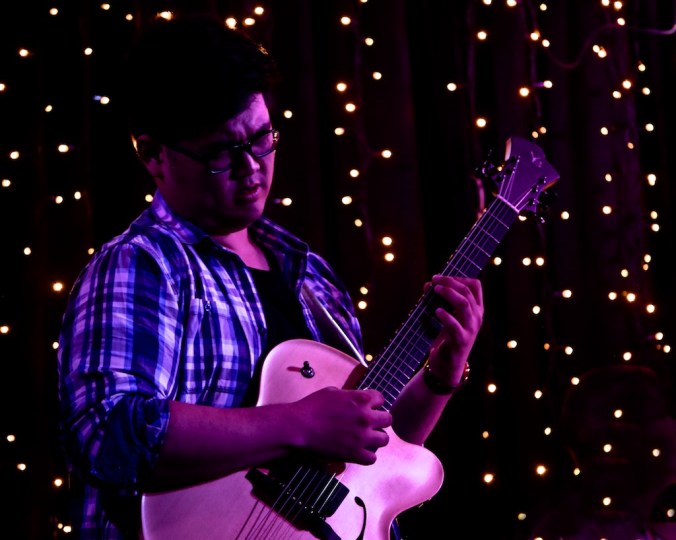
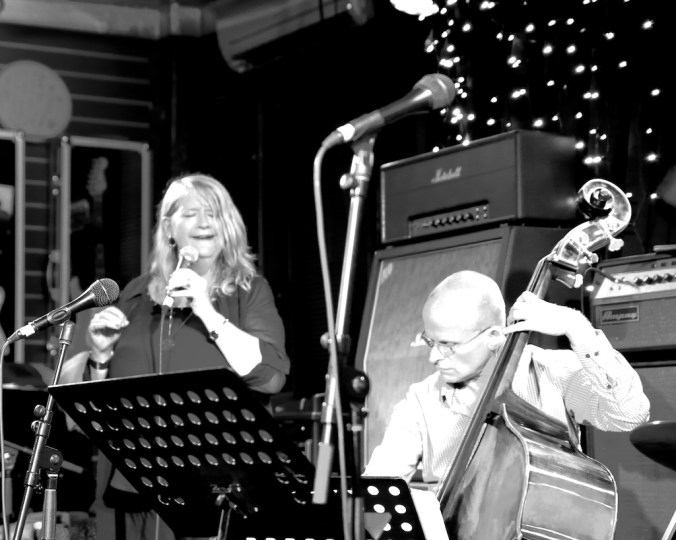
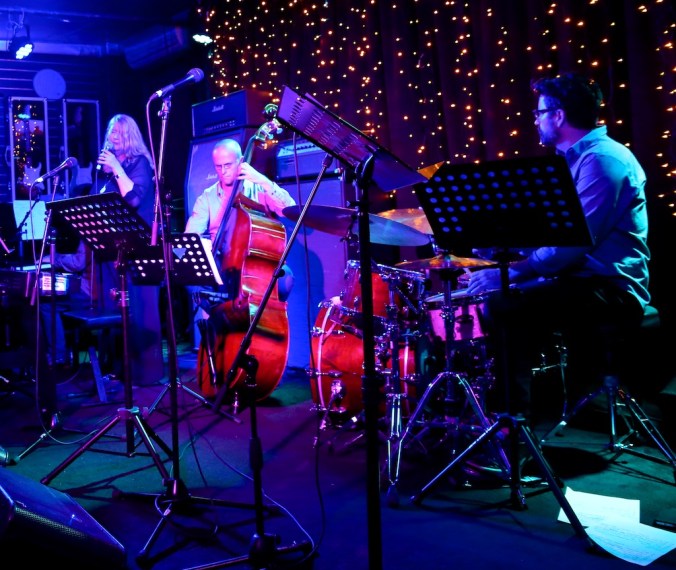
 ‘Eat Your Greens’ is an album by to the popular Wellington pianist and educator Anita Schwabe. It was recorded at the UoA Kenneth Myers Centre in Auckland during her recent tour. Her band also performed live before a capacity audience at Auckland’s CJC Creative Jazz Club and it was immediately obvious that they were in great form. Schwabe normally plays with Wellington musicians and regularly with the Roger Fox Big Band. The idea of recording in Auckland was formed while sharing gigs with Roger Manins earlier and it was with his assistance that the Kenneth Myers Centre was made available for recording.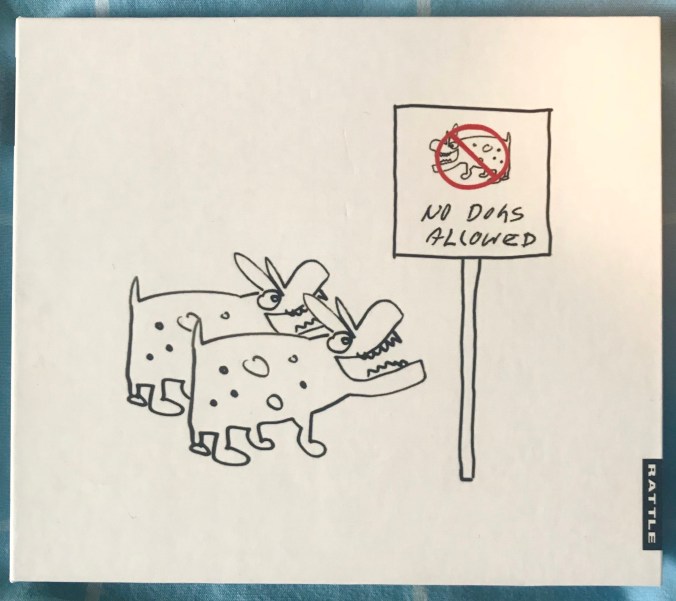
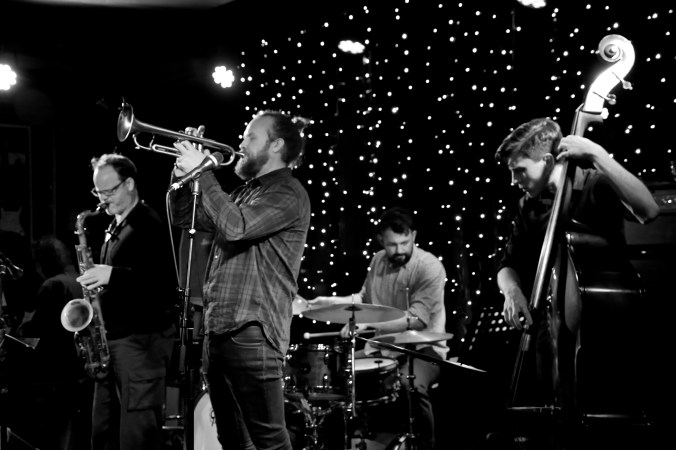 Tomasz Stanko died two days before the Eamon Dilworth gig and I was feeling the loss. I don’t know why this particular musician’s passing affected me so much but it did. Perhaps it was the untimeliness, a great artist gone too soon. It was as if a vital soundtrack to my life had been placed on pause. As I moped about the house, playing Wislawa and The New York Quartets, I remembered that Dilworth was playing soon and I cheered up immediately. I had reviewed the Viata album a month previously and loved it. I knew that it would be a balm and I knew that it would connect me to that place which Stanko took me. It did.
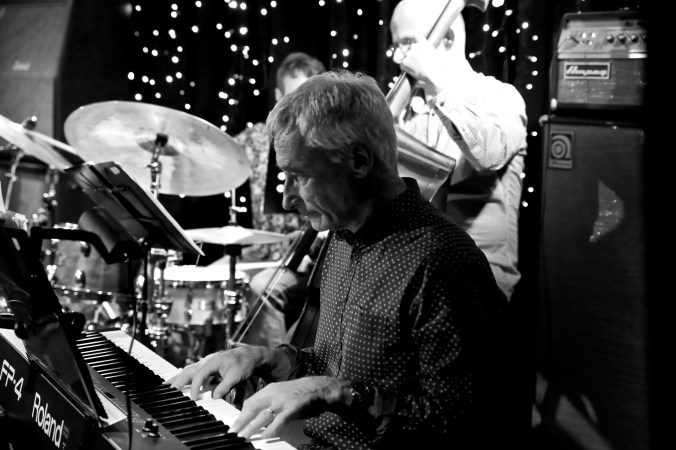 After a year of living in Paris the Auckland educator and pianist Phil Broadhurst and his partner, Julie Mason, have returned. The Broadhurst Quintet has been a regular feature on the Auckland scene for many years. The unit is fueled by a constant stream of great compositions, an unchanging line up of fine musicians and three critically acclaimed records (one of them a Tui Jazz Album of the year winner). Broadhurst’s ‘dedication trilogy’ set a high bar compositionally, but his pen is always crafting new compositions. After last weeks gig, I suspect that another album capturing the artistic soul of France might be in gestation. Broadhurst, as many will know, is unashamedly francophile. Out of this deep appreciation and finely honed perception flows terrific creations.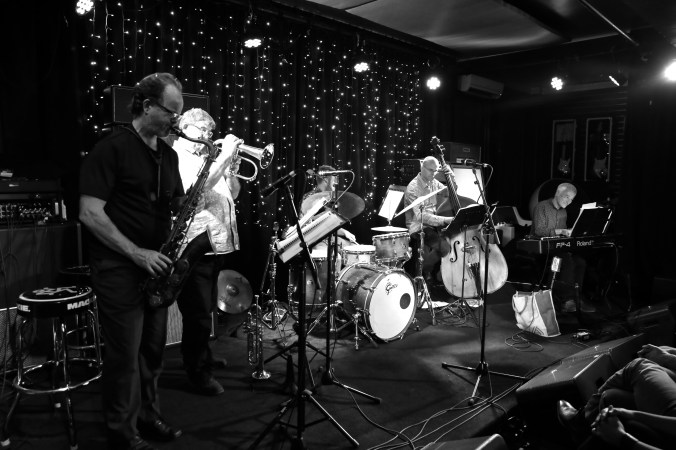
 Oli Holland is one of the leading bass voices in New Zealand. He formed Jazz Attack just over a year ago and since its inception, he has been writing new charts and expanding the lineup. Holland writes interesting charts; often complex but always compelling and his last gig showcased a number of these. This was an expanded lineup – adding three of Auckland’s heavyweights for a quartet segment in the first set. His bass is a powerhouse presence and his ringing melodic lines always distinctive. During solos, his vocalised unison lines fleshed out the tone, drew us deeper in – perhaps even influencing his improvisational choices. It is well established that vocalising while improvising on an instrument, fires up the human brain in new and interesting ways.

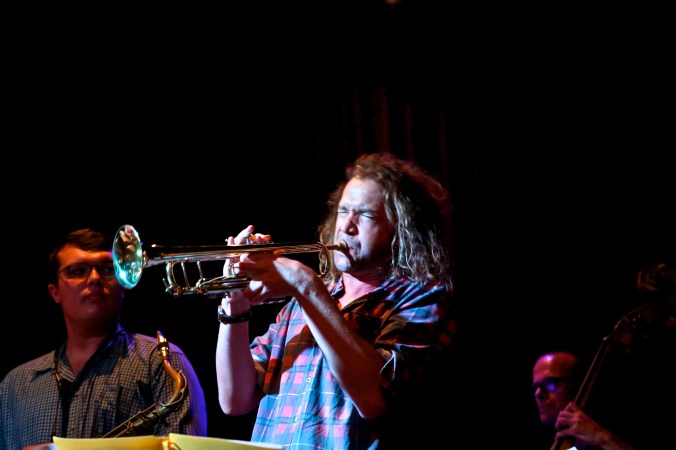
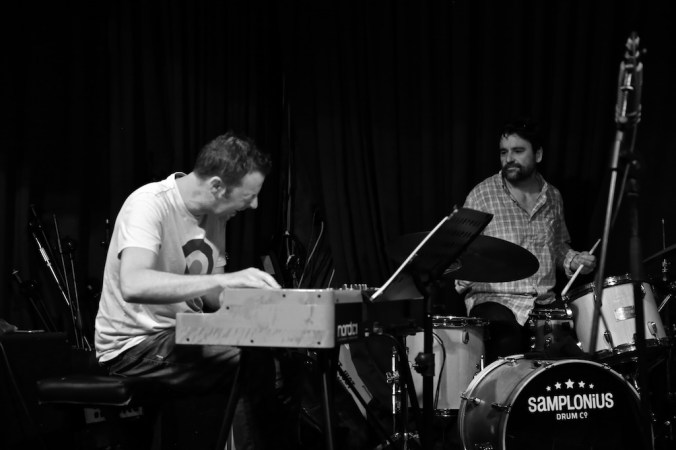
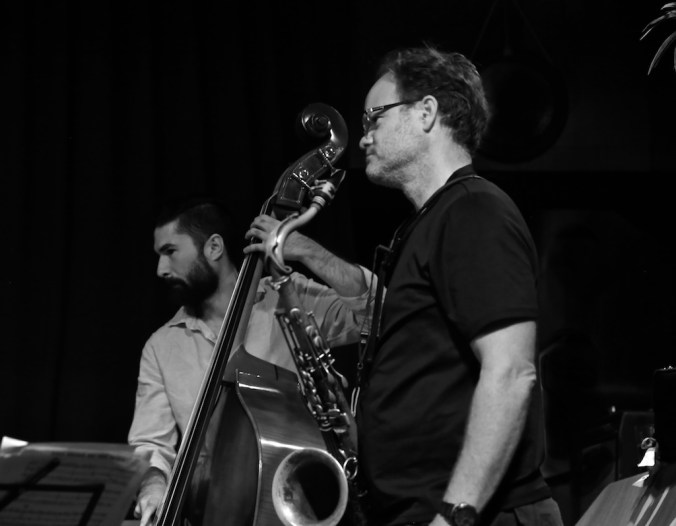
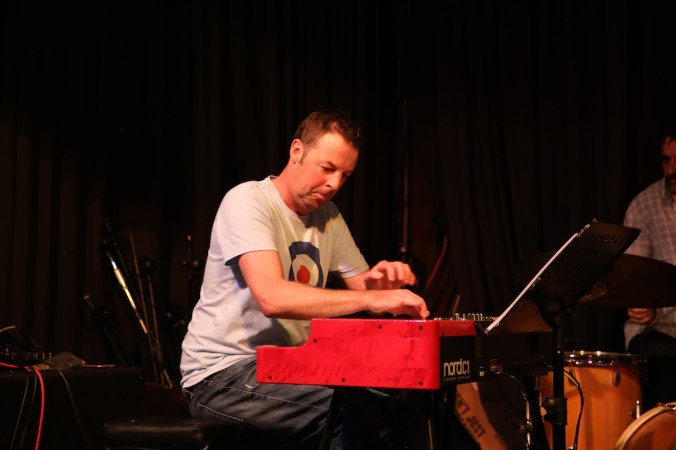
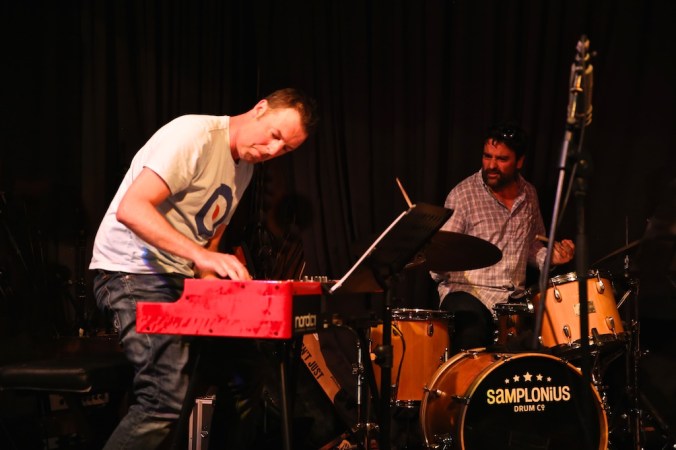
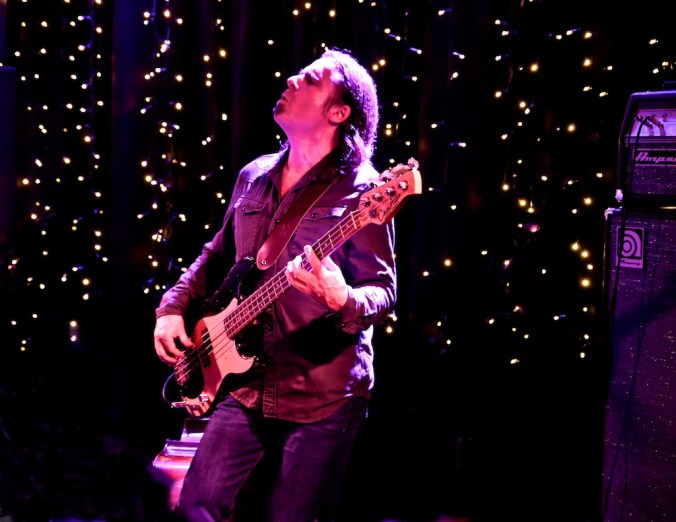
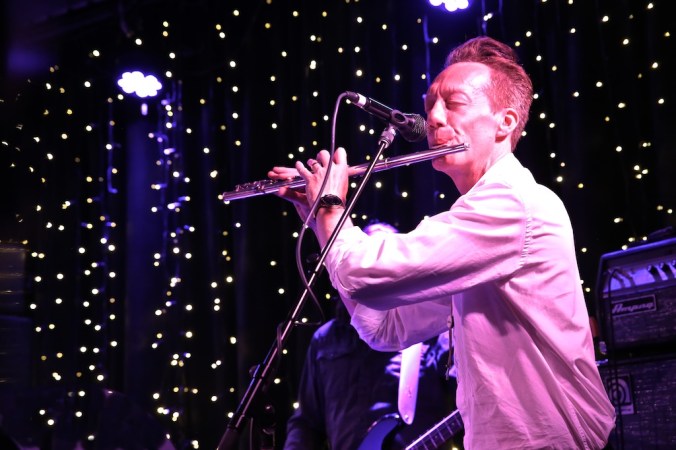

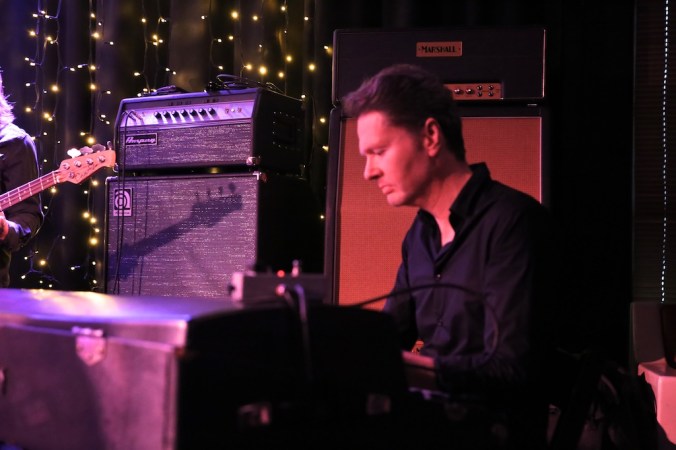 The CJC, sensing an opportunity and knowing that they had only a few days, organised a special one-off Richard Hammond gig and billed it as an all-star event. The programming fell to keys player Kevin Field. Field playing Rhodes, Ron Samsom on drums, Nathan Haines and Roger Manins on saxophones and Marjan on vocals. Hammond alternated between upright bass and electric bass and he wowed us on both instruments. On upright bass, he has a tone to die for; one that only the best bass players locate; on electric bass his lines bite, speaking the language of Jaco or Richard Bona.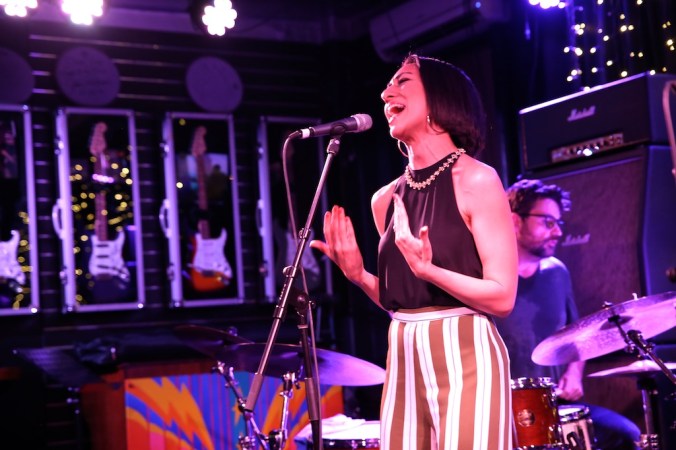
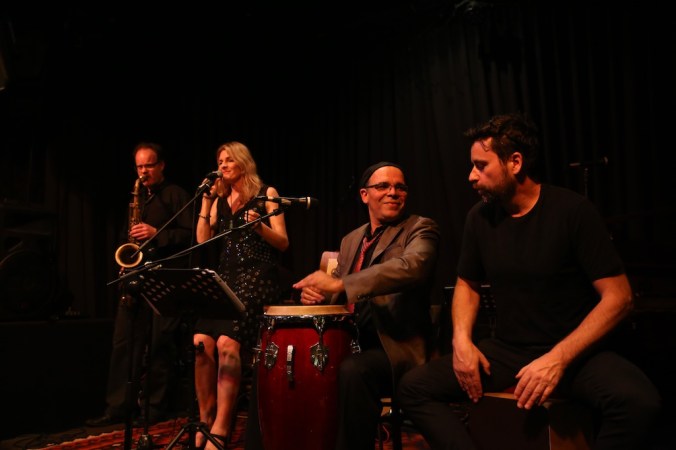 I like South American music and the more I hear, the deeper I am drawn in. A rich and ancient fusion of African, European and Amerindian music, each coast and region nurturing distinct flavours. There are also highly localised variations; all rhythmically complex and all deeply infectious. This week the CJC featured the highly respected Brazilian musician Nanny Assis and New Zealand born vocalist Maggie Gould. Assis was born in Salvador, North Eastern Brazil; a region especially rich in musical traditions and heavily influenced by African rhythms. The coast below Bahia nurtured Tom Jobim, Roberto Menescal and a cohort of like-minded innovators; the creators of the Bossanova (new music) form. In a world where saccharine versions of great music often assail us, it is necessary to return to the source from time to time in order to refresh our ears. Listening to Tom Jobim and Elis Regina on the album ‘Elis & Tom’ – ‘Chovendo Na Roseira’ especially, is a good place to start. The time feel is subtly different from North American versions and the unique rhythmic tensions dance with life. Jobim is long gone but authentic practitioners of the various traditions are still there if we look. Assis is just one of these; a master of rhythm and of the many distinct Bahia styles.
 Gould was a successful photojournalist in an earlier life. When the pressures of that lifestyle became too much, she decided to abandon the frenetic media world and follow her passion instead. Rekindling a youthful dream she became a Jazz vocalist and has followed that path ever since. Eventually, her journey took her to New York where she met Assis and a musical collaboration began. While living in New York Gould has performed with a number of luminaries, notably the pianist John de Martino (who has also recorded with Assis). Gould and Assis have just toured New Zealand, appearing in festivals and clubs throughout the two Islands. They have toured with great musicians and they intend to record soon in Auckland. When they do, the well-known New York-based ex-pat Kiwi bass player Richard Hammond will join them.
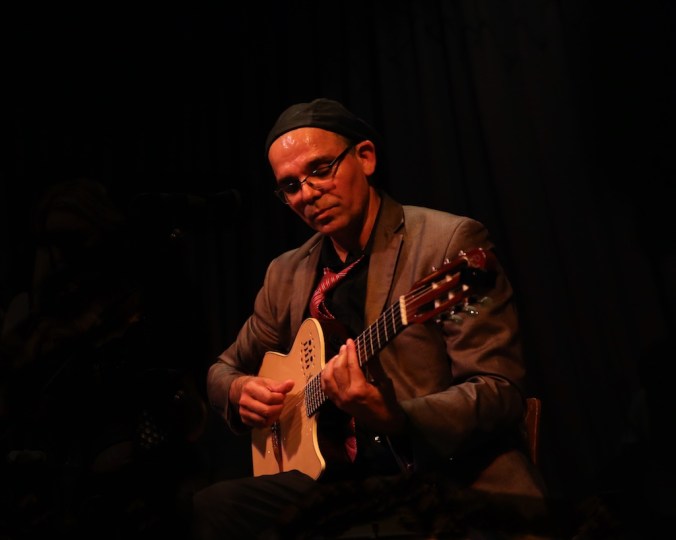 It is said that Latin American music is ‘the other swing music’. That makes for great synergies between Jazz and Latin musicians. It can work well, but only if the musicians have the ears and the courage to submit to the weave. Utilising the considerable skills of pianist Kevin Field, Alex Griffiths on 5 string bass and drummer Ron Samsom (plus for the CJC gig, saxophonist Roger Manins). The mix of Jazz musicians and Brazilian created a spark. Alex Griffiths is obviously well versed in Brazilian rhythms as his lines could not have been better placed. Field has for some time been immersed in this music and he is no stranger to the various clave rhythms either. His understated delicate lines in place of comping held the echoes of Jobim’s own tasteful piano accompaniment. During solo’s he gave both hands full reign in clave rich explorations. Samsom is a talented drummer and throughout the night, he and Assis worked in concert. With Assis on percussion and Samsom on the kit, a wonderfully rich sound scape emerged. At one point Assis beat a cowbell to hold the centre – allowing Samsom additional freedom to move. This was a moment of pure magic.
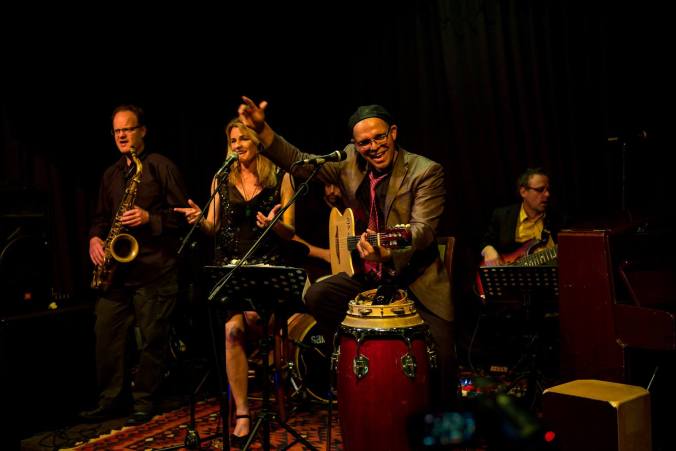 I read once, that a Jazz drummer playing Bossa or Samba is doing three basic things; the right hand replaces the shaker or cowbell, the left hand has the clave pattern and the kick drum follows the bass line. Add in actual congas shakers or cowbell and the interplay has the magnitude of a sonic earthquake.The number that I have posted is ‘O Barquinho’ or ‘My Little Boat(of Love)’ – a tune by Roberto Menescal and sometimes wrongly attributed to Jobim. It is a nice example of the Brazilian Bossa rhythms; rich in subtlety and contrast. It is a long-held tradition in this music to have a female and a male voice – call and response. Gould in English, imparting the wistfulness of the lyrics – Assis in Portuguese – taking me back to the master Joao Gilberto. The Portuguese language is extremely pleasant to the ear, while often masking incredibly sad songs. We didn’t need a dictionary or interpreter on Wednesday as we were transported without them. Nanny Assis’s voice, like his percussion and guitar playing, is pure magic – together the musicians gave us a great night.
 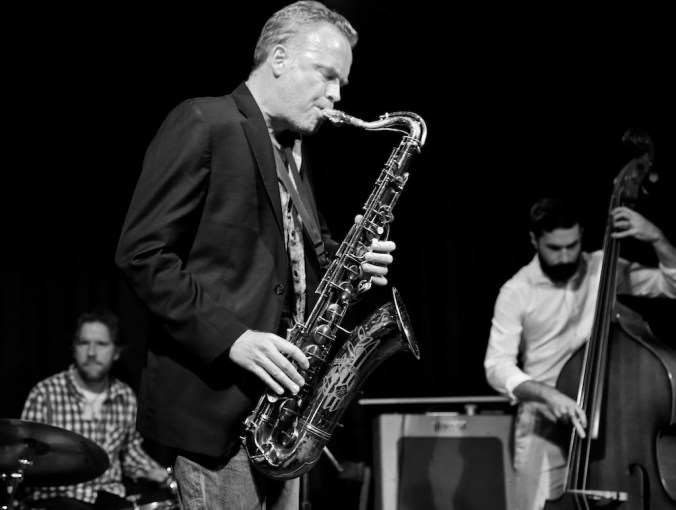 Music listeners split into two main camps; active and passive listeners. Those who listen to improvised music incline towards active, deep-listening. We know that the brains of improvising musicians light up in unusual ways when playing. Much the same applies to listening Jazz audiences. On Wednesday night a saxophone trio played at the Thirsty Dog; no chordal instruments, no lingering over familiar melody lines, a trio which worked within a broader musical architecture, following the changes where ever they led. Nick Hempton is an interesting player and the right person to take us on this journey.
 This sort of gig works well with listening audiences because it invites active participation. On Wednesday, each piece began with a few lines from a familiar standard, often just implied; then, a few bars in, the lines evolved into new melodies based on the changes. As the trio responded the horn led the others to various way-points: places where the music changed course. Fragments of new standards were discovered, unravelled, abandoned. The human brain is hard-wired for pattern recognition, but we love the puzzles that arise from the search. Settling for the familiar is not how we evolved. We evolved by following the risk takers, marvelling at their daring. Following this musical risk-taker, was our delight.
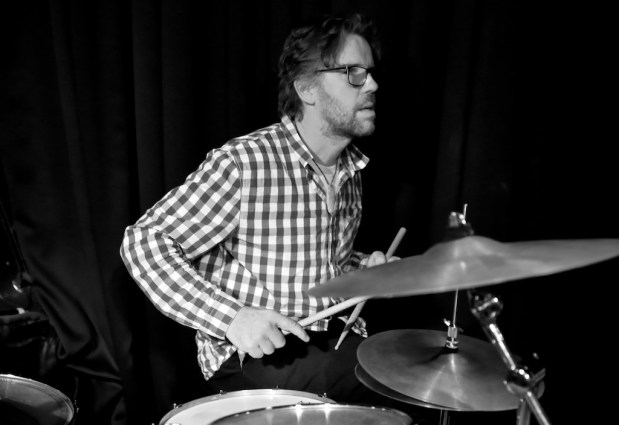 The point was not so much the standards themselves but the opportunities they presented. Appearing and disappearing in medley form was; ‘Night in Tunisia’, ‘Body and Soul’ A Sony Rollins waltz, ‘Exactly Like You’ and ‘Rhythm a Ning’ – these and more were examined. Standing alone was the lovely ballad ‘When I Grow too old to Dream’ (Romberg) and in Hempton’s hands, it was beautifully realised. There was also a great rendition of ‘Just Squeeze Me (don’t tease me)’ (Ellington) – I have posted that. The last trio piece was ‘Poor Butterfly (Hubbell [Puccini])’; followed by Roger Manins joining the trio for two last two numbers. As is often the case when two tenors appear on the same stage, a delightfully upbeat and riotous vibe emerges. Friendly sparring matches like this always go down well.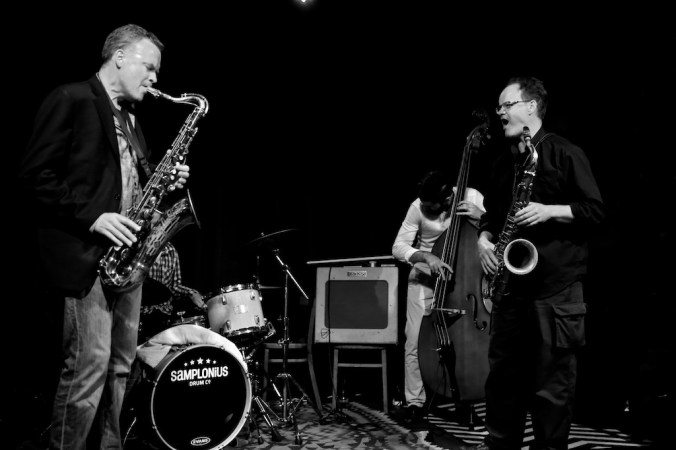
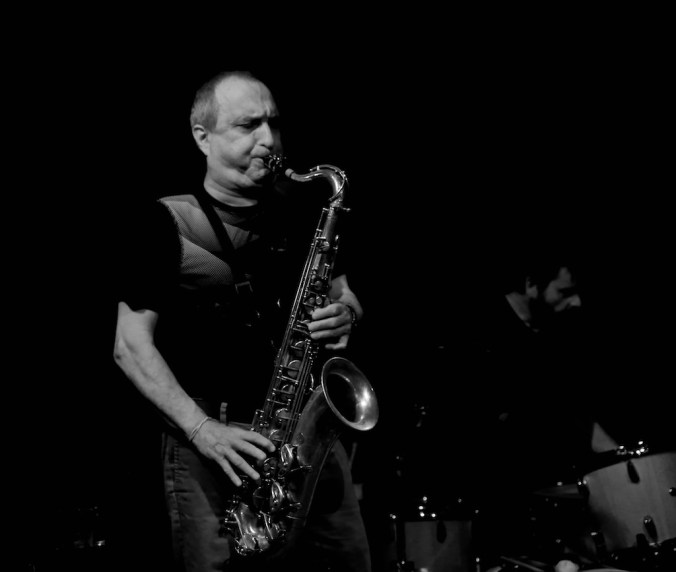 Roger Manins uncoupled the microphone and looked around the club. It was winter outside but you wouldn’t have known it. The windows were steamed up from the heat of a capacity crowd; all eyes were fixed on the stage and the stocky man holding the tenor saxophone. “You know how lucky you are …. right,” Manins asked the audience? A loud cheer went up accompanied by whistles and foot stomping. George Garzone was in town and no one was in any doubt.
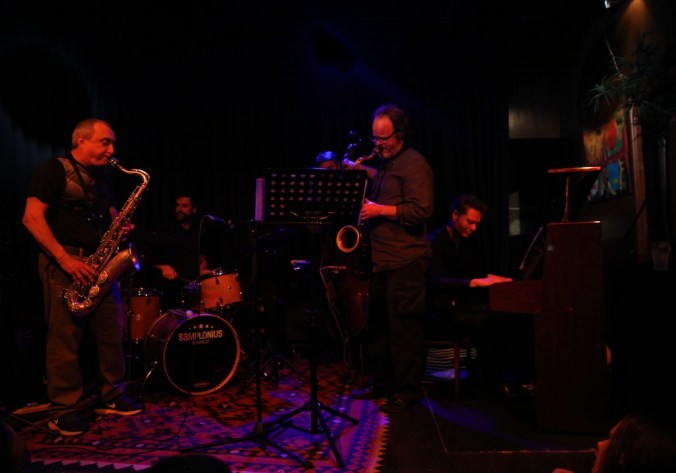 Most of the tunes were in long form and most were Garzone originals. All were perfect for the occasion. As you might expect, the Garzone tunes were springboards for deep improvisation; the heads, however, were memorable and so well-arranged that they stood out. I failed to catch all of the titles because the applause often drowned out the announcements. There was a catchy tune referencing Bourbon Street, A moving tribute to his friend Michael Brecker and a tune titled ‘The Mingus that I know’. They all had pithy stories attached. The two standards were Billy Eckstine’s ‘I want to talk about you’ and a wonderful earthy take on John Coltrane’s ‘Impressions’. I read somewhere that Garzone plays like he talks, in a Bostonian/Calabrian dialect. The cadences and rhythms of speech are part of who we are, it is, therefore, logical that they encompass how musicians express themselves and especially on a vocal instrument like the saxophone.
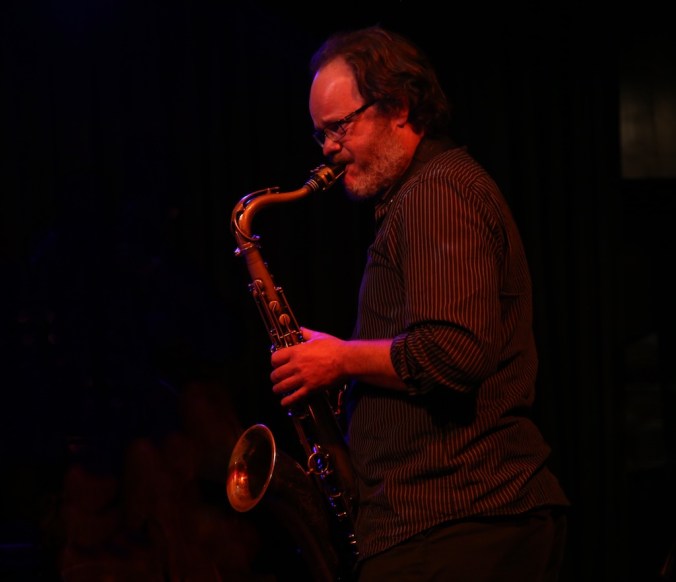 His pick up band were Kevin Field, Ron Samsom, Mostyn Cole and Roger Manins. Like every international who passes through, he heaped praise on the local musicians. Coming from Garzone this really counts. He and Manins go back a way and the synergies between them are evident (the Garzone influence is worldwide and Manins is no exception). Whether playing in unison or in counterpoint, they sounded right together – tenors who knew just how to compliment or when to keep clear. This was a very big sound and when trading fours they cajoled each other as friends might. The rhythm section was energised as well; Cole, Samsom and Field providing rhythmic and harmonic trickery. And at one point, ‘Hey great, I heard some Salsa in that solo’, said Garzone looking in Fields direction.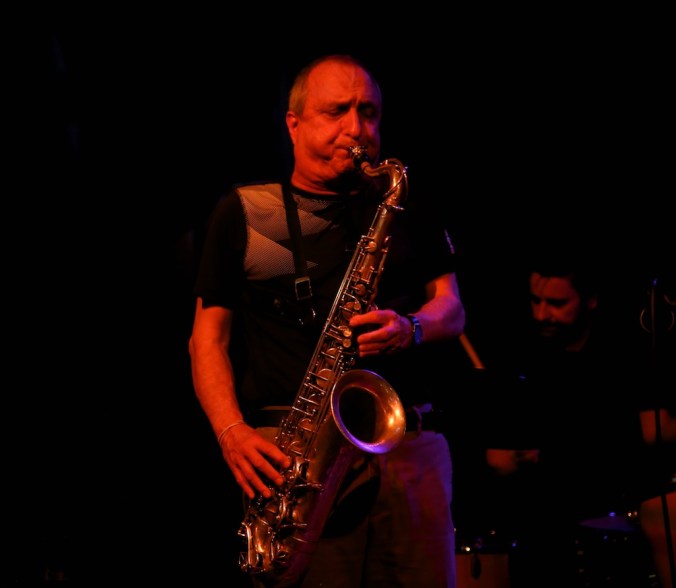
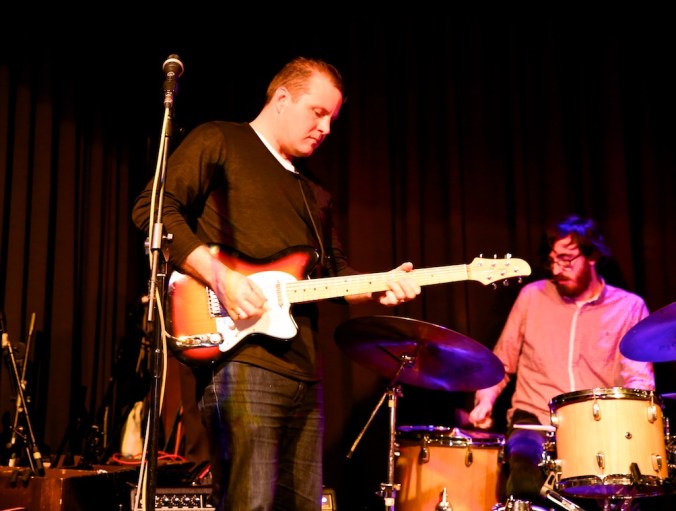 The last time Nick Granville played in Auckland was 2014. A year prior to that he released his Rattle Jazz album ‘Refractions’ here At that time the CJC was located in an old downtown basement venue and that feels like a lifetime ago. Wellington is his home base and Wellington keeps Granville busy. He teaches, he gigs about town, he backs visiting artists, he plays in shows, he records, he tours and he is the featured guitarist in the Rodger Fox Big Band. The last time I saw him play was in Wellington, but that was a few years ago. Much water has passed under the bridge since then and his reputation has meantime grown apace. I have also kept an eye on his teaching clips, and his ongoing evolution as a musician is evident in these. Almost everything Granville plays is coloured by the blues in some way; that is his thing. On a mid-winter night, it is my thing as well.
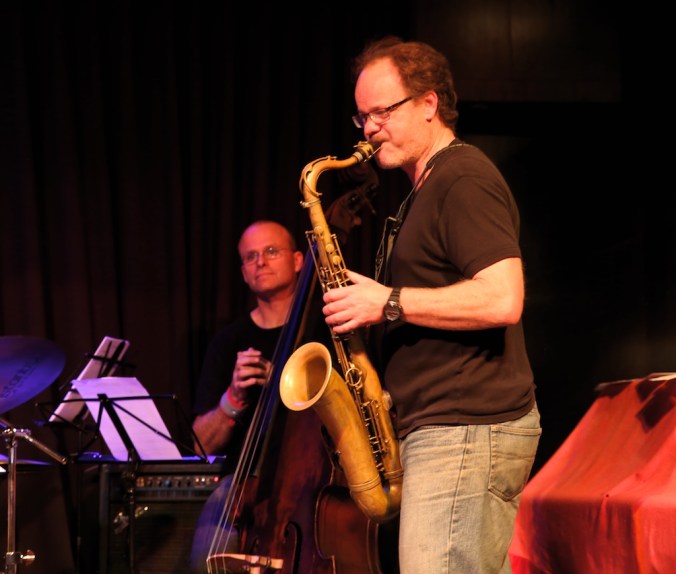 With the exception of ‘Alone Together’ by Schwartz/Dietz, all compositions were Grenville’s. Some were from his Rattle Album, such as Tossed Salad & Scrambled Eggs or Blues For Les, while others were much newer. The compositions were all ear-grabbing and most appeared to reference geographical locations or old TV programs. ‘Funky New Orleans Groove Thing’ was certainly true to label; a rhythm-driven groove piece that generated white heat. With Stephen Thomas on the job, the New Orleans beat never sounded better. Thomas is an exceptional drummer.
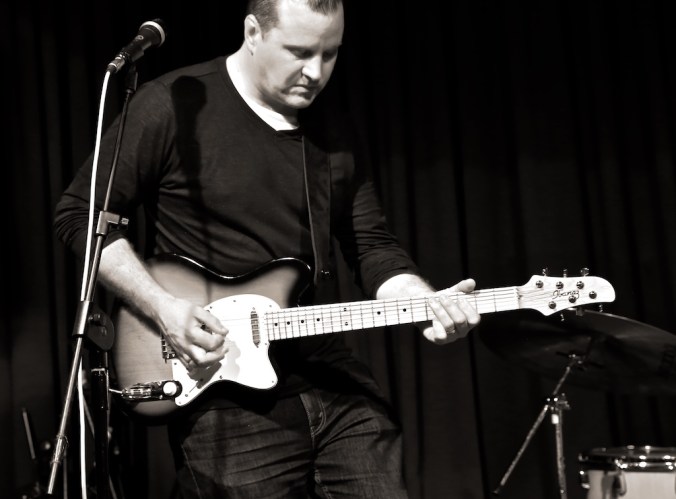 A tune that I have heard Granville play previously is ‘Somewhere You’ve Been’. The title is a clever play on Wayne Shorter’s ‘Footprints’. The tune, although not a contrafact of Footprints is close enough to bring it to mind, It is nicely constructed and a good vehicle for a band to play off. For this gig Granville had wisely engaged old friends; Roger Manins, Oli Holland and Steven Thomas. Together on the bandstand, they represented genuine firepower and everyone dug deep when it came to delivering solos
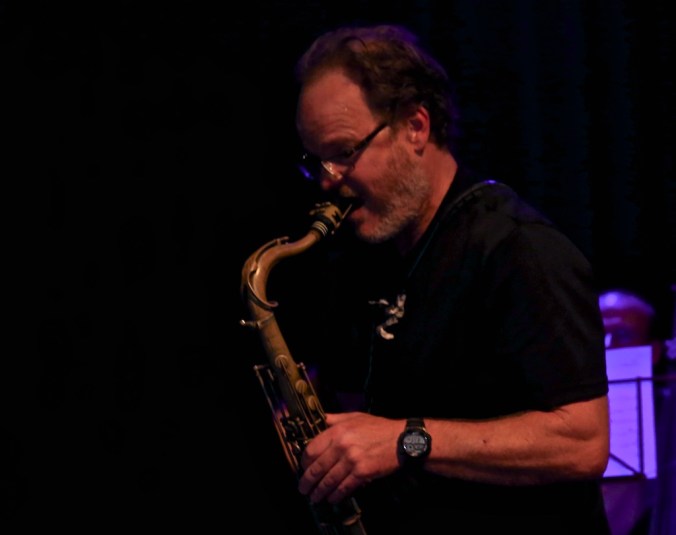 There is never a guarantee that two good acts blended into one will work. This one did. DOG and the various iterations of the Peter Koopman trio are each in their way self-contained; exuding a confidence born out of time spent with familiar musicians. Bands that play together over long periods anticipate and react instinctively. Stepping outside of that circle can be a risk, but that is a large part of what improvised music is about. DOG are a tight unit with quick-fire lines and nimble moves. By adding a guitar, DOG risked crowding their musical space; with Koopman, this did not happen. He is an aware and thoughtful musician. The pairing aided by some well-written charts, a pinch of crazy and good humour. The result was a looser sound, but the joy and respect provided all the glue it needed for the gig to work well.
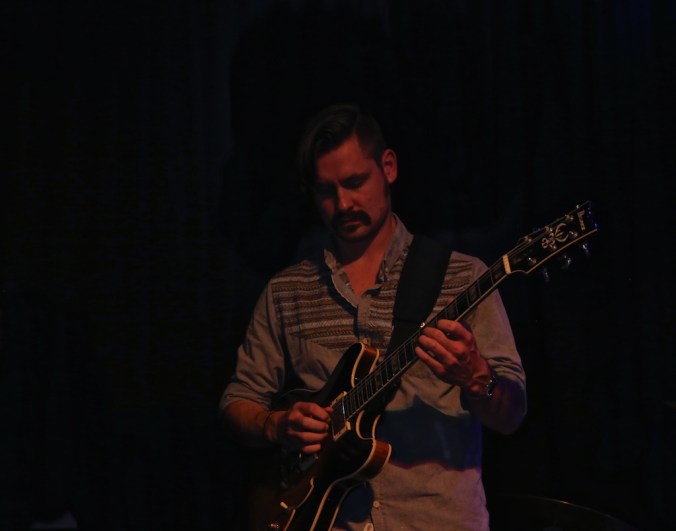 The unison lines and exchanges between guitar, tenor saxophone and Rhodes were just lovely. Kevin Field is always on form and the Rhodes with its chiming clarity was the perfect foil for Koopman and Manins. Field is the complete musician, tasteful, original and with impeccable time feel; Koopman’s guitar benefitting from the well-voiced chords, gently and sparsely comping beneath. Manins also gave a nice solo, and as we have come to expect, he reached for a place beyond the known world. Olivier Holland had a slightly different approach to Koopman’s regular bassist Alduca. Both approaches worked well on Judas Boogie. The interplay between Holland and Samsom was also instructive. As is often the case with good Jazz; the complicated was made to sound easy.
 Around Christmas, I discovered that I could not upload video to ‘YouTube’. I spent a few weeks trying to figure out what was causing the problem and then I made a fatal error – I consulted grown-up experts and that only delayed the problem. I should have asked a 12-year-old because none of the experts had the faintest idea what was occurring. After three months I finally nutted it out for myself, old as I am. FYI – when you upgrade your operating system, the default setting on power-saver puts the machine to sleep half an hour after the last keystroke.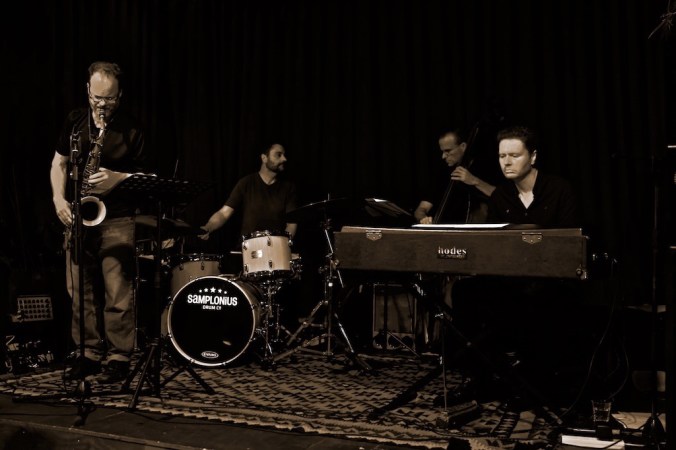
 It was appropriate that Warners ‘A List’ recording artist Kevin Field brought with him local A listers Dixon Nacey, Cam McArthur, Roger Manins and Stephen Thomas. Field has a substantial following in New Zealand and his innovative music attracts musicians and fans alike. Since his last ‘A List’ gig he’d clearly been busy – writing new material and rendering the familiar into something altogether different. Zoot Sims once quipped, “Jazz is a music where you never play the same thing once’. Field certainly exemplifies that tongue in cheek descriptor. Commentators and visiting musicians often remark on his innovative approach to harmony and rhythm. It is as if he has invented a new musical language out of the old. In truth, there are strong elements of related genres like R & B, latin and even disco funk there; under his fingers they become unique vehicles for improvisation.
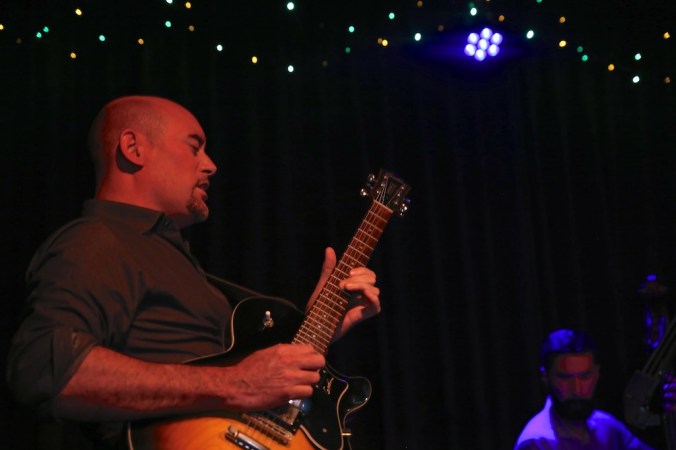 Unlike Janet Jackson, Field never suffers from wardrobe malfunctions. He does however occasionally suffer from equipment malfunctions. I mention it only because his Rhodes had failed him during a previous weeks CJC gig. No one listening comprehended that he had lost some of the middle-register. No one noticed because he re-voiced mid improvisation to work around the problem. I have heard of old timers doing this but seldom modern pianists. Field can effortlessly jump over obstacles and find a sweet spot.
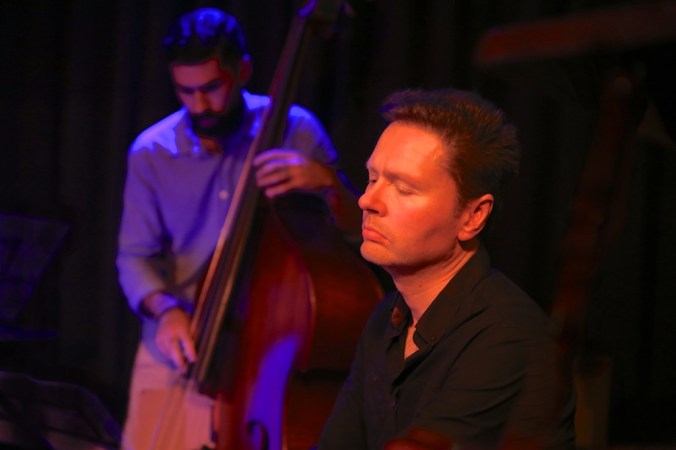 There were old favourites reworked like ‘Game Changer’, ‘Good Friday’ and ‘Left Field’, but the rest were recent compositions. Among the newer numbers were ‘Rain check’ and ‘Acme Music Corporation’ (the latter featuring Manins on soprano – a rare event). Another new number ‘Unconditional love’ was introduced by Field with the following story. ‘There are many types of love in the world and today an unusual example came up in my twitter feed, – ‘Trumps deportation threats make my in-laws fearful. They live at 2b/34 Main St, Phoenix. My Mother in law arrives home from work at 4:30’ “.
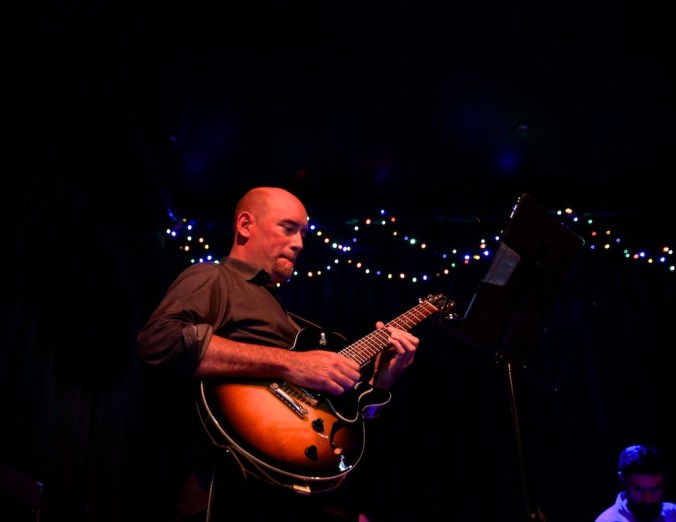 The last tune ‘Home Schooled’ was the best possible number to finish the evening with. Far from being a wind-down number, the musicians reached inside themselves, each giving magnificent performances. Manins back for a second number was on tenor, and he sounded happy to be back on his favourite horn. Nacey was at his best, making his guitar soar, as if he had found an ancient alchemy, a way to condense sunlight into music; the epitome of sonic clarity, invention and virtuosity. McArthur and Thomas each in step and reacting to the challenges. With material like this good musicians can achieve wonders.
  After years traveling the wider Jazz world, Jasmine Lovell-Smith came home; launching her latest album ‘Yellow Red Blue’ at the CJC last Wednesday. The Album features a quintet ‘Towering Poppies’; a group she formed in New York over five years ago. Her New Zealand gig featured locals Roger Manins, Kevin Field, Eamon Edmundson-Wells and Chris O’Connor. After her New York release she garnered a number of favourable reviews and no wonder. This is a lovely album, her compositions and arrangements outstanding, the recording immaculate.
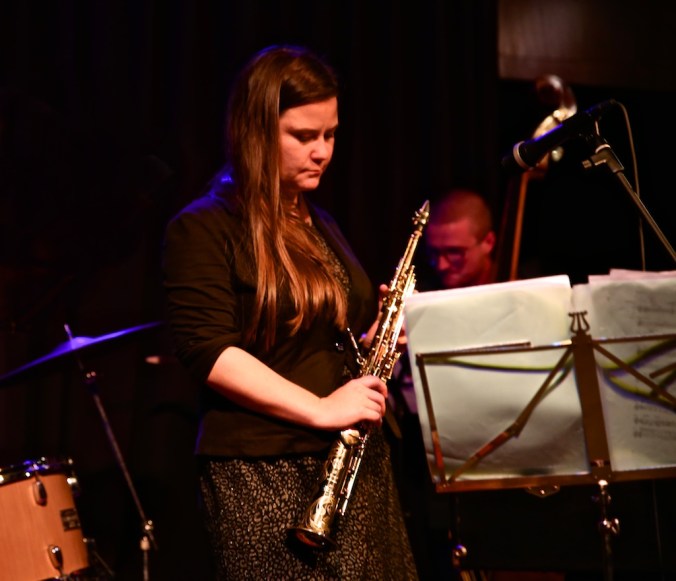 Her soprano sound is warm and enveloping, the cleaner tone of her straight horn nicely counterbalancing with the woody earthiness of the bass clarinet, the well constructed charts coming into their own when these delightful interactions occur. The rich textures are never overwhelming, even when strings enter the mix. This is chamber Jazz at it’s best, engaging the listener without resorting to cliché.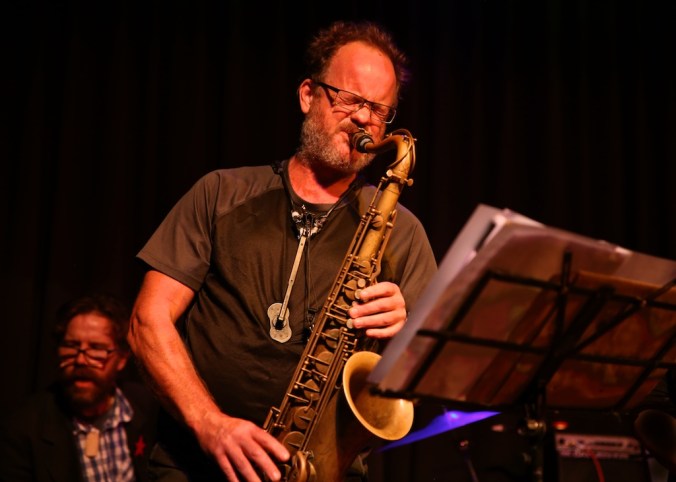

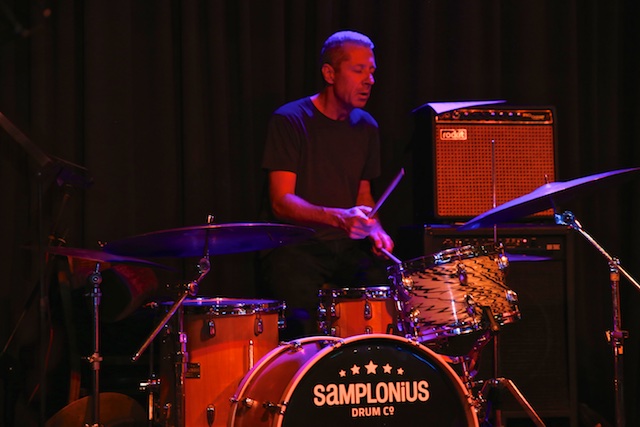 The Australian and New Zealand improvising scenes are a homogenous entity and long may it remain so. If the traffic sometimes appears one-sided, that is a natural consequence of our artists moving to the bigger scene; the exchange benefiting both. Many of those who jump the Tasman do well and they always return for gigs, tours, or sometimes to conduct workshops. Without these exchanges with Australia and beyond, our improvised music scene would be the poorer. This traffic brings us a number of talented Australians, musicians who probably would not have the opportunity to come otherwise; those collegial connections count for something. Drummer Simon Barker is one of those.
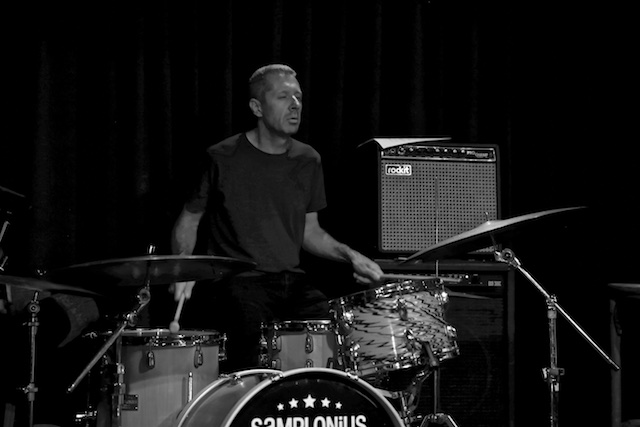 Barker was in Auckland early last year with Carl Dewhurst. Together they are the amazing ‘Showa44’, a duo which I reviewed during their visit. Anyone who follows Barker will know how versatile he is, and above all the musical integrity and originality he brings to whatever situation he is in. Barney McAll’s award-winning ‘Mooroolbark’ and ‘Showa44’ are very different propositions but Barker sits comfortably at the heart of both; of equal importance is his teaching. While in Auckland, he held a workshop at the Auckland University Jazz School and undertook three days of intensive one-on-one teaching with students (and established musicians). Students I spoke to said that they valued the opportunity enormously.
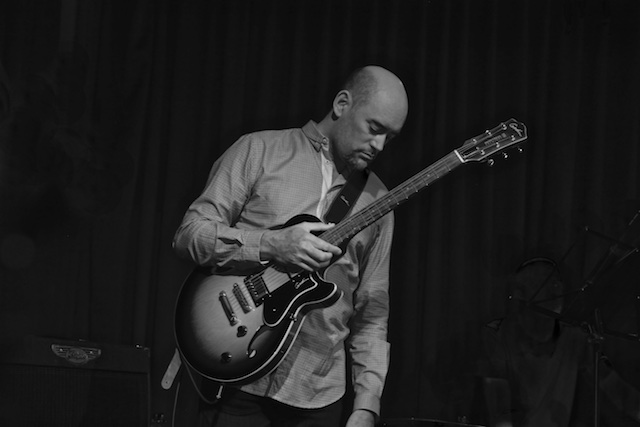 The first set featured Barker solo. It is not often that a drummer performs solo and to pull that off requires something beyond mere drum chops. Barker brings something that is uniquely himself to the kit, and he is able to communicate a story, not just a beat. He began with a tribute to an obscure central North Island Polynesian drummer (sadly the name alludes me). He has never met this person but saw a clip of him performing in the traditional Polynesian, polyrhythmic style. He had a traditional wooden drum mounted beside his big tom and working between this and his kit, he created intricate cross rhythms, worthy of a row of skilled drummers.
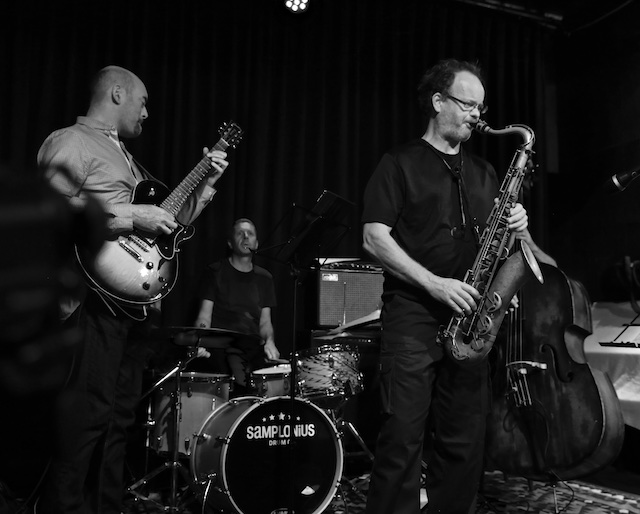 His second and shorter piece he described as a chant and it was. The hypnotic intensity carried the audience to the last beat; just as the first piece had. He is not only a storyteller on his instrument but he is capable of creating an orchestral sound. The audience loved it. The second set was something of an impromptu affair but none the less enjoyable for that. Also on stage for that set was Dixon Nacey, Olivier Holland, and Roger Manins. So busy was Barker’s schedule that the quartet had not found time to rehearse. Even the set list was once settled on the bandstand.
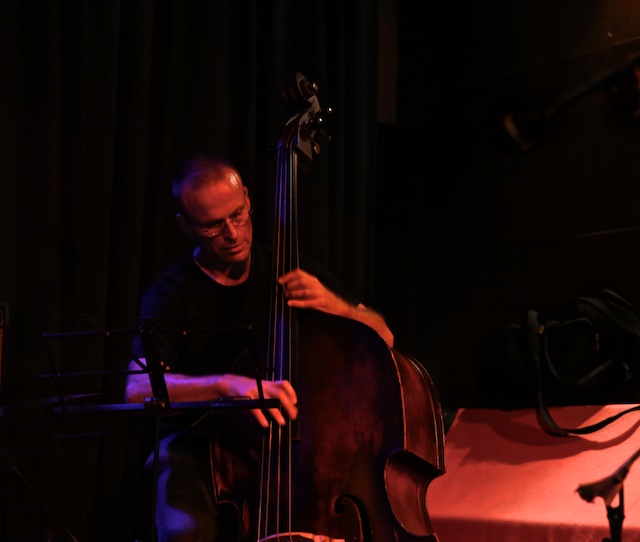 They began with ‘All the things you are’ and turned it on its head. The introduction performed by Holland and Barker alone was a blast. Drummer and bass exchanging phrases, challenging each other, leavening the exchanges with humour. When Nacey and Manins came in they exposed the bones of the tune. It was well done and in spite of its raw originality, the echoes of the melody hung in the air as implied offerings. The remainder of the set were original compositions and a rendition of the complex but ever popular Oleo (Rollins). Keep visiting Australians, we value you.
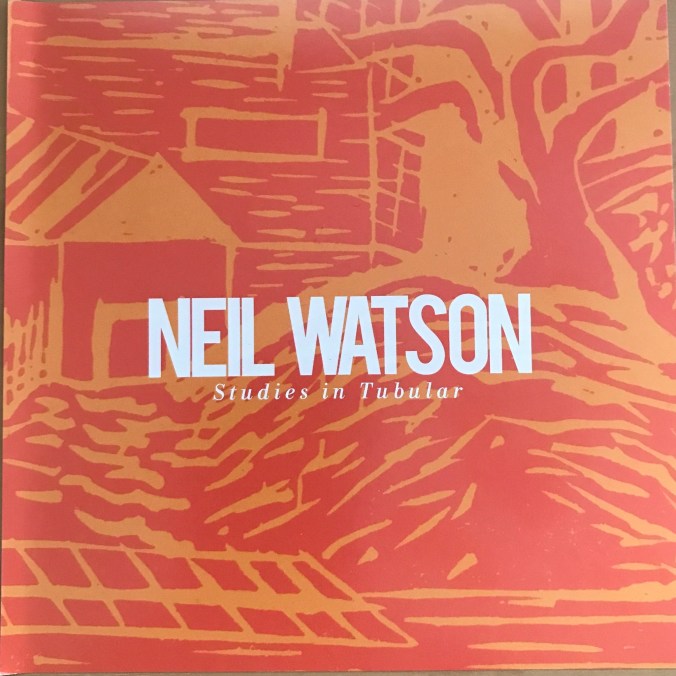 A review copy of the album ‘Studies in Tubular’ arrived in my letterbox a few days ago and it is vintage Neil Watson. It was recorded in 2011 and left to mature like a fine wine; it was worth the wait. I haven’t asked Watson why he titled the album ‘Studies In Tubular’, but the title feels appropriate. My first thought was that it might reference Mike Oldfield’s trippy minimalist classic ‘Tubular Bells’, and then I recalled that the word ‘tubular’ was once surfer slang for ‘exceptionally good’. Whatever the reason, this is exceptionally good music. The surf reference is not such a great stretch either when you listen carefully. This is deliciously eclectic music and although it touches on many sources, it is an original and highly satisfying offering. Referencing many things but never beholden to any of them.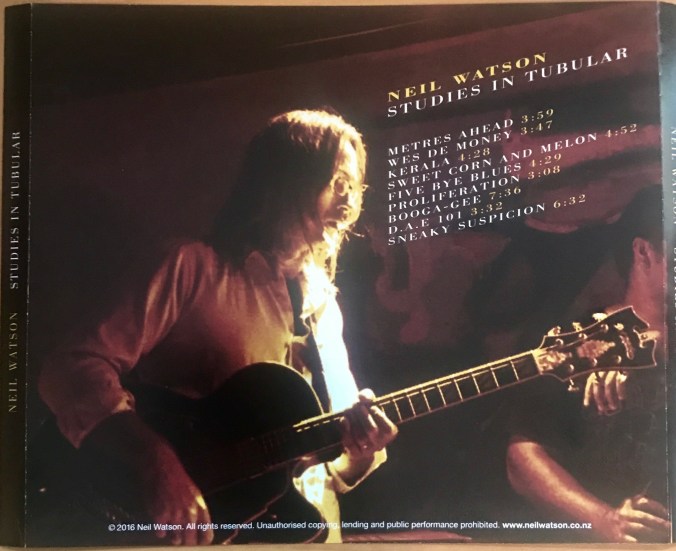
 As another DOG night approached I could feel the excitement in my bones. I had followed their tracks from the groups inception, enjoying every moment along the trail. I was at their first gig in February 2013 and it amazed me then just how rounded and complete they were. If you search for the ‘(Dr) Dog’ post in this blog site you will find a video from that gig. Man that blew me away. I just couldn’t get the tunes and the excitement of that night out of my head. Later I used a cut ‘Dideldideldei’ (Holland) as the signature for my YouTube site. I also sent the cut to a Jazz DJ friend Eddie B in LA and he played it on his show. Unsurprisingly people phoned in immediately wanting to know, “who were those amazing cats”? Before long the group decided to record – everyone who heard them wanted more. DOG seemed to encapsulate everything that was good and exciting about the local scene – DOG was, and still is, something special.
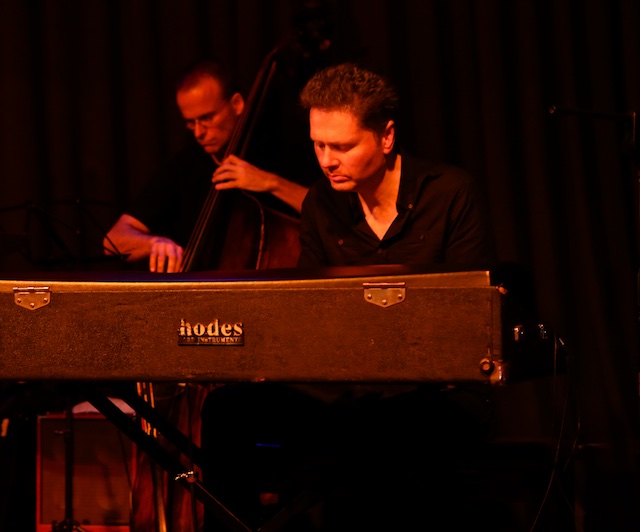 There are so many aspects to this group that it is hard enumerate them all; of course there are the outrageous dog jokes, the brilliant compositions from each band member, the powerful stage presence, but it is something else that excites me the most. This is a band that could gig anywhere in the world and we could hold our heads up, knowing that they would do us proud, tell our story. I felt excited when they were nominated for ‘album of the year’ and as pleased as a dog with two tails when they won the ‘Jazz Tui’. Now it is rumoured that a new DOG album is on the way. I can’t wait.
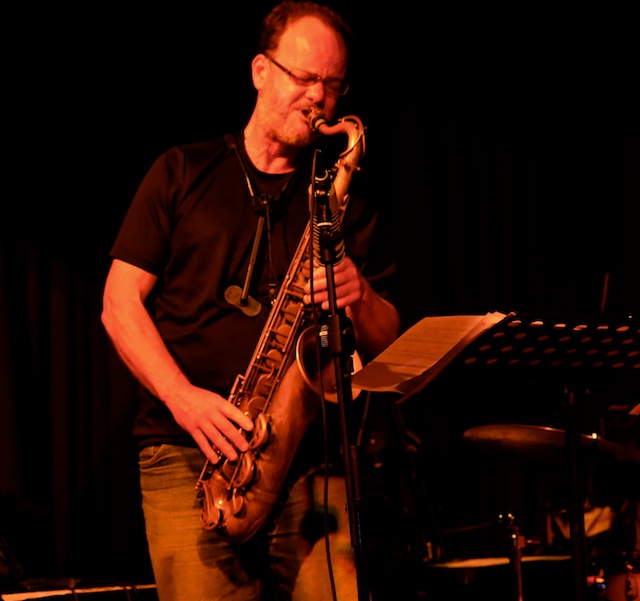 Throughout the sets were a scattering of familiar DOG compositions – plus a few new ones (like ‘Merde’ by Samsom and Hollands ‘Shceibenwischer’). All of the tunes sounded fresh and somehow different, perhaps because Kevin Field was playing a Rhodes and not a piano. I love the Rhodes in all its antique glory and in Field’s hands it is especially wonderful. It cut through the room like crystal. Hearing the familiar tunes like ‘Peter the Magnificent’ (Manins), ‘Icebreaker’ (Field) and ‘Sounds like Orange’ was like meeting old friends. The last track of the evening was the familiar ‘Dideldideldei'(Holland). DOG ripped into it with the usual abandon, leaving us shaking our heads in disbelief and grinning like Cheshire cats.
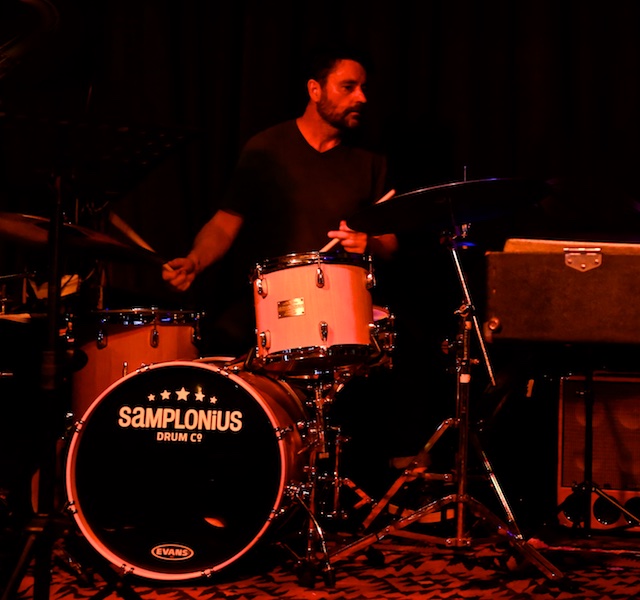 The Thirsty Dog works well as a venue, having good acoustics, good sight-lines and a sizeable bandstand. They also serve snack food and they are most welcoming. The first DOG album is available at
 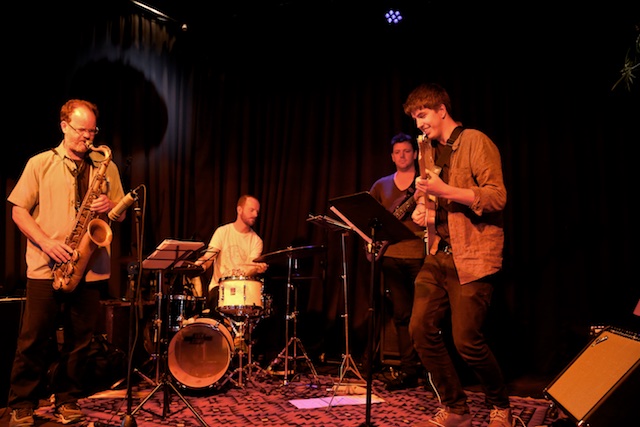 Against a background of complacency in regard to the ever declining biodiversity on the planet, one band is determined to raise our awareness. Those who have encountered the quartet on prior occasions will know the back story, connect the dots. GRG67 arose out of an impulse of crustacean empathy, an emotion usually confined to marine biologists and not Jazz musicians. However, once you grasp the fact that the band’s founder is Roger Manins, the rest falls into place. A sustainable fisher and co-manager of a small menagerie, Manins could best be described as the David Attenborough of the tenor saxophone. His world is strewn with animals and that’s the way he prefers it.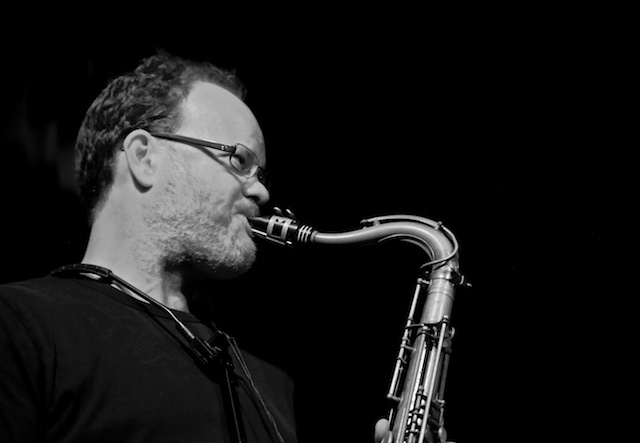
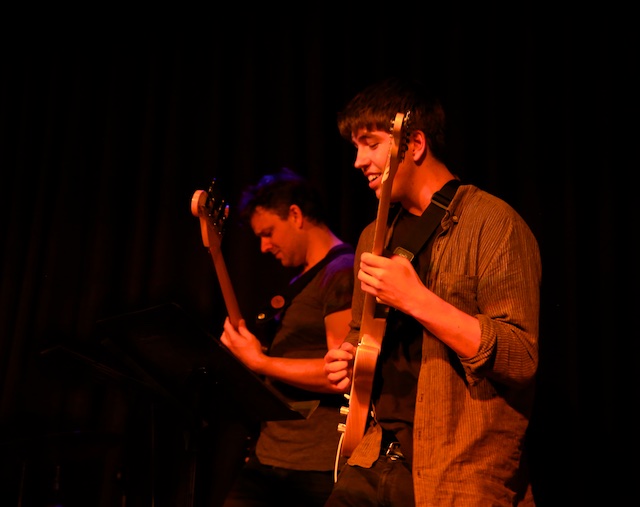 Each tune title was accompanied by a personal story or zoological insight; each bird was treated with deep respect. With titles like ‘chook empathy’, ‘chook 40’, ‘ginger chook’, ‘dark chook sin’ we were afforded some rare insights into the avian world. ‘Chook 40’ was not about the 40th chook as you might suppose. It opened our eyes to the fact that chooks have one more chromosome than humans. During that particular tune you could really sense that extra chromosome. ‘Dark chook sin’ was an invitation to anthropomorphism. What would a chook sin look like? Manins felt that Mallard ducks were more likely to sin than a chook (anyone living near ducks who has a deck will have a view on this).
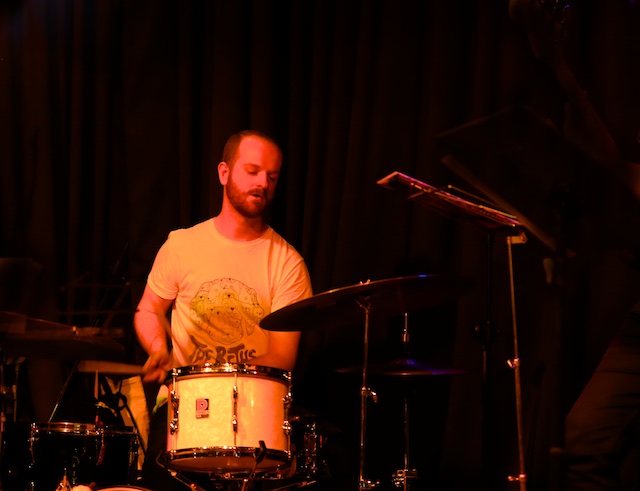 The quartet played with wild enthusiasm in both sets and the good humour of the evening was infectious. Given the subject matter it was only fitting that the gig took place at the Thirsty Dog (dogs are also a recurring theme with Manins). The venue was congenial and the acoustics good. What more could you want on the last night of Spring. This band is a rallying cry, reminding us that in this troubled world we shouldn’t take the good things for granted. At a time when we are buffeted by the ill winds of international politics, the arts matter more than ever. New Zealand Jazz rewards us in so many ways and the diversity of improvised music in our city is a treasure. You get good musicianship and fun combined – and if you’re lucky a musical insight into the natural world around us.
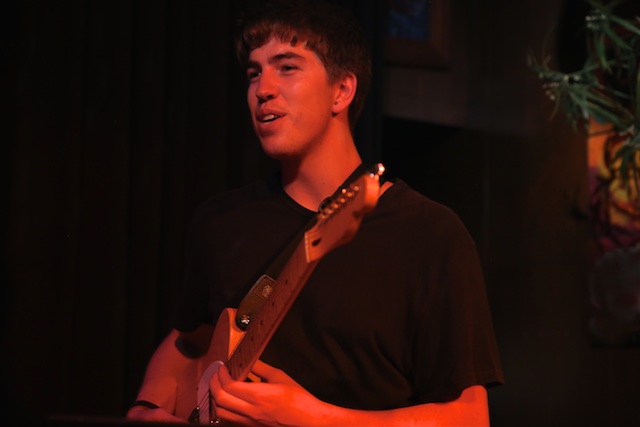 I have posted the bands signature tune GRG67 as it simply crackled (cackled) with life (and it broke a previous speed record). These guys are fine musicians and GRG67 was never better than on this night. These guys sizzle.
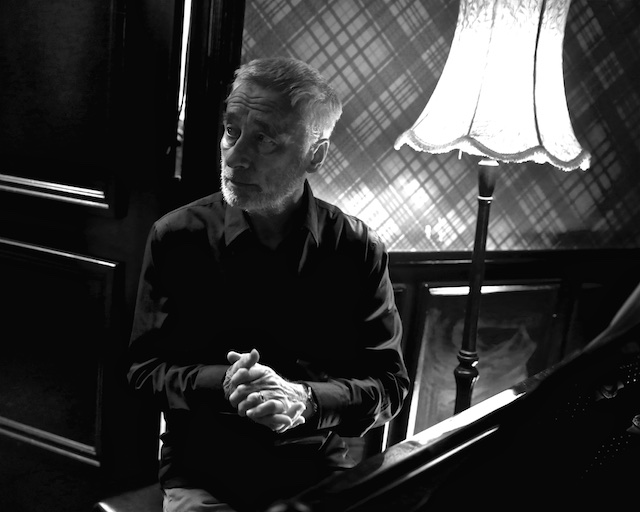 Au revoir is more than a simple good-bye. The fuller meaning is ‘until we meet again’. Jazz pianist, broadcaster and educator Phil Broadhurst is about to move to Paris, where he will reside for a few years (along with his partner vocalist/pianist Julie Mason). He assures us that he will return and it is not unreasonable to expect him to arrive back with new compositions and new projects to showcase. A Francophile (and francophone), Broadhurst has long been influenced by the writers and musicians of France. His last three albums ‘The dedication trilogy’ all contain strong references to that country. Wednesdays gig was centred on his recent output, but with new tunes and a surprise or two thrown in.
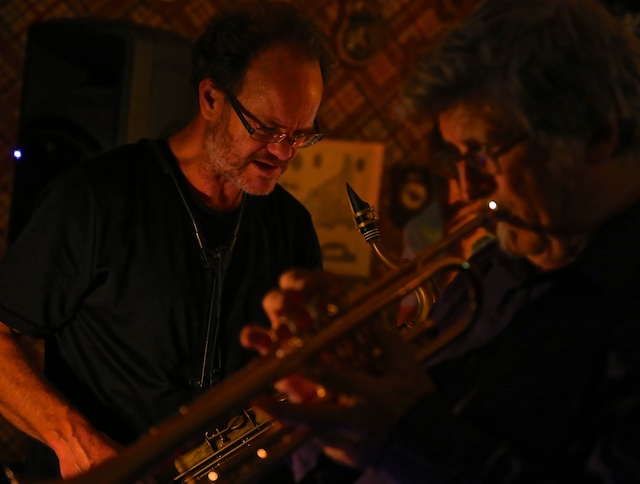 Broadhurst is an institution on the New Zealand Jazz scene and it will feel strange with him absent. The strangeness on this particular Wednesday night was compounded by the impending American election result. An election dominated by bizarre outbursts of racism, belligerence, stupidity and misogyny. As the first number of the evening progressed, everyone relaxed; Broadhurst’s melodicism a balm for what ailed us. The tune was ‘Orange’ (a French commune in the Alps/Cote d’Azur region). Half way through the piece everyone’s mobiles lit up. I tried to ignore mine but the vibrating and flashing increased. I reached to shut it off and spotted the words – Trump wins US election. The ‘four horsemen of the apocalypse’ had just entered the room via electronic media. The tune ‘Orange’ is particularly beautiful (and I hope Broadhurst will forgive me for this association), but on this night, the title was also oddly appropriate. An orange gargoyle was about to release the furies upon a surprised world.
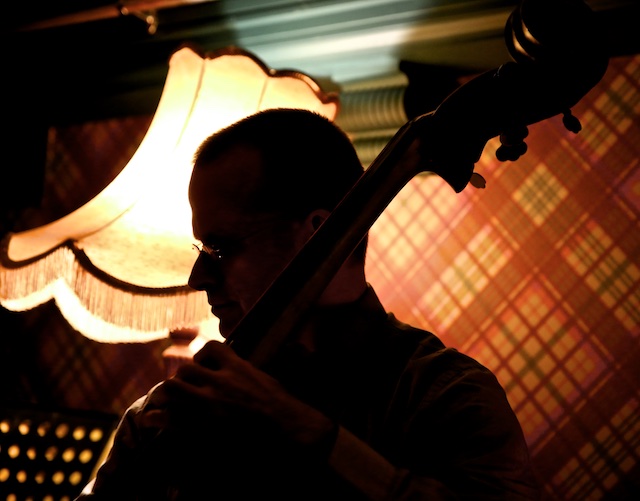 Accompanying Broadhurst were his regular quintet, Roger Manins (tenor), Mike Booth (trumpet), Oli Holland (bass) and Cam Sangster (drums – and with special guest Julie Mason (vocals). Broadhurst, and his various lineups have received numerous accolades. In recent years there have been nominations and awards; most recently the prestigious ‘Tui’ at the 2016 New Zealand Jazz Awards.
  Anyone who follows NZ Jazz will be familiar with many of the tunes played on Wednesday; ‘Orange’, ‘Precious Metal’, ‘Loping’ etc. The nicest surprise of the evening was hearing a Frank Foster tune ‘Simone’ (absolutely nailed by Julie Mason). A fine tribute to Nina Simone, and appropriate to the night, given Simone’s views on the lamentable state of race relations in America. This unit is supremely polished and I highly recommend that you purchase the recent albums if you haven’t already done so. They are all still available from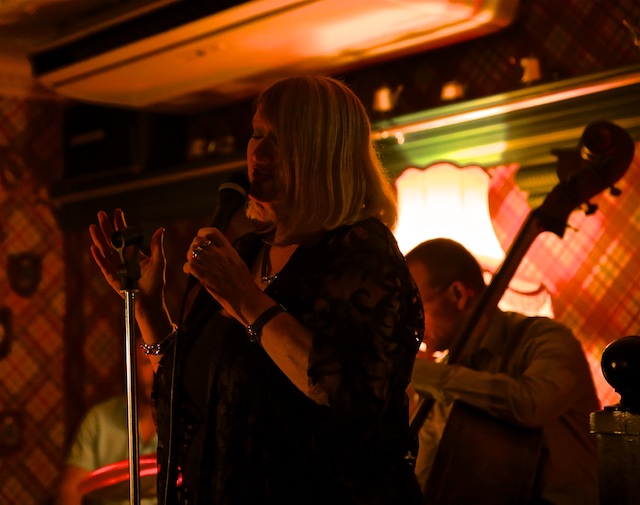
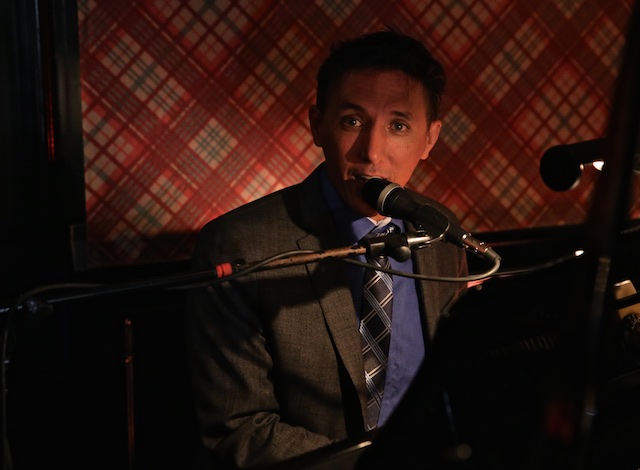 Dan Bolton is an Australian born, New York based musician, at present touring New Zealand. His first show was at the CJC (Creative Jazz Club) in Auckland. While singer, songwriters who accompany themselves on piano, are a firmly established tradition in Jazz, we see them on tour very rarely. Many Jazz vocalists (like Ella Fitzgerald) could accompany themselves well, but few choose to do so. A number of notable musicians mastered this skill, notably Nat Cole, Ray Charles, and Shirley Horn. Doing two jobs simultaneously is always harder than doing one and especially where vocals and piano are concerned. The energies and postures require careful coordination and I suspect that this is harder than accompanying yourself on guitar.
 Bolton is unusual in that he composes tunes which feel modern, but in a style reminiscent of the Great American Songbook; many of his tunes, are not dissimilar from those which came out of Tin Pan Alley, having the vibe of Irving Berlin or Cole Porter. The melodies are catchy in a time honoured way and the lyrics often biting; sometimes capturing our post-millennial angst. Many of Bolton’s tunes centre on the age-old themes of love and loss, others sarcastically critique modern American life. All maintain their sense of originality, in spite of the above comparisons.
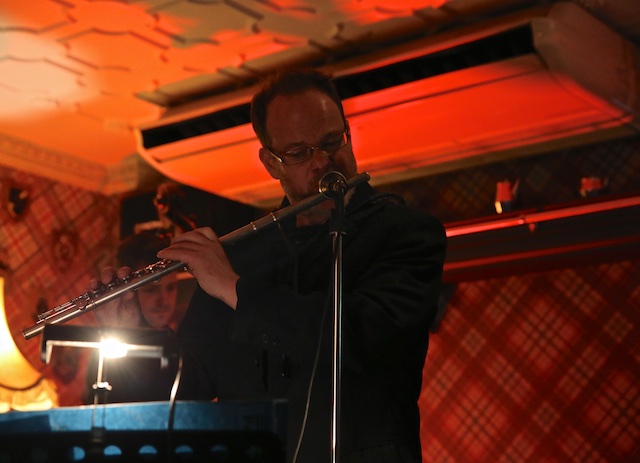 Travelling with Bolton is the perennially popular drummer Mark Lockett. Lockett, like Bolton, lives in New York, but for several months of each year, he travels as band-leader, (or as hired gun as in this case). Lockett was born in New Zealand and he always gets a welcome reception when he makes it back. Watch out on gig noticeboards for him. He has another tour coming up shortly and this time with an organ trio. On tenor saxophone and flute was Auckland’s Roger Manins, his swoon-worthy ballad chops manifesting in their full glory. Mostyn Cole featured on upright bass, a regular at the CJC and an able musician. We heard some tantalising snippets of arco bass from him – more of that, please.
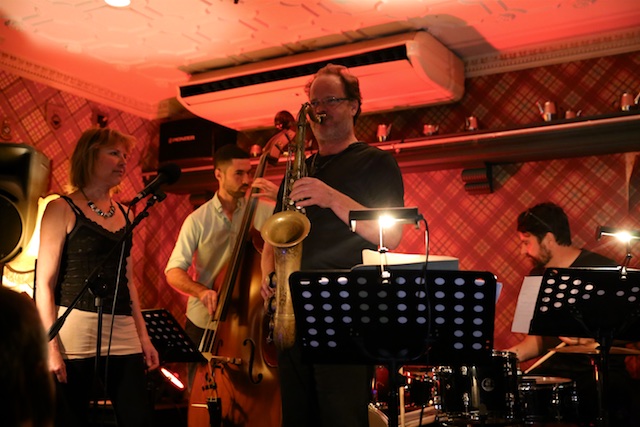 The Joni Mitchell/ Charles Mingus project is always ripe for reevaluation and I’m glad that Caro Manins was the one to explore it again. The connection between Joni and Jazz experimentalism runs deep. Rolling Stone Magazine figured it out early on, describing her as a ‘Jazz savvy experimentalist’. While the connection is obvious in her 1979 ‘Mingus’ album the move toward a freer music and towards harmonic and rhythmic complexity began earlier in the mid 70’s. Initially coming up through the American folk tradition, she gradually embraced a different style. She would later say, “Anyone could have written my earlier music, but Hejira (and later albums) could only have come from me”. From the 70’s on, she utilised her own guitar tunings and often incorporated pedal point, chromaticism, and modality in her compositions. If you look at her later musical collaborations, names like Jaco Pastorius, Herbie Hancock, and Wayne Shorter stand out.
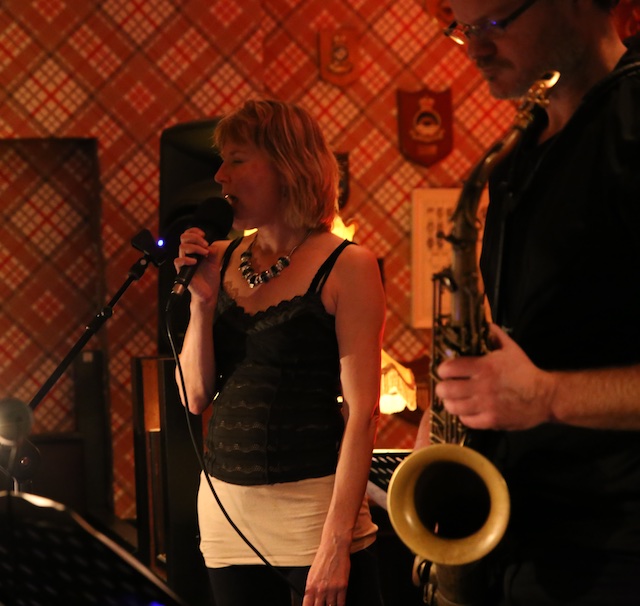 To her amazement at the time, a dying Charles Mingus asked Joni to call by. He told her that he had written a number of songs for her. Mingus passed before the completion of her project, but he heard all of the tunes except ‘God must be a Bogey Man’. Her ‘Mingus’ album followed soon after. “It was as if I had been standing by a river – one toe in the water. Charles came along and pushed me in – sink or swim”.
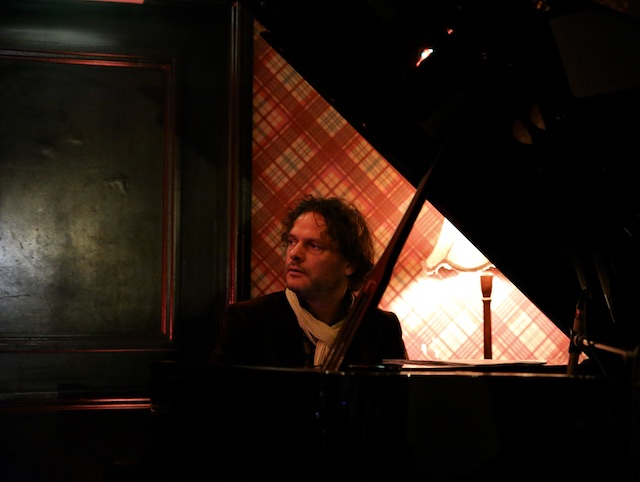 The project deserved a good lineup and it got one. Caro Manins, Roger Manins, Jonathan Crayford, Cameron McArthur and Ron Samsom. Crayford was especially interesting on this gig. His abstract explorative adventuring replaced by rich traditional voicings – his solos a history lesson; from locked hands chord-work to impressionistic delicacy. All of the musicians were respectful of Joni’s body of work and they understood that the best way to honour her legacy was by interpreting her work honestly and imaginatively. Not every tune came from Joni’s ‘Mingus’ album but all followed the Joni/Mingus/Jazz theme.
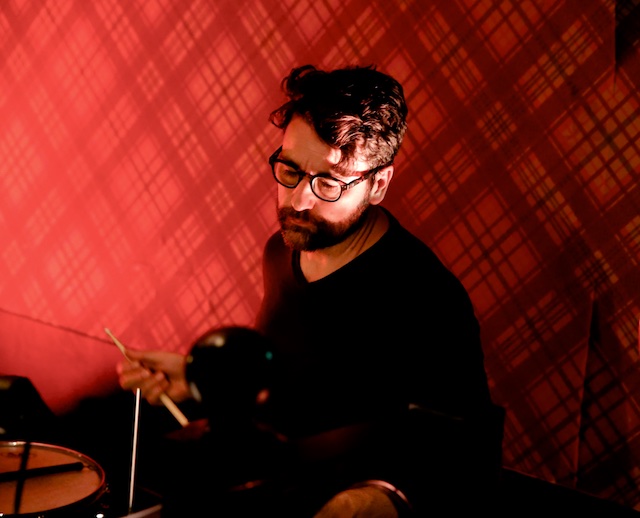 The gig was very well attended (no surprise there) and the audience enthusiastic. This was a CJC (Creative Jazz Club) event and it took place at the Albion Hotel on 29th June 2016. Caro Manins (leader, arranger, vocals), Jonathan Crayford (piano), Roger Manins (tenor saxophone), Cameron McArthur (Bass), Ron Samsom (drums, percussion).
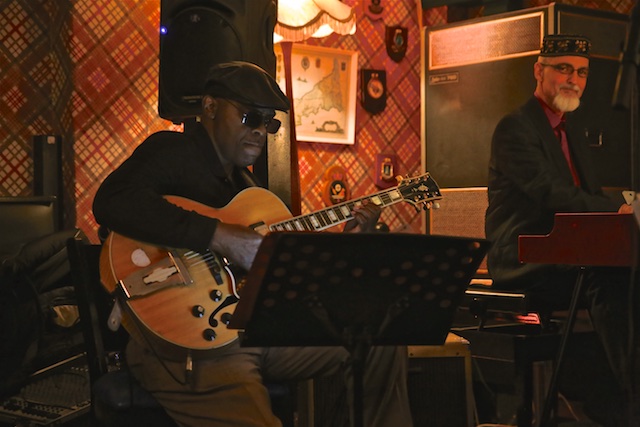 Auckland spoils us with long runs of clement weather, but when winter hits we suffer. Having effectively avoided any meaningful autumn we suddenly plunged into a week of cold wet days. There was no better time for the Michel Benebig/Carl Lockett band to arrive. As we grooved to the music, a warmth flooded our bodies within minutes. Nothing invokes warmth like a well oiled B3 groove unit and the Benebig/Locket band is as good as it gets. The icing on the cake was seeing Shem with them. A singer with incredible modulation skills and perfect pitch, able to convey the nuances of emotion with a casual glance or a single note. The way she moves from the upper register to the midrange, silken.
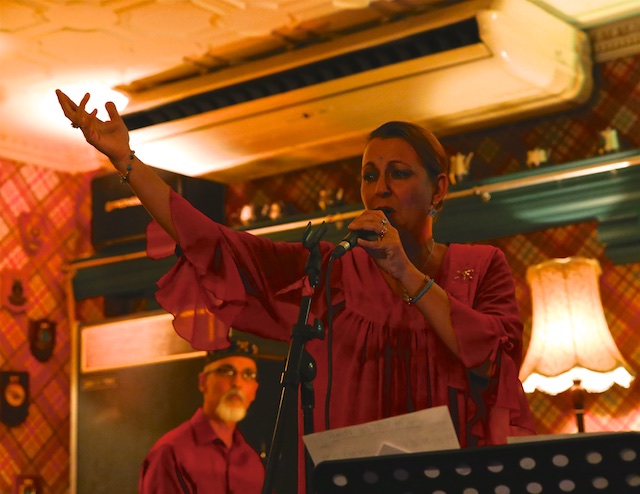 Michel Benebig has been travelling to New Zealand for years, and his connection with the principals of the UoA Jazz school has been a boon for us. He generally brings his partner Shem with him, but last time work commitments in her native New Caledonia kept her at home. Michel just gets better and better and the way his pedal work and hands create contrasts and tension defies belief. It is therefore not surprising that Michel attracts top rated guitarists or saxophonists to his bands. The best of our local groove guitarists have often featured and a growing number of stand-out American artists (see earlier posts on this band). Of these, the New York guitarist Carl Locket is of particular note. I first heard Lockett in San Francisco four years ago and he mesmerised me with his deep bluesy lines and time feel. Although comfortable in a number of genres, he is the ideal choice for an organ/guitar groove unit.
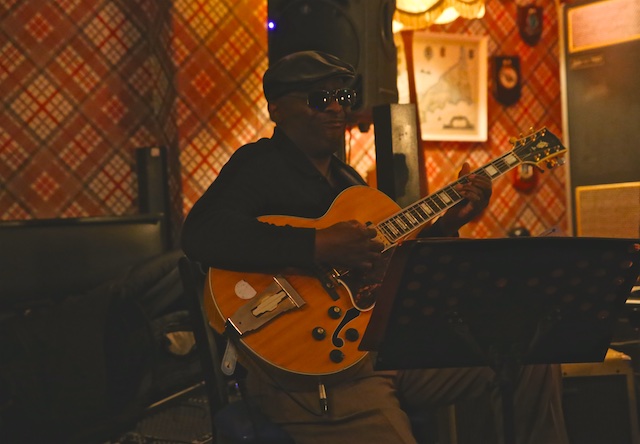 The band played material from their recent album (mostly Benebig’s compositions) and a few standards. There were also compositions by Shem Benebig. Their approach to arranging standards is appealing – numbers like Johnny Mandel’s ‘Suicide is Painless’ are transformed into groove excellence. We heard that number performed at the band’s last visit and the audience loved to hear it repeated. This visit, we heard a terrific interpretation of ‘Angel Eyes’ (Matt Dennis). I confess that this is one of my favourite standards (Ella regarded it as her favourite ballad). Anita O’day performed it beautifully as did Frank Sinatra and Nat Cole. The only groove version I can recall is the relatively unknown Gene Ammons cut (a bonus number added in later years to his ‘Boss Tenor’ album with organist Johnny ‘Hammond’ Smith). That version took the tune at a very slow pace, so slow in fact that you initially wondered if Ammons had nodded off before he came in. It was wonderful for all that (who can resist Ammons).
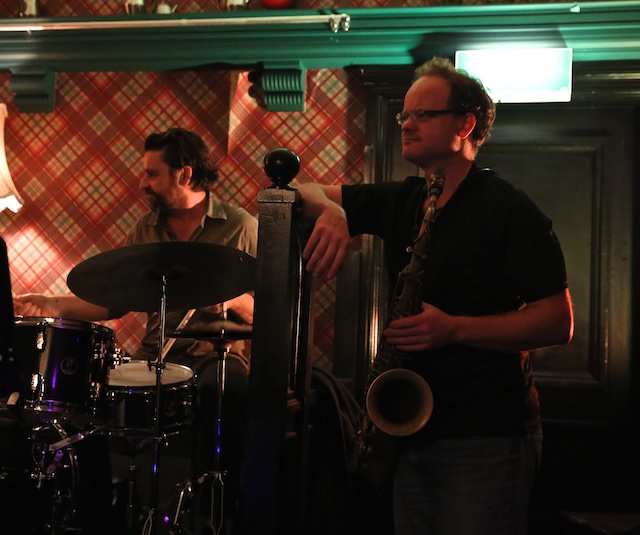 The band began the tune at a slow pace (but not as slow as Ammons), then once through, picking up the tempo, the band settling into a deeper groove, drummer Samsom and the guitarist really locking together, giving the Benebig’s room to create magic. That locked-in beat is often at the heart of an organ-guitar unit and when done well it adds bottom to the sound. Locket’s style of comping is the key to that effect, the entry point for the drummer, the way the guitarist lays back on the beat and comps in a particular way. Samsom heard and responded as I knew he would. He is a groove merchant at heart. On tenor saxophone, Roger Manins was on home turf. Dreamily caressing the melody before his solo.
 JazzLocal32.com