“What often distinguishes a poetic list from a practical one is only the intention with which we contemplate it’ – Umberto Ecco (The Infinity of Lists).
At this time of year Jazz Journalists post their ‘best of’ lists. By tradition, this provides a platform for the writers to focus on something that took their fancy (or not). It is seldom an exhaustive analyses of the years musical offerings, but a time to indulge in a few well-honed prejudices with impunity. I make no apology for the antipodean bias.
A look back at some pianists who impressed in 2014:
There has been a lot of ink spilt in analysing Jazz piano over the years and the task is always daunting. In recent years all too many masters of the keyboard have passed on such as the inimitable Hank Jones. He encompassed a vast era of jazz, ever fresh and endlessly tasteful; bringing with him something of stride, bebop and hardbop and above all the blues. At the passing of Jones and other acknowledged masters, there is an increased awareness of other great pianists still with us (a good example is the belated and welcome attention being given to George Cables). Many of these artists have been hiding in plain view and paying them due attention is increasingly important. As musical tastes mature, and new directions emerge, the field ever broadens.
Jazz fans who live outside of the USA generally have a reasonable awareness of pan-American, European, Scandinavian and (perhaps) Antipodean Jazz musicians. If you live at the hub of the wheel, the USA, it will probably be less likely. Pianism is not about how many notes you play, where you come from or the  cleverness your ideas. It is about integrity. Musical integrity is rare but universally available.
There is a ‘sound’ that belongs to certain locations, perhaps to great cities; where an assimilation of environment occurs unwittingly, coalescing within an artist. This is not planned, as self-conscious cleverness is the road to perdition. The mindless recycling of others cleverness a greater anathema. Mary Lou Williams once said (to slightly paraphrase): “Once a pianist comes to grips with the instrument and can master its capabilities, stop taking formal lessons. Risk taking explorations should occur next”.
Pianists like Mike Nock, Barney McAll and Jonathan Crayford all have a unique quality, one that reflects where they come from. They are musicians of the world having honed their craft on the road, but distinctly Australasian for all that. No English, Italian, Scandinavian or Australian pianist is going to sound like Randy Weston and nor should they. Musicians of integrity will bring something of themselves to the mix and a select few will bring a sense of place. The three pianists I have mentioned have lived and worked in the USA (often extensively) but not at the expense of their roots voice. Each found a groove that only they could unlock. There are 88 notes on the standard piano keyboard, but in the spaces between the notes and in the choices made, there are subliminal messages. That is where the real magic lies.
The Mike Nock Trio. (Aust) Gig at the ‘2014 Auckland Jazz Festival’, CJC (Creative Jazz Club). Mike Nock is one of New Zealand’s favourite musical sons and perhaps the improvising musician we most admire. Although he has not lived here for many years, he often visits from Australia. Many will know him from his ‘Fourth Way’ band, his recordings as sideman with people like Yusef Lateef or his long years as a celebrated member of the New York scene. That said, his post USA work needs better examination and it is in Australia that people can gain a fuller sense of his body of work. Nock is a truly gifted artist and he goes from strength to strength. “Nock’s ringing iconoclasm pervades all his music, taps a deep well of melody that transcends jazz and informs and ignites his every encounter.” – Fred Bouchard, Downbeat (USA). His live trio gigs are humour-filled and quirky, focussing on an eclectic mix of originals, standards turned upside down and almost forgotten tunes (i.e. Sweet Pumpkin). The joy that Nock breathes into his gigs is infectious and it 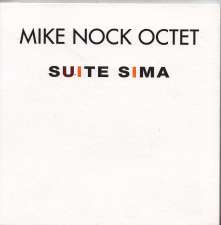 makes you glad that you’re alive. Touring New Zealand with Nock were James ‘Pug’ Waples (drums) and Brett Hirst (bass)’. These musicians while deeply attuned to each other were always full of surprises. 5 stars. *****
Barney McAll (USA) gigs in Auckland & Wellington NZ – Trio and Solo piano at the CJC (Creative Jazz Club) and ‘The Wellington Jazz Festival 2014’. McAll (an Australian) has lived in Brooklyn New York for many years, but he has never been forgotten in his home country Australia. His visit to New Zealand won him many new fans. There is an expansiveness and yet a completeness about McAll compositions. He sounds like no one else and as he digs into those earthy blues filled tunes, you hear the unmistakable echoes of real antipodean soul. 5 stars. *****
Jonathan Crayford, ‘Dark Light’ Trio (USA). It was Auckland’s good luck that the album release gig for Crayford’s ‘Dark Light’ Trio took place at the CJC (Creative Jazz Club). A few weeks prior to that a local version of his ‘Biggish Band’ featured at the same venue (and at the Golden Dawn). I attended all three gigs. Jonathan Crayford is a peripatetic wonderer and a troubadour of immense talent. His endless travels in music often bring him home to New Zealand and the lucky get to hear his imaginative projects. 4 stars ****
Other pianists of note: Kevin Field (NZ). Field on piano or keys is a musical force to reckoned with. His taste is impeccable. This year saw him record an album in New York with expat New Zealand bassist Matt Penman, drummer Obed Calvaire and guitarist Nir Felder. The album will probably be released sometime during 2015 and is eagerly anticipated. 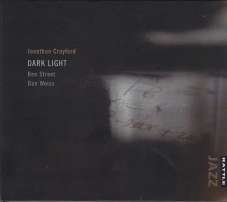 Whether as accompanist or soloist, Field shines. His work in 2014 on ‘Dog’, with Caitlin Smith and with the Australian saxophonist Jamie Oehlers stand out as high points. Adam Ponting (Aust) (Hip Flask ‘1’ & ’11’). Ponting is an unusual but compelling pianist. An original stylist who appears to approach tunes from an oblique angle, at first impressionistic, but leading you into a world of funky satisfying grooves. This guy is definitely someone I would like to hear again. It was also great to hear more of Alan Brown (NZ) on piano during 2014. He has some interesting piano and keys projects underway and we will hear more of those soon. Steve Barry (Aust). Barry is an ex pat Auckland pianist now based in Australia. He visited New Zealand twice during 2014. His visits and albums are always received enthusiastically. Barry is a musician who works hard and produces the goods. His new album ‘Puzzles’ with Dave Jackson (alto), Alex Boneham (bass) and Tim Firth, lifts the bar for up and coming local musicians. We had a number of visitors in 2014 and to bring us a European perspective was the Benny Lackner Trio (Germany/USA). The pianist Benny Lackner has visited New Zealand on several previous occasions and the aesthetic he brings is finely honed. The band has a similar feel to EST. There is the occasional use of electronics and they quickly find tasty grooves that could only emanate from a European Band.
Alan Broadbent (USA) has had a truly amazing year with the release of a solo album ‘Heart to Heart’ and his NDR Big band album ‘America The Beautiful’. Multiple Grammy  winner Broadbent is our best known improvising export and he has spent the last year touring Europe and America to great acclaim. The solo album was given a rare 5 star rating by downbeat and ‘America The Beautiful’ was recently voted one of the 10th best albums of 2014.
Miscellaneous Gigs and projects:
Mike Moreno trio (USA) – for sheer guitar artistry and taste, Moreno is hard to beat. His beautiful (often mournful) sound, compelling lines and clarity of vision left the Sydney audience in awe. His Australian trio were Alex Boneham (bass) and Ben Vanderwal (drums). the choice of sidemen was solid, as they complimented and responded to every nuance of Moreno’s playing. This was a class act all round. The Troubles (Wellington, NZ), Portland Public House, ‘Auckland Jazz Festival’. This Wellington ensemble is a machine of wondrous invention. Its anarchic dissing of powerful institutions, cheerful irreverence and inappropriate humour, carves it out a special place in the hearts of rebellious souls. Iconoclast drummer and composer John Rae (ex-Edinburgh) had added the heavy weight presence of saxophonist Roger Manins (Auckland) to the mix for recent gigs. That was an inspired choice. Jeff Henderson’s ‘Dreamville’ project (Auckland, NZ) CJC (Creative Jazz Cub). This avant-garde gig, billed as superconscious Jazzmares, was a triumph by any measure. Like a dream, the gig moved forward under its own internal momentum. Surreal themes constantly dissolving until exhausted, forms shifting without seeming to. What made this journey so evanescent, but so compelling, was that certain motifs remained deep in our consciousness throughout; totems of sound embedding themselves. This gig won many to Henderson’s cause.
Notable local Albums of 2014: (in no particular order)
‘Dog’ (Rattle Jazz) Recorded in the now defunct and much-loved York Street studios Auckland. This album is the realisation of a project by Manins, Field, Holland & 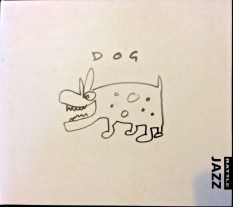 Samsom. It sizzles, swings and while hinting at the vibe of a bygone era, it still sounds fresh & modern (and very Kiwi). ‘Dark Light’ (Rattle Jazz) This excellent album is one of two that Jonathan Crayford released in 2014 – Recorded at ‘Systems Two Studio’ NY with Crayford (piano), Ben Street (bass), Dan Weiss (drums). Don’t expect repetition from Crayford. This master musician takes us on many journey’s, each unlike the last and all brilliant. Hip Flask 2 (Rattle Jazz) A funk unit led by Australasian saxophone giant Roger Manins. Accompanied by Adam Ponting (piano), Stu Hunter (organ), Brendan Clarke (bass) and Toby Hall (drums). A thoroughly appealing album and a welcome follow-up to Hip Flask 1 (Hip Flask 1 included with the album).
Best Jazz Writing
The Parker Biography (part one): Stanley Crouch’s ‘Kansas City Lightning’ is a great read and a possible game changer. It has sometimes been observed that Jazz  biography is the weakest link in Jazz Writing. If that is true then the mould has truly been broken with this work. Crouch has placed the story of Parker’s early life into a fuller historical context. In learning things about the times, we learn a lot about the man. This is a book that could be appreciated by anyone interested in the history of African-American life in the Mid-West. I suspect that its significance will grow as time passes. Above all the book is beautifully written and for me that counts.
Best Jazz DVD
Charles Lloyd’s ‘Arrows to Infinity’ is a beautiful and informative document. It is packed with important music and astute observations. The filming is tasteful and painterly and Dorothy Darr (artist and long time partner of Lloyd) has been the obvious guiding force (assisted Jeffery Morse). Lloyd the musician is beyond caveat, but Lloyd the narrator also holds us in rapt attention. The reborn, Big Sur Lloyd, communicates his deep calm with ease and his spiritual approach to music and life is compelling. As he reflects honestly on the momentous times he lived through, we feel enriched by sharing the experience. He sums up his approach to improvising and the duty of sharing his music as follows; “The winds of grace are always blowing, so set the sails high”.
Most anticipated events for the coming months.
Glen Wagstaff & the Symposium Orchestra Project. (NZ) 2015 album release (subject to sufficient funding levels being reached on kick starter). This young guitarist references the writing of Kenny Wheeler and Brian Blade. There is a deep melancholic beauty in his charts and the material soars. The album features many gifted New Zealand musicians. Christchurch, like Auckland & Wellington, has a deep reservoir of Jazz talent.
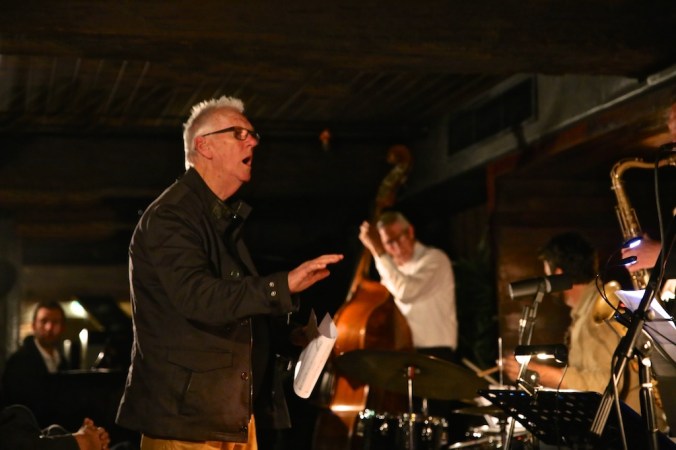
The Auckland Jazz Orchestra (NZ) – ‘Darkly Dreaming Suite’ by AJO conductor Tim Atkinson. I witnessed the recording of this suite and what I heard sounds amazing. While there is a dark brooding quality of the music it is also strangely warm; like a glass of claret held up to stained glass window at dusk. The album is due out in 2015 and the work marks step-up for the orchestra.
Maria Schneider conducts the Jazz Mothership Orchestra (USA/Aust) Our highly respected saxophonist Roger Manins is to feature with the JMO under Schneider’s batten. I don’t have all of the information yet, but the JMO will certainly be touring Australia.
CJC (Creative Jazz Club) 2015 events. The club had a great 2014 year in spite of the odds and difficulties. This is in large part due to JJA Jazz-Hero Roger Manins role as musical director (aided and abetted by Caro Manins and Ben McNicoll). The task of keeping a not-for-profit Jazz Club float in a relatively small city is challenging, but Manins has managed to secure a solid programme and he did so while juggling his demanding teaching gig at the Auckland University Jazz School and his numerous live gigs and recording gigs around the pacific rim. Having a brand new Auckland Jazz Festival (organised by Ben McNicoll) rounded the years events out perfectly.
Biggest Regrets of 2014 – missing the John Zorn gig in Adelaide – The passing of Kenny Wheeler whose music has given me so much pleasure over the years.
Video clips of Mike Nock & Barney McAll – filmed for this blog at the CJC (Creative Jazz Club) 2014.
http://youtu.be/zBd2yZZdvL4?list=UUvm6sdXjGJULG9k2nYZ9udA
http://youtu.be/m_oA8iLshNg?list=UUvm6sdXjGJULG9k2nYZ9udA
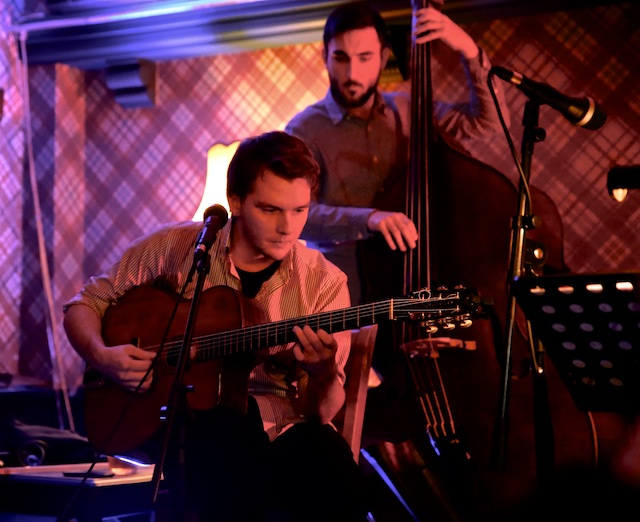 This is the second gypsy swing project at the CJC in four months. The last gypsy gig brought us Wellington band Black Spider Stomp. This time, we experienced the local variant. Wellington is arguably the home of New Zealand Manouche, but it definitely exists around Auckland. Thanks to Caro Manins (La Luna) and Misha Kovalov we feasted on catchy melodic tunes, marvelled at their hard-swinging lines. ‘Twistin the Swing’ and ‘La Luna & the Gadjos’ worked their magic and swing, they certainly did. It doesn’t matter what your Jazz preferences, I defy anyone to keep their feet still during a spirited Manouche gig.
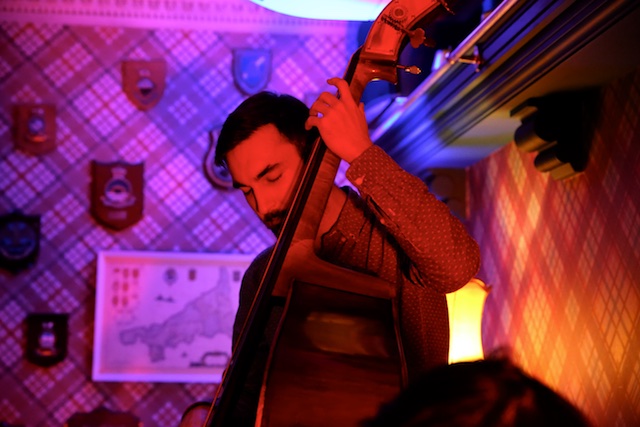 This is a music that stirs heart and limbs, a holiday from the cerebral manifestations of improvised music. It makes you feel good and the desire to move with it is overwhelming; that is its charm. I recall a recent discussion with Roger Manins about the diversity of Australian improvised music and he said this. “learning to play in really diverse situations is important. It is a feature of the Sydney scene. One minute the musicians are playing in an avant-garde ensemble, then straight ahead and the next minute playing Trad or Manouche”. For developing musicians, learning to swing in bands like this is invaluable, whatever their eventual calling. It was, therefore, good to see up and coming younger musicians in these lineups.
 The first set was ‘Twistin the Swing’. A very tasty quartet led by the ensemble leader, composer/guitarist Misha Kovalov. The group featured two Manouche guitars, an upright bass, and a reeds player. Kovalov was a leader in every sense of the word, virtuosic in an almost offhand way and oozing good-natured charm. He made us smile and he made our feet tap; what more could you want in a Manouche leader. This was a hybrid kind of Manouche, as many of the latter-day manifestations are (a perfect example is Lagrene playing Stevie Wonders ‘Isn’t She Lovely’). We heard some Django Reinhart compositions, a familiar sounding Russian tune (whose name I can’t recall but it was a total riot) and a lot of Kovalov’s own compositions. These compositions varied in style between 40’s swing and acoustic blues; sometimes with crazy quotes embedded.
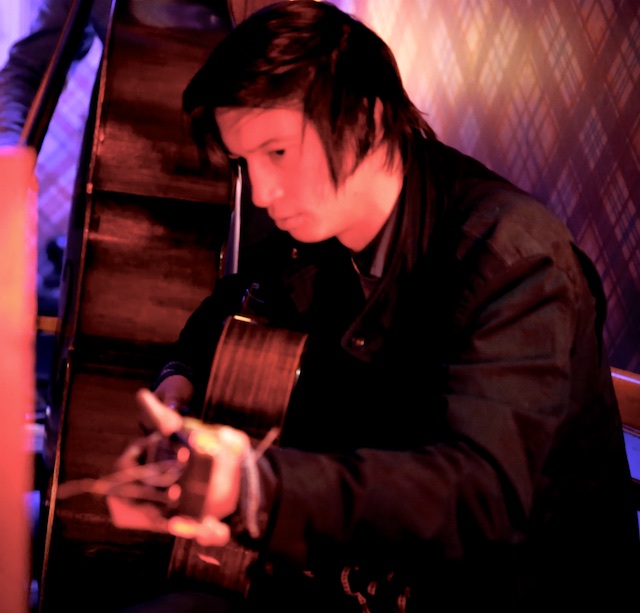
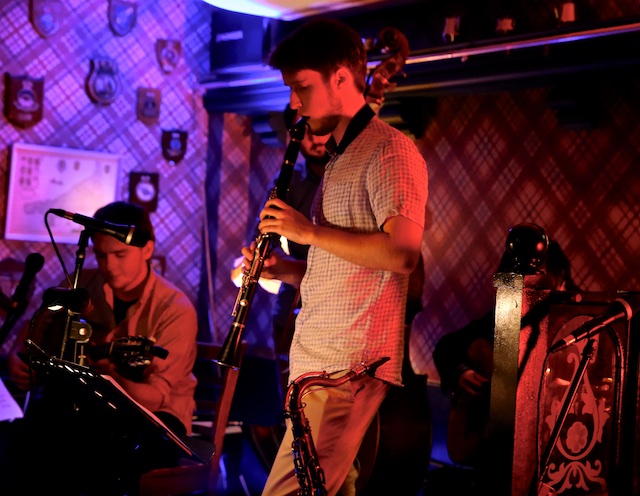 On rhythm guitar was Phillip Beatson, on clarinet and tenor saxophone Asher Truppman-Lattie and on upright bass Djordje Nikolic. Beatson was largely hidden from sight, working his solid rhythm guitar in the shadows; the others all took short solos. It was nice to hear Nikolic playing arco at times, good for a swing rhythm section. It was also good to hear the licorice stick played – a hard task master but especially rewarding in the swing context.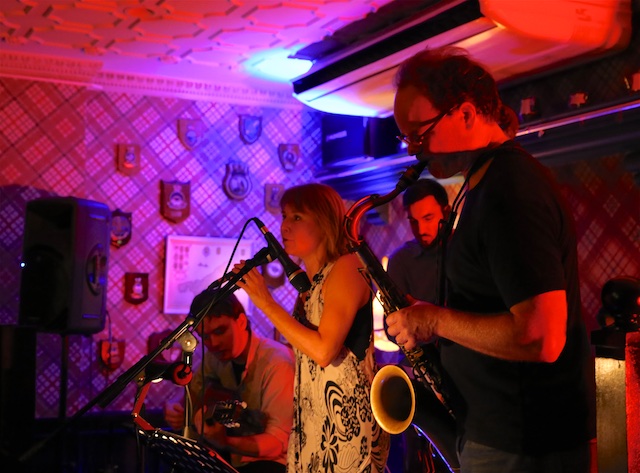
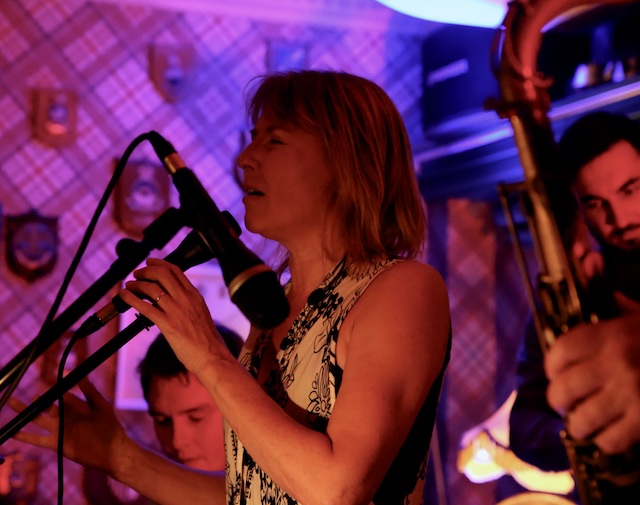 ‘Twistin the Swing: Misha Kovalov (leader, compositions, Manouche guitar), Phillip Beatson (rhythm guitar), Asher Truppman-Lattie (reeds), Djordge Nikolic (upright bass). ‘La Luna & the Gadjos‘: Caro Manins (leader, vocals), Misha Kovalov (guitar), Phillip Beatson (guitar), Roger Manins (tenor saxophone), Djordge Nikolic (upright bass) The gigs took place at the CJC (Creative Jazz Club), Albion Hotel, 18th May 2016.
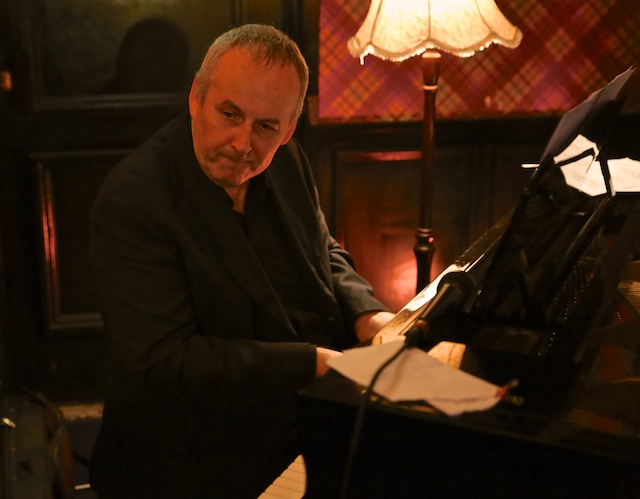 This is pianist Mark Donlon’s second appearance at the CJC (Creative Jazz Club). On this visit, his Shadowbird Quartet featured Aucklanders Roger Manins on Saxophone and Cameron McArthur on bass. The gig also brought Wellington drummer Lance Philip to the CJC for the first time. Both the bass player and the drummer have previously recorded with Donlon. The British-born pianist, educator, conductor is the senior lecturer at the New Zealand School of Music in Wellington
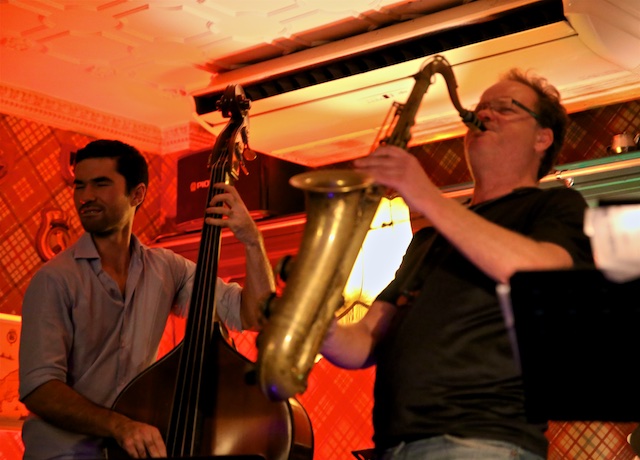 The first tune of the second set was ‘Nibiru’ and it was rich in narrative and melody. A thing of strange and compelling beauty. The piece began with a repeating pattern on piano, a pattern which shifted harmonically as it progressed. Over this Manins began by stating the melody – seldom straying far from the matrix in the opening stages. McArthur on bass intensified the mood by establishing a counter pattern and then repeatedly plucking at a single note, Philip free to add colour and texture – and he did. I liked this piece very much as it sounded both old and new (a nice effect if you can pull that off). The story behind it added another dimension entirely. ‘Nibiru’ is an imaginary planet beloved of conspiracy theorists, the ones who wear tin-foil helmets when venturing outside. The ones who see an absense of smoke as conclusive proof that the fire is well hidden. The planet evidently reveals itself to the chosen few and is the home of lizard people. I’m not so sure that the believers deserve a tune this nice. The tongue in cheek rendering of this odd belief is anything but ‘end of times’.
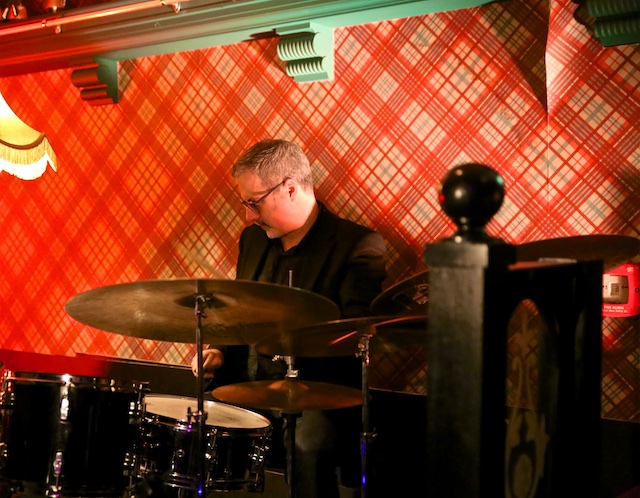 You would expect a group of musicians of this calibre to play well and they did. There are two Donlon albums out shortly and a few earlier ones available. Support local music by experiencing this artist or the bands various iterations. One place to do that will be at the Wellington Jazz Festival in early June.
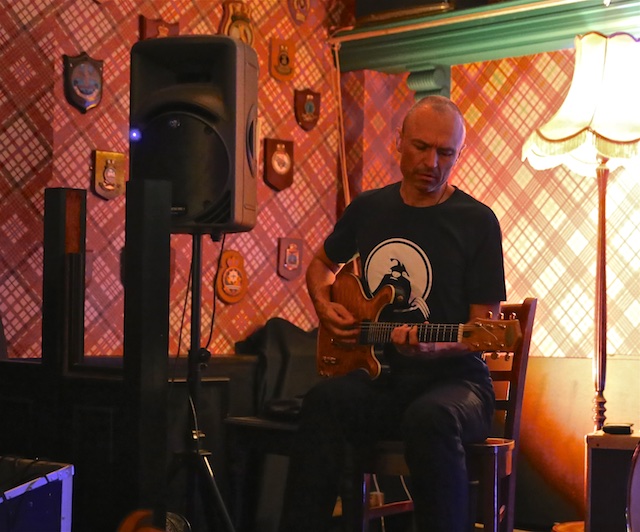 As I write this it is International Jazz Day, a UNESCO sponsored day honouring the diversity and depth of the world improvising scene. It was, therefore, serendipitous that Carl Dewhurst and Simon Barker brought ‘Showa 44’ to town – especially in the days immediately preceding the big celebration. This gig offered actual proof that the restless exploration of free-spirited improvisers, lives on undiminished. I have sometimes heard die-hard Jazz fans questioning free improvisation, believing that the music reached an unassailable peak in their favourite era. To quote Dexter Gordon. “Jazz is a living music. It is unafraid …. It doesn’t stand still, that’s how it survives“. While a particular coterie prefers their comfort zone, the music moves on without them. Younger ears hear the call and new audiences form. Life is a continuum and great art draws upon the energies about it for momentum. Improvised music is not a display in a history museum.
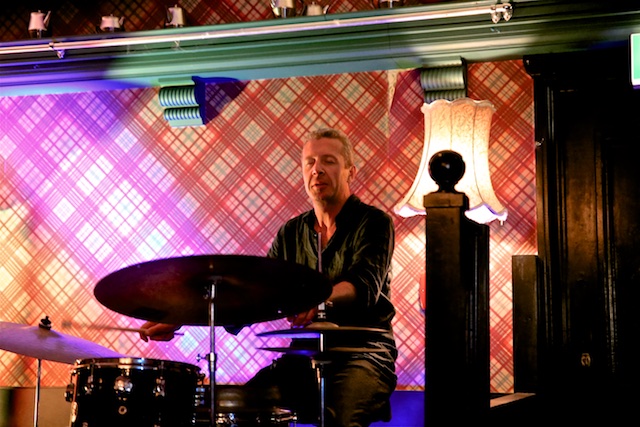 It is through listening to innovative live music that our ears sharpen. When sitting in front of a band like this the mysteries of sound become visceral. This was an extraordinary gig, at times loud and confronting, mesmerising, ambient and always cram-packed with subtlety. Fragments of melodic invention and patterns formed. Then subtly, without our realising it, they were gone, tantalising, promise-filled but illusory. We seldom noticed these micro changes as they were affected so skillfully – form and space changing minute by minute, new and yet strangely familiar – briefly reappearing as quicksilver loops before reinventing themselves.
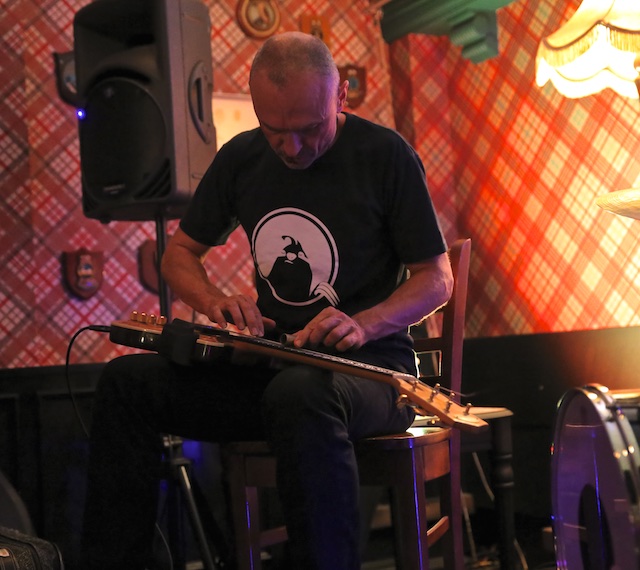 With the constraints of form and melody loosened new possibilities emerge. In inexperienced hands, the difficulties can overwhelm. In the hands of artists like these the freedom gives them superpowers. Time is displaced, tonality split into a prism of sound, patterns turned inside out. The first set was a single duo piece, ‘Improvisation one’ – unfolding over an hour and a quarter; Dewhurst and Barker, barely visible in the low light. This was about sculpting sound and seeing the musicians in shadow added a veneer of mystique. Dewhurst began quietly, his solid body guitar lying face up on his lap. The sound came in waves as he stroked and pushed at the strings, moving a slide – ever so slightly at first, causing microtonal shifts or new harmonics to form, modulating, striking the strings with a mallet or the palm of his hand. The illusion created, was of a single drone repeating. In reality, the sound was orchestral. As you listened, really listened, microtones, semitones and the occasional interval appeared over the drone. Barker providing multiple dimensions and astonishing colour, responding, reacting, crafting new directions.
 In this context, the drummer took on many roles, a foil to the guitarist, creating silken whispers, insistent flurries of beats and at times building to a heart-stopping crescendo. I found this music riveting and the audience obviously shared my view. In the quiet passages, you could hear a pin drop. If that’s not an indication of the musical maturity of modern Jazz audiences, nothing is. One of the prime functions of art is to confront, to challenge complacency. This music did that while gently leading us deeper inside sound itself. No one at the CJC regretted being on this journey. This is territory loosely mapped by the UK guitarist Derek Bailey, the Norwegian guitarist Aivind Aaset and the American guitarist Mary Halvorson. They may take a similar path, but this felt original, perhaps it is an Australian sound (with a Kiwi twist in Manins). The long multifaceted trance-like drones suggest that.
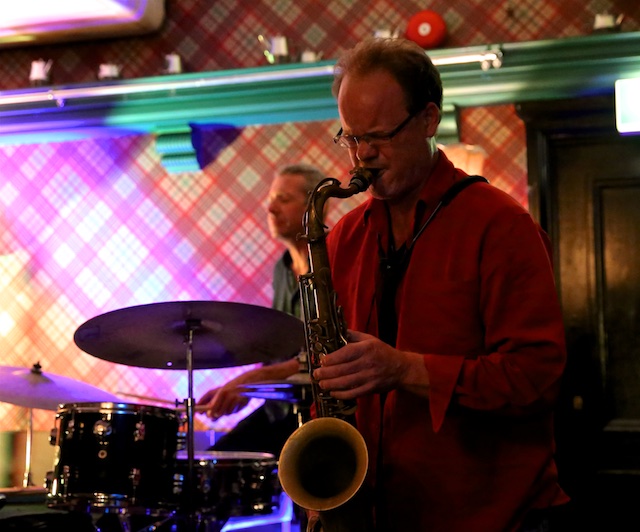
 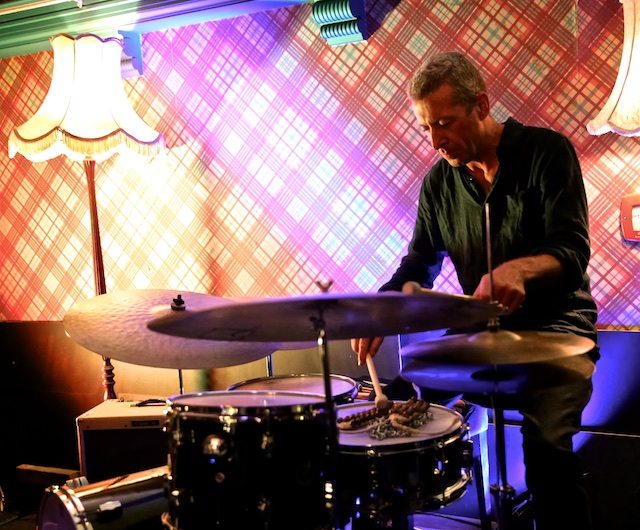 The second set was shorter, ‘Improvisation two’ had Roger Manins aboard. I should be immune to Manins surprises but he frequently catches me off guard. His breadth and depth appear limitless. ‘Improvisation Two’ began with a broader melodic palette. Dewhurst and Barker set the piece up and when Manins came in there was a stunning ECM feel created. Barker tap-tapping the high-hat and ride. Achingly beautiful phases hung in the air – then, surprisingly they eluded us, unravelling as Manins dug deeper – dissecting them note by note. These interactions give us a clue as to how this music works, each musician playing a phrase or pattern and then re-shaping it, passing the baton endlessly.
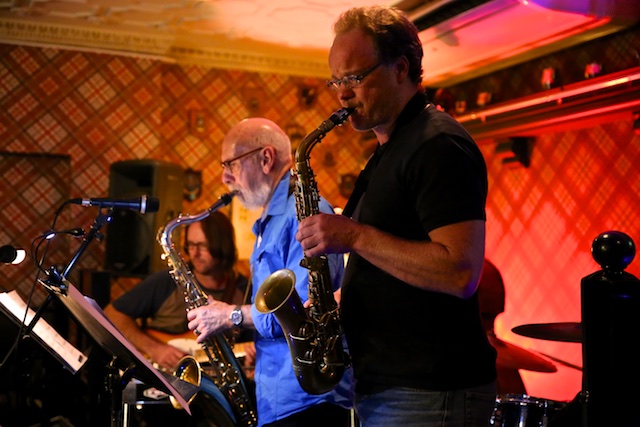 A seasoned New York veteran when asked to comment on the quality of playing by young artists emerging from the Jazz Schools said, “Man they’re such great players. Many of them have chops to burn, but what is lacking is ‘character’. That is not taught in Jazz schools, you gain it inch by inch out of life experience”. To paraphrase Lester Young who put it best, ‘I hear the notes, but what is your story’. The character of a musician (or the lack of it), shows up in the music. Jim Langabeer has ‘character’ to burn. He tells wonderfully human musical stories and they are utterly beguiling.
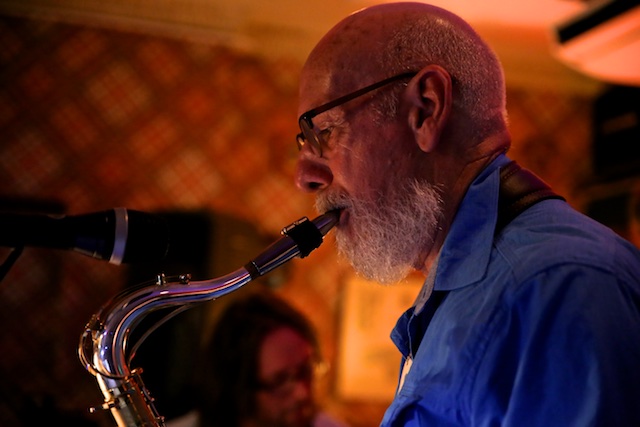
 Langabeer is hugely respected on the scene and deservedly so. He has worked with greats like Gary Peacock and Jaco Pastorius and in spite of absorbing the essence of North American Jazz, his ideas and sound possess a Kiwi authenticity. When he plays his tenor there is often a street-raw raspy intonation. The sound is at times reminiscent of Archie Shepp, but the story and flow of ideas are entirely his own. His flute playing is soulful and as soft as silk in the breeze. Because he is so comfortable in his own space he can incorporate everything from the avant-garde to indigenous music without it sounding contrived. These seamless references work beautifully in his hands. We talked of this after the gig and agreed that many of the earliest attempts at blending middle eastern, far eastern or ethnic music were less successful than now.
  As the boundaries between cultures blur in a globalised world, the mutual respect between improvising traditions grows. I have posted an example of this effortless genre-blending in a clip from the CJC gig titled ‘Ananda’s Midnight Blues’. Those who are familiar with Buddhism will grasp the meaning immediately. Ananda was Gautama Buddha’s childhood friend and later his disciple. Beloved, worldly and yet never afraid to challenge his enlightened teacher. There is a feeling of deep questing spirituality in the piece – reaching beyond mere form.
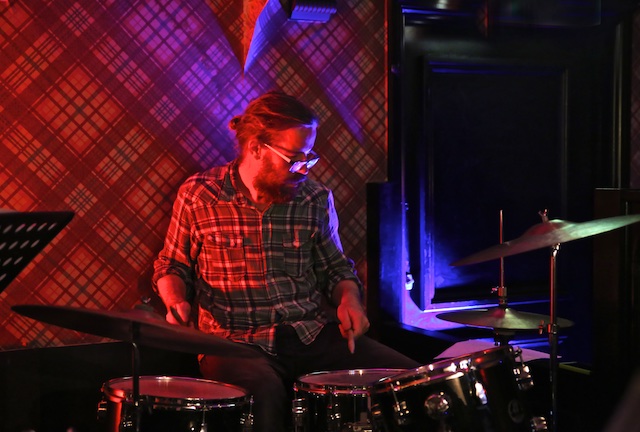 Whether Langabeer plays flutes or reeds, everything serves the composition. His spare lines (which are devoid of undue ornamentation) establish a theme and then vanish like a will-o-the-wisp, giving a nudge to the imagination and enriching the piece as a whole. There are no wild flurries of notes on the saxophone or flute because the story resides elsewhere. His writing creates an over-arching logic and the ensemble has the freedom to move in and around tonality. In some pieces ostinato patterns create a drone effect, becoming a single note over which to restate the melody. This freedom allows for an organic interaction, free or inside and with a deep gut-felt pulse.
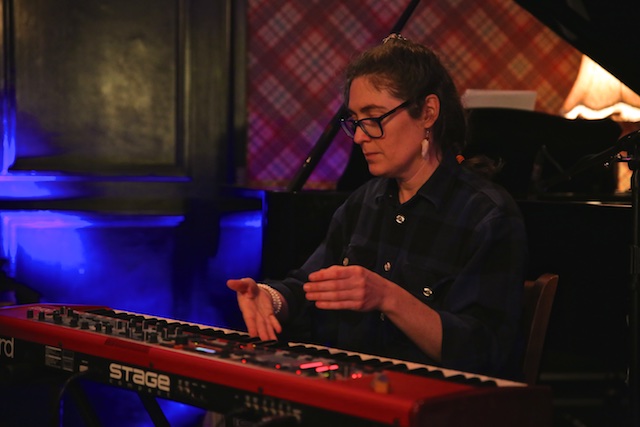
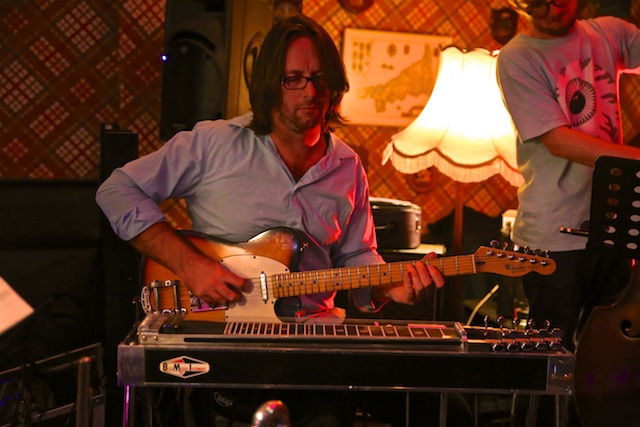 When putting a band like this together the choice of musicians is supremely important. Not every musician could handle such freedom. Needless to say, Langabeer chose well. The ensemble was rich in contrasting colour, rich in character. It was our good fortune that Jim Langabeer’s daughter Rosie Langabeer was back in town. I can’t imagine a better-qualified pianist for this role. A leading avant-gardist and experimental musician who crafts compelling filigree and rich beauty into her music. Rosie Langabeer can play outside one minute and the next you hear a deep subtle swing, a rare kind of pulse that you can feel in your bones. A gifted composer and leader in her own right, an extraordinary sides-women when required. Moving from percussive, richly dissonant voicings to heart-stopping arpeggiated runs – somewhat reminiscent of Alice Coltrane’s later piano offerings. Her iconoclastic playing delighted the audience.
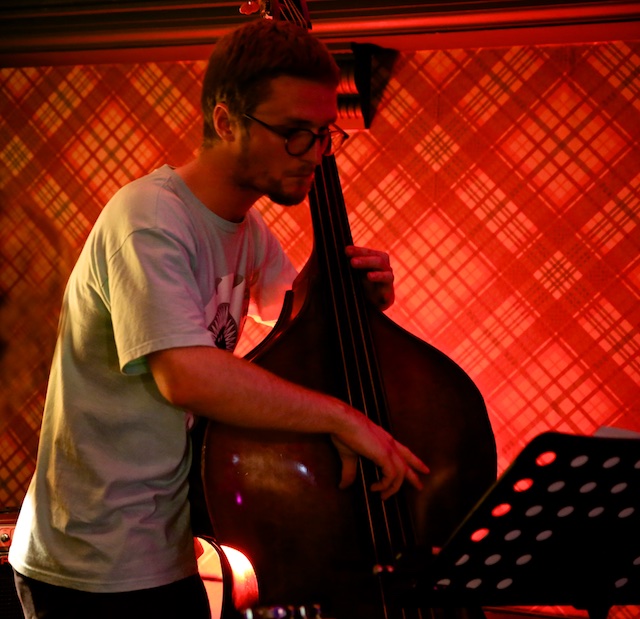 On alto was Roger Manins. Although the alto is not his main horn he is extraordinarily fluent on the instrument. Langabeer has been focussing on multiphonics and microtonality of late and he and Manins showcased some atmospheric numbers utilising various blowing techniques. Manins has long impressed by playing in a variety of styles with equal facility. On guitar and pedal steel guitar was Neil Watson, bringing his mix of blues, Jazz punk, and avant-garde to the fore. Another iconoclast and one we love hearing. The pedal steel guitar has been in his possession for a year now and his rapid mastery of the instrument is impressive. A difficult beast tamed beautifully. On Bass was Eamon Edmundson-Wells. A versatile young bass player most often found in the company of experimental musicians. His performance on this gig was right on the money.
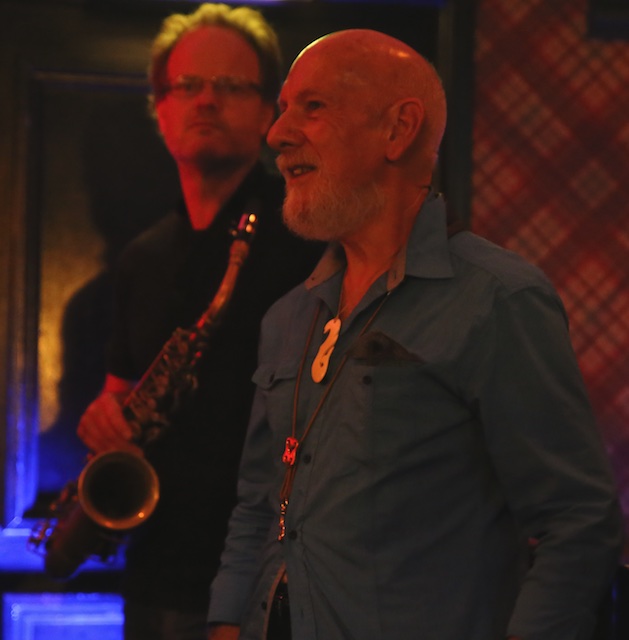 On drums and percussion was Chris O’Connor. Perhaps more than anyone else O’Connor personifies this free-ranging music. Of all the New Zealand drummers, his are the widest-ranging skills. Colourist, minimalist, indie rocker, straight-ahead jazz, avant-garde, experimental percussion and film work. There is nothing he won’t tackle and everything he touches benefits from his musicianship. When a piece titled ‘Tapu’ was played O’Connor stole the show. While Langabeer played the difficult and wonderfully atmospheric Putorino (a traditional Maori flute of the Taonga Puoro family), O’Connor simulated the Tawhirimatea (A traditional whirring instrument dedicated to the god of winds). The effect was eerie and electrical. Later in the piece he blew through the stem of his snare stand – recreating the effects of the Pututara (a conch trumpet). Only O,Conner could have pulled this off so well. Like Langabeer, he has a deep awareness of multicultural issues.
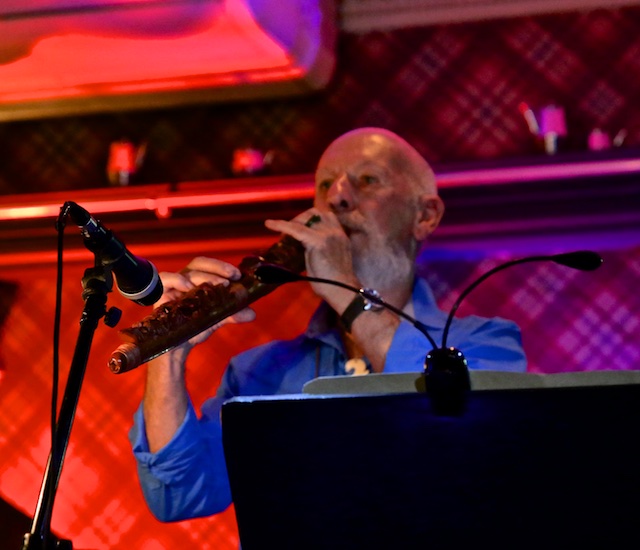 The one standard was Strobe Road (Sonny Rollins). A lesser known standard and played with enthusiasm. The remainder was a selection of Langabeer tunes, many referencing Maori of Kiwi themes. His tune Rata Flower was a stunner – it deserves to become a local standard. He has obtained funding from Creative New Zealand for this project and we might see a ‘Sketches of Aotearoa’ album soon. I truly hope this occurs and I will be the first to purchase one.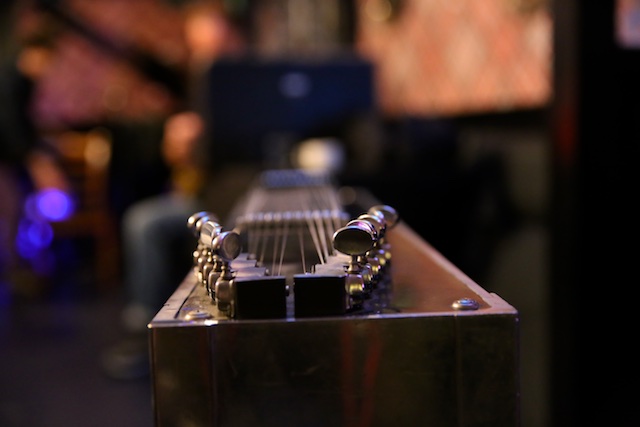
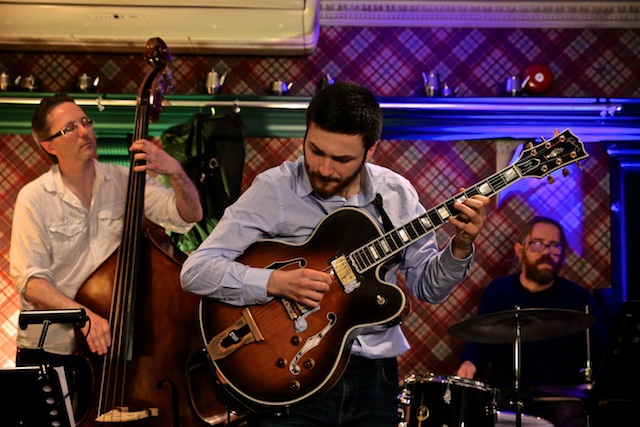 With the Indian summer lingering, March rolled seamlessly into April, and in Jazz parlance, we got to JAM (Jazz April Month). This is the month when the International Jazz community reaches out and proclaims, listen up ‘world’ we have something to say. The month culminates with UNESCO world Jazz day; last year the main celebration was in Paris, before that Osaka and Istanbul. This year the Thelonius Monk Foundation and UNESCO will hold the WJD main celebration in the White House at the invitation of President Obama.
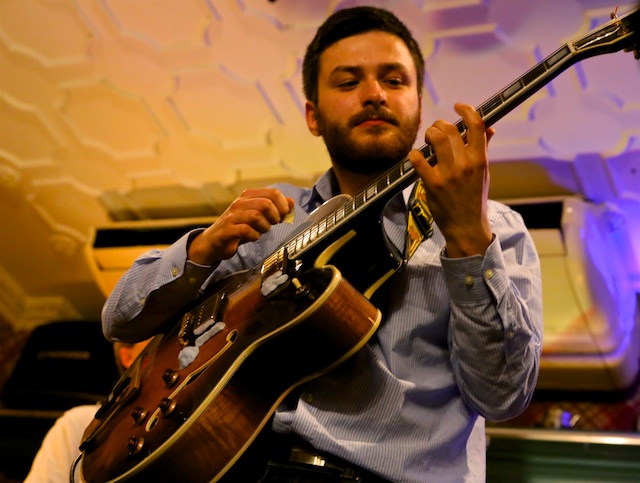 He is a different sort of guitarist and although in his early twenties, he already sounds like a member of that post-millennial cadre of improvising trend setters. As usual, I arrived during the setup and what I heard offered promise. His lines during the warm-up number were fast and furious, but the clarity of tone and of ideas, jaw dropping. As the first set began the band traversed various moods, from the Bop referencing to the reflective. Luft is a formidable technician, his fluency beyond the reach of many practitioners I suspect, but during the slower reflective numbers, we glimpsed subtly and depth.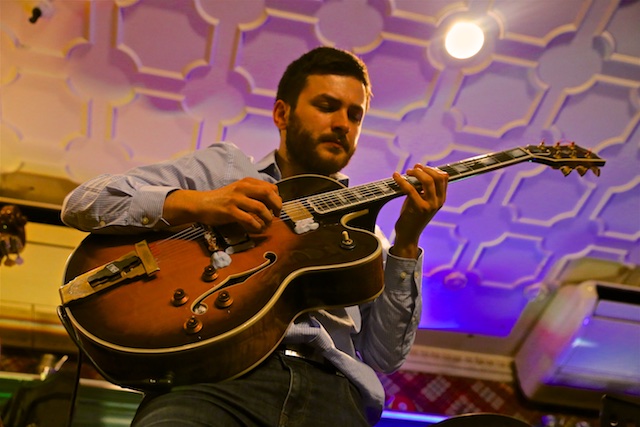
 The first set brought us the trio formation, and the set list ranged from the near avant-garde to ‘world Jazz’. I really enjoyed the material chosen as there were quirky originals, and material ranging from the familiar (Gismonti) to the unfamiliar – tunes by Portuguese or Brazilian composers including a delightfully outrageous rendering of a tune called ‘The bickering of the crazy musicians’. That one brought the house down. I was also delighted with his tribute to the adventurous guitarist Derick Bayley; a tune titles ‘Derick’. Again this showcased the breadth of his influences. Whether the reflective or quirky, handled with the supreme confidence that only a musician at one with his instrument can attain. Accompanying him was Tim Robertson, an expat with a long string of impressive credits to his name in the UK. Robertson and Luft were a tightly focussed team, enhanced by the addition of Chris O’Connor for the Auckland gig. O’Connor is endlessly versatile and ever popular about the country – from Indie Rock or straight ahead Jazz through to experimental music. He adds enormous value to any bandstand, any genre, and the choice could not have been better.
 On the second set, the trio added local saxophonist Roger Manins and the tunes although standards took in a wide spectrum. Opening with a ‘groove take’ on Victor Young’s ‘Delilah’ and then in contrast diving headlong into a marvelous Ornette Colman piece. ‘Humpty Dumpty’ from Ornette’s ‘This is our Music’ was undoubtedly my favourite of the night. Everything these musicians played worked well, but this tune just bounced off the walls and had everyone whooping in delight. Next was a crazy little known Monk tune titled ‘Unidentified Monk Solo’ and lastly ‘Ray’s Idea’ by Ray Brown. From deep listening enjoyment to wild and free in one gig.
 Two nights later I was watching the Sky Arts channel when a programme on guitarists came up. Then I saw him, a younger Rob Luft performing at Ronny Scotts, solo guitar, receiving praise from George Benson, recording at Abbey Road studios and winning the Jazz section of a prestigious UK guitar competition. We sure lucked out getting this band for a Jazz April opener. The clip below is from a Ronnie Scotts gig – Rob Luft with ZiroBop – The clip tells you everything you need to know about him as a guitarist.
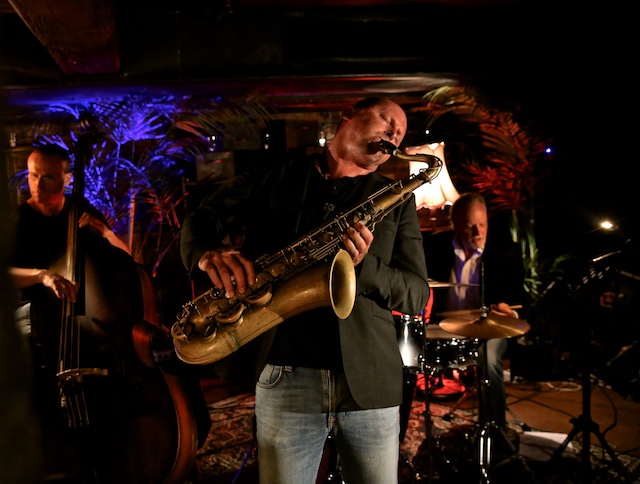 When the word gets about that a Jamie Oehlers gig is imminent, excitement mounts. Having turned people away last year, due to a capacity audience, the CJC offered two sessions this time. As expected, both were well attended. Oehlers is highly regarded in the Jazz world and it is not surprising. His astonishing mastery of the tenor saxophone is central to his appeal, but it is more than that. Every note he plays sounds authentic as if no other note could ever replace it, and all conveying a sense of musical humanism.
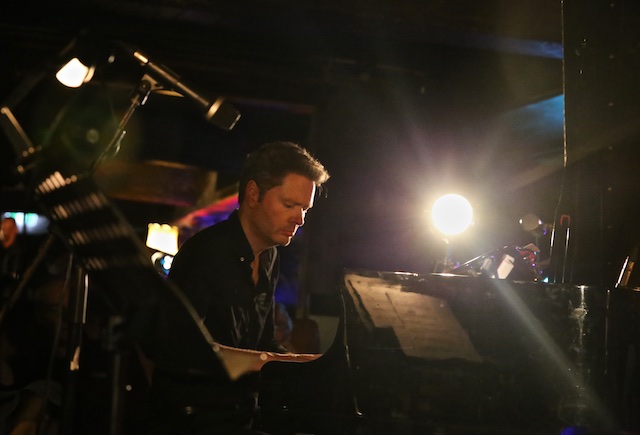 Oehlers has a new album out titled ‘The burden of memory‘ and we heard many of the pieces as the sets unfolded. Accompanying him on the album is a dream rhythm section: Paul Grabowsky on piano, Reuben Rogers on bass and Eric Harland on drums. Each a heavyweight and living up to their formidable reputations. For the Auckland gig, there was Kevin Field on piano, Olivier Holland on bass and Frank Gibson Jr on drums. Jumping in where Grabowsky, Rogers, and Harland had gone was no doubt daunting but they pulled it off in style. All played exceptionally well, but Gibson was a standout. The exchanges between him and Oehlers memorable. These men have history and the old conversations were clearly rekindled on the bandstand. Roger Manins joined Oehlers for the last number of each set and the two dueled as only they can. Weaving skillfully around each other and sounding like two halves of a whole; grinning like Cheshire cats.
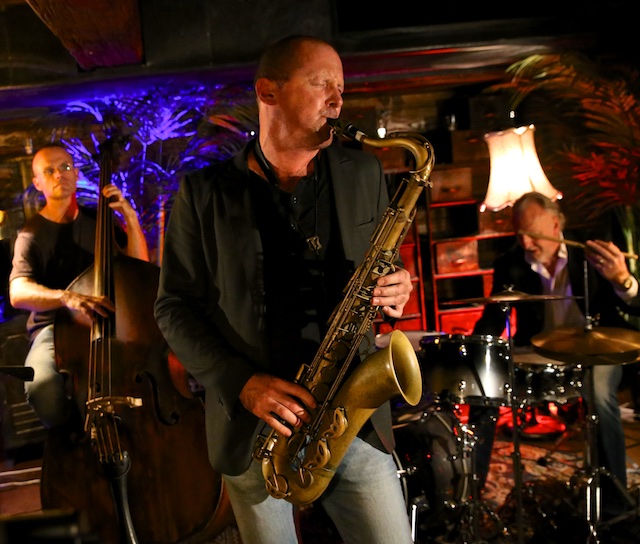 The album title and the song titles speak clearly of the musicians thought processes. He talks of his motivations and his horn takes us there. The burden of memory is a phrase he heard while listening to talkback radio and it resonated with him. He thinks deeply, examines the world about him and this communicates throughout the album. The second track ‘Armistice’ is a good example, possessing a melancholic beauty, and while it throws up the obvious images of a war ending, it also speaks of families and the tentative steps towards new possibilities.
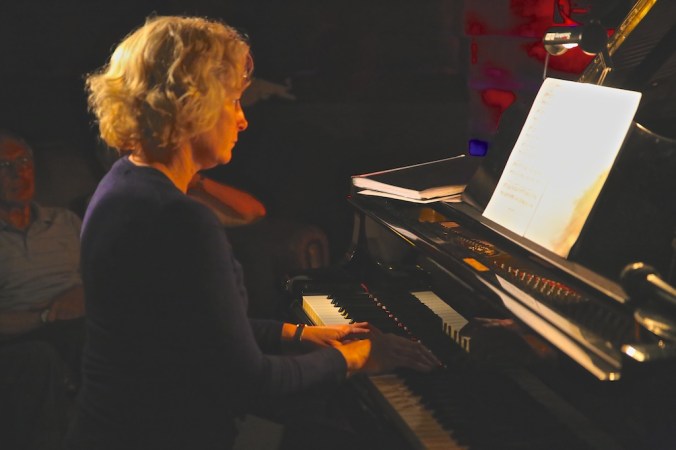 I was out of the country when Anita Schwabe performed at the CJC two years earlier. While I had seen her perform at the Bruce Mason Centre with the Rodger Fox Orchestra, I wanted to hear her in a more intimate setting. Her live (and recorded) performance on ‘Journey Home’ was impressive and as I recall a jet lagged Alan Broadbent watched her segments from the wings during the Auckland concert. As good as that concert and a later concert were, hearing an artist in close proximity is always a different experience. Schwabe didn’t disappoint. The first thing you observe when you meet her is her understated manner. Like many New Zealand improvising musicians she is self-effacing to the point of being dismissive of her own abilities. This contrasts strongly with the engaging confidence of her playing. From the first few bars you become aware that there is something special going on.
 Schwabe’s first number referenced the under-acknowledged and recently departed pianist Clare Fischer. “I like his unusual voicings”, she said before she played through her composition,’Fisching for Compliments’. The tune was intensely melodic, filled with clever references and a fitting tribute. Although a more reflective number (and her first of the night) we saw what she could do. The tune drew us in with a spacious intro and then imperceptibly we felt the swing. Block chords suddenly dissolving, close voicings appearing, disappearing; right hand running off the back of a phrase, subtly playing with time and rubbing against the chords in the left hand. This interaction between right and left hands created subtle and pleasing tension and we were to hear that often throughout the evening. That first number gave us a foretaste of what was consistently enjoyable music throughout the sets.
 ‘Panacea’ is the third of Phil Broadhurst’s ‘dedication trilogy’ series and as fine as the earlier two albums were, this one stands out. Everything about it is superb, the individual performances, the ensemble playing, the recording quality, the cover art by Cameron Broadhurst and above all the compositions. Broadhurst, always a prolific composer has excelled himself here. Instead of theming the album around a particular influence or musician he has tapped into the subliminal forces guiding his creativity.
 When he composed ‘Precious Metal’ he was at first unaware of the influence until a student pointed it out. It certainly speaks of Horace Silver but more importantly it conjures the essence of the man behind the music. The ensemble playing on this is simply sublime. An arranged head yields to Mike Booth on trumpet. He swiftly encapsulates the ethos of Silver in his delightfully moody solo. Broadhurst follows – expanding on the theme and signalling the direction, effectively setting the tune up for Roger Manins and Oli Holland who follow. There is a logical flow throughout and the piece works all the better because of it. I have heard it several times, but even on first hearing it sounded warmly familiar. That is the skill of good writing; evocation not imitation.
 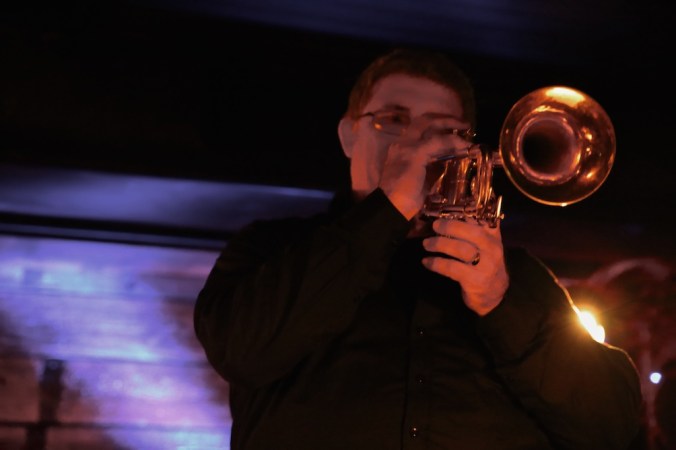 For me the greatest joy was ‘Wheeler of Fortune’ his Kenny Wheeler tribute. So well realised was the mood that it might have been John Taylor playing a Wheeler composition. Again this is an extraordinary piece of writing and articulation, lovely because while capturing the style of these lost lamented greats it reminds us just what made them so dear to our hearts. In spite of being a piece for piano trio you can sense Wheeler reaching for those impossible high notes or mournfully smearing his over-running melancholic lines. It must have been tempting to use Booth’s flugel on this, but the implied sound is all the more powerful.
 I look in the liner notes, no human voice shown – then it struck me. This is Watson, again understated but adding something to the piece which lifts it into the realm of musical magic – an exceptional and original musician. The album would be the poorer without his contributions. Subconscious influences shape every musicians work and it is right to celebrate those. Purging these influences is often a mistake. All creative people whether writers, poets, musicians or painters have these voices at their core. Improvising musicians stand on the shoulders of giants and it is fitting to celebrate that. Broadhurst has done so with due reverence, due acknowledgement but never sycophancy. This was his time to say thank you and his own original voice shone through the multitude of influences.
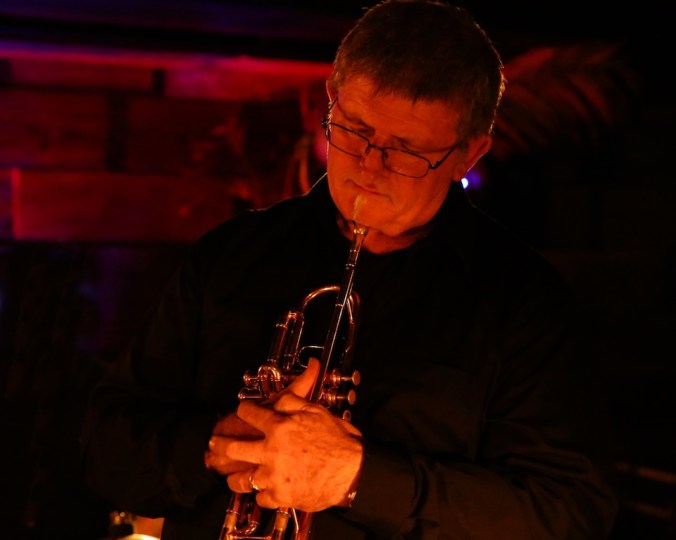 Booth sounds better each time I hear him. His undoubted strength lying in the way he reminds us of the great traditional trumpet players – especially those from the Hardbop era (like Blue Mitchell). A wonderful musician, a fine arranger and one who nicely compliments a saxophone modernist like Manins. Playing off the latter gives the edge. Manins is such an original that you hear something new and exciting each time he plays. I have observed before how well he plays off Broadhurst compositions. This says something about the skill of both men.
 The word panacea is from the ancient Greek meaning ‘all healing’. The modern definition extends the concept beyond cure-all potion – applying it more to the realm of ideas. The album is truly a balm in our troubled times. I highly recommend it as a Christmas present to yourself or a loved one. It must surely be contender for next years Tui’s.
 By the time the second week of the Auckland Jazz Festival arrived, I began to feel my age. I had already experienced a number of late night gigs and a further week of music stretched ahead of me. This was no time to flag, as some interesting and innovative music lay ahead. The festival programme structure provided audiences with variety. The depth and breadth of the improvising scene was on show and I wanted to see everything possible. The week started well with the Meehan/Griffin/Manhire poetry project (see earlier review for this). That gig brought a new audience and I was still
  buzzing come Tuesday.
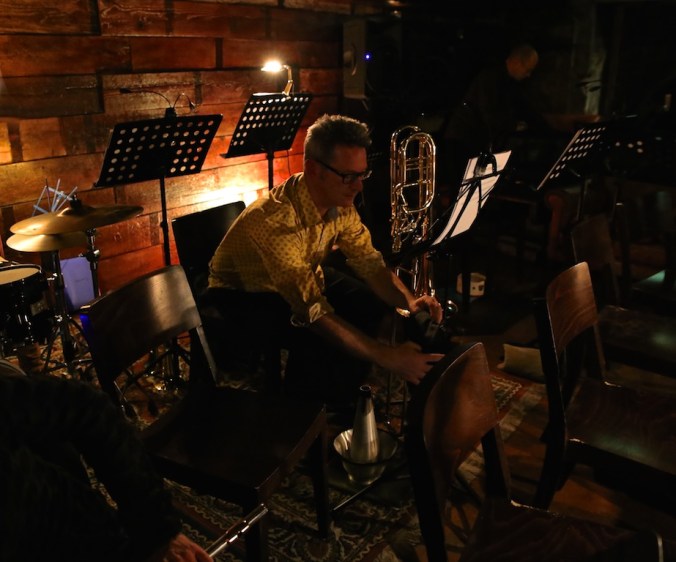
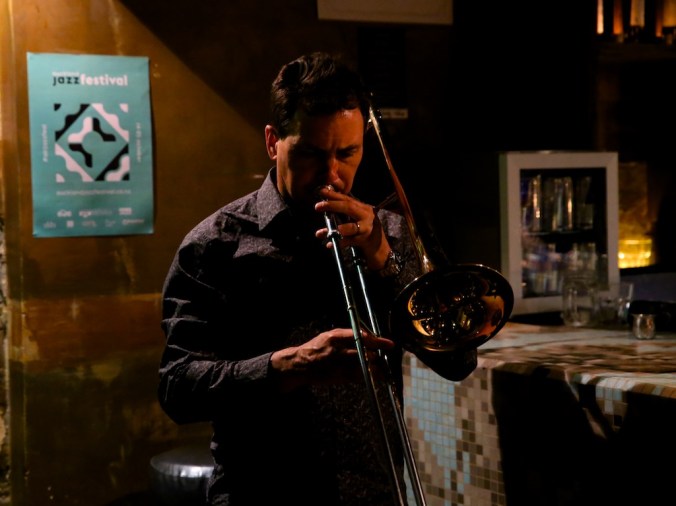 I had volunteered for door duty that night, turning up early to help. I enjoy the Jazz orchestra set-up process – in this case nineteen musicians and a conductor configuring a behemoth in an impossibly small space. It was like witnessing Nasa scientists beginning the launch sequence. Instruments and gauges checked, tapped and rechecked, cabling run out; each adding a layer to the criss-cross tangle of shoes, stands and chairs. Soon there were rows of brassy instruments standing in an (almost) orderly line, with the odd human interloper spoiling their symmetry. Random buzzing sounds came from warming up lips; and all punctuated with honks and plucked notes from far-flung corners of the room. this is the counterfactual of the sounds that follow.
 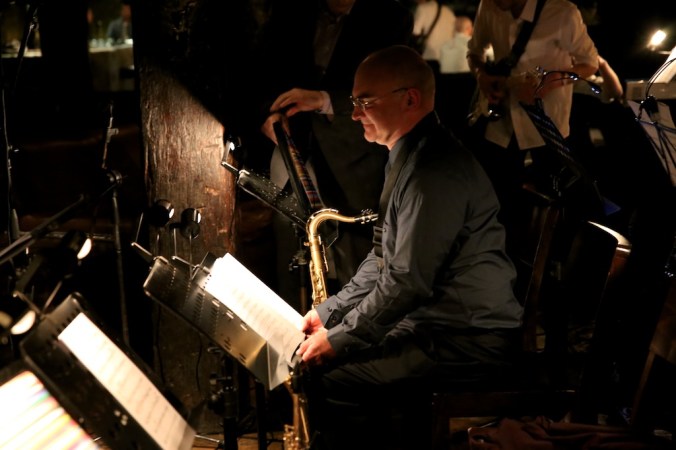 Band leader Tim Atkinson composed and arranged the suite. He has carefully shaped this ground breaking project as befitting a work of this importance. This is a modern piece of music in the mould of Darcy James Argue. Richly textured, evocative of the title and especially in the warm multi layered dissonance that swells out of the quieter passages. The work has captured a mood and an orchestra going places. This is a moment which benchmarks the growing maturity of the Auckland Jazz scene and I am truly glad to have witnessed it. The overall performance on the night was flawless, but if anyone stood out it was altoist Callum Passels. His solo on ‘The Dark Passenger’ was wonderful. it was a feat of story telling, of mood and it oozed freedom – as if he had somehow escaped the confines of room and orchestra. Importantly, he managed this without once deviating from the logic of the composition. I urge people to purchase this album and I guarantee that you will play it over and again.
  On Wednesday I spent time with the
 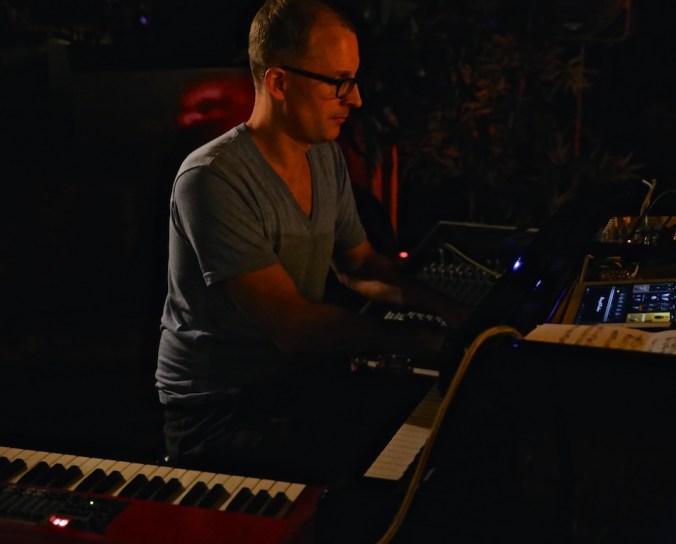 The trio’s set list was a mix or originals and some very interesting covers. What was not composed by Lackner or by the drummer Chazarenc, were often unexpected tunes; Brahms, Cold Play, David Bowie, Rodriguez and Jimmy Hendrix. ‘If Six were Nine’ was simply stunning. Warmly familiar to those of us who remembered the rock original. Taking the bones of a 1960’s tune and infusing it with edgy lines and modern harmonic conceptions. I have long-held the view that the new standards will come from material exactly like this. None of the band were alive when this acid blues classic was cut in 1969, but their joy at performing it was evident. Jimi would have loved it.
 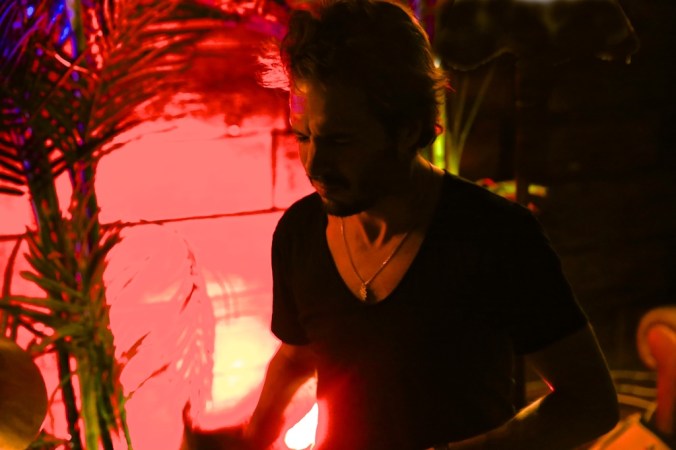 The bass player on this trip was Bruno Schorpe. When offered an upright bass he declined – choosing to remain on electric bass throughout. I’m glad that he did because the instrument had the bite to act as counterweight. Balancing out well the electronics and various effects of Lackner’s keyboards. Then there was drummer Matthieu Chazarenc. He has accompanied Lackner on previous trips and to my ears he is directly out of a great tradition. French Jazz drummers have a sound that is distinct. Like many of his compatriots Chazarenc’s sound is crisp, even dry; utilising dynamics in ways that younger drummers are often incapable of. A label like ACT must surely pick the trio up sometime soon. They would be a perfect fit – much as they would for ECM.
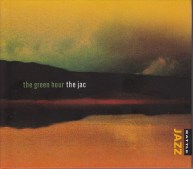 ‘The Green Room
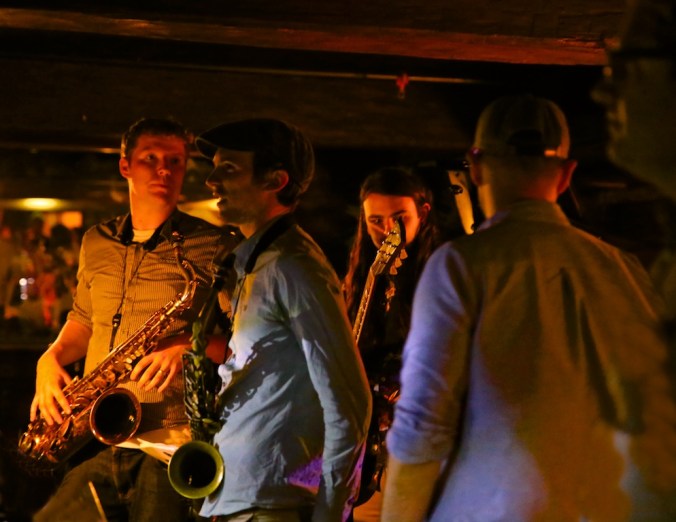 It is almost overkill to single out soloists with a cohesive group like this as every one is notable in some way or another. Altoist Jake Baxendale is their nominal leader and three of the compositions on the album are attributed to him (including the title track). If any number captures the essence of the group it is this. The solo on his tune Andalucia also captures a strong sense of place. I know Andalucia well and this is a convincing testimony.
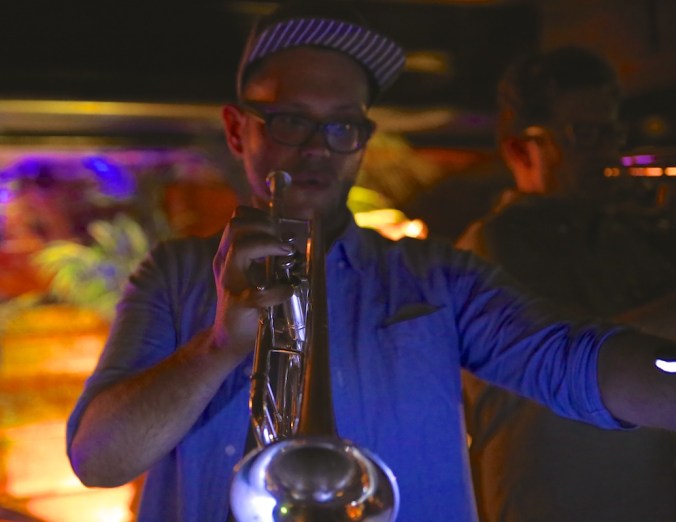 It is hard to know where to start with Callum Allardice; he grows as a musician every time I hear him. His compositions are stunning and his guitar work so fluid and exciting that it defies belief. These are performances that stop you in your tracks and few New Zealand guitarists capture that particular sound. Lex French is another spectacular performer and we would hardly expect otherwise. He is now the leading local voice on that horn. Perhaps the most experienced player is Nick tipping who never puts a foot wrong. On the new album we hear him at his best.
 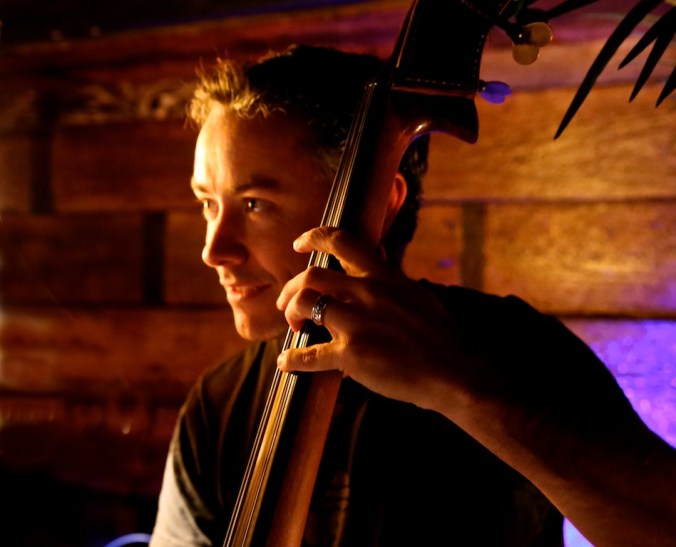 Convincing contributions by the likes of Chris Buckland, Matthew Alison and Shaun Anderson reinforce the view that this is an all-star band. Lastly there is pianist Daniel Milward. He has recently moved to Melbourne and his voice is particularly strong on the recording; more so than on the first album. Not a showy pianist but an extremely tasteful one who gets it just right. I have put up a sound clip of the Allardice Composition ‘The Heist’, as I have loved it since first hearing it (probably at the Tauranga Jazz Festival).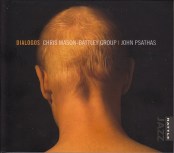
 In Psathas words, “it is not arranging or adapting…(rather) a continuing of the composing process”. There are works or arrangements which re-imagine and examine a work from an outside perspective. That is not the case here. This is part of a developing story and the Psathas vision remains at its heart. I recently read a trilogy by a famous and highly respected author. He had intended to write a fourth volume but died before he could proceed. A year later another author picked up where the original author left off and achieved something extremely rare. He added to the body of work seamlessly; continuing the narrative in ways that were his own and entirely consistent with the original. Although a more serious work, DIAGOLOS was an unmitigated triumph.
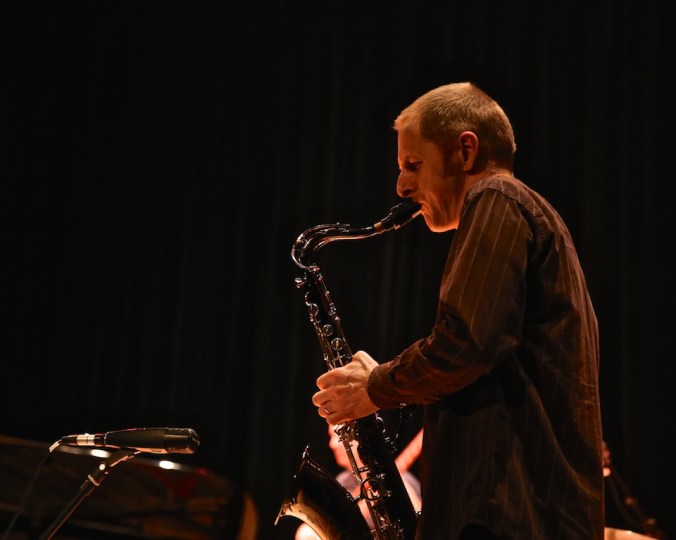
  Mason-Battley is a thoughtful gifted musician, but we don’t see him perform about town very often. Any new project gets his undivided attention and that was the case here. Counter intuitively, it is his careful preparation which affords him the extraordinary freedom he demonstrates on the bandstand. During this performance he took us right to the edge; you gained the sense listening that he was pushing himself a little further with each phrase. It is at times like this that great music emerges. While adventurous with electronics, he evokes a classic Coltrane sound on his Soprano. There are a number of local musicians who double on soprano but few (if any) sound like Battley.
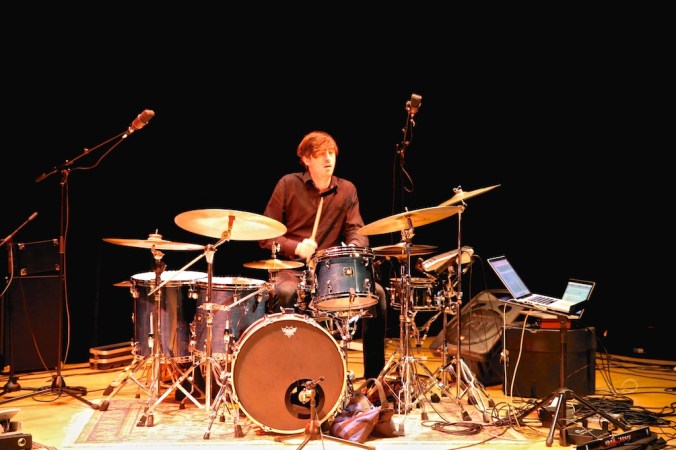
 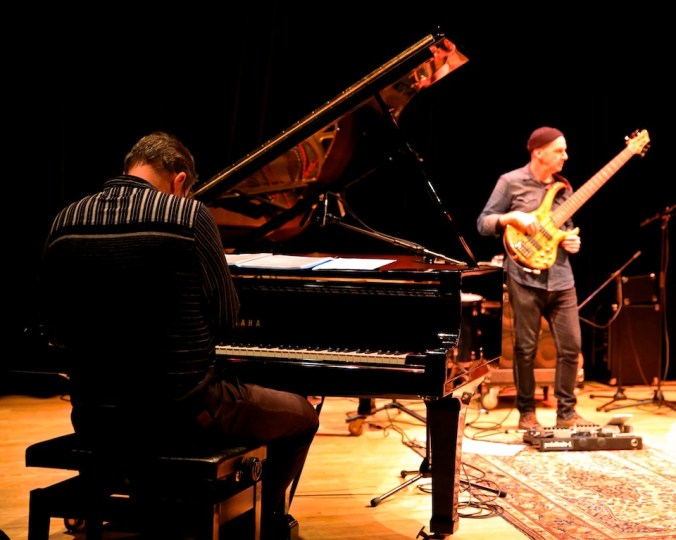 The Chris Mason-Battley Group has been around for some time and the original group set New Zealand records for the number of downloads and albums purchased. For this project core members David Lines, Sam Giles and Mason-Battley remain with the addition of drummer Stephen Thomas. Unlike earlier configurations, there is no guitar. Bringing Thomas into the mix has worked extremely well. The drummer of choice for many gigs and a gifted percussionist in the fullest sense. Psathas music calls for sensitive drum work and Thomas has exactly the right approach. His understanding of subtle dynamics, time awareness and overall sensitivity to the project were very much on display. I also appreciated David Lines piano. Lines early classical training was evident in places and again this made him a very good choice for the project. The work required a pianist with a particular chordal approach. At times he was minimalist and with a particular approach to voice leading. Lines like the other four were indispensable to the project. Lastly there was Sam Giles – an electric bass player I wish I heard more often. Giles often leans towards the avant-garde and innovative projects. That is where he shines.
  The Last Auckland Jazz Festival gig I attended was the Alan Brown/Kingsley Melhuish
  This has been an interesting Jazz Festival and although it is cliched, there was something for everyone. From manouche through to the avant-garde. I loved that it retained the feeling of local and of intimacy – even when showcasing offshore bands. The CJC (Creative Jazz Club), Rattle Records, 1885 Britomart, Auckland University, Golden Dawn, Portland Public House, Hallertau, Ostro, Lot 23, One2One, Hotel DeBrett, Lewis Eady, The Refreshment Room, the Vic, The Wine Cellar and other venues deserve our heartfelt thanks. Above all its
 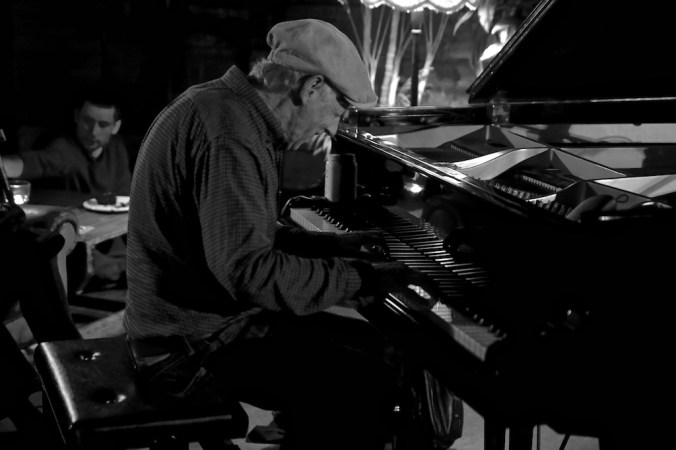 Having reviewed the ‘Two Out’ album a few weeks ago and thoroughly enjoyed it – it was a certainty that I would enjoy the ‘Two Out’ live gig. Mike Nock and Roger Manins are rightly celebrated as being at the top of their game, but neither trades on reputation. Both approached this gig with humility. As they settled into the music you could feel the absorption; punctuated by occasional smiles when a particular phrase surprised them, often delighting at what fell under their fingers. At times they seemed to defeat the physical limitations of performance; simultaneously observing and creating. This is a Zen thing and it cuts to the heart of improvised music. Others noticed it as well; one musician said to me afterwards, “Man there was no ego on that bandstand and it was a beautiful thing to witness’. He was absolutely right.
  Most albums require careful planning, the ideas gestating over time, rehearsal upon rehearsal shaping the direction. Then there is the other type arising from happenstance. ‘Two Out’ arose out of a relaxed jam between friends. Manins was relaxing with Nock one January morning in Sydney when they decided to play a few tunes (as musicians often do when relaxing). What took their fancy were the often forgotten tunes, ‘the ones that our mothers used to sing’. As they worked their way through the tunes Nock suggested that they record; just for fun. Shortly after they ended up recording in the Sydney Conservatorium’s Verbruggen Hall. The hall contained a wonderful Fazioli grand piano much to Nock’s delight.
 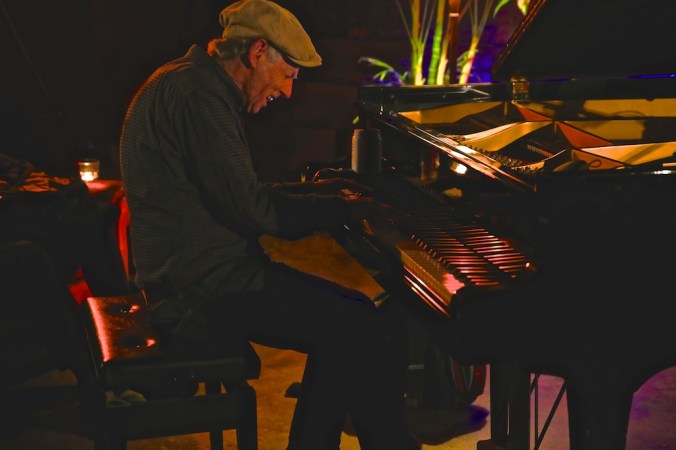 It is our good fortune that ‘Two Out’ was performed last week for New Zealand audiences. Nock explained that they had actually recorded 16 songs, but the limitations of CD space required these being reduced to eleven. On Wednesday we heard a significant number of the tunes from the album plus a few that didn’t make the final cut. In particular there was a version of ‘Softly as a Morning Sunrise’ (Romberg/Hammerstein). A wild joyous free-flowing version which brought out the best in both musicians. At times gentle but at other times carrying the echoes of a boisterous 1930’s radio performance. At that moment, listening, I visualised my mother, leaning over an old upright Victrola and humming along happily. The other addition was ‘But Beautiful’ (Jimmy Van Heusen). An overwhelming sense of respect and intimacy was evident in their interpretation of that tune. It brought a smile to everyone’s lips. When friends like this collaborate it is profound …… but beautiful.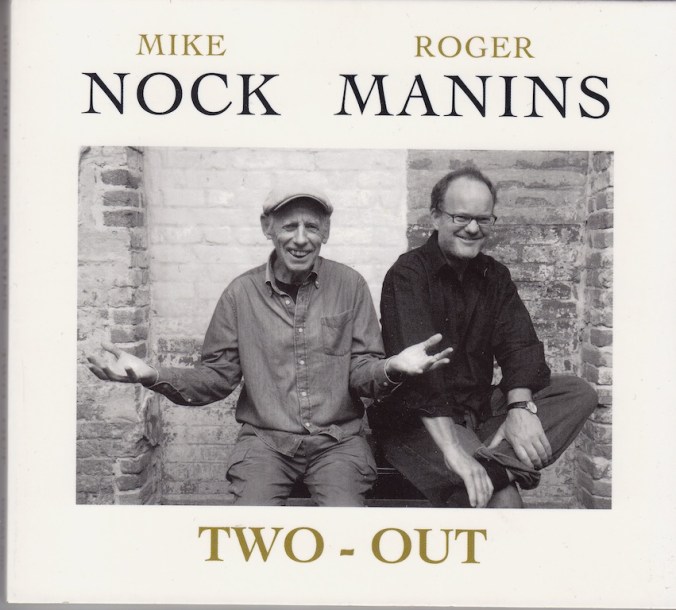
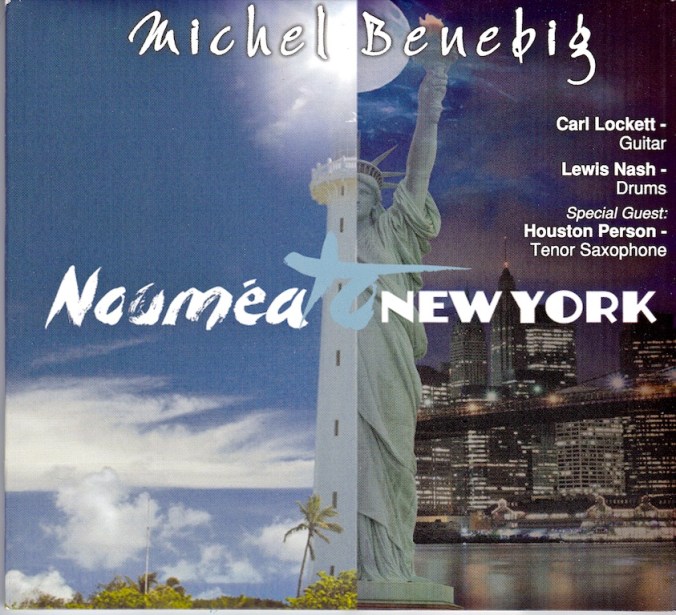 Michel Benebig visits New Zealand once a year and we anticipate his visits with Joy. His authentic B3 groove journey didn’t start in East Philly, but in tropical Noumea; a South Pacific Island north of here. After honing his craft he travelled widely and in consequence his star steadily rises. The more North American audiences hear him, the more they embrace him. He is now regarded as a B3 master. The B3 greats who inspired him are all but departed and he deservedly steps into their shoes. His travels in the USA have brought him into frequent contact with a number of well-known musicians. As good musicianship and a pleasant disposition are the highest recommendations possible, the musicians he worked with recommended him to others. That is how he teamed up with Carl Lockett.
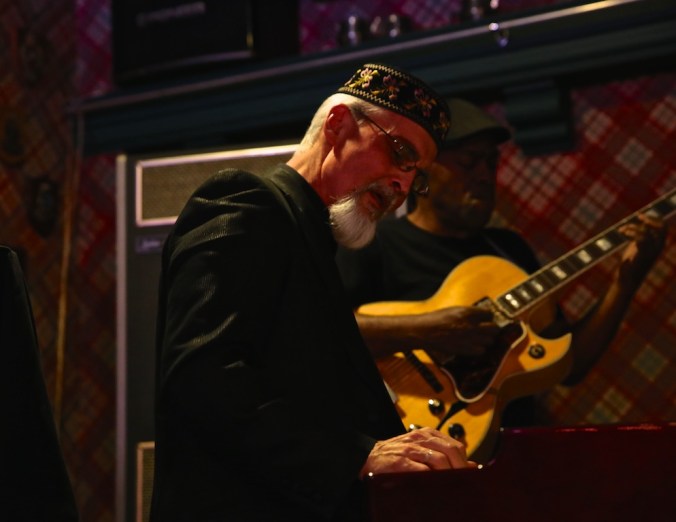 The new album ‘Noumea to New York’ is his finest to date (and true to label, recorded in New York). Again Lockett features on guitar, Lewis Nash lays down the drum grooves and special guest Houston Person appears on tenor saxophone. What a marvellous line up this is and what an album they turned out. This album alone will secure Benebig a place in the pantheon. It has modern B3 classic written all over it. All compositions are by Benebig, with one tune co-credited with his partner Shem. There are so many treasures on this album that it is hard to single out one particular tune, but if pressed I would say ‘Noumea To New York’. A medium paced groove track with enough warmth to melt the ice in your drink. The flawless interplay between Benebig, Nash and Lockett is in strong evidence here. With Nash creating a solid cushion of groove, it is no wonder that Benebig and Locket sound so marvellous.
 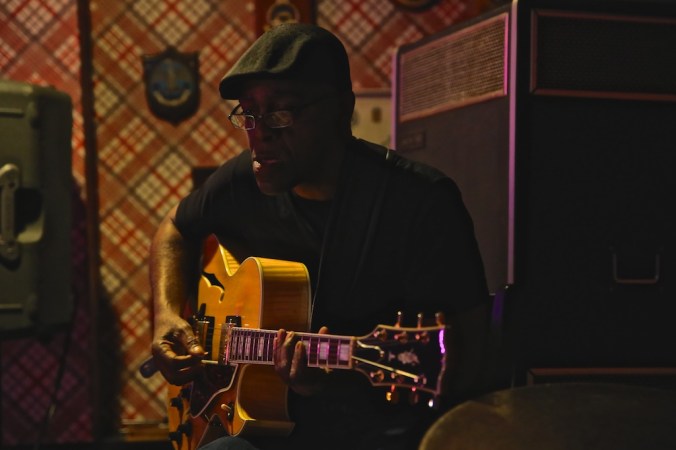 The tour down under was minus Nash and Person; Locals filled those gaps. In Auckland we had Roger Manins on tenor and Ron Samsom on drums. This was also a perfect fit, as both had accompanied Benebig previously. The set list in Auckland was partly material from the album and partly marvellously quirky tunes from classic TV shows. How often do you hear the theme from ‘The Pink Panther’ or the theme from ‘The Naked City’ played by a groove unit? More common in Jazz circles is the Johnny Mandel standard ‘Suicide is Painless’ from Mash. When people think of that last number they think Evans and seldom the B3. To show what skilled groove merchants can do with such material I have uploaded a clip.
 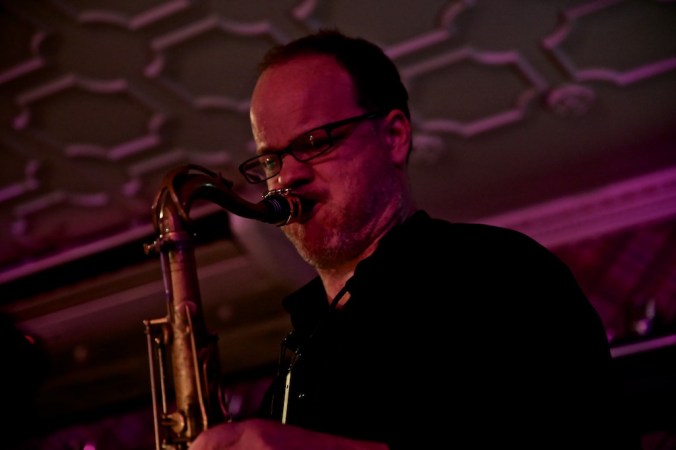 While Benebig is very much in command here his groove collaborators preached just as hard from their respective pulpits. Lockett in particular was astonishing. Gasps of delight erupted as he utilised his finger picking blues-guitar credentials. Moving seamlessly from lightning quick double-time to a steamy groove; often leaning slightly back on the beat. His comping was equally delightful as he does what Pat Martino does. There is either a slight vibrato or he pulls gently down on the strings with each comping-chord; creating simultaneously a warm but slightly mournful effect. Whether on fast single-note runs or octave chords, its hard not to think of Wes Montgomery. His extensive use of thumb and fingers and his fluidity evokes that comparison.
 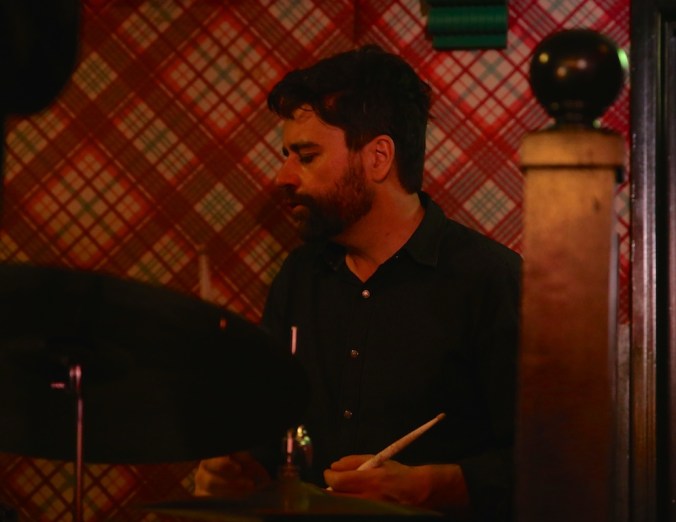 Manins was clearly in his element here. Happy among friends and happy to find himself back in the groove space. The same went for Samsom. Both are highly regarded straight ahead Jazz musicians but both have released great groove albums in the previous year. Their joyous abandon added to the quantum of happiness; every note making us smile.
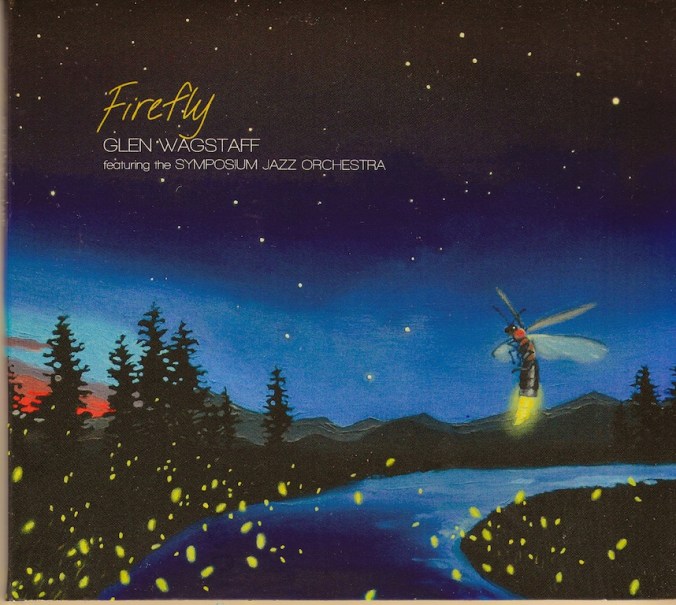 The postie brings more music to our house than he does bills and so I always welcome the sound of the small motorbike pausing outside. This time she delivered a wafer thin parcel with the sender identified as Glen Wagstaff; Firefly had arrived. Looking back over my blog posts revealed that I first encountered the Glen Wagstaff Project in October 2013. At that time we heard several compositions now on the album and in particular to the title track ‘Firefly’. The first Auckland lineup was an eight piece ensemble, all Christchurch musicians. I was only familiar with two of them, Tamara Smith and Andy Keegan. The ensemble impressed and especially notable were the compositions; well constructed charts which magically exceeded the limits of eight piece instrumentation.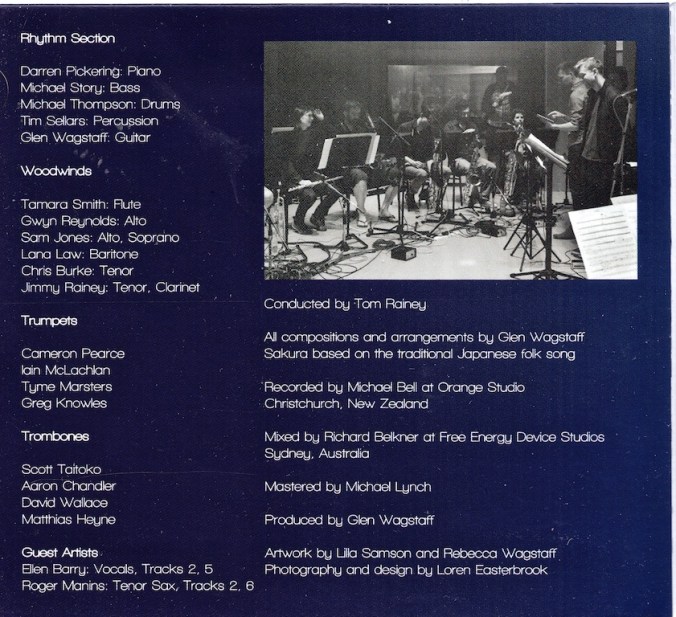
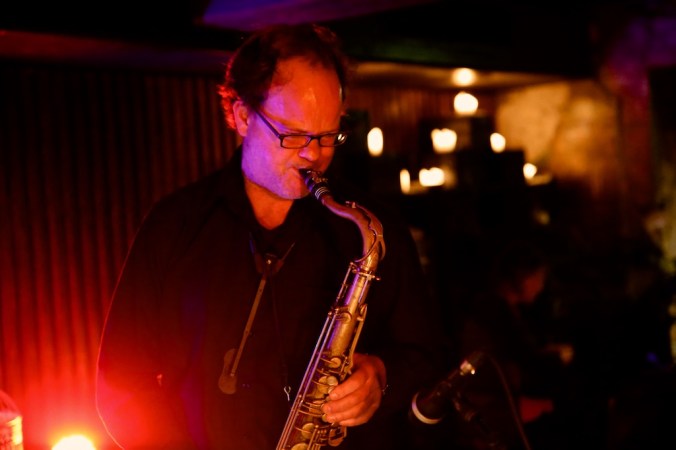 There are a lot of interesting stories on the Jazz circuit and some of them more improbable than others. None more so than a gig dedicated to the Manukau Harbour mud crab Grg67 (Varunidae:Helice). This ten legged estuarine creature has inspired Roger Manins to name a band after him and to compose a significant number of tunes
 in his honour. I could say that environmental activism fuelled the gig (and in part it was), but the affection and respect Manins exhibits towards these crustaceans is more complex than that. It is the respect of a dedicated Flounder fisherman; coloured by the quirkiness of an improvising musician. To quote: “When we play these compositions there are sharp claws and a soft underbelly; at times we can move unpredictably sideways at great speed”. Manins demonstrated this to great effect as he swiftly shuffled in alternate directions. You couldn’t make this stuff up. As the gig unfolded he delighted the audience with his antics and with the subsequent ‘crab’ influenced compositions.
 Underneath the crusty carapace were a bunch of good tunes and as Manins inferred, they were tangentially tricky and replete with interesting musical twists. Good improvisers are always on the look out for new challenges, new ways to interpret the world about them. In putting together ‘Grg67’ a fresh vehicle for improvisation is born. By bringing in several less experienced musicians Manins has fulfilled an older imperative. To challenge and encourage those beginning the improvising journey. This is how it should work, but many older musicians forget that and remain in their comfort zones. Everyone stepped up here under Manins watchful eye.
 The crab which is the central focus of these sets is Greg, but as Manins so eloquently explains “Crabs don’t use the letter ‘E’. It something to do with their waste not want not utilitarianism”. Other tunes had titles like ‘Crab Empathy’. These tunes and the stories that surrounded them evoked powerful mental images. As the music washed over us you could sense the ebb and flow of the tides. You could easily imagine a predatory Flounder sending the ever watchful crabs scuttling into their burrows (Flounder are none too bright according to net fisherman).
 Michael Howell and Tristan Deck are the youngest members of the ensemble. Howell is a Jazz student and with each month his guitar work grows more impressive. As his confidence grows he stretches himself and playing with Manins is exactly what he needs. He is ready for the deep end of the crab pool. On this gig he played a borrowed Fender and it sat well with him. That Tristan Deck played so well did not surprise me at all; his career trajectory assured as he increasingly takes his place among the better Jazz drummers of the city. He was good when I saw him two years ago; now he is very good. For the second time this month Mostyn Cole appears at the CJC. This time he held the groove with electric bass. He is reliable and multi faceted. Again Manins showed how seamlessly he slots into very different situations. He presented a complex set of tunes to good effect, navigating break-neck tempos and fusing complexities with an inexhaustible supply of good humour.

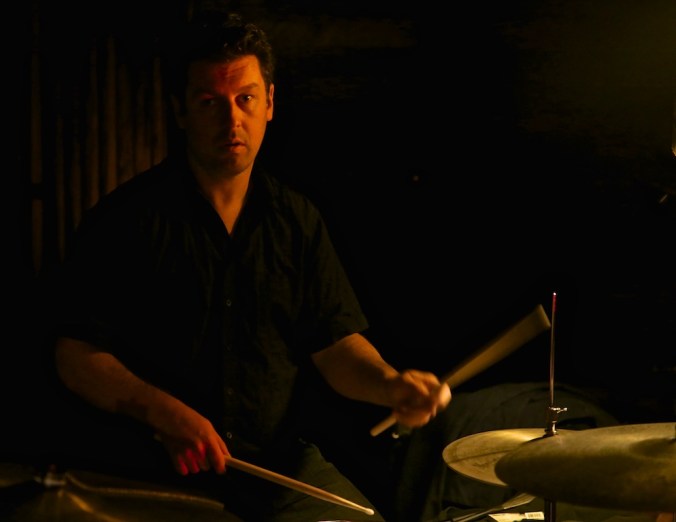 Mark Lockett is a New York based drummer who visits Australasia once a year. Each time he returns he brings with him a piece of his adopted city. He is an original drummer comfortable in diverse situations; a benign but strong presence in any lineup. His artistic approach under-pinned by an easy confidence and this enables him to interact well and to read every nuance. His wide open ears, communicating the pulse and possibilities of the life he lives as a working musician in a big metropolis. There is also a humour he radiates, which peppers his comments and drumming like aromatic seasoning. A Mark Lockett gig is always original and always enjoyable.
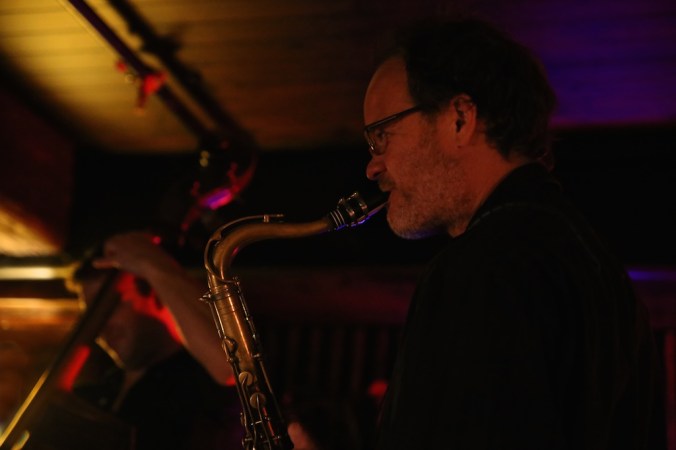 The music of Ornette Coleman while not without constraints frees the artists from many of the hard-wired rules. It doesn’t sound at all out-of-place now but I can remember the storm that surrounded its arrival. A treat for me was the groups rendition of ‘Congeniality’ from the seminal ‘The Shape of Jazz to Come’ album. The controversy surrounding this material is long behind us and every improvising musician has a little of Ornette in them whether they acknowledge it or not.
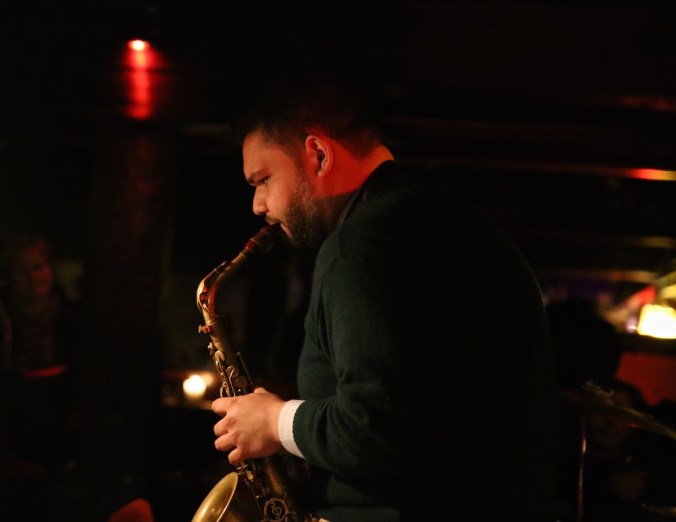 Lockett often forms trios or ensembles that have no chordal instruments. While the musicians played ‘inside’ and ‘out’ they also attempted something we seldom hear in New Zealand. The opening number of the first set was Shiny Stockings (Frank Foster) and they played this in the style of the Mulligan piano-less quartets. Bass, Alto and Tenor in counterpoint and working within the changes. This was nice hear. I have an appetite for more of this.
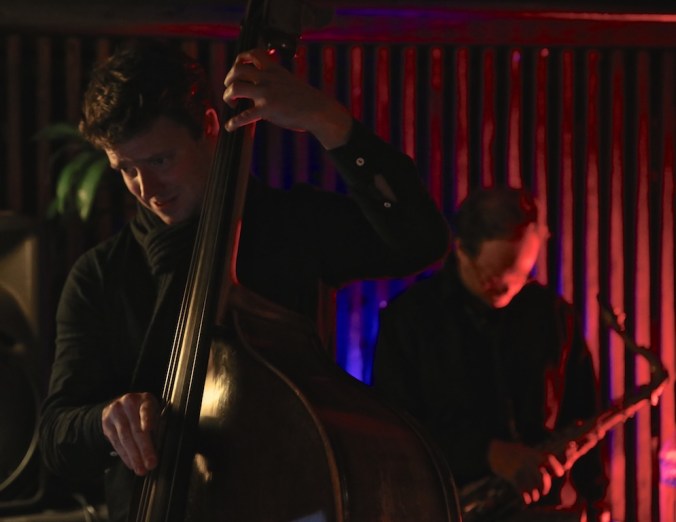 “Playing like that (fast and furious) is meat and potatoes in New York”, he said. He was once told that he could get better control if he held his sticks further down than usual. Because of that and because of his melodic approach, he is very interesting to watch. Somehow the sound is cleaner and with musical drumming like this who needs a chordal instrument. I can’t wait until his next visit.
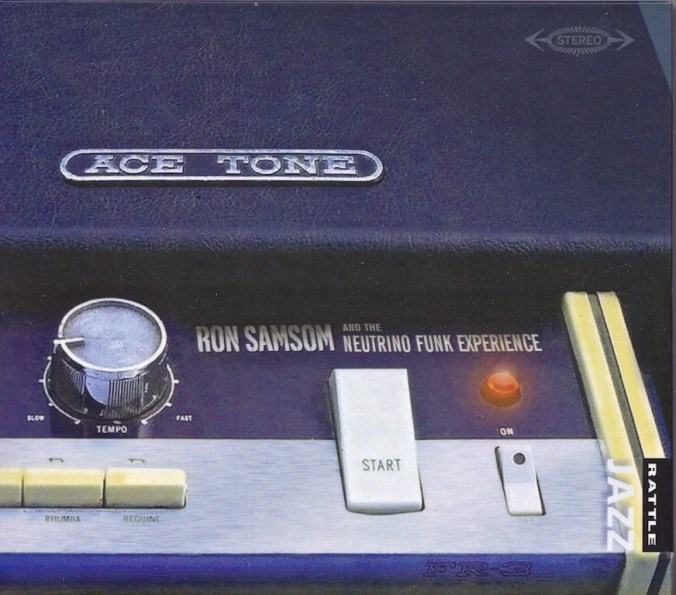 Ron Samsom’s Neutrino Funk Experience ‘Ace Tone’ album has so much up front punch that that a warning is needed on the label. It is an album that grabs you by the lapels and demands your attention. As you listen it transports you to a world of joy. The album and the live band exudes a vitality that enters through your pores, pulsing through your body like the wild blood of extreme youth. Try as you may, it is impossible to keep still as the rhythms consume you limb by limb. While the album brings historic musical references to mind, it is very much of the present. This is Jazz Funk at its very best.
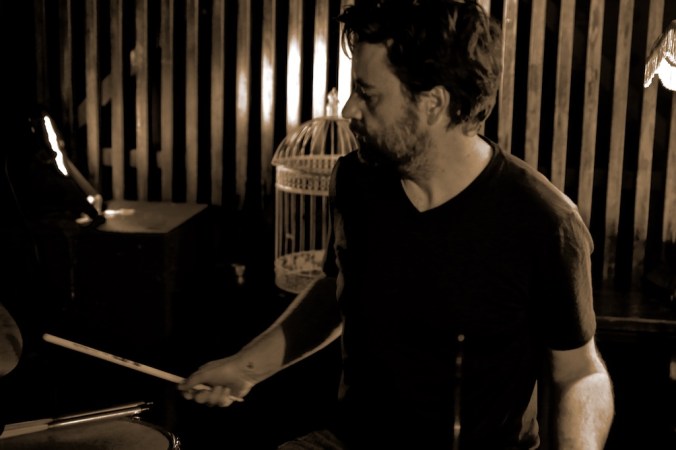 There is cleverness aplenty in the album, but that’s not what it’s about. The pulse, punch and danceability are the draw cards. The tunes let each listener glean their own references. During the album launch someone said, “Oh wow that takes me back to Deep Purple”, while others talked of the Jazz funk gurus like Herbie Hancock, Eddie Henderson and Jimmy McGriff. What ever references people heard, one thing is for certain. This band updates 70’s Jazz Funk as few other albums do. A lifelong fan of the classic genre observed, “few classic 70’s funk albums actually sound as good as this”.
 Material like this needs highly skilled and experienced musicians in order to extract the maximum advantage and that is exactly what Samsom got. This is an alignment of talent that works so well that they must surely build on their success. The Neutrino Funk Experience formed in 2014 and started doing regular gigs at Auckland’s Albion in the central City. The word soon got around and one by one we drifted down to see them. The band stood-out from the first day and the disbelieving expletives from experienced musicians confirmed what our gut told us. These guys were total ‘muthas’.
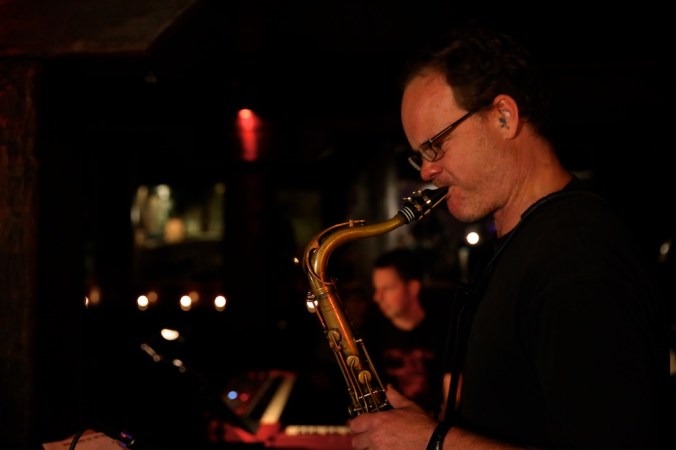 Roger Manins always sounds great but he has excelled himself here. This brand of earthy down-home funk is a natural place for him and his own funk albums reinforce that view. Manins just tears the place up on these sessions and it would be hard to find his equal. There are times when he apparently defies gravity, rising to his toes and abandoning self to move inside the music. These are moments of pure Zen and I watch for them now. Man and instrument becoming one and out of the bell streams a cornucopia of sound, distilled from the human experience. From the otherworldly wails to the gentlest urgings you recognise Manins uniqueness. Organist Winterburn said of him, “Working with Roger is perfect for me. He’s such a rhythmic saxophonist”. Coltrane, old school funk, ballads and modern edge; it’s all there in the sound.
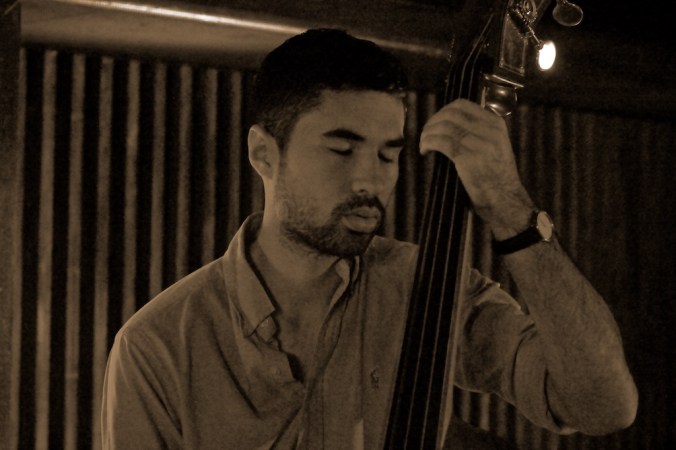 On the album we have Cameron McArthur on upright bass. Even before leaving the UoA Jazz school Cameron was punching well above his weight. I would describe him as an instinctive player. Knowing where to place his lines and always strongly supportive of other band members. He quickly became a fixture in quality rhythm sections and visiting artists praised him. After a trip to New York to check out the scenic he picked up some work in cruise ship bands. By happy coincidence they had cut the album prior to him leaving. So punchy are his bass lines on ‘Ace Tones’, that you think he is playing an electric bass. In his absence Samsom hired Karika Junior Turua for the launch gig. Again this was a good choice. This time we did hear an electric bass and as Turua has experience with Jazz funk, the transition from upright to electric bass was seamless.
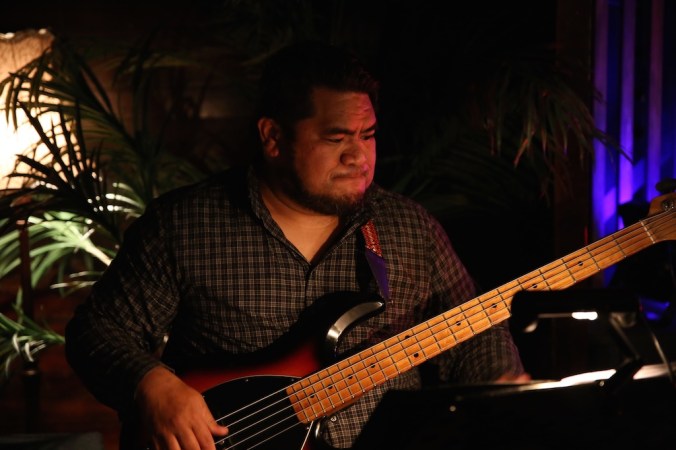 Lastly there’s the album art work and the recording credits. Who ever created the cover design and layout must feel pleased; they did an amazing job. The presentation tells the ‘Ace Tone’ story perfectly. My friend Iain Sharp and I were involved in the project as liner notes providers. As requested we contributed poems. It is rare (but not unheard of) for an album to use poems instead of the standard liner note blurb. I really hope that this trend continues for selfish reasons. Contributing something to an album like this is pure pleasure. The recording and mixing took place at ‘Roundhead Studios’ in Auckland and the mastering at ‘Turtle Tone Studios’ in New York. The album is out on Rattle Jazz where the best of original New Zealand music lives.
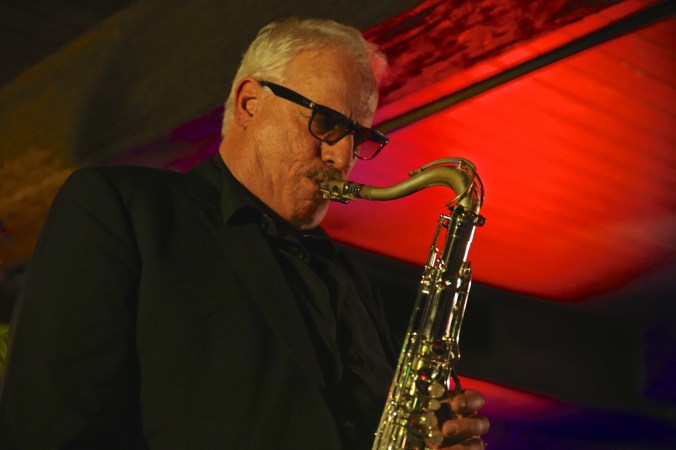 Doug Lawrence is every bit the archetypal southern tenor man, from the top of his tall frame to the bell of his brightly shining tenor. His sound is fat and down-home-cooking rich, whether playing softly or at volume. He has more cut through than a diamond headed drill-bit. Lawrence has such considerable credentials that it is beyond my reach to enumerate them all here (google him).
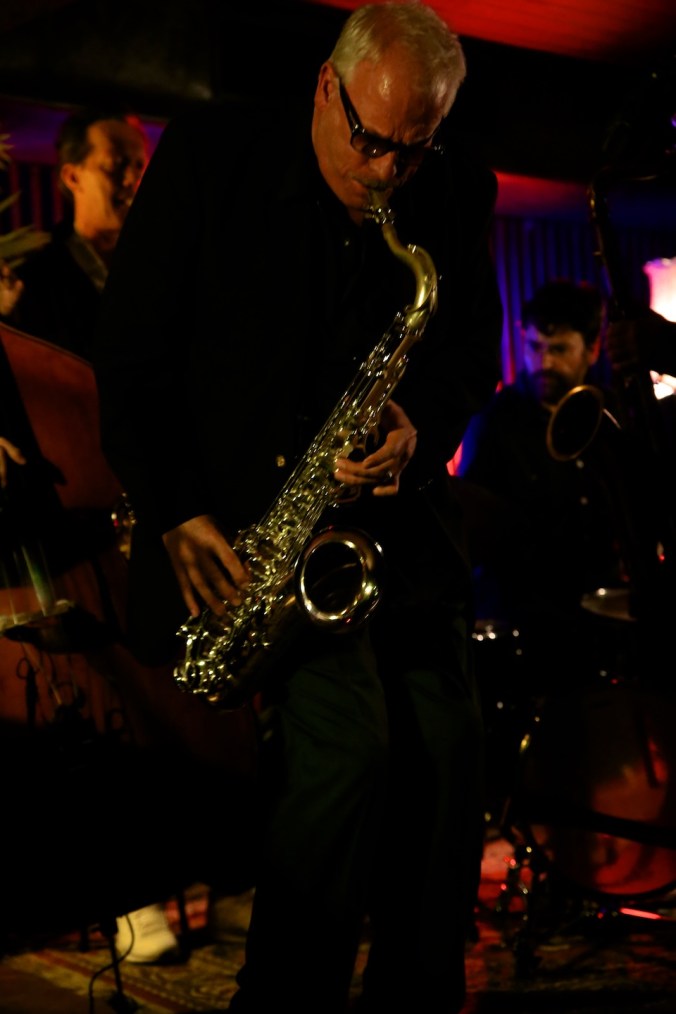 Lawrence is tall and as he performs he stoops slightly, forming a classic old school playing pose. Slowing bending his knees inwards before stretching and lifting his horn to the ceiling. His speaking voice is rich like his playing, a southern Louisiana drawl adding to his considerable charm. The first number was ‘End of a love Affair (Redding) and the audience whooped in delight as the band took the changes at a good pace. The rhythm section propelled by the tidal waves of sound emanating from the tenor. It was that sound and the power of delivery that grabbed you from the get go. The intonation and phrasing revealing influences which although readily identifiable, transformed them into a new sound. This was pure alchemy. It was like having Gene Ammons and Dexter Gordon on the same band stand.
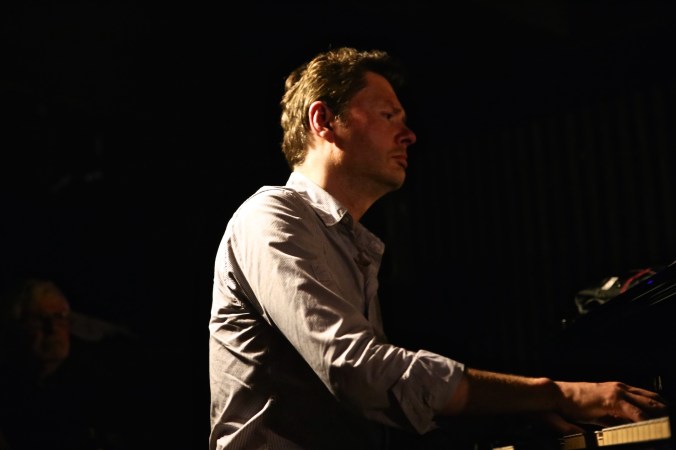 It is during ballads that the skill of a musician is often tested. In this case we saw something close to perfection. It wasn’t just Lawrence, but his Kiwi pickup band as well. Spurred on by each other, they dug deeper and deeper. A night and a vibe that we will remember for years to come. There was an obvious rapport between pianist Kevin Field and Lawrence. I gather that he found Field’s harmonic approach interesting and perhaps this is an indication of our own development as we grow our standing. Lawrence’s intonation was the thing that grabbed you most and this made his solos particularly enjoyable. Long held notes ending in breathy flurries or else bending the note ever so slightly before delivering a short heart stopping burst of controlled vibrato. With Holland and Samsom also finding their sweet spot this was a dream band.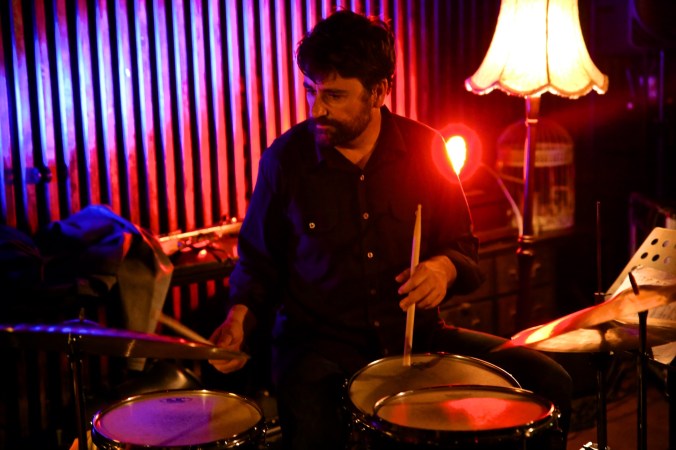
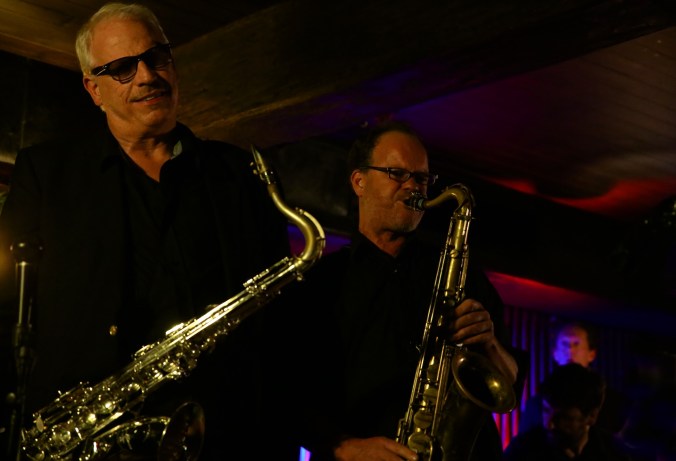 Here is the back story: 17 years ago a younger Roger Manins hit the New York streets, where he learned to scuffle in the time-honoured way of Jazz musicians. Because he possessed the hunger to learn he approached many established horn players. One of these was Doug Lawrence and traces of that time are still evident in Manins sound. All of those years ago Manins subbed for him and here is a Face Book extract that Lawrence posted once he returned to the USA.
  “Roger has matured into a GREAT player and MAGNIFICENT teacher! All of his students have a SOUND and they are all inspired to play, because of Roger. The curriculum at the University of Auckland Jazz Department is second to none, and I am going to use it as my model when conducting masterclasses at other universities around the world. Roger and Ron Samsom and the rest of the faculty have got it right at the U of A and I’m going to suggest that each and every University I teach at check it out. Cheers ROG! You are doing it ALL right brother! I hope to see and play with you soon mate!” That says it all really.
 Nathan Haines is a master of the melodic and the model and he has a beautiful and distinctive sound on all his horns (and winds). He has a strong following around the world and it is no wonder when he turns on gigs like this. His following crosses genres, attracting younger and older audiences equally. He also cuts through media blind spots in a way that few other New Zealand improvising musicians do. It is good to have him on home soil for a while and good that he is focussing on fresh local projects. What he does is always exciting and this gig was no exception.
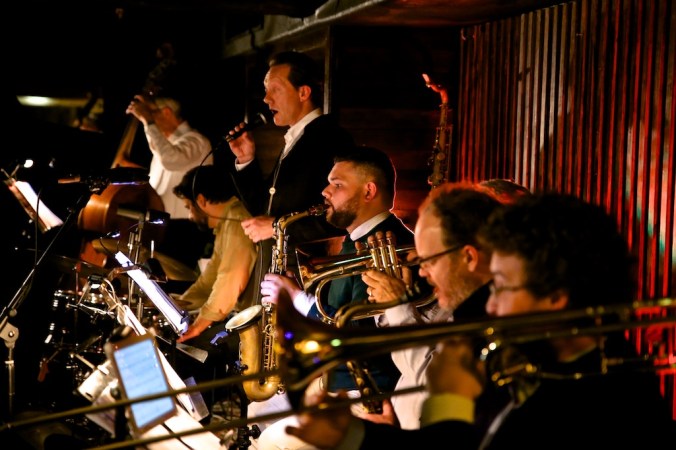 The talented and hard-working, Haines always thinks through his projects. Hot on the heals of his successful award-winning Jazz albums ‘Poets Embrace’ and ‘Vermillion Skies’ he has again teamed up with arrangers Wayne Senior and Mike Booth. The decision to include more Jazz vocals is a welcome development. There’s a paucity of male jazz singers in the modern world and they’re a rarity in New Zealand. The set list was an interesting mix of Haines originals and a few Jazz standards seldom heard live. Like his recent Jazz projects, these tunes evoked and reinterpreted the classic era of the 50’s. Consequently they oozed cool.
  With Michal Martyniuk on piano, Kevin Haines on bass and Ron Samsom on drums he was already on solid ground. This is also where Haines excels. He is a bandleader who choses his musicians well. Martyniuk made his presence felt and soloed beautifully while never over playing. It was exactly what these charts required. Kevin Haines is a highly-respected, tasteful bass player with an impeccable CV. During the sets smiles and friendly banter flowed between father and son; further enhancing the mood. The highly experienced Samsom was on drums throughout. He is new to Haines lineups. His approach to the kit springs from a confident inner logic; more organic than Haines usual drummers. It was interesting to watch their interactions as they sparked off each other. Samsom giving Haines a different platform to work from.
 immediately took me back to hearing Pharoah Sanders for the first time. When Haines plays these modal pieces, there’s a spiritual joy that comes across. This is a strong suit for him and for those of us who love that era a balm.
 Davis album ‘Birth of Cool’. Few bands tackle this and more’s the pity. The octet horn section were Mike Booth, Roger Manins, Callum Passells and Hayden Godfrey.
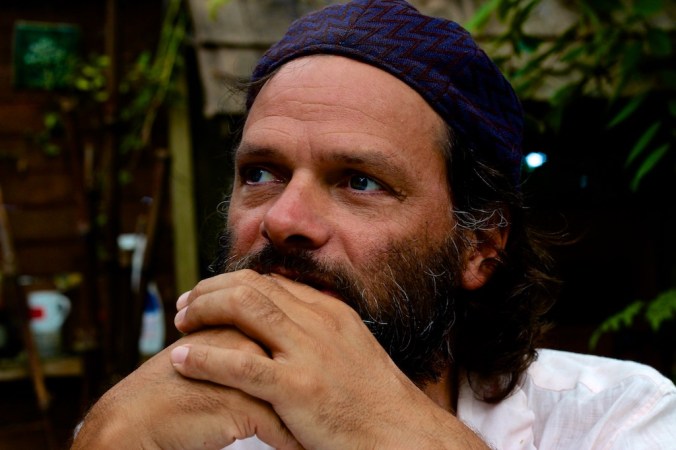 When the luck runs your way, an interview with a musician will mysteriously transform itself into something more. If you know how to read the signals and respond appropriately, you find yourself traversing musical galaxies; places where words and musical ideas merge. I was acutely aware of this when I interviewed Jonathan Crayford recently. He is the ideal person to spend time with if you like to explore the improbable connections between seemingly unrelated things. It was an interview where the rhythms of the moment guided what we discussed and the best part of a day flew by before I knew it. This cerebral world is where Crayford prefers to live. He is perpetually on the road, dreaming up and shaping musical projects as he goes. His life is truly the troubadour’s life. As I probed him for insights, one episode in particular threw light on how serendipity and happenstance can guide him.
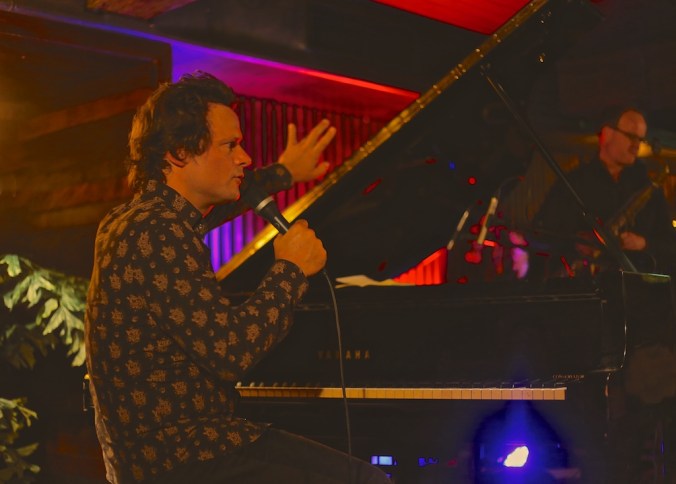 I asked him why this type of project drew him so strongly. “I’ve been travelling for years and it’s the excitement of new projects and the risks associated with being in unfamiliar places that lures me. I like being in a new place, an exotic place, somewhere outside of my life’s experience. It is like a rebirth. New loves, new sounds new smells, new food and a new vantage point from which view life. The grist of creativity comes directly out of this”.
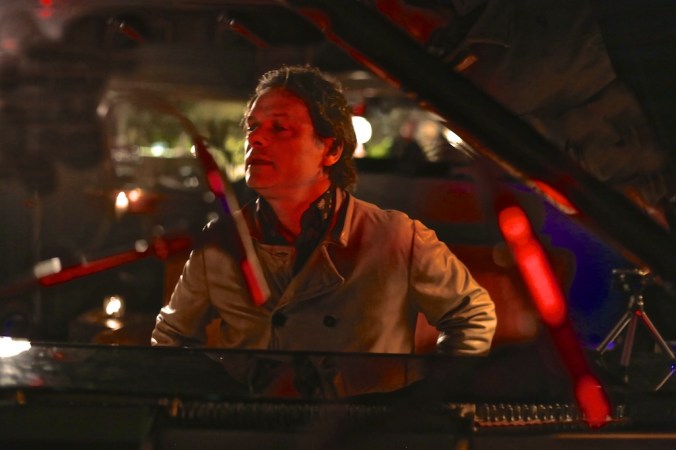 On April 15th Crayford returned to the CJC (Creative Jazz Club), but this time without bass or drums. The gig was billed as ‘solo piano’ with special guest. Roger Manins joining him for the final numbers of the second set. This was a first for the CJC as the club has never hosted a solo piano gig before. Interestingly a slightly higher entry fee was placed on the door, but far from deterring people it signalled that something special was to occur. You could have heard a pin drop during the performance. This audience really listened and they were amply rewarded for their attentiveness. This highlights the growing sophistication of CJC audiences and above all it demonstrates the deep respect that we have for Crayford as a performer.


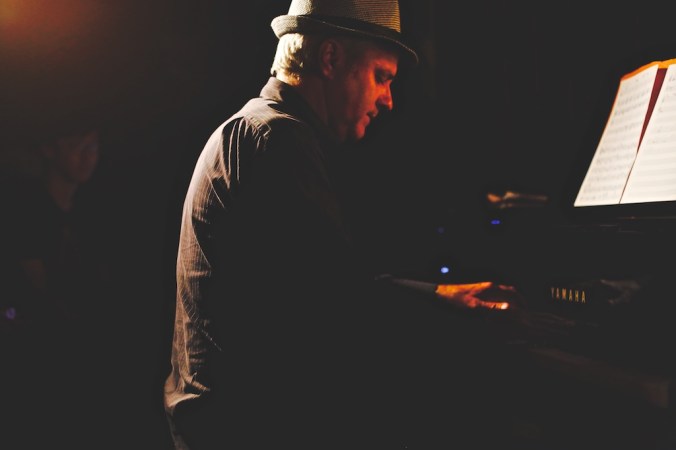 When I saw that pianist Chris Cody was coming to New Zealand I immediately recognised the name. For a moment I couldn’t fill in the blank spots of memory but I sensed that the connection was both Australian and international. My CD collection is huge and I knew that the answer lay buried somewhere in the unruly muddle of music lying about the house. Then it came flooding back; Cody recorded a great ‘Chris Cody Coalition’ album in the nineties. The first international Jazz NAXOS recording titled ‘Oasis’ and produced by Mike Nock; an innovative exotic project brimming with warm middle eastern influences. Some quick
 research told me that the Chris Cody Coalition was still an entity and what equally excited me was to see the name Glenn Ferris on several of the albums credits. ‘Oasis’ featured the Australian Trombonist James Greening and on several of the later Coalition albums Cody features trombonist Ferris (an utterly distinctive player). His whispers, growls and smears are at times otherworldly, but also mysteriously human. Cody works especially well with trombone players and his writing reflects this on the latest album.
 in the front row and this is as much about Cody’s writing skills as the strong confident performances. It is also about the recording quality which is superb. I strongly recommend this album. I first heard the quartet at the Tauranga Jazz Festival. A CJC Jazz stage showcased the finale and the Jazz Tui Awards presentation. I spoke to Cody in a break and quickly learned that he had New Zealand blood running in his veins. Born in Australia of Kiwi parents he studied music before moving to Paris. Based there ever since and gaining a strong reputation on the wider scene. He has very recently move back to Australia but he intends to return to Paris to work periodically.
 often draws on very American sources like Jamal, he is also in the mould of pianists like Jacky Terrasson (also a Parisian). Cody’s compositions are well thought out and replete with interesting asides. We heard many of these at the CJC and the album ‘Conscript’ is all originals. I am a sucker for a Cole Porter tunes and when he opened with ‘I love Paris in the springtime’ I couldn’t have been happier. Happy because I love the song and above all happy because the quartet played it so well. I have posted a video of the CJC performance and the title track from the ‘Conscript’ album with Ferris (the latter an official video release).
 His pick up band are the familiar and popular Roger Manins (tenor), Oli Holland (bass) and Ron Samsom (drums). In the rush of the Tui awards there was little time to rehearse, but it didn’t show. This is 3/4 of DOG and they are the 2015 Jazz Tui winners after all.

 Frank Gibson Jr’s ‘Hardbopmobile’ has been around for a number of years and the band always delivers uncompromising hard-hitting performances. Gibson and Watson see to that. This no nonsense approach guarantees that Hardbopmobile’s music, even while traversing well worn standards, is fresh. This particular gig was titled ‘Hardbopmobile plays Monk’ and with the interesting addition of vocalist Caroline Moon (Manins) on vocals, it gave us much to enjoy. Familiar and lessor known Monk tunes appeared as the evening progressed. While all of Monk’s recorded material is perennially interesting and seemingly beyond caveat, in the right hands vibrant new interpretations are possible. This is the nature and Monk, the Picasso of modern Jazz; a modernist movement in perpetual progress.
 Ted Gioia pointed out in his book ‘The Jazz Standards’, that only two composers of pure Jazz standards remain in ascendency. One of these is Monk whose stock has risen steadily for many decades now. The other (and that has occurred more recently) is Billy Strayhorn. Both of these composers had an astonishing modernity about them. In spite of some beguiling melodies, neither offered the listener simplicity. What you get with Monk is often jagged and quirky compositions, but for all that his hooks snag deep. Listening to Monk you hear the sounds of New York. The broken lines and
 startling dissonance are echoes of traffic and street life. Very human sounds and offered from his unique vantage point. In spite of the difficulties life threw at him the music is somehow tender. Monks was essentially a humanist voice.
 and wild.
 In the coming months there will be a new Phil Broadhurst album released, ‘Panacea’. Broadhurst is an enduring musical presence, a backbone of the Auckland Jazz scene. Running the Massey School of Music Jazz programme in Auckland keeps him busy, but he somehow finds time to write interesting new material and to perform gigs about town. A prolific writer and arranger, he has released a number of albums in recent years and all have done well. His tribute to Michel Petrucciani ‘Delayed Reaction’ garnered favourable reviews here and offshore and his 2014 album ‘Flaubert’s Dance’ was short listed for a Jazz Tui.
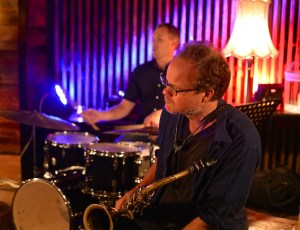 poorly kept secret, anticipated and not puzzled over. As the band set up, the shiny pedal-steel guitar and the battle-worn fender dispelled any remaining doubts. The band was Phil Broadhurst, Roger Manins, Mike Booth, Oli Holland, Cameron Sangster and of course Neil Watson (AKA the mystery guest).
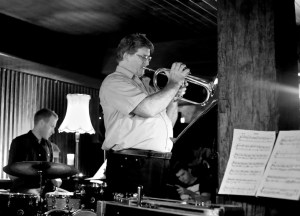 began the process of mechanically purging duplicate copies of old tunes. By this point all had been given titles and saved elsewhere. Rescued from the lonely obscurity of the ‘untitled’ nomenclature. As he deleted them one by one he spotted an anomaly. One particular tune was mysteriously labeled ‘untitled-untitled’. He opened it, liked the look of it but didn’t recognise it, so he played it. He recalls wondering who had written it until the penny dropped. ‘Untitled-Untitled’, the tune rescued in the eleventh hour, was later shown to Neil Watson who was wrangling with his new pedal steel guitar. There are so many levers to operate he complained to Broadhurst, who replied, “I think that you’ve just named my lost tune’. ‘Lever’ is a great tune and its improbable genesis gives it that added piquancy.
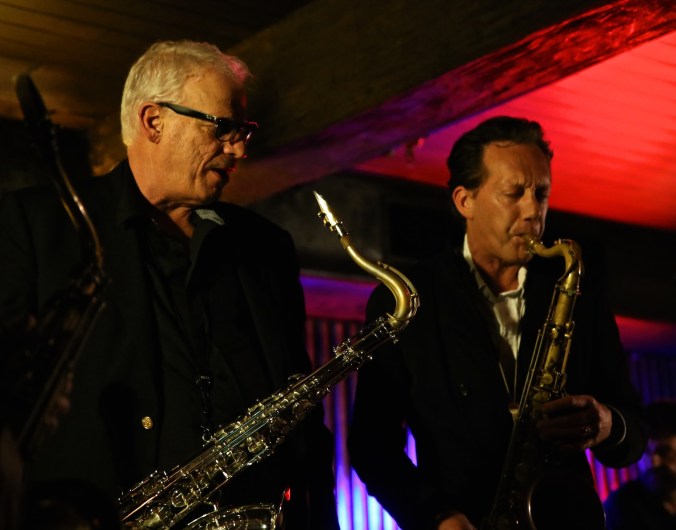
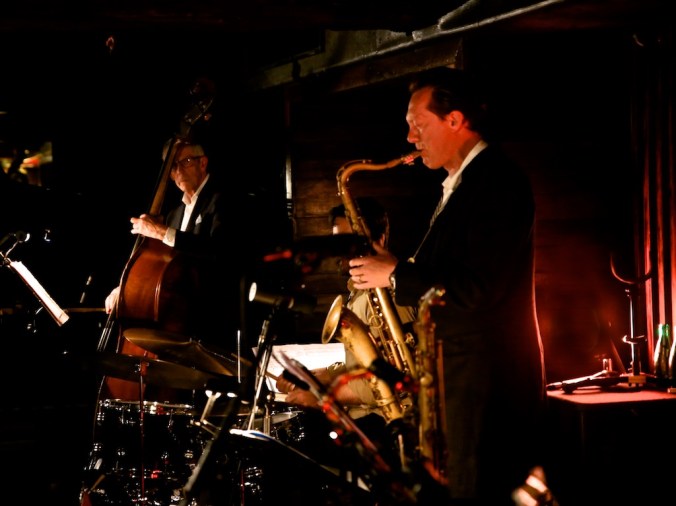
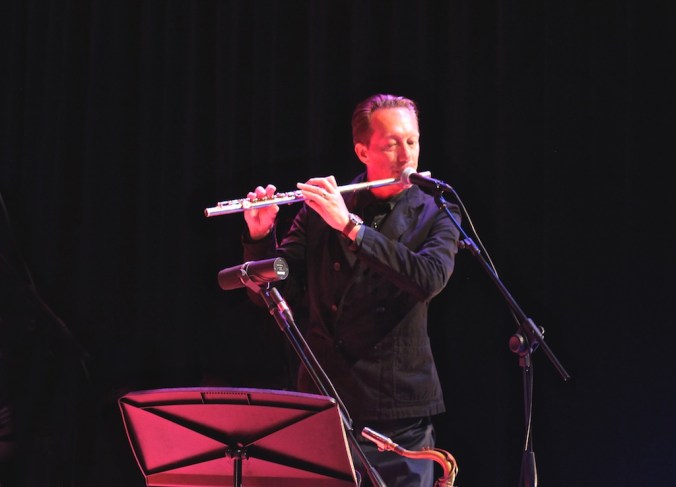 On Wednesday five well turned out ‘men in black’ suspended time at Auckland University. This was a rare event, pairing two of New Zealand’s best known and best-loved contemporary tenor players. The invitation only concert billed as ‘Nathan Haines meets DOG’ kicked off of the Universities 2015 Summer Concert Series. New intake students attending (or viewing the video clip) discovered just how high the standard is; they also realised how lucky they are to have these teachers and these role models.
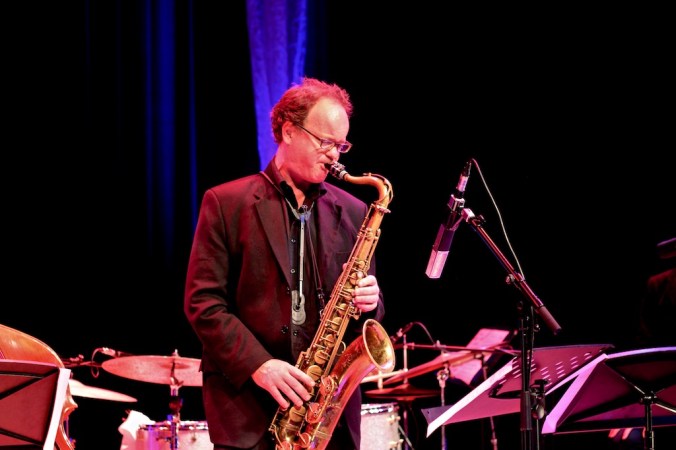 The Nathan Haines/DOG line up can rightly be described as a super-group; the cream of New Zealand’s improvising artists. We saw Haines at his best here as he showcased his formidable talents on tenor saxophone, soprano saxophone, flute & vocals. He is a multiple New Zealand Music Awards winner and perennially popular in New Zealand and London where he is now based. The DOG band members are all senior teaching staff at the Auckland University Jazz School (Faculty of the Arts). Collectively Ron Samsom (drums), Roger Manins (tenor saxophone), Oli Holland (bass) and Kevin Field (piano) form a dangerous new breed. The agility and intelligence of the animal has led many
  to speculate on its lineage; some suggesting Greyhound crossed with Border Collie? We will never know unless the parents own up, but it is beyond dispute that each band member has multiple acclaimed recordings to his credit. DOG is one of three groups short-listed for the 2015 Vodafone New Zealand Music Awards.
 reportage and most musicians view the exchanges as a chance to collaborate; not cut someone down to size. It is an opportunity to challenge and be challenged; a high level musical interaction between equals. At its best it can bring out something special in both artists and Wednesdays gig achieved just that.
 Thomas ‘Fats’ Waller and Errol Garner can install a smile on your face in two jaunty bars. It is the same with Wellington’s ‘The Jelly Rolls’. Waller and Garner are widely loved but seldom imitated; probably because what they do is extremely difficult. The original recordings also stand up so well that mere clones would be a redundancy. The Jelly Rolls have achieved something special by locating the spirit of this cheerful Harlem Stride influenced music; achieving this through a clever synthesis of the leading stylists. For good measure they have thrown in a touch of the more modern Ahmed Jamal and a pinch of Oscar Peterson. This is the sound of joy, wild unbounded exuberance.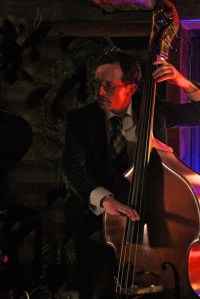
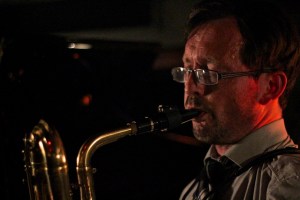

 JazzLocal32.com