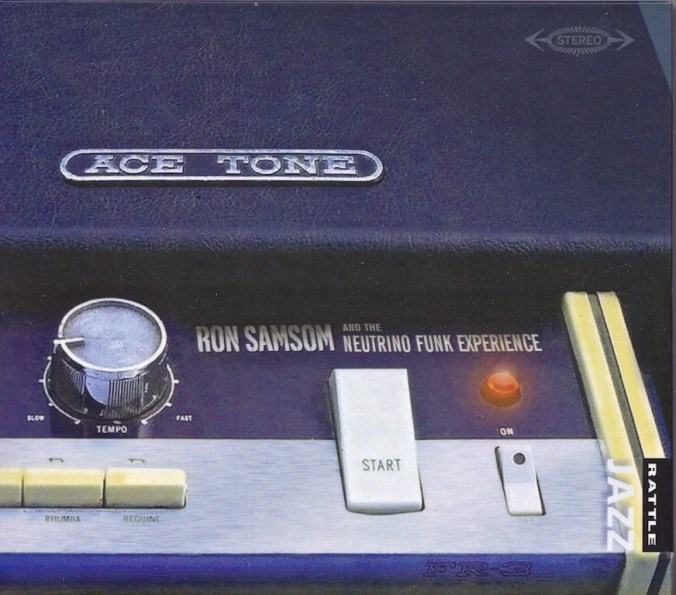
 Ron Samsom’s Neutrino Funk Experience ‘Ace Tone’ album has so much up front punch that that a warning is needed on the label. It is an album that grabs you by the lapels and demands your attention. As you listen it transports you to a world of joy. The album and the live band exudes a vitality that enters through your pores, pulsing through your body like the wild blood of extreme youth. Try as you may, it is impossible to keep still as the rhythms consume you limb by limb. While the album brings historic musical references to mind, it is very much of the present. This is Jazz Funk at its very best.
 There is cleverness aplenty in the album, but that’s not what it’s about. The pulse, punch and danceability are the draw cards. The tunes let each listener glean their own references. During the album launch someone said, “Oh wow that takes me back to Deep Purple”, while others talked of the Jazz funk gurus like Herbie Hancock, Eddie Henderson and Jimmy McGriff. What ever references people heard, one thing is for certain. This band updates 70’s Jazz Funk as few other albums do. A lifelong fan of the classic genre observed, “few classic 70’s funk albums actually sound as good as this”.
There is a hackneyed saying that states; good Rock music is simple music made to sound complex and good Jazz is complex music made to sound simple. That brings me to Samsom’s compositions. Samsom joked that the tunes were so simple, that anyone who couldn’t learn them in minutes was wrong for the band. While the heads are often simple, the weave of the music is not. These tunes are skilful constructs and the subtle shifts and turns are deeply nuanced. The writing allows for open-ended improvisation and soloing, while never letting the over-arching themes subside (e.g. the single bass note and organ chord dominating ‘Simple Facts’ or the catchy closed loop melody line played on bass in ‘Other Brother’). Driving everything like a powerful locomotive is that amazing back beat. There is no mistaking the leader. Samsom is authoritive. Material like this needs highly skilled and experienced musicians in order to extract the maximum advantage and that is exactly what Samsom got. This is an alignment of talent that works so well that they must surely build on their success. The Neutrino Funk Experience formed in 2014 and started doing regular gigs at Auckland’s Albion in the central City. The word soon got around and one by one we drifted down to see them. The band stood-out from the first day and the disbelieving expletives from experienced musicians confirmed what our gut told us. These guys were total ‘muthas’.
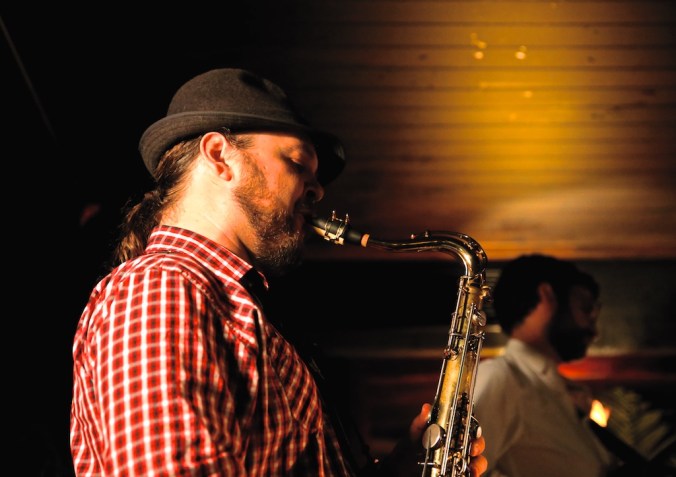
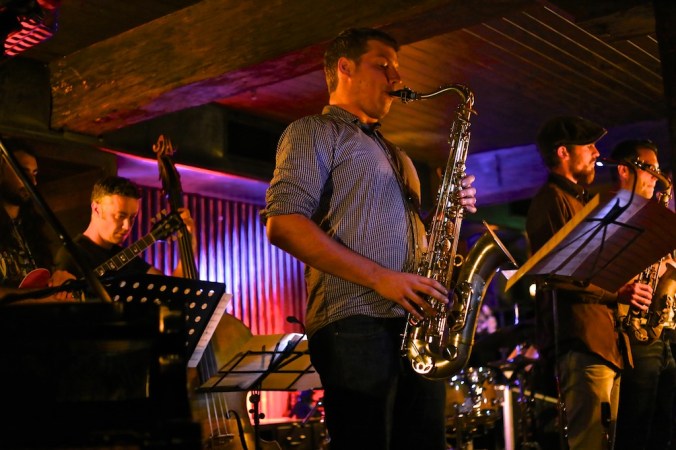
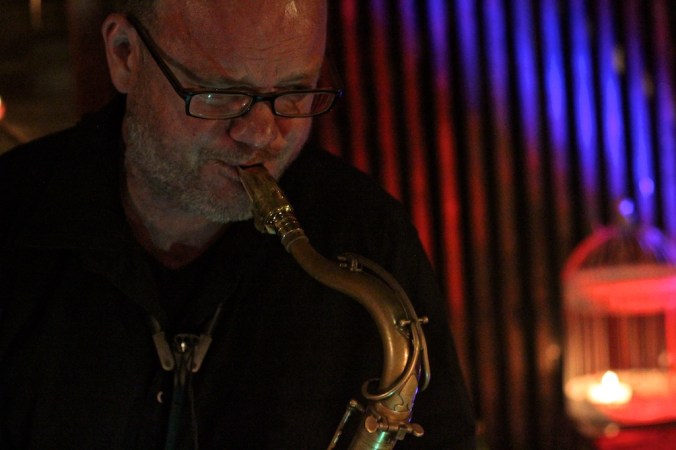
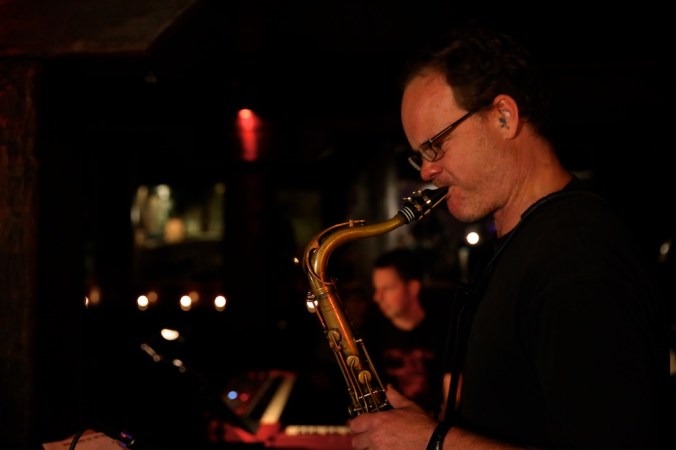 Roger Manins always sounds great but he has excelled himself here. This brand of earthy down-home funk is a natural place for him and his own funk albums reinforce that view. Manins just tears the place up on these sessions and it would be hard to find his equal. There are times when he apparently defies gravity, rising to his toes and abandoning self to move inside the music. These are moments of pure Zen and I watch for them now. Man and instrument becoming one and out of the bell streams a cornucopia of sound, distilled from the human experience. From the otherworldly wails to the gentlest urgings you recognise Manins uniqueness. Organist Winterburn said of him, “Working with Roger is perfect for me. He’s such a rhythmic saxophonist”. Coltrane, old school funk, ballads and modern edge; it’s all there in the sound.
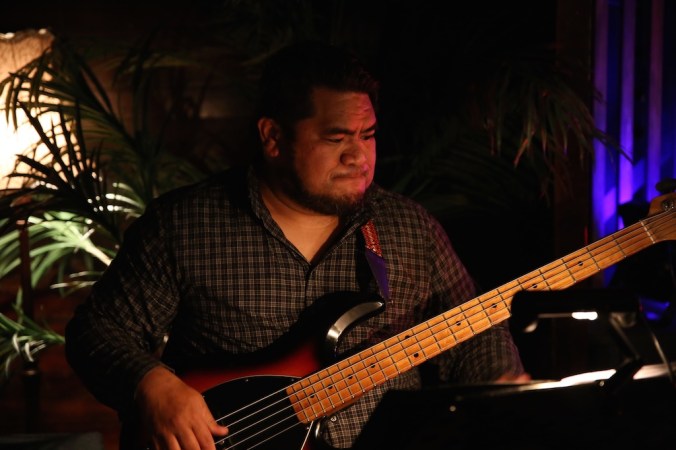
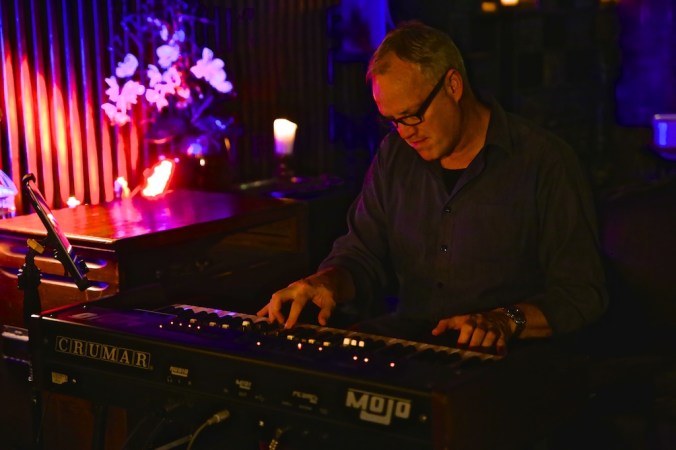
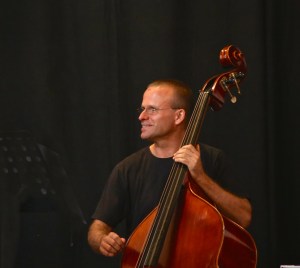
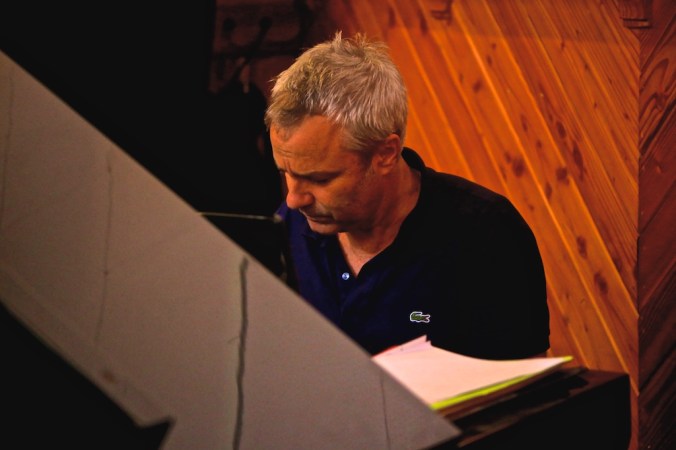
Grant Winterurn is another extraordinary talent and a fully formed musician. He can talk engagingly on anything musical; complex theory, Bill Evans, Kieth Jarrett, Rick Wakeman, Brother Jack McDuff or Schoenberg. Securing him for this unit was a masterstroke. He is a busy working musician and consequently we don’t see enough of him on the scene. When he does appear an audience follows; he has admirers everywhere. He is not only the consummate organist, pianist and keys player but a great showman. When a C3 or B3 player sits at the keyboards lumpen it feels plain wrong. There is no chance of levelling this criticism at Winterburn. He is delightful to watch and to listen to. Few keyboardists are better able to co-ordinate limbs, groove and flourish like him. Like all improvisers he creates maps of sound in his head and the logic of his solos draws on his wide musical knowledge.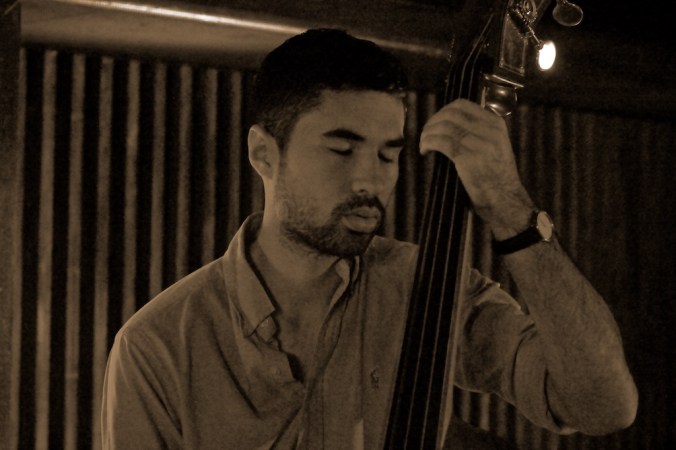 On the album we have Cameron McArthur on upright bass. Even before leaving the UoA Jazz school Cameron was punching well above his weight. I would describe him as an instinctive player. Knowing where to place his lines and always strongly supportive of other band members. He quickly became a fixture in quality rhythm sections and visiting artists praised him. After a trip to New York to check out the scenic he picked up some work in cruise ship bands. By happy coincidence they had cut the album prior to him leaving. So punchy are his bass lines on ‘Ace Tones’, that you think he is playing an electric bass. In his absence Samsom hired Karika Junior Turua for the launch gig. Again this was a good choice. This time we did hear an electric bass and as Turua has experience with Jazz funk, the transition from upright to electric bass was seamless.
 Lastly there’s the album art work and the recording credits. Who ever created the cover design and layout must feel pleased; they did an amazing job. The presentation tells the ‘Ace Tone’ story perfectly. My friend Iain Sharp and I were involved in the project as liner notes providers. As requested we contributed poems. It is rare (but not unheard of) for an album to use poems instead of the standard liner note blurb. I really hope that this trend continues for selfish reasons. Contributing something to an album like this is pure pleasure. The recording and mixing took place at ‘Roundhead Studios’ in Auckland and the mastering at ‘Turtle Tone Studios’ in New York. The album is out on Rattle Jazz where the best of original New Zealand music lives.
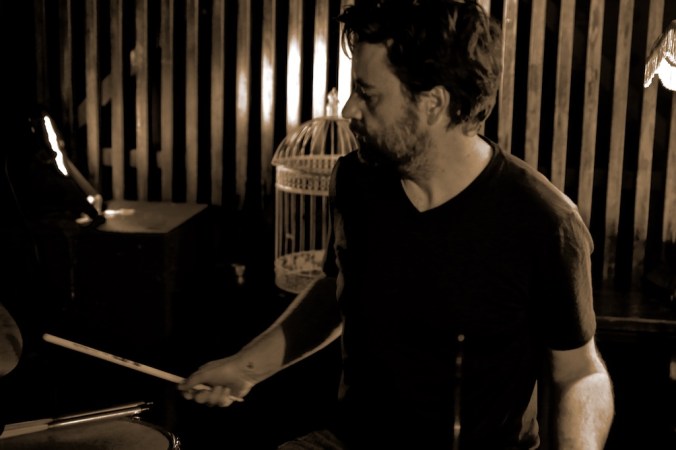
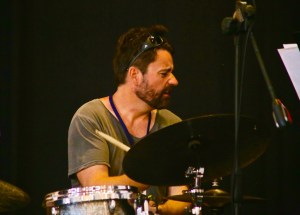
Having documented the band from their first gig, I have long felt a stake in this project. The finished album is surely not where this story ends; music of this quality deserves a sequel. Ron Samsom is an intuitive multi-faceted drummer and gifted composer. He is program coordinator at the UoA Jazz school. (if you haven’t already done so check out his and Manins contributions on the award-winning DOG album).
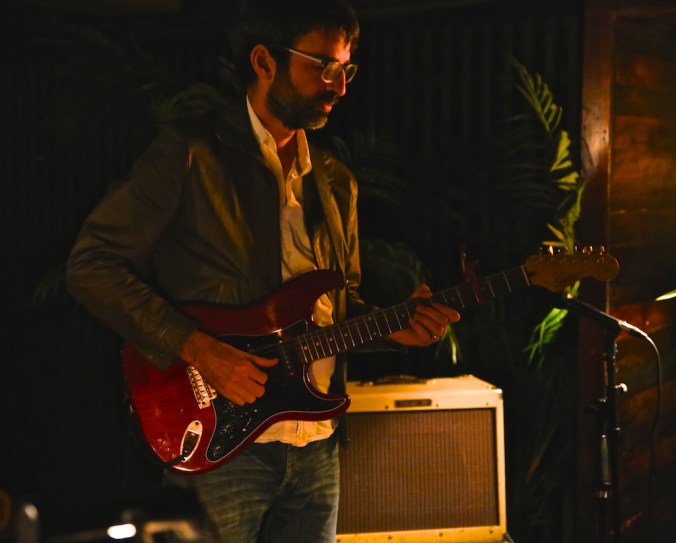
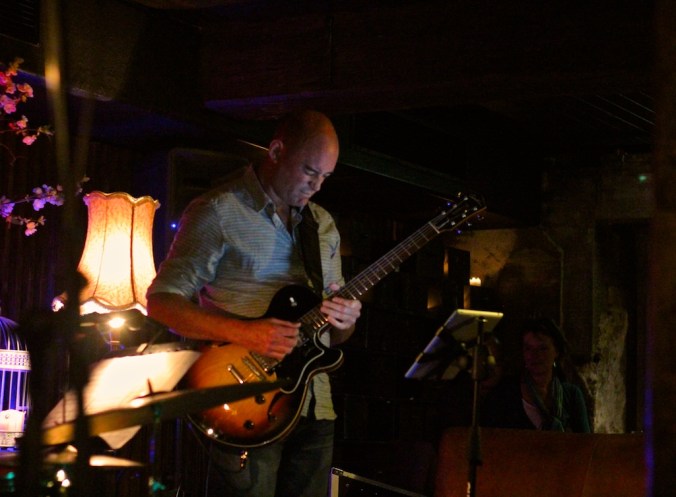
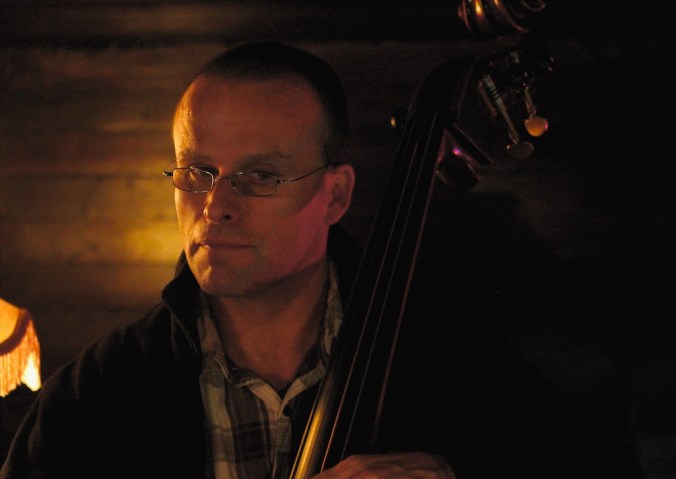
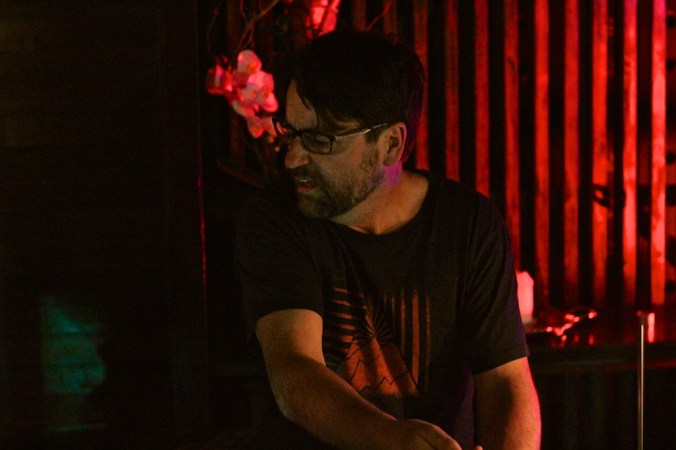
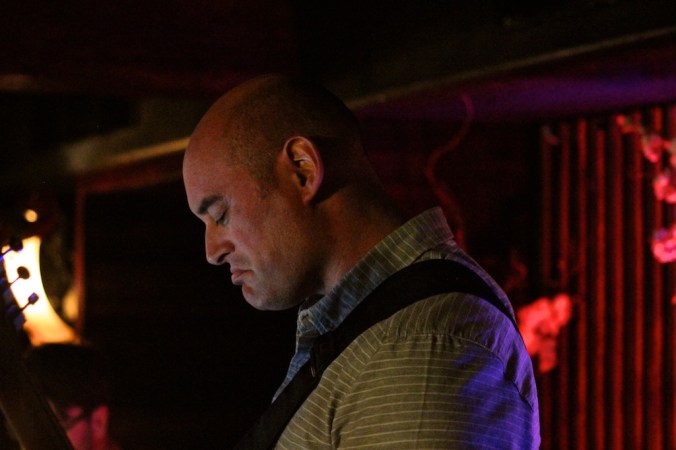
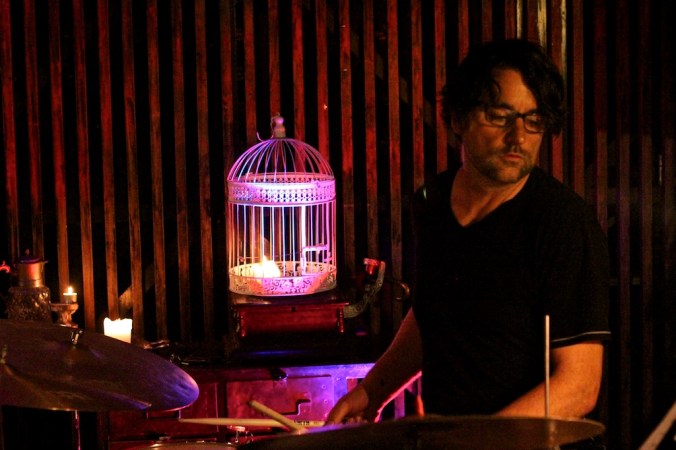
The Neutrino Funk Experience: Ron Samsom (leader, compositions, drums), Grant Winterburn (Hammond organ, Nord Stage, Wurlitzer electric piano, acoustic piano), Roger Manins (tenor saxophone), Cameron McArthur (acoustic bass) – live Karika Junior Turua (electric bass).
Live gig: CJC (Creative Jazz Club), Britomart 1885, Auckland 1st July 2015
Purchase at leading record outlets or directly from Rattle Records
For the poems look in the JazzLocal32.com page ‘Jazz as Poetry’
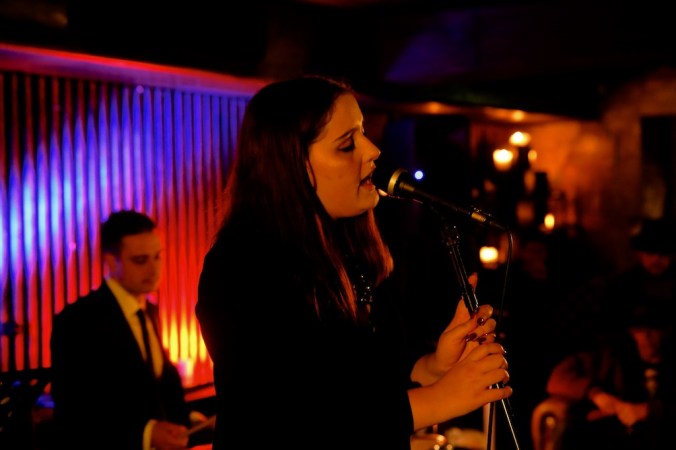 The last time I saw Rebecca Melrose perform was at a CJC gig, not long after her graduation from the UoA Jazz School. That was well over a year ago. Since then she has made her way as a vocalist, exploring several musical genres and recording an EP (yet to be released). This gig was straight ahead Jazz; her interpretations of various Jazz standards. I remember being impressed by Melrose the last time I heard her as there is a rich quality to her voice and she knows how to play with lyrics. At the last gig she took risks with her choice of material and it paid off. This time the sets were more mainstream but she exuded an easy-going confidence; the sort that comes with time in front of audiences.
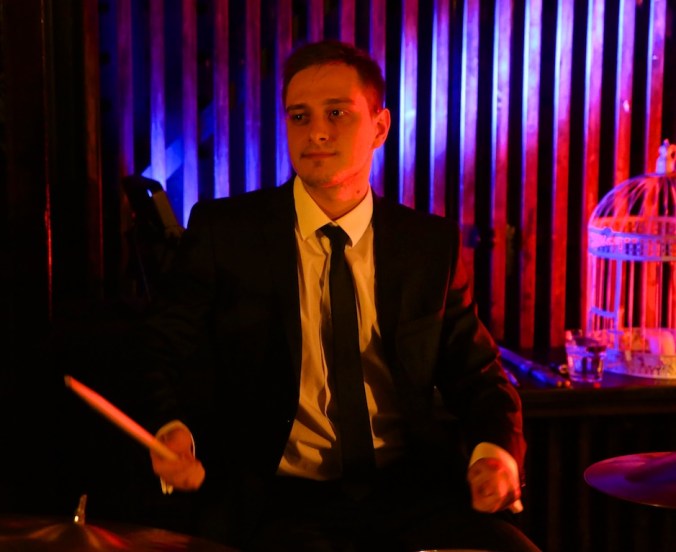
 Accompanying her were three graduates from the UoA Jazz Programme. Crystal Choi on piano, Eamon Edmunson-Wells on bass and Jared Devaux de Marigny, drums. CJC audiences have seen a lot of Edmunson-Wells over recent years and increasingly we are seeing Choi. Desvaux de Marigny is not seen as often. These are all fine musicians. Additional to the core lineup were guest artists Callum Passells (alto) and Liz Stokes (trumpet).
 Melrose has been selected as a semi-finalist in the prestigious Shure Vocal Competition (the only Australasian/Pacific finalist). She will fly to Montreux shortly to compete in the finals at the 2015 ‘Montreux Jazz Festival on Lac Lemon. This gig and other events are to help her get there. I wish her well.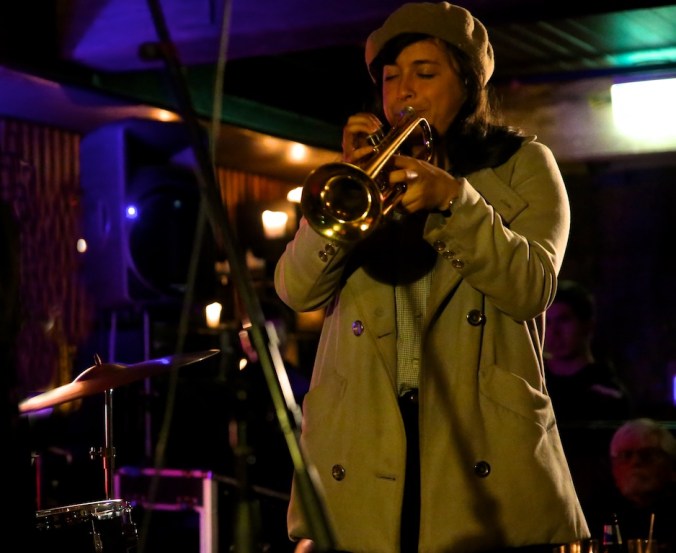
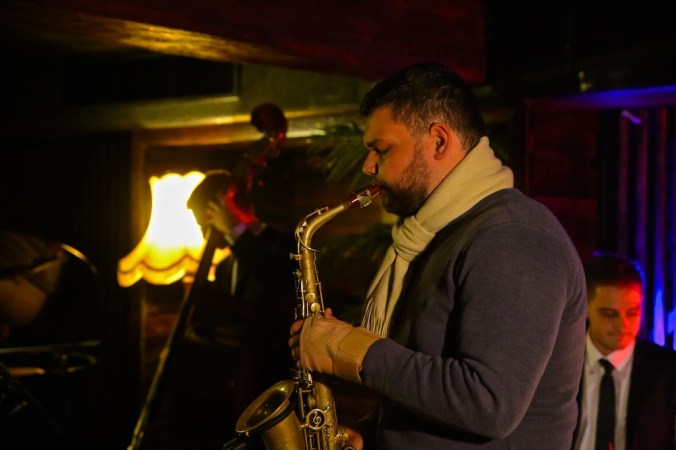 Quartet: Rebecca Melrose (leader, vocals), Crystal Choi (piano), Eamon Edmunsen-Wells (bass), Jared Desvaux de Marigny (drums).
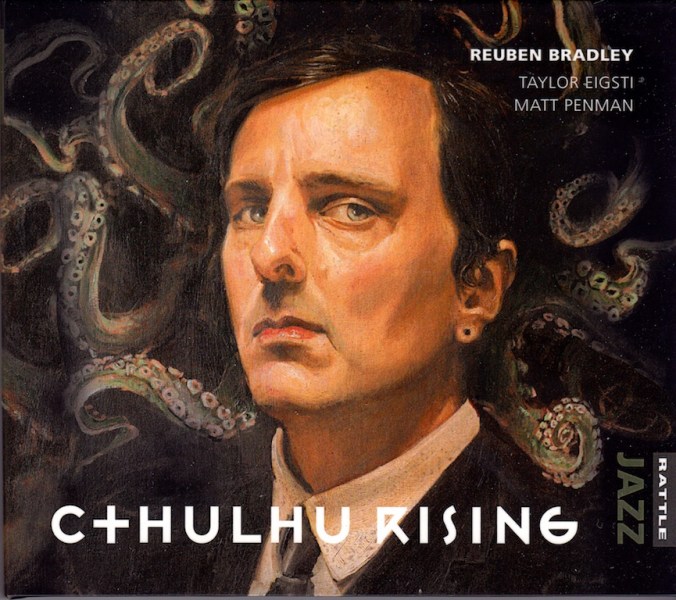 H P Lovecraft died under appreciated, but it didn’t curb his output. His imaginings took him to darkly strange and exciting places. Places that few of us dared contemplate. While he reached deeper than writers like Edger Alan Poe and further into the human psyche, his wildest dreams could not have prepared him for Wednesday night. Reuben Bradley, time traveller and keeper of lost grooves has wrestled with the spirits and brought Lovecraft to life again.
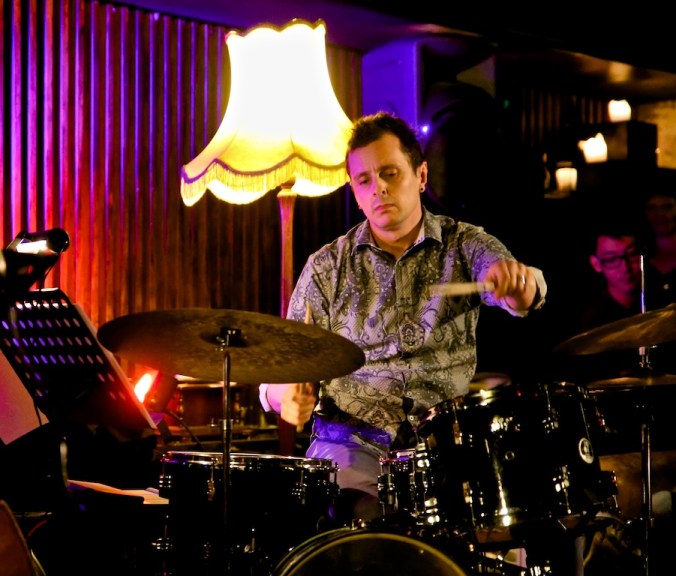 This is a truly exceptional album and it is no wonder when you consider the source material and the musicians associated with it. Bradley, Penman and Eigsti are a deadly combination and their interplay is crisply on the mark. Matt Penman is dear to our hearts in New Zealand. One of our finest Jazz exports. An expat from Auckland who conquered the American improvised bass scene in ways that few others manage. His work with James Farm, the San Francisco Jazz Collective, Aaron Parks, Kurt Rosenwinkel and a long list of luminaries is instructive. That he still appears with the best of our local artists and on local recordings is our immense good luck. An imaginative and wonderfully musical bass player who holds the groove and manages to tell interesting stories without distracting us from the overall focus of the piece. Few bass players could do this better than Penman.
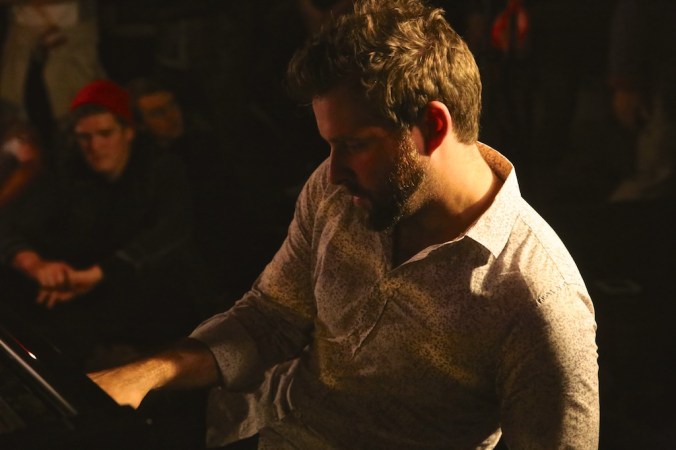 The judicious use of sampled ‘Lovecraft’ readings in several places adds to the atmospheric feel and doesn’t detract from the overall musical experience. Every note played and every voice-over is well placed. Yet again Rattle Records have excelled themselves here. The secret of ‘Rattle Records’ tasteful Jazz catalogue must surely be seeping into the wider world by now. ‘Rattle’ is the ‘ECM’ of the South Pacific. This album was recorded at the ‘Bunker Studios’ in New York, Engineered by Aaron Nevezie and mixed and mastered by Steve Garden at ‘The Garden Shed’ Auckland.
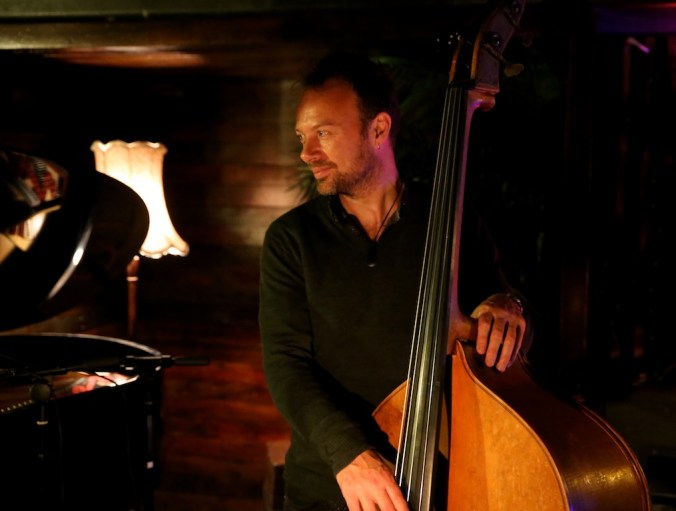 There was a change of personnel for the CJC ‘Cthulhu Rising’ release gig and for the Australasian tour to follow. Respected bass player Brett Hirst took Penman’s place and this was a sound choice. Hirst, another expat Kiwi, is well established on the Australian scene and frequently employed by visiting artists. He is a gifted musician and perfect for high end gigs like this.
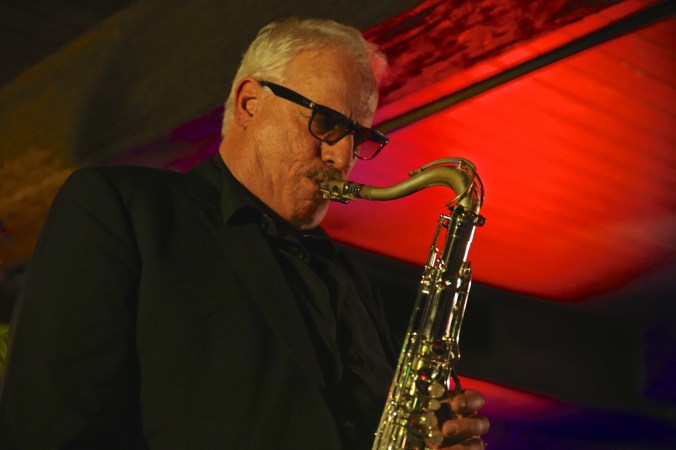 Doug Lawrence is every bit the archetypal southern tenor man, from the top of his tall frame to the bell of his brightly shining tenor. His sound is fat and down-home-cooking rich, whether playing softly or at volume. He has more cut through than a diamond headed drill-bit. Lawrence has such considerable credentials that it is beyond my reach to enumerate them all here (google him).
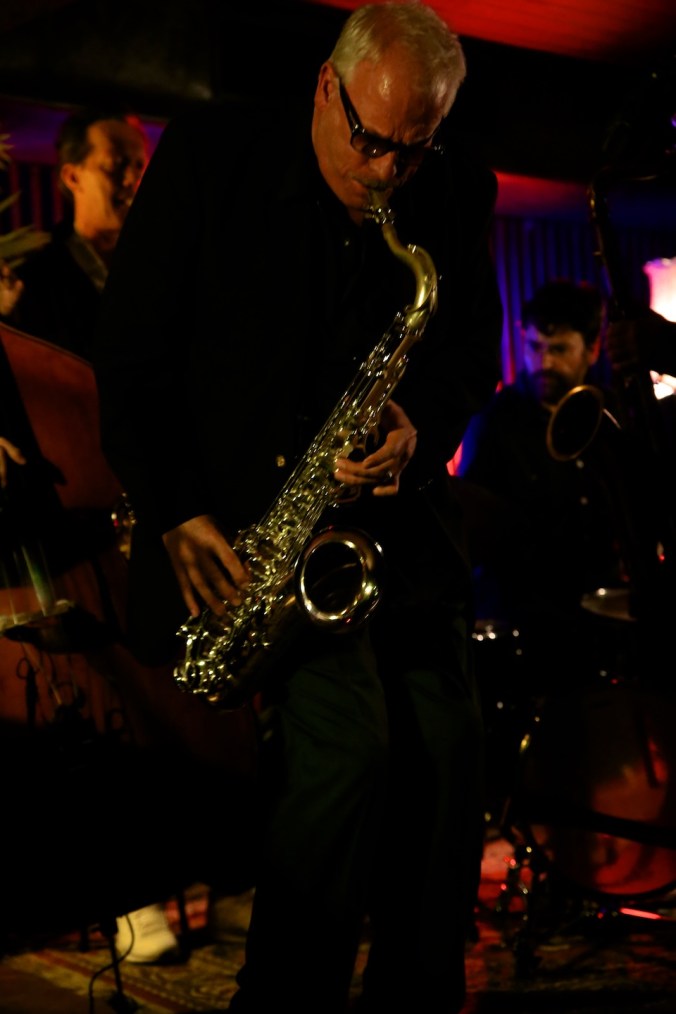 Lawrence is tall and as he performs he stoops slightly, forming a classic old school playing pose. Slowing bending his knees inwards before stretching and lifting his horn to the ceiling. His speaking voice is rich like his playing, a southern Louisiana drawl adding to his considerable charm. The first number was ‘End of a love Affair (Redding) and the audience whooped in delight as the band took the changes at a good pace. The rhythm section propelled by the tidal waves of sound emanating from the tenor. It was that sound and the power of delivery that grabbed you from the get go. The intonation and phrasing revealing influences which although readily identifiable, transformed them into a new sound. This was pure alchemy. It was like having Gene Ammons and Dexter Gordon on the same band stand.
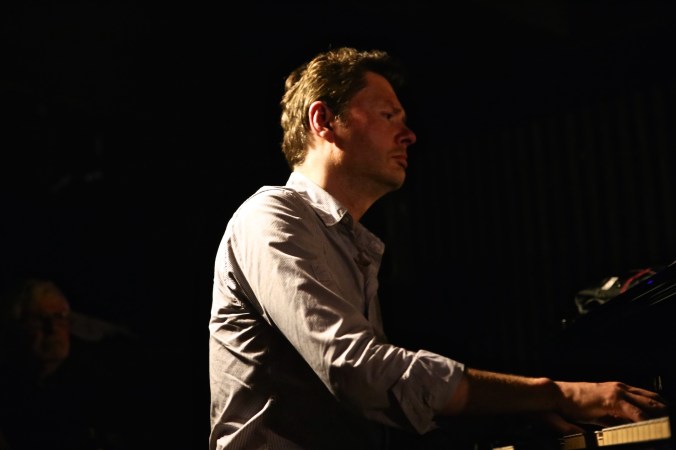 It is during ballads that the skill of a musician is often tested. In this case we saw something close to perfection. It wasn’t just Lawrence, but his Kiwi pickup band as well. Spurred on by each other, they dug deeper and deeper. A night and a vibe that we will remember for years to come. There was an obvious rapport between pianist Kevin Field and Lawrence. I gather that he found Field’s harmonic approach interesting and perhaps this is an indication of our own development as we grow our standing. Lawrence’s intonation was the thing that grabbed you most and this made his solos particularly enjoyable. Long held notes ending in breathy flurries or else bending the note ever so slightly before delivering a short heart stopping burst of controlled vibrato. With Holland and Samsom also finding their sweet spot this was a dream band.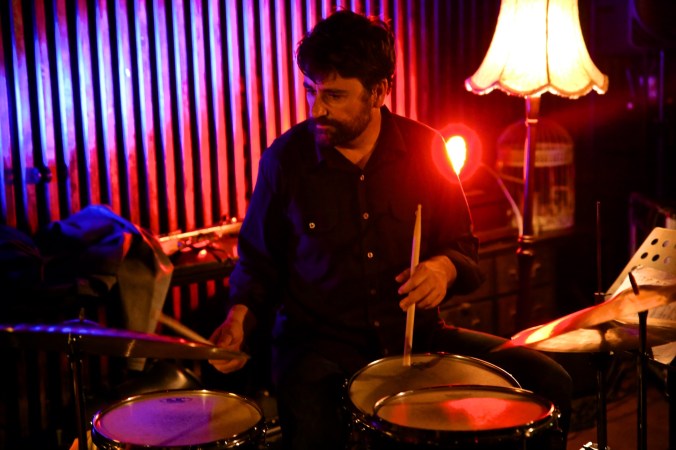
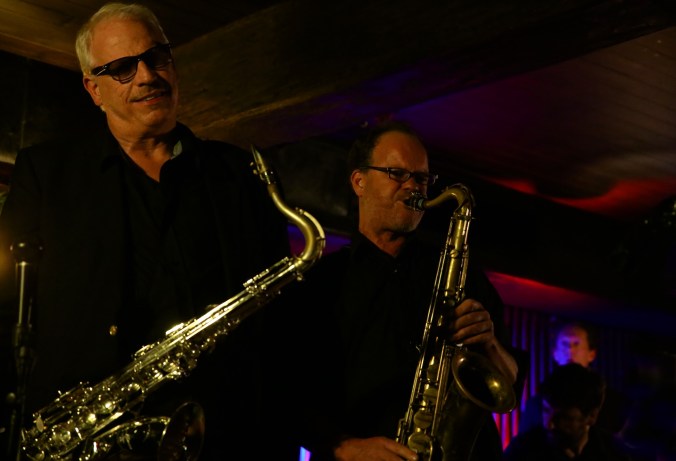 Here is the back story: 17 years ago a younger Roger Manins hit the New York streets, where he learned to scuffle in the time-honoured way of Jazz musicians. Because he possessed the hunger to learn he approached many established horn players. One of these was Doug Lawrence and traces of that time are still evident in Manins sound. All of those years ago Manins subbed for him and here is a Face Book extract that Lawrence posted once he returned to the USA.
 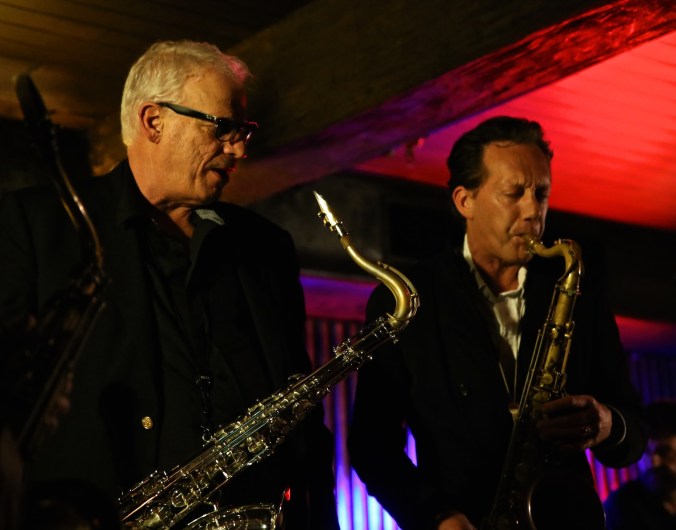 “Roger has matured into a GREAT player and MAGNIFICENT teacher! All of his students have a SOUND and they are all inspired to play, because of Roger. The curriculum at the University of Auckland Jazz Department is second to none, and I am going to use it as my model when conducting masterclasses at other universities around the world. Roger and Ron Samsom and the rest of the faculty have got it right at the U of A and I’m going to suggest that each and every University I teach at check it out. Cheers ROG! You are doing it ALL right brother! I hope to see and play with you soon mate!” That says it all really.
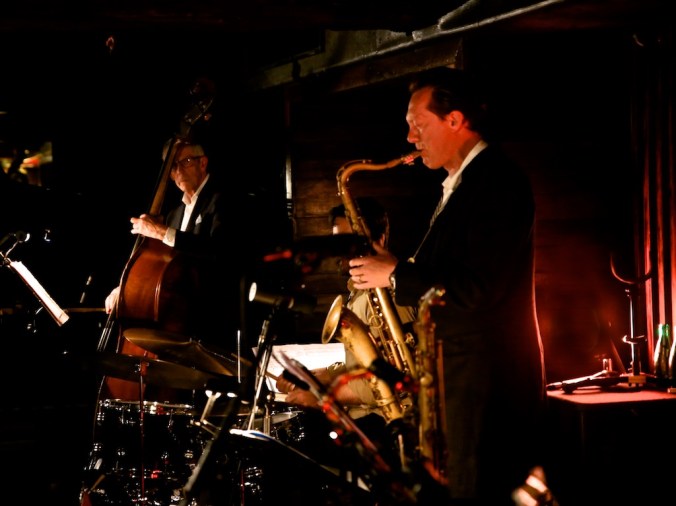 Nathan Haines is a master of the melodic and the model and he has a beautiful and distinctive sound on all his horns (and winds). He has a strong following around the world and it is no wonder when he turns on gigs like this. His following crosses genres, attracting younger and older audiences equally. He also cuts through media blind spots in a way that few other New Zealand improvising musicians do. It is good to have him on home soil for a while and good that he is focussing on fresh local projects. What he does is always exciting and this gig was no exception.
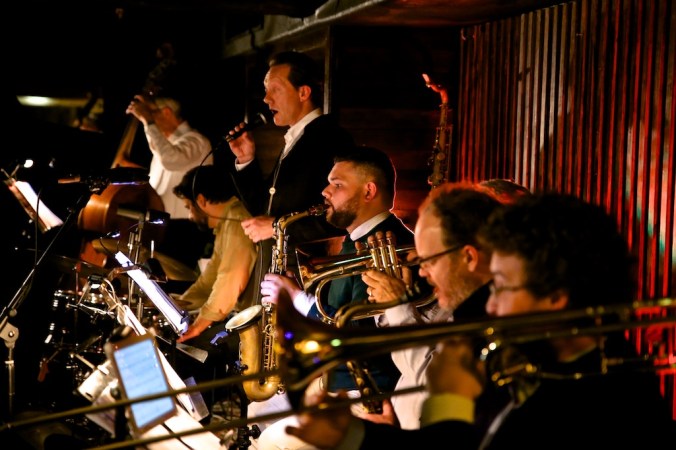 The talented and hard-working, Haines always thinks through his projects. Hot on the heals of his successful award-winning Jazz albums ‘Poets Embrace’ and ‘Vermillion Skies’ he has again teamed up with arrangers Wayne Senior and Mike Booth. The decision to include more Jazz vocals is a welcome development. There’s a paucity of male jazz singers in the modern world and they’re a rarity in New Zealand. The set list was an interesting mix of Haines originals and a few Jazz standards seldom heard live. Like his recent Jazz projects, these tunes evoked and reinterpreted the classic era of the 50’s. Consequently they oozed cool.
 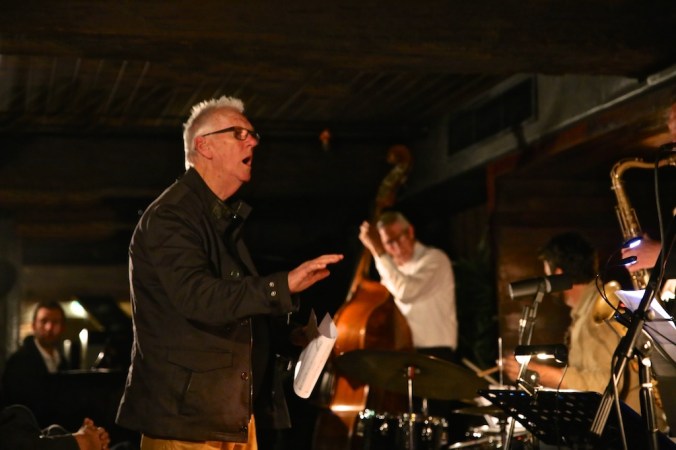 With Michal Martyniuk on piano, Kevin Haines on bass and Ron Samsom on drums he was already on solid ground. This is also where Haines excels. He is a bandleader who choses his musicians well. Martyniuk made his presence felt and soloed beautifully while never over playing. It was exactly what these charts required. Kevin Haines is a highly-respected, tasteful bass player with an impeccable CV. During the sets smiles and friendly banter flowed between father and son; further enhancing the mood. The highly experienced Samsom was on drums throughout. He is new to Haines lineups. His approach to the kit springs from a confident inner logic; more organic than Haines usual drummers. It was interesting to watch their interactions as they sparked off each other. Samsom giving Haines a different platform to work from.
 immediately took me back to hearing Pharoah Sanders for the first time. When Haines plays these modal pieces, there’s a spiritual joy that comes across. This is a strong suit for him and for those of us who love that era a balm.
 Davis album ‘Birth of Cool’. Few bands tackle this and more’s the pity. The octet horn section were Mike Booth, Roger Manins, Callum Passells and Hayden Godfrey.
 Music has a million functions, some of them mysterious; it is the soundtrack to our lives. One of those functions, should not be underestimated, is to bring fun into our day. In this age of multi-media music performance the use of film and theatre is generally ceded to heavy metal or pop. That is a shame because Jazz audiences can react favourably to music when accompanied by these various forms of media. This works well at the Golden Dawn. Sometimes when the CJC is held upstairs, we get random film and images playing across the musicians as they perform. Who can forget the crazy brilliance of ‘The Grid’ (see earlier post). While happenstance can work; truly effective interaction needs working into a performance and be way slicker than a silly strobe light or an embarrassing disco chandelier. The Carnivorous Plant Society presented a coordinated performance and it enhanced the music on offer.
 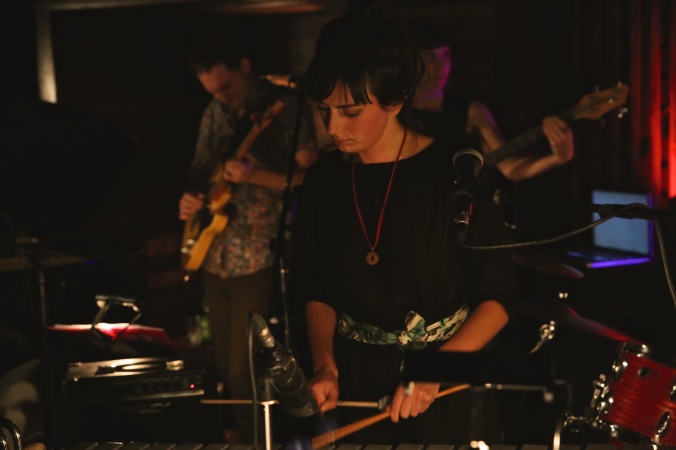 This is very much a Finn Scholes project and it has been around for some time. Scholes is primarily known as a trumpeter (often playing the avant-garde end of town). Increasingly these days he is a keyboard player and showman. Last year I saw him with this group; belting out his signature brassy Mexican trumpet sound while playing an analogue synth with his left hand. The performance often tipped into the surreal because Scholes wore a Mexican ‘night of the dead’ wrestling mask. Not an image or a sound I will easily forget.
 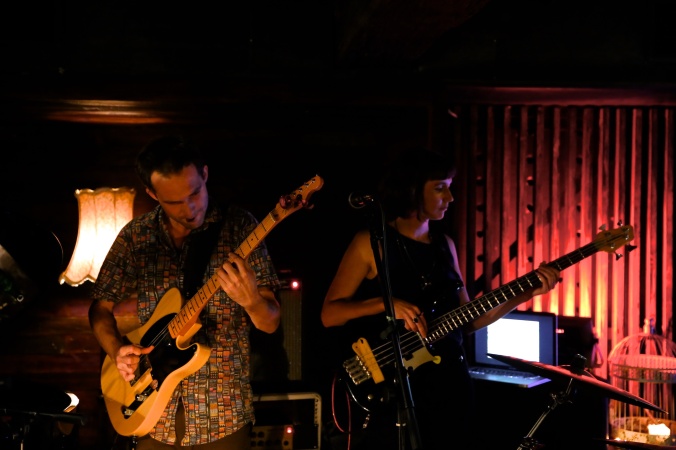 The Carnivorous Plant Society is a quintet but there are many more instruments, pedals and electronic devices than there are band members. Scholes plays trumpet, tuba, piano, numerous keyboards, electronics – Siobhanne Thompson, vibraphone, violin, percussion, pocket trumpet – Tam Scholes, electric guitar – Cass Mitchell, Electric Bass – Alistair Deverick, drums, electronics. With use of loops, wizard like gadgets and Siva like arms, a number of sounds are generated at once.
 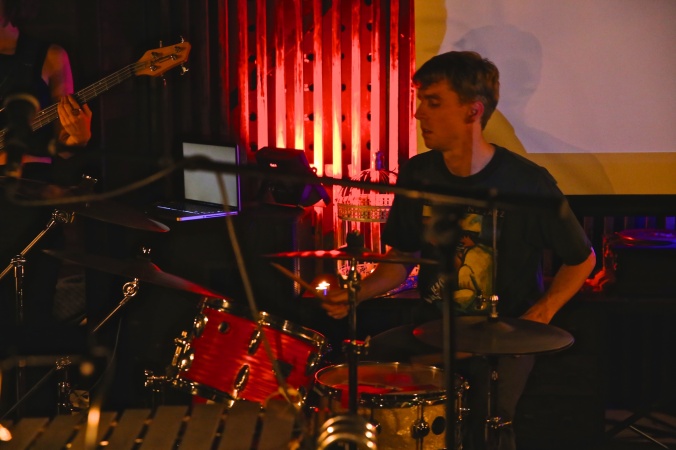 The occasional use of voice-over samples was far from being gratuitous as the ‘Max Headroom’ like humour often lay in these samples. There were strange Stephen King like stories of robots taking over the world and oddly quirky adventures relayed. The latter as if being recalled by deadpan 1950’s radio hosts. Many of these performed against brightly coloured cartoon graphics that played over their heads. The graphics were brilliant and although I have no evidence for supposing this, I presume that someone in the quintet (or a close friend hip to the project) created them.
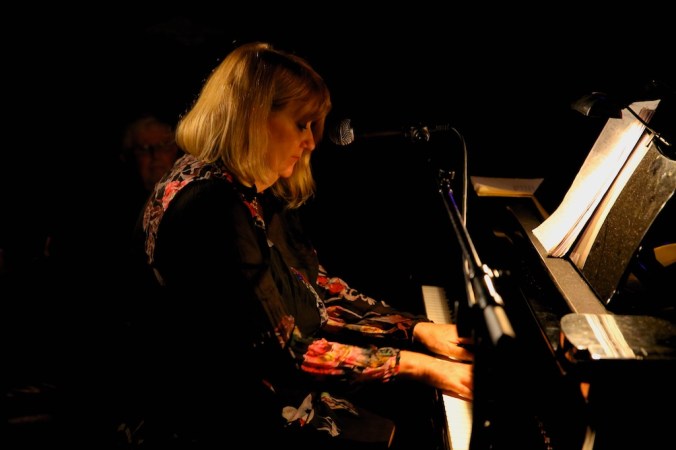 It has been a while since Julie Mason performed as leader. Mason is a pianist/vocalist who over the years taught and influenced a number of younger musicians. After a difficult few years battling health issues she has now started performing again and her new project titled: ‘compositions by piano playing Jazz Musicians’ is what she brought to the CJC. Most of these tunes are not standards in the American song-book sense and so they often lack wider recognition. That’s a pity because the tunes written by these musicians are some of best to come out of the last 90 years. It is always good to delve into this material.
  A perfect example of a composer/performer who deserves wider recognition is Enrico Pieranunzi. He is all too often overlooked outside of Europe. This formidable Italian improviser has performed with artists like Charlie Haden, Art Farmer, Kenny Wheeler, Chet Baker, Jim Hall and dozens of others. His output stands favourably when compared to the finest of the American Jazz issues. Of particular note is ‘Live in Paris’ and ‘Don’t forget the Poet’. The latter is a tribute to Bill Evans. Mason performed the title track from that album beautifully. She captured the lyrical quality of the piece.
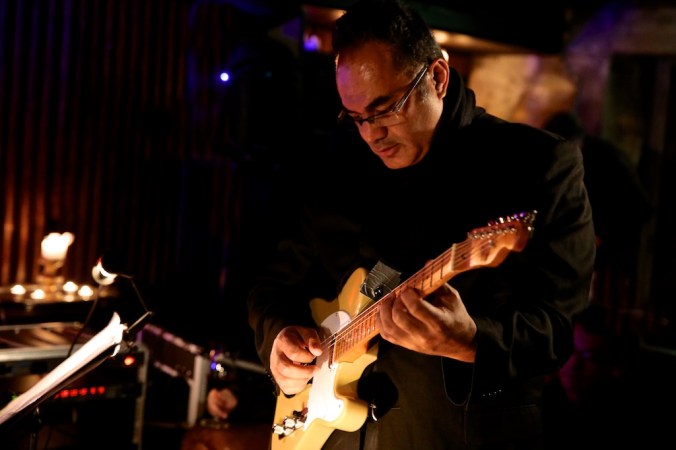
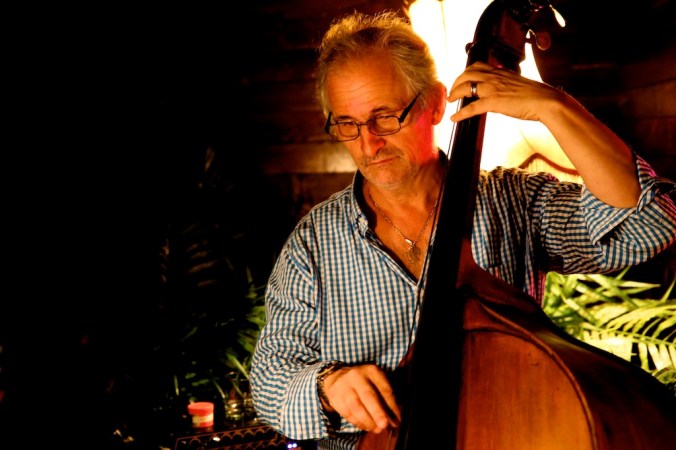 she has performed with these musicians for many years; Lance Su’a (guitar), Alberto Santarelli (bass) and Frank Gibson (drums). Her partner, the well known Jazz Pianist Phil Broadhurst sat in while Mason did a vocal number. The set list was split between vocals and instrumental pieces. The number Broadhurst accompanied her on was the fabulously evocative ‘The Peacocks’ (Jimmy Rowles/Norma Winstone). It is one of those tunes that is so aligned to Evans and Rowles that musicians tend to shy away from it. That’s a pity in my view: it was nice to hear it performed live. Other artists featured as sources were Chick Corea, Herbie Hancock, Billy Childs and Jacky Terrason.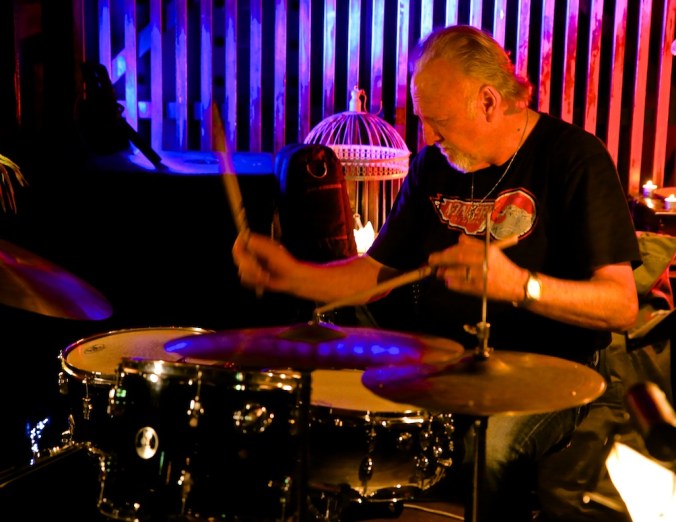
 This opens up an interesting conversation about the many forms of ‘ambient’ music being explored at present. These forays are mainly by musicians on the improvised and experimental music scenes. Along the way the term ‘ambient’ is garnering new meanings and it can no longer be confined to the vernacular definition. It implies subtly, depth and a strong sense of being coupled to wider sensory experiences. The difference being that the senses catch on silken threads and not on steel shackles. There is also an illusive quality to this music and to understand the genre better, a good starting place would be Miles Davis ‘In a Silent Way’ or Brian Eno and Jon Hassell (‘Fourth world volume one, possible musics’). For an up to the minute vantage point go to YouTube and locate Elvind Aaset and Jan Bang’s ‘And Poppies from Kandahar’.
  Unlike ‘easy listening’ there are deep emotions engaged by this type of music. Like all trance music cunning voodoo tricks draw you in and as you relax into the mesmerising grooves, you fall deeper into the web. This is music evoking mental pictures and imaginary worlds. This is music that is often served up with dissolving visual images accompanying a clip. The filmic qualities are inescapable.
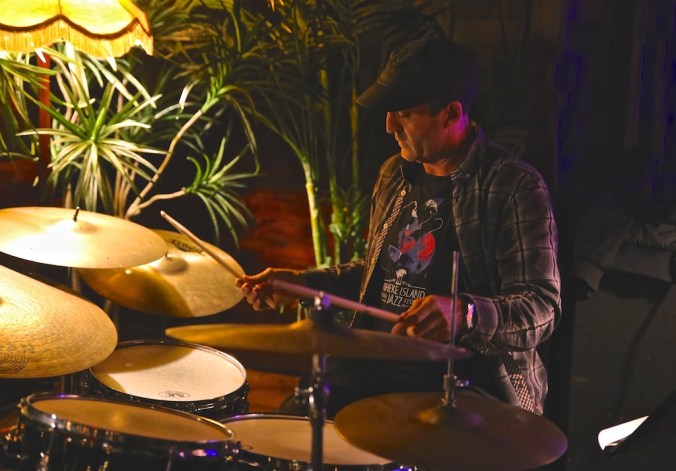 Alan Brown is an asset to any unit and especially so when you consider that this is a crossroads between ambient and groove (both specialties of Browns). Ben McNicoll is a strong presence and his reading of these shifting grooves is always apposite. It is nice to hear such bluesyness purged of cliche. Jason Orme is a veteran of the groove scene but he sounds great in any situation. Spammers music calls for a tight groove but there is also a need for subtlety. Orme is more than up to the task. The leader Dan
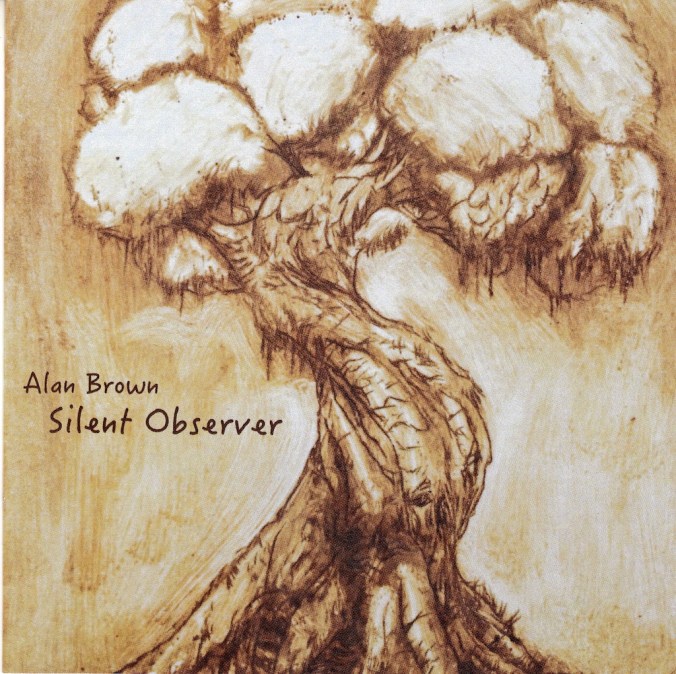 In the same week that Spammerz appeared at the CJC Alan Brown released his ambient album ‘
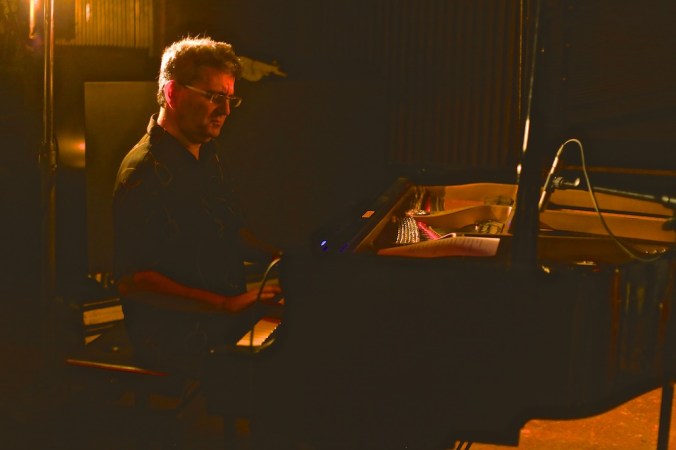 Mark Isaacs is an important and highly respected Australian musician and it was a pleasure to see him in Auckland again. It was October 2013 when he last visited and since then he has been busy with the presentation of his symphony and a number of other noteworthy projects. He is a celebrated Jazz and classical musician and he continues to excel in both genres. Musicians like this are rare, as the two disciplines require very different approaches. When you talk to Isaacs you realise that he is passionate about both. He respects the art forms far too much to settle for anything less than his best. In either genre.
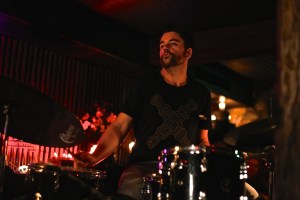
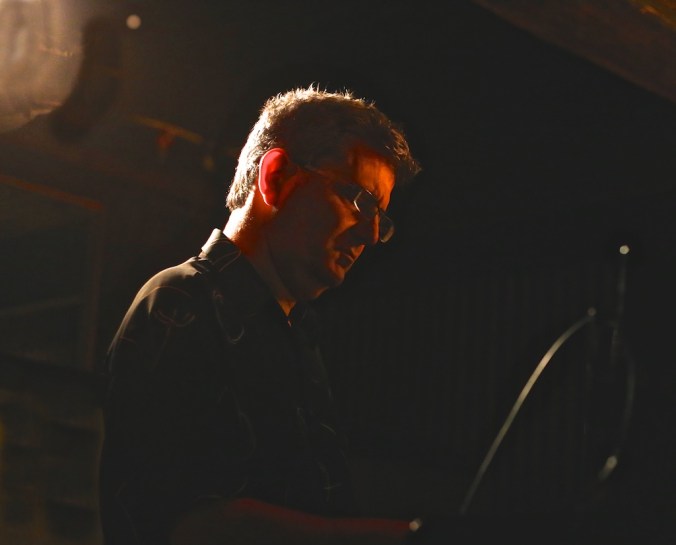 My late arrival was due to a previous gig and as I walked in, the sound enveloped me completely. Before I had settled Ron Samsom had grinned in my direction, Oli Holland had poked out his tongue and Mark Isaacs had given a quick wave (mid solo). With those brief gestures the realisation swept over me that this club and these musicians are family. A. J. a club regular grabbed me in the break and said tongue in cheek, “Thank god your here man, the universe has realigned”. Ron Samsom the drummer added, “Yeah it took us a while to settle because there were two strangers in YOUR chair and you were nowhere to be seen”. I guess I am like the guy who lives perpetually on the bar stool of his local bar. Sort of Jazz furniture.
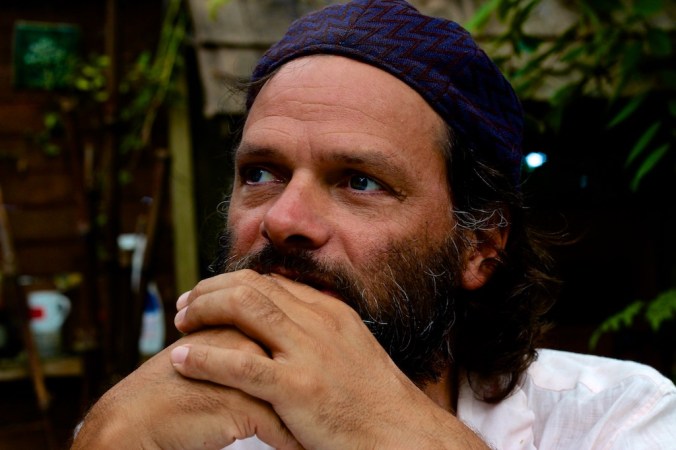 When the luck runs your way, an interview with a musician will mysteriously transform itself into something more. If you know how to read the signals and respond appropriately, you find yourself traversing musical galaxies; places where words and musical ideas merge. I was acutely aware of this when I interviewed Jonathan Crayford recently. He is the ideal person to spend time with if you like to explore the improbable connections between seemingly unrelated things. It was an interview where the rhythms of the moment guided what we discussed and the best part of a day flew by before I knew it. This cerebral world is where Crayford prefers to live. He is perpetually on the road, dreaming up and shaping musical projects as he goes. His life is truly the troubadour’s life. As I probed him for insights, one episode in particular threw light on how serendipity and happenstance can guide him.
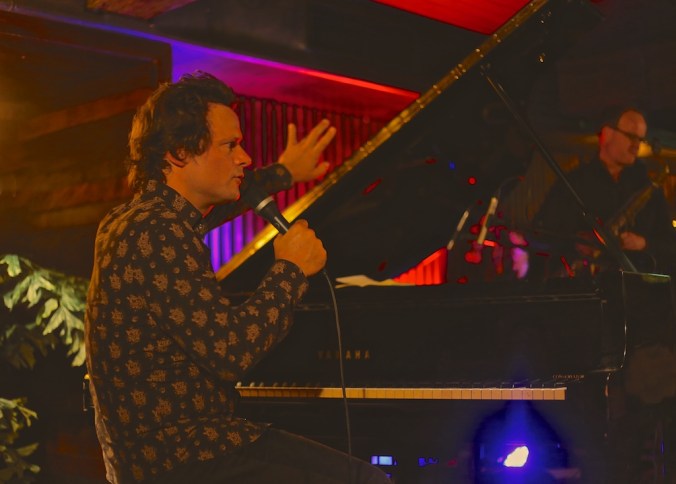 I asked him why this type of project drew him so strongly. “I’ve been travelling for years and it’s the excitement of new projects and the risks associated with being in unfamiliar places that lures me. I like being in a new place, an exotic place, somewhere outside of my life’s experience. It is like a rebirth. New loves, new sounds new smells, new food and a new vantage point from which view life. The grist of creativity comes directly out of this”.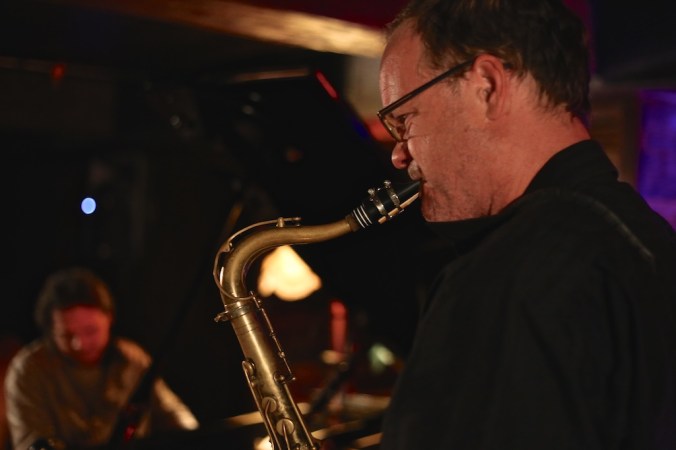
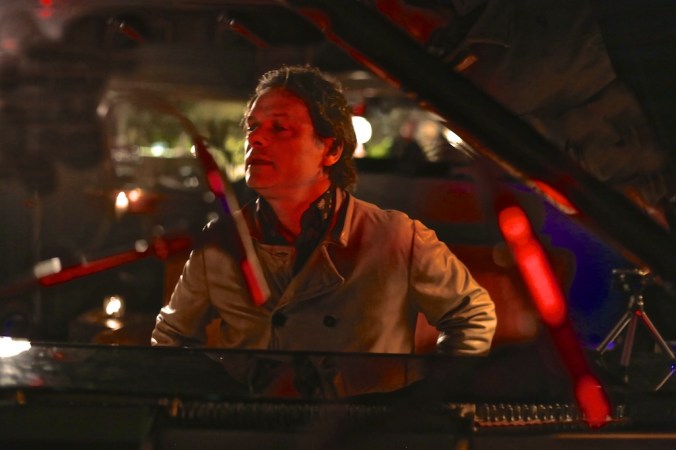 On April 15th Crayford returned to the CJC (Creative Jazz Club), but this time without bass or drums. The gig was billed as ‘solo piano’ with special guest. Roger Manins joining him for the final numbers of the second set. This was a first for the CJC as the club has never hosted a solo piano gig before. Interestingly a slightly higher entry fee was placed on the door, but far from deterring people it signalled that something special was to occur. You could have heard a pin drop during the performance. This audience really listened and they were amply rewarded for their attentiveness. This highlights the growing sophistication of CJC audiences and above all it demonstrates the deep respect that we have for Crayford as a performer.


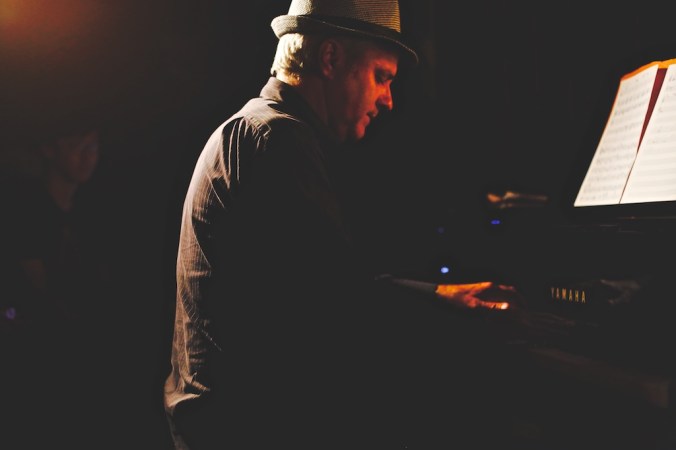 When I saw that pianist Chris Cody was coming to New Zealand I immediately recognised the name. For a moment I couldn’t fill in the blank spots of memory but I sensed that the connection was both Australian and international. My CD collection is huge and I knew that the answer lay buried somewhere in the unruly muddle of music lying about the house. Then it came flooding back; Cody recorded a great ‘Chris Cody Coalition’ album in the nineties. The first international Jazz NAXOS recording titled ‘Oasis’ and produced by Mike Nock; an innovative exotic project brimming with warm middle eastern influences. Some quick
 research told me that the Chris Cody Coalition was still an entity and what equally excited me was to see the name Glenn Ferris on several of the albums credits. ‘Oasis’ featured the Australian Trombonist James Greening and on several of the later Coalition albums Cody features trombonist Ferris (an utterly distinctive player). His whispers, growls and smears are at times otherworldly, but also mysteriously human. Cody works especially well with trombone players and his writing reflects this on the latest album.
 in the front row and this is as much about Cody’s writing skills as the strong confident performances. It is also about the recording quality which is superb. I strongly recommend this album. I first heard the quartet at the Tauranga Jazz Festival. A CJC Jazz stage showcased the finale and the Jazz Tui Awards presentation. I spoke to Cody in a break and quickly learned that he had New Zealand blood running in his veins. Born in Australia of Kiwi parents he studied music before moving to Paris. Based there ever since and gaining a strong reputation on the wider scene. He has very recently move back to Australia but he intends to return to Paris to work periodically.
 often draws on very American sources like Jamal, he is also in the mould of pianists like Jacky Terrasson (also a Parisian). Cody’s compositions are well thought out and replete with interesting asides. We heard many of these at the CJC and the album ‘Conscript’ is all originals. I am a sucker for a Cole Porter tunes and when he opened with ‘I love Paris in the springtime’ I couldn’t have been happier. Happy because I love the song and above all happy because the quartet played it so well. I have posted a video of the CJC performance and the title track from the ‘Conscript’ album with Ferris (the latter an official video release).
 His pick up band are the familiar and popular Roger Manins (tenor), Oli Holland (bass) and Ron Samsom (drums). In the rush of the Tui awards there was little time to rehearse, but it didn’t show. This is 3/4 of DOG and they are the 2015 Jazz Tui winners after all.

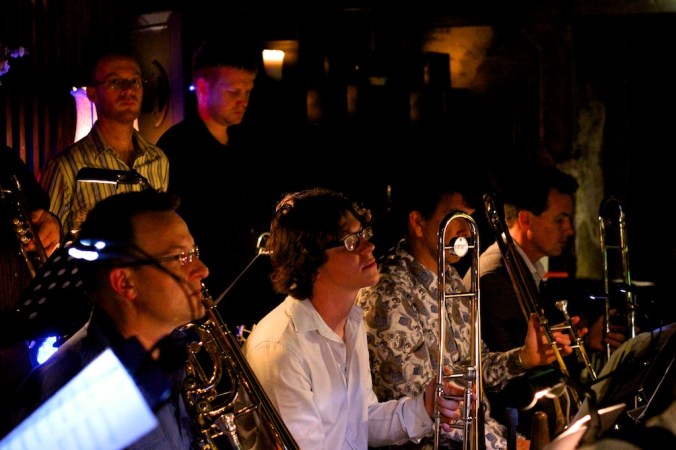
 I first heard the JAC two years ago and I liked what I heard immediately. Their sound has textural complexity, but the charts are so well written that the band manifests as if it is a single organic entity. As they move through the pieces, rich horn laden voicings appear, shimmer and fade seamlessly into the next phrase. In spite of the heavy punch of the front line, the band can float airily over passages. This affords them choices that are seldom realised by larger ensembles. They have a real nimbleness
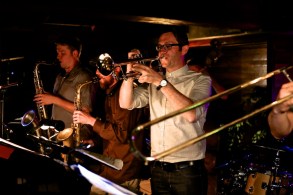 and this is surprising considering their large musical footprint. A bigger footprint than the size of the band would suggest. The really good nonets and octets achieve this.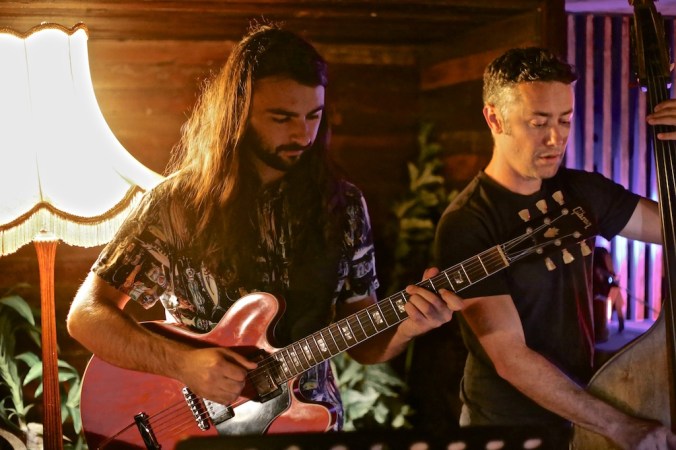

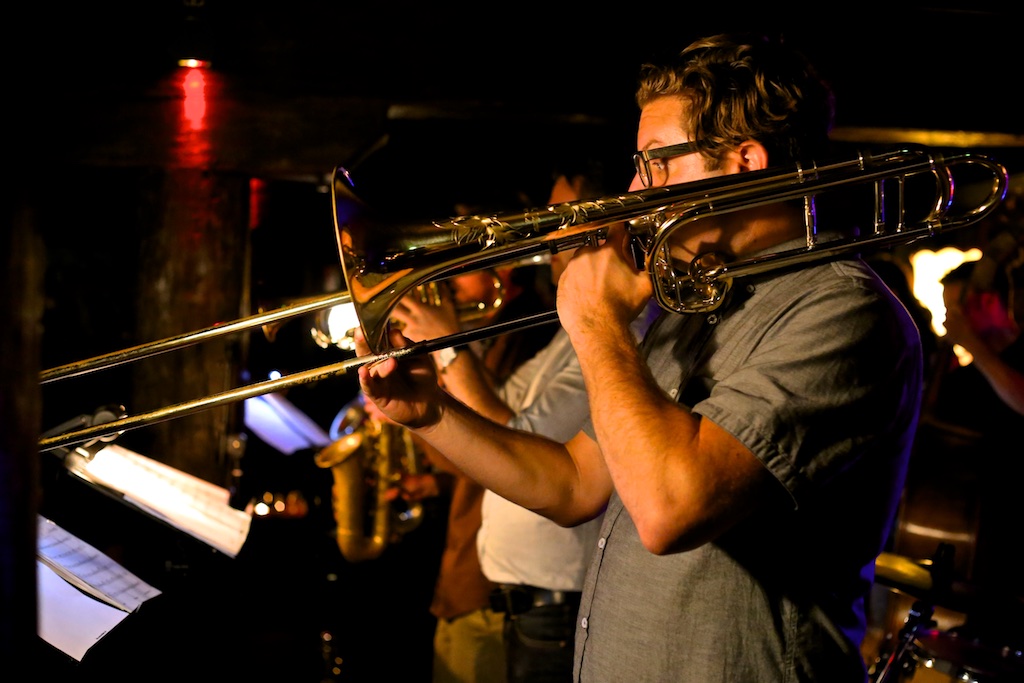
 Frank Gibson Jr’s ‘Hardbopmobile’ has been around for a number of years and the band always delivers uncompromising hard-hitting performances. Gibson and Watson see to that. This no nonsense approach guarantees that Hardbopmobile’s music, even while traversing well worn standards, is fresh. This particular gig was titled ‘Hardbopmobile plays Monk’ and with the interesting addition of vocalist Caroline Moon (Manins) on vocals, it gave us much to enjoy. Familiar and lessor known Monk tunes appeared as the evening progressed. While all of Monk’s recorded material is perennially interesting and seemingly beyond caveat, in the right hands vibrant new interpretations are possible. This is the nature and Monk, the Picasso of modern Jazz; a modernist movement in perpetual progress.
 Ted Gioia pointed out in his book ‘The Jazz Standards’, that only two composers of pure Jazz standards remain in ascendency. One of these is Monk whose stock has risen steadily for many decades now. The other (and that has occurred more recently) is Billy Strayhorn. Both of these composers had an astonishing modernity about them. In spite of some beguiling melodies, neither offered the listener simplicity. What you get with Monk is often jagged and quirky compositions, but for all that his hooks snag deep. Listening to Monk you hear the sounds of New York. The broken lines and
 startling dissonance are echoes of traffic and street life. Very human sounds and offered from his unique vantage point. In spite of the difficulties life threw at him the music is somehow tender. Monks was essentially a humanist voice.
 and wild.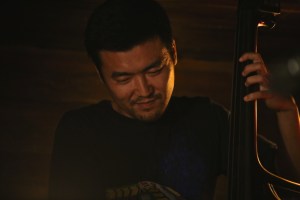
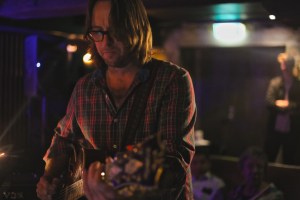
 I often detect a unique quality in New Zealand improvised music, but when it comes to defining it, the illusive essence dissolves before I can grab hold. ‘Harry Himself’ has brought me one step closer, connecting me with a tangible manifestation. This band is the perfect example of improvised ‘Kiwiana’. At first hearing you detect a melange of the familiar; elements of World, Fusion, Straight ahead, Post bop, Post millennial Jazz and all served up with a generous dollop of classic country. Listen more closely and you will get strong South Sea references, flashes of musical memory permeating every bar. Everything from Bill Sevesi to the ancient sounds of New Zealand indigenous music. Even song titles revolve around Kiwiana themes . Many of the tunes belong to a place, to the Islands we live on and to the immense swath of sea that surrounds it. Like the harbours and oceans that surround us, this is a mosaic of glittering fragments. A familiar yet unknown music to gladden the heart.
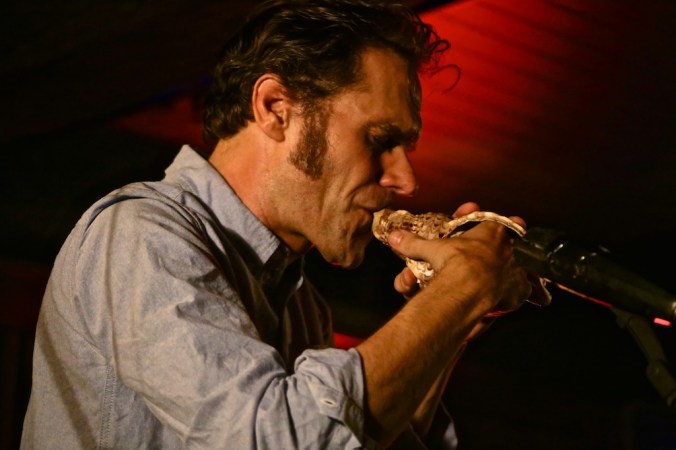
  Above all this is a good-natured band, oozing charm and character. The array of instruments and the judicious use of loops and pedals more than doubles their range. The only constant in the sounds are the six string bass and drums. The leader Kingsley Melhuish is sometimes seen in the company of adventurous avant-gardists. He can also be found among the free ranging Ponsonby Road improvising bands. His use of pedals and loops is tasteful and it serves the music not a whim. His pedal effects and electronics are not added randomly, nor for the sake of it. He is an accomplished horn
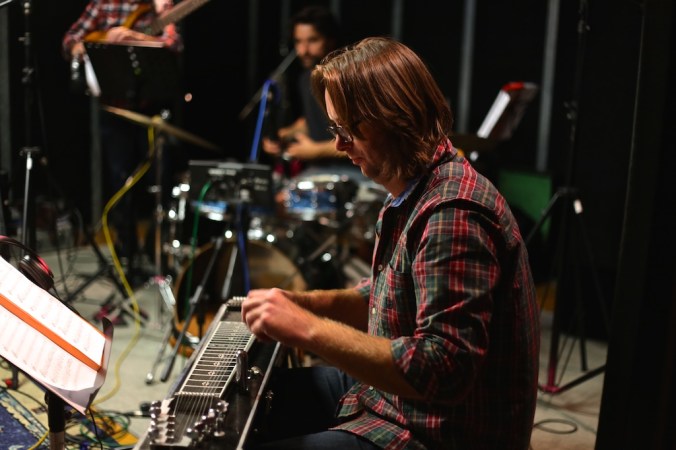
 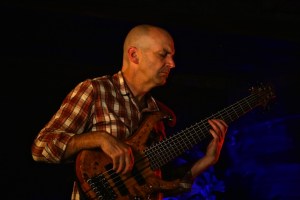 player, switching seamlessly between trumpet, flugelhorn, tuba, trombone and lately, a vast array of conch shells. Melhuish often sets up loops and then he plays over them with different horns. This layering of sound is achieved well and the real-time harmonic overlay enables him to add considerable texture and breadth. Neil Watson does likewise, as he frequently moves between Fender guitar and pedal steel guitar. The day after the gig I called into the MAINZ recording studio to grab a few shots of the group laying down an album. I overheard the recording technician asking the band after a take, “How do you feel that went; do you want to listen before moving on”? Immediately a voice came from the studio speaker, “No, I think we’ll do that one again. The Fender and the conch will work better together than the pedal steel on this track”. A huge smile crossed the technicians face, “I’ve never heard that said in a studio before” he said. They were
  right and it reinforced a long-held view of mine; that no instrument is beyond the reach of Jazz and that no sound should remain un-pillaged. I always appreciate Sam Giles electric bass playing and I am always left with the feeling that he is scandalously under-utilised. Solid and groove based was what the band needed and solid and groove based was what they got. On drums was premier drummer Ron Samsom. He worked these beats like he always does, purposefully, skilfully and making it look second nature. I’m glad the band is recording this material and I have a feeling that the album could grow legs with the right exposure. I hope so, they are fun.
 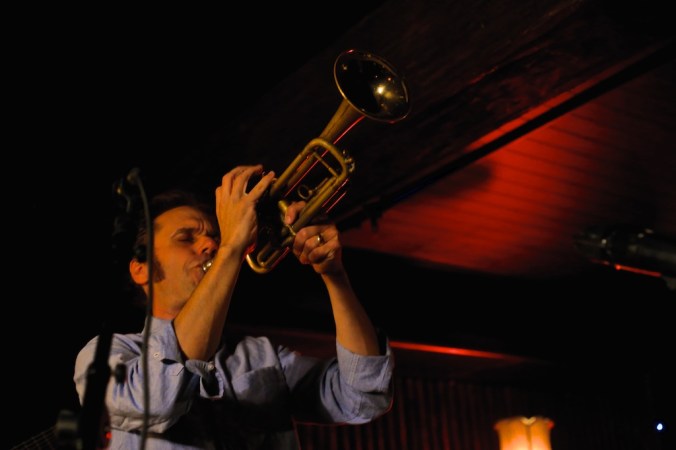 I have added two video clips of the band, which demonstrate the diversity of their material. While diverse, it never-the-less hangs together nicely. The fist clip is ‘Cy’s Eyes’ a tune composed for one of Melhuish’s children. The second tune is the wilder freer ‘Zornithology’. A tribute to John Zorn (with an obvious play on the title of a Bird tune). There was one tune I wish I’d captured on video and that was ‘Rose Selavy’ by Enrico Rava. Man, what a hard-edged powerhouse romp that was.
 In the coming months there will be a new Phil Broadhurst album released, ‘Panacea’. Broadhurst is an enduring musical presence, a backbone of the Auckland Jazz scene. Running the Massey School of Music Jazz programme in Auckland keeps him busy, but he somehow finds time to write interesting new material and to perform gigs about town. A prolific writer and arranger, he has released a number of albums in recent years and all have done well. His tribute to Michel Petrucciani ‘Delayed Reaction’ garnered favourable reviews here and offshore and his 2014 album ‘Flaubert’s Dance’ was short listed for a Jazz Tui.
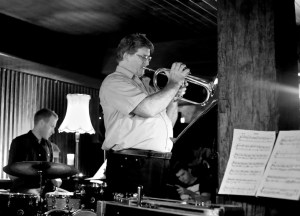
 poorly kept secret, anticipated and not puzzled over. As the band set up, the shiny pedal-steel guitar and the battle-worn fender dispelled any remaining doubts. The band was Phil Broadhurst, Roger Manins, Mike Booth, Oli Holland, Cameron Sangster and of course Neil Watson (AKA the mystery guest).
 began the process of mechanically purging duplicate copies of old tunes. By this point all had been given titles and saved elsewhere. Rescued from the lonely obscurity of the ‘untitled’ nomenclature. As he deleted them one by one he spotted an anomaly. One particular tune was mysteriously labeled ‘untitled-untitled’. He opened it, liked the look of it but didn’t recognise it, so he played it. He recalls wondering who had written it until the penny dropped. ‘Untitled-Untitled’, the tune rescued in the eleventh hour, was later shown to Neil Watson who was wrangling with his new pedal steel guitar. There are so many levers to operate he complained to Broadhurst, who replied, “I think that you’ve just named my lost tune’. ‘Lever’ is a great tune and its improbable genesis gives it that added piquancy.
 The more I listen to Alan Brown bands, the more I realise just how original his music is. The gig promised to be a reprise of ‘Between the Spaces’ and that was a drawcard which pulled in a good audience. We soon realised however that we were getting a lot more. As well as the familiar there were new compositions and a few that had not made the cut for the album. Brown is an extraordinarily gifted musician and in settings like this he always sounds fresh. The familiar numbers sounded as exciting as when we first heard them and the unfamiliar held the attention with siren like allure. This is music to gladden the heart.
 accessible. As the tunes unfold you fall into them, feeling that you are on a journey of logical progression; the enveloping arms of groove guiding you inexorably towards some beating voodoo heart.
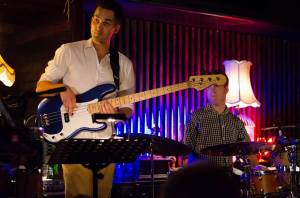 The relative newcomer is electric bass player David Hodkinson. He is no stranger to Brown’s bands but he was not on the album. it would be daunting to step into Marika Hodgson’s shoes but Hodkinson held the groove and punched out a mesmerising pulse.
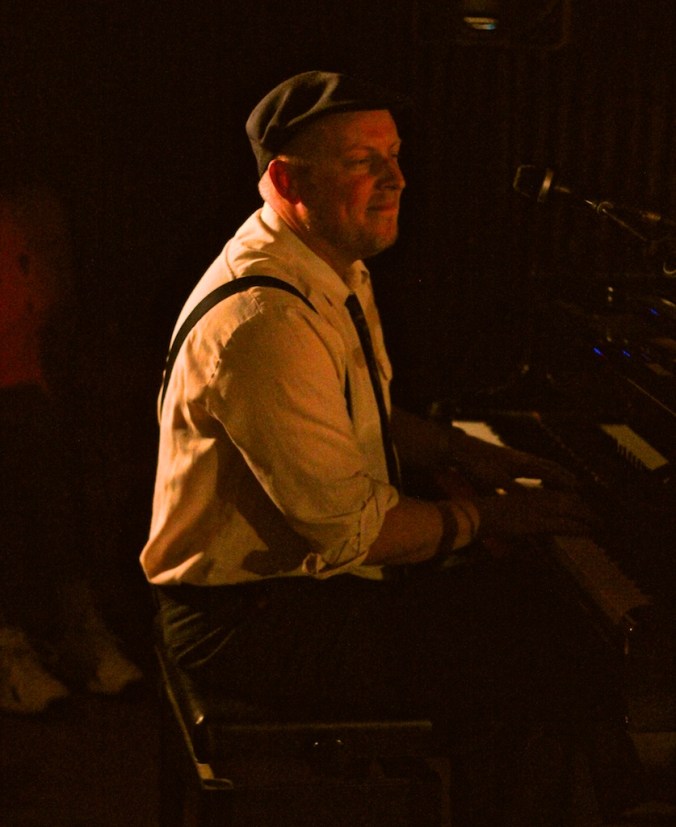 Thomas ‘Fats’ Waller and Errol Garner can install a smile on your face in two jaunty bars. It is the same with Wellington’s ‘The Jelly Rolls’. Waller and Garner are widely loved but seldom imitated; probably because what they do is extremely difficult. The original recordings also stand up so well that mere clones would be a redundancy. The Jelly Rolls have achieved something special by locating the spirit of this cheerful Harlem Stride influenced music; achieving this through a clever synthesis of the leading stylists. For good measure they have thrown in a touch of the more modern Ahmed Jamal and a pinch of Oscar Peterson. This is the sound of joy, wild unbounded exuberance.

 I have long been drawn to middle eastern music, having commented on it in earlier blog posts. There are many reasons to like this rich musical stream, but what draws me are the interactions that occur when eastern and western improvised traditions meet in mutual respect. This is often labeled as World/Jazz, but implying that it is new hybrid is somewhat problematic. Both improvised traditions have deep roots and a successful meeting acknowledges this. The blend of Jazz and middle eastern music is mainstream in the Mediterranean regions but not as well-known elsewhere. Adventurous artists like Dhafer Youssef, Rabih Abou-Khalil and Anouar Brahem have gained prominence in the west through collaborations with the likes of Kenny Wheeler, Charlie Mariano, Steve Swallow, Tigran Hamasyan, Marcin Wasilewski and others. Jazz lovers in New Zealand and Australia have already experienced the ancient Sephardic music of Spain through Caroline Manins ‘Mother Tongue’ projects. Also through Kiwi Jazz harpist Natalia Mann’s Turkish projects.
  Much of this music derives from the Sufi tradition but Sicilian and Flamenco Jazz fusions should not be overlooked either; both having rich Islamic and Jewish sources feeding them. The Moors ruled Sicily for 400 years and southern Spain for 500 years. Under the various Caliphates there was great religious tolerance and a spirit of scientific curiosity. The arts and musical traditions merged and flourished in that benign space.
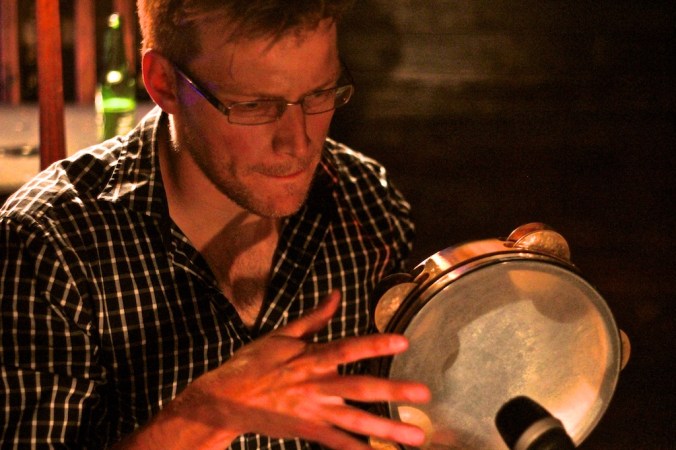
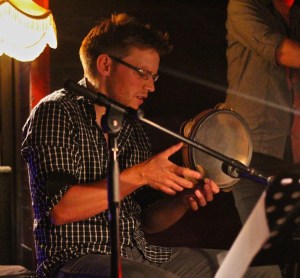
 Watching Tim Sellars on percussion is eye-opening as he coaxes so many complex rhythms and sounds from his array of percussion instruments, that it beggars belief. At times he used the Cajon (of African/Peruvian origin) but mostly he played frame drums (middle eastern). I love to hear the frame drum as it is the oldest instrument known to man. The genre includes the Riq (tambourine) which Tim played to perfection. Being an amplified acoustic ensemble the sound worked well in the club space. The guitar perhaps needed turning up a touch, to give it more bite.
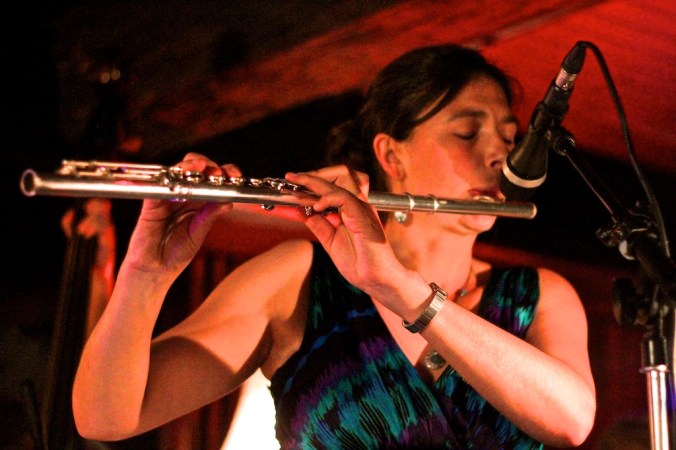
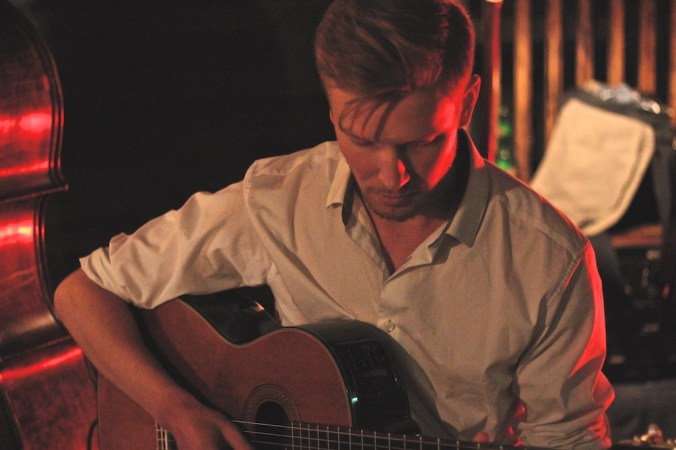
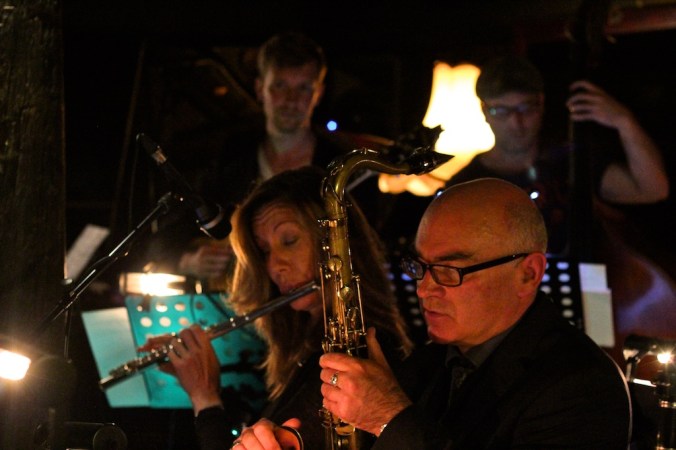
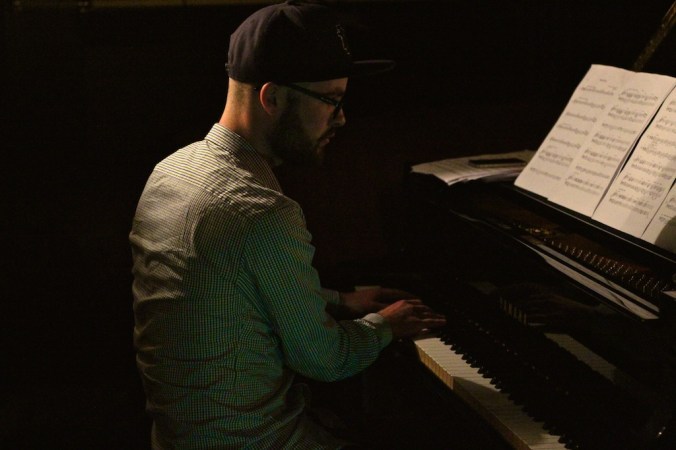
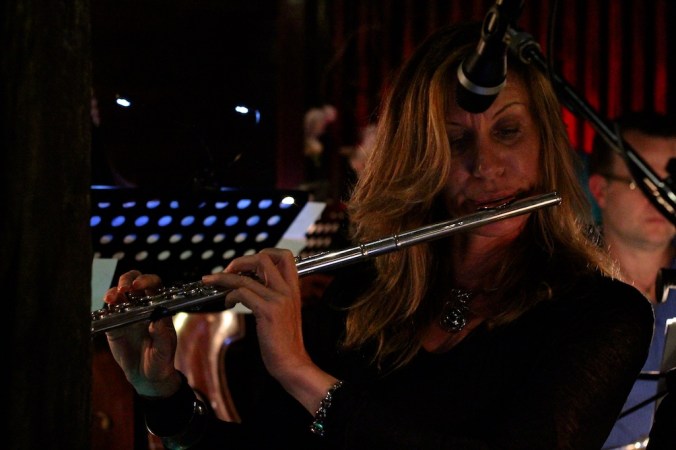
 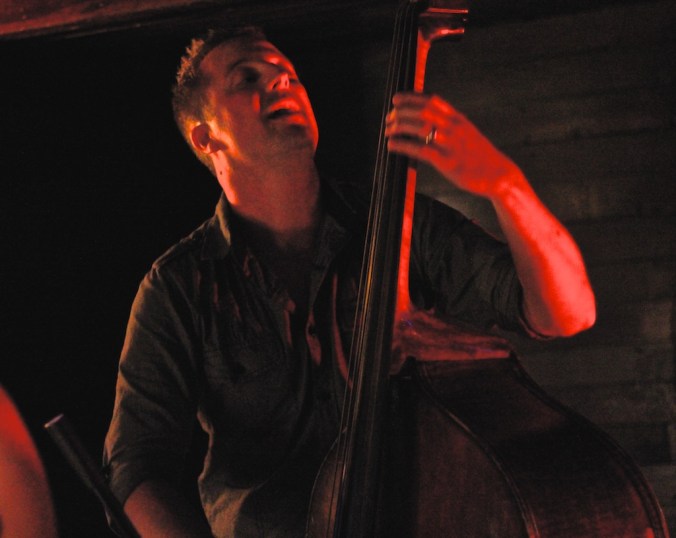 Tamara was her usual impressive self and her control and mastery of the instrument was evident throughout. She alternated between bass flute and alto flute; the tonal richness of both horns blending perfectly with the upright bass. Bass player Michael Story understood the cues and worked with Tamara; resisting any impulse to overplay. Acoustic ensembles like this require discipline and subtlety; overly showy solos can dominate and obscure the filigree of woven sound. Mukhlisa got that right and the solo work although appealing, was rightly subordinate to the overall integrity of the music. Glen Wagstaff is popular in Auckland and his charts for large ensembles have impressed club goers. It was good to see him in a different context and many of us eagerly await his album, which is due out in a month or so.
 There is ample scope for a larger ensemble to grow out of this; perhaps one including arco Cello and Oud.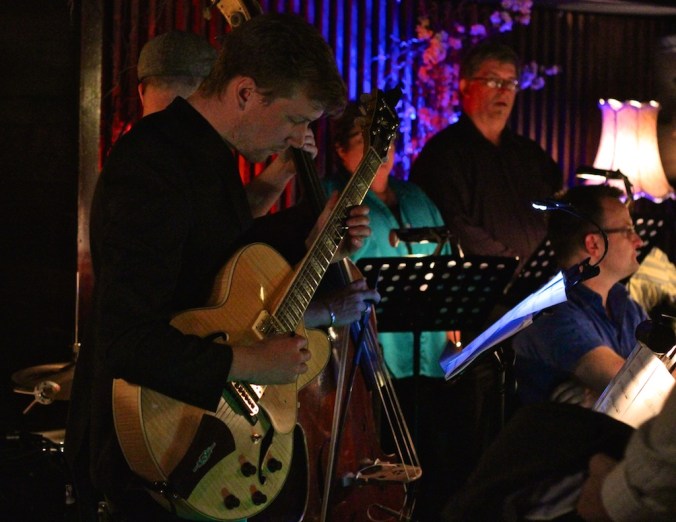


 JazzLocal32.com