January was hot and wet and the CJC was on holiday. If like me, you are a regular attendee at the CJC (Creative Jazz Club) December to February is a long time between drinks. The El Nino humidity with its sullen skies and petulant storm threats rolled into February and suddenly we were back in business. The first gig of the year featured Craig Walters and Mike Booth. Walters, a well-known Sydney based tenor player, last performed at the club in 2012. Booth is a local and he features often; a gifted composer, arranger and trumpet/flugel player. Booth and Walters have a long history together.
The gig featured original material by Walters and Booth and as you would expect, nicely arranged heads augmented attractive melodies. There was also material by pianist Phil Broadhurst whose tunes are familiar, memorable and compelling. With Broadhurst on piano, Cameron McArthur on bass and Stephen Thomas on drums the evening was complete. The club was icy cool and as they started playing the sticky tropical night air faded to a distant memory. Improvised music is a medicine like no other; headaches and discomfort vanish in a trice as endorphins flood the consciousness.The first number was a Walters tune titled ‘Easy’. Booth played flugel and the relaxed fluid interplay between horns set us up nicely for the evening. Walters plays with real fluidity and his tone has a certain quality – a hint of mid to upper register sweetness not dissimilar to that of Ernie Watts – but with an earthier colour overlay. While the first tune eased us the into the gig the second tune grabbed our attention in a different way. ‘A Kings Ransom’ is a seldom played Booth tune and its complex rhythms gave the band a solid work out. Broadhurst delivered a wonderfully solo on this – Monkishly jagged and totally within the spirit of the composition.
As we progressed through the first set we heard the first Broadhurst composition ‘Stretched’. It is impossible not to like Broadhurst compositions. It is a hallmark of his writing skill that his tunes are always warmly familiar. We treat them as fond friends when we hear them again. Two more Walters tunes rounded off the set (his ballad ‘Where have you gone to?’ was quite lovely). The second set saw the band stretching out and never more so than on Broadhurst’s fabulous Horace Silver tribute ‘Precious Metal’. The tune following was written for (and not by) Mike Booth. Written by a Dutch musician during Booths long years of working in the Netherlands. The tune has the eponymous title, ‘Mikes Theme’ and for me it conjured the vibe of the Clifford Brown ballads. As usual McArthur and Thomas never put a foot wrong. Towards the end of the second set they played Walters ‘As close as you’ll get’. If the title didn’t trigger any memories the first bar surely did. This was a tune that I’d heard way back in April 2012. Its intricate hooks and counterpoint nailed it within seconds. This was not a tune easily forgotten – in fact I happily replayed it in my head for weeks after the 2012 gig. I was not putting up video way back then but have chosen this cut to put up now. Last years attendance at the club was good and if Wednesday was anything to go by this years will be even better. There were many first time attendees and based upon the applause most will return. The artists create the music but they need engaged audiences to complete the circle. As the famous American bass player David Friesen said to us last year – ‘this is a virtuous circle and the magic only emerges when audience and musicians interlink. The sum of what comes from this interaction is often greater than the sum of its parts. Improvised live music at its best is profound and the thought that we might miss a wonderful and unique moment causes us to return time and again. That is how it works me anyhow.
Craig Walters/Mike Booth band – Craig Walters (tenor saxophone), Mike Booth (trumpet, flugel), Phil Broadhurst (piano), Cameron McArthur (bass), Stephen Thomas (drums). The gig was at the CJC (Creative Jazz Club), Britomart 1885, downtown Auckland 3rd February 2016.
I was out of the country when Anita Schwabe performed at the CJC two years earlier. While I had seen her perform at the Bruce Mason Centre with the Rodger Fox Orchestra, I wanted to hear her in a more intimate setting. Her live (and recorded) performance on ‘Journey Home’ was impressive and as I recall a jet lagged Alan Broadbent watched her segments from the wings during the Auckland concert. As good as that concert and a later concert were, hearing an artist in close proximity is always a different experience. Schwabe didn’t disappoint. The first thing you observe when you meet her is her understated manner. Like many New Zealand improvising musicians she is self-effacing to the point of being dismissive of her own abilities. This contrasts strongly with the engaging confidence of her playing. From the first few bars you become aware that there is something special going on.
There is something of Broadbent in her ballad playing, perhaps even a hint of Evans, but she has a sound of her own. She initially evokes a sense of the familiar, but then you hear something deeper; a subtle richness underpinning her voicings. A lushness implied but not overtly stated and this quality lingers in memory long after the notes are played – above all she swings like crazy. Perhaps it was having Roger Manins, Ben McNicoll, Ron Samsom and Cameron McArthur in her band that created this particular rub. What ever it was they quickly gelled and played off each other like a band that had been together for years.Schwabe’s first number referenced the under-acknowledged and recently departed pianist Clare Fischer. “I like his unusual voicings”, she said before she played through her composition,’Fisching for Compliments’. The tune was intensely melodic, filled with clever references and a fitting tribute. Although a more reflective number (and her first of the night) we saw what she could do. The tune drew us in with a spacious intro and then imperceptibly we felt the swing. Block chords suddenly dissolving, close voicings appearing, disappearing; right hand running off the back of a phrase, subtly playing with time and rubbing against the chords in the left hand. This interaction between right and left hands created subtle and pleasing tension and we were to hear that often throughout the evening. That first number gave us a foretaste of what was consistently enjoyable music throughout the sets.
There were various ensemble configurations; trio, quartet and quintet. The bigger lineups with Manins and McNicoll were absolute cookers and the pair excelled themselves. An end of year holiday spirit had obviously descended upon them; the musicians interacting in a summery sweet spot. ‘The You Tube clip is ‘Fisching For Compliments’ (trio).The second number was a bossa, ‘No Winter Lasts Forever‘ and for that number she induced Manins (who is famously averse to putting aside his tenor), to play alto. There were whoops of delight and a lot of teasing, but Manins is killing on any of his horns. This was Manins at his formidable best. The saxophone deities of Conn and Selmer sensing the importance of the moment reacted and as he raised his alto, a halo of light formed directly above his head. This was clearly a sign of the gods pleasure. I have put the ‘alto’ bossa number up as the second sound clip. The last number of the evening titled ‘Anger Management’ burned with intensity (the first sound clip). This hard swinging Tyner-esk cooker had everyone on their feet. For Jazz lovers, burners like this are Christmas and New Year rolled into one and they fill us with endless joy.It was great to hear McNicoll and Manins together – both playing their asses off and McNicoll sounding great on soprano. They obviously enjoyed playing together and we were the beneficiaries. Their different horns and their different approaches to soloing entirely complimentary. With McArthur, Samsom and Schwabe you had a formidable rhythm section. McArthur kept a wonderful pulse and Samsom was right in the zone, ever urging them to go one step further. This band floods the body with endorphins – they are a trip. A musician in the audience behind me said – “man that’s some rhythm section – some horn section – yeah thats how its done alright”.
Anita Schwabe: (leader, piano, compositions), Roger Manins (tenor, alto), Ben McNicoll (soprano, tenor), Cameron McArthur (bass), Ron Samsom (drums). performing at the CJC (Creative Jazz Club), Britomart, Auckland 16th December 2015
Richard Thai was on the first JAC album but by the time I saw the ensemble live he had left New Zealand for America to complete his postgraduate studies. Recently he returned to his hometown of Wellington where he now teaches and leads the Richard Thai 5. While the ensemble is a basic line up of saxophone, piano, guitar, bass and drums it is never the less forward-looking. This is post millennial music.
The set list on Wednesday featured Thai’s compositions. The well constructed tunes had an attractive ebb and flow, but behind the arranged heads and often lingering melody, lay obscured complexity. This is the type of material that can sorely test a band but under his quiet guidance they delivered. There are few hard edges to Thais sound, but he is unafraid to reach deep inside a solo; probing until it yields more. He is above all a confident player and in spite of his very even delivery, he conveys a lot of information. The best illustration of this was heard in his second tune, ‘Capricorn’. A marvellous composition. Like much of Thai’s material it has powerful hooks to draw you in. What sounds simple is in truth anything but, as it shifts between major and minor keys with disarming ease. Many tunes do this, but with Capricorn the device is extraordinarily well conceived. The shifts in focus are pleasing, but what sets the tune apart is a sweet over-arching dissonance; diminished chords acting as a bridge to carry you across the major-minor divide. The arranged head is especially tantalising; setting the listener up expectantly for the explorations that promise to follow.Capricorn’s momentum is that of a multi-hued butterfly in a tropical storm; pushing against the cross winds, never losing its way, pulse, or sense of purpose. Thai’s tenor picks at the tune, peeling the layers back, exposing the heart. This contrasts with pianist Matt Steele’s oblique approach. Steele clearly took the difficult route and along the way it yielded gold. You were with him note by note as he undid the knots of the puzzle confronting him. Steele is always an interesting pianist and always one to watch. It is his determination, his preparedness to take risks and his ability to learn on the bandstand that marks him out from many of his peers. He grows as an artist each time I see him. The last to solo on Capricorn was guitarist Callum Allardice. After the long complex solos preceding his, he wisely chose to linger nearer to the melody. His tight elliptical figures rounding out the earlier solos and bringing us gradually back to the outro. His time to shine as soloist came on the last number where his guitar soared as if free of gravity (much to the delight of the audience). Allardice has many fans in Auckland.The remaining two band members Shuan Anderson and Scott Maynard are also established musicians from the Wellington area. Anderson (like Allardice) was also a member of the Tui nominated JAC and he has played at the CJC before. A responsive drummer who interacted well and picked up on the subtle nuances of the material. The bass player Scott Maynard has been a member of various leading Wellington units (e.g. Myele Manzanza, Lex French). He has played at the CJC before and he never disappoints. His role in giving a heart beat to this often complex material was vital. I look forward to hearing more of this ensemble and above all I would like to some hear more Thai compositions. With a few more years of performance under their belt the unit could achieve even more.
Richard Thai 5 – Richard Thai (tenor saxophone), Callum Allardice (guitar), Matt Steele (piano), Scott Maynard (bass), Shaun Anderson (drums).
‘Panacea’ is the third of Phil Broadhurst’s ‘dedication trilogy’ series and as fine as the earlier two albums were, this one stands out. Everything about it is superb, the individual performances, the ensemble playing, the recording quality, the cover art by Cameron Broadhurst and above all the compositions. Broadhurst, always a prolific composer has excelled himself here. Instead of theming the album around a particular influence or musician he has tapped into the subliminal forces guiding his creativity.
This is the more difficult pathway and I suspect one that is fraught with risk. Delving into the subconscious mind can produce perverse results, as anyone who has suffered long-winded descriptions of someone elses dreams will know. Working in this way requires a ‘quantum’ approach; be aware but don’t look too closely or what you examine will disappear like Schrödinger’s cat. Poets (and cats) understand this. When he composed ‘Precious Metal’ he was at first unaware of the influence until a student pointed it out. It certainly speaks of Horace Silver but more importantly it conjures the essence of the man behind the music. The ensemble playing on this is simply sublime. An arranged head yields to Mike Booth on trumpet. He swiftly encapsulates the ethos of Silver in his delightfully moody solo. Broadhurst follows – expanding on the theme and signalling the direction, effectively setting the tune up for Roger Manins and Oli Holland who follow. There is a logical flow throughout and the piece works all the better because of it. I have heard it several times, but even on first hearing it sounded warmly familiar. That is the skill of good writing; evocation not imitation. For me the greatest joy was ‘Wheeler of Fortune’ his Kenny Wheeler tribute. So well realised was the mood that it might have been John Taylor playing a Wheeler composition. Again this is an extraordinary piece of writing and articulation, lovely because while capturing the style of these lost lamented greats it reminds us just what made them so dear to our hearts. In spite of being a piece for piano trio you can sense Wheeler reaching for those impossible high notes or mournfully smearing his over-running melancholic lines. It must have been tempting to use Booth’s flugel on this, but the implied sound is all the more powerful.
Like ‘Panacea’, the heart-felt ballad ‘Absent Friends’ is a lament for band mates passed from us; the delicately woven lines conveying a sense of reverence and affection. This is Broadhurst the romantic and Manins demonstrating the best of his formidable ballad playing skills. Another piece ‘knee lever’ begins with Neil Watson’s Pedal Steel guitar sounding quietly above the melody; understated like a soft sunrise casting a glow on the sea. As the piece progresses there are several surprises, first from Broadhurst who imbues it with a distinct rhythmic treatment (like that of Eliane Elias) – then Watson solos – his soaring guitar reaching for the sky. As the horns come in I am aware of a subtle Wheeler influence again. I played it over several times and yes, above the arranged horn phrases I hear a Norma Winstone like wordless voice. I look in the liner notes, no human voice shown – then it struck me. This is Watson, again understated but adding something to the piece which lifts it into the realm of musical magic – an exceptional and original musician. The album would be the poorer without his contributions. Subconscious influences shape every musicians work and it is right to celebrate those. Purging these influences is often a mistake. All creative people whether writers, poets, musicians or painters have these voices at their core. Improvising musicians stand on the shoulders of giants and it is fitting to celebrate that. Broadhurst has done so with due reverence, due acknowledgement but never sycophancy. This was his time to say thank you and his own original voice shone through the multitude of influences.Booth sounds better each time I hear him. His undoubted strength lying in the way he reminds us of the great traditional trumpet players – especially those from the Hardbop era (like Blue Mitchell). A wonderful musician, a fine arranger and one who nicely compliments a saxophone modernist like Manins. Playing off the latter gives the edge. Manins is such an original that you hear something new and exciting each time he plays. I have observed before how well he plays off Broadhurst compositions. This says something about the skill of both men.
Bass player Oli Holland and drummer Cameron Sangster are the remaining components of the rhythm section. Their performances are hard swinging; understanding the right moment to amp things up or to dial back. Everyone is playing at a high level on this album, everyone is indispensable. The word panacea is from the ancient Greek meaning ‘all healing’. The modern definition extends the concept beyond cure-all potion – applying it more to the realm of ideas. The album is truly a balm in our troubled times. I highly recommend it as a Christmas present to yourself or a loved one. It must surely be contender for next years Tui’s.
Panacea: Phil Broadhurst Quintet – Phil Broadhurst (piano, compositions), Roger Manins (tenor saxophone), Mike Booth (trumpet, flugel), Olivier Holland (bass), Cameron Sangster (drums) – guest Neil Watson (Pedal Steel and Fender guitars).
CJC (Creative Jazz Club) Album Release 25th November 2015 – Britomart 1885, Auckland – Album available from ‘Rattle Records‘ and all leading record stores.
On Wednesday the UK-based vocalist, arranger composer Louise Gibbs brought her Seven Deadly Sins project to Auckland’s CJC (Creative Jazz Club). The audience, unrepentant antipodean sinners that they are, found much to enjoy. When premiered in the UK the project received much acclaim and in 2013 the ‘Seven Deadly Sins’ album’ was released. As I glanced through the liner note credits one name jumped out, Tim Whitehead; an important English saxophonist with equal facility on soprano, alto and tenor. For any number of reasons this is an album worth having. The song suite has seven parts plus prologue & epilogue. This aggregation of cardinal sins does not originate with Peter Cook (as someone hilariously suggested) but comes to us from the fourth century AD. These very human failings were the obsession of the middle ages and Chaucer, Dante and Brueghel utilised the themes to great artistic effect (and often with rye humour). Debates on morality are still very much part of the public discourse as the dreadful events of Paris, the Lebanon and Mali remind us. Gibbs invited us to examine the sins afresh; a parade of human failings as seen through a jazz lens. Her evocative contrasting pieces leaving us in little doubt as to which sin they represented; a strident drum solo during anger, the fulsome sound of the trombone for gluttony etc. It is unsurprising that the tenor saxophone portrayed lust; an entirely appropriate pairing given the repeated historic accusations of lasciviousness levelled against that sensual instrument. The suite while highly arranged gave ample room for the soloists to demonstrate their particular vice. Crystal Choi was ‘pride’ on piano, Pete France was ‘lust’ on tenor, Haydn Godfrey was gluttony on ‘trombone’, Mike Booth was ‘envy’ on trumpet, Cameron McArthur was ‘sloth’ on bass, Steve Thomas was ‘anger’ on drums, Andrew Hall was ‘greed’ on alto & baritone. Gibbs was vocalist on all numbers including a prologue and epilogue. Many of the band members like Booth, McArthur, Choi and Thomas are regulars but we see Hall, France and Godfrey less often. That is a shame because they were amazing. A shorter first set preceded the ‘Seven Deadly Sins’ suite – all Monk compositions. The band used stock arrangements but there was a sense of boisterous freedom in the renditions. This provided an appropriate segue to the second half. While everyone embraces Monk these days, his dissonant choppy lines certainly raised eyebrows back in his heyday. Monk was an iconoclast who channeled the rawness of the human condition through pen and piano. With the Seven Deadly Sins and its often dissonant passages we also experienced that. Louise Gibbs has been teaching and performing in the UK for 30 years, but she grew up in Auckland. In recent years she moved away from a distinguished career in academia to concentrate on performance and composition. There is a confidence about her work and she is unafraid as a performer. Her voice can move from silk to raspy as appropriate to the piece. Footnote: Earlier I drew attention to Tim Whitehead (on the Gibbs album). He was once a member of Ian Cars ground breaking and popular group ‘Nucleus’ – the highly respected Kiwi born saxophonist Brian Smith was a founder member of that group.
‘The Seven Deadly Sins’ (New Zealand Septet) – Louise Gibbs (vocals, composition), Andrew Hall (alto & baritone saxophones), Pete France (tenor saxophone), Mike Booth (trumpet, Flugel), Haydn Godfrey (trombone), Chrystal Choi (piano), Cameron McArthur (upright bass), Stephen Thomas (drums).
The gig took place at the CJC (Creative Jazz Club), Britomart 1885, Auckland 18th November 2015.
Because the human voice is the most primal of instruments it has the capacity to engage in unexpected ways. When a skilled vocalist performs we watch as carefully as we listen. The merest inflection, micro pause or slurred note can captivate, but it is also the non verbal cues; the ones we assimilate subconsciously that draw us ever deeper inside the song. When Caitlin Smith sings you are hyper aware of the entire performance. Hers are not gigs where listeners drift away or endlessly fiddle with phones. The audience are as engaged as she is. That is her gift as a musician.When Smith moves your attention moves with her. She will prance, dance, drop her head, pause for effect or sweep her hair back unexpectedly and all in service of the song. When you watch and listen to skilled performers like her (and they are few and far between) you discern a deeper truth. What appears extrovert can be something else. The actions and gestures are an act of losing oneself. This is the performers mask and behind it lies a certain vulnerability. When enough of this vulnerability informs the music we feel with them. During Smith’s performances there is a lot of interplay between band members. She is generous in her acknowledgements and genuinely appreciative of the musicians behind her – unlike some vocalists who make it very plain that this is all about them. She had two of her regular cohort with her, Kevin Field on piano and Oli Holland on bass. On drums was the talented Stephen Thomas and I had not seen him with Smith before. During the break I asked Thomas how he was enjoying the gig. His answer is worth repeating, as it illustrates the above points. Vocal artists who think disengaged equals cool might pick up a pointer here. “Working with Smith is perfect as you have so much to react to. Every gesture and look gives you new material to work with”. Smith followed her usual pattern of alternating originals with standards. The set list moved between Jazz and singer song-writer soul. She only repeated one tune from last Decembers CJC gig and that was the lesser known Ellington Number “I like the Sunrise”. This is from Ellington’s ‘Liberian Suite’ performed and recorded first in 1947. The original featured Al Hibbler on vocals, soon followed by a Frank Sinatra version (also with the Ellington orchestra). More recently Kurt Elling recorded a version but all of the aforementioned are at a slower tempo. At the risk of committing heresy, I like the upbeat punch and swing of Smith’s version best. The night was thoroughly enjoyable as I knew it would be, and with this rhythm section of Field, Holland and Thomas behind Smith that was guaranteed.
Caitlin Smith Quartet: Caitlin Smith (vocals, compositions, arrangements, percussion), Kevin Field (piano), Oli Holland (bass), Stephen Thomas (drums). The video is courtesy of Denis Thorpe
Good improvising bass players get a lot of work, but they seldom get the acknowledgement they deserve. This is one of life’s inequities and it’s partly because a bass player by custom is hidden behind the other band members. When a pianist or guitarist plays solo they will often mimic or imply bass lines. A good bass line is both an anchor and an invitation – invoking deeper exploration; the consequent rub between notes and time is where most of the tension and release is hidden. Every so often a bass player claims wide-spread attention. Blanton, Mingus, Haden, McBride, Le Faro, Pastorius etc. David Friesen while not garnering the attention of the aforementioned bassists in the popular press, is without doubt a giant of the instrument. His is a name that frequently comes up when aficionados and musicians talk. He is the bass players bass player, an acknowledged innovator.
The point is best made when looking over his discography – seventy-six albums as leader or co-leader and in excess of a hundred as sideman. The list of luminaries he has recorded with defies belief; everyone from Dexter Gorden to Dizzy Gillespie. For the New Zealand leg of his tour, two of New Zealand’s finest musicians accompanied him. Dixon Nacey on guitar and Reuben Bradley on drums. That particular combination was bound to work well and the proof positive was in the outstanding performances. When artists pay each other respect on the bandstand it is a recipe for excellence. There were no Jazz standards performed and I suspect that many of the compositions were challenging for those new to them. If they were it did not show. Friesen explained that while he loved interpreting standards, he had come to the point where exploring his own compositions was his preference. A musician as gifted as this has plenty to say musically and Friesen found endless ways of expressing his unique world view. As is often the case with great musicians, he was a compelling talker; spinning out yarns of people and places visited. Often with subtle humour woven into the narrative. Above all he imparted his views on the place of music in these complex and troubled times. To paraphrase slightly, “Music is a way of healing a broken world, it is not just about the people making the music or about the audience receiving it, but something far deeper. The interaction creates a virtuous circle, each continuously enriching the other. Out of this comes the magic”. This reference to the primal healing power of music resonated and he received loud applause. Improvisers seldom earn what they should and yet they persevere. Understanding their mission of deepening human awareness. It was good that he reminded us of how vital a deep listening audience is. Sharing the joy brings its own responsibilities. That’s why I do what I do in print. Friesen travels with a special bass; made for him by a famous Austrian instrument maker. Sick of having instruments damaged or interfered with by airline baggage handlers, he ordered an instrument small enough to go in the overhead locker. This custom bass is mainly crafted out of American Cherry wood and Canadian Maple. It also has a very sophisticated pick up. Because of the foreshortened neck I suspect that it would take some mastering by most upright bass players. In Friesen’s hands it sung. Nacey did what we expected of him; delivered stinging imaginative lines and soared on that lovely Godin semi hollow-body. As success spreads him thinner, we tend to see less of him in the Jazz club. When we do hear him we get the very best. He is a guitarist who can hold his own anywhere on the scene. The other Kiwi on the gig was Wellington drummer Reuben Bradley and what a performance he put on. Again it was hardly surprising, as Bradley is among our very best drummers. Like Nacey he is often the drummer of choice for visiting artists.
Alex Ward has been on the scene for a few years now and he has appeared at the CJC a number of times. This time he appeared with a group of formidable younger musicians; all respected about town. His programme was pleasantly challenging as it offered contrasting tunes. From the quirky Carla Bley composition ‘King Korn’ to the perennially popular Disney tune ‘Never never land’. Then, for the second time in as many weeks we heard a Cold Play cover – this time ‘Daylight’ (arr. by Taylor Egsti). Rounding off the set list were a number of his own compositions including the appealing ‘Rakino’ which I have heard before. Wards compositions have a definite melodicism about them.I am a real Carla Bley fan and so it surprised and pleased me to hear ‘King Korn’. I also have a real liking for her ‘Ida Lupino’. Bley’s repertoire is not played anywhere near enough for my liking. Her tunes are often closer to the avant-garde, but still accessible to main stream listeners. Ward showed no fear in tackling the angular jerky rhythms of King Korn and the result was pleasing. He had surrounded himself with exactly the right musicians for the task. On bass was Cameron McArthur, a perennial favourite who must now be considered a heavyweight about town in spite of his youth. The drummer was Cameron Sangster and again a highly experienced and gifted musician. Sangster is a multi faceted drummer who can move between soul, big band and small ensemble work with ease. We recently saw him with the Auckland Jazz Orchestra where he put on a stunning performance. Additional musicians came to the bandstand at various points; Kushal Talele on tenor saxophone and flute and Michael Howell on guitar. I had previously only encountered Ward playing in a trio format and this was a chance for us to see what he would do with an expanded ensemble. The diversity of material worked for them – none of it highly arranged but allowing for free-flowing interaction.I had only heard Talele once before and he naturally sounded different on this gig. Here he was appropriately the competent sideman, not the hard-driving Coltrane referencing leader. I like both aspects of his playing. He is a musician that I am definitely keen to see more of – especially when he dives deep into that denser material he favours. The ever smiling Howell is well liked and respected as an up and coming young guitarist. He is seen to greatest effect in Roger Manins ‘Grg67’ band.Whether by accident or design, Ward celebrates Carla Bley in an important year. 2015 saw Bley receive the highest public honour in Jazz, as she was the recipient of the NEA (National Endowment of the Arts) Jazz Masters Award.
The Alex Ward Quintet: Alex Ward (piano), Cameron McArthur (bass), Cameron Sangster (drums), Kushal Talele (tenor saxophone, flute), Michael Howell (guitar).
Having reviewed the ‘Two Out’ album a few weeks ago and thoroughly enjoyed it – it was a certainty that I would enjoy the ‘Two Out’ live gig. Mike Nock and Roger Manins are rightly celebrated as being at the top of their game, but neither trades on reputation. Both approached this gig with humility. As they settled into the music you could feel the absorption; punctuated by occasional smiles when a particular phrase surprised them, often delighting at what fell under their fingers. At times they seemed to defeat the physical limitations of performance; simultaneously observing and creating. This is a Zen thing and it cuts to the heart of improvised music. Others noticed it as well; one musician said to me afterwards, “Man there was no ego on that bandstand and it was a beautiful thing to witness’. He was absolutely right. Most albums require careful planning, the ideas gestating over time, rehearsal upon rehearsal shaping the direction. Then there is the other type arising from happenstance. ‘Two Out’ arose out of a relaxed jam between friends. Manins was relaxing with Nock one January morning in Sydney when they decided to play a few tunes (as musicians often do when relaxing). What took their fancy were the often forgotten tunes, ‘the ones that our mothers used to sing’. As they worked their way through the tunes Nock suggested that they record; just for fun. Shortly after they ended up recording in the Sydney Conservatorium’s Verbruggen Hall. The hall contained a wonderful Fazioli grand piano much to Nock’s delight. It is our good fortune that ‘Two Out’ was performed last week for New Zealand audiences. Nock explained that they had actually recorded 16 songs, but the limitations of CD space required these being reduced to eleven. On Wednesday we heard a significant number of the tunes from the album plus a few that didn’t make the final cut. In particular there was a version of ‘Softly as a Morning Sunrise’ (Romberg/Hammerstein). A wild joyous free-flowing version which brought out the best in both musicians. At times gentle but at other times carrying the echoes of a boisterous 1930’s radio performance. At that moment, listening, I visualised my mother, leaning over an old upright Victrola and humming along happily. The other addition was ‘But Beautiful’ (Jimmy Van Heusen). An overwhelming sense of respect and intimacy was evident in their interpretation of that tune. It brought a smile to everyone’s lips. When friends like this collaborate it is profound …… but beautiful.
Two Out: Mike Nock (piano), Roger Manins (tenor saxophone), The album is available from FWM Records. The Venue CJC (Creative Jazz Club), Britomart 1885, Auckland 23rd September 2015
The Mark Donlon trio gig gave us two leaders for the price of one. Accompanying Donlon was the highly rated LA bass player Tom Warrington. Jazz audiences in New Zealand are very familiar with Warrington as he toured here on many occasions. Donlon, originally from the UK is now living in Wellington and working as the Jazz Studies program leader at the New Zealand School of Music.
Donlon is a Post-bop pianist with a grab-bag of familiar standards and a number of original compositions at his fingertips. He is also adept at writing ‘contrafacts’; new tunes written over the changes of existing standards. While such practices are strongly associated with Parker or with innovative Post-bop improvisers, the practice actually dates from to 16th century. Some of the standards were reharmonised while he played others in familiar ways. It was a nice selection; including the song book standards ‘If I were a bell’ (Frank Loesser), ‘Darn that dream’ (Jimmy Van Heusen), ‘How deep is the ocean’ (Irving Berlin), ‘Quiet nights & quiet stars’ ( Tom Jobim) and Jazz standards like ‘Stolen Moments’ (Oliver Nelson) and ‘Nutty’ (Thelonious Monk). When I hear songbook standards by Berlin like’ How deep is the ocean’ or the equally engaging ‘Lets face the music and dance’ I am awe-struck. They are perennial in the fullest sense of the word and I hope that their star never wanes.I have been a Tom Warrington fan for many years and I have most of the Jazz Compass albums where he features to such great effect. He is a bass player who speaks with incredible forthrightness, but never undermining the others on the date. On ‘Corduroy Road’, a fabulous album that I play often, the ‘others’ I refer to are Larry Koonse and Joe Labarbera. These guys can do no wrong; their version of ‘You Must believe in Spring’ (Bergman/Bergman/Legrand) is a small masterpiece. We are lucky to have such a strong association with Warrington and Rodger Fox is the one to thank for that. I last saw him during the ‘Cow Bop’ tour, where his band shared the stage with guitarist Bruce Forman (and the Cow boppers). A friendly modest man of enormous talents and good company. When I spoke to him last Wednesday I learned that Larry Koonse (and perhaps Joe Lababera) will be touring New Zealand soon. Koonse has suffered health problems of late but he is evidently recovering well. Warrington’s recording credits are too numerous to mention. Tom is now domiciled in this country which is very good news.Cory Champion although Wellington based is no stranger to the CJC. He was there earlier in the year with Matt Steele’s ‘Master Brewers’. He writes and plays well and it is likely that we will see him in the drum chair often.
By my best estimation, Murphy’s Law kicks in roughly once every three months. Before the gig I plugged in my HD video recorder to charge, gathered my camera equipment into one place and foolishly congratulated myself on being so well organised. That was the mistake right there. Having tempted the Fates they responded in kind. My video recorder didn’t charge because the gods rewarded my hubris by half unplugging the charger cable. This was a gig I particularly wanted to video but the battery died mockingly within 15 minutes. Immediately the battery gave out the gig got better and better.I had not encountered Kushal Talele before. Until recently he has been working overseas and in London in particular. What I do know about him is that Brian Smith and Pete France tutored him at the New Zealand School of Music; both wonderful musicians. He was born on the Deccan Plateau in the city of Pune, the ninth largest city in India and the second largest after Mumbai in the state of Maharashtra. His family moved to New Zealand when he was eight, but he is now clearly a citizen of the world and of music.His good looks and relaxed confidence tell a story before he plays a note. Looking the part on the band stand is about posture and being at ease with the task at hand. His tone on the tenor is beautiful. He is very much a modernist but with the elements of Coltrane and the post bop era embedded. I asked him who he particularly listened to and the first name he mentioned was Chris Potter. Serious tenor players all admire Potter and rightly so. I also asked him if Indian Classical Music informed his playing and he was quick to say that it didn’t; adding that it was something he would like to explore one day.I asked because I have been following altoist Rudresh Mahanthappa who successfully fuses elements of South Indian music with modern Jazz conceptions. In reality most serious post Coltrane saxophonists have these elements in their playing. The way he tirelessly works over figures of melodic and harmonic invention tells me that he has that influence. In approach if not in sound, he takes a similar route to Sonny Rollins. Easing himself into a tune, in no hurry; working over long vamps which stretch into infinity. This turning a piece over and looking at it from different angles; gnawing away until the essence exposed, is a very New York thing.The group came together for this gig. All younger musicians but all experienced. It was great to see Cameron McArthur back on the band stand. One of my favourite bass players and adept at handling any challenge. He and drummer Cameron Sangster have just returned from an extended stint playing the East bound cruise ships. On Keys and piano was Connor McAneny. The band settled in as the gig progressed and during the last set they were playing tight energised grooves. Talele worked these grooves to maximum effect. I could only capture the first number (see below). It is my sense, that to experience Talele in peak form, one should see him with a settled band. The density and complexity of his playing would be enhanced by this. As good as this gig was I would very much like to see him in that context.
Kushal Kalele Quartet: Kushal Kalele (tenor saxophone), Conner McAneny (Keys), Cameron McArthur (bass), Cameron Sangster (drums). At the CJC (Creative Jazz Club), Britomart 1885, Auckland 12th August 2015
Paul Nairn is a man who avoids limelight and although he is extremely popular as a saxophone repairer he gigs all too infrequently. Those who have seen him before always turn up at his gigs, having fond memories of his standards interpretations and of his rich tone. For all of his reticence he is good company, knowledgable and a guy you enjoy being with. The last time I saw him was at the Doug Lawrence gig, shaking his head in disbelief and saying, “This is the southern styled tenor at its best. some of the greats are in that sound”. It is no secret that the classic era of 50’s Jazz is what he loves best. Larger than life standards played by some of the greatest musicians that walked the earth. The Phantom quartet was back to tell that story.The band set up early in case there was time for a quick run through but Nairn was nowhere in sight. He is notoriously hard to reach by email, phone or messaging so nobody tried. He is not enamoured of digital technology which is part of his charm. He is old school in good way. “He does know it’s tonight”, joked one band member? Twenty minutes before start time he arrived breathless. The vagaries of Auckland’s wet weather, downtown traffic and parking had tested but not defeated him.Nairn’s sound is distinctive; clean but with the pleasant hint of a throaty rasp when he bites into a note. It is certainly a sound that you identify with an era. His repertoire on this night included tunes by Cedar Walton, Chick Corea, Gershwin, Jerome Kern, Joe Henderson and Coltrane. Henderson’s Inner Urge occurred during the first set. It is a complex tune harmonically, but a tune I could never tire of. It was great hearing it again. The clip I have put up is Coltrane’s famous ballad ‘Naima’. Everyone played beautifully on that and especially pianist Broadhurst. His approach was fresh and utterly engaging. Nairn and Santorelli played beautiful solos as well while Gibson kept his impeccable trademark pulse.Nairn has been on the scene for a long time and when he calls upon veteran players to make up his band he gets them. On piano was Phil Broadhurst. In spite of the rain and coldness of the night he turned up in shirt sleeves, smiling and relaxed. His approach to the keyboard that night was anything but casual; stunning us with some of the best solos I have yet heard him play. For the second time in two months Alberto Santarelli was on bass and Frank Gibson was on drums. With these guys behind you good things can happen and Paul Nairn used them to good advantage.
Paul Nairn’s Phantom Quartet: Paul Nairn (tenor), Phil Broadhurst (piano), Alberto Santorelli (bass), Frank Gibson Jr (drums). CJC (Creative Jazz Club), Britomart 1885, Auckland 5th August 2015.
There are a lot of interesting stories on the Jazz circuit and some of them more improbable than others. None more so than a gig dedicated to the Manukau Harbour mud crab Grg67 (Varunidae:Helice). This ten legged estuarine creature has inspired Roger Manins to name a band after him and to compose a significant number of tunes in his honour. I could say that environmental activism fuelled the gig (and in part it was), but the affection and respect Manins exhibits towards these crustaceans is more complex than that. It is the respect of a dedicated Flounder fisherman; coloured by the quirkiness of an improvising musician. To quote: “When we play these compositions there are sharp claws and a soft underbelly; at times we can move unpredictably sideways at great speed”. Manins demonstrated this to great effect as he swiftly shuffled in alternate directions. You couldn’t make this stuff up. As the gig unfolded he delighted the audience with his antics and with the subsequent ‘crab’ influenced compositions. Underneath the crusty carapace were a bunch of good tunes and as Manins inferred, they were tangentially tricky and replete with interesting musical twists. Good improvisers are always on the look out for new challenges, new ways to interpret the world about them. In putting together ‘Grg67’ a fresh vehicle for improvisation is born. By bringing in several less experienced musicians Manins has fulfilled an older imperative. To challenge and encourage those beginning the improvising journey. This is how it should work, but many older musicians forget that and remain in their comfort zones. Everyone stepped up here under Manins watchful eye.The crab which is the central focus of these sets is Greg, but as Manins so eloquently explains “Crabs don’t use the letter ‘E’. It something to do with their waste not want not utilitarianism”. Other tunes had titles like ‘Crab Empathy’. These tunes and the stories that surrounded them evoked powerful mental images. As the music washed over us you could sense the ebb and flow of the tides. You could easily imagine a predatory Flounder sending the ever watchful crabs scuttling into their burrows (Flounder are none too bright according to net fisherman).Michael Howell and Tristan Deck are the youngest members of the ensemble. Howell is a Jazz student and with each month his guitar work grows more impressive. As his confidence grows he stretches himself and playing with Manins is exactly what he needs. He is ready for the deep end of the crab pool. On this gig he played a borrowed Fender and it sat well with him. That Tristan Deck played so well did not surprise me at all; his career trajectory assured as he increasingly takes his place among the better Jazz drummers of the city. He was good when I saw him two years ago; now he is very good. For the second time this month Mostyn Cole appears at the CJC. This time he held the groove with electric bass. He is reliable and multi faceted. Again Manins showed how seamlessly he slots into very different situations. He presented a complex set of tunes to good effect, navigating break-neck tempos and fusing complexities with an inexhaustible supply of good humour.
Estuarine crabs like Grg67 are highly skilled marine engineers. Purifying and oxygenating their environment in innovative ways. They are unafraid to identify as gender non specific. If you see one amongst the Mangroves, spare a thought for it (or its 80 Kiwi cousins). They are a hard-working cog in the indigenous ecosystem and as deserving of a Jazz quartet as any animal. The crab you see might even be ‘Grg67’ or one of his offspring, so say hi while you’re at it.
The Clip is ‘Bennetts Radio Blues’ (Manins).
Grg67 : Roger Manins (leader, compositions, tenor sax), Michael Howell (Fender guitar), Mostyn Cole (electric bass), Tristan Deck (drums)
Last Wednesday the CJC took a step towards Robert Glasper’s ‘Black Radio’ project. At the time of its release the Glasper project shocked a few purists and delighted many others. It all depended on your point of view and your understanding of Jazz history. That particular album brought the ‘now’ of the urban streets into a Jazz recording; rap and urban soul coexisting with jazz keyboard harmonies. It is surprising that it shocked anyone! Surely this is an old story in the retelling. It is not hard to find earlier examples. George Russell’s ‘New York N.Y.’ and Gil Scott Heron’s output spring to mind. Words as poems, wordless vocals and instrumental Jazz are inextricably linked and always will be. Siobhan Leilani brought a Kiwi version of that to the Jazz club and we loved it. It felt in place and the nimble-footed danced. This constant reconnection with the streets is an essential part of our music and we forget it at our peril.The first set to play was the Andy Smith Trio. Smith has played at the club as sideman a number of times, but it has been quite a few years since he brought us a project of his own. I have always enjoyed his slick guitar work and especially when he plays with an Alan Brown band. This gig was different as it reached deeper into the modern Jazz guitar bag. Smith has always used pedals convincingly but this time he dialled the effects right back. This was a purer form of modern Jazz guitar and in taking that route the music must stand on its own. It did. I like his approach to harmony and his compositions are compelling vehicles for improvisation.The gig undoubtedly benefitted from having the gifted Stephen Thomas on drums. While a regular in the club it has been a few months since we saw him. Thomas is a drummer’s drummer and he can tackle any project and shine. He constantly pushed the others to greater heights and his solos were tasteful, un-showy and tightly focused. The bass player Russell McNaughton was new to me, but I will be mindful of his presence in future. I particularly liked his arco bass work on ‘The Gypsy’s Dress’. The first number ‘CJC’ (Smith) was a good opener. There were plenty of meaty hooks to reel us in and an ever radiating warmth to dispel the chill rain outside. When they played a tune named ‘Awakening’ I recognised it instantly, but couldn’t recall where I’d heard it (or which group played it). It is actually an older tune of Smith’s and I had remembered it from three or more years ago. Again a solid composition and the fact that it had stuck with me after one hearing underlines that. A very nice trio.Siobhan Leilani (Siobhan Grace) is an interesting musician and one I hope we see a lot more of. Her association with the UoA Jazz school has yielded dividends. She utilised the services of former and current students for this gig; her guest Chelsea Prastiti most notably. There is an inherent risk in putting a soulful Jazz rapper together with an experimental improvising vocalist. The risk was well worth taking. These two feed off each others energy on up numbers and a force field of ‘happy’ seemed to emanate from them. The opening numbers were more in the soul/Jazz idiom and these were compelling in very different way. The lyrics spoke of angst and identity and this worked well for Leilani. What impressed me most was the authenticity. The language and sentiments were honest; heart-felt and purely ‘street’. I am only sorry that she was not a little louder in the mix (when it comes to vocals my hearing is not as sharp as it once was). This was poetry and good poetry. Word play, syllables stressed for emphasis, cadence; telling a story in an original way.On piano was UoA student Sean Martin-Buss. He caught me completely by surprise with his confident piano accompaniment. I had only seen him perform once previously and that was on bass clarinet. He mostly took a two-handed approach, soloed well on two occasions and engaged in a brief but effective call and response routine with Prastiti. The drummer and electric bass player were unknown to me but again they gave good a good account of themselves. The pumping drum and bass groove was right for the music. On electric bass was Joshua Worthington-Church, on drums Olie O’Loughlin.This was another testament to the gig programming at the CJC. With rare exceptions every Wednesday night brings an original project. The decision to encourage innovation and originality pays off time and again. The audience now expects it and they wouldn’t turn up week after week for a diet of well-worn standards. With gigs like this a bitter Winter is flying by.Footnote:’lyrics and poetry are two sides of the same thing‘ (Levitin). Poetry purists often express disdain for song lyrics and especially rap lyrics. The same can occur in reverse when a rapper dismisses poetry as high brow. There is only good poetry and bad poetry. The earliest surviving piece of literature ‘The Gilgamesh’ was written in poetic form. The greatest epics in any language are Homers Iliad and the Odyssey; also written in verse and probably sung. If you want ancient earthy lyrics sung or chanted by a woman then try Sappho: Stuffy (male) scholars have tried for two and a half millennia to purify her verse. “Batter your breasts with your fists girls/tatter your dresses/its no use mother dear/I can’t finish my weaving/you may blame Aphrodite soft as she is/she has almost killed me for love of that boy” – Sappho born 612 BC
Andy Smith Trio: Andy Smith (guitar, composition), Russell McNaughton (bass), Stephen Thomas (drums) @ CJC (Creative Jazz Club) 22nd July 2015
Siobhan Leilani: Siobhan Leilani (vocals, composition), Sean Martin-Buss (piano), Joshua Worthington-Church (electric bass), Olie O’Loughlin (drums) – guest Chelsea Prastiti (vocals) @ CJC (Creative Jazz Club) 22nd July 2015
Mark Lockett is a New York based drummer who visits Australasia once a year. Each time he returns he brings with him a piece of his adopted city. He is an original drummer comfortable in diverse situations; a benign but strong presence in any lineup. His artistic approach under-pinned by an easy confidence and this enables him to interact well and to read every nuance. His wide open ears, communicating the pulse and possibilities of the life he lives as a working musician in a big metropolis. There is also a humour he radiates, which peppers his comments and drumming like aromatic seasoning. A Mark Lockett gig is always original and always enjoyable.
It is less than a month since Ornette Coleman’s passing and if ever there was an appropriate night to celebrate his life, this was it. While not an exclusively Ornette Coleman night, his compositions were well represented; every number played had Ornette’s fingerprints on it. The band came together at short notice and as is often the case in improvised music, happenstance served us well. Roger Manins, Callum Passells and Mostyn Cole are no strangers to the freer musical styles. With Locket propelling them they soared. We heard tunes by Coleman, Ellington, Monk, Foster & Lockett. The music of Ornette Coleman while not without constraints frees the artists from many of the hard-wired rules. It doesn’t sound at all out-of-place now but I can remember the storm that surrounded its arrival. A treat for me was the groups rendition of ‘Congeniality’ from the seminal ‘The Shape of Jazz to Come’ album. The controversy surrounding this material is long behind us and every improvising musician has a little of Ornette in them whether they acknowledge it or not.Lockett often forms trios or ensembles that have no chordal instruments. While the musicians played ‘inside’ and ‘out’ they also attempted something we seldom hear in New Zealand. The opening number of the first set was Shiny Stockings (Frank Foster) and they played this in the style of the Mulligan piano-less quartets. Bass, Alto and Tenor in counterpoint and working within the changes. This was nice hear. I have an appetite for more of this.
The band was great and they reacted to each other as if they had been playing as an entity for many years. There was a lot of Charlie Haden in Mostyn Cole’s bass lines and in his warm fat sound. He is an engaging bass player and perfectly fitted for this freer approach. Rogers Manins and Callum Passells are always in lockstep and above all they are open to adventurous explorations. Both are superbly intelligent free-players. Watching Lockett I was again drawn to his precision. I have discussed this with him before and his control of the sticks is especially fascinating. After the gig I teased this theme out further, his hand positions and the intense locomotive propulsion that he generates. At times musical and at times like a freight train rolling over you.“Playing like that (fast and furious) is meat and potatoes in New York”, he said. He was once told that he could get better control if he held his sticks further down than usual. Because of that and because of his melodic approach, he is very interesting to watch. Somehow the sound is cleaner and with musical drumming like this who needs a chordal instrument. I can’t wait until his next visit.
Mark Locket CJC Quartet: Mark Locket (drums, leader), Roger Manins (tenor saxophone), Callum Passells (alto saxophone), Mostyn Cole (upright bass).
It is always good when proved right and in the case of Matt Steele I certainly was. This was a superb gig and it confirmed the promise that I saw in Steele as a first year student. The ‘Master Brewers’ musicians are exactly what Steele needed at this stage in his development and he is clearly what they needed. There is a cohesion about this group and it extends beyond the music. This is a band of friends and because they spend a significant amount of time together, they are able to dive deeper into the material on hand. Most of the band is writing and being familiar with each others styles, they contribute compositions that serve the project well. Younger musicians often favour shorter term projects but I hope this unit continues for a while. When I last saw Steele perform it was at his honours recital and he was very much in charge. Now as leader, the reins are subtly loosened and the music benefits from this. With experience, leaders can confidently guide without over playing the role. That only works when the interactions and cues become second nature. In their best moments the ‘Master Brewers’ acted as a single entity; everyone maximising their options while retaining an awareness of the others.I immediately noticed that Steele’s voicings were darker. His interesting harmonic approach an outcome of an ever-growing musical maturity. There are certain aspects to Steele’s playing that stand out and during the gig these crystallised in my mind. These attributes are why I follow his career so attentively. He is self-effacing by nature, but that masks a ruthless striving for betterment. Ever reaching further, listening deeply, critically and taking risks. For all that he able to relax into the moment and as he grows musically this is more evident. The most difficult journey for any musician is finding a distinctive style and owning it. Steele is well on the way.Thanks to Roger Manins programming, Auckland audiences get to see good Wellington bands every few months. In this case the audience were unfamiliar with the musicians (apart from Steele), but what a treat this gig was. The band won us over quickly and by the time the second set began they were cooking. In spite of the modernistic approach and complex time signatures these guys have a definite pulse. They swing like crazy.Ashton Sellars had suffered a mishap with his guitar and he had to borrow one at short notice for the gig. He told me that it felt very different to his own older instrument, but no one would have guessed it by the way he was playing. Under his fingers the instrument sang. He favours longer fluid lines (with a hint of Bauer/Tristano), but his is very much a modern sound. His improvisations are thoughtful and they invite you along. While their music is often complex there is no ballast of needless weighty intellectualism. Piano and guitar keeping nicely apart unless comping in support. Both understanding when to lay out. Once again cohesion and a sense of common purpose drives themJohnny Lawrence played upright bass, maintaining the core rhythm duties. While he held the pulse intact, he could also solo very effectively. Like his band mates he fitted into the mix in exactly the right way. Cory Campion was also a strong presence, often giving colour or providing accents. Above all his compositions were strong. There is an increasing trend for drummers to compose and when they write like this it provides an interesting perspective. Drummers write differently and the ones I hear lately, write very well. Steele and Sellars contributed the most tunes and each wrote in their own distinctive style. Together those charts and this band gave us pure enjoyment.
Master Brewers: Matt Steele (Leader, Piano), Ashston Sellars (guitar), Johnny Lawrence (bass), Cory Champion (drums) CJC (Creative Jazz Club), Britomart 1885, Auckland 8th July 2015
Ron Samsom’s Neutrino Funk Experience ‘Ace Tone’ album has so much up front punch that that a warning is needed on the label. It is an album that grabs you by the lapels and demands your attention. As you listen it transports you to a world of joy. The album and the live band exudes a vitality that enters through your pores, pulsing through your body like the wild blood of extreme youth. Try as you may, it is impossible to keep still as the rhythms consume you limb by limb. While the album brings historic musical references to mind, it is very much of the present. This is Jazz Funk at its very best.There is cleverness aplenty in the album, but that’s not what it’s about. The pulse, punch and danceability are the draw cards. The tunes let each listener glean their own references. During the album launch someone said, “Oh wow that takes me back to Deep Purple”, while others talked of the Jazz funk gurus like Herbie Hancock, Eddie Henderson and Jimmy McGriff. What ever references people heard, one thing is for certain. This band updates 70’s Jazz Funk as few other albums do. A lifelong fan of the classic genre observed, “few classic 70’s funk albums actually sound as good as this”.
There is a hackneyed saying that states; good Rock music is simple music made to sound complex and good Jazz is complex music made to sound simple. That brings me to Samsom’s compositions. Samsom joked that the tunes were so simple, that anyone who couldn’t learn them in minutes was wrong for the band. While the heads are often simple, the weave of the music is not. These tunes are skilful constructs and the subtle shifts and turns are deeply nuanced. The writing allows for open-ended improvisation and soloing, while never letting the over-arching themes subside (e.g. the single bass note and organ chord dominating ‘Simple Facts’ or the catchy closed loop melody line played on bass in ‘Other Brother’). Driving everything like a powerful locomotive is that amazing back beat. There is no mistaking the leader. Samsom is authoritive.Material like this needs highly skilled and experienced musicians in order to extract the maximum advantage and that is exactly what Samsom got. This is an alignment of talent that works so well that they must surely build on their success. The Neutrino Funk Experience formed in 2014 and started doing regular gigs at Auckland’s Albion in the central City. The word soon got around and one by one we drifted down to see them. The band stood-out from the first day and the disbelieving expletives from experienced musicians confirmed what our gut told us. These guys were total ‘muthas’.Roger Manins always sounds great but he has excelled himself here. This brand of earthy down-home funk is a natural place for him and his own funk albums reinforce that view. Manins just tears the place up on these sessions and it would be hard to find his equal. There are times when he apparently defies gravity, rising to his toes and abandoning self to move inside the music. These are moments of pure Zen and I watch for them now. Man and instrument becoming one and out of the bell streams a cornucopia of sound, distilled from the human experience. From the otherworldly wails to the gentlest urgings you recognise Manins uniqueness. Organist Winterburn said of him, “Working with Roger is perfect for me. He’s such a rhythmic saxophonist”. Coltrane, old school funk, ballads and modern edge; it’s all there in the sound.
Grant Winterurn is another extraordinary talent and a fully formed musician. He can talk engagingly on anything musical; complex theory, Bill Evans, Kieth Jarrett, Rick Wakeman, Brother Jack McDuff or Schoenberg. Securing him for this unit was a masterstroke. He is a busy working musician and consequently we don’t see enough of him on the scene. When he does appear an audience follows; he has admirers everywhere. He is not only the consummate organist, pianist and keys player but a great showman. When a C3 or B3 player sits at the keyboards lumpen it feels plain wrong. There is no chance of levelling this criticism at Winterburn. He is delightful to watch and to listen to. Few keyboardists are better able to co-ordinate limbs, groove and flourish like him. Like all improvisers he creates maps of sound in his head and the logic of his solos draws on his wide musical knowledge.On the album we have Cameron McArthur on upright bass. Even before leaving the UoA Jazz school Cameron was punching well above his weight. I would describe him as an instinctive player. Knowing where to place his lines and always strongly supportive of other band members. He quickly became a fixture in quality rhythm sections and visiting artists praised him. After a trip to New York to check out the scenic he picked up some work in cruise ship bands. By happy coincidence they had cut the album prior to him leaving. So punchy are his bass lines on ‘Ace Tones’, that you think he is playing an electric bass. In his absence Samsom hired Karika Junior Turua for the launch gig. Again this was a good choice. This time we did hear an electric bass and as Turua has experience with Jazz funk, the transition from upright to electric bass was seamless.Lastly there’s the album art work and the recording credits. Who ever created the cover design and layout must feel pleased; they did an amazing job. The presentation tells the ‘Ace Tone’ story perfectly. My friend Iain Sharp and I were involved in the project as liner notes providers. As requested we contributed poems. It is rare (but not unheard of) for an album to use poems instead of the standard liner note blurb. I really hope that this trend continues for selfish reasons. Contributing something to an album like this is pure pleasure. The recording and mixing took place at ‘Roundhead Studios’ in Auckland and the mastering at ‘Turtle Tone Studios’ in New York. The album is out on Rattle Jazz where the best of original New Zealand music lives.
Having documented the band from their first gig, I have long felt a stake in this project. The finished album is surely not where this story ends; music of this quality deserves a sequel. Ron Samsom is an intuitive multi-faceted drummer and gifted composer. He is program coordinator at the UoA Jazz school. (if you haven’t already done so check out his and Manins contributions on the award-winning DOG album).
The Neutrino Funk Experience: Ron Samsom (leader, compositions, drums), Grant Winterburn (Hammond organ, Nord Stage, Wurlitzer electric piano, acoustic piano), Roger Manins (tenor saxophone), Cameron McArthur (acoustic bass) – live Karika Junior Turua (electric bass).
The last time I saw Rebecca Melrose perform was at a CJC gig, not long after her graduation from the UoA Jazz School. That was well over a year ago. Since then she has made her way as a vocalist, exploring several musical genres and recording an EP (yet to be released). This gig was straight ahead Jazz; her interpretations of various Jazz standards. I remember being impressed by Melrose the last time I heard her as there is a rich quality to her voice and she knows how to play with lyrics. At the last gig she took risks with her choice of material and it paid off. This time the sets were more mainstream but she exuded an easy-going confidence; the sort that comes with time in front of audiences.Accompanying her were three graduates from the UoA Jazz Programme. Crystal Choi on piano, Eamon Edmunson-Wells on bass and Jared Devaux de Marigny, drums. CJC audiences have seen a lot of Edmunson-Wells over recent years and increasingly we are seeing Choi. Desvaux de Marigny is not seen as often. These are all fine musicians. Additional to the core lineup were guest artists Callum Passells (alto) and Liz Stokes (trumpet).
The rhythm section worked well as accompanists and stood out during the brief solo spots (when they functioned as a trio). In this space Choi stood out in particular, her piano work showing edge and maturity. For a recent graduate she shows enormous promise and her own gig (to follow this) will be one to catch. I have put up the clip ‘Afro Blue’ (Mongo Santamaria) as it has a modernist feel about it. Her take being closer to the Robert Glasper/Erykah Badu version than the original.Melrose has been selected as a semi-finalist in the prestigious Shure Vocal Competition (the only Australasian/Pacific finalist). She will fly to Montreux shortly to compete in the finals at the 2015 ‘Montreux Jazz Festival on Lac Lemon. This gig and other events are to help her get there. I wish her well.
Quartet: Rebecca Melrose (leader, vocals), Crystal Choi (piano), Eamon Edmunsen-Wells (bass), Jared Desvaux de Marigny (drums).
CJC (Creative Jazz Club), Britomart 1885, Auckland, 17th June 2015
H P Lovecraft died under appreciated, but it didn’t curb his output. His imaginings took him to darkly strange and exciting places. Places that few of us dared contemplate. While he reached deeper than writers like Edger Alan Poe and further into the human psyche, his wildest dreams could not have prepared him for Wednesday night. Reuben Bradley, time traveller and keeper of lost grooves has wrestled with the spirits and brought Lovecraft to life again.
If anyone was up to this interesting challenge it was Bradley. An original drummer who moves across the kit with balletic fluidity and whose focus and musicality enhances any undertaking. He possesses superb compositional skills and these are fed by a fertile imagination. There is another quality to Bradley and perhaps this is the key. He has a highly developed sense of the absurd. A good humoured irreverence that is never far from the surface. This time his attributes were given full rein and he has excelled himself. This is a truly exceptional album and it is no wonder when you consider the source material and the musicians associated with it. Bradley, Penman and Eigsti are a deadly combination and their interplay is crisply on the mark. Matt Penman is dear to our hearts in New Zealand. One of our finest Jazz exports. An expat from Auckland who conquered the American improvised bass scene in ways that few others manage. His work with James Farm, the San Francisco Jazz Collective, Aaron Parks, Kurt Rosenwinkel and a long list of luminaries is instructive. That he still appears with the best of our local artists and on local recordings is our immense good luck. An imaginative and wonderfully musical bass player who holds the groove and manages to tell interesting stories without distracting us from the overall focus of the piece. Few bass players could do this better than Penman.
Last but least is Taylor Eigsti on piano and keys. The New York based Eigsti is also an original stylist. While his name is often associated with the likes of Eric Harland, Joshua Redman, Ambrose Akinmusire, Julian Lage and Gretchen Parlato he deserves evaluating in his own right as leader. For a number of years now the Jazz community has singled him out as an exceptional talent. His back story and youthful entry onto the world Jazz scene is fascinating, but it is his mature output that continually amazes. He is well recorded, well reviewed and getting better with each passing year. At times you can hear influences but they are not the predominant voice. This is a wholly formed original artist and what he brought to Cthulhu Rising was priceless.The judicious use of sampled ‘Lovecraft’ readings in several places adds to the atmospheric feel and doesn’t detract from the overall musical experience. Every note played and every voice-over is well placed. Yet again Rattle Records have excelled themselves here. The secret of ‘Rattle Records’ tasteful Jazz catalogue must surely be seeping into the wider world by now. ‘Rattle’ is the ‘ECM’ of the South Pacific. This album was recorded at the ‘Bunker Studios’ in New York, Engineered by Aaron Nevezie and mixed and mastered by Steve Garden at ‘The Garden Shed’ Auckland.There was a change of personnel for the CJC ‘Cthulhu Rising’ release gig and for the Australasian tour to follow. Respected bass player Brett Hirst took Penman’s place and this was a sound choice. Hirst, another expat Kiwi, is well established on the Australian scene and frequently employed by visiting artists. He is a gifted musician and perfect for high end gigs like this.
Throughout the New Zealand leg of their tour they were enthusiastically acclaimed and no wonder. The project is well conceived and well realised. In spite of the incredible strengths of his band mates, this is still very much Bradley’s album. We are seeing more drummer led albums lately and the sheer exuberance and depth of this one is proof that the New Zealand improvised music scene just gets better and better.
Cthulhu Rising: Reuben Bradley, Taylor Eigsti, Matt Penman – on tour Brett Hirst – purchase the album from Rattle records or in stores
Doug Lawrence is every bit the archetypal southern tenor man, from the top of his tall frame to the bell of his brightly shining tenor. His sound is fat and down-home-cooking rich, whether playing softly or at volume. He has more cut through than a diamond headed drill-bit. Lawrence has such considerable credentials that it is beyond my reach to enumerate them all here (google him).
He arrived in New Zealand several weeks ago as lead tenor player for the Basie Band. It was a sellout concert in the Civic and we marvelled at the tightness and punch of their sound. Eighty years on the road will do that. Kansas City swing is a wonder of the universe and seeing Lawrence solo in front of that famous orchestra told us that we were in for another treat. Unbelievably our CJC Jazz club had booked him to appear in a few days. At first we wondered how this came about, but we were soon to learn of a long-standing connection between him and the CJC’s Roger Manins. A wonderful Jazz back story informed this gig and we were the lucky beneficiaries.Lawrence is tall and as he performs he stoops slightly, forming a classic old school playing pose. Slowing bending his knees inwards before stretching and lifting his horn to the ceiling. His speaking voice is rich like his playing, a southern Louisiana drawl adding to his considerable charm. The first number was ‘End of a love Affair (Redding) and the audience whooped in delight as the band took the changes at a good pace. The rhythm section propelled by the tidal waves of sound emanating from the tenor. It was that sound and the power of delivery that grabbed you from the get go. The intonation and phrasing revealing influences which although readily identifiable, transformed them into a new sound. This was pure alchemy. It was like having Gene Ammons and Dexter Gordon on the same band stand.It is during ballads that the skill of a musician is often tested. In this case we saw something close to perfection. It wasn’t just Lawrence, but his Kiwi pickup band as well. Spurred on by each other, they dug deeper and deeper. A night and a vibe that we will remember for years to come. There was an obvious rapport between pianist Kevin Field and Lawrence. I gather that he found Field’s harmonic approach interesting and perhaps this is an indication of our own development as we grow our standing. Lawrence’s intonation was the thing that grabbed you most and this made his solos particularly enjoyable. Long held notes ending in breathy flurries or else bending the note ever so slightly before delivering a short heart stopping burst of controlled vibrato. With Holland and Samsom also finding their sweet spot this was a dream band.
There were a few evergreen Basie numbers like the swinging ‘Shiny Stockings’ (Foster) and ‘Jumping by the Woodside’ (Basie) but the biggest surprise came later when Lawrence invited Roger Manins and Nathan Haines up to join him. Leaning into the microphone he announced ‘Impressions’ by John Coltrane. This was a change of pace devoured by club audience and band alike as they dove deeper and deeper into the crazy off the grid modal grooves. Its true what they say. Cats like this can do anything when the spirit moves them. The spirit was sure among us that night.Here is the back story: 17 years ago a younger Roger Manins hit the New York streets, where he learned to scuffle in the time-honoured way of Jazz musicians. Because he possessed the hunger to learn he approached many established horn players. One of these was Doug Lawrence and traces of that time are still evident in Manins sound. All of those years ago Manins subbed for him and here is a Face Book extract that Lawrence posted once he returned to the USA. “Roger has matured into a GREAT player and MAGNIFICENT teacher! All of his students have a SOUND and they are all inspired to play, because of Roger. The curriculum at the University of Auckland Jazz Department is second to none, and I am going to use it as my model when conducting masterclasses at other universities around the world. Roger and Ron Samsom and the rest of the faculty have got it right at the U of A and I’m going to suggest that each and every University I teach at check it out. Cheers ROG! You are doing it ALL right brother! I hope to see and play with you soon mate!” That says it all really.
The last phase of the evening is best described as Tenor Madness. At times three tenors played in unison, at other times Nathan Haines keening Soprano took up the challenge. When Manins and Haines (plus Haines father Kevin) took to the stage we found ourselves in 1940’s Kansas City. Witnessing the good-natured, but no holds barred tenor battles of old. At the end of the second set the audience nearly rioted. No-one wanted this night to end. Lawrence asked for another drink and picked up his saxophone again. “My plane for the States doesn’t leave for five hours, lets play on”, he said. And they did.
You can purchase Doug Lawrence’s ‘New Organ Trio album’ from iTunes, Cactus Records or from Amazon. Please show your appreciation for these amazing artists by purchasing their recordings.
Who: The Doug Lawrence Quartet – plus guests: Doug Lawrence (Tenor Saxophone, Kevin Field (piano), Olivier Holland (bass), Ron Samsom (drums) – Guests: Roger Manins (tenor saxophone), Nathan Haines (tenor saxophone, soprano saxophone), Kevin Haines (bass).
Nathan Haines is a master of the melodic and the model and he has a beautiful and distinctive sound on all his horns (and winds). He has a strong following around the world and it is no wonder when he turns on gigs like this. His following crosses genres, attracting younger and older audiences equally. He also cuts through media blind spots in a way that few other New Zealand improvising musicians do. It is good to have him on home soil for a while and good that he is focussing on fresh local projects. What he does is always exciting and this gig was no exception.The talented and hard-working, Haines always thinks through his projects. Hot on the heals of his successful award-winning Jazz albums ‘Poets Embrace’ and ‘Vermillion Skies’ he has again teamed up with arrangers Wayne Senior and Mike Booth. The decision to include more Jazz vocals is a welcome development. There’s a paucity of male jazz singers in the modern world and they’re a rarity in New Zealand. The set list was an interesting mix of Haines originals and a few Jazz standards seldom heard live. Like his recent Jazz projects, these tunes evoked and reinterpreted the classic era of the 50’s. Consequently they oozed cool. With Michal Martyniuk on piano, Kevin Haines on bass and Ron Samsom on drums he was already on solid ground. This is also where Haines excels. He is a bandleader who choses his musicians well. Martyniuk made his presence felt and soloed beautifully while never over playing. It was exactly what these charts required. Kevin Haines is a highly-respected, tasteful bass player with an impeccable CV. During the sets smiles and friendly banter flowed between father and son; further enhancing the mood. The highly experienced Samsom was on drums throughout. He is new to Haines lineups. His approach to the kit springs from a confident inner logic; more organic than Haines usual drummers. It was interesting to watch their interactions as they sparked off each other. Samsom giving Haines a different platform to work from.
The first few numbers were quartet only and the gorgeous and evocative ‘The Night Air’ opened the set. This is a lovely composition by Haines, with the warmth and vibe of a classic Impulse vinyl album (see clip). His tone is unique and especially evident when doing this material. It immediately took me back to hearing Pharoah Sanders for the first time. When Haines plays these modal pieces, there’s a spiritual joy that comes across. This is a strong suit for him and for those of us who love that era a balm.
As the set progressed the ensemble doubled to include a four piece horn section. There were distinct tonal and textural qualities to this ‘Little Big Band’; differing from his ‘Vermillion Skies’ horn section as that had French horns. The line up of trombone, tenor Saxophone, Alto saxophone and trumpet/flugal worked well. From ‘Vermillion Skies’ we heard J. J. Johnson’s ballad ‘lament’ and the vocal ‘Navarino Street’. Wayne Senior and Mike Booth had worked on the arrangements and few in New Zealand can match their arranging skills. Perhaps the greatest pleasure was hearing an arrangement of ‘Boplicity’ from the 1949 Miles Davis album ‘Birth of Cool’. Few bands tackle this and more’s the pity. The octet horn section were Mike Booth, Roger Manins, Callum Passells and Hayden Godfrey.
It’s always good to hear Haines singing and I think we will hear more of that in future. That said, as long as Haines puts a tenor saxophone to his lips he will draw audiences because his tenor playing infects us with joyousness. There’s a real warmth to his playing and if you have listened to Jazz for as long as I have, your memories will quickly conjure the days of Coltrane, Lateef or Sanders. On nights like this you feel the best of your yesteryear listening captured, then gifted back to you. As I filmed I noticed the famous artist Billy Apple sitting beside me. He leaned forward smiling and said, “This is wonderful, the vibe is just like a New York Jazz club of the 50’s or 60’s”. He is right.
Who: Nathan Haines Quartet & Octet – Nathan Haines (tenor, saxophone, vocals, compositions)- Michal Martyniuk (piano), Kevin Haines (bass), Ron Samsom (drums), Mike Booth (trumpet, flugel, arrangements), Roger Manins (tenor saxophone), Callum Passells (alto saxophone), Hayden Godfrey (trombone), – conductor arranger Wayne Senior.
Where:(CJC Creative Jazz Club), Britomart 1885, Auckland, 27th May 2015
Spammerz is a fascinating group and there is an interesting conceptual approach underlying their ethos. The quartets approach to improvisation is organic; more than might than might be supposed at first encounter. What they play is familiar but at the same time intangible. Constant organic shifts occur underneath the momentum and these apparent contradictions are not accidental. The music while eminently danceable is remarkably free of constraints; there is form, but it is not always fixed. The music has groove but it is cleverly purged of the familiar licks and hooks that usually inform groove music. There are interesting dynamics but these are not based upon loudness or showy pyrotechnic displays. It is ambient, but not in the accepted sense. It is enjoyable.
The leader of the quartet Dan Sperber once described his compositions as ‘unterhaltungsmusik’ (easy listening). This tongue-in-cheek description belies the reality and it hints at his quirky approach to writing charts. Background music was certainly not what the CJC or Golden Dawn audiences heard. They either danced happily or sat mesmerised as the friendly grooves filled the room. Perhaps ‘trance music’ comes closer? This opens up an interesting conversation about the many forms of ‘ambient’ music being explored at present. These forays are mainly by musicians on the improvised and experimental music scenes. Along the way the term ‘ambient’ is garnering new meanings and it can no longer be confined to the vernacular definition. It implies subtly, depth and a strong sense of being coupled to wider sensory experiences. The difference being that the senses catch on silken threads and not on steel shackles. There is also an illusive quality to this music and to understand the genre better, a good starting place would be Miles Davis ‘In a Silent Way’ or Brian Eno and Jon Hassell (‘Fourth world volume one, possible musics’). For an up to the minute vantage point go to YouTube and locate Elvind Aaset and Jan Bang’s ‘And Poppies from Kandahar’. Unlike ‘easy listening’ there are deep emotions engaged by this type of music. Like all trance music cunning voodoo tricks draw you in and as you relax into the mesmerising grooves, you fall deeper into the web. This is music evoking mental pictures and imaginary worlds. This is music that is often served up with dissolving visual images accompanying a clip. The filmic qualities are inescapable.
The Spammerz band is Dan Sperber (guitar), Alan Brown (Crumar keyboard), Ben McNicoll (saxophones) and Jason Orme (drums). Because the musicians have been experimenting and playing with the grooves, the music is constantly evolving. The CJC gig was great, but the Golden Dawn gig just a few nights later was even better. Alan Brown is an asset to any unit and especially so when you consider that this is a crossroads between ambient and groove (both specialties of Browns). Ben McNicoll is a strong presence and his reading of these shifting grooves is always apposite. It is nice to hear such bluesyness purged of cliche. Jason Orme is a veteran of the groove scene but he sounds great in any situation. Spammers music calls for a tight groove but there is also a need for subtlety. Orme is more than up to the task. The leader Dan
The leader, Dan Sperber is best known for his role in ‘New Loungehead’ and the ‘Relaxomatic Project’. In spite of having such strong band mates on this project he is centre stage. His disarmingly quiet persona belies a strength of purpose. A nice guitarist with interesting things to say. In the same week that Spammerz appeared at the CJC Alan Brown released his ambient album ‘Silent Observer‘. This album has long been anticipated. Anyone who knows Brown will be aware of his longtime interest in the works of the new Scandinavian ambient improvisers. Trumpeters like Arve Hendriksen, Nils Petter Molvaer, Guitarists like Arvin Aaset, vocal innovators like David Sylvian or Sidsel Endresen and electronics wizards like Jan Bang. This is a new frontier open for wider exploration. These artists draw huge audiences in Europe and increasingly audiences from beyond that continent.
While Brown has laid down more soul-filled grooves than most, he is also capable of thinking outside of the square. The concept of this project was clear when he sat down at the lovely Steinway D piano in the Town Hall Concert Chamber. Creating gentle music that is unconfined. This is spontaneous composition informed by place, by the moment, the artists vision and the instrument. With ambient music the spaces between the notes are where much of the music lies. These are like shared dreamscapes and a stream of mental images flows through the mind as we participate.
There is an oversupply of unsubtle loud incessant music cluttering up cyberspace and it is all too easy to forget the importance of silence and subtlety. This music is best enjoyed through headphones or at night in a quiet room. Ambient music is not background music, but the sounds we have forgotten to hear. A child’s heartbeat or the rustle of a tree are the most ancient of ambient sonic archetypes. This album reminds us that hearing is selective and when we enable it as deep as the ocean.
While the piano paints gorgeous motifs there are often subtle synth textures underpinning the pieces. The judicious use of synth adds to the sense of wistfulness while not detracting from the piano. There are also samples folded into certain tracks and these are perfectly chosen. The Robert Graves poem (read by Dylan Thomas) and the whisper-quiet polyglot prayers in 40 languages serve the the project well.
Headland Glow: Alan Brown/Silent Observer –
Spammerz – Dan Sperber (guitar), Alan Brown (Crumar Mojo keyboards), Ben McNicoll (tenor saxophone), Jason Orme (drums). Gigs at CJC (Creative Jazz Club) & Golden Dawn 6th & 10th May 2015
Silent Observer – Alan Brown (Steinway D Piano, Synth) – purchase the album from Alan Brown.co.nz
Mark Isaacs is an important and highly respected Australian musician and it was a pleasure to see him in Auckland again. It was October 2013 when he last visited and since then he has been busy with the presentation of his symphony and a number of other noteworthy projects. He is a celebrated Jazz and classical musician and he continues to excel in both genres. Musicians like this are rare, as the two disciplines require very different approaches. When you talk to Isaacs you realise that he is passionate about both. He respects the art forms far too much to settle for anything less than his best. In either genre.
I once recall naively asking a visiting musician whether the ability to perform at the highest level on an array of difficult instruments was a unique skill. I have never forgotten the answer. “No it’s the outcome of hard work and an exponential increase in practice time. Every instrument you play is practiced equally and intensively’. I am certain that the same would apply to working across different genres. That said, I suspect that attitude and aptitude are still somewhere in the mix.
Nothing annoys musicians more than being told that what they do is the result of a gift. It implies that the results come easily to them. Having great chops is only the starting point, as there is more to a successful Jazz musician than technique. Deep level communications are necessary and for a performance to work well, everyone must connect. Musician to musician and musicians to audience. Having something original to say and saying it well is something Mark Isaacs understands. Those performing at this level bring something unique to the equation. Something of themselves. An essence drawn from experience and an intuitive understanding of how time works. No matter how good a pianist, bass player or drummer, a piano trio is still a collaboration. Isaacs must have been happy with Holland and Samsom. They are two of our best musicians.
Isaacs comes from an exceptional musical family with a lineage stretching back to the Stephane Grapelli band and probably beyond that. Knowing the depth of his classical and Jazz heritage gives an added perspective to his multifaceted career trajectory.
I missed the first few numbers and arrived at the CJC just as the trio were warming up. The first number I heard was Kenny Dorham’s ‘Blue Bossa’. A much-loved standard that has remained extremely popular. Good improvising musicians extract gold from compositions like this (and often without needing to deviate far from the traditional chart). This was a night of wonderful standards played to perfection. Hearing a superb pianist and a solid rhythm section performing in such an intimate space is something Jazz fans live for. Everyone there experienced the warm glow. A warmth that only nights like this can impart. I truly wish Isaacs lived a lot closer. My appetite for his playing is far from being satisfied. My late arrival was due to a previous gig and as I walked in, the sound enveloped me completely. Before I had settled Ron Samsom had grinned in my direction, Oli Holland had poked out his tongue and Mark Isaacs had given a quick wave (mid solo). With those brief gestures the realisation swept over me that this club and these musicians are family. A. J. a club regular grabbed me in the break and said tongue in cheek, “Thank god your here man, the universe has realigned”. Ron Samsom the drummer added, “Yeah it took us a while to settle because there were two strangers in YOUR chair and you were nowhere to be seen”. I guess I am like the guy who lives perpetually on the bar stool of his local bar. Sort of Jazz furniture.
A performance of Mark Isaacs ‘Symphony’ has been professionally filmed and it was recently purchased by the ‘SKY Arts’ channel. It plays in New Zealand on the 10th June at 8pm. Please support this important work by watching and perhaps writing to SKY Arts and saying how much we appreciate seeing material like this (The same for the recent Mike Nock/Contemporary Dance film on SKY Arts). These are important artists and landmark events. We live in a crass market-driven world where the Philistines try to dictate our taste. Without our support these amazing artists can struggle for wider recognition. Writing to encourage the purchase of such films is the least we can do by way of thanks. Remember, this works best as a collective enterprise and all of us have a role to play in this.
What: Mark Isaacs Trio – Mark Isaacs (piano), Oli Holland (bass), Ron Samsom (drums).
Where: CJC (Creative Jazz Club), Britomart 1885, Auckland, New Zealand, Wednesday 22nd April 2015
When the luck runs your way, an interview with a musician will mysteriously transform itself into something more. If you know how to read the signals and respond appropriately, you find yourself traversing musical galaxies; places where words and musical ideas merge. I was acutely aware of this when I interviewed Jonathan Crayford recently. He is the ideal person to spend time with if you like to explore the improbable connections between seemingly unrelated things. It was an interview where the rhythms of the moment guided what we discussed and the best part of a day flew by before I knew it. This cerebral world is where Crayford prefers to live. He is perpetually on the road, dreaming up and shaping musical projects as he goes. His life is truly the troubadour’s life. As I probed him for insights, one episode in particular threw light on how serendipity and happenstance can guide him.
While living in Paris a few years ago, he reached the conclusion that the time had come to move on. Around this time he met a Catalan photographer and she invited him to perform at a Catalonian arts festival. When he asked how well it paid, she replied that they had no budget, but offered him a jar of marmite. Impulsively he packed up his belongings and moved to Spain. That began a fruitful creative collaboration that led to the photographer and Crayford doing gigs together in a number of European cities like Vienna.I asked him why this type of project drew him so strongly. “I’ve been travelling for years and it’s the excitement of new projects and the risks associated with being in unfamiliar places that lures me. I like being in a new place, an exotic place, somewhere outside of my life’s experience. It is like a rebirth. New loves, new sounds new smells, new food and a new vantage point from which view life. The grist of creativity comes directly out of this”.
I had recently attended his concert at the Te Uru Waitakere Gallery where he was one of the featured artists in the ‘Black Rainbow’ concert series. I asked him about that and the carved piano, but as we talked the topic shifted to his quest for the perfect piano. His sense of reverence when talking pianos was palpable and he needed no encouragement to elaborate. “The acoustics of the room worked well for solo piano and the instruments bones are high-end Steinway. Here is a paradox though; the musician in me is always uncomfortable with carved or painted pianos. I understand that this is a wonderful piece of art, but the piano is already the ultimate piece of furniture. It is perfect in form and highly functional. Any alterations or adjustments should serve the sound.
Pianos sing for me and I can hear when pianos are sad. I feel their sadness and work with it, but it still troubles me”.
He talked of pianos so reverently and I wanted more on this topic, so I asked him about some of his favourite types of piano; the special ones. “I find the Australian made Stuart & Sons piano extremely interesting. With such a presence of upper harmonics you really need a different approach to playing. That was my impression of the one I played. A wonderfully crafted instrument. A few months ago I travelled to Australia to meet up with Barney McAll who is back from New York. He is currently artist in residence for a year, having been awarded a Glanville-Hicks residency. They have a custom made Stuart & Sons piano there. It’s a wonderful instrument. Of course I love the high-end Steinways, Bosendorfers and Fazioli. I have also played a wonderful Schimmel.
(Note) The Stuart & Sons Piano is innovative, a breakthrough in mechanical design. The piano has more keys and possesses amazing harmonic accuracy at the high end. No one has managed to change the acoustics and range of a piano in a very long time. Many pianists who have played the instrument claim that Stewart and Sons have done just that.
I couldn’t resist teasing this theme out further; wanting his reaction to a strange story of piano destruction, so I asked. “I recently saw a short film of a man playing a nice Steinway piano beside the Red Sea. ‘Red Sea, Dead Sea’ it was called and I suppose it was an allegory for the conflict in the Middle East. After five minutes a hooded man appeared out of nowhere and started smashing the piano with a sledgehammer. What do you think of artists who smash a piano to make a political statement?”
”A momentary look of surprise crossed his face as he pondered on what I’d said. “What is that destruction shit about man? I just don’t get it. The point of a piano is to be played and played well. Played by someone who understands what a piano is about. I once saw a pianist slowly, respectfully and carefully dismantling a piano at a concert. As each piece was removed he would tap it or pluck it. Each section had a very distinct sound, a note, resonance. This was a deconstruction, but I understood that because it was an exploration of the instruments capability, not an act of wanton destruction. That piano was still singing. That particular act of dismantling was a musical chart”.
Smashing pianos for political ends is definitely not Crayford’s thing.
During the afternoon we traversed everything from Pythagoras to planetary formation. The relationship between harmonic intervals and physical objects was especially fascinating to him, as was higher mathematics. “I will compose a piece based upon prime numbers one day”, he said. He also talked of constructing a new ‘mode’ map. His love for stories about quirky historical characters and for mathematics came together in his latest album ‘Dark Light’. ‘Galois Candle’ tells of a hapless mathematical genius and his struggle for recognition. The poignancy of the tale is reflected in every note. I have heard this played in a trio setting and solo. It is sublime either way.
Crayford’s ‘Dark Light’ album was a finalist in the New Zealand 2015 Vodafone music awards. The album is simply stunning and it deserves to be heard more. Crayford feels that the album has legs and he hopes that it has a way to run yet. These days it is not the quality of the music, but distribution and exposure problems that hold an album back. This album certainly deserves wider recognition.On April 15th Crayford returned to the CJC (Creative Jazz Club), but this time without bass or drums. The gig was billed as ‘solo piano’ with special guest. Roger Manins joining him for the final numbers of the second set. This was a first for the CJC as the club has never hosted a solo piano gig before. Interestingly a slightly higher entry fee was placed on the door, but far from deterring people it signalled that something special was to occur. You could have heard a pin drop during the performance. This audience really listened and they were amply rewarded for their attentiveness. This highlights the growing sophistication of CJC audiences and above all it demonstrates the deep respect that we have for Crayford as a performer.
I have seen Crayford perform many times and his approach to performance is to step free of ego. He described it to me as ‘diving into the sound’. Crayford treats performance like a Zen monk treats a ‘Koan’. His musical puzzles are not solved by wrestling with them, but by absorption, by letting go. Living in a musical moment devoid of superficial baggage. While a modernist in his approach, he also touches upon something timeless. Perhaps Crayford is best described as a cosmic troubadour?
Solo performances are high wire acts and the freedom afforded by the format allows an artist to take us where they may. We heard probing thoughtful interpretations of seldom-heard Jazz compositions, original pieces and compositions from unlikely sources. One moment we were at the edge of the modern classical repertoire and at other times following the fabulous, choppy, stride-infected swing of Monk. Nothing sounded out of place and everything was explored with the same vigour. Crayford’s environmentally referencing composition ‘Earth Prayer’ was simply profound. The musical narrative enveloped us in its utter clarity. Such was its impact that time stood still while audience, piano and artist seemed to breathe as one.The duo numbers with Roger Manins also worked well. These are master musicians and they know how to make the most of freedom and space. When a piano and tenor saxophone perform in duo, certain unique opportunities arise; the musicians must be acutely aware of nuances and the subtleties of interplay. What we heard was a deftly woven tapestry of sound, a respectful satisfying interaction. The duos started with a burner and ended with the perennial favourite ‘The ‘Nearness of You’ (Washington/Carmichael). During the last number there was a flood of noise from the upstairs bar. In spite of that the audience yelled for more; wishing that the gig could go on for ever.
(Part Two of this post to be posted later)
Who: Jonathan Crayford (piano) – guest Roger manins
Where: Interview in Waitakere – Solo Piano gig at the CJC (Creative Jazz Club), Britomart 1885, Auckland 15th April 2015 – Solo Piano, Te Uru Waitakere Gallery.
When I saw that pianist Chris Cody was coming to New Zealand I immediately recognised the name. For a moment I couldn’t fill in the blank spots of memory but I sensed that the connection was both Australian and international. My CD collection is huge and I knew that the answer lay buried somewhere in the unruly muddle of music lying about the house. Then it came flooding back; Cody recorded a great ‘Chris Cody Coalition’ album in the nineties. The first international Jazz NAXOS recording titled ‘Oasis’ and produced by Mike Nock; an innovative exotic project brimming with warm middle eastern influences. Some quick research told me that the Chris Cody Coalition was still an entity and what equally excited me was to see the name Glenn Ferris on several of the albums credits. ‘Oasis’ featured the Australian Trombonist James Greening and on several of the later Coalition albums Cody features trombonist Ferris (an utterly distinctive player). His whispers, growls and smears are at times otherworldly, but also mysteriously human. Cody works especially well with trombone players and his writing reflects this on the latest album.
I trawled the Paris Jazz clubs in the nineties and recall seeing Ferris perform. Later I picked up an album by Henri Texier ‘Indians Week’ and loved it. Ferris has appeared on 179 albums; everyone from Stevie Wonder (‘Songs in the key of life’), to a co-led album with Chico Freeman and an Archie Shepp album (‘Meeting’). The new Chris Cody Coalition album ‘Conscript’ is enjoyable from start to finish. An accessible album that bathes you in warmth and light. There is real intimacy about the recording, a feeling that you are in the front row and this is as much about Cody’s writing skills as the strong confident performances. It is also about the recording quality which is superb. I strongly recommend this album. I first heard the quartet at the Tauranga Jazz Festival. A CJC Jazz stage showcased the finale and the Jazz Tui Awards presentation. I spoke to Cody in a break and quickly learned that he had New Zealand blood running in his veins. Born in Australia of Kiwi parents he studied music before moving to Paris. Based there ever since and gaining a strong reputation on the wider scene. He has very recently move back to Australia but he intends to return to Paris to work periodically.
It is the diversity of life experience that makes for interesting Jazz musicians and Cody has the aura of Paris cool about him. While he often draws on very American sources like Jamal, he is also in the mould of pianists like Jacky Terrasson (also a Parisian). Cody’s compositions are well thought out and replete with interesting asides. We heard many of these at the CJC and the album ‘Conscript’ is all originals. I am a sucker for a Cole Porter tunes and when he opened with ‘I love Paris in the springtime’ I couldn’t have been happier. Happy because I love the song and above all happy because the quartet played it so well. I have posted a video of the CJC performance and the title track from the ‘Conscript’ album with Ferris (the latter an official video release). His pick up band are the familiar and popular Roger Manins (tenor), Oli Holland (bass) and Ron Samsom (drums). In the rush of the Tui awards there was little time to rehearse, but it didn’t show. This is 3/4 of DOG and they are the 2015 Jazz Tui winners after all.
Who: Chris Cody Quartet – Chris Cody (piano), Roger Manins (tenor sax), Oli Holland (bass), Ron Samsom (drums).Where: CJC (Creative Jazz Club), Britomart 1885, Auckland, New Zealand, 8th April 2015 #jazzapril #jazzappreciationmonth http://www.jazzapril.com
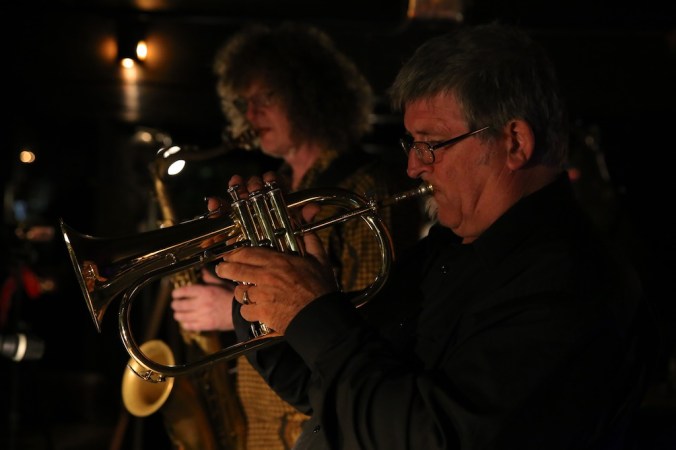 January was hot and wet and the CJC was on holiday. If like me, you are a regular attendee at the CJC (Creative Jazz Club) December to February is a long time between drinks. The El Nino humidity with its sullen skies and petulant storm threats rolled into February and suddenly we were back in business. The first gig of the year featured Craig Walters and Mike Booth. Walters, a well-known Sydney based tenor player, last performed at the club in 2012. Booth is a local and he features often; a gifted composer, arranger and trumpet/flugel player. Booth and Walters have a long history together.
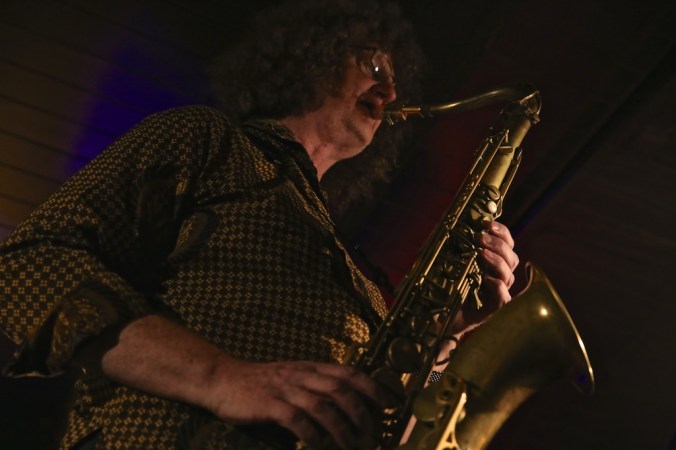 The first number was a Walters tune titled ‘Easy’. Booth played flugel and the relaxed fluid interplay between horns set us up nicely for the evening. Walters plays with real fluidity and his tone has a certain quality – a hint of mid to upper register sweetness not dissimilar to that of Ernie Watts – but with an earthier colour overlay. While the first tune eased us the into the gig the second tune grabbed our attention in a different way. ‘A Kings Ransom’ is a seldom played Booth tune and its complex rhythms gave the band a solid work out. Broadhurst delivered a wonderfully solo on this – Monkishly jagged and totally within the spirit of the composition.
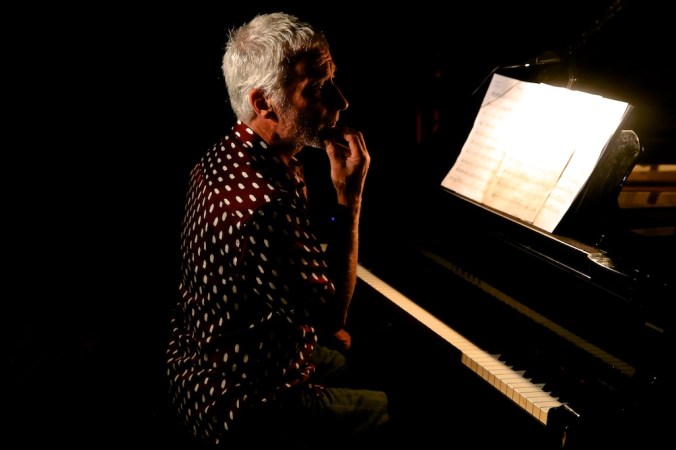 Towards the end of the second set they played Walters ‘As close as you’ll get’. If the title didn’t trigger any memories the first bar surely did. This was a tune that I’d heard way back in April 2012. Its intricate hooks and counterpoint nailed it within seconds. This was not a tune easily forgotten – in fact I happily replayed it in my head for weeks after the 2012 gig. I was not putting up video way back then but have chosen this cut to put up now.
 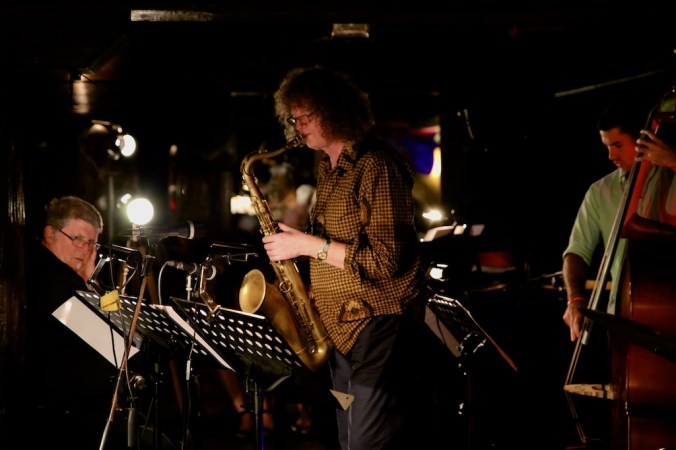 Last years attendance at the club was good and if Wednesday was anything to go by this years will be even better. There were many first time attendees and based upon the applause most will return. The artists create the music but they need engaged audiences to complete the circle. As the famous American bass player David Friesen said to us last year – ‘this is a virtuous circle and the magic only emerges when audience and musicians interlink. The sum of what comes from this interaction is often greater than the sum of its parts. Improvised live music at its best is profound and the thought that we might miss a wonderful and unique moment causes us to return time and again. That is how it works me anyhow.
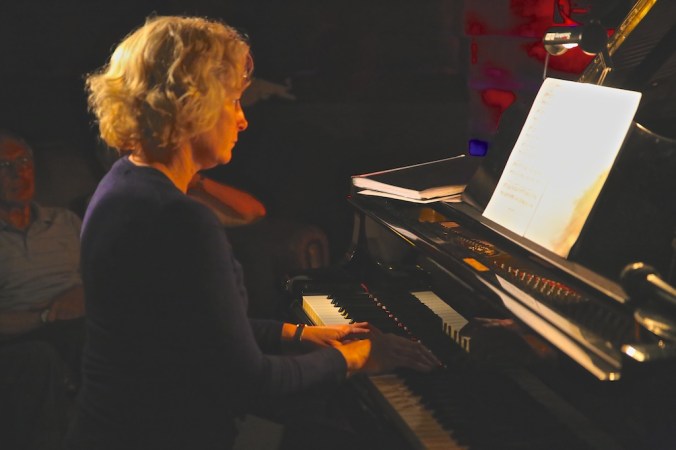 I was out of the country when Anita Schwabe performed at the CJC two years earlier. While I had seen her perform at the Bruce Mason Centre with the Rodger Fox Orchestra, I wanted to hear her in a more intimate setting. Her live (and recorded) performance on ‘Journey Home’ was impressive and as I recall a jet lagged Alan Broadbent watched her segments from the wings during the Auckland concert. As good as that concert and a later concert were, hearing an artist in close proximity is always a different experience. Schwabe didn’t disappoint. The first thing you observe when you meet her is her understated manner. Like many New Zealand improvising musicians she is self-effacing to the point of being dismissive of her own abilities. This contrasts strongly with the engaging confidence of her playing. From the first few bars you become aware that there is something special going on.
 Schwabe’s first number referenced the under-acknowledged and recently departed pianist Clare Fischer. “I like his unusual voicings”, she said before she played through her composition,’Fisching for Compliments’. The tune was intensely melodic, filled with clever references and a fitting tribute. Although a more reflective number (and her first of the night) we saw what she could do. The tune drew us in with a spacious intro and then imperceptibly we felt the swing. Block chords suddenly dissolving, close voicings appearing, disappearing; right hand running off the back of a phrase, subtly playing with time and rubbing against the chords in the left hand. This interaction between right and left hands created subtle and pleasing tension and we were to hear that often throughout the evening. That first number gave us a foretaste of what was consistently enjoyable music throughout the sets.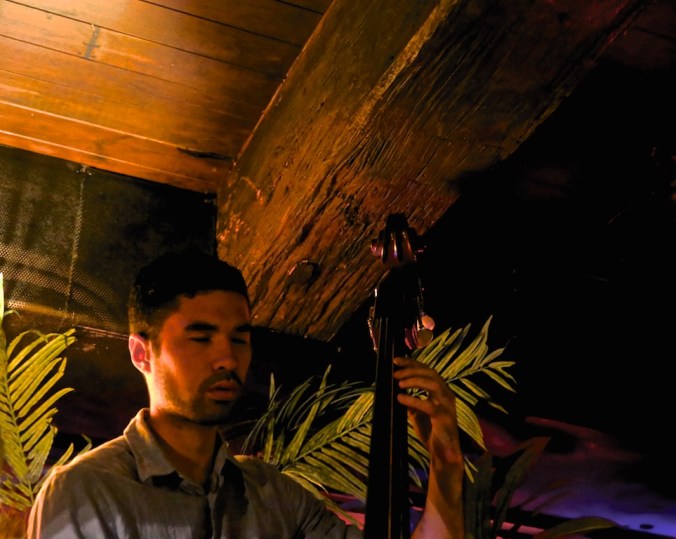
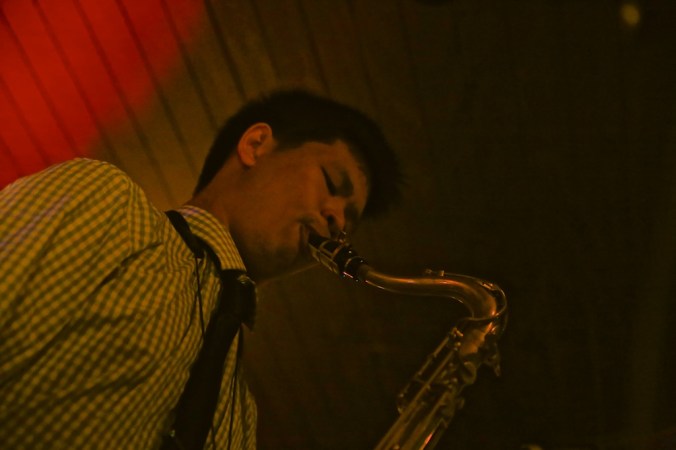 Richard Thai was on the first JAC album but by the time I saw the ensemble live he had left New Zealand for America to complete his postgraduate studies. Recently he returned to his hometown of Wellington where he now teaches and leads the Richard Thai 5. While the ensemble is a basic line up of saxophone, piano, guitar, bass and drums it is never the less forward-looking. This is post millennial music.
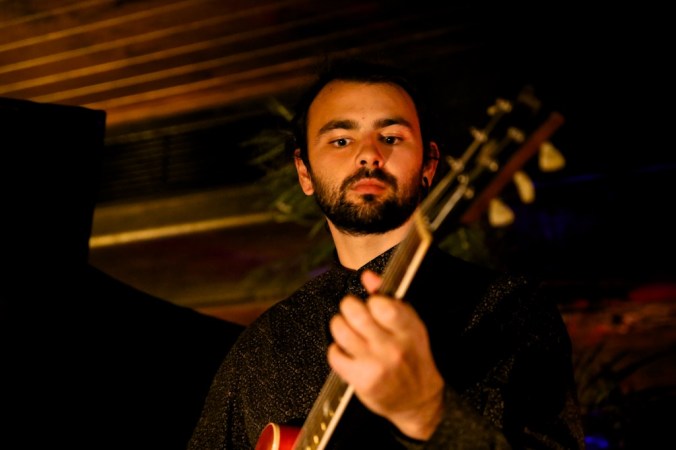 The best illustration of this was heard in his second tune, ‘Capricorn’. A marvellous composition. Like much of Thai’s material it has powerful hooks to draw you in. What sounds simple is in truth anything but, as it shifts between major and minor keys with disarming ease. Many tunes do this, but with Capricorn the device is extraordinarily well conceived. The shifts in focus are pleasing, but what sets the tune apart is a sweet over-arching dissonance; diminished chords acting as a bridge to carry you across the major-minor divide. The arranged head is especially tantalising; setting the listener up expectantly for the explorations that promise to follow.
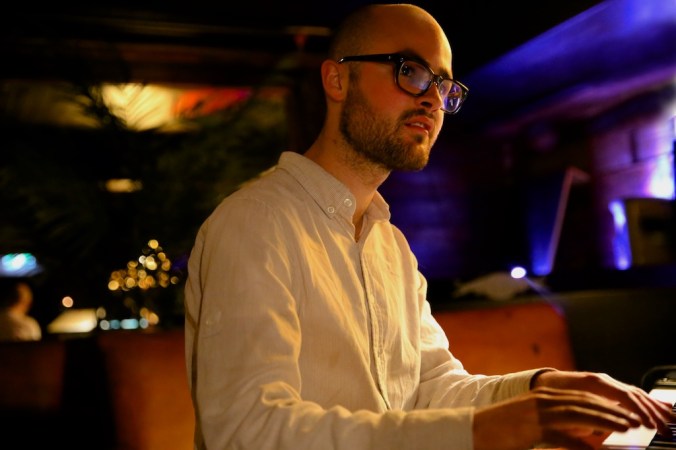 Capricorn’s momentum is that of a multi-hued butterfly in a tropical storm; pushing against the cross winds, never losing its way, pulse, or sense of purpose. Thai’s tenor picks at the tune, peeling the layers back, exposing the heart. This contrasts with pianist Matt Steele’s oblique approach. Steele clearly took the difficult route and along the way it yielded gold. You were with him note by note as he undid the knots of the puzzle confronting him. Steele is always an interesting pianist and always one to watch. It is his determination, his preparedness to take risks and his ability to learn on the bandstand that marks him out from many of his peers. He grows as an artist each time I see him.
  The last to solo on Capricorn was guitarist Callum Allardice. After the long complex solos preceding his, he wisely chose to linger nearer to the melody. His tight elliptical figures rounding out the earlier solos and bringing us gradually back to the outro. His time to shine as soloist came on the last number where his guitar soared as if free of gravity (much to the delight of the audience). Allardice has many fans in Auckland.
 The remaining two band members Shuan Anderson and Scott Maynard are also established musicians from the Wellington area. Anderson (like Allardice) was also a member of the Tui nominated JAC and he has played at the CJC before. A responsive drummer who interacted well and picked up on the subtle nuances of the material. The bass player Scott Maynard has been a member of various leading Wellington units (e.g. Myele Manzanza, Lex French). He has played at the CJC before and he never disappoints. His role in giving a heart beat to this often complex material was vital. I look forward to hearing more of this ensemble and above all I would like to some hear more Thai compositions. With a few more years of performance under their belt the unit could achieve even more.
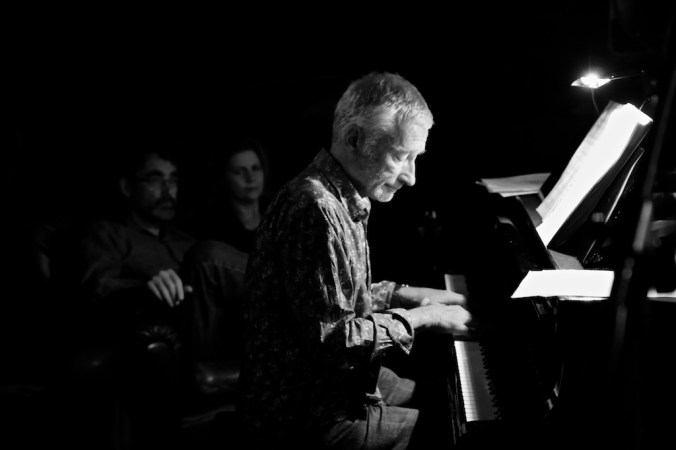 ‘Panacea’ is the third of Phil Broadhurst’s ‘dedication trilogy’ series and as fine as the earlier two albums were, this one stands out. Everything about it is superb, the individual performances, the ensemble playing, the recording quality, the cover art by Cameron Broadhurst and above all the compositions. Broadhurst, always a prolific composer has excelled himself here. Instead of theming the album around a particular influence or musician he has tapped into the subliminal forces guiding his creativity.
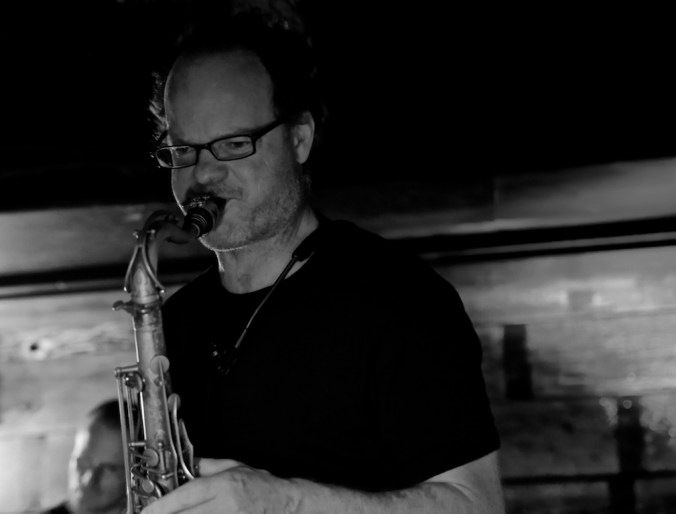 When he composed ‘Precious Metal’ he was at first unaware of the influence until a student pointed it out. It certainly speaks of Horace Silver but more importantly it conjures the essence of the man behind the music. The ensemble playing on this is simply sublime. An arranged head yields to Mike Booth on trumpet. He swiftly encapsulates the ethos of Silver in his delightfully moody solo. Broadhurst follows – expanding on the theme and signalling the direction, effectively setting the tune up for Roger Manins and Oli Holland who follow. There is a logical flow throughout and the piece works all the better because of it. I have heard it several times, but even on first hearing it sounded warmly familiar. That is the skill of good writing; evocation not imitation.
 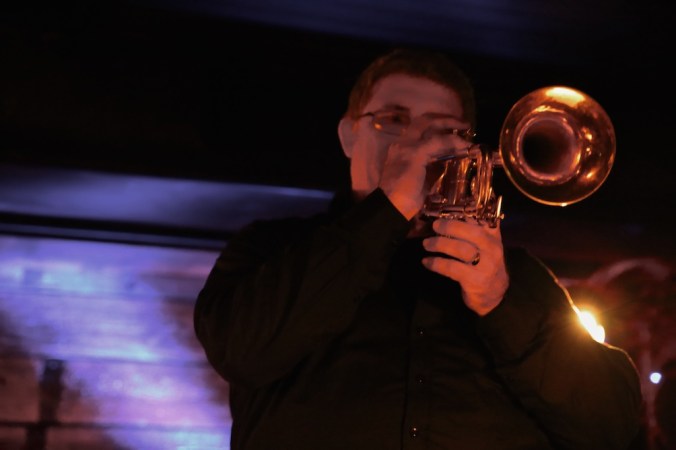 For me the greatest joy was ‘Wheeler of Fortune’ his Kenny Wheeler tribute. So well realised was the mood that it might have been John Taylor playing a Wheeler composition. Again this is an extraordinary piece of writing and articulation, lovely because while capturing the style of these lost lamented greats it reminds us just what made them so dear to our hearts. In spite of being a piece for piano trio you can sense Wheeler reaching for those impossible high notes or mournfully smearing his over-running melancholic lines. It must have been tempting to use Booth’s flugel on this, but the implied sound is all the more powerful.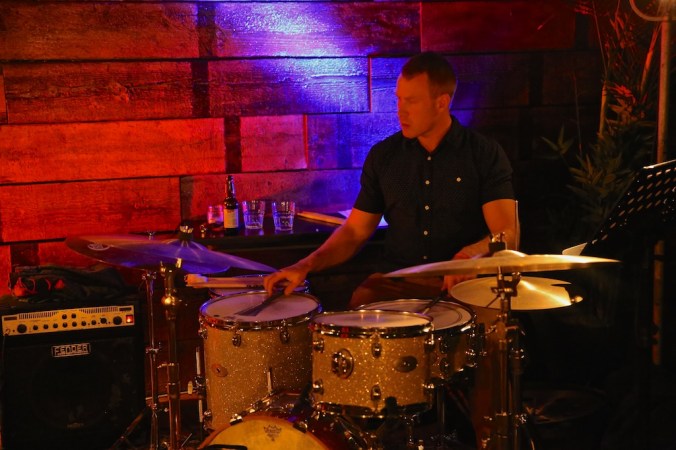
 I look in the liner notes, no human voice shown – then it struck me. This is Watson, again understated but adding something to the piece which lifts it into the realm of musical magic – an exceptional and original musician. The album would be the poorer without his contributions. Subconscious influences shape every musicians work and it is right to celebrate those. Purging these influences is often a mistake. All creative people whether writers, poets, musicians or painters have these voices at their core. Improvising musicians stand on the shoulders of giants and it is fitting to celebrate that. Broadhurst has done so with due reverence, due acknowledgement but never sycophancy. This was his time to say thank you and his own original voice shone through the multitude of influences.
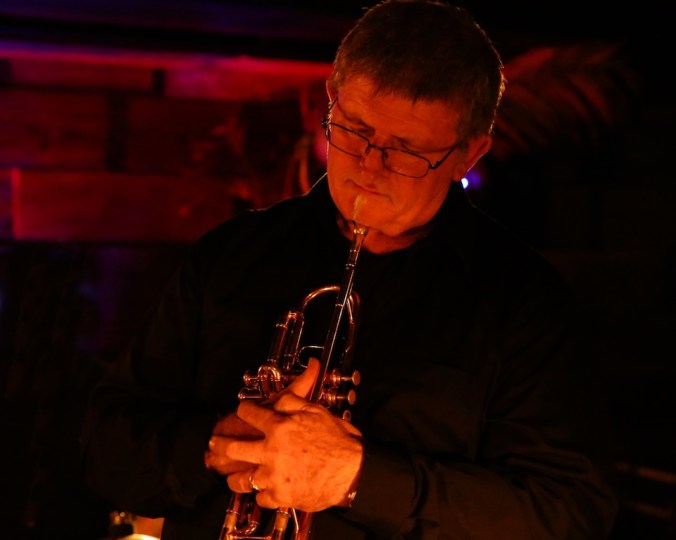 Booth sounds better each time I hear him. His undoubted strength lying in the way he reminds us of the great traditional trumpet players – especially those from the Hardbop era (like Blue Mitchell). A wonderful musician, a fine arranger and one who nicely compliments a saxophone modernist like Manins. Playing off the latter gives the edge. Manins is such an original that you hear something new and exciting each time he plays. I have observed before how well he plays off Broadhurst compositions. This says something about the skill of both men.
 The word panacea is from the ancient Greek meaning ‘all healing’. The modern definition extends the concept beyond cure-all potion – applying it more to the realm of ideas. The album is truly a balm in our troubled times. I highly recommend it as a Christmas present to yourself or a loved one. It must surely be contender for next years Tui’s.
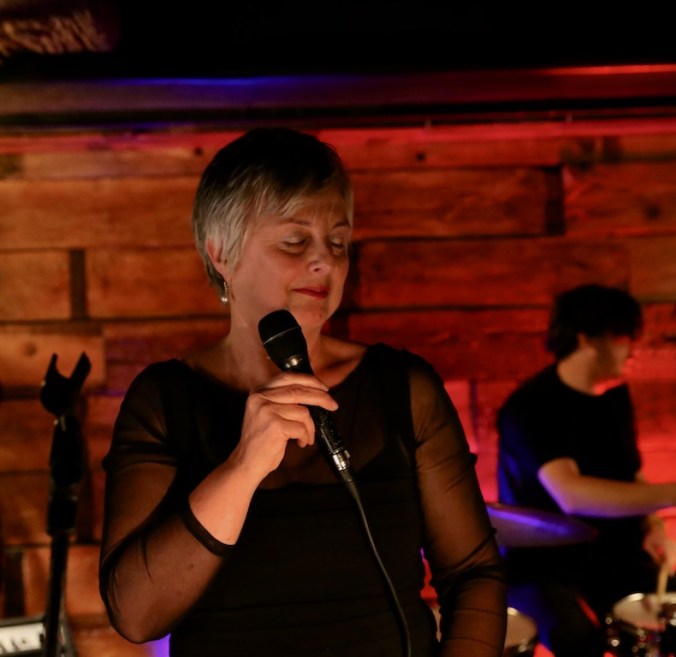 On Wednesday the UK-based vocalist, arranger composer Louise Gibbs brought her Seven Deadly Sins project to Auckland’s CJC (Creative Jazz Club). The audience, unrepentant antipodean sinners that they are, found much to enjoy. When premiered in the UK the project received much acclaim and in 2013 the ‘Seven Deadly Sins’ album’ was released. As I glanced through the liner note credits one name jumped out, Tim Whitehead; an important English saxophonist with equal facility on soprano, alto and tenor. For any number of reasons this is an album worth having.
 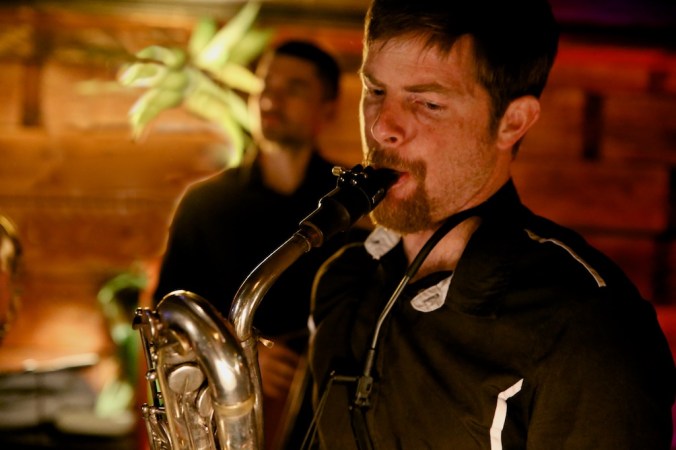 The song suite has seven parts plus prologue & epilogue. This aggregation of cardinal sins does not originate with Peter Cook (as someone hilariously suggested) but comes to us from the fourth century AD. These very human failings were the obsession of the middle ages and Chaucer, Dante and Brueghel utilised the themes to great artistic effect (and often with rye humour). Debates on morality are still very much part of the public discourse as the dreadful events of Paris, the Lebanon and Mali remind us.
 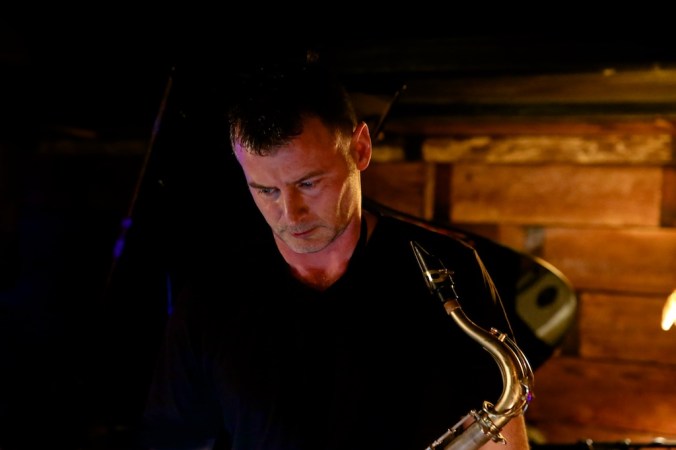 Gibbs invited us to examine the sins afresh; a parade of human failings as seen through a jazz lens. Her evocative contrasting pieces leaving us in little doubt as to which sin they represented; a strident drum solo during anger, the fulsome sound of the trombone for gluttony etc. It is unsurprising that the tenor saxophone portrayed lust; an entirely appropriate pairing given the repeated historic accusations of lasciviousness levelled against that sensual instrument.
 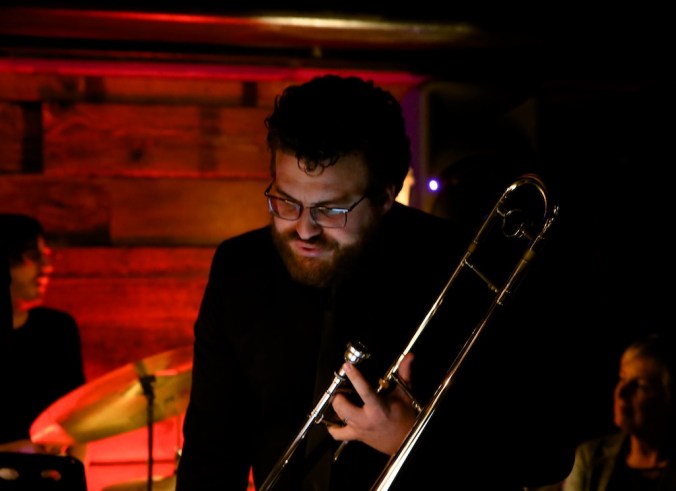 The suite while highly arranged gave ample room for the soloists to demonstrate their particular vice. Crystal Choi was ‘pride’ on piano, Pete France was ‘lust’ on tenor, Haydn Godfrey was gluttony on ‘trombone’, Mike Booth was ‘envy’ on trumpet, Cameron McArthur was ‘sloth’ on bass, Steve Thomas was ‘anger’ on drums, Andrew Hall was ‘greed’ on alto & baritone. Gibbs was vocalist on all numbers including a prologue and epilogue. Many of the band members like Booth, McArthur, Choi and Thomas are regulars but we see Hall, France and Godfrey less often. That is a shame because they were amazing.
 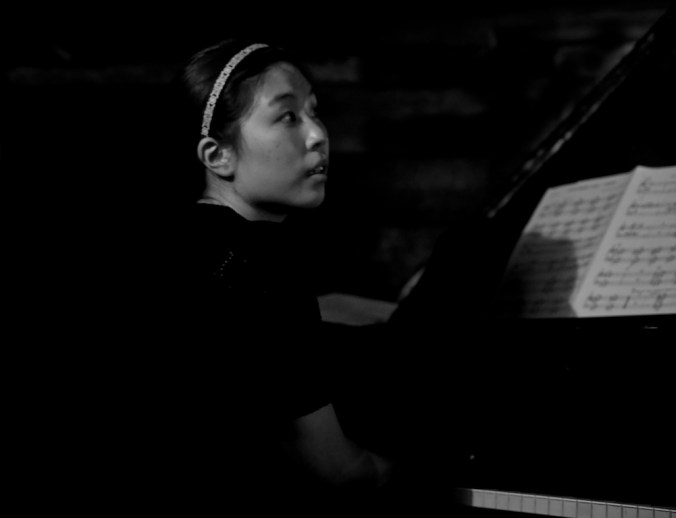 A shorter first set preceded the ‘Seven Deadly Sins’ suite – all Monk compositions. The band used stock arrangements but there was a sense of boisterous freedom in the renditions. This provided an appropriate segue to the second half. While everyone embraces Monk these days, his dissonant choppy lines certainly raised eyebrows back in his heyday. Monk was an iconoclast who channeled the rawness of the human condition through pen and piano. With the Seven Deadly Sins and its often dissonant passages we also experienced that.
 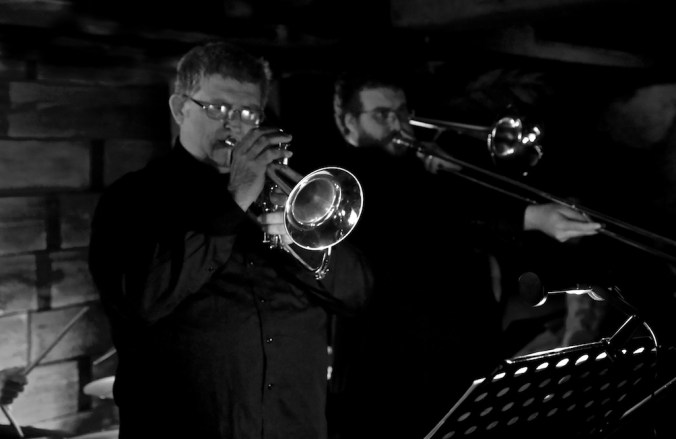 Louise Gibbs has been teaching and performing in the UK for 30 years, but she grew up in Auckland. In recent years she moved away from a distinguished career in academia to concentrate on performance and composition. There is a confidence about her work and she is unafraid as a performer. Her voice can move from silk to raspy as appropriate to the piece. Footnote: Earlier I drew attention to Tim Whitehead (on the Gibbs album). He was once a member of Ian Cars ground breaking and popular group ‘Nucleus’ – the highly respected Kiwi born saxophonist Brian Smith was a founder member of that group.
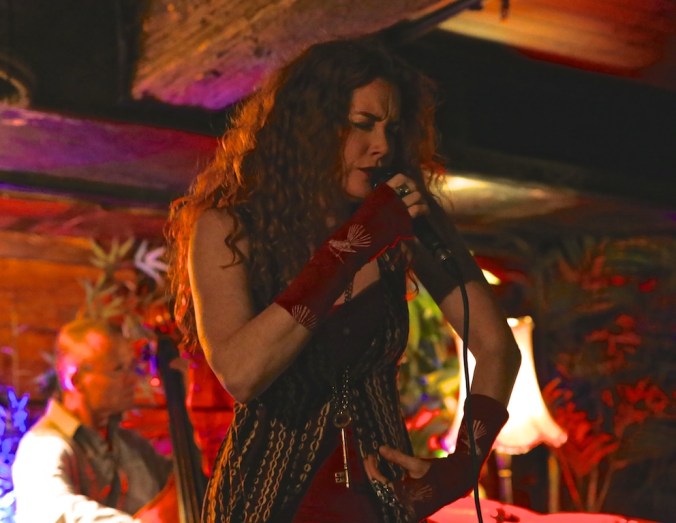 Because the human voice is the most primal of instruments it has the capacity to engage in unexpected ways. When a skilled vocalist performs we watch as carefully as we listen. The merest inflection, micro pause or slurred note can captivate, but it is also the non verbal cues; the ones we assimilate subconsciously that draw us ever deeper inside the song. When Caitlin Smith sings you are hyper aware of the entire performance. Hers are not gigs where listeners drift away or endlessly fiddle with phones. The audience are as engaged as she is. That is her gift as a musician.
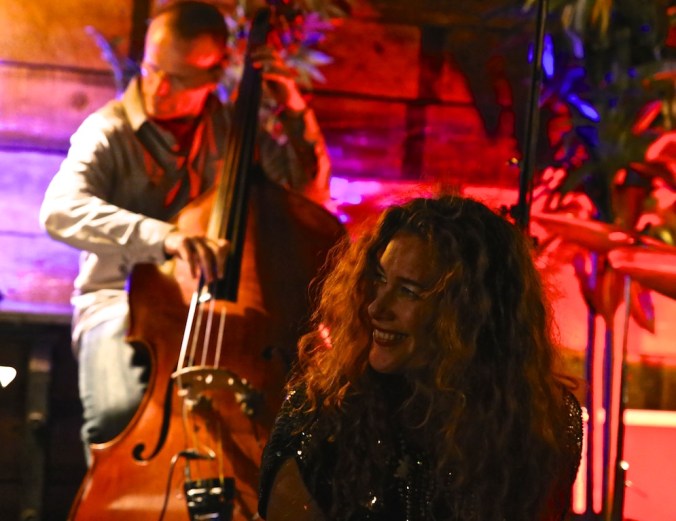 When Smith moves your attention moves with her. She will prance, dance, drop her head, pause for effect or sweep her hair back unexpectedly and all in service of the song. When you watch and listen to skilled performers like her (and they are few and far between) you discern a deeper truth. What appears extrovert can be something else. The actions and gestures are an act of losing oneself. This is the performers mask and behind it lies a certain vulnerability. When enough of this vulnerability informs the music we feel with them.
 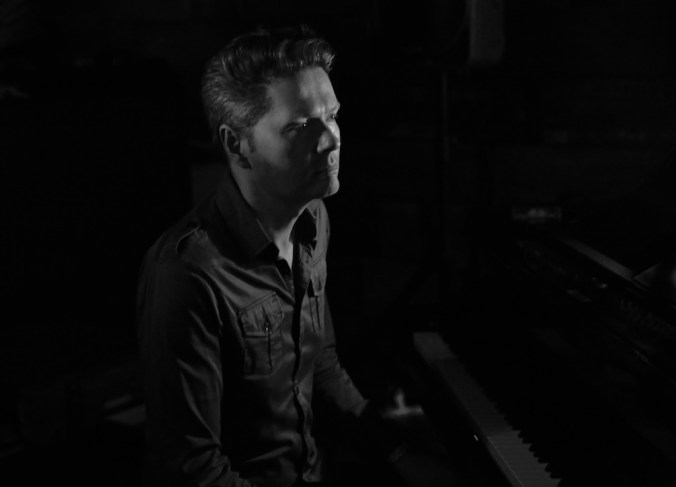 During Smith’s performances there is a lot of interplay between band members. She is generous in her acknowledgements and genuinely appreciative of the musicians behind her – unlike some vocalists who make it very plain that this is all about them. She had two of her regular cohort with her, Kevin Field on piano and Oli Holland on bass. On drums was the talented Stephen Thomas and I had not seen him with Smith before. During the break I asked Thomas how he was enjoying the gig. His answer is worth repeating, as it illustrates the above points. Vocal artists who think disengaged equals cool might pick up a pointer here. “Working with Smith is perfect as you have so much to react to. Every gesture and look gives you new material to work with”.
 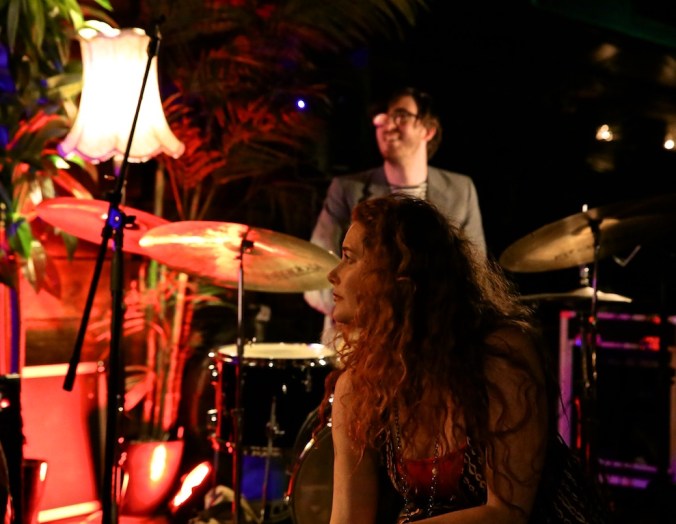 Smith followed her usual pattern of alternating originals with standards. The set list moved between Jazz and singer song-writer soul. She only repeated one tune from last Decembers CJC gig and that was the lesser known Ellington Number “I like the Sunrise”. This is from Ellington’s ‘Liberian Suite’ performed and recorded first in 1947. The original featured Al Hibbler on vocals, soon followed by a Frank Sinatra version (also with the Ellington orchestra). More recently Kurt Elling recorded a version but all of the aforementioned are at a slower tempo. At the risk of committing heresy, I like the upbeat punch and swing of Smith’s version best.
  The night was thoroughly enjoyable as I knew it would be, and with this rhythm section of Field, Holland and Thomas behind Smith that was guaranteed.
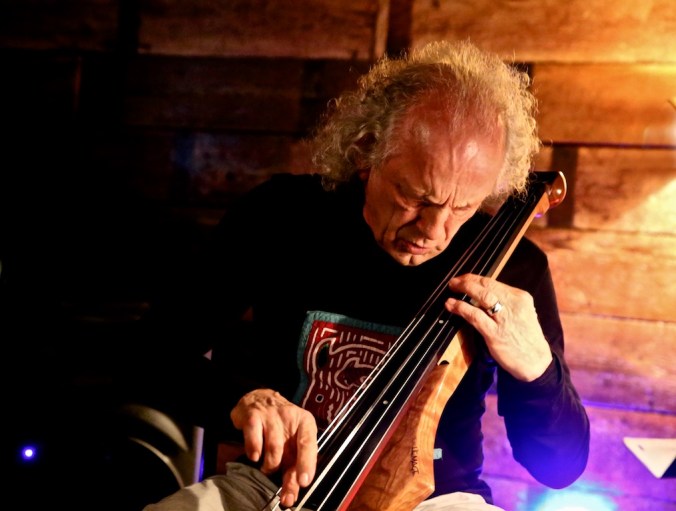 Good improvising bass players get a lot of work, but they seldom get the acknowledgement they deserve. This is one of life’s inequities and it’s partly because a bass player by custom is hidden behind the other band members. When a pianist or guitarist plays solo they will often mimic or imply bass lines. A good bass line is both an anchor and an invitation – invoking deeper exploration; the consequent rub between notes and time is where most of the tension and release is hidden. Every so often a bass player claims wide-spread attention. Blanton, Mingus, Haden, McBride, Le Faro, Pastorius etc. David Friesen while not garnering the attention of the aforementioned bassists in the popular press, is without doubt a giant of the instrument. His is a name that frequently comes up when aficionados and musicians talk. He is the bass players bass player, an acknowledged innovator.
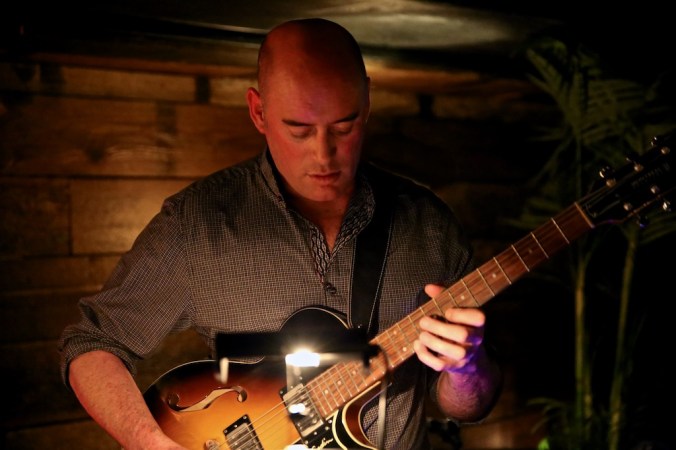 As is often the case with great musicians, he was a compelling talker; spinning out yarns of people and places visited. Often with subtle humour woven into the narrative. Above all he imparted his views on the place of music in these complex and troubled times. To paraphrase slightly, “Music is a way of healing a broken world, it is not just about the people making the music or about the audience receiving it, but something far deeper. The interaction creates a virtuous circle, each continuously enriching the other. Out of this comes the magic”. This reference to the primal healing power of music resonated and he received loud applause. Improvisers seldom earn what they should and yet they persevere. Understanding their mission of deepening human awareness. It was good that he reminded us of how vital a deep listening audience is. Sharing the joy brings its own responsibilities. That’s why I do what I do in print.
 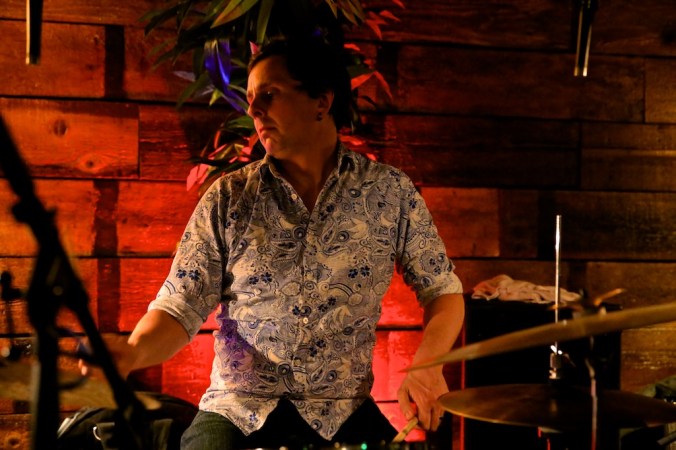 Friesen travels with a special bass; made for him by a famous Austrian instrument maker. Sick of having instruments damaged or interfered with by airline baggage handlers, he ordered an instrument small enough to go in the overhead locker. This custom bass is mainly crafted out of American Cherry wood and Canadian Maple. It also has a very sophisticated pick up. Because of the foreshortened neck I suspect that it would take some mastering by most upright bass players. In Friesen’s hands it sung.
 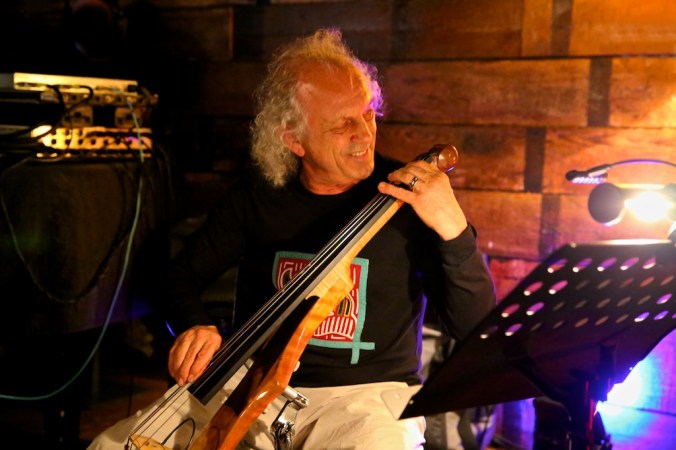 Nacey did what we expected of him; delivered stinging imaginative lines and soared on that lovely Godin semi hollow-body. As success spreads him thinner, we tend to see less of him in the Jazz club. When we do hear him we get the very best. He is a guitarist who can hold his own anywhere on the scene. The other Kiwi on the gig was Wellington drummer Reuben Bradley and what a performance he put on. Again it was hardly surprising, as Bradley is among our very best drummers. Like Nacey he is often the drummer of choice for visiting artists.
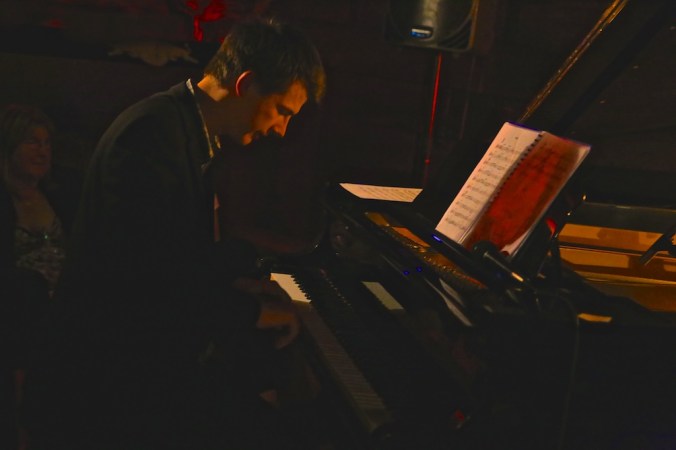 Alex Ward has been on the scene for a few years now and he has appeared at the CJC a number of times. This time he appeared with a group of formidable younger musicians; all respected about town. His programme was pleasantly challenging as it offered contrasting tunes. From the quirky Carla Bley composition ‘King Korn’ to the perennially popular Disney tune ‘Never never land’. Then, for the second time in as many weeks we heard a Cold Play cover – this time ‘Daylight’ (arr. by Taylor Egsti). Rounding off the set list were a number of his own compositions including the appealing ‘Rakino’ which I have heard before. Wards compositions have a definite melodicism about them.
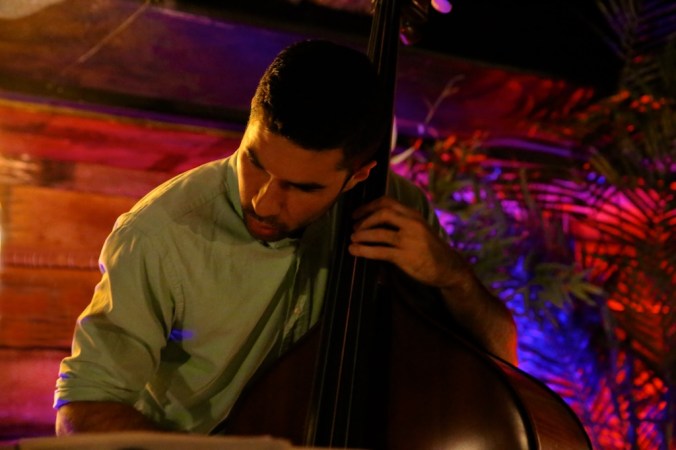 I am a real Carla Bley fan and so it surprised and pleased me to hear ‘King Korn’. I also have a real liking for her ‘Ida Lupino’. Bley’s repertoire is not played anywhere near enough for my liking. Her tunes are often closer to the avant-garde, but still accessible to main stream listeners. Ward showed no fear in tackling the angular jerky rhythms of King Korn and the result was pleasing. He had surrounded himself with exactly the right musicians for the task. On bass was Cameron McArthur, a perennial favourite who must now be considered a heavyweight about town in spite of his youth. The drummer was Cameron Sangster and again a highly experienced and gifted musician. Sangster is a multi faceted drummer who can move between soul, big band and small ensemble work with ease. We recently saw him with the Auckland Jazz Orchestra where he put on a stunning performance.
 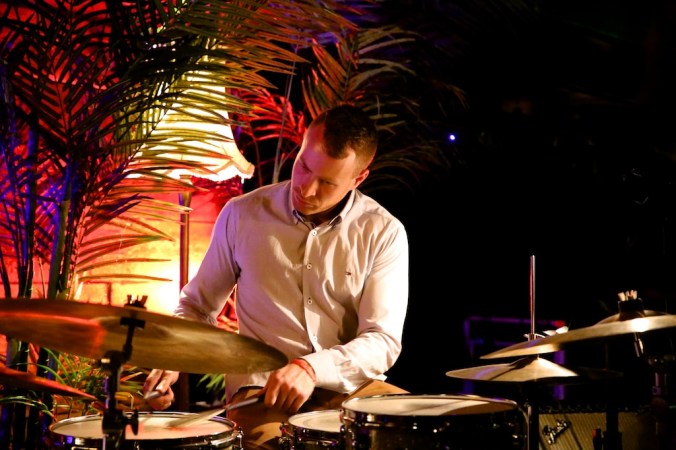 Additional musicians came to the bandstand at various points; Kushal Talele on tenor saxophone and flute and Michael Howell on guitar. I had previously only encountered Ward playing in a trio format and this was a chance for us to see what he would do with an expanded ensemble. The diversity of material worked for them – none of it highly arranged but allowing for free-flowing interaction.
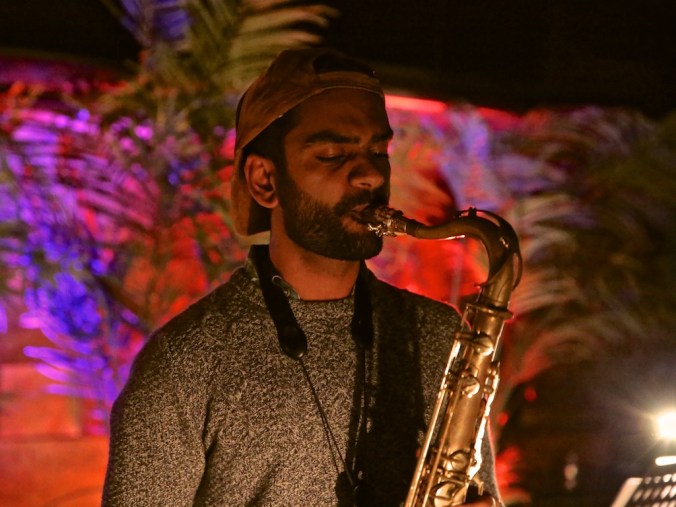 I had only heard Talele once before and he naturally sounded different on this gig. Here he was appropriately the competent sideman, not the hard-driving Coltrane referencing leader. I like both aspects of his playing. He is a musician that I am definitely keen to see more of – especially when he dives deep into that denser material he favours. The ever smiling Howell is well liked and respected as an up and coming young guitarist. He is seen to greatest effect in Roger Manins ‘Grg67’ band.
 Whether by accident or design, Ward celebrates Carla Bley in an important year. 2015 saw Bley receive the highest public honour in Jazz, as she was the recipient of the NEA (National Endowment of the Arts) Jazz Masters Award.
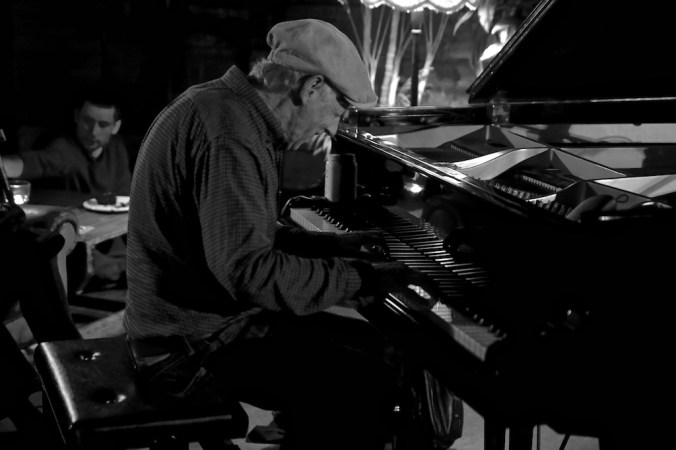 Having reviewed the ‘Two Out’ album a few weeks ago and thoroughly enjoyed it – it was a certainty that I would enjoy the ‘Two Out’ live gig. Mike Nock and Roger Manins are rightly celebrated as being at the top of their game, but neither trades on reputation. Both approached this gig with humility. As they settled into the music you could feel the absorption; punctuated by occasional smiles when a particular phrase surprised them, often delighting at what fell under their fingers. At times they seemed to defeat the physical limitations of performance; simultaneously observing and creating. This is a Zen thing and it cuts to the heart of improvised music. Others noticed it as well; one musician said to me afterwards, “Man there was no ego on that bandstand and it was a beautiful thing to witness’. He was absolutely right.
 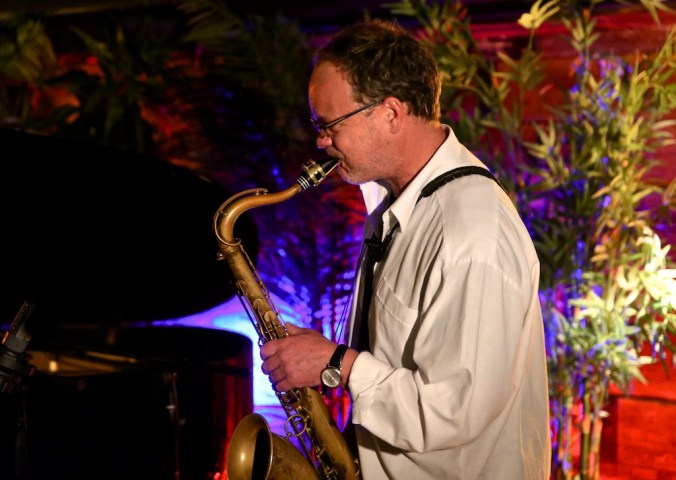 Most albums require careful planning, the ideas gestating over time, rehearsal upon rehearsal shaping the direction. Then there is the other type arising from happenstance. ‘Two Out’ arose out of a relaxed jam between friends. Manins was relaxing with Nock one January morning in Sydney when they decided to play a few tunes (as musicians often do when relaxing). What took their fancy were the often forgotten tunes, ‘the ones that our mothers used to sing’. As they worked their way through the tunes Nock suggested that they record; just for fun. Shortly after they ended up recording in the Sydney Conservatorium’s Verbruggen Hall. The hall contained a wonderful Fazioli grand piano much to Nock’s delight.
 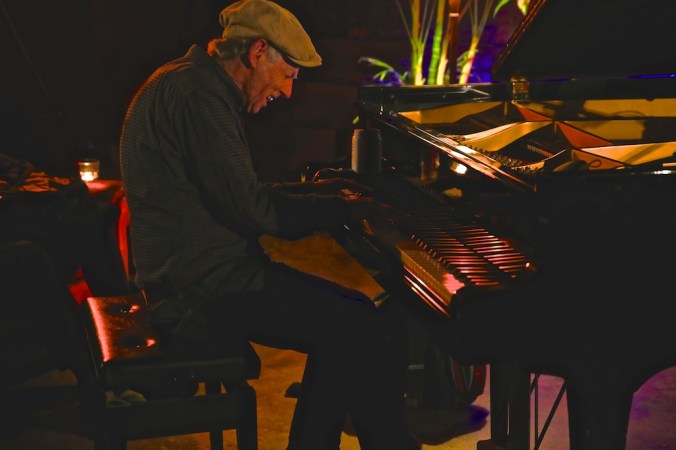 It is our good fortune that ‘Two Out’ was performed last week for New Zealand audiences. Nock explained that they had actually recorded 16 songs, but the limitations of CD space required these being reduced to eleven. On Wednesday we heard a significant number of the tunes from the album plus a few that didn’t make the final cut. In particular there was a version of ‘Softly as a Morning Sunrise’ (Romberg/Hammerstein). A wild joyous free-flowing version which brought out the best in both musicians. At times gentle but at other times carrying the echoes of a boisterous 1930’s radio performance. At that moment, listening, I visualised my mother, leaning over an old upright Victrola and humming along happily. The other addition was ‘But Beautiful’ (Jimmy Van Heusen). An overwhelming sense of respect and intimacy was evident in their interpretation of that tune. It brought a smile to everyone’s lips. When friends like this collaborate it is profound …… but beautiful.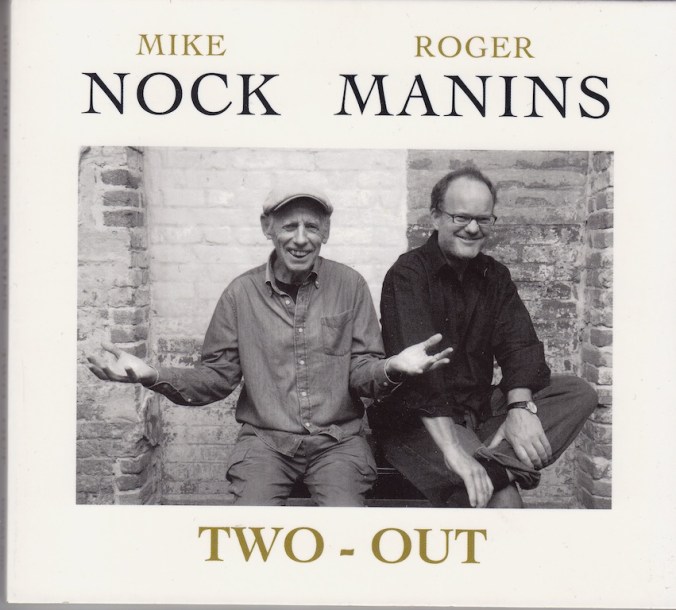
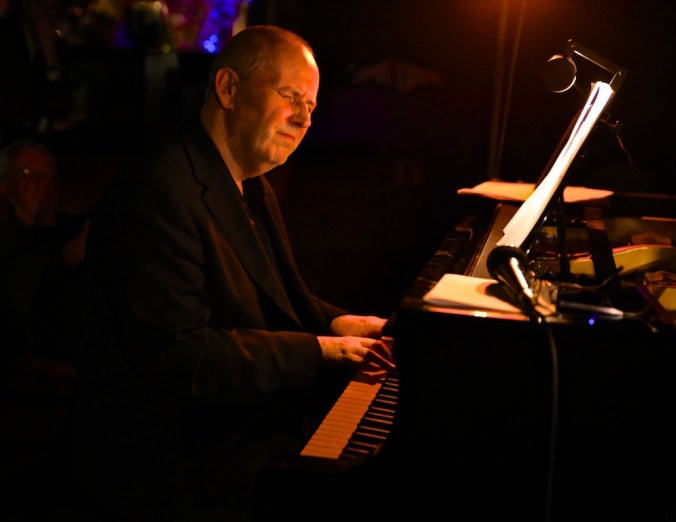 The Mark Donlon trio gig gave us two leaders for the price of one. Accompanying Donlon was the highly rated LA bass player Tom Warrington. Jazz audiences in New Zealand are very familiar with Warrington as he toured here on many occasions. Donlon, originally from the UK is now living in Wellington and working as the Jazz Studies program leader at the New Zealand School of Music.
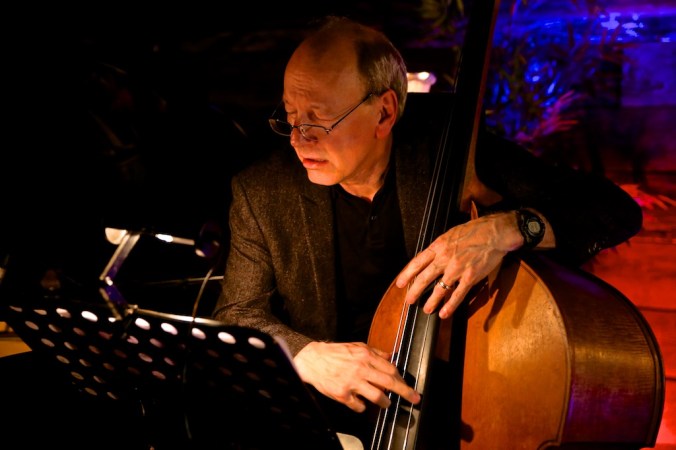 I have been a Tom Warrington fan for many years and I have most of the Jazz Compass albums where he features to such great effect. He is a bass player who speaks with incredible forthrightness, but never undermining the others on the date. On ‘Corduroy Road’, a fabulous album that I play often, the ‘others’ I refer to are Larry Koonse and Joe Labarbera. These guys can do no wrong; their version of ‘You Must believe in Spring’ (Bergman/Bergman/Legrand) is a small masterpiece. We are lucky to have such a strong association with Warrington and Rodger Fox is the one to thank for that. I last saw him during the ‘Cow Bop’ tour, where his band shared the stage with guitarist Bruce Forman (and the Cow boppers). A friendly modest man of enormous talents and good company. When I spoke to him last Wednesday I learned that Larry Koonse (and perhaps Joe Lababera) will be touring New Zealand soon. Koonse has suffered health problems of late but he is evidently recovering well. Warrington’s recording credits are too numerous to mention. Tom is now domiciled in this country which is very good news.
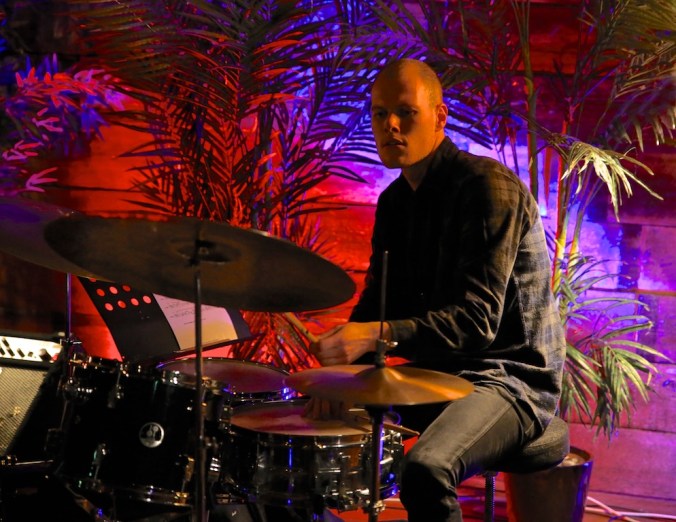 Cory Champion although Wellington based is no stranger to the CJC. He was there earlier in the year with Matt Steele’s ‘Master Brewers’. He writes and plays well and it is likely that we will see him in the drum chair often.
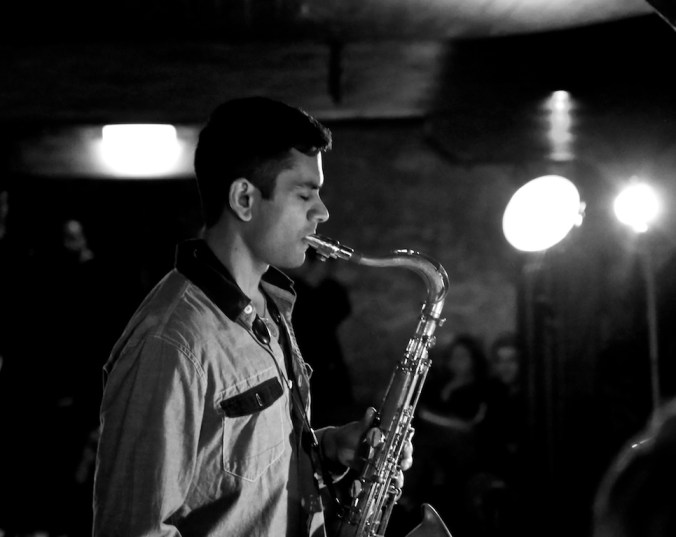 By my best estimation, Murphy’s Law kicks in roughly once every three months. Before the gig I plugged in my HD video recorder to charge, gathered my camera equipment into one place and foolishly congratulated myself on being so well organised. That was the mistake right there. Having tempted the Fates they responded in kind. My video recorder didn’t charge because the gods rewarded my hubris by half unplugging the charger cable. This was a gig I particularly wanted to video but the battery died mockingly within 15 minutes. Immediately the battery gave out the gig got better and better.
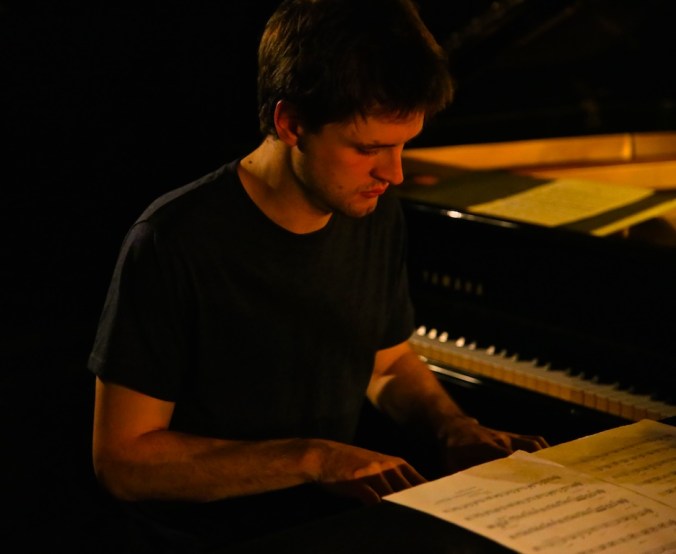 I had not encountered Kushal Talele before. Until recently he has been working overseas and in London in particular. What I do know about him is that Brian Smith and Pete France tutored him at the New Zealand School of Music; both wonderful musicians. He was born on the Deccan Plateau in the city of Pune, the ninth largest city in India and the second largest after Mumbai in the state of Maharashtra. His family moved to New Zealand when he was eight, but he is now clearly a citizen of the world and of music.
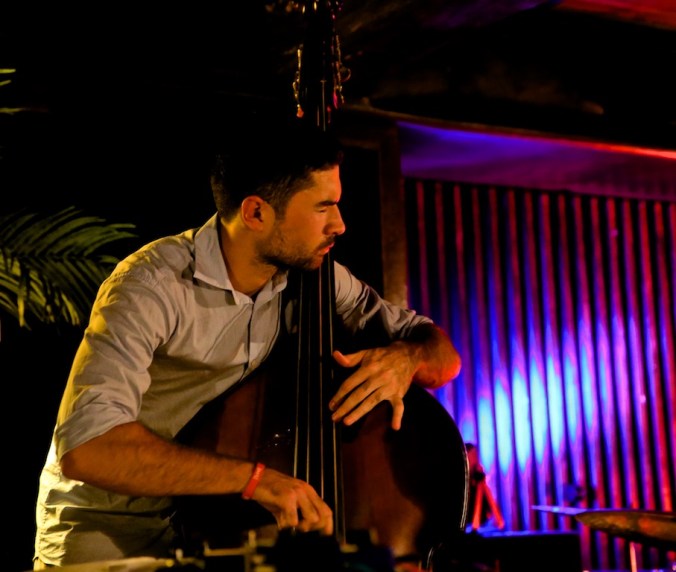 His good looks and relaxed confidence tell a story before he plays a note. Looking the part on the band stand is about posture and being at ease with the task at hand. His tone on the tenor is beautiful. He is very much a modernist but with the elements of Coltrane and the post bop era embedded. I asked him who he particularly listened to and the first name he mentioned was Chris Potter. Serious tenor players all admire Potter and rightly so. I also asked him if Indian Classical Music informed his playing and he was quick to say that it didn’t; adding that it was something he would like to explore one day.
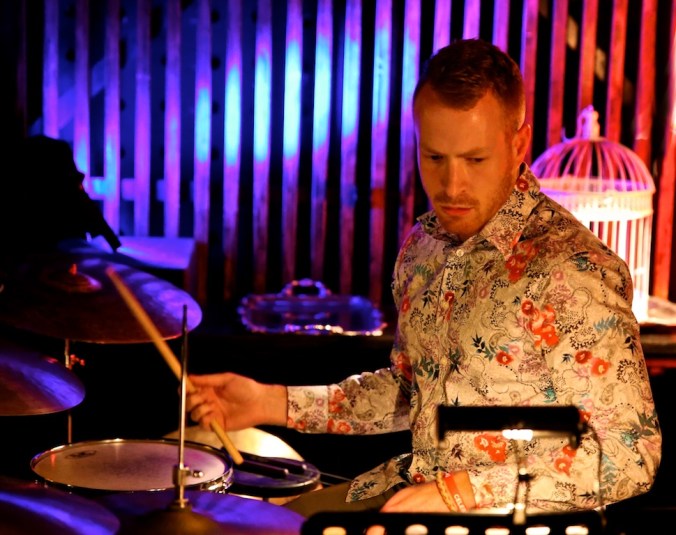 I asked because I have been following altoist Rudresh Mahanthappa who successfully fuses elements of South Indian music with modern Jazz conceptions. In reality most serious post Coltrane saxophonists have these elements in their playing. The way he tirelessly works over figures of melodic and harmonic invention tells me that he has that influence. In approach if not in sound, he takes a similar route to Sonny Rollins. Easing himself into a tune, in no hurry; working over long vamps which stretch into infinity. This turning a piece over and looking at it from different angles; gnawing away until the essence exposed, is a very New York thing.
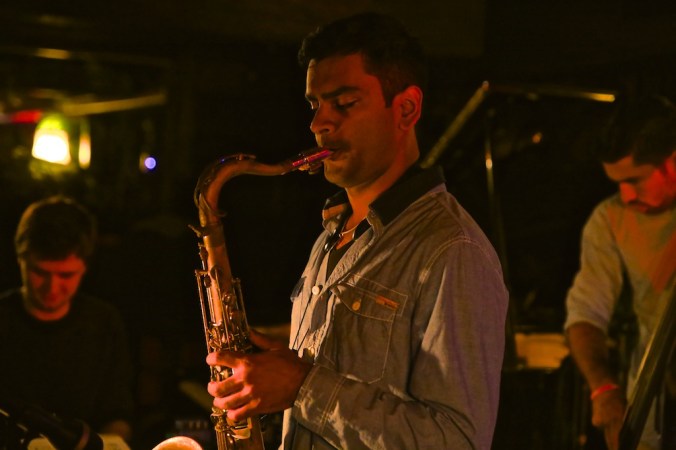 The group came together for this gig. All younger musicians but all experienced. It was great to see Cameron McArthur back on the band stand. One of my favourite bass players and adept at handling any challenge. He and drummer Cameron Sangster have just returned from an extended stint playing the East bound cruise ships. On Keys and piano was Connor McAneny. The band settled in as the gig progressed and during the last set they were playing tight energised grooves. Talele worked these grooves to maximum effect. I could only capture the first number (see below). It is my sense, that to experience Talele in peak form, one should see him with a settled band. The density and complexity of his playing would be enhanced by this. As good as this gig was I would very much like to see him in that context.
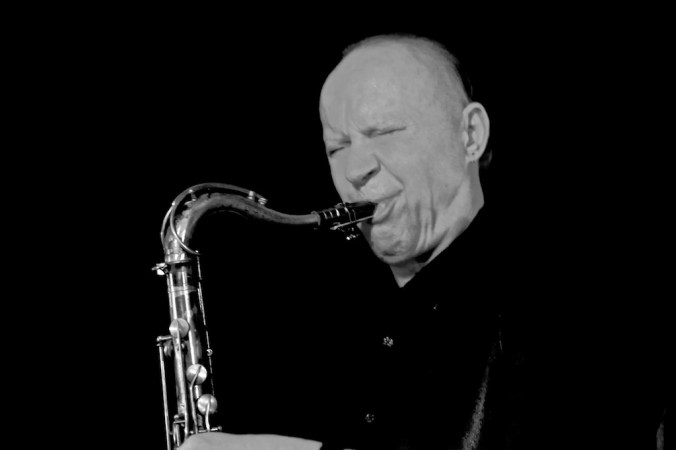 Paul Nairn is a man who avoids limelight and although he is extremely popular as a saxophone repairer he gigs all too infrequently. Those who have seen him before always turn up at his gigs, having fond memories of his standards interpretations and of his rich tone. For all of his reticence he is good company, knowledgable and a guy you enjoy being with. The last time I saw him was at the Doug Lawrence gig, shaking his head in disbelief and saying, “This is the southern styled tenor at its best. some of the greats are in that sound”. It is no secret that the classic era of 50’s Jazz is what he loves best. Larger than life standards played by some of the greatest musicians that walked the earth. The Phantom quartet was back to tell that story.
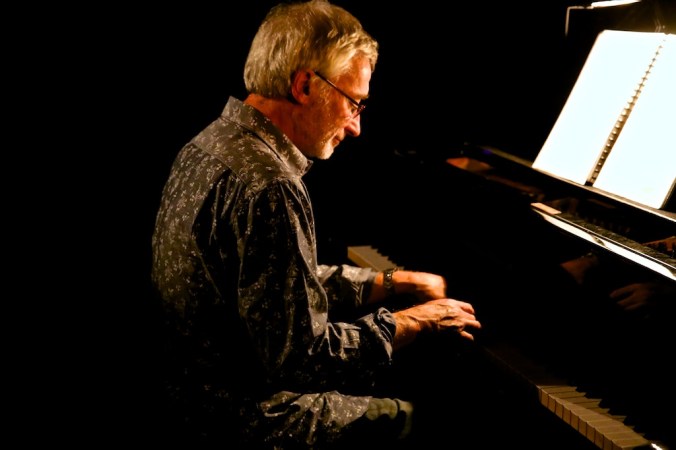 The band set up early in case there was time for a quick run through but Nairn was nowhere in sight. He is notoriously hard to reach by email, phone or messaging so nobody tried. He is not enamoured of digital technology which is part of his charm. He is old school in good way. “He does know it’s tonight”, joked one band member? Twenty minutes before start time he arrived breathless. The vagaries of Auckland’s wet weather, downtown traffic and parking had tested but not defeated him.
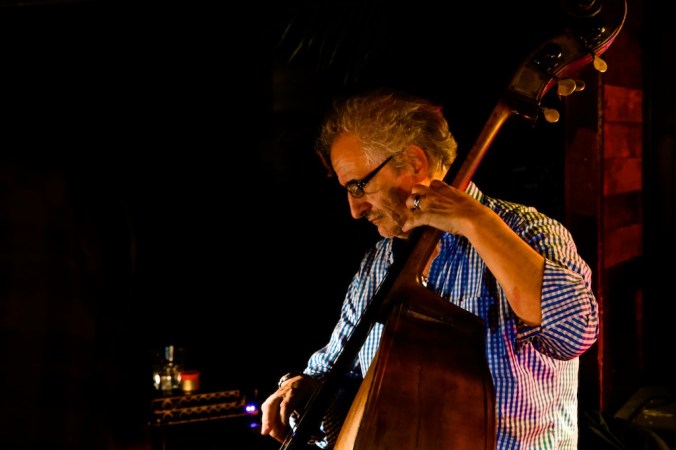 Nairn’s sound is distinctive; clean but with the pleasant hint of a throaty rasp when he bites into a note. It is certainly a sound that you identify with an era. His repertoire on this night included tunes by Cedar Walton, Chick Corea, Gershwin, Jerome Kern, Joe Henderson and Coltrane. Henderson’s Inner Urge occurred during the first set. It is a complex tune harmonically, but a tune I could never tire of. It was great hearing it again. The clip I have put up is Coltrane’s famous ballad ‘Naima’. Everyone played beautifully on that and especially pianist Broadhurst. His approach was fresh and utterly engaging. Nairn and Santorelli played beautiful solos as well while Gibson kept his impeccable trademark pulse.
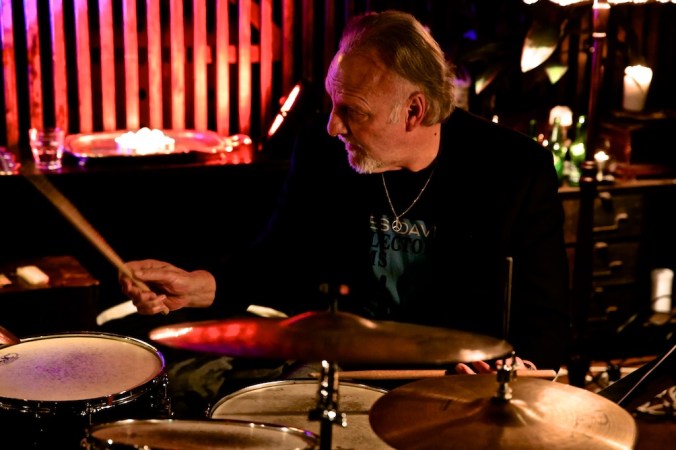 Nairn has been on the scene for a long time and when he calls upon veteran players to make up his band he gets them. On piano was Phil Broadhurst. In spite of the rain and coldness of the night he turned up in shirt sleeves, smiling and relaxed. His approach to the keyboard that night was anything but casual; stunning us with some of the best solos I have yet heard him play. For the second time in two months Alberto Santarelli was on bass and Frank Gibson was on drums. With these guys behind you good things can happen and Paul Nairn used them to good advantage.
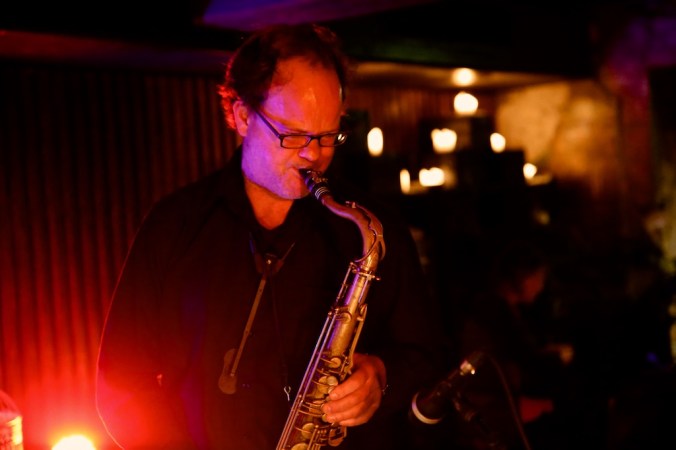 There are a lot of interesting stories on the Jazz circuit and some of them more improbable than others. None more so than a gig dedicated to the Manukau Harbour mud crab Grg67 (Varunidae:Helice). This ten legged estuarine creature has inspired Roger Manins to name a band after him and to compose a significant number of tunes
 in his honour. I could say that environmental activism fuelled the gig (and in part it was), but the affection and respect Manins exhibits towards these crustaceans is more complex than that. It is the respect of a dedicated Flounder fisherman; coloured by the quirkiness of an improvising musician. To quote: “When we play these compositions there are sharp claws and a soft underbelly; at times we can move unpredictably sideways at great speed”. Manins demonstrated this to great effect as he swiftly shuffled in alternate directions. You couldn’t make this stuff up. As the gig unfolded he delighted the audience with his antics and with the subsequent ‘crab’ influenced compositions.
 Underneath the crusty carapace were a bunch of good tunes and as Manins inferred, they were tangentially tricky and replete with interesting musical twists. Good improvisers are always on the look out for new challenges, new ways to interpret the world about them. In putting together ‘Grg67’ a fresh vehicle for improvisation is born. By bringing in several less experienced musicians Manins has fulfilled an older imperative. To challenge and encourage those beginning the improvising journey. This is how it should work, but many older musicians forget that and remain in their comfort zones. Everyone stepped up here under Manins watchful eye.
 The crab which is the central focus of these sets is Greg, but as Manins so eloquently explains “Crabs don’t use the letter ‘E’. It something to do with their waste not want not utilitarianism”. Other tunes had titles like ‘Crab Empathy’. These tunes and the stories that surrounded them evoked powerful mental images. As the music washed over us you could sense the ebb and flow of the tides. You could easily imagine a predatory Flounder sending the ever watchful crabs scuttling into their burrows (Flounder are none too bright according to net fisherman).
 Michael Howell and Tristan Deck are the youngest members of the ensemble. Howell is a Jazz student and with each month his guitar work grows more impressive. As his confidence grows he stretches himself and playing with Manins is exactly what he needs. He is ready for the deep end of the crab pool. On this gig he played a borrowed Fender and it sat well with him. That Tristan Deck played so well did not surprise me at all; his career trajectory assured as he increasingly takes his place among the better Jazz drummers of the city. He was good when I saw him two years ago; now he is very good. For the second time this month Mostyn Cole appears at the CJC. This time he held the groove with electric bass. He is reliable and multi faceted. Again Manins showed how seamlessly he slots into very different situations. He presented a complex set of tunes to good effect, navigating break-neck tempos and fusing complexities with an inexhaustible supply of good humour.
 Last Wednesday the CJC took a step towards Robert Glasper’s ‘Black Radio’ project. At the time of its release the Glasper project shocked a few purists and delighted many others. It all depended on your point of view and your understanding of Jazz history. That particular album brought the ‘now’ of the urban streets into a Jazz recording; rap and urban soul coexisting with jazz keyboard harmonies. It is surprising that it shocked anyone! Surely this is an old story in the retelling. It is not hard to find earlier examples. George Russell’s ‘New York N.Y.’ and Gil Scott Heron’s output spring to mind. Words as poems, wordless vocals and instrumental Jazz are inextricably linked and always will be. Siobhan Leilani brought a Kiwi version of that to the Jazz club and we loved it. It felt in place and the nimble-footed danced. This constant reconnection with the streets is an essential part of our music and we forget it at our peril.
 The first set to play was the Andy Smith Trio. Smith has played at the club as sideman a number of times, but it has been quite a few years since he brought us a project of his own. I have always enjoyed his slick guitar work and especially when he plays with an Alan Brown band. This gig was different as it reached deeper into the modern Jazz guitar bag. Smith has always used pedals convincingly but this time he dialled the effects right back. This was a purer form of modern Jazz guitar and in taking that route the music must stand on its own. It did. I like his approach to harmony and his compositions are compelling vehicles for improvisation.
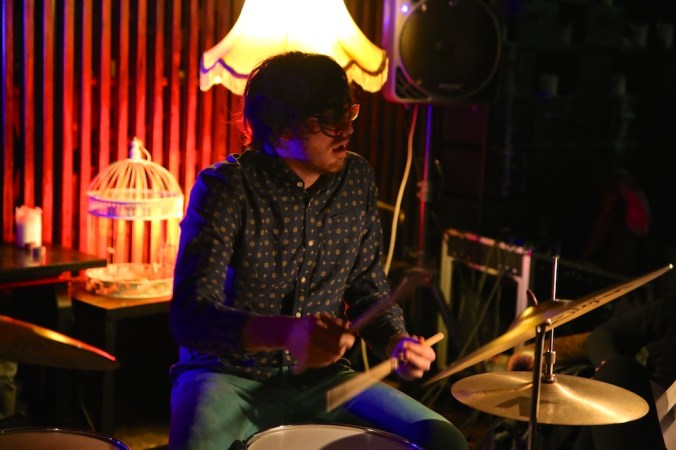 The gig undoubtedly benefitted from having the gifted Stephen Thomas on drums. While a regular in the club it has been a few months since we saw him. Thomas is a drummer’s drummer and he can tackle any project and shine. He constantly pushed the others to greater heights and his solos were tasteful, un-showy and tightly focused. The bass player Russell McNaughton was new to me, but I will be mindful of his presence in future. I particularly liked his arco bass work on ‘The Gypsy’s Dress’. The first number ‘CJC’ (Smith) was a good opener. There were plenty of meaty hooks to reel us in and an ever radiating warmth to dispel the chill rain outside. When they played a tune named ‘Awakening’ I recognised it instantly, but couldn’t recall where I’d heard it (or which group played it). It is actually an older tune of Smith’s and I had remembered it from three or more years ago. Again a solid composition and the fact that it had stuck with me after one hearing underlines that. A very nice trio.
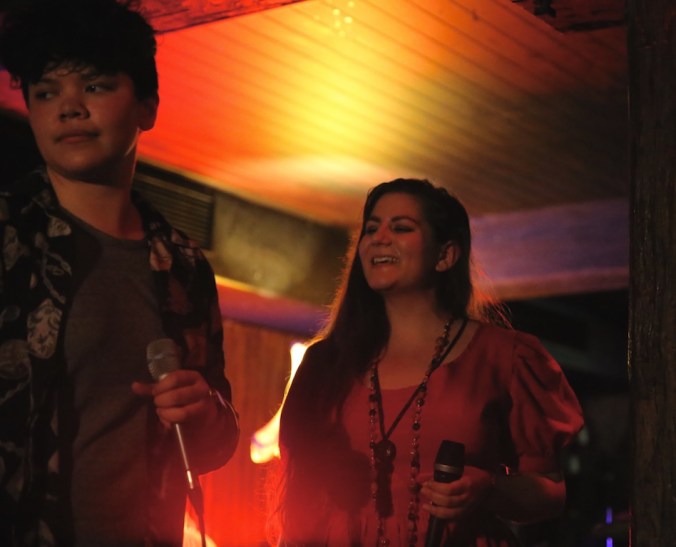 Siobhan Leilani (Siobhan Grace) is an interesting musician and one I hope we see a lot more of. Her association with the UoA Jazz school has yielded dividends. She utilised the services of former and current students for this gig; her guest Chelsea Prastiti most notably. There is an inherent risk in putting a soulful Jazz rapper together with an experimental improvising vocalist. The risk was well worth taking. These two feed off each others energy on up numbers and a force field of ‘happy’ seemed to emanate from them. The opening numbers were more in the soul/Jazz idiom and these were compelling in very different way. The lyrics spoke of angst and identity and this worked well for Leilani. What impressed me most was the authenticity. The language and sentiments were honest; heart-felt and purely ‘street’. I am only sorry that she was not a little louder in the mix (when it comes to vocals my hearing is not as sharp as it once was). This was poetry and good poetry. Word play, syllables stressed for emphasis, cadence; telling a story in an original way.
 On piano was UoA student Sean Martin-Buss. He caught me completely by surprise with his confident piano accompaniment. I had only seen him perform once previously and that was on bass clarinet. He mostly took a two-handed approach, soloed well on two occasions and engaged in a brief but effective call and response routine with Prastiti. The drummer and electric bass player were unknown to me but again they gave good a good account of themselves. The pumping drum and bass groove was right for the music. On electric bass was Joshua Worthington-Church, on drums Olie O’Loughlin.
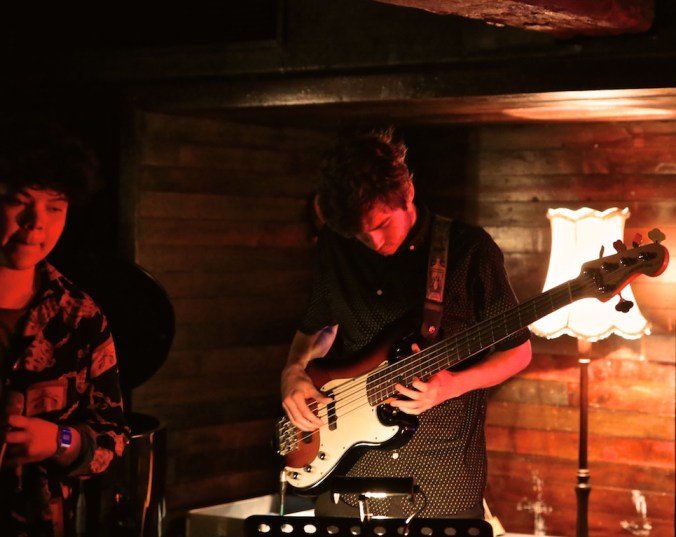 This was another testament to the gig programming at the CJC. With rare exceptions every Wednesday night brings an original project. The decision to encourage innovation and originality pays off time and again. The audience now expects it and they wouldn’t turn up week after week for a diet of well-worn standards. With gigs like this a bitter Winter is flying by.
 Footnote:’lyrics and poetry are two sides of the same thing‘ (Levitin). Poetry purists often express disdain for song lyrics and especially rap lyrics. The same can occur in reverse when a rapper dismisses poetry as high brow. There is only good poetry and bad poetry. The earliest surviving piece of literature ‘The Gilgamesh’ was written in poetic form. The greatest epics in any language are Homers Iliad and the Odyssey; also written in verse and probably sung. If you want ancient earthy lyrics sung or chanted by a woman then try Sappho: Stuffy (male) scholars have tried for two and a half millennia to purify her verse. “Batter your breasts with your fists girls/tatter your dresses/its no use mother dear/I can’t finish my weaving/you may blame Aphrodite soft as she is/she has almost killed me for love of that boy” – Sappho born 612 BC
 Mark Lockett is a New York based drummer who visits Australasia once a year. Each time he returns he brings with him a piece of his adopted city. He is an original drummer comfortable in diverse situations; a benign but strong presence in any lineup. His artistic approach under-pinned by an easy confidence and this enables him to interact well and to read every nuance. His wide open ears, communicating the pulse and possibilities of the life he lives as a working musician in a big metropolis. There is also a humour he radiates, which peppers his comments and drumming like aromatic seasoning. A Mark Lockett gig is always original and always enjoyable.
 The music of Ornette Coleman while not without constraints frees the artists from many of the hard-wired rules. It doesn’t sound at all out-of-place now but I can remember the storm that surrounded its arrival. A treat for me was the groups rendition of ‘Congeniality’ from the seminal ‘The Shape of Jazz to Come’ album. The controversy surrounding this material is long behind us and every improvising musician has a little of Ornette in them whether they acknowledge it or not.
 Lockett often forms trios or ensembles that have no chordal instruments. While the musicians played ‘inside’ and ‘out’ they also attempted something we seldom hear in New Zealand. The opening number of the first set was Shiny Stockings (Frank Foster) and they played this in the style of the Mulligan piano-less quartets. Bass, Alto and Tenor in counterpoint and working within the changes. This was nice hear. I have an appetite for more of this.
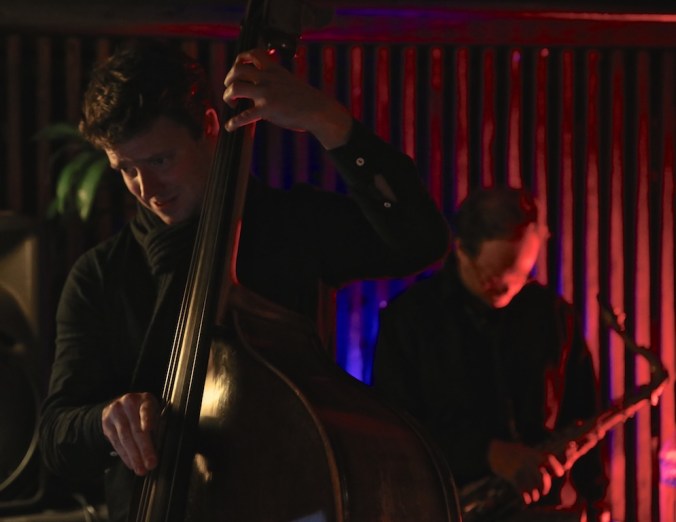 “Playing like that (fast and furious) is meat and potatoes in New York”, he said. He was once told that he could get better control if he held his sticks further down than usual. Because of that and because of his melodic approach, he is very interesting to watch. Somehow the sound is cleaner and with musical drumming like this who needs a chordal instrument. I can’t wait until his next visit.
 It is always good when proved right and in the case of Matt Steele I certainly was. This was a superb gig and it confirmed the promise that I saw in Steele as a first year student. The ‘Master Brewers’ musicians are exactly what Steele needed at this stage in his development and he is clearly what they needed. There is a cohesion about this group and it extends beyond the music. This is a band of friends and because they spend a significant amount of time together, they are able to dive deeper into the material on hand. Most of the band is writing and being familiar with each others styles, they contribute compositions that serve the project well. Younger musicians often favour shorter term projects but I hope this unit continues for a while. When I last saw Steele perform it was at his honours recital and he was very much in charge. Now as leader, the reins are subtly loosened and the music benefits from this. With experience, leaders can confidently guide without over playing the role. That only works when the interactions and cues become second nature. In their best moments the ‘Master Brewers’ acted as a single entity; everyone maximising their options while retaining an awareness of the others.
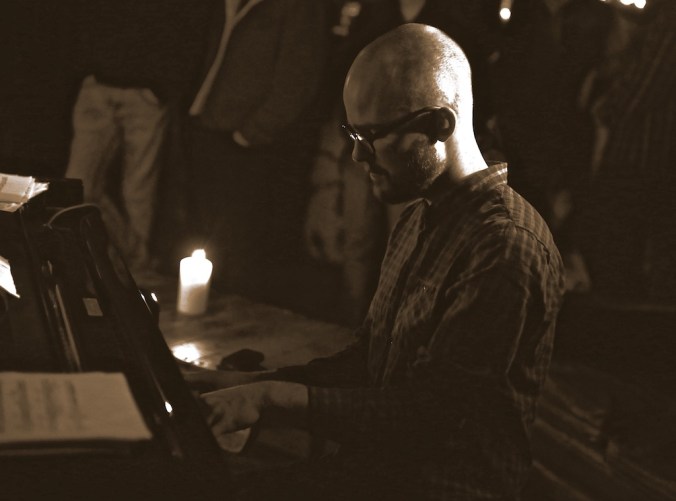 I immediately noticed that Steele’s voicings were darker. His interesting harmonic approach an outcome of an ever-growing musical maturity. There are certain aspects to Steele’s playing that stand out and during the gig these crystallised in my mind. These attributes are why I follow his career so attentively. He is self-effacing by nature, but that masks a ruthless striving for betterment. Ever reaching further, listening deeply, critically and taking risks. For all that he able to relax into the moment and as he grows musically this is more evident. The most difficult journey for any musician is finding a distinctive style and owning it. Steele is well on the way.
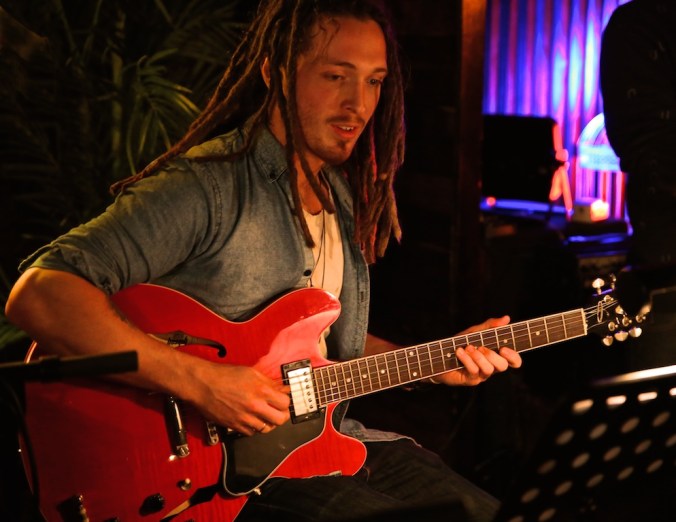 Thanks to Roger Manins programming, Auckland audiences get to see good Wellington bands every few months. In this case the audience were unfamiliar with the musicians (apart from Steele), but what a treat this gig was. The band won us over quickly and by the time the second set began they were cooking. In spite of the modernistic approach and complex time signatures these guys have a definite pulse. They swing like crazy.
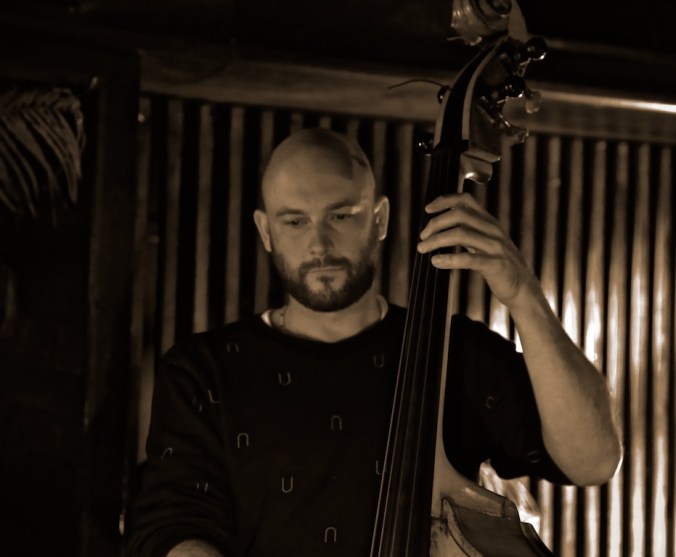 Ashton Sellars had suffered a mishap with his guitar and he had to borrow one at short notice for the gig. He told me that it felt very different to his own older instrument, but no one would have guessed it by the way he was playing. Under his fingers the instrument sang. He favours longer fluid lines (with a hint of Bauer/Tristano), but his is very much a modern sound. His improvisations are thoughtful and they invite you along. While their music is often complex there is no ballast of needless weighty intellectualism. Piano and guitar keeping nicely apart unless comping in support. Both understanding when to lay out. Once again cohesion and a sense of common purpose drives them
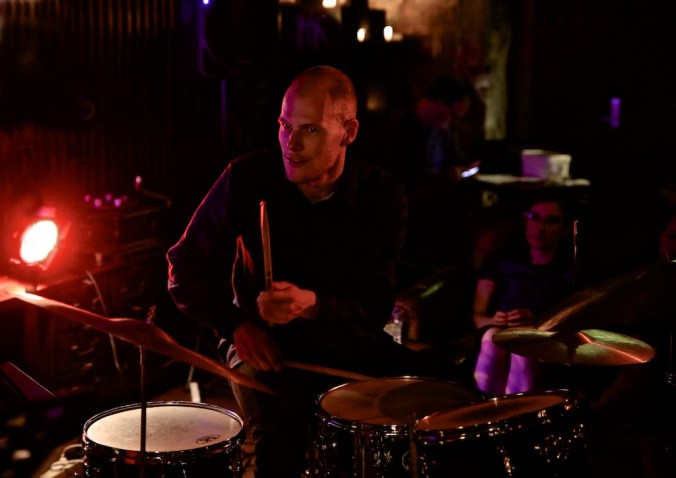 Johnny Lawrence played upright bass, maintaining the core rhythm duties. While he held the pulse intact, he could also solo very effectively. Like his band mates he fitted into the mix in exactly the right way. Cory Campion was also a strong presence, often giving colour or providing accents. Above all his compositions were strong. There is an increasing trend for drummers to compose and when they write like this it provides an interesting perspective. Drummers write differently and the ones I hear lately, write very well. Steele and Sellars contributed the most tunes and each wrote in their own distinctive style. Together those charts and this band gave us pure enjoyment.
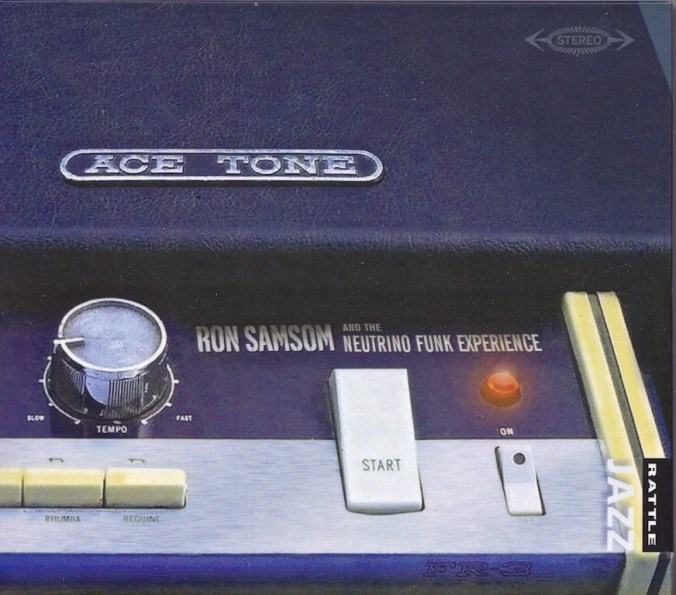 Ron Samsom’s Neutrino Funk Experience ‘Ace Tone’ album has so much up front punch that that a warning is needed on the label. It is an album that grabs you by the lapels and demands your attention. As you listen it transports you to a world of joy. The album and the live band exudes a vitality that enters through your pores, pulsing through your body like the wild blood of extreme youth. Try as you may, it is impossible to keep still as the rhythms consume you limb by limb. While the album brings historic musical references to mind, it is very much of the present. This is Jazz Funk at its very best.
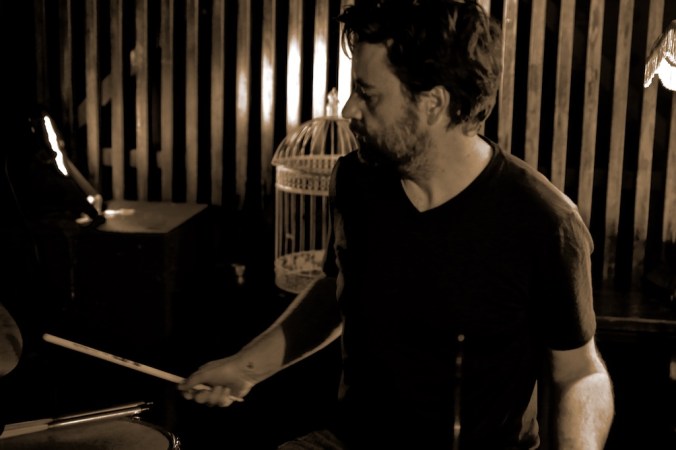 There is cleverness aplenty in the album, but that’s not what it’s about. The pulse, punch and danceability are the draw cards. The tunes let each listener glean their own references. During the album launch someone said, “Oh wow that takes me back to Deep Purple”, while others talked of the Jazz funk gurus like Herbie Hancock, Eddie Henderson and Jimmy McGriff. What ever references people heard, one thing is for certain. This band updates 70’s Jazz Funk as few other albums do. A lifelong fan of the classic genre observed, “few classic 70’s funk albums actually sound as good as this”.
 Material like this needs highly skilled and experienced musicians in order to extract the maximum advantage and that is exactly what Samsom got. This is an alignment of talent that works so well that they must surely build on their success. The Neutrino Funk Experience formed in 2014 and started doing regular gigs at Auckland’s Albion in the central City. The word soon got around and one by one we drifted down to see them. The band stood-out from the first day and the disbelieving expletives from experienced musicians confirmed what our gut told us. These guys were total ‘muthas’.
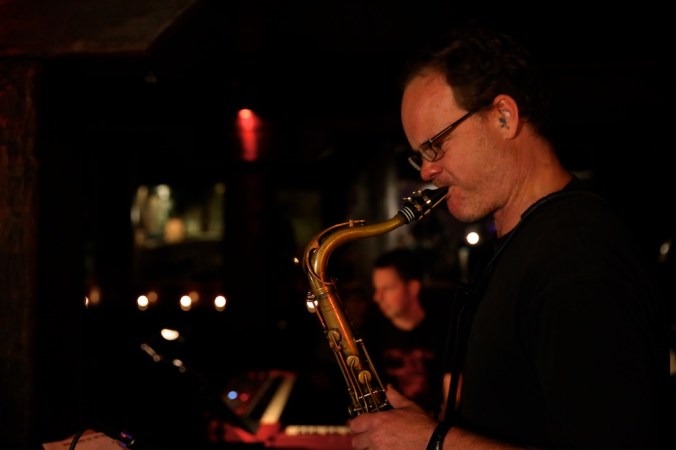 Roger Manins always sounds great but he has excelled himself here. This brand of earthy down-home funk is a natural place for him and his own funk albums reinforce that view. Manins just tears the place up on these sessions and it would be hard to find his equal. There are times when he apparently defies gravity, rising to his toes and abandoning self to move inside the music. These are moments of pure Zen and I watch for them now. Man and instrument becoming one and out of the bell streams a cornucopia of sound, distilled from the human experience. From the otherworldly wails to the gentlest urgings you recognise Manins uniqueness. Organist Winterburn said of him, “Working with Roger is perfect for me. He’s such a rhythmic saxophonist”. Coltrane, old school funk, ballads and modern edge; it’s all there in the sound.
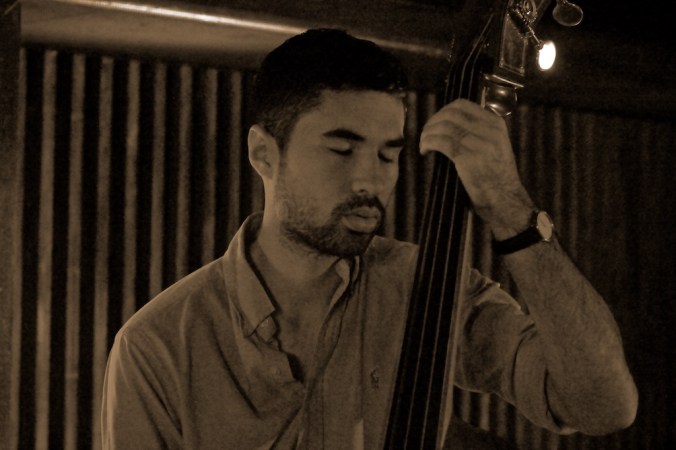 On the album we have Cameron McArthur on upright bass. Even before leaving the UoA Jazz school Cameron was punching well above his weight. I would describe him as an instinctive player. Knowing where to place his lines and always strongly supportive of other band members. He quickly became a fixture in quality rhythm sections and visiting artists praised him. After a trip to New York to check out the scenic he picked up some work in cruise ship bands. By happy coincidence they had cut the album prior to him leaving. So punchy are his bass lines on ‘Ace Tones’, that you think he is playing an electric bass. In his absence Samsom hired Karika Junior Turua for the launch gig. Again this was a good choice. This time we did hear an electric bass and as Turua has experience with Jazz funk, the transition from upright to electric bass was seamless.
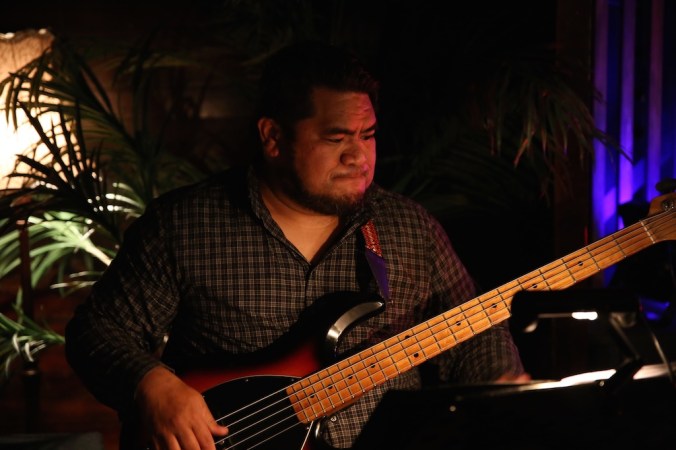 Lastly there’s the album art work and the recording credits. Who ever created the cover design and layout must feel pleased; they did an amazing job. The presentation tells the ‘Ace Tone’ story perfectly. My friend Iain Sharp and I were involved in the project as liner notes providers. As requested we contributed poems. It is rare (but not unheard of) for an album to use poems instead of the standard liner note blurb. I really hope that this trend continues for selfish reasons. Contributing something to an album like this is pure pleasure. The recording and mixing took place at ‘Roundhead Studios’ in Auckland and the mastering at ‘Turtle Tone Studios’ in New York. The album is out on Rattle Jazz where the best of original New Zealand music lives.
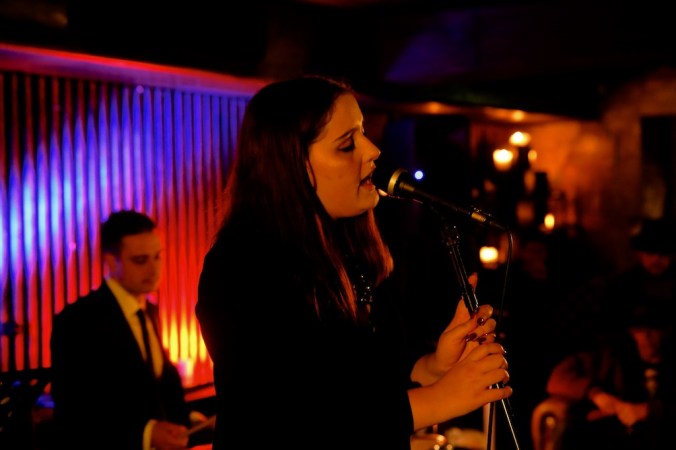 The last time I saw Rebecca Melrose perform was at a CJC gig, not long after her graduation from the UoA Jazz School. That was well over a year ago. Since then she has made her way as a vocalist, exploring several musical genres and recording an EP (yet to be released). This gig was straight ahead Jazz; her interpretations of various Jazz standards. I remember being impressed by Melrose the last time I heard her as there is a rich quality to her voice and she knows how to play with lyrics. At the last gig she took risks with her choice of material and it paid off. This time the sets were more mainstream but she exuded an easy-going confidence; the sort that comes with time in front of audiences.
 Accompanying her were three graduates from the UoA Jazz Programme. Crystal Choi on piano, Eamon Edmunson-Wells on bass and Jared Devaux de Marigny, drums. CJC audiences have seen a lot of Edmunson-Wells over recent years and increasingly we are seeing Choi. Desvaux de Marigny is not seen as often. These are all fine musicians. Additional to the core lineup were guest artists Callum Passells (alto) and Liz Stokes (trumpet).
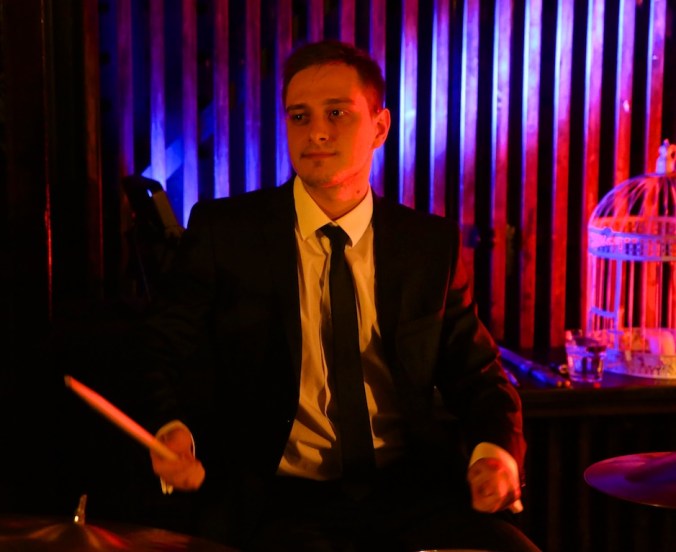 Melrose has been selected as a semi-finalist in the prestigious Shure Vocal Competition (the only Australasian/Pacific finalist). She will fly to Montreux shortly to compete in the finals at the 2015 ‘Montreux Jazz Festival on Lac Lemon. This gig and other events are to help her get there. I wish her well.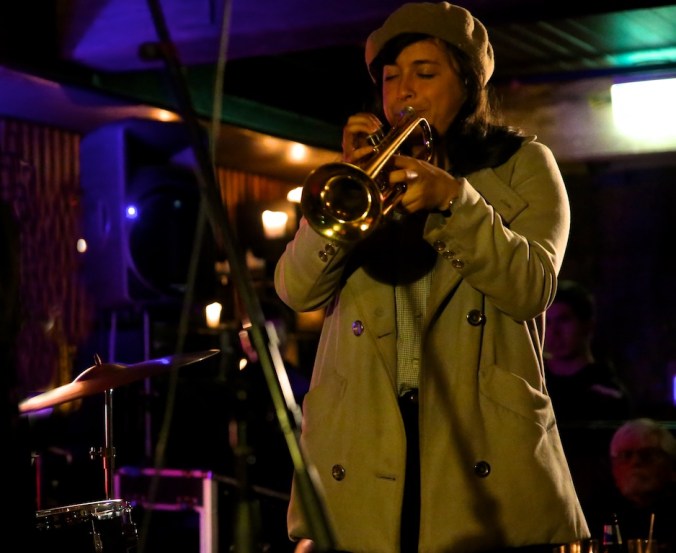
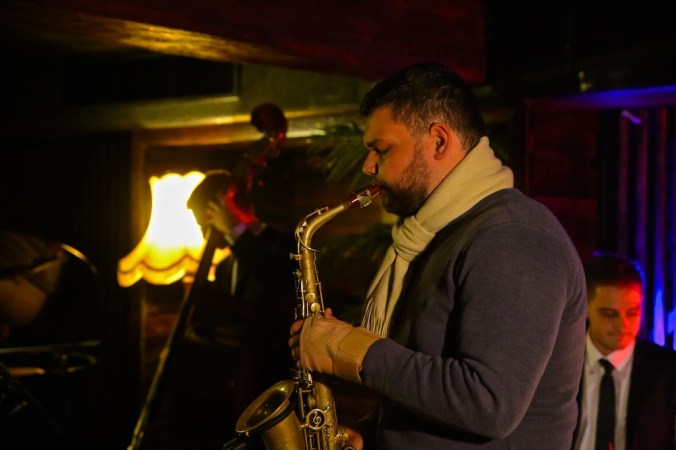 Quartet: Rebecca Melrose (leader, vocals), Crystal Choi (piano), Eamon Edmunsen-Wells (bass), Jared Desvaux de Marigny (drums).
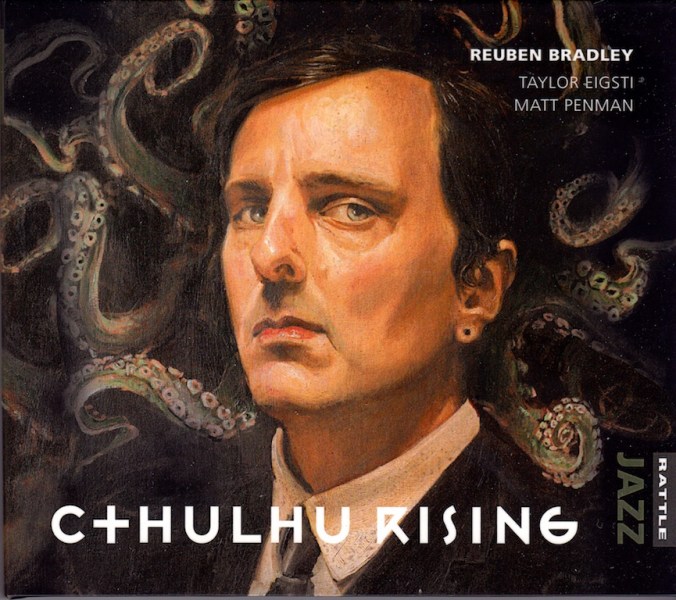 H P Lovecraft died under appreciated, but it didn’t curb his output. His imaginings took him to darkly strange and exciting places. Places that few of us dared contemplate. While he reached deeper than writers like Edger Alan Poe and further into the human psyche, his wildest dreams could not have prepared him for Wednesday night. Reuben Bradley, time traveller and keeper of lost grooves has wrestled with the spirits and brought Lovecraft to life again.
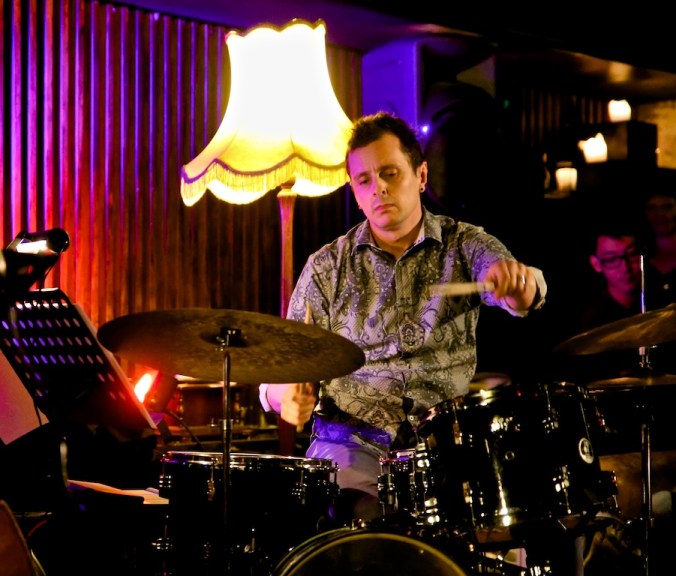 This is a truly exceptional album and it is no wonder when you consider the source material and the musicians associated with it. Bradley, Penman and Eigsti are a deadly combination and their interplay is crisply on the mark. Matt Penman is dear to our hearts in New Zealand. One of our finest Jazz exports. An expat from Auckland who conquered the American improvised bass scene in ways that few others manage. His work with James Farm, the San Francisco Jazz Collective, Aaron Parks, Kurt Rosenwinkel and a long list of luminaries is instructive. That he still appears with the best of our local artists and on local recordings is our immense good luck. An imaginative and wonderfully musical bass player who holds the groove and manages to tell interesting stories without distracting us from the overall focus of the piece. Few bass players could do this better than Penman.
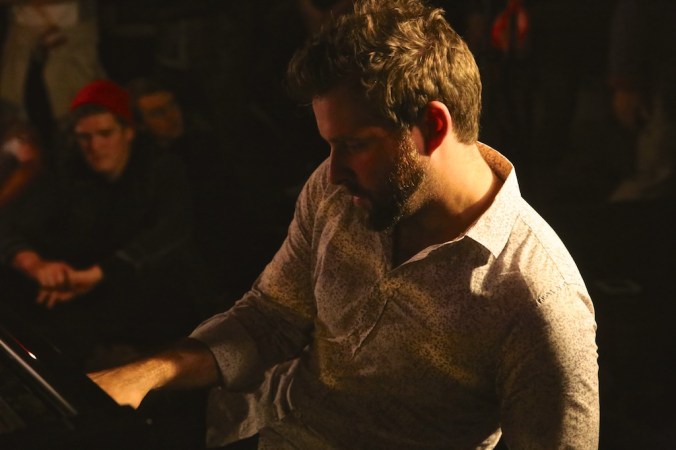 The judicious use of sampled ‘Lovecraft’ readings in several places adds to the atmospheric feel and doesn’t detract from the overall musical experience. Every note played and every voice-over is well placed. Yet again Rattle Records have excelled themselves here. The secret of ‘Rattle Records’ tasteful Jazz catalogue must surely be seeping into the wider world by now. ‘Rattle’ is the ‘ECM’ of the South Pacific. This album was recorded at the ‘Bunker Studios’ in New York, Engineered by Aaron Nevezie and mixed and mastered by Steve Garden at ‘The Garden Shed’ Auckland.
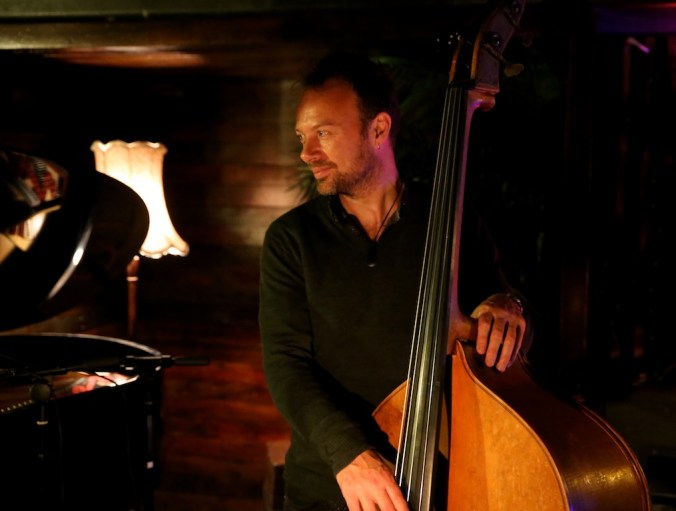 There was a change of personnel for the CJC ‘Cthulhu Rising’ release gig and for the Australasian tour to follow. Respected bass player Brett Hirst took Penman’s place and this was a sound choice. Hirst, another expat Kiwi, is well established on the Australian scene and frequently employed by visiting artists. He is a gifted musician and perfect for high end gigs like this.
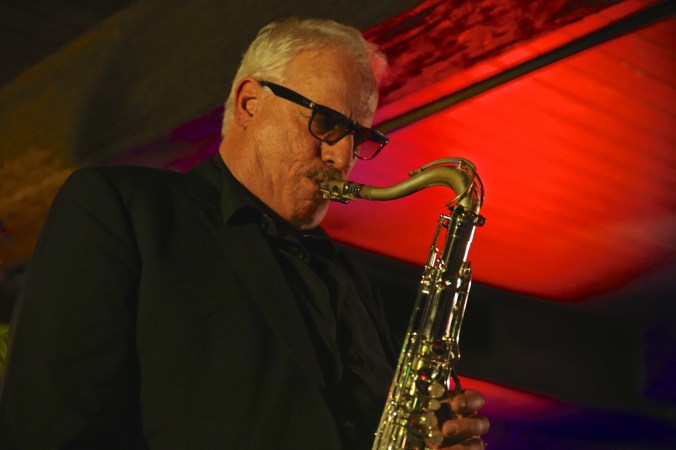 Doug Lawrence is every bit the archetypal southern tenor man, from the top of his tall frame to the bell of his brightly shining tenor. His sound is fat and down-home-cooking rich, whether playing softly or at volume. He has more cut through than a diamond headed drill-bit. Lawrence has such considerable credentials that it is beyond my reach to enumerate them all here (google him).
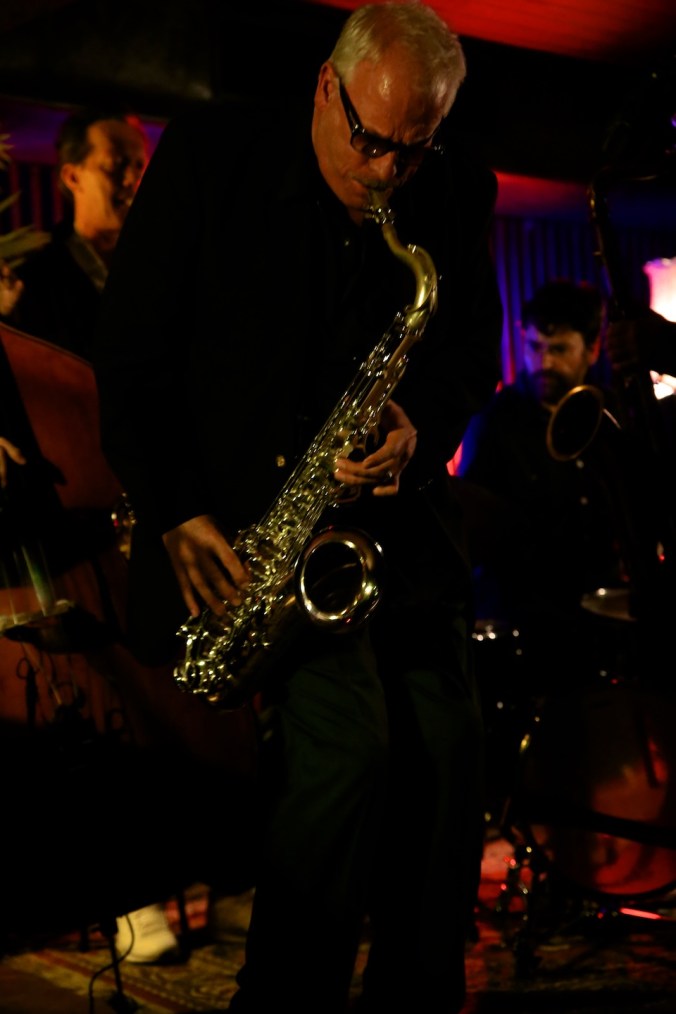 Lawrence is tall and as he performs he stoops slightly, forming a classic old school playing pose. Slowing bending his knees inwards before stretching and lifting his horn to the ceiling. His speaking voice is rich like his playing, a southern Louisiana drawl adding to his considerable charm. The first number was ‘End of a love Affair (Redding) and the audience whooped in delight as the band took the changes at a good pace. The rhythm section propelled by the tidal waves of sound emanating from the tenor. It was that sound and the power of delivery that grabbed you from the get go. The intonation and phrasing revealing influences which although readily identifiable, transformed them into a new sound. This was pure alchemy. It was like having Gene Ammons and Dexter Gordon on the same band stand.
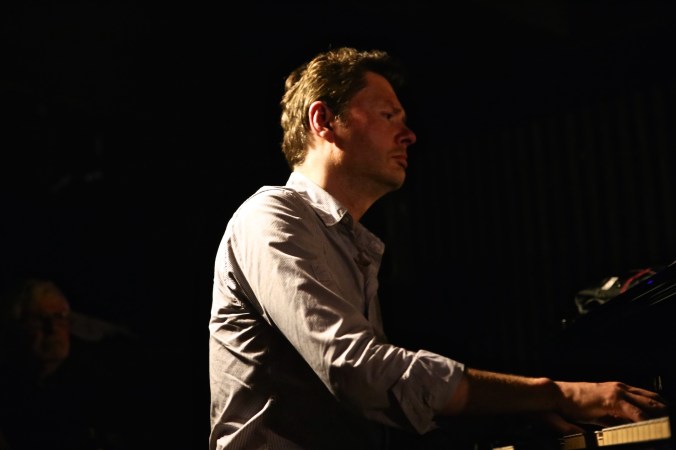 It is during ballads that the skill of a musician is often tested. In this case we saw something close to perfection. It wasn’t just Lawrence, but his Kiwi pickup band as well. Spurred on by each other, they dug deeper and deeper. A night and a vibe that we will remember for years to come. There was an obvious rapport between pianist Kevin Field and Lawrence. I gather that he found Field’s harmonic approach interesting and perhaps this is an indication of our own development as we grow our standing. Lawrence’s intonation was the thing that grabbed you most and this made his solos particularly enjoyable. Long held notes ending in breathy flurries or else bending the note ever so slightly before delivering a short heart stopping burst of controlled vibrato. With Holland and Samsom also finding their sweet spot this was a dream band.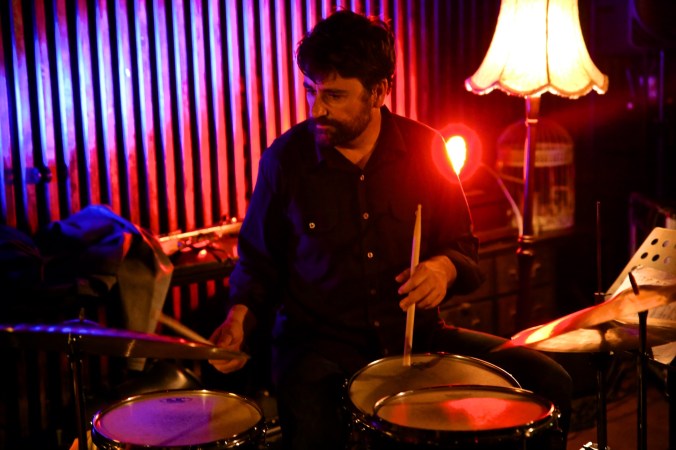
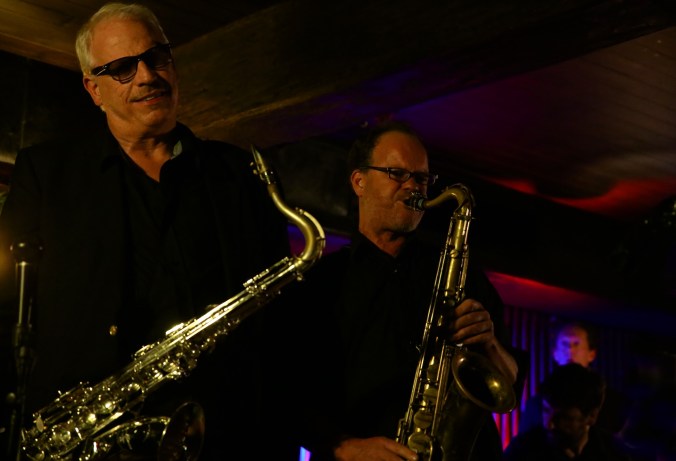 Here is the back story: 17 years ago a younger Roger Manins hit the New York streets, where he learned to scuffle in the time-honoured way of Jazz musicians. Because he possessed the hunger to learn he approached many established horn players. One of these was Doug Lawrence and traces of that time are still evident in Manins sound. All of those years ago Manins subbed for him and here is a Face Book extract that Lawrence posted once he returned to the USA.
 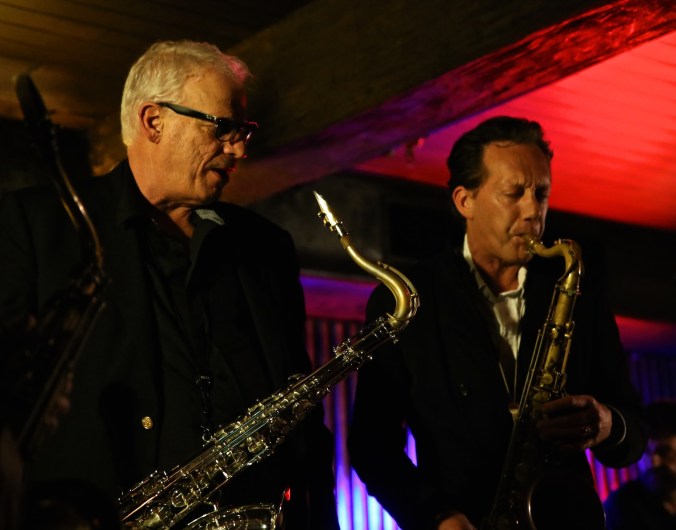 “Roger has matured into a GREAT player and MAGNIFICENT teacher! All of his students have a SOUND and they are all inspired to play, because of Roger. The curriculum at the University of Auckland Jazz Department is second to none, and I am going to use it as my model when conducting masterclasses at other universities around the world. Roger and Ron Samsom and the rest of the faculty have got it right at the U of A and I’m going to suggest that each and every University I teach at check it out. Cheers ROG! You are doing it ALL right brother! I hope to see and play with you soon mate!” That says it all really.
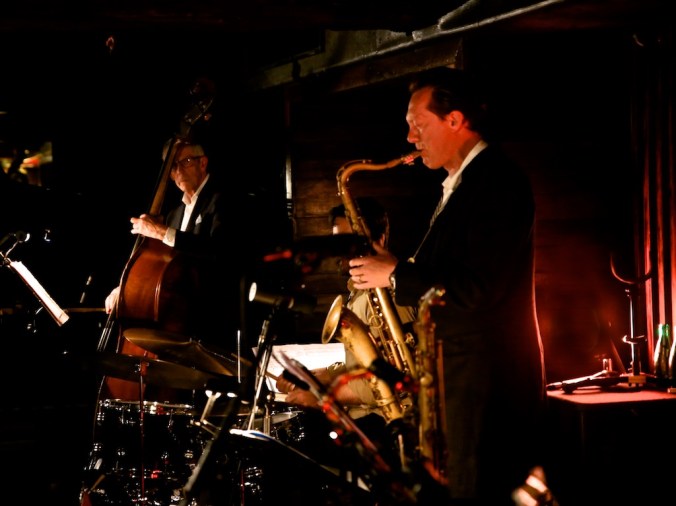 Nathan Haines is a master of the melodic and the model and he has a beautiful and distinctive sound on all his horns (and winds). He has a strong following around the world and it is no wonder when he turns on gigs like this. His following crosses genres, attracting younger and older audiences equally. He also cuts through media blind spots in a way that few other New Zealand improvising musicians do. It is good to have him on home soil for a while and good that he is focussing on fresh local projects. What he does is always exciting and this gig was no exception.
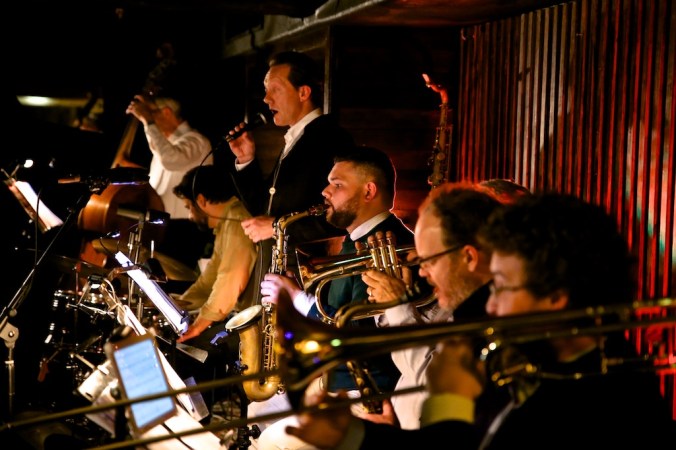 The talented and hard-working, Haines always thinks through his projects. Hot on the heals of his successful award-winning Jazz albums ‘Poets Embrace’ and ‘Vermillion Skies’ he has again teamed up with arrangers Wayne Senior and Mike Booth. The decision to include more Jazz vocals is a welcome development. There’s a paucity of male jazz singers in the modern world and they’re a rarity in New Zealand. The set list was an interesting mix of Haines originals and a few Jazz standards seldom heard live. Like his recent Jazz projects, these tunes evoked and reinterpreted the classic era of the 50’s. Consequently they oozed cool.
 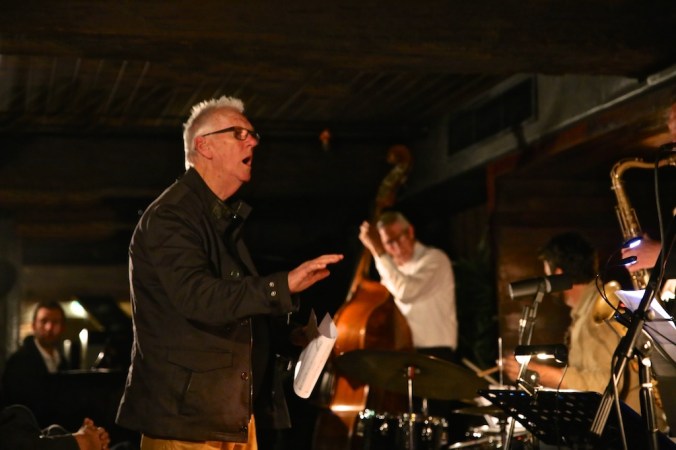 With Michal Martyniuk on piano, Kevin Haines on bass and Ron Samsom on drums he was already on solid ground. This is also where Haines excels. He is a bandleader who choses his musicians well. Martyniuk made his presence felt and soloed beautifully while never over playing. It was exactly what these charts required. Kevin Haines is a highly-respected, tasteful bass player with an impeccable CV. During the sets smiles and friendly banter flowed between father and son; further enhancing the mood. The highly experienced Samsom was on drums throughout. He is new to Haines lineups. His approach to the kit springs from a confident inner logic; more organic than Haines usual drummers. It was interesting to watch their interactions as they sparked off each other. Samsom giving Haines a different platform to work from.
 immediately took me back to hearing Pharoah Sanders for the first time. When Haines plays these modal pieces, there’s a spiritual joy that comes across. This is a strong suit for him and for those of us who love that era a balm.
 Davis album ‘Birth of Cool’. Few bands tackle this and more’s the pity. The octet horn section were Mike Booth, Roger Manins, Callum Passells and Hayden Godfrey.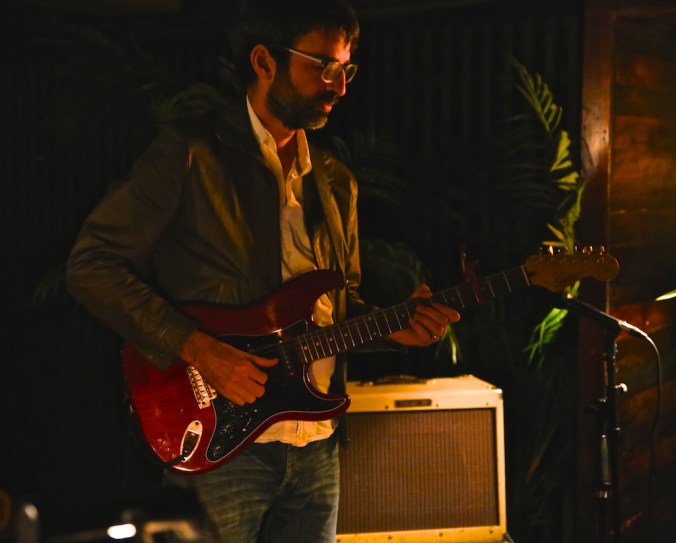
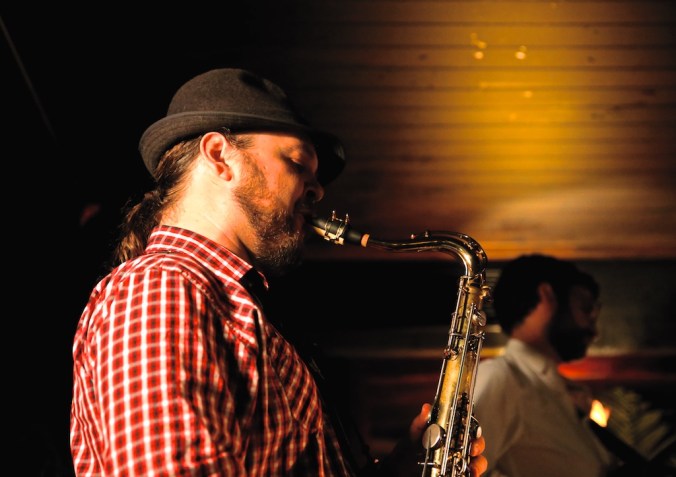 This opens up an interesting conversation about the many forms of ‘ambient’ music being explored at present. These forays are mainly by musicians on the improvised and experimental music scenes. Along the way the term ‘ambient’ is garnering new meanings and it can no longer be confined to the vernacular definition. It implies subtly, depth and a strong sense of being coupled to wider sensory experiences. The difference being that the senses catch on silken threads and not on steel shackles. There is also an illusive quality to this music and to understand the genre better, a good starting place would be Miles Davis ‘In a Silent Way’ or Brian Eno and Jon Hassell (‘Fourth world volume one, possible musics’). For an up to the minute vantage point go to YouTube and locate Elvind Aaset and Jan Bang’s ‘And Poppies from Kandahar’.
 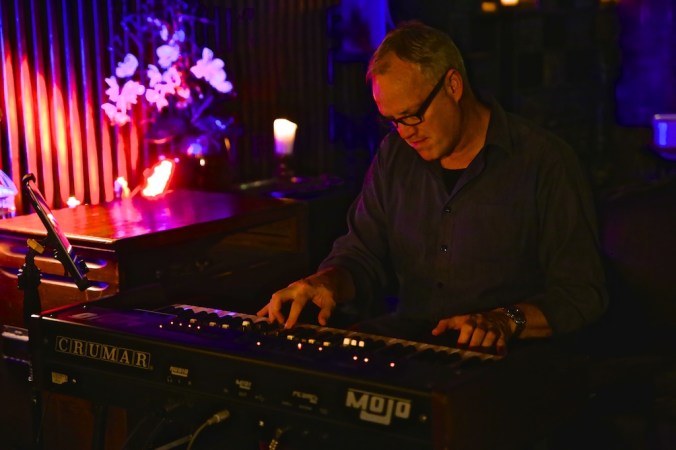 Unlike ‘easy listening’ there are deep emotions engaged by this type of music. Like all trance music cunning voodoo tricks draw you in and as you relax into the mesmerising grooves, you fall deeper into the web. This is music evoking mental pictures and imaginary worlds. This is music that is often served up with dissolving visual images accompanying a clip. The filmic qualities are inescapable.
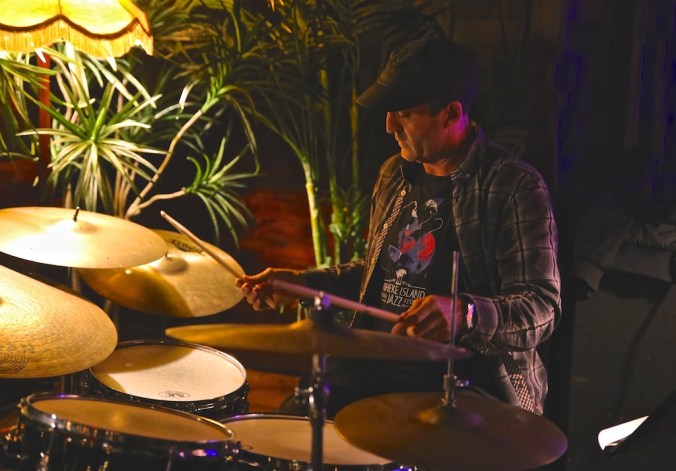 Alan Brown is an asset to any unit and especially so when you consider that this is a crossroads between ambient and groove (both specialties of Browns). Ben McNicoll is a strong presence and his reading of these shifting grooves is always apposite. It is nice to hear such bluesyness purged of cliche. Jason Orme is a veteran of the groove scene but he sounds great in any situation. Spammers music calls for a tight groove but there is also a need for subtlety. Orme is more than up to the task. The leader Dan
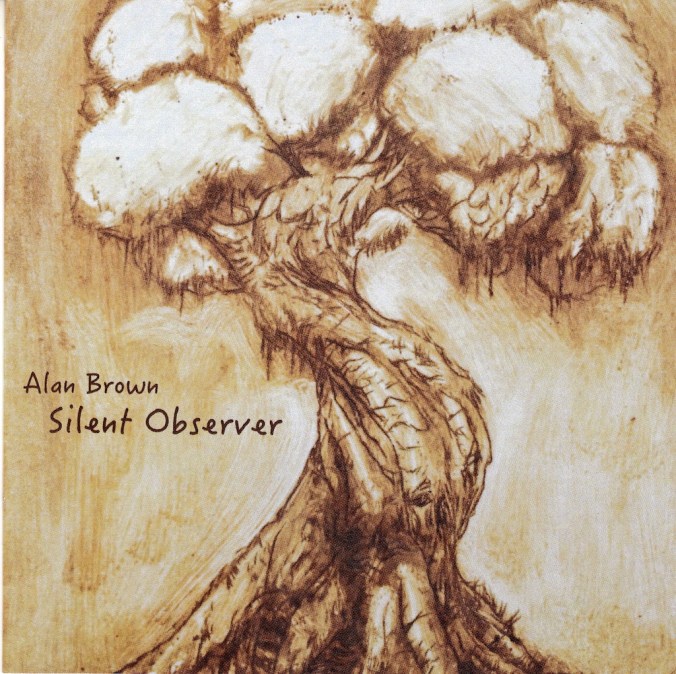 In the same week that Spammerz appeared at the CJC Alan Brown released his ambient album ‘
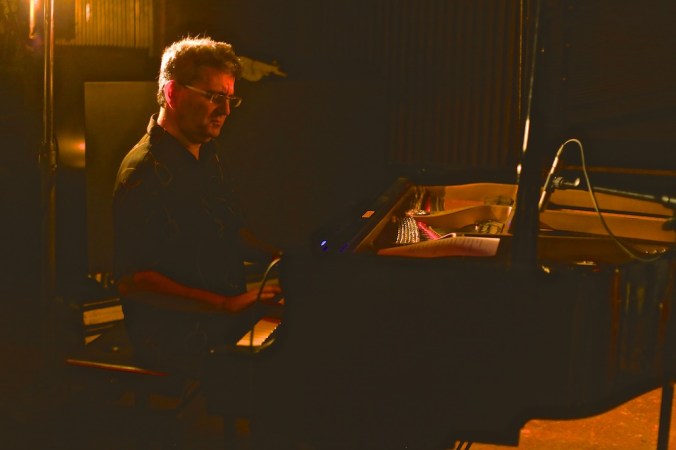 Mark Isaacs is an important and highly respected Australian musician and it was a pleasure to see him in Auckland again. It was October 2013 when he last visited and since then he has been busy with the presentation of his symphony and a number of other noteworthy projects. He is a celebrated Jazz and classical musician and he continues to excel in both genres. Musicians like this are rare, as the two disciplines require very different approaches. When you talk to Isaacs you realise that he is passionate about both. He respects the art forms far too much to settle for anything less than his best. In either genre.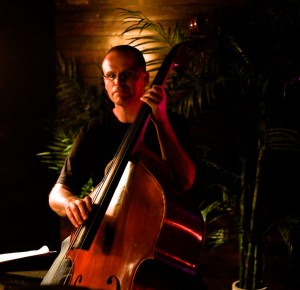
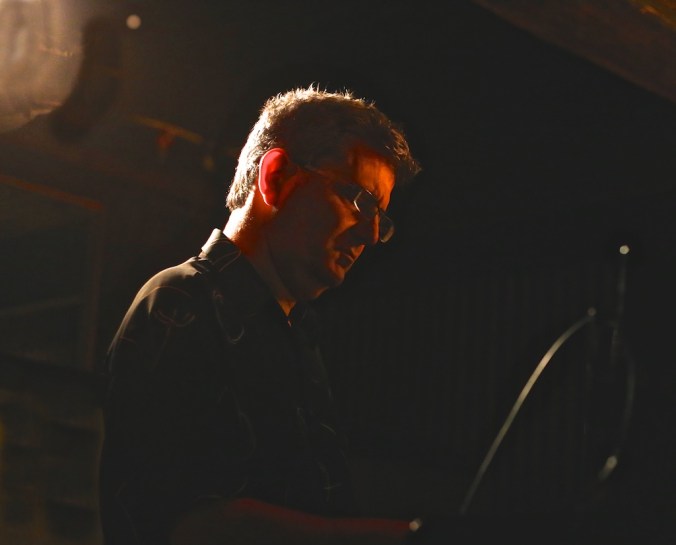 My late arrival was due to a previous gig and as I walked in, the sound enveloped me completely. Before I had settled Ron Samsom had grinned in my direction, Oli Holland had poked out his tongue and Mark Isaacs had given a quick wave (mid solo). With those brief gestures the realisation swept over me that this club and these musicians are family. A. J. a club regular grabbed me in the break and said tongue in cheek, “Thank god your here man, the universe has realigned”. Ron Samsom the drummer added, “Yeah it took us a while to settle because there were two strangers in YOUR chair and you were nowhere to be seen”. I guess I am like the guy who lives perpetually on the bar stool of his local bar. Sort of Jazz furniture.
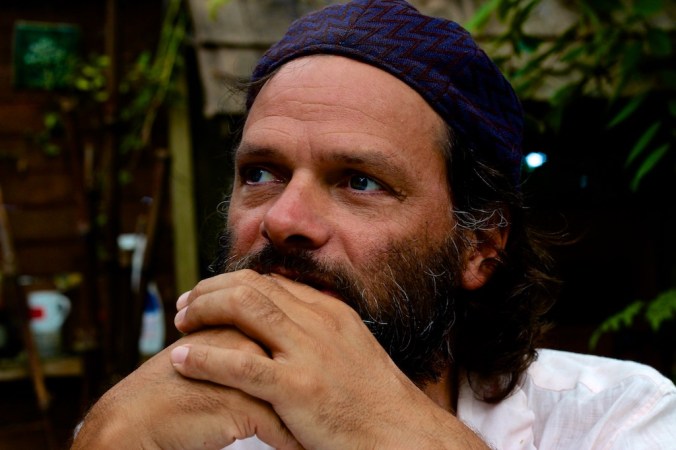 When the luck runs your way, an interview with a musician will mysteriously transform itself into something more. If you know how to read the signals and respond appropriately, you find yourself traversing musical galaxies; places where words and musical ideas merge. I was acutely aware of this when I interviewed Jonathan Crayford recently. He is the ideal person to spend time with if you like to explore the improbable connections between seemingly unrelated things. It was an interview where the rhythms of the moment guided what we discussed and the best part of a day flew by before I knew it. This cerebral world is where Crayford prefers to live. He is perpetually on the road, dreaming up and shaping musical projects as he goes. His life is truly the troubadour’s life. As I probed him for insights, one episode in particular threw light on how serendipity and happenstance can guide him.
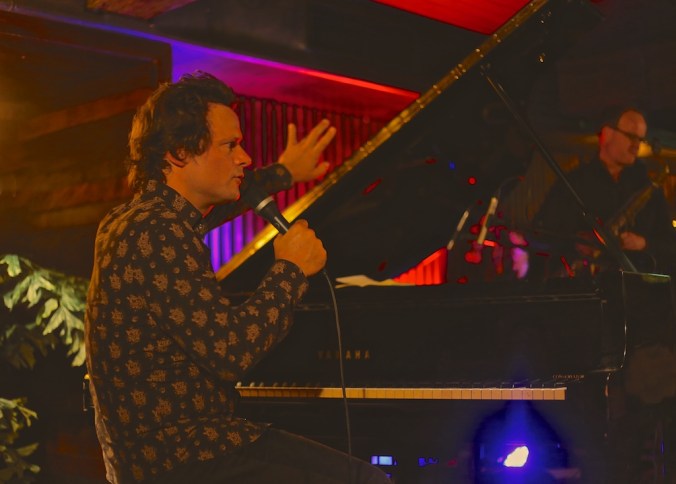 I asked him why this type of project drew him so strongly. “I’ve been travelling for years and it’s the excitement of new projects and the risks associated with being in unfamiliar places that lures me. I like being in a new place, an exotic place, somewhere outside of my life’s experience. It is like a rebirth. New loves, new sounds new smells, new food and a new vantage point from which view life. The grist of creativity comes directly out of this”.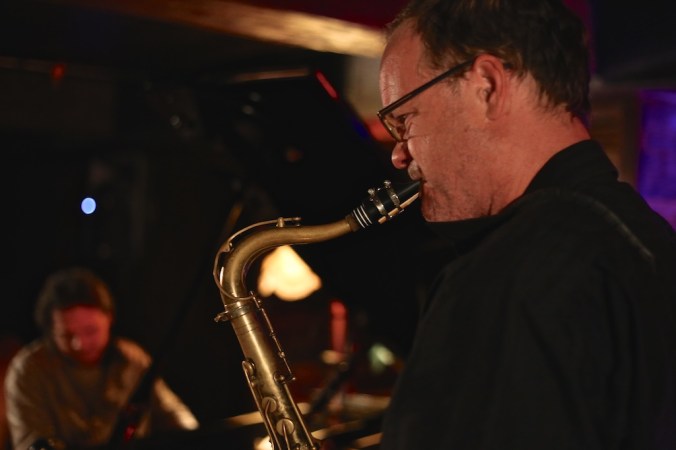
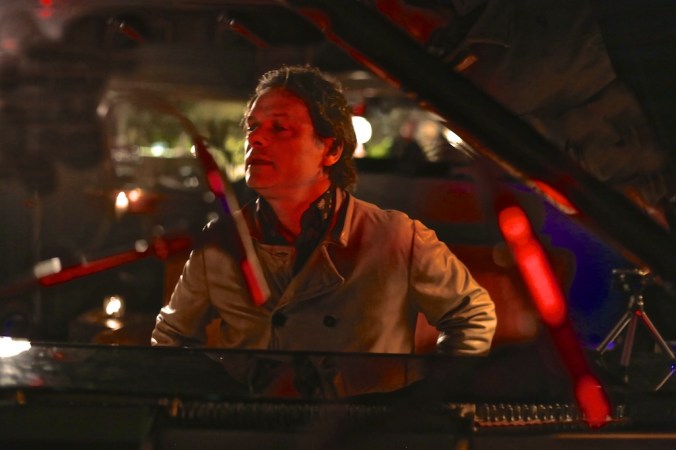 On April 15th Crayford returned to the CJC (Creative Jazz Club), but this time without bass or drums. The gig was billed as ‘solo piano’ with special guest. Roger Manins joining him for the final numbers of the second set. This was a first for the CJC as the club has never hosted a solo piano gig before. Interestingly a slightly higher entry fee was placed on the door, but far from deterring people it signalled that something special was to occur. You could have heard a pin drop during the performance. This audience really listened and they were amply rewarded for their attentiveness. This highlights the growing sophistication of CJC audiences and above all it demonstrates the deep respect that we have for Crayford as a performer.


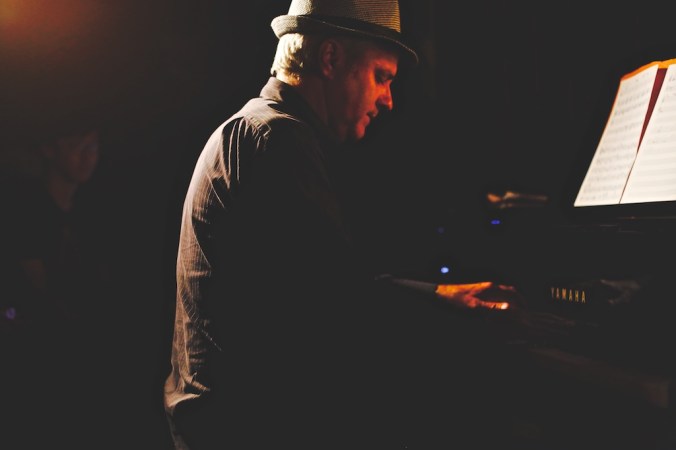 When I saw that pianist Chris Cody was coming to New Zealand I immediately recognised the name. For a moment I couldn’t fill in the blank spots of memory but I sensed that the connection was both Australian and international. My CD collection is huge and I knew that the answer lay buried somewhere in the unruly muddle of music lying about the house. Then it came flooding back; Cody recorded a great ‘Chris Cody Coalition’ album in the nineties. The first international Jazz NAXOS recording titled ‘Oasis’ and produced by Mike Nock; an innovative exotic project brimming with warm middle eastern influences. Some quick
 research told me that the Chris Cody Coalition was still an entity and what equally excited me was to see the name Glenn Ferris on several of the albums credits. ‘Oasis’ featured the Australian Trombonist James Greening and on several of the later Coalition albums Cody features trombonist Ferris (an utterly distinctive player). His whispers, growls and smears are at times otherworldly, but also mysteriously human. Cody works especially well with trombone players and his writing reflects this on the latest album.
 in the front row and this is as much about Cody’s writing skills as the strong confident performances. It is also about the recording quality which is superb. I strongly recommend this album. I first heard the quartet at the Tauranga Jazz Festival. A CJC Jazz stage showcased the finale and the Jazz Tui Awards presentation. I spoke to Cody in a break and quickly learned that he had New Zealand blood running in his veins. Born in Australia of Kiwi parents he studied music before moving to Paris. Based there ever since and gaining a strong reputation on the wider scene. He has very recently move back to Australia but he intends to return to Paris to work periodically.
 often draws on very American sources like Jamal, he is also in the mould of pianists like Jacky Terrasson (also a Parisian). Cody’s compositions are well thought out and replete with interesting asides. We heard many of these at the CJC and the album ‘Conscript’ is all originals. I am a sucker for a Cole Porter tunes and when he opened with ‘I love Paris in the springtime’ I couldn’t have been happier. Happy because I love the song and above all happy because the quartet played it so well. I have posted a video of the CJC performance and the title track from the ‘Conscript’ album with Ferris (the latter an official video release).
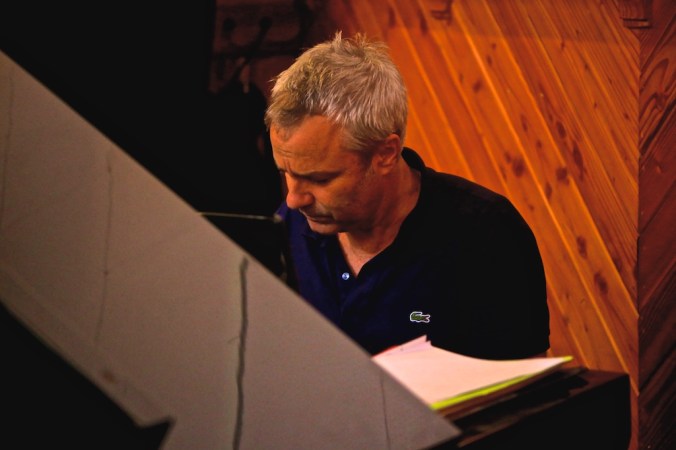 His pick up band are the familiar and popular Roger Manins (tenor), Oli Holland (bass) and Ron Samsom (drums). In the rush of the Tui awards there was little time to rehearse, but it didn’t show. This is 3/4 of DOG and they are the 2015 Jazz Tui winners after all.

 JazzLocal32.com